Category: PEOPLE & PRODUCTS

PEOPLE & PRODUCTS

  • Case Study: Hippo uses Twitter to take stock

    Title of the campaign:  Plan T. Hippo tracks inventory through Twitter.

    Company:  Parle Agro

    Aims and Objectives:   In 2010, Hippo Baked Munchies was successfully launched into the Indian snack market. With its simple yet insightful philosophy of ‘Hunger is the root of all evil. So, don’t go hungry.’ Hippo became a runaway success. However, its nascent sales and distribution network found it challenging to keep track of stock, identify and re-stock empty shelves across 400,000 stores nationwide. In India, 92% of the snack market is unorganized and inventory tracking is usually a logistical nightmare. To solve this, Hippo turned to its followers on Twitter and asked them to tweet whenever they couldn’t find the snack in store.

    To connect with the consumers better, Hippo entered social media. The brand’s chirpy and talkative personality instantly gave it an edge over the rest.

    The Background: Hippo’s lovable anthropomorphic character distinguished it from the rest. Hippo could talk like a person, like a friend, rather than a brand talking to its consumers. And just like a person, Hippo also had a humorous opinion about almost everything, endearing him to everyone he communicated with.

    Hippo signed up on Twitter, Facebook, Blogspot and even created a fun, friendly website: www.hippofighthunger.com. In the market Hippo exceeded everyone’s expectations and the packs sold like hotcakes, leaving the shelves across 200,000 stores empty.

    Challenges and impediments

    Having been recently launched, Hippo had a nascent distribution system, which was unable to identify empty stores and restock packs.

    Worry: Hippo couldn’t afford to lose the momentum gained through communication. It was also feared that people might wrongly consider the empty shelves as an indication that the brand has failed after a short-lived launch phase.

    In Action:

    Traditional Route: Where taking stock meant appointing sales officers to visit store by store in areas allotted to them and waiting for three days (the usual time that this process takes) Hippo did not want this to work in favour of the competition.

    Creative Execution: As a snack brand, Hippo encouraged a simple philosophy based on a simple insight , ‘Hunger is the root of all evil. So, don’t go hungry.’ Hippo struck the right chord with his audience as they bought into this simple human truth. Since Hippo stood for a cause, rather than merely selling a product, people willingly participated in his ‘Hunger-Fighting’ campaign. Hippo enjoyed a great response as his ‘hunger-fighters’ were tracking inventory, while having a larger cause at the back of their minds.

    Hippo had a simple yet powerful philosophy- ‘Hunger is the root of all evil. So, don’t go hungry.’ Hippo used this simple human insight to connect better with his consumers even on Twitter. Hippo spoke to them as a hunger fighter. As more people bought into this philosophy, Hippo launched Plan-T and urged them to help him identify empty shelves and inform him via a tweet whenever they found empty shelves in their neighbourhoods. Tweets poured in from more than 50 cities. People were tweeting from their cellphones from supermarkets, hypermarkets and local grocery stores. Hippo collected this information, analysed and sent it to the local distributors of respective areas, who eventually restocked the packs.

    Solution: Since it was Hippo’s popularity that created a huge demand for itself, Hippo used the same to fix its supply. Instead of spending large amounts of time (and money) outsourcing these distribution and supply duties, Hippo decided to turn to his followers on Twitter – while also acknowledging that In India, almost 94 percent of the retail environment is unorganized.

    Hippo asked his followers to tweet and inform him about locations and even specific stores where Hippo packs were unavailable.

    Hippo set up a core cell at the manufacturer’s headquarters in Bombay, which monitored these tweets, collected this information and passed it on immediately to teams of distributors in the respective areas. This system proved to be extremely efficient. Within 48 hours of locations being identified, teams of distributors had already replenished stocks.

    As people began to see that their tweets actually succeeded in making Hippo available at their neighbourhood store, word of mouth and social media took over and Hippo became a rage. Soon, tweets were pouring in 24/7, from over 45 cities.

    The sales force instantly dispatched stock to locations with empty shelves. All this, with barely a quarter of the staff required to solve supply and distribution problems in India by conventional means.

    Hippo also updated its followers meticulously and rewarded the most active Hippo followers on Twitter with personalized ‘anti hunger’ Hippo Hampers.

    Result:  When this initiative was taken up there were 800 people on Twitter were already on following Hippo. Shortly after launching this activity, the number of people tracking the inventory equalled 50 percent of the sales and distribution network itself and at zero cost. And the sales were upped by 76 percent.

    Hippo thus managed to blur the lines between the marketing department, consumers and the distribution force. Hippo used social media and provided real-time solutions to distribution and availability issues. Describe the results in as much detail as possible. Hippo gauge demand, and

    Hippo upped his sales by 76 percent. For consumers, the knowledge that a mere tweet could restock their neighbourhood store with their favourite snack was highly fulfilling. Hippo could also measure the return on investment per tweet. Plan-T is now a case study taught at leading B-schools, featured in various books on online marketing. Even TWTRCON, San Francisco acknowledged the innovative manner in which Plan-T solved such a technical problem. Plan-T has found a permanent place in the brand’s sales and distribution system. And, all this at almost no cost.

    Learnings:  Apart from being recognized in India for its uniqueness and effectiveness, the campaign was presented as a case study in the Twitter Conference which looks at showcasing innovative business use of real-time web. Raj joined the list of TWTRCON speakers comprising the likes of Scott Monty (Head, Social Media – Ford Motors), Othman Laraki, (Director, Twitter), Steve Rubel (Senior vice president – Edelman Digital), Avinash Kaushik, (Analytics evangelist, Google).

    Awards and accolades:  In Creative Abby the campaign won Gold in Interactive category for Creative use of social media. In Media Abby the campaign won two Golds in Best use of media – social media and Best use of Never before Media. We also won three Golds in Campaign India Digital Media Awards presented by BBC for  Best Loyalty Campaign, Media Innovation and Best Social Media strategy for Plan-T – Tracking Inventory through Twitter.

    The campaign was also highly appreciated by creative minds like Charlie Crowe and Robin Wight, at the Goafest 2011.

    Analysis:  By setting an example, Hippo may have found some first answers to the following:

    Can social media be employed to plug the gaps between sales and distribution?

    Can social media get consumers to voluntary work on the most  technical aspects of the brand?

    Can Brands set up alternate sales and distribution network?

    Competition’s Response: This activity and Hippo’s popularity was even closely observed by one of the biggest players in the country. The competitor even tried aping Hippo’s technique by setting up a Twitter account and even started following Hippo’s followers.

    Refer: http://www.hippofighthunger.com/plan-t/

    http://twtrcon.com/2010/12/03/watch-managing-your-supply-chain-in-real-time-hippo-case-study/

    Source: Creativeland Asia
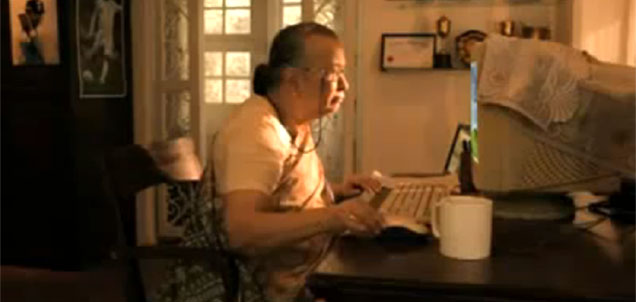
  • Cadbury’s Diwali message with a twist


    By Ravi Balakrishnan


    [youtube width=”350″ height=”250″]http://www.youtube.com/watch?v=Pl2xsSJbE3M[/youtube]

    Cup of coffee in hand, grim determination on her face an elderly woman struggles to turn on a decade old computer and struggles even harder to get online, spilling coffee over the keyboard. All the while a voiceover from her son intones about how busy he’s become, leaving him no time to ‘waste’ hanging out with friends (and, by implication, his mother), and why bother anyway when they can stay in touch via phone, chat and social networking? It seems like a fairly standard tearjerker for a HelpAge India style NGO. Except it is actually for Cadbury’s Celebrations; a range of chocolates specifically designed for gifting through the festive season.


    Celebrations’ previous ads have always been, well, celebratory. For instance, a sister shows up unexpectedly for Raksha Bandhan. And Diwali is a noisy backdrop to the commercial in which a young man bonds with the neighbourhood grouch. In ‘Lonely Maa’ though, there are none of these happy endings; no sudden ring of the doorbell with the son showing up, pack of Celebrations in tow. A courageous tack to take even if it is a bit of a downer.


    However, according to both marketer and agency, the new ad does not mark a radical departure from the central brand thought or strategy. The ad still ties into the line ‘Iss Diwali Aap Kisse Khush Karenge?’ (Who will you make happy this Diwali?). This time around, though, there’s a definite call to action, to provoke people into stepping out of the digital space. Says a company source, “We wanted to get people to physically meet the ones they want to make happy. There were many creative renditions, but we chose this one since quite often, our parents and elder relatives are not comfortable with the digital medium. The medium too does not convey emotion all that well.”


    Younger tech savvy consumers who spend large parts of their lives online were the main target audience. As a result, the commercial is an online exclusive and won’t be seen on television. Lonely Maa was seeded on the brand’s Facebook page, with links to YouTube. Says Mr Raj Nair, national creative director, Contract, who also stepped behind the camera to shoot the film, “It’s criticising the online medium while being on it. That’s hitting people a lot harder and driving the point home.” In its fifth day online, the commercial had garnered 14,112 views at the time of going to print. Both Contract and Cadbury are counting on the ad going viral. If marketer and agency are to be believed, it is particularly popular with the NRI audience who are unfortunately not the immediate target for the brand.


    The few comments on YouTube are full of presumably negligent children lamenting the error of their ways and promising to be home for Diwali. And that’s as per plan according to the company source: “While the mother in the ad is struggling, she still has a positive attitude. Unless we made it a bit provocative, the response to the call for action wouldn’t have been there.”


    For something built around the insight of technology as an alienating force, ‘Lonely Maa’ does evoke an early Nokia ad featuring a similarly lonely mother sifting through photos of her son. Mr Nair says he doesn’t recall the Nokia commercial at all but adds: “I leave it to people to draw their own inferences. This is a bigger thought: telling people to go and meet each other (preferably with a box of Celebrations). The non-technology aspect distinguishes it.” Apart from the commercial, Cadbury Celebrations also has a special Facebook linked programme lined up, to fly people home from Mumbai to Delhi in time for Diwali. So, to all the Lonely Maas out there; be careful what you wish for.


    Source:The Economic Times

    Copyright © 2011, Bennett, Coleman & Co. Ltd. All Rights Reserved


    Image: Grab from TVC on YouTube

  • Marketers up self-image reinforcement


    By Neha Dewan


    Companies are working harder this year to preserve or refine their projected image, with a 40 percent jump in volumes of corporate image advertising on television over the corresponding period of the previous year.


    According to data released by media measurement organisation TAM Adex, Hero MotoCorp, which went in for an advertising blitz after a change of corporate identity, tops the list of advertisers in the corporate brand and image category between January and September.


    At a time when questions are increasingly being raised over corporate governance and corporate greed, companies are turning to advertising that focuses on their core values and contribution to society rather than just the products or services they seek to sell. Corporate image advertising seeks to reassure consumers as much as to convert them to the intended perception of brands.


    Maruti, Adidas and Mahindra & Mahindra are some of the other companies that figure among the top ten advertisers in the category. Aditya Birla Group and Life Insurance Corporation of India are the only two advertisers among this year’s top ten that featured in last year’s list of top advertisers as well.


    FMCG company Reckitt Benckiser, which topped the list last year, does not figure among the top ten advertisers this time round. Neither does any telecom company, despite the 2G telecom scam taking the sector by storm ever since it broke out last November. Just before that, however, Essar Group, a diversified conglomerate with interests in communications among other sectors, was the second biggest advertiser during January-September 2010.


    “With the growth in economy, companies are paying greater attention to building their corporate brand equity. Moreover, with so many brands available today, a consumer will prefer to know what he is buying and where the brand really comes from,” says Mr Madhukar Kamath, group CEO, Mudra Group.


    This year’s leading advertiser launched its new corporate identity with the campaign ‘Hum Mein Hai Hero’ on Independence Day across television, print, radio and cinema. “We preceded it with a period where we did not advertise at all. The result was quite effective as it led to a very smooth transition for us,” says Mr Anil Dua, senior VP, marketing and sales, Hero MotoCorp.


    Dua reasons that corporate image advertising is all the more necessary for companies that sell products such as twowheelers. “For a category like ours, there is more involvement on behalf of the customers. Hence, they need more assurance and tend to see the company from closer quarters,” he says.


    India’s biggest utility vehicles maker Mahindra & Mahindra turned to corporate image advertising early this year when it went in for an image makeover with its ‘Rise’ campaign focusing on the core values of the group. The group plans to have two-three rounds in a year of such advertising which will be a mix of mass media, digital and PR-driven communication.


    “Consumers are asking questions to corporates about their philosophy, practised values, stance on sustainability and contribution to the society,” says Mr B Karthik, GM- corporate brand management and business transformation, M&M.


    Source:The Economic Times

    Copyright © 2011, Bennett, Coleman & Co. Ltd. All Rights Reserved

  • MTR eyes Rs 500 crore by 2012

    By Tuhina Anand

    Haldirams, ITC, Frito Lays and numerous local players in the Rs 6000 crore snacks category now have competition from MTR, which is known for its South Indian instant food mixes and spices. With its rich heritage, the brand MTR has now forayed into the South Indian snacks category, which can be understood as the category is growing at a rate of more than 40 percent a year. Also MTR has been trying hard to revamp its image post its takeover by Norwegian company Orkla. The company, which was largely restricted to South India, has in the last few years gone national and has revamped its offering, packaging and has been highly visible on the mass media platform. So the move is not a surprise, considering that its arch family rival Maiyya’s too have forayed into the snacks category and at around the same time.

    If one looks at the traditional snacks market, it clocks at Rs 3600 crore, growing at 36 percent, thus clearly the biggest player in this category. South Indian snacks remains a market of small brands or unorganized, as no branded player has seriously ventured into this market. While snacking is a big habit in the South, the branded South Indian snacks is the most under-developed market at 6 per cent value share of the total national traditional branded market. Haldiram’s can be seen as the only national player offering traditional snacks but in their portfolio, North Indian snacks dominate with the South Indian traditional snack category having minimal or no presence.

    Mr Vikram Sabherwal, VP Marketing MTR Foods Pvt Ltd, explains, “While evaluating various future growth opportunities consumer research clearly pointed to a good fitment between South Indian snacks and MTR. Looking at the potential of the market there is an opportunity for MTR to play a role in the ‘South Indian traditional snack category’.”

    “Snacking is heavily entrenched in the Indian food habit and hence there is immense potential in this category. We expect that snacks will become integral to MTR’s product offering and help achieve our target of touching Rs 500 crore by 2012,” said Mr Sabherwal.

    The company will leverage MTR’s distribution strength and use it to effectively cover the snacks outlet universe. Initially the snacks range has been launched in Karnataka and at later date will be extended to other states.

    On these products having takers beyond South India, Mr Sabherwal said, “Food in India is going through many changes. We as Indians are becoming experimentative with our food, hence these product will find national acceptance. Secondly some of our products like chakli already have a national footprint.”

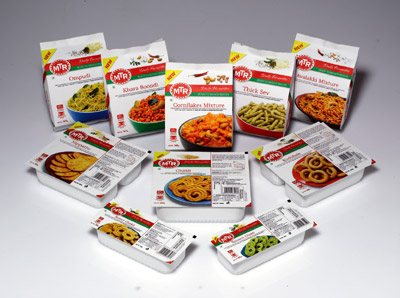
    The products launched under snacks category include Chakli, Butter Chakli, Spinach Chakli, Khara Boondi, Ompudi, Avalakki Mixture, Thick Sev and Cornflakes Mixture. MTR is offering its consumers the promise of crispy and crunchy snacks made with the latest technology in production and packaging. MTR is hoping that with their superior offering consumers will shift from the unbranded to the branded segment, hence expanding the market.

    Meanwhile, MTR has already started advertising the snacks category and has roped in Kannada film stars Upendra and Priyanka to advertise the range.

    Concluding, Mr Sabherwal said, “We at MTR will consistently drive our key categories like mixes, spices and masalas along with snacks. We are also constantly evaluating new products/categories to delight our consumers.”

  • Tight strings on wallet this Diwali (text & videos)

    By Tuhina Anand

    With inputs from Shruti Pushkarna in New Delhi (text and videos) and Insiyah Rangwala in Mumbai

    Looks like the sparks this Diwali could be less bright as for people who traditionally would see big business during the festive season be it shops selling consumer durables, gadgets and gizmos and of course jewellery are not too optimistic on the sales. The mood seems a bit muted this year what with inflation and a general  economic uncertainty. Its not that purchases are not being made but the general consensus on the mood is that people are cautious before spending.

    For shops selling consumer durables, Diwali has been a money spinner but things seem to have changed in the last 2-3 years. Mohan Singh, Branch Manager, Next Retail Ltd in Delhi in a conversation does share that sales are down as compared to last year. But he is hoping on Dhanteras purchase to make up for this slow start. He said, “Last year there was a huge demand for microwaves, washing machines and TVs but this year except for LCDs, there isn’t much demand for other products in this category. In fact I would term it as black Diwali.

    HR Giria of Girias, which is a multi-city chain of consumer durables showrooms dubs that even if the sale would be encouraging this year it would only be `marginally better’. In the meanwhile Girias is leaving no stone unturned to woo customers with both offers in shop as well as extensive advertising in print to reach to large number of customers.

    While the mood may be sombre but one thing is clear that when its comes to making purchases this Diwali, its LCDs and LED’s that is `hot’ item. Samsung, Sony and LG are the preffered brands and the 32inch seems to the most popular buy. In fact in some shops like Vijay Sales, the floor manager informs us that these panels comprise almost 50 percent of their sales.

    Small appliances like hand blenders, toasters and rice cookers are popular picks for gifting purposes. Also the shift is now on gadgets especially tablets, MP3 and smart phones and digital cameras when it comes to gifting. One does not need to be disappointed as there are also shops who have seen increase on sales this year especially in terms of gadgets like Manpreet Singh, Manager, Hari Om Electronics informs that as compared to last year gadget purchases have gone up, and says it has increased by 30 per cent.

    Most of the shops have easy availability of credits to help shoppers purchase more. Some of these have also tied up with banks like ICICI, HDFC, Amex, Citibank to encourages customers to spend more.  The average spends could be anywhere between Rs 25000-35000. Also most retailers have scratch card or other such offers mostly given by the company itself to give something more to the consumers.

    And if one is discussing Diwali purchase one has to look at gold and silver purchases this Diwali as jewellery or coins is a major part of Diwali shopping. With spiralling gold and silver rates, these purchases have become far more dearer. In fact, a jeweller in Mumbai rues the fact that this year the sales have gone up only by 150 percent whereas in the past it used to increase to 450 percent. In fact, 10 per cent of his income would come from Diwali.

    Mohit Gupta, Vice President, PP Jewellers Pvt Ltd, said, “Sales have definitely gone down this year because of the soaring gold rates. Gold and silver coins are the most popular purchases, they are seen as investment. For gifting, because of high gold rates, this year people are going in for more light weight jewelery like ear rings and small pendants. Every year we see a growth of at least 20 to 30 percent but this year there isn’t any such indication so far. We are expecting a lot of purchases on Dhanteras.”

    Even though in the last few days the price of gold and silver have gone down but the increase in prices throughout this year will be a major deterrent for buyers. In fact, World Gold Council is advertising heavily on the fact that how gold is a good investment option. So the general mood is that the market is stagnant this year or the sales will be less than last year. Even in purchases people are going for small items. As a local jeweller in Bangalore informs that last year during diwali they had sold around 350-400 silver coins and will be stocking the same this year. Currently, a 5gm silver coin will cost around Rs 260 and 1 gm of Gold is approximately Rs 2600 (prices will fluctuate according to daily rates).

    Harish Goel, Owner, Goel Jewellers sums up the mood, “Sales are very low this festive season thanks to the gold prices. There are hardly any purchases from the middle classes so to say, even from higher classes, purchases are owing more to weddings rather than Diwali. Gold and silver coins like every year are preferred items. Last year the average spend per customer was somewhere around 50000 but this year it isn’t even half that amount.”

    These retailers are pinning their hopes on Dhanteras and let’s hope that they finally have their cash registers ringing on the auspices day.

    Also on Dhanteras, people buy steel items. Talking to Sumit Jain, Owner, Gift Gallery, he said, “Crockery is always an all time favourite. Like every year, this time too crockery items are popular gifting choices. Both china and glassware are popular gifting choices but we are seeing a big dip in sales. The market is not buzzing with consumers as it does every Diwali. Dhanteras is one day we are looking forward to but those are mostly steel purchases.”


    WHITE GOODS 

    On market trends in the last few years 

    Baldev Ahuja, Manager, Aarvee Sales (electronics showroom)- Market is down…four years back the market used to be buzzing but now because everything is getting expensive people are spending less on these items.

    [youtube width=”400″ height=”250″]http://www.youtube.com/watch?v=_IVkk-gpGkM[/youtube]
    On the most popular product this Diwali (LED) Saquib, Sales Executive, Audio Voice India Pvt Ltd- LEDs are more popular than LCDs because the prices have gone down. Also LEDs are better in quality as compared to LCDs.

    Baldev Ahuja, Manager, Aarvee Sales- People are more attracted towards LEDs this year because of the dip in prices.

    [youtube width=”400″ height=”250″]http://www.youtube.com/watch?v=B-TZcccS90M[/youtube]
    On the preferred gift items Saquib, Sales Executive, Audio Voice India Pvt Ltd – People this year are opting for more gadgets rather than home appliances, they go in for phones, ipods etc more as compared to LCDs [youtube width=”400″ height=”250″]http://www.youtube.com/watch?v=RKXr2hGOggc[/youtube]
    JEWELLERY 

    On most popular purchases this Diwali 

    Neeraj, Owner, Rama Krishna Jewellers- Gold coins are very popular this year, we have coins in all denominations; people are buying and investing more in coins this year.

    [youtube width=”400″ height=”250″]http://www.youtube.com/watch?v=d2k-84Twu78[/youtube]
    On how gold rates have affected sales this Diwali Lajpat Anand, Owner, Luxmi Jewellers- Lot of difference in the market this year…only people who have to buy for weddings etc are buying and even they have cut down on their budgets; as for other purchases, people’s budgets have been messed up because of increasing gold prices.

    Rahul, Manager, Rajesh Gems & Jewels- Big difference between this Diwali and last year is the gold rate that has gone up but it hasn’t really deterred people from buying gold during this Diwali…our sales have gone up as compared to last year.

    [youtube width=”400″ height=”250″]http://www.youtube.com/watch?v=rvPwnxqv6Pk[/youtube]


    CUSTOMER VOXPOP   Mrs Shukla, Housewife- As per the trend, prices go up every year, so obviously this year also it has gone up…but what can we do, we have to buy stuff for our own use and for gifting purposes.

    Nidhi, Working Professional- As compared to last year…we spend the same, Diwali is one special festival, so no cutting in costs, Its Diwali!

    [youtube width=”400″ height=”250″]http://www.youtube.com/watch?v=UmBk-uhlOl8[/youtube]


  • Sony aims for Rs 150 crore business from Diwali season

    By A Correspondent

    Sony India has announced its ambitious business plans for Diwali season in Karnataka. The company expects a whopping Rs 150 crore sales between August and October, targeting a growth rate of 44 percent over last year. Banking on its innovative technology and the new product line-up, retail network expansion and heavy marketing investment, the company is positive about consolidating its strong position in Karnataka.

    To add to the festivities of the season, Sony has introduced innovative consumer promotion offers across categories including Bravia, Cyber-shot, Handycam and Home Theatre System. Sony will also expand its distribution network to 650 outlets in FY11, up from 500 outlets in FY10 in Karnataka. Not only this, ATL and BTL activities during Diwali will be supported by a huge marketing investment of Rs 15 crore.

    Mr Sunil Nayyar, Senior General Manager, Sales, Sony India said,Diwali festive period is extremely important since Sony enjoys an excellent relationship with customers here who look forward to offers from our side. Every year almost 30 percent of our total sales in Karnataka are achieved during the festive period.


  • Copy us? Go ahead, says Reckitt honcho


    By Shruti Pushkarna

    Reckitt Benckiser needs no introduction and neither does the man who has ensured an outstanding record for the company in India.


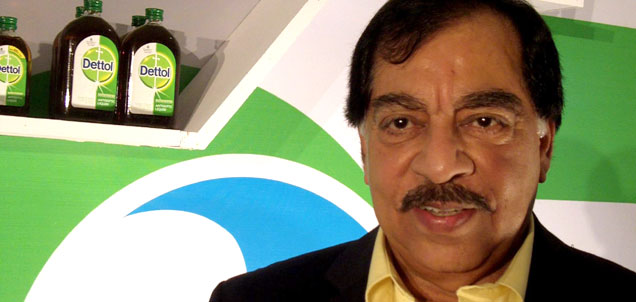
    MxM India caught up with Mr Chander Mohan Sethi, Regional Director – South Asia, Chairman and Managing Director, Reckitt Benckiser (India) in a one-on-one interview, at the release of the latest international Dettol Habit Study by the Global Hygiene Council in association with Reckitt Benckiser, in New Delhi. The study which was carried out in 12 countries including India, found that people who have good manners have better personal hygiene.

    Mr Chander Mohan Sethi has envisioned and assisted Reckitt Benckiser in its entry into various sectors, as well as helped the company establish a strong foothold in the household products and personal care sector.

    Mr Sethi began his career at Reckitt Benckiser India as Branch Manager- Eastern Region in 1984. He was promoted to the position of National Sales Manager in 1987 and in three years, recognizing his huge contribution to the company, he was promoted as Head of Marketing and Sales. He also headed Reckitt Benckiser, Nigeria and West Africa in 1994. Mr Sethi began his career as a management trainee with Glaxo SmithKline Consumer Products Ltd.

    Reckitt Benckiser, a global consumer goods company, headquartered in UK, is a world leader in household, health and personal care. Some of its leading brands include, Dettol, Harpic, Strepsils, Vanish, Veet and Mortein.

    In this candid interaction, Mr Sethi reinforces Dettol’s growing market share and the need for competing brands to think of newer ideas to take on an iconic brand like Dettol.


    Q: What are the key insights of the latest Dettol Habit Study, specific to India?

    First and foremost, the study has been done in 12 countries; more than 14,000 consumers have been contacted. In India, the study has also been done, both in metros, mini metros and in smaller towns. I think two key insights have come. One is that, male and female hygiene habits are the same. And secondly, which is a bit concerning, is that the younger generation unfortunately is not following as good hygiene practices as they should. I think that certainly is a surprise for us.


    Q: As the latest report states, good manners and behaviour are equally important factors as much as the availability of good infrastructure to practice good hygiene. How do you react to that?

    I think it’s a great insight, it’s a great fact of life, that you could have the best infrastructure but if you don’t have the right hygiene habits, it would lead to, you know, infection. So you can have a very clean room, you have a very large home but if you don’t have the right habits, there is going to be a problem of hygiene.


    Q: Is Reckitt Benckiser taking any specific initiatives for hygiene awareness in rural India?

    There is a very fine definition between rural-rural and what I call semi-urban. In very small, 40,000-50,000 population towns, we focus in different regions in terms of going to these towns and doing mother contact programmes, also in school programmes and hospitals. I would like my team to go into areas where they can effectively to do it.


    Q: How does the Global Hygiene Council function?

    The Global Hygiene Council is basically an independent body made up of very eminent doctors and scholars. They do studies on hygiene practices, on what should and what should not be done, after getting insights into consumers’ lives and consumers’ homes, in places of work. These are independent specialists, who get funded by their universities or hospitals where they are attached. But when they come to the Council, which is where we put an education endowment to run this entire body for more than ten countries, they meet a couple of times, and we use their material to be able to propagate good hygiene.


    Q: Dettol ranked as No1 in the Most Trusted Brand survey by Brand Equity in 2002. It slipped down to No2 in 2003. Even though the brand has consistently ranked in the Top 10 Most Trusted Brands, it never regained the No1 mark. How do you react to that?

    The first point is that Dettol is one of the most trusted brands in this country and over decades together. The second point is that there are a lot of new brands that have come, whether it is in the technology sector, cars, information or services etc. So it’s a question of what is the priority in that consumer’s mind at that point of time on his list of things. For us, it’s very important that we read the consumer’s reaction and feedback. But just to give you an idea, Dettol Liquid, in an independent survey by Nielsen, is 85 percent of the market. If you take Dettol Liquid hand wash, again Nielsen says, 53 percent of the market, so I could go on. Now if Dettol were not in one of the most trusted brands then we wouldn’t have 85 percent of the market in liquids, wouldn’t have 53 percent in hand wash. And just to say, Dettol soap for example, the body soap, it used to be No 8 in the soap market, and it is today No 3 in the entire soap market. Certainly in the germicidals, we are today at the top.


    Q: Dettol has positioned itself as the germ fighter brand; how have other players in the market affected this position? In fact, as a study indicates, in 2007 Dettol made an effort to reposition itself to take on Lifebuoy. What do you say to that?

    Lifebuoy tried to position itself like Dettol, I mean they must be running out of ideas that they have to… but you know, I can’t blame them. If you have an iconic brand like Dettol, everybody would want to be like Dettol. So good luck to those guys who want to copy us but the consumer says there is only one Dettol, there is only one brand which they trust in terms of hygiene.

  • Google’s India Head Rajan Anandan on ASCI Board

    The Advertising Standards Council of India has appointed Mr Rajan Anandan, Managing Director & India’s Country head of Google as a member of its Board of Directors. Mr Anandan’s induction immediately follows the appointment of ASCI’s new Chairman I Venkat during the last AGM.


    Mr Anandan’s appointment on the Board is strategic to ASCI’s plans to step up its efforts to promote fair advertising practises in the online domain.  With a large percentage of India’s population being very young, digital adoption is expected to increase going forward as more of the population comes of age and there will be a proportionate increase in online revenue spends. Thus, it becomes imperative for ASCI to ensure that advertising on the internet conforms to the current code of conduct.


    Commenting on Mr Rajan Anadan’s induction on ASCI’s Board, Mr I Venkat, Chairman, ASCI said: “The internet is increasingly becoming a significant touch-point for brands to connect with consumers. Thus, it becomes essential that online advertising is aligned to the primary objects of ASCI. Rajan’s appointment on ASCI’s Board will help ASCI generate the necessary consciousness towards fair advertising practises in the Online domain.”


    Mr Anandan said, “The Internet in India has over 100 million users is quickly becoming a scale advertising medium for companies in many industries.  Being on the Board will quintessentially help ASCI and Google to jointly create awareness about fair advertising practises across a large bandwidth of consumer touch-points on the internet.”


    It is estimated that the Indian online advertising revenue will touch Rs 1,500 crore by the end of 2011. With the kind of growths seen in this space, online advertising would possibly be worth around one billion dollars by the end of 2014. Thus, bringing an increasing consciousness on the way brand advertising is done in the online space is critical for ASCI.

  • The New Big Boss of India’s Biggest Brand


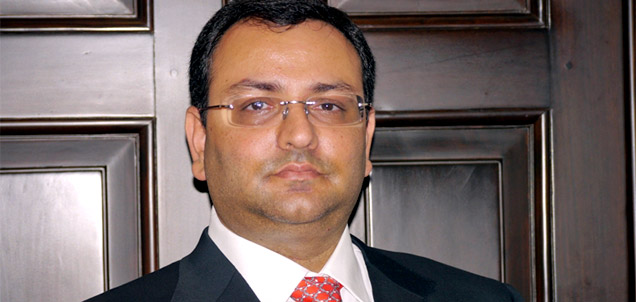
    The search for Ratan Tata’s successor of chairman of the Rs 4.3 lakh crore Tata group has ended with the appointment of Mr Cyrus P Mistry as deputy chairman of Tata Sons. But who’s this 43-year-old Mystery Man?


    Read on for:


    > The Main story on announcement with Mr Ratan Tata’s statement

    > Statement of Mr Cyrus Mistry

    > Profile 1: Avid golfer & foodie, avoids cocktail circuit

    > What Titans Of India Inc Have To Say

    > Profile 2: A reticent man with strategic vision, humility

    > Profile 3: Official profile from the Tata corporate website


    The Main Story


    The mystery over who would succeed Mr Ratan Tata as chairman of the Tata Group ended yesterday as the board of directors of Tata Sons met to appoint Mr Cyrus P Mistry as Deputy Chairman. He will work with Mr Tata over the next year and take over from him when Mr Tata retires in December 2012. This is as per the unanimous recommendation of the selection committee.


    Endorsing the appointment, Mr Tata, Chairman of Tata Sons, said: “The appointment of Mr Cyrus P Mistry as Deputy Chairman of Tata Sons is a good and far-sighted choice.


    “He has been on the board of Tata Sons since August 2006 and I have been impressed with the quality and calibre of his participation, his astute observations and his humility. He is intelligent and qualified to take on the responsibility being offered and I will be committed to working with him over the next year to give him the exposure, the involvement and the operating experience to equip him to undertake the full responsibility of the group on my retirement.”


    Mr Mistry, currently managing director, Shapoorji Pallonji Group, has been a director of Tata Sons since August 2006. He is a graduate of civil engineering from Imperial College, London, and has a master of science in management from the London Business School.


    And this is what Mr Mistry said in his statement:


    “I feel deeply honoured by this appointment. I am aware that an enormous responsibility, with a great legacy, has been entrusted to me. I look forward to Mr Tata’s guidance in the year ahead in meeting the expectations of the group.


    “I take this responsibility very seriously and in keeping with the values and ethics of the Tata group I will undertake to legally disassociate myself from the management of my family businesses to avoid any issue of conflict of interest.”

    But who’s this mystery man?


    Read on:


    Profile 1:

    Avid golfer & foodie, avoids cocktail circuit


    By Reeba Zachariah & Namrata Singh


    The man who will head a group synonymous with Indian industry is an Irish national and shares his birth date (July 4) with the US Independence Day. But in many ways, he resembles the business giant he has been handpicked to succeed. Like Mr Ratan Tata, Mr Cyrus Pallonji Mistry, 43, is described by close friends as soft-spoken , candid and down to earth.


    Again like Mr Tata, Mr Mistry is said to love cars – especially SUVs – and steers clear of the cocktail party circuit. But unlike lifelong bachelor Tata, Mr Mistry is said to be a devoted family man. He is married to Rohiqa, daughter of renowned lawyer Iqbal Chagla, and the couple have two school-going sons. An avid golfer, mr Mistry is known to be a foodie and his favourite holiday destination is Europe. Besides Mumbai , he owns houses in London and Pune.


    According to a Tata group insider, “Mistry is one person who can laugh at himself.” His sense of humour should come in handy in facing the challenges that lie ahead. A person who has shown a preference for the shadows , he will now have to put up with the arclights for years, perhaps decades.


    Tellingly, his Wikipedia profile was created within minutes of the announcement that he had been effectively chosen chairman-in-waiting of Tata Sons. The youngest son of construction baron Mr Pallonji Shapoorji Mistry, Cyrus hails from one of the richest Indian families with a net worth of $7.6 billion. But he will disassociate himself from the family business to avoid conflict of interest.

    Voracious reader with eye for detail


    Mr Cyrus Mistry has been managing director of Shapoorji Pallonji & Company, which is part of the Rs 15,000-crore Shapoorji Pallonji Group (SP Group). An avid golfer and prolific reader, Mistry got the chance to join Tata Sons’ board a year after his father retired as director in 2005. The family is the single largest shareholder in Tata Sons with a stake of 18%. Mistry is also on the board of Tata Elxsi and holds non-executive positions on the boards of several other companies. He is a trustee of the Breach Candy Hospital Trust as well.


    Although he does not have experience in heading a Tata group company , Mr Mistry, a graduate in civil engineering from London’s Imperial College, has been actively involved in the family business. His expertise includes formation of business plans, risk evaluation, business investment strategy and property and infrastructure development.


    Mr Khurshed Daruvala, MD, Sterling & Wilson, in which the SP Group holds 56%, describes Mistry as a “ hands-on leader” who is strategy oriented. “ Ever since Mistry started working with this partnership firm in 2003, the turnover has jumped from Rs 50 crore to Rs 2,000 crore.”


    If this is exemplary, consider what Mistry accomplished after he took charge at loss-making Afcons Infrastructure. SP Group acquired a 53.96% shareholding in Afcons in 2000. In March 2011, Afcons earned a total income of Rs 2,893 crore with a compounded annual growth rate of 21% over the past five years.


    He joined the SP Group in 1991 as a director and became its MD in 1994 in charge of the construction business. His brother, Mr Shapoor Mistry, is actively involved in the real estate and textile business.


    Conservative in his approach, Mr Mistry is said to have an eye for detail. “Once he takes decisions, he sticks with them,” said an insider. He can safely expect to take many crucial decisions in the years to come.


    What Titans Of India Inc Have To Say


    It is a historic and great moment


    -Krishna Kumar, director, Tata Sons


    A young leader means long-term stability for the Tata group


    -A M Naik, CMD, L&T


    There is strong chemistry between Mistry and Ratan Tata. He is very thorough and has good financial insight


    -J J Irani, former director, Tata Sons


    Good sign to have a young chairman -Ajay Piramal, chairman, Piramal group Cyrus symbolizes continuity, yet change


    -Harsh Goenka, chairman, RPG


    He’s mature beyond his years


    -Zia Mody, senior partner, AZB Partners


    Source:The Economic Times

    Copyright © 2011, Bennett, Coleman & Co. Ltd. All Rights Reserved


    And here’s a little more…


    Profile 2:

    Cyrus Mistry:  Tata Sons’ deputy chairman a reticent man with strategic vision, humility


    When senior advocate Mr Iqbal Chagla met Mr Cyrus P Mistry for the first time, he felt there was something special about the man. “He struck me as a young man who will make it big one day,” says Mr Chagla.


    Mr Chagla had good reason to ponder over Mistry’s future prosperity – the younger son of construction tycoon Mr Pallonji Shapoorji Mistry was keen to marry his daughter Rohika.


    On Wednesday, Mr Chagla’s prediction for his son-in-law couldn’t have come true in grander style. In the early evening, Mr Ratan Tata sent out an email to the top five-six executives of all Tata Group companies, informing them that Mr Cyrus P Mistry would succeed him as chairman after December 2012. In his message, the 74-year-old chairman hoped the Tata brass would lend the same support to Mistry as it did to him.


    Not all may choose to do so, but Mr Ratan Tata for his part surely will. Top officials in the group who have worked closely with Mr Mistry say he gets along famously with the Tata Group chairman and is very similar to Tata in nature and attitude.


    Cyrus was Ratan Tata’s First Choice


    They add that Cyrus was the chairman’s first choice right from the time the hunt began for a successor. But Mr Tata was also keen to follow a systematic process of selection, involving shortlisting of candidates – both external and internal.


    So who exactly is Mr Cyrus Mistry, and what makes him the best man to head the sprawling Tata empire? He’s low-profile, reticent and conservative, qualities he has inherited from his father. After graduating in engineering from Imperial College London, Cyrus plunged into the family-owned construction business.


    His father gave him a clear mandate: grow the engineering, procurement and construction activities. Cyrus focused on the Middle East and grew the business in Oman and the region.


    Cyrus’ big break came when the group acquired construction company Afcons Infrastructure Ltd, which undertakes large infrastructure projects in India and abroad.


    The company was acquired at a time India was witnessing a construction boom. As chairman of Afcons, Cyrus oversaw many important projects. The company was involved in the construction of Delhi Metro, and Cyrus often flew to the capital to supervise the work.


    Those who have worked with him say Cyrus possesses a near-perfect blend of hands-on involvement and the ability to give long-term strategic direction. “He has excellent leadership qualities, can think on his feet and combines all this with humility,” says former Unilever honcho Mr Keki Dadiseth, who was at one time believed to be in the reckoning to succeed Mr Tata. Another executive who has worked closely with Cyrus says he has the ability to operate both “as a telescope and a microscope”.


    Among those backing Tata’s choice is Mr Darius Pandole, who remembers Cyrus since their days in the Cathedral & John Connon School in Mumbai. “Cyrus’ is an inspired choice; he will provide long-term stability to the group,” says Mr Pandole, a partner in New Silk Route, a private equity investor. Cyrus is just 43, and even if the retirement age of chairmen in future is brought down to 65, he will still have a good two decades at the helm.


    Yet, there are those who point out that Cyrus has succeeded Tata purely on the strength of his father’s 18.5% holding in Tata Sons, which makes the senior Mistry the single largest shareholder in the holding company of the Tata Group. Others feel Cyrus lacks global exposure and may not be able to tackle the complexities of a diverse business house like the Tatas. But Pandole retorts: “People raised eyebrows when Mr Ratan Tata succeeded JRD. Look at what he’s achieved.”


    Meantime, officials at some of the front line Tata companies are baffled by the sudden announcement. Most have little or no exposure to Cyrus. A senior official in the group said on the condition of anonymity that the Tata Group will now be known more as Shapoorji Pallonji Group. “The Mistrys are known more as sharpshooters, which is in sharp contrast to the Tatas’ trusted brand image,” adds another old hand at a Tata company.


    Source:The Economic Times

    Copyright © 2011, Bennett, Coleman & Co. Ltd. All Rights Reserved


    Profile 3:

    Profile of Mr Cyrus P Mistry from the Tata corporate site:


    “Mr Cyrus P Mistry, 43, joined the board of Shapoorji  Pallonji & Co. as director in 1991 and was appointed managing director of the Shapoorji Pallonji Group in 1994.  He is a graduate of civil engineering from the Imperial College, London (1990) and has an M.Sc. in management from the London Business School (1997).


    Under Mr Mistry’s guidance, Shapoorji Pallonji’s  construction business has grown from a turnover of $20 million  to approximately $1.5 billion. The group’s companies have evolved from pure construction to executing projects under design and build and EPC delivery methodologies, implementing complex projects in the marine, oil and gas, and rail sectors. Under Mr Mistry’s stewardship, the group has registered many firsts in India — construction of the tallest residential towers, the longest rail bridge, the largest dry dock and the largest affordable housing project.  The group’s international construction business now extends to over 10 countries.


    Mr Mistry is responsible for launching the infrastructure development vertical in the Shapoorji  Pallonji Group in 1995 with a 106 MW power project in Tamil Nadu, followed by the development of India’s largest biotech park near Hyderabad in partnership with the Andhra Pradesh government. The infrastructure vertical has also developed two large road projects totalling an investment of USD 550 million.


    The Shapoorji Pallonji Group’s recent foray into agriculture and biofuels, with the leasing of 50,000 hectares in Ethiopia, was also overseen by Mr Mistry.


    Mr Mistry joined the board of Tata Sons in 2006. He has been a director of Tata Power and Tata Elxsi in the past.


    He is also on the board of the Construction Federation of India, the Imperial College Advisory Board, the board of governors of the National Institute of Construction Management and Research (NICMAR), and is a fellow of the Institute of Civil Engineers. ”


    Photograph: Tata.com

  • Binaca, Dalda, Moti… Kahaan Gaye Woh Brands!

    By Bhanu Pande & Ratna Bhushan


    There was a sense of deja vu when, earlier this month, Titan Industries acquired Swiss heritage brand Favre Leuba for 13.8 crore. “The brand Favre Leuba has been dormant, we intend to revive the brand in India,” explained Mr Harish Bhatt, COO of Titan, India’s largest watchmaker. The 1960s and 1970s were the glory days of the 274-year-old brand, and it even sold in India for about five decades till the early-1980s, a recall that Titan now wants to capitalise on. If it succeeds, it will be a rare instance of an Indian company acquiring an old, but flagging, brand and giving it new life.


    In the last two decades, for example, Bunge didn’t manage that turnaround with Dalda. Neither did Dabur with Binaca, or Hindustan Lever with Hamam and Moti. The reasons are many: the new owners did not want to, or failed to, or had a change of plans. “It’s unfortunate that a lot of companies acquire brands and then don’t know what to do with them,” says Mr Ramesh Chauhan, chairman of Parle Bisleri. In 1994, Chauhan sold five aerated-drink brands-Thums Up, Gold Spot, Limca and Citra and Rim-Zim-to Coca-Cola, only to see them mostly being left to drift or die.


    Another drifter is Dalda, the iconic vanaspati brand that was a market leader till the 1980s. In 2003, when US agri and foods company Bunge bought Dalda from Hindustan Unilever for 90 crore, the brand had travelled the arc from being the proxy for its product category to a marginal existence. Bunge’s reason for the buy- a toehold in a new market-could have put Dalda back in the reckoning.


    The company tried, but the cooking-medium market had shifted — from only unhealthy vanaspati in the 1970s and 1980s to healthier refined oils. Bunge India did not respond to an email. A senior brand professional, who handled a cooking oil brand in the early-2000s but did not want to be identified, says Bunge was essentially a commodity player and lacked the “marketing mindset” to revive Dalda. “The company launched refined oil variants under Dalda, but it was too late, too little,” he says.


    Industry players say Dalda now has a share of about 2% in refined oils, where the leader is Fortune of Adani group (13%) and brands of Ruchi Soya (10%). In vanaspati, Dalda is still among the top brands with 12% share, but the segment itself has shrunk significantly.


    A worse fate has befallen Binaca, an oral care brand whose popularity in the 1970s and 1980s was next to that of only Colgate, and which was also a prefix to a much-loved radio programme, Binaca Geetmala. Binaca has faded to near oblivion in the subsequent two decades. Dabur bought it from Reckitt Benckiser in 1996 — for “less than 1 crore” according to an official at Dabur who was involved with the deal — with the intention of reviving it to ride into the white toothpowder segment.


    Dabur failed in that product diversification because the category was stagnant and margins thin, and it withdrew.  Mr Sunil Duggal, CEO of Dabur, calls Binaca’s acquisition a “gamble that did not pay off”. “Sometimes, when a brand is available at a throwaway price, you don’t think twice about picking it up,” he says. “We bought Binaca hoping to leverage it in some way, but it didn’t work.”


    Following an organisational restructuring, Dabur decided to focus on brands that had some herbal association. Binaca, not being one of them, languished. Mr Duggal says Dabur put the brand for sale, but found no takers at the designated price of 25 crore. It is still present in Dabur’s portfolio as a toothbrush brand; Mr Duggal declined to reveal Binaca’s contribution to its revenues, but says it has helped the company recover its acquisition price.


    Mr Viren Razdan, managing director of Interbrand India, a global brand consultancy, says the value in an acquired brand can be broken into four parts: its equity (what it promises); its culture (how the previous owner honoured that promise); its infrastructure (distribution, marketing and sales); and the visual expression of its identity (advertising). “How it ‘fits’ into the future ambition of the acquiring company is what dictates how it is cultivated, or destroyed, for a larger good,” he says.


    Killing competing brands by buying them was one flank of Coca-Cola’s entry strategy. While Dalda and Binaca were neglected and dying before they found new buyers, Mr Ramesh Chauhan’s array of aerated drinks were market leaders when Coca-Cola bought them in 1994. Between them, Thums Up, Gold Spot, Limca, Citra and Rim-Zim had a 70% share.


    Coca-Cola wanted to kill Thums Up and Gold Spot to give its own competing brands — Coke and Fanta — greater space to grow. But such was the popularity of Thums Up, it has always remained Coca-Cola’s largest selling brand in India despite poor marketing support in the initial years.


    Conceding its strength, the company re-launched Thums Up, making actor Akshay Kumar as its face. Today, according to market research firm Nielsen, Thums Up remains the country’s largest aerated drink with a share of about 15% of the 13,000 crore category.


    Thums Up made its own story, but Gold Spot and Citra (citrus drink) could not. A former Coca-Cola India executive says the company let those two brands die a natural death to give life to its competing global brands — Fanta and Sprite, respectively.


    Coca-Cola did not respond at length to a questionnaire on its thinking behind these four brands. “As for Gold Spot, we are the owners of the trademark, but do not share future plans for our brands,” was all a company spokesperson offered by way of explanation. “They seem to have no attachment to the brands,” says Mr Chauhan about Coca-Cola’s approach to Gold Spot and Citra. He feels even Limca has been not marketed to its full potential.


    For acquirers, more than emotional attachments, such brand buys acquisitions are about business strategy. For example, says Mr Prathish Nair, brand consultant at Bangalore-based Transcend Brand Consulting: “When the acquired brands are regional, the companies deliberately don’t take the brands national so they can block regional rivals.”


    It’s what PepsiCo India has done with Uncle Chipps, which was the largest selling potato chips brand in India till 2000. PepsiCo acquired it from Amrit Agro in 2000 to drive its own growth in snack foods.


    But PepsiCo also had its flagship snack-food brand, Lays, to push. So, while it markets Lays aggressively, Uncle Chipps is distributed in select states, primarily Northern ones, to combat smaller brands. Similarly, Hindustan Unilever has ploughed Hamam, once a national brand of repute, on regional duty. Clearly, more than the brand, it’s about the business.


    Source:The Economic Times

    Copyright © 2011, Bennett, Coleman & Co. Ltd. All Rights Reserved

  • Tata group firms to launch common loyalty plan

    By Sagar Malviya


    Tata Group’s consumer-centric firms including Taj Hotels, Croma and Westside will soon initiate cross-marketing activities such as promotions and campaigns by sharing customer database and insights.


    “What we plan to do is leverage different databases and provide more value to the customers,” says Akash Sahai, managing director, AIMIA India, a joint venture between Tata Capital and Canadian firm AIMIA (formerly Groupe Aeroplan) that will launch a common loyalty card for clients within and outside Tata Group.


    “For instance, we are using the database of Taj Hotels to give its customers additional promotions at Tata’s department store Westside,” he says. “Similarly, consumers could use Tata Capital card at Westside and Croma for added benefits and finance schemes.” Most Tata Group companies have been working together in legal, real estate sourcing and IT services among other administrative work, but the conglomerate so far did not have a common customer relationship management (CRM) programme for its half a dozen consumer-centric companies spanning retail, consumer goods, hospitality, financial services and telecom segments.


    AIMIA has started managing Taj Group’s customer relationships and will soon include other consumer firms of the group to create a unified CRM programme.


    Customer service is clearly emerging as a differentiator for consumer-centric companies as competition increases and consumers become more empowered.


    Several global multi-partner loyalty operators have set their sights on the Indian market, valued roughly around $1 billion.


    While Tatas roped in AIMIA last year, another Canadian firm, LoyaltyOne, has acquired a stake in local firm Directions. Kishore Biyani’s Future Group, the country’s largest retailer, is partnering German loyalty management firm Payback.


    Penetration of loyalty cards in India is just 42% of organized retail consumers with an average of 2.8 cards for each person compared to 74% penetration at an average of 3.8 cards for each consumer in the US.


    LoyaltyOne Chief Marketing Officer Rathin Lahiri says loyalty programmes will help marketers leverage consumer insights for developing customised programs. “That will not just impact the way that consumers respond to their brands, but also in the long term will shape their buying patterns,” he says.


    AIMIA will launch its multi-party loyalty card later this year. Apart from Tata Group firms, it is in talks with several non-competing brands in the aviation, petrol retailing and financial services space to launch a loyalty card to be used across companies.


    Source:The Economic Times

    Copyright © 2012, Bennett, Coleman & Co. Ltd. All Rights Reserved

  • French retailer Auchan eyes jv with Landmark group

    By Samidha Sharma & Boby Kurian


    French retail giant Auchan, touted as Wal-Mart’s most aggressive global rival, has held talks with Micky Jagtiani’s Landmark Group for a possible India entry.


    The ongoing discussions centered around a potential joint venture but the final agreement will depend on whether India moves ahead with plans for foreign direct investment (FDI) in multi-brand retail, said at least two people familiar with the talks.


    Auchan, the second largest French grocer after Carrefour, is fully owned by one of the wealthiest French families- the Mulliez- who also own sporting goods chain, Decathlon. Auchan has been a fast mover in emerging markets like China and Russia, where it has performed better than global peers Wal-Mart, Tesco and Carrefour. The big-box retailer Auchan, with a special focus on developing hypermarkets, had last reported turnover of over $70 billion.


    “The discussions with Auchan are in an advanced stage and a decision is likely to take place in a month’s time,” said a person in direct knowledge of the development. The stores which will come up in India, if the agreement is signed between the two groups, may operate with the Auchan brand name although, the finer details are still to be etched out.


    India decided to suspend plans to allow 51 per cent FDI in multi-brand retail in December following a lack of political consensus, but could revive it after the crucial elections to state assemblies next month.


    Landmark may forge a franchise agreement with the French retailer till the FDI norms are relaxed in multi-brand retail, said one of the sources mentioned earlier. Landmark Group currently runs the Dutch retail chain Spar in India through a licencing agreement signed in 2007 which comes to an end in December this year.


    The Spar MD Gordon Campbell who was in India last month had said they were open to engaging with other partners to expand more aggressively here. Spar has 10 stores in India currently.


    Sources close to the development said that Mr Campbell’s statements to the media did not go down well with Max Hypermarkets, a part of the Dubai-based Landmark Group, and the partnership with Spar is virtually over.


    A detailed email sent to Groupe Auchan remained unanswered while a company spokesperson for the Landmark Group was unavailable for comment.

    The Croix, France based- Groupe Auchan SA, operates 581 hypermarkets and 2,384 supermarkets and minimarkets as per the company’s 2010 annual report. “We are clear-sighted – the outlook is more positive in emerging countries than in the Euro zone where the crisis is not yet over and continues to strongly depress consumer spending. 2011, our 50th year, will see the number of hypermarkets worldwide break through the 600 mark. We also plan to continue developing franchise and partnership agreements,” said Vianney Mulliez, chairman of the board of directors, Groupe Auchan in the annual report.


    In China, Sun Art Retail group, a joint venture between Groupe Auchan SA and Taiwan based-Ruentex Group, successfully raised $1 billion in a Hong Kong Initial Public Offering last year, the proceeds of which will go in its expansion.


    Sun Art operates 197 hypermarkets across mainland China under two brand names, Auchan and RT-Mart. The other big market for Auchan is Russia where it has around 50 hypermarkets.


    The $70 billion Auchan has told Landmark Group’s Max Hypermarket that it would prefer a JV if India allows multi-brand retail FDI.


    Source:The Economic Times

    Copyright © 2012, Bennett, Coleman & Co. Ltd. All Rights Reserved