Category: MARKETING

  • Festive season ad spends to rise by 60%

    By A Correspondent

    Despite a slowdown in economic growth during the first quarter of 2011-12, many companies plan to unveil new products during the upcoming festival season and back their marketing plans with aggressive advertising, discount offers and brand promotion, industry body Assocham said.

    Several of them – especially fast moving consumer goods (FMCG) companies-have hiked their advertising and promotional budget by 60 per cent compared to previous year in an effort to perk up demand and shore up revenues followed by home and electronic appliances, real estate, textiles, gems and jewellery and luxury products, according to The Associated Chambers of Commerce and Industry of India (Assocham).

    Nearly 150 corporates in ten major cities including Delhi, Mumbai, Chennai, Kolkata, Hyderabad, Ahmedabad, Pune and Chandigarh were contacted between July and August. The chamber said companies selling home and electronic appliances, automobiles, textiles, gems and jewellery, luxury products and homes expect sales to go up by 30 to 40 per cent.

    The festival season generally accounts for 40 to 45 per cent of annual ad spending by Indian companies, said Assocham secretary general Mr DS Rawat. “The trend is likely to continue this year as well in spite of disconnect between macro-economic trends and micro factors.”

    Electronic appliances are on the top advertisers on TV for a 2011 followed by retail, auto and cellular services with a five per cent increase in ad spend as compared to festive 2010. Some of the brands that spent big on corporate advertising are Videocon, Whirlpool, LG, Britannia and Samsung.

    Mr Rawat further said that the consumers’ spending intentions are turning into actual spending reality, which is translating into advertising activity rapidly returning to pre-downturn levels. The average increase on advertising spending on media has been 30 to 35 per cent on a year-on-year basis.

    Festivals like Durga Puja, Dussehra, Diwali and harvest festivals in south India are also something that the people of the region look forward to.

    The survey also adds that companies too take advantage of the festive fervour making planned efforts in campaigns aimed and the enhanced customer spend expected.

    Ad spends in TV and press will be up by 45 per cent as compared to festive 2010. While FMCGs and corporate ad campaigns dominated TV, while print was a more mixed bag, with spends coming from auto mobile, durables, real estate and cellular services, according to Assocham.

    Nearly 65 per cent of the marketing heads said that companies see in the festive season a perfect time to advertise their products. Even as the media cost has been reasonable, except for certain television prime time slots, companies want to work closely through consumer touch points in retail outlets. Moreover, televison and radio media are increasingly used to promote activities in a mall or a retail outlet, added the survey.
  • Sony aims for Rs 150 crore business from Diwali season

    By A Correspondent

    Sony India has announced its ambitious business plans for Diwali season in Karnataka. The company expects a whopping Rs 150 crore sales between August and October, targeting a growth rate of 44 percent over last year. Banking on its innovative technology and the new product line-up, retail network expansion and heavy marketing investment, the company is positive about consolidating its strong position in Karnataka.

    To add to the festivities of the season, Sony has introduced innovative consumer promotion offers across categories including Bravia, Cyber-shot, Handycam and Home Theatre System. Sony will also expand its distribution network to 650 outlets in FY11, up from 500 outlets in FY10 in Karnataka. Not only this, ATL and BTL activities during Diwali will be supported by a huge marketing investment of Rs 15 crore.

    Mr Sunil Nayyar, Senior General Manager, Sales, Sony India said,Diwali festive period is extremely important since Sony enjoys an excellent relationship with customers here who look forward to offers from our side. Every year almost 30 percent of our total sales in Karnataka are achieved during the festive period.


  • The Anchor: Hoshie Ghaswalla on 10 reasons why B2B media will thrive

    By Hoshie Ghaswalla


    B2B media is the most connected to both its key constituents – be it the reader or the advertiser / sponsor. Its in-depth understanding of the domain it operates in gives it a clear, distinct and sufficient edge over the other media forms. Here are 10 reasons why this media will thrive.


    #1 Domain Engagement – B2B media is deeply engaged within the domain it operates. In fact more often than not B2B media thinks it’s business is the same as that of the domain it caters to. At times, it is dangerously stitched to the domain it works with and people at the media venture often forget that they are in the media industry and need to apply those norms to their working, contrary to those of the domain they operate. There can’t be anything as powerful as this where people passionately believe they are a part of the business they cater to.

    #2 Reader engagement – The understanding of reader requirement is key in this business and good B2B media players regularly carry the reader with them at all stages. Their understanding of the domain comes in from the reader and you often see very involved and long tenured editorial / content committees that aid in the content strategy and delivery for the entire industry they operate across. How much more powerful can it be when the main customer of media has an active say in the creation and shaping of the editorial product on a consistent basis.

    #3 Advertiser engagement – This too is natural. B2B media players work very closely with advertisers as they understand their needs. From selling simple inventory, B2B media has much earlier begun to offer complete 360-degree solutions to advertisers who want to reach out to their customers in a more meaningful manner. In fact qualified lead generation is a new trend that has begun to emerge over the past few quarters in this space. What more can the advertiser ask for when s/he is getting their communication directly in to a relevant audience.

    #4 No wastage – B2B media players do not focus on mass. Their objectives are to be able to connect the advertiser / sponsors to the information consumer. So while other media would have a much larger audience they reach out to, B2B is controlled and the advertiser / sponsor pays for rich visibility. Likewise for the information consumer that gets the information they seek and do not have to go through clutter to find what they are looking for.

    #5 International trends – In the US B2B online marketing spend is projected to grow 40 percent faster than core media in 2012.

    #6 Advertiser Trust – B2B media enjoys the highest trust from the industry amongst other media. Most B2B publishers work to enhance the objectives and standing of the domain / industry they operate in rather than containing themselves to simple media-related objectives such as top-line and bottom-lines. They are a key part of the domain they operate in and very often lead in the cause of betterment of their domains.

    #7 Trust from the reader – Readers too love the B2B media because of its comprehensive understanding of the industry. This is possibly the only form of media they trust before taking significant decisions for their business. In fact this author has had instances over the past few years where readers have come to him and his colleagues and requested them to take large decisions on their behalf.

    #8 Passionate / Committed to cause – Objectives often different from commercial / profitability.

    #9 Medium agnostic – Unlike readers and advertisers of other mediums who need their daily fix of a particular newspaper, or a soap opera or a news capsule, B2B readers are sworn to the brand they have been following and are happy to get their information across any delivery medium. Likewise the advertisers / sponsors too are looking for connects to their customers and not just inventory purchase.

    #10 Content is monetizable – Due to the rich and relevant nature of content, B2B media is able to charge more for its content, contrary to other forms of media. In fact this trend is increasing and it seems highly likely that B2B will gain significant revenue from the main customer, which is the information consumer, thereby bringing down its revenue dependence from the advertiser / sponsor.


    Hoshie Ghaswalla is President – Publishing at CyberMedia India Limited.

  • The Anchor: Anil Thakraney’s 4 reasons why Steve Jobs was so special

    The entire world seems to be in collective grief over the death of Steve Jobs. As if people have lost someone close. Does it make sense? When you consider he was just another businessman out to make a lot of money. And there are thousands of very loaded industrialists all over the world. Most of who we don’t care much about. And Jobs, unlike rival Bill Gates, wasn’t even big on charity work. So then why do we all adore him? Even those of us who have never touched an Apple product in our lives. (I certainly haven’t.)
     

    There are many reasons behind the cult of Jobs. Here’s my little list on what made the man so special. And my reasons actually lie within Apple’s own legendary ‘Think Different’ advert. It’s as if the script was written with Jobs in mind. Businessmen and industry leaders must pay close attention to what it takes to catch consumers’ hearts and minds. From across the world.


    #1 Because he was a rebel: Jobs did not conform to the industry standards, nor did he try to surpass them. Instead, he showed them the finger. He was a true inventor, a visionary, who believed he could do it his way. Self-belief was at the heart of his success. And that’s how a lad working out of a car garage went on to build an international tech empire.


    #2 Because he didn’t just make and market products, he pushed the human race forward with his bold innovations. Product innovations that are not just technologically marvellous, but are slick and aesthetically rich. Consumers don’t just wait for a new Apple product. They queue up for it. They save up for it. They dream about it. Jobs never short-changed his buyers by taking short-cuts. He thought big. He delivered better.


    #3 Because instead of throwing out the ‘square pegs in the round holes’ from his organization, he trained, nurtured and cherished the misfits. He saw the genius in his crazy, offbeat employees. He knew he needed people who thought differently, if his vision for Apple was to come good. Look around you… very, very, very few leaders in the corporate world are capable of such an ideology. That’s why we have just one Steve Jobs.


    #4 Because he genuinely, passionately believed he could change the world. And he did.


    Links: The unforgettable Apple advert.
    [youtube width=”400″ height=”250″]http://www.youtube.com/watch?v=4oAB83Z1ydE&feature=related[/youtube]
    A touching tribute to the tech king.
    [youtube width=”400″ height=”250″]http://www.youtube.com/watch?v=XzWft8ZtTTY[/youtube]

    ***


    PS: Apparently there’s a TV journalist called Mandeep Something inside the Bigg Boss mad house. And she wailed on national television that she hasn’t gone to crap for four days. If a journo is doing stuff like this, can we really blame the other bimbettes on the show for all the nonsense? Anyway, guess now you know why it’s called a crappy show.

  • Copy us? Go ahead, says Reckitt honcho


    By Shruti Pushkarna

    Reckitt Benckiser needs no introduction and neither does the man who has ensured an outstanding record for the company in India.


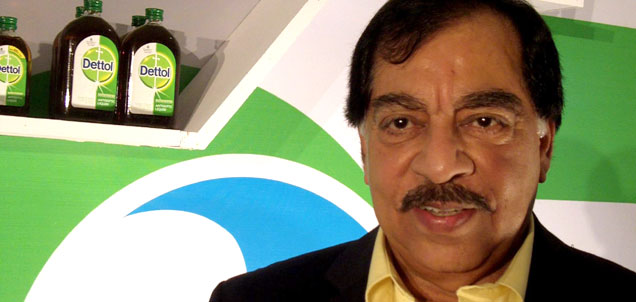
    MxM India caught up with Mr Chander Mohan Sethi, Regional Director – South Asia, Chairman and Managing Director, Reckitt Benckiser (India) in a one-on-one interview, at the release of the latest international Dettol Habit Study by the Global Hygiene Council in association with Reckitt Benckiser, in New Delhi. The study which was carried out in 12 countries including India, found that people who have good manners have better personal hygiene.

    Mr Chander Mohan Sethi has envisioned and assisted Reckitt Benckiser in its entry into various sectors, as well as helped the company establish a strong foothold in the household products and personal care sector.

    Mr Sethi began his career at Reckitt Benckiser India as Branch Manager- Eastern Region in 1984. He was promoted to the position of National Sales Manager in 1987 and in three years, recognizing his huge contribution to the company, he was promoted as Head of Marketing and Sales. He also headed Reckitt Benckiser, Nigeria and West Africa in 1994. Mr Sethi began his career as a management trainee with Glaxo SmithKline Consumer Products Ltd.

    Reckitt Benckiser, a global consumer goods company, headquartered in UK, is a world leader in household, health and personal care. Some of its leading brands include, Dettol, Harpic, Strepsils, Vanish, Veet and Mortein.

    In this candid interaction, Mr Sethi reinforces Dettol’s growing market share and the need for competing brands to think of newer ideas to take on an iconic brand like Dettol.


    Q: What are the key insights of the latest Dettol Habit Study, specific to India?

    First and foremost, the study has been done in 12 countries; more than 14,000 consumers have been contacted. In India, the study has also been done, both in metros, mini metros and in smaller towns. I think two key insights have come. One is that, male and female hygiene habits are the same. And secondly, which is a bit concerning, is that the younger generation unfortunately is not following as good hygiene practices as they should. I think that certainly is a surprise for us.


    Q: As the latest report states, good manners and behaviour are equally important factors as much as the availability of good infrastructure to practice good hygiene. How do you react to that?

    I think it’s a great insight, it’s a great fact of life, that you could have the best infrastructure but if you don’t have the right hygiene habits, it would lead to, you know, infection. So you can have a very clean room, you have a very large home but if you don’t have the right habits, there is going to be a problem of hygiene.


    Q: Is Reckitt Benckiser taking any specific initiatives for hygiene awareness in rural India?

    There is a very fine definition between rural-rural and what I call semi-urban. In very small, 40,000-50,000 population towns, we focus in different regions in terms of going to these towns and doing mother contact programmes, also in school programmes and hospitals. I would like my team to go into areas where they can effectively to do it.


    Q: How does the Global Hygiene Council function?

    The Global Hygiene Council is basically an independent body made up of very eminent doctors and scholars. They do studies on hygiene practices, on what should and what should not be done, after getting insights into consumers’ lives and consumers’ homes, in places of work. These are independent specialists, who get funded by their universities or hospitals where they are attached. But when they come to the Council, which is where we put an education endowment to run this entire body for more than ten countries, they meet a couple of times, and we use their material to be able to propagate good hygiene.


    Q: Dettol ranked as No1 in the Most Trusted Brand survey by Brand Equity in 2002. It slipped down to No2 in 2003. Even though the brand has consistently ranked in the Top 10 Most Trusted Brands, it never regained the No1 mark. How do you react to that?

    The first point is that Dettol is one of the most trusted brands in this country and over decades together. The second point is that there are a lot of new brands that have come, whether it is in the technology sector, cars, information or services etc. So it’s a question of what is the priority in that consumer’s mind at that point of time on his list of things. For us, it’s very important that we read the consumer’s reaction and feedback. But just to give you an idea, Dettol Liquid, in an independent survey by Nielsen, is 85 percent of the market. If you take Dettol Liquid hand wash, again Nielsen says, 53 percent of the market, so I could go on. Now if Dettol were not in one of the most trusted brands then we wouldn’t have 85 percent of the market in liquids, wouldn’t have 53 percent in hand wash. And just to say, Dettol soap for example, the body soap, it used to be No 8 in the soap market, and it is today No 3 in the entire soap market. Certainly in the germicidals, we are today at the top.


    Q: Dettol has positioned itself as the germ fighter brand; how have other players in the market affected this position? In fact, as a study indicates, in 2007 Dettol made an effort to reposition itself to take on Lifebuoy. What do you say to that?

    Lifebuoy tried to position itself like Dettol, I mean they must be running out of ideas that they have to… but you know, I can’t blame them. If you have an iconic brand like Dettol, everybody would want to be like Dettol. So good luck to those guys who want to copy us but the consumer says there is only one Dettol, there is only one brand which they trust in terms of hygiene.

  • Writing, Faber-Castell style

    By Insiyah Rangwala


    Celebrating its 250th anniversary this year, Faber-Castell has reason to rejoice. In the last 15 years it has seen extraordinary growth and an expansion that has taken it from being a ‘German company that exports’ to a globally familiar brand. But for the company which has seen eight generations, it was not all smooth sailing. With the two World Wars and the Depression, it was disowned by several countries and lost a lot. It was bought back and it fought back, though.


    Count Andreas von Faber-Castell Director, Asia-Pacific Region Faber-Castell Group, and his wife Countess Virginia are on a tour all of this year celebrating 250 years of the company and talking about the company’s legacy and heritage. They have already visited Indonesia and Singapore. There was also a massive celebration in Germany in July where they had a multi-vision show and showcased the company in context of its history. This was attended by 5,000 guests among which 120 were Indian but they still hoped for more.

    Count Andreas told MxM India that Faber-Castell is completely decentralized, and in that spirit has set up in the Indian market which is run by Indians for the Indians, as it believes in using local expertise. India was a very obvious expansion especially since it is so well connected to South America.

    He talked about being a family company means that it can challenge any public company. “As a family company we make ideal partners as we care just a little bit more. We have the freedom to make a long-term decision which might pay off only in 100 years.”

    When asked about his view on digital art and how it might hurt the company he said it only complements the firm, and he has no fear. “All sports can be played on video games now; does it replace the real thing? There is a magical feeling to writing.”

    While talking about this expectations from India as a market he stated that for India to become a well saturated market   is still in the future and will probably happen after his time, though he is heavily involved with the process and visits India almost once a month and works closely with the Indian team.

    Faber-Castell has set up its manufacturing units in India itself as it gets into new markets with long-term interests, and it is always better to be present within the country as this makes it more flexible and reliable.

    It wants the Indian customers to have an experience that can be remembered when they use their products. “Any product is completely safe for kids. I can go in and drink a glass of my ink without any worries that I might fall ill.”

    As for the luxury range, this has just been started and the company will set up its own shops in India to build the brand over time, as has been done in other countries. To mark the 250th anniversary, Faber-Castell has introduced Graf von Faber-Castell luxury range and Faber-Castell Design range of Pens.

    When asked what he would personally like Faber-Castell to be known as, the Count replied, “I just want people to smile and say this is nice.”

  • Largest OOH display leaves footprint in Delhi


    By A Correspondent

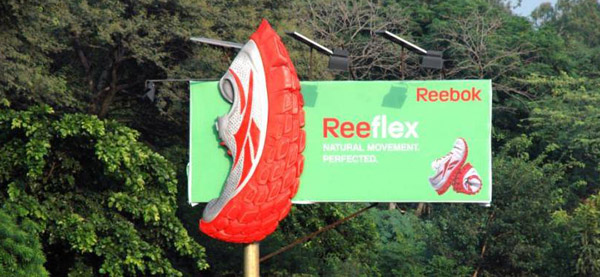
    BIG Street, the OOH initiative of Reliance Broadcast Network Limited, and Mudra Max have created the largest out-of-home display for Reebok on the façade of the Dhaula Kuan Airport Metro Station.

    Reebok, the leading producer of athletic shoes, apparel, and accessories, introduced a new range of running and training shoes called ‘ReeFlex’. A product of advance research, the shoes feature 76 independent ‘sensors’ on the bottom, planned in a way to adjust to all training surfaces. Throughout the stride of the wearer, these inbuilt sensors work together to promote the natural movement and flexibility. To promote such an innovative product, Reebok India partnered with BIG Street and Mudra Max to create an equally innovative OOH display.

    BIG Street, which holds the advertising rights to the display media in the Delhi Airport Metro Express stations, proposed the branding of the Dhaula Kuan Airport Metro Station’s façade – an enormous glass structure overlooking the busy NH8 stretch. Subsequent to the approval of the concept by Reebok, Mudra Max flawlessly completed the execution, branding the mid portion of the façade, a huge area of about 8,602 sq feet.

    Since the canvas itself was a building, high quality, international standard one-way contra vision from 3M was used, that was unobtrusive to the metro passengers inside the station but left an indelible impact on the motorists and pedestrians on the road.

    The branding has already created a huge buzz, with people reducing the speed of their vehicles to look at the giant display in awe. The impact of the communication has been compounded by the fact that the station is bang opposite a traffic light, ensuring a captive audience for a good two to five minutes.

    Commenting on the campaign, Mr Rabe Iyer, Executive Vice President, RBNL & Business Head BIG Street & BIG Live said, “BIG Street has time and again proved its ability to create eye-catching innovations for its clients. This cutting edge display for Reebok has firmly positioned BIG Street as a ‘thought leader’ in the Out-of-home space.”

    Mr Mandeep Malhotra, President, Mudra Max, OOH, said, “It has always been a pleasure to work on Reebok. The passion and desire to create innovative OOH by the team Reebok gives us the kicks to run around and deliver the best campaign after campaign.”

  • AdAsia: Learning the rules of the game from Harish Manwani

    By Tuhina Anand

    So what does behemoth like Unilever do when a shampoo sachet priced at Rs 2 and projected at doing big sales doesn’t take off in the market? It focuses on listening to the consumers and gets an insight into why the market is not responding as expected. Then goes into reverse engineering which helps in bringing down the cost of the product, builds a manufacturing plant for sachets and prices the sachet at Rs 1, a pricing figure that consumers were more comfortable with thus getting the perfect recipe for success. This and many more such insights were shared by Harish Manwani, Chief Operating Officer, Unilever and Chairman, Hindustan Unilever Ltd (HUL) who was speaking at AdAsia 2011 on the topic ‘The Game Changers’.

    Mr Manwani termed HUL as the `emerging market company’ as the economic centres shift to emerging markets. In fact, 54 percent of their business comes from the developing market. But one of the lessons to keep in mind is that it’s not one India but many Indias and how one caters to such heterogeneous consumers is the key to succeed. Affordability and accessibility needs to be kept in mind but at the same time one has to make money too and that’s where consumer insight comes in handy. He also talked about having a sharper focus on shoppers than consumers.

    The key that also emerged from this session was Unilever’s belief in doing well by doing good like the project Shakti that has empowered women which has also helped them in selling their product. The strategy that has emerged is of making brands meaningful as well as brands that are marketed should have a social purpose. Mr Manwani said, “We have been ensuring that all our brands just don’t have functional benefit but also has social benefit.” In fact Unilever factories have been working relentlessly towards sustainability and creating products through innovation that would also help in bettering our environment.

    This shift can also be seen in communication that Unilever has adopted like in the case of Surf where initially the messaging was simple and talked about the whiteness that is the basic want from detergent to taking the route of saving and addressing the housewives the obvious customer for the product in famous Lalita Ji. The communication has now taken the route of saving two buckets of water, thus the brand becoming socially responsible. So there is a technology that helps in building product that is superior and then there is communication that helps in delivering a social message with brands that have social purpose. That’s Game Changers.

    He also pointed that power of brands will not change, power of consumer insights will remain and so will the ability to create great advertising and its power will remain unchanged but going forward what will change or bring about a change will be the advent of the digital medium, the ability to work with consumers, importance of 360-degree communication, having a strategic and not opportunistic relationship with the agency and creating tools that will help marketers in knowing exactly where there money is going when they spend on advertising.


  • Epsilon aims to win customers over for good

    By A Correspondent

    Perhaps one of the most challenging tasks for marketers today, in a scenario where competition is burgeoning, is to convert existing customers into loyal customers. And of course, the bigger challenge is how to retain them for a long period, how to ensure they move hand-in-hand with the brand through its evolution phase in the marketplace. The challenge can be even more significant in categories such as telecom and financial services, where a huge number of players are eyeing to out-size each other in terms of new customer acquisitions.

    “The trick is to do effective loyalty programmes,” says Adrian Hoon, Vice President, Sales, APAC, Epsilon International. Epsilon is a multichannel marketing services company that specialises in Customer Experience marketing and Mr Hoon along with his key members of the team are in India to talk to marketers and the trade on the importance of loyalty marketing and the services they provide.

    The company, in association with LoyaltyOne, specialists in loyalty programmes, has released a detailed report that seeks to identify underlying differences in cultural approaches in six countries; three emerging economies – India, China and Brazil and three developed countries – United States, Canada and Australia. Mr Hoon says that the report has enough insights that talk about consumer behaviour in the six markets, and how brands, particularly in India and China can make best use of loyalty programmes to service consumers for many years. He further states that when companies know they need to practise loyalty marketing, they aren’t sure about how to do that on an ongoing basis.

    The scope of the research spreads across consumer attitudes, preferences, and behaviours.

    As far as India is concerned, the study says that more than 40 per cent of Indians are eager to join loyalty programmes.

    Key findings from India


    • Word of Mouth (WOM) is a big factor when it comes to purchase decisions. WOM conversations are rated at 7-8 on a 10 point scale in India, in terms of importance. And that’s a good 15 – 25 per cent higher than developed countries. This insight is of great significance for brands looking to create early adopters and loyal ambassadors.


    • Indian consumers are fairly optimistic about the country’s growth, with 34 per cent of Indians feeling strongly that the country’s economic prospects will improve over the next decade.
    • 42 percent of Indians belong to at least one reward programme, it is significantly lower than American counterparts, 74 per cent of whom are enrolled in such programmes.
    • 20 to 33 percent of Indian consumers are “extremely loyal” to their favorite brands across six major categories — clothing retailers, grocery retailers, financial services providers, dining, auto fuel and travel providers.
    • 56 percent of Indians believe that most businesses can be trusted. This is significantly higher than all other countries surveyed. A high number of Indians (56 percent) also seem to have inherent trust towards international brands over domestic brands.
    • Email and text messages rank No 1and No 2 respectively as the preferred means of receiving marketing messages among India’s middle class consumers, beating television and print advertising.


    The survey was carried out online with a sample size of 500 for the Indian market (A sample of 1200 d was taken for developed economies – US, Canada and Australia). Interviews were carried out across segments: SEC A, B and C.

  • Huge demand for Indian content in US: Chris Brown, NAB Show prez

    Chris Brown, President, The NAB Show, talks to MxM India’s Rishi Vora on how he’s looking at India to participate in a big way in the global event starting April 14 – 19, 2012 in Las Vegas, Nevada USA.  Edited excerpts:

    Q: It’s been 90-odd years since The NAB Show was first introduced. How has the event evolved over the years?

    The NAB Show started as a television-radio event in the US at a time when media—primarily radio and television—were just about introduced. The focus was on technology, very basic in nature. The industry was evolving and you basically had small station operators. Over time, technology became more sophisticated, the internet started to become a potent medium, software started to play a major role. Then came high-definition TV which is a big plus for the industry.  Our audience became much more diverse; they began to expand into whole world of production and that tied us with the film community—the Hollywood and the Bollywood community. We then got into the enterprise community, covering segments such as retail and healthcare, companies that want to build content for entertainment or communication purposes.

    So effectively what we are doing is bringing buyers and sellers onto a common platform to meet business needs, to enable buying, selling and distribution of great content around the world. We get participation from more 150 countries. We are the world’s largest media and entertainment event. Our audience demographic is very wide, it covers television in all forms – cable, satellite, internet, mobile and cinema—and it’s a big reason why we’ve come to India.

    Q: Does the majority of the participation come from the US?

    Thirty percent of the total participation is global, and that’s a very high percentage. More than 2,500 people come from different countries.

    Q: What are your expectations from the 2012 event as far as the number of delegates are concerned?

    We expect to have 95,000 participants out of which 25,000 to 28,000 will be global participation.

    Q: How many do you think will participate from India?

    About 750 to 1,000.

    Q: What are your plans for the 2012 event that is schedule to take place in April?

    There will be focus on things like connected TV, and we’ll have new things like an Apps pavilion and a Cloud Computing pavilion. We are also bringing focus on Online Video.

    Q: Are you talking to YouTube too?

    YouTube is a company that has been on the show in the past, not in a big way but we’re trying to get them back. They have not committed yet but we hope they do.  But yes, there is no doubt we’re putting heavy focus on content platforms like these and that’s why we’re here to talk to companies and try and get them to the event, meet other companies from around the world, and explore business opportunities.

    Q: What’s the USP of NAB as a global event?

    We’re very strong on the digital media side, helping folks on the buying and selling space connect to each other. So YouTube and some major players in India and US, we try and get them together. The other part is just the straight connection of international content where it makes sense around the world. And in the US, we think, there is a huge demand for Indian content.

    Q: What’s in it for Indian participants?

    It depends on what kind of a company they are and what their focus is. If they are coming from more of a technology side, I think what they would want to do is come and understand trends—where is technology heading and how is that going to drive the business going forward. The other thing on the technology side they can do is, develop partnerships with companies that can help leapfrog their business to greater levels. If they are in the content business, they would want to build international alliances, partnerships and JVs etc.

    Q: How was the response from India last year?

    We had about 600 delegates from India.

    Q: Why is it that a delegate has to pay a separate fee for the conference and a separate fee to participate in the show?

    The conference is a different offering, and hence we charge a fee for that. We get the best speakers across the globe to share their knowledge and experiences, so there is huge value on that. However, it is not a huge revenue generator for us by any means. This year your focus is more on India, China, US and the UK. What are the parameters that determine the focus countries?

    For the last four-five years, China has really been on that list with India. So we look at economic stability, how much growth, whether there has been transition to HD TV etc. Brazil is generally the top country in terms of participation with close to 2000 participants every year. India is very much the focus country now. We are spending more time in India than in China. That’s primarily because our focus is on content. India is today producing top quality content that needs to go global, whereas China is a hardware driven market.

    Also, what we bring to the table for our participants in India is the scale. We are the largest media and entertainment event in the world. It’s a showcase of the world’s latest technologies.

    Q:  What companies in India are you initiating talks with?

    We are speaking to Balaji, Shemaroo, Idreamz, UTV, Reliance, Hungama, Big Synergy, Tata etc. The idea is to get a cross section of companies, across television, digital and films.

    Q: How big a challenge is it to market this event globally?

    It’s tough! We do a lot of work through the US Department of Commerce, so that connects us with embassy contacts around the world and that helps us reach local companies in different markets. We also work with trade associations in different countries, publications etc.

    Q: Should we expect many Indian participate as speakers in the event? Have you already got some names on board?

    We’re trying to get them but none have confirmed yet. We are hoping to get some really good speakers from India. We have extended our invitations to companies like Reliance and UTV.


  • Fortune India releases ranking of 50 Most Powerful Women in Business

    By Akash Raha

    For the first time Fortune India ranked India’s 50 Most Powerful Women in Business in its November issue. Shobhana Bhartia, Chairperson and Editorial Director, HT Media Ltd. is one of the media personalities to make it to the top ten at number seven spot.

    Chanda Kochhar of ICICI Bank is in the first place, whereas Shikha Sharma of Axis Bank and Mallika Srinivasan of TAFE have taken the second and third place in the ranking.

    Kirthiga Reddy, India Head, Facebook; Lynn De Souza, Chairman and CEO, Lintas Media Group and Radhika Roy, Managing Director and Executive Co-Chairperson, NDTV Group are at number 21st, 39th and 45th spot respectively.

    Dibyendra Nath Mukerjea, Editor, Fortune India said, “Indian women span generations and today we find them in every field. Acquisitions, garnering profits, successful new ventures, pioneering concepts, snagging mega deals…all important factors, no doubt, when defining power. We looked at the changes they brought in, and the way they transformed businesses. In the process, we made some surprising discoveries. But then, surprise was what we expected when we put together Fortune India’s first ranking of the most powerful women in India Inc.”

    Other women who figure amongst the Top 10 as per the 50 Most Powerful Women in Business by Fortune India, include – Aruna Jayanthi, CEO, Capgemini India; Zia Mody, Co-founder, AZB Partners; Vinita Bali, Managing Director, Britannia Industries; Shobhana Bhartia, Chairperson and Editorial Director, HT Media; Chitra Ramakrishna, Joint Managing Director, NSE; Kiran Mazumdar-Shaw, Chairman & Managing Director, Biocon and Frenny Bawa, ex-MD, RIM India.


    Pavan Varshnei, President of Fortune India, said, “Fortune India’s Most Powerful Women in Business list is the most comprehensive ranking of influential women in Indian business.”


    The issue also carries a feature on the compensation package of the 10 highest paid Indian business women. The story gives a graphical comparison of the salaries of the highest paid women in India vis-à-vis their counterparts in US and the highest paid men in India.


    Fortune India’s 50 Most Powerful Women in Business


    Chanda Kochhar, MD and CEO, ICICI Bank

    Shikha Sharma, MD and CEO, Axis Bank

    Mallika Srinivasan, Chairperson, TAFE

    Aruna Jayanthi, CEO, Capgemini India

    Zia Mody, Co-founder, AZB Partners

    Vinita Bali, Managing Director, Britannia Industries

    Shobhana Bhartia, Chairperson and Editorial Director, HT Media

    Chitra Ramakrishna, Joint Managing Director, National Stock Exchange

    Kiran Mazumdar-Shaw, Chairman and Managing Director, Biocon

    Frenny Bawa, ex-Managing Director, RIM India

    Meenakshi Saraogi, Joint MD, Balrampur Chini Mills

    Naina Lal Kidwai, Group General Manager and Country Head, HSBC India

    Preetha Reddy, Managing Director, Apollo Hospital Enterprises

    Amrita Patel, Chairman, National Dairy Development Board

    Harshbeena Sahney Zaveri, MD and President, NRB Bearings

    Kalpana Morparia, CEO, J.P. Morgan India

    Mira Kulkarni, MD, Mountain Valley Springs India

    Sujata Keshavan, Co-founder, Ray+Keshavan Brand Union

    Roopa Kudva, Managing Director and CEO, CRISIL

    Renuka Ramnath, Founder, Managing Director and CEO, Multiples Alternate Asset Management

    Kirthiga Reddy, India Head, Facebook

    Priya Paul, President, Park Hotels Group

    Jasmeet Kaur Srivastava & Gitanjali Ghate, Managing Directors, The Third Eye

    as above –

    Rama Bijapurkar, Marketing Consultant

    Kaku Nakhate, President & Country Head India, Bank of America Merrill Lynch

    Rekha Menon, Executive Director, Accenture

    Neelam Dhawan, Managing Director, Hewlett-Packard India

    Sangeeta Pendurkar, Managing Director, Kellogg India

    Vedika Bhandarkar, Vice Chairperson, Credit Suisse

    Ekta Kapoor, Joint Managing Director, Balaji Telefilms

    Vishakha Mulye, Managing Director & CEO, ICICI Venture

    Reshma Shetty, Managing Director, Matrix India Entertainment Consultants

    Sminu Jindal, Managing Director, Jindal SAW

    Renu Sud Karnad, Managing Director, HDFC

    Ritu Kumar, Ritu Kumar Design

    Anuradha J. Desai, Non-executive chairperson, Venky’s, and chairperson, V. H. Group of companies

    Vandana Luthra, Founder and mentor, VLCC Health Care

    Lynn De Souza, Chairman and CEO, Lintas Media Group

    Bala Deshpande, Country Head and senior MD, New Enterprise Associates India

    Suvalaxmi Chakraborty, CEO, State Bank of Mauritius (India)

    Farah Khan, Co-founder, Three’s Company

    Meher Pudumjee, Chairperson, Thermax

    Ashu Suyash, Managing Director and Country Head, India, Fidelity International

    Radhika Roy, Managing Director and Executive Co-Chairperson, NDTV Group

    Rajshree Pathy, Chairman and Managing Director, Rajshree Sugars and Chemicals

    Swati Piramal, Director, Piramal Healthcare; Vice Chairperson, Piramal Life Sciences

    Manisha Girotra, Chairperson and Managing Director, UBS

    Meera Sanyal, Country Executive & Chairperson, RBS India

    Anita Arjundas, Managing Director, Mahindra Lifespaces

  • Fireworks less bright, but not media players outlook

    By Ritu Midha & Dhara Salla


    Picture this:


    – As per a recent survey India’s wholesale price index (WPI) likely rose an annual 9.6 percent in August
    – As per Government data released recently, India’s food price index rose 9.55 percent while the fuel price index climbed 12.55 percent in the year to Aug. 27
    – As per a Paris based think tank OECD, India, China and most of the developed world are witnessing strong signs of economic slowdown
    – August domestic car sales are down 10.1 percent. Total passenger vehicle sales are down 5.9 percentA recent AC
    – Nielsen study talks about the reducing consumer sentiment in India in the Q2, 2011
    – FICCI and CII have expressed concern on falling business sentiment

    And it is almost time to wish Happy Diwali!

    The point to ponder here is that, in this backdrop, would the consumer be in a mood to delight the marketers, and would marketers in turn be in a mood to delight the media owners? Or, would they rather use a big chunk of their promotional budget on directly delighting the customer, through special offers and discounts.

    As is known, the festive season in most years sees a remarkable increase in ad spends. Ms Punitha Arumugam, CEO, Madison Media Group, explains,About 30 to 40 percent of ad spends come from FMCGs spends in this category are, by and large, not too influenced by festivals. It is the balance 60 percent that spends more during festive season. Keeping that in mind, I would say spends in Q3 of the year would usually be higher by 20 percent or so as compared to the other quarters.


    Media players: optimism unlimited


    If one looks at print in isolation, spends during festival season increase even more due to the increased spends by categories like autos. Q3, as per Mr Peter Suresh, Head Strategy, Dainik Bhaskar Group typically accounts for almost 35 percent of the annual ad revenues.


    As for this year, stresses Mr Shantanu Bhanja,Vice President – Marketing, Hindustan Times Media Ltd,There will be an upswing during the season.


    But would the cash registers ring that loudly for media companies this year? Perhaps not.


    As per a few experts, ad budgets have already been cut down and the heat is being felt by print media first. To quote Mr Harish Bijoor, CEO, Harish Bijoor Consults, Ad spends are already affected. Marketers have reduced ad spends, and in many cases cut their spends on print altogether. Television is gung-ho as yet though, he adds, For the moment.


    And gung-ho it is. Mr Rohit Gupta, president, network sales, licensing and telephony, Multi Screen Media emphasizes, Even when we witnessed the biggest global slowdown a couple of years back, the television industry was not affected to that extent. Television is one of the most accountable advertising media, and therefore, slowdown if any, will not have much effect on advertising trends. Overall marketing budgets might be cut down but not the spends on television.As for his own network, he expects growth in ad spends to be to the tune of 30 to 35 percent.


    Mr Gupta has an ally in Mr Rahul Johri, Senior Vice President and General Manager – South Asia, Discovery Networks, Asia Pacific. He too is very positive that television is all set to gain this Q3 as is the norm every year, As the consumers gear up for the festive season, we can see a positive curve across a category of brands. Year-on-year we have witnessed growth in advertising during festive season on our channels and we anticipate the same trend this year as well.


    Do the television channels, then don’t need to be worried about ad budget cuts? The opinion here is divided. While a few television players believe there would be no impact, others have a difference of opinion. Mr Bavesh Janavlekar, Deputy VP Marketing, Zee Marathi and Zee Talkies simplifies the predicament, There is a huge splurge on the spends at the customers end during the festive season starting off with Ganpati, Diwali etc. The spike is for the simple reason that consumers are in a mood to spend, and advertisers amplify that opportunity. However, low GDP growth will definitely have an impact on festive ad spends to what extent, remains to be seen.


    The general feeling, however, is that the festive season just might bring the cheer back in the marketplace . Mr Bhanja explains, Advertisers want to make the most of this increased propensity to spend coupled with increased discretionary income that the festival time brings…This is also a great time for advertisers to launch new products, and capture the general positivity of the Indian consumer during the season.


    Mr Suresh too states that though there is a slowdown at the moment, festivities just might help in lifting the spirits all around. He states with cautious optimism, We have also been impacted with this slowdown along with other media players. It is quite difficult to issue a forward-looking statement in the current scenario. However, we do remain optimistic.


    Media experts: festivals have lost a bit of sheen

    The optimism of media owners, at this juncture, is not mirrored by media planners and buyers.We had predicted approximately 17 percent growth in ad spends this year, but by looking at the current scenario, in my view, it would be closer to 10 percent, states Ms Arumugam,Most marketers were expecting exponential growth this year however, nothing very dramatic happened in January to June 2011 quite a few companies saw single digit growth, and it has directly influenced ad spends.


    Does that effectively mean that one would not see any increase in ad rates this festive season. Explains Mr S Yesudas, Managing Director – Indian Sub-Continent, Vizeum Media Services,There is usually no increase in ad rates during festive season. And this year, due to market dynamics, I do not see this happening at all.


    As per the media experts, though, both TV and print would not see any noteworthy growth in ad revenues, print would be hit more. Ms Arumugam comments,Though both television and print would be affected by the slowdown, impact on print would be far more pronounced.


    But don’t the categories that spend more during festive season, also spend largely on print? Yesudas takes pains to explain, Categories that are print-centric like automobiles and traditionally advertise more on print  will continue to do so. Specially those which are under pressure due to falling sales will need to reach out to the consumers with their special offers. It is the categories which are not heavy spenders on print that would cut their print budgets further.

    The scenario does not look too festive at the moment. However, marketers definitely are getting ready to woo the consumer in a myriad different ways. In media too, one might see a lot of innovations and innovative offers to enable the marketers to reach the consumer in a more impactful way.


    Photograph: Fotocorp (www.fotocorp.com)