Category: MARKETING

  • India Shops Online is thrust of HomeShop18.com’s new campaign

    Shopping for the Indian consumer usually means in-store  but with e-commerce gaining ground, HomeShop18.com has unveiled its new television commercial, called India Shops Online.


    The TVC is built around the idea that the e-commerce portal delivers the best brands at great value, and emphasizes the click of a button concept visually as well as in the audio.


    Announcing the launch of the new commercial, which is produced by Cell18 under the direction of Zubin Driver, the company shared some key statistics: 300 percent growth in traffic over the past 12 months, six-fold growth in online shopping revenues and nearly 30 percent repeat customer base.


    In creating the commercial, the brand has taken care to introduce the modern within the context of the traditional in the Indian household. The commercial also captures the instant nature of e-commerce shopping, and reflects the growing stature of homeshop18.com in the category.


    Commenting on the commercial, HomeShop18 CEO Sundeep Malhotra said, This commercial is reflective of our deep focus on the e-commerce domain and is meant to accelerate the growth of the e-commerce category and of homeshop18.com as a consequence, being the clear leader. In this commercial you will find a clear leader-like tonality and a deep association of e-commerce and homeshop18.com.


    The TVC, the first in a series, has been produced in a 30-second format with 15-second versions to follow, and more commercials are scheduled to be produced under the Indian Shops Online theme.


    HomeShop18 has recently been in the news for having acquired a books e-tailer called coinjoos.com and also for raising funds worth Rs 100 crore.

  • Luxury mkt grows 20% despite slowdown signs

    By A Correspondent


    The Indian luxury market grew at a healthy 20% during last year, reaching a size of $5.8 billion, despite signs of the reemergence of a global slowdown, says a CII-AT Kearney report on Indian Luxury.


    In 2009, the luxury market in India stood at $4.76 billion and is expected to grow to $14.7 billion by 2015, notwithstanding the infrastructure and regulatory constraints, says the study, which will be unveiled at the CII-ET Luxury summit in Delhi on Tuesday.


    Some segments of the market, of course, have seen runaway growth, compared to others. The jewellery segment, for example, has seen a growth of 30% in the last one year due to increasing prices of gold and diamond.


    The luxury electronics and car segments have seen a growth of above 35%, while fine dining has seen a whopping 40% growth in this period. All of these segments have seen higher growth than expected in the last one year. Apparel and accessories, watches and personal care have also seen robust growth, between 24-30%.


    The only two segments that lagged last year are realty and yachts . The rapid growth in luxury sales can be attributed to the fast growing affluence in the country.


    According to a global affluence study by research firm TNS, India has 3 million affluent households, defined as those with more than $100,000 (around Rs 50 lakh) of investable surplus. In a report released last month, Swiss wealth manager Julius Baer forecast that the wealth of HNIs in India, with assets of $1 million or more, would more than double to 4,03,000 by 2015.


    “Skepticism is being replaced by an increasing sense of buoyancy and promise in the future potential of the market. Consumers are accepting and adopting global trends much faster than anticipated,” says the report.


    Luxury players report that they are making money at the store level, which means that the model is proven and now it is a question of adding growth capital to gain scale.


    Source:The Economic Times

    Copyright © 2011, Bennett, Coleman & Co. Ltd. All Rights Reserved

  • FMCG biggies go America to co-brand wares

    By Sarah Jacob & Meenakshi Verma Ambwani


    As Tintin, the boyish hero with a slick mohawk and do-good spirit, breaks out of the comic strip into a 3D animation film in November, brands in India too have begun to partake in the Hollywood adventure.


    Consumer goods companies in India and American film studios have found value in each other’s consumer base, leading to movie mania on the retail shelf. Chocolate Junction, which made chocolates printed with New Delhi monuments for the Commonwealth Games, is creating chocolates wrapped in Tintin characters.


    Holding the licence for Paramount Pictures’ The Adventures of Tintin: The secret of the Unicorn, it plans to retail at multiplexes and supermarkets just as Sweet Dreams will make leisure wear for children and Funskool India will develop puzzles around Tintin characters.


    Or take perfume firm York Transnational, which adapted Archie comics to eu de toilette (EDTs) and eu de perfumes in India recently. It is in talks with Sony Pictures’ India agents Bradford License to launch EDTs for Men In Black-3 across malls and its Perfume Station retail chain next year.


    In such agreements, the licensee pays a royalty based on the sales it projects for the extension of the movie into a particular product category. These partnerships typically extend for 10-12 months, leading up to the film’s release and after.


    While Bangalore-based Chocolate Junction is betting on the eyeballs to grow its profile and distribution into a national chocolatier by creating products, others are cobranding existing products with films to generate higher sales by breaking through the competition clutter.


    Studios, in turn, gain by engaging with viewers and potential ones off screen. “It gives us an edge over other brands and give consumers another reason to buy,” said Sushil Sushant, Godrej Tyson Foods’ associate vicepresidenty -India. The frozen foods company entered into a strategic partnership with Walt Disney for brand Yummiez.


    It not only co-branded the party packs of its dinosaur-shaped nuggets with Toy Story-3 last year but has also tied up with Cars-2 this year. The sales of the packs have grown 70% over the past year.


    “Since Hollywood movies are being well received at the box office, brands are beginning to view it as an effective marketing medium,” said Pritie Jadhav, COO of film marketing arm of Percept, P9 Integrated. Hollywood movies contributed about 5% to the total box office revenues in India in 2010 from less than 1% a few years ago, trade analysts said.


    Hindustan Unilever too tied up with Disney’s Tangled as Rapunzel’s story tied in with Clinic Plus shampoo’s benefit of long and strong hair. “Hair clips (bundled with the bottles) had immense badge value for young girls,” said Piyush Jain, category director (hair care), HUL, adding that it influenced purchases by parents and was evident in both the sales and market share for the period.


    In fact, much of this increase in licensing and merchandising opportunities is because of the fast growth of the retail industry in India, said Divya Pathak, Sony Picture Entertainment’s marketing director.


    Horlicks-maker GlaxoSmithKline (GSK) too bet on the magical world of Narnia by featuring the film’s characters on its biscuit packs. And when the rotund Kung Fu Panda landed his menacing kicks for the sequel, GSK found synergies between the Panda’s noodles restaurant business and its brand Foodles.


    It bundled a Kung Fu Panda fork, spoon and bowl with Foodles packs. “Our core consumers are children and such films help us talk to them in a language they understand,” said Puneet Das, GM, Horlicks. He said superhero movies tie in very well with their promise of making children taller, stronger and sharper.


    In fact, marketing spends of Hollywood movies are growing at faster pace than Bollywood movies, said Navin Shah, joint MD of film branding company EMC Worldwide. It has grown from a few lakh rupees in the past 2-3 years to close to Rs 1 crore today.


    This is also because Hollywood films are now being launched in a larger number of prints. “As studios focus on dubbed languages, we are spending higher to reach out to audiences across the country and that has meant more cobranded promotions,” Vivek Krishnani head-marketing distribution and syndication Fox Star Studios, said.


    Source:The Economic Times

    Copyright © 2011, Bennett, Coleman & Co. Ltd. All Rights Reserved

  • Happy 8th birthday, Spatial Access

    By A Correspondent

    Spatial Access turned eight yesterday. From a team of four eight years back, it is now 30 members  strong, and has more than 120 clients – most of them in India, but some in South Asia as well. Meenakshi Madhvani, Founder & Chairperson of Spatial Access, is ecstatic and philosophical at the same time, “It is not yet time to retire.  I still have many more years to go, but it is now time to do things slightly differently. It is the eighth birthday of Spatial Access, and time for reinvention.”

    The company is not only reinventing the services it offers but also the identity of the company. Says Ms Madhvani, “The new logo reflects who we are and what we stand for. Spatial Access is in business of audit, advisory and analytics. Our logo is fluid and mobile – growing as we grow .The small red part in the logo indicates seed – which is now growing. In spite of the growth our DNA of accountability remains intact.”

    Ms Madhvani believes that optimum value from media and marketing spends can be obtained by ‘nurturing the concept of accountability and transparency by all key constituents.’

    Talking of Spatial Access’s presence in overseas markets, Ms Madhvani states, “We are creating the first Indian translational in communication and audit space. We already have operations in Thailand, Indonesia and Singapore. We are doing sophisticated and highly complicated work, and have knowledge and proprietary technology. We can benefit global advertisers in the similar fashion as we are benefitting Indian advertisers. For the multinationals we can provide a seamless product experience.”  She adds, “Over the last three years, our Singapore Spatial Access has worked with the objective of finding out if there is any wastage in media and marketing spends– and if there is, can it be reduced and how?”

    Operations at Spatial Access have been divided in three SBUs –

    SA1 – Media and analytics business headed by  Nikhil Rangnekar

    SA 2 – Marketing Services headed by Geetanjali Bhattacharji

    SA 3 – Media & International (the media audit @ Spatial Access) headed by Harsha Joshi

    Talking about SA 1,Media and Analytics, Mr Rangnekar said, “It is important to understand how much of media money is being wasted and what can I do to minimise that wastage.”

    As per him wastage in media can be due to multiple reasons. Among them:

    1. Faulty objective setting – Am I buying more GRPs, secondage than needed to achieve my reach/frequency objectives?
    2. Lack of rigour in the plan: is the agency optimising my plans to give me the desired reach and frequency in the lowest possible GRPs/investments?
    3. Suboptimal channel mix based on favouritism – identify redundant media vehicles and make recommendations.

    Mr Rangnekar also stresses that 360-degree media should be used based on need, and not because of the feel-good factor. He believes that media mix should never be predecided or based on favouritism.

    Audit is needed not only in strategy and planning, but also in the implementations: one needs to understand whether implementation is it in line with strategy? Are there any gaps? He says, “We go back to the client with advise on how to improve implementation. Agencies need to look at us as their partners and not enemies.”

    He believes that things are changing, and marketers are keener to experiment now than they were earlier. Marketers need to question ‘How should I change my mix to improve my RoI.’ Things are definitely changing with econometric modelling.”

    Reflecting on the increasing need for Marketing services audits  (SA2) Ms Bhattacharji says, “In an advertising lacking in metrics for ‘nonmedia’ investments, marketing services audits bring measurability to the effectiveness of print and film production, PR, events and activation…The production of television commercials, marketing collateral and retail signage occupy a large share if marketing investments. However, in absence of industry-metrics, accountability is often compromised.”

    As per her BTL is now 35 to 40% of investment – and hence the need for measurement is increasingly being felt.

    She stresses that need is not to just create accountability but also appropriate measurement matrix. She expresses, “Spatial Access with its domain expertise can be the bridge to ensure that marketers get what they ask for. As validation process for quality is not in place with quite a few marketing companies – marketing audit becomes all the more important.”

    She stresses that measurement should not be based only on cost, but also resource requirement.

    Making a special mention of PR, Ms Bhattacharji states, “PR can deliver, and be controlled in the similar fashion as advertising.  Size of the release and space value does no matter. Spatial access with its revolutionary tools Prowls and PRIZARD can measure effectiveness of PR.” She adds that brand imagery needs to come across via brand vocabulary.

    Ms Harsha joshi concludes by expressing the need for media audit to measure efficiency and accountability (SA3). She states, “Media spends are growing at about 14% annually. Efficiency and accountability are key for CMOs, CFOs and CPOs across categories.”

    She points a number of reasons for media audit among them:

    1. The standalone price comparison: An advertiser should avoid being the most expensive advertiser in its category by getting its media buying performance audited
    2. Cost benchmarking through comparison to a pool of comparable data, comparison to year on year efficiencies or comparison to actual market data

    Performance of a media plan, as per her, should be based on Spends filter, Deal construct filter and Target audience filter

    Says Ms Joshi, “Though the need for media audit is being felt by 40% of marketers in India as of 2010, global average is 80 percent, and more Indian marketers need to realise the value of media audit.”

    Spatial Access is ready with a new identity, energy and reengineering – objective, as Ms Madhvani states is, “to cover new areas and address old concerns”.

  • Grand Prix countdown begins


    By Ritu Midha


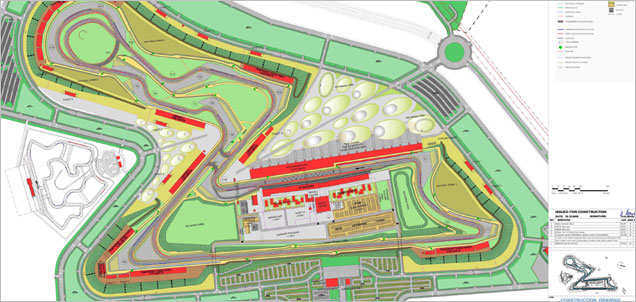
    Countdown to the Indian Grand Prix has begun – the Buddh International Circuit will attract 1.1 lakhracing enthusiasts from India and overseas From October 28 to October 30. The seating capacity, depending on the ticket sales, can be pushed up to 2 lakh.

    The response the race is getting can be gauged by the fact that flight tickets from Mumbai for that duration are almost double the usual price on ticketing websites, and most upmarket hotel rooms in Delhi and Noida are booked – in some cases at a 100 percent premium. Gurgaon hotels too are gainers here.

    Ticket prices for the event itself are between Rs 2,500 to Rs 35,000.


    The target group

    It is a young – largely male – premium audiences expected at the race. Defining the target group for Formula1, states Premjeet Sodhi, President, The Collaborative , Lintas Media Group, “Non-Cricket sports in India are quite Niche in India and the current followers of F1 are very small in number. However, in demographic terms, currently, the primary target group for the sport would be Males, SEC A, 15-34 years in the top 6 metros.“This target group is considered to be the most elusive – and hence the brands are interested in catching them on the tracks.


    Brands riding on F1

    Airtel as known, is ‘Title Sponsor’ for this sporting event, and the official logo of the India Race reads, ‘2011 Formula 1 Airtel Grand Prix of India’. Interestingly, Airtel gave up its title sponsorship of Champions League T20 sometime back, without completing its three-year tenure.

    Indian brands, are seeing an opportunity in associating with individual teams as well. The latest to be a part of Formula 1 is Sahara Group – it has bought 42.5 percent stake, at the approximate cost of Rs 500 crore, in the Vijay Mallya-owned Force India F1 team – and now the team has been renamed Sahara Force India. Interestingly, both these brands too are connected with the pace version of Cricket – owning Pune Warriors and Royal Challengers Bangalore in IPL respectively.

    Hero Motors, meanwhile, has signed a sponsorship deal with Narain Karthikeyan, India’s first Formula 1​ driver – as of now the deal is only for India Grand Prix.

    Interestingly Amul too is in the fray. The brand has tied-up with the Sauber Team (Ranked 17th). The brand logo will be seen on the front face of the rear wing, and also on the drivers’ helmets. On Amul’s part, it is an obvious attempt to establish itself as a youthful and ‘happening’ brand.

    And then there are brands with a long-standing relationship with Formula 1: like Red Bull and Mercedes Benz. Red Bull showcased its RB3 F1 racing car in Delhi throughout September, and has largely tried to attract the student community in the capital. Mercedes-Benz is looking at a long-term strategy, and plans to launch India’s first motor racing academy next year.

    Cafe Coffee Day has associated itself with the event by selling tickets at select outlets at Delhi, Bangalore, Mumbai and Gurgaon. The coffee shop, a favourite hangout of youngsters, must definitely have seen synergies between itself and F1. Or, perhaps, it was the other way round.

    The tickets would be available at Mercedes Benz showrooms as well.

    As for which brands would derive value by associating with Formula One, Anamika Mehta,COO, Lodestar Universal, states, “F1 is in its infancy in India and will grow from strength to strength with its first ever India Grand Prix. More than VFM its an opportunity to engage brands with the thrill and experience . Over a sustained period of time, it will definitely reap dividends for brands which create an engagement platform. India in that sense is poised right ‑ economic growth, young country that loves technology, thrill and speed.”
    It is not only youth brands, but also the Government that plans to reach out to the F1 fans flocking the capital. Tourism Ministry plans to promote tourist destinations close to the circuit, and at other places of interest. Plan, reportedly, is to promote 50 lesser known destinations including beaches, monuments, mountains, sand dunes, festivals and cuisines.


    The broadcasters

    The broadcast rights, as is known lie with ESPN. DTH service provider Reliance Digital TV (RDTV) has added ESPN HD and Star Cricket HD to its kitty of channels – objective obviously is to enable its subscribers experience the highly charged atmosphere as close to reality as possible.

    ESPN states that the spots have been sold out, and also that it is not selling Formula 1 Buddh International Circuit as a separate property. On ground activity too is meant for sponsors alone unlike Cricket. nil Sathiraju, Associate VP & Head-South, Mudra Max, said, “At this point in time, it’s apparently for the sponsors only. Also many of the deals are getting done outside of India because of the fact that it is F1.”

    Coming back to Broadcast media, Winners from India has Got Talent and Entertainment Ke Liye Kuchh Bhi Karega will perform live at the race. Bir Khalsa Group, Rohan & Group, Prince Dance Troupe, Reincarnation of Indian Acrobatics, Speed Painter Rabin Bar and several others will perform throughout the day on all three days. Of course, it is in addition to Lady GAGA (who would perform on the final day) and other well known DJs and bands from India and overseas.


    The online rush

    As a large proportion of racing aficionados are web friendly, there is a lot of activity in the virtual gaming world – where car races, anyway, continue to be all time favourites. Gaming organisations like Ibibo, Zapak and 7Seas Technologies are working towards providing users the excitement of being on the original track – virtually. While, Zapak has launched the official Formula One Game – ‘Vodafone Formula GP Racing, 7Seas Technologies too has a similar game ‘Xtreame’. The game on ibibo.com offers an opportunity to own a ‘high speed racing car’ in the virtual world.


    Ambush marketing: the Vodafone way

    If all this we not enough, enter ambush marketing. Even as Bharti Airtel is the title sponsor for the event, Vodafone is trying to steal the thunder from under its nose by holding road shows across the big cities. These road shows showcase an exact replica of the McLaren Mercedes racing car to be driven by Lewis Hamilton . And as mentioned earlier – the battle is being fought by Vodafone in the virtual space also – with Vodafone Formula GP Racing.
    F1 vs IPL

    In this backdrop, can one assume that it would be as attractive or the advertiser as a mini Three-day IPL? Our experts unanimously turn down the supposition. States Sodhi, “The IPL monetized the already existing mass fan following of cricket. It managed to over-night make Cricket a very premium sport despite it being a very mass followed sport. F1 on the other hand is a very different task of actually creating active fans in India. Today, it has the premiumness but lacks the mass appeal. Hence, from the advertising opportunity perspective F1 and the IPL are in a very different class. While F1 is for a very definitive age group and appeals primarily to the affluent and the higher SECs, Cricket is very broad based. Hence, the brands that would patronize F1 would be a subset of the IPL advertisers and then some more.” He adds, “In time, surely F1 will find its core set of advertisers but I doubt if its advertising valuations will come anything close to the IPL in the near future.”

    Top of the pyramid is growing in India – the number of rich is growing, and so is the number of young adults. Formula 1 being a race extensively patronized by the young rich surely has the makings of a future success story. A lot would, however, depend on the performance of Sahara Force India, and of Narayan Karthikeyan. Thrill and excitement of Formula 1, just might capture our fancy in a big way – car racing after all is a familiar territory with the kids growing up on a staple diet of virtual races.

  • Smart move! Huawei ropes in Chetan Bhagat

    By Gulveen Aulakh

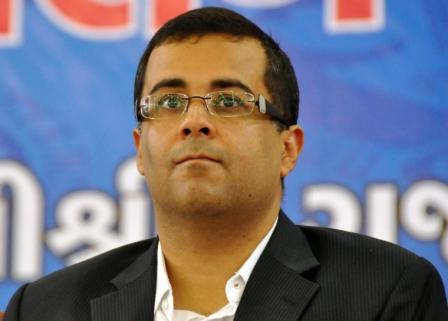
    India’s bestselling writer is entering unchartered territory, perhaps a first for any writer-the world of celebrity brand ambassadors. Chinese telecom equipment maker Huawei Technologies has roped in Mr Chetan Bhagat as brand associate for its devices such as smart phones and tablets, a senior executive told ET.


    “Mr Chetan Bhagat is a youth icon and he has changed the dynamics of the publishing industry. Our endeavour is to bring high-end technology at affordable prices. Our target audience and values are the same,” Huawei Devices India President Mr Victor Shan said. He refused to disclose the size of the deal. Industry insiders estimate it at nearly Rs 1 crore.


    Mr Bhagat-whose fifth book, Revolution 2020, is scheduled for launch on October 8-said he liked the concept of brand association. “They offered a brand-association in which I had no pressure to say nice things as such, unless I actually liked the product. I liked that concept,” he told ET in an email from Bangkok.


    <r Bhagat has been using Huawei phones for more than a month. The move has come as a surprise for brand experts. “I do not believe it (the partnership) gels, but it just might work. Companies make very odd choices, sometimes they click and do well,” brand consultant Mr Harish Bijoor said. He added that the deal gives hope for a different class of brand ambassadors and pave way for more cerebral kind.


    As part of his first endorsement deal, Mr Bhagat will launch Huawei’s new products including the world’s first Android 3.2-powered tablet, Mediapad, and Vision cloudphone, the world’s first smart phone based on cloud services.


    The tablet, scheduled for launch next month, will have electronic versions of Mr Bhagat’s books pre-embedded in it. Mr Bhagat will also be associated with all promotional and marketing activities of the firm across all media-be it digital, above-the-line or below-the-line campaign.


    Huawei, which plans to spend $3 million on promotions and advertising till December, has been struggling to build a positive image in India. Its image took a hit when the Indian government raised concerns that Chinese vendors could use telecom equipment they supply to snoop on the country and even launch cyber attacks.


    Huawei -the world’s second-largest telecom gear maker after Ericsson with 2010 revenues of $28 billion, or Rs 1.27 lakh crore – is now banking on Mr Bhagat’s power as an influential writer and motivational speaker to revive its image.


    Mr Bhagat will be Huawei’s brand associate for six months. “We will monitor the change in perception of the brand after the association, and then decide to extend it further,” Huawei Devices Director, Marketing & Solutions, Mr Anand Narang said.


    Huawei, which has been selling its gadgets in India for two years now, plans to become a more consumer-oriented company. In 2010-11, it recorded $490-million sales in the country and sold 12 million units including data cards, set-top boxes, CDMA and GSM feature phones and smart phones. The company targets $600-million sales this fiscal.


    It will seek to reach out to young consumers through new products and services over the next few months. Mr Bhagat will use these products and engage with consumers.


    “Chetan has a huge presence on Facebook and Twitter, with a combined following of nearly 2 million. He will engage with consumers on social media on his new book Revolution 2020, beginning from a contest on Facebook site this week,” Mr Narang said.


    Huawei is the launch partner for Revolution 2020. Huawei Devices Sales Director Mr P Sanjeev said that the company will consider the possibility of Chetan creating content for the brand, for instance, writing short stories that will be available for Huawei device users. The gear maker also plans to work with colleges where Huawei may offer some products at special prices .


    Source:The Economic Times

    Copyright © 2011, Bennett, Coleman & Co. Ltd. All Rights Reserved

  • Gufic’s good medicine for MPG

    By A Correspondent

    MPG India, the flagship brand of Havas Media, has been awarded the media account of Gufic Biosciences Ltd (GBSL), a Mumbai-based biosciences company with a focus on pharma and personal hygiene products.

    GBSL operates across many categories in India including pharmaceutical and personal hygiene. The company’s key consumer brands are Roll-on, Shapers and Stretchnil. MPG’s appointment will extend through all its key brands including soon-to-be launched brand Relieve and Relax.

    Commenting on the win, Mr Anil Kamath, Vice President, Marketing and Sales at GBSL, said, The team at MPG showed a thorough understanding of the categories that we operate across. Given the nature of the brands and the high clutter in the space, it is not always easy to come up with innovative solutions, but MPG team did just that.

    Ms Anita Nayyar, CEO of Havas Media, India said, The personal hygiene industry is on an upswing given the consumer is getting more and more concerned and conscious both about health and hygiene. We are confident our product offering will add value to the business and our knowledge in the category will get enriched by working with Gufic.

    Mr Kunal Jamuar, Executive Director West, MPG India, added, GBSL not only have a portfolio of well-known brands but also have a great vision on how to take them forward. We are hoping to do some interesting work and set new trends with disruptive thinking.


  • The Anchor: Shouvik Roy’s 6 pointers for a brand to change/refresh its corporate identity

    Three points pre-change/refresh

    #1 ‘Change’ or ‘refresh’? Both are different worlds. Change is radical while refresh may not be. So, if it is ‘refresh’, then be clear about the parts that need to be refreshed; you may or may not want to fix what is not broken.

    #2 Logo change is not the identity makeover – Logo is just one part of the visual identity – not the ‘change’. The first step is to articulate you corporate brand identity verbally. Use simple formats that are understood well and easily by all key custodians. Make sure you have defined the brand essence well and all key stakeholders agree. This will help evaluate the creative work that follows.

    #3 Researching before rebranding is a good idea – you may think you know all the reasons why your existing corporate identity does not work. Prepare to be surprised by what others have to say. Even a small scale research among multiple stakeholders of your brands – customers, influencers, employees, partners etc – will give you a better handle on how and what should change.


    Three points post-change/refresh

    #1 Involve all your employees – they are your key brand evangelists and custodians of your brand. Before you proclaim change to the world outside – make sure everyone at ‘home’ is clear and excited about this. Do not start telling the world at large if your employees are still asking ‘what is this all about?’

    #2 Implement it well across your brand portfolio – most relevant for corporates that have a complex architecture of co- and sub-brands. Make sure that the corporate identity refresh reflects well across your portfolio and the implementation is simultaneous. Often enough, this is where the focus is wanting. Everyone loves big-picture – this is the fine print.

    #3 It is a good time to celebrate – get your teams, partners, supporters, influencers, customers in together and tell them why they should celebrate the change. Every new journey needs a starting gun, or there is never much zest to race to the milestones you’ve set.


    Shouvik Roy is Director, Elephant, Delhi

  • Retail ka Raja’s road to be debt-free


    By Kala Vijayraghavan


    It took 25 phone calls, 50 text messages, a couple of emails and plenty of persuasion over three weeks before Mr Kishore Biyani, 49, India’s largest retailer finally agreed to meet. Two reasons, both related, could explain his uncharacteristic reluctance.


    The interview was on an uncomfortable subject, Mr Biyani’s battle with debt, Rs 4,352 crore to be precise. But then, Mr Biyani was never the one to duck tough questions. The second reason therefore is more plausible. Mr Biyani was busy; he was negotiating deals to carve out his empire, meeting global retailers, talking to investment bankers, planning foreign direct investment (FDI) compliance with corporate lawyers…the works.


    In short, he was doing what every other retail CEO perplexed by the current environment is now doing. He was also nursing a fever. Finally, meet he did…not during the week at his office in Vikhroli, an eastern suburb of Mumbai, but on a Saturday morning at his home in south Mumbai and rather reluctantly.


    Mr Biyani was to have boarded a flight to Paris on Tuesday night, but the fever kept him back. Had he gone, he might well have signed a unique deal with French retailer Carrefour. Mr Biyani is non-committal, but sources say that 17-18 cash-guzzling Big Bazaar outlets may be converted into a Carrefour franchise. There won’t be any equity infusion, so FDI norms are complied with. Big Bazaar is a hypermarket chain, the group’s flagship format and also one of his pet projects. And Mr Biyani is willing to give away parts of it…in return for some cash.


    Mr Biyani has changed. Some of his trademark chutzpah has given way to wisdom and caution. But his resolve to build a sprawling consumption business hasn’t weakened. Earlier he wanted to do this alone; now, he is open to multiple partners. “The business environment is challenging and different. And I have to take a more mature approach to business,” he says. “When we started the retail business, the environment was different. And I was younger to take those risks.”


    King-size Risks


    Mr Biyani wouldn’t be what he is today, the maharaja of Indian retail, if he hadn’t taken those risks. But at the same time, he also wouldn’t have the problems he is facing today if he hadn’t taken those very risks. That’s not the only irony Biyani is living today. In the past, he raised funds aggressively to grow his empire. Now, his biggest challenge is to raise money: to save his empire. Consolidate is the word he prefers to use, not save.


    Says Mr Thomas Varghese, CEO, Aditya Birla Retail: “Retail is cash-guzzling and it needs deep pockets to scale up. That’s the nature of the beast. Also, funding of the business can only be viable though equity and not debt.” Sources add that Mr Biyani opened too many fronts, book retailing, electronics, sports, salons, apparel. Debt was unavoidable because he was constantly experimenting with new formats that would make money.


    Top executives who work closely with Mr Biyani every day say he has decided to take the debt bull by it horns. He wants to raise Rs 5,000 crore in the next 12-18 months to make Pantaloon Retail, the flagship company that owns most of his retail business, debt free. Can he?


    Not so long ago, Mr Biyani was a rockstar in the stock markets. Pantaloon Retail went public in 1992, one year before Infosys. In the past 19 years, it has delivered an annual return of 25%. Investors cheered his rapid growth.


    Pantaloon Retail now occupies over 15.2 million sq ft space in multiple retail businesses. It runs 59 Pantaloon department stores, 42 Ezone electronics stores, over 200 hypermarkets under Big Bazaar and Food Bazaar and over 214 KB’s FairPrice stores.


    It operates 10 formats including Central (seamless malls), Brand Factory (discount fashion) and Ethnicity (ethnic wear). Mr Biyani also got into the financial services business to fund the purchases happening at his stores; he set up a foods business to help stockpile the shelves in his stores; set up venture funds to invest in his suppliers and even floated media companies.


    Notes Mr Biyani: “In most countries, retailers can focus on retailing alone. But when we started to grow, we realised the lack of an industry ecosystem around retail and realised the need to create one. That meant setting up the entire logistics and supply chain networks.


    That meant training thousands of people. That meant setting up technology and back-end processes to handle millions of transactions. And it also meant building enablers, stronger brands, consumer finance, media etc, that could spur consumption.”


    In short, he bet big… real big, on India’s consumption story.


    No Choice, But to Grow


    And, why not? The economy was booming, salaries were rising and consumers wanted to spend, investors were willing to give him great valuations, banks were lending cheap and real estate was easy to come by. It was rock ‘n’ roll. “In this journey, since we were often the first, we made the maximum number of mistakes; we also learnt the most,” says Mr Biyani. “And today, we know each business threadbare.”


    Sure, the feisty, home-grown entrepreneur was hungry for growth. But it is also equally true that he had no choice but to grow. Ever so often, there would be a buzz on retail FDI. Mr Biyani had to prepare for it. Retail is all about size; the bigger the better. Mr Biyani had to become a Godzilla if had to have any chance of fighting the likes of Walmart who would come in some day. Even if he didn’t want the fight, he still needed scale to position himself for a sweet buyout.


    And so Pantaloon Retail grew spectacularly fast. But debt fuelled it. It now clocks Rs 12,366 crore in revenues, about Rs 10,000 crore more than what it made five years ago. Its borrowings have also increased from Rs 700 crore to Rs 4,350 crore.


    Here is a good way to look at Pantaloon’s growth, in the past five years, the company had to borrow Rs 1 to generate every Rs 3 of annual revenues. This was okay when the economy was growing and debt was cheap. But the economy slowed down and inflation went up, forcing the Reserve Bank of India to raise policy rates 12 times since March 2010.


    “The retail business is modular and its expansion can be halted or grown depending on the environment, cash flows, and interest rates. We will grow accordingly and take decisions which are conducive in the given environment,” says Mr Biyani, his new found caution very much in evidence. Pantaloon Retail earns Rs 1,203 crore as operating profit, but more than half of it goes towards paying interest charges, leaving it with only Rs 142 crore in net profit after accounting for depreciation and taxes.


    Dash Bigger Than Cash


    Industry sources say Mr Biyani was reckless in expanding faster than what the cash flows supported, and not slowing down enough even when he had the chance to do so. “All big players including Reliance focused on restructuring and improving operating efficiencies during the slowdown but Biyani was chasing valuations and growth,” says the CEO of a rival company who did not want to be identified.


    “Pantaloon’s debt level is uncomfortable,” says Mr Arun Kejriwal, director, Kejriwal Research and Investment Services. “Also, the management has not shown any concrete plan to reduce debts.” Mr Kejriwal says same-store sales have not grown exceptionally, suggesting that the issue with debt, if not resolved, may create problems in future. “It’s imperative for Pantaloon to retire debt,” says Mr Gautam Duggad, a research analyst with Prabhudas Liladhar, a Mumbai-based brokerage. “Although Pantaloon’s gearing is not alarming, its absolute debt is quite sizeable.”


    All this has made investors jittery. Since April this year, the stock has lost 30% in value, while the BSE Sensex has dropped only 14%. “We are conscious of what the world is thinking about us and we are always discussing ways of cutting  debt,” says Mr Shailesh Haribhakti, independent director at Pantaloon Retail. “We are very responsive to the concerns raised.”


    At Home With Less Control


    At his tastefully done-up residence, Mr Biyani is clear about what he needs to do. There is no emotion, regret or hesitation as he spells out his next steps. He is preparing to take some tough calls, including giving up control of some of his prized possessions.


    Mr Biyani is willing to share ownership in Big Bazaar, Ezone, KB’s Fairprice, and Home Town, all successful formats he has pioneered. “All these years, we have grown the business by ourselves. Now the time has come to get partners. It’s now time to consolidate and let somebody else run the business [shared ownership],” he says. That’s what has brought Mr Biyani to where he is now, in the middle of stitching together half a dozen deals with financial ingenuity to ensure all FDI norms are complied with.


    He has just signed a deal to give 49% stake in the Future Group’s foods sourcing and manufacturing entity to Lawson Inc, Japan’s second-largest convenience store chain. The move will relieve Pantaloon Retail of the burden of funding the aggressive growth plans of the food business. He is in talks with an Indian company to sell equity in Ezone. And then, there is the likely deal with Carrefour.


    Mr Biyani also has plenty of non-core businesses: consumer finance, insurance, textile mills, logistics and JVs in mobile retailing and office supplies, Future Capital Holdings (FCH), life and non-life insurance businesses under a partnership with Generali. The Future Group hopes to raise Rs 2,500-4,000 crore by selling equity in these.


    An Edelweiss report values FCH, and its e-commerce, supply chain, real estate and insurance ventures around Rs 3,000-4,000 crore. “Any such tie-up would bring funds in the company and would help deleverage its balance sheet,” says Ms Sangeeta Tripathi, senior analyst at Sharekhan.


    ‘Picked My Horses Now’


    Industry sources say exiting many of these businesses is a good idea. “Walmart is known for its austerity and Gucci for its lavish luxury,” says a senior industry CEO pointing out that the Future group wanted to be both. It can’t.


    “If I were Kishore Biyani, I would totally back the top two horses and ensure that I become so powerful that I would create far more value,” says Mr BS Nagesh, founder, Trust for Retailers and Retail Associates of India, a not-for-profit organisation that trains front-end staff in retail. Nagesh is also the vice-chairman of Shoppers Stop, but these are his personal views.


    Biyani is thinking along similar lines. He now plans to concentrate on just four large formats, Pantaloons, Central, Big Bazaar and Food Bazaar, limiting itself mostly to food, fashion, home and general merchandise. “In rich countries, retailers are among the largest businesses, wealth creators and employers. We’ll expand prudently and wait patiently for our turn,” he says. “People are right that we should back a few big businesses and scale it up big time. We have picked our horses now.”


    (Additional reporting by Kausik Datta)


    Source:The Economic Times

    Copyright © 2011, Bennett, Coleman & Co. Ltd. All Rights Reserved

  • Networking UnLtd @ F1: Tag Heuer, Mercedes, UB, etc book corporate boxes

    By Meenakshi Verma Ambwani & Ravi Teja Sharma


    The jury may be out on whether it will be the biggest international sporting event ever to come to India, but not many dispute that the upcoming Formula One race will offer the best corporate schmoozing platform the country has ever seen.

    India’s first ever Grand Prix race may be some days away, but the race among corporate groups, celebrities and other assorted moneybags for vantage spots has begun.

    “Only a few sports – golf and the tennis grand slams – give a business networking opportunity to companies at this scale,” says Mr Indranil Das Blah, chief operating officer at Kwan, a sports and talent management firm.

    Others say that the very nature of the sport – a heady cocktail of speed, technology and human skill spread over three days – makes it best suited for networking.

    “It is a three-day thing unlike a four-hour cricket game, which gives corporate executives a unique opportunity to network,” says Mr Ashish Hemrajani, chief of Bigtree Entertainment, which runs the official ticketing partner Bookmyshow.

    Executives at the Swiss luxury watch brand TAG Heuer have booked corporate boxes to host top clients and to showcase their best ware. Tag is not alone. Top global banks and a raft of companies, including Mercedes Benz, Gulf Oil, NIIT, UB Group, Airtel, JK Group, Venky’s, Essar and Punj Lloyd, are some of the others to have booked boxes, each of which can seat 30 people, to host their top executives and business guests.

    “We have been associated with motor sports for a long time globally. Now that it is coming to India, we have booked corporate boxes to entertain our customers and associates from India and abroad as part of our brand building as well as relationship building exercise,” says Mr Ravi Chawla, president-lubes at Gulf Oil.

    Jaypee Sports International, the company behind the Indian circuit taking place at Greater Noida from October 28-30, says all the 55 corporate boxes, each with a price tag ranging between 75 lakh and 1 crore, have been sold. The corporate boxes come with the choicest hospitality, catered by the country’s top five-star hotels.

    While for corporates, there are these special boxes, for the wealthy and the cognoscenti, there’s the luxury Formula One Paddock Club, which has been described as the “inner sanctum” of the F1, patronised by some of the world’s top businessmen, bankers and celebrities, indulging in the best gourmet food, wine and luxury money can buy.

    This description is not without reason. Entry into Paddock Club does not come cheap. At $5,460 ( 2.68 lakh) per person, it’s easily the heftiest price tag for watching a sport, at least in India. Pitched as a super premium experience, Paddock Club patrons will get a real close view of the race pits, walk into the pit lanes and be privy to the strategy meetings of the teams and engage in conversation with the teams’ drivers and management.

    “It is the kind of hospitality experience that India has never seen before,” promises Mr Suvrangsu Mukherjee, managing director Indian subcontinent at Total Sports Asia, one of the two firms authorised to sell Paddock Club tickets for the Indian F1 race.

    Executives at Total Sports Asia and SOTC Sports, the other company authorised to sell tickets for the Paddock Club, say they are getting bookings from local and international companies. For a price, companies can even set up branded suites with privilege viewing and dining enclosures at the Club.

    The Paddock Club’s ticketing and hospitality arrangements is controlled by F1’s in-house company Allsport Management and all its revenues go to Bernie Ecclestone, the founder and top boss of F1. Visitors to the Club in other races have included Hollywood stars such as Michael Douglas, Brad Pitt and Nicholas Cage, music legends Eric Clapton and Sir Cliff Richard, filmmakers George Lucas and Quentin Tarantino, model Liz Hurley and singer Danni Minogue. This time around, international singing sensation Lady Gaga, who is performing at the FI and stars such as Shah Rukh Khan and Hrithik Roshan are expected to be present at the race.

    Big Corporate honchos like Airtel chief Mr Sunil Bharti Mittal and Vodafone global CEO Mr Vittorio Colao will be attending the race.

    At the after-race parties being organised by Mr Arjun Rampal, corporates are booking tables that start from 4 lakh up to 10 lakh. These parties will feature stars Messrs Shah Rukh Khan, Farhan Akhtar and Hritik Roshan and a host of other celebrities.

    Says Mr Tikka Shatrujit Singh, chief Asia representative for French luxury house LVMH: “It (F1) will be a big opportunity for the global elite to network with the young tycoons of India and policymakers.”

    “For companies, it will be an opportunity to showcase what they do and to entertain their big clients and guests,” said Mr Singh, who plans to be at the race.


    Source:The Economic Times

    Copyright © 2011, Bennett, Coleman & Co. Ltd. All Rights Reserved

  • Case Study: Hippo uses Twitter to take stock

    Title of the campaign:  Plan T. Hippo tracks inventory through Twitter.

    Company:  Parle Agro

    Aims and Objectives:   In 2010, Hippo Baked Munchies was successfully launched into the Indian snack market. With its simple yet insightful philosophy of ‘Hunger is the root of all evil. So, don’t go hungry.’ Hippo became a runaway success. However, its nascent sales and distribution network found it challenging to keep track of stock, identify and re-stock empty shelves across 400,000 stores nationwide. In India, 92% of the snack market is unorganized and inventory tracking is usually a logistical nightmare. To solve this, Hippo turned to its followers on Twitter and asked them to tweet whenever they couldn’t find the snack in store.

    To connect with the consumers better, Hippo entered social media. The brand’s chirpy and talkative personality instantly gave it an edge over the rest.

    The Background: Hippo’s lovable anthropomorphic character distinguished it from the rest. Hippo could talk like a person, like a friend, rather than a brand talking to its consumers. And just like a person, Hippo also had a humorous opinion about almost everything, endearing him to everyone he communicated with.

    Hippo signed up on Twitter, Facebook, Blogspot and even created a fun, friendly website: www.hippofighthunger.com. In the market Hippo exceeded everyone’s expectations and the packs sold like hotcakes, leaving the shelves across 200,000 stores empty.

    Challenges and impediments

    Having been recently launched, Hippo had a nascent distribution system, which was unable to identify empty stores and restock packs.

    Worry: Hippo couldn’t afford to lose the momentum gained through communication. It was also feared that people might wrongly consider the empty shelves as an indication that the brand has failed after a short-lived launch phase.

    In Action:

    Traditional Route: Where taking stock meant appointing sales officers to visit store by store in areas allotted to them and waiting for three days (the usual time that this process takes) Hippo did not want this to work in favour of the competition.

    Creative Execution: As a snack brand, Hippo encouraged a simple philosophy based on a simple insight , ‘Hunger is the root of all evil. So, don’t go hungry.’ Hippo struck the right chord with his audience as they bought into this simple human truth. Since Hippo stood for a cause, rather than merely selling a product, people willingly participated in his ‘Hunger-Fighting’ campaign. Hippo enjoyed a great response as his ‘hunger-fighters’ were tracking inventory, while having a larger cause at the back of their minds.

    Hippo had a simple yet powerful philosophy- ‘Hunger is the root of all evil. So, don’t go hungry.’ Hippo used this simple human insight to connect better with his consumers even on Twitter. Hippo spoke to them as a hunger fighter. As more people bought into this philosophy, Hippo launched Plan-T and urged them to help him identify empty shelves and inform him via a tweet whenever they found empty shelves in their neighbourhoods. Tweets poured in from more than 50 cities. People were tweeting from their cellphones from supermarkets, hypermarkets and local grocery stores. Hippo collected this information, analysed and sent it to the local distributors of respective areas, who eventually restocked the packs.

    Solution: Since it was Hippo’s popularity that created a huge demand for itself, Hippo used the same to fix its supply. Instead of spending large amounts of time (and money) outsourcing these distribution and supply duties, Hippo decided to turn to his followers on Twitter – while also acknowledging that In India, almost 94 percent of the retail environment is unorganized.

    Hippo asked his followers to tweet and inform him about locations and even specific stores where Hippo packs were unavailable.

    Hippo set up a core cell at the manufacturer’s headquarters in Bombay, which monitored these tweets, collected this information and passed it on immediately to teams of distributors in the respective areas. This system proved to be extremely efficient. Within 48 hours of locations being identified, teams of distributors had already replenished stocks.

    As people began to see that their tweets actually succeeded in making Hippo available at their neighbourhood store, word of mouth and social media took over and Hippo became a rage. Soon, tweets were pouring in 24/7, from over 45 cities.

    The sales force instantly dispatched stock to locations with empty shelves. All this, with barely a quarter of the staff required to solve supply and distribution problems in India by conventional means.

    Hippo also updated its followers meticulously and rewarded the most active Hippo followers on Twitter with personalized ‘anti hunger’ Hippo Hampers.

    Result:  When this initiative was taken up there were 800 people on Twitter were already on following Hippo. Shortly after launching this activity, the number of people tracking the inventory equalled 50 percent of the sales and distribution network itself and at zero cost. And the sales were upped by 76 percent.

    Hippo thus managed to blur the lines between the marketing department, consumers and the distribution force. Hippo used social media and provided real-time solutions to distribution and availability issues. Describe the results in as much detail as possible. Hippo gauge demand, and

    Hippo upped his sales by 76 percent. For consumers, the knowledge that a mere tweet could restock their neighbourhood store with their favourite snack was highly fulfilling. Hippo could also measure the return on investment per tweet. Plan-T is now a case study taught at leading B-schools, featured in various books on online marketing. Even TWTRCON, San Francisco acknowledged the innovative manner in which Plan-T solved such a technical problem. Plan-T has found a permanent place in the brand’s sales and distribution system. And, all this at almost no cost.

    Learnings:  Apart from being recognized in India for its uniqueness and effectiveness, the campaign was presented as a case study in the Twitter Conference which looks at showcasing innovative business use of real-time web. Raj joined the list of TWTRCON speakers comprising the likes of Scott Monty (Head, Social Media – Ford Motors), Othman Laraki, (Director, Twitter), Steve Rubel (Senior vice president – Edelman Digital), Avinash Kaushik, (Analytics evangelist, Google).

    Awards and accolades:  In Creative Abby the campaign won Gold in Interactive category for Creative use of social media. In Media Abby the campaign won two Golds in Best use of media – social media and Best use of Never before Media. We also won three Golds in Campaign India Digital Media Awards presented by BBC for  Best Loyalty Campaign, Media Innovation and Best Social Media strategy for Plan-T – Tracking Inventory through Twitter.

    The campaign was also highly appreciated by creative minds like Charlie Crowe and Robin Wight, at the Goafest 2011.

    Analysis:  By setting an example, Hippo may have found some first answers to the following:

    Can social media be employed to plug the gaps between sales and distribution?

    Can social media get consumers to voluntary work on the most  technical aspects of the brand?

    Can Brands set up alternate sales and distribution network?

    Competition’s Response: This activity and Hippo’s popularity was even closely observed by one of the biggest players in the country. The competitor even tried aping Hippo’s technique by setting up a Twitter account and even started following Hippo’s followers.

    Refer: http://www.hippofighthunger.com/plan-t/

    http://twtrcon.com/2010/12/03/watch-managing-your-supply-chain-in-real-time-hippo-case-study/

    Source: Creativeland Asia

  • I want to put a ding in the universe: Steve Jobs

    Steve Jobs“We lost one of the most influential thinkers, creators and entrepreneurs of all time. Steve Jobs was simply the greatest CEO of his generation,” Rupert Murdoch expressed in his tribute to Steve Jobs.


    Jobs is gone – but examples of his genius would continue to be around us in form of  Apple’s innumerable gadgets, and also his words – which inspired many for more than last 25 years, and would continue to do so…always.


    Here are a few compiled by the MXM team:

    1. Some people are not used to an environment, where excellence is expected.


    2. It’s more fun to be a pirate than to join the navy.


    3. Do you want to spend rest of your life selling sugared water, or do you want a chance to change the world?


    4. The only way to do great work is to love what you do. If you haven’t found it yet, keep looking. Don’t settle. As with all matters of the heart, you’ll know when you find it.


    5. I think if you do something and it turns out pretty good, then you should go do something else wonderful, not dwell on it for too long. Just figure out what’s next.


    6. You can’t just ask customers what they want and then try to give that to them. By the time you get it built, they’ll want something new.


    7. We think the Mac will sell zillions, but we didn’t build the Mac for anybody else. We built it for ourselves…We just wanted to build the best thing we could build.


    8. I have looked myself in the mirror every morning and asked myself: ‘If today were the last day of my life, would I want to do what I am about to do today?’ And whenever the answer has been ‘No’ for too many days in a row, I know I need to change something.


    9. I mean, some people say, ‘Oh, God, if [Jobs] got run over by a bus, Apple would be in trouble.’ And, you know, I think it wouldn’t be a party, but there are really capable people at Apple. My job is to make the whole executive team good enough to be successors, so that’s what I try to do.


    10. I’ll always stay connected with Apple. I hope that throughout my life I’ll sort of have the thread of my life and the thread of Apple weave in and out of each other, like a tapestry. There may be a few years when I’m not there, but I’ll always come back.


    Being the richest man in the cemetery doesn’t matter to me…Going to bed at night saying we’ve done something wonderful…that’s what matters to me.