Category: MARKETING

  • Cadbury’s Diwali message with a twist


    By Ravi Balakrishnan


    [youtube width=”350″ height=”250″]http://www.youtube.com/watch?v=Pl2xsSJbE3M[/youtube]

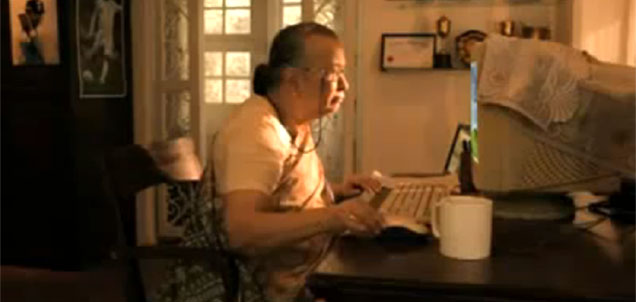
    Cup of coffee in hand, grim determination on her face an elderly woman struggles to turn on a decade old computer and struggles even harder to get online, spilling coffee over the keyboard. All the while a voiceover from her son intones about how busy he’s become, leaving him no time to ‘waste’ hanging out with friends (and, by implication, his mother), and why bother anyway when they can stay in touch via phone, chat and social networking? It seems like a fairly standard tearjerker for a HelpAge India style NGO. Except it is actually for Cadbury’s Celebrations; a range of chocolates specifically designed for gifting through the festive season.


    Celebrations’ previous ads have always been, well, celebratory. For instance, a sister shows up unexpectedly for Raksha Bandhan. And Diwali is a noisy backdrop to the commercial in which a young man bonds with the neighbourhood grouch. In ‘Lonely Maa’ though, there are none of these happy endings; no sudden ring of the doorbell with the son showing up, pack of Celebrations in tow. A courageous tack to take even if it is a bit of a downer.


    However, according to both marketer and agency, the new ad does not mark a radical departure from the central brand thought or strategy. The ad still ties into the line ‘Iss Diwali Aap Kisse Khush Karenge?’ (Who will you make happy this Diwali?). This time around, though, there’s a definite call to action, to provoke people into stepping out of the digital space. Says a company source, “We wanted to get people to physically meet the ones they want to make happy. There were many creative renditions, but we chose this one since quite often, our parents and elder relatives are not comfortable with the digital medium. The medium too does not convey emotion all that well.”


    Younger tech savvy consumers who spend large parts of their lives online were the main target audience. As a result, the commercial is an online exclusive and won’t be seen on television. Lonely Maa was seeded on the brand’s Facebook page, with links to YouTube. Says Mr Raj Nair, national creative director, Contract, who also stepped behind the camera to shoot the film, “It’s criticising the online medium while being on it. That’s hitting people a lot harder and driving the point home.” In its fifth day online, the commercial had garnered 14,112 views at the time of going to print. Both Contract and Cadbury are counting on the ad going viral. If marketer and agency are to be believed, it is particularly popular with the NRI audience who are unfortunately not the immediate target for the brand.


    The few comments on YouTube are full of presumably negligent children lamenting the error of their ways and promising to be home for Diwali. And that’s as per plan according to the company source: “While the mother in the ad is struggling, she still has a positive attitude. Unless we made it a bit provocative, the response to the call for action wouldn’t have been there.”


    For something built around the insight of technology as an alienating force, ‘Lonely Maa’ does evoke an early Nokia ad featuring a similarly lonely mother sifting through photos of her son. Mr Nair says he doesn’t recall the Nokia commercial at all but adds: “I leave it to people to draw their own inferences. This is a bigger thought: telling people to go and meet each other (preferably with a box of Celebrations). The non-technology aspect distinguishes it.” Apart from the commercial, Cadbury Celebrations also has a special Facebook linked programme lined up, to fly people home from Mumbai to Delhi in time for Diwali. So, to all the Lonely Maas out there; be careful what you wish for.


    Source:The Economic Times

    Copyright © 2011, Bennett, Coleman & Co. Ltd. All Rights Reserved


    Image: Grab from TVC on YouTube

  • The Anchor: 6 reasons why ‘Likes’ aren’t a good indicator of Facebook popularity

    By Rohini Kapur

    The Facebook rat race has begun, and everyone’s racing to beat competing brands by gathering as many ‘Likes’ as possible. So while the fight for market share and the next bestselling product rages on, marketers are doing their best to win the Facebook battle. Unfortunately, there are hundreds of brands on Facebook at any given moment vying for your target group’s attention, even as Mark Zuckerberg introduces changes every few weeks. Meanwhile, as Indian users become more discerning online, the number of ‘Likes’ (or fans) on your page has can be quite misleading. The top six reasons your page ‘Likes’ don’t really indicate how many people really like your Facebook page:

    #1 ‘Likes’ (or fans, as they were called earlier) are there to win goodies: Let’s face it– most Indians are constantly on the look-out for freebies. From stickers to sunglasses, MP3 players to mobile phones, they will do anything for a chance to win something cool. They may not be interested in your brand or your updates– they are just there to impress their new girl with the free BlackBerry.

    #2 ‘Likes’ does not mean engagement: One reason brand managers love the online space is because a user can “engage” or “interact” directly with the brand. Sadly, that’s not always the case. A large number of fans does not always lead to a highly engaged audience. So if you’ve got 1 lakh fans but only 15 comments and 50 likes in response to your updates, it’s time to wonder whether the remaining 95,935 people really bother reading your updates at all.

    #3 They like your brand or product, but not your page: Some of the most loved international and Indian brands have just as good pages with updated content, a distinct voice, and a vibrant community. But then there are those with thousands of ‘Likes’ that have run-of-the-mill content, generic updates and somewhat relevant information from time-to-time. The question is– are those people still on the page because they like your brand or because they like your page? There is a small but significant difference here– a consumer may joined your community based on a wonderful experience he had with your product, but is not enjoying the brand story on Facebook.

    #4 A fan has forgotten about your page: Very often, a user ‘Likes’ a page because he likes what he sees, but he joins other pages and gets busy with things such as his real life, friends’ kids’ photos and viral videos. As a result, his engagement with the page drops, the page’s Edgerank falls, and the page updates tend to disappear unless the user scrolls all the way down his news feed. If he doesn’t see you updates, do he still like your page?

    #5: ‘Likes’ could be lurkers, haters or wannabes: A number of fans on brand pages just want to know what people are saying about the brand, product or service, especially before buying high value products like cars. They want to know product features, new collections, prices, and how the brand responds to complaints about poor service. Similarly, a number of fans are there just to complain. And then there are the wannabes that you are almost everywhere– you see them ‘liking’ every post, competing with others to be the first to comment or advising others. They aren’t really there because they love your page, they are there for timepass on Facebook.

    #6: They ‘liked’ your ad, your welcome/ landing tab or the Mallika Sherawat picture you posted: As a reflex action, users have begun seeking the ‘like’ button (or a thumbs up, star etc) online when they see something that amuses, enthralls or captivates them. Pressing the ‘Like’ button on your page could be due to a variety of reasons– the very cool ad they saw on Facebook, the Facebook widget on your website, an attractive landing tab or a hot picture of their favourite actress.

    Rohini Kapur works in social media and web strategy and runs a fashion blog.

  • Marketers up self-image reinforcement


    By Neha Dewan


    Companies are working harder this year to preserve or refine their projected image, with a 40 percent jump in volumes of corporate image advertising on television over the corresponding period of the previous year.


    According to data released by media measurement organisation TAM Adex, Hero MotoCorp, which went in for an advertising blitz after a change of corporate identity, tops the list of advertisers in the corporate brand and image category between January and September.


    At a time when questions are increasingly being raised over corporate governance and corporate greed, companies are turning to advertising that focuses on their core values and contribution to society rather than just the products or services they seek to sell. Corporate image advertising seeks to reassure consumers as much as to convert them to the intended perception of brands.


    Maruti, Adidas and Mahindra & Mahindra are some of the other companies that figure among the top ten advertisers in the category. Aditya Birla Group and Life Insurance Corporation of India are the only two advertisers among this year’s top ten that featured in last year’s list of top advertisers as well.


    FMCG company Reckitt Benckiser, which topped the list last year, does not figure among the top ten advertisers this time round. Neither does any telecom company, despite the 2G telecom scam taking the sector by storm ever since it broke out last November. Just before that, however, Essar Group, a diversified conglomerate with interests in communications among other sectors, was the second biggest advertiser during January-September 2010.


    “With the growth in economy, companies are paying greater attention to building their corporate brand equity. Moreover, with so many brands available today, a consumer will prefer to know what he is buying and where the brand really comes from,” says Mr Madhukar Kamath, group CEO, Mudra Group.


    This year’s leading advertiser launched its new corporate identity with the campaign ‘Hum Mein Hai Hero’ on Independence Day across television, print, radio and cinema. “We preceded it with a period where we did not advertise at all. The result was quite effective as it led to a very smooth transition for us,” says Mr Anil Dua, senior VP, marketing and sales, Hero MotoCorp.


    Dua reasons that corporate image advertising is all the more necessary for companies that sell products such as twowheelers. “For a category like ours, there is more involvement on behalf of the customers. Hence, they need more assurance and tend to see the company from closer quarters,” he says.


    India’s biggest utility vehicles maker Mahindra & Mahindra turned to corporate image advertising early this year when it went in for an image makeover with its ‘Rise’ campaign focusing on the core values of the group. The group plans to have two-three rounds in a year of such advertising which will be a mix of mass media, digital and PR-driven communication.


    “Consumers are asking questions to corporates about their philosophy, practised values, stance on sustainability and contribution to the society,” says Mr B Karthik, GM- corporate brand management and business transformation, M&M.


    Source:The Economic Times

    Copyright © 2011, Bennett, Coleman & Co. Ltd. All Rights Reserved

  • MTR eyes Rs 500 crore by 2012

    By Tuhina Anand

    Haldirams, ITC, Frito Lays and numerous local players in the Rs 6000 crore snacks category now have competition from MTR, which is known for its South Indian instant food mixes and spices. With its rich heritage, the brand MTR has now forayed into the South Indian snacks category, which can be understood as the category is growing at a rate of more than 40 percent a year. Also MTR has been trying hard to revamp its image post its takeover by Norwegian company Orkla. The company, which was largely restricted to South India, has in the last few years gone national and has revamped its offering, packaging and has been highly visible on the mass media platform. So the move is not a surprise, considering that its arch family rival Maiyya’s too have forayed into the snacks category and at around the same time.

    If one looks at the traditional snacks market, it clocks at Rs 3600 crore, growing at 36 percent, thus clearly the biggest player in this category. South Indian snacks remains a market of small brands or unorganized, as no branded player has seriously ventured into this market. While snacking is a big habit in the South, the branded South Indian snacks is the most under-developed market at 6 per cent value share of the total national traditional branded market. Haldiram’s can be seen as the only national player offering traditional snacks but in their portfolio, North Indian snacks dominate with the South Indian traditional snack category having minimal or no presence.

    Mr Vikram Sabherwal, VP Marketing MTR Foods Pvt Ltd, explains, “While evaluating various future growth opportunities consumer research clearly pointed to a good fitment between South Indian snacks and MTR. Looking at the potential of the market there is an opportunity for MTR to play a role in the ‘South Indian traditional snack category’.”

    “Snacking is heavily entrenched in the Indian food habit and hence there is immense potential in this category. We expect that snacks will become integral to MTR’s product offering and help achieve our target of touching Rs 500 crore by 2012,” said Mr Sabherwal.

    The company will leverage MTR’s distribution strength and use it to effectively cover the snacks outlet universe. Initially the snacks range has been launched in Karnataka and at later date will be extended to other states.

    On these products having takers beyond South India, Mr Sabherwal said, “Food in India is going through many changes. We as Indians are becoming experimentative with our food, hence these product will find national acceptance. Secondly some of our products like chakli already have a national footprint.”

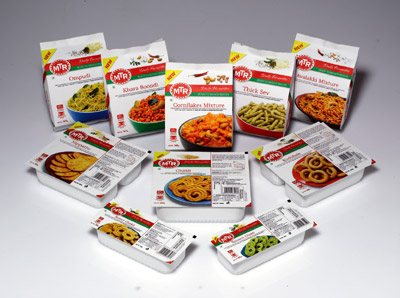
    The products launched under snacks category include Chakli, Butter Chakli, Spinach Chakli, Khara Boondi, Ompudi, Avalakki Mixture, Thick Sev and Cornflakes Mixture. MTR is offering its consumers the promise of crispy and crunchy snacks made with the latest technology in production and packaging. MTR is hoping that with their superior offering consumers will shift from the unbranded to the branded segment, hence expanding the market.

    Meanwhile, MTR has already started advertising the snacks category and has roped in Kannada film stars Upendra and Priyanka to advertise the range.

    Concluding, Mr Sabherwal said, “We at MTR will consistently drive our key categories like mixes, spices and masalas along with snacks. We are also constantly evaluating new products/categories to delight our consumers.”

  • Can elite F1 supplant cricket?


    By Tuhina Anand

    with inputs from Rishi Vora and Shubhangi Mehta


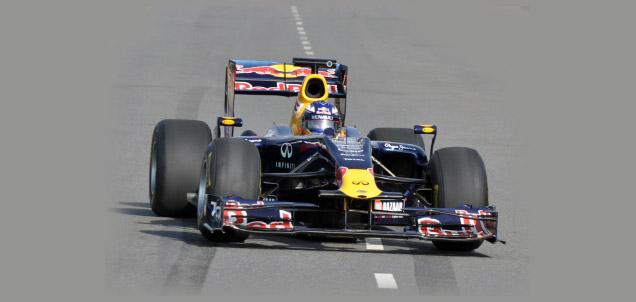
    With so much hype surrounding the Formula One Grand Prix at Buddh International Circuit slated to take place at the end of this month in New Delhi, it makes one wonder whether F1 is the sport that can be an alternative to the cricket-crazy nation of India.  So while we have been talking to a cross section of the industry to understand how bullish are they on the F1 and one thing that has emerged clearly is that cricket will always be “the” sport that will rule Indians and other sports, be it hockey, tennis or F1, will remain the poor cousin. Thus cricket will be the game that will be raking in moolah for both advertisers as well as broadcasters, and not to forget the players themselves with multi-million endorsement deals.


    Mr Harish Bijoor, CEO, Harish Bijoor Consults, is clear that there is no sport that can kill cricket, as it is a very democratic game that anyone with a bat and ball can play. But sports like F1 are restricted to a few. Also, he is of the opinion that F1 is an upper end/niche brand, hence the advertisers like Mercedes Benz would benefit from being part of the event but not Uncle Chipps!


    Niche is a word that well defines F1 and is what has emerged from MXM India’s interaction with various industry leaders. Mr Arvind Sharma, Chairman of India Sub-Continent, Leo Burnett too echoes the same sentiment. He said, “Cricket is a mass sport in our country. I do not think that F1 can take over cricket in any which way. The brand that are associating themselves with F1 are a niche brand which cater to a specific audience, which can also be called the upscale society.”


    There are others too like Mr Sambit Bal, Editor, Cricinfo who vehemently says that F1 caters to an absolutely niche market and for F1 to replace cricket in popularity, even after 20 years, is far far-fetched. Mr Ayaz Memon, veteran journalist, reasons: “F1 is an urban sport watched by an elite audience. The popularity of the sport is growing, no doubt. But, I don’t think it’ll kill cricket. India is a cricket-crazy nation, so very unlikely.”


    In fact a broadcaster, who refused to be identified, puts its bluntly, “No, that’s very unlikely to happen. India is a one-sport country. F1 does have some avid followers, but are outnumbered by people in India who think the game of cricket is a religion and not just a sport.”


    As earlier mentioned by Mr Bijoor, the appeal  of cricket lies in it being democratic in nature. One can see young and old wielding the willow in every gully and mohalla hence truly being the sport of the nation. That explains why sportsperson from any other game are still struggling to gain prominence in India barring few that could be counted on fingers but that doesn’t apply for cricket where the entire team and the lead stars find their way to mint money be it through endorsements or even taking up commentary post their innings. Plus the fan following for someone like Tendulkar or MSD is something no other sportperson can even dream of. Rajeev Raja , NCD, DDB Mudra Group  goes to the extent of calling impossible that a sport can replace cricket in India. He said, “The mass appeal that cricket has cannot be compared to any other sport in India. It appeals to almost 900 million people whereas F1 may not even appeal to 100 million people, its only a niche segment that this sport will appeal to and hence we will find similar advertisers advertising with the sport.”


    While it is agreed that cricket will always reign supreme in India and F1 is seen as the sport for the elite niche, one thing can’t be denied – that the hype around the Grand Prix is unprecedented. In fact it is this hype that is making one think that probably if not an alternative but an able competition to cricket is here. Internationally, F1 rakes in the moolah and is very popular. Mr Dhunji Wadia, President, Everest Brand Solutions said, “It has been widely believed that we are slow starters, but once we gather momentum, we race to the finish line quickly. A lot of young people in India want to have an alternative to cricket and perhaps Formula One is the right sport.  The statistics on sponsors and advertising revenue are sounding promising for the first event.  But there is still some way to go and it would at best be an urban phenomenon.  Having said that, no other sport has generated as much enthusiasm over here besides cricket.”


    So at least for starters the prospects for F1 are promising. Mr Darshan M, CEO – I1 Super Series at Machdar Motorsports Private Limited, a company that is looking to bring the IPL format in motorsports to India, explains cricket and F1: “The comparison is like sunrise and sunset here – both are beautiful in their own way. Motorsports is globally very popular and F1 definitely is an opportunity among youth for whom speed is thrill. In fact, the craze can be gauged from the massive turnout in Bengaluru recently to see Lewis Hamilton show his moves. I think there is enough space for another sport other than cricket to make a name in India.”


    Picture: Fotocorp

  • Phaneesh Murthy gives second Guru Mantra lecture

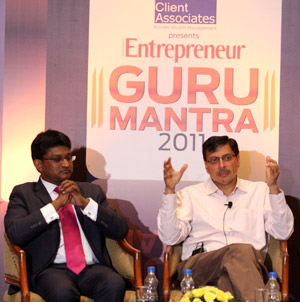
    iGate Patni’s CEO, Phaneesh Murthy (right) with Senthil Chengalvarayan of Network 18 group

    By A Correspondent

    Entrepreneur, a monthly magazine from the Infomedia 18 stable, in association with Client Associates, recently organised the second edition of the Guru Mantra lecture series with Phaneesh Murthy, CEO, iGATE Patni.


    Murthy spoke to a select gathering of established entrepreneurs, venture capitalists, and corporate executives about his successful entrepreneurial stint, the challenges he faced in setting up the company, valued today at US$1 billion. He gave insightful tips on how to get the right kind of funding, the recipe for successful scaling, talent management and policymaking, and many other dos and don’ts of entrepreneurship in India.


    The idea behind the series is to celebrate the spirit of entrepreneurship. Planned to be organised at premium venues across different cities, the series provides a knowledge sharing forum for entrepreneurs.


    As part of the format, every session has a successful entrepreneur as the guest mentor who shares their entrepreneurial journey with the attendees, followed by a Q&A session where the attendees get a chance to ask questions specific to their business.

  • Zippo lighting up India. Sales could double in 5 years: David Warfel

    By Shubhangi Mehta


    Mr David Warfel, Global Marketing Director – Zippo Manufacturing Company, is a marketing professional with over 25 years of experience. Mr Warfel oversees the development and management of the Zippo brand worldwide. Responsibilities include the direction of all advertising and marketing communications, product management, trade and consumer relations, and product and retail development.


    The Zippo Manufacturing Company’s products are sold in over 160 countries worldwide and Zippo is one of the most highly recognized and respected global brands. The famous Zippo Windproof Lighter has been manufactured in Bradford, Pennsylvania since 1932. Since that time almost 500,000,000 lighters have been produced and sold.


    In addition to Windproof pocket lighters and fuel, Zippo markets a wide range of consumer products, including candle and utility lighters, writing instruments, watches, fragrance, and outdoor speciality products.


    MxM India caught up with Mr Warfel for a discussion on Zippo and its growth trajectory and plans in India.


    Q: How has growth been for Zippo when it comes to Indian market in the past 2.5-3 years?

    Last year, Zippo witnessed a 69 percent increase in sales volume in India – one of the fastest growing markets for the brand.

    We currently operate in shop-in-shop formats across the country and also plan to open up a Zippo branded store. This shall happen once the entire range of accessories and brand extensions are launched.


    Q: What kind of market do you see India as?

    The brand has been present in the country since 2008 and has seen a strong increase in popularity over the last few years. India is a key market for Zippo. The country views Zippo as a brand, not a product.


    In the last two years, India has become a significant market with great potential and we expect it to be one of the key players in the international market. The growth in India is predicted to be more than double in the next five years.


    Q: Which markets do you consider the best in terms of scope and development when it comes to growth?

    There is a 90 percent brand awareness globally of the Zippo brand. Forty percent of our business comes from North America. Currently, China is our major international market followed by Japan. If the success in the Indian market continues we expect sales to reach similar levels to China in the not-too-distant future.


    Q: What do you think are the attributes that help a brand like yours click and connect in the market especially India?

    Zippo is an iconic American brand. It is aspirational. The lighter is ingrained in the fabric of both American and global culture. With strong India and US connections, constant global traveling, inflow / outflow of Indian students from the US has transferred the qualities / aspirations of an American brand to India. Attributes like these truly connects Zippo with India market making the brand relevant to our target audience.


    Q: How is the consumer behaviour different in Indian markets when compared to global consumer?

    Indian consumer confidence has been consistent during post recession period. The overall optimism pervading the country finds Indians open to spending a little more than they did in the past two quarters. There is also a high level of acceptance, openness to new ideas and cultures, therefore, more confidence towards testing new products.


    Q: What is your growth strategy henceforth?

    In the last few years Zippo has begun to expand its product range into the lifestyle space focusing on men’s accessories and outdoor products. India is the single most important focus right now. We have increased our marketing spends ten folds worldwide in the last 10 years.


    As we are diversifying the product category to lifestyle products and accessories, you will soon witness a lot of the below mentioned products in India. Our windproof lighters have been performing phenomenally well in the India market and are really helping to establish the brand amongst our target audience.


    Zippo’s product line up is divided under four heads:

    Lighters & accessories – Windproof lighters, Zippo BLU, Pouches, chains, ashtrays, lighter fluid, butane gas, flints and wicks

    Home, Hearth & Patio – Candle lighter

    Outdoor line – Hand Warmer, flex neck, emergency fire starter, campfire starter, Windproof lighters

    Men’s lifestyle – Writing instruments, leather goods, watches and fragrance


    Q: Please tell us about your foray into the digital medium and experiments with social media.

    In 2011 Zippo launched a global Facebook page and also Twitter accounts in key markets in order to interact with our core consumers. The Zippo Facebook page now has around 200,000 fans, a number which is growing daily.


    Q: How do you plan to capture your target audience?

    The product range from Zippo has been well categorized for both men and women. We are selling through shop-in-shop formats and regularly engage customers through interesting marketing initiatives. Also, with growing music trends worldwide, the brand Zippo has also built up a strong association with rock music. The brand has been able to play a prominent role in key live rock music festivals across Europe, US and also in India.


    We recently sponsored the Harley Rock Riders concerts in India and were thrilled to see avid Zippo fans waving their lighters in the air in time with the music – a classic Zippo moment!


    We also have Zippo owned music platforms, the Zippo Hot List Tour, in China and Korea as part of our Zippo Encore music programme. This programmme is aligned with supporting emerging rock talent within the local market.


    Q: What are the key challenges before Zippo?

    As legislation gets stronger, it is likely to affect the business and that is why Zippo as a brand has diversified itself into various lifestyle product categories, transferring the Zippo brand’s key characteristics across all new products.


    Also, another major challenge is that of counterfeit products. We are ever vigilant in protecting our intellectual property and have a legal team dedicated to tackle counterfeit issues.


    Zippo enthusiasts know that authentic Zippo lighters carry the Zippo bottom stamp and the Zippo trademark stamped on the lighter insert. The famous Zippo Lifetime Guarantee also accompanies every genuine Zippo lighter.


    The counterfeit goods are both locally and internationally sourced. It is a vicious market for any premium brand and the best way to deal with them is to stick to company guidelines while making any purchase.

  • The Anchor: 8 pointers on why a brand needs parenting

    By Manosh R Sengupta


    #1 A Brand is a life form… more importantly, a human life form, endowed with a soul (values); a spirit (emotions); a mind (think) and a body (behaviour). Together, these faculties create its personality (image). A brand’s life’s purpose is measured by the strength of its relationships and the value it creates for them.


    #2 Like any new born child the brand needs to nurturing, nourishing and parenting. To be instilled with a set of values; nurturing its emotions; guiding its personality as it develops into maturity and helping it to mentoring its relationships.


    #3 A brand’s position in society (human life) is defined by the value it creates within the human ecology system of live, work, play… much like our own lives.


    #4 A Brand is the result of an intercourse (intellectual and emotional) between two partners – Agency (brand-mother) and Client (brand-father). The labour-pain phase is a testing time for both parents. The sensitivity of the brand-father towards the prospective mother, greatly impacts the healthy formation of the baby in the womb. The attitude of the partners towards each other determines the future of their child. Is a child of Lust or Love? Is the relationship between the Client and the Agency that of a mistress (one-night stands: limited to just a billing opportunity / a cheap vendor) or a long-term partner (life-time commitment: a trusted strategic partner with an equal share of accountability and ownership).


    #5 For any parent, their child is the ONE asset that is irreplaceable. The brand is no different. All other assets of an Organization are replaceable… not the brand. Take away the name ‘Coca Cola’ and the whole enterprise transforms into just another bottling unit.


    #6 Ask any parent about their MOST valuable asset and the answer will be ‘our children’. It is the same for the brand. As a thumb-rule, the value of a brand should be a minimum of 40% of an enterprise value – to underscore the point, if Apple sold its business but retained the brand, the buyer would have to pay just 49% of its total enterprise value (based on Millward Brown’s BRANDZ valuation of 153 bln $ and Ycharts enterprise value of 298 bln $). Some example of brand value as % of their enterprise value: Google = 61%; IBM = 43%; McDonald’s = 76%; Coca Cola = 46%; Microsoft = 34%.


    #7 Yet, we parents have to learn to let go of our children, remembering the words of Khalil Gibran, “Your children are not your children… and though they are with you they do not belong to you.” Organizations may enjoy legal rights over the trademark but its emotional ownership lies with the various stake-holders, especially the customers. In the era of Digital Social Media, the consumers hold sway on facets of the brand, which used to be the ‘brand-managers’ territory.


    #8 And last but not the least, the experience of giving birth to one’s child – labour pains – is that of a spiritual-orgasm. It’s nothing short of a miracle when a woman willingly undergoes intense physical pain just for the reward of sublime joy, at the birth of her child. In a metaphorical sense, I connect to this phenomenon through my work. Having parented a few brands (notably Idea Cellular), I can vouch for this.


    Manosh R Sengupta is Brand-parent, Nurturer, Mentor, brand-@itude

  • Sudeep Narayan: A world of many hats

    Cold war; Combative; guerilla; carpet bombing; sniper – various battlefield strategies and tactics flare-up inside a marketers mind.

    Marketing is neither for the coldhearted nor is it for the overconfident.

    Will this design be accepted? Is this the latest in technology? Will our customers accept the price? What would be the customers expectation 5 years from now? Should we as a corporation look to ‘shift the paradigm’? For all these answers turn to the Marketing Head’s page. They will know. Image the expectation within the organisation and the expectation outside. Will the client see value in investing in this creative rendition? Swap the headline with thesub-head and increase the logo. The rest is approved.

    There seems to be more questions in marketing than answers. This gives birth to the ‘idea of exploration’ birth to the Americas. One challenging fact however bears more significance to marketing – the everchanging landscape and the need for ‘Envisaging’. They who explore the unknown are ready with an app within the first week of the iPad launch.

    A marketing professional needs to know everything. Period. Compelled to wear different hats

    Professor Product hat – if you don’t have knowledge about your product, how would you know its different from others in the market.

    Design Guru Stetson – every design has its virtues. Which one appeals to the brand values and the customers psychie. What is the ‘Natural-fit’. Some brands have suffered defeat in the marketplace for being congruent to the core values.

    Doctor Economist Beret – brand valuation; supplychain; demand forecasting and the understanding of all the economies of scale

    Shrink cap – another optional career for marketers is counselling. The daily challenges makes marketers understand psychology.

    Moolah topi – even the finance experts of the company expect marketing execs to balance the sheet.


    Nuff said. Marketing is a great place to be!


    Sudeep Narayan is Marketing and PR Director, Volvo.

  • Retail giants offer 0% EMI to woo clients

    By Writankar Mukherjee, Atmadip Ray & Pramugdha Mamgain


    Retailers are countering the economic slowdown by offering interest-free equated monthly instalment (EMI) schemes, which they say are not only helping them pull customers into stores but also encouraging shoppers to buy higher value products.


    Such EMI-based sales promotions have staged a big comeback at a time near double-digit inflation has put a heavy strain on household budgets, making people defer non-urgent and big-ticket purchases even on credit because of hardening interest rates.


    But transactions carrying zero percent financing have grown more than 50% over the past year, say retailers and bankers.


    From apparel sellers such as Arvind Brand’s MegaMart and Fabindia to multi-product retailers such as Future Group, Lifestyle and Godrej, firms reckon that zero-interest EMI options are the most effective discounts they can offer.


    While retailers end up bearing the interest for the duration of the credit extended, they see it as an acceptable cost of keeping the sales register ticking during the downturn.


    “EMI schemes are removing inhibitions and inducing consumers to splurge on big-ticket items,” says Mr Himanshu Chakrawarti, chief executive of Essar Group’s Mobile Store, the country’s largest mobile phone retailer. He says consumers going for six-month EMIs are buying handsets priced twice than they had initially planned and those going for nine-month to 12-month schemes are tripling their size of transaction.


    Almost a third of the high-end mobile phones, such as the iPhone and the latest models of Blackberry and Android-based phones, sold at the Mobile Store are paid for through instalments. The company, which rolled out EMI schemes at its 1,200 stores across the country over the past couple of months, recently became India’s largest seller of BlackBerry smartphones.


    Instant approval of loans and minimal documentation help speed up EMI-based transactions, says Mr Parag Rao, senior executive VP, HDFC Bank. He says the bank has seen a more than 100% spurt in this loan category over the past year with an average transaction of 30,000. “Since the amounts are much smaller compared to home or car loan, the EMIs don’t pinch much,” he says.


    Consumer durables and jewellery sellers were the first to offer such sales schemes, but now retailers across product categories are betting on interest-free instalment schemes. For consumers, this spells the return of consumer financing schemes, which had dried up during the global meltdown in 2008 and 2009 when banks turned away from most unsecured lending schemes.


    But the return of such schemes is becoming a major motivator at a time when studies are showing consumers are searching for the best deals and discounts like never before. A latest study by NM Incite, a Nielsen-McKinsey Company, shows that conversations about deals and discounts account for 50% of all conversations in social media forums this Diwali.


    “Deals are becoming the primary motivators to consider purchases. This more than anything will decide which brands will win a greater share of wallet this season,” says Mr Adrian Terron, Head, NM Incite India.


    From apparel and mobile phone sellers to furniture and computer stores, retailers across the board are reporting a jump of 10% in sales on average driven by deals like EMI schemes. They say the average bill size has also grown simultaneously by 10% to 15%.


    EMI-based sales have doubled for consumer electronics during this festive season, retailers say. In the case of products such as LCD and LED televisions, nearly 15%-17% of all purchases are being made through such schemes, says Mr Devang Mody, business head (sales finance) at Bajaj Finserv Lending.


    The lender has tied up with manufacturers such as LG, Samsung, Sony and Panasonic and durable retailers including Croma, Vijay Sales and Reliance. It expects the festive season to generate EMI-based sales worth 750 crore.


    For jewellery retailers, hit by the double whammy of inflation and appreciating gold prices, interest-free instalment schemes have become a veritable lifeline.


    Furniture retailers, staring at halving of growth to 10%, are finding a much-needed growth driver in zero-interest EMI schemes. “With inflation kicking in and discretionary spending capability of households going down, EMI schemes will become more relevant as these facilitate consumer instant gratification while paying in easy instalments later,” says Lifestyle International managing director Mr Kabir Lumba.


    Future Group’s Home Town is similarly offering products on interest-free EMIs, as is Style Spa, which joined the bandwagon a fortnight ago. Fabindia launched an EMI scheme this month on purchases of 50,000 and above, which covers apparel and other products. “We intend to tap the burgeoning professional class through this scheme,” the company spokeswoman said.


    Analysts say retailers stand to gain even as they absorb the interest component when they offer zero-percent EMI schemes. “While such schemes may impact their margins, the interest gets accounted as a cost they need to bear to generate sales,” says Mr Devangshu Dutta, CEO of retail consultancy Third Eyesight.


    Source:The Economic Times

    Copyright © 2011, Bennett, Coleman & Co. Ltd. All Rights Reserved

  • Tight strings on wallet this Diwali (text & videos)

    By Tuhina Anand

    With inputs from Shruti Pushkarna in New Delhi (text and videos) and Insiyah Rangwala in Mumbai

    Looks like the sparks this Diwali could be less bright as for people who traditionally would see big business during the festive season be it shops selling consumer durables, gadgets and gizmos and of course jewellery are not too optimistic on the sales. The mood seems a bit muted this year what with inflation and a general  economic uncertainty. Its not that purchases are not being made but the general consensus on the mood is that people are cautious before spending.

    For shops selling consumer durables, Diwali has been a money spinner but things seem to have changed in the last 2-3 years. Mohan Singh, Branch Manager, Next Retail Ltd in Delhi in a conversation does share that sales are down as compared to last year. But he is hoping on Dhanteras purchase to make up for this slow start. He said, “Last year there was a huge demand for microwaves, washing machines and TVs but this year except for LCDs, there isn’t much demand for other products in this category. In fact I would term it as black Diwali.

    HR Giria of Girias, which is a multi-city chain of consumer durables showrooms dubs that even if the sale would be encouraging this year it would only be `marginally better’. In the meanwhile Girias is leaving no stone unturned to woo customers with both offers in shop as well as extensive advertising in print to reach to large number of customers.

    While the mood may be sombre but one thing is clear that when its comes to making purchases this Diwali, its LCDs and LED’s that is `hot’ item. Samsung, Sony and LG are the preffered brands and the 32inch seems to the most popular buy. In fact in some shops like Vijay Sales, the floor manager informs us that these panels comprise almost 50 percent of their sales.

    Small appliances like hand blenders, toasters and rice cookers are popular picks for gifting purposes. Also the shift is now on gadgets especially tablets, MP3 and smart phones and digital cameras when it comes to gifting. One does not need to be disappointed as there are also shops who have seen increase on sales this year especially in terms of gadgets like Manpreet Singh, Manager, Hari Om Electronics informs that as compared to last year gadget purchases have gone up, and says it has increased by 30 per cent.

    Most of the shops have easy availability of credits to help shoppers purchase more. Some of these have also tied up with banks like ICICI, HDFC, Amex, Citibank to encourages customers to spend more.  The average spends could be anywhere between Rs 25000-35000. Also most retailers have scratch card or other such offers mostly given by the company itself to give something more to the consumers.

    And if one is discussing Diwali purchase one has to look at gold and silver purchases this Diwali as jewellery or coins is a major part of Diwali shopping. With spiralling gold and silver rates, these purchases have become far more dearer. In fact, a jeweller in Mumbai rues the fact that this year the sales have gone up only by 150 percent whereas in the past it used to increase to 450 percent. In fact, 10 per cent of his income would come from Diwali.

    Mohit Gupta, Vice President, PP Jewellers Pvt Ltd, said, “Sales have definitely gone down this year because of the soaring gold rates. Gold and silver coins are the most popular purchases, they are seen as investment. For gifting, because of high gold rates, this year people are going in for more light weight jewelery like ear rings and small pendants. Every year we see a growth of at least 20 to 30 percent but this year there isn’t any such indication so far. We are expecting a lot of purchases on Dhanteras.”

    Even though in the last few days the price of gold and silver have gone down but the increase in prices throughout this year will be a major deterrent for buyers. In fact, World Gold Council is advertising heavily on the fact that how gold is a good investment option. So the general mood is that the market is stagnant this year or the sales will be less than last year. Even in purchases people are going for small items. As a local jeweller in Bangalore informs that last year during diwali they had sold around 350-400 silver coins and will be stocking the same this year. Currently, a 5gm silver coin will cost around Rs 260 and 1 gm of Gold is approximately Rs 2600 (prices will fluctuate according to daily rates).

    Harish Goel, Owner, Goel Jewellers sums up the mood, “Sales are very low this festive season thanks to the gold prices. There are hardly any purchases from the middle classes so to say, even from higher classes, purchases are owing more to weddings rather than Diwali. Gold and silver coins like every year are preferred items. Last year the average spend per customer was somewhere around 50000 but this year it isn’t even half that amount.”

    These retailers are pinning their hopes on Dhanteras and let’s hope that they finally have their cash registers ringing on the auspices day.

    Also on Dhanteras, people buy steel items. Talking to Sumit Jain, Owner, Gift Gallery, he said, “Crockery is always an all time favourite. Like every year, this time too crockery items are popular gifting choices. Both china and glassware are popular gifting choices but we are seeing a big dip in sales. The market is not buzzing with consumers as it does every Diwali. Dhanteras is one day we are looking forward to but those are mostly steel purchases.”


    WHITE GOODS 

    On market trends in the last few years 

    Baldev Ahuja, Manager, Aarvee Sales (electronics showroom)- Market is down…four years back the market used to be buzzing but now because everything is getting expensive people are spending less on these items.

    [youtube width=”400″ height=”250″]http://www.youtube.com/watch?v=_IVkk-gpGkM[/youtube]
    On the most popular product this Diwali (LED) Saquib, Sales Executive, Audio Voice India Pvt Ltd- LEDs are more popular than LCDs because the prices have gone down. Also LEDs are better in quality as compared to LCDs.

    Baldev Ahuja, Manager, Aarvee Sales- People are more attracted towards LEDs this year because of the dip in prices.

    [youtube width=”400″ height=”250″]http://www.youtube.com/watch?v=B-TZcccS90M[/youtube]
    On the preferred gift items Saquib, Sales Executive, Audio Voice India Pvt Ltd – People this year are opting for more gadgets rather than home appliances, they go in for phones, ipods etc more as compared to LCDs [youtube width=”400″ height=”250″]http://www.youtube.com/watch?v=RKXr2hGOggc[/youtube]
    JEWELLERY 

    On most popular purchases this Diwali 

    Neeraj, Owner, Rama Krishna Jewellers- Gold coins are very popular this year, we have coins in all denominations; people are buying and investing more in coins this year.

    [youtube width=”400″ height=”250″]http://www.youtube.com/watch?v=d2k-84Twu78[/youtube]
    On how gold rates have affected sales this Diwali Lajpat Anand, Owner, Luxmi Jewellers- Lot of difference in the market this year…only people who have to buy for weddings etc are buying and even they have cut down on their budgets; as for other purchases, people’s budgets have been messed up because of increasing gold prices.

    Rahul, Manager, Rajesh Gems & Jewels- Big difference between this Diwali and last year is the gold rate that has gone up but it hasn’t really deterred people from buying gold during this Diwali…our sales have gone up as compared to last year.

    [youtube width=”400″ height=”250″]http://www.youtube.com/watch?v=rvPwnxqv6Pk[/youtube]


    CUSTOMER VOXPOP   Mrs Shukla, Housewife- As per the trend, prices go up every year, so obviously this year also it has gone up…but what can we do, we have to buy stuff for our own use and for gifting purposes.

    Nidhi, Working Professional- As compared to last year…we spend the same, Diwali is one special festival, so no cutting in costs, Its Diwali!

    [youtube width=”400″ height=”250″]http://www.youtube.com/watch?v=UmBk-uhlOl8[/youtube]


  • No slowdown in shopping! Retail sales up 50% with Puja and Dassera

    By PRAMUGDHA MAMGAIN & SARAH JACOB


    Ms Shreya Gambhir, a 20-year-old architecture student in Bangalore, went into the Garuda mall last weekend to buy a watch, but walked out with much more. “While window shopping, I got tempted to buy a handbag worth Rs 1,975 from Accessorize,” she said.


    Shreya was among thousands of shoppers who braved rains, traffic jams and rising prices to flock to the high street and malls across metros and smaller cities, pushing sales of clothes and electronics goods in the first weekend after shradh by up to 50% more than last year.


    The consumer mood has reassured marketers who feared a slowdown in demand this season because of macro-economic concerns of rising prices and interest rates. “Robust sales during Onam and Durga Puja is an indicator of good uptake even in the forthcoming festivities,” Mr J Suresh, MD and CEO of Arvind Lifestyle Brands and Arvind Retail, said.


    The weekend sale was important because it was the first one after shradh – a 15-day period most people in the northern part of the country consider inauspicious for shopping – and preceded the beginning of Durga Puja, a mega festival in West Bengal.


    Consumer brands and retailers traditionally do 25-30% of their annual sales during the festival season, from September to early November. This time they were apprehensive due to signs of a slowdown. Headline inflation has been hovering at 10% despite the central bank’s aggressive monetary tightening through interest rate increases.


    It has pushed loan rates 3.5% in 18 months. Fuel prices have also been rising. Also, sales of cars had fallen for two consecutive months in July and August, after rising 25-30% for two years.


    So, overall, retailers had a lot to worry about, heading into the season. But the jump in sales during Onam comforted them and set the mood for Dusshera, Dhanteras and Diwali. And last weekend’s sales confirmed that inflation won’t impact festivities much. “We are a little surprised,” said Mr Sooraj Bhat, brand head of Allen Solly, a casual wear brand of Madura Fashion & Lifestyle.


    Incentives Galore


    The company had planned for 15-30% same-store growth in the festive season for its different brands, and it has already exceeded it. Allen Solly sales have increased 25-45%, he said.


    Mr Suresh of Arvind Brands, which posted over 50% sales growth during Onam, expects high demand to sustain in the North even after festivities due to winter shopping, while other parts of the country may witness a slowdown if economic environment remains bleak. Mr Kabir Lumba, MD of Lifestyle International, which operates chains Lifestyle, Max and Home Centre, and owns brands such as Splash and Bossini, said festival sales will be strong but the period after could be uncertain.


    Companies and retailers are offering incentives such as discounts, free gifts and interest-free finance schemes to enthuse buyers hurt by rising cost of food, fuel and loans, and they are backing it up with aggressive advertising campaigns.


    “We bought a lot of stuff during the end of season sale. Yet, we have come to see if we may find a good bargain in terms of festive discounts and free gifts,” said Mr Vishal Thakkar, who bought a mobile phone at 10% discount from retailer Vijay Sales at Atrium Mall in Mumbai.


    In Delhi, parking lots at malls such as DLF Promenade and Ambience Mall at Vasant Kunj ran out of space and there were long traffic jams at shopping centres where eating joints such as Mocha, Market Cafe and Smokehouse Deli were packed and retailers reported heavy walk-ins.


    “Of course, we are stung by high prices. But this is the festive season and we don’t mind spending during this period,” said Mr Abhishek Khanna, an IT professional, who was shopping at Delhi’s Khan Market. He wanted to buy clothes and home decor items.


    A sales executive at a Big Bazaar outlet at Rajouri Garden in Delhi says gift items including home furnishings, gifting and electronic items are driving sales at the store.


    One of the Lifestyle stores in Delhi reported up to 40% conversion rate, or percentage of visitors who buy from the shop. Retailers say walkins have increased 10-15% each day after Shradh. The action in Kolkata has peaked in the last two weekends with popular malls such as Forum, City Centre and South City reported up to 20% growth in footfalls and businesses over last year.


    Leading retail stores like Shoppers Stop, Fab India and Westside, and the old shopping areas like New Market and the hi-street stores in Gariahat were packed with shoppers. The average bill size of India’s largest retailer Future Group went up 20%.


    “While fashion always takes the lead during Durga Puja sales, this year a surprise growth driver has been the home segment,” Mr Manish Agarwal, business head (East), Future Group, said. Sales of furniture, curtains, home decor, bed sheets and carpets have grown by more than 50%, he said.


    Durable makers such as LG, Samsung and Godrej grew at a higher pace than last year as consumers splurged on flat panel televisions, digital cameras and hi-end home appliances.


    “We have already exhausted our inventory for 3D televisions, frostfree refrigerator and microwave oven. We expect similar rush for Diwali,” LG Electronics India Regional Head (East) Mr Ranjit Kumar said. Kolkata’s largest durable retailer Great Eastern witnessed 22% sales growth this year and did around 700 consumer finance deals a day in the last one month. While rain tempered footfalls across retail stores in Bangalore for a few hours on Saturday and Sunday evening, most families walked out with at least two shopping bags in hands.


    “We have had a steady flow of customers and expect it to continue with holidays over the next week,” a sales staff of Joyalukkas Jewellery store said.


    (With inputs from Neha Dewan in New Delhi, Writankar Mukherjee in Kolkata & Sagar Malviya in Mumbai)


    Source:The Economic Times

    Copyright © 2011, Bennett, Coleman & Co. Ltd. All Rights Reserved