Category: MARKETING

  • HT focuses campus appeal on youth

    By Akash Raha

    Hindustan Times has been constantly building into the youth market with several initiatives and campaigns for the young. HT draws a yearlong plan to activate all these events. MxM India spoke to Mr Diptakirti Chaudhuri, AVP – Marketing, Hindustan Times to learn more about this stress.

    The initiative follows the trajectory of a youth just out of school and entering the college. HT follows his/her campus journey all year round. It begins with Campus Calling where it tells the youth about the various opportunities to get into educational institutions and imparts counselling. Thereafter there are other initiatives like Fresh on Campus, Mission MBA, Youth Nexus, Study Abroad, Career Quotient and College Fests. Currently, Mission MBA is on, on full swing since the CAT exams are not too far away. In the coming months, there will be workshops and group discussions on how to crack the CAT. Also, Freshen Campus, which includes organising freshers’ parties across campuses, is currently on.


    Offerings for the young

    HT carries the more serious campus related issues in HT Education and the fun events in campus on HT City. Also, there is HT Edge a campus supplement especially designed for the youth. It is a 12-page newspaper which was launched a year back especially for especially for the youth. It is priced at Re 1 and is distributed across colleges and homes.

    Speaking about campuses Mr Chaudhuri said, “Campus is very important to us and we lay special thrust on doing well there as these are the people who write the future of our nation. We have observed that in the campus people don’t find the regular newspaper useful enough or cool enough. They are tired of reading about politics and corruption. Hence, we have revamped our content to give them exactly what they want to read.”

    He went on to say. “These days, our educational supplements include a lot of non-normative career options, such as those for RJs, VJs, chefs etc. We have done studies and surveys to get to know that the youth of today are moving away from the conventional professions of being a doctor, engineer, CA etc. We try to bridge such a gap.”

    Apart from the offering for college going students, HT also has HT Next for school going students. The newspaper is distributed to around 1,400 schools in Delhi region.

    When asked how they were leveraging their initiatives and campaigns on campuses further, Mr Chaudhuri said that online was their biggest medium to take the cause of the campus forward. The Facebook page (www.facebook.com/campuscalling) has over one lakh members and sees a lot of interaction amongst peers, where the monitoring (according to HT) is minimal.

    The initiative to help youth and students is a pan-India activity, with concepts and ideas developed in-house. Considering that India is only getting younger as a substantial part of the population is below the age of 25, the initiative is certainly going to reap rich dividends for HT for a sustained period of time.

  • Channels show heart for Saffolalife

    By Shubhangi Mehta

    This World Heart Day, Saffolalife, an initiative from Saffola, is bringing together the largest media houses to further the cause of preventive heart care in India.  For the first time in the history of Indian television, Saffola has united the favourite stars of competitors STAR Plus, Colors & Zee TV in a brand new TVC that urges everyone to find your heart’s age through the Saffolalife “Heart Age Finder” Tool and celebrate their heart’s birthday.

    In addition, with another pioneering initiative, Saffolalife and Times of India are gifting readers in Mumbai, Delhi, Bangalore a free copy of The Times of India as a gift for their heart. This special gift has a delightful and novel way of actually experiencing a birthday celebration and watching print come wonderfully alive on one’s mobile phone.

    With the launch of the new TVC, Saffolalife is taking your heart’s birthday celebrations to the silver screen. Bringing together our favorite Pratigya & Krishna, Priyanka & Shaili Bhabhi, Anandi & Simar and many more, the TVC raises awareness about the fact that even though we celebrate the birthday of our favorite stars, we often forget the one who is the most important: one’s own heart. These stars from the rival channels Star Plus, Colors and Zee TV have united with Saffolalife on a common platform for a common concern: to highlight the importance of preventive heart care in a light and heart-warming manner.

    Commenting on the TVCs, Mr Abhinav Tripathi, Senior Creative Director, McCann Erickson Mumbai, said, “Everybody loves a surprise. So when it comes to your heart’s birthday, what better way to wish it? Which is why on World Heart Day we decided to gift it a Times Of India. Absolutely free, loaded with wonderful presents, compliments of TOI and Saffolalife.  From the first page on, every page will hold a special surprise, including an ad that literally comes to life in front of your eyes. And the rest of the gifts, well, why don’t we let your heart decide”

    Sushma Jhaveri, COO, Madison Media Infinity, said, “The key to any Impactful innovation is extending the creative idea seamlessly in media.  Saffolalife’s World Heart Day partnership with leading TV channels and The Times of India, succeed in doing this effortlessly by breaking through clutter to increase noticeability and enhancing Impact for the cause.”

    As India’s young population faces the highest risk of cardio-vascular diseases (CVDs), Saffolalife continues to work on its mission to bring down the incidence of CVDs across India. This World Heart Day, these two path-breaking initiatives by Saffolalife have united the media fraternity on the serious cause of heart health. With the aim to raise tremendous awareness on the importance of preventive heart care, Saffolalife is conveying a serious message in a manner that people will embrace and engage with.

  • ‘Taking bets that pay off’

    Mr Karthi Marshan heads marketing for the Kotak Mahindra Group, India’s fourth largest private sector bank and BFSI conglomerate. In his role at Kotak, Mr Marshan oversees marketing efforts across all the verticals that Kotak is present in, including insurance, banking, brokerage, asset management et al.

    An alumnus of IIM Bangalore (class of 92), Mr Marshan started his professional career as a copywriter, then moved on to account management at Grey Worldwide, producing television content for Sony India, heading marketing at IDBI Bank, and founding Sharekhan, one of India’s leading retail brokerage firms, along the way. Prior to joining Kotak, Mr Marshan was based in Sydney, where he helped turn around an ailing DTH business that catered to the Indian diaspora in the ANZ region.

    In a candid one-to-one with Tuhina Anand, he speaks about Kotak’s age, both physical and mental, and why Facebook is better than the company website.


    What would you describe as the Kotak Mahindra edge among the other players in the banking sector?

    The first edge we can talk about is the fact that though our firm’s name is that of a bank, we are actually a unique, fully integrated financial services provider, which is able to serve all your financial needs under one roof.

    Beyond that, we have long had a sterling reputation among consumer segments with respect to our expertise in the various financial spaces we operate in.

    Finally, our relative youthfulness is, I believe, our most powerful differentiator. The fact is that our firm and its myriad offerings are all the progeny of the rapid pace of financial reform in this country over the last few decades. Thanks to this, we understand the emerging young post-liberalization India and are able to connect with, customize and serve it best.


    When it comes to banking advertising, relationship seems to have become the focal point of conversation for all banks and it becomes difficult to differentiate one brand from another. Agreed that relationship building is important in banking, but how does one succeed in creating a brand that’s not me too?

    You are absolutely right, the emphasis on relationships in BFSI communication has rendered the space quite commoditized and undifferentiated.

    While the insight is valid, that relationship management is at the heart of successful business in our category, I think a key fact which has been glossed over is that things like service and relationships are merely empty promises if used in advertising, since consumers don’t believe such claims without trying. If you see an ad for a new ketchup that promises something special, next time you can pick up a bottle and give it a chance. If a coffee shop promises great service, you can sample it and decide for the price of just a cup. Banks don’t have the luxury of letting you sample anything, making trial very difficult. And it is compounded by approaches that boast claims which are hard for consumers to digest without trying.

    As far as answering how one can succeed at creating a brand that’s not me too, I can only speculate. What we have been trying to do over the past couple of years is certainly an attempt in that direction, but only time will tell if our recipe worked.


    Kotak’s earlier campaign was It’s great to be 25; now the campaign is Money ka matlab. What prompted them and how do the campaigns tie with each other?

    The grt 2b 25 campaign was our response to what we saw as a disruptive positioning opportunity, rather than just a hoary anniversary celebration. It was our bet that the campaign would help us further enhance our credentials, create disproportionate growth in our recall scores and tell the story of our coming of age.

    The campaign did all that and then some. So when it was time to do another round, we sought to consolidate the good it had done, and build on it. So, for instance, we stayed with the strategic choice of allowing regular folks to speak their minds instead of doing brand propaganda, which had worked really well. Needless to say, we also wanted to ensure we kept the youthful flavor of the brand alive. Beyond that, with Money ka matlab, what we essentially are seeking to do is use our age and connect it with a distinctive insight we developed on the evolving role of money in our country.

    The bridges between the last and the current campaign are in the creative strategy, as also the fact that the current campaign also continues to celebrate our 25 years in the business.


    What is the aim of the campaign and how has it helped the bank?

    It is our belief that for categories like ours, as it is for categories like colas, the advertising is a part of the product. Hence a key aim of our campaigns is to make our brand one that people will prefer, at least from those segments that we are targeting. To this end, our research tells us that we need to constantly work on objective metrics like spontaneous and total recall, and soft measures like credibility, trust, et al. It’s too early to say if this campaign has helped move the needle or not, but I can say that the last campaign did certainly make a significant impact.


    How long will this campaign continue, and what do you expect going ahead?

    This campaign has just reached its most exciting part. We are in the last lap of the broadcast part, where we used TV, outdoor, radio and the internet quite aggressively to communicate the Money ka matlab platform. We have just now kicked off an engagement programme, where two motorcyclists are riding from Chandigarh to Bangalore, and asking people across India what money means to them. These interactions are being captured in video form and will be uploaded every day from along the route.

    At the end of the journey, I am hoping we will be able to produce a meaningful document, in video and other forms, which will provide rich perspective on what money means to the people of India today.


    As the campaign is active on the digital platform, it would mean you are looking at the young TG. How has the campaign fared with that TG?

    The bulk of our fans on Facebook are in the 18-34 age group. However, it is a misconception that our target audience is only youth. We are conveying the brand’s youthful stance, to ensure it resonates with people of all age groups with a youthful bent of mind. What I mean by that is that in mindset terms, we are targeting people who will be comfortable with mobile and net banking, net-based trading, as well as the use of social media etc.


    How much has been the spend on the Money ka matlab campaign? Would you say it looks like about Rs 100cr?

    I will tell you what I can say. We have taken some fairly radical media strategy calls on this campaign.

    First, we opted for very short length films, since we believe frequency is critical in this age of ADD (attention deficit disorder). Our average film length is 15secs.

    On TV itself, we took a bet that really paid off, where we eschewed the main general entertainment channels and focused on news, movies, infotainment etc.

    Next, we used outdoor as a primary medium, not a support medium. We spent as much or more on OOH as we did on TV. Our insight was that people in cities are spending more time on the road than they are in front of their TVs and its mostly idle time, waiting in traffic jams, providing us a receptive audience. Also, the format of the medium itself lends stature to the brand.

    Finally, we focused all our messaging to drive traffic not to our brand website, but to our Facebook page. This again is insight-based. Today, people want to hang out at the mall, not come to your branch. Hence, if we want to engage them, we have to go to the mall. Similarly, few people actively seek out and visit brand websites, but it seems almost everybody will soon be on Facebook. Hence the bet.


  • Tring, tring! Maruti, Dabur & Co woo internal/external customers via mobiles

    By Nikhil Menon


    Between the Indian Premier League-3 and the FIFA World Cup, 2010 dished out a lot of high-octane excitement that was exceeded only by the marketing blitz surrounding these competitions.


    For Maruti Suzuki, getting a piece of the action was important, since it was launching a massmarket car (Eeco) and its new K-series engine around the same time as the IPL season. Also, the company wanted to be seen a young, tech savvy brand that the new generation of sports enthusiasts could identify with.


    Since competitor Hyundai was spending huge amounts as sponsor of both events, Maruti had to try something different. Instead of thinking megabucks or bigger promotions, India’s largest car-maker thought smaller – in pocket-size terms.


    “With the advent of the Internet on phones, young buyers have become keen users of digital media – so the mobile was an obvious place for us to be in,” says Maruti’s chief general manager, Mr Shashank Srivastava.


    Maruti jumped into the IPL fray with a cricket alerts service accompanied by a daily contest. The contest was the ‘hook’ used to reel subscribers into specially-designed ‘Maruti branded zones’ complete with verbal and visual cues related to the brand.


    During the FIFA Cup, Maruti ensured that its branding was visible across a portal , which gets a lot of traffic from Maruti’s core target of young, urban males. With 20 million impressions from seven million unique users, the mobile campaign generated significantly better returns for Maruti than all media formats. “We have doubled our digital media budget to Rs 15 crore this year,” says mr Srivastava. Last November, this campaign won an award from the Global Mobile Marketing Association.


    Maruti’s successful tryst with the mobile phone is part of a phenomenon that gurus have long been predicting – the rise and rise of the mobile device. Today a phone isn’t just personal; it is fast getting commercial. At last year’s Mobile World Congress in Barcelona, Google CEO Mr Eric Schmidt said in the context of business strategy, “The new rule is mobile first.”


    And it’s not just the Internet giant that thinks so. In India, the mobile revolution and rollout of 3G services have helped create a natural platform for engaging customers in transactional activity . However, the growth in mobile services is predicated on the growth of smartphones and most companies are still playing a balancing act across different generations of mobile technology . Apollo’s medical response service is one such model.


    As part of the group’s strategy to touch a billion lives, Apollo wanted to extend its healthcare services to people hailing from areas where the brand didn’t have a presence. Through group company HealthNet Global, Apollo tied up with operators Aircel and Idea earlier this year to provide SMS and voice services to their subscribers. While the SMS service pushed specific health tips to users’ phones, the voice call service was manned by a team of doctors who would collect the patient’s information and recommend medicines based on the symptoms described.


    Mr Rahul Thapan, global head of marketing and sales, Health-Net Global says close to half a million calls have already poured in so far and HealthNet Global is ready to take this service to the next level. It is now awaiting TRAI permission to roll out a 3G video consultancy initiative that allows people to chat with doctors on video-enabled smartphones and also upload relevant reports that can be viewed by the physician who can issue a printable prescription. “While we plan to charge Rs 60 per video consultancy for urban consumers, we realise that rural consumers may not have access to smartphones. The government needs to enable this programme at the rural level,” says Mr Thapan.


    Companies are using mobiles to target internal stakeholders as well. This has created opportunities for handset makers and operators alike, especially within business mobility. India’s largest mobile services provider Airtel uses its MATE (Mobile Application Tool for Enterprise) platform to offer over 30 enterprise consumer applications that include information sharing, tools for field staff, mobile learning and other tools.


    Mr Najib Khan, chief marketing officer-B 2B, Bharti Airtel says that as workforces go mobile, the cell phone will play a key role in keeping information and processes flowing smoothly. “The mobile workforce in India will grow to 205 million by 2015, and 65% of these individuals will have smartphones. Employers need to have a strategy in place to deal with this upcoming trend,” he says.


    For the last three months, Dabur has been using the mobile platform to efficiently measure sales, inventory and customer response in its rural markets. Mr George Angelo, executive director-sales , says, “We recently expanded its sales force in the rural market in a big way. But data archiving was a big challenge, and too much paper was being generated. The mobile app (application ) has changed all that.”


    The app is being used by approximately 500 sales staff across an initial batch of 200 districts in 8 states. Loaded onto the sales person’s mobile phone, it keeps track of inventory at the level of the village sub-stockist . As the salesperson visits different markets , he punches in sales of products from each village and issues replenishment orders from the district super-stockist . The data is also relayed to Dabur’s head office, and displayed on a giant electronic map. “This way, we know where the sales person has been, orders generated, inventory remaining, values of sales and buying activity from individual villages,” Mr Angelo says. Parallel to the rural app, Dabur also launched another app used by merchandisers to track whether retail stores are meeting their commitments vis-?-vis Dabur products.


    The B2B applications of mobile phones are catching on fast. Three years ago, Mr Siddharth Agarwal, founder and CEO, Mobicule Technologies perceived an opportunity in mobile workforce solutions for distribution-oriented businesses. Ironically, his first client was Mumbai’s largest Nokia distributor. “We installed an application on their phones which enabled them to check the retailer’s credit, punch orders into the system and receive approval for the same instantly,” Mr Agarwal says. It’s taken a while for other clients to see the point, but Agarwal says people are today far more comfortable with such ‘futuristic’ solutions.


    A case in point is Shoppers Stop, which uses Mobicule’s warehouse software product residing on high-end PDA devices, to scan incoming merchandise and verify it with the retailer’s enterprise software – something that was earlier done manually, with a much lower degree of efficiency. Mobicule claims that since post the implementation, there has been a 17% lowering of stock-outs and near-100 % accuracy in store dispatches.


    On the consumer front, companies have seized the opportunity to build services for the urban user whose increasing dependence on cell phones for entertainment and social networking has thrown up many possibilities. For DTH satellite television company Tata Sky, linking its services to users’ mobile phones was a natural move, since research indicates heightened levels of phone usage among youngsters during TV watching hours. “The majority of our users have smartphones and are heavily influenced by their peers on social networking sites,” says Mr Vikram Mehra, chief marketing officer, Tata Sky. The company recently launched a single, integrated iPhone app that subscribers can use to find out more about current and future shows, order new ones and pay online, record shows remotely , see what shows their friends are watching, and share their thoughts on Facebook or Twitter.


    While these services were already being offered individually via SMS, the integrated app brought them together. Mr Mehra says that within days of the launch, the app has been downloaded by over 100,000 users, and now the company plans to introduce something similar on the Android platform as well.


    HDFC, too, decided to take advantage of rising Internet usage on mobile phones, and moved its full-fledged NetBanking functionalities to a mobile GPRS site – claiming to be the first bank to do so. Mr Sanjeev Patel, EVP & Head, Direct Banking Channels , HDFC Bank says, “NetBanking has become popular in recent years, and since 3G-enabled cell phones offer much faster transactions, we thought it made sense to combine the two,” he says. While refusing to share usage details, Mr Patel says the response has been better than imagined. “We’ve already achieved 70% of our annual target for the medium,” he says.


    While most mobile initiatives in India are beginning, elsewhere companies have already latched on to the medium. The Financial Times reported that an iPad app used by Pepsi ‘s vending machine technicians saved it $7 million in 2010.


    Mr Amit Lall, head-mobile marketing, Mobile2Win says one of the factors instrumental in mobile marketing spends growing at a healthy clip, is that it’s possible to target phone users on many fronts -handset , number, operator, circle, usage patterns, etc. He states an example, “We created a tax calculator application for Bajaj Allianz, for people looking to save tax on their income . Their usage details were saved and the company called them back later to get feedback on the app and potentially engage them further.” While this is great for marketers, some worry about privacy being compromised. But Mr Lall says that the choice to interact with a brand is completely in the user’s hands.


    Mr Kevin Conway, global director of consumer brands at Missouri , US-based Savvis Inc says: ” The solutions that will prevail in mobile marketing are the ones that will put the power in the hands of the consumer to opt in or out of the services.”


    Security and simplicity are issues that will become increasingly important going forward. When Cleartrip launched its mobile WAP site in July 2010, the focus was to throw away any feature that would be seen as unnecessary, without compromising on security of transactions. “We went out of our way to ensure that the site was oversimplified and equipped for any user and handset,” says Mr Hrush Bhatt, Cleartrip’s founder and director (product strategy). Today, the mobile site contributes 8%- 10% of Cleartrip’s bookings.


    So what’s next for the not-so-humble mobile phone? According to EMC Corporation and Zinnov Management Consulting, the total cloud market in India, currently at US$ 400 million is expected to grow more than 10 times over the next five years and reach a market value of $4.5 billion by 2015. Mr V Ramnath, Director Sales, Nokia India says, “As enterprises migrate to the cloud – they are not only looking at ROI and scalability but they are also looking at an increasingly mobile workforce – workers who will be able to do business from anywhere in the world. Smartphones , therefore, will emerge as the biggest accessibility tool to access enterprise cloud data for the workforce at large.”


    Source:The Economic Times

    Copyright © 2011, Bennett, Coleman & Co. Ltd. All Rights Reserved
  • Red Label Tea – the choice of every Smart Bahu

    By A Correspondent

    Red Label, the largest tea brand from the house of Brooke Bond, for the first time in its history of 140 years, has roped in Indian television’s smart bahu Hina Khana aka Akshara from ‘Yeh Rishta Kya Kehlata hai’ for its latest ad campaign. The latest Brooke Bond ad campaign starring four ‘smart bahus’ from across the country, aims at repositioning Red Label Tea as the trusted choice of a contemporary Indian housewife. The ad goes on air from October 1, 2011.

    The ad campaign focuses on re-positioning Red Label Tea as not just a healthy but also a reasonably-priced tea available in packs that fit every housewife’s budget. As a part of the campaign, the stars will be seen urging viewers not to trust everything they hear and see. The television commercial has the actress re-assuring the audience that contrary to general misconception; Red Label Tea offers not just superior-quality taste and health benefits but also suits every family’s pocket.

    Commenting on the new Brooke Bond Red Label campaign, Mr. Arun Srinivas, Vice President, Beverages, Hindustan Unilever Ltd, said, “Our latest ad campaign plans to establish Red Label as a tea that is not just consistent and high on quality and health benefits, but also fits every housewife’s budget. The actresses, perceived as the ‘smart bahus’ of the 21st century on the television shows will come to the forefront in their off-screen avatars and campaign for the country’s oldest tea brand, Red Label. The ad campaign will also feature their on-screen mother-in-laws which makes it even more interesting and engaging for the viewers.”

    Ms Hina Khan, on being inducted to the Red Label family, commented “Drinking Red Label has been a part of my daily regime since my teenage years. When Red Label offered me the chance to endorse the brand, I jumped at the opportunity. It was a wonderful experience to see my on-screen character Akshara, the smart bahu of Indian television blending in perfectly with the campaign. ”

    So Bahuranis! Pick your pack of Red Label tea-the best quality tea that is not only healthy but also affordable!

  • The Future is on the Shelves: Devendra Chawla

    As per Boston Consulting Group estimates, the size of the organized retail market is approximately $28 billion and is likely to grow nine times to $260 billion in 10 years. Modern retail is no longer testing the water but is all set to grow at a reasonable pace. And as is known, the Future group has played a key role in the growth of modern retail in India.

    Mr Devendra Chawla, President, Food & FMCG Category, Future Group, reflects upon the increasing importance of retail in brand communication, consumer insights and trends among other things, in conversation with Ritu Midha of MXM India.


    Customer engagement is the buzzword. What steps can a retailer take to keep the customer involved and engaged?

    The landscape for brands is undergoing a transformation. While media is proliferating from one channel to multiple channels and one screen to multiple screens, brands need to shout louder to get consumers’ attention in this age of the addictive remote. Yet, the bigger challenge for marketers is not to get attention but to engage with this consumer. While the media is expanding, retail is converging in the sense that a brand can reach and interact with more consumers under the same roof. Though in a nascent stage, modern trade is contributing in a major way towards the growth of categories such as breakfast cereal, cheese, packaged rice, toilet cleaners, liquid soaps, air fresheners and hair conditioners, to name a few. A retail store in that sense is the new media vehicle to create awareness about new brands/products for a large number of consumers visiting the stores.


    It is said that most purchase decisions are now made in the last leg  or seven minutes before the customer actually shops. Are marketersmaking specific point of sale strategies to influence customers?

    Last mile marketing is about engaging the consumer and most decision by the consumers are taken at the final consumer touch point, the store, where given new information, brands may interrupt the decision-making process and enter the consideration set. One can activate last mile marketing by engaging in the following effectively in the retail theatre.

    • Celebrating new product launch
    • Sampling
    • Category Dressing
    • Knowledge to customers  usage, recipes
    • Break-the-routine promotions
    • Multi/Combi Pack
    • Cross promo
    • High customer engagement activities like lucky draw
    • Education & upgradation of Customer


    As per a recent Forbes study in the US and Europe, customer retention is far more important now than gaining new customers  how true does it hold for India? And more specifically for modern retail?

    Modern retail penetration is very high in case of Europe and the US. So more and more players are targeting the same set of customers. But in India, modern retail is still nascent (7-8 percent of total trade), penetration primarily limited to Metros and state capitals. For India there is huge opportunity particularly in the tier 2 and 3 towns. The pie is so large that acquiring new customers is as important as retaining them. Having said that, loyalty needs to be worked on to create customer stickiness.


    Data and research seem to be gaining in importance; how do you track the customer behaviour? Can you give a few examples of learnings bringing change in your retail format?

    Interestingly for us, the stores also double as a live research laboratory and a constant source of feedback . There is as much feedback as one wants to accept on behavior of categories, the way they are consumed, what need gap exists giving way to valuable consumer insights.

    Some examples… Kids engagement with products is much higher in a supermarket environment where products are displayed at their eye level and are well within their reach. For example, in the ketchup category, we learnt how kids are dependent on grown-ups for usage, thanks to the heavy and breakable glass bottle. Consumers were indirectly asking for innovative solutions here as the bottle is consumer unfriendly for the primary consumer.

    We worked around the issue and launched an easy-to-use standee pouch with spout for our ketchup brand, Tasty Treat. Mothers instantly loved it since it made them anxiety-free and their kids self-sufficient. This pack reduced packaging cost by 30 percent and supply chain cost by 40 percent due to lighter weight, providing even more value to the consumer.

    We Indians are unique and unconventional in our own way. In a category like soups, speaking to consumers before the launch of our private brand regarding the ideal soup serving size brought to light the fact that 70 percent of them preferred drinking soups in mugs, in the comfort of their homes  while the form of consumption is in bowls under public gaze like in a restaurant!

    Apart from insights , POS data is also a huge repository of consumer behavior, but still nascent in India. Plus we also work on

    • ACN reports
    • Kitchen Audit where we study in which catchment what consumers are consuming so we can stock them.
    • Catchment Studies within a given radius of the store.
    • Community Studies  Food habits, Festivals.


    Experiential marketing is a much talked about phenomenon now  how important a role does a retail outlet play in it?

    It’s the retail theatre where imagination and the buying experience can be fired up. We enable market development and driving consumption, as India is still under-branded and under-penetrated in most categories. We gave away mugs during our soup launch with a campaign ab soup ka mazaa mug mein, and saw category expansion of 25 percent. Traditionally, category expansion role was played by the advertised brands. Future group has rewritten some of those rules.

    We follow a toolkit including a multi-sensorial engagement with the consumer in the retail theatre.

    • In food categories, where taste and palate play an important role in buying decisions, experience in terms of sampling is very effective.
    • We have sampling counters in all the family centres, live cooking/recipes.
    • In the non-food category, testers are provided to help customers with decision-making.
    • Promoters play an important role  eg, case of beauty products through demonstrations.


    Talking specifically of the Future group, how do you distinguish in brand experience across your retail formats?

    The focus obviously is on providing customer satisfaction  whichever food retail format store they shop in. We have segmented our formats keeping customer type and convenience in mind. We have KB’s Fairprice largely for the people who are looking for convenience. Store formats keeps limited assortment but we stock all the top brands and SKUs that consumers would require.

    Then comes the Food Bazaar  which is mainstream and for the aspiring class. As it is now a food shopping destination for a large urban and semi-urban class, the focus is on making brands available at different price points, and ease of navigation. These have wide and deep assortment play.

    Next is FoodRight, and the aim is to delight the customer by making available aspirational products. At the top of the pyramid is Foodhall  the new upmarket format we have introduced for the discerning customer. From layout to the products on the shelf, everything is for a specific customer  it is the outcome of a lot of research and consumer focus groups coupled with kitchen audits. The initial feedback tells us we are in the right direction.


    Talking specifically of food and beverages, how do you strike a balance to keep both the customer and the brand happy?

    The most important thing is driving consumption, working with national brands to upgrade consumers to more value-added categories , thereby giving choice and new status to the customer, and sales to the brand via category management .

    • Properties like Monthly Bachat Bazaar, Sabse Saste 3 din, Mahabachat, give an excellent opportunity to brands to interface with consumers.


    Would you say retail has far more to offer in terms of PoS experience, and brands need to take advantage of it?

    • The moment of truth for the retailer is the PoS, a gold mine to understand behavior, data, money spending patterns like share of wallet on various categories. Though data is extremely perishable, brands need to capture pattern/behavior on a regular basis by tying up with the retailer in lieu of remuneration.


    Any instances of Big Bazaar working together with a brand to make it a part of consideration set?

    Quite a few, and just to give some examples…

    • Coffee Category project with Nestle, Coke fixture for CSD category, PoS data sharing with elect sambandhis.
    • Juices project in leading brands.
    • Solution Centre for Chinese with brands like Ching’s.

    In the case of private labels, which are the categories where private brands are doing well?

    Future Group has significant presence in the private brands fashion, electronics and general merchandise categories. In Food and FMCG, though we are a recent story, our brands are no 1 or no 2 in a dozen product categories including staple food, ready to cook and home care. Our entrenched brands are Tasty Treat, Clean Mate, Fresh & Pure, Premium Harvest and rising brands are Sach, Ektaa and John Miller. Tasty Treat now ranks as the 5th Brand in terms of sales in our stores from the 3000+ brands that we offer in Food and FMCG categories.


    Has the customer mindset towards store brands changed for better?

    A label on the shelf becomes a brand by covering the two-foot distance from the shelf to the trolley. After all it is the consumer’s choice, the rest is marketing terminology we marketers use. For consumers everything on the shelf is a choice and are all brands. The proof of the pudding is in the eating, and the leadership status of many private brands shows the acceptance of these brands. We are creating independent brands like John Miller, Tasty Treat, Clean Mate and Premium Harvest, and these are not store brands as store brands use the store’s name as the brand.

    In many cases, our brands are manufactured by the same factories that produce for brands marketed by leading multinational and domestic companies. Our formulations are arrived at with rigorous development process. We work closely with our vendor partners for fostering high quality and long term relationships.


  • The anchor: Manish Bhatt on 8 things an agency does to keep the client in its pocket


    #1 Convince the client that an agency is not just an intellectual advisory but a partner in the company’s growth
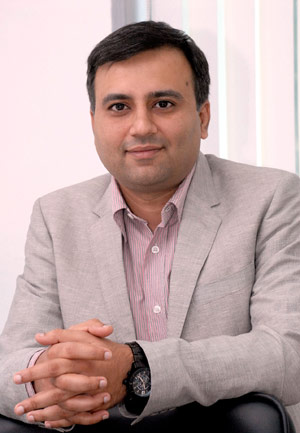
    The agency must be seen as a partner in achieving the company’s ROIs which may not necessarily be only in figures. Our role should not be restricted to that of being an advisory but should be seen as a stakeholder whose interest is in the growth of its client’s company.

    #2 Size does not matter; it’s the solution offered that matters

    An agency should not be seen as an ATL or BTL or any such term that is the stereotypical description. What matters is understanding the need of the client and offering the best solution to address his needs.

    #3 Show results on his brand

    It’s all talk unless you show results on the brand that you are working on for the client. One can start a relation like getting a business on the basis of your credentials but in the long term it’s the result that matters.

    #4 Make the client part of the process of the campaign

    While there is no denying that the client wants the aha moment or the magic factor from its agency but it’s also a fact that for greater success one needs to make client a part of the entire logical process of its communication. If the client is part of the process it will ensure that one is not still discussing briefs while making a presentation. Also this will ensure that the client is well aware of the building of the campaign and there is a common ground of discussion. Also reduces the chances of your ideas being rejected at the final stage when the client has been in the dark during the entire process and ultimately dislikes the communication presented.

    #5 Take him to Cannes!

    Make him part of a creative workshop that will help him in understanding the creative process and appreciate the nuances of what goes behind making an ad.

    #6 Show him that you eat, sleep and breathe his brand

    Any news on his brand or his category – just scan it and send it to him so that he appreciates your dedication to his brand.

    #7 Discounts are no deal

    This is a very common practice to make inroads into a client and his other brands. Give him a discount; reduce the retainer fee so that the business stays with your agency. This actually is a disservice to the industry as it reduces us to being mere traders and loses respect in the eyes of a client.

    #8 Jee Hazoori

    Agreeing to whatever the client says without applying any intellect. This clearly shows that you are more interested in keeping the business in your kitty and not in the growth of the brand.


    Manish Bhatt is Founder Director, Scarecrow Communications Ltd

  • The anchor: Shailendra Katyal on 5 ways to never get your media plan wrong

    #1 Adherence and application of past learning in developing an effective plan

    To get your future campaigns right, one has to learn from past campaigns. Your past experience to a large extent encapsulates elements that worked, helped the company achieve growth and let the brand establish its prominence over the competition. So, think about the future but don’t forget the past, because there may be valuable insights you can draw from previous successes and failures.


    #2 Consumer-centric rather than media-centric planning

    There is a tendency to ride with the popular and that is true in life too. Word of caution here, the flavour of the season just might not be meant for you. Even while drawing up the media plan, one has to understand the target group and the objective of the campaign. A media vehicle could be popular but may not address the need of your company, and brand and you will just end up wasting your money. Hence, target right with the specific tool.


    #3 Differentiate between short-term vs long-term campaign objectives

    There has to be a clear vision on the short-term and long-term objectives from a campaign. The short-term objective could vary from driving a festive promotion, to increasing footfalls at the shopfront. Long-term objectives could be to build brand awareness, connect with the TG, create customer loyalty and have a competitive edge. The long-term objectives cannot be clubbed with the short-term ones, which leads to losing focus and frustration at not achieving goals in a short span of time which was not possible at all in the first place.


    #4 Frequent monitoring of the plan and course correction

    The strategy should never be to chart a plan and then just adhere to it. This discounts the dynamic nature of the market. Constant tracking ensures that you can accommodate market changes, for example competition activity, media events affecting mid-level deliveries, etc. Periodic tweaking ensures that you are on track and gives serious thought to the brand map that one has created.

    #5 Make digital an integral part of the marketing plan. Only if digital is an integral part of your marketing plan, will it feature in your media plan

    The irony is that digital media is an after-thought and not a part of the media plan for many companies. Unless serious thought is given to digital, this medium, even though seen as a potent vehicle to reach its target group, will just be all talk and not yield anything tangible. To see results, adopt digital in its entirety and make it part of the media plan as one does for any other vehicle be it television, print or the other so-called conventional mediums.


    Shailendra Katyal is Director-Marketing, Lenovo India

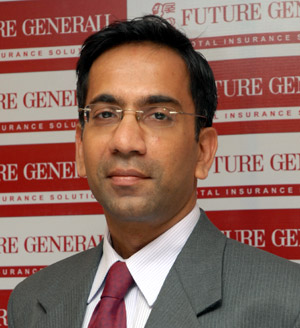
  • The Anchor: Abraham Alapatt on 7 reasons a marketer prefers television to other media

    #1 Reach

    IRS media figures show a 17.9 percent compound annual growth rate (CAGR) in the spread of cable and satellite TV across India. The figures, for the first quarter of 2011, show that the total reach of cable and satellite TV is now 416.51 million, up from 403.51 million registered in the fourth quarter of 2010, and just under 383.61 million homes a year ago. Television – including terrestrial transmission – is now available in 522.44 million Indian homes, up 5 percent on the 516.41 million figure at the end of 2010, and the 509.86 million recorded in the first quarter of 2010.

    In fact, the only sections of the survey which registered a dip in the IRS figures were radio and cinema penetration. Cinema’s reach fell by minus 5.4 percent CAGR, from 81.66 million at the end of 2010 to 79.71 million in Q1 2011. The total reach of radio fell from 163.91 million to 161.48 million in the same period: a drop of 8.3 percent negative CAGR.

    #2 Family consumption

    In markets like the US or the UK – small families, working parents and typically “more than one TV homes” is the norm. In India on the other hand, TV viewing is a social “family” gathering where Indian families (often larger/joint families) gather around the single television in the living room of the home. This means that, with approximately four people viewing per TV set in India (during prime time) the reach is not just significantly larger than the numbers suggest, but also more involved and animated as a family unit. This aids marketers across segments and target groups. This group consumption of TV as opposed to radio, print or internet (which are usually consumed alone) makes it very powerful and unique.


    #3 Nature of media

    The versatility of the media – combining audio and visual elements and allowing stories, humour, glamour and imagery to be combined, makes it a potent tool for marketers to project their message/brand in the most attractive manner possible.


    #4 Segmentation based on viewer profile

    Based on time of day, nature of programme etc, marketers are able to target the right segment better than other traditional media such as print and radio.


    #5 Planned consumption

    TV viewing, in extension to being a social/family event, is consumed to a specific time pattern/lifestyle and is therefore fairly dependable from a marketers’ point to view to reach prospects.


    #6 Consumption by habit

    An extension of the social and planned aspects is “force of habit” – viewers of a particular program/channel tend to consume it almost by habit, unless the content fails to deliver or something more attractive comes up on another channel during the same time band. Women viewers of soap operas, teens watching MTV or lifestyle channels, men watching cricket/sports/news are cases in point.


    #7 Ads themselves as content

    With ads getting more creative, slick and entertaining, TV ads have themselves become subjects of discussion and aid brand consumption – Vodafone’s ZooZoos, Airtel’s new jingle “Har ek friend…” etc are just some very popular recent examples. This is, for obvious reasons, a marketer’s dream come true.


    Abraham Alapatt is Head – Brand & Corporate Communication, Future Generali India Life Insurance Company Limited.

  • Tablets soaring in Indian market

    By A Correspondent

    The India media tablets market witnessed high-decibel launches by the world’s leading vendors, aiming to ‘wow’ consumers with snazzy, new offerings.

    Although the India tablets market is still nascent, nearly 1,58,000 media tablets were sold (shipped) in the nine months ended June 30, 2011. The split between 3G and WiFi models was in the proportion 70:30. Samsung used a tactical price drop to emerge the best selling Tablet brand in India during the three quarters ended June 2011.

    Olivepad launched the first media tablet in India in July 2010. The first major international brand to launch followed in October 2010 – the Samsung Galaxy Tab. The Apple iPad, the most well recognized tablet, arrived in India only in January 2011.

    Table 1. India Tablet Market: Leading Vendors (in terms of unit shipments),
    October 2010-June 2011


    Vendor Launch Month and Year Market Share
    (in terms of unit shipments)
    Samsung October 2010 45.8%
    RIM June 2011 21.0%
    Apple January 2011 18.4%
    Others 14.8%


    Source: CyberMedia Research, September 2011


    “Tablets provide touch based user experience with a convenient screen size for web surfing, content consumption and entertainment. Moreover, portability, ease of use and wireless connectivity ‘on-the-go’ make the tablet an even more attractive buy”, stated Anirban Banerjee, Associate Vice President, Research and Advisory Services, CyberMedia Research.


    “Currently, the India media tablets market has many more models available with a range of features and at a variety of price points, compared to six months ago. However, for the Tablet to become a common man’s device, usage tariffs for high speed data services need to be brought down even further along with useful and relevant content for the Indian consumer”, Anirban added.


    RIM’s Playbook, Apple’s iPad2, Motorola’s Xoom and Samsung’s Galaxy Tab 7 are some of the notable MNC tablet brands available in the India market in the high end range. Tablet models in the India market in 2Q 2011 ranged from Rs. 8,000 per unit going up to Rs. 47,000 per unit. Going forward, CyberMedia Research expects a majority of Tablet models to launch in the volume segment at a price band between Rs. 7,000 to Rs. 15,000.


    Tablets to help personalize the individual’s digital life

    Content consumption will form the backbone of Tablet adoption in India. The consumption patterns span multiple formats: Entertainment (Music, Movies, Gaming, Cricket etc.), Video (calls, video sharing sites, Live TV), social networking and IM, web browsing and educational content (wikis, online digital libraries), ‘T-banking’, and productivity enhancement tools and corporate applications (e-mail, word processing, spreadsheets and others).


    The use cases would range from purely individual instances of content consumption (e-books) to sharing of content in social settings (family photo albums), professional environments (presentations, videoconferencing) or public and statutory filings and transactions (requests for government services, e-filing of tax returns).


    “Applications like video chat and Live TV already popular with smartphone users around the world are expected to become popular with India media tablet users as well. Further, it is expected that new data focused applications will be developed for the Tablet user community. Newspapers that have their PC- and mobile-specific websites are expected to develop tablet-specific websites and ‘apps’ as the tablet user base grows and achieves critical, making it attractive for advertisers. The type of content being consumed will be determined by the use case and the individual’s preferences depending on stage of life or time of day or week”, stated Mr Naveen Mishra, Lead Analyst, Telecommunications Practice, CyberMedia Research.


    “As the ecosystem of collaboration and partnerships between device vendors, content providers and operators comes alive, and more local language content and localized apps become available, a variety of new use cases are expected to emerge. Innovations such as USB connectivity so that customers are able to use their existing dongles or an SD card slot to help users copy and store large volumes of personal digital content will help to strengthen adoption of media tablets in India”, Mr Mishra further added.


    BWA and Volume Segment Tablets: The Game Changing ‘Combo’

    Reliance-Infotel won broadband wireless access (BWA) licences for 22 out of 23 circles in the spectrum auction in 2010, while Qualcomm acquired BWA licenses in four circles including Mumbai and Delhi. Aircel, Bharti, Tikona and Augere also won BWA licences in select circles.


    Further proliferation of 3G networks and launch of BWA (4G / WiMax / LTE) services will lead to new types of data services being demanded and consumed by mobile subscribers. This trend is expected to contribute to a rise in shipments of media tablets in the India market in CY 2011 to touch 2,75,000 units. At that point, the total number of vendors is expected to touch 35 with 90 models on offer.


    “The launch of low cost tablets bundled with affordable data services on 3G and BWA networks can be expected to give a further boost to India Tablet shipments in 2012 and beyond,” Mr Mishra concluded.


  • Take 2 of Cornetto Luv Reels on MTV

    By A Correspondent

    Youth brand MTV and Kwality Wall’s Cornetto in collaboration with Kunal Kohli Productions will present the second season of its series of romantic short films ‘Cornetto Luv Reels – Take 2’. After the successful first season of the series a year ago, this one of a kind project that provides a platform to anybody who has the passion for acting, singing, and writing scripts is back yet again. Starting October 14, 2011, at 7 pm on MTV, it will exclusively showcase a series of three short films / love stories directed by Kunal Kohli Productions.

    Kick-starting the movie careers of several new aspiring actors, singers and music composers; ‘Cornetto Luv Reels – Take 2’ will air a 60-minute short film every week.  Kunal Kohli Productions has extended support for the direction as well as the production of these films. The lucky winners of the contest who will be making their debut on screen are Rahul Preenja as Karan Kriplani, Saahiel Sehgal as Gaurav, Sukhmani Sadana as Payal and Gaurav Kakkar as Karthik. The short films from the ‘Cornetto Luv Reels – Take 2’ series will also be exclusively screened at select PVR Cinemas in Mumbai & Delhi and INOX theatre in Mumbai for the audience.

    ‘Cornetto Luv Reels – Take 2’ brings to your television screens three exciting, delightful and heart-warming love stories to reminisce – ‘Phir’, ‘Ishq Holiday’ and ‘The Saviour’.  ‘Phir’, is a story of two strangers, Karan and Ayesha and their journey through Mauritius and the mysteries surrounding their pasts. ‘Ishq Holiday’ will take you through Payal’s dream of a perfect romantic holiday with her Mr Right only with a few twists and turns.  ‘The Saviour’, is a story about Pia who meets Karthik on her way to her cousins wedding and how circumstances unfold a spell binding saga.

    On the launch of the second season Mr Aditya Swamy, EVP and Business Head – MTV India said, “At MTV, we are continuously looking at boosting the spirit of the youth and searching for new avenues/creative ways to showcase young talent. Cornetto Luv Reels is one such platform for the raw and young talent at large in varied fields”. He further added, “After the tremendous response from the project last year, this year too we have received an overwhelming number of entries, reassuring us that we are doing something that the youth really wants.”

    Mr Sapan Sharma, General Manager Kwality Walls Cornetto Ice-creams commented, “Cornetto is a brand for the youth and is all about expressing what’s inside their heart. That’s what we call Say it with Cornetto! Cornetto Luv Reels has a mission of bringing to surface the talent hidden inside our youth. This is a unique contest in which the aspirants upload their videos, pictures, songs and scripts on www.cornetto.in to take a shot at Bollywood. This year we received over 1.36 lakh entries and that has tripled from last year. Also our Facebook fan numbers are surging and we have close to 5 lakh young consumers on our page.”

    “Cornetto Luv Reels – Take 2 is a path breaking example of how co-creation really works. One of the key tasks at HUL in developing world-class Media Innovation is to drive consumer engagement, media effectiveness and build repeatable and sustainable properties. Cornetto Luv Reels – Take 2 is one such successful example” says Mindshare’s Mr Ravi Rao, Leader-Team Unilever, South-Asia.

    Kunal Kohli, Kunal Kohli Productions also commented, “We are thrilled to be associated with MTV and Kwality Wall’s Cornetto on the project this year too. After gruelling online auditions we came up with the winners who would get an opportunity to be part of three romantic short films this year.”

    The concept of Luv Reels is developed by Mindshare, a Group M Company.

  • FMCGs tread new paths for higher profits

    By Ratna Bhushan


    Consumer product makers such as Heinz India, Perfetti Van Melle and Glaxo SmithKline Consumer are entering product segments that offer higher profitability to offset pressure on margins due to volatile commodity prices.


    Heinz India, known for its ketchup and Complan milk drink, plans to foray into cornflakes. Rival GlaxoSmithkline Consumer Healthcare, maker of Horlicks milk food drink, too may target the breakfast table.


    “With the huge pressure on margins, the attempt is to diversify into areas where profitability can be improved, besides reducing dependence on volatile commodity fluctuations,” says GSK Consumer MD Mr Zubair Ahmed.


    It’s for the same reason that Dabur, maker of Real juice and Chyawanprash, plans to launch car fresheners and aromatic candles under the Odonil brand, and Parachute hair oil maker Marico will foray into body lotions.


    That’s not all. Sugar confectionery maker Perfetti Van Melle is piloting packaged potato chips and salty snacks under its Stop Not brand, and biscuits maker Britannia is giving final touches to a multi-city rollout of its baked snacks brand Time Pass after test-marketing it in Bangalore.


    Everyone wants to hedge risks and reduce reliance on a few mainstay products that depend heavily on certain commodities. Most consumer products companies have taken a hit on their margins due to rising raw material costs over the past 10-12 months. Crude oil prices too went up over 30% in the first six months of the year. Companies have raised prices by 5%-10% and initiated several measures to cut costs to deal with rising costs. While some input costs have started softening, companies say it is too little and that pressure on margins continues.


    Analysts say the firms have no option but to diversify – because they can’t risk increasing prices of their bread-and-butter products beyond a point, particularly in mass-market categories where competition is intense. “Competitive intensity has gone up significantly in the past 12-18 months; companies are looking at ways of getting a foothold in emerging categories,” says Mr Gautam Duggad, research analyst at financial services firm Prabhudas Liladher.


    So companies are adopting a flanking strategy and stepping into more profitable and fast-growing categories even if they are unfamiliar.  “Some of the categories could be small but the idea is to develop and nurture them for 5-10 years so they can add to topline in the long-term,” says Mr Duggad.


    India’s largest retailer Future Group President – Food & FMCG Mr Devendra Chawla expects emerging categories such as beauty, anti-ageing, health, nutrition foods and wellness to attract big investments. Brands are also offering differentiated products with functional benefits because they can be sold at a premium, he adds.


    “Highly penetrated categories like soaps and detergents will also witness margin expansion by upgrading consumers, for example, from plain detergent to machine wash; dish-wash powders and cakes to liquid; and shaving cream to foams and gels,” Mr Chawla says.


    Companies say brand extensions help increase brands’ popularity, shelf space and marketing efficiency.  “Brand extensions not only help increase rate of acceptance and trials by consumers but also maintain efficiencies on advertising and promotion expenditures,” says Dabur India CEO Mr Sunil Duggal.


    GSK Consumer seems the most aggressive. In the past six-eight months, the British firm-synonymous with Horlicks for decades-has added Sensodyne toothpaste and Lucozade sports drink to its portfolio.  Last year, it extended Horlicks to instant noodles called Horlicks Foodles. GSK Consumer’s Ahmed says the move helped increase the brand presence on the shelf.


    Perfetti Van Melle is testing packaged snacks in parts of Punjab, Karnataka and Andhra Pradesh. Unlike confectionery where margins are wafer-thin and price points are restricted largely to Rs 1, 2 and 5, the company would have more leeway to experiment with different price points within snacks.


    Hair oil and edible oil maker Marico will extend its two-decade-old coconut hair oil brand Parachute to body lotion and other skincare products subsequently, riding on the brand’s purity and value-for-money attributes.  Marico’s bottom line depends to a large extent on coconut oil costs, while biscuit maker Britannia’s margins rely heavily on costs of atta and sugar. Heinz, on the other hand, which has also forayed in breakfast mixes, has been dependent on Complan.


    All of them would want to reduce over dependence on a single product or commodity. Analysts, meanwhile, warn that while some category extensions are logical, others may fizzle out. “Companies have to look at avenues of growth but the investments need to be sustained,” says Baring Private Equity Partners’ Head (Investments), FMCG, Mr Keshav Misra. “And not all experiments succeed; some work, some don’t.”


    Of course, there have been several failures in the past. Kellogg’s foray in biscuits had bombed many years ago, and in the late-1990s GSK’s Aquafresh toothpaste and fruit drink called Ribena did not work.


    Source:The Economic Times

    Copyright © 2011, Bennett, Coleman & Co. Ltd. All Rights Reserved