Category: MARKETING

  • SAP’s Rajesh Kumar to chair DMAi 2014 marketing convention

    By A Correspondent


    Rajesh Kumar

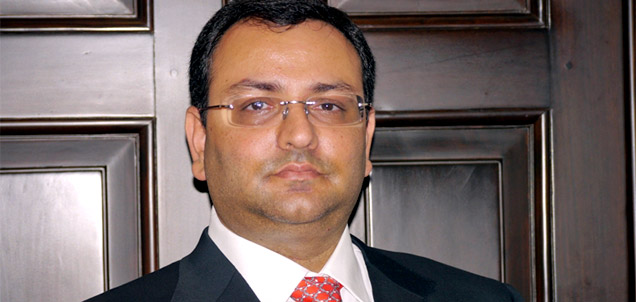
    Rajesh Kumar, Marketing Head, SAP, Indian subcontinent has been announced as the chair for the third edition of the Association for Data Driven Marketing & Advertising in India (DMAi) International Marketing Convention scheduled to be held in January 2014 in New Delhi.


    Said Umang Bedi, Managing Director – South Asia, Adobe and member of the DMAi Board of Governors: “I have seen the format of the show grow in the recent years to become a real power packed show that is of immense value to any traditional or digital marketer alike and we look forward to the change that Rajesh ushers in.”


    According to a communique, the convention aims to addresses the quest of CMO’s and agency professionals who want to leverage data and ‘Re-define customer understanding’ – due to richer context, stronger behavior insights beyond simple demographic construct. The agenda accent this year remains on harnessing data responsibly to ultra-segment our customers, hyper personalize marketing programmes through specific product, pricing & promotion actions resulting to innovation, delightful customer experience and improvement on marketing ROI.


    Speaking on his appointment, Mr Kumar said: “Organizations like the DMAi have the responsibility to orchestrate conversations amongst marketers to champion this change and harness innovation to drive growth. I am happy to be associated with DMAi and look forward to working with peers in the industry to bring together content, best practices and experiences that will drive this agenda and unravel together what future holds for us”.


    The three-day convention will host a strategic summit for the C-Suite, keynotes, debates, 15 dynamic conference streams, live certification and workshops, an expo and an awards programme. Noted Vatsal Asher, CEO, DMAi:  “Rajesh has been involved over several weeks on shaping the event. The format and experience of the show has been redesigned from scratch to encompass the needs of our attendees.”


    Details on DMAi and the convention are at www.dmai.co


  • Return of the global desis

    By Kala Vijayaraghavan & Ratna Bhushan


    Sanjiv Mehta, who took charge as MD and CEO of HUL early last month, has never worked in India before. But he has headed two countries and a region (north Africa and Middle-East) in his 21-year career in Unilever. Sources within Unilever say he specifically asked for an India posting.


    Like Mr Mehta, over half-a-dozen top-level executives from P&G, PepsiCo, Mondelez, Coke and Reckitt Benkiser have given up global roles to move back to India in the past six months.


    “India provides a unique leadership experience,” says Samik Basu, chief people officer, PepsiCo India. “It is a highly competitive and complex market and provides an opportunity to combine global learning with local resourcefulness.”


    Gautham Mukkavilli, CEO-beverages, and Chetan Mathur-controller, Pepsico India, both moved back to India from Dubai in mid-2012.


    At Coke, Venkatesh Kini spent three years at the beverage firm’s head office Atlanta as global vice-president for juices, before moving back to Gurgaon as deputy president, India and South West Asia.


    P&G’s Sonali Dhawan moved here as the India marketing leader after leadership roles in Singapore on hair care and more recently as the pet care marketing leader for Asia & Australia-New Zealand.


    So has Vivek Sunder, who has spent a decade outside India in various roles across Thailand, the UK and Singapore, before coming back here in a leadership role in the India sales & distribution team. At least three senior managers from Mondelez International – Arjun Bhowmik, Sid Mukherjee and Venkat Venepally – have also done the same.


    “The most exciting reason for me to come back was that the India business of Mondelez International has been growing at a rapid pace and is one of the key priority markets for the company,” says Arjun Bhowmik, director, expansion, Mondelez. “Also, I wanted to be closer to family and was keen that my daughter should complete her secondary education in India.”


    He worked in the Philippines, Thailand and Indonesia for over seven years. Industry watchers say even with a 6-7 % growth, India fares better than other developed markets.


    “Several managers who had moved straight into global roles are now keen to work in India,” says Rajesh Ramanathan, HR director of Mondelez India. “Those with developed markets exposure now want developing markets and India experience on their CVs.”


    In advertising, Leo Burnett’s Saurabh Varma and Lowe Lintas’ Vikas Mehta both moved back from Singapore.


    “India postings have become hot property since it is an exciting growth market and offers diversity of experience,” says Suchet Narain, MD, DRH International, a global executive search firm.


    “Global organisations are also happy to send their managers to markets such as India to ensure implementation of global best practises such as corporate governance, safety or environment issues.” Most managers have children studying abroad, so they move in with their spouse but may not necessarily stay here long term. India’s infrastructure still compares very badly with other cities globally. “But having India on their CV gives them that depth of experience,” he says.


    Several top managers such as Atul Singh of Coke and V Chandramouli of Cadbury who have been offered global postings are opting to remain in India. Gopal Vittal, former director of HUL’s home and personal care business, once seen as a top candidate for the CEO job, chose to opt out of a plum global posting and quit early last year. Vittal, officials close to the development say, was unwilling to move out of India. He now heads Bharti Airtel in India.


    Says Sameer Wadhawan, VP, HR, Coca-Cola India and South West Asia: “India is emerging as one of the nodal points of the world economy and one-fourth of the world’s population is centred in Asia. India can be an operational hub for global CEOs.” But not all executives want to come back home. “Many young executives in their late 30s or early 40s are still open to take diverse challenges in different countries,” says Sangeeta Pal, partner at search firm Transearch.


    Source:The Economic Times

    Copyright © 2013, Bennett, Coleman & Co. Ltd. All Rights Reserved

    Licensed to republish
     

  • Sports management firms bat for young cricket talents like Prithvi Shaw

    By Ravi Teja Sharma


    Prithvi Shaw, Indian cricket’s latest boy wonder, is a hot commodity among sports management firms. In his short career, the 14-year-old batsman has already been represented by two sports management firms – first by former spinner Nilesh Kulkarni-run- firm, NSE, and now by Professional Management Group.


    Prithvi is not the only one. Firms like Rhiti Sports and Gaames Unlimited, in addition to the Professional Management Group, are signing up a bunch of cricketers as young as 14 to nurture them and up their game, with an eventual eye on an India cap and the commercials that usually follow.


    “It’s like a venture capital fund investing in a bunch of ambitious startups not knowing which one will succeed but even if one makes it big, their returns are made,” says Indranil Das Blah, CEO of sports management company Kwan.


    Rhiti Sports, which manages India captain MS Dhoni, Ravindra Jadeja, Pragyan Ojha and Suresh Raina, is close to signing up 17-year-old wicketkeeper-batsmen Ankush Bains, who has played for the India Under-19 team and also works with 17-year-old Mohammad Saif from Varanasi. It also represents KL Rahul, 21, who plays for Karnataka and IPL team Royal Challengers Bangalore and is also vice-captain of the India Under-23 side.


    “We build their brand for the future, training them on media interface, public relations and also helping them connect with the right kind of people,” says Arun Pandey, owner of Rhiti Sports, and a close friend of Dhoni. Rhiti Sports aims to sign up at least five talented players in their teens and nurture them. Gaames Unlimited which manages R Ashwin, Ajinkya Rahane and Umesh Yadav, works with 17-year-old all-rounder Tanay Tyagarajan from Hyderabad, 20-year-old Siddhesh Lad from Mumbai and 19-year-old Baba Indrajith from Chennai as well as his twin brother Baba Aparajith who played a big part in the India Under-19 team’s World Cup victory in 2012.


    PMG’s Chief Operating Officer Melroy D’Souza says the idea is to identify the next big thing in Indian cricket and hope that the player can one day represent the country. In the deal with Shaw, PMG gives him a monthly stipend and puts in certain amount of money in a separate savings account that the 14-year-old can access for his future when he turns 18. Alongside Shaw, the company is currently in talks with a host of other players.


    Atul Srivastava, managing partner at Gaames Unlimited says for his players, his agency is like a troubleshooter for everything, be it personal or professional. “We help them with everything on the personal front as well so that they are stress free. We are also their personal wealth managers,” says Mr Srivastava.


    Gaames Unlimited assigns a manager to each player who takes care of all their needs and over the years gives him media exposure and the right kind of advice and treatments that will help the player move to the next level.


    Internationally, there is a concept of scouts in many games and sports management companies have strong ties with these scouts. As more and more professional companies emerge on the scene, the concept with emerge in India as well. The job of the scout at the moment is fulfilled by coaches and managers across the country with whom these companies have close ties.


    Source:The Economic Times

    Copyright © 2013, Bennett, Coleman & Co. Ltd. All Rights Reserved

    Licensed to republish
     

  • Yes Bank inks multi-yr deal as Assoc Sponsor of Hockey India League

    By A Correspondent


    The private sector Yes Bank has inked a multi-year deal with the Hockey India League (HIL) commencing with the 2014 season.


    Announcing the deal, HIL Chairman, Dr Narinder Batra, said: “HIL had a terrific start last year and we are certain with YES BANK on board, it will benefit both the League and our millions of followers around the world.” The other brand partners that HIL has are Hero MotoCorp and Airtel.


    Said Rana Kapoor, Managing Director & CEO, Yes Bankj: “We are extremely pleased to associate with the Hockey India League. Through our dedicated sports banking proposition, we are also committed to provide a robust financial infrastructure to support sports through customised banking solutions for various hockey associations, teams as well as players.”


    In the inaugural season, 70 top domestic players including the Indian national side as well as 50 international players who are part of the national squads of Australia, New Zealand, South Africa, Netherlands, Germany, Malaysia, Spain, and Argentina played for the five franchise teams.


  • Asha Gupta to head Tupperware APAC

    Asha Gupta

    By A Correspondent


    One more Indian CEO makes it big in the international arena. Asha Gupta, presently Managing Director, Tupperware India and Area Vice President, Tupperware Brands – Asia Pacific has been appointed as Group President, Asia Pacific with effect from January 1, 2014.  She will now be responsible for driving the growth and expansion of the entire of Asia Pacific region.


    Ms  Gupta took over the reins of Tupperware India in late 2004 moving from Europe where she was the Marketing Director for Tupperware Nordics. Under her leadership, the Indian business has posted stellar growth and the brand Tupperware is now virtually a household name in India.


    Following her move, Puneet Narula has been appointed as the Managing Director for Tupperware India. He has been associated with Tupperware seven years and has been working closely with Ms  Gupta in the capacities of CFO and more recently as Deputy Managing Director. In 2011, he led entry of Tupperware in Bangladesh which is considered among the new emerging markets for Tupperware.


    Prior to Tupperware, Mr Narula worked in GlaxoSmithKline India for 10 years in various capacities in Finance and Business Development.


  • Cyrus Mistry: Slow and Steady in Year #1


    By Suman Layak


    Signals from Cyrus

    Ok guys, it’s time for business: Mistry needs a few of those glamorous multi-billion acquisitions to deliver. Takes the call to abort Indian Hotels’ much-attempted bid for Orient Express.

    Wings for aviation: It was Ratan Tata’s dream, but it was Mistry who was at the forefront of the joint ventures with AirAsia and Singapore Airlines (with Tata’s support).

    Find some friends: Mistry has some 25 years ahead of him as chairman and needs people to grow old with him in the office. Much of the first year was spent in building his A team.

    Manage retirements: Tata Steel managing director HM Nerurkar retired in October. Choosing a successor in TV Narendran was one of Mistry’s key decisions this year.

    Get more women on board: Tata Sons is still a gentlemen’s club. But Mistry is signalling a change in attitude by inducting women on the Tata boards.

    Playing Mr Fix-it: Has identified the problem companies – Tata Motors, Tata Steel Europe, Tata Power – and their problem areas.

    Not yet ready for banking: Took the strategic call to withdraw Tata Sons’ application for a banking licence – for now.


    The Aviator’s Busy Flight Path

    For Ratan Tata, retirement may not necessarily have translated into less work and for sure has resulted in more than usual travel. A person familiar with his schedule indicates that Tata has been travelling a lot more since he retired. For starters, Tata serves on the Prime Minister’s Council on Trade and Industry, which means he continues to advise the top political leadership of the country.


    That apart he is also the president of the Court of the Indian Institute of Science and chairman of the Council of Management of the Tata Institute of Fundamental Research. He also serves on the board of trustees of Cornell University and the University of Southern California. Tata had graduated as a trained architect from Cornell. However, retiring from Tata Group companies - he is now chairman emeritus — is not the end of the corporate innings. For example, even now he continues to serve on the board of American aluminium major Alcoa. He is also on the international advisory boards of Mitsubishi Corporation, JP Morgan Chase, Rolls-Royce, Temasek Holdings and the Monetary Authority of Singapore.


    In September Tata also joined the board of trustees of Carnegie Endowment for International Peace. This trust is considered a premier American think tank. However, at the same time Tata has kept himself available to the Tata Group and in the beginning he had committed himself to fortnightly lunch meetings with Cyrus Mistry. Apart from that he is closely involved with the aviation joint ventures of the Tata Group, one with AirAsia and the other with Singapore Airlines. Tata himself had piloted a flight with the AirAsia team on board to Delhi.


    It is likely that some of the Tata companies may still consult him for his expertise, in specific areas like automobiles and aviation. He also heads the Tata Trusts which control a two-thirds majority of shareholding at Tata Sons and this must be taking up a lot of his time. He had also registered his own company RNT Associates with RK Krishna Kumar. But not much else is known about its activities. Not yet.


    Back in the ’70s, the families of construction magnate Pallonji Mistry and well-known legal luminary Iqbal Chagla were neighbours in Cuffe Parade. A happy consequence was that in 1992 Pallonji’s younger son Cyrus married Chagla’s daughter Rohiqa. On the wedding day, the father of the bride, Chagla raised a toast, starting with these words: “I was determined to dislike anyone who decided to marry my daughter.”


    Then he added a truism: “However, once you meet Cyrus, it is impossible to dislike him.” It still holds two decades later; everybody seems to like the 45-year-old Cyrus Mistry. Mr Mistry took over as chairman of Tata Sons on December 28, 2012. Since then, he has made all the right moves. “He has not taken any giant leaps, neither has he shaken the foundations of the group,” says Harsh Goenka, industrialist and chairman of RPG Enterprises.


    As Mr Mistry begins his 12th month as chairman of India’s largest conglomerate, in which his family led by father Pallonji Mistry owns an 18.5% stake, it’s time for him and his core team to prepare a rough and ready blueprint for the second year. That plan may call for a few larger leaps, and may indeed shake some parts of the foundation.


    Making the multibillion acquisition of Corus (now Tata Steel Europe) viable, for instance is one of them. Downsizing the business by mothballing some of its capacities, reckon analysts, may be the way to go. Back home Tata Motors – excluding the money-spinning Jaguar Land Rover ( JLR) – needs a refreshed portfolio to find its way back amongst India’s top 5 automakers. And the power, telecom and hospitality businesses too are in need of an overhaul.


    It’s a daunting task; more so for a man who’s still coming to grips with a 92-company group across 28 diverse sectors, even as it strategizes to enter newer businesses, like aviation. Ashok Basu, former bureaucrat and an independent director on the board of Tata Power, says: “I think he has the most formidable job in the country. But this mantle sits very lightly on his shoulders.”


    “Luckily, his health has held up. He has taken on a punishing schedule, whirlwind travel across the world, day trips to the Gulf countries and stuff like that,” says a person who knows Mr Mistry well. And Mr Goenka adds: “He doesn’t look stressed. But I asked him about his work-life balance and he admitted that’s gone for a six.”


    First, a Team

    One of Mr Mistry’s immediate priorities after taking over at the helm was to build a team of people who will, like him, be around for some time. Although Mr Mistry was appointed as executive deputychairman of the group in 2011 for five years, and was elevated in 2012, it is likely that Mr Mistry will have this job for more than a quarter of a century.


    Before retiring, predecessor Ratan Tata – who had the job for 21 years – had left a clean slate for Mr Mistry, even lowering the retiring age for non-executive directors, to ensure that the old guard goes away in two to three years. Tata’s first few years at the helm were spent consolidating his own position as the undisputed leader of the group and pushing out the veterans. He did not want such distractions for Mr Mistry (after all, Mr Tata had plenty of them when he took over and had to spend at least six of his initial years taking on – successfully – the group’s satraps).


    In Madhusudan Kannan, 39, Mr Mistry found his head of business development. Mr Kannan was the first member of team Mistry and joined the group in May 2012, seven months before Mr Mistry finally took over the reins. Mr Kannan is considered closest to Mr Mistry today. Mukund Rajan, 45 – younger brother of Reserve Bank governor Raghuram Rajan – was moved in from Tata Capital as custodian of brands and chief spokesperson as well as chief ethics officer. Mistry also brought in academic Nirmalya Kumar from the London School of Business to help with strategizing and NS Rajan from Ernst & Young as head of human resources. “In many ways it is like Rahul Gandhi’s team” says one uncharitable onlooker from corporate India.


    “It has more theoreticians than business managers,” he says. That may be unfair to both Mr Mistry and Mr Gandhi, but one cannot deny that Tata’s own lieutenants were either seasoned veterans from within the group (Syamal Gupta, NA Soonawala, Ishaat Hussain, to name three) or from other large companies (like R Gopalakrishnan from Unilever’s Indian subsidiary). Mistry has chosen his own horses, for surely he has to run on a different course.


    The Tata group did not participate in this feature. Also setting himself apart from the Ratan Tata-era is how Mr Mistry has sought to induct more women on the boards of Tata Sons. Vishakha Mulye, managing director of ICICI Venture, was the first woman inducted by Mr Mistry in February. She joined the board of Tata Power.


    He followed this up by bringing in Falguni Nayar on Tata Motors’ board and Ireena Vittal, a former McKinsey partner, on the boards of Indian Hotels and Tata Global Beverages (see Diversity Drive). With Vittal, Tata Global now has three women on its board (the other two being Mallika Srinivasan and Ranjana Kumar).</p>


    Ms Nayar, who now runs her own e-commerce venture Nykaa.com and a former managing director at Kotak Investment Banking is married to private equity fund KKR’s India chief Sanjay. Mr Mistry  asked Falguni to drop by for an interview and spent considerable time discussing her current venture before requesting her to join the Tata Motors board and bring her I-banking experience to the table.


    In May 2012, before he became Tata Sons chairman, Mr Mistry had joined the board of Tata Steel along with another lady, Mallika Srinivasan, chairman and CEO of tractormaker TAFE.


    However, these moves are only a beginning in creating gender-diversity at the house of Tatas, whose boards have traditionally been male bastions; for instance, the jewel in the Tata’s crown, TCS, has an all-male board; and even the Mr Mistry-created four-member general executive council is all male.


    There was one more quick response by Mr Mistry that pleasantly surprised many people. When a former executive of Tata Steel committed suicide and there were allegations of harassment by former colleagues, a committee was immediately set up with executive and non-executive directors of group companies to probe the allegations


    Plumbing the Numbers

    The Tata group today is virtually basking in the glory of a single outperformer – TCS, which accounts for roughly 60% of market value of all listed Tata entities and 80% of profits. To that extent, TCS managing director N Chandrasekaran, 50, stands tall – some observers say nearly as tall as Mr Mistry -in the top tier of leadership in Bombay House, the headquarters of the Tata group.


    Tata Sons owns almost 74% of TCS; and since Mr Mistry took over in end-2012, TCS’s market capitalisation has gone up by 58% adding Rs 1.4 lakh crore to the group’s market combined capitalization. The other clear outperformer is JLR, the $2.3-billion acquisition that more than makes up for Tata Motors’ dismal show domestically.


    JLR’s revenues in 2012-13 were 2.5 times that of the local operations, profits stood at Rs 10,406 crore as against Tata Motors’ domestic profit of Rs 302 crore, and, for good measure, the UK operation headed by Ralf Speth paid Tata Motors Rs 1,420 crore in dividend in June. Together Tata Motors and TCS account for roughly 80% of the group’s combined market value. The rest of the 26 listed group companies taken together have actually shrunk in combined market capitalization.


    The Indian operations of Tata Motors and European operations of Tata Steel may be the larger problems, but Mistry has more fires to douse. Mr Basu, for example, feels the biggest problem is at Tata Power. The company has posted a loss of Rs 39 crore for the first half of 2013-14 after a loss of Rs 85 crore for 2012-13.


    “Tata Power is probably his greatest headache – a problem created for no fault of the company. Take Mundra ultra mega power plant, for instance, which is suffering because the price of Indonesian coal has suddenly shot up and the state government cannot buy power at this price.”


    Then there is Indian Hotels, which was in the red to the tune of Rs 452 crore for the first half of 2013-14 on revenues of Rs 1,804 crore. The loss in this half year has exceeded the loss of Rs 430.24 crore of the entire previous year. The Tata Group is not a six-course meal but more like a tasting menu and there’s a lot more on Mr Mistry’s plate. The telecom business needs some decisions – especially as Tata Sons may need to buy back the 26% stake of Japanese partner DoCoMo in March 2014.


    Vatican Redux

    Clearly, taking charge of an illustrious company incorporated back in 1917 is not easy. In many ways Tata Sons reminds one of the Vatican. If you go through its archives and treasures, you come up with surprises. Like for instance, at Tata Sons, the equity capital with voting rights adds up to only Rs 40.41 crore.


    However, there are preference shares without voting rights that account for 100 times the amount at Rs 4,148 crore. These attract dividends at a fixed rate of 7.5% and the subscribers to the preference shares are mostly directors of the company and former directors and sometimes even unrelated professionals. In May 2013, Cyrus Mistry subscribed to preference shares worth Rs 1 crore (10,000 shares). R Gopalakrishnan, non-executive director invested Rs 6 crore in preference shares of Tata Sons in June 2013.


    In July Ratan Tata acquired Rs 8 crore worth of preference shares while NA Soonawala (also a former director) picked up Rs 1.5 crore worth of preference shares in July. Let us take the analogy of the Vatican of this day a little forward. The Catholic Christian church has a new Pope today, but the old Pope is not dead – and in fact is living in the vicinity. Mr Mistry heads Tata Sons, but Mr Tata is not very far away. He is available – as he was in the run-up to the aviation joint ventures with AirAsia and Singapore Airlines.


    Also, don’t forget that Mr Tata, now chairman emeritus, heads the Tata trusts that control around 65% of the equity shares of Tata Sons and by virtue of that holding controls the group while remaining in the background. Mr Mistry may well be the proverbial chip off the old block. Mr Basu says that while he brings in “youthful energy” to meetings he is very much similar to Tata in his manner, listening carefully and giving his opinion in the end. He has, for instance, suggested strong belt-tightening measures for the group and has also suggested that Tata Power seek a global footprint for itself.


    Nayar adds: “It seems right now he is listening and absorbing. I find Mistry to be very open and inclusive. He is also a very good listener and carefully evaluates everything before taking decisions. He also has a vision which he explains.” That is what Tata was known to do. And Mulye points to other similarities with Tata: “He has a unique capability in combining breadth of vision at one end and granularity of detail at the other. The other big quality he has is his sense of humility.” It would then appear that Mr Mistry has moulded himself in the cast of Tata, what with both of them evidently also sharing an aviation dream.


    A former senior executive at one of the Tata companies who did not want to be quoted says that the Tata influence on the group is still very strong – along with the influence of RK Krishna Kumar who retired in July 2013. Many of the CEOs of today are former executive assistants of the two senior pros, both of whom are trustees on the Tata Trusts (Mukund Rajan in the GEC and N Srinath, MD, Tata Teleservices aided Ratan Tata, while Avani Saglani Davda, CEO, Tata Starbucks and Govind Sankarnarayanan, CFO, Tata Capital were EAs to RK Krishna Kumar).


    But herein may lie the rub, point out analysts. The tough decisions that await Mr Mistry may be construed as going against Mr Tata’s legacy. For instance, what’s the future for the ultra low-cost car, the Nano, which was Mr Tata’s dream (although a few days ago he did clarify that his ambition was not to build a ‘cheap’ car but one that would be a logical step up for the country’s millions of twowheeler riders)? Similarly, the options for Tata Steel Europe – an acquisition that a section of analysts believe was overpriced but which Tata believes had to be made – are grim, with some analysts advocating sales of substantial parts of the business, if not all of it.


    Mr Mistry and Mr Tata have been on the same page – even before the former took charge as chairman. For instance, Mr Mistry bought a Nano as soon as it was launched, and apparently said: “It is a damn good car.” The question, of course, is for how long can Mr Mistry be on that same page. At some point he will have to differentiate himself in style and substance from Tata in key strategic decision-making. Mr Mistry has shown he is capable of those tough decisions.


    The $1.6-billion write-down of  Corus’ goodwill on Tata Steel books earlier this year – that contributed in a big way to the losses – the recent withdrawal from the race for a banking licence and the recent call to abort Indian Hotels’ bid for Orient Express are three instances. Expect a few more in the second year which, for Cyrus Mistry, will be more important than his first.


    Source:The Economic Times

    Copyright © 2013, Bennett, Coleman & Co. Ltd. All Rights Reserved

    Licensed to republish
     

  • The Making of Brand ‘Namo’

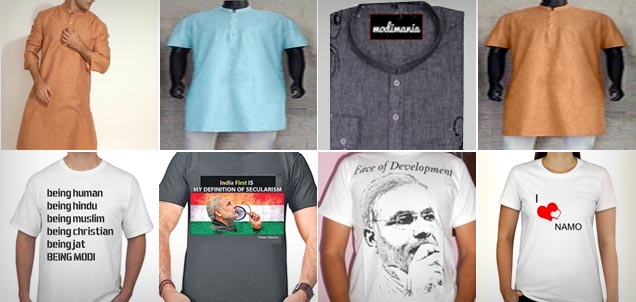
    Kurtas and t-shirts like these on Modimania.com are among the many products riding the Narendra Modi popularity wave


    By Rasul Bailay


    An Ahmedabad-based company has filed to trademark Namo, the acronym by which Gujarat chief minister and BJP prime ministerial candidate Narendra Modi is becoming widely known around the country.


    Take India Beyond Merchandising has filed dozens of applications on various versions of the name in Hindi and English. These include Namo, Namo Lekh, Namo and a sketch of a lion with the tagline – The Lion of India, Namo Mantra – Taking India Beyond and Namo Mantra – The Turning Point.


    The applications have been filed in various trademark classes including beer mugs, paper towels, lunch boxes, bed linen, dairy products, soft drinks, potato chips and others.


    Ketan Amichand Vora, one of the two promoters of Take India Beyond Merchandising, said the company has filed for the trademarks in order to leverage brand Namo.


    In the coming months, the company plans to launch Namo-branded merchandise, toys, colour paints for children, etc, he said.


    People close to Modi have been planning to start Namo-branded stores nationwide to sell various products including the distinctive kurtas that Modi wears, books, candles, incense sticks and various products as part of the effort to drum up support for the candidate in national elections next year.


    One person close to the Namo retail push said the group behind Take India Beyond is the same as that’s associated with the retail venture. They said the retail rollout was on hold as Delhi, Rajasthan, Chattisgarh and Madhya Pradesh were in the process of holding state elections. With these having got over, the plan will now proceed, they said. The venture is in talks with malls in cities including Delhi and Ahmedabad for taking on retail space, they said.


    The applications were filed in September and most of them are currently being processed at the trademark office.


    However, some applications may be contested by others who have already filed to trademark the name under various categories before the Namo brand became famous in the last year or so.


    For example, Gun Sagar Jain has been using the Namo brand since 2000 and has also registered it for the distribution and wholesale retailing of hosiery garments. Namo India Developments applied in September 2012 to trademark the name under building construction, repair and installation services. That application has been challenged, according to the website of India’s Controller General of Patents, Designs and Trademarks.


    Take India Beyond Merchandising is the latest in a string of companies trying to capitalise on the aura of the BJP leader. In the recent past, sari merchants in Surat to hosiery makers in Ludhiana have introduced Namo-branded products hoping to make a quick buck. Market watchers estimate the overall product and merchandising market growing around the BJP leader to be around .’400-500 crore. That’s why Modi’s followers are preparing for a nationwide retail push to sell their own Namobranded products including apparel and general merchandise.


    This initiative comes with two aims – to build on the buzz around Modi and to fuel it further by creating lifestyle products that add to the appeal of the leader. Political analysts say it’s part of the Modi’s well-oiled PR machinery to strengthen his base in the run-up to the general elections next year.


    Santosh Desai

    Some marketing experts are skeptical about a retail campaign bearing fruit. “Namo is a brand no doubt but using the brand to make t-shirts and soaps is another matter altogether,” said Santosh Desai, CEO of Future Brands.


    Source:The Economic Times

    Copyright © 2013, Bennett, Coleman & Co. Ltd. All Rights Reserved

    Licensed to republish

     

  • Ex-Nokia MD D Shivakumar is Pepsi’s India region CEO

    By A Correspondent


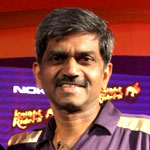
    D Shivakumar

    US food and beverage maker PepsiCo on Monday named former Nokia executive D Shivakumar as its chairman and CEO for India region, a position lying vacant since Manu Anand quit in June.


    Mr Shivakumar – who was managing director at Nokia India before taking over as the handset maker’s senior vice-president for India, Middle East and Africa in 2011 – is PepsiCo India’s first outsider CEO since Rajeev Bakshi, who led the firm from 2001 to 2006.


    “Shiv has a proven ability to take billion-dollar businesses to the next level by maximising innovation, execution and collaboration,” Ms Indra Nooyi, chairman and CEO at PepsiCo, said in a statement. He takes charge with immediate effect. ET NOW business channel broke the news before the official announcement.


    PepsiCo on Monday also announced promotion of Gautham Mukkavilli, currently general manager of its beverages business in India, as senior vice-president, business transformation, for the Asia-Middle East-Africa (AMEA) region. He will oversee strategic initiatives in foods and beverages across the region with effect from March 1, 2014.


    Both Messrs Shivakumar and Mukkavilli will report to Sanjeev Chadha, CEO of PepsiCo AMEA. “Shiv and Gautham will be playing key roles in driving PepsiCo’s business forward in the region,” Mr Chadha said.


    PepsiCo India has been operating without a country head since Manu Anand quit dramatically in June to join foods company Cadbury Kraft. Since then, Mukkavilli and foods division head Praveen Someshwar have been reporting to Mr Chadha.


    An engineer from IIT Chennai and an MBA from IIM Calcutta, Mr Shivakumar’s appointment has come as a surprise to many as his immediate predecessors Manu Anand (India head from 2010 to 2013) and Mr Chadha (2006 to 2010) were chosen from PepsiCo’s internal talent pool.


    Mr Bakshi was the last outsider CEO of PepsiCo India, brought in from Cadbury. Mr Shivakumar’s immediate mandate at the firm will be to accelerate consumption of colas and snacks in an environment when growth has slowed down significantly.


    Growth of soft drinks has slowed down to single digits as early rains cut short last summer on top of weakening consumer sentiment. PepsiCo’s snacks business is facing increasing competition from national rivals, such as ITC and Parle, as well as local players.


    “PepsiCo is in a challenging phase and will test Shiv’s abilities to the hilt,” said Vibhav Dhawan, managing partner at search firm Positive Moves Consulting, said.


    Mr Dhawan, who knows Mr Shivakumar well and has tracked his career, said he is a good choice to lead PepsiCo in India. “Shiv is a rare marketer who has worked both in traditional consumer and new generation mobile consumer sectors. His marketing prowess makes him a great choice for a brand like PepsiCo which targets the youth,” he said.


    Mr Shivakumar, who spent eight years at Nokia, quit the firm in June this year. Before joining Nokia, he worked with consumer electronics maker Philips and top consumer goods firm Hindustan Unilever.


    During his tenure, Nokia’s user base jumped from 80 million to about 900 million but its market share declined from over 70% to about 25% as Chinese manufacturers and some homegrown brands like Micromax and Karbonn eroded its market share in the entry level segment, while Samsung and Apple ate into its share in the smartphone segment.


    Nokia’s biggest failure under Mr Shivakumar was missing out the dual-SIM revolution, which accounted for as much as 50% of handset sales in India between 2009 and 2010.


    Source:The Economic Times

    Copyright © 2013, Bennett, Coleman & Co. Ltd. All Rights Reserved

    Licensed to republish
     

  • Aegis Media launches rural marketing cell

    By Ravi Balakrishnan


    Aegis Media has launched Carat Fresh Rural, a rural marketing specialist for the Indian market. The agency will operate as a separate division within Carat Fresh, Aegis’s activation wing. After a soft launch, Carat Fresh Rural counts Bayer Crop Science, Godrej Consumer Products, Pidilite, Mahindra & Mahindra and Sony Max among its clients. It is headed by Keshav Chandorkar, whose previous experience includes stints with Linterland (the rural division of Lintas) and Dun & Bradstreet. The current team strength is 30 people across seven offices. Carat Fresh Rural will also be working with 1,500 operators who are in charge of implementing rural marketing programmes.


    Significantly, Aegis is starting a pure play rural agency at a time when many in the business are opting out of the segment or merging it with urban activation. Rural marketing is expensive and operations oriented, demanding remarkable levels of financial commitment. Besides many marketers with extensive distribution have started using their own networks and local vendors to reach rural segments.


    Ashish Bhasin

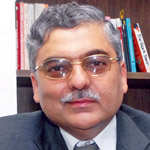
    Ashish Bhasin, chairman – Aegis, India, remains bullish: “Many categories are near saturation in urban areas. Rural markets make sense given good monsoons, and government schemes that provide greater disposable income.” He believes this market has been very poorly serviced by the advertising industry but has potential. “The organised part of rural can be half or more than half the mainstream market, valued at between Rs 25 and Rs 30 crore. It is full of challenges but the pot of gold at the end is humungous.”


    Having a team full of veterans, Mr Bhasin intends avoiding many of the pitfalls of rural marketing. One of the largest misconceptions is assuming rural consumers can be served by a dumbed down version of urban communication. The other is underestimating the importance of implementation. Carat intends solving some of these problems via technology.


    Source:The Economic Times

    Copyright © 2013, Bennett, Coleman & Co. Ltd. All Rights Reserved

    Licensed to republish
     

  • Fogg clouds Axe effect, is new numero uno deo

    By Namrata Singh & Udit Prasanna Mukherji


    Where tales of giant killers like Nirma and Ghadi in the detergents space are part of the marketing folklore, a new David vs Goliath story is playing out in the FMCG market. This time it’s in the deodorant space. Fogg, a relatively new brand in the deodorant space from the homegrown Vini Cosmetics’ stable, has toppled Axe, a well-established global brand of Unilever, to become the market leader.


    Fogg has garnered an all-India (Nielsen) value share of about 13% as of October this year. The market share of Axe, which was the leader so far, is just about 8% now. A year ago, Axe commanded a higher share of about 18-19 % of this now highly fragmented market. It’s a case study in itself on how in certain fast-growing emerging categories the sweepstakes are so different that a younger brand bears the ability to overtake the market leader in a short span of time. Fogg is owned and marketed by Darshan Patel, the entrepreneur who, prior to setting up Vini Cosmetics, was the former promoter of Paras Pharma which was later acquired by Reckitt Benckiser.


    As part of the Paras team, Mr Patel successfully launched brands like Krack cream, Itchguard , Moov, Livon and Dermicool , which created a dissonance in the marketplace. Mr Patel appears to be following a similar strategy with Vini Cosmetics as well. Industry experts said Fogg’s unique proposition more sprays in a bottle – has helped the brand break through the clutter, considering that all brands are priced quite competitively.


    While Axe is among the first few brands which created the deodorant category in the country in 1999, Fogg was launched only two years back. Axe could not retain its leadership position in the category despite roping in celebrity Ranbir Kapoor in June this year. When contacted, an HUL spokesperson said: “As a policy we do not comment on market shares.”


    Darshan Patel, on the other hand, said Vini Cosmetics wants to increase its distribution reach which should augur well for Fogg and the other brands in its stable such as White Tone face powder, Glam-Up instant glow cream and Jinjola prickly heat powder. It was only recently that Vini Cosmetics raised Rs 110 crore from Sequoia Capital, a venture capital fund, to drive expansion.


    Interestingly, ITC’s Engage deodorant brand, which launched a range for both men and women in April this year is one of the youngest brands in the category. It too has managed to grab a chunky piece of the market pie. Engage has garnered a share of about 5-6 % in the Rs 2,100 crore deodorant market as of October this year. “ITC personal care’s entry into the deodorants market with Engage has received an extremely encouraging response ,” said Sandeep Kaul, divisional chief executive of ITC’s personal care products division.


    Source:The Economic Times

    Copyright © 2013, Bennett, Coleman & Co. Ltd. All Rights Reserved

    Licensed to republish

     

  • The Great CEO Churn: 16 CEOs from FMCG, auto & telcos switched jobs in 2013!

    By Kala Vijayaraghavan, Lijee Philip & Deepali Gupta


    At least 16 high profile CEOs from three consumer facing industries – FMCG, automotive and telecom – switched jobs in 2013. Volatile market conditions, demanding stakeholders and in some cases, poor performance, led to the unprecedented churn at the top, say industry leaders and top officials at executive search firms. “Companies doing badly tend to rope in a new CEO hoping for a turnaround from somebody with a fresh perspective,” says RC Bhargava, chairman of Maruti Suzuki. A few changes though were also routine rotations made by multinational companies.


    Many other changes in the FMCG sector, executive search firms say, have been almost incestuous, with companies tapping a very limited pool of tried and tested CEO talent. For instance, when Anand Kripalu moved from Mondelez India to Diageo, former Pepsi CEO Manu Anand moved in as Mondelez CEO and former Nokia India MD D Shivakumar filled the vacancy Anand left at Pepsi.


    “Three CEO changes can lead to CEO changes in 10 other companies,” says Navnit Singh, Managing Director-India Korn/Ferry International. “Usually, only a few known faces are part of this merry go round. We have been advising companies to ensure that there is a strong succession pipeline within.” The same trend was also partly visible in the automotive sector, where Maruti Suzuki, Volkswagen, Toyota Kirloskar, Ford, Skoda and Fiat and Chrysler all saw new CEOs this year.


    A shallow talent pool, particularly of senior managers, is providing top executives opportunities to move across companies. These external CEO replacements are a reflection of the senior-level gaps in organisations, says RR Nair, ex-HR head of HUL and a CEO coach and advisor. “Organisations also opted for talent with an outsider perspective to drive change at a faster rate,” he adds.


    Several other consumer-facing companies also had new CEOs – Sanjiv Mehta at HUL, Gopal Vittal at Bharti Airtel, Varun Berry at Britannia, and Vivek Gambhir at Godrej Consumer Products. Nestle India predictably placed another expat Etienne Benet as the MD. He took over from Antonio Helio Waszyk, another expat.


    Britannia CEO Berry attributes the big changes to “very tough economic conditions and intense competition that have forced consumer goods companies to fight for a share of meagre growth”. For example, Indian subsidiaries of Volkswagen and Toyota Kirloskar have initiated major reshuffles in the top management as the two car makers take fresh guard to tackle the slowdown.


    Uncertainty and slow growth which marred the business environment during the past six months to a year could be one reason behind the churn, adds Sunil Goel, MD, GlobalHunt. Mahesh Kodumudi, president and MD of Volkswagen India, has just taken on additional responsibilities at Volkswagen Group after Gerasimos Dorizas, the chief representative of Volkswagen Group India, left citing personal reasons. The changes are coming when the group’s mass market brands have seen a decline in sales. “There is a lot of pressure to generate and sustain revenues. Organisations expect leadership to be innovative,” says Global-Hunt’s Mr Goel.


    Toyota Kirloskar MD Hiroshi Nakagawa is moving back to Japan and is expected to be replaced by Yoshimasa Ishii. And at Maruti Suzuki, the country’s largest car maker, Kenichi Ayukawa succeeded Shinzo Nakanishi as the new MD this May. At Ford India, Joginder Singh succeeded Michael Boneham about a year ago. Fiat and Chrysler appointed Nagesh A Basavanhalli as president and managing director.


    2013 was a forgettable year for consumer-facing companies, says Sunil K Alagh, chairman of SK Advisors. “There were arrogant innovations and a lack of communication with consumers. New CEOs have to quickly understand consumer needs and work out a refreshing growth strategy,” he says.


    In the telecom sector, a different set of dynamics was at play, causing CEO-level churn. Except for Airtel and Jio Infocomm, all other CEO changes in this sector have been through internal promotions as companies deal with regulatory uncertainties and an urgent need to arrest losses.


    Russia’s Sistema, which operates under the MTS brand, replaced CEO Vsevolod Rozanov with Dmitry Shukov. The change of guard was on account of Rozanov being promoted to group CFO. In Rozanov’s words: “I came here because I wanted a challenge. Now, I need a new challenge and Dmitry is here.” Yogesh Malik, the India head of Norway-based Telenor’s Indian arm, quit only five months after taking charge. Asia head Sigve Brekke is stand-in chief for now.


    Most of Aircel’s top management quit over the last two years, and stand in chief Kaizad Heerjee, was promoted from COO to CEO after a year’s trial and achieving operational breakeven.


    Source:The Economic Times

    Copyright © 2013, Bennett, Coleman & Co. Ltd. All Rights Reserved

    Licensed to republish


  • Flipkart gets Elephant Design to create identity for ‘flippd’

    By A Correspondent


    Flipkart India got strategic design company Elephant to design flippd, its recently launched lifestyle label.


    The designs aims to be vibrant and bold with a youthful attitude that is sure to appeal to the young, trendy online shopper.


    “Our lifestyle category, though fairly new, has been doing extremely well. We felt the time was right to extend our range of offerings in this space. The flippd brand is all about vivid colours and witty expressions on a wide choice of casual clothes and accessories. It’s aimed at the  young fashion conscious generation that thrives on trends.” said Ankit Nagori, VP – Retail, Flipkart India Pvt Ltd.


    Speaking about the visual identity, Ashwini Deshpande, Founder-Director Elephant said, “flippd visual identity is created with a doodle-happy hand to showcase a casual yet self-expressive language. Black is the basic colour of this visual language as it can stand out on any colour or surface. A young colour palette supports the identity with flexibility of applications. ”