Category: MARKETING

  • No gaon for our desi ad boys?


    By Ravi Balakrishnan & Amit Bapna


    A decade ago, rural India was going to be the next big frontier for the ad business. Specialist divisions were announced with great fanfare, case studies and PowerPoint decks bandied about. They said a lot more separates urban and rural India than just geography – there were different spending patterns, media habits and mindsets.


    Today, rural India still remains the next big frontier. Except this time around, many agencies are missing out on the action. In some cases like SMG’s Xpanse, the unit has ceased to exist. In others like Linterland and Anugrah Madison, there’s a dilution in focus.


    It’s a shocking lapse at a time when the market has never seemed so promising. A good monsoon in 2013, the NREGA and an increase in white collar jobs has doubled or even tripled the spending capacity of the rural consumer. According to Rakesh Srivastava, senior vice president sales and marketing at Hyundai, “Rural sales helped us increase our market share to the highest point in the last 15 years even when the industry is declining.” He reckons rural markets will account for 20% of sales by 2014.


    But Hyundai and many other marketers will try hitting these targets aided by a different set of partners (see Box: No Agency? No Problem). Barring infrequent salvos like GroupM’s Dialogue Factory, agencies regard the rural markets with a guarded wariness, or maybe weariness of an entirely different sort.


    For one, they are tired of investing. In the heady days of the early and mid-2000s, it was easy to get funding from parent agencies or holding companies. Today, they expect returns. A tough call given the size and scale a good rural operation requires. For instance, Geometry Global (a combination of Ogilvy Action and G2) works out of 13 offices with 100 employees, 300 supervisors and 5,000 field operatives. Its president Rahul Saigal says, “You need to reach tens of thousands of villages. You need satellite offices in small towns, technology for monitoring, vendor connections and the ability to manage thousands of feet-on-street. An agency that cannot offer this has nothing to offer!” The investment has to be upfront and one cannot ride on a single client. And then there’s the cost to the marketer.


    A rural marketing veteran says, “A two-plus reach (connecting with the consumer twice a year) would cost me nothing less than `18 crores to Rs 20 crores.” Ashish Bhasin, chairman and CEO, Aegis Media believes an equally serious problem is agencies not knowing how to run rural. He contends, “You have to recognise it as an ecosystem playing by separate rules and dynamics.” The ones who managed to make a success of it, according to RV Rajan, founder of Anugrah (later Anugrah Madison) are: “A few vendors who evolved into specialists with backward integration. They have their own fleet of vans, godowns and a dedicated staff.”


    Also in short supply: insights and planning. And firsthand insight mining doesn’t come cheap. The lack of planning nous further alienates marketers. Anisha Motwani, CMO, Max Life insurance, observes, “Rural marketing has become synonymous with activation. It needs to focus on connecting the brand and the target consumer.” Agencies on the other hand claim they get paid not for the idea but only implementation. In their eagerness to merge with activation divisions, many have almost willingly relinquished ideation, even as they hire local vendors for their assignments. It’s not too great a leap for a marketer to reach out to these suppliers directly.


    Some traditional agency folk argue that with increasing urbanization, rural marketing is getting less relevant. Even a firm believer in the rural markets like Sunil Kataria, COO sales and marketing Godrej consumer products contends, “There’s a top end progressive rural segment which contributes to a large part of consumption. It behaves a lot more like small town India.”


    Finally, a large number of rural agencies have failed to come up with a model that can deliver a positive return on investment. Sandip Bansal, chief client and field officer at Dialogue Factory, says ruefully, “When you talk of rich experience, a marketing manager will flirt with it, but when the CFO says ‘no more money’ it collapses.” Dialogue Factory claims to be working on a new approach, one that its head – experiential marketing for Apac, Dalbir Singh describes as “physical, digital and social.” An assignment for one of its clients involves physically connecting with people, relying on digital technology to make them aware of a problem and finally engaging with an influencer to permeate the message into society.


    WPP’s country head Ranjan Kapur believes, “Reaching people effectively will be less of a challenge with digital and mobile. You will see a spurt all over again.” Even Aegis is apparently readying to launch a rural practice. As Mr Bhasin puts it, “The approximate industry size is Rs 25,000 crore. I believe there’s Rs 15,000 crore spend that is incremental to this, accounted for by promotion and on ground which agencies don’t have even a .01% share of.” That’s the sort of money that should get the thinking caps on in a hurry.


    No agency? no problem The dont’s of rural
     

    Agencies may not like it but marketers from Ford to Karbonn are relying on their distributors and channel partners for rural marketing. These distributors work with local agencies and spread the brand message. Says Vinay Piparsania, executive director, marketing, sales and service, Ford India: “We do not rely on any agency and leverage Ford dealerships to grow closer to rural customers. Using the hub and spoke approach, more than 40% of our sales and service outlets help us target these markets.” Karbonn Mobiles built distribution from the district level up as opposed to MNCs who start with metros and Tier I towns and then go further down. Says Shashin Devsare, executive director, Karbonn “The 90% plus district coverage that we boast of today is a result of this strategy. Our key partners are over 1000 plus micro distributors who have extended the reach to even a taluka level today.”


    The ideation on often comes from within an inhouse rural sales and marketing department. This is the true of, among others, Hyundai and LG (which admits to its rural sales outpacing those from the urban segment). These departments with a sharp focus on rural marketing and sales generate ideas that are implemented either by agencies or distributors.


    Faced with the challenge of keeping the brand top of mind long after the activation is over, Hyundai is relying on positive word of mouth via Village Champions. These are typically influential people in the village who engage with potential customers beyond the inflection points of harvests, festivals and weddings.


    Direct selling from home to home is in vogue again, according to Pratap Bose, COO, DDB Mudra group. While not the easiest option, given the demands it places on stock and cash flow management, some marketers believe it does better when compared to a rural promotion since it involves a direct one-on-one outreach.


    Regional media have been quick to capitalise on the rural opportunity, with radio channels and newspapers offering marketers a package deal of media exposure and even starting activation agencies of their own.


    Don’t Patronise

    The tonality of communication needs to be right for rural audiences. Hyundai’s Mr Srivastava recommends it be simple direct and more social than aspirational: “They don’t prefer communication that says ‘you are the best’ and respond better to something that talks about spending time together.” This insight powers programmes like Hyundai Ne Bana Di Jodi a special wedding themed offer for the marriage season.


    Don’t Make Assumptions

    Several years ago, Kodak’s KP 100 slim camera was underperforming in Maharashtra. Mr Bose (who was then with Ogilvy) recalls, “When we visited we found they didn’t know how to take the film in or out! We spent two months educating them and sales went through the roof. A lot of rural is about touch and feel and seeing is believing.” Even (or maybe especially) in this day and age of high tech and apparently intuitive products, a demo could still go a long way.


    Don’t Be Impatient

    Godrej’s Mr Kataria cautions against expecting an immediate sales impact from a rural activation. He believes the seeding takes time since it is happening on ground and not on TV with a readymade reach and frequency plan. He recommends a medium term point of view of six months or so before one can gauge the impact. He says, “You shouldn’t get into rural if you want to do it for 30 or 50 days. You are just wasting your money.”


    Don’t Flirt. Find A Larger Cause

    Shankar Nath, head – marketing & direct, ICICI Lombard General Insurance recommends that brands integrate themselves in the rural ecosystem rather than merely adapting. Ms Motwani from Max Life adds, “To build long term sustainable models, brands need to find ways of adding value to communities. A rural initiative around a social platform helps significantly. Some such initiatives that come to mind are HUL’s Lifebuoy programme that focussed on prevention of infection and diarrhoea.”


  • Desi brands go for ‘phoren’ models to sell wares

    By Shramana Ganguly


    Louis de Beer is a very long way from home. In his native South Africa, the 29-year-old worked at construction sites as an engineer, clouded all around in the heat and dust. It is a humble profession, without any frills and fancies.


    But in India, Mr de Beer exudes charm and (some level of) class as he preens at us from hoardings, catalogues and in-flight magazines. It is an intent stare – Mr de Beer wants you to check out his striped shirt, the finely cut trousers and his coiffed hair while his employers Jade Blue, a multi-brand men’s apparel retailer, wants you to buy the items.


    The engineer-cum-model is one in many foreigners who are being hired to sell clothing in India. And lesser-known brands in the country such as Jade Blue are giving a whole new meaning to ‘colour blocking’. There is only one colour that sells apparel (and allied products) these days – and it is white.


    There has been an influx of international models to India since 2008. With the crisis deepening, there has been a rise in those seeking work in India, for opportunities that continue to stay afloat amid global economic turmoil.


    “Financial risks are minimised in a market like India that continues to be secured and offers plenty of opportunities,” says Mr de Beer, who has taken to modelling full-time ever since Africa’s biggest economy took a stumble. He is on a roll in India, doing photo shoots for as many brands as possible until his stay ends in September.


    Indian Market a Big Draw Now

    “Almost every second billboard has a firang model,” notes Harshad Gadhvi, who runs a model co-ordinating agency.


    A trend that began with national brands has over time caught on with smaller brands. Regional brands like Blue Buddha, Asopalav sarees, Lady Lyka, Uvaam Clothing or even an e-tailer like Utsav Fashion has embraced faces from Western Europe, Latin America and CIS countries.


    Take, for instance, the modelling graph of a 26-year-old Spaniard, Javier Arrausi. He would go on tour in India until November, attempting to bag as many assignments as possible on the way. “Although not as remunerative as other countries, India gives you more work and hence, the earnings multiply. The market is not as crowded (with fair-skinned models) and hence, we have less competition for Indian brands,” says Mr Arrausi, who like Mr de Beer is a civil engineer.


    With the Spanish economy in a slump, he sees no point in pursuing a career in engineering and would rather continue to earn a living through modelling. “Although in a market like Germany, the work is five times more. But in India, in one month, you may land 30 assignments and hence, you end up earning as much,” says Mr Arrausi.


    Jade Blue promoter Bipin Chauhan explains the advantage of hiring international models for assignments. “Apart from adding to the charm of the brand, they deliver better results with minimum effort required from our end.”


    Uvaam promoter Ashish Mehta seconds that opinion. “They are focused and work sincerely for eight hours, are not fussy like their Indian counterparts.”


    Typically, an apparel brand gets 25 garments shot in a day, shooting as many as 20 frames with each garment. Model coordinating agencies based out of New Delhi or Mumbai get Rs 40,000-50,000 each day. The models get 70-80% of the payment, after paying 20-30% commission to the agencies on each such assignment.


    Assignments in India do not pay as much as other Southeast Asian economies like China or Hong Kong – where models charge per costume, unlike in India where they are paid on number of days worked – but stability of the market and the brands that thrive here became a big draw for those seeking work in the world of fashion modeling, says Ahmedabad-based fashion photographer Manish Lakhubha.


    With consolidation of Indian brands and those keen to project themselves as an international brand, it is now imperative to have models with a diverse look, says Ankit Mehta, who runs Inega Model Management in Mumbai. He explains: “We determine the potential of the model and identify brands that he or she ought to endorse. The hair, makeup and cosmetic category clients normally enforce upon a non-compete clause in the agreement, hence the model can sign only a single brand in this case. In other categories, models normally can work on multiple brands. The actual numbers are subjective to the market conditions at the time of the model’s visit and the receptiveness of the model.”


    Apparel brand Blue Buddha shot with international models in 2011. Its summer 2014 campaign, due to be shot in January, is likely to have a foreign face. “That is a trend and it adds to the appeal of our brand,” reasons Sanjay Gohel, MD of Zedex Clothing that owns the brand.


    Brands are attempting to up the style ante by cutting through the virtual geographical boundaries in the minds of consumers through fair-skinned models. Recently launched personal care brand Layer’r too features foreign models.


    Source:The Economic Times

    Copyright © 2013, Bennett, Coleman & Co. Ltd. All Rights Reserved

    Licensed to republish


  • Why (and how) GSK is ready with Plan B for Horlicks ?

    By Amit Bapna & Ravi Balakrishnan


    It’s a tough job keeping a brand alive for 140 years. It’s tougher yet trying to make it stand for something different after it has spent the bulk of its existence, defining a very specific category: in the case of Horlicks, a malted milk drink. But that’s just what Horlicks has been trying to do, especially in India.


    Arriving on Indian shores in colonial times, the brand acquired enormous equity post independence, especially in the East and South. It accounts for 46.4% of the approximately Rs 5,000 crore health food drink category. The Indian subcontinent is currently the brand’s largest market, accounting for 70%- 80% of global volumes. And also the best site for experiments in seeing just how far the brand can go.


    Horlicks is currently in a frenetic expansion mode. It’s revitalised its focus on biscuits launched in 1993 and is making forays into areas like noodles and more recently oats. This is hardly unique: many legacy brands are in a similar rush to stand for a lot more – Lifebuoy and Pears for instance, which have expanded into hand sanitisers and face wash.


    In the case of Horlicks though, previous attempts to stretch the brand have been problematic. NutriBar, an energy bar launched in 2009 has been withdrawn as also flavoured milk which hit the market around the same time. According to marketing consultant Harish Bijoor, the taste profile of these products militated against expectations from the brand.


    It tried to get into the confectionery space with cream biscuits only to back out. Horlicks is now focusing on the high function space with nutritional biscuits. Says Seema Gupta, assistant professor – marketing, Indian Institute of Management, Bangalore, “Biscuits is driven by taste or habit, and fortified calcium and nutrients is not the prime mover of the category.” It can be an added benefit if the variety and taste is as good as that of the entrenched brands, she adds.


    The foray into food, currently contributes to around 10% of Horlicks’ share. Of these, biscuits still lead, with recent launches like noodles performing below expectations. At the moment, Horlicks is back to the drawing board, launching oats, diversifying its biscuit portfolio and tweaking noodles. Says Jayant Singh, executive vice president – marketing, GSK Consumer Healthcare, “We found that 40% of households are using noodles for breakfast. When we launched we were operating in all segments but then moved in the higher end, healthy multigrain area.” Adds Zubair Ahmed, managing director, GSK Consumer Healthcare, “Currently we are relooking at our entire positioning and are revisiting the category.”


    It’s betting big instead on nutritional and digestive biscuits, as a healthy snacking option and oats to get a larger share of the breakfast table. At 40% annually, oats is the fastest growing segment in the breakfast cereal market valued at over Rs 600 crore. Horlicks is a late entrant in a market packed with Quaker, Saffola, Britannia and Kellogg’s. Starting with white oats in 2011, this year has seen the launch of flavours. On this front the brand is facing a bit of friction and as per industry sources there is a divided house internally.


    There is a school of thought that feels the masala association can lead to equity dilution. Says marketing consultant Sunil Alagh, “In many ways, their hands are tied by the UK headquarters who decide what can and can’t be done. They are obsessed with serious health attributes – which is right for their core malt drink. But in snacking the consumer in India is not ready yet. Maybe they could go in for a sub brand since the mother brand is so strongly associated with health.”


    It’s a classic chicken and egg conundrum: variants and extensions are on a low base and for them to achieve scale they need push on all sides, which often does not happen due to an over-crowded market, points out the CEO of a brand consulting firm, on condition of anonymity. In Horlicks’ case since the core brand is consumed mostly by children (over 80%), most resources are spent on increasing off take or salience. Even within the milk food drink space, it becomes very difficult for variants, for example, for women or diabetics to create the kind of impact that is required for behaviour change, he points out.


    Horlicks is not relying solely on its new portfolio. Its flagship is becoming more accessible to rural markets with SKUs ranging from Rs 5 sachets to a 2 kg pack costing approximately Rs 300. “We have seen our volumes grow 300%-400%. As a part of our access agenda, we look at having close to a billion serves next year,” shares Singh.


    By all reckoning, the brand faces an uphill slog. As Dr M G Parameswaran, executive director & CEO, Draftfcb+Ulka, puts it, monolithic brands can get into closely related categories, but cracking segments with different product codes is difficult. Marketing consultant Sunil Alagh who claims to have taken Horlicks biscuits from a Rs 40 crore to a Rs 100 crore business in 18 months in a stint as advisor, points to a more severe problem: “The first rule of thumb is to ensure that you have the best team and never use the existing sales force.


    This is because initially the sales tend to be low since it’s a new product. The apparent rewards seem less and it requires more work. No matter what you tell them, the sales team will spend 90% of time on the existing products and only 10% on the new. Brand extensions require the primary task of getting your team out of their comfort zone.” In 2010, when he advised Horlicks, he recalls the biggest challenge was from within. He was able to grow the biscuit category only after insisting on a separate sales force.


    The other problem is more intrinsic to what Horlicks stands for. Health was always its stock in trade; an outlandish ad from the 1930s claimed a cup before bedtime prevented “night starvation.” However, health has become an almost generic proposition flogged by everyone from air conditioners to chewing gum. Noodle category leader Maggi has a line that says “taste bhi, health bhi”; by focusing on health, Horlicks is trying to sell fun categories in a serious manner. As Mr Alagh puts it, “the biggest problem and opportunity for the brand is that in the East and South it’s viewed as something that’s a preventive and in the other half of the country its associated with ‘cure’.” So, can the 140 year old learn a few new tricks?


    Source:The Economic Times

    Copyright © 2013, Bennett, Coleman & Co. Ltd. All Rights Reserved

    Licensed to republish


  • Oh dear! Indians find gifting to partners a pain

    By A Correspondent


    Over half of Indians find their partner the hardest person to buy gifts for, with men being particularly perplexed by the prospect; 59 percent of them find their partner’s gift the toughest choice of present to buy compared to 46 percent of women, according to new ‘Giftology’ research by Titan Watches.


    The research also reveals a pronounced difference in ‘gift perplexity’ levels between age groups; a staggering two thirds of Indian 35-44 year-olds find selecting their partner’s gift the toughest choice of all, compared to just 32% of 18-24 year olds who appear far more comfortable with the process.


    When it comes to receiving gifts, however, Indians do overcome this particular confusion with ease; with 60% revealing that their spouses and partners still give them the best presents each season. They have a far better track record than Indians’ friends, who systematically buy their worst gifts for each other during the festive season; according to the research, 38% of Indians receive their worst gifts from their friends.


    Rajan Amba, Titan’s Global Marketing & Product Head, describes the Giftology research as an insightful look at the trends in gifting that the Indian customers will face this festive season.


    “Some of the findings will certainly strike a chord on both sides of the gifting process. While Indians find it hardest of all to select the right gift for those closest to them; in practice, the majority still rise to the challenge – 60% of respondents still cite their partner’s gift as the best of all. Giftology is a science which – like a good wine – gets better with age; while only 20% of 18-24 year olds find it easiest to buy gifts for their partner, that figure more than doubles (46%) amongst gift givers aged 55 or over,” said Mr Rajan highlighting another of the survey’s key findings; the fact that friends seem to receive the worst presents from each other.


    “Friends are consistently the worst gift buyers; it’s also notable that they are – however – rarely cited as being difficult to buy gifts for (just 9% consider them the hardest gifts to purchase). In light of this, it appears that Indian’s consider friends’ gifts a pretty straightforward purchase; perhaps they don’t dedicate as much care and attention to the selection as they could. The result; the least satisfying gifts all round,” Rajan asserted.


    “In short, the more care and attention we apply to the gift process – i.e. the higher the level of ‘gift perplexity’ – the better the result for both giver and recipient. Now, there is a valuable insight this festive season!”


  • Watch out! The shopper next to you could be fake

    By Shramana Ganguly


    Vidya Nayak could be shopping alongside you during the pre-Diwali rush. This 36-year-old Bengaluru housewife looks no different from the hundreds of others you rub shoulders with this season, but she’s on a mission that’s not just a sale.


    The onset of this festive season and some product launches have brought to the retail floor the mystery shopper – a person paid to shop in a bid to screen brand performances, gauge trends and consumer sentiment.


    “I have been checking if the promotions and pricing are presented in a correct manner to the consumer in this festive season,” says Ms Nayak, who takes time out for this assignment for Sony and LG.


    Fears of a bleak Diwali have pushed brands across FMCG, apparel, consumer electronics and automotives to send in the reserve forces to fight poor sales. “Diwali will get waves of mystery shoppers,” notes Saurabh Mishra, senior manager (marketing) at Channelplay Ltd. The retail marketing company assists brands in retail intelligence, visual merchandising, loyalty programmes, et al. Mr Mishra has 400 mystery shoppers working doubly hard this season.


    Ms Nayak, for instance, browses and bargains like an authentic shopper. She may or may not spend, according to her client briefing, but would check on brand performance. A luxury automotive brand could hire 40-year-old mystery shoppers, preferably a couple, while an apparel brand could have a 20-year-old do the job.


    Assocham says the festive shopping spirit is lowest across Delhi, Ahmedabad, Chennai, Mumbai and Hyderabad on “expected lines, as economic recovery is rather slow and consumer confidence low”.


    “Consumers are not bullish this season. Every brand will try to ensure maximum conversions against walk-ins, although less compared to last season,” notes Sanjeev Shenoy of HS Brands International. HS offers mystery shopping services, loss preventional solutions and data collection tools to retailers and brands globally.


    For instance, mystery shoppers at AlphaOne saw developers Alpha G:Corp install an ‘automatic piano’ on the second floor to attract customers, triggering a 200% jump in footfall. The retail destination in Ahmedabad houses KFC, Swarovski, Tommy Hilfiger, Levis, FCUK, Timberland, Sony, HP, Samsung and Pizza Hut, among others.


    “Stores on the second floor are now looking forward to converting this momentum into sales with exclusive offers and value deals,” said Alpha G:Corp executive director (marketing, corporate affairs & retail) Prodipta Sen.


    With staggering sales at stake, the mystery shopper ensures that each consumer is handled in the best possible way to ensure she spends.


    Source:The Economic Times

    Copyright © 2013, Bennett, Coleman & Co. Ltd. All Rights Reserved

    Licensed to republish


  • Dhanda wasn’t really manda this Diwali


    By Sushma U N & Rajesh Chandramouli


    The Indian consumer did not disappoint. Early trends indicate they shopped with full vigour this Diwali. Everyone from hawkers on the streets to luxury brands on the high streets had pinned their hopes on the festive season this year, and from what retailers say, they are all heaving a sigh of relief.


    While mobile phones flew off the shelves, car sales remained brisk. However, refrigerators and washing machines sales were down.


    Chocolates, smartphones strike gold this season
    By Writankar MukherjeeThis Diwali, consumer goods brands across categories are striking gold. Brands like Apple, Samsung, Nestle and Ferrero are hitting new highs in sales, with products coloured various shades of gold, which marketers say Indian consumers associate with being premium.


    Check this out: Apple’s iPhone 5s in the gold version sold out within minutes of its launch, and received the maximum number of advance bookings. If that’s not enough, the model is now being resold by smaller neighbourhood retailers who have hoarded stock, and on websites like eBay, at Rs 10,000- Rs 15,000 premium.


    Last week, Apple’s rival Samsung too joined the ‘gold’ rush by launching its costliest smartphone ever in India, the golden-colour Samsung Galaxy Golden which, the company says, has sold beyond its expectations.


    Among chocolates, Nestle’s Alpino and Ferrero Rocher have sizzled retail shelves during the festive season gifting, both drawing the consumer’s eye with their gilded packaging.


    “Gold has huge appeal amongst Indian consumers since it’s a fantastic premium stand-out colour,” says Samsung India country head (mobile and digital imaging) Vineet Taneja. “This also means the product needs to be niche or super-premium,” he says.


    It is probably the same understanding which led Apple to launch just 200-odd units of the gold colour iPhone 5s as part of the launch phase last weekend.


    Cellphone retail chains like The MobileStore, UniverCell and PlanetM Retail said consumers are ready to pay in advance for the gold device. And of course, some customers who managed to score a gold iPhone5S at Apple’s launch events are re-selling the device on marketplaces like eBay, where a 16GB model is priced at around Rs 63,000 to Rs 67,000, compared with the device’s official retail price of Rs 53,500.


    UnivelCell Telecom CEO D Satish Babu said several neighbourhood retailers are selling the iPhone 5s model at a significant premium to the market price. The phone was available in the grey market even before its official India launch – dealers at outlets in Delhi’s Gaffar Market and Mumbai’s Heera Panna were quoting as much as 1 lakh for it.


    No wonder, Samsung is selling its gold-colour offering Galaxy Golden smartphone at Rs 50,000, compared with as compared to its flagship Galaxy Note 3 selling at around Rs 47,000. Samsung’s Mr Taneja says despite the premium pricing, demand for the model has been much more than the company’s expectation during Diwali sales.


    In chocolates, retail chains like Spencer’s Retail and Future Group say while Ferrero Rocher has been the king of Diwali gifting due to its similarity with the Indian ladoo in shape and golden colour wrapper, Nestle’s first premium chocolate brand Alpino has started off well with a similar packaging giving competition to Cadbury and imported brands.


    Spencer’s Retail president & CEO Mohit Kampani says while Ferrero’s share increased from 25% to 32% in Diwali FMCG gifting this year, Alpino has notched up a decent 2% share within a couple of months of its launch.


    Source:The Economic Times

    Copyright © 2013, Bennett, Coleman & Co. Ltd. All Rights Reserved

    Licensed to republish


    “Diwali sales were as good as last year. The theory that people prefer discount models in a downturn economy got validated. The beginning to the season was sluggish and we were nervous.


    However, last Friday (November 1) sales were way above expectations,” Raghunath Narayanan, MD of Europa Group, a clothing discount chains, said. “While exact sales numbers are still being collated, we have witnessed single-digit growth in Diwali sales. Per bill value of each customer was slightly lower than last year, but more shoppers compensated for that drop and ensured growth. In this market , not to have de-grown itself is an achievement,” he said.


    Several automakers who expected muted sales this season were in for a surprise . “Early numbers show that sales grew 10% during Diwali. Our daily shipments , which were 9,800 vehicles a day last Diwali, rose to 15,800 this year,” said Mayank Pareek COO, marketing & sales, Maruti Suzuki.


    “What we saw this year was a result of pent-up demand. Customers, who postponed purchases, chose Diwali to complete the purchase. However , for the past five or six years, Diwali sales were sluggish. We need to wait and see if this momentum in sales will sustain,” he said.


    Mobile phone sales appear top draw this year. Sales at India’s largest mobile phone retailer Univercell grew 30% this year. “Sales have been very good this year, with a 30% increase in sales by value compared with last Diwali. This was driven by the Rs 5,000-10 ,000 and the Rs 10,000-Rs 20,000 price bands, which saw highest growth,” Soumya Menon , V-P of marketing and brand strategy, UniverCell Telecommunications.


    Charath Narasimhan, CEO of Indian Terrain, a mens’ clothing brand echoes this view. “Overall sales have been reasonably good with 30% same-store growth in sales. This has been in line with our expectations. Trousers saw highest growth with khakhi coming back in fashion and sales spiking during the weekend,” Mr Narasimhan said.


    The consumer durables sector saw mixed response with sales of TVs growing, while sale of refrigerators and washing machines fell this year, said B A Srinivasa, CEO and joint MD, Viveks, a multibrand consumer durables retailer. Over the last few weeks, there was doubt over sales of durables as RBI had banned sales of products at 0% interest on credit cards but this has not impacted sales, Mr Srinivasa said.


    The monsoon/end-of-season sale in July was good, Diwali turned out better, and going forward too, for the new year sale, retailers expect the buoyant mood to carry on through what is left of the year. “The wedding season in the north is just a week away. Weathermen have said the winter is going to be strong, and this bodes well because retail will stay longer due to the winter,” said Mr Narasimhan of Indian Terrain.


    MAKING MERRY

    Europa Group, a clothing chain, has seen single-digit growth in sales. Per bill value was lower but more shoppers were seen.


    Maruti Suzuki’s daily shipments for Diwali this year were 15,800 cars compared to 9,800 vehicles last year. Sales grew 10% Mobile phone retailer Univercell saw 30% sales growth this year with 5k- 10k, 10k- 20K segments growing most Multibrand consumer durables retailer Viveks witnessed good sales in TVs while refrigerators and washing machines fell.


    Source:The Economic Times

    Copyright © 2013, Bennett, Coleman & Co. Ltd. All Rights Reserved

    Licensed to republish


  • Brands rewind to move fast forward

    By John Sarkar


    Marketers have hit the rewind button. From Rolls-Royce and Bacardi to Louis Vuitton and Fuji, top brands are touting their roots to be on the ball this season.


    Take Louis Vuitton for instance. After flirting with fashion, the world’s most counterfeited brand has gone back to what it does best, make high-end luxury luggage. It is also pitching to its well-heeled Indian clients a new book, which is the first comprehensive taxonomy of its women’s handbags that date back to the turn of the 20th century.


    In the meanwhile, Indian bike maker Royal Enfield has launched the Continental GT, a modern take on its popular cafe racer from the ’60s. And following a disastrous first innings, Italian scooter maker Piaggio is riding back into reckoning in India on its new Vespa, whose classic lines hark back to the times when baby boomers took over the roads.


    “Top brands are flaunting their heritage to stand out from the crowd. New generation Indians are more connected and well travelled. They want to know what a brand stands for,” says V Sunil , executive creative director at Wieden+Kennedy India , the advertising agency behind the popular Royal Enfield Continental GT campaign . That’s what Triumph Motorcycles, the 111-year-old British brand known for its retro-modern bikes, will be counting on when it enters the premium end of the domestic motorcycle market in the next few days. Along with Royal Enfield, Norton and the now defunct BSA, Triumph enjoyed a loyal fan following in India before the Japanese came in with their cheaper and more efficient machines.


    To automobile connoisseurs , Rolls-Royce Motor Cars is best known for the ‘waftability’ of its cars. However, a couple of months ago in Mumbai, the British luxury carmaker introduced the Wraith, a powerful fastback inspired by its vintage grand tourers. “Wraith revives one of the most famous Rolls-Royce names first used for a production model in 1938,” Herfried Hasenoehrl, Rolls-Royce’s GM for emerging markets-Asia , told TOI. “The name expresses the character of the new car by alluding to a powerful force, something agile and potent.” Industry experts feel that this bold move will allow younger and more adventurous buyers in India to warm up to the iconic 109-year-old automobile marquee.


    Well, maybe. But brand guru Santosh Desai has a theory about the business of buying and selling nostalgia. “It’s fuelled by an overdose of digitisation ,” he says. “Technology has left Indian consumers very jaded. They crave for the human touch — the roughness, feel and texture of handmade products of the eras gone by. So now, if you want to experience the scarcity of an era, you have to fork out a premium.”


    This may have resonated within the ranks of Japanese companies too, hailed by many as the true torchbearers of digital technology . Four decades after launching its original mass produced superbike, Honda is reviving the lineage of the hugely popular CB750 with the retro-modern CB1100. And in a booming domestic market ruled by digital SLRs and point and shoots, Tokyo-based photography and imaging company Fujifilm is capturing the big picture with its slightly expensive X1 series of cameras, reminiscent of photography’s early days with metal-milled analog dials and leather clad bodies. “We were a little slow off the blocks to make the transition into digital technology. And the X1 series helped us overcome that lag,” says Rahul Pandit, executive VP, Fujifilm India. “It got us instant attention in India since it looks so retro and it showcased our rich heritage in film at the same time.”


    The trend has moved on to other sectors as well. While liquor brands like Belvedere Vodka, Grey Goose, Jim Beam and Bacardi are focusing on showcasing their traditions in new campaigns, a significant number of fashion brands are increasingly finding out new ways to connect with their roots.


    British designer label Burberry, best known in recent years for women’s handbags and fashion, witnessed a huge spike in sales this year by re-establishing itself as a menswear retailer. Similarly, fashion house Fendi is funding the restoration of the iconic Trevi Fountain in Rome to bolster its Italian connection. Says Pietro Beccari, chairman and CEO of Fendi: “This project allows us to once again reinforce our geographical and cultural Roman roots, which we are very proud of.”


    What’s next? Watch out for a qwerty tablet!


    Source:The Economic Times

    Copyright © 2013, Bennett, Coleman & Co. Ltd. All Rights Reserved

    Licensed to republish


  • Godrej Eon is title sponsor of Tour De India

    By A Correspondent


    Godrej Eon has associated with the India leg of the iconic Tour De France and thereby hopes to heighten youth interest in cycling and popularize the sport on a pan-India level. ‘Godrej Eon Tour de India (TDI) 2013’ is organized by ID Sports, Cycling Federation of India and International Cycling Union (UCI).


    Through this association Godrej Eon aims to reach out to the youth and spread the message of Going Green across the country. The ‘One Watt Project’ by Godrej Eon is an initiative to spread the message of energy conservation and encourage participation by the public, notes a communiqué.


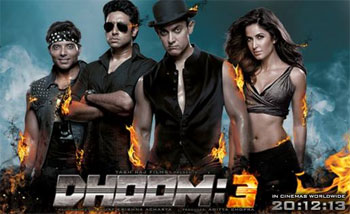
  • Yash Raj Films signs big licensing deals with Mattel, PepsiCo, etc. for Dhoom 3

    By Nandini Raghavendra


    Dhoom 3 will mark possibly the most-ambitious licensing merchandise programme yet mounted on an Indian film as Yash Raj Films plans to bet big on the licensing market with the third instalment of the popular Dhoom series.


    Yash Raj Films (YRF) has signed licensing deals with a number of companies including Mattel Toys and PepsiCo for Dhoom 3 and more than 100 items ranging from games and toys to gadgets and apparel are set to hit the markets in time for the year-end release of the film.


    “Licensing is on the cusp of experiencing a major breakthrough in the Indian market,” Danny Simon, consultant to YRF and a ‘guru’ in this field, having headed Fox Licensing and managed licensing programmes of Hollywood franchises such as Rambo and Terminator, said.


    “There is an increase of disposable income, the growing influence of media and the development of multiple-store chains,” he said, speaking from Los Angeles. YRF has developed of a fullservice licensing division to maximize the financial and marketing returns that can be derived not only from their own properties, but also through the representation of third-party intellectual material.


    “Dhoom 3 has a list of licensees that include companies such as Mattel Toys (D3 Barbie, Hot Wheels toy products), Pepsi (D3 Drink) to name a few,” Mr Simon said.


    The merchandise would include biker games partnered with Microsoft, funky fashion accessories for men, Ice X Electronics’ Dhoom branded phones and tablets with content from the movie, Mattel’s collector’s edition dolls of Aamir and Katrina, Hot Wheel bikes, race track sets, UNO cards and kids apparel.


    This is the first time Mattel has signed a licensing deal for a Bollywood movie. The worldwide licensing merchandise market is estimated at $123 billion, although it has yet to take off in a big way in India.


    Rohit Sobti, vice president at YRF Licensing, said that while there have been few examples of successful movie merchandise sales in India like Chhota Bheem and royalties range between 5-15% in this business, Mr Simon helped YRF change its perspective on the potential of licensing with some meticulous research and planning over the last year.


    “India is a tough market, but I see a big spike in the next three to five years,” Mr Sobti said, adding that he expects a minimum of Rs 20 crore in sales within the first year of operations of YRF Licensing from Dhoom 3 merchandise alone. YRF also plans to use licensing as the means to monetise other company assets. In the past two years, it has licensed a significant number of products ranging from lifestyle merchandise to social expression products within India and in various international markets.


    After launching Diva’ni, India’s first Bollywood-inspired fashion label, YRF launched musical cards with tunes from their film library, and next on the anvil is branded hospitality rooms as well as cafes. After Dhoom 3, the firm’s immediate plans include leveraging on 1,000 weeks that Dilwale Dulhaniya Le Jayenge (DDLJ) is expected to complete in 2015.


    “The plan is five-fold,” Mr Sobti said. They include products for age groups ranging from 12-40; launch of more brands like Diva’ni for cinema inspired fashion; gaming beginning with Dhoom films; TV animation for kids in 52 episodes with Dhoom 3 as well as films such as Hum Tum; and then, hospitality, rooms, cafes and perhaps even a theme park, he said. Mr Sobti estimates the vertical to grow to a value of Rs 50 crore in the next three years.


    YRF’s consultant Mr Simon said licensing, though a proven marketing model used in several countries around the world, does not suit all films. “It is important to acknowledge that not all films have the ability to support a licensing programme. Therefore, we are focusing on those films that have the ability to generate successful licensing programmes,” he said.


    Source:The Economic Times

    Copyright © 2013, Bennett, Coleman & Co. Ltd. All Rights Reserved

    Licensed to republish


  • Emami appoints Milkha Singh as brand ambassador

    By Writankar Mukherjee


    Emami has roped in renowned athlete Milkha Singh to endorse its premium health supplement, Zandu Kesari Jivan.  This is the first ever brand endorsement of Singh, popularly known as ‘flying sikh’.


    Emami director Harsha V Agarwal said the brand Zandu Kesari Jivan which promotes good health, youthful vigour & energy found a perfect fit in Milkha Singh, who even at the age of 84, is a symbol of youthfulness and vigour. The brand is also endorsed by Birju Maharaj.


    Chyawanprash is a growing health supplement category in India worth at Rs 400 crore. A new television commercial of Zandu Kesari Jivan featuring Milkha Singh is scheduled to go on air this month. The TVC is created by Scarecrow Communications.


    Source:The Economic Times

    Copyright © 2013, Bennett, Coleman & Co. Ltd. All Rights Reserved

    Licensed to republish


  • Vintage cars, Harley Davidson bikes, pricey jewellery find takers online

    By Shelley Singh


    Solitaire earrings for Rs 3.5 crore. A special edition Volkswagen Passat signed by IPL team captains for Rs 30 lakh. A 1936 Austin Ruby vintage car for Rs 7 lakh. A Harley Davidson Night Rod motorcycle for Rs 15 lakh… These are all rare and expensive purchases. What makes them rarer is that they have all been made virtually, on Indian e-commerce websites, and it says a lot about how the mindset and habits of the Indian consumer shopping online is evolving.


    We asked 10 leading e-tailers for the most expensive sold by them till date. It’s a fascinating list that contains items of new technology (LED TV) and old vintage (car), spans a price range of Rs 26,000 (bar counter) to Rs 3.5 crore (earrings), includes the predictable (smartphone) and the eclectic (drum kit), and has buyers from not just the metros but also from Belgaum and Bulandshahar. “It’s trust and selection,” says Kunal Bahl, co-founder & CEO of Snapdeal.


    Several patterns are evident: the bar for transaction size is being raised, even non-metro shoppers have the appetite to buy big, the market for rare items is growing, the basket of goods is expanding and more physical barriers are being broken.


    Aditya Vij, a Delhi-based business collector of vintage cars, bought an Austin Ruby 1936 vintage for Rs 7 lakh on olx. “There’s no market place for vintage cars in India,” says Mr Vij. “The traditional way was checking out with scrap dealers in old Delhi. The Austin was posted on olx by a seller in Meerut. You get to see the images, and the claims made by sellers online are more trustworthy than offline.”


    Images and specs of solitaire earrings worth Rs 3.5 crore on jewellery site Carat-Lane were the first point of contact for a person in a metro who would go on to buy them. This person, whom the website declined to name for reasons of confidentiality, then contacted a customer representative in CaratLane and asked to see the earrings.


    The company took them to the buyer’s house, and a deal was sealed. Payments for such expensive items are often made partly by credit card and partly by cheque, says Calvin John, vice president, marketing, CaratLane. This transaction invoked paperwork – an e-copy of PAN card and address proof – and rules that kick in for high-value transactions.


    “For gold purchases above Rs 2 lakh, a PAN card is needed; for other kinds of jewellery, above Rs 5 lakh,” says Mr John. CaratLane also gives a buyer the option to pay in cash, but charges a 1% fee to meet the government tax on cash transactions. What it does throw in along with such high-value items are gifts like wine, champagne, chocolates and customised stationery, the idea being to build relationships.


    Astronomical as the Rs 3.5 crore purchase is, it is puny by developed world standards. The most expensive item sold online is in the US – a Gulfstream II jet for $4.9 million, in 2001 on eBay. The US has also seen a lunch with Warren Buffet, the iconic value investor, be auctioned online for $2.6 million and a round of golf with Tiger Woods for $425,000.


    According to Forrester Research, 18 of the top 20 global luxury retailers had an e-commerce site, including Gucci, Prada and Tiffany. Also, it adds, 49% of American buyers of luxury goods used their mobile phones to make purchases.


    In India, the transaction size is becoming bigger. According to Mr John, CaratLane sold another pair of solitaire earrings for Rs 34 lakh last month. On eBay, about 1,200 television sets are sold every month. The most expensive product sold on Snapdeal is a Sony Bravia TV for Rs 3.75 lakh. “We have seen a 25% rise in average billing per order between January and October this year,” says Mr Bahl of Snapdeal.


    Mr Bahl says six out of 10 orders on his site are placed by buyers from outside the big cities. “Many buyers of items like expensive watches (Rado, Rolex, Corum) and solitaires come from small towns, with no local stores to buy from,” says Abhay Gupta, founder-CEO, Luxury Connect, a luxury consultancy. “Traditionally, they went to large cities or overseas to shop for luxury items. Now, they can buy online and the trend is picking up among younger buyers (below 40 years of age) rather than older buyers.”


    According to Nilesh Kulkarni, partner and head of luxury & lifestyle practices at AT Kearney, a consultancy, the inherent advantages of the online medium kick in for high-value purchases. “In most cases, buying expensive items online is a planned purchase – buyers know what they want,” he says. “Or in case of certified goods like solitaires (diamonds), buying online is transparent and gives access to a wider selection.”


    Companies are also tailoring their services accordingly. For example, Carat-Lane uses its own trained staff, and not regular couriers, to transport goods. “Solitaires are planned purchases and selling jewellery is about relationship building,” says Mr John. “Our sales boys are at least graduates and have complete product information (like the diamond cut, colour, clarity, weight).” And they are doing their bit to raise the bar for transaction size and expand the universe of what’s acceptable in e-tailing.


    Source:The Economic Times

    Copyright © 2013, Bennett, Coleman & Co. Ltd. All Rights Reserved

    Licensed to republish


  • Luxury market takes a hit but likely to regain its bling next year: CII-IMRB report

    By Vijaya Rathore


    The Indian luxury market is expected to post a slight revival and grow about 17% next calendar year even as the industry faces serious growth challenges in the country, says a new report.


    ‘The Changing Face of Luxury in India’ report by industry chamber Confederation of Indian Industry (CII) and market research firm IMRB International pegs the luxury industry in the country at $7.58 billion, or about Rs 47,127 crore, in 2012.


    The luxury market has grown at a compounded annual growth rate of nearly 15% in the last three years, powered mainly by luxury cars and other products that grew faster than luxury services and assets.


    The report says that the economic slowdown has impacted the luxury market to a certain extent this year. “The industry, which until 2010 was poised to take off in a big way, has paused in its tracks to relook at financials, strategies and plan the way forward,” it says.


    The luxury market had grown 20% year-on-year in 2010 before slowing down due to an overall dip in the consumer and market sentiment. Currently, returns for luxury brands are trickling in slower than anticipated and they face serious growth challenges. “There are multiple factors which are stunting growth of the market; government regulations, ambiguity in the FDI policy, lack of quality infrastructure, etc, often come up as some of the important contributors, but a key factor is perhaps the Indian consumers themselves,” the report says.


    It expects mid-2014 to be a crucial period for the luxury market in the country owing to the general elections being held in the country. Factors such as high quality infrastructure, surge in luxury real estate space and renewed investor and consumer confidence will be key determinants of success.


    Luxury real estate, which is currently stagnant, is expected to revive by the second half of 2014.


    PRODUCTS OUTPACE SERVICES, ASSETS

    IMRB research shows that over the last three years, the luxury products segment has grown faster than both services and assets segments with a CAGR of 21.8%, thanks to the entry of leading labels across categories, increase in their geographic footprint and rising aspirations among consumers not impacted by the market slowdown.


    Products, including the ‘recession-proof’ categories such as apparel, accessories, personal care, wines & spirits, electronics, watches and home decor, are expected to account for 45% of the overall luxury pie by 2014, it says.


    While luxury services grew at a CAGR of 15% in the past three yeas due to increase in inbound tourists availing luxury hotel services and upsurge in number of standalone high-end restaurants, assets have grown at a slower CAGR of 9.4%. “Primary contribution to the growth has come from the luxury cars segment. Luxury real estate segment is currently stagnant owing to weak investor sentiment, but is expected to revive during the second half of the 2014,” the report says.


    EMERGENCE OF ‘CLOSET CONSUMERS’

    What makes India a market with tremendous potential for luxury is that a new segment – ‘closet consumers’ – that does not typically fit into the boardroom definition of luxury consumers is staking claims to luxury products, brands and services.


    But these closet consumers come into the market on their own terms as they are caught between rising incomes and traditional middle-class distaste for unabashed luxury.


    “This inner conflict between a middle-class mindset and the globally rich income level, between conspicuous consumption and a level of luxury which is a reward for hard work, shapes what we call the closet consumer,” says the report.


    These are consumers who may well have the capacity to spend on luxury in terms of income levels but due to an inherent conflict between their values and those that luxury brands are seen as espousing, their consumption of luxury is restricted or at a much lower level than potential.


    “It is not the ability to afford that shapes their buying behaviour, but their values and their belief system towards money and luxury,” the report says. So besides infrastructure and government regulations, one of the biggest challenges for luxury players in the country is to change middle-class perception about luxury and bring ‘closet consumers’ out of the closet.


    Source:The Economic Times

    Copyright © 2013, Bennett, Coleman & Co. Ltd. All Rights Reserved

    Licensed to republish