Category: MARKETING

  • Big Boss marketers go Saath Saat to beat Slowdown


    By Lijee Philip & Kala Vijayaraghavan


    By his own admission, Mayank Pareek, who is responsible for ensuring that cars keep moving out of Maruti Suzuki showrooms at a faster pace than never, says he has no personal life today. Cars are not moving at India’s biggest carmaker like they used to. “I am working seven days a week,” says Pareek, chief marketing officer. “Tough times call for tough measures. We can’t be selling cars sitting in the office.”


    In August, Maruti organised about 26,000 events aimed at the consumer, including exchange melas, camps for financing and AC check-ups. “The idea is to reach every potential consumer and convert them into a buyer,” he says. It’s a challenge for every chief marketing officer (CMO) in this slowdown, and it’s not an easy one to overcome. “There are no homogenous customers,” says Sunil Kataria, CMO at Godrej Consumer Products.


    In the first two quarters, the Indian economy has grown at a tepid 4.8 and 4.45 percent respectively. And the forecast for the entire year is only mildly better- 5.3%, according to a panel advising the prime minister last week. High prices and job insecurity, in the face of economic uncertainty, has upset consumer confidence, with spends on electronics and automobiles dropping for eight months in a row.


    Yet, Kishore Biyani, who knows a thing or two about the Indian consumer, feels this is not the time for companies to be defensive. “It is the time to be aggressive,” he says. “If marketers keep quiet, the consumer will keep quiet. One has to behave normally during such times.” Not CMOs, though, who are having to deal with reluctant consumers, tighter budgets, and a competitive and changing marketplace. Even as they pull these six levers to beat the slowdown, there’s a seventh one they cannot afford to let go off.


    1. Find new niches

    Alongside marketing campaigns aimed at the consumer in general, some companies are targeting niches for growth that is more visible, is easier to record and comes at a lower cost. For Maruti, this thinking has seen it pinpoint and drive into settlements, with a need and purchasing power, like priests in Tamil Nadu and turmeric growers in Nashik. “So, it’s not mass marketing, but niche marketing,” says Mr Pareek, the carmaker’s CMO.


    Having a widespread network helps as such campaigns become just incremental work for a sales team. They can make a catch and return to their bread-and-butter. More recently, adds Mr Pareek, Maruti has been adopting a similar strategy in Jamnagar, Gujarat, where groundnut and cotton farmers have seen a kicker in their incomes following a good crop and higher prices. Elsewhere in the state, its sales executives, pitching its Eeco as a cost-efficient mode of transportation, recently sold 40 vans to restaurant or motel owners on the highways of Ahmedabad and Baroda.


    Similarly, earlier this year, Vodafone launched a campaign for migrant workers in mid-town Mumbai to teach them how to use a mobile application of the Indian Railways to book train tickets. “A number of these workers have entry-level phones,” says Vivek Mathur, chief commercial officer, Vodafone India. “With an application, they see the utility of a data connection against MBs or GBs of a data plan.”


    Godrej Consumer found new consumers for its room and car fresheners, Aer, through a new distribution channel. In the first five months of launch, Godrej was selling Aer as an FMCG product, moving it through traditional and modern trade. After its consumer research showed home care and car care to be different segments. “Car buyers are very passionate about what they use in their car and spend time in car accessory shops,” says Mr Kataria of Godrej. “We quickly appointed separate distributors for car accessory shops.”


    2. Get out of the office

    It took several consumer interactions for Godrej realised its folly on how to distribute Aer. But those consumer interactions were not by default, but by design. This June, Godrej kicked off an initiative called ‘conquest’, whose objective is to have five employees meet 100 consumers in a week, gather information, process it scientifically and embed it into decision-making.


    The mid-course change in how Aer was to be distributed was one example of Conquest at work. “The main idea behind Conquest is to pick consumer knowledge first hand and work on it swiftly,” says Mr Kataria. “In regular research, there is a transition loss that tends to happen as research agencies moderate and diagnose data.”


    Most companies, in their own way, are strengthening their efforts to reach the consumer. In early-2013, mobile service provider Idea Cellular started participating in ‘haats’-local markets, typically organised on a weekly basis, both in rural and urban areas. Idea now sets up a permanent stall in haats in 450-500 districts, with each market serving a population of 2,500.


    According to Himanshu Kapania, chief executive of Idea, 60% of the company’s customers are in rural areas. Elsewhere, Axis Bank is also promoting more field initiatives to win new business. One such initiative aims to get more senior citizens to open accounts with the bank. Its product, called Senior Citizen Privileged Account, offers health checks, bill payment facilities, an ID card for medical emergencies and a CD of old movie songs. “Banking is not an acquisition business like FMCG,” says Manisha Lath, head of marketing, retail liabilities & electronic banking, Axis Bank. “It is really a relationship business.”


    3. Engage more with sellers

    Consumers are one touch-point of such outreach exercises. The other is the links between the company and the consumer: dealers and retailers. Increasingly, CMOs acknowledge, it is in their interest to do so as these two sets are influencing sales in a bigger way; they are no longer dormant channels and, today, have the power to convince consumers to choose a particular brand.


    According to Nilesh Gupta, director of consumer durables retail chain Vijay Sales, Apple is the only brand that has the differentiation for a marketer to call the shots, and even that is under question today. “There is no brand or product differentiation in the market today,” he says, in the context of consumer durables. “Usually, the dealer may have the final say in the brand choice picked up by the consumer.”


    So, companies are offering incentives. This April, Aircel launched a reward scheme for its retailers, targeting their wives: the wife whose husband sold the highest number of Aircel connections got a Hyundai Santro car, the runner-up got to meet MS Dhoni, captain of the Indian cricket team.


    If it’s not incentives, it’s meetings. “It is important in a downturn, and amid killing competition, to have your trade channels back you solidly,” says Salil Kapoor, CMO of Dish TV. “We have been directly meeting our top-performing 7,000 dealers of our 48,000 dealerships in the last few days to solve on-the-ground issues and motivate them.”


    “You manage dealer problems and they will manage yours,” says Chandu Virani, managing director of Balaji Wafers. For many years now, Virani has been holding an annual meeting of 25-50 dealers, of Balaji’s 800-plus dealers; he is now increasing their frequency. There is no talk of sales. Instead, Mr Virani listens to the problems of dealers and tries to offer immediate solutions.


    4. Make a rural push

    In today’s skidding market, the top-of-the-mind concern for dealers and companies alike is growth. Mr Kapoor of Dish TV says market trends in India, especially in urban areas, is a partial repeat of 2008, when a feeling of gloom pervaded over India following a financial crisis in the west.


    Concerns on job losses, a declining rupee and mortgages is an urban phenomenon, adds Mr Kapoor. “Half of the problem is sentiment-driven,” he says. “But the villages are not affected by this gloom talk.” Harvests in general have been good, yielding higher incomes for farmers, and this likely to see them spend more. Dabur expects growth in rural India to be 30-40% higher than urban markets.


    Mr Pareek of Maruti says the company has identified about 300 rural niches in recent years, which account for 10% of its domestic revenues.


    These include potato growers in West Bengal , blue pottery makers in Jaipur, timber merchants in Gujarat, turmeric growers in Tamil Nadu, granite pol i sher s in Hyderabad, painters in Madhubani in Bihar, and manufacturers of nuts and bolts in Sonepat.


    An August 2013 study by Nielsen, titled ‘India: Boom or Bust’, validates the rural push of companies. The report says that of the 400,000 new stores set up in India in 2012, more than 70% were in rural areas. CMOs expect companies to stay this course, not just in terms of where all they are but also in terms of what products they offer. So, for example, Emami, Dabur, LG and Videocon are looking to go beyond small packs and entry-level products, with larger packs and mid-range products, in the belief that consumers in rural areas will start upgrading. LG plans to ship more smartphones and flat-screen TVs to villages and smaller towns in this festive season.


    5. Entice with the price

    The Nielsen report cited above says the companies that did well are those that “were not so aggressive on price…they recognised the pressures on the consumer”. The report says that in 2012, the five fastest-growing FMCG companies in increased product prices by an average of 8.2%, against 11% in 2011. By comparison, the bottom five companies raised prices by a greater amount -12.5% in 2012, against 9.3% in 2011. In this slowdown, price has emerged as an important lever, both as perception and as real value. The auto industry, which is reeling under eight consecutive months of declining sales, leads the way, with price cuts and hefty discounts. For example, Hyundai pitched its Grand i10 Rs 50,000-80,000 cheaper than Maruti Swift; Ford launched its new and improved Figo at its previous-generation price, of Rs 3.99 lakh; manufacturers sought to disrupt the market with aggressive pricing of brand new models like Ford EcoSport (Rs 5.99 lakh) and Honda Amaze (Rs 4.99 lakh).


    In the FMCG space, bundling, promotions and discounts are galore on soaps, shampoos and laundry. So, for example, Hindustan Unilever is offering a discount on its premium detergent brand Surf Excel Matic, while P&G is offering 15% extra shampoo on its Rs 3 sachets. It helps them the cost of crude oil and palm oil, key ingredients for soaps and detergents, have declined 7% and 3%, respectively, in the past few months


    6. Keep innovating

    Even as they play defence and keep a check on prices, the slowdown winners also turn on the offence and keep innovating, observes the Nielsen report. More importantly, they support these new launches. The new launches made in 2011 by the five fastest-growing FMCG companies grew five times in value terms in 2012, against two times for the bottom five companies in the set.


    Devendra Chawla, president, Food Bazaar, a modern retailer, says FMCG companies have dared to take big bets with new product and category launches in 2013. The list of new product launches- not refreshes-in this slowdown is long and formidable. So, for example, with its whitening toothpaste, Colgate launched a new category, pricing its product at a 50% premium to other products in the market. P&G launched its big toothpaste brand Oral B in India a month back.


    There’s also HUL’s hair care brand Tresemme, Marico’s Saffola Masala Oats, Engage Deo by ITC, Park Avenue Beer shampoo, Instant Chinese noodles by ITC, Dettol Kitchen by Reckitt Benckiser, Odonil gel from Dabur, Alpino chocolates by Nestle. “The consumption economy is definitely leading to consumers willing to pay for differentiated products,” says Mr Kataria of Godrej, which has launched two new products and two product variants in the last 10 months.


    At Big Bazaar, for example, olive oil sells more than Marico’s Saffola. Mr Chawla says modern trade has helped companies drive sales in new categories: while its contribution in overall sales growth has been 7-8%, it’s been 35-50% in new-age categories such as anti-aging creams, health foods like oats and toilet cleaners. “In a way, it is a new marketing lever-focusing from general to specific, and with a long-term strategy,” he says.


    7. Keep thinking long term

    Rajiv Bajaj, managing director of Bajaj Auto, has a different thinking on offering too many brands. “The marketing principle is that the width of the brand portfolio must be inversely proportional to the breadth of the markets that one seeks to address,” he says. “Unfortunately, most marketers lead their companies to offer more and more brands as they seek to enter more and more markets.


    That’s usually the beginning of the misadventure to a sorry end.” In the domestic market, Bajaj has just two brands: Pulsar and Discover. K Ramakrishnan, president marketing of Cafe Coffee Day, also stresses on holding on to the basics as a guiding force. “Life (for a SMO) has always been full of complications and changes, and we have to accept that,” he says. “If there is primary focus on the value offered by the brand, I think, one is on safe ground.”


    It’s why Bajaj feels marketers should think less about the world and more about their brand. “When there are too many competitors and not enough customers, CMOs need to heed (marketing guru) Jack Trout’s advise, ‘differentiate or die’, and reorient their organisations from being manufacturers and sellers of products to becoming an engineer of categories and a marketer of brands.”


    Marketing consultant Suman Srivastava feels marketers are probably making little headway in unconventional ways to reach the consumer because the marketing tools being used today are primarily for FMCG products and evolved in the 1960s, for a different consumer. “Today, FMCG is just one of the various product categories,” says Mr Srivastava, founder of Marketing Unplugged. “The world has changed and the CMO has to change dramatically too. Their immediate instinct is to control the communication to the consumer like speaking from a podium; they are not having a conversation with them.”


    With Deepali Gupta and Writankar Mukherjee


    Source:The Economic Times

    Copyright © 2013, Bennett, Coleman & Co. Ltd. All Rights Reserved

    Licensed to republish

     

  • Amazon needs to go local to crack an emerging market

    By Shelley Singh


    In just three months, MirchiMart, a Delhi-based online retailer of mobile phones, has seen its business jump by 50%. In the same period, another electronics retailer Universal, which runs 500 stores in South India, has shipped tablets and smartphones to every state and union territory in India. And AXA PDA Lounge, a Bangalore-based retailer of mobile phones and accessories, has seen its business grow by one-third, selling products as far away as Srinagar and Imphal.


    Behind the increase in sales and reach of these three retailers is their decision to sell their products also via Amazon.in, the Indian platform of the world’s largest online retailer launched in June. While this is doing wonders to their sales, it’s a small step to bigger things for Amazon India, but far from a done deal.


    Indian rules don’t allow Amazon to stock and sell products, which is how it earned 60% of its 2012 revenues of $61 billion (Rs 3,66,000 crore). So, as it bides its time for rules to change in India, it is dipping its toes in this $12 billion market by being an online marketplace, hosting and enabling 500 sellers like MirchiMart, Universal and AXA PDA Lounge. “If regulation permitted Amazon. in to be a seller, it would be good for the consumer,” says Amit Agarwal, vice-president and country manager, Amazon Seller Services. “We will be able to offer more choice.”


    In his 14 years at the 19 -year-old Amazon, Mr Agarwal has seen the company do that, with great purpose, force and results. Before he relocated to lead Amazon in India, the IIT Bombay and Stanford graduate helped build the marketplace business in the US, started its cloud computing business, did a stint with Amazon international and did two years as advisor to Amazon founder Jeff Bezos. He has seen Amazon power ahead in developed markets. And he has seen Amazon move gingerly in emerging markets, hemmed in by rules, local consumer behaviour and local competition.


    India is the 12th country for which Amazon has a dedicated website. It’s only its third emerging market, after China in 2004 and Brazil in 2012, and this is a space where Amazon is yet to stamp its presence the way it has done, say, in the US. “In Brazil, Amazon’s offering is fairly new and focuses on e-books,” says Zia Daniell Wigder, vice-president and research director, Forrester Research. “However, it will face competition from traditional retailers in Brazil, who have now gone online.”


    Amazon has been longer in China, which is also a much bigger market. According to Praveen Sengar, research analyst at Gartner, e-commerce in China is a $197 billion market, against $220 billion in US. “China will overtake the US as the largest e-commerce market in a few years,” he says.


    “But Amazon is not among the top five sellers in China. Even in developed economies like Japan, local player Rakuten is much bigger than Amazon. Companies have to localise to succeed in emerging markets and Amazon has been unable to do so in China.”


    The Local Challenge

    Like China, e-commerce in India is throbbing with local players-75-100 start-ups, driven by entrepreneurs and backed by venture capital. “It’s hard for an executive to compete with an entrepreneur,” feels Sanjeev Aggarwal, managing director of Helion Venture Partners. “The passion and energy they bring is very different.”


    Besides, adds Mr Aggarwal, these start-ups understand the local market-like lowvalue transactions, cash on delivery and supplying to 20,000 pin codes. “You can’t run retailing in India with executives installed from the US,” he says. “Amazon will replicate what has worked for it in other markets.” In developed markets, what has worked for Amazon is its large product catalogue competitive pricing, good customer orientation, a culture of innovation, deep pockets (it has about $11.5 billion in cash and marketable securities) and branding.


    In India, too, it will gradually leverage all of this.


    Globally, Amazon offers products in 40 categories and two million sellers, and draws about 100 million buyers. “Amazon is like Walmart -keep a huge inventory and sell at a low price,” says Anshul Bansal, who quit as vice-president in the investment banking division of Yes Bank in 2011 to become an online retailer of sarees on eBay, another online marketplace.


    In India, Amazon is currently offering 13 product categories and is planning to add more in time for the festive season.


    Mr Sengar calls it a “timely entry”. According to Pragya Singh of Technopak, a management consulting firm, organised, brickand-mortar retail has 7-8% penetration and does not reach small cities. “E-tailing is less than $1 billion at present, with plenty of headroom to grown, in sync with growth of mobile Internet users,” says Ms Singh, associate director, retail, Technopak.


    Ms Singh believes the tipping point in e-tailing is three to four years away.


    “VC-funded models don’t have the deep pockets to match global companies,” he says. Amazon too is in no hurry. “We are driven for the long term,” says Mr Agarwal. “We take a 7-10 years time frame for the seed to sprout and not three years or three months.”


    Mr Sengar sees Amazon making an acquisition. “It costs Rs 1,200-1,500 to acquire a customer, while an average order value per year is $200 (about Rs 12,000,” he says. “An acquisition will help it obtain customers who are used to buying online, besides warehouses.” Mr Agarwal deflects queries on acquisitions. “At, present we are focussed on customer experience,” he says. “I won’t speculate on future strategy. We are here for the long haul.”


    For now, Amazon is content to build its marketplace model by adding sellers from the pool of 14 million small and medium enterprises in India who have something to sell. That model is what eBay is founded on-it does not own warehouses and products are shipped directly from sellers-and it’s what Flipkart,the largest online retailer in the country today, launched earlier this year.


    While eBay, which has been in India for about a decade, has 30,000 sellers, Amazon has 500 currently. While sellers can express an interest to be on the Amazon platform, the company decides. “It’s a due diligence we do on the ability of a seller to provide a good customer experience,” says Agarwal.


    These, typically, include the kind of stock a seller has and its ability to complete an order on time.


    The Building Challenge

    Amazon does not charge sellers for listing products and has no cap on how many products can be listed. For the first year of its operations, Amazon has also waived its monthly subscription fee and transaction fee (about 10-15% of the price of an item). “Buyer ‘footfall’ is the biggest advantage sellers get on Amazon,” says Dinesh Agarwal, founder-CEO of IndiaMart.com, a business-to-business marketplace.


    Mumbai-based MX Information Systems has a retail outlet and 14 shop-in-shops or counters in large multi-brand retail stores or malls. It is also a seller on Amazon.


    Satish Bathija, its director, says that being on Amazon increases the catchment area for its products, helps sell on the back of a global brand, creates trust among buyers, and offers access to Amazon services like payment gateways, shipping and logistics.


    “We see online business grow faster than offline,” says Mr Bathija.


    A seller on Amazon can ship products directly or through Amazon, from its 150,000 sq ft warehouse on the outskirts of Mumbai. In case of the latter, buyers can see an FBA tag (‘fulfilled By Amazon’) alongside the product. “We don’t need to invest in manpower for shipping, packing and logistics,” says Mr Bathija, “though we have to pay for payment gateway (for credit-card sales).”


    Some retailers feel that if and when Amazon can sell on its own, it will threaten its portfolio of sellers, even as it promotes their interests. “Amazon does not share market research data with sellers and uses that data to push its own products,” says Mr Bansal, proprietor of Old India Republic, a retailer of sarees on eBay. “Small sellers feel threatened by a giant like Amazon.”


    Mr Agarwal, today, emphasises on getting the basics right. “It’s just been three months since we launched, and we believe consumers care more about low prices, wide selection and reliable delivery,” he says. “We are focussed on that.”


    Source:The Economic Times

    Copyright © 2013, Bennett, Coleman & Co. Ltd. All Rights Reserved

    Licensed to republish
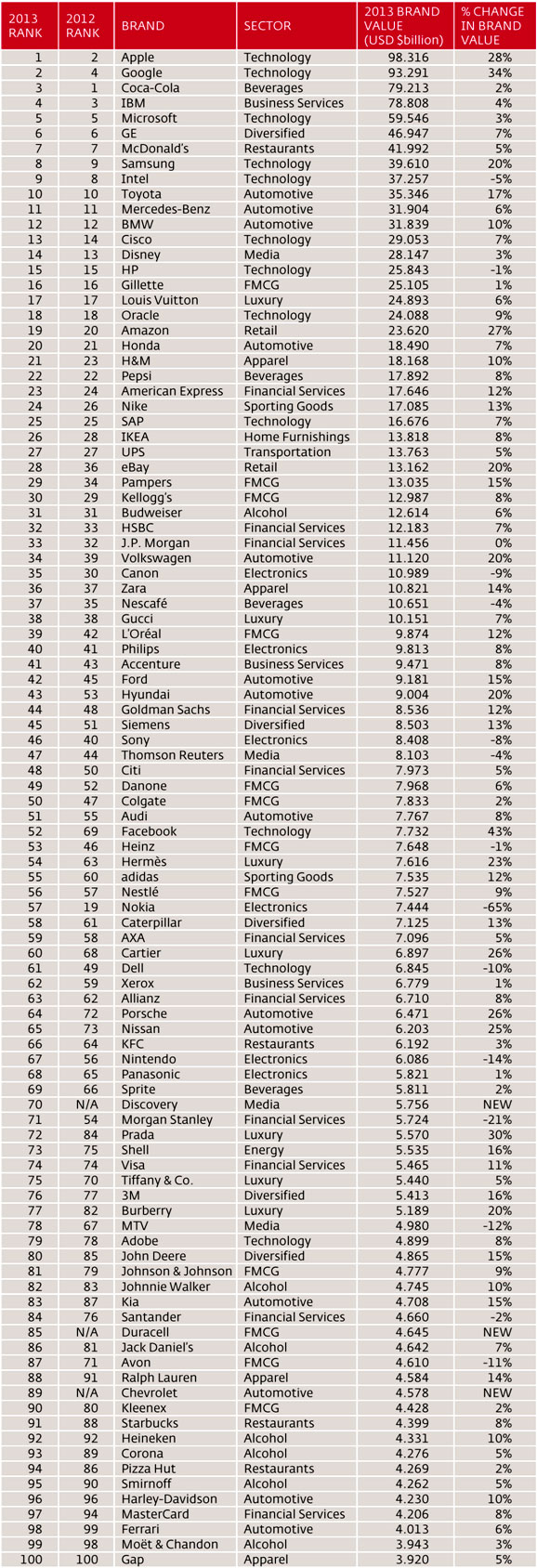
     

  • Apple, Google topple Coca-Cola out of top slots in Interbrand’s Best Global Brands report

    By A Correspondent


    For the first time in the history of Interbrand’s Best Global Brands report, there is a new #1 brand: Apple. Leading brand consultancy Interbrand publishes Best Global Brands on an annual basis, identifying and examining the Top100 most valuable global brands.


    With Apple claiming the top position this year, Google jumps to #2 and Coca-Cola, the brand that held the #1 position for 13 consecutive years, moves to #3.This year, the total value of all 100 Best Global Brands is USD $1.5 trillion — an 8.4 percent record increase over the total value of the 100 Best Global Brands in 2012.


    Apple hasappeared on Interbrand’s Best Global Brands ranking since 2000, when the ranking debuted. In 2000, Apple ranked #36 and had a brand value of USD $6.6 billion. Today, Apple’s brand value is USD $98.3 billion- almost 15 times the amount of its brand value in 2000.


    “Every so often, a company changes our lives-not just with its products, but with its ethos. This is why, following Coca-Cola’s 13-year run at the top of Best Global Brands, Apple now ranks #1,” said Jez Frampton, Interbrand’s Global Chief Executive Officer. “Tim Cook has assembled a solid leadership team and has kept Steve Jobs’vision intact – a vision that has allowed Apple to deliver on its promise of innovation time and time again.”


    Ashish Mishra

    Adds Ashish Mishra, Managing Director, Interbrand India – “Yes, for the first time in the BGB’s 14-year history, Coca-Cola is no longer #1. This year, Apple claims the top spot – and Google captures the #2 position.This to our minds is the single biggest story of the new times, of a changed world. Of who really leads the brand – the marketer or the consumer, or both? And how anticipation, co creation, conversation, innovation, investment in people &big data, strategic CSR and new leadership is the new way”.


    When determining the Top100 most valuable global brands, Interbrand examines three key aspects that contribute to a brand’s value:

    :: The financial performance of the branded products or service
    :: The role the brand plays in influencing consumer choice
    :: The strength the brand has to command a premium price, or secure earnings for the company

    Interbrand’s 2013 Best Global Brands (Top 100)


  • Grow leaders from within: Warren-Smith


    By Priyanka Sangani


    Over the past decade, Australia’s mining boom has resulted in a shortage of engineers and mine managers. Eventually, the country had to work at attracting, hiring and retaining people from other countries. It’s a simple lesson in talent management which can be distilled down from a country to company level.


    “Be aware of your talent needs, scan the gap and figure out how to fill it, even if it means looking outside,” says Andrew Warren-Smith, managing director, Development Dimensions International, a talent management firm which helps companies evolve their talent management process.


    “The mission must be to grow leaders from within. The idea is to help organisations translate their business strategy into their talent strategy.” The most important thing about getting your talent management strategy right is to treat it like any other process. “The board and the CEO must adopt the idea of growing leaders from within. If there is buy in and direction from the top, the process will be successful,” he says.


    Companies need to learn to identify and quantify their talent needs, and the gaps that exist within the system. Once you have defined where you are and where you want to be, it becomes easier to fill up the gaps.


    According to Mr Warren-Smith, having a formal talent management strategy is mainly a Western concept, and as more Western companies have set up shop in other countries, it has gained traction world over. Companies in India are at varied stages of maturity when it comes to their talent management practices.


    “While some organisations are as good as some of those in the developing world, if you look at the broader landscape, it’s more comparable to other emerging markets,” he says. Based on his experience in other economies, Mr Warren-Smith says that the talent management process in most organisations tends to go through three stages.


    The first is ‘installation’ when small and mid-sized companies first start to experiment with the idea of talent management at a very basic level. Next, there is a degree of systemisation that comes in with the organisation adopting a systematic approach to leadership and talent development, working in collaboration with other business functions.


    Finally, there is the optimisation stage where leadership development is given a separate emphasis and the organisation starts tweaking established systems and experimenting with outsourced HR services or a shared services model. So what does good leadership development really look like? Mr Warren-Smith recommends the 70:20:10 model where the onus of development lies in learning on the job with the balance being made up by coaching and formal training respectively.


    “Simply training people isn’t enough. Good leadership development involves creating experiences for people ahead of the opportunity where they actually have to step up and lead or drive change,” he says. It’s important that employees get a chance to be involved in a change management project, for instance, before they are actually put in charge of one.


    “You can skill up people, but they also need to understand what they need to do. If they have no actual experience then it becomes difficult for them to assimilate the environment,” says Mr Warren-Smith. Companies need to pay close attention to frontline or first time managers and ensure that transitions are handled carefully where people have to step up to an increased level of responsibility.


    “There are different aspects to it – dealing with a multitude of stakeholders, dealing with expectations and developing your own capabilities. How you systematically immerse a person into the transition is also an important part of leadership development,” he says.


    At times like this when there is a fair bit of uncertainty in the business environment, Mr Warren-Smith suggests that CEOs take a close look at the company’s core competencies and be clear about what they are good at.


    “You have to start work keeping the end in mind. What can you do better than anyone else? Once you determine this, then the talent management programmes need to be designed keeping these objectives in mind,” he says. Depending on what it is that the organisation wants to achieve, it needs to invest and place its bets on different leaders.


    Different people have different skills – if the company decides it wants to take advantage of the slowdown and acquire brands for cheap it will need a different kind of leader as compared to an organisation that decides it wants to consolidate and exit non-core businesses. “You have to put your leadership capability behind where you want to go.


    Identify and assess your talent and determine who is most ready for the responsibility,” he says. Once you have a clear brief on what the major business priorities are over the next few years, focussing on no more than five key business and cultural priorities, it becomes a lot easier to equip leaders with the skills they’ll need.


    And finally, be brutally honest about your capabilities. Mr Warren-Smith points out that we all perform differently under pressure, and at such times, your own style of functioning can get in your way.


    “At these times, it is imperative that people understand these factors and how it can derail them,” he says. More than the skills you possess, it is your awareness of skills that you don’t posse


    Source:The Economic Times

    Copyright © 2013, Bennett, Coleman & Co. Ltd. All Rights Reserved

    Licensed to republish
     

  • Will Big Bazaar Direct hurt mother brand ‘Future Group’?

    By Kala Vijayraghavan


    Five years ago, the elder daughter of India’s retail man Kishore Biyani, had an idea to take all the promotional and discount deals offered by Big Bazaar, their flagship retail store, and pack it all into an outlet in areas not serviced by organised retail.


    Thus Future group, led by Ashni Biyani, set up a 600 sq ft store called Big Bazaar Best Deals in Mumbra, a suburb of Thane in Maharashtra, and started offering deals—in store, through a catalogue and via online retailing. That idea did not gain traction, but it has spawned another idea five years on: Big Bazaar Direct, which marries the reach of the neighbourhood store with the weight of the Big Bazaar brand and the convenience of technology to home-deliver goods and discounts.


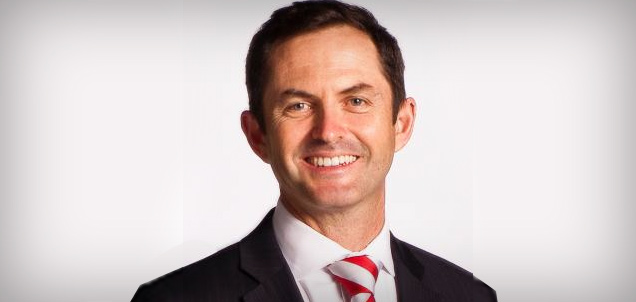
    Kishore Biyani

    At its launch late last month, Kishore Biyani, CEO of Future Group, said: “If it works, it will be bigger than Big Bazaar”. The operative words here are two: ‘bigger’ and ‘if’. Big Bazaar is a Rs 11,000 crore operation, the mainstay of the Future Group, and the new business is essentially looking to leverage that brand name.


    After spending much of the last 18 months on defence, selling pieces of his debt-laden retail empire, Mr Biyani is back doing what he knows best: playing offence, testing another retail format. “I am confident about this one,” he says.


    “We are venturing into this after making most of the mistakes in the world.” Big Bazaar Direct (BBD) is the first of its kind, at least in India. Even competitors are admiring it for intricacies and ingenuity. They are watching keenly, but holding back judgement to see how it is execution unravels.


    “The idea is very solid, ambitious and very interesting,” says the CEO of a competing food and grocery retail chain, not wanting to be named. One man who has seen it from closer quarters, even shaped parts of it, is Damodar Mall. Till mid-2013, the chief customer strategy officer of Reliance Retail was in the Future Group.


    Mr Mall was a close aide of Mr Biyani and he even worked with 28-year-old Ashni on the Big Bazaar Best Deals concept. “If one gets it right, it can be very right,” he says. “But if it goes wrong, it can hurt the mother brand.”


    BBD invites people — anyone from shopkeepers to insurance agents — to become its franchisee by paying a deposit of Rs 3 lakh. Say, your local chemist becomes a franchisee. At your calling, the chemist will come home with a tablet, which has a listing of Big Bazaar products that have deals on them.


    You can see the deals and the chemist enters your order on his tablet. Instantly, this is transmitted to the BBD back office, and you receive an SMS. You pay the franchisee cash for the order, which is also acknowledged via SMS. The franchisee’s job ends there. Your order is now with Big Bazaar, which home delivers it in three to seven days.


    “We have realised that, even today in India, human intervention is required in e-commerce,” says Mr Biyani. Daughter Ashni calls it “aided e-commerce”. The BBD model, thus, is tying to join many dots by making it a win-win-win proposition. The customer, sitting at home, gets goods from Big Bazaar, at its prices and discounts.


    The franchisees earn a commission on sales for simply going door-to-door and punching orders on a tablet. The company gets a new sales force, one that capitalises on its local knowledge and contacts, and adds ballast to the Big Bazaar engine without the burden of organising working capital.


    Mr Biyani is leading this project himself, along with the Future Group’s start-up team. Flanking him are Vivek Biyani, his nephew, and a panel of five entrepreneurs who have worked with Mr Biyani closely over the years. Rakesh, Mr Biyani’s cousin and the other senior promoter, is involved in the project to the extent that the technology piece reports to him.


    According to Mr Biyani, a central thought behind BBD was their reading that Big Bazaar, today, has a greater mind share than market share. In other words, more people know about it than who visit it —primarily because a store is not in their town or is not close enough. BBD aims to bring Big Bazaar home.


    “Big Bazaar touches around 35-40% of the Indian population today,” says Mr Biyani. “BBD will be able to touch at least 70% of the population.”


    The new partners

    The franchisees will have to enable that touch. BBD has launched in Nagpur (where Big Bazaar has its national warehouse) and Amravati, both in Maharashtra, where it signed up 15 franchisees. Next up: Ahmedabad, Hyderabad, Mumbai and the National Capital Region. “The fulfilment should be checked in one market first before the scale-up happens,” cautions Mr Mall.


    BBD is currently inviting franchisee applications. According to Abhay Kumar, one of the five entrepreneurs, the applicants include kirana stores, homemakers, chemists, insurance agents and beauticians. But it’s not as if anyone who pays Rs 3 lakh will become a franchisee.


    The group of five entrepreneurs will vet and decide. This group is also selling BBD. So, for instance, it has targeted an interaction with 4,600 prospective franchisees in October across BBD’s upcoming markets.


    After the interaction and initial screening, this team meets with applicants in their operating locality to get a sense of them, their business and customer profile. “The biggest criteria we are seeking in our franchisees is entrepreneurship, their ability to collect customers,” says Abhay Kumar, a fabric distributor and garment manufacturer who has been doing business with Biyani for 27 years, and is part of the group of five.


    According to Mr Biyani, five things need to fall in place: product, brand, franchisees, technology and supply chain. The most critical and the biggest challenge, he adds, are the franchisees, who stand to earn 7-9% of the value of the goods sold through them. “They have to buy into the idea…and I am banking on them to sell the idea,” says Mr Biyani.


    “And believe me, the entrepreneurs who come and meet me ask a million questions about the venture. Their sign-in is not that easy.”


    The flip side

    Harminder Singh of Wazir Advisor, a retail advisory firm, feels the “biggest flaw” in the BBD model is the franchisee strategy. “Big Bazaar is not a business that has high margins. So, a partner may get impatient quickly,” says Mr Singh, founder and managing director, Wazir.


    “The partner is an individual with a mind of his own. To have control over one’s business model is a better idea.” Hasmukh B Rambhia, president of Mumbai Suburban Grain & Provision Dealers, a group of kirana stores in Mumbai, seconds that thought.


    “Maybe some years down the line, when modern retail distribution becomes stronger, it will make business sense to partner big retailers,” he says. “Today, local players have to play to their strengths, of the convenience of buying daily grocery products.” While a Big Bazaar store stocks, on an average, 30,000-40,000 products, BBD will offer 1,800 products in several categories, including non-food, apparel and accessories, furniture and home furnishing, packaged foods and electronics.


    It plans to keep adding products in time, and also offer foods and grocery, the back-end for which it is working on. It is also looking to reduce delivery time, the eventual aim being same-day delivery. While the sourcing team for the store and home delivery formats are the same, there are two separate teams on the supply side. “What deal entrepreneurs get will depend, to a large extent, on the supply chain and service levels,” says Mr Mall.


    “The machinery will have to deliver reliably given that it is a hi-tech business.” Adds Wazir: “If there are inconsistent supplies in a form that the Sahara Group experienced, customers will stop shopping.” And, as Mr Mall says, the resultant backlash could even hurt the mother Big Bazaar brand. The CEO of a rival firm quoted earlier says it will be an execution challenge to have several hundred diverse entrepreneurs buy into the same idea. “But then that is Biyani’s approach right from day one,” he says. “He hasn’t been afraid to take risks at all.”


    Source:The Economic Times

    Copyright © 2013, Bennett, Coleman & Co. Ltd. All Rights Reserved

    Licensed to republish



  • Slowdown? Top brands report 30% jump in festive sales

    By Writankar Mukherjee & Sagar Malviya


    The festive season sales have started off well in most of the country with marketers reporting up to 30% jump in year-on-year sales as consumers swarmed malls and markets in the first weekend after the Shraadh fortnight.


    Top retailers and brands such as Samsung, Peter England, Woodland, Van Heusen, Indigo Nation, Biba and Scullers attributed the positive start to festive sales to pent-up demand, 10% hike in dearness allowance for more than 80 lakh central government employees and pensioners, and the payout of festival bonus. “The festive season has started off in good spirit,” Harkirat Singh, managing director at shoes and apparel retailer Woodland, said. “There has been a modest 30% jump in sales, with consumers buying for themselves and gifting,” he said.


    Consumer electronics and durable-makers like Samsung and LG said that while sales in the east has picked up in the weekend before Durga Puja, in places such as Delhi and Mumbai, consumer enquiries, sales bookings and purchases of large-screen televisions and large home appliances such as side-by-side refrigerators and fully automatic washing machines have increased. Atul Jain, senior vice-president for consumer electronics at Samsung India, said the demand increased by up to 30% last weekend over the previous four days. “This gives us huge confidence as we enter the festival season,” he said. Samsung is targeting a 50% jump in sales in east and 40% rise in national festive sales to around Rs 3,500 crore.


    The festive spirit was most palpable in Kolkata where malls were choc-a-bloc this weekend and there were long queues in front of popular stores such as Sreeleathers and Baazar Kolkata on Sunday evening.


    Some like Sreeleathers kept their store open from 6 am till 10 pm. SB Dey, partner at the leather products retailer, said that despite extending operational hours, huge rush created long queues outside all his stores. At Great Eastern, the largest durable retailer in the east, sales started picking up from the last week despite heavy rains, its director Pulkit Baid said, adding that sales are up 15-20% over last year. The pick-up in consumer demand has come as a relief for retailers after lukewarm sales during Onam, Kerala’s biggest festival, last month.


    Future Group-owned apparel maker Indus League, which owns and sells brands like Indigo Nation, Scullers and Jealous Jeans, said it had to rush in fresh stocks to several outlets across several cities including New Delhi and Mumbai.


    “We did not anticipate such a huge demand since Onam sales were comparatively dull this year,” Indus League CEO Rachna Aggarwal said.


    Women’s ethnic fashion brand Biba said its sales have grown 35-40% so far this season, almost double the pace of its expectation. “During this season, we usually see a lot of traction in heavy clothing sets which cost around Rs 8,000. But this year, consumers are not shying away from buying garments priced up to Rs 20,000,” Siddharth Bindra, managing director at Biba, said.


    Men’s apparel brands Van Heusen and Peter England said their sales are growing 40% and up to 25%, respectively, in the east. “However, sales growth is yet to touch what it was in 2011,” Kedar Apshankar, chief operating officer at Peter England, said.


    Source:The Economic Times

    Copyright © 2013, Bennett, Coleman & Co. Ltd. All Rights Reserved

    Licensed to republish
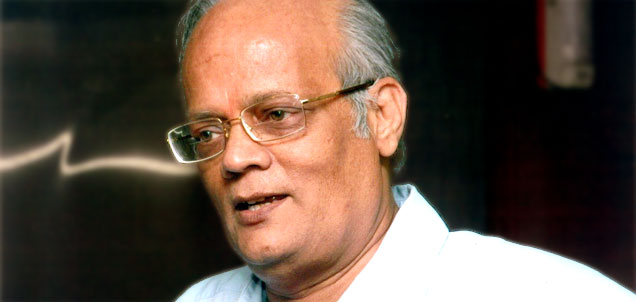
     

  • 75% corporates do not walk the talk on going Rural: R V Rajan


    He is decidedly one of the pioneers of Rural Marketing in India. The founder and former Chairman of Anugrah Madison Advertising and currently Chairman of Anugrah Rural Marketing Academy (ARMA), R V Rajan was one of the earliest to enter the field of Rural Marketing. His efforts in championing the cause of Rural Marketing over the years saw him co-found the Rural Marketing Association of India (RMAI) of which he was the Founder President for four years.


    His book “Don’t Flirt with Rural Marketing – The Handbook of Rural Marketing” has been published by Chennai’s Productivity & Quality Publishing Pvt Ltd. Priced at Rs 395, the 130-page book is accompanied by a DVD containing video clips of some successful case studies of Anugrah Madison. It contains a 14-step approach to Rural Marketing, packed with valuable insights of Mr Rajan, 72, who has spent 35 of his 45-year advertising career helping a variety of corporate in conceiving and executing their rural marketing strategies.


    In a foreword to the book, Kurush Grant, Executive Director of ITC, describes ‘Don’t Flirt with Rural Marketing…’ as “the first usable manual for marketers. Most serious marketing companies should make the book compulsory reading for all their marketing and rural sales teams”.


    Interestingly, the information on the book came to us via mail from Sam Balsara, Chairman and Managing Director of Madison World. Aware of the fact that R V Rajan is a treasure trove knowledge of rural management, we called him in Chennai for this interview with MxMIndia.


                              EXTRACT
     

    Step-I Commitment from the Top Management

    While there is a lot of talk about many marketers wanting to go rural, a closer examination reveals that most of them are not walking the talk. This is because in most companies, rural marketing efforts are relegated to the regional offices with their limited budgets. Marketers do not give rural marketing the total attention that it deserves to reap meaningful results. Without a comprehensive plan, and the total involvement of the top management, they end up merely ‘flirting’ with rural marketing.


    I have seen from personal experience that many companies spend enormous amounts of time, energy, and money, in building brands in urban India. However, when it comes to rural marketing, they become impatient. They desire quick results. They don’t want to spend money on research, or on developing a sound rural business strategy before taking on the rural markets.


    If over the years, HUL, ITC and a few companies have done well in the rural markets, it is solely due to the top management’s commitment to rural marketing as a long term policy. A recent example is that of LG Electronics. Because of the early focus of the top management on rural markets and the subsequent initiatives they took to make it a reality, LG Electronics has established itself as a leader in rural markets, within a matter of 10 years.


    Other examples include the mobile service providers and handset manufacturers, who are reaping huge rewards in rural markets. In the last decade, the automobile sector, both the four wheeler and two wheeler categories, have been reaping rich rewards in rural markets because of strategies focused on rural markets.


    The total commitment of the top management to any kind of rural initiative is the first step for any company to take, on the long journey to successful marketing. A commitment that should not be altered by middle level managers, to suit their short term sales objectives!


    It is also important to ensure the consistency of the team involved in any project, until the completion of a specific task. Recently, my agency was involved in dealing with two big clients. In both cases, the teams that briefed us in the initial stages and participated enthusiastically in the campaign were shifted out of the task midway, as per the policy of the company to shift and promote people. The result was that the new replacement teams showed scant interest in the project, and did not feel or take ownership of the campaign, since they were not involved in its conception. Even the top management, which was involved in the initial stages, did not respond, as they were busy fire fighting on other fronts. What had started as a great rural marketing initiative had been relegated to the dustbin. This is the fate of many rural marketing initiatives in the country.


    Rural marketing is not some kind of magic by which you can spend some money today and reap the rewards tomorrow. It is a long haul business and unless you are willing to invest in the future with a clear focus, it will not give results, let alone long term benefits.


    The top managements of some of the organisations who want to be long term players in the rural areas are now personally visiting the rural markets to feel the pulse of the market and develop strategies to drive the rural business. This is a good step which every company planning big investments in rural markets ought to follow.


    Published with the permission of the author from

    “Don’t Flirt with Rural Marketing - The Handbook of Rural Marketing”

    By R V Rajan

    Publisher: Productivity & Quality Publishing Pvt Ltd, Chennai

    130 pages + DVD

    Price: Rs 395


    You have tracked the evolution of rural marketing in India – from being a buzzword to becoming a necessity for a large number of companies eyeing the growing consumer base in rural India. Would you say that rural marketing has matured in India over the years?

    By and large, rural markets have matured over the years though economically backward States like Bihar, Orissa, U P (Eastern), Rajasthan etc have a lot of catching up to do


    There is often confusion on whether small-town India is also rural India. Would you define what would constitute rural marketing?

    Yes, small-town India is also considered part of rural marketing. For any corporate, rural markets start where their current distribution stops. For instance, if the company`s distribution network is reaching only up to towns with population of 3 lakh and above. For such a company, any effort to reach towns below 3 lakh becomes a rural effort.


    Rural India is often equated with poor, impoverished and uneducated people. How much of this is true or untrue?

    Totally untrue. The growing educated aspiring middle class in Rural India with much better purchasing power than their urban counterparts is now offering tremendous hope to corporates. Though, thanks to population explosion, there is a huge chunk still living below the poverty line. It is a fact that in rural india there is a constant income shift taking place because of developmental activities – people moving from the bottom of the pyramid to middle clas and middle class moving to upper class etc


    With increasing penetration of television, do you think BTL/experiential marketing will play the same role as it does today?

    For marketing any high-end lifestyle products, the rural folks need a lot of convincing to be done with opportunites to see a demonstration of the product or touch-and-feel of the product. While television can help create awareness, it is only BTL/experiential marketing which can help achieve the objective. However, as I have mentioned in the book for FMCG products, if a company is targeting a particular brand to be promoted both in Urban & Rural India and television being a primary medium which does not distinguish between urban and rural, such companies will do well to produce television commercials which appeal to both the markets,. Pre-testing of such commercials in both markets is vital. Companies like HUL and Colgate Palmolive have understood this fact as is reflected in their creative for selected brands in their portfolio.


    Of the various organizations marketing to rural India in a big way, which company would you say has most effectively marketed in rural areas?

    Undoubtedly Hindustan Unilever (HUL) is top of the chart as it has been targeting rural markets for over six decades. They have always had clear long-term vision and are willing to experiment with newer ways of achieving last mile connectivity eg. Project Shakti and now Project Shaktiman


    Your book comes with a selection of Anurgrah Madison DVDs. If you were asked to pick your favourite case study to indicate the most effective case of rural marketing, what would it be?

    The Philips rural campaign for their consumer electronics division in Tamil Nadu would be my choice. It was an integrated campaign using both mass media and below the line activities. Unfortunately most of the subsequent programmes that Anugrah and similar agencies have dealt with have been essentially Activation programmes


    And a product that’s been a huge success in urban and rural areas?

    Though it is a financial product, AM`s case study of Shriram Transport finance is an excellent example of how one could build a brand both in urban and rural areas using predominantly highly focussed Below the line activities.


    The book title suggests that there are people out there who do flirt with rural marketing. In percentage terms, how large a number is this?

    I would say 75% of the corporates who are talking about going rural are not willing to invest in the long-term. They are not willing to walk the talk. By conducting a few van campaigns in a few districts of a few states for a limited period, you may achieve temporary increase in sales but you are not building your brand in such markets. And that is what I mean by marketers flirting with rural markets.


    In real-life, flirting can often lead to true love and marriage… so what’s wrong with flirting with rural marketing?

    As any one with knowledge of rural marketing will tell you that Rural Marketing is expensive and unless you are willing to invest in the long-term you cannot successfully build a brand in rural India..Though a late entrant to the field, LG realised the importance of rural markets early and decided to invest in the future by creating separate rural vertical to promote their brand in rural India. In several product categories, LG is a leading brand in rural India


  • With $160 mn fresh funding, Flipkart’s $1.5-bn valuation comparable to P&G India, Tata Global Beverages

    By A Correspondent


    Continuing its capital-raising successes, online retailer Flipkart.com has mopped up a further $160 million ( Rs 976 crore) from mostly new investors, taking the total in the fifth round to $360 million ( Rs 2,196 crore).


    The latest funding values Flipkart, considered the Amazon of India, at over $1.6 billion, or Rs 9,760 crore. This is similar to its valuation in July, when it raised $200 million. Incidentally, Flipkart is worth more than the total market cap of all 15 listed retail companies, including Future Retail, Shoppers Stop etc. Among brand-led firms, Flipkart’s valuation is comparable with heavyweights such as P&G India and Tata Global Beverages (Tata Global Beverages owns Tata Tea, Tetley and Himalayan). It is also more valuable than 28 banks, including the likes of IDBI Bank, Union Bank, Central Bank of India, etc.


    Investment advisory firm Dragoneer Investment, investment bank Morgan Stanley Investment Management, private equity firm Sofina and Vulcan Capital participated in the latest round. Tiger Global – one of the first backers of the Bangalore-based company – also invested.


    “It’s the quality of the asset that is attracting investors,” said Raja Lahiri, partner at advisory firm Grant Thornton India. “E-commerce is a cash-intensive business. The top four-five players in this space will keep attracting investments in the next few years.”


    Experts point out that the latest fund-raising by Flipkart is an indicator of the growth potential of the Rs 10,000-crore online retailing industry, which is expanding at 54% annually, according to Internet and Mobile Association of India. E-commerce is expected to grow to $200 billion ( Rs 1.2 lakh crore) in India by 2020.


    Besides Flipkart, online marketplace Snapdeal has so far raised about $50 million ( Rs 305 crore) while fashion e-tailer Myntra received about $25 million ( Rs 152 crore) in risk capital.


    “These new investors are willing to participate again if required like Naspers, Accel, and Tiger. Investor alignment with our strategy is very important,” said Sachin Bansal, 32, co-founder of Flipkart.


    Started as primarily an online book store in 2007 by two former Amazon India employees – Sachin Bansal and Binny Bansal – Flipkart has till date raised $541 million (Rs 3,300 crore). In the first phase of this round, Flipkart raised $200 million from South African Internet company Naspers, venture fund Accel Partners, and investment firms Tiger Global and Iconiq Capital.


    The company has ventured into payment gateway solutions this year by launching PayZippy. Flipkart, which employs close to 3,000 people, has close to 10 lakh visitors on its website every day.


    The company’s revenues were Rs 217 crore in 2011-12, according to a filing with the ministry of corporate affairs. But in 2012-13, it soared to an estimated Rs 2,000 crore.


    “Flipkart has got its timing, investments and vertical business strategy right,” said Rajesh Sawhney, angel investor and founder of GSF Superangels. “It will be difficult to replicate Flipkart’s success again, as that phase of scale is already over. New entrepreneurs will have to mine newer verticals.”


    The company changed its model from being inventory led to that of an online marketplace earlier this year.


    As per India’s current FDI rules, foreign investors are not permitted to invest in branded online retail business. Some experts feel that the change in model is also attracting foreign capital.


    The participation by San Francisco-based Dragoneer Investment Group ratifies Flipkart’s success globally. A long-term investor, Dragoneer, has backed companies such as Facebook, Alibaba and 360Buy in the past.


    “All our investors think long term; this is patient capital,” said Mr Bansal. “Dragoneer also brings a network that is really helpful.”


    With inputs from Ramkrishna Kashelkar


    Source:The Economic Times
    Copyright © 2013, Bennett, Coleman & Co. Ltd. All Rights Reserved
    Licensed to republish

     

  • Life’s looking good for Samsung & LG


    By Ravi Balakrishnan, Moinak Mitra & Amit Bapna


    Call it a tale of two strategies. Korean chaebols Samsung and LG waged furious battles against each other and the rest of the Indian consumer durables industry a decade ago. Today, LG claims leadership, but that’s not enough. It wants a bigger slice of the premium market. Samsung shot up the sales and perceptual charts with a record run from its mobile division. It is now trying to transfer some of that equity to its durables business. As Nilesh Gupta, CEO, Vijay Sales puts it, “Most marketers are looking for profitability and not market share apart from the mobile category. They tell us if you cannot sell, don’t buy. They used to go halfway down the crease to hit the ball, now they are on the backfoot. Four or five years ago, they considered India an emerging market and were investing. Now they are telling India we want profits.”


    Both players however claim they are just as aggressive as always but are just showing it differently. BE examines how Korea’s finest are finding their way


    The LG Story

    With the launch of the G2, LG made its belated entry into the stratospheric premium range of mobile handsets. In a market where consumers are notoriously hard to impress, the phone has some unique bells and whistles to justify its Rs 40,000 plus price tag. LG India’s managing director Soon Kwon hopes such products will be if not the norm, at least less of an exception. And it better happen sooner than later given his ambition to make the Indian operations among LG’s Top 3 businesses globally, by 2015.


    LG currently claims a 30% market share for itself in the consumer durables space. According to Gfk figures sourced from the industry for August 2013, its share for microwaves is 39%, washing machines is 38%, refrigerators is 37%, TVs are at 25% and air conditioners at 23%. And yet, the company is in the throes of a struggle. For too long, it has been perceived as a mid-priced middle class oriented brand and for the last few years has been trying to become a more significant force in the lucrative premium segment.


    It’s the biggest challenge since its launch in 1997 and the years in which LG transformed from an unknown entity to a ubiquitous presence. Marketing consultant Nabankur Gupta observes, “It got into a volume game when multinationals were perceived to be playing on value. Apart from heavy advertising, certain products were subsidised.” Consumers soon believed they were getting a good deal across the portfolio: a multinational brand at an Indian price tag. Rajeev Karwal, founder and CEO of Milagrow who headed sales and marketing for LG at the time, recalls the many coups the brand pulled off. In a market dominated by exchange offers, LG launched a TV for 7,500 claiming to stand for no scheming. One of its campaigns featured the grandiose claim of making other televisions history. It was all backed by a unified concept says Mr Karwal: “We’d positioned the brand on the health platform which ran through all their communication whether it was ‘Golden Eye’ TVs for wrinkle free eyes or ‘Health Wave’ microwaves. By building innovative technologies and smart marketing, we came across as a lot bigger than we were.”


    The health platform is gone, today. More significantly, so is the frenetic momentum. The reasons vary depending on who you ask. To LG’s critics it is evidence of the brand becoming complacent and driven by diktats from the Korean headquarters. On the flipside, LG believes the strategies needed during a launch phase are quite different from those required to sustain and grow.


    Addressing LG’s move away from emotional advertising, Mr Kwon says, “For the last 15 years, we may have been known as more of a family oriented brand. But in fact we are also strong in the very high end. We have decided to focus on a different element to the brand which is technology.”


    A visible manifestation of LG’s newfound, some would say belated aggression is its mobile handset strategy. Rival brands dove headfirst into smartphones and even dabbled with the nascent tab category because it positioned them on the cutting edge. LG instead was sluggish on smartphones and ignored tablets entirely. It now has to run a lot faster. It’s doing so with a slew of models that offer more for slightly less and a strong dealer push. It’s stated goal is cornering 10% of the smartphone market by 2014 . Kwon expects a 150 crore turnover from the G2 alone.


    LG’s priorities on the marketing mix have shifted too. Like many of its contemporaries, it’s investing a lot more on the in store experience. It has around 2000 exclusive stores, a necessity in a market where modern trade has performed below expectations, according to Mr Kwon.


    Where LG claims its priorities have not shifted is coming up with India specific products. These are especially relevant to the rural sector where business growth is higher than in developed markets. LG’s mix for these markets includes the ever cool refrigerator and tougher LCD TVs. To reach these price conscious customers who do not have access to easy finance, the units are priced lower and their features and benefits communicated in detail, according to Sanjay Chitkara, head – marketing, LG India. The urban segment on the other hand will be the focus of LG’s Diwali campaign which according to Mr Chitkara is built around launches of premium television sets.


    However, others see confusion in LG’s attempt to straddle various segments. According to Mr Karwal, “Samsung changed completely around the launch of its smartphones. It began to internationalise communication and moved out of low end TVs and washing machines. They got the platform LG used to be known for — the cutting edge of technology.” As for LG, he believes, “The company is more focused on margins than marketing. A lot of their inefficiency and poor product planning gets covered up since they there is no alternative for the trade. If today there was a good marketing company that can synergise all its divisions they will have a run for their money.” Given entry barriers have only gone up since LG rushing the market in the early 2000s this falls squarely into the easier said than done category. Mr Karwal concedes, “It has one of the strongest nationwide distribution channels which itself is a competitive advantage.”


    LG has a new sign off these days with It’s All Possible. Instead of replacing the old Life’s Good slogan, the new line sits alongside it as a supplementary message according to Kwon, drawing the consumer’s attention to a vast assortment of products in different categories. It can also be seen as an internal affirmation: a brand reassuring itself that it can in fact try to be all things to all people.


    The Samsung Story

    It’s typically hard to define the point at which the fortunes of men and brands change. Not so with Samsung. It all changed in June 2010 with the launch of the Galaxy smartphone series. Suddenly from being one of the many consumer durable players dabbling across washing machines, air conditioners, TVs and yes mobile phones, it began to set the agenda for mobile telephony. It dethroned doughty stalwarts like Nokia and Blackberry and currently accounts for 31.5% of the Indian mobile handset market estimated to be worth Rs 35,946 crore according to a Voice & Data survey.


    Samsung executives still nevertheless have sleepless nights. There’s the all too real fear of complacency setting in. Atul Jain, senior vice president – consumer electronics, Samsung who has spent two years in the mobile division admits, “We are completely on the edge as far as the next wave is concerned. I’m not satisfied with S III and the Note doing well or with being the first ones to have launched LED smart TVs, two years ago. That streak in our DNA of looking for the next stage is critical. The lack of it is why a lot of companies fall by the wayside.”


    Samsung is trying to keep the momentum going. Vineet Taneja, country head – mobile business Samsung India recalls telling the global chief about what he believed the country needed, only to have a product in hand four months later. “Any other company might have taken 12 or 18 months,” he says, speaking of Samsung Grand a mid price smartphone which packed the gigantic screen size of the Note series into a more affordable model.


    For people who wanted the most high end devices and couldn’t afford them, Samsung was the first to start EMI schemes. Mr Taneja admits, “Affordability doesn’t necessarily mean cheap. It means I will make great products accessible so consumers don’t have to shell out so much.” It has helped Samsung move to outlets that were hitherto beyond its reach. Mr Taneja speaks excitedly of a small 2X2 store in Hyderabad with an EMI machine which guarantees a turnover. The demand is outpacing the financial system’s ability to keep up. Mr Taneja has met small shopkeepers in a tehsil at Hajipur, Bihar who wanted the EMI option in spite of there being no credit card holders. Asim Warsi, VP – sales, mobile business, Samsung says, “We would love to make, if we could, Samsung mobile like an impulse brand — people come, decide, buy and walk out — like a packet of chips.”


    Accessibility runs a lot deeper than affordability. One of the next big initiatives is getting local language interfaces in smartphones. Mr Warsi observes, “People in interior Gujarat or Maharashtra are not poor for sure — they’ll now have access to internet and mobile experience in a language that is their own.”


    Samsung’s task is to transfer the considerable equity gained via its mobile business to the other parts of the portfolio, inducing excitement even in age old categories like televisions and refrigerators. Given the speed of technological obsolescence in Smart TVs, it is trying to future proof its models. For instance, the evolutionary kit fitted into Smart TVs upgrades the set to the latest software and firmware a year down the line.


    Not all of its technology is that esoteric. Samsung’s tweaking refrigerators to work out how often they are opened, for how long and to run accordingly. It could lead to 40% cut in electricity bills according to Jain who used this as a plank for a theme campaign this March called ‘Samsung’s on, Saving’s on.’


    Chief marketing officer Rahul Saighal sees a healthy rub off taking place between Samsung’s various divisions: “Smart televisions are contributing to Samsung’s image as an innovation leader while our success with devices like Galaxy S4, Note 2 and now Note 3 are further reinforcing that perception.”


    Even a notoriously hard to please marketing industry is currently a part of the Samsung fan club. Says Nabankur Gupta, “Every phone with a Samsung badge spells value even at the lower end. The consumer will be favourably predisposed even when there’s a durable to be purchased. Both LG and Sony need to create that.” Gautam Talwar, chief strategy officer, Rediffusion YR believes Samsung is no longer competing with LG or Sony or Canon at a mother brand level but with Apple. He says, “It stands for new age technology and hence can pass the software codes to all other categories rather than the hardware codes which brands like LG land up owning. It needs to move the consumers from the utility and feature enriching platform to the magical world of what technology is capable of doing.”


    However, a former Samsung executive at a rival firm has a few words of caution, “Nokia got into the trap of believing that they know how to control technology, Samsung should be careful to avoid the arrogance that comes with the leadership position. Its approach has been primarily of a hardware manufacturer more focused on driving hardware specifications than (industry design) that would appeal. The seamless integration of software with hardware is something that is missing.”

    Source:The Economic Times

    Copyright © 2013, Bennett, Coleman & Co. Ltd. All Rights Reserved

    Licensed to republish


  • Big news for Datawallahs as India wins 8 Echo awards

    By A Correspondent


    Eight Indian entries came back with honours at the 2013 International Echo Awards organised by the Direct Marketing Association in Chicago on Wednesday (Oct 16). There were 90 entries from India competing for the awards.


    The DMA International Echo Awards Competition honours the world’s best response marketing campaigns – campaigns that have raised the bar in terms of strategy, creativity and results. No other awards competition looks at the response marketing discipline in such totality.


    Speaking on the occasion from the awards gala night, Vatsal Asher, CEO, DMAi, the Indian affiliate of the DMA, said, “We at DMAi are proud to have provided an international recognition platform and extremely excited to host our winning teams from India. Industry experts from across the world are sharing their thoughts and acknowledging the skills and the expertise being brought forward by the Indian Teams. Today’s wins should motivate more Indian agencies to step forward.”


    On this recognition, Ajay Chandwani, Director Percept Ltd and Chair of the DMAi India Echo Awards said, “Echo is a fitting recognition to the cause of  result-oriented creativity in direct marketing. With the world increasingly measuring ROI and effectiveness in every campaign, Echo rewards those direct marketing campaigns that delivered maximum impact in one to one communication in creativity and results. DMAi Awards with Echo are proud to have laid the platform for result driven marketing campaigns to be celebrated at the domestic level. We are grateful to all those who participated and congratulations to the winning agencies. Creativity in direct marketing has truly come of age in India”, said Mr Chandwani.


    Speaking on the occasion, Rakhshin Patel, Partner M&C Saatchi whose agency brought two International Echos home said, “Over the years, I have judged some stunningly creative, yet effective, work in India and I have always believed that India has the talent to not just match up to the world’s best direct marketing standards, but in certain cases actually set the benchmark. This year, with India winning eight metals at the DMA Echos, it validates my belief that our industry has the talent to produce world beating creative work in the data driven marketing field. This recognition is a huge step forward for Direct Marketing in India and I congratulate the winning creative teams and their marketing partners for helping to propel India forward on the global direct marketing stage.”


    Commenting on this remarkable achievement, said Vikram Menon, President and Country Head (India) of OgilvyOne Worldwide that bagged five wins, said “Eight metals at one of the toughest effectiveness shows in the world is terrific for India and the entire direct marketing community should be immensely proud. What makes this tally so much more rewarding is that it puts us right on top with the very best in the world. Considering the parameters for judging, these wins belong as much to marketing teams as they do to the communication teams and my heartiest congratulations to everyone involved. This is just the sort of impetus we need to further the cause of creatively driven data inspired marketing and DMA India.”


    Winners have been selected from 12 business categories: automotive; business and consumer services; communications and utilities; financial products and services; information technologies; insurance; nonprofits; pharmaceutical and healthcare; product manufacturing and distribution; publishing and entertainment; retail and direct sales; and travel and hospitality/transportation.


  • Indian employees say bosses set good example, hate corporate jargon


    By A Correspondent


    Managers set good example for behaviour in the workplace, said Indian workers,according to the top-level findings of a survey commissioned by The Workforce Institute at Kronos Incorporated and conducted online by Harris Interactive. The 2013 Kronos Boss’s Day Survey also reveals the attributes of the best managers, employees’ preferred form of recognition and the management-speak phrases that employees find the most annoying.


    According to James Thomas, country manager, Kronos India: “The boss-employee relationship is much like other relationships we have in our lives. We get out of them what we put into them – as long as both parties are committed to the relationship. Although people told us they want to work for high achievers, they also value compassion, flexibility, and honesty.”


    Added David Creelman, CEO, Creelman Research: “The results of this survey shatter the stereotype of the clownish boss made popular by countless sitcoms and movies. An overwhelming majority of employees are actually saying quite the opposite: that they believe their managers set a good example with their behavior and adhere to values that are important in a healthy corporate culture.”


    These were some of the leading indicators of the study:

    69 percent of employees in India who have managers believe their managers set a good example in the way they behave, agreeing they are ethical, honest, collaborative,creative, empowering, innovative, dedicated, and trustworthy. A whopping 80 percent of those employees also believe their managers adhere to those values on a regular basis.


    Almost half of all Indian employees with managers (46 percent) admitted they have complimented their manager just to get on his/her good side even when they didn’t mean it.


    Given the choice between a manager who is a high achiever but demanding, or a manager who is nice but ineffective, 75 percent of Indian employees with managers would choose the high achiever.


    When asked whether they’d prefer a manager who invests in their professional development or one who invests in programmes to make the work environment more fun, 56 percent chose fun while only 44 percent chose professional development.


    When asked to select the three most important attributes of a good manager, honesty was the strong frontrunner with (66 percent), followed by goal-oriented (63 percent) and transparency (46 percent).


    When it comes to being recognized, the highest percentage of Indian employees with managers prefer to receive praise in front of their peers (39 percent), while 34 percent favor praise to their manager’s manager, and 27 percent prefer direct individual praise from their manager.


    As expected, most employees who have managers – a full 95 percent – find business jargon terribly annoying. So which phrase takes the cake for most egregious? The dubious honour goes to “I don’t care how, just get it done,” with 46 percent of the vote, followed by “In the future…” (34 percent) and “I need you to be more proactive” (30 percent).


    While the highest percentage of Indian workers with managers prefer to be recognized in a peer environment (39 percent), American and Australian workers with managers’first choice for receiving recognition was directly from their managers (43 and 45 percent, respectively).


    Employees with mangers in all three countries agree that good managers are honest (78, 76, and 66 percent in the U.S., Australia, and India) and goal-oriented (44, 37, and 63 percent in U.S., Australia, and India). India and Australia also selected thoughtful (41 and 37 percent) as their 3rd in the top three important attributes for a manager to have. Australia and U.S. also selected directness (37 and 39 percent) as additional characteristics of a good manager.


    Indian employees with managers are more irritated by any use of corporate jargon (95 percent) than their Australian (83 percent) and American (76 percent) counterparts.


    The importance of professional development over fun workplace programs diverge in the three countries.  Specifically,61 percent of U.S. and 56 percent of Australian employees with managers would rather prefer money be spent on professional development, whereas 56 percent of Indian employees prefer managers who invests in programmes to make the work environment more fun.


    Said Joyce Maroney, director of The Workforce Institute, Kronos Incorporated: “In recent years, we’ve been hearing that millennials will completely change the workplace. To be sure, there are significant shifts underway but this research reveals younger workers don’t differ significantly from other generations in the workforce in how they want to be managed and motivated by their boss. In addition to comparison across generations, it’s interesting tosee how different countries and cultures define good management.” Added


    The study was conducted online by Harris Interactive on behalf of Kronos in the US, Australia and India among 4,141 adults ages 18 and older, among whom 2,200 are employed full-time/part-time who have managers. In India specifically it was conducted among 1,059 adults age 18-64 from whom 858 are employed full-time/part-time who have managers.


  • DY Works creates identify for Dewan Housing’s edu finance arm

    By A Correspondent


    Brand strategy and design firm DY Works has created and executed the strategy for Avanse, an all-new brand for Dewan Housing Finance Corporation’s foray in the educational loan category. The assignment entailed conceptualizing the positioning to naming and designing the brand.


    Talking about the brand, Alpana Parida, President DY Works, observed, that “the educational loan becomes the key element, the gateway to an enlightened future with the power to redefine a student’s future karma”.


    Observing the importance of the engagement, Benoy Joseph, Head of Marketing at Avanse, said “We were looking for a brand identity that would create a strong impact and establish affinity for the brand as a trustworthy entity with all the new age qualities that makes it a preferred and convenient choice for the consumer. When DY Works presented the idea to us, which positioned it as a fresh, contemporary brand, we knew it met all our requirements.”