Category: MARKETING

  • Micromax Asia Cup 2012 sponsor family grows

    By A Correspondent


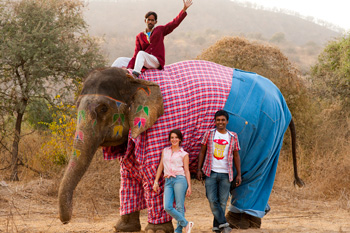
    Following the announcement of Micromax bagging the title sponsorship of the Asia Cup 2012, leading power brands like Standard Chartered, Jaypee Cements, Daikin, Indian Oil and Bangladesh Tourism have signed up as the five official partners.


    Yannick Colaco, COO Nimbus Sport said, “I am delighted to announce a stellar sponsor family for the Micromax Asia Cup 2012. There is no doubt that this is by far the biggest ODI tournament this year. All our commercial partners see tremendous value in associating with the blockbuster that will see the World Cup rivalry among India, Pakistan and Sri Lanka resume once again.”


    Nimbus Sport has signed a host of international distribution deals to maximize global reach. The various distribution partners are:


    No Partners Region
    1 Neo Cricket Indian Sub Continent, US, Canada, UAE, Singapore, North Africa, Philippines & Hong Kong
    2 Willow TV US & Canada
    3 Zee UK & Europe
    4 Super Sports South Africa
    5 PTC Pakistan
    6 BTV Bangladesh
    7 Carlton Sri Lanka
    8 Setanta Australia Australia
  • A brand’s success does not guarantee anything: Kevin Lane Keller

    By A Correspondent


    Prof Kevin Lane Keller, brand management guru and the author of well known book Strategic Brand Management, believes that brand is the most important intangible asset that any corporate can have. He states, “The role and functions of brands are so fundamentally pervasive and valued by consumers, it is difficult to see their potential importance diminishing. Managing brands to achieve that potential, however, is as difficult as ever. The pace of change in the marketing environment has greatly accelerated in the last decade.”


    Three of the major changes he stresses upon are emerging markets, emerging media and social networks, and with them has emerged the need for the brands to remain valuable in the changing environment.


    As per him, a strong brand is key to enhancing marketing effectiveness and efficiency, and is therefore a promise to customers and means to set expectations and reduce risk. Heart of a great brand is a great product or service but every brand contact matters.


    A strong brand, according to him does not only work wonders with customers but also gives direction and purpose to employees by motivating them.


    In the changing market environment, challenges of branding too have changed. Some of the challenges, mentioned by Prof Keller are as follows:

    • Rapid technological developments all over the place
    • Great customer empowerment
    • Fragmentation of tradition media
    • Growth of the interactive and mobile marketing
    • Channel transformation
    • Increased competition and industry convergence
    • Globalisation and growth of developing markets
    • Heightened environmental and community welfare awareness
    • Social concerns
    • Recession

    And in the backdrop of these changes, he recommends six branding imperatives, for effective brand management.


    Fully and accurately factor the consumer into branding equation: As per Prof Keller it is important to ‘Engage in participation marketing by establishing what consumers know and don’t know, and what they want and don’t want from the brands.’ Permission marketing, in his view is not the right answer – many consumers don’t even know the questions they should be asking.


    Prof Keller explains the concept further by giving example of Nike. Nike’s brand mission is :’To bring inspiration and innovation to every athlete in the world’.


    And right under its mission statement Nike website states, ‘If you have a body you are an athlete.


    By making that statement, Nike clearly mentions that it is not just marketing to athletes, it is marketing to everyone. Nike has a trickle down target market – top of the pyramid are most evolved – athletes, next come the weekend warriors and the bottom of the pyramid are casual athletes.


    However, It is not only trickledown effect to other segments, but they also market directly to each segment. One of the reasons, the brand is so successful is because it realises the importance of establishes broad access points.


    Another important takeaway from Nike branding is that it is important to have a brand mantra – three words that are the essence of the brand, and in Nike’s case it is ‘authentic athletic performance.’


    2. Go beyond product performance and rational benefits: Well-designed products and services that provide a full set of rational and emotional benefits are key to successful brand management.


    Prof Keller brings home the point that developing better designed products and services requires ‘a comprehensive, up-to-date understanding of consumers, how they purchase and use products and services, and how they think and feel about the brand.‘


    A well deigned brand, as per him, offers advantages in product and service performance, and imagery that creates significant functional and psychological benefits. The strongest brands connect their emotional and functional benefits.


    He elucidates it with Apple’s example, which has a strong brand promise. Its Intrinsics are performance and design, while its extrinsic s are think different, personality and character.


    Apple has done sustained product innovation through feedback and expansion.


    Another brand Prof Keller refers to, in this context is Pampers, which has evolved from a functional to an emotional positioning.


    Based on the functional benefit of ‘Absorbency and dry baby’ , it created the emotional connect with mothers by emphasising that by being dry baby sleeps well at night and so is more active in the day. It established itself as a brand, caring for baby’s development.


    Pampers created emotional pay off for the functional benefit – and they worked well in a synergistic way. And to do it effectively, Pampers changed their marketing program – both advertising and online.


    3. Make the whole of the marketing programme greater than the sum of its parts: Prof Keller believes that it is imperative to ‘develop fully integrated channel and communication strategies that optimally blend their strengths and weaknesses.’


    He states, “Marketers can combine push and pull distribution strategies to maximise coverage and impact, selling directly via email, internet, telephones, cell phones and company stories while also selling indirectly via whole sellers and retailers.in devising communication styrategies marketers must address a number of market place developments – the fragmentation of TV viewership, the increasing use of mobile phones, the explosion of online blogs and social communities, and the greater importance of buzz marketing.” In his view,tTo develop successful communication programmes, marketers must combine online/interactive communications. Real world/experiential communication and traditional mass media communication.


    Here he gives the example of Red Bull – which has been successful for the longest time.


    The brand employs a full set of brand elements and marketing activities – from traditional media to digital to ground events.


    In traditional media – it largely uses cartoon ads and delivers brand promise in a very cost effective way. And hence has enough budgets to spend on digital and events among other things.

    Prof Keller insists that marketing will become more interactive, more digital, more social in times to come. It is important to establish a public voice and presence on the web for dialogue and monitoring consumer reaction and also because it compliments and reinforces other communication.

    Having said that, he also reminds that not everyone actively participates in social media – ‘only some consumers want to get involved with some of the brands some of the time’ – and hence integrated marketing communication is the key. Traditional mass media gives advantage of broader coverage and greater control.

    It is smart brand marketing, as per him to employ multiple touch points and appeal to multiple senses via special events, contests, promotions and sampling. “Make a splash, but pick your spots,” advises Prof Keller.

    Capitalising on real news is another factor brands need to integrate in their marketing.


    4. Understand where you can take a brand (and how): “Design and implement a new product development and brand architecture strategy to maximise long term growth across product offereings, customer segments and geographical markets” is Prof Keller’s advice on brand extensions.


    As per him, from a branding standpoint, growth requires a well-though-out and well-implemented brand strategy that clarifies three key issues:

    A. The potential of a brand in terms of the breadth of its ‘marketing footprint’
    B. The types of product and service extensions that would allow a brand to achieve that potential
    C. The brand elements, positioning and images that should be used to brand any new or existing products

    Crayola, the market leader in crayons in the USA, is his example of choice here. Crayola broke free from the thought process that it was about crayons to ‘Colouring is about imagination and not only crayons – and hence Crayola too has to be about imagination and not just crayons.’


    First right step in brand extension is thinking out of your box – and that is the most difficult step’ underlines Prof Keller.

    The other example he gives here is of Virgin mobile, whose brand strategy is to enter categories where customer needs are not well met and do different things, and do things differently.


    5. Do the right thing with brands – ‘embrace CSR’ is Prof Keller’s parting message to the brands. And this can be done by creating win-win marketing programmes and activities. He gives the example of British Airways, which has for years kept an envelope in the back pocket of the seat – where people can put in foreign currency coins of no use to them. And the proceeds are sent to Unicef.

    CSR, in his view, helps in creating a bond with customers and employees. If done right, it helps in increasing sales.

    Prof Keller also recommends doing the right thing with brands by avoiding over extending, over exposing, over modernising, avoid death by 100 cuts.’

    Says he, “The best and most widely admired marketers treat their brands with understanding and respect, as well as a clear sense of commercial and social purpose. They take out their brand on thought – out journeys that allow them to grow profitably, while preserving brands’ close bonds with consumers and benefits to society as a whole”.

    Multiple compromises and shortcuts, as per Prof Keller, add up and create big problems. A series of micro –decisions by Starbucks in recent years added up enough to transform the customer experience in adverse ways that loyalty suffered, forcing Howard Schultz, the CEO to take drastic actions


    6. Take a big picture view of branding effects. Know what is working and why: The last imperative that Prof Keller suggests is, ‘achieve a deeper understanding of the limits and powers of brands, and be able to qualitatively and quantitatively justify brand investments.’

    As per him, increasingly marketers have to do ‘more with less’ in their marketing budgets. “To help develop return on investment insights and interpretations, marketers must adopt comprehensive, cohesive and actionable branding models,” he advises. Three linked interlocking models, as per him, for brand planning, tracking and measurement can be:

    1. The brand positioning model describes how to establish competitive advantage via points of difference and points of parity
    2. The brand resonance model considers how to create intense, active loyalty relationships with customers. Brand resonance occurs when the consumers feel completely in sync with the brand.
    3. The brand value chain model describes how to trace the value creation process to better understand the financial impact ot marketing expenditures and investments.

    Prof Keller stresses that brand management is an ongoing process and just because you are successful today does not guarantee anything.


    MySpace, Yahoo and Barnes & Noble were the market leaders in their space at a point in time, but they have been replaced by successful challengers: Facebook, Google, Amazon. Another case in point is Samsung, which is competing with Sony across the globe today because it has an excellent value proposition.


    Prof Kevin Lane Keller was invited by Cogito Consulting, the brand consultancy division of FCB Ulka group, for an exclusive, informative and enlightening talk – and the above article is MXM India’s take away from the talk. The Indian edition of the book Strategic Brand Management is co-authored by MG Parameswaran (ED & CEO Draftfcb Ulka Mumbai) and Prof Isaac Jacob (Head of Marketing Faculty, SIMSR). The book has 40 informative examples from the world of branding and marketing in India.

     

  • Brand Sachin still on strong wicket

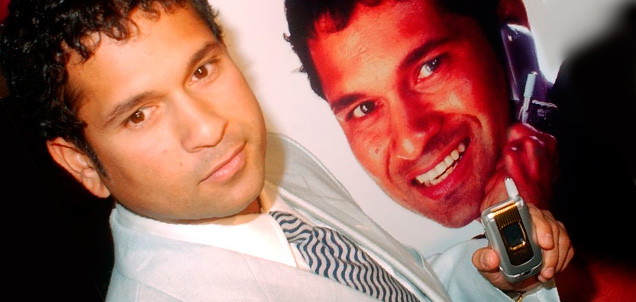
    Sachin Tendulkar launches G-Hanz Mobile


    By Tuhina Anand


    India collectively heaved a sigh of relief when Sachin Tendulkar finally reached his 100th 100. The long-chased milestone had become practically a national issue, and had also brought flak on the master blaster, especially speculation about his retirement. Sachin in his illustrious career has not only reached many cricketing milestones but along with that has also become the face of many popular brands in India. He has been seen in the ads of Pepsi, Visa, Aviva Life Insurance, Boost, Adidas, MRF, Britannia, Toshiba and Castrol India among others. In fact, Future Group has co-created the Sach brand along with Tendulkar which has products including toothpaste and bathing bars. The Sach brand proves the icon’s sheer clout, that a brand can be created with a varied range of products, and is considered a viable commercial option.


    Talking about brand Sachin, Piyush Pandey, Executive Chairman & Creative Director, Ogilvy South Asia said, “Brand Sachin is not just about cricket but it’s the persona that comes with the brand which is appealing. Sachin is a non-controversial, family man with high value systems. He is the son, father, husband, friend that one would want to have and his recognition is beyond the nation. He is a total package if one may say in terms of advertising jargon. He is a successful cricketer but along with that he is an endearing personality and therein lies his brand appeal.”


    Mr Pandey pointed out that Sachin has been able to last so long in his career and done so well only because he has been able to reinvent himself and adapted to changing times. The truth, after all, is that he is no more an 18-year-old and his reflexes will change with age but he has managed fantastically to adapt himself to this change. “Sachin is special and I can’t really think of any other person from cricket who has created such an impression. Rahul Dravid probably could come a close second. But Sachin is Sachin and beyond comparison. The only other name that comes to my mind who has successfully adapted himself with time is Amitabh Bachchan.”


    Looks like the naysayers can keep on debating on Sachin but the masses will continue to hold him in high regard despite the man himself saying: “I am not God, I am Sachin.” Prahlad Kakkar, ad filmmaker and CEO, Genesis Films who has worked with Sachin on many ad films said, “Sachin’s track record is impeccable and his dedication to cricket and the team is firm. His brand value lies in his courage, honesty and sincerity with which he plays. In fact, he is the real gentleman in this gentleman’s game.”


    He added, “Sachin is humble to the point of being irritating. There was a time when we had shot an ad with him knocking a ball with a fly swatter. When Sachin saw the final cut he was not happy with the use of the fly swatter and requested us to re-do the shot. We didn’t find anything wrong with the shot but Sachin had a point of view and we respected and understood his view and re-did the sequence. He has no ego and he is clear that the game always remains bigger than him.”


    Kakkar said that the Pepsi films, especially the one with the Sachin mask, “Sachin Ala Re”, remains his pick of the best Sachin film.


    Hemant Kenkre, former first class cricketer and communications specialist who has had seen Sachin play from close quarters, says that two qualities that stand out in Sachin’s personality is his ability to reinvent and his commitment to the game. Kenkre said, “Sachin delivers and that’s the bottom line. The cynics will be cynics and there will be talks of his retirement but I really can’t think of anyone from the younger lot who can replace him.”


    He added, “While people have been talking of the 100th ton, one should remember the 99 100s that he has scored before. I think his not getting the 100 was a minor bump towards this milestone. He is a man who is obsessed with the game and one can easily bank on him. His retirement is a personal issue and it will come the day he stops enjoying the game. In fact, his current brand value can be understood from the fact that his 100th 100 got 5-page coverage in TOI whereas the retirement of Dravid must have got him a one-page dedication!”


    So there could be speculation on Sachin getting old for the game, but people in the business vouch for his brand value which still remains consistent. Mustafa Ghouse, Head of Sport, Globosport categorically states that Sachin is still the most sought after cricketer in the country when it comes to endorsements. However, he has a point when he says that the brands that he will attract now will differ and will be for products that appeal to older age group like insurance. For youth brands he might not be appropriate.


    Manish Porwal, Managing Director at Alchemist Talent Solutions has a different view on the cricketer’s brand value. He said, “I think this is the first time but in the last two months brand Sachin has taken a beating. There has been criticism all across and this has taken a personal note than remaining professional. So there would have been some loss in terms of potential and revenues that would have come in from endorsements.”


    He added, “This however will be temporary. Indians have a skewed sense of loyalty and one success will again put him back on the pedestal. His equity so to say has fallen on account of his performance but this 100th 100 will give him the jolt and become a personal milestone because of so much speculation around it. However, in terms of his long-term brand persona and brand associations one should look at characters for brands that will express long-term maturity and consistency rather than stamina or performance.”


    Brand Sachin still remains strong and will remain strong in this cricket-crazy country. However, there is a feeling that the brand may have taken a temporary dip because of all the speculation and pressure on attaining the long-elusive 100th 100. However, the consistent view is confidence in Sachin’s ability to reinvent, hence his moving away from brands appealing to the youth, towards advertisers who look for traits like commitment and consistency. Qualities where Sachin fits the bill perfectly.


    Photograph: Fotocorp


  • Denizen explores social media to create buzz

    By A Correspondent


    Denizen, the youth brand from Levi Strauss & Co, has been using social media effectively to connect with its consumers, the most recent example of this being its ‘We are Explorers’ initiative which has been quite a success in its first phase.


    Talking about the genesis of the idea, Arvind R P, Marketing Controller, Denizen, explained, “We know that the youth of today are increasingly spending time on social media engaging with friends & making new connections. Given that Denizen is a new brand, we have been exploring ways to connect strongly with the youth and be a part of their conversations. One of the exciting ways to deliver this is to have brand ambassadors who participate in the brand’s activities, get deeply involved in the brand programs and then build around these conversations. This is an exciting way to create buzz around the brand.”


    He aded, “Denizen is a global brand and hence this ‘We are explorers’ programme had to be on a global scale. We have Denizen brand ambassadors from India, China, Mexico, Singapore and Pakistan travelling to India, China and Mexico, in three phases.”


    When the initiative kicked off, there were about 200,000+ fans on Facebook which till date has more than doubled. This is for just Phase 1, with Phase 2 and 3 yet to happen in April. Most importantly, the quality of conversations around the brand has been heartening which is something that the brands today are increasingly looking at. Not to mention that this has helped drive buzz around the brand.


    The six young explorers, chosen from a large pool of hopeful applicants via a global casting call, hail from countries where Denizen clothes for youth can be purchased. This includes China, India, Mexico, Pakistan and Singapore. The explorers will be paired up as they head to their destination country during the next two months – March and April. They will embark on an action-packed trip where they will meet new people and take on tasks and challenges centered around creating new styles of denim based on their experiences. ‘We are Explorers’ campaign is being executed in three phases while the first phase is over, the next two phases will help in maintaining the momentum and buzz over a longer period of time. The company hopes that post this global program, the brand would have attained a sustainable base of fans and been a significant part of youth conversations. The plan is to build upon it and enrich the conversations around the brand.


    On other marketing initiatives around the brand, Mr Arvind said, “An important part of Denizen’s plans is to excite the youth with relevant innovations. Super shape, a new fit for young women which enhances the body curves, has just been launched. It has a more defined curve, a slimmer waist and longer leaner legs. We are planning a sustained promotion to build the women’s franchise with this innovation.”


    The brand Denizen has been designed keeping in mind the aspirational desires of the youth who increasingly identify with global trends. Leveraging LS&Co’s rich heritage and fit expertise of over 138 years, Denizen is re-inventing fits for this young generation of consumers. Affordable yet aspirational, the brand delivers great fitting and quality jeanswear with innovations.


    Denizen had taken the social media route when it was launched in India, where it used the social networking platform to engage its consumers and did events around the seven letters that spell Denizen, including a fashion show.


    In 2010, Levi Strauss & Co launched the Denizen brand in Asia – the company’s first brand launched outside the United States. In India, Levi Strauss Signature has transitioned into Denizen in 2011. Since its launch, the brand has gone to have over 300 exclusive brand stores and over two thousand multi-brand outlets.


  • Face the ‘Moments of Truth’ with Mindshare-Brand Equity Compass 2012

    By A Correspondent


    Media services agency Mindshare in partnership with Brand Equity is organizing Compass 2012, a day-long marketing summit at Hyatt Regency, Mumbai on March 27, 2012. This year, the Conclave theme ‘Moments Of Truth’ dwells on the truth every brand must face and conquer to propel its growth. Every session will discuss new ideas that will redefine the marketing trends of the future.


    Mindshare India has been organizing this annual marketing event with leading business daily, Economic Times, from the past four years. Each year, the summit is attended and addressed by leading constituents from the marketing and advertising fraternity who provideinsights and the latest trendsinmarketing, media and consumer behavior, setting new directionsinbrand-building. This year Shantanu Khosla, Director and CEO, Procter & Gamble India and Marco Rimini, Leader, Business Planning, Mindshare Worldwide will address the audience. In 5 years, this summit has grown to become a coveted arsenal of marketing mantras.


    Sandeep Pandey, Principal Partner, Consulting, Intelligence & Aanlytics, Mindshare said, “Mindshare and Brand Equity have partnered for the last four years to bring the best of thought leadership to the business community through the BE Compass. It has proved to be the ideal platform for leadership discourses on the most relevant marketing issues that CMOs and CEOs face today. We work very closely with the leadership of some of the top companies in each industry to identify the themes, speakers and audience for this prestigious event. The outcome is a heady brew of game-changing strategies, approaches and stories that leaders can take back to their board rooms.”

    He added, “This year’s themes revolve around the truths and challenges that the C-Suite faces around consumer growth, leadership, communication, and market penetration, including rural markets, to run their businesses effectively. As in the last years, we are sure of overwhelming response to these themes this year too.”

    Over the years, The Mindshare-Brand Equity Compass has focused on a topical agenda, with the objective of addressing the key business challenges and discovering marketing strategies that align with business goals. This year, the conference theme ‘Moments of Truth’ will talk about why it is so crucial to b2b marketers’ ability to help drive the business.

    While the emphasis remains on addressing challenges confronted by the marketing and business community, the day long summit is aimed at creating a platform wherein industry leaders can discuss strategies that can be adopted to propel growth to the next level. The Summit is divided into various interactive sessions which will focus on topics ranging from CEO’s Truth, Consumer Truth, Communication Truth, Retail Truth and Rural Truth.

    The summit will address the challenges faced by CEOs as they rally around new set of business truths, be it allocating resources or best way to nurture people and brands in 2012. Finding the true consumer insight is undeniably the most important task faced by every marketer today. The session on Consumer Truth will analyze consumer’s relationship with brands, advertising and the role of innovation. With social networking sites gaining momentum Communication Truth is evolving every day, this session will focus on lessons for the future.

    Retail has moved from being viewed as a traditional sales function to being an important component of the marketing mix. The session on Retail Truth will witness marketers discussing diverse subjects such as different formats that work in a challenged economy, how to create price premium in retail and role of advertising amongst others. With more than 70 percent of the total households in India residing in the rural areas, understanding the Rural Truth is very crucial to derive and reap maximum benefits for the marketers.


  • Ipsos Marketing reorganizes globally, sets up four practices

    By A Correspondent


    As part of the combination between Ipsos and Synovate, Ipsos has reorganised its Ipsos Marketing specialisation – the largest of Ipsos’ global business lines, representing nearly half of Ipsos’ total revenues in 2011.


    Ipsos Marketing remains under the global leadership of Pierre Le Manh, Chairman and CEO of Ipsos Marketing. Mr Le Manh is also Ipsos deputy CEO and Chairman of Ipsos ASI.


    Ipsos Marketing is now organised through four practices:


    Market Understanding and Measurement

    This practice helps clients understand consumers, shoppers and markets, differentiate their brands, optimise their distribution and allocate their Marketing expenditures. For now it is managed directly by Pierre Le Manh and mainly operates under the Ipsos Marketing brand. It also includes new and highly specialised services such as: Ipsos Business Consulting, which advises clients on emerging markets penetration strategies; Ipsos Retail Performance, which provides technology to measure and analyse traffic in stores; and Ipsos MMA, a leader in Marketing Mix Modeling.


    In India Ipsos Market Understanding and Measurement will be headed by Rajesh Nair, Executive Director, Ipsos in India.


    Innovation and Forecasting (Ipsos InnoQuest)

    Ipsos InnoQuest is the global leader in Innovation research, helping clients maximize the ROI of their innovation initiatives. From generating new ideas to testing products and services, to forecasting sales across many industries, Ipsos InnoQuest has a unique, global end-to-end offer. Lauren Demar is the CEO of Ipsos InnoQuest, with Mary-Beth Lake leading MarketQuest, our Product Testing capabilities.


    Ipsos InnoQuest in India will be led by Paru Minocha, Executive Director, Ipsos in India.


    Healthcare (Ipsos Healthcare)

    Ipsos Healthcare is dedicated to understanding the motivations, interactions and influences of the multiple stakeholders who impact commercial success in the pharmaceutical industry. It provides syndicated services through its therapy monitors as well as custom research. Michael Spedding is the CEO of Ipsos Healthcare, with Bob Douglas leading our custom research teams.


    Ipsos Healthcare in India will be headed by Monica Gangwani, Executive Director, Ipsos in India.


    Qualitative (Ipsos UU)

    Ipsos UU is the world’s leader in Qualitative research. It has developed a unique global network of talented qualitative researchers from diversified backgrounds and a consistent set of methodologies. It uses technology extensively to bring Life to life. Jacquie Matthews is the CEO of Ipsos UU.

    Rinku Patnaik, Executive Director, Ipsos in India will lead Ipsos Qualitative business in India.

    “The combination with Synovate has been a terrific opportunity to develop a new plan for Ipsos Marketing,” explains Pierre Le Manh. “We are further specialising our teams so that our clients can have access to professionals who can truly help them understand how to improve their business”.

    Ipsos, an independent market research company controlled and managed by research professionals, was founded in France in 1975, and is now a worldwide research group. In October 2011 Ipsos completed the acquisition of Synovate to form the world’s third largest market research company with offices in 84 countries.


  • LinkedIn announces B2B Connect for Ind marketers

    By A Correspondent


    LinkedIn India has announced B2B Connect 2012 – a first of its kind event, exclusively for Indian marketers to be held on Tuesday, 17th April, 2012 at the Grand Hyatt, Mumbai. The inaugural by-invitation event will bring together leading global marketers and advertising industry stalwarts to discuss the current and future marketing potential of the online space and will seek to establish digital and social media as a core channel for B2B marketing.


    LinkedIn India has lined-up a stellar list of speakers and panelists from India and abroad for B2B Connect 2012 led by Jeff Weiner, CEO, LinkedIn, who will give the first keynote address. B2B Connect 2012’s second keynote speaker will be globally renowned B2B marketing strategist David Meerman Scott who will present on the New Rules of B2B Marketing. Arvind Rajan, Managing Director & Vice President, Asia Pacific and Japan – LinkedIn, Future Brands’ CEO Santosh Desai, Microsoft South East Asia’s Simon Mouyal and Philips Korstiaan van Wyngaarden will also address the audience at B2B Connect 2012. For more information and updates on speakers, please visit http://www.linkedinsolutions.in.

    Announcing the launch of B2B Connect 2012, Hari V Krishnan, Country Manager, LinkedIn India, said, “Indian B2B Marketers are finding that their traditional channels aren’t scaling or providing the measurability they desire. At B2B Connect 2012, we aim to bring together some of the best minds from across the globe to share their knowledge and expertise on how B2B brands can capitalize on the digital medium. The rise of social media has helped brands with the ability to reach the right audiences, and in the right context. In such a dynamic environment, it is critical for brands to be where decision makers are engaging with each other and influencers. At B2B Connect 2012, industry leaders will discover valuable insights and should leave inspired with a path forward for their brands to better market themselves in today’s connected world.”

    LinkedIn, with over 150 million members worldwide of which over 14 million are in India, has evolved into a preferred platform for marketers in the country. It is also the platform of choice for B2B marketers in many leading economies. Approximately 57% of LinkedIn members in India are decision makers. In 2011, 149 Million business leads were driven on the platform by professionals in the country. This potent member base has equipped brands including CISCO India, SAP India, Huawei Enterprise Business Group, Polycom and Trend Micro, with an opportunity to lead engagement with the right audience. LinkedIn Marketing Solutions entails a host of customizable solutions with tools including LinkedIn Audience Targeting, LinkedIn Personal Messaging Unit, LinkedIn Custom Groups, LinkedIn Company Pages, LinkedIn Content Ads and LinkedIn Partner Messages.

    “Indian brands have successfully leveraged the power of the LinkedIn professional network to reach an audience comprising of highly educated individuals in decision making capacities. This has become possible due to our approach of helping brands tailor their marketing approach as per their requirements. The combination of an empowered audience supported by unique tools and an emphasis on insights helps brands achieve a strong conversion rate and provides measurable results. At LinkedIn we provide marketers access to a product suite that caters to not only their short term tactical needs, but also long term strategic objectives,” said Dhiman Mukherji, Director, Marketing Solutions, LinkedIn India.

    Regular updates on B2B Connect 2012 will be posted on the official website and on Twitter (@LinkedInIndia).


  • Levi’s WaterLess initiative for World Water Day

    By A Correspondent


    On World Water Day, March 22, the clothing brand Levi’s is challenging people to go WaterLess. This is a social media initiative by Levi’s to help give more to people in need in association with water.org.


    The official communiqué from Levi’s states, “Nearly a billion people don’t have access to clean drinking water and we’ve decided to do something about it. Our hope is that you will too. Beginning March 22, in honour of World Water Day, the Levi’s brand and Water.org will partner to encourage people to ‘Go WaterLess’ and experience what life is like for the one billion people around the globe without clean water. Go WaterLess challenges people across the globe to take water saving steps to help provide water to those without.”


    This is an engagement activity where people can log on to www.levi.in/waterless and learn more about the global demand for clean water and small actions they can take each day to use less and give more. Each action completed ‘unlocks’ WaterCredits and ultimately supports Water.org’s work to provide life-saving clean water worldwide.


    The Levi’s brand has also introduced its WaterLess jeans collection in India. The average pair of jeans uses 42 litres of water in the finishing process, while Levi’s WaterLess products say they reduce the use of water in the finishing process by up to 96 percent for some styles. The Levi’s brand, the communique said, has already made more than 13 million WaterLess products and saved more than 172 million litres of water. This is water saved equivalent to 726,600,812 8-ounce glasses of drinking water which is enough for 157,000 people for one year.


  • @AIMA Congress: ‘Marketing is always a challenge’

    By Shruti Pushkarna


    RK Swamy BBDO’s SK Swamy @ AIMA 2nd World Marketing Congress
    [youtube width=”400″ height=”200″]http://www.youtube.com/watch?v=WQ-UK3vd3v8[/youtube]
     Maruti’s Mayank Pareek @ AIMA 2nd World Marketing Congress
    [youtube width=”400″ height=”200″]http://www.youtube.com/watch?v=xKv0XlDoh8A[/youtube]

    Yashwant Sinha, Former Union Minister for External Affairs and Member of Parliament, summed up the crux of all discussions at the two-day marketing congress appropriately when he said, “Marketing, as a function will always remain a challenge to marketers because it is an art and a science that will continue to grow.” In the several sessions over the two-day congress, the concept of marketing was expanded to include spheres as diverse as politics, corruption, business and spirituality. Leaders from all walks of life converged at the congress to understand the nuances of marketing and how to leverage the power of marketing.


    The AIMA 2nd World Marketing Congress was held in New Delhi on March 2-3. The two day conference saw a panel of eminent speakers from various sectors who exchanged their thoughts on the changing dynamics of marketing. The theme of the conference this year was ‘Exploding Marketing Power. Speaking of the theme, World Marketing Congress Chairman & Chairman and Managing Director, BBDO RK Swamy, Srinivasan K Swamy said, “Marketing is the only thing that can deliver disproportionate results. Finance, manufacturing etc can only reduce cost to some extent, whereas marketing can provide excessive revenue and it has the power to bring on exponential return, that’s why we have this theme of exploding marketing power.” He also said, “The AIMA World Marketing Congress this year has raised the bar from last year to explore various dimensions of marketing not just in India but globally. The basic concepts of marketing have not changed in the last few decades but their implementation has. Marketing strategies start even before the product is launched, through the purchase and by means of post purchase offers.”


    This was also the third year running for the AIMA-RK Swamy High Performance Brand Award. This year the award was won by Wipro Technologies, with Axis Bank as the first runner up and Voltas Ltd as the second runner up.


    Staying relevant to the consumer

    In the session on ‘Extracting Full Value of Marketing Investments’ both Virginia Sharma, Vice President & CMO, IBM India and Aditya Ghosh, President, Indigo Airlines stressed on the need to stay relevant to the consumers. Ms Sharma said, “You have to stay relevant to the consumer and that’s the toughest job as a marketer. Brand visibility and awareness can be bought- you can plug your logo anywhere and everywhere but what you can’t buy is relevance. So what we need to do is to build authentic advocates for the brand because advocacy shapes belief.”


    Mr Ghosh said that all employees at Indigo are brand ambassadors for the airline. He said, “We need to ask ourselves how do we stay relevant to the customer and what is the customer really willing to pay for. Our aim is to concentrate on the product which remains relevant to the customers. Marketing does not define our business strategy but plays an important support role in pushing it further. Our marketing spend is less than 1 percent of our revenues. We create new innovative experiences and find various touch points with our customers that transcends into all our products and offerings.”


    Mr Ghosh also shared three strategic guidelines that Indigo follows.

    • Stay true to the brand value
    • Carefully curate every possible touch point
    • Make a buzz-worthy yet credible impression

    Mr Ghosh also said that a one-way marketing blast is not always necessary. It is important however to keep innovating the techniques of how you push your message across to the consumer.


    Stretching the product life cycle

    Nita Kapoor, EVP Marketing & Corporate Affairs, Godfrey Philips India Ltd chaired the session on ‘Stretching the product life cycle or product extensions’. In her opening remarks, she said, “Product extensions are fundamental to business strategy. Product extensions have a framework and their simple objective is to maximize revenue and create entry barriers.”


    Alok Bharadwaj, Senior Vice President, Canon talked about product life cycle management as something that is more to do with creating values for the brand rather than a marketing gimmick. He said that it is important to create and add value every time there’s a product extension. He said, “There are two compelling business drivers in product life cycle management. One is innovation, which helps provide new propositions for product extensions. The other is marketing, which makes these propositions relevant to the customer.” He also added that since change is happening globally especially due to fast changing technology, management of product life cycle has to be done globally as well.


    Mr Bharadwaj cited examples from technology products’ business cycle. He said, “Technology products have a slow start but they move up to the peak rapidly, staying at the peak only for a short while, they drop down quickly. Life cycle of these products is less than a year. So to make up for the loss in the second half of the product life cycle, a marketer has to capitalize by the time the product is reaching its peak and push for it to peak a bit higher. This is when product extensions come in.”


    Understanding the rural consumer

    The session on ‘Extracting the full power of Rural Marketing’ was chaired by Manisha Lath Gupta, CMO, Axis Bank and the keynote address was by Siva Nagarajan, MD, Mother Dairy. Ms Gupta started the session with a stress on the need to differentiate a rural consumer from an urban consumer. She said, “The needs of a rural consumer are very different from the needs of an urban consumer. As marketers we need to start innovating for the rural market.” She also said that the word ‘extracting’ had negative connotations attached to it, and as marketers one should really look at ‘serving the rural customer’. She said, “We should serve rather than exploit. We have to give back as much as we take. As marketers, we should be looking at developing sustainable livelihoods in rural areas.”


    Mr Nagarajan agreed with Ms Gupta on the need to redefine the rural consumer. He said, “We don’t even have a proper definition for rural. For us, anything that is not urban is rural. Rural consumer is not a poor urban consumer. Speaking of winning strategies for extracting the full power of rural marketing, Mr Nagarajan said, “Rural India holds a big opportunity for marketers. It is extremely important for marketers to understand rural mindset, their income & spending patterns, penetration of various products in the market and most importantly give value back to the producer. For brands to set up a strong base in a rural market it is essential to realize that the rural consumer is not a poor urban consumer. Marketers need to have an interdependent eco-system which involves players like Government, NGO’s, Banks etc. We cannot look at price-led innovation, rather we need to look at product value. Apart from vivid demos, rural marketing and brand building involves educating the trade and the influencers and not just regular above-the-line activities.”


    Making brands more meaningful

    The session on ‘How to make brands meaningful and powerful’ saw Mayank Pareek, Managing Executive Officer, Maruti Suzuki India Ltd. and Vishnu Mohan, CEO-Asia Pacific, Havas Media, debate and deliberate the need to make brands more powerful and the ways to achieve that.


    Mr Pareek said, “For marketers to make brands more powerful and meaningful, the biggest challenge faced by them is the buyers. Brands need to be relevant to what people are and what they want.” Citing examples of brands like Apple and Beetle, Mr Pareek emphasized on the need to create brands which ‘speak’ to prospective customers and go beyond just being ‘physical’ products.


    Mr Mohan cited some findings from a Havas study which pointed out that 70 percent of brands have no life, which means that if they were to disappear today, customers won’t care about them. The study also says that people in the Asia Pacific region are more concerned about environmental, health and social issues, and they are also more attached to brands as compared to the western world. The study also indicated that people’s expectation of companies’ responsible behaviour have risen over the past two years.


    So in a scenario where consumers recognize that environmental/social problems have an impact on their lives and that’s why they are willing to pay more for responsible products, the challenge for the marketer is to see if his/her brands are contributing to improve the lives of consumers.


    Speaking of what makes brands meaningful, Mr Mohan pointed out three key pillars


    • Personal well being- The customer wants to know how the brand impacts him/her, what are the personal outcomes
    • Collective well being- How does the brand impact the collective outcomes of people, society
    • Communications- Brands need to be able to talk to consumers, make them think and trust


    Mr Mohan concluded, “To be ‘valued’, brands need to transform from ‘value’ to ‘values’.”


    Making it ‘interesting’

    In the session on ‘Exploiting the power of Creativity’, R Balakrishnan, Chairman & Chief Creative Officer, Lowe Lintas India was at his creative best. He engaged the audience by playing some of the best TVCs to reinforce his idea that there are several ways of making things ‘interesting’. He said, “Marketing a brand is all about solving a problem as interestingly as possible after carefully understanding the need of the customer. Interesting can come in different ways, it can make people laugh or cry, or just make them say ‘wow’. Creativity today fundamentally revolves around making the boring seem interesting to the target audience. It can be done in various ways; by making a person feel like the hero of his own life, finding interesting insights about the new generation and translating it onto the advertisement or by giving an idea in a commercial which people can employ in real life.” Balki added, “You can’t teach people about creativity in a structured manner. However, structured thinking is required to make anything interesting.”


    Distribution is about managing the mind of the market

    The session on ‘Distribution/Channel Dynamics- Enhancing result’ was chaired by Paritosh Joshi, Chief Executive Officer, Star CJ Network India with an address by Amrit Thomas, CMO, United Spirits. Mr Joshi said, “Most people’s war stories that I have heard are to do with distribution. In a country like ours, availability comes before choice. Even before you get to choice, you have to arrange for availability. Also as distribution channels have evolved, the nature of the choice of marketers and the choice of customers has also become complex.”


    Mr Thomas said that brands are like ideas in our minds. He said, “The role of advertising is to plant that idea. Having planted that idea, you need to convert the idea into acts- sales. The big shift we are seeing in marketing is the new technology- web and mobile. These have made the propagation of ideas easier.”


    Speaking about enhancing results through distribution, Mr Thomas said that it is important to understand the mind of the market. He said, “The mind of the market is shaped by consumer, shopper, sales team and customer. Word of mouth/influence plays an important role in building brands and driving growth. Marketers need to understand and leverage touch points through consumers and shoppers interact with brands. Marketers also need to understand shopper and shopper occasions and make interventions to build competitive advantage at the point of purchase.”


    Conclusions

    The marketing congress ended with a valedictory address by Yashwant Sinha, who drew a parallel between the roles of a marketer and a politician and said that politicians try to market themselves continuously and if they stopped doing so, there would be no hope left for them in politics. He also said that he was surprised that not much technical work is done when it comes to marketing political ideologies.


    Speaking of a sudden upsurge in demand in India, he said, “We are seeing not ‘exploration’ of the market but ‘explosion’ of the market. So capacities will have to be increased in order to meet that demand.” He urged marketers to contribute a lot more towards rural India as he said, “A great deal needs to be done in the area of rural marketing.” He stressed on the need for marketers to ‘innovate’, to craft their messages in a way that will meet their target groups. He concluded, “Marketing, as a function will always remain a challenge to marketers because it is an art and a science that will continue to grow.”


    At the closing, World Marketing Congress Chairman & Chairman and Managing Director, BBDO RK Swamy, Mr Srinivasan K Swamy shared five personal takeaways from the congress.


    • Marketing is all about single-mindedness- He referred to the Indigo strategy cited by Mr Aditya Ghosh, President, Indigo Airlines, where they stress on not just flying planes on time but punctuality is woven into everything that they do at Indigo, even if it’s about starting meetings on time.
    • Value is more important- It is not that customers are looking for cheap products but they are looking for value for money.
    • Consumers are willing to pay- If companies are ethical, if they have CSR initiatives and they provide environmentally sensitive products, then the customers are willing to pay a higher price for their products.
    • It’s all about being interesting- Consumers like interesting things, interesting people and interesting products.
    • Intuition is passé- Today intuitive decision making is passé because there is so much one can do based on response driven marketing.
  • Santoor goes golden for silver anniversary

    [youtube width=”400″ height=”200″]http://www.youtube.com/watch?v=FFcl8OCEd0c[/youtube]

    By A Correspondent


    Soap brand Santoor has decided to celebrate its 25th anniversary by documenting the journey of women who have changed with the world, achieving new heights and making a difference.


    Santoor started its journey as a sandal & turmeric soap focused on the ingredient benefits. Draftfcb Ulka crafted a benefit-led positioning of a ‘skin that lies about your age’. It was based on a universal insight that looking younger than their age is a big high for women. The creative idea of a mother being mistaken for someone younger has remained consistent for the last two decades. The creative execution however, has kept pace with the changing times and the portrayal of the Santoor protagonist has consistently been refreshed and modernized. The success of the brand – as India’s third largest soap today, is a testimony to the power of the idea.


    On the eve of its 25th Anniversary, Santoor has created a new identity for the brand with a new logo and a new pack. It was an opportunity to modernize the brand, make every Santoor user feel proud about the brand and appeal to a wider audience. It was also an opportunity to do something different, while adhering to the brand’s core values of offering younger looking skin. So, to unveil this new identity and create some sense of excitement about the new Santoor, Draftfcb Ulka, Bangalore has created an ad showcasing beautiful women of today, from different walks of life, a photographer, a choreographer, an executive, a musician and many more, all coming together to unveil the new ‘sunehra’ Santoor.  Shot in a picturesque natural surroundings, the films captures the essential nature of the brand promise, goodness of natural ingredients, that come together to offer great skin, that makes you look years younger.


    According to Chax, National Creative Director, Draftfcb Ulka, “The film not just celebrates the evolution of women but also celebrates beauty…as anenduring beauty”. According to Siddhi Desai, Copy Supervisor, Draftfcb Ulka, Bangalore, “The new Santoor film is a toast to all the women of today. It is something Santoor hasn’t seen before; it is something the beauty category has never seen before.”


    The music and a theme song has specially been composed by Anand for the film. There is a memorable two-line refrain that is bound to resonate with the consumers for a long time.


    Directed by Vishal Manglorkar of Milestone Films and shot by cinematographer Sejal Shah, this blockbuster, with its scale, lilting music and beauty is bound to make the brand appealing to an even wider audience and take the brand to a higher level of success.


    Credits:

    Agency: Draftfcb Ulka

    National Creative Director:K.S. Chakravarthy

    Creative Directors: Dharmesh Shah, Siddhi Desai

    Client Servicing: Deepak Kohli, Syed Imran, ArathiAravind and Celia Vincent

    Films Co-ordinators: AlpaJobalia, Stanley Christian

    Production house: Milestone Films

    Producer: Fareed Khan

    Director: Vishal Manglorkar

    Cinematographer: Sejal Shah

    Music Director: Anand


  • Brand race as Ormax study reveals Day After Cricket recall

    By A Correspondent


    According to Ormax Media’s Cricket Advertising Recall & Effectiveness research – Day After Cricket (DAC), the top recalled brands during IPL 4 were Vodafone, Pepsi, Coca-Cola, & Hero Honda.


    Ormax Media released topline findings of Day After Cricket for IPL 4, while announcing the launch of the research for IPL 5. The table below lists the top brands recalled by the viewers in the day-after recall research conducted during the fourth edition of the IPL.


    Top 10 Brands Recalled (IPL 4)
    Rank Brand
    1 Vodafone
    2 Pepsi
    3 Coca Cola
    4 Hero Honda
    5 Airtel
    6 Tata Docomo
    7 Kingfisher
    8 Idea
    9 Volkswagen
    10 Nokia


    The top 10 most liked campaigns or promotions in IPL 4 are listed in the table below.


    Top 10 Most Liked Campaigns (IPL 4)
    Rank Brand
    1 Vodafone
    2 Cadbury Dairy Milk
    3 Coca Cola
    4 Tata Docomo
    5 Volkswagen
    6 Thums Up
    7 Glucon D
    8 Hyundai
    9 Hero Honda
    10 Kingfisher


    Top 5 innovations with the highest brand recall for the sponsor were Karbonn Kamaal Katch, Maxx Mobile Strategic Time Out and Kingfisher Third Umpire Decision, Kingfisher Fair Play Award and DLF Maximum respectively Day After Cricket for IPL 5 will be conducted in two phases. The first phase involves daily day-after tracking of Ad Recall, Ad Likeability & Innovation Sponsor Recall. The second phase is the post-event association effectiveness measurement phase, customized for a brand.


  • The plan is to keep rolling out & expanding our analytics expertise: Sue Moseley


    It’s been a few weeks since IPG Mediabrands made its formal entry into one of the most promising markets – India, but it is clear on the traits that would drive clients to engage in solutions of the future. Led largely by data and analytics, the company expects market dynamics to hit a high note once it finds favour with clients across a broad range of sectors. Sue Moseley, Worldwide Director, Research & Futures, Mediabrands IQ Creation on her maiden Indian trip reiterated the company’s global promise of making data an integral part of a client’s growth strategy, especially in a media environment that’s been evolving over the years.


    In conversation with Johnson Napier of MxM India, Ms Moseley outlines the many advantages that an analytics division provides to foster growth plans of clients, on how clients have been queuing up to secure research & analytics services of the company, on how social media would alter advertising options for clients, and the company’s global plans to expand operations in emerging markets. Excerpts:


    Q: You’ve just about taken off in India while you have been around in the other markets for a few years now. Could you elaborate on how Mediabrands has progressed as a sought-after media solutions provider, especially in the realm of research, data and analytics?

    Mediabrands is all about our media assets, with the main agencies being Lodestar UM and Lintas Media Group (Initiative) and around that we have a lot of different companies that bring different expertise to the table. So it is a group of expert and specialist companies engaging in media services. The big advantage that we have found is that by bringing collaboration within the group is that one, there is no duplication taking place and therefore you are able to reinvest in research and development for the good of the company. That’s been very effective with our media agencies where we have come across situations where they both are looking at similar offerings such as research panels and stuff like that – there is no point in both of them doing it separately. Also, Mediabrands has organized its companies into one-to-one marketing, one-to-some marketing and one-to-many marketing companies. So they have companies to effectively deliver on that front. My role in that is handling Mediabrands IQ which is about data, tools and analytics. So it is about making sure that all of the media companies around the world have access to the very best. So it is a combination of delivering global tools and helping the local markets as well. Also, it enables us to learn what the local markets have to tell us, build that into our global tools and then using those global tools to work with global industry tools.


    What the global teams can bring is the experience from other markets such as where we have being doing a lot of analytics where digital and social media is very well established. So we have made the mistakes of learning everywhere else so that we can apply the best practice here. The best example that can be quoted here is our team that we have at Mediabrands with shopper marketing expertise. With the limited interaction I have managed to have with the team here in India, modern retail will see an overhaul with the coming in big retail giants like Tesco, Wal-Mart, etc. And so we have created research tools which looks at the consumer (shopper) and work back the other way round. So we have been sharing the techniques which can be adopted very easily in this market so that they can have a leading edge over everybody else in terms of shopper marketing.


    Q: Do clients of today understand the criticality and importance that an analytics and research division serves towards achieving an imperious objective?

    The demand from our clients running analytics is growing exponentially. The minute they see the power of what we can do they just want to have more and more. So typically, we find that when we start with the client to do a market mix modelling project, which is really to understand what is driving sales and all the different aspects like what is the impact on pricing, promotion, distribution etc and by deconstructing that you can build a better solution going forward. And the intent of this is to help clients save 10-15 per cent of their marketing budget which is the same levels of sales because now you have this science and fact-based behind your planning. We are finding this particularly useful in fast developing markets where you want experimentation and you want to learn about new things but you do not want to damage any new and existing trends. So by doing market mix modelling you can have a 10 per cent budget that you can deploy into testing and understanding newer media, social and techniques which then can be measured and can be used to spiral continuous improvement for our clients.


    Q: How can research and analytics be applied uniformly across the mediums of television, print, radio, etc? What is unique about the way Mediabrands goes about offering solutions to each of these mediums?

    The market mix model we use will tell you the contribution of every single medium – it will tell you how different mediums like television, radio, outdoor, etc are performing. I think where we are different to other companies is that we do that analysis and are able to activate it because the team that built our Econometrics software also built our Planning software. So the planners here that are looking at future activity have software that helps them select channels and optimize effectiveness. Traditionally that would mean just looking at reach and frequency which is the best we’ve got but if we have done one of our big analytics project we automatically load that data into software. So rather than say what is the forecast of this plan in terms of reach and frequency they can then say what is this plan delivering in terms of sales. So we are now shifting from talking about reach to business outcomes in terms of our activities across all possible channels.


    Q: Has it got to do with the recent worldwide shift carried out internally at Mediabrands that saw you progress towards a pay-per-performance model?

    What is happening at Mediabrands is that we are moving towards pay-for-performance compensation model. The reason we feel confident in doing that is because we can take all of this data and analytics and have a good understanding of what is possible, what we can achieve and most importantly, how to achieve that outcome. Our CEO Matt Seiler is passionate about this model and he has the right to feel so – the minute your company is focused very much on your clients profitability it makes the whole culture change that’s much more focussed on that business and that is going to have a much more positive impact on the clients.


    Q: Could you share a few examples of clients who have been exposed and are content with your service offerings?

    We do a lot of modelling work for Chrysler, Hyundai etc in the automotive sector; we do a lot of work for J&J in the FMCG sector; we do analytics for Tesco etc. So we do analytics across a very broad range of sectors. I think the power of putting clever mathematicians in these hubs that we have set up around the world is that they actually like to be challenged. You give them a challenge and they’ll provide a mathematical outcome at the earliest.


    Q: Could you quantify the global growth in client numbers witnessed by Mediabrands over the years?

    The growth has been phenomenal. We started in North America and then we rolled out to Europe and now we are rolling out around the world. From year one where we had 20 clients that number today is in excess of 150 clients. The speed at which this takes root is quite scary. I think this is because it appeals very much to the CEOs and CFOs across companies and is helping them cut marketing budgets during recession because now they have evidence and hard facts around the contribution that communications is making to their sales.


    We have about 150-odd clients now and we expect by the end of the year that figure should go up by at least another 100. And this will come from all our key markets across the globe.


    Q: As you move across borders and from the West to the East, what are the key trends that one gets to observe that are changing the market dynamics where the domain of research and analytics is concerned?

    A market like US is certainly ahead in terms of digital and social media analytics. The big trend that I foresee is in the social media space. I think consumer research has been such a life-blood for our business and I think there is going to be a big switch from consumer research to really deeply mining the social media space.


    Q: There has been a rise in the number of clients who are opening up to the concept of real-time data. How do you view this trend as an analytics expert?

    Real-time requires analysis; what we are doing is trying to get a balance between getting data fast and some of the fast data streams we get are actually from social. So if we can understand and use social to track effectiveness — like say for the automotive industry, website visits and things like the use of car configurator on the site is a very good indicator of subsequent sales. So we can use that data to make much faster decisions because we understand their relationship with sales. But across your total marketing mix, unique things take time to take roots -it isn’t real real-time. I think real-time really means that time span needs to collapse and also it has a big impact in the way the clients work when they set their annual budgets – they now need to rethink maybe to have a more flexible and minimum budget and then do a 20-25 per cent more flexible budget. You cannot make a difference if you have your budget already set at the start of the year. So it’s going to mean big organisational changes within clients and the way they currently work around real-time.


    Q: What are the challenges that real-time technology throws up to research agencies like Mediabrands IQ?

    The biggest challenge we face right now is making sense of the data. It’s now about ‘x’ bytes of data and making sure that we get access to it. Also the computing technology world is progressing rapidly and we now have managers and heads talk about how we are in the clouds with our data storage. It’s a space race to be the first and we are investing very heavily in making sure that we have got the right tools to understand social media to really understand the consumer’s pathway. At the moment there is a risk within the digital space in the sense that the last click you did was search or the last thing you did before you went click and bought something…so all the effectiveness is attributed to the last thing that happened before you made your purchase but it could actually be the other thing including the video that you saw, the blog that you read or the conversation that you were a part of… So we are investing real heavily to do some real analysis to say which of these component parts of the digital stream are adding value etc. So it’s constantly finding new techniques to unravel the data so that we get the real answers. So that’s the real challenge at the moment but it is fun.


    Q: It is said that the future belongs to Asia and Asia is not just about India and China. Where do you see the next big global stories arising from the APAC market?

    Our planning tools are in all of our markets. So we have North America, which is US and Canada then we have the G-14 markets and then we have the World Markets. The G-14 markets are like-minded in their approach so as to bring together the management under one regional manager because as I said, they are like-minded, progressive, most moving forward and that’s where the demands from those markets are different from the world markets. So the G14 markets comprise of Australia, Brazil, China, France, Germany, India, Ireland, Italy, Japan, Mexico, Netherlands, Russia, Spain and UK and World Markets include all other markets from Europe, Middle East and Africa; Latin America; and Asia-Pacific.


    It was only in the middle of last year that we became a G-14 market and I think it’s a challenge in some of our markets – like our Thailand market is extremely progressive and I can imagine because of that and the work that they are doing therefore makes sense potentially for them to make way into the G-14 umbrella and further expand that number.


    Q: As you move forward, and given the economic gloom prevailing around, what is the roadmap you have drawn up to achieve commendable growth for your division?

    The roadmap is certainly about rolling out and expanding our analytics expertise – we are recruiting heavily to build up talent. So rolling out more into shopper marketing and sports analytics would be our core agenda. Also we have set up consumer panels which are now in 51 markets covering 41 million consumers worldwide – we are building on tools so that we are able to extract data and bring it in context to that of the rest of the global market. Also, the other big thing is that we are doing more mining into social media and looking at the sentiment which I think it is really dabbling around the edges because sentiment isn’t the right thing to look at; it is much better to understand strands of conversation, what those topics mean and that is where we are really building our tools around.