Category: MARKETING

  • Singapore aims fresh salvo at Indian tourism market

    By A Correspondent


    The Singapore Tourism Board (STB) unveils its latest plan targeted at the India market. “Singapore – The Holiday You Take Home with You”, the third in a series of customised and differentiated marketing campaigns after those in China and Australia, adopts a similar consumer-centric approach by tailoring experiences based on a deeper understanding of the needs of the Indian leisure travellers. By understanding their needs, better quality experiences can also be created and delivered, which is a natural evolution of the YourSingapore destination brand with its emphasis on personalisation of experiences.


    Through years of presence and engagements held with Indian consumers, STB has observed changes in the travel habits and needs of Indian travellers. Today, Indian travellers possess a more global worldview and have discerning travel needs. Indian consumers prefer for families to travel and bond together through shared learning experiences. Many also research and plan their own Free and Independent Traveller (FIT) itineraries on the Internet, and are eager to try out and learn new things.


    The new marketing campaign will focus on quality tailored offerings that appeal to the Indian audience. The core of the campaign rests on four pillars of enriching experiences, namely family fun, active lifestyle, culinary and romance. Singapore offers the promise of a deeper and more engaging experience beyond a usual holiday; through experiential and shared learning activities, the campaign wishes to draw an emotional connection between travellers and the destination.


    Randall Tan, STB’s Regional Director for South Asia, Middle East & Africa, said, “Indian travellers’ preferences have truly evolved;  they are more adventurous and seek much more out of their holidays today. There is greater interest in quality, aspirational and engaging experiences that allow visitors to build deeper relations, as well as acquire new skills and knowledge with their loved ones. They will return home enriched. Our campaign is thus an invitation to Indian travellers to explore an ‘experiential touch-do-and-engage holiday’ instead of the mere ‘checklist holiday’.


    The campaign is driven largely by a digital thrust that features online and mobile advertising, a dedicated India landing page on the YourSingapore destination website, and social media engagement, including a Facebook quiz. The dedicated webpage allows easy navigation and customisation of one’s travel itinerary, and also highlights the new enriching itineraries under culinary, family fun, romance and active lifestyle, travel agent listings and travel essentials, along with a social media component to enable travellers to have first-hand information about the latest events taking place in Singapore.


    The YourSingapore Facebook page will feature engaging applications and wall posts such as conversations and photos shared by fans, centred around the travelling behavior of Indians to help STB build a direct relationship with Indian travellers. Fans can also participate in the ‘Unravel & Travel’ quiz and stand to win holidays to Singapore. The campaign will also see strategic collaborations between STB and key specialised travel partners like Thomas Cook (India) Ltd. and Mercury Travels to co-create and offer travel packages across the four core pillars of enriching experiences.


    Madhavan Menon, Managing Director of Thomas Cook (India) Ltd added, “We are delighted to partner with Singapore Tourism Board on the launch of their new campaign, “Singapore – The Holiday You Take Home with You”. As pioneers of travel, with a vibrant heritage of over 130 years, this unique partnership with Singapore Tourism Board will bring to Indian travellers a truly enriching and experiential range of ‘Active Lifestyle’ and ‘Family Fun’ experiences. In keeping with our strong focus of innovation and exceptional customer service, our tie-up with Singapore Tourism Board further enhances our unique and diverse customer centric product-service portfolio.”


    Travel partner Mercury Travels will offer itineraries focusing on the culinary and romance pillars of enriching experiences. Its Chief Executive Officer Mr. Aashutosh Akshikar said, “Holidays are a time for memorable experiences and family bonding. Singapore’s “The Holiday You Take Home with You” campaign brings to the fore experiential travelling that helps strengthen familial bonds. From a romantic holiday to a family vacation, or even from a culinary programme to an active holiday, Singapore is certainly a great holiday destination.”



  • Samyukth Sridharan joins Cleartrip as President and Chief Operating Officer

    By A Correspondent


    Cleartrip announced the appointment of Samyukth Sridharan as President and Chief Operating Officer. In this role, he will be responsible for providing leadership across the businesses.


    Mr Sridharan has a vast amount of experience in scaling businesses in a way that brings considerable value to the customer, the company release said, adding, “Having Samyukth join the team is a further endorsement of Cleartrip’s committed goal of making travel simple. We are optimistic that despite the considerable challenges that exist in the travel space today, Samyukth along with rest of the Cleartrip team, is equipped to provide the most innovative and useful travel experiences to all of our customers and partners.”


    Prior to Cleartrip, Mr Sridharan was at the helm of Sales and Marketing for over 18 years across a diverse range of industries spanning FMCG, Insurance, Advertising and Aviation.  Most recently, he served as Chief Commercial Officer at Spicejet, where he led the business expansion, making it one of the leading low-cost airlines in the country.


    An IIT Madras graduate with a Post Graduate Diploma in Management from IIM Bangalore, Mr Sridharan is a Marketing Major.


  • No fluffy business for the wool market

    By Tuhina Anand


    The Woolmark Company and AWI operate worldwide with offices in over 18 countries, with the headquarters in Sydney, Australia. Woolmark is the iconic fibre brand symbolising the best wool in the world. Created in 1964, by Italian graphic designer Francesco Saroglia, the Woolmark logo perfectly represents the softness, elegance and modernity of wool. Today it is still amongst the ten most recognized and appreciated brands in the world. Used on over 2 billion products since its launch, Amir Sheikh, Country Manager India, The Woolmark Company gives MxMIndia an insight into the company’s plan in India.


    Q: How does Woolmark view the current industry for woollens in India both the current status and opportunity?

    India is a big market for woollens with huge growth potential in the domestic market. It is the second largest Australian Merino wool importer after China, though a distant. As per the recent survey and forecast report, the consumption of wool in India is going to grow with shift in market dynamics.


    Recently wool prices have seen increase due to growth in global demand and weakening rupee, making wool import in India expensive. And due to pressure on price points, retailers have gone for blends to sustain the market. The current economic scenario though does not look good with mix corporate results of the last quarter but retailers are optimistic on woolens.


    Fine wool products are becoming a luxury, and brands see this natural fiber as an important tool to attract consumers in premium and luxury segment. Wool being a natural fiber will always be in vogue and there is always a demand for this natural fiber. With growing awareness among consumers for eco-friendly products and being conscious of environment they prefer to have clothes made of natural fibre and wool is among one of the premium natural fiber to cater to their demands.


    We see India as a market of opportunity for premium natural fiber like Merino wool as it is one of the emerging and growing market with swift changes in retail formats and consumers’ mindset who have increased disposable income and wants to adopt international fashion trends. All these factors will help us to build a strong demand for premium quality wool products in India and it is important for us to educate the value chain and bring innovative product ideas to Indian market to meet this growing demand.


    Q: Some of the leading names have the Woolmark approval already in India, what is the task ahead?

    As Indian fashion and apparel industry transforms through modern retail catering to educated consumers it becomes important for brands and retailers to win the consumers’ confidence not only on their brands but also on the quality of product they are selling. This is where we add value with Woolmark certification and licensing program in which garments carrying Woolmark ticket and label assures that it has passed through stringent quality testing and meet consumers requirement which builds confidence. Over the years we have build this quality assurance program globally and many brands and retailers have confidence on the Woolmark brand which will grow as we expands our horizon from traditional to modern retail in India. As you see there has been an increased consumption in woollen products like knitwear, scarves, suits, etc in Indian market and good brands offering quality and natural products, we see a huge demand in Indian domestic market Woolmark certified products. This becomes important for us to reach to brand and retailers who may not be aware of this program or would like to associate with us in future.


    Q: How do you intend to educate customers on the benefits of buying a Woolmark product?

    This is important to us as we educate the value chain about Woolmark certification it is equally important for us to reach to consumers and inform them about Woolmark certified product. This awareness we are doing through various mediums and the best way is through association with retailer by in-store promotions, retail staff training, etc. We have recently done consumer awareness campaign ‘Wool Celebration’ in association with brands and retailers through various media to educate Indian consumers in targeted Indian market. Digital marketing is also one of the focused approach to educate consumers in effective manner. We will continue to educate consumers about wool and Woolmark in future.


    Q: What are few steps you are taking to popularize the concept among the trade to adopt Woolmark status?

    This includes educating the entire value chain about Woolmark through participation in various trade fairs and making them aware about Woolmark. Usually manufacturers are licensed for Woolmarkwith whom we work closely and offer innovative product ideas on wool which in turn can be created and offered to their prospective customers – brands and retailers. At the same time we are offering our services to brand and retailers to expand their knowledge on wool with wider global trends fitting to local demand. Through this knowledge sharing we intend to educate the end of the trade – brands / retailers who are keen to offer values to their consumers with Woolmark certified products. To our valued trade partners we offer sourcing solutions with our global network, new product ideas in different product categories, technical guidance and trend forecasting through our famous business development tool ‘The Wool Lab’. We are increasing our trade activities to reach to wider section of trade as the market demands.


  • Maruti Suzuki will not shut down car production at Gurgaon

    By A Correspondent


    During a media interaction, Maruti Suzuki’s top management had announced plans to set up a diesel engine manufacturing plant in Gurgaon. Some sections of the media had taken this to mean that Maruti Suzuki would shut down production of cars in the Gurgaon plant and shift car-making to Gujarat. The company has clarified that there is no plan to stop production of cars in the Gurgaon plant, and car-making operations at the Gurgaon plant will continue.


    A statement from Maruti Suzuki said, “The company will reduce the number of cars produced at the Gurgaon plant and make available space for expanding the engine manufacturing capacity, including a new diesel engine plant. The company will continue to increase production at Manesar, where a third plant with an annual capacity of 2.50 lakh units is coming up. Once the capacity in Manesar is fully utilized, the company plans to set up a new facility in Gujarat. Together, the facilities at all three locations – Gurgaon, Manesar and Gujarat – will be used by the company to manufacture vehicles to meet market demand.”


  • The New Boss Gets Set


    By Kala Vijayraghavan & Lijee Philip


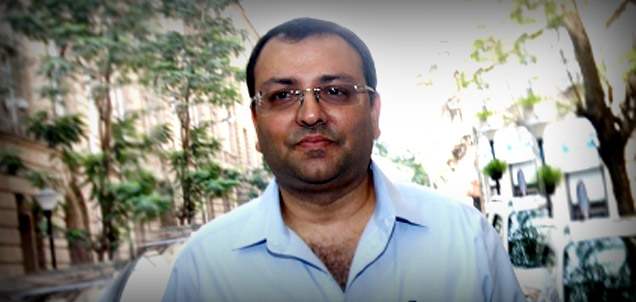
    In the second week of March, Cyrus Mistry, Ratan Tata, Ralph Speth and a few members of the senior management of Tata Motors dropped by at the factories of Jaguar Land Rover (JLR) in the West Midlands in the United Kingdom.


    The visit of the chairman-designate and the current chairman of the $83-billion Tata Group along with the CEO of JLR coincided with the Geneva Auto Show at which Mistry and Tata had unveiled a concept compact car called Megapixel.


    With sales at JLR up 35-40% in the past couple of months and with the success of the XF and XJ range, Messrs Mistry, Tata and the top brass discussed a plan to launch more products in the sporty space, said a person familiar with the matter.


    He added that Cyrus felt the Jaguar brand needed to re-associate itself with the image of speed and performance, something it seemed to be moving away from. Also discussed were plans for common engine development between Tata Motors and JLR, sharing of technology and also of human resources. It’s been a busy four months for 43-year-old Mr Mistry since he was appointed deputy chairman of Tata Sons, the promoter of all key Tata companies.


    The visit to JLR was just one of the many trips to group company offices and manufacturing plants. At the time of his appointment, the group, which has over 100 companies, had issued a statement saying Mr Mistry “will work with Ratan N Tata over the next year and take over from him when Tata retires in December 2012”.


    Mr Mistry has been doing exactly that, with his agenda including meetings with key ministers and top officials of states in which the Tatas do business.


    Unassuming Attitude Wins over Bombay House

    Mr Mistry has also been meeting the top brass – as well as employees – of virtually every company in the group, including global operations. One of the few allowances Mr Mistry makes for himself whenever he is in town is an occasional brunch out – not at a fancy restaurant at the group’s famed luxury hotel Taj but at a quaint Parsi eatery at Colaba in South Mumbai called Paradise.


    “He tries to visit the place once a week to eat his favourite chutney sandwich and, occasionally, dhansak (a Parsi meat and curry speciality),” said a person familiar with Mr Mistry’s schedule. It’s this unassuming attitude that has helped Mr Mistry win over most of the senior executives within Bombay House, the headquarters of the Tata Group.


    “His induction into the group has been quite painless,” said the head of a Tata consumer products company. Mr Mistry met CEOs who made presentations to him on what their company stands for, says the head of one Tata company on the condition of anonymity. He adds that Mr Mistry has an eye for detail.


    “The best part about him is that he is extremely approachable; and he has brought in the much-need freshness of youth and, at the same time, a composed and mature way of learning and questioning,” points out another CEO of a Tata Group company.


    Messrs Mistry and Tata were unavailable for comment, and a spokesperson for the group did not respond to an email. Mr Mistry is understood to have held review meetings with the heads of small, relatively less successful companies within the group such as Nelco, Tata Bearings, Telcon and Tata Ceramics.


    The options for such entities are either to exit (particularly if they are non-scalable) or merge them into other group companies, said a person with direct knowledge of the matter. “At the end of the day, the Tata Group will have fewer companies than it does now,” added this person.


    Such restructuring measures won’t happen immediately. There are unlikely to be any big bang changes once Mr Mistry formally takes over in December 2012, top officials said. But the direction has been set – Messrs Mistry and Tata are finalising a plan for consolidation of various businesses with the focus on profitability and scalability.


    “He is unlikely to rock the boat before getting the steering in his hands. But it would be wrong to assume there will be no changes. The organisation leadership needs changes and Mr Mistry is well aware of that. But it would be more evolutionary than revolutionary,” said a top group official.


    Another senior group official said Mr Mistry has discussed the possibility of adopting a model that was practised by Mr Ratan Tata’s predecessor, the late Mr JRD Tata, in which some companies had their own chairmen. Mr Ratan Tata is currently the chairman of all flagship companies.


    During JRD’s regime – and for a few years thereafter – Mr Russi Mody was chairman & managing director of Tata Steel, Mr Darbari Seth of Tata Chemicals and Mr Ajit Kerkar of Indian Hotels.


    While such a move has its risks – creation of power centres being the main one – group insiders say Mr Mistry is of the view that professionals with talent and potential should be offered a comprehensive career plan within organisations; and such a plan should also provide an opportunity for an MD to reach the post of chairman.


    Mr Mistry is also spending time on succession planning. He is in favour of encouraging cross-fertilisation of group talent before hiring from outside for top positions. “Cyrus will not be a carbon copy of Ratan Tata. He has to take the business to the next inflection point.


    Several of the governance codes formed in a sheltered economy within the group need to be updated,” says Mr Unni Krishnan, managing director, Brand Finance India. “He will also have to bring in coherence in terms of handling businesses that are run outside India and which are growing fast,” he adds.


    Agrees a senior group official: “The challenges faced by Ratan Tata were different and the times were different. Cyrus inherits a largely global group and, with it, a different set of challenges, especially of managing a disparate organisation in a volatile business environment.”


    One critical element of Mr Mistry’s induction – which Tata is particularly keen on and personally involved in – is connecting with bureaucrats and ministry officials at every possible level. The focus is to expand Mr Mistry’s horizons beyond business, said a senior group official.


    And if Mr Tata is making a special effort on this front, it may be because a chink in the group’s armoury has been in managing relationships with political leaders, said a person familiar with the matter. During the past four months, Mr Mistry has met the likes of Gujarat Chief Minister Mr Narendra Modi, Jharkhand CM mr Arjun Munda, Commerce & Industry Minister Mr Anand Sharma and Prime Minister Dr Manmohan Singh (as part of an industry delegation).


    Mr Mistry has also been given the mandate to reinforce the Tata culture – one that is steeped in doing good – within group companies. A couple of weeks ago, the deputy chairman was by Mr Tata’s side when he inaugurated Harvard Business School’s first classroom in the country at one of the properties of group company Indian Hotels.


    Two years ago, the chairman had granted $50 million to Harvard. “It would seem natural for Tata to want to make this sort of commitment of personal time (for the classroom) during Mistry’s induction,” says Mr Rohit Bansal, CEO and co-founder, Hammurabi & Solomon Consulting, who was present when the classroom was inaugurated.


    Source:The Economic Times

    Copyright © 2012, Bennett, Coleman & Co. Ltd. All Rights Reserved


    Photograph: Fotocorp


  • The Mindshare Mantra for the Digital Age


    By Johnson Napier & Insiyah Rangwala


    With a new global CEO at the helm and a host of other reshuffling activity on the talent front, the most recent being the appointment of Greg Brooks as Global Marketing Director, it’s been a busy 2011 & 12 for Mindshare Worldwide. But organizational changes are just one aspect of the overall vision that the global media and marketing behemoth has charted out as it prepares to confront new challenges that the future will inevitably throw up.


    In India for a one-day seminar titled Mindshare-Brand Equity Compass 2012, Marco Rimini, Leader, Business Planning, Mindshare Worldwide opened up to MxMIndia on how his agency is preparing to deal with the digital tide that is expected to sweep the sector off its feet, on the agency’s plans for India and emerging markets, and his mantras for surviving the slowdown blues. Excerpts:


    Q: What is the moment of truth facing media agencies today where the medium of digital is concerned? How is Mindshare Worldwide gearing itself to face the medium for the challenges that it will throw up tomorrow?

    The world is seeing a digital revolution and everything changes as a result of that. It will be important for organizations to get their balance right in the way they approach the medium of digital. As for Mindshare, first of all, it is about making sure that we have people who understand that we have information we share between people who understand the medium of digital. Also, the fact that we have to deal with technology ourselves.


    Q: As one moves across markets from the US to Europe to Asia Pacific, what are some of the new digital trends that have sprung up in the recent past?

    The most important thing is the amount of time people spend online and that differs by market and by region. And so obviously, the amount of time you spend online marketing to them changes remarkably by region as well. So in some markets, we are already seeing a 30-40 per cent spend by sectors such as financial services and telecom, going towards digital. Countries which are leading that race include the US and the UK.


    Q: Asia Pacific is being touted as the region that’ll churn out highest growth numbers where the medium of digital is concerned. What are your views around this thought?

    I think where digital is concerned, the Asia Pacific market is ahead because they can leapfrog ahead of the US and UK and because they have less infrastructure issues. For example, where wireless is concerned the Asia Pacific markets can leapfrog ahead because they don’t have to go through the cable revolution.


    Q: But despite the decibels and the glory, why are adspend figures around the medium still abysmally low? Do you see the low growth as an opportunity or a challenge for the sector to deal with?

    I definitely see it as an opportunity for both marketers and agencies to get it right, but to ensure that you go ahead you have to make sure you get your today and tomorrow also right. But I am positive of seeing healthy numbers being posted as we move forward.


    Q: What are the growth numbers that you anticipate for the medium in 2012?

    I think we will see an immaculate growth coming from the medium and it will differ across sectors. It is observed that sectors which sell online spend the most on online. Also, the sectors in which the advice is given the most online spend the most online. So you’ll see cars, telecom, retail, etc all have become very big spenders whereas you see less fast growth in the FMCG space.


    Q: Which are the categories that will drive online growth in 2012?

    I think it’s the ones that have a better online distribution presence; online distribution and online services will be the ones that will drive the growth. Examples include retail, banking, telecoms and cars. These are the top four high-probability sectors that I can think of.


    Q: Going forward, can we expect a renewed focus on some of the emerging markets for Mindshare Worldwide?

    There won’t be any renewed focus on any of our markets – we have always been strong in Asia and we expect Asia to continue to be strong for us. Also, within Asia we expect markets like Indonesia to drive substantial growth for us. If there is anything new it will be growth in Latin America and Africa.


    Q: Mindshare India has seen some reshuffling in the recent past where a host of people have been promoted and new talent inducted too. Globally too, there have been a few key appointments as well. What more can we look forward to on the talent front?

    Nick Emery has taken over as the global CEO for us and we wish Dominic Proctor well in his role as Group M in-charge now. Nick comes from a planning and strategy background and I think he is going to make sure that we all drive the company strategically and also do our marketing right. In fact we have just announced a new global marketing director for Mindshare Worldwide – Greg Brooks. Greg is coming from C Squared which was the organizer of the Festival of Media and also publishers of M&M magazine. So Greg is a digital maven; a digital consultant who used to be a digital journalist and his job will be to market Mindshare in this new digital age.


    Q: Has the much-spoken about slowdown impacted growth at Mindshare?

    I’ve heard a lot about this in the last 24 hours since I have been here but I have to tell you that if you come from Europe all of you here are being far more pessimistic; 6-7 percent growth is still very good and I am sure this will only be a very short-term slowdown in India and growth will continue to come. At the end of the day 6-7 percent is a very significant amount to stand by.


    As for Mindshare, we expect it to grow more or less with the average growth rate of the economy. The target for us is to grow as per the relevant economic conditions; so we say that our target in Europe is to beat the economic growth that gets registered.


    Q: What is the number you are looking at?

    We only set targets at the WPP level and I’m afraid you will have to look at their targets rather than ours. Obviously the growth in Asia Pacific is higher than Europe and we expect the growth to continue to be high. Logically, Asia Pacific is a very important region for us. Also, recently Latin America has also become an important region for us.


    Q: It was interesting to see representatives from P&G grace the panel for a Mindshare event. Worried about how Unilever will react to this?

    (Laughs) I didn’t choose the panel, Vikram Sakhuja did. But we are very proud to work for Unilever and hope that we continue to do so.


    Q: The team in India seems to be busy behind the Unilever pitch with hectic travel and meetings being the order of the day. Would you delve on what’s the current status of the pitch?

    We are all very engaged in the pitch; we knew it was going to happen and look forward to doing it. We hope to continue working with them as they have been one of our founding clients and through JWT and Ogilvy before that — we have worked with Unilever for over 100 years so we hope to continue our association with them.


    Q: What are the sentiments amongst your clients where advertising budgets are concerned?

    I think in 2008-2009, you saw dramatic cutbacks but in the last 18 months or so we have seen clients being more confident about their spending decisions. As we know, some clients are spending right in the middle of recession. So I don’t see so much of restraint from the client’s end. I think the point here is that the financial community is more nervous than the client community — it’s a government issue and not a corporate issue that’s facing us this time. In 2008-09, it was more of a corporate issue.


    Q: What will be your single largest agenda for 2012?

    The focus will be on people – there’s a lot of talent out there especially in Asia. We have to make sure we get our fair share. It’s a work-in-progress; it’s always a work-in-progress.


  • DDB Mudra Max OOH takes Tata Sumo Gold pan India

    By A Correspondent


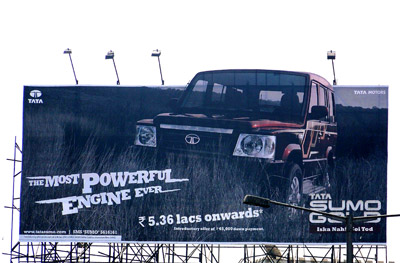
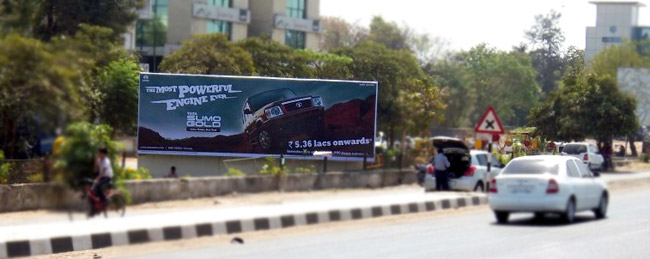
    DDB Mudra Max OOH carried a pan-India Out of Home (OOH) campaign for Tata Motors latest car- Tata Sumo Gold. The out of home campaign had commenced on February 28, 2012 and will conclude by the end of March, 2012. While the creative message of the campaign was ‘The Most Powerful Engine Ever’, its target audience are SEC A, B, those in the early 30s and living in the semi-urban and rural areas. The OOH campaign for Tata Sumo Gold is a pan India campaign spread over 200 plus markets. The OOH media vehicles used in each city were – Bill Boards, Unipoles, WallWraps, Walls for Paintings and BQSs.


    According to the brief from Tata Motors, the main aim behind launching this campaign is to make both personal and commercial segment consumers aware that there is an-all new Sumo variant (Sumo Gold) with a new, powerful CR4 engine. It allows Sumo Gold to take on different (rough and tough) terrain with ease.


    Since most of Tata Sumo’s TG is said to live in the semi-urban centres and that they mainly travel to outside the city to work, one of the strategies was to project Tata Sumo Gold as the vehicle that is adaptable to all kinds of roads and any circumstances. Hence whether it is travelling through difficult and bad roads, small lanes, traffic jams bad patches and other extreme situations, Tata Sumo Gold helps one travel with ease.


    Locations such as major entry and exit points, national highways, railway stations, religious destinations, bus stands, taxi stands etc were incorporated so as to reach the potential customers at all possible touch-points. For markets where OOH options were not available, Wall-Wraps and Wall painting were done to increase the reach. Cut-outs and LEDs were also installed in various markets to further enhance the appeal of the campaign.


    Ashesh Dhar, Head-Utility Product Group, Tata Motors said, “The new Tata Sumo Gold is a result of extensive consumer studies and field tests. The product has been designed to fulfill various requirements, long-awaited by the new generation customer. At the heart of every Tata Sumo Gold, lies a growling engine that thumps out vicious power. The Tata Sumo Gold goes a step ahead in putting the reins of power in the customer’s hands that suits his driving experience, delivering the best-in-class acceleration, power and an excellent torque aided pick-up and pull power. To communicate this message, DDB MudraMax OOH really helped in reaching out to the nooks and corners of the country with the traditional and unconventional outdoor spread.”


    Arun Rogha

    Arun Rogha, Group Account Director, DDB MudraMax OOH said, “It was a daunting task to execute a campaign of such a magnitude. While ensuring the optimum geographic spread we all had to take care of the intensity in each market. Strict Roll out schedule along with streamlined logistics helped us keep a check on the timelines. We had to live upto the benchmarks set by the previous launches of Tata Aria and Tata Sumo Grande. Tata Sumo Gold launch was more important considering the TG we had to reach to, throughout the country.”


    Adille J Sumariwalla, Head, DDB MudraMax OOH said, “Tata Motors have been the pioneers in the UV market in India. With the launch of the new Sumo Gold, we had to effectively communicate the new features and powerful engine, the car comes with. To effectively reinforce the message we had planned the media at important consumer touch points. Creative and Medium led innovations were also executed in important markets to break away from the clutter.”


  • We’re after the hot, poor countries: Piruz Khambatta, Rasna

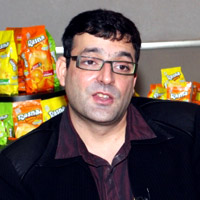
    In a day and age where cola beverages have captivated the attention and pockets of the youth and masses to a large extent, there are still a handful of juice-based companies like the old-yet-strong Rasna that are still posing a threat to the cola players. In fact, if Mr Piruz Khambatta, Chairman and Managing Director, Rasna Pvt Limited is to be believed, the volumes of colas are seeing a downfall while juice-based drinks are churning out highest volume consumption.
     

    On the sidelines of the Mindshare-Brand Equity Compass 2012, MxM India’s Johnson Napier got Mr Khambatta to reveal the secret behind the company’s strong and consistent growth showing, on the need for regular product innovations and what the future augurs for brand Rasna.


    Q: Rasna has been around for quite a long time. What are some of the new trends that the soft drinks market has thrown up in the recent past?

    We’ve been the market leader for more than 20 years. To be a market leader you’ve got to have 2-3 facets right like the need to have a good product, a good distribution chain and a good marketing practice. All these three cannot exist without proper customer insight and knowledge. For example, earlier people wanted soft-drinks, today they want fruit drinks. Earlier, people were looking at drinks only for enjoyment but today they are looking at drinks for the nourishing value that it can bring. There were days when it was believed ‘deeper the colour better the drink’, if it was dark, it was good. But today the reverse is true. Today, if it is dark that means you have put more colour in and as a result the consumer doesn’t want to pursue such drinks.


    The question that arises is: how do you create a new product, how do you do proper marketing, how do you do proper distribution without customer feedback and knowledge? So I believe that today it is the duty of the top management (decision makers) to be in touch with the customer and know what is the customer’s requirements. Also, it is about doing research in a way that you interpret it correctly. Like I always say, if you are a good doctor you will interpret the X-ray film or the CT scan film yourself; you should not wait for a report card that will tell you what the outcome is. In the same way, companies should be able to read the data themselves – collect the data and find out the problematic areas. All this has to be done in record time as well, as most of the time when the issues are identified and sorted out the trends have changed. So management has to push for research and have it done in quick and record time.


    Q: At a time when cola products are flooding the market in a heavy manner, how are juice-based soft-drinks manufacturers like yourself keeping pace?

    I would say the sales of colas are actually going down. If you see market data, cola volumes are either in the negative or at the least. The highest volume data today is from juice-based drinks. At Rasna, we have never believed that we compete with a cola or a juice company; our actual competition is with water. That’s because the price-point is starting from Rs 1 a glass to Rs 5 a glass while competition starts from Rs 5 a glass. In fact the competition should thank us with folded hands because we are converting people from water to a beverage in the first place so that they can go and reap the benefits of it later.


    Q: How essential is it for beverage companies to keep innovating products to adapt to the changing palates of the consumers?

    At Rasna, based on what the customer wants we have made our products more juicier and fruitier and with more vitamins, glucose, calcium, and so on. I believe that as we have to dress with the times, so also, products too have to keep pace with the times. I could proudly say that most of our products have kept pace with the changing times and most importantly, the heart of Rasna is the value-for-money proposition that we offer our consumers. People consume Rasna because they find it value-for-money. Even today after so many years, we still remain one of the most value-for-money soft-drink companies in India. In Rs 2 nobody can give you as much vitamins and calcium and a juice which is as fresh as a freshly squeezed juice. In fact I think the biggest challenge is to keep the price-point at Rs 2 itself. My products have been priced at Rs 1, Rs 2 and Rs 10 for the past ten years and they haven’t changed as yet despite the slowdown and rising inflation. That is the strength of our strategy and the direction that we want to take as a company.


    Q: What is the growth that you have put up in the past year and what do you anticipate for 2012?

    We have always been growing at a double digit rate which is higher than the average growth rate of the market. In fact we have been growing more than the carbonated soft-drinks market. I always push my team to acquire a larger growth number. It also depends on the intensity of the summer as the soft-drinks market are summer-dependant. For the current year we have two major campaigns, one is with Genelia D’Souza and the other is with Virendra Sehwag. Sehwag will be seen promoting Rasna as an energy drink and not just a soft-drink juice.


    Q: What are your core mediums for carrying out promotional campaigns? Is digital being considered as an active medium by Rasna?

    We do not want to take the digital route as yet for our campaigns. As for Rasna, the vanilla markets could best be reached by television. In fact I am a big fan of television and films and I would also like to put my money on cricket. As for digital marketing, I will only use it as a tool to know what the customer wants but I wouldn’t be pursuing the medium aggressively as yet.


    Our budgets for television campaigns this year is about 50 per cent more than last year and would be in the range of Rs 30-35 crores. Right now we are going big on Hindi GECs; cricket is something that we are waiting for the broadcast players to quote the right price. I believe the prices will come down and maybe we could look at associating with IPL more seriously.


    Q: How have you grown across the many international markets that you are present in?

    We have our presence in more than 40 countries and we are doing localized marketing across each of these markets. Multinationals who make one ad and try to run that across countries have failed miserably and we do not do that. Some areas we do not advertise as distribution does it for us but in some areas we are on television, in-store etc. It all depends on the needs of the market.


    Q: Any plans to venture into new and emerging markets in the coming days?

    For Rasna, it is the hot and poor countries that we are after. Countries like Vietnam, Egypt etc are our key markets as I believe that powder juices perform well in these markets as they are economical and nourishing. Probably it is not as fun for the sales workforce but for the top management it is fun to be present there.


    Photograph: Fotocorp


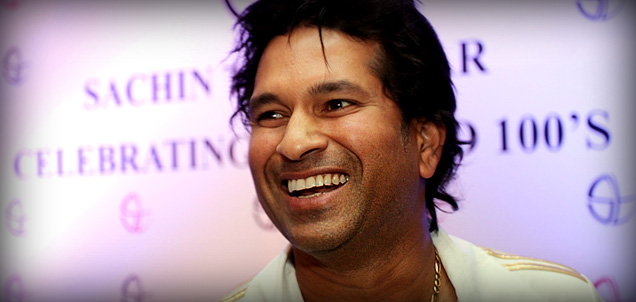
  • Is Sachin’s brand aura on the wane?


    By Binoy Prabhakar


    Even if you are cricket’s greatest overachiever, there is no escaping pressure. When Sachin Tendulkar recently collected his latest superlative – a century of centuries – the deed helped banish the pressure of ‘when’ that had been building up for a year. No sooner did he say “phew!” than a new pressure took the earlier one’s place: his retirement.


    The answer from the man himself, though “in a not Tendulkar-like way”, according to Mr Suresh Menon, editor, Wisden India Almanack, was: “When I retire is something I will decide…” Mr Menon broached the subject in a rather unflattering article earlier this week. “… the pressure on Tendulkar now is to keep playing so his minders can squeeze the last drop out of his huge commercial value,” he wrote.


    Mr Menon called this the “flip side of the millions”. “High earning sportsmen make a Faustian deal with the money devil; they are paid sums beyond the dreams of avarice for a decade or two… the devil demands his part of the bargain. Keep playing. Keep bringing in the money,” he wrote.


    Brands Tendulkar Endorses…All the deals are pre-existing, no new deals since the ‘Century of Centuries’Aviva, Adidas, Amit Enterprises, Audemars Piguet, Boost, Coca-Cola, Canon, Castrol, Sach (private label Kishore Biyani’s Future Consumer Products Ltd has created with Tendulkar), ITC Sunfeast, Jaypee Cement, Kaspersky, Luminous, RBS, Reynolds, S Kumars, Tohsiba

    Moot Question

    It still does not the answer the critical question: when will Tendulkar call it a day? But if endorsements were the deciding factor, as Mr Menon suggests, the answer would be 2014. All the 17 endorsement contracts in Tendulkar’s kitty run until then, according to his managers, World Sport Group (India) Pvt Ltd. Tendulkar remains among the highest-earning sportsmen in the country, second only to India captain MS Dhoni. But at least for now, there is no prospect of brands prolonging his career beyond 2014. No company has signed him up since his last milestone, belying the widely held expectation in the advertising fraternity.


    The only marketing event commemorating his achievement has come from beverages major Coca-Cola, which announced a rollout of 7.2 lakh cans featuring the cricketer. Sportswear major Adidas is preparing to launch a new marketing campaign featuring him in the first week of April. But both are existing sponsors of Tendulkar.


    Is it still early to rule out new sponsors, given that Tendulkar’s feat came about only on March 16? Advertising executives don’t think so. The buzz in the industry is that many companies were in talks with Tendulkar’s managers to make the most of his 100th century. Mr Harish Krishnamachar, senior vice-president and country head of World Sport Group (India) had said the feat will not have any impact on Tendulkar’s valuation. But no name has arrived on the scene.


    That’s because Tendulkar has always been selective about his endorsements, according to Mr Krishnamachar. “And we have never seen a milestone as a short-term opportunity given that our focus has been on creating a sustained long-term value for him,” he says.


    Tendulkar, says Mr Krishnamachar, has been very categorical about what categories he will be associated with and what he will not. “We have a very good assessment of what he is comfortable with and we have stayed true to that.” The brands that Tendulkar has said he will not endorse are tobacco and alcohol, says Krishnamachar. Tendulkar is said to have turned down a multi-crore deal with liquor baron Mr Vijay Mallya’s UB Group two years ago.


    …And Those That Haven’t RenewedContractsPepsi, Action Shoes, MRF, Britannia, Fiat, TVS, Airtel, G-Hanz, Colgate-Palmolive, Philips, VIsa, Ujala Techno Bright

    No New Deals

    Mr Krishnamachar says as far as any other category is concerned, it is something they “will consider as the opportunities present themselves”. But for now at least, there are few on the horizon.


    And all the existing contracts are many years old, even as much as 20 years in the case of Boost. The ‘newest’, if one can call that, is a deal with Coca-Cola signed in early 2011. Tendulkar’s last deals of note too were signed around then – a Rs 9-crore contract with Pune developer Amit Enterprises and another with apparel maker S Kumars for Rs 13 crore.


    Mr Prashant Singh, director of Octagon India, a sports and entertainment marketing company, says it is true that there has been no frenzy over Tendulkar’s latest feat. “There won’t be any until companies realise what his [retirement] plans are,” he says. Mr Singh says in one sense, Tendulkar, who turns 39 next month, is restricted by his own persona. “He has become the grand old man of Indian cricket… a la elder statesman than a player. That restricts more brands coming.”


    Mr Singh says what is keeping new brands away could also be the sheer number of endorsements. “He is endorsing 17; where is the scope for more?”


    Yet, many brands have not renewed contracts (see adjoining chart) with Tendulkar. He also now has few brands that cater to the young, except Coca-Cola and Adidas, an important segment for marketers. This is the upshot, says Mr Krishnamachar, of changing his portfolio of brands to reflect maturity and high-value categories.


    What about his brand value? Mr Santosh Desai, MD and CEO of Futurebrands India, says it isn’t what it was a few years ago. “Clearly, Tendulkar is in the evening of his career.” Mr Desai says the cricketer’s performance of late has been below par and because his century took a long time coming, there was fatigue associated with his feat. Taken together, it explains why Sachin hasn’t received new deals, he says.


    Whether Tendulkar wins new deals depends on how he evolves as a brand ambassador, says Mr Desai. “We have to wait and see… there is no clue from his current endorsements.”


    Source:The Economic Times

    Copyright © 2012, Bennett, Coleman & Co. Ltd. All Rights Reserved


    Photograph: Fotocorp


  • Focus on increasing number of formats: Govind Shrikhande, Shopper’s Stop

    As was predicted of the sector, retail did take a beating at the hands of slowdown, especially the second half of FY 2011-12 where growth was difficult to come by. But the downturn is not as bad as it seems and good tidings are being predicted for the medium for 2012-13. Much will depend on how the large players will be geared to tackle this difficult phase including undertaking risky yet calculative decisions that will either see them in the red or see them walk away with pots of money.


    Govind Shrikhande, Customer Care Associate & Managing Director, Shopper’s Stop Ltd is all set to take his company to new heights and feels that expanding its product offerings across the country could work in favour of the company as there are always new markets and consumers who are waiting to savour variety. Mr Shrikhande opened up to Johnson Napier of MxM India on the sidelines of Mindshare-Brand Equity Compass 2012 on how his company is geared to tackle the challenges of the future and what the retail industry needs to do to overcome the downfall scare that’s had everyone on tenterhooks.


    Q: It’s been a shaky 2011-12 for the retail industry in India. How is Shopper’s Stop handling the slowdown conundrum?

    2011 has been a mixed year for us – the first half went pretty well, but Q3 which is the biggest quarter for the retail sector witnessed a slowdown. We expect some recovery to take place in the second half of 2012-13 while the first half of 2012-13 will be a little slow.


    Q: How have you grown organically across the multiple formats that you are present in?

    We have grown very fast in the last one year. We added around 13 stores in the main format; overall we added more than 20 stores in all the big formats that we have. So it’s been a very fast-paced expansion drive for us. Going ahead, we plan to add atleast eight stores every year. I’d like to state here that the opportunity for retail community in the future is big, so it’s important that you expand today. Though there could be some short-term difficulties of sales growth not being as high as one expected it would be but if one prepares oneself so well that the model is good, the consumer traction is strong and the assortment is very good then one can be in a good position to perform well and really be ready to face challenges of the future.


    Q: Are you contemplating expanding your product offerings apart from the staple departmental and hypercity formats that you currently cater to?

    We have enough formats today like Shopper’s Stop in the department store format, Hyper-City in the hyper-market format, Crossword in the books store format…so we have enough formats currently by which we can expand and we are doing that.


    Q: What do you derive from the changing FDI stance between the government and the retail industry?

    I think FDI is getting a new meaning every season now. The Indian government did announce FDI in multi-brand retail and took it back. Also, the concept of cash-and-carry has been around for some time but now it’s getting into a different kind of a situation. I think the industry as such is waiting for the government to come up with some concrete plans around FDI but yes, once it does come in it will definitely help the whole retail industry to expand faster than what it has been able to do right now.


    Q: What is the impact that digital will cast on the retail sector? A lot of brands are taking the e-tailing route to increase product traction…

    Digital will help drive growth of retail because it is has been found that globally, a lot of consumers first check details on the internet and then go to a shop to buy stuff. It plays a support role where shopping is concerned. The fact is that almost 30-40 per cent of shopping that happens in a physical store has already been researched about before by people on the digital platform. So I do not see it posing any competition or threat; it would be self-supporting.


    We too have started our own websites for Shopper’s Stop and Crossword which will further ensure that a customer will get a multi-channel delivery whether through physical store or a digital store.


    Q: Apart from talent, what is the other big challenge facing the retail industry as of today?

    Apart from people, the other big challenge for the retail sector is the availability of quality space and rental. This in fact is a bigger challenge than people. As for the people challenge that we face, we are trying to overcome that by building new programs like Fashion Associates, which should help us to face this crisis in a much bigger way. But availability of quality retail space at reasonable rent is still a big challenge.


    Q: As you move forward, what would be your main objective for 2012?

    We have enough happening in the company right now. The key driver would be expanding into more cities and growing the total number of formats rather than getting into new formats.


  • Starry starry rights from BCCI

    By Rishi Vora


    Star India’s winning the rights to broadcast Indian cricket for six years – from 2012 to 2018 – is a significant development in the Indian sports arena where cricket is the only celebrated sport, and the one that attracts the maximum moolah.


    Though Star has won the rights much to the joy of the senior management team, the fact is that it has come at a staggering cost of Rs 3,851 crore for 96 matches.


    What this means is – for every single match played in India till 2018, Star will pay BCCI Rs 40 crore as part of the contract. The contract also says that Star will also have the rights for internet and mobile besides TV.


    Mr Uday Shankar, CEO, Star India said in a prepared statement, “BCCI is a great property and we are overjoyed to have an opportunity to develop it further. It was decided amongst ESPN Star Sports, ESPN and Star that Star would bid for the rights and if Star were to win the rights it would be exploited in collaboration with ESS.”


    So while it is great news for Star India for it augments its position as a network, there are some murmurs within the industry on whether it is a viable deal as far as profitability is concerned, especially when Indian cricket has seen one of its worst ever phases of late.


    A broadcaster of a sports channel who requested anonymity said, “It’s a move from Star to dissuade MSM from its cricketing interests. MSM already have the Indian Premier League which is one of India’s biggest properties, so the BCCI rights would have put them in a superior position in the industry. Hence it’s a setback of sorts for them, especially when they’ve been in the news on launching a sports channel.”


    He further said, “The price Star is paying is on the higher side. But it’s not very surprising that they’ve won it for the price they have, as they have the strength and the clout to pull off a high-value deal such as this one.” MSM came second to Star with a bid of Rs 3,700 crore.


    T Gangadhar, Managing Director, MEC India commented on the development: “Sports is a rights-driven genre and channels compete on that basis. As faras exploiting rights is concerned, Star India has announced they will collaborate with ESPN-Star Sports, an already established player. To that extent, life is as usual. However, going by the size of the winning bid, it is clear that Star is betting big on digitisation and increasing subscription revenue therefrom.”


    With the BCCI deal, ESS has now become a significant player in Cricket. They’re the official broadcasters of ICC matches, plus Australian and England cricket. Ten Cricket – the channel from the Zee stable airs matches played in South Africa, Sri Lanka, West Indies.


    Neo banked on World Series Hockey after having lost the rights for Indian Cricket. They however continue to own Bangladesh rights – the Asia Cup which was recently concluded was aired on Neo Cricket.


    Neelkamal Sharma, COO – Buying, Madison Media Group said, “For sports as well as for Star, it is really a big news – Star TV acquiring the rights for Indian Cricket for next six years. Since rights are with Star TV and not ESS, there could possibly be some more development on the way forward and time will tell what will those developments be.


    He further added, “There will be some consolidation of sports companies in the near future to leverage this opportunity. I will not be surprised if Star becomes a dominant player in sports as and fiction”


    According to Mr Mahesh Ranka, it will take some time before the investments could be recovered. “I can say that by the end of six years, Star will make money out of this deal on the back of subscription plus advertising revenues. It’s just not the Indian market. There are a lot of viewers who follow Indian cricket in other countries. Plus they have the mobile and the internet rights too. So it seems to me that it’s a good win for Star.”


    On what it means to other players in the sporting arena, Mr Ranka said, “Sadly cricket is the biggest game in India and quite clearly, other players such as Neo and Ten Sports would face a bit of a setback. They’ll survive, but that’s not the big question. The big question is whether they will be able to grow and build from where they’re now.”


    Advertising revenue may not be much in the first few years, and experts predict price points to range from 2 lakh to 3 lakh per 10-second spot. Profitability will be an issue.


    Star Network is poised to gain more strength. But will the Star shine yet again?


  • Can flavoured & frozen yogurt replace the good ol’ dahi?

    By Preethi Chamikutty


    Dahi that went abroad and came back. That’s how Swati Jain chooses to describe the latest flavour of the season: frozen and flavoured yoghurt.


    “Flavoured is just a nomenclature,” said the head of marketing at Danone India, which recently forayed into the frozen category after debuting with the flavoured variety. Danone isn’t the only brand taking this more contemporary form of good old curd, or dahi, pan-India. Go Dahi, a frozen yogurt brand launched by Parag Milk Foods two years back, is now available in Mumbai, Pune and Bengaluru.


    And it has plans to enter North India. So what about east India then?


    “Kolkata already has mishti doi!” says Devendra Shah, chairman, Parag Milk Foods very matter-of-factly. He goes on to say mishti doi is quite entrenched in West Bengal and making consumers there switch to frozen/flavoured yoghurt could be difficult.


    It’s not just Kolkata that has a local variant of curd; Maharashtra has shrikand, Punjab lassi, Kerala taire and Tamilians still swear by curd rice.


    Flavoured and frozen yogurt is a new food category to India, just two years young. The market for yoghurt of all types, including flavoured, frozen and regular curd, is pegged at almost Rs2,500 crore by euromonitor International – and one that grew 35 per cent in 2011.


    Clamouring for a scoop of the action are a clutch of brands, from Parag Milk Foods’ Go and Amul Flaavyo of the Gujarat Cooperative Milk Marketing Federation (GCMMF); to Nestle Real Fruit Yoghurt, Mother Dairy Yoghurt and Danone Cremix Yoghurt. The second set in this space include retails brands like Cocoberry, Red Mango, Kiwi Kiss and Yogurberry which sell flavoured/frozen yoghurt through exclusive outlets that only stock the respective brands.


    Most non-retail brands are using modern trade, institutions, college, school and office canteens, airlines, five-star hotels and independent kiosks to reach out to its potential consumers. Danone is also looking at kirana stores to reach customers and Jain says they provide Danone coolers to shops for stocking products. The target customers are young, urban and health-conscious people. Ms Jain of Danone points out: “Women tend to pick it up more than men, as psychographically they are more health conscious than men.”


    Adds GCMMF managing director, RS Sodhi: “This is a new product category being adopted by middle and upper middle class people who are health-conscious.” Nestle is trying to position its yoghurt as an ‘anytime nourishing snack.’ Kumaran Nowuram, general manager – dairy, Nestle India, says: ” Consumers consider flavoured yoghurt a western concept and, as they do not quite understand it, there really is no specific consumption pattern yet.” Nestle Real Fruit yoghurt has been available in the market for the past few years and the brand will soon add Junior Daheez (for children) and Fruit Daheez to its portfolio.


    These are still early days of trial and error. For instance, Go has withdrawn its banana variant for lack of adoption. Mango, strawberry and pineapple variants, which are common to all brands, are finding takers. Mother Dairy also has yoghurt in raspberry, blueberry and plum flavours.


    Munish Soni, DGM marketing at Mother Dairy’s dairy products division, says blueberry is quite popular among its customers. The retail brands have a larger range of flavours – as many as eight in the case of Cocoberry. Cocoberry also offers the largest pack size of 300 gm and even provides the option of home-delivery. Go, says Shah, will soon launch a 400 gm pack.


    The way forward clearly is to grab share from other snacks and desserts. Ina Dawer, research analyst at euromonitor International, says: “Frozen yogurt has already started to replace ice cream to a certain extent. Consumers have also already started to look at it not only as a healthy snack but also as a healthy replacement for meals.”


    Companies tying up with corporates to target office employees, adds Dawer, will also help in increasing consumption by making it a quick, convenient and healthy substitute for meals. “I will not be surprised if frozen yogurt sees growth of 70-80 per cent each year over the next two years,” predicts Dawer.


    There are a few obstacles to such robust growth. The lack of adequate cold chain infrastructure is the biggest roadblock, which restricts distribution to cities and towns away from the manufacturing facilities. This also makes building loyalty difficult as consumers tend to lap up whichever brand they can get their hands on. Says Suman Srivastava, cofounder of Marketing Unplugged, a brand consultancy: “While there are a number of brands in the space, someday I eat one brand and the next day I pick up another. This may be because not all outlets are stocking all brands.” Srivastava also thinks for the category to become bigger there has to lot of innovation: “When Britannia showed its cheese as equivalent to a glass of milk, it was unique way to position the product. Similarly if brands are able to create some parallels for frozen/flavoured yoghurt that could help increase adoption,” he says.


    Source: The economic Times

    Copyright © 2012, Bennett, Coleman & Co. Ltd. All Rights Reserved