Category: MARKETING

  • Twitter goes ‘laplap” for Center Fruit

    By A Correspondent


    The last evening of the financial year saw the start of something unique in the media space: celebrities using Twitter to seed in a viral video of a TV show which was scheduled later the same evening. The unique thing about it was that it was not only to promote the show tune-in, but to actually create awareness of a branded content segment by Center Fruit in the Mirchi Music Awards.


    Perfetti Van Melle India is credited with introducing some catch phrases through their advertising which have gone on to become common lingo amongst the Indian youth. After Center Fresh’s Zubaan Pe Lagaam and Mentos’ Dimaag ki Batti Jala De, this time Indian audiences were witness to something unique for Center Fruit on Mirchi Music Awards which was aired on Colors on Sat-Sun.


    Starting early evening before the show was supposed to premier on Colors prime time, a video was seeded through Twitter medium. It was not just a plain seeding. The campaign took the help of celebrities to seed in the video as a teaser. The video had the host of the award show Shaan being interviewed just before he was about to take the stage. In the middle of the interview, the journalist holds up the jar of Center Fruit, and off goes Shaan with his tongue-wagging act. This was similar to what happens in the brand commercial where a singer competing with a tabla player wins the battle when Center Fruit makes the singer go non-stop laplap with his jeebh (tongue).


    This was probably the first time a FMCG brand used the Celebrity tweet route to create a teaser online for amplifying a TV show scheduled later in the day. Commenting on the initiative, Sudarshan Saha, Client Leader, Maxus says that the idea came to his team when they saw top trending topics in the evenings in India recently tended to pick up what was being shown on Television. The agency team decided to turn the tables around, and used Twitter to seed in a tease before the show went on air, in this case. Sample this: Sophie Choudhrytweets – Does Darrling Luscious Lopez make your #Jeebhlaplap? or Poonam Pandey tweets -Shaan’s exclusive #jeebhlaplap backstage footage from MMA. Eesha Koppikar tweets -Enjoyed Shaan’s laplap secret. Watch Colors to see what makes Usha Uthup’s #jeebhlaplap.


    Perfetti Marketing Director Nikhil Sharma feels that the quality of innovation executed for Center Fruit pushes the benchmark further on how to use multiple mediums, especially Digital along with TV for FMCG brands. He leads marketing mandate for an array of impulse purchase brands in Perfetti, and treats Maxus as a long term partner to drive the growth agenda for his brands.


  • Max ropes in Vibha Paul Rishi for brand building & HR ops

    By Ratna Bhushan & Khomba Singh


    Healthcare and insurance group Max India has roped in Vibha Paul Rishi to take care of its brand building and human resources operation, two people aware of the development said.


    Ms Rishi, who quit retailer Kishore Biyani’s Future Group last month, will join Analjit Singh’s Max India as executive director, brand and human capital, later this month, they said. She will report to Max India MD Rahul Khosla.


    A person close to the development said since the company’s executive represents the image of a firm, the company decided to bring both the verticals under Ms Rishi. “Our people are the best ambassadors of the group,” a top company official said, defending its decision to make Rishi responsible for building the group’s brand as well as managing its talent, career and succession plans.


    Despite repeated attempts, Rishi could not be reached for comments. Max India too declined comment.


    Max India’s existing human capital director P Dwarakanath, who retires shortly, will continue as an advisor to the human capital function, the official said.


    Rishi, who worked with beverages maker PepsiCo for 17 years, returned to India in 2010 after close to seven years overseas and joined the country’s largest retailer Future Group as its executive director for customer strategy. But her stint at the firm lasted barely two years. “She had some issues and her decision to exit was mutual,” a Future Group official said on condition of anonymity.


    A mother of two, the 50-year-old Rishi was heading PepsiCo’s marketing in India before she relocated to New York in 2003. She had led Pepsi’s ‘Nothing official about it’ campaign during the 1996 cricket world cup, which took cola wars to a new high.


    An MBA from Delhi’s FMS, Rishi quit PepsiCo in 2007, after which she was associated with NGO Pratham.


    In the last few months, Max India has elevated Mohit Talwar to the position of deputy MD and appointed Rahul Ahuja as the group financial controller.


    Its hospital subsidiary Max Healthcare also appointed a new chief executive officer, CFO and chief services officer, while elevating two senior doctors to the post of vice chairmen. During this period a few executives including CEO and CFO of Max Healthcare left the group.


    Source: The Economic Times
    Copyright © 2012, Bennett, Coleman & Co. Ltd. All Rights Reserved


  • Brand IPL needs to play innings of its life: MSL Group report

    By A Correspondent


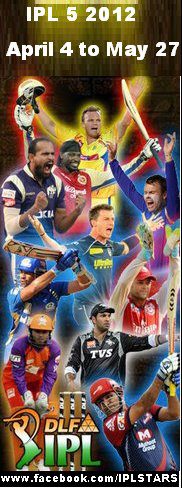
    MSL Group’s executive report on the Indian Premier League, its ups and downs and the viability of continuing, concludes that if Brand IPL has to remain a smash hit, it must work its strategy carefully.


    When it began, the league made a splash and wowed India with the razzle-dazzle of intensively commercial cricket. Then came the slide downwards with slackening viewer interest leading to falling ratings, followed by the scandal that surrounded allegations of favouritism and money-laundering.


    “There’s no denying that Brand IPL is on choppy waters. It will have to steer clear of fresh controversies, reflect on mistakes and rectify the damage as much as it can. Most importantly, it needs to win back the confidence of stakeholders. As Season 5 unfolds from April 4, 2012, the BCCI will need a stronger game plan to rejuvenate the brand,” says the report.


    Quoting media sources including reports from MxMIndia, the MSL report mentions instances of prominent sponsors pulling out, questionable ownership patterns, and the big one – runaway costs. “Keeping the wage bill in check and managing revenues will mean the difference between survival and falling by the wayside,” says the report.


    Brand IPL has other problems too, such as controversies galore, falling TRPs, and overly high ad rates. Yet, the report concludes, “There must be something right with a sports property that, despite a fall in valuation, is worth more than $3.5 billion. By its second year, the IPL was thought to be the fifth largest sports brand, just smaller than FIFA and bigger than Wimbledon and F1.”


    An integrated communications approach, the sheer advertising benefit of being on the IPL bandwagon, the fact that sports sponsorships do work well, and the Indian cricket fan’s conveniently short memory are opportunities in the IPL’s favour, the report remarks.


    In fact, while other sports such as hockey and wrestling are trying to emulate cricket’s league success, the fact is that India has been loyal to cricket for far too long, and grabbing those eyeballs will be a “massive challenge”.


    The full report can be read here:

    http://www.slideshare.net/mslgroup/indian-premier-league-still-a-smash-hit-for-advertisers


    Image courtesy: http://www.facebook.com/IPLSTARS

  • TIL brings a bigger and better IPL season 5

    By A Correspondent


    Times Internet Limited (TIL), in partnership with YouTube, is back with a slew of new features to woo cricket lovers for the fifth edition of the Indian Premier League (IPL), which starts on Wednesday.


    TIL’s dedicated IPL site, ipl.indiatimes.com, now offers interactive scorecards, high-definition streaming of IPL matches, DVR features (to rewind during a match), online radio commentary in partnership with AIR , video-on-demand facility, and an all new ‘Battleground’ section.


    Making its debut this year is the interactive 10 minute video show ‘Pitch Studio’, where fans can interact with stalwarts from the cricketing world including a former cricket team captain and expert, by posting their comments and questions on Facebook and Twitter. These pre-match shows will give a quick recap of past matches and talk about key events, with guest stars adding an element of surprise.


    “Having attracted a total of 72 million global views last year, we are looking to make IPL 2012 a lot more user-centric, giving user’s total control over their IPL viewing experience,” says Rishi Khiani, CEO, Times Internet Limited.


    In the ‘Battleground’ section, IPL fans can post their comments and also indulge in activities such as throwing tomatoes and eggs at the other side during a live match. The new DVR feature will allow fans to rewind on the time-line and watch any part of the match that they may have missed. Adding to all the fun is the cheerleader application, video scorecard that captures video highlights on the fly during the match stream, and the video-on-demand feature, which offers match highlights such as fours, sixes and face-offs between players.


    Given the phenomenal success of the Indiatimes platform during the previous IPL season, it’s no surprise that this year too, some of its heavy weight sponsors including Maruti, Coca Cola, and Samsung, have put their weight behind TIL as premium sponsors.

  • Brands focussed on men now wooing women customers

    By Amit Bapna


    Aiming iconic beauty brands at men may seem as unimaginable as Philip Morris, of Marlboro Man fame, wooing women consumers. But then Marlboro actually began life as a cigarette for women. By crossing over from one gender to another, marketers today are not looking to do a complete role reversal. Rather they’re just attempting to extend brands to a large untapped market – the other half of the species – without destroying the core proposition.


    Anglo-Dutch consumer products giant Unilever could seemingly be testing one of its most sharply positioned male brands, Axe, amongst women – a limited edition launch for now. Anarchy will be the first fragrance from the Axe brand that will have a female version packaged in a shimmering silver and glossy pink canister with floral and fruity notes – as against the men’s version with fresh and woody strains. With this new avatar, the quintessentially male deo brand that’s built recall largely on the back of its cheeky commercials extends the boldness theme to its brand extension strategy.


    This shift could mark the way forward for marketers in a world in which gender lines are merging.


    Brands across categories – from cars to personal care and from denims to alcohol – are on a gender-flirting mission. For some the affair could turn out to be a one nightstand and for others, it may lead to a happily-ever-after marriage. Michael Maedel, President, JWT Asia Pacific, feels that companies in every sector face a fundamental imperative to grow market share and sales. As lines that have traditionally separated male and female consumers – those of income, attitudes and expenditure – continue to blur, more companies that have created brands targeting one half of the species are starting to address the other half with variants, he adds.


    For instance, Bacardi has launched Bacardi +, a ready-to-drink mixer available in two variants – cola and lemonade – in the United Kingdom, some parts of Europe, China, Thailand, and now India. This marks a clear shift for the brand in reaching out to the male-drinking populace with its 8per cent alcohol content to entice the strong beer drinking segment. In contrast Bacardi’s Breezers that come in a variety of fruit flavors – and are widely consumed by women – have minimal alcohol content.


    Mahesh Madhavan, president and CEO South Asia, Bacardi India explains the logic of the new drink for men: “If you peg anything for men in this market, women will drink it, but the reverse doesn’t happen . Men will not consume a drink positioned for women for sure. It is unfortunate but that is the way it is the world over.”


    According to a JWT global research study, brands across different categories need to do more to reach out to women who are earning more, spending more and marrying later than ever before. Brands that have long focused on men – from banks to cars to property – could do a lot more to leverage this trend.


    Of course when they do, they need to think about how to make their proposition relevant and attractive to women without changing the essence of their core offering.


    Before Axe, there was Allen Solly that had made a sortie into gynic-territory. Allen Solly today is more of a unisex brand although the imagery has been predominantly male. The men’s range was launched in 1993 and the women’s range seven years later. Now, the brand is in the process of a re-branding; the new positioning will also push the gender envelope subtly.


    Says Sooraj Bhat, brand head, Allen Solly. “Our endeavour is to make the Friday Dressing concept, launched in the mid 90s, acceptable and relevant to women as well. After all nearly a fourth of the brand’s share is coming from the women’s market.”


    Conversely, skin care brands globally that were once the domain of women, says Maedel, have been successful in creating mannish lines, from a department store brand like Clarins to a drugstore brand like Nivea. Back home Garnier had been around for over 15 years as a beauty brand for women before it decided to launch a men’s range.


    India is the first market in which the L’Oreal company decided to address the male of the species. Reason: An insight that Indian consumers are less reluctant to use skincare products than in Europe, says Jacques Challes, MD, L’Oreal India. He adds that it was not very risky for Garnier to make the gender-based extension because the values that the brand stands for – efficiency and quality, in a no-nonsense manner – are easily transferable.


    Unilever brand Dove, which is present in categories like body wash, hair care, deos and lotions, has launched a Men+Care range in select markets (excluding India). Says Jennifer Bremner, global brand director, Dove Men+Care: “Our research found that many men were already using women’s skin care products, among them Dove. The range has been specifically created to deliver a range of superior products that give men the care they need without sacrificing effectiveness.” Bremner adds that for now there are no plans to launch in India.


    Over time, the definitions of what are the masculine or feminine dimensions of a society change, depending on the various factors that drive its culture. Explains Sourabh Mishra, chief strategy officer, Saatchi & Saatchi: “In terms of defining a brand’s ‘gender identity’ within that society, what is acceptable at one point in time may not be so at another time.” He cites the example of Levi Strauss that was once all about the tough all-American man exploring the wild spaces in search of his fortune. It is doubtful if it could at that time have stood for the ‘Levi’s Curve ID’ that addresses a range of feminine body shapes. But it is perfectly acceptable today because there has been a shift in culture since then.


    The decision to cross over is not without its dangers. Says Dick Maggiore, President & CEO, Innis Maggiore Group, a leading US-based positioning agency: “The greater the brand’s equity is established with one gender, the greater it should avoid brand androgyny. While a few new customers of the opposite sex could be gained, you would lose many more existing and potential customers while your brand position erodes.” He firmly believes that line extension is almost always a lousy strategy. “The key principle to a positioning strategy is that a brand can only stand for one ‘idea’ in the mind of its prospects and customers.”


    Small wonder then marketers burn plenty of midnight oil before deciding to target a new set of consumers. As Russell Taylor, global brand vice president, Axe, Unilever points out: “Even as a limited edition this is not a decision we took lightly. The one golden rule is: ‘do not break the contract you have with your core target’.”


    Rather than looking at the other sex as a vast untapped market that can set the cash registers ringing, marketers need to figure whether their brands actually meet a need of the new set of consumers. Consider Ranbaxy which recently extended Revital, a daily health supplement, to women. According to Brijesh Kapil, vice president, Ranbaxy Global Consumer Healthcare: “The product was developed to meet the special needs of women, and the product was extensively researched with consumers before launch.”


    In contrast beverage brand Thums Up, whilst claiming to have almost 30 per cent of women consumers, has for some time now been positioned as a ‘macho’ drink in all its imagery and communication. However, a new campaign, in a first of sorts, has a shapely model doing the same stunts as her male counterparts. But we’re still not sure whether that’s a gambit to woo more male drinkers – the model is ‘shapely’, remember – or to invite more women to taste the thunder.


    Source: The Economic Times

    Copyright © 2012, Bennett, Coleman & Co. Ltd. All Rights Reserved


  • Brand India saving grace in time of crisis

    By Namrata Singh & Reeba Zachariah


    There’s more to India than just its over-emphasized status of being the most populous democracy in the world. Random economic facts like India being the largest producer of milk, the largest consumer of sugar and spices as also the largest consumer of gold till last year, crop up now and then.


    But there have been achievements in the last few years which have put India on the world map. Over the last couple of years, India has been seen stamping its presence in the league of global leaders by the strength of its economic power.


    Consider these facts: The Tata Group is the largest manufacturing employer in the UK; Ireland’s richest person — Pallonji Mistry — is an Indian ; Coal India is the single largest coal producer in the world; India is the largest whisky manufacturer in the world and the Taj Group is the largest chain of hotels in Asia.


    Despite a generous trickle of negative news, the list of these positives is also getting bigger.


    Brand India today is not just about economics. A significant way in which

    India is asserting itself is through its soft power.


    According to Bhaskar Chakravorti, senior associate dean of international business & finance, The Fletcher School, Tufts University, this “soft” presence is India’s greatest asset in making sure it counts on the world stage.


    Household brand names such as Citigroup, Pepsi and Motorola are associated with an Indian CEO. Clearly, India has moved on from being a nation of snake charmers and appears to be on its way to become an economic power.


    Soft power aside, it’s also working its way through innovations. The list includes , Nano, the cheapest car in the world from Tata Motors; Aakash, the cheapest tablet PC in the world, priced at $46; and other cheap tablet PC initiatives by private companies.


    However, there are some missing pieces too. “India should surely move forward in the area of innovation where we can capture the value from our intelligent cheap resources from being just a provider of cheap labour. As of today, most companies (Apple, Microsoft, Google, Intel, etc), especially in IT, that generate maximum value from innovation, rely on resources from India and we are clearly not getting the deserved share of the value created,” said Thomas Kuruvilla, MD, Arthur D Little, a consulting firm.


    Richard Rekhy, head of advisory practice at KPMG, a global consulting firm, however, believes India has some way to go. “But India, with 100 companies of over a billion dollar market cap, has established its position globally which is why GE set up its first R&D centre outside US in Bangalore. At the same time, Indian banks have only 2 per cent bad loans versus 20 per cent in China,” he said.


    In the mid-90 s, on a representation made by Indian exporters, the government had removed the mandatory use of the ‘Made in India’ tag from goods exported. The law still exists on paper. Ostensibly, Indian exporters were embarrassed of using it then. But, today, no one is shying away from using the tag.


    Source: The Economic Times
    Copyright © 2012, Bennett, Coleman & Co. Ltd. All Rights Reserved


  • Wooing vibrant India’s Wonder Woman


    By Ritu Midha


    Indian women can by no stretch of the imagination be defined as a homogeneous market – it is heterogeneous. And the distinction cannot be made merely on the basis of their socio-economic status or the town class they belong to.


    TNS – GEMS February 2012 issue has a very interesting observation about a BoP (Bottom of Pyramid) 19-year-old girl, who saves from her small lunch allowance so that she can buy a tube of Neutrogena moisturiser. Surprised? The Indian woman consumer indeed is changing behaviourally, and the marketers are trying their best to understand her.


    Affirming the new shift being observed, Praveen Malhotra, EVP – Sales & Revenue, Reliance Broadcast Network Limited states, “There is a paradigm over here – women are making decisions and yet they are being dismissed. The evolution is significant not just because women are waking up to discover their identities, it is also because of the way the social order is changing in our country – the place of women is enlarging in our families. However it’s a dichotomous situation; it is happening and yet women are trapped in difficult life situations of being dominated.”


    Truly, the Indian woman has evolved, and the traditional boundaries are breaking – she is taking charge of family shopping and expenditure across the board. However the pace of change is much faster in India A than India B.


    Segmenting women by town class

    Even today, the pace of life is quite different in a metro like Delhi and a smaller city like Agra. Does this mean that consumers in Delhi and Agra are very different as far as consumer patterns are concerned?


    Punitha Arumugam, Group CEO, Madison Media disagrees. She says, “More than segmenting women basis geography, it is important to segment them by mindset or aspiration or representative clusters. For example, a homemaker in a small town in Karnataka and a homemaker in Mahim – Mumbai may be very similar. However, despite being based in Mumbai as a geographical unit, a homemaker in Nariman Point may be vastly different from the said homemaker in Mahim. This dilution of geographies and convergence of aspirations across borders has, to a large extent, been driven by mediums like television and mobiles.”


    Women in smaller towns aspire to be like their metro counterparts – however, the traditions are still stronger in smaller towns, and the lifestyles differ as metros have more working women than smaller towns. Divya Gupta, CEO, Dentsu Media elaborates, “A distinction born out of the fact that a typical metro woman is more likely to work out of home, leading to greater confidence, empowerment and equality coupled with greater time pressures! These factors have a direct influence on her purchase decisions and behaviour. However, the aspiration to succeed is universal. And media is a great equaliser; today product and brand awareness is ubiquitous across towns big and small. The needs and style might vary.”


    It is, nevertheless, important to understand, how different actually is the middle India woman (marketers’ new muse) from the metro woman.


    Women in middle India

    While the traditional role of male has not really changed much, that of the woman has seen a change of several generations in one decade – very similar to India’s economic growth story.


    Anita Kotwani, Principal Partner – Client Leadership, Mindshare defines the middle India woman succinctly stating, “She is the loving wife, the doting mother, if working she balances her home and personal life. She is committed to the institution of marriage and family. She is conscious of the changing environment, is aware of brands and is social online and off-line as well. She realises the importance that technology is playing today and wants to ensure that her kids today are internet savvy and ready for the future.”


    Very similar to the metro woman in many aspects, yet very different in many others. Anita Nayyar, CEO – India & South Asia, Havas Media, makes an attempt to demystify her. Says she, “Yes, the psychographics of a metro woman and a middle India woman are different. You will observe a lot of differences emerging, interestingly portrayed in the GEC channel soaps. Metro woman is modern and forward-looking, while middle India woman is not so modern but is becoming forward-looking.”


    As for what lies beneath the change, and how it has impacted the women in middle India, Shubha George, Chief Operating Officer, South Asia, MEC reflects, “The woman living in middle India is certainly more evolved today as she has more access to information. They have greater access to telecommunication, retail, media including the Internet and this has begun to narrow the gap with metropolitan India, even if it is early stages yet. Apart from the more obvious consumption pattern changes, this information explosion has intrinsically made middle India women aspire for more – especially when it comes to their children and what opportunities they make available for their children.”


    Marketing to women in middle India

    Middle India woman, then has different sensitivities, though she might be very similar to metro women on several fronts. Do the marketers need a different marketing strategy to reach them or don’t they? States Anita Kotwani, “One does need to have differentiated marketing strategy for women in middle India. They are different in their values – what makes them tick might vary from the metro women. Their realities may be different however, their aspirations and expectations might be similar.”


    So while the marketing strategy may need an element of differentiation, does the communication strategy too need to be different? Ambika Srivastava, Chairperson, ZenithOptimedia India and Chairperson, VivaKi Exchange believes that it would be foolhardy to formulate a rule here and apply it across brands and product categories. She says, “It depends on the positioning of the brand, and Insights the communication is based on. If the communication is about the universal truth – or a specific emotional need like safety, love, and need to nurture – it might work across the board.” However, she cautions, “Context may need to change, dependent on what the product or brand is. You have to be extremely relevant.”


    A brand’s need to reach out to middle India women might vary in intensity based on the product category it belongs to. While an upmarket automobile brand might be happy targeting the metro women, in case of a new detergent variant, it might not be the case. Says Basabdutta Chaudhary, CEO, Platinum Media, “Especially for FMCG, we by and large target the middle India woman. Especially in television, GECs, celebrities, Bollywood are the major contributors to overall media spends.”


    Sudha Natrajan, CEO, Lintas Media, believes that television, by far, is the best medium to reach the middle Indian woman. However, she makes an interesting and accurate observation about men being involved in the purchase decisions as well. She avers, “Out of home entertainment avenues being restricted, they can be reached almost completely through television. Also, where the evening primetime is concerned, soaps have dual viewership of the husband as well as the wife. It is important to reach the man of the house too, as he definitely has a say, or even ends up purchasing items of daily or frequent consumption in the house.”


    Having said that, while the woman might not be the real buyer, she does influence the purchase decisions and is the most important influencer. Marketers would thus ignore her in their marketing plans at their own peril.


    As per a study, about 85 per cent of the purchase decisions are taken by women in the United States of America. Our experts, however, are unanimous that the percentage of women taking purchase decisions in India is much lower. However, the numbers sure are increasing and across the categories. States Arumugam, “The era of looking at women as decision makers only for low-cost FMCG products is long over. Marketers across categories, be it finance, automobiles, telecom, durables etc have been targeting women as key influencers, if not the actual decision-maker on their brand, for quite some time.”


    In semi-urban and rural areas the story is a wee bit different – as the male is still the actual buyer of products in most categories. Affirms Sudha Natrajan, “Percentage of women taking purchase decisions is definitely lower in India. In semi-urban and rural areas, even FMCGs and groceries are bought by the man of the house. But having said that there has definitely been a rise in the power and control that the woman – who used to be the housewife – is now having, as she is evolving into being a homemaker.”


    Increase in the average income of working woman is indeed an important factor. In addition to it, there are several other socio-cultural factors that come into play, as explained by Nandini Dias, COO, Lodestar Universal. “With the change in household patterns, the decision making process is changing too. Now we have far more nuclear families with no senior citizens; smaller family sizes – DINKs and single child trend. Also, what is observed os that women are staying away from home for education and career and there has also been an increase in the divorce rate and number of singles over the years. With smaller size families, the decision process is also becoming more inclusive. Hence the traditional demarcation or the edges are no longer sharp.”


    What does this augur for marketers? Do they need to opt for gender specific marketing and advertising, or does it not really matter?


    Gender-specific advertising

    One can continue to put forward assumptions or theories on gender specific advertising but there will always be varied outcomes that will evolve. Divya Radhakrishnan, MD, Helios Media, for one stresses on the need for gender specific marketing, “Men are from Mars and women are from Venus. The comprehension, rationalisation and attention getting capabilities for women are very different from men. Across age groups, there is a stark differentiation in behaviour and therefore it is critical to have gender specific marketing strategies. The differentiation begins right from Pink vs Blue to Barbie vs. Nerf guns.”


    And she has an emphatic endorser in Madhuri Sapru, W-I-C, Encyclomedia Networks. States Sapru, “There are numerous products being used by women that need to have a women centric marketing strategy. Whether it should be women sales ladies handling footwear sales to women (I have never seen a female shoe saleswoman) – do men even know what women are looking for in footwear other than to say the size is right, or even more strangely “aap pehen ke chaloge toh loose ho jayega, phir fit theek rahega!” – or even a script for a telemarketer: they seem to have standard scripts which always address a customer as “sir” – whatever happened to the purchasing power of women?”


    Divya Gupta meanwhile opines that gender specific marketing strategy is a given for product categories specifically meant for ‘her’ – like makeup or skincare products, however, her involvement in purchase decisions now goes much beyond that. She elaborates, “Responsibilities and role-play between genders overlap; increasingly so today. Gender specific marketing and strategy is restricted today to only those categories meant exclusively for either gender. Our society is changing, more so in the metros/ larger towns, where increasing number of women work out of home. Given multiple responsibilities, pressure and paucity of time, decision-making, be it purchase decisions or related to the children’s education is now mutual and shared.”


    The belief is that it needs to be a strategy of inclusion rather than exclusion of either gender for most product categories – and it holds true especially in the case of metros and larger towns. States Nandini Dias, “We have moved away from demographic targeting to segmentation and relevance. In smaller towns there will be certain instruments within the finance category, or computer peripherals or cements etc where the focus on women will be almost negligible. But in larger towns, right from durables to finance to education…women are expected to participate and hence are addressed.”


    Internet on their radar

    Since the last year-and-a-half, brands targeting women have acknowledged the power of the internet. From Whisper sanitary napkins and Johnson’s baby care to high-profile fashion designers, internet is becoming an unavoidable tool to each and every marketer today.


    There is a dogged optimism that in the times to come, Internet consumption by Indian women would increase manifold, and there indeed is a need for marketers to gear up. Anamika Mehta opines, “The ratio of women:men users in 2001 was 10:90. From there on, today the ratio has risen to 35:65. Even in terms of time spent on internet, an average female user spends more time and consumes more pages than the male counterparts. With higher penetration of home PCs, their numbers are set to increase.”


    Women are indeed the growth drivers of internet usage today. Though the user base is small at the moment, the percentage growth is quite substantial. States Shubha George, “The YoY growth among women is over 30 per cent whereas it is just 3 per cent among men. Working and non-working women between age group 15-34 years across metros and tier 2 cities are the primary reason for increase in internet consumption in India. Of course, students constitute a critical chunk as well.”


    However, the efficiency of the internet in reaching a wide target female group is still questionable. Asserts Sudha Natarajan, “The penetration of the digital medium amongst women users still stands at about 30 per cent, that too in urban India. There are other mediums that give better ROI. This medium only reaches about 2-3 per cent of the total female Indian population as of now.”


    Women and brands

    Coming to the most important questions of them all, what the brands need to do for women to purchase their brands or influence their husband to do so? Explains Alpana Parida, President, DY Works, Mumbai “The first thing to keep in mind is to stop talking down to them. Brands see women as caricatures of themselves as the woman who waits for her husband’s smile or for children to say she is the best. No doubt these are important payoffs in a woman’s life – but brands tend to make simplistic associations. To truly earn their loyalty and advocacy – brands need to understand the women more deeply. Understand their layered dreams and unfulfilled desires, help her achieve than become her savior. For instance, Maggi allows her to add her own creativity and thus, nutrition to the basic noodles rather than wait for the beaming smiles of her kids.”


    Adds Madhuri Sapru, “Other than for women’s personal products, marketers have barely started “marketing” (and I don’t mean just a media plan skewed towards day time audiences) to women. We do not have any media isolation opportunities created as yet, and hence it is difficult for marketers to communicate to them in isolation.”


    Brands indeed acknowledge the value of engaging female consumers – increase in their purchasing and decision-making powers has not gone unnoticed. Last five years have seen a huge increase in product categories and brands (beyond FMCG) specifically targeting women – including computers, mobile phones and financial products.


    INDEX
    Success mantras from media captains
    All work and some play
    Riding the creative crest
    Holding up the managerial sky
    Celebrating the difference
    Managing Middle India’s Golden Lady
    Wooing vibrant India’s Wonder Woman
    Rural women – how strong is their ‘spending say’?
    Is the serial woman tellying it like it is?


  • Rural women – how strong is their ‘spending say’?

    By Ritu Midha


    The rural marketplace has long been touted as Destination Next for marketers. FMCG and mobile marketers along with a few evolved consumer durable ones have made inroads there. Considering that seven out of every 10 consumers reside in rural India, it comes as no surprise.


    As per the Nielsen estimates the fast-moving consumer goods (FMCG) market in rural India will hit $100 billion by 2025. As per Nielsen Consumer 360 India 2011, premiumization, commoditization, indulgence and brand acceptance levels would be the most important components of sales growth.


    Another study undertaken by ASSOCHAM on “Rise of Consumer Durables in Rural India states that the consumer durable market in rural India will witness an annual growth of 40 per cent in 2011 -12 due to higher disposable income of the rural India that has brought in lifestyle changes.


    But unlike urban India, where women are involved in purchase decisions in most of the product categories – women’s involvement in most purchase decisions was missing till lately. Divya Radhakrishnan, Managing Director, Helios Media, explains, “The rural woman unfortunately does not get involved in the purchase decision of even FMCGs. In the first place, rural India is a lesser consumer of branded products – loose/unbranded products work even in essential segments like salt, tea etc. The incidence of the woman going out to the mandi is limited, and hence it’s generally the male who takes purchase decisions.


    However, as per the Nielsen study, “Reaching rural Indian consumers today is becoming easier. Increasingly, rural consumers are upgrading technology – 84 percent have a television and 80 percent own a mobile phone.” With a television and mobile phone at their disposal their exposure to Urban India is increasing, and so is women’s involvement in purchase decisions.


    Anita Kotwani, Principal Partner, Client Leadership, Mindshare opines, “Women in these markets do make purchase decisions specially for FMCG brands. The strength of rural marketing lies in the 4A approach: of Affordability, Acceptability, availability and awareness and there is effort by marketers to ensure that they have the pricing strategies in place for such markets.”


    Opinion leaders have a huge impact on rural women’s purchase decisions, and smart marketers are taking note of it, and using them as influencers. States Shubha George, COO, MEC, South Asia, “Key influencers play an important role in connecting with the rural woman. By key influencers I mean trustworthy people from their environment such as a lady teacher or a social activist. These influencers are catalysts in permanent change in attitudes and behaviour. Touchpoints such as the local NGO or the health centre are significant in reaching out to rural women. Local activation is an important supplement, especially in the pockets where mass media is still limited.”


    Activation is key to reach rural women. And it has been noticed that activation by women’s groups is more effective. Microfinance and children’s education/ opportunities are two other major concerns and brands might gain by associating with these.


    No discussion on rural women can be complete without a mention of Shakti, HUL’s rural women empowerment project. States Anita Kotwani, “HUL’s Project Shakti is unleashing the potential of rural India. It is ushering in prosperity and more importantly self-respect. It is an Entrepreneurial Programmer that helps women in rural India set up small businesses as direct to consumer retailers. There is a definite need for such projects as they are all in the space of empowerment and making individuals self-dependent and confident of taking care of themselves.”


    In another direction, Nielsen Consumer 360 India presents a very interesting insight based on the spending habits of two rural Indian families for a three-week duration in which income increased each week. The study indicated that as spending increased three-fold, the housewife took on a greater role in the process.


    Going by the study, as the per capita income grows in rural areas, there is a fair chance of rural woman’s involvement increasing in purchase decisions. Perhaps it would pay off if marketers increasingly include women’s engagement in their rural marketing strategies.


    INDEX
    Success mantras from media captains
    All work and some play
    Riding the creative crest
    Holding up the managerial sky
    Celebrating the difference
    Managing Middle India’s Golden Lady
    Wooing vibrant India’s Wonder Woman
    Rural women – how strong is their ‘spending say’?
    Is the serial woman tellying it like it is?


  • Our aspiration is to be the leader: Amar Babu, Lenovo


    One of the biggest worries of being a Chinese company wanting to make inroads into India is gaining trust of the customers who approach brands from that nation with caution. But Chinese-origin company Lenovo has had a smooth sailing on that front as it continues to make steady gains by winning consumer trust and confidence leading to rising sale of their brands. Much of the credit for the stellar showing goes to its Managing Director, Amar Babu, who has carved out niche priorities which he feels would enable the company to become a leader in the space.


    In conversation with MxM India’s Johnson Napier, Mr Amar talks of Lenovo’s dazzling growth story in India, on the parameters that have set Lenovo aside from its peers and how the company plans to replicate the dominance that it shares in China and Japan in India too. Excerpts:


    You’ve managed to throw up impressive growth figures in 2011-12. How would you define the year for Lenovo in India?

    We’ve had an excellent year where we grew in excess of 40 per cent y-o-y in a relatively flat market. We have managed to move to the No. 2 position with a market share of 13.7 per cent. We had our strategy of protect and attack where we protected our strength which is enterprise business and attacked our opportunities in SMB and consumer. So we invested in retail outlets and we invested in the brand; which is where we need to improve our positioning of the brand and our reach with consumer and SMB. The strategy would be similar; we are not going to change the fundamental strategy where we will continue to protect and attack. But the nuance will change as today we have more than 1000 retail outlets, we now need to ensure that all these outlets are productive and profitable. So while we had invested in the brand and created a larger framework now we will work and try and continue that journey and try and relate that brand to a wider range of people. So we believe we have the right strategy; it has worked brilliantly for us till date and we hope it will deliver equally well as we move forward.


    Despite being a relatively new player in the space, you attained the No. 2 spot in a short space of time. What were the factors that helped you achieve that kind of growth?

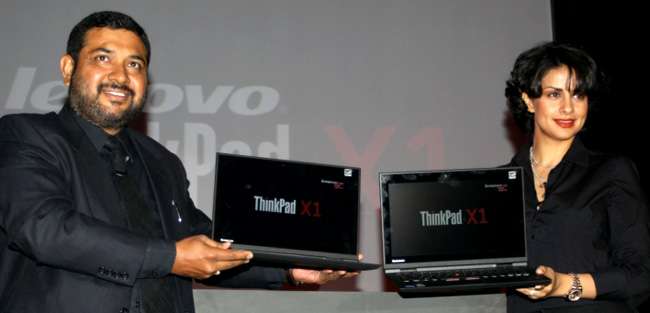
    We took over IBM business over six years ago but as you said, we are a relatively new player in the market. I think what has worked for us in the first place is products – as a technology company we need to have the right products. A technology company is as good or bad as its products. We do have great products – whether it is the ThinkPad range of enterprise business or whether it IdeaPad range of business, we have great products with us. The second most important thing is partners. We’ve really built a nice network of some strong and loyal partners. Those channel partners make a difference to us especially in the consumer and SMB business and also in the enterprise business. And the third is the brand. We have invested in the brand in a big way – Lenovo as a brand has a good awareness level, what we are now trying to do is build the preference so that we may be more in the consideration set and the preferred brand of consumers.


    What was remarkable for Lenovo was that you achieved stardom when the rest of the players were seeing a slump in sales due to the economic turmoil. How would you explain this phenomenon?

    There are two areas that we invested in — one is we invested in the brand during the slowdown and created a communication where we said we are ‘For those who do’. It is for people who use technology as a tool and not as a badge and we wanted to build the association by targeting the youth. So we invested in the brand. The other thing is that we invested in our retail outlets. Two years back we had 150 exclusive retail outlets and today we have more than 1000 retail outlets. So we have worked with our partners and are today the largest retail & IT company in the country. Also, we have invested sufficiently in our sales network. Earlier we had service centres in a little less than 100 cities, today we have service centres in excess of 400 cities. Again, we have invested significantly in our post-sales service so that we can provide great service to the customers.


    Apart from urban and metro cities, have you made a conscious effort to reach out to more markets across India?

    If you see how our 1000 stores have panned out, most of them are beyond the top-15 cities. Clearly our focus has been beyond the metros and that’s where now since we have got the infrastructure on the ground we would also like our brand to be related to that part of the world and not just metro cities.


    How does Lenovo India view the digital medium that’s caught the fancy of many players?

    I look at digital as a medium, just like television or print. But digital is an important medium because in print or television you communicate one way but in digital you have the ability to improve customer engagement and it’s a two-way process. We have done a lot of work on digital including tying up with projects and companies for various assignments. So digital for us is important as one, people research online but purchase offline. So the offline purchases are the retail stores whereas the research online is what we need to do. So we need to ensure that we are present in terms of communication. Second, is to increase brand engagement. Clearly, digital plays an important role in both these areas and we are investing heavily in the medium.


    What would be your focus areas going forward?

    What we now need to do is take our messages beyond the top 15 cities and see how we can be a little more of a mass brand, especially in the upcountry markets or what I call India 1 and India 2. In India 1, Lenovo is well-known and has good preference but in tier 2 we have to do some work and are aggressively pursuing that. But the bottomline is we need to ensure that we are able to send across our message to both these markets and increase our awareness.


    When do you see yourself emerging a dominant No. 1 player in India?

    We are the No. 2 player right now but the aspiration is to be the leader. I am not saying that we will achieve it this year, but clearly that’s the path that we would like to go towards. We are No.1 in China with over 35 per cent market share, we are No. 1 in Japan with over 27 per cent market share so clearly that’s what is the dream in India too – to be a No. 1 player soon. Though I must say that we are not in a hurry to race to the top; the plan is to build the business and stay there. I am not in a hurry to get there but yes, I would want to get there as soon as possible.


    Photograph: Fotocorp

  • SpiceJet awarded the account to Grey Worldwide, Delhi

    By A Correspondent


    Spicejet,India’s leading low-cost airline has appointed Grey Worldwide,Delhias its partner to handle its communication mandate. SpiceJet called for a multi agency pitch, including GIIR, Draft +FCB, Lowe, BBDO and Contract, the incumbent agency. The pitch was announced in February and went through multiple rounds before SpiceJet finally awarded the account to Grey Worldwide,Delhi.


    SpiceJet Ltd started its operation on May 23, 2005. Today SpiceJet connects 32 cities inIndiaalong with 2 international destinations. It has more than 274 daily flights across its network. SpiceJet has a fleet of 32 Boeing 737-800 and 737-900ER aircraft. The fleet also includes 7 Bombardier Q400 which are quick, quiet and comfortable.


    According to Neil Mills, CEO SpiceJet Ltd: “We selected Grey Advertising for the strength of their creative strategy and the passion exhibited by their team. The Agency will have an important role to play in building the brand further as we grow, enabling SpiceJet to achieve its aim of becoming a people’s airline and hence a carrier of choice.”


    Dip Sengupta, VP and Branch Head, Grey Delhi said: “It’s a very exciting win for us. SpiceJet is a great brand and it’s an honour to be chosen to partner it, as it charts its flight-path into the heartland ofIndia.”


    Uddalak Gupta ECD Grey Delhi said: “Our approach was to think beyond the obvious and the conventional, and come up with solutions where customer engagement was key. In ways that hadn’t been done before in the Indian aviation industry.”


    According to Divya Pratap Mehta, VP Planning, Grey Delhi: “In a category which is commoditized and facing business pressures, we stuck to fundamentals. Our starting point was to keep business growth and differentiation at the heart of the strategy.”


  • Freecultr selected by Kolkata Knight Riders as Official Casual Wear Partner.

    By A Correspondent


    With IPL fever hitting the nation, Freecultr, ‘premium casual wear, done right’, continues to innovate by co-developing and securing partnership between the Kolkata Knight Riders, owned by Shah Rukh Khan, Juhi Chawla, and Jay Mehta. This partnership fills a glaring void in sport-inspired lifestyle apparel in India- a range that is full lifestyle, but with strong inspiration and ties to sport as a category delivered with superior fabrics at reasonable prices.


    Freecultr launches its Sport collection with an exclusive edition of the KKR Official Travel Polo’s, Graphic T-shirts, and more KKR Official products to be launched and developed throughout the year. Freecultr has used KKR’s Purple, White, and Gold as the dominant theme to launch the exclusive collection, which not only reflects the spirit of the game but also connects with the sensibilities of the cricket lovers.


    Over the next few months, Freecultr Sport will also deliver a range of exciting and stylish lifestyle sport products for all customers. This exciting new category campaign will feature the tag line “Go Play!” and “Wanna Play?” and vivid imagery as its mantra.


    “We couldn’t be more pleased to launch our Freecultr Sport collection with the Official Casual Wear products for the Kolkata Knight Riders. KKR is a pre-eminent brand that stands for excellence and we are humbled to be chosen as its first Official Casual Wear Partner. This partnership reflects the trajectory and appeal of our brand and gives us much to be thankful for as we continue to grow. Epitomizing the competitive spirit of the game, we have designed our collection for KKR with a focus on style, colours, fabric, quality and affordability. We hope the team has a stellar season and wish them the greatest success in IPL5 and hopefully the Champion’s League.” said Sujal Shah, CEO and Co-Founder, Freecultr.


    “We are excited to announce our casual wear license agreement with Freecultr,” said Venky Mysore, MD/CEO of Kolkata Knight Riders. “The Kolkata Knight Riders prides itself in innovation and differentiation, and has decided to partner with Freecultr, as opposed to working with a supplier. Our main objective has always been to continually keep our fans engaged, excited, and delighted and we believe this partnership will give our fans an added sense of pride as they become the brand ambassadors of the Kolkata Knight Riders.”


    “Being a true lover and follower of cricket for years like most Indians, it’s heartening to be associated with this first of its kind innovative partnership. We are building our brand and product architecture keeping the new age consumer in mind. Tying up with a team like Kolkata Knight Riders is a perfect fit for Freecultr, and our main focus in designing the collection was to give the fans a feeling of belonging to the team and bring out the spirit and passion in fan support for KKR this season. We wish them luck for the coming season.” said Sandeep Singh, COO & Co-Founder, Freecultr.


    This partnership was ideated and co-developed The Wild East Group.


  • UTV Indiagames gets ‘IPL Cricket Fever’

    By A Correspondent


    UTV Indiagames has launched the official IPL season 5 mobile game, ‘IPL Cricket Fever’. They have made sure that all elements of the actual IPL cricket are experienced through the game including the brand associations. Brands like Volkswagen and Parle 20-20 cookies have joined hands with UTV Indiagames, to associate with ‘IPL Cricket Fever’.


    Volkswagen has extended its on-ground association with IPL Season 5 to the official game by introducing brand elements for ‘Super Sixes’ & ‘Man of the Series’. Just like the on-ground association, Volkswagen is the brand partner for every ‘6’ hit in the game. For the ‘Man of the Series’ in the mobile game, the player with maximum number of wins during the current IPL season will be presented with the ‘Volkswagen Vento – IPL Edition’.


    Parle has associated with the game with their brand Parle 20-20 cookies for various in-game branding elements like ‘4s’ and ‘Replays’. The brand is also the sponsor of the ‘Man of the Match’ reward in the game during the presentation ceremony.


    Commenting on the brand associations for the game, Vishal Gondal, CEO, UTV Indiagames said: “The IPL season is the most exciting time of the year for cricket enthusiasts, both on ground and in the digital space. With IPL Cricket Fever we wanted to offer an as close to real experience of the actual on-ground action of IPL and with Volkswagen and Parle 20-20 cookies on board we have made it happen. Now whether the player hits a 4, 6 or wins man of the match or even man of the series, the presence of these brands will give them the actual IPL feel even on their mobile phones.”


    Lutz Kothe, Head of Marketing & PR, Volkswagen Group Sales India Private Ltd. said: “The immense response we received for the IPL Edition I has prompted us to introduce the IPL Edition II and this time with both our popular carlines – the Polo and the Vento. To make this more exciting, we are introducing the official mobile game for IPL in association with UTV Indiagames giving an opportunity to all the cricket enthusiasts to win the Vento IPL Edition II. We are sure cricket enthusiasts will enjoy this game and participate to win their favorite carline.”


    Pravin Kulkarnii, General Manager – Marketing, Parle Products said: “Gaming is huge in the country today and the mix of cricket and games appeals to one and all. IPL is as popular on ground as it is in the digital space. Parle 20:20 cookies’ association with UTV Indiagames’ official IPL game is the perfect brand opportunity for us as it extends our brand recall in the digital space instantly.”


    ‘IPL Cricket Fever’ is based on the IPL Season 5 format and includes all official 9 teams – Mumbai Indians, Chennai Superkings, Deccan Chargers, Delhi Daredevils, King XI Punjab, Kolkata Knight Riders, Rajasthan Royals, Royal Challenger Bangalore and Pune Warriors.


    The users will be able to play with the official IPL players including Sachin Tendulkar, Michael Hussey, MS Dhoni, Ravindra Jadeja, Virendra Sehwag, Adam Gilchrist, Gautam Ghambir, Yousuf Pathan, Kevin Pollard, Rahul Dravid, Shane Watson, AB de Villiers, Michael Clarke and many more. There are three game modes available which include quick match, powerplay and IPL tournament. The user can play the entire season as per the actual IPL season too, 4 stadiums with 3 difficulty modes and original IPL players make this the most exciting cricket game around.


    The game is available on Android, iOS and Java to ensure that every cricket enthusiast can lay their hands on it to enjoy the IPL season.


    UTV Indiagames is India’s integrated game developer-publisher across mobile, online and the interactive television. The company has been a pioneer in the mobile gaming space and has partnered with several major game publishers and media companies in the world such as EA, Disney, THQ, Atari, Universal, Fox, Warner brothers, Sony, MTV, 2K and others whose IP has been published across global leading telecoms including Verizon, Vodafone, Airtel, AT&T, Telstra and others.