Category: INTERVIEWS

  • ‘Print still rules Nepal media’


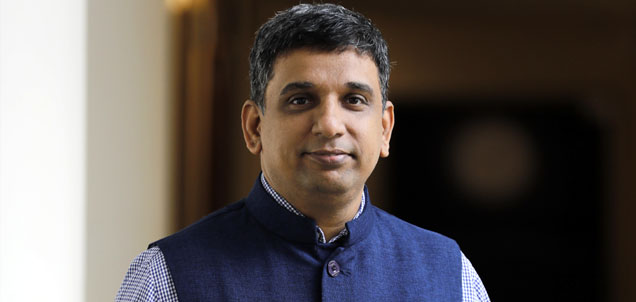
    The Kantipur Media Group is Nepal’s largest media conglomerate with a strong presence in print, radio and television and a growing footprint in digital too. As KMG celebrates its silver jubilee year, MxMIndia caught up with KMG Business Head Mahesh Swar when he was in Mumbai recently and discussed his plans for the group, the outlook for print vis-à-vis other media and whether KMG is looking at expanding to India given the large Nepalese population here. Excerpts from an interview


    Congratulations on the the Kantipur Media Group completing 25 years this year. Tell us more about your plans for the celebrations.

    As Nepal’s leading media group, with presence across mediums, we believe we are more of a content provider. Hence, there are big plans for the 25th year celebration. We are organising an international conclave to mark the year. The conclave will help create the roadmap of Nepal for the future—the next 5, 10 and 25 years. Well, we will be doing various activities to mark occasion. Other than this, we will be having an award ceremony known as Kantipur Icon, where people with stellar track records from a range of sectors—socio-political, social, business, sports, arts and sciences—will be honoured. The idea is to give the message that we are more than just a media house. We are seen as an integral part of the Nepali life and we believe it is responsibility to honor the faith bestowed on us by the public.


    As Nepal’s biggest media group – with interests across media – print, television, radio and digital – how do you see the media ecosystem growing in Nepal?

    The media ecosystem is evolving in Nepal with change in digital penetration and affordability. Currently, print is still the largest player in the media industry but there are lots of big investments taking place in television industry as well. As a group, we are quite aware of this changing ecosystem and we have already started investment in unconventional medias that involves digital marketing, influential marketing and social media ecosystem.


    With the Left Alliance in power in Nepal, do you see any significant shift in policies leading to better times for the media?

    Nepal drafted its new constitution in 2015 and we just held the three tiers of elections—of federal parliament, provincial assemblies and local bodies—our first under the federal structure.  Whoever comes to the government, the new constitution guarantees press freedom. We are hopeful that the newgovernment will support the media industry.The political stability the new government bring can’t be overstressed. It will enjoy a comfortable majority in the federal Parliament.


    Will the stability help boost the economy and hence the media spending?

    Yes, after latest elections, we expect a very stable government.Nepal registered a healthy 7.5% growth in 2016/17 despite high degree of a political instability. A stable government, we expect, will help further boost our economy. It will bring more confidenceto the investors and consumers alike. This will mean many new products and services offerings in the country which in turn will ensure the growth in media spending. We are very optimistic about the growth in mediabusinessin the upcoming years.


    The Nepal market is one of the few in world where print earns a majority of the adrevenue? What, according to you, contributes to this, especially since television and digital have gained much ground across the world?

    That’s a very interesting question. Nepal is alsogradually tilting towards the digital media. However, almost 60% of the population still lives in rural areas, where internet penetration is relatively low andthe overall cost of data is very high in Nepali market. Although urban youth are consuming high quantity YouTube Videos and social media, the traditional media still has a very strong presence in Nepal.

    There’s also a larger issue at work here. Nepali people associate the broadsheet newspapers as more than mere information peddlers. These papers enjoy a high degree of public trust and hence have huge influence on the national politics. When we talk about the Kantipur Media Group, print media has played pivotal role in shaping the new Nepal. KMG publications—KantipurDaily, The Kathmandu Post, Nepal magazine—are seen as integral part of the country’s pro-democracy and social movements. The role as free press and guardians of democracy and liberalism are uncontested. In 1993, KantipurDaily and The Post started as Nepal’s first broadsheet daily newspapers in the private sector and their position as market leaders in shaping public opinion remain unchallenged.


    In India, for instance, while print is a close second to television in terms of adspends, digital is the fastest growing medium. How is digital doing in Nepal?

    Print is the largest contributor in Nepal with 55% market share of the advertising revenue followed by television, which contributes about 25% of the ad revenue. Yes, digital is growing fast but the base of the digital media is very small as of now. Hence, it does not significantly affect the total media revenue.

    As per the AAN (Advertising Association of Nepal), the print share of ad revenue is 55%, TV 25%, digital 5% , OHH 4%  and BTL 15% .


    So what brings you to India?

    The media industry in general is passing through a transition. After the emergence of digital medium, the traditional media all over the world is on a roller-coaster ride. Our market is not exceptional but we at least have the luxury to learn from more developed market like yours next door. Obviously, I am here to learn about, and from, the Indian media industry.


    KMG is the largest media group in Nepal, and given a sizeable Nepali population in India today, any plans of setting up an edition for any of your publications here in India? Or perhaps reaching out to Nepalis in India via digital?

    Indeed, there is a big and growing Nepali diaspora across the globe and India has the largest chunk of the overseas Nepalese population who are always looking to read/view news about Nepal. Kantipur’s digital wing, i.e., ekantipur.com, is hugely popular among Nepalis all over the world. However, we are now planning to have separate sections within the ekantipur site to cater to the Nepali population in such big destinations, as the US, the Middle East, Australia and India. We will be soon launching our promotional campaign targeting the Nepali diaspora.


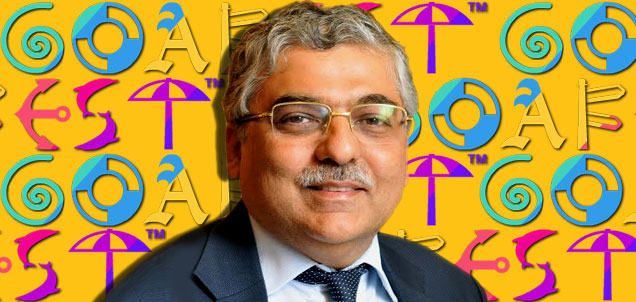
  • Bigger, brighter Goafest 2018: Ashish Bhasin


    With less than a month to go for Goafest 2018, organising committee chairperson Ashish Bhasin speaks on the line-up of speakers, sponsorships and how this year edition may be the best held thus far…


    Day 1

    1. Yog Guru – Baba RamdevJi

    2. Rana Kapoor -  Managing Director & CEO, Yes Bank


    Day 2

    1. Rosie Yakob – Co Founder , Genius Steals

    2. Sparsh Shah – Child Artist, Singer, TedX speaker

    3. Cameron Worth – Founder, SharpEnd

    4. Tim Castree - Global Chief Executive Officer, Wavemaker

    5. Dean Donaldson & Jonathan Tavss – Transformation Strategist & Digital Futurologist, Kaleidoko

    6. Jonty Rhodes – Cricketer, South Africa

    7. Siddharth Malhotra – Actor


    Day 3

    1. Samuel Akesson - Art Director, Forsman & Bodenfors

    2. Sania Mirza – Indian Tennis player

    3. Wain Choi – Former VP & Global Executive Creative Director, Cheil Worldwide

    4. Amelia Conway ( Director) & Ramaa Mosley (Creative Director) – Adolescent

    5. Nawazuddin Siddiqui in conversation with Annu Kapoor


    We have less than a month to go for Goafest 2018. What would you say to those who have still not registered to attend? How’s it going to be different from the previous years?

    If you have seen over the last two-three years, Goafest has been getting bigger and better every year. For instance, the quality of speakers has increased significantly.Like we have got Sania Mirza, Sania Mirza, Jonty Rhodes, Nawazuddin Siddiqui, Annu Kapoor. So the quality of speakers is very high by every standard. Second, I think the whole scale and quality presentation is whether it’s the stage, the screen, the ambience had undergone a sea change. Every year we have added something and I think this year it will be one notch higher. Third, it is going to be a lot more digitally interactive. So there will be an app and of course a website. All question now will be routed digitally. There will be contests. So it’s going to be fairly interactive and people are going to be able to book things via the app. So let’s say if there is a workshop you want to attend… you can now book it online. We wanted to become one of the leading advertising festivals in terms of quality by global standards not bench marking it by what happens in India.


    The line-up of speakers is interesting, but do you think this is good enough to attract young A&M professionals. After all, some of these – Baba Ramdev, Sania Mirza, Jonty Rhodes, Nawazuddin Siddiqui etc – are also present in Conclaves like those organised by India Today and Hindustan Times. And also seen several times on television.

    We are calling world-level speakers. I think what was happening earlier was that the advertising guys were listening to advertising people. So we have gradually moved it away to a mixed which is roughly 50-50 so 50% of the people are directly connected with our industry directly creative directors or media heads or CEO like Tim Castree, Global CEO, Wave maker etc. The other 50% of speakers are from allied fields of creativity — it could be films or from leadership positions because that’s what our young people need. As for them being also present at the India Today and HT conclaves, well, you and I may have access to these events, but how many of the others have access? From our perspective, these speakers are of global standards so while it’s not that it’s the first time ever anybody in India may be hearing them, bu people don’t get to hear people of this caliber. It’s important for advertising folk to toalso see what other industry leaders are doing. There’s a lot happening there.


    Do you think crunched budgets and non-participation in the Abby will impact the number of delegates.

    No, I don’t think so. Infact keeping a check on the number of delegates is the problem. In fact as an industry we need to decide to shut registrations at a certain point. We have a physical constraint constraint as the hall can’t accommodate more than a certain numbe of people.


    In terms of the mix of people who will attend Goafest 2018, do you expect more people from media owners (publishers, broadcasters etc) and the rest of the media ecosystem coming in and the number of people from A&M reducing steadily?

    Well, we do see a trend but it’s not in large numbers. We have seen a growth in the number of agencies – small and big – participating. While some larger ones are not participating, new and younger agencies, digital agencies, are coming in. Some coming in for the awards and some only as delegates. They may not have work but still are coming in.  Last year, we had delegates from something like 189 -190 companies. Goafest is no longer the privilege of Top 5 or 10 agencies who send 80% of the people. Also, early it was dominated with people from Mumbai and a smattering of people from Delhi perhaps. Now we are getting more and more people coming in from Bangalore and Chennai and from different parts of the country. I see that as a good trend and of course besides advertising people now that broadcasters and publishers are also coming in. Then there are students and even who aren’t directly involved in the industry.


    We have heard of an attempt of Goafest going green in association with Natural Geographic. Talk us through this concept Green Goafest?

    I think we owe it to the environment and we must be a little more conscious in any which way we can. Last year, we made a small start. And this year we are furthering it and and are happy that National Geographic has partnered us again. For examplesome 2-3000 people take a few sips from a bottle of water and then leave it because a session is due to start. it’s a criminal waste of water. So we brought tanks where you can pour in that water and we will give to the hotel to water the parks and gardens that they have over there. Then we have many people heading to the same venue coming by the same flight. Sowe are encouraging car pooling. There will also be planting of trees and the entire effort is to have a better environment.


    How are you doing in the all-important sponsorship department?We see Times Network continuining as presenting sponsor…

    That has been our area of strength. Luckily some of our key partners have been very strongly associated with Goafest for years. The Times Now group continues to be the key sponsor for the last several years. Discovery has been doing the conclaves for many years and they continue to be. Then there others Sakshi,Mathrubhoomi, Star, Zee and many more. I don’t want to name them as I might miss some of them. But I can tell you that the support from the industry is over whelming This will be a record year.


    This is your second term as Goafest organizing committee chairman. Any lessons from last year that you’ve corrected this year.

    Definitely. There were a few constrains we got and a few areas of development we got. We try to get feedback from as many people as possible every Goafest. One clear feedback was that the award show was becoming too long and by having too many awards in the sense are we devaluing the value of the Abby. So I think that has already been announced. We have taken steps to significantly reduce the number of categories by clubbing some and changing some etc.

    The second was that there were questions around the quality of the jury process and the members of the jury. So that also has been addressed as probably you know the jury was very eminent that we have put together including those agencies who may not be participating. In the past, if your agency was not participating you weren’t allowed to judge.I think the thinking this year was that look if you are the best person to judge the work then it doesn’t matter whether you are participating. We actually announced the jury even before knowing that the agency they belong to is participating or now. On the speaker side, the general feedback was we want a good balance of non-industry and industry speakers. So we have addressed that. And then the workshops which have been a big hit. Last year, the sundowners were very popular so were have continued with them. Goa has a problem with wifi especially near the beaches, so we will have free wi-fi…


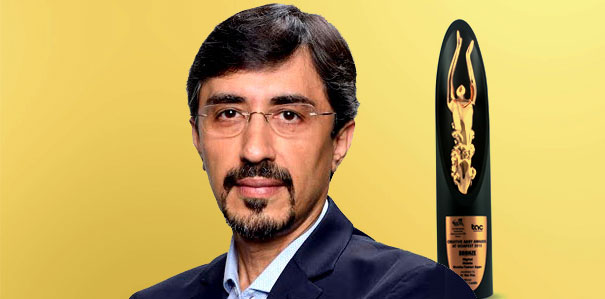
  • Glory days again for Abby: Ajay Kakar


    Every award generates controversies, but if there was an award for the award with the maximum number of controversies and murmurs, it would undoubtedly go to the Creative Abby, part of the annual Goafest conference held every summer in Goa. The Abby Awards have lost sheen over the years because of the absence of two key agency networks – the Mullen Lowe Lintas Group and Ogilvy. And then there have been disputes about plagiarism and scam ads winning big. While the processes have been cleansed over the years and there have been attempts to enthuse the naysayers to participate, this year, the Advertising Club and the Goafest Organising Committee have taken a quantum leap to change things. To start  with, they appointed Ajay Kakar, Chief Marketing Officer with Aditya Birla Capital (eka Aditya Birla Financial Services) who has witnessed the Abby in its glory days and also see it dip in equity. More importantly, he is an active marketer, spends a fair bit on advertising, and has led the Ad Club’s Effies Organising Committee which, interestingly, sees the participation of all agencies (save those with global mandates to stay away from all awards, including Cannes Lions). In an exclusive face-to-face interview (as against one over mail or phone), Ajay Kakar speaks to Pradyuman Maheshwari on the decisions he has taken, the thought behind the Master Jury and Jury of Masters, and whether he expects the cleansing will help bring back those who’ve been staying away for a while. Read on….


    Life’s been smooth sailing for you. Great job, the very visible Aditya Birla Capital campaign, a steady work-life balance and then you took on possibly the most controversial and thankless task in the country – chairing the Abby Awards Governing Council. Why?

    I have had the opportunity of chairing the Effies for five years. I have been on the Managing Committee of the Advertising Club for many years and I am fortunate for that.

    Having spent many years in advertising, though the last 12 have years I’ve been a client, I have realized that no marketer can be successful without successful partnerships [with advertising professionals]. But for that you have to literally encourage and excite each other. You have to be at each other’s celebrations and each other’s sorrows and that’s possibly been my motivator. I know awards are important because they recognise creativity, they recognise success. They recognise the best among the best. If I am part of the relationship, if I am dependent on this relationship for my success, I must partner this part of the industry.


    But while the Effies are a huge success with the Big 2 participating in it, in the Abby, it’s not just Ogilvy and Lowe absent but a large number of agencies don’t enter.

    I must confessthe day I went back home and told my family that I have been honoured with the post of the Chairman of the Awards Governing Council, my son’s first and only reaction was that I was being suicidal. It made me think for a second and I told myself that it’s an after-hours job. It’s demanding and possibly been a thankless job for various reasonsin the memorable past. But there was an opportunity to change things. I must thank VikramSakhuja, the President of the Advertising Club, to get me to do this. He also gave me a very clear and open mandate. His said let’s do whatever needs to be done. Because he agreed with me that in it’s 50th year, the Abbysare remembered more for the past than for the current.


    You also did something suicidal for the Ad Club… reduced the number of categories thereby halving the revenues. And there are detractors who are telling us that many more agencies are staying away this year resulting in the Goafest Abby not getting as many entries…

    So we had two options. One is to tinker around with the past. I could subtract a few categories, redefine some and we would have had yet another year which would have more of the same. Actually, last year, was a success and I don’t think there was any perceived gap in Abby 2017. Soone could just do a little more and be home and dry.  But when one sat back and recollected conversations from the past and when I said the common feeling is that the Abby is remembered more for the past than the present. Somewhere the Abbywas lacking the sheen it had in the past. It was not held in the same high esteem it held in the past where the Abby Award had a pride of place in the mantle of ad agencies and CEO of ad agencies. So we decided we won’t stay with status quo.

    I believe an Award is as good as the people who judge it. And therefore in the past there have been observations that this jury member has not won an Award so how can he judge someone else. So that became a starting point for us. What if we had a Jury of Masters. Whetherit’s the Creative Abby. Whether it’s the Media Abby.Or whether it’s the Specialist Abby or the Craft Abby. Can we have a jury of Masters of their Craft. Undisputed masters. So when you win an Abby, you know it’s been judged by the Master Jury. And, god forbid if I lose, I shrug my shoulders and I say that this jury of Masters believes that I shouldn’t win. Then who am I to question?


    But you have people from agencies who have not participated in the Abby in the recent past. In the past, jury members have had to have their agencies sending entries. You’ve changed that rule too?

    Yes, so the clear direction was to ensure that the jury members were very credible because they were masters of their craft. People who have themselves earned and won recognition both in India or on the world stage. Therefore we looked at people who could become the benchmark of creativity as far as our industry is concerned. So, like I said, if you look at the Creative Abby and the 15 members of Master Jury on the one hand or if you look at Jury of Masters of the Media Abby or Broadcaster Abby or our Direct Abby. You look at the Digital Abby. You look at jury members that we have for each of these. And I am confident that everyone has only word to say: wow!


    But while we have people from Lowe on the Master Jury, which also doesn’t participate, but there’s no one from Ogilvy though former NCD Abhijit Awasthi is in the list.

    I believe that an award is as good as the people who judge it. Therefore, from the very outset, we were clear that we wanted the best of best to judge Abby Awards 2018. Masters of the art. Masters of the craft.

    And from there emerged our ‘Jury of Masters’ strategy. You will see this strategy manifest across all the categories of the Abby Awards 2018, be it Creative, Media, all the Specialist categories and the Craft categories.

    In the case of the Creative Abbys, we decided to form a Master Jury that comprises 15 undisputed ‘maharathis’. We reached out to each of them, personally, in their personal capacity, requesting for their passion and time for their ‘first love’: advertising. To be an integral part of the Jury that decides and sets the creative standards for Abby Awards 2018 and the industry at large. While reaching out to these Masters,  we did not have any filters in mind. We did not wish to dilute our ambition to have only the best of best. We did not ask any of them whether their agency will be participating in the awards, or not.

    I believe that we are blessed to have every one of these celebrated masters, on board. They did not take a second before conveying their full support and commitment. Yes, we do have the likes of Amer and Arun, from agencies that have not participated in the past. We do have the likes of Bobby and Raj Deepak Das, from networks that have chosen to be off the awards circuit, globally, for this year. And we do also have the likes of Prasoon, Pops, Abhijeet, Aggie, Paddy, Senthil, Swati and Raj Kamble. I am extremely grateful to each of them who have selflessly agreed to partner and support the charter of Abby Awards 2018, to celebrate creative excellence.


    And do you have the blessings of Piyush Pandey?

    Piyush is a passionate well-wisher of the industry and an undying champion of creative excellence. But to know his personal views, who better to ask, than Piyush himself .


    Do you think it was easier for you to have achieved this because you are no longer an agency person.That you are a big spending advertiser so people possibly agreed to hear you out and accept the offer or rather couldn’t refuse.

    I have been blessed to know the fraternity in person and it’s a relationship I enjoyed over the years. So I am sure that the door-opener was easy for me as I just had to reach out to them. And they were kind enough to listen. But I think at theendof the day when you look at such senior people and what you requesting is for their time and their name.  I thinkit’s their commitment to the industry. Their commitment to Abby and their love for Abby that they have agreed to participate and give us their time and give us their passion and give us their name.


    Creative Gurus are known to have big egos, some with reason. You have selected 15 and there were a few who were not available for whatever reasons. But there a host of others who think they are big, and they possibly are. Do you think you would’ve upset them?

    If we have, my apologies. That’s not the intent and with such a talented industry, there are many to be signed on and many more that you could sign on. So, on one hand, yes, it’s possible that some people may have been missed out inadvertently and as I said my apologies but the intent was that those who wehave on  Board should be aboveboard and that has been our intent.


    One of the controversies that has been raging through many years is that there are many scam ads that win awards. In fact there were murmurs that some agencies may stay away this year because last year there were many scam ads winning big awards. How are you grappling with this problem?

    One of the Master Jury members did ask me for my interpretation of the Creative Abby Awards, and asked me to share it with all so that they are all on the same page. My belief is at the Abby Awards 2018 we want to celebrate creativity for brands. That will be our intent and thatis our brief to the Master Jury. Needless to say, they are Mastersof their art and they are the gatekeepers of the creative standards that they want for the Awards 2018. I know it’s in very safe hands this year.


    But are you okay with creativity that has just been created for the sake of awards?

    So we have created a definition which prescribes if a piece of work is eligible to be entered and we will go with definition.


    One is aware that entries have to signed off by clients, but in the past we have seen that advertisers do accept requests by the agencies to allow scam ads to happen. And clients don’t mind humouring their agencies and creative professionals…

    I will not be in a position to comment on what clients do and what clients don’t do. At the end of the day we have a check and balance and wehave auditors. As long as the work passes throughthat filter we are comfortable.


    But the auditors like KPMG or whosever will not know the reality… whether the ad is entered for an award or was it really published/ put up/ aired?

    So you know it’s like a bank which honours your cheque as long as the signature matches what they have on their records. They honour the cheques.  It is not for them to lift the corporate veil as they say to find out ‘did you give that signature voluntarily or not.’


    Are you happy with the way the Abbys Award 2018processes havegone thus far?

    Ithink the intent is to create a product which wins acceptance and recognition across the industry. My belief is that the product is good why will a consumer not buy it. This year, we are investing in the product and I think thanks to the Master Jury as far as the creative Abby is concerned and thanks to the jury of Masters as far as all the other categories are concerned. I feel we are very blessed this year and if you look at the juries who are going to set the standard. The members who are going to set the standards each of them is a role model himself.


    Bottomline: do you think that with this jury and all the changes that you have brought in, we will see an Ogilvy and Lowe back in the Creative Abby next year?

    I hope so. You have reminded me of a very important endorsement that we already have. We have heard of agencies who have not participated and they are big namesin their own right. But to have their creative captains, to have their creative chiefs delink the decision of their agency to participate in the awards with being associated with the awards as a member of the jury. So to have both the Lowe agencies with us, to have Leo Burnett with us, to have representatives of Publicis who aren’t participating worldwide in any form but they are part of our Master Jury. I think it’s an endorsement and indicator of their own desire to give shape and stature to Abbys.


    The key thing for them to come back is that you need to be there for the next three years to ensure that the improvements continue and standards are maintained.

    One step at a time. I think this year is where we have put our best foot forward and we have won immense support from the fraternity. The success of this year will help us build on a successful future year after year.


    I remember Balki saying that ideally clients should also be part of the jury because they know what works for brands and have a keen eye on creativity. Is this something that you may look at it in the future?

    Actually, there were many other features that we wanted to introduce. Many facets we wanted to introduce but somewhere we decide to restrain ourselves and said let’s look at first two or three big steps first. Like the creation of a Master Jury for the Creative Abby. The formation of a Jury for Masters for all categories of Abbys. The bringing back the Agency of the Year…


    Hmmm. The very controversial Agency of the Year!

    We have the Media Agency of the year.  We have Specialist Agency of the year. We have brought these back because that was anther reality that we have to accept at the end of the Abbys every member of the media carried the name of a winner but their definitions were  oftendifferent therefore the name of the  winner was possibly different.


    Are you going to have points being given for shortlist like at Cannes?

    Yes, we will have a clear points system which will help us rate an Agency of the Year based on the metals. It will be a transparent score that is available and so that all speculationsare put to rest. And it will be a transparent and a known currency that will be used to crown the King.


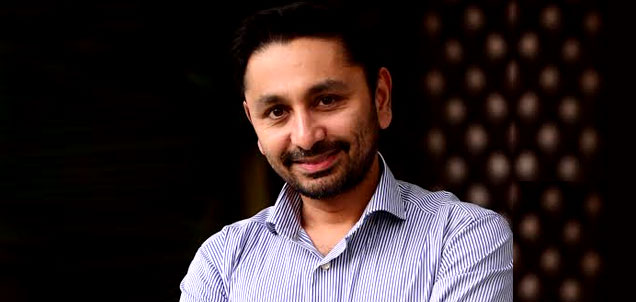
  • After Pune, Lokmat eyes Mumbai, Kolhapur


    The Indian Readership Survey findings released earlier this year saw numerouno Marathi daily Lokmat gain leadership in Pune, a market that leading daily Sakal has always dominated.  Editorial and Joint Managing Director, Lokmat Media Group Rishi Darda has been leading the Lokmat all-new offensive on its leadership position. Excerpts from an interview:


    So where’s the bubbly, or should we say bhakarwadi?

    Bhakarwadis are on their way (smiles). Finally, what we’ve been announcing and talking about to everybody last three years that we have been the largest newspaper now in Pune hascome true. Obviously, there is a lot of excitement and celebrations planned through the whole year.

    And what would you say were the reasons for your performance in the Pune market?

    Primarily first, any announcement that any publisher makes has to be on the whole number as such. I think what we have recently seen is that people have been slicing each and every data and whatever is in their interest is being shown. Lokmat would come out as numerouno in each and every of those positions. We are No. 1 in Pune and We are No. 1 in Maharashtra in every sector. The Pune-specific success has been with two-three inputs. One of course has been editorial team which believes in ‘PatrikaritaParmodharma’ that is genuinely followed.

    PatrakaritaParmodharma?

    Yes, that’s been the motto from the very beginning. I think there was some kind of fatigue amongst readers. It was not the best product. Being the No. 1 for such a long time. I think readers were looking for something a lot more than that.

    You are obviously referring to Sakal?

    Yes. I think Lokmat came up with an editorial team which believed in courageous and unbiased journalism and that’s there to see. One was the product. The second part was creating the right perception in the market. This is how we started our journey of reinventing Lokmat. And we believed that our products were stronger than the perception in the market. And over the last three years that’s where our energies have gone into. I think every 10 days or 15 days there would be some other activation directly contacting or engaging with the reader. Small events, big events. IPs. Getting a lot of opinion-makers to the city. That’s been the case throughout. I think that’s helped us with the perception in the market.

    Are you saying it’s critical to have ground level engagement with readers to ensure that you boost circulation?

    I am talking about two different things. Soin circulation, readership would be mainly a part of your distribution. First, to get the product out there. We are in anindustry where distribution is key. As soon as the distribution problem was solved, I think we needed to look at our perception. The ground engagement helped us build the perception at the top of the mind when you have had a leader for about 70 -75 years. The difficult part is to make sure that even if you are getting the product that thereis an affinity towards the product. I think that’s where we worked on awareness from sampling to reading maybe once a week to reading twice a week to becoming the first newspaper in the day to be read.

    Pune is known to be a very city rooted in traditions where it’s tough to change habits of people.

    Our objective has always been to provide the right news and right insights to readers. Our challengehas never been the product. Our challenge was always the distribution. How do you make sure that your product reaches out to people and that is a concern with every publisher has. I think that if a lot of them came up with the right product, if the person starts reading my product he would fall in love with it. We achieved this through a smart way of marketing which was continuously breaking stories. There was a time when we had issues with distribution hence we created our own distribution channel.

    I think that was the starting point. I think for the first time in history in India we picked up cobblers, beggars just about anyone.  We created a team of about 3000 people who went around the city to go and start distributing the newspapers. So that was the starting point where people started getting the newspapers.

    The perception of Lokmatwas that it is popular paper in lower socio-economic classes.

    Right

    How did you effect that change given you have fairly healthy numbers in the higher SEC or NCCS classs albeit a little lesser than Sakal in Pune.

    In general, the problem has been of perception. So you get a brand from the US and when it launches in India, it will be always looked at as an International brand. Similarly, when a newspaper from Mumbai launches in Pune or Aurangabad or Nagpur, it’s always looked as a Mumbai newspaper that has come to Aurangabad or Nashik or any other place. When a newspaper from Pune launches in Aurangabad or Nasik or Jalgaon, it’s a Pune newspaper that is launched over there. So our numbers never said that. It was always in our mind that one is always from a rural part of Maharashtra. At that point, 15 years back, the same status was never given to a place like Aurangabad or Nagpur. There was a newspaper from the backward areas from Marathwada and VIdharba which was coming into Pune and Mumbai and that’s why the perception. If you look at our IRS numbers or the NRS at that time, Sec A and Sec B have always been strong for us. But like I mentioned in Mumbai and Pune to change that perception all the efforts have gone in creating ground events so to create a direct connect with readers.

    Over the last few years, the kind of IPs that we have created like the Maharashtrian of the Year determine in trying to get opinion-makers involved from every sector of the society. This helped in creating brand image of being in a higher category.

    Now the next step is to sustain the same leadership in the next IRS whenever it comes out and of course look at areas.

    I think the challenges is going to be more for the competitors because we are not going to be stopping here. Our next challenge is going to be Mumbai. The total readership of Lokmat is the largest in Mumbai also. LokmatSamacharis the No 1 in Nagpur. Kolhapur was another place and we are pretty sure in the next two surveys you will see that we come out as the No 1 in Kolhapur. So those are going to be the focus areas in the next few years.

    So the next frontier for Lokmat is Kolhapur and Mumbai?

    Yes, that’s right. In Mumbai also. I think what’s happened is there has been a lifestyle change. There has been a shift in the Maharashtrian community that has moved from Mumbai to Thane. So if you look at only Thane numbers I am very sure that in Thane district, Lokmat is No1 already. It is the Mumbai city where the number of Maharashtra Times and Loksatta would come out as No 1 and No 2 but already the areas which are highly dominated by the new Maharashtrian communities is already reading Lokmat.

    Sakal has been advertising about supremacy in ABC ratings. Why haven’t you participated in he ABC?

    We have made a written complaint to ABC about the numbers that are being mentioned by Sakal are not correct. They should be looking into it. Also, from the planner’s point of view, people look at IRS. So that’s why our focus has been IRS.

    Mumbai is a tough market in terms of perception and numbers.

    The challenge is the acquisition cost per customer which is very high in Mumbai compared to any other market when I reach out to, say, a hundred people. In Mumbai when you reach out to people, the percentage of the Maharashtrian community itself is smaller and then the conversion rate is still further down. That’s why the acquisition cost per consumer is very high and that’s something that we have been working on. But the first battle for us has been where people were not aware in a huge population where Lokmat was not known in Mumbai.  We have overcome that in the last few years by continuously engaging with them on-ground. Creating a lot of strong IPs. That has helped us to top-of- mind for readers. As soon as we are able to get into their houses, I am sure that we will see the Lokmat numbers going up quickly.

    Leadership in readership is one good benchmark of how one is doing. The other is revenues. How’s that doing for Lokmat?

    Regional markets are growing steadily. I understand there have been challenges with the English newspaper markets. But we want to see a huge spike and that’s going to be the new challenge that will be put up to the sales team. How do we make use of the leadership in the Pune market? We have been the largest newspaper in Maharashtra without being [leaders] in Pune. And Pune market is about 70% of the total Maharashtra market [outside of Mumbai]. How do I bridge that gap and grow in Pune is what the challenge is for us? That’s what our sales teams are going to go after.

    One last question. We have seen that giventhe fact that the English leadership has lost out bit to digital. Given that Maharashtra is fairly digital savvy, do you anticipate any challengeson that score if readership would move to digital. How are you addressing that?

    Sure. I think a person moves to digital for two reasons. Oneis cost and the other isconvenience. In the newspaper industry, the cost has always been low. I think the cost of raddi would be more thanthe price that we are paying for some papers. The second is convenience. I have always joked that if you keep your main door open of the house then the person can come to your bedroom and give you the newspaper. In places like Mumbai where the travel times are high, given the  convenience people have started moving to digital. If you are in a crowded trainit’s difficult to read the newspaper. But that’s not something that we are seeing other markets. Also, the literacy rate in a place like Maharashtra is growing fast. Thatis something that would help move to newspaper reading.


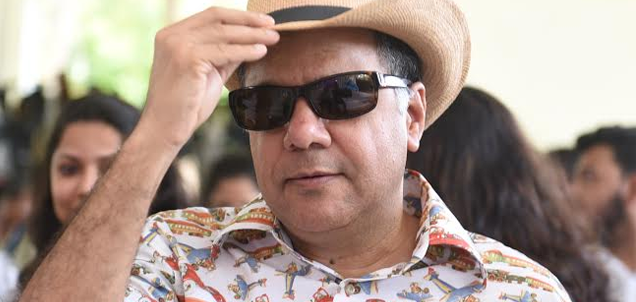
  • M K Anand on a year of Mirror Now


    It’s been a little over a year since Times Network rechristened Magic Bricks Now as an all-new non-political issues-based news channel called Mirror Now. MxMIndia caught up with M K Anand, the Times Network MD &CEO, who spoke of how despite much scepticism about the channel, it’s been a huge success


    It’s been a little over a year since Mirror Now launched. Have you achieved what you had set out to?            

    We are quite on the target. On the ball in terms of what we decided to achieve and in certain areas I think we have done little better what we had intended. I think it’s all on the dot… whatever we wanted to achieve — in terms of reach, performance or in terms of availability and the P/L itself, the positioning, the imagery. Absolutely on the dot.


    If you had to give it a score on 10 in terms of what you had to set out to achieve in the first year, what would it be?

    I think it would be 10/10. I normally wouldn’t give myself a 10 on 10. I would give a 7 or 8 but it was a very eventful year on the category. English news was dormant for a long time. With us losing our lead anchor and then a very, very aggressive assault on the Times Now leadership was a major event for us and the industry. English news has not really seen so much of action in the times I have seen. In the middle of that, Mirror Now got launched as a completely independent activity.


    Right.

    And because of the super success of the Times Now format over the last 7,8,10 years everybody had slowly started doing the same format. The same colours, tone and aggression and the debate format in the evening. If you put all the four channels that I am talking about –  Times Now, CNN, India Today, NDTV news to some extent.


    You didn’t mention Republic.

    I am talking about the discussion much before its launch when Mirror Now was conceptualised in my head. If one looked at all the channels then, you wouldn’t be able to identify them. You would be watching the same news. The same tone. And the same viewpoint on the news. That is the time I said when everybody is carrying, say, news on Jayalalithaathen in a country of 1.3 billion there will surely be some other news of the day. So if there was a bridge fall somewhere or a major accident or a jewelry heist, the fact that the sixth channel is carrying that makes me want to see that. My point was only that. My first assumption was if I give something else on the screen. Now I can’t do that something else saying that my channel position is that you look at all the channel and decide to do something. That cannot be and I need to react. I will give a story to it. Not to the consumer but to the creators themselves.


    Are you saying that you never intended Mirror Now to be a flanking channel?

    No, no. It was never a flanking channel. It just coincidentally happened to be launch at the time it did. The channel was being discussed when the earlier editorial head was there who had a point of view on it. And that was that the expenditure will be too much. Why do it?  My point was that Times Now is capable of doing more but a single feed is too narrow.  Because at the time when I am showing you this. I cannot show you that. That was the whole idea. At a certain level, my idea was can I have five Times Nows. Like there are four Star Sports. Can I have Times Now 1,2,3,4,5? I finally came out with a different branding and I agree with the branding. Honestly I would love to have 1,2,3,4,5. One could be doing defence-based news. Another foreign policy news.  And one more business, city and crime. At the current tech level, this is too expensive. But it originally came with that as a thought.


    Hmmm.

    So I would say for me, we’ve achieved a 10/10 because I am thoroughly thrilled at the idea that it will be something that put Indians first where Times Now was putting India first


    How are you doing in terms of revenues?

    I’m happy to note we are absolutely on the dot. So whatever we have asked for investments we have been able to contain ourselves in that.


    There is a sentiment that Mirror Now as a channel is attempting to compete with the #3, 4 and 5. But the objective of any channel should be to be the No 1. Is that at all there?

    You are right. I mean. Let us put this way. At a network level, it’s my ambition that in the English space that if you were to take all the English channels including the business category. I would love it if I have 60%. That’s a big number. Obviously I have no illusions for Times Now from 33% it is not going to grow back now to 40%, it’s a very, very complicated [marketplace]. If anything, it can sort of degenerate by 1 or 2% to settle at 30%. But I genuinely believe that Mirror Now has got to where it hasWe have not put any inorganic growth stimulants to this. It’s a very base marketing where we are around here.


    You have not spent too much on marketing it, but for the ads in Times and ET and some outdoor.

    That’s what I am saying. I think that delta remains. The other thing because we started with 21 people in the team. An average English news team anywhere across the country will be about 200-250…


    Editorial?

    Yes, we started off with a small team of 21. Right now, I think we are in the range of 70 and they are delivering what is required of them. I have just about approved an expansion…


    While Times Now grew to what it did over the years, you suffered much because of your main anchor quitting in late 2016. With Mirror Now too, while Faye D’Souza has grown in stature and is very good and popular, until recently she was the only ‘face’ on the channel. Pardon my saying so, but aren’t you creating another larger than life anchor who, if she decides to quit suddenly, could land you in trouble?

    Yes, people are assets at first and become liabilities if they quit. That is why you know we are in such a difficult category. English broadcasting is a lot more difficult than average broadcasting. Soam I looking at them as liabilities that we created?Yes, at the front anchor level and brand level association beyond a point, I will not disagree that a certain safeguard that we could have taken earlier on. Which we didn’t take in the case of the first one. But are we creating that deliberately? No we are not? Did we create that first part deliberately? I don’t think so. Were we able to sort of take the first step and walk as if nothing has happened. Yes I think we have. Has Times Now suffered as a brand? No. The team has not withered. All the senior people are all here. Did our reach go down? Did our marketshare go down. No. Yes, it did go from 43 to 33% but that is expected when there is a big marketing activity – an aggressive marketing activity that is happening. But, yes, certain safeguards could have been taken.


    To get back to my question: in terms of Faye, have you created, if I am may say, another monster? Or another Arnab?

    No.


    But what she quits tomorrow?While I do not have data for the few days that she wasn’t on air recently, but is that a fear that exists?

    Not at all a fear. In reality, where internal tracks as the anchors go. The top anchor inside this building is Tanvi [Shukla]. Higher than all the other anchors including Faye and from a viewership point of view and appeal point of view. I think the greatest learning that all of us have had… I would not say learning, discovery that we had that if your brand is true to what it starts then that’s the reason why I don’t have to do marketing. Even Times Now, if you see. Yes, there was ground war. But marketing wise have we gone overboard? No. I have basically harped on one single that’s at a media level your media, my media. I believe that a media brand with a tagline and staying true to the tag line is the best. It mitigates all such issues. So action begins here is the mantra that you are supposed to deliver.


    You did have the ads in Times….

    That is more of somebody claiming that you know by dicing and cutting data by saying No. 1, we have to sort of use the media.


    So going ahead, what do we see?

    What I want to say is I don’t believe in using noisy, media-based marketing to build a brand. I believe in arriving in the right position. An honest-to-god position which the creative team, the production team, the creative team accepts and imbibes. For example, Rise with India. ET Now. Ever since we have done it, if you meet Sandeep he started dressing like you. He would otherwise dress in ties, shirts, suits sometimes. He’s changed because Rise with India has become a passion with that. That we will do things to ensure that theIndia grows story is. We pull out all the stops in that. If I am able to come up with ideally a three-word [descriptor]. That’s the target to myself. A three-word description with India in it. So Times Now internal description is India first. India top front. India First. Other things. India will not. There are a certain bunch of followers who say that other things are fine, let’s not talk opposite of India. Same thing with Faye, Indians First. They define the ‘you first’ under the brand. Indians First. So she knows what to say what not to say. She knows what story to take. What not to take. There is no fight between the editors. Similarly with ‘Rise with India’. So what I am saying is that brand definition mitigates the fear of the lead actor going. I think we are running a movie like Spiderman or James Bond. We are very happy that Daniel Craig is fantastic but he gets shot, falls off a cliff and dies. James Bond is not going to go. But the values that James Bond espouses is intact in a process which we obviously we know that it will take time for the new one to get tickled in the same manner. So for six months or one year.


    What next for Mirror Now?

    I think the target between Faye and me and the marketing team is to organically build it to a place where it is No 2. That’s why I said about people coming in. We launched it with a lot of I would say it scepticism in the system. I launched it practically with just support from upstairs. One or two people only. Otherwise most of the people said don’t do it and given another channel launching. I said let us do it. So now we have sort of found it is larger than what it is.


    When do you hope to be No2. In the next one year?

    I would say it is part of our plan. Honestly it’s not part of our business plan. But that is the next thing. I think if you talk to Faye she will say yes. I don’t want to say that and put pressure.


    You said No. 2 in terms of channel viewership. In terms of revenue how do you think it will do.

    Revenue follows leadership with a lag, if I could say at least few quarters. If you become No. 2 in revenue directly like for instance NDTV is no.4 or 5 for a long time. But in a lot of markets they are No 2 in revenue. In a lot of categories. So that way viewership and revenue don’t really go hand in hand so I can’t say that because we have created this, this is going to be doubled up our business. It is going to be almost equal types. No such thing. It is a difficult category. English news is not you know like English newspapers which is like a 2 billion category which is at a billion dollars I think. I wish it was that way but it’s going to be I would say if it gets to half the size of Times Now with its financial you know, footprint.


  • One year on: Arnab Goswami Unplugged


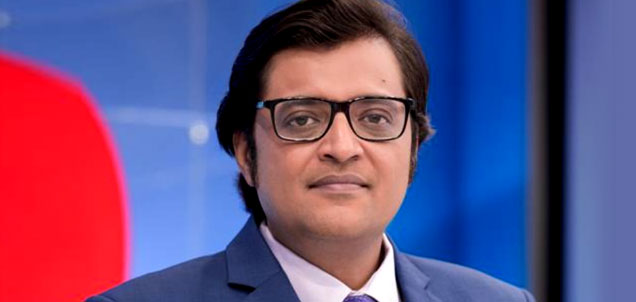
    On May 6 last year, Arnab Goswami launched Republic TV, decidedly the most high profile media launch that we’ve seen in the last decade, post-Colors in the general entertainment space and in 2005 with the launch of the now-beleaguered DNA newspaper. The channel has been dominating the ratings roster from Week 1 and reports a big success in terms of ratings and revenues. But the year-long journey has seen its share of controversies, which in fact started a few months before launch. The launch of Republic got at least two competitors to lead a boycott of BARC television ratings, and then there were court cases which of course Goswami’s legal advisors defended with success. However, there are charges of a BJP bias that have been raised by many (including by MxMIndia columnists) and that the promoter and editor-in-chief of the channel doesn’t allow his guests to speak much.

    On Saturday, the day Republic TV completed a year of operations, Arnab Goswami took some time off to have a freewheeling conversation with Pradyuman Maheshwari. Read on… (Editor’s Alert: this interview is extra-long. Some 6000 words. So perhaps you should get yourself a coffee or chai, sit back and enjoy!)


    One year on, how has the Republic TV journey been?

    It’s been a very good journey. We achieved everything we set out to achieve. Viewership is high, revenues are good, people are happy. We are on the verge of expanding more.  We feel happy because we are ready to do new things and that’s what keeps any organisation going. About three to four months back, we realised that we have achieved what we would have wanted to achieve in two years, and so we sat down and discussed ourselves and realised that we are now ready to do new things. As we finished our first year, we are ready to do more.  Now the question is to identify what is that?

    Are you satisfied as a businessman? Are you satisfied as an editor?

    See, I am not a businessman, I run a business but I am not a businessman. I am the editor-in-chief of Republic. I have a titular title of managing director which I don’t use.

    Okay, so are you happy as a promoter?

    As a promoter, I am supremely happy. Our shareholders are supremely happy. We have added value to this business. We have got the highest viewership in our genre and continue to do so, and we are innovating and getting into new areas, building new verticals. So, yes, as a promoter I have no reason to be unhappy in fact I have every reason to be happy.

    How’s the financial bottomline?

    I think Vikas [Khanchandani, the CEO] will tell you more, but on a cash flow basis, we broke even in the first month. And we’ve done better every month after that.

    To be the No 1 News channel as per BARC through the year is phenomenal. Did it require pots of money to be invested?

    No, I think we were much smarter and we had experience and knowledge of the television news business and my own learning has been that you win by being smart and playing the game well rather than trying push your way through and that’s where we did well.

    We were pirouetting around in the first few weeks before our launch and we were pirouetting around for the first few months later and even today we are pirouetting around the sense that nobody can quite predict what we will do next. And that unpredictability of our approach which is not just restricted to our editorial stance, the stories you suddenly break at 6 o’clock or the debate you throw out at them  but it’s also got to do much with our approach on business and our approach on distribution and our approach on going into international markets . The great thing is that in Republic decisions are taken in seconds. You ask any of the Top 20 or 30 people in the organisation when was the last time they have emailed anyone, they will look at you with their jaws dropping. We don’t email anyone. So, our ability to take fast decisions, quickly take calculated risks both on the editorial and business side and every side, makes us a smart operator. I think that is one of the greatest reasons for our success.

    I know it’s an unfair thing to ask, but if you have to score Republic TV’s launch year from 1 to 10, what would you say it is? In terms of how the channel has done?

    Well, I think I will put us at an 8 on 10. Because anyone who gives themselves 10 on 10 is stupid. Either the person is stupid or the person  is trying to make himself or herself happy by giving a 10 on 10

    So I never  give myself a 10 on 10. I give myself 8 on 10 because I would still say there are some areas in news that I will like to do. Some formats I have not been able to do. I watch and consume a lot of television I’m aware of stuff I can do if I get a little bit of time and that is what I want to do now.

    Even in terms of business we did fantastically well. Vikas and I both agree that there areas were we need to get into not just because we want to throw more money but because we feel we need to be there. So, we have opened up two three verticals from the last few months and there is the whole digital thing throw up again. So there are certain incomplete areas but you can look at it this way: we have done so much in one year but we got a lot more to do ,if I had done that maybe I’d give  myself two extra points.

    What would you say would be your highest and lowest points of the year?

    Highest point of the year was yesterday [Friday, May 4[, because when I saw the ratings, we saw that we had a 11% lead over the No 2 channel. And that’s incredible. On an all-India all-time slots basis and when you look  at a primetime, my slots , like when you are looking at 9 o’clock , there is a 30% gap. That for me is very satisfying. So, we were actually very kicked yesterday in the newsroom when we saw those numbers, big smiles all around because people have realised that as we are entering Week 52, we are becoming stronger than ever. This was a resounding answer for all those who were stunned with our first two-three weeks and  fought us saying flash in the pan.

    And your lowest point?

    I don’t have low points because my low points don’t last.

    Something you felt sad about in the last year?

    I don’t feel low about it, so I won’t use the word low point. But I must say that the point when I was baffled was the way in which some news organisations and some old media, legacy media organisations fought me. They ganged up, they used industry bodies. They got together; they tried to throw us out. They tried to tell us: why are you here? And they came together may be out of their insecurity or just the inability to react or may be because simply they underestimated us.

    Yeah, but…

    So, let me complete. When they did that for a period of time, I was trying to study their thinking and I did not get a clear answer beyond the fact that they did not want us there. Now that made us sure that want to be there even more… that gave us greater resolve. But it is a lesson for the industry… that you can’t form a cozy club especially not in the news industry and try and throw someone who wants to enter with a new team into the business. So I was baffled at that time, but I did not respond beyond a week or two, because I have been in this business long enough to know that negativity is a self-destructive emotion. And there is so much negativity about us when we started, it’s not a …

    So the offensive from competitors helped build your resolve to counter them despite all odds?

    Oh, yes, I mean how foolish can you be. That you go and file cases on me and pay tons of money to lawyers to file stupid cases on me, you take our biggest exclusive which we have broken on stories like cry babies, go out there and say no that story was mine and then foolishly in an act of complete desperation, go to Azad Maidan police station and file a police case against me.

    When you see mature adults behave like this, you don’t know whether to laugh or cry. My resolve does not have to be propelled by these things but it baffled me. It was so utterly childish, that it just baffled me. It continues to baffle me even today. Whatever may have been their motivation or reasons, it baffles me even now why they behaved like that.

    But on that specific expose about Shashi Tharoor, some of the data you were sitting on from Times Now. I remember tweeting about it when you broke the story. So since the info was with the reporter from the organisation that she worked for previously, she shouldn’t have used it, right?

    No, that was completely wrong because this was a private conversation that the reporter had with the source and the news was never archived with the organisation.

    The private conversation was recorded?

    Reporters keep private conversations. It was a damn good story.

    Yes, it was.

    Let me tell you this: it was a damn good story, Lalu was a damn good story , the expose on the ISIS terrorists was a damn good story. All of these were damn good stories. And it’s also cry baby, going around saying no, these stories are ours, they should stop crying. In fact I think they really stop crying now. They have been crying for a year!

    Okay, let’s move on. There is a sense that a fair amount of money has been put into distribution in order to generate your high viewership numbers. Don’t you think the money should actually go into content rather than distribution?

    But we don’t have a choice. We follow the trend that is there in the market. But we are not spending anything abnormally, more than anyone else. We are just spending what is there in the market. But now whether distribution should take that kind of spend is the question which we all have to ask ourselves. But right now Republic does not have a choice or nobody does.

    I remember hearing that you would track BARC numbers even before you launched the channel. How influenced are you by ratings? Do you check if the numbers go up every time there is a discussion on Pakistan or on Nationalism… how much are you influenced by viewership data?

    Not to that specific degree you are mentioning today but may be five years or six years earlier in my career, I would do the level of micro analysis on subjects etc.  But now the new Bio-News data which BARC has brought out is interesting but frankly I haven’t gone through the detail of that yet. But I think it’s a good move by BARC.

    I have historically been known to study data more than other editors because I understand numbers better than any other editor. My entire background in sociology and socio-anthropology and statistics makes me obsessed with numbers. So I micro-analyse numbers and segments and I have my own numerical methods of collating data and my method of collating data are of taking different time parts indexing it in my own way and drawing some coefficients which I can use editorially.

    I have been doing this for a long time and therefore I take a lot of raw data from our people, they present me their analysis and then I do my own analysis out of it. I can safely predict to some extent the impact of certain kinds of programming on ratings.  I believe that my team and I understand numbers better and understanding the arithmetic of ratings and viewership is actually a good thing.

    Do you think if there would have been no ratings or advertising wasn’t so dependent on ratings, your content mix would’ve been different?

    No.

    Would your news selection be different?

    No. Absolutely not. We are in the business of relevance and I know where that question is coming from where there are certain channels which don’t get viewership and then they go around saying but we are still relevant and the question is nobody is watching. How are you relevant? Are you relevant only to yourself? So I think, I would always want to be relevant and to be relevant I must be watched.

    What you are asking is if your commercials are not indexed to your viewership, would you be relevant in any different way? No, because I will still be targeting the same audience… the same x, y, z. So if I need you to watch me and whether or not you got a Peoplemeter in your house, I will do the same See, there are two things which work in our business: one is your need to be relevant and watched and the other is to make impactful change in the way that you think the change should be done. It’s a mix of these. I don’t think there would be any difference in our approach to our news. We would have the same values and the same principles.

    You mentioned earlier that you are now ready to look at two or three things going forward. As you complete your 52nd week and embark on your second year, what are the few things that you are plan on doing? Are you looking at Hindi at all? You have a sub-brand called Republic Bharat?

    Yes.

    Is Hindi channel on the cards?

    Well, you know, you can ask Vikas this and others, but every week, every day, we get calls from the leading Hindi channels, top business executives calling our office to find out when Republic is launching a Hindi channel. I think they anticipate the kind of tsunami that we did in English or at least a mini-tsunami when we enter in Hindi and therefore the thought of Hindi is in our mind but when, how, to what extent etc is something, that we have to work out. We are in no hurry to do anything in Hindi as of now and I see no need no immediate imperative on my side to get into Hindi immediately.  This is the normal talk that happens in the market…

    Would you like it to happen before the elections?

    No. I wouldn’t predicate or link anything to an election at all. Everything has to be driven by the logic of entering into that genre. You can’t link logic to an election. Anybody in our industry who does things based on political highs and lows is playing a very short-term game. I am appalled at the manner in which people decide to launch channels in the states that are going to the elections, because I find that utterly opportunistic because you expect a certain amount of cash flow during elections to launch a channel. You should launch a channel when you feel you can do something good for the people, when you have stories, when you feel convinced that you can bring in a difference in the market. Why should you launch a channel when there is an election? It makes no sense to me.

    What about digital? Your digital foray was announced a few months back, but some how that has not taken off in the big way as you may have wanted to?

    Yes, we are testing waters on digital. If you look at the pure numbers, we have done well. We have a very numbers million uniques and we have a very good number of page views. I agree with you that, that’s not the only index in digital.

    Let me put it in this way, our exact strategy, what we want to do, cannot be driven by the old ways of measuring the business because the old ways of measuring the business will die very soon. When we want to do video, how we want to get content, how content is going to differentiate and how you carve it out into unique identity is something that we have done some serious work on. So, while it may appear to you that we did a mega-launch around January and February and then sort of, we have gone slower in last couple of months, that’s not the case. In the last couple of months, we have been finishing the financial year and Vikas and me are working on multiple things.

    I also want to tell you, we have got a very large digital team, we have got a full tech hub that we have set up that is working independently in Bengaluru. We have opened a brand new office in Bengaluru so there’s work happening, We’ve expanded our product teams. We hired about 10 new people, pure tech guys… when you are doing something for the long-term, you can’t depend on somebody else’s technology. So we have taken the move, we’re not trying to circumvent that process, we are trying to build our own tech base. That takes time. Along with it, we have expanded our content team, we have expanded our product teams and we have opened sales offices on digital in three cities. And we have a new sales head.

    New Sales Head overall?

    For digital. Varun [Mohan] came in.

    Jay, the person who  was heading digital has moved on?

    Jay was more for the broadcast tech business.

    One of the things said is that while over the last one year the channel has done well in terms of numbers and salience and is a force to reckon with, there have been a quiet few people who have moved on – anchors, some of  the faces who have on camera? Would you say that attrition has been high?

    I would disagree with you. Our attrition overall is the lowest in the industry. Attrition in the organisation and editorial and business is lowest in the industry. We have fantastic retention rates.  When we launched, as it happens, people come from different channels.

    You mean they couldn’t adjust to your work requirements?

    When we see this kind of aggression in news gathering or I would say the fast-paced newsroom, if someone were to come from a CNN-IBN or NDTV or India Today or Times Now after I left and say that you need to respond to a story in five minutes for which you have half an hour there , that you need to get graphics in three seconds, when you got 30 minutes there and then you need to relate in a different way to  promos and graphics and everyone. So people can get stumped with the pace but having accepted that only the fittest survive in every business. In the early one or two months when we launched, a lot of people said I will work in slightly slower-paced way, and hence we had one or two people and one or two anchors going back to the legacy organisations but most of them stayed on. By the way, there’s been almost no top -level attrition, which is also fantastic.

    One of the charges, as Rajat Sharma would say on ‘Aap Ki Adalat’: aap pe ilzaam hai ki Republic TV is too biased towards the BJP? Would you like to respond to that charge?

    I think I should. While Kathua happened or Unnao happened, none of the sort of pro-Congress channels, let me put it this way…

    Yes, you did go after the Haryana Chief Minister too…

    Ram Rahim, I will give you a straight answer to this question: there is no substance in that allegation at all. If there has been someone who has been tremendously tough on the BJP on issues, it has been Republic. We have gone after the BJP government, whether it is Yogi Adityanath, whether it is the central government, whether it is the top BJP leadership in case of Unnao and Kathua to the extent to that there was a clip which went viral that there was a big BJP rally and they kept taking our name with ministers who quit and they said if you think you are some kind of a wrestler come and wrestle with us and they were taking my name and were attacking us. Our reporters have been attacked by people from all political parties in the last one year.  This accusation is completely false and I think over the last few months when people have seen our coverage they have seen that this is false propaganda started by some of those who would not compete with us in first couple of months. Now I know that the news we do and when Yogi Adityanath recently, I think this was last week in…

    When he trivialized…

    When he took on the people who had been the victims of a train accident… We did entire shows on it. Therefore we shoot from the hip, we don’t compromise, our essential rule is no Congi, no Sanghi , no compromise.  I can share with you our line which we have for our one-year campaign: No Left, No Right, No Compromise.

    Hmmm

    Allow me to complete. We have taken each political party on for whatever it needs to be taken on for issues. Now, there cannot be any permanent position a news organisation can have. I know now there are certain organisations in this country which say let’s have two channels. Let one channel be pro-BJP and another be pro-Congress. It is a crying shame that leading media organisations of this country are falsifying news in this manner. By having one channel say we will be pro-BJP and another channel will bash BJP. That’s complete falsehood. To try and maintain that kind of editorial line is a shame. Which means you are essentially instructing editors on what line they have to take. Are you playing a game?  Is it a game you are playing or you are presenting the news? I have problems with permanent positioning.  I think a news organisation should take on people depending on issues and therefore recently when we did an interview with Amit Shah.

    Yes.

    We were the only people who asked even Mr Amit Shah straight questions, we don’t do candyfloss interviews. If you look at all the interviews that have been done with Mr Amit Shah or Mr Modi or the others, we have never done a candyfloss interview. I have never done a candyfloss interview in my life. But you will have seen other people do that. We are above board and we will be very straight on our interviews.

    But you don’t take on Narendra Modi as much as you take on others… say Rahul Gandhi? For instance, Narendra Modi has been quiet on quite a a few things.

    I think that’s also completely incorrect because when Kathua happened, I started my show by saying that if Mr Narendra Modi does not respond to this, he will have a problem. He should pick up the phone and tell Mehbooba Mufti that these two ministers should be sacked and that was said two days before the resignations happened.  Not that we are taking any credit for it. We are the only channel that has questioned Mr Modi, Mr Amit Shah and Mr Rahul Gandhi. I am not responsible if Mr Rahul Gandhi regularly goes and makes a fool of himself on many public platforms. We are not responsible for Rahul Gandhi’s public behaviour. So, I think this is all a figment of someone’s imagination.

    So are you happy to take on the BJP whenever needed?

    Of course, whenever or wherever it is required on issues.

    And even Prime Minister Narendra Modi?

    Whenever and wherever it is required on issues. I am not among those people who wake up in the morning and say okay for the next six months I will be anti-Narendra Modi, and after two months I will be pro-Narendra Modi depending on which side my bread is buttered.  I can’t do that.

    One of the other charges against Republic and against you is that there is no second line that has been established?  That Brand Arnab is bigger than Brand Republic? I asked you this question when you launched and you had then said you were going to be on air through the year. And you have actually been on the air since you launched. But you are also a promoter now. Don’t you think the channel is too dependent on you?

    Yes. You are correct. There is no denying it. Now, however let me present a counter-prospective. First of all I am not confronting you on this question. There are two or three aspects in running an organisation. Let me give you an organisational answer. There is a business side, there is a side of running a channel, there is distribution side and there is a finance side. Satisfaction number one as you can check this with Vikas, we have the most independent business team.

    Okay

    I feel very happy that the first thing I have done is that as a promoter of an organisation I have completely bequeathed the running of Republic, Republic World, Republic extension and business to Vikas.  And with Vikas and Mr Sundaram on the financial side and under Vikash to Priya on distribution and the international extension side. I speak to them only when necessary and I feel very happy they speak to me when only necessary. It is phenomenally satisfying for me to see that I have such a delightfully independent and nimble business team.  They give me lot of independence that I am very grateful to them for allowing me this space that I need on for my editorial. One part.

    And now you got Dr Bhaskar Das?

    Yes. Bhaskar will be helping us in extensions of our business. He is a great guy, I have known him for 20 years and I feel privileged that people like him are associated with us.  The second part is this that, I must say I am truly proud of Vikas. He is like a brother to me in this. We get along famously. You can’t run a business that grown to this size 400 people etc till you really have got that part sorted out. Now comes the editorial side. On the editorial side, with the entire sort of running of the channel, operations etc, the production side on the programming side, I have bequeathed it to Charu [Thakur], who is our chief executive producer and she has done a great job. So running of the channel will continue regardless of this. Now comes to the aspect and we have got a great editorial team.  Samya, Niranjan, Tanvi, Abhishek in Delhi. I don’t want to give individual names but we got a great team.

    Rhythm, how can one forget a name like that.

    Yes, Rhythm, Prema, Aishwarya so we built a strong line of editorial people with Samya and Niranjan and Tanvi playing a great role on the news desk and running the editorial operations here in Mumbai and in Delhi. I feel very happy about that. Now comes to your question on the perception part of the faces, so today if you look at it in terms of numbers you will find that we are ahead of Times Now cleanly on most weeks on the 8 o’clock slot.

    Achcha

    They’ve put their present editor on the 8 o’clock slot but my anchors – whether it is Shivani , Rhythm, Sakal would beat their editor hollow in the 8 o’clock slot and we thrash them in the 9 o’clock slot. So, we are way ahead of Times Now on most weeks at 8 o’clock. At 7 O’clock too, we are ahead, 6 o’clock most of the weeks, we are ahead… mornings we are ahead. This proves that in numbers, who they categorise as their top editors, anchors are all getting thrashed in their respective slots.

    But…

    Which means my anchors are more watched than their top-most anchors. Which means in terms of viewership, the audiences have already accepted our anchors as more credible, more watched, more interesting and more engaging than their topmost editors. This is across the board. If you were to put even the top anchor of India Today or any other channel vis-a-vis my anchor, our anchors are way ahead of them in terms of viewership and in terms of acceptance. Therefore, I have achieved Part Two, that our viewership of our anchors are better. Now in terms of perceptions, I think that there always be a comparison and I would want do things for our anchors and our reporters to be able to strengthen them and their presence in terms of branding opportunity and promotion in next six months which we are getting into. Having done this, therefore in the next two-three months I would have been able to become the strength and not the weakness of Republic.

    But there is no clear second-in-command. What if you have a bad throat or are not able to come on air at 9 o’clock. Will it not impact your primetime performance and viewership numbers?

    I will be taking a week’s holidays this summer and we will put up other anchors and I tell you they will do better than any other anchor at 9 pm.

    If your competition comes to know that you are taking a week’s holiday…

    (laughs) I once went to Orange County with my family in the hills and I won’t mention the name but one of the promoters of another media group, this is when I was with Times Now, called me and asked where I was for the last two days. I said I am at Orange County. Oh, you could have told me, we could have prepared a little better this week, the promoter said. But I think we will build a second line. See, I am confident today many of our reporters are better known than any other reporter. Our anchors will also be…

    I carried a story a couple of years back when you were with Times Now that ratings fell when you were on leave and the channel got impacted more than, say, a Colors got impacted when Kapil Sharma was off for a few weeks.

    I will just show you one line of my internal analysis (picks up a few sheets of papers from his desk). This is a weekly report I get. You will realise the level of details we go to. See this line of the content analysis: viewership without Arnab show. We create a hypothetical situation that should Arnab not be there, will Republic still be No 1? Please read it here and I am not making it up. In all combined terms, Republic TV is No 1 and without Arnab show’s market share, it is also at the No 1 position. So, this is with and without Arnab, we look at it both in terms of impression and market share.

    This is for non-peak hours of other channels. What if you look at 9 o’clock minus you on air?

    Listen: if you look at 9 o’clock of Times Now and others, we do much better. 9 o’clock on Times Now hardly gets a 10% share. So there is no comparison. Let me tell you: my 8 o’clock anchor will get three times the viewership of the Times Now 9 o’clock anchor. We feel we have the strongest anchors. We feel they put their weakest anchors at 9 o’clock or 10 o’clock with Times Now… India Today, they are putting their weakest anchor at 9 o’clock. If I would have been in their place, I would shuffle the team. They are giving us a walkover with their present bunch of anchors. They are giving us a walkover. The present bunch of anchors in all these channels – Times Now, NDTV, India Today and CNN-IBN are their weakest anchors.  May be they don’t want to come on at 9 o’clock.

    Ah, well.

    You can check it with the numbers. I think they are being unfair on their 7 o’clock anchors. They should put their 6 o’clock and 7 o’clock anchors at 9 o’clock.

    One more charge against you: you don’t allow people to speak. You don’t allow your guests to talk for more than 10 seconds if they don’t agree with your views!

    These people are so aggressive on my programme that in the last two weeks I have noticed that I have to beg to speak. They come with all guns blazing on my show and I think this is an unfair charge because the nature of the debate has become stronger and more polarised and it’s very difficult for me to compete with my guests sometimes.

    Do you check your blood pressure (BP) often enough?

    BP is fantastic. I had a health check-up three-four months back. Beautiful. I tell you, it’s like going to the spa.

    You find it therapeutic! A lot of your viewers complain their BP goes up watching your show!

    Therapeutic, it’s nice and it is like a work-out for me. After my show, I hang around the news desk for 20 minutes, generally gossip, talk to our people because I also feel that’s also therapeutic. The combination of the show plus chatting with my guests is the best time of the day from about 8 o’clock.  8 o’clock onwards I usually go into my zone. If I spend a little bit on my show I think I will do better.

    So what about allowing people to speak?

    I can’t let them speak more than what they do. They speak enough anyway. I feel I don’t have enough time to speak and what is this all business of letting people speak all about. The problem is also that very often other channel anchors have nothing to say. Have you thought about what their editorial contribution to the discussion is? No disrespect. But I believe here on Republic, we do more research, more ground work.  Our anchors are reporters. So they are better informed. You know the he-said-she-said thing does not work. I can keep saying ‘you speak, you speak’ and get along with it and say nothing but there would be no content in the show.

    You are very animated in your discussions, you move around your chair… how often do you change it?

    It has got no wheels. It’s fixed on the ground (smiles).  It’s great inside the studio. I have limited my appearances if you have noticed.  Going back to your charge: I am not breaking every big story myself anymore. So, when the last couple of big stories happened, I have not necessarily be in the studio and others have done phenomenally well. So I come on at 9 o’clock more often now and on my Sunday debate.

    Thanks for being candid, as always. And congratulations on a year of Republic TV.

    Thank you.
  • ‘If we approach clients from a view of learning, we will end up learning’


    A hundred and seventy-seven pages and a few more for introductions, contents, acknowledgements and suggested reading make ‘Sponge: Leadership Lessons I Learnt From My Clients’ a must, and uputdownable read. Though it actually it deserves more than a rapid read. For, other than the very readable anecdotes written in an easy, now trademark Ambi Parameswaran style, there are nuggets of wisdom that he has added on to each of the chapters. The extract that we carry will give you a better idea of the format of the book. Great read. Non-discounted cover price: Rs 350. This interview with MxMIndia was done a day before the formal launch of the book in Mumbai. Read on…


    It’s an unusual title for a book title, but then so appropriate for what you are trying to say. Evidently they were etched deep in your memory for you to recall all of them for the book. Did you ever alter the course of your career or the way you work post any of the lessons you learnt?

    The 25 stories I have narrated in ‘SPONGE – Leadership Lessons I Learnt From My Clients’ are stories that have stayed fresh in my mind. Some of the stories date back to 1980 and some are from the 2000s. They cover a gamut of clients I have had the privilege of dealing with. I don’t think any of these interactions made me make a career change but may be they did play a hidden role. For instance, my move from advertising to marketing, in 1982 was probably a result of the terrific brand managers I got to deal with as an account executive. Other than for that, I don’t think there was any major career ‘Pivot’ driven by a conversation.


    Something/someone that you are happy you didn’t learn from? And something that you absorbed and decide you’ll never ever do the same?

    I have had my share of tough clients and demanding clients. I have had clients who were rude and at times unreasonable. So I have realised that when I deal with my associates, professionals like film makers, photographers, designers, I will not be unreasonable and definitely not rude. As a client told me many years ago, ‘You can disagree, But don’t be disagreeable’. I hope I have been able to live up to that goal.


    In your 40-year career, you’ve obviously met a host of clients. From pedigreed, well-educated captains to johnny-come-latelies. And in the course of your meetings, you would’ve also met a host of people you wouldn’t have learnt much from. So is there a certain kind of professional/owner you would learnt from more? Did you learn more when you became a CEO or even when you were a rookie?

    I think advertising is a unique industry, at least it was. As a rookie AE I got to interact with business leaders. So learning as a beginner was indeed very vast. But as you rise up in your job, your level of interactions also go up. I got to meet Chief Ministers, Finance Secretaries and people of that ilk much later in my career. And I did learn from them. So as you go up the organisational hierarchy you can continue on your learning journey. Now as a consultant, brand coach, I meet a whole new set of clients. And there are lessons that I am continuing to learn.


    Would you say that you were privileged to were able to ‘sponge’ these learnings better than others would have over the years? Did the fact that you are educated at IIT and IIM plus you are academically inclined help corporate and marketing leaders to open out to you or share their thoughts with you?

    I don’t think my education had a big role in my learning or getting business leaders to open up to me more. Somewhere I think I did use the S.P.O.N.G.E Framework to absorb new ideas. The framework is so simple you don’t need an IIT / IIM Degree to use it. Often we don’t listen carefully enough, we don’t question and we don’t understand what is unsaid. All this leads to shallow learning. If we are keen on learning, chances are the party on the other side will open up even more.


    How would you rate the current lot of captains (head of business or head of marketing) versus from say 15-20-30 years back? Is there is a shift in the method to the madness then and now? Is there much to learn from the current crop?

    It is a pity that advertising and I suppose a lot of marketing services decisions are getting pushed down the food chain. Prof John Philip Jones wrote about this in HBR and he called Advertising as the ‘Cinderella of Business’. I think if business leaders, I mean CMOs and CEOs can find the time to engage with their agency partners, both creative, media and strategy, they will benefit a lot more. The whole business of second-guessing the boss could be destroying a lot of good ideas.That said, I think we do have some excellent CEOs and CMOs in Indian business. May be they are preoccupied with other things. That is a pity.


    Any word of advice to young advertising professionals on how they can ‘sponge’ from great minds just as you did

    Young people in advertising and media need to ‘reframe’ the way they look at clients. The relationship cannot be about transaction and making a quick sale. If we approach clients from a view of learning, we will end up learning.


    Lastly, this is your ninth book at the bookstores. And along with an active consulting practice and the time you spent in academia, here’s a question that we’ve asked you in the past: how do you manage to do it? Also, what’s the next book going to be on?

    Reading, writing and teaching are all various sides of a coin. If you do two you can do the third with not too much effort. I have the habit of writing something or the other every weekend. That habit has stayed with me for the last twenty years. Now that I don’t have intense client pressures, I am able to write a bit more and read a lot more. So it is simply a matter of discipline, I think. May be that is too simplistic. But I don’t have any complicated mantra for writing. Regarding the next book, it still some distance away.


  • ‘Digital is a must-have for most businesses’


    The Advertising Club will host its inaugural India Digital Review in Mumbai this evening, that’s Wednesday, August 1. We got Vikram Sakhuja, President, Advertising Club, Group CEO, Madison Media and OOH and moderator of the event – interestingly called D-Code to take a few questions – on the digital review event and on the digital media in general in India. Read on…


    Does the fact that The Advertising Club is organising the India Digital Review or D-Code for the first ever time indicate that digital has finally arrived and is being considered as serious field of activity by even the Big Boys and Girls of Advertising in India?

    Digital is of course a serious field of activity. Anybody who thinks otherwise is not a very big boy or girl in advertising.


    While the growth of adspends on digital has been highest on digital (vis-a-vis other media domains), spends in absolute terms are still very low in comparison to budgets on television and even print? When (and how) do you see these rising?

    The momentum for digital over the past four years has been that of a juggernaut. So not right to say it is small. That said there will be a phase where this growth will stabilise as adoption makes way for understanding and optimising of the media mix. In my book, role of digital in the awareness phase is supportive but not leading, in engagement it gains in prominence, and in sharing and performance, it takes on a lion’s share. So, long story short, I see some stabilisation of digital growth in awareness phase, but huge increases in lower funnel activities


    Would you say that the relatively low budgets have impacted the spends on digital craft? As in would you say the best brains still work on traditional media because the bucks are there?

    That is somewhat true as far as production budgets are concerned, not media budgets. But it’s getting better.


    In the backdrop of the last two questions, would you say “digital is a good-to-have, but, well, not a must-have”?

    I think it is a must-have for most businesses


    Back to D-Code: Your brief to the speakers is very precise: speaking about one great campaign of yours, one campaign done by someone else and three lessons for marketers… that’s 26 showcasing breakthrough digital work done in India and 39 tips for the year ahead. And all this in 150 minutes – that’s two-and-a-half hours. And will there be a Q&A at all or just back-to-back presentations?

    Awesome isn’t it? Promises to be hell of a ride. I’m hoping we can squeeze a few questions. Will depend on how much adrenalin is flowing in the room


    Did you deliberately not have any one from the digital agencies?

    Not at all. We have some very credible agency faces who arguably handle the largest body of digital work. Specialist Digital Agencies vs Creative & Media Agencies who do digital is an artificial construct that some people have. I’m not one of those


    How have registrations been for the event? And a word to those who are unsure about coming?

    The reaction has been phenomenal. My advice is do get your ticket fast before the event is sold out.


  • Ormax Media: Dus Saal Baad


    For an industry where crores are invested on content, marketing and business strategies, it was a no-brainer that there was a crying need for an organised third party research and insights analysis. A decade back, when it started operations, Ormax Media addressed that need and there is no looking back as it has moved on from research to strategising for business, from television to across media and with a very special focus on films. On the occasion of its tenth anniversary, MxMIndia convened a roundtable with Founder and CEO Shailesh Kapoor and his core team members and Partners of Ormax Media, Keerat Grewal and Gautam Jain. Read on…


    How would you say has Ormax Media’s decade-long journey been?

    Shailesh Kapoor (SK): I think we have two or three phases in these ten years. The first 3-4 years was when we launched.We knew there was a need gap. There was no company catering to media and entertainment as a category from the consumer knowledge perspective. So most of our work in that periodwas based on the research, whether there it was testing or tracking… various forms of qualitative and quantitative research.

    Today, we have moved on from being a research outfit to, what we would like to believe, is a more consulting space, where we use research only as an input. Even when we are doing research, there is a strong element of forecasting and looking at other data pieces and trying to make sense as a category beyond what a research company would do. Research,hence,becomes just a tool in solving the larger business problem.

    In this avatar, we are working on business plans of new channels or companies, evaluating whether one should invest in a certain business for example, acquiring a certain brand or certain company or partner with them.Such strategic questions have started coming to us. And that’s been a significant evolution.


    You’ve spoken about this before, but what got you to start Ormax Media 10 years back?

    SK: It was a fairly instinctive decision that time.There seemed to be a need gap because there was a lot ofnegative talk that research got from the media industry. Television was the only industry that time usingconsumer research. Films have started doing it over the recent years and there was no OTT at that time. There was a general disbeliefon whether research could tell that if a certain show will work or not. There was a near-rejection of the idea that you can go to consumers and get answers to very obvious, relevant questions, related to content.

    So, we started with that premise and within the first year itself, it was fairly clear that one way to standout is to create products which cater to common needs. For example, testing of television content is a widespread need across various channels. So we created the Ormax True Value for that. Many people can get consumers into a room and show them a film or play a script out to them and get their feedback, but the way we are doing it is a very product-centric approach, where there is a forecast given as an output, along with various research measures. That differentiates  us. There were many people testing content, but nobody was forecasting success, e.g. how much box office will this film do if made with so-and-so star.


    And how much time will you take from the germ of the idea to the setting up of the company?

    SK: Only one month. Once we started, we had to be in the market and start getting some work and see how it goes. The recession had set in that first year, soon after we started in July 2008. It was slow for the first 4-5 months but I think from December 2008, we had all the top GEC players on board, such as Star, Sony, Zee,Colorsand Imagine. So we knew this is working and can only grow from here.


    M:  How many employees then and how many employees now?

    SK:  Till March 2009, I was the only one. Of course, we are part of Ormax group, and in the initial days, there was strong inputs from the non-media team at Ormax, especially in the area of qualitative research. Khushroo (who heads Operations & Technology) and Keerat joined in March 2009, and Gautam joined in 2010. We are 19 of us now, not counting the agents at our CATI (Computer Assisted Telephonic Interviews) setup in Surat, from which a lot of our products are served. We have actually been able to scale upsignificantly without growing the team size in the past few years. We had more people two years ago when we were doing half the current volume of work, for example. I think this scaling up has been one of the big positives for me.


    Let’s speak to you, Keerat. So what made you join Ormax Media?

    KEERAT GREWAL (KG): It was an unchartered territory for me. I was on the marketing side – first in printand then into television. To be very honest, what made me join was Shailesh’s equity. I had worked with him for three-four years prior to that.

    We were in touch,so I had a sense of the kind of work that’s happening and the kind of clientele that was beingbuilt up within the first few months of Ormax Media. Researchwas almost like a necessary evil for most marketing and programming people in channels that time. I could sense that Shailesh wanted to change that, and that’s an idea that appealed to me.


    How would you say has the journey been, because you obviously interfaced with the clients, people who pay the money. People may be good to him as CEO but they will tell you the real thing.

    KG: Clients evaluate us on the work we do, and your entire equity has been built on the back of our work, because of excellence in the kind of output that we bring to the table. It’s been nine-and-a-half years here for me. I cannot recall a single meeting where the output has been fundamentally challenged.


    The output not been challenged is significant.

    KG: It is very significant. I don’t have a background of a research company, but we know that research numbers tend to be seen with a lot of cynicism. What we brought on the table was a kind of understanding of media & entertainment business that we knew for a factthat most research companies don’t have. Over the years, the whole approach was to be able to build insights and an understanding of content that nobody can really match us on.


    Gautam,the same question to you. What made you join Ormax and how has the journey been thus far?

    GAUTAM JAIN (GJ): When I met Shailesh, I had the thought that research in the films space is something that’s very interesting and has never been done. There was no one who could answer questionslike whether a film would work or not, which poster optionshould one go with, etc. These were very basic questions, but no one to answer than in a way that’s credible. One thing that I sensed when I first met him, was his huge passion for films. That passion resonated with me because films were my area of interest too. So I felt, okay let’s take that risk.No one has done this till date, but that doesn’t mean that it can’t be done.


    And how do you think that the journey has been for you as you look back?

    GJ: It has been amazing, extremely enriching. What we are doing had never been done before in the films business. To ask audiences what they think about a film or a trailer or a script was looked upon as ‘How can you do that…that’s a sin!’ From there to now, when we test films, scripts and trailers every week has been quite a journey.


    What according to you has been the high point, the turning point where you think things started moving very rapidly.

    GJ: I think the phase when we moved from pure-play consumer research to the forecasting of box office business.With that shift came a long-term association with most of our business partners. So what would earlier be a particular project or a two-month activity turned out to be an annual association. That’s the change the forecasting piece brought with me, both in the way we looked at ourselves and as well as the way everyone in the industry looked at us.


    Keerat, what about you? What do you think was a turning point and a high point according to you?

    KG: From being seen as a research company initially versus being seen as a media insights andconsulting firm over time has been the big shift. This shift defines us today and how our future is likely to be. There’s been a progressive and very stable shift in the kind of work that we are doing. We are moving to very complex briefs from our clients. It’s going beyond just content. It’s going beyond just saying how well would this show do or how’s it doing right now.Our work today is about understanding categories at a more deeper level. Changes are very rapid with digital coming in. So to be constantly updated on the trends and have the right data to address the right business problem is imperative in a consulting approach.


    Shailesh, you have heard them both and now,what according to you was the turning point, and what has been the high point?

    SK: I think one way to look at it is from a domain prospective. In the first two-and-a-half years, we were largely a TV-oriented company. 90% of our work was television. So when films work started in 2010, and then picked up momentum in 2011, that was the first important break.Today, many people in the media and entertainment industry, including those not in the film industry. know us for the work we do in films. Generally, Bollywood has that kind of aura that it gets people interested.

    To get the film industry to start using something which is not a part of their system, it is not something they havebudgeted for, was a challenge. In television, all channels have a research budget. But there was no such thing as a research budget in a film’s P&L. So, to get them to spend money out of something which is not even budgeted for, and make them actually believe that it is going to be of value was challenging. It has been a slow process from 2010-11 to now,but we started seeing results from 2015 onwards. When 20-25 studios are working with us regularly today, we feel we have been able to change the thought process over time. That was one important landmark. The next in continuation has been  digital space which is very recent, 2016-17 onwards.


    You mean OTT?

    SK: Yes. While the OTT category has existed in some form over the last five years, our work in this category has really gained momentum over the last two years. So form being a TV company, to TV plus films, to TV plus films plus OTT, plus all the radio, print and other work too.

    If I were to talk about another turning point, somewhere around 3-4 years ago, I felt very strongly that we have reached a point where we had built our own proprietary data using our tools &products. This data was built meticulously over the years since 2008. At some point, we started getting the feeling that if we are in a meeting and we are asked a question, invariably we have some data in your system that has at least an indicative answer.

    We still spend 15-20% of our direct cost on building our own understanding and our own data. It had nothing to do with marketability. So when the data started to come together, it gave us a great sense of confidence that we have invested in data and we are sitting on it and it gives us a huge ability to understand trends and trend movements over a decade.


    So what specifically would be the high points for you in these last 10 years? Any specific instances?

    SK: Instances for us in our work come down to specific meetings. Allthree of us will have specific meetings that we would remember and cherish. For example, I remember when we presented to Shah Rukh onRa.One.We had tested that film and the tests results were also not that encouraging, and we had to tell him that. We were just a three-year-old company then. He received it very well. It was a very important film for him, but he took the results with great maturity. Over the years, we have developed the ability to engage with creative people very well, to be able to talk their language without encroaching upon their creativity.


    So as you look back, is there anything that you,if you were given an opportunity to relive these last 10 years, that you would have possibly done differently?

    SK: I think one could do many things differently. For example, one of the approaches that we took was that in the first five years, we didn’t hire anybody from the research industry. That I think was a good move, but it also meant setting up all processes by ourselves. We believe we are very unconventional compared to the rest of the research industry in India in terms of our systems and processes. We set up processes on common sense and not by looking at what others are doing and saying, let’s do the same thing. But that’s something we are proud of and would not want to change if we went back in time.

    But something I would like to change if given a chance is about service orientation. We are in the service business, so we are a service provider like a restaurant or a hotel. We can’t run away from that. We are not selling a physical tangible product. We are selling a service. It may be knowledge-based, but it also has a strongexperience component to it.

    In the first two or three years, we were so pre-occupied creating our products and creating differentiation that we did not focus on the service experience. We probably did not understand the client side as well. One day, someone told us that you guys are very good but you are not service-oriented. It stuck in my head. I remember the exact moment when it happened. And the next day onwards, our approach to the business changed.


    Keerat, anything that you look back and would do differently?

    KG: I would concur with Shailesh’s point on service orientation. I think now, because we are so collaborative in our approach to projects, we have a great service orientation. But that’s somethingwe could have done differently in our early years. But I also understand that it comes from experience and it also comes with having a better understanding of one’s domain.


    Gautam, anything that you would look at?

    GJ: In the first 2-3years, we just kept doing things which we felt could be interesting. And it interested us and many of our products are, in a way,outputs of that work. I think we could have gone ahead and done more of those things in the middle period when we were scaling up. That kind of risk-taking and openness to innovation is something really worked for us and that’s what we want also to continue going forward.


    In the last decade, the industry has also grown considerably. Has the business got more complex now? And what would you attribute as reasons for the success of Ormax Media?

    SK: I think the business will always get more and more complex because the person consuming has more choices in terms of variety of media, and in terms of options within media. The decision-making process also keeps getting more complex. In TV, for example, the rejection rate of new shows is at an all-time high. People can just reject something by just seeing one promo. Earlier, they would watch it for probably2-3 weeks and then decide whether they want to go ahead or not. I think that is the sign of the times. Both television and film traditionally in India have operated on 15-20% success rate. Only 15% of the shows that launch or 15% of the films that are released make money. So, we have always questioned, can we help our clients take that 15% up to at least50-60%, if not even higher? That’s been the thought process. The investments that it takes are miniscule. If we have to test a new show idea extensively in 4-6 markets as a GEC, I will be spending, say, 15 lakh rupees ,which is less than the cost of two episodes. The show will run for thousands of episodes. There is no financial argument to not doing this. Because it is too small an investment from the perspective of what you are getting out of it, by actually avoiding potential failure. In today’s complex media world, this is more relevant than ever before.


    If you look ahead at say five or 10 years, and given that you have moved on from being a research firm to an insights and consulting firm, what are you next steps?

    SK: I feel there are two ways of looking at it. One is that in our estimate, we are doing only 15-20% of what we can do. For example, there are 200 scripts that studios are seriously considering in a year as far as Bollywood is concerned. We are probably testing only 40-50 of them. So that’s 20-25%. There are still 150-160 scripts that are not being tested. If you look at this from a scalability point of view, we are nowhere near saturation. That’s why, in the last 2-3 years, we have been growing fairly well.

    The second area which we tried 3-4 years ago and spent a lot of time and money on it was the Ormax Stories initiative.We said we understand content, we understand consumers, and we should be able to be involved in some way in active creation of content. We had some takers for that, but nothing really went on air. Our understanding from that exercise was that unless you have skin in the game, unless you have invested upfront, nobody wants to share your risk. So, if we say that these stories will work, the other side will still say: ‘But I am funding it. What if it doesn’t work?’ Also, the channel doesn’t want to go through the grind of attaching a production house to a story that Ormax believes in, because normally, the production house comes to them with a set-up including a director, writer and showrunner.

    We felt that if we have to me more involved or engaged in content creation, we may have to invest in it in some way. I think that’s the space. It’s right now very vague in our mind. Right now, some of it is happening through testing and some of it is through ideation, where we are involved in workshops at the client’s end. We help them structure some ideation processes with their creative team and come up with new ideas. But if we can partner with like-minded production companies or channels or studios and co-create stories or ideas, in a way that we have some stake involved in that, that could be a bigger play. The contours of it are not very clear in terms of the structuring as of now, but the idea has great merit.


  • ‘Bigg Boss sponsors see value…’


    On Monday, Colors announced that Season 12 of its mega-show Bigg Boss will premiere on September 16 (at 9pm) and subsequent episodes will be aired at 10.30pm on weekdays and at 9pm on weekends (Saturdays and Sundays). The theme for this year’s edition is ‘Iss bar aa rahi hai interesting Jodi’. Assorted couple jodis will battle it out to survive 100 days under the constant glare of multiple cameras and host Salman Khan’s supervision. At the press conference held in Goa, presenting sponsor Parle Agro’s Joint MD and CMO Nadia Chauhan and Will Yang, Brand Director of Oppo India were present along with Colors programming head Manisha Sharma, Non-fiction head Shital Iyer and Abhishek Rege, CEO, Endemol Shine and of  course the host and actor Salman Khan, amongst others. Let’s hear more on the 12th season of Bigg Boss from Raj Nayak, COO, Viacom18 in this exclusive interview…


    It’s the 12th edition of Bigg Boss, the 11th on Colors and the eighth since you’ve been helming Colors… tell us a bit about the journey the show has taken. From then to now?

    From being an all-celebrity show to the common man being able to get into the house has been the biggest transition. In hindsight, it looks like a no-brainer but it was also a huge risk ‘cause there were certain expectations. The question everyone asked was who wants to watch a commoner? Thankfully, it worked for us big-time and has broadbased our reach.


    So are there things that you would do then and you don’t do now… what exactly have been the learnings from each edition?

    Bigg Boss is a format and certain things are constant… the fact that we keep reinventing with every season means that we learn from our previous seasons and experiment with the current season. The biggest task for our creative team is to decide on the theme and once that is done, to get the casting right. This is the complete reality and nothing is scripted, so it is that much more important to get the casting right. The show hinges mainly on the contestants with interventions through tasks by the creative team.


    Perhaps an unfair ask: but how much of the success of Bigg Boss would you attribute to the presence of Salman Khan?

    The fact that we have continued with Salman Khan for the last nine years demonstrates that we see him as a valuable asset to the show. I think Bigg Boss is tailormade for him. He has a knack with the way he deals with the contestants, he does his own improvisation on the sets and, most importantly, he is  emotionally and mentally invested in the show. Our viewers, our advertisers love him and so does our entire team.


    Every year, we see a new high in the risqué department. For instance, last year, one remembers two inmates in intimate moments and whenever such a scene was aired, there was an advertisement of a contraceptive in the form of a super? Are there concerted efforts made to effect these to drive viewership or it’s just that it happens given the kind of inmates you have?

    Actually it’s the other way around. We see Bigg Boss as a Parivarik (family) show. We made that switch a couple of years ago… if we want to cast the net wide, then in primetime you want the whole family watching it. Salman Khan’s appeal cuts across all age groups. So it is important for us to ensure that the show is inclusive of everyone. Besides, as a responsible broadcaster, we have strict Standards & Practices, headed by our legal team, that goes through every inch of footage to ensure that we also follow the laws of the land.


    Talk to us about the Bigg Boss Company, if one can call it that. How many people physically present at the venue when the show is on, how much time spent on planning it, building the ‘house’, how many people considered for the final set of inmates?

    On an average, there would be about 250 people working on the project 24×7 for the entire season that lasts more than three months. The house is planned approx six months in advance and it does take time for construction. There is no hard-and-fast rule on the final set of contestants, I think it all depends on who gets voted out and who remains. Normally, if you go by previous seasons, four to five contestants remain till the very end.


    Given the time, effort and monies that are invested on Bigg Boss, would you say that it is commensurate with the returns in terms of ratings and revenue, esp vis-à-vis a fiction show? Also, commensurate with the risks involved in achieving the ratings and revenues?

    There is no other show that gives you the PR and buzz like Bigg Boss. There is no other show that gives you the ability to do integrations like Bigg Boss. The ratings have always been very good  and more importantly it is more or less consistent through the season. Actually it picks up after three or four episodes once the viewers identify with the contestants. Sponsors spend top dollars to be associated with it. The fact that most of our sponsors whether it is Appy Fizz, Oppo, L’oreal and others have come year after year demonstrates that they see value in the partnership.


    Last question: Since Bigg Boss 12, like last year, will also be aired on Voot (other than MTV), given that there is greater scope for airing of sex and promiscuity on the OTT platform, can one expect to witness a lot of that on Voot as against that on Colors?

    We don’t necessarily believe that sex or promiscuity is a must-have for content to sell. If the content is good, people will watch it. Whatever content of Bigg Boss we have shown on MTV and Voot has been extremely popular with the young audience. People who were not able to catch the linear telecast go to Voot to do a catch-up. This is one show which is discussed in the corridors of the office, in beauty parlours and any social gathering and almost 24×7 on social media. So you have to be up to speed to know what’s happening. Our viewership on Voot has grown phenomenally and just as we envisaged, this growth hasn’t come at the cost of TV. It’s additional viewership and thereby adding our overall reach of the show and hence opening up another stream of advertising revenue. Having said this, on Voot, you will get to see some undekha action,  behind the scenes and other footage you don’t get to see on Colors.


  • We can’t sit on past laurels…


    It’s been a year since GroupM merged its two leading media agency networks – Maxus and MEC. We spoke with Kartik Sharma, CEO-South Asia of the merged entity called Wavemaker on how the business has been in the past year, the credo of ‘Rapid Growth Planning’, winning awards, talent and more. Excerpts from Part One of an interview with Kartik Sharma…


    A year on since Wavemaker was unveiled in India. Can one say you’ve been making waves in this last year?

    Absolutely.

    Wavemaker was setup with the merging of two GroupM agencies and it’s possibly easier when you are acquiring an external agency and than when you are merging an internal one. How has the process been?

    For the merger we had lot of support and help from our global teams. The starting point was that culturally, our organisations were very similar. The issues only tend to happen if any other culture doesn’t match. But in this case, the cultures both globally and locally are very similar. We also worked with many of the senior leadership teams here locally and also globally. So while there were these questions at the back of one’s head, when the actual process of integration happened, it iwas very smooth. In fact we did it in record time!

    Culture is the word. Mergers are perhaps more about people, leadership and all that

    Culture is about how you do things. I could do something in my own way. Somebody else could do it in a very different way. But fortunately there were no issues how we approach the problem, the integration process was easy. We did it in record time. In fact while those questions were at the back of our minds, at the ground level, it was pretty smooth. There were no problems.

    Finally, it’s is the external customer who matters most. How much time would you say from the germ of the idea (of Wavemaker) or when you were spoken about it did it take for the merger process to be completed?

    Actually all the clients – both the erstwhile Maxus and MEC clients –  were aware of this merger and when it was made aware to us, within a short period of time, this was communicated to our clients. Nobody raised any issues or any concerns and that was very heartening to see. So both the agency managements and the GroupM management worked together while addressing clients. Internally once we set the date, there were a series of processes on how and what we would do. There are a multiple elements like what will you do from a branding standpoint, then in terms of structure what will you work upon. There was guidance given by global teams. We adapted them locally and we went with the teams.

    In many ways, it was more than the merger of MEC and Maxus. It was also the setting up of a new team at Essence and some people from within the fold moving there.

    On the Essence movement, we assessed the business which needed to be aligned with Essence. That process happened first. As I said, if the teams were unknown to each other. I don’t know what turn it could have taken. But fortunately both sides, we knew each other very well. We had to worry about the client first and that’s what we did and clients were very supportive and I still remember there were a couple of clients who asked if the same team was there. If the name was changing. I had changed a few structures. They said as long as business association is the same, we have full support.

    So other than the name change, what actually changed?

    I think a lot of tools and processes and the way of working has changed. In all this change, we have ensured that the clients were not affected much. Of course wherever it was needed for some team alignment. For eg, if we wanted to increase the strength of a team, we did that. For us it has been a way of working. The entire thinking starts with a client’s business around growth. A process for managing that is called ‘rapid growth planning’ which is a kind of mantra. The reason for existence on what we do for brands. That training, those tools, techniques, the process, that was a fundamental shift for both sides. The rapid work planning is underpinned by a huge research that we run globally and locally and came from the erstwhile MEC.

    It was there earlier?

    Yes, but it got enhanced. And new tools got overlaid on top of that. There was a lot of internal training on what rapid growth planning means, how do you imbibe that rather than just a tool if we really  need it in the real world. How will you use it on a client? Those were the focus areas for us along with the other things.

    Were there things that one had to unlearn?

    So the entire rapid growth learning was a new way of looking at plans for Team Maxus. There were a lot of training sessions we had to conduct. We did a lot of webinars. We had to give a lot of  printed documentation… how do you think, we also consulted our global teams having multiple calls saying hey, what does this mean in a certain step or process. Yes there is some bit of of it, but I wouldn’t say total unlearning. But understanding what It really means and what does it translate to. Because there were enough senior people from the MEC side who had done this globally who would guide us at every level.

    The proof of the pudding is of course, the fact that you have done fairly well. You have won new accounts – some big ones like Eureka Forbes which has done fairly well at the EMVIEs. So would you say the merger has helped leapfrog business?

    Definitely what the market will not get to see is that all these techniques and process are developed to deliver growth for a client’s business. And our solutions need to reflect that. Clients obviously know their categories brands very well. Many of the clients – be it Eureka Forbes or any other client – have been at the back of all these things which has come on board and it is almost like a mantra. We start initially as a new process but everyone now understands there is shared learning and understanding, case studies. We keep on building, we keep on reflecting, we make a presentation and say hey this is how it means, when a client gives a feedback how do we make it better… so it’s an ongoing process.

    Is there any unfinished agenda on the merger?

    The merger has multiple phases. Phase 1 was the integration of the two teams and that’s done. We have ensured that we don’t lose any clients. I think that’s done. We have to ensure we win new businesses. It’s an ongoing process. Yes, we have won big. We have also won awards which is a byproduct of the good work done. So it is overall extremely satisfying that we have been able to achieve many goals that we set for ourselves in a very short period.  More than unfinished agenda, it has been a journey where our constant focus is on improving our product. Because the world is changing so fast, we can’t sit on past laurels and say I did this and I did that. That’s over. That was yesterday. How do I do it for today. How do I do it for tomorrow and the future. So the entire senior leadership team and their teams below their focus is great and it’s fantastic. What next? What are the things we are going to do? Keep the awards aside for the time being. Because we don’t do work to win awards. We do great work which eventually wins awards.

    Well, Maxus has won the EMVIEs Agency of the Year in the past. And last year too, you’ll were very close. This year, you were No 1 with a significant margin. Would you say that in a sense the kind of clients Wavemaker has – especially from the erstwhile Maxus – tend to innovate more versus the others?

    Not necessarily true. The goal do great work and keep the awards aside. You may win some, you may not win some. Our first goal is solutions to solve our clients’ problems, whatever the problems may be. There are clients with awareness problems. There are clients which have sales problem. There are clients which have ‘how do I improve my consideration’ problem and so on and so forth. Our solutions are designed to address those problems. Those are real problems which clients go though. Also, doing more of the same is often not the solution. That’s when innovation happens. We look at the past what has worked and what has not worked and you craft solutions. Many of them are loosely termed as innovation but it is a different way to solve a client problem and in the process when you enter into an awards like EMVIEs if they win, it is satisfying. If it doesn’t, it’s fine. You say, what could you have done different. The goal is not to start by saying I will win awards.  The goal is to continuously see how to do great work.

    Moving on, while you have won quite a few things. Any regrets. If you had to relive the last one year. Anything you would change? Or look at differently?

    I don’t think there are any regrets. As I said, we set many goals: how to integrate your internal team. How do you keep winning new clients, how do you keep your existing clients. We have also done while we speak about new business, we have retained a lot of businesses which is even more satisfying. Broadly speaking, the direction in which the agency and the company has to go we are deeply satisfied and personally satisfied. It’s not an easy journey but it’s a journey I wouldn’t want to change any part of.

    A comment on loss of business/clients?

    When you lose, you feel bad about it we take lessons. It will be arrogant to say that we will keep winning everything. A few losses here and there, it will keep happening. It’s a part of any business. As long as those losses are contained and we learn few lessons from those losse. Sometimes clients change because they have been with the agencies for too long. Often there are commercial reasons. There are multiple reasons why clients move. But the losses have been far lesser than the net gains. The net gains have been fantastic this year. I don’t think I could’ve asked for more.

    In terms of talent how has it been. Obviously talent is what makes the agency.

    True. Talent has always been one of the strengths for us particularly the senior leadership that we have. Fairly stable team. Now we are diversifying the team with a good mix of people who have done some of the legacy media. Also people who are coming from the new age of new media. We’ve also added a lot of skills in the area of technology and data. Not just as positioning but actually people. We set up a strong analytics team less than a year ago. That is giving us a lot of understanding about how businesses move. What are the various marketing inputs which impact businesses?

    Ecommerce is a journey which we had invested in almost two years ago. Diversification is helping so it’s a diversified talent. In fact it’s not more of the same talent, it’s a good balance between what is termed loosely as traditional media, legacy media… so its an ongoing process. Having said that. getting good talent is never easy for any organisation. We are always on the look out for that talent. I am always looking for fresh talent. Within diversification it’s also how we can nurture younger people. Young people coming to the agency. They are being given extra projects to look at so like GroupM has the YCo, we have taken the spirit from the YCo. We don’t want to create another YCo but we looked at younger team members who have some great talent. And one of the visible things in the EMVIEs is that most of the people who presented were under 30 years of age. Many of them probably will be 22-25.

    What is the average age of the talent at Wavemaker?

    The average right now is 26 years of age.


    Read Part 2 of the Interview with Kartik Sharma tomorrow, Tuesday, November 13


  • Clients are happy to pay wherever one demonstrates value


    It’s been a year since GroupM merged its two leading media agency networks – Maxus and MEC. We spoke with Kartik Sharma, CEO-South Asia of the merged entity called Wavemaker on how the business has been in the past year, the credo of ‘Rapid Growth Planning’, winning awards, talent and more. Excerpts from Part Two of an interview with Kartik Sharma… (Part One of the interview can be accessed at http://www.mxmindia.com/2018/11/we-cant-sit-on-past-laurels/)


    One of the challenges in attracting young talent specially at the entry level is the low salary levels in media agencies.

    We relooked at how we attract talent. This is not just about Wavemaker, but we worked with the GroupM leadership team and the composition revisions have already happened. Also, my genuine belief is that while people may talk about compensation, the real reasons why people stick is obviously due to the people they work with. Second thing is if you have a great purpose. It’s easy to rationalise and say I don’t get money and move out of an organisation. Also when you go deep and we sit in exit interviews and we find out that people largely leave for two reasons. Either you have a lousy boss or you are not able to connect with a purpose or not able to see a purpose of what you are doing. As long as you are able to address these two factors well, I think people want to stick much, much longer.


    In the light of the various changes in the media landscape, digital gaining ground and as we enter the new year, do you see a dramatic shift in the way the media agency business is going to be? Also, will be there be a change in the current commissions-/fee-based structures

    See the way the compensation structures were done, because commission-based compensation structure was actually invented more than 100 years ago. Agencies or as they were called agents and we started selling it. But markets are maturing, clients are maturing. Agencies are maturing. I can’t talk for the entire industry but surely wherever one can clearly demonstrate value, clients are happy to pay. Wherever you cannot show value, why should the customer pay?  So there have been many, many instances where we are able to get our fair share based on the work that we produce which often is loosely termed that we are more costly. But its value, the value creation for the business is demonstrated and that job is on us to show and demonstrate why we are asking for whatever compensation. It’s not easy but in many, many instances those are happening even today.


    So, would you be able to give an indicator on what is the kind of increase that you get from your existing clients in terms of percentage?

    It increases when we are able to show value.  I can’t speculate any number. I can’t share anything else…


    Broadly. Are the big clients paying you more?

    Big clients see value and they pay more. Even small clients. Big or small is not the point. We have been able to ask for a reasonable compensation which when compared to many other competitors would be higher. It’s a guess. If and whenever we are given that kind of feedback based on that we deliver. Whenever there is value, clients will pay.


    You were among the early players looking at startups and looking at non-legacy businesses. But now you have grown as an agency.  Do you find that you are still as hungry for those start-up kind of clients?

    Absolutely. We have recently conducted a startup connect in Bengaluru where we invited a couple of good startups which we believed in. We invited some of our media partners and creative partners what they are seeking is kind of, if they were to launch their product and services in the market, what should they be doing. It was an experimental project and has done exceedingly well for us. Some clients are signing up. Once that is done we will announce the name. Some other startups have also started talking to us so I think the hunger to be in that space is very high.

    What startups do is they kind of come with a very different point of view compared to the larger, well-established players. They want growth faster. They want to look at the product and services differently and it challenges us. Recently we have got one very big startup. We will announce once the contract is closed. Our solutions have been so different! Had we not pitched for that business. We have to constantly think that maybe what we could have done different or a standard mode is not what is going to work. It helps us to also think afresh. The solution of the client is very important.


    I know it’s an integrated agency now… but how is the MEC part of the business doing?

    All the clients are doing very well as brands and as categories most of them are doing very well. For eg., Netflix is a case in point. There are other clients. Eureka was an MEC relationship which we have. Today it doesn’t matter if it is Maxus or MEC, it’s a client we are working or. Whatever we have promised to a client we have to deliver on that. Overall, I think all the business that have come from NEC they are all in good space.


    As you go forward to the next year, any specific target or sentiments that you would like us to look at.

    I’m an eternal optimist. I think next year will have its own set of challenges and opportunities. What I am seeing is more use of technology and technology-based solutions. It could be in the area of analytics and actually creating new technologies for clients. That’s broadly where it is. Of course all the traditional media business or use of media will continue but there are many opportunities in the way that we use technology where I am seeing early trends.