Category: INTERVIEWS

  • ‘It’s easy to make a promise but to deliver that is always tough’


    Big FM, the radio station network from the Reliance Broadcast stable, announced its big change last week. Change in the form of the channel identity, credo and its programming. Sunil Kumaran, who returned to the Big FM fold last as head of its inhouse advertising arm THWINK, is leading the agenda on the transformation – specifically in terms of content, experience and marketing. MxMIndia caught up with Kumaran last week for a freewheeling discussion.


    The reason behind moving from Suno Sunao Life Banao to Dhun Badal Ke Toh Dekho:

    ‘Life Banao’ has been the proposition for Big FM for many, many years. Life banao was all about how can we enrich people’s lives. A great proposition which held us for a good many years. The product was fairly differentiated in the market for a very long time because of the music.

    Retro music, you mean?

    We played the timeless kind of music which actually withstood the test of time so by default we could attract a slightly more mature, evolved audience… which was great. There was a differentiated positioning in the market. Also, from an advertiser perspective that is the most lucrative group that most advertisers would go after. So it worked very well for us for many, many years. We realised it was a time in the journey of Big FM that we need to refresh the brand. Primarily because radio’s role in people’s lives is changing. Radio is now not the only destination for music. From your playlist to online sites, you can curate your own music very easily given the easy digital availability. So, people are not necessarily coming for only music though music remains one of the biggest reason why people come to radio. We realised it’s important to talk about what the brand stands for which is not just about music. But beyond music. I think that’s very, very important. It’s very important for a brand. What does the brand stand for?

    When people come to a brand, they want to know what is the reason of your existence. What do you bring to me as a brand rather than tell me about the product feature which is music. So that’s the understanding with which we started this journey, two-three months back saying we need to actually play a meaningful and relevant role in the life of our consumers and not just be projected as a music offering, because radio has much more to offer than music. That music is a mainstay. There is an amazing amount of credibility that jocks (radio jockeys) carry with it. There are strong influences in their own right and they are credible voices in the market that they operate. Radio is extremely localised. Radio is very flexible as a medium in terms of communication. It’s very here and now. There are many strengths of the medium. The platform and the medium has stayed with time, adapted itself. That strengthen can be leveraged very, very effectively. If you want to position yourself as a brand. That’s how the journey [of the refresh] started.


    You mentioned that music will not be the mainstay

    Consumers are going through a massive disruption that is happening all around us. There is so much chaos and confusion that comes with this rapid amount of growth that has happened.  The consumer is going through lot of stress and anxiety. And the media is fuelling that in a large way. If you look at any of the media platforms, most people end up taking very strong positions in the market. Even if it is a small issue you will have very small debates and discussion happening and people taking positions. Now if that is the state of mind that the consumer is going through and this is where the medium stands in terms of what are the roles mediums can play. The sweet spot is where the purpose can be defined. You can actually play a meaningful rule in the life of the consumers where you help them navigate through this chaos that is happening in and around us.

    Does that mean more talk and less music?

    Not necessary. It’s not about quantity of conversation, it is the kind of conversation.

    In specific terms, is the quantity of talk v/s music has that changed?

    Not really. It’s the kind of conversation that is changing.

    The kind of conversation also means people like Vrajesh Hirjee who don’t come cheap. Does that mean spends on talent goes up?  

    It does go up. Because you invest in good talent. Because talent makes a big difference. We value the role that an RJ would play in the lives of the consumers. When we started this journey we asked what can we do as a brand. How can we distinguish ourselves from the rest in the market? So we said that we as a brand need to have a purpose. Given the fact that this is the strength of the medium and what the consumers are going through, let’s play a role in what the thoughts inspire in the lives of people. It’s very important that when a brand makes a promise, the promise has to be very trustworthy and also able to deliver on a day-to-day basis.

    It’s easy to make a promise but to deliver that is always tough. Finally, what the consumer is going to see is not the vision statement that one comes up with. But what s/he is finally experiencing on a day-to-day basis as per the product is concerned. So we came up with   this whole proposition of big FM from now on will become the thought inspirer. We will probably not take a very strong position and say that everything is in black-and-white but we will make people look at issues form different perspectives. Because our philosophy is if you really want to bring about a change the change starts here in your mind. If you want you can make people think differently from different perspectives that’s where progress and growth happens. That radio as a brand can play the role brilliantly. It’s a companion medium, the jocks are very credible. It’s very local here and now. All this allows you to play that role very effectively not just a promise but a promise that you can deliver.

    Who are your new jocks? One is Vrajesh who has replaced Siddharth…

    Siddharth has moved on so Vrajesh has come in. In Bengaluru, we have an evening jock called Pradeepa

    Who is the evening jock in Mumbai?

    Dilip.

    Same as before.

    Yes. Our morning jock in Delhi is RJ Nitin. He has been with us for quite some time but very, very credible names…

    Of course, Anu Kapoor continues to be there and so does

    Neelesh Mishra…. All these shows will now start reflecting the philosophy because that’s the change.

    Can you give me an example how Annu Kapoor’s show will be different?

    Annu Kapoor show will now look at how movies have started impacting lives. How movies have reflected on society and how society has reflected back on movies. So that’s the perspective he will bring to his conversation which was more information-based earlier. So now it will be more perspectives-based. He will hence have a view on why, what happened in a particular movie. The premise remains the same, fantastic take on yesteryears which people love. But now it will be a reflection on those stories on society. Neelesh Mishra for instance is a great storyteller and he has been doing stories from the heartland for quite some time. He will also bring in forms of storytelling. So there is an interesting format which he has come up with. He picks up a common premise and he will come up with six different stories with that common premise. Opening the minds of people thinking that listen if you look at things form different perspectives the endings will be very, very different.

    Do you think some of these goody-goody, change-the-world stuff can bore listeners?

    It actually depends on how you deliver. We are not saying we will change the world. We are saying that we will make you start look at things differently. We are very clear in our heads that we are not making these extremely lofty promise of ‘we are out here to change the world’. Not at all. We are here to make you think because that’s what we can play as a role. Very, very effectively. You are listening to me on an everyday basis. We can trigger some conversations in your head. The thoughts in your head. Whether it becomes boring after a point in time completely depends on the way you treat it. I am in no way saying that we are going to become a very serious preachy channel. Far from it. The entertainment remains the core and we look at things from a lighter here and now perspective. It is not going to be a serious CSR kind of thing. It’s not going to be that kind of thing at all because radio is entertaining. If you look at Vrajesh’s show, it’s packed with fun and entertainment.


    Read the rest of the interview with Sunil Kumaran on MxMIndia tomorrow.


  • Dharma. Karma. And all things spiritual with Bhaskar Das


    It’s a day before the launch of Republic TV’s bold Hindi news channel. This interview with Dr Bhaskar Das, former Times of India group President, Group CEO of Zee Media, Executive President of the Dainik Bhaskar group and now Group President of Republic though was taken a week earlier. Read on for an engaging chat Dr Das had with Pradyuman Maheshwari. Enjoy.


    There are many who are upset that Dr Bhaskar Das is not giving them a chance to blossom in their career. At age 65, you’ve occupied some of the most coveted jobs in the Indian media. Group President of Republic and earlier also Executive President of the Dainik Bhaskar group. Plus you hold a few other senior positions in academics. So what is the secret behind Bhaskar Das’s energy?

    Nothing happens as per one’s plan. We underestimate the role of god and luck. I think it has worked in my favour. And, yes, I have passion for work. I don’t think I am coming in anyone’s way because I complement the core capability of the organisation, any organisation. So, from that point of view, the impressions are misplaced. It is not that people hire an individual. They hire aggregated capabilities. I think I have always tried to upgrade myself, reskill myself and upskill myself. So, when one goes through that journey, and because I love academics, even if demographically I may not be very shining, cognitively and affectively, I have been able to surmount that obstacle.

    Sir, words like cognitive go above my head.

    The objective is not to use jargon to make it incomprehensible… but it is important that you cannot fight demographic obsolescence, corporate obsolescence, sectoral obsolescence. Only thing you can fight is cognitive obsolescence, and affective which is to do with knowledge, skill and emotion. And one needs to understand that if you do not take charge of both of them, one can’t contribute. So, in this part of my journey, my interest is more in terms of serving others, contributing and not for getting up on the stage. I am more a cheerleader for people and make others successful. There is no desire to make myself successful.

    Which existed I guess when you were at Times?

    The fundamental thing is that I cannot change my DNA. That was in my DNA. But, both in terms of designation, salary, everything used to get matched up. Today, I don’t aspire for anything. I just want to, like a traveller, be interested in the journey… quality of roads…

    Is it because you have been there, done that, had the best of everything and now…

    It is not so. You must know that everything has a time, like I can’t aspire now to be a 16- or 30-year-old.

    But you are as colourful as a young adult.

    That’s in the eyes of the people, I think. Colourfulness is in the minds. It need not actually, explicitly, be there. I don’t think I am colourful at all. What is there is that: if you enjoy your existence, nothing matters. So, I love fun and especially when I work, I don’t even feel I am working. I always believe that if you love your work, you don’t have to work at all.

    After Times, you joined the Zee group and you had the longest stint that a professional CEO has had in the Zee group. And then you were with the Dainik Bhaskar Group, and now you are with Republic. There was some overlap between Dainik Bhaskar and Republic, but now you are full-time at Republic. How did you select these jobs, or how did they just happen?

    After Times of India, I have not chosen anything. I have always been chosen.

    Ufff! It’s difficult to pin you down for a straight answer. Do you think the organisations are hiring you just for your contacts… because you can help open doors? Are you being used, and incorrectly so?

    I never felt like that. What is right or wrong is a very post-facto conclusion, and since I am an affected party, there is a conflict of interest in giving you an answer. But from my end, I never felt…

    Conflict of interest with whom?

    Because on the basis of your question, you are mentioning that have they not treated me well?

    Not a question about not treating you well, but…

    Or they have not utilised me well. How can I answer that question? Because the obvious answer would be: yes, I have been used properly. I personally feel that’s not the question. Every organisation knows what is right for them and whatever task they assign me.

    My question was not about them using you effectively. They have used you effectively, but they are employing your skills only because of what you bring to the table. You help open doors…

    That is true for everyone, isn’t it? It is always true for everyone. In any recruitment or any job, there is a huge element of narcissism. And I have never had that problem. I personally feel that every job is an opportunity to learn and also to serve. I am hugely interested in learning and contributing.

    As they say, success is a bastard and failure is an orphan. I have never tried to take credit for anything. I think everything happens because of the collective wisdom, collective effort. And in every organisation, people have different opinions. But I have had consistent opinion of all the organisations that I have worked because I found them to be a huge place for learning.

    According to you, which has been your best place of learning so far? Times of India?

    Times of India has been my school, kindergarten, school, college, university, everything…

    Which part of your education – kindergarten, school, university was the best?

    Kindergarten gives you a solid foundation. If you look at it, at a fundamental level, you learn very few things after kindergarten. But if you are a keen observer, a learner, your learning concept could change. In a sense that, it has become very fluid. It is no longer crystallised. It is not there in the books. The more you work, the more you get immersed in the job, you learn new things. And today, the sources of learning have changed tremendously. I learn today from a kid in twenties, because they are millennials, post-millennials, Generation Z. So you can learn… from books and academics. Another learning happens through observation.

    The criticality is that from the various sources of learning that you get, how do you connect for a cross-category wisdom? I think because of experience now and exposure into various formats of delivery, so one of the examples that I am giving, in various interactions with the advertisers and my colleagues, I always say: I don’t suffer from any format myopia, or language myopia or genre myopia. I am a market. So, whatever it is, I have always sold markets. Markets, both in geographic term and in psychographic term.

    But is it not about the medium?

    It is not about TV, newspaper print. For me it’s the same, seamless thing, that I understand consumer, I understand commerce. That’s it.

    But the fact of the matter is that marketing for television is dramatically different from marketing for print…

    I don’t agree, I don’t agree. It is the execution, it is the detailing that may be different, but at the fundamental level, and I can argue till the cows come home, they are the same. You go to any other industry, our industry is different, print industry is different, every industry is different. Big deal!

    When you joined Zee, there were some naysayers saying that Bhaskar Das is the king of print but will his magic work in television? What you are now telling me is that it is not right to say that sales for print is very different from sales for television

    Yes, I don’t believe so. What you are saying is true, people may have said. But these are typical insecurities of legacy custodian mindset. Ultimately, a consumer is platform-agnostic. Advertising has become platform-agnostic.

    Theodore Levitt spoke about Marketing Myopia, I am seeing a new Theodore Levitt in myopia of silo-ing media

    As you look back, how was your stint at Zee?

    Bhaskar Das: Every stint of mine…

    I am not going to let you go spiritual once again. If you were to give BCCL a 10 on 10, what would you give your score for your stint at Zee?

    To my mind, this is a misplaced question. It is like comparing apples and oranges. Are you different from when you are, say, 16 and now when you are in 50s, for instance. It is such an unfair question. Each one of them have contributed in expanding my vista of knowledge. So how can I compare them?

    You are ducking the question.

    You may be thinking it that way, but I am stating the fact.

    Okay, tell me, satisfaction-wise. Since we know you are a spiritual person,  satisfaction-wise if BCCL was 10 on 10, how was…

    I am telling you how your question is flawed. On the one hand, you are saying I am spiritual and for a spiritual man, satisfaction is not outside, it is inside.

    So how was it on the inside?

    It is seamless, it is consistent, because I am guided by the principle that I am the cause of everything that I experience.

    Moving on, some people said that you could have turned around DNA as a newspaper, the newspaper that you helped kill because when you were at Times you made difficult for it to grow. You were the one person who could have done something with it.

    I tried my best. There are some sectoral peculiarities for which the turning around is bound to take some time and the market leader’s practices can really prohibit a revival strategy. But, under the circumstances, I think I did well.

    Do you think the paper has a future?

    Some of your questions are legacy mindset questions.

    Sir, I am a legacy mindset person, unfortunately…

    Because how do you predict future? They say that the future has been unpredictable

    You are so good at not giving straight answers

    It is not so. At a philosophical level, do you think it has a future? Who has a future? That bikini-clad mountaineer who died. She also thought she has a future. So the future happens on what you are doing in the present. I have a feeling that if the present is handled appropriately, any brand will have a future…

    Interesting point.

    Listen to me: it is an important point. It is all about a business model. It depends how it is being managed for a brand, and because print has this pecking order business where the newcomer takes time for really turning around. So the gestation period can be long. That does not mean that it has no future. Your optimism quotient needs to be high and of course the effort levels.

    Are you unhappy with the way Mumbai Mirror is doing? It was flying high, somehow it has lost the edge?

    I have never driven a car looking at the rear view mirror…

    Gosh, you find everything hunky-dory.  

    One is that. Second is that I don’t have a context.

    Have you never driven a car looking at the rear view mirror? While driving one must look at the rear view mirror, right?

    You see that’s why windscreen is bigger compared to rear view mirror. It looks closer than what they really are. So, rear view, you see that no one comes and knocks you out. That’s your protective shield. But that does not mean that my judgment is dependent on that. Because once I leave a place, I don’t meditate on the past. So if, but… why bother?

    It was an interesting decision for you to join Dainik Bhaskar. Must have been a different experience altogether because you worked a print master who lives in a certain way. In the regional publication space, the owners look at things differently.

    Yes, Dainik Bhaskar has been a very distinctive experience, because it had language. Second it is the #1 in the country, both in terms of readership and circulation terms, but the aggression is something which we have to learn. The aggression and the leadership that the shareholders have is unbelievable.

    No professional has stayed on for too long as CEO at Dainik Bhaskar.

    Because everyone cannot survive the heat of the kitchen. When you are the market challenger, you need to be able to take the war into the…

    Dainik Bhaskar is a leader but is always playing the role of a challenger.

    Yes, which is very good. Because people who become leaders don’t get complacent. They have to maintain the challenger’s role that requires a different level of agility, adaptability and adaptability. And I have a feeling that I don’t have the statistics on what has been the longevity of each CEO and if there is any pattern. But if people treat safety zone to also be a comfort zone, things can work. No one can say in a deterministic manner that it is a bad place to stay because if it happens, why just for the organisation, also for the employees concerned. And the contexts are very different. We know that even Virat Kohli also gets out at zero sometimes that doesn’t mean that he is a bad cricket player. I am not going to blame the pitch also. But it is that day how he plays.

    Who is Virat Kohli here? The owners or…

    The employees. You cannot brand someone who could not take the heat of the kitchen a bad player. What happens that I find everything is T20. Life is about T20. Either you can handle the pressure or get out. It has nothing to do with the format of the game. And today, if you take every organisation job, it is another format of the game. Fundamentally, it is T20.

    Tell me, you also took on the Republic assignment when you were with Bhaskar. So, in a sense, you were two-timing?

    That was with full consent. For me the current journey is about continuously upgrading your skills. And there was no conflict of interest, because the access point is at the generic level. Format-wise one was television and the other was print. I am also in academics, so it has teaching. It is more like portfolio career. Usually, people think it is a conflict of interest, but I think they are being myopic. You need a high level of integrity to do all these jobs. It is more by outcome-based delivery than attendance-based delivery.

    Can you manage to be successful in media with integrity?

    It is all individual judgment. One cannot generalise. Without integrity you cannot survive. Like all generalisations, this one is also wrong. There are always exceptions. It doesn’t mean that if people have not survived with integrity, all others have no integrity. I don’t agree with it.

    You really think integrity is very important?

    Yes, in everything. And it today’s context, it’s all the more. Worldwide, there is a crisis of ethics and integrity going on…

    But despite being such a votary for integrity, when you were with BCCL, Medianet happened. In your own thought process, how did that function because Medianet is all about paid content, paid editorial content, packaging it as editorial, and not really tagging it as advertising. That’s surely not integrity?

    See, one must know that what is your area of operation. Okay? Let me give you a spiritual response. You know Lotus? Lotus?

    BJP?

    No, lotus is a flower which blooms in the muck but the same lotus goes to god’s feet. In the metaphor I used, even if you are in a muck that does not mean that lack integrity. So who is to judge that a business model of mutual value creation is ethically corrupting or not. I am not the person to judge because of the fact that may be the principles have been established. It is transparent so it may not be. I have insufficient data points to say that it is upfront to moral integrity or moral turpitude. But I think that people were not used to it…

    Sir, I will have to put links to the dictionary for people to understand the various words you use.

    Which one?

    Turpitude. I know I am not going to get an answer for my last question.

    Life is not about answers. Life is about searching for questions. If you know the answer, rest assured your question is wrong.

    This is an interview for MxMIndia and not for Sadhguru.com. Please give me some down-to-earth responses

    The point is why this duality. They are all seamlessly integrated.

    Sorry to ask you this question, sitting in the office of Republic – but how did Republic happen?

    I love Republic for a number of things. One is of course the energy. Trying to do something different. People have perceptions, but I think the perceptions have formed on the basis of one’s personal experience, without complete data points. I really took a clinical look at it and I have a feeling there are lot of interesting things that are happening…

    It looks as if you are taking on your previous employer Times Of India. We know that Republic and Times of India have been slugging it out.

    Marketplace is a war place.

    War place?

    When I say war place, because of the fact that there is competition…

    Is Vineet Jain still talking to you?

    Why are you specifying Sameer Jain, Vineet Jain? There is also Aroon Purie…

    Since you were at the top at the Times of India, you know how that organisation works, the various business dynamics, and the love for Arnab Goswami.

    But if the two journeys are different? If you look at it from the marketing point of view, we are playing professional games in the marketplace. If I were in Times of India, I would have played Times of India’s game. So, if you are playing the game, you cannot question the rules of the game. I am just following the rules of the game. And it is nothing directed, it is about business.

    Your most trusted lieutenant is heading the rival organisation.

    Not right to call it the rival organisation. It is the market. Any part of the competition worldwide, there are only rivals who are doing. People are leaving McKinsey and joining EY, or for that matter you have worked in Mid-Day and you have gone to DNA. That is your freedom… fundamental right.

    I was a small cog in the wheel. You are the Big Boss

    That’s an illusionary construction. The wheels don’t move with the small cog.

    True. Moving on, you chucked your Dainik Bhaskar job so to say to join Republic…

    I must say here that I did not chuck the job. I…

    You moved on. Or in your words, you steadily transitioned.

    I found that I could not do justice to two jobs, so let me take one job. Because, academics was very important for me. And I thought that I will be able to balance both but after 14 months I realised that I can’t deliver.

    So why Republic and why not Bhaskar.

    This is because I wanted to work with a startup. It is a legacy medium, but the mentality is startup. It is about lot of experimentations that happen as a new organisation, and a very young team. I always look for how I can up skill myself. Dainik Bhaskar is an established company, huge brand pool. Here brand-building has to be done. Pool has to be sustained.

    Brand-building? Why do you need it for Republic? Republic = Arnab Goswami who is a brand…

    One individual cannot make a brand. A brand will ultimately happen…

    You shouldn’t be saying this. Arnab Goswami may also read this interview.

    Even he feels that the corporation is the brand. He is building an institution and has taken me on board to contribute to that institution-building. Anyone can make a big organisation. Dainik Bhaskar is a big company anyway. But your new learning will happen when you dirty your hands for a new institution building. My excitement is that. Otherwise a legacy company or a big company like Times of India or Dainik Bhaskar is much more comfortable. I want to make myself uncomfortable. Because I get scared when it is comfortable. Because learning never happens.

    Point.

    I am still very curious. I am very hungry. And I think that when you asked me some time back about, what is the energy, now I am realising it. It’s the curiosity. And today curiosity of a post-1997-98 born, when I go and learn is a different one. So it is a perfect combination of youth and experience. I wouldn’t say Dhoni-isation, Dhoni is still young. But it’s just “enjoy the game and remain obsolescence-free”.

    Are you in sync with the way Republic is going in terms of news and the postures that Arnab takes… very aggressive, very nationalistic?

    See there are some silos in my mind – my spiritual journey, my job journey, my academic journey, they run their own course. It is not about thesis, antithesis, it is more about synthesising. Ultimately, the market is the best arbiter, why bring in subjective judgment? I go by cold shower of facts that something is working. The biggest problem in the media industry is that some people extrapolate their personal experience to the whole universe. I doubt that the averaging is very important in terms of what is working. And if something is working then why bring individual judgment… if you don’t agree, you go to Ramkrishna Mission.

    That way you can say that pornography works best in the digital…

    It is irrelevant, because of the fact that if the digital characteristic is one-on-one and they are doing it, fine. Now we are talking about the order of ethicality of the society. Let society take care of it. Let the government take care of it. By that logic, if you talk about ethicality, people get excited by 10-year challenge, this, that and whatever. Please understand when you are a consumer, you are just a data point. So, to my mind that level of ethicality is permitted in every business, normal lack of ethicality. I can give you a proof of that that every time I do something on my social media, someone is capturing me, and someone is watching me. I call it the new age capitalistic surveillance.

    So, you are broadly in sync…

    I have a very synthesised mind. I pick up the best and make it a synthesis, as opposed to thinking what is differing with my own way.

    The channel is different…

    When you enter a cluttered market, you have to create a niche for yourself. See, taking a stand, setting an agenda will always be controversial. Republic has taken out a difference from the lexicon of news weaving. If you look at it horizontally, all news gets covered. It is only when you take position in edit page that people feel the whole channel is one way. I think it’s the same way you look at your thali, if you take the decision on the basis of spicy food, so you say that the thali is spicy. Or if its sweet than it’s sweet. I don’t think life has only one shade. It has many shades and I am comfortable with that.

    Guess all is hunky-dory. Hunky-dory in your mind at least. This is a channel that will work but what if as some opinion polls suggest that the BJP may not come back to power. Given that Republic has been very aggressive on the Congress, could the going be tough if an opposition or non-Modi-led government comes to power?

    See, there are newspapers and channels which are also left of centre. They haven’t closed down. Ultimately everyone does business in a certain way to maintain their distinctiveness and I have a feeling what will happen in future which will create stymies. It brands activities, it doesn’t work that way. After Jio has come, have the others shut shop? It has not happened. So, everyone survives in their own way. I think we should cross the bridge when it comes as opposed to, anticipating what will happen.

    Jio is not content. But, tell me, when we go out in the market, what is the kind of chatter you hear? Do people say “Arre, Bhaskarda, what have you done”? You know.

    No. It is a mix of things people say because everyone is relating from their own experience. One good thing is that no one is different.

    Do people sing or hum the song “Ye kya hua, kaise hua”?

    There are people who also say fantastic.. that it’s very good. Also, remember, all of us in some form stay in our echo chambers. You can’t remain really, really absolutely neutral. Your internal beliefs determine your external view of the world. So, the opinion that I get from various people, I’m not being very overtly anxious because in fact when I counter one… they are very perfunctory and quite often based on unrepresentative sample. They don’t have facts.

    Does overtly anxious means some amount of anxiety, unhappiness, lack of enthusiasm?

    Not overtly anxious means suppose if five people are saying something negative, then there are five people also saying things that positive. Then, how should you and why should you be anxious about something which is doing so very well. Obviously, you don’t become #1 for 89 weeks. See, the market is the best arbiter. Also, data shows that pre-Republic, if the reach was X, it is gone up by 61 percent. Republic has expanded the news genre, English genre market.

    But the English genre is so small?

    It may be minuscule, but fact remains English in this country is miniscule. Not even a closed fist size.

    My point is it’s about quality versus quantity. It is about its class within a mass… please understand that

    Now you are entering the mass market with Bharat

    Even that mass, if you look at it, is nothing compared to GECs. Everything is relative, right?

    Are you sure that Bharat will be successful with some big folks so well-entrenched?

    I have not developed any skill in astrological predictions…

    Hindi channels also have astrology on them.

    They may have but point is that’s what customers want. But I’m just trying to say that I am talking about myself and I don’t have any astrological ability. The only thing I can tell and talk about is the present. Present an indication in terms of the way channel is getting, content is created, anchors are coming, or distributions are happening. I’m very optimistic not to be politically correct but sounds interesting because I’ve worked in Hindi channels also and I find it there is something interesting that is being constructed. Don’t forget that even in English, Republic has broken the mould. In Hindi also, we are going to break the mould. So, everyone exists, but everyone exist here for a reason and the positioning is all about that. I think Hindi will be able to carve a niche for itself. What will be and who will be standing where, that’s future every week.

    But you have some really big, big as they say ‘diggaj’ (formidable) competitors.

    Yahoo was also a success, once upon a time a success. History is replete, corporate history is replete with examples of big legacy players. You just don’t know how markets behave? See, human needs are primordial. The cessation gets modern and the cessation happens. Most of the cases are tectonic.

    Aaj Tak is still the leader

    I don’t know. Only the future can say that. I’m just trying to say that generic management principle on tectonic shifts, I have not seen visually.

    You used the word tectonic.

    Yes, tectonic.

    Do you see an earthquake happening?

    The tectonic shift that happened is in terms of technology and consumer behaviour and culture and when it happens, consumer preferences change. In our life time starting we have seen the move from radio to television to cable your terrestrial and then of course you have satellite, then you have got mobiles, then you have got OTT. Things are continuously changing and today your first screen is your mobile. If you look at the new generation, post-97 born, you will see they are not even looking at the news. But again, people are putting up at their own experience, their children but actually the news consumption is going up. Markets are getting expanded, the pecking orders are changing.

    Your forecast, I know you said you are not an astrologer. But conviction one can talk about. Where do you think Republic Bharat will be, say, a few months from now?

    See, one is aspiration and then you have the actual reality. Our aspiration is to be a leading competitive player in the market because ultimately business model is about advertising and advertisers prefer top pecking order.  So, Republic like any other channel would like to be…

    Hmmm

    Tell me who will say “I don’t want to be number one”? So, point is if you look at the way news channels is bought, there is a pecking order, there is Basket number 1, Basket number 2 and Basket number 3 and accordingly, the rates are determined and accordingly the preferences are determined by this. I have a feeling Republic would be really competitive at the top end of the spectrum.

    You have still not given me a very firm answer?

    Life is not about determinism. Life is more about a range of possibilities and you play with the possibilities as you gain theory. So anyone who gives a deterministic answer has, I think, superhuman capabilities.

    You’ve gone into a spiritual zone once again

    I’m sure an employer does not want such spiritual achievements. Even in my case it is always response, I got very positive response because of the fact that I don’t do dharma. But when dharma gets sanitised by the doctrine of righteousness, I think anyone would appreciate.

    Dharma cannot be your karma, or can it?

    Our actual pursuance of dharma includes your karma.

    I don’t understand what you are saying

    I have never ever talked about so much of spirituality in an interview.

    I guess our readers will know what you have said and what you have not said. On this spiritual note, at least we can laugh about it. Thank you.

    Believe me, I really continuously sanitise it. It gives one so much peace.

    Hmmm


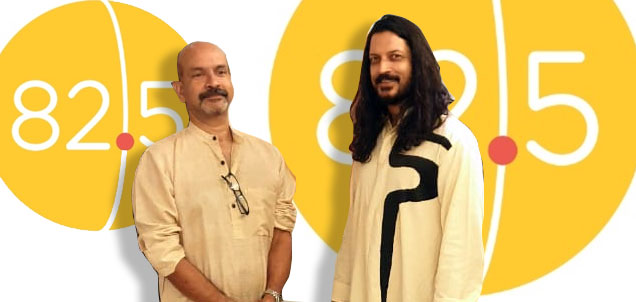
  • So is 82.5 old wine in a new bottle?


    Last week, Soho Square, the second agency from the Ogilvy India stable, was relaunched as 82.5. The new agency also subsumed all of Bates’s business. 82.5 Communications is billed as an India-specific creative agency catering to Indian companies, Indian startups and entrepreneurs. We spoke with Sumanto Chattopadhyay, Chairman and CCO and CEO VS.Srikanth for a quick chat.


    Pardon the question but while you say 82.5 is all-new, for all practical purposes, isn’t it old wine in a new bottle?

    Sumanto Chattopadhyay (SC): I We knew this question would come. So is it just a Soho Square with a new name? No, it’s not. It is definitely Soho Square with a new name and a lot more because I think we are shifting gears and we have come up with a different model altogether which is to say that we are an open source platform model. Which means that apart from whatever skillsets we have as a part of our company, we are tying up with all sorts of other skills.


    And you weren’t that earlier?

    No, we weren’t that.

    And you couldn’t have done all of what you want to do out there?

    No. We couldn’t because we are actually changing our processes to be able to do that. See, we have been a part of the Ogilvy group. Whatever we have done has been primarily inhouse. So, what we are saying is going forward, we are not going to say no to any brief because whatever skillsets are required, we are there just to provide the brand names and to take the onus for the final result. But we will give you communication solutions which are beyond the stand of advertising solutions. But in the fast…


    But you still going to be the second agency of Ogilvy, Businesses that Ogilvy cannot accept, come to a Soho Square etc, etc.

    SC: As I said, while we are open source, we are not breaking away from the Ogilvy group. We are a part of the Ogilvy group and we are for the better or worse, it’s the second agency but what we are here to do from today onwards is to carve out a completely different space for ourselves as I said, which involves partnerships with Ogilvy skillsets, with WPP skillsets and skillsets which have nothing to do with either of these entities.


    VS Srikanth (VSS): I just want to add a little more on that point. Since, we are the other agency in the Ogilvy group, there is one more agency by the way. There is David as well. There are other brands in the Ogilvy group. Hence, if for conflict reasons if any business has to part, we are happy to take it. But that’s not what we are building our business plans on. That’s not what we are banking on. We have got our own plans. We have got our own processes. We have got our own objective, our own focus. If, by the way within the group there is a client that Ogilvy cannot handle it or David cannot handle it and therefore it is being decided that it should be handled under 82.5, we are okay with that.


    So as of now 82.5 Soho Square is dead? It ceases to exist?

    VSS: As a customer-facing brand, it is dead.


    And what about Bates?

    VSS: As a customer-facing brand, Bates also won’t exist.


    Given that you want to be hat ke, offering out-of-the-box Indian solutions, are there existing clients of erstwhile Soho Square and Bates who you think do not fit into 82.5?

    SC: No. I don’t think so, because, actually when we were doing this whole exercise of re-inventing ourselves, one of the things we noticed was, these are the kind of clients who have largely been attracted to us. They are Indian entrepreneurs by and large or even if we have handled a multinational brand, it is because they are coming into India and they want to Indianise or they want somebody to tell them how to go about creating communication for India. So, I think that’s the space that we have been in and over the last few weeks, as we have told our existing clients about our new approach, they have welcomed it and as in couple of cases they have actually given us briefs outside of the standard advertising.


    VSS: No client has raised concerns, shown signs of leaving us when we broke this news to them. Actually they have all welcomed this news. There hasn’t been a problem with any of the existing clients.


    And would you be doing BJP again, this year? Does a client like BJP who fit into the new Soho Square, er, 82.5?

    SC: I would put it in a different way. The broader question is would we handle a political party? We would. But are we handling BJP? As of now, we are not.


    VSS: At the moment that is not the conversation. Ogilvy might be going through those conversations but not us. At the moment there is no BJP conversation.


    Both of you have worked with traditional agencies, How are you going to be different from Ogilvy? If you and Ogilvy have to go together to pitch, how would you desell Ogilvy?

    SC: I think we have to work to our own strengths. Also, in the model that we have adopted now, we are saying we are agile. And we are not a legacy system. We don’t have everything inhouse. But at the same time, we can offer you everything; it could be things that are in-house in Ogilvy, it could be things which are, skillsets from other WPP agencies. Like one of the examples that Shrikanth was talking about was shopper marketing. I don’t think that exists anywhere right now in Ogilvy group for example. It is one of the strategic tie-ups that we are doing with somebody to be able to offer this. Without having this heavy, expensive, gargantuan legacy structures, we are going to have these strategic partners, and we are going to have the onus of delivering. So, whatever is the kind of solution, I mean when I go to you, you might have a certain set of needs as again we were saying earlier that we won’t say that “Oh, this is not something we can do?


    Are you going to be full-service?

    SC: We are going to be full-service but through partnerships not through an all inhouse…


    Which anyway exists because you are a part of WPP, so you will have a GroupM for media…

    VSS: What we are saying is that we are not only going to be a part of that. I mean it’s just not the WPP partnerships, it is going to be anything else that we feel any of our clients require. Right now, we have looked at in from the lens of our current set of clients and what are some of the things that they might require. But six months down the line, we might pitch for a new business which requires a completely sort of new approach or a skill set which is not any of these things.


    Two more questions, I have? One is that the kind of clients you want want to have and the nature of business you have, typically have low budgets. In big agencies you have retainerships of Rs 10 lakh plus but with startups, it would be a ‘Ek lakh mein kar do yaar’. They want great stuff, but they don’t have monies to pay.

    SC: So, I think part of the way that we have been operating before today, I think the world has changed and while there are clients who want to spend the big budgets and get the big bang, there are lot of clients who want a biggish bang for a much smaller budget.  I think that is something which we have learnt to do.


    What is the lowest amount needed to get your meter ticking?

    SC: I think it is difficult to answer that. Because it is difficult to answer as to what is low. I just want to say this: we are trying to give the clients, the kind of clients that we have worked with, cost-saving is at two levels. We are, one, rejigging ourselves and the way we are looking at it as a platform, we are agile, we don’t have legacy structures, we don’t have huge costs. So, we can try and give you solutions. I will be relatively cost-effective. I won’t be cheap. But in the kind of solutions that we come up with, we also will aim to save the client’s money. Thus, in what we charge as in because of our structures and in terms of the kind of solutions that we provide to the client, we will try to be as competitive and cost-effective as possible. But if there is a client, like you gave the example of 1 lakh, like if I give you 1 lakh, can you do it for me, I would say 9 times out of 10, the answer to that would be no. I don’t think we can take on something which is non-profitable. We need to make some money.


    Any specific business targets you have or have been given?

    VSS: We are not working with numerical targets at the moment.


    One last questions: couldn’t you have done all this with the name change? Launching 82.5 means fresh stationery, branding, registration etc etc?


    SC: So, I just think it’s a new positioning. Yes, we could have. If you are asking, technically speaking, we could have re-invented Soho Square as something. But we felt that going forward, we want to have a distinctive position and we wanted a distinctive name to go with that.


    VSS: I think it is not a rebranding exercise that we have gone through. It’s a re-positioning exercise that we have gone through.


    All the very best!


  • Been bullish on India for years…


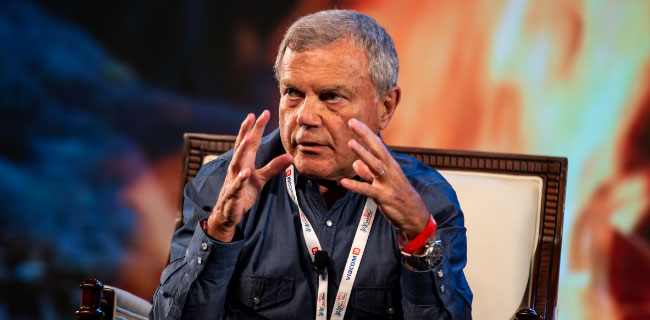
    Former WPP CEO Sir Martin Sorrell has always been bullish on India. And he continues to be that as Executive Chairman of S4 Capital, which is building a new age, new era, digital advertising and marketing services platform for clients.

    Sorrell was CEO of WPP for 33 years, building it from a £1 million “shell” company in 1985 into the world’s largest advertising and marketing services company. Prior to that, Sir Martin was the Group Financial Director of Saatchi & Saatchi Company PLC for 9 years. S4 Capital PLC recently merged with MediaMonks and MightyHive, and is listed at the London Stock Exchange under SFOR.

    We had a quick chat with Sir Sorrell on the sidelines of Day 1 of the IAA World Congress (Feb 20)


    So you’ve been making frequent trips to India in the recent past.

    They are no different to normal.

    Earlier the normal was different…

    But I would say that no dissimilar frequency. I wouldn’t differentiate particularly.

    And the million dollar question is—

    Only a million?

    Well, billion actually, given the acquisitions that you’ve made globally. But are you looking at furthering your business interests with S4 in India?

    Organically, quickly and by acquisition as quick as we can… so we’d be doing both in India.


    Any clues on your wishlist?

    No, I’ve got a wishlist but I mean whether in term vision reality is other question and whether what people tell you and what is there is another question as well.

    Is old friend Sam Balsara’s Madison still on your radar?

    Our operation, you must remember, is focused purely on digital.


    Right, but when you launched you were looking at digital content, data, media planning and buying?

    No, not media planning. First party data and informing digital content and digital media planning which is programmatic.

    The traditional media agency doesn’t come under your radar?

    Well as defined by that, no.

    But at the end of the day it’s all about relationship with clients, right?

    Yes, but that’s a very old-fashioned way of looking at the business. I mean I would turn the question around you and ask you, is it? I mean it may well be that faster, better, cheaper is becoming more important. It may be that people are looking at doing things in a more transparent way. It may be the clients felt that they want to take back control of some of these things. So may well be that they are worried about the height of the gardens in, the height of the walls in the old garden.

    You say that things are not transparent in the traditional media agency model that you created?

    Well I would say that the Indian market tends to be less transparent than other markets.

    It’s often said the media agency business is not all that transparent because of what’s happening?

    Yes, I think, sometimes there’s been a perception of that and sometimes clients or associations of clients you know have been pushing that line unfairly. Sometimes I don’t know they obviously have come across situations, one hopes given by what they said. They come across situations which they didn’t think were fair. But what I would say you can compare India to other markets, I think there is scope for a more transparent model.

    Back to acquisitions. So are these around digital agencies? But there aren’t too many options out there, right?

    No they are small.

    Small?

    Yes because we are at the beginning of the journey. So they are growing bigger.

    But no many of them are doing really all that well, right?

    That broad, sweeping generalisation is probably unfair. There are some that are doing ok. Yes, the ones I’ve seen are doing ok.

    Is there a timeframe for these acquisitions?

    We’ve never had a timeframe…

    Given that you know you are coming here often enough. You are meeting people.

    The cheapest way of doing things is organically.

    But time to get to the market is longer?

    Yes, it takes longer time.

    Have the organic operations started?

    Yes, in the process of starting.

    Any people you’ve hired already?

    Yes.

    Could you reveal the name?

    No.

    You bought Media Monks last July, Mighty Hive in December. What next?

    Well we started in Tokyo and Japan. We are going to start shortly in India. So the one other market we’ve identified is Germany. I would like to do something in Germany and may be France, Spain and Italy at some point in time. But I think that geographically for the moment we know that India would be I think our 15th country.

     But the biggest market place is US?

    Yes I mean US, by and large US is about a third of worldwide advertising. But don’t undersell India.

    Of course.

    Yes, we will the most populous country in the world. Bigger than China, may be not the wealthiest on a per capita basis or absolute basis. But it is growing and I got more faith, probably more faith than you that it is going to grow more faster.

    And you’ve fairly very close to the Indian market, you know the, clients, you know the business?

    I’ve been bullish on India for years.

    Since you are so bullish about India, could you give an indicator of what you’d think would India be as part of your foot print in percentage terms?  

    It’s impossible to say. I mean it depends, if we get traction from a model. The data-driven content and media model could be very significant. Because the other thing that happens here is, you got lot of BPO, back-office type work being done here and so the nuance to the  Indian operation, it’s not just sort of a front office operation, back office operations as well. And the people are so talented. I mean if you said to me, what is the attraction of India? I would say scale and quality of people. Despite the scale, which usually the bigger you are, the more average you get. Despite the quality of the people here is outstanding. Look at the quality of the WPP people – Srini and his colleagues I mean they are superb, yes superb.

    You miss them?

    Listen, I always miss talented people. And as I have said pretty much every time I have come here, if we had the same quality of people outside India that we have in India, I could have retired a long time ago.

    The retirement question keeps coming up.

    Well, I will retire on the job.

    Since you are betting so big on digital, people like P&G’s Mark Pritchard have cast aspersions on the transparency in digital?

    Our operation includes one significant P&G brand, P&G Braun. Our operation plays exactly to what Mark Pritchard has been saying. The willingness to experiment, try different models, faster better cheaper, unitary structure, focus on digital. It plays exactly to what he wants.

    You had mentioned last year, in fact on the day when you announced S4, that you want S4 to be run the way consulting firms work. Given their access to CEO, the Board. Is S4’s operations like them?

    Well I’d love S4 to have a relationship. We want the consulting practices   which gave us that sort of fourth dimension. So you’ve got data driving  content and media making for the three dimensions. The fourth one would be that access. Yes, we do have access to the C-Suite. We do. We can get in there, we do get in there but you know, do clients I mean, this would apply to the Big 6, but do clients really takes seriously our ability to digital transformation or digital disruption? I think the honest answer is no.

    But the consultants have access to the C-Suite

    Having access to the C-Suite and being able to execute is two different things.

    They are buying agencies, right?

    But they are buying small, they are buying bits of pieces and if you got the 100 billion or 40 billion dollar company buying a two or three million dollar company and buying four of them, compounds the felony four times. You know it’s eight times more difficult to integrate four, two or three million dollar operations or even a 100 million dollar operations.

    You were bullish on the way a firm like Accenture was doing. Now you are more critical

    I don’t think I was bullish

    You had said the advertising industry needs to align like the?

    I think I am saying the same thing. They do have that access and I think we have the access as well. But, clients don’t believe that we can put together digital transmission jobs. I mean the claims Publicis, for example, make around digital transformation are unrealistic. If you and I were CEOs of a big business which had a transformation issue or disruption issue in digital and we saw presentations  from Publicis  or from Accenture, I don’t think we would choose Publicis or Deloitte. I don’t think we’d choose Publicis. Likewise I think if we were competing Publicis, we were competing  against Accenture for the implementation of digital marketing job. I don’t think there would be a pro Accenture. So they are all complementary strengths. All I am saying is the way the consultancies can get those complementary strengths is not by tinkering with a dozen small acquisitions. You won’t move the needle.


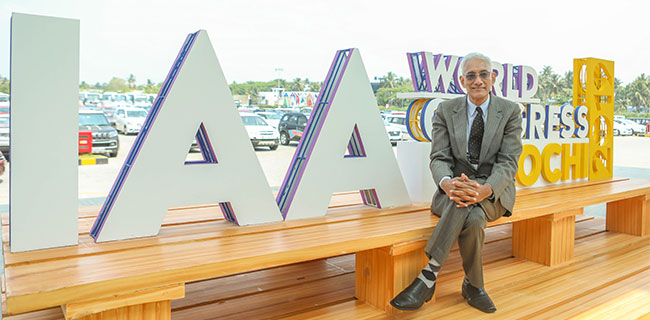
  • India can be proud of staging IAA World Congress: Srinivasan K Swamy


    Impossible is not a word that you’ll ever find in the books of Srinivasan K Swamy, Chairman and World President of the International Advertising Association (IAA). Hardly had the IAA World Congress at Kochi got over, he was busy working on plans for the next few projects. And of course achieving his dreams for IAA across the world.

    The Chairman of the RK Swamy Hansa Group, Swamy took on the global charge in October. A quick chat with

    Srinivasan K Swamy on the success of the IAA World Congress and what’s next on the IAA calendar. A slightly shorter variant of this interview appeared as part of a pull-out published with Business Standard today, March 12. Compiled by MxMIndia. Published and conceived by The Resource 24×7


    You had set yourself near-impossible targets for the IAA World Congress. Now that the Congress is over, and the feedback received indicates that it was very successful, what are your own thoughts? Are you happy with what you set out to achieve?

    Frankly, during the last few days prior to the Congress, it all came together. Of course the speakers were done and dusted well in advance. A few cancellations in speakers were always expected and we had some options that we exercised, without compromising on what we set out to do. The only reason we settled for Grand Hyatt Lulu Convention Centre in Kochi was because only this venue could host a capacity of 2500 delegates in India, that too in style. Our target for participation at the Congress was set at 2500, the full capacity, and we exceeded that too thanks to the enormous support we received from Kerala delegates.  We also felt the evenings is what would make the event memorable and these were executed to perfection. All our international delegates were overawed by the scale and the grandeur of the event, and India can certainly be proud of staging this spectacular international event in India.


    And we now hear that the next IAA World Congress is in St Petersburg, Russia next year. How will you better the really high benchmark that you’ve set with Kochi?

    St Petersburg is a beautiful city with many palaces and historical monuments. It  starts off with that advantage straightaway. The event is going to be conducted in late May 2020, when the sun never sets. It will be a new experience for many delegates during these ‘white nights’. Further, it will be more easily accessible from many European cities, so more international delegates will be a natural consequence. And last but not the least, the Governor of St Petersburg, the City Administration and the Federal Russian Government are fully backing the Congress and are very keen to ensure that the event will be a world-beater in both content and entertainment. We have already formed a committee of experienced people to finalise all details and I am sure the St Petersburg Congress will in no way fall short of the benchmark we have set for ourselves in Kochi.


    Pre-event, you had mentioned that the real work on the Congress happened only in the last six-odd months. Given that all of you amongst the key organisers have other businesses to look into, what were the challenges that you faced?

    The actual work for the Congress started well over 18 months ago. Many of the speakers were finalised well in advance. As is always the case, the momentum builds in the last few months when strong marketing efforts are put in for delegates to sign up. When we are organising an important event like the World Congress, our business demands do take the backseat. And fortunately, none of the core committee members complained in this regard and tirelessly plugged along.


    The IAA World Congress in India is just a one-off event. Do you have plans to harness the momentum that the IAA franchise gained in India over the next few months?

    We have many good global events coming up. We will have the Africa Rising conference taking place in May 2019 at Accra, Ghana. In June, we will be in Cannes, France having our own leadership sessions. In October, we plan on our third edition of the IAA Global Conference in Bucharest on Creativity4Better. There are couple of other things on the anvil which will be announced once the plans/dates are finalised. Events apart, we are putting enormous emphasis on Education. We have already accredited 44 institutions on marketing/ advertising courses and we want to provide active support to them, apart from expanding our accredited institutions base to twice that large over the next two years.


    The IAA is of course a lot more than the World Congress, and in your presentation at the opening ceremony, you spoke about the work that you intend undertaking in the field of digital privacy? It’s a huge ask given the extent of intrusion that has taken place. What are your specific plans?

    Privacy in the digital world is a matter of concern for everyone. No wonder the governments of various countries are stepping in to protect their Citizens. IAA believes that over-regulation may not necessarily be in the interest of the consumer, because it could impair on the efficacy of well-targeted communication. As a strong promoter and defender of advertising self-regulation, IAA is of the view that a strong data privacy regulation would actually act against the interest of the consumers. Advertising after all is a major source for economic growth. It promotes competition, thereby innovation, improves product quality, promotes choice, reduces prices. Excessive privacy laws would make targeted advertising difficult making the cost of advertising very high impacting on all the benefits of advertising listed.  With 43% of the global advertising budget going to digital, regressive privacy laws will change the business of advertising as we know it. IAA is therefore trying to speak to all the stakeholders – advertisers, agencies, media, digital companies, technology companies etc – to hopefully arrive at a self-regulation code we all can subscribe to and also develop a mechanism to oversee this. The response from the people I have reached out to has been overwhelming and I am sure many of what we need to do, will be based on further consultation with multiple stakeholders. As they say, watch this space!


    The India chapter has been super-active ever since you helmed it. Do we see you inspire other country chapters to also become as active as the India chapter?

    IAA Chapters are only as active as the leaders leading them. And another ingredient that is needed for this is the quantity of members. Our focus at IAA will be on both these fronts. We have already made some changes in our by-laws which will aid in membership-building. We have put in place some guidelines to check the health of the Chapters. And we do want to get Chapters to adopt certain common events from the vast repertoire of events we have in many of our Chapters. We have some distance to cover in this but I can say the journey has begun!


    A slightly shorter variant of this interview appeared as part of a pull-out published with Business Standard today, March 12. Compiled by MxMIndia. Published and conceived by The Resource 24×7


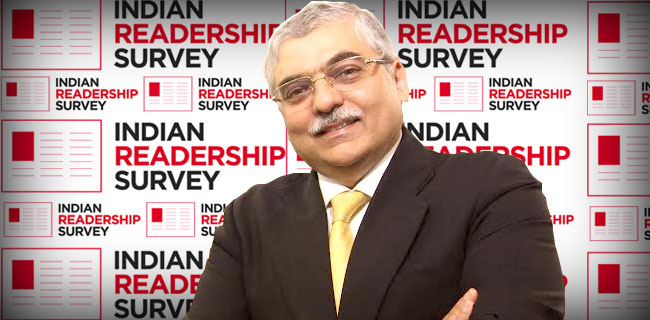
  • ‘It takes time to align everybody’


    The Media Research Users Council (MRUC) released the much-awaited 20019/Q1 edition of the Indian Readership Survey last Friday. MxMIndia spoke with Chairman Ashish Bhasin immediately after the release of the report. Editor’s Note: There’s a lot that Mr Bhasin has said on record. And there’s a lot that he hasn’t. With reason. However, MRUC and all the players in the ecosystem need to be commended on the release. Read on…


    Congratulations on the release of IRS 2019/Q1. As a media professional and media-watcher what is the biggest takeaway for you from this round?

    I think the biggest thing that I have seen is that print continues to grow, because the general feeling seems to be doom-and-gloom around print. It is a fact that digital and other media are growing fast but that doesn’t mean that print is not growing. And from a mediaperson’s perspective, if I look at the overall picture, I think India is the only major market in the world where all media are growing. We are in a lucky phase.


    But there is a marginal reduction in the AIR numbers.

    Yes.


    It may be be marginal, but it’s a degrowth for sure.

    So Total Readership is if I have read the paper in the last 30 days, even once. AIR is if I’ve read it yesterday, right. People today are travelling a lot more. People today are sometimes very busy, and don’t have time to read and therefore may not read the paper every single day. But that doesn’t mean they are not readers.


    That’s the currency which your media agency business uses.

    That’s the currency we were all used to.

    But now there is a new reality. So, what we have done is, we have given both the options for even more cuts. All the options are available to our users, to our subscribers. They can see a three-day cut or a five-day cut, one-day cut or seven-day cut or a 30-day cart. The more information that you have means the more informed a decision one will make.


    But that actually results in multiple currencies, right?

    No. Currency is IRS. How you cut and dice that, how you look at the data is different. Some body might want to look only at males, somebody might want to look at only north.

    That is up to you how do you want to analyse it. But the more information you give to people, the better decisions they will make. So why should we not give that.


    Back to the growth in readership. What would you attribute this to?

    I think one is, literacy levels are increasing in India, which is reflecting even in our socio-economic information that is coming in general. Secondly, by and large if you see, any developing country, readership increases are dependent upon two things. One is literacy level, and the other is disposable income… because only if you have money, will you go out and buy a newspaper otherwise you will wait for somebody else to buy it. Because we have had a reason very good monsoon, it is not a bad monsoon you had general economic growth happening because your English and literacy levels are increasing. I think that is what is really saving the day….


    Does it also mean that, digital hasn’t really grown as it should have?

    No, no not really. If you have seen digital has actually grown significantly, and today is a first time that IRS is now starting to reflect numbers in the same ball park as what…


    Given that if readership is growing and so is literacy growing…

    Well the universe itself itself is growing, so people who were consuming less media today are consuming much more media. Of course the growth is much more in digital and that is no doubt. Even digital newspapers if you see have been reported.


    E-papers

    It was the second time e-paper, e-publications, that has grown remarkably, but particularly in the larger areas and particularly in the NCCS A+, it has really grown very rapidly.


    As a media-watcher, in what way will the growth in digital impact print?

    I think for some time everything will grow and therefore print will also grow, because of various reasons that we have discussed. But in the long run, a consumer will not consume only one media, he will, he or she will consume several media along with each other and print as a medium will have to evolve and adapt to that. Like, for example, for a digital you might get more topicality, but you might get more analysis in the physical copy etc. And according to the readers evolving, I think print as a medium needs to evolve and keep up with what’s the need of the consumer and not go on doing what they are best at, learned best how to do over the previous hundred years.


    So, will we now see IRS being released quarterly?

    That is the intent, and we work very hard towards it. As we are speaking, the field work for next quarter has started. So the intent is that, every quarter we should have a release so that continuity remains. And that’s what we are working towards.


    It’s been 15 months since the last IRS was released. Why the delay?

    So it was supposed to be an annual report. It should have released around Feb-March 2019, that is what the intent was. But various factors came in, and the field work took much longer…  for example, the Kerala floods delayed us in the South states for a while. So maybe a month or two of a delay.


    But the IRS was always meant to be a quarterly.

    We didn’t move to quarterly then. The quarterly move is happening now.


    The buzz was certain publications were refusing to pay up because of unhappiness with data and the findings. Reportedly, some big players had reservations.

    That is true, that’s not untrue. Because you know, there were and there are various stake holders in this. There are publishers, there are agencies, there are clients. Within publishers, there are language, Hindi, English publishers etc. Now unfortunately each stakeholder looks upon it from his or her angle and not from the industry angle. So, it takes time to align everybody and equally takes, it’s a very expensive study.


    But as President of the Advertising Agencies Association of India, you are also a stakeholder in BARC. And the stakes are fairly high in television too. Perhaps more. But everything seems to be going right there, but not with print.

    Yes, the system set there is working very well and learning from them, learning from other things, we are trying to implement and hopefully we have been able to implement a similar system out here. The general belief was, and which was probably true in the past that print research didn’t need to be done very regularly because newspaper reading habits don’t change every day or every month. So if you are reading a newspaper you are likely to keep reading that for a long time. It takes a while to convince people that it’s not necessarily true, the more updated and the more regular data that you have, the better it is for the print industry. But you know if somebody has been working with the same mindset for 100 years and it has worked very well for them, it takes a little bit of convincing to get them to change. But what I am very happy about is that, at least I can talk about my team, I don’t know about the past and I don’t know about the future. Everybody has been very cooperative, it did take time and is taking time and effort to align everyone. But now that everybody is aligned, they are very-very supportive.


    There’s word that you’ve been very tough on some people, especially those who were hesitant on paying up.

    (laughs) I have.


    Who has been the toughest to deal with? You spoke about various stakeholders.

    I wouldn’t like to name any individual. So look, I have done 2-3 things, which has been non-compromising. One is that there were rumours of people trying to influence data etc etc. We clamped down very, very hard, we put in a lot of digital check. We digitalised the whole process. It’s all carried out, even though it meant a lot more investment. We closed as many possible loopholes that could have been in that. The other area was in reporting. People were comparing apples and oranges and actually misleading. Some of the advertising was misleading, so we put a code of conduct for reporting. And if somebody, if a subscriber does not subscribe to that code of conduct, the data does not get released to that person. I mean the software just doesn’t open. Ultimately, you need technology to open, control this. So you have to subscribe to an agreed code of conduct which the board has approved, the members have agreed to and therefore hopefully that problem should also get eliminated.


    But they are still using different (and confusing) metrics: TR, AIR, AIR +3 etc

    That is not a problem. So, you can use whatever you want to use, if you are comparing TR of one publication, you can only compare it with TR of another publication. What was happening in the past, was for example you would compare one thing of one publication and completely another thing of another publication. Data is something you can cut and dice in whichever way you want and make it tell a story. But it’s got to be told in a fair way and all the disclaimers should be clearly put. You will see that any ad around IRS data comes out now, hopefully if members continue to agree to do what they have agreed to do and will have a very clear mention of what it is referring to. So for example you can say this is TR of this state of this age group of this male/ female/ whatever.. they have to clearly specify that as a sort of a legend in the data that we are comparing.


    It is actually interesting that in the case of BARC’s television measurement, the top players have been the most mature and statesmanly in their outlook towards the findings. In the case of print and the IRS, it’s said that the top players are fighting and derailing the measurement system.

    I don’t want to talk or compare one versus the other but I can only say that from my prospective as a chairman of MRUC, they have all heard me out and have cooperated. People do have different points of view, but we have been able to convince all of them to cooperate. It hasn’t been easy, it hasn’t been a very quick ride but, then, they all cooperated


    While you said at the press conference that the Hindustan Times and Hindustan data are still bein processed, clearly all doesn’t appear to be well. Did HT Media ask for the data to be withheld?

    No, Hindustan Times did not ask for the data to be withheld. The data hasn’t been withheld. It is still under review and the review isn’t over. Until that is done, we cannot release the data. It will take a few more more days and as soon as it is reviewed, we will release it to the subscribers.


    I am sorry to push you on this, but if you have released all data, how come not Hindustan Times and Hindustan?

    Because we haven’t finished the review in it…


    Then why release all the other data?

    It’s not that Hindustan Times has asked us not to release the data. It is just that, that data is under review and we cannot release any data until Techcom finishes the review…


    Is there some kind of a deadline to it?

    See the next three-four days* will go in only getting the data out to the hundreds of subscribers. It’s a huge database so I don’t think Nielsen or the Techcom will be able to focus on anything else. Immediately after that, I am requesting them to straightaway start focusing on it and quickly finish it so it should happen soon but deadline actually Techcom chair Vikram Sakhuja would be the better person… (* this interview was conducted on Friday, April 26)


    But the absence of Hindustan Times and Hindustan means that a lot of juice of the entire IRS results is missing

    Frankly the ranking that happens is only when the trade media gets most excited about it. I don’t think the planners look at the ranking… they look at the leadership numbers and in few days hopefully…


    Trade media finally just mirrors what the trade tells them. So when is Q2 going to be released and what date is planned?

    The field has already started, typically while it supposed to be three months, it could well be four, because of rains or any other condition. It depends upon how long it takes and then Techcom takes roughly a few months to check it and so on. Quarterly is a bit misleading because people see it as a financial quarter.


  • Big creative agencies, beware. MTV can do your job, cheaper


    At the Creative Abby awards at Goafest 2019, Viacom18 bagged the coveted Creative Company of the Year pipping legacy agency brands in the rankings roster. MxMIndia caught up with Navin Shenoy, Head Marketing of Youth, Music and English Entertainment at Viacom18 to get his views on the win….


    MxMIndia: You should be celebrating, instead you are looking very serious?


    Navin Shenoy: Me? I am always a serious kind of a guy.


    Congratulations on being the Creative Company of the Year at the Abby at Goafest.

    Thank you so much. We are very thrilled at this. We got a fantastic team back at MTV and I think we have been in a period of transition for a while now. And finally, all of this is coming together. It’s working out for us. So, we are really thrilled. The whole team is over the moon.


    We have always known MTV to be a frontrunner in terms of creative output. You do think out of the box etc. But to be the creative company of the year at the Abby is dramatic. You have many creative biggies participating – okay, not all of them, and there are digital agencies. As a marketer, can you assess this and put in reference to the rest of the industry?

    Well, I think all the old structures are changing massively in terms of how a marketer should look at the options in terms of partners. I think for us everybody is competition. Advertising agencies are competition, media agencies are competition. We are currently in a place where we are able to provide a full 360-degree solution. We are able to provide creative, we are able to provide inventory and media, we are able to provide customised solutions, we have an insights studio which gives great insights into youth. So, I think there is a lot of hard work that has gone behind pulling this together and I think it’s come at a great time for us. It gives us more impetus to take this forward.


    ¥ou have worked across the spectrum in terms of organisations, FMCGs, telcos etc. Since you have got an award like this do you see other organisations also doing the same… get into creative mode?

    Yeah. Sure. I think innovation is now a given. Earlier, it used to be 20% of what possibly organisations used to do. I think unless you’re innovative and creative an organisation is more likely to be built to crash. The earlier paradigms that were built to last are far gone. Most organisation are built to crash if they are not built for innovation or creativity. And I think this is an important lesson for everybody saying that you need to keep re-inventing yourself. It’s unlikely that the same framework will be used for evaluation. What’s going to happen is that media, digital, creative, marketing, all of those technology, all of those are likely to collapse into a single sort of structure. And whichever organisations are best placed to take advantage of that are the ones who are likely to win, and we are hoping to be one of those. Hopefully this award sets us on the path forward.


    You have also worked with agencies in the past. Do you think that there is a message here for the traditional agencies? Today, you have won the Creative Abby. Tomorrow, you could be winning the Effies?

    Right. Definitely there is a message for everyone, including us. You would have heard of Accenture buying Droga5. Now, Drog5 is a creative hotshop and Accenture is known for its consulting jobs. Now what’s happening is an Accenture is actually looking at the other end of the spectrum and they have acquired a Droga5 to try and play the whole spectrum. Similarly, we seem to be in a great position now, to be able to play the whole creative to media spectrum. So, the message – rather a lesson – for every other company is that if you end up being unidimensional, you are not innovating, you are not able to provide across the spectrum, it’s likely to be a sign that you are going to struggle in the times to come.


    But does this also put pressure on you? Because till now, you were concerned about television and other platforms. Does this now put a new kind of pressure on you – of achieving the impossible on the creative front

    Yeah. It does, but we love this pressure. We think we are doing some great work and hopefully there will be other people who will believe so as well. And we love this pressure and we are going to take this to a whole new level. And I believe in the next 12-24 months MTV is poised to take this up quite a few notches.


    Winners at Goafest Abby also go on to enter other awards. Are you looking at trying elsewhere too?

    Of course, we are. Our ambitions are sky high. Recognition is a byproduct. We intend to do world class work that cuts it across the board on all platforms and Cannes would be an important platform. So, like I said in the next 12-24 months we are expecting to do work that is global, that is hitting global standards, that is setting the standards for other brands and in that sense hopefully Cannes will be one of the byproducts.


    For the benefit of people who are not aware of things, how large is your creative team?

    Well, we have got an interesting bunch of people there. I think the diversity and the width is what makes us unique. We have got a set of people who are craft-driven, people who are production- and creative- and video- driven. So, that’s one unique perspective that we bring to the table. We have got a set of people who are brand solutions-driven… who are creative but can think, like say, what a classical traditional agency might think? We have got a set of marketers who think for the business and finally, we have got a set of research people who are part-anthropologists, part-media experts, part-youth experts and these are people who bring pure life insights to the table. I think the potent mix is when we bring all four of these together and we put a solution on the table, or we put any output on the table. Whether it’s for brand MTV or whether it’s for a brand who has come to us for a customised solution. I think that is really the X factor that is giving us the edge.


    So how large is your team?

    This is a totally a team of around 30 people. We prefer to keep it lean. We are very picky about the people we chose to be in this crack team. But yeah, it’s working for us well. As the business expands, hopefully, we will add more people to the team.


    Lean? Thirty people makes to be the size of a smallish agency. Are you open to doing to work for others as well?

    Of course, we are. You know, as I met other people at the Goafest this time, I have been telling them that as I have been hearing them go to production houses with ideas where they have struggled to manage costs. I think one of the things, that is happening is on an average a marketer is getting an ad film for, let’s say, Rs 50-70 lakhs in the ballpark. And I think we can do a very good job of this because we are in an ecosystem. We do it for our own brand and for other brand as brand solutions. So, I have been telling a lot of my friends in creative agencies, all my friends in marketing organisations that they should look at us as an option.


    So could well be providing some competition to the existing biggies?

    Absolutely. Why not?


  • Golmaal… Fun, but Safe for Juniors


    After launching popular children’s television characters, Motu Patlu, Shiva and Rudra amongst others, Viacom18 is launching its eighth indigenous show called Golmaal Jr. Produced by Nickelodeon and created by Reliance Animation and Rohit Shetty Picturez, the show recreates the fun and pranks that exist in the theatrical version of Golmaal. But the show is meant for kids, so it’s going to minus all the risqué jokes and scenes that were unsuitable for children’s viewing (though very popular with kids!).


    The show premieres today (May 13) on Sonic, part of the Nickelodeon bouquet of kiddie entertainment of Viacom18. MxMIndia spoke with Nina Elavia Jaipuria, Head – Hindi Mass Entertainment and the Kids TV Network at Viacom18, at the press launch of the show held in Mumbai last Friday (May 10)


    Did you consider other characters and themes before zeroing in on Golmaal?

    Yes, we did. In fact there are three more shows in the pipeline which are not necessarily Bollywood-associated. We have more IPs in newer genres which of course I can’t talk to you about but there are three in the pipeline.

    Given that kiddie television viewership is very high in the South, did you evaluate something around a southern superhero like Rajnikanth? Did that ever cross your mind?

    No, that hasn’t. I don’t think kids’ content has got anything to do with geography. So even if I did create a show, it could be an international hero, it could be a local hero. For example, when you look at Shiva or when you look at  Rudra I don’t think of South North, East or West… they are all very homogenous. And that’s how kids’ content is traditionally created, because it doesn’t look at white or black, it doesn’t look at dialects. It doesn’t look at content that is specifically for a region, because we cater to the common denominator. And when you cater to the common denominator, you should be very homogenous.  And the fact of the matter is that I cannot customise animation for regions. From an investment perspective, I can’t do it and I can’t do that in animation as a format anyway.

    Did the success of the Rohit Shetty-Reliance Animation show Little Singham on Discovery have any impact on your decision?

    The theme about friends and their pranks in this mischievous show is something that has been terribly missing from the  Nickelodeon franchise. This little bit which is grey and not black and white, was totally missing on the channel and I think that encouraged us to go with it. But having said that, 13 years ago, we actually made ‘Koi Mil Gaya’ into an animation film on Nickelodeon- it was called J for Jadu!

    But the movie ‘Golmaal’ has its risqué bits, bordering on the vulgar…

    No, no we have made this a very safe show. We are very responsible broadcaster, so what you saw were kitchen and slapstick fights.

    You haven’t replicated the original franchise of Golmaal?

    That we couldn’t have replicated. This is obviously adapted for children, and therefore it is called Golmaal Jr. We’re not doing a Golmaal! Therefore. we’ve introduced a Principal, for example which was not in the movie. So we have adapted and introduced a school and there is whole scenario of being in a school, in a hostel and all of that.

    L to R: Child artist Ruhanika Dhawan, Anu Sikka , Head – Content , Kids TV network, Viacom18; Nina Elavia Jaipuria, Head – Hindi Mass Entertainment and Kids TV Network, Viacom18; Madhav from Golmaal Jr, Rohit Shetty, Gopal from Golmaal Jr & Vikram Vetturi – Creative Director, Big Animation

    Internationally, cartoon shows do get the big voices from Bollywood, big voices from Hollywood. Did you try doing that given it’s Golmaal Junior?

    No, also I don’t know how sustainable it can be. So, we may want to try it for a movie which is like a one to three-hours movie at best but if we have to sustain ourselves over 100 episodes and 500 hours it’s impossible.  Actually, we’re going to experiment with our next movie, the theatrical, one with big voices.

    And any targets on viewership or revenue that you’d like to specify? What would you like the show to achieve for Sonic?

    Sonic has been ailing for a while and if I look at the whole year number, we are at a No 7. We’re hoping that with Golmaal Jr as the show sets in, in the next 6 months or so, it should be in the Top 3-4, if not better.

    But Sonic is in a tougher TG bracket, right? Kids most often grow into your other channels?

    But kids are embracing newer characters and we saw that with Rudra, right? Last summer I launched Rudra – It was the Prince of Magic, it’s become the No 1 in the category today which means that while kids are actually in love with the characters that they love to watch, it’s not like they’re not embracing newer characters. That’s the nice thing about kids and that’s why you’re noticing that repetition value. You know repetition is going down in the category to some extent where they’re willing to embrace bigger and newer characters.

    Are the newer shows – those three IPs – going to be on Sonic given that you want to push up the channel in a big way?

    No, these are franchises and IPs that we’ll create so they take time anyway so they’re about a year away. Every IP takes some 18 months to create.

    And how much did Golmaal Jr take?

    This took us almost a year. But then it was slightly easier one to tell because it’s a story we are familiar with.

    Hmm.

    Yeah, so it’s not a story that we had to re-imagine and start writing from scratch, it was slightly easier so to do… Otherwise a typical story which starts from scratch is at least 18 months.

    What works better… getting a franchise like Golmaal or building one from scratch?

    I think both are equally difficult to do. And I’ll tell you why: One, you have to create the character and the new character has to, get the imagination of the child. But, and that’s the challenge of creating an original because it’s a brand new character. The challenge here is that there are certain set of perceptions of the franchise and of the characters – there is a Madhav and there is a Gopal and there is already a Lucky and therefore you’re trying to match up to a particular perception that a child or a viewer already has. And that to my mind that’s also very challenging.

    So, for example, in the movie, Tushaar has that speech problem. Now as a very responsible broadcaster, we didn’t want to go there. We can’t show a child which is kind of challenged in that way but the way to get around that was that we’ve said that this child loves to eat lollipop and has a lollipop in his mouth.

    And did Rohit Shetty have an issue on tweaking the film?

    In fact he was happy to do so because we had to make sure that we are creating a safer adaptation for children. Therefore, he is very happy to adapt it for juniors and call it Junior otherwise he could’ve called it, Golmaal on TV and we’d have gotten away with it. But the fact that it is ‘Junior’ means that it is safe, it’s good for children. Of course it is slightly grey like I said, but now that’s where content is going and that’s where kids are going. They are this restless bunch for whom style has become important, where fashion has become so important. They are so confident today of themselves, they’re performers! They’re performer in hobby class, performer in school – it’s all about performing today and achievement. It’s about success. It’s about being happy so they’re on a different level and I think shows have to now start catering to this.


  • So how does Sandeep Goyal find time to write so much?


    To the Indian advertising and media fraternity, Sandeep Goyal is well-known name. As someone who led a very successful run at Rediffusion Y&R, as Group CEO of Zee and JV partner of Dentsu in India who finally sold his stake to his Japanese principals. But, in recent years, he has turned one of India’s most prolific business columnists.

    Goyal now prefixes his name with a Dr, not earned with an honorary doctorate degree please note, after some serious hard work and a thesis earned from FMS, New Delhi. He is also an MBA from FMS and an English literature honours degree from Panjab University.

     After selling his stake in Dentsu India, Goyal  pioneered mobile advertising in India, building his company Mogae Media into a market leader. He co-owns the 24×7 food TV channel FoodFood with celebrity chef Sanjeev Kapoor.

    Over the last few years, Sandeep Goyal has turned a prolific writer. He writes a fortnightly column for Business India called ‘Honest to God!’; writes a weekly ad review column, ‘Here’s the Pitch’ for the New Indian Express; writes a fortnightly column, ‘Yes, but…’ for Business Standard. Goyal used to write a weekly column for exchange4media, ‘Ask the Doctor’. In the past Goyal also used to write columns, ‘Perfect 10’ for Financial Express and ‘Horse Sense’ for Business Standard. Phew.

    A compilation of 50 of his Campaign India columns from mid-2017 to mid-2018 on a host of marketing, branding and advertising subjects appears in the book BlogBuster that releases today (May 16)in Mumbai. The book is being released by former Viacom18 COO Raj Nayak and CampaignIndia editor Prasad Sangameshwaran. MxMIndia did a quick interview with Dr Sandeep Goyal on the book, on how he finds time to do all his writing and more. Read on… 


    You are possibly the most prolific industry biggie writing in the A&M and business media? And perhaps across all industries. How do you manage to do it?

    My late mother used to say that the pursuit of Goddess Lakshmi should never be at the cost of venerating Goddess Saraswati. I was always a very good student (I am a gold medallist in English Honours), but once I started working, career obviously became life’s top priority. So after running after business and profits for well over 25 years, after I sold my stake in Dentsu, I decided to go back to academics and to a life more cerebral.


    I enrolled for a PhD at FMS Delhi. That got done last year. So I am now Dr Goyal!


    In 2012, I co-authored You’re Hired! with my daughter, Carol. In 2014, I wrote Konjo – The Fighting Spirit on my entrepreneurial stint with the Dentsu JV through Harper Collins. I had earlier published The DumDum Bullet way back in 2004 through Penguin.


    Today, besides my regular blogs in Campaign, I write columns for Business India, Business Standard and The New Indian Express. I used to write an Agony Aunt piece every week for Exchange4media but have now stopped that for a while. There have been past columns in the Catalyst (Hindu Business Line) and in Brand Wagon (Financial Express). So, yes I do write a lot. Thank you for terming it ‘prolific’.


    I find peace and solace in writing. Actually, to write on a broad canvas of subjects, I need to read a lot. The simplest formula is 10x … You read at least 10 times of what you write. So, the combination of reading and writing is actually a perfect mix for me. I average at least three-four hours of active reading everyday … any kind of reading. And I spend at least two-htree hours writing almost every day.


    The day usually begins at 6:45 am and I continue to read, research and write till I am just pooped out!


    What about your other work? Do you manage time for that?

    Since Diwali of 2017, I have slowed down considerably on the work front. I don’t operationally run any of our businesses any longer. So, ‘work’ now is really about looking at our various investee companies. Which is not so time-demanding.


    But I still do keep aside sufficient time for a passion that my wife Tanya and I share for art, especially collecting studio pottery and ceramics. We are setting up a private museum in Gurugram. So, I try to make as much time as is required everyday for this new project. I am now a regular at art openings, art shows, auctions and even travel quite a bit in pursuit of art we would like to acquire. We were at Art Dubai last month. Art Basel in Switzerland is now next on the agenda.


    I think time is a stretchable asset. Work expands to fill available time. Earlier my life was just work, work and more work. Now, with a little effort and a bit of planning I do work, I find the time for art, I plan time for travel and of course I read and write. Actually utilization and maximization of time is all in your mind. If you want to do it, you can.


    A compilation of your columns in the form of a book is a bit of a shortcut, right? Commentary by way of columns in the media do not count as a considered, well-discussed appraisal of issues. So in a sense it can be considered a ‘fatafat’ read, not to be taken very seriously?

    Haha! I think you are being judgmental. My blogs in Campaign and my pieces for Business Standard online average 1400 to 1600 words, sometimes even more. I have written pieces of length 4200 words too when the subject so warranted (the piece had to be split over four blogs). So, the pieces I write are well-researched and well-detailed. No shortcuts.


    In press, for example, in my long-running column in Business India an average piece is 800 words. Since I normally take one subject per column, and I think the content is reasonably well fleshed out.


    The compendium, yes, will be a relatively easy read.  Whether ‘fatafat’, I don’t know. At least, the content is not flimsy or superficial certainly.


    Which of these comment columns would you say is your favourite? Any column that you regret writing or has put you into a spot with a former/current associate? (please specify the column/issue)

    I enjoy everything I write. Otherwise I wouldn’t do it.


    I derive an ‘instant’ high when I write online because most times the piece is up in a matter of minutes after I have finished writing. That is instant gratification!


    But, yes, the joy of a piece appearing in print is a very different kind of satisfaction. My first ever piece that I wrote was when I was perhaps in Class 3 as an eight-year old for my school magazine, The Soaring Eagle. The untold joy in seeing my name in print is something I cannot forget even today 50 years later. Ever since, seeing my published piece gives me immense happiness. Almost the same child-like joy of when I was a school boy back then.


    Not as much the columns, but yes when I wrote Konjo, and it was a first person account with real names and real people, I ruffled a lot of feathers. There was especially this piece on an ex-client interface at HDFC Life about whom I did some plain-speak. The media asked me a lot of questions, some even wrote that it was all very one-sided, and just my version, but I stood my ground. No rejoinders ever came.


    In the columns, I frequently receive negative feedback. PR agencies of the entities I have covered many times reach out to me to soften my stand. I just tell them to send in their narrative to the publication and ask them to also carry the contra-viewpoint. One particular ex-client who is currently at war with his own father too created a ruckus when I wrote about his misleading posturing on a dispute involving his company and his family, but all that really doesn’t affect me. I am no longer in active ‘business’ and don’t really have to worry about repercussions!


    Have there been issues that you wanted to write, but not as they would impact your interests?

    Not really. But I steer clear of some domains. Telecom and telcos is one such example. For years now I have worked very closely with the likes of Airtel, Vodafone, Idea, and earlier Aircel and Reliance. I therefore have been privy to a lot of inside gossip, insider news, and lots more many times much in advance of the market. But in all these many years, I have never written about anything to do with this domain except an occasional ad review or such. I feel writing on stuff you know because of your advantaged position tantamounts to tattling. I strictly avoid that.


    You’ve been writing a lot, lot more than your Campaign column. Where are the other books? 🙂

    Well, there will be two more books this year, maybe three.


    I am really proud of Japan Made Easy, being published by Harper Collins, and slated for an autumn-winter launch later this year. I have spent 5 years researching and writing this book. It has 101essays of about 500 words each on a range of topics covering business, cuisine, culture, philosophy, creativity, spirituality, customs and rituals … 25 years of my experiences in Japan and with Japan are condensed into this tome.


    And then there is my first novel, Witches of Worli, which is about half-done. I am planning a 2020 release. It should be a good fun read.


  • Meet Ashish Bhasin, CEO of Denstu Aegis Network APAC


    At mid-afternoon on Thursday, in a cool, rainy climes of Khandala near Mumbai, the top deck of the Dentsu Aegis Network had gathered. While they had seen the rise of the Network in India, the announcement was perhaps the best recognition of their work in the last decade-odd. Their leader – Ashish Bhasin – had been appointed CEO of Dentsu Aegis Network APAC. And APAC included the key markets of China, Australia and New Zealand. He will will join big boss Tim Andree’s Global Executive Team, the first and only Indian to occupy the chair. Bhasin will continue to maintain his role as Chairman, Dentsu Aegis Network India. Meanwhile, Anand Bhadkamkar, COO India and CFO South Asia, has been promoted to CEO, Dentsu Aegis Network India. He will report to Bhasin, as earlier.

    Bhasin, who was MxMIndia Mediaperson of the Year in 2016, spoke with us over the phone from Khandala. While the clouds were out there in the Western Ghats as also in Mumbai where we are located, the sun was shining very brightly for Bhasin and the Indian advertising industry.

    Read on…


    Congratulations. Your elevation as CEO of Dentsu Aegis Network Asia Pacific is huge. Your sentiment as you move on to Singapore to take on the role?

    Thank you. If the company trusts you with a bigger responsibility, it obviously makes you feel good. First off, I feel it is actually credit to the fantastic team we’ve had pan-India. This has been a dream run of sorts. We started with 40-50 people and today we are almost 3700-3800 people. At a time when everybody is struggling, the markets have slowed down, etc, we have continuously been the fastest growing group in India for maybe five years in a row. It feels good because all of that is in some way recognising India’s performance and from India’s point of view, I think it is a nice reflection on the team and on the country.


    If you have to look back, what would you say would be the single biggest achievement since you helmed DAN in India?

    I think two things: One is that I was very lucky that I was able to build and retain a fantastic leadership team. If you look at the senior leadership of Dentsu Aegis Network, while the turnover rate is very high in India, in the last 11 years ever since we started this journey, not one single leader at the senior level has left us. Everybody who has been with us, and who we wanted in our team, was in our team 11 years ago and is today in our team too. In fact more got added as time went by. I think building that cohesive world class leadership team is something that I will always be proud of and I will always rate it as one of the best things that we managed to do.

    The other thing was taking this call on digital – to invest in digital in a big way. In India, no one else was looking at it and in many ways because of that we got a huge head-start over our competition. Of course eventually everybody is trying to play catch up and will do so over a period of time but that gave us market leadership. Digital was the fastest growing part in the advertising industry…


    Acquisitions have been a significant feature of your tenure, right?

    Yes, of course. That has been an integral part of my strategy. I’ve always said 50% of my growth should be organic and 50% should come from acquisitions because acquisitions are only about money. They also bring in fresh talent. Some of the best talent in the country whom we would never have been able to hire as employees, but we were able to bring into our group thanks to the acquisitions.


    And you have been able to retain them..

    People like Vivek Bhargava as an example.


    Right.

    So these are all very senior leaders and have finished their earnouts and have done very well in life, and they still continue to run their companies  many years after that exactly the way they used to right from the first day when they started,


    And Aggie (Agnello Dias) and Paddy (Santosh Padhi)

    Yes, and Aggie and Paddy. We managed to create an environment where we give our leaders enough space, One thing that people forget is that for an entrepreneur, it’s more than just money. Money is very important but it is your baby… it’s your life, right? Nobody can run Taproot better than Aggie and Paddy, nobody can run Communicate 2 better than Vivek, nobody can run Sokrati better than…

    True.

    And so on and so forth. So, we allowed them that, but the challenge is the need to align people as a group because we are now 23 different agencies all moving in same direction. I think we achieved that pretty well and I am very proud of the fact that even after their earnouts are over, all these fantastic leaders continue to run their businesses even more successfully than they did when they were standalone entrepreneurs.


    Is there something that you would’ve possibly liked to have happened differently?

    Yes, I think, it is quite clear to me now that we were significantly better than our competition. We were way ahead because even though our competition was well-established, very big, etc, we still managed to beat the hell out of them and gain huge marketshare. I think I could have been a lot more aggressive…  I should have been even more aggressive because we were really faced by very weak competitors who were still caught in a legacy world and who missed this digital revolution. We grew very fast, maybe we should have grown even faster.


    Since your move as APAC head requires a relocation to Singapore even though you continue to be chairman of India, how much time will spend here in India?

    I am doing the Greater South role already and I am travelling a helluva lot.


    But this has a bigger footprint.

    So, there won’t be any significant change in the number of days that I am spending in India. I do intend to spend at least a week every month here. I will be retaining my office in India and I will be actively involved in India. But I will be much less involved in the running of day-to-day operations which now we have a new CEO in the form of Anand (Bhadkamkar) who has been involved in this journey from Day 1.

    So I am not going away. I am not leaving, in fact I will probably spend as much time in India as I am currently. I am travelling 15-20 days in a month. Given that it’s a region as large as APAC with countries from Australia, New Zealand on one end, and China to Taiwan, Korea, South East Asia, etc. and because our regional center is there, Singapore is the most appropriate place to do that.


    Anything that you hope to achieve immediately as Densu APAC CEO?

    There are some inherent advantages we have as a group. We can bring all market communication services to the client, so one P/L which was very instrumental in our success in India. And then there is our approach to be digitally ahead. I see no reason why we can’t do this very, very well in every single country.


    Back home, you’ve just taken charge of your second year as President of the Advertising Agencies Association of India (AAAI). Are you going to continue with that?

    Well, coincidentally we also have our Board meet on Friday. So I will definitely inform my EC (Executive Committee) about the change. And I will go by whatever they decide – whether they would want me to continue my term or not.


    The Announcement:

    Dentsu Aegis Network today announces the appointment of Ashish Bhasin, CEO, Dentsu Aegis Network Greater South into the newly created role of CEO, Dentsu Aegis Network, APAC, effective immediately. Based in Singapore, he joins the Dentsu Aegis Network Global Executive team and will report into Takaki Hibino, Executive Chairman, Dentsu Aegis Network APAC. Takaki’s role as Executive Chairman, APAC remains the same.

    This move further cements the recently announced Cluster Structure; Greater North, Greater South and ANZ in APAC, giving the markets and their leadership teams greater focus on identifying and moving into key growth opportunities. Ashish will focus on accelerating this growth while delivering greater operational rigor and leadership excellence across the region. These changes reflect evolving market dynamics across the region, mitigating the disruption that new entrants, shifting consumer demands and technological evolution creates by focusing on delivering long-term, sustainable growth for our clients. Ashish will maintain his role as Chairman, Dentsu Aegis Network India.

    Commenting on Ashish’s elevation, Takaki Hibino, Executive Chairman, Dentsu Aegis Network APAC said: “Ashish’s appointment is critical for the region; enabling the markets to focus on client needs and growth opportunities while delivering operational rigor for the business. He was a clear candidate from the start with a proven track record of delivering long-term and consistent growth. Under his leadership, the business in India is now the second largest Advertising & Media organisation by revenue in the market. His long-term vision coupled with his acumen for identifying an opportunity is one of the best in the business, and I am delighted he will join me in leading the business in APAC.”

    Ashish Bhasin, CEO, Dentsu Aegis Network APAC commented: “I am thrilled to be taking on this new role within the APAC region. There is never a more exciting time to be in this business; our competitive landscape is becoming more complex and fragmented while our clients are crying out for long-term vision and simplicity. We have to keep their needs as our North Star whilst delivering long-term, sustainable growth for our business. We are in a unique position to build propositions around our client needs, and I look forward to this next chapter in the transformation journey of this region.”

    Anand Bhadkamkar

    In India, Anand Bhadkamkar, erstwhile COO India & CFO South Asia, has now been promoted to CEO, Dentsu Aegis Network India. Anand will continue to report to Ashish Bhasin in his new role.

    Anand Bhadkamkar, CEO, Dentsu Aegis Network India commented: “I am extremely excited and honoured to take on this new responsibility. I look forward to embarking upon a new chapter in my career and work with Ashish as the Chairman of India to continue building DAN into the country’s most innovative, future-proofed market-leading network. Our One P&L philosophy and our leadership status in Digital sets us up in the best position versus our competitors.”

    In addition, Masaya Nakamura, Deputy Chairman & Chief Growth Officer, APAC has taken a new role as CEO, Global Solutions, Dentsu Aegis Network, based in Tokyo. Prakash Kamdar, CEO, Isobar Singapore has been promoted to CEO, Dentsu Aegis Network Singapore.

  • ‘I’m Going to Create the Most Creative Company in the World’

    Saurabh VarmaIt took us some time to reach him. And when he didn’t respond to our messages, we sent him a set of five questions. A little while later, he texted back saying: Call me. Which we did. Here goes the transcript of a telecon – somewhere around 8pm on the Eventful Tuesday.
     

    Sorry to be so persistent.


    No, no. Not at all. You know, I was just not taking your call, but you can imagine there is so much of interest in this. I have just signed a whole bunch of contracts to make sure that I cannot talk too much, but go ahead. Ask me.


    So what happened. It seemed to be smooth sailing?


    Honestly, it’s been an incredible year. But I’ve been wanting to move on for some time and I took the call some time back to make the move. It’s as simple as that. People are speculating a lot of things on audit and all of that. Like, nobody leaves because of an audit! You know that. Right?


    I’ve spent now 17 years with the group and nobody has made real value for themselves without doing something of their own. So, this is my time.


    Clearly this was thought-out move


    These are always thought out things, no? For everybody else it seems like this is new or surprising, but obviously it has been in the works for a long time.


    Hmm. You wouldn’t have taken a decision just like that.


    Yes. Even from the group’s perspective, they’ve got two leaders and ultimately they would have to get into a country model, right? And if my choice was to move on and do other things then they have to exercise what option is there with them, no? They have to do that.


    So till when are you with the group?


    So like the way these things work, today is the last day. This is how all these things work…


    True.


    Because if I’m starting on my own, I cannot possibly continue, right?


    Yeah, it’s fair to both parties.


    Absolutely and that’s what it is. So, you will hear a lot more news, in the next few days. Hold on, as you can hear from the background. Lots of celebrations here! (as we started the conversation, there was a fair bit of ambient noise, but it died out soon hereafter)


    Yes, I have heard about some more people (from the group) joining you.


    See, that is up to those people. I’m starting something/ It is up to those people what they want to do. I mean, I cannot comment on other people


    So what is it going to be? What are you looking at doing? Similar kind of an advertising agency… an area that you know so well.


    The objective is to create the most creative company in the world. That’s it. Period.  That’s the objective. Now, I’m going to go ahead and create the most creative company in the world.


    As you look back at your stint at Leo Burnett and Publicis Communications, what would you say were your most memorable moment… something that you treasure?


    Honestly, my most memorable moment is creating the Bajaj V piece. That’s from the work perspective but from a business perspective, the fact that Prodigous is the largest production house and the fact that it didn’t exist two years back is really what I look back at as incredible moments.


    Since you mentioned you just signed some contracts to not speak, is there a restriction on you taking away some clients (to the new venture)?


    There are always contracts in play and like I keep saying, “The world is an oyster right now,” and there are so many opportunities. When you look at the environment and there is so much change, there cannot be a better moment to start. When you look at the story of Leo Burnett, he started the company during the Great Depression, 1935. I think I have a better moment.


    Any unfinished agenda at PubComm?


    Not at all. I’m very satisfied with my stint and this is the perfect moment to close this chapter and start a new one.


    All the very best!


    Thank you very much.


  • Reminiscing the BARC set-up days

    Partho Dasgupta: Screengrab from Video


    By A Correspondent


    Over the last five-odd years MxMIndia would’ve done over a hundred-odd stories on television audience measurement and central to all of them was Partho Dasgupta, former CEO of BARC India.


    Dasgupta joined BARC in June 2013 and in November last year handed over operations to his friend and former colleague, Sunil Lulla.


    He is now using his experience and learnings to various places in the world, setting up BARC-like entities as an expert. He is also consulting broadcast and new media companies as a management consultant. And overseeing performance management. He of course continues to be President of the Advertising Club.


    Earlier this week, we interviewed Sunil Lulla, CEO, BARC India on the eve of its fifth anniversary. We now speak with Partho Dasgupta, the former CEO of BARC India and get him to reminisce the days before operations began on April 29, 2015.