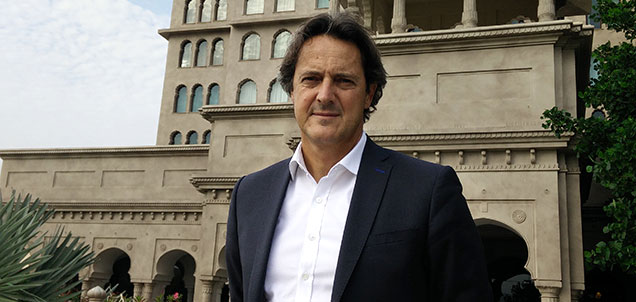
When the industry chose Partho Dasgupta to head BARC or Broadcast Audience Research Council, they obviously knew that while Dasgupta realises that BARC is a joint industry body and like any such grouping, it has many masters, egos and all that goes with it, he’s not one to get bullied easily.To his credit, Dasgupta, joint recipient of the MxMIndia Mediaperson of the Year Award 2015, has stuck his ground on issues that merit the need to stand up to the biggest (and often most feared) names in the business.
And this is how the BARC top brass reacted to the offensive from the News Broadcasters Association and its constituent English news channel members (except WION) on the evening of May 28. The channels took the extreme step of removing their watermarking as a mark of protest against BARC, only to return with watermarking at around 12am on Saturday, May 27.
Given that it’s a sensitive issue and possibly best forgotten now that the channels are back, we thought Dasgupta would duck our request for an interview, and have us chase the elected/appointed officebearers. Instead he took the questions from Pradyuman Maheshwari head-on. Read on…
It’s heartening to note that the English news channels have returned to the BARC fold by watermarking their channels. Your thoughts on the episode. Actually more than thoughts, your sentiments – when you heard of it first and now?And who do you think won? You (as in BARC)? The English news channels? Or would you say the industry lost?
This is not about winning or losing. BARC stood by its principles of being unbiased and transparent. BARC was formed by the industry to measure ‘What India Watches’ and we continue to do so.
What the news channels have done by undertaking this one-week-one-day pull-out doesn’t augur too well for the entire ecosystem as a whole. What if another channel does it in future – equally aggrieved, etc.? The English news channel – under the patronage of the NBA – have, sadly, shown the way.
Content is the king and good content is always appreciated by viewers. BARC India only measures ‘What India Watches’. We do not have control on who is watching what and neither can we change that. If viewers decide to watch a particular channel in a week and the viewership spikes, we cannot start questioning it. It is for the industry to handle it in a mature and professional way.
Frankly, our stand on measuring channels doesn’t change with turn of events. We are guided by TRAI and MIB guidelines and any policy that we put in place has sign off from all our stakeholders and Board. I believe questions with regards to our data can be resolved through discussions based on logic and fact, and faith in the system which all the broadcasters are a part of.
There is a sentiment that the standpoint of BARC has been very black-and-white. That despite seeing rampant abuse of distribution practices, BARC has turned a blind eye to the malaise. And while earlier it was only individual channels that may have objected, here the apex association of news broadcasters made an earnest request, ahead of the release of the data. Also, while there exists a clear clause on your site on the issue of multiple LCNs which we have seen, couldn’t you have been a little more accommodative?
I would want to reiterate our statement: we only measure TV viewership, irrespective of the platform or the number of instances it is available on. We are a joint industry company and not a regulatory body. Even the Delhi High Court has clearly said that the matter is between the broadcaster, MSOs and TRAI to resolve. TRAI has been investigating this much before the court case came up. We should have faith in the regulator.
There was full faith in the numbers for the last two years and people were using it to market and sell; suddenly when the landscape changes due to new entrant, one blames the same system?
We know that a lot of FMCG brands take up more than one shelf to promote a certain product. What do you do then? Hold up the supermarket for allowing them to take that space? How is this any different? If a broadcaster decides to take up more than one slot to improve the opportunity to see, it is absolutely their call. We have measured and reported data for channels basis watermark code and the viewership recorded and this time was no different. The stakeholders can always approach the BARC Board for any change of policies they may suggest.
Saying that we turn a blind eye is absolutely wrong. If you remember, we were the ones who had stopped releasing data of channels we found were involved in meter tampering. We were questioned even then. It seems like “Shoot the Messenger†has become easiest way to resolve an issue these days. BARC India was set up to give the industry the data that is robust and we are doing that and will continue doing that.
We have seen in the case of Republic TV as well as several times in the past channels disobeying the BARC guidelines on advertising data. Now by the time ASCI, the advertising self-regulator, is able to issue a diktat, the channel would’ve done its job making a claim that works against the BARC guideline.
My first question: Is it a guideline or a directive. As in does breaking of the guideline amount to the act of advertising an improper message mean it is an offence? And second, while it’s not BARC’s job to police channels, but since it is a contravention of BARC guidelines, shouldn’t there be a provision for a penalty?
Again, as I said earlier, we are not a regulator. We have issued a guideline and it is for broadcasters to self-regulate. If they don’t, there is a body that can regulate them. In this case, ASCI. The fact that we have come out with a guideline is in itself a proof that we do not favour such marketing campaigns.
And let’s face it, before it comes to BARC or ASCI, broadcast channels should have their own methods. They should self-regulate within and arrive at a consensual approach. If they agree on and adhere to their own bounds; BARC, ASCI, TRAI, courts etc. need not come into the picture at all.
It is clearly mentioned in your terms with the subscribers – specifically broadcasters – that pulling out the watermarking could lead to the suspension of data from a login for six to eight months. Will you be now doing that with the channels which have pulled out – for the channel itself and for others in the network using the same login id? And why not? Wouldn’t this mean that channels unhappy with BARC data in the future for whatever reason could do the same? Wouldn’t it have been good to have shown the stick to the broadcasters who pulled out? Or at least been tough with them? Or are you now planning to remove the clause?
We believe in talking first than in taking recourse to legal action. But if necessary we won’t shy away.
We’ve seen a similar sentiment being expressed by a few media entities with the IRS for print some years back. And we are seeing a similar outburst now from broadcasters who weren’t happy with data. I am sure the pressures over the last week-odd would’ve been major on you and the team. Would you say this is part of the game… just as if you’re in the kitchen, you have to face the heat, in an audience measurement firm, one has to be ready to face disgruntled, angry and sometimes unruly subscribers?
(laughs) Yes, it has been pretty rough for all of us. We knew we were right, it was all about making people understand that. We first did that in the Delhi High Court and then to news broadcasters. It is sad that you are pulled up for doing your job right. But as you said, it is about facing the heat being in the measurement business.
Often, when one loses a match, the pitch or the umpire is blamed, right?
Just a few days before the NarendraModi-led Bharatiya Janata Party was elected with a huge margin in the 2014 elections, there was something momentous happening in the lives of two Indian journalists in Islamabad. Both Press Trust of India’s (PTI) Snehesh Alex Philip from the Press Trust of India (PTI) and Meena Menon from The Hindu were told via letters that their visas were not being extended. There was no evident transgression on their part, and they had barely spent nine months in the assignment.
Now an independent journalist, Menon has chronicled her Pakistan experiencein the just-published book ‘Reporting Pakistan’. Menon, a senior journalist has authored two books in the past and co-authored a third. ‘Reporting Pakistan’ is being launched today (Wednesday, June 14) at the Mumbai Press Club with a panel discussion of senior journalists. In this interview with Pradyuman Maheshwari, on the eve of the release of the book, Meena Menon gets candid about her experiences in Pakistan and how she has no regrets about doing the interview with Mama Qadeer.
It’s been a little over three years since your stint as Pakistan correspondent of the Hindu in Islamabad was terminated. While there may have been hurt and anger then, your sentiments as you look back at what happened to you?
I think I was more angry then that I was expelled without being given a valid reason and in such an abrupt fashion, amid media whispers that we(Snehesh Alex Philip from Press Trust of India and I)  were not doing a job as journalists but something more sinister. I think there is a time and place for everything- and it was not destined to last in any case. My posting in Islamabad despite the spooks and travel restrictions  was an experience of living and working in another country, and the fact that this country was once part of India,made it that much more exciting and complex. The expulsion and spooking cannot take that away. The cloud of Partition will dog us forever and our perceptions and biases will be shaped by that single event which is unfortunate.The decision to end the posting speaks volumes for the state of affairs inPakistan anddoes not reflect on my abilities or integrity as a journalist.
What is most regrettable is that an informal arrangement to station two correspondents in each other’s countries has died out. The last Pakistan correspondent in India was in 2011 and the last two Indian journalists in Islamabad left in 2014. We need to revive this exchange and the media’s role needs to be reinstated with due seriousness in the affairs of our two countries more than ever now.
::Â Special to MxM: Extract 01 from Meena Menon’s Reporting Pakistan: On Balochistan, Mama Qadeer & the Interview
::Â Extract 02 from Reporting Pakistan: In Islamabad, a journalist craved the bindis women wore on TV…
Since you had visited Pakistan on a Mumbai Press Club exchange programme, you had some idea of what the country was like, but of course working there is a different matter. What were your sentiments about working in Pakistan before you headed there and while you were there. You’ve of course written about how Pakistanis were very friendly and cooperative, but a little more?
Yes, I did have a fair idea of the hospitality of Pakistan,it’s quite legendary and we were not disappointed. The first time I had only visited Karachi and Hyderabad for a week, which did seem like a long time since we packed in so much. The Hindu posting was to be for at least three years and in one city. When my editor Siddharth Varadarajan asked me if I wanted to be posted in Pakistan I said yes without giving it a thought. As a journalist it was a not- to –be- missed chance and there were many contenders for that much envied posting. So yes, I was quite excited about it and the visa kept getting delayed till finally it came in August 2013. My colleagues at The Hindu were very helpful– they had spent at least three to four years in Pakistan and gave me good advice. A house was rented and ready to live in by my colleague and I didn’t feel as if I was stepping into a strange country when we landed first I Lahore and later in Islamabad.
There is a clear difference between the people who are warm and welcoming for the most part, there is a strong civil society but for an Indian correspondent as for other journalists but more so for us, there are red lines in reporting. As I wrote in The Hindu on my return there are two states in this nation, two states of mind and I feel the twain may not meet.
There are many who’ve said Pakistan is a failed nation. Although you were there for just nine months, do you agree with the statement?
According to the Fragile (earlier Failed) States Index by the US think tank Fund for Peace and Foreign Policy magazine, Pakistan ranks 18th in 2017 and 14th in 2016. In both years it figures in the top 20 fragile states. In many ways there is a failure of democratic institutions, sectarianism, terrorism,  persecution of the minorities, anda deep stateis very much there,  but on the other hand there is also a vociferous civil society which is protesting and questioning this,  there is a democratically elected government for the second time running,  there is a Human Rights Commission which is bold and persistent in its fight for justice, the media maybe under fire but is holding its own and there are functioning utilities and public systems, though growth and poverty are major issues as are health and infrastructure.
Much has changed in India since your return, but what’s your broad level view on the state of the media in Pakistan? Versus what we have here in India?
The media in Pakistan is functioning on a razor’s edge- I read  a couple of days ago that Rana Tanweer, a journalist writing on the minorities has had an accident where both his legs have been fractured –the Human Rights Commission of Pakistan clearly said this was not a mere accident as Rana was threatened earlier with death. One more journalist was killed in the last few days. Reporting in Pakistan comes at a price. And the state of affairs hasn’t changed over the years –even while I was there the media was constantly under threat- journalists Hamid Mir and Raza Rumi were shot at – Express Tribune staff were killed, their offices were attacked- the Taliban openly threatens and attacks journalists- the security establishment too has red lines and journalists perceive them as a threat. Yet the press keeps writing, they stick their necks out by and large, and keep doing their job.
In India the press is increasingly denigrated andvery much under attack now which is a pathetic state of affairs. The entire media is being sought to be weakened and vilified by the powers that be. That can have a chilling effect, or has had already, which is a terrible thing to happenif we call ourselves a democracy.
Ever since the November 26, 2008 terror siege, Pakistan has been the centre of discussions on our news channels. Although it has touched new highs now, when you were in Pakistan, what was the impact of the highpitch anti-Pakistan sentiment on Indian news channels?
When it comes to TV, I think both our countries try to outshout each other. And in the process no one hears what the other is trying to say- and a deafness has set in. The wheels of jingoism turn continuously and there is little information which is accurately sourced or a debate from which you can learn anything- slanging matches and opinions have replaced sensible discussion and in all this,  facts become a casualty.
If you had to relive those nine months in Pakistan, is there something that you would do differently? As you look back, and if you had an idea that the Mama Qadeer interview could lead to your expulsion, would you still have done the interview?
Looking back, I did almost all the stories I had planned and researched. Living in a place is quite different from occasional visits. I have to clarify that nowhere did the government tell me it was the Mama Qadeer interview which led to my visa not being renewed. No reason was given at all.
However, why should I not do the Mama Qadeer story? It was an interview that I did after thinking it out and my paper carried it. Even with the wisdom of hindsight, I realise if it was not this story then there would be something else that I shouldn’t have done- the list could be endless. Balochistan is a bugbear for the Pakistani security establishment and the government –but for a journalist there are no red lines and I was not the first Indian correspondent to write on the Baloch issue. And by showing me the door, if at all that was the reason, the issue doesn’t die. Others will write on it and it continues. You cannot kill or kick out all journalists.
Your question also raises an important issue – when one is posted in a country, though in this case it is not any other country but Pakistan with whom India has had a history of hostility and war, do you hang on for dear life because of the visa and cease to function like a journalist or write what you think is a good story. While the Pakistani government gets upset if one reports the Baloch issue, even New York Times journalist Carlotta Gall was not spared in Quetta, what was disconcerting was that someof my journalist colleagues in Pakistan and back home felt there was no need to do this Mama Qadeerinterview and stories which were critical of the Pakistan government.
And if you were asked to go there again, for The Hindu or some other publication, would you go to Pakistan again?
This question should be asked to the Pakistan government which holds the strings for a visa. It really doesn’t matter whether I want to go to Pakistan or not.
The MullenLowe Lintas Group has  announced the launch of its new independent full-service agency in India, PointNine Lintas. It would offer omni-channel marketing capabilities including creative (on and offline), PR, activation, experiential, social, media and digital transformation; all under one roof. The agency will commence operations on August 1, 2017.
The existing marketing services of the Group will be aggregated under this new agency and will operate as its divisions. These includeGolinOpinion – PR, reputation management; LinTeractive – digital marketing and transformation and LinEngage – activation, experiential & shopper. These divisions will come together to offer full-service horizontal offerings to clients of PointNine Lintas, while continuing toretain their vertical offerings for existing clients. The new agency has a roadmap to further expand its capabilities by adding new offerings to its service stack, including creative, media, technology and platforms.
PointNine is a model developing and landing in India: Vikas Mehta
Vikas Mehta
A quick chat with the founding CEO of the MullenLoweLintas group’s all-new agency. Mehta has been Group CMO and President, Marketing Services for the MullenLoweLintas Group,
All of the constituents set to become part of PointNine have existed for some years now. Why the desire to now merge them under one head?
We are not disrupting the existing divisions. There is a market for special skillsets, and that will continue to be. While we will now have a unified team, we are not disbanding the existing teams. We are dropping the silos so they can work in a cross-functional way.
So how will the existing teams work.. where does it leave individual team leaders like Ameer Ismail who was just recently elevated?
The operating models of existing teams will continue. There will be an additional layer of a PointNineLintas team which will work in a horizontal way, so that it can leverage individual talent.
Will full-service include media?
The roadmap is to offer the entire spectrum of services and to expand. In media, we already have digital media buying and planning. And, as I said, the rest of the roadmap is to expand.
There’s a mention made that PointNine will also look at creative work – online and offline. Is this meant only to handle competitive brands in the group, or do we see PointNine also growing to be a worthy competitor to the ‘mother’ agency?
So in the unified team under PointNine, we already have 35-40 creatives. Yes, the three agency brands will be independent and going forward could compete.
So a creative head – CCO or NCD?
Yes, on Day 0 we already have people in creative. And we will have a creative head soon.
Why the name PointNine? Does the name PointNineLintas point to the agency being very close to the real thing and not exactly that? Or is it nine functions coming together.
No, no. It is to signify the beta version and is more of a reflection of the founding principles of the agency. It’s beta by choice and is a reflection of the prevailing marketing principles.
But the beta life also means that not everything is 100 per cent perfect?
Yeah, and that’s the world we live in.The best practives are evolving much faster than companies can. Our offerings, our engagement practices will allow us to evolve ahead of the market
All of this sounds good, but it will require teams to unlearn they worked and learn all-new capabilities?
Absolutely. And this is what we’ve been working over the last few months…. Arming our people with cross-functional expertise so that they can tap the best of talent across
The MullenLowe group is going through the process hyperbundlingelsewhere? IsPointNinepart of a larger global plan or will exist only in India for now?
This is a model developing and landing in India. It has been endorsed by the network and global bosses. As it is today, it’s for India. But it could well elsewhere.
You’ve have been part of MullenLoweLintas group’s rise over the years as well as various wins in effectiveness and strategy awards. Will that continue, now that you have an independent P&L responsibility?
At this point, my group role continues. We are in discussions on the future of it.
Any targets for the agency that you can share?
Given that we are some 20 days from launch, let me tell you what according to us will be the definition of our success. We wish put our work out of there which gives the value of seamlessness and its impact on business to clients. I am quite hopeful that’s how integration can be done going forward as against the 360-degree wagon wheel that currently exists.
Announcing the new agency, Joseph George, Group Chairman and CEO, MullenLowe Lintas Group said: “We made our intentions to go full-service clear four years ago. While the list of companies and industries pursuing full-service (under different labels) has grown tremendously in this time, the approach to it remains more or less the same. PointNine Lintas is a fresh take at an agency model that’s multi-faceted at its core. So far, only holding companies have seen some success with this approach, but it’s restricted to a handful of very large global clients. An agency network doing this would be a first, and we believe it could broaden the base of clients who can tap into it.â€
Along with Lowe Lintas and Mullen Lintas, PointNine Lintas would be the third independent agency of the MullenLowe Lintas Group in India. Vikas Mehta, currently Group CMO and President, Marketing Services for MullenLowe Lintas Group, has been named CEO ofPointNine Lintas.
Speaking of the appointment, George said: “I have worked closely with Vikas the past four years and I am absolutely certain that he is most qualified to deliver on this ambition. Not just because of his subject matter competencies required for a multi-service agency, but also for his passionate, stubborn and informed belief in ‘full service’ being the only way to go!â€
Said said in a statment, “We have gone from the age of communication to the age of experiences. While the market has evolved at a furious pace, the agency models haven’t. The opportunity to take the Lintas pedigree and build an agency for the experiential economy is an inspiring one. Hyper-bundling is our biggest priority as a network and I’m grateful for the challenge to build a new agency that’s hyper-bundled from day zeroâ€.
Among the first things that Sanjeev Bhargava did when he joined The Times of India as its brand custodian was hire an all-new creative agency. Which he did, and appointed J Walter Thompson, the agency which he quit to move to the leading newspaper company. Before joining Bennett, Coleman & Co Ltd as Director – Brand (The Times of India and Mirror), he was Managing Partner, JWT and has also worked with FCB Ulka and the Mullen Lowe Lintas Group. In Mumbai for the Oppo Times Fresh Face contest, the fresh face of the Times of India brand spoke with MxMIndia.
So you have hired a new agency and guess there will be a refresh?
The Times of India is a very powerful brand and  has had a major influence on the landscape of India over the years.And the task is to continue to have that sphere of influence, continue to be a nation-building cause as it has been for past so many years.
Right
And to be able to do that one has to start acknowledging the fact that the landscape is changing.The media landscape is changing, the consumer habits and behaviour are changing. Their expectations from a media brand is changing and if you have to therefore continue to play the role that you played in the past we must create initiatives which engage the audience of today.
That’s right
So all initiatives, as we go forward, practically all initiatives the Times of India is doing will keep this fact in mind.
This includes the Fresh Face contest?
Oppo Times Fresh Face is a classic example of how we have looked at the existing property that we had from so many years for last 10 years. This is the 10th year, we but made it more contemporary, to make it more in sync with the times. Today, Young India lives in two worlds – the virtual world and the real world and while we have a role to play in the real world, we must acknowledge the virtual world as well and therefore Fresh Face of this year acknowledges that. It says we will recognise talent which understands how to live and how to profile itself in the virtual world itself not just the real world. So it’s all very well to have a great personality, great talent, but also need to have the capability to be able to profile that talent, profile that personality in the virtual world and that’s something that we incorporated in this year’s Fresh Face. So this is the kind of change that we are bringing about across many facets of our marketing initiatives for Times of India.
So it’s basically making your communication more relevant for the digital generation.
More relevant, more of interest. The fact is that today’s citizen of India is as knowledge-hungry as we were in our times. In fact, more so.
Right
And it’s knowledge hungriness. It is hunger for information and knowledge and I’m making a distinction between the two because a newspaper gives information and it also gives knowledge. In different aspects of its news-making, there is editorial, there is news, there are factoids, features and so on and so forth. Therefore there is a role that we play in the life of the citizen and as time progresses, it is important that we continue to remain relevant to even despite the fact that their attention span is now divided between many, many things that are offered to them through the digital medium, through the phone medium etc. as well and that’s where we are and that’s what we are planning to do as we go forward.
Do you see that going forward, of course The Times, the paper the newspaper itself has over a period of time adapted to the changing times, some would say the faith, shorter stories and stories broken up into various elements?
Yes
Do you see that along with your advertising, some changes will happen in the newspaper too?
Absolutely. The product has a very integral role to play. You are absolutely right. We have shorter stories. We have far more stories than any other newspaper in the country.
Hmmm.
So more stories per page is something that we are very proud of because we know that is what required for today’s reader and that is what we do very diligently and almost at a measurable manner we do it. So it’s a very important part of what we do as a paper. Then what we call rapid reading where we are able to consume a piece of news it is constructive in a way where there are factoids which are summarised somewhere, so you don’t necessarily have to read the entire thing if you want to consume the news at a skin level you can do that the paper is designed like that.
Right
There are many things that have been done over a period of time to make sure that we remain relevant, we remain interesting, we remain youthful for today’s citizen.
Over the years, The Times of India has had efforts like Teach India…
Yes, Lead India, Mann Ki Asha….
So [given the new agency etc], will there be a shift?
Yes and No
How?
The fact is that we will continue to be a force of nation-building… we take that role as a newspaper extremely seriously.It’s not something that I would compromise.
Achcha
So as we go forward with our marketing initiatives, these initiatives will empower  the young. They are about building a nation-building ethos. They are about constructing a stronger country from an intellectual aspect, from an empowering aspect. We need to do that and if we as the largest printed English newspaper country by the world don’t do that, I think we will be falling short of our responsibility as a corporate citizen as well. So that’s something we will not change. That will continue. What we will do is that there has to be an acknowledgement of the changing landscape and with the changing landscape, with the changing consumption habits on the media of Bharat. Readers are concerned as far as the citizens are concerned we must acknowledge that and we must incorporate that into our market plans to continue to build our business.
Okay
So that’s where we were not before. So, yes,what you will see will have a strong continuity with the past.
Just to clarify, you had Taproot earlier and now you have JWT–
JWT Mumbai. The Times of India – the English paper and Mumbai Mirror are with JWT. That is a shift that has happened. But Taproot continues to engage with BCCL as a group.
Given that you are trying to reach out to the young, what will be the vehicle you will use for advertising?
That will depend entirely upon the initiative, I can’t even answer that question because there are initiatives that are local. There are initiatives which are aimed at certain cohorts. So it will depend upon initiatives, different initiatives with different audiences and therefore different media and that’s the technical question it depends on initiatives. It’s not a policy decision, it’s a technical decision.
Does the media agency also change?
No it continues to be Lodestar.
Will the advertising for the Times of India change with the market – say Mumbai could be different from Kolkata or Chennai?
No, Â The Times of India is one brand. It does not change from city to city.
Ok
The product can change because issues, requirements, reader expectations from a product standpoint can different but the brand promise, the brand ethos, the brand equity that would not change.
When do we see the advertising?
Soon. It takes a little time for a big shift to adjust itself so it will I guess be in another month or month and a half.
And how’s it working with your former agency from the other side of the fence?
Oh that’s great because you know one understands the strengths and weaknesses of every organisation that you work in so it becomes more easier to deal with them. But I’ve lived with the industry for so long that I am familiar with most people in most agencies. So it’s not as if there’s much of the difference because I know people in Lowe well, I know people in Ogilvy extremely well… it’s a small industry, not as if I’m unfamiliar with the people. It’s just that there are organisational strengths somewhere, there are logistical strengths of some agencies some other etc. It’s been a considerate decision at a very objective level, but Taproot has been extremely valued partner in the past continues to be even today and I have tremendous amount of respect for them as well.
We interviewed Sanjay Nazeraliat Goafest this year. That’s way back in April. And for some reason, we couldn’t use this interview then, because we had a bigger big story coming up every day, and this one deserved that status. Nazerali is Global Chief Strategy Officer at the Dentsu Aegis Network where he “works with account teams to collect, nurture and explode ideas that deliver outstanding business valueâ€. He also co-ordinates with DAN strategists across the the world to ensure they “deliver original, ground-breaking insight and strategy for all our clientsâ€.
Following an MBA at INSEAD, he was appointed Senior VP, Marketing, at MTV Europe. Sanjay then founded a Top 50 media insights agency, The Depot, before joining BBC News as Global Director of Marketing, Communications, and Audiences. Excerpts from an interview (do note:this was conducted in April 2017):
The Indian marketplace has been going through a fair number of changes over the last few years, and since 1991 when liberalisation happened, and over the years with the start-up culture, consumerism has touched a new high. As you look at India from a global point of view, where do you see us versus the rest of the world?
India is growing faster than Google. India has growth rates that are quite extraordinary and particularly giventhat it is a relatively liberal environment and it’s a democracy, that’s really powerful. However, within the advertising community I do not believe that the rest of the world is yet seeing the power of the work that comes out of India. One tiny little example which I accidentally stumbled across in an awards show was the Tata Tiago, and how very quickly that was rebranded from Zica, and how it was rebranded from Zica by asking people’s opinions. It was in a very very short space of time, and then essentially turning what was a problem to an advantage. Now, there are many major brands that operate globally which I have not seen react with that kind of agility and so I don’t believe that our work in India is necessarily showcased appropriately internationally.
And why do you see this happening? Is it because people don’t take India seriously or is it because a Tata brand is inconsequential in the world order?
I thinkIndia doesn’t think of itself as being globally consequential in the same way. I really don’t. When I judge awards, I rarely see campaigns coming in from India. Why? Why does the industry here not submit more to Cannes? Why doesn’t it submit more to Festival of Media?It should be doing it, because India is delivering some of the most exciting work that I’ve seen. I’ll give you one small example of this; the world is talking about brands moving from positioning to purpose, and the world of brands within society.Well, I watched some awards recently in which every single campaign was pretty much about a social purpose. Why is none of that work being showcased around the world? India seems to be leading the way in that sense.
But is it possible that because of the kind of the fees that come with the awards, is that one of the reasons why people may be kind of weary?
I’m not sure that I can answer the question around fees. What I can say is, my experience of the Indian advertising industry is that it’s very powerful but it’s also quite inward-looking. And I would love to see it become more outward-looking.
We’ve read various articles of yours and your views that the modern marketer should be bracing itself forthe current tide. If you look at the Indian circumstance and the Indian environment, whether it is the homegrown advertiser competing on the world stage, or somebody who’s coming from outside, who’s getting set to conquer the country – are there any special traits that you think people should look at for India? On how to be successful in India. In terms ofmarket spends, use of media…
I don’t think there’sa rule as such. I do know one thing, which is that the adoption of social media here is vast, and if you are not going to be part of the conversation, then you’re in a difficult place already. So I think that certainly one thing to consider is the sheer volume and power of the Indian consumer conversation. But I think there are otherspecific things within this market which are really important; something that I’ve seen happen through my lifetime is the difference in India saying “Oh my God, that’s wonderful, it’s imported, it’s foreign goods†and today the sheer level of pride in Indian produce and Indian-owned products. So I think nationalism – and I don’t mean this in a protectionist Donald Trump-type way, but I mean genuine pride in India – is something people do need to understand.
Is there a sentiment that what is produced in India is not on the same level quality-wise as MNC-produced, because of the R&D and QC gaps? A case in point being Patanjali? Because along with the nationalism and pride, there is also the view that some people don’t really have faith in the quality of the product and the kind of research that goes into making of the product vis-a-vis what is produced by a transnational corporation.
In certain Indian software, that is not true. I’m going to to tell you a story which really shocked me.Last November, I was kindly invited by Google to go and visit their campus in Silicon Valley.Beautifully warm, I was sitting outside and I looked around and I said to my host, Google is an Indian company; every single face here is Indian! There are Indian couples sitting on the benches eating tiffins together at lunchtime. You go into the canteen there and there are five types of food – you have Punjabi, you have Gujarati, you have South Indian food… So I don’t think that is true in terms of digital product at all. I think it’s probably true in terms of physical product, but I think India, as the gravity of perception moves towards soft products rather than hard products, I think that perception changes.
You have a strong Indian armas far as Carat is concerned,on the back of the Mondelez win, and now you have the Marutiwin. Is there any specific agenda that you have for your team here to look at things differently from theexisting big dads?
Yes, and its one I’m absolutely passionate about, which is simply this; today, we need more specialists than we’ve ever had before in marketing, you know once upon a time, life was easier where the client funded everything, the ad agency who made it and the medium where it played out. You now have a hundred and fifty people on any given campaign, you’ve got the paid social specialist, you’ve got the organic social specialist, the paid search specialist, the data stack developer, you have everyone. How are you going to get them to work together? And that to me is the single-biggest agenda point that I have, which is in one word – love. If you do not love, respect and collaborate across various disciplines, you will never deliver an integrated campaign for clients in today’s world. And I know I’m using a fruity word like love but fundamentally, this is about collaboration.
But people do work in fiefdoms, especially in the creative world.
Yes and that is absolutely my agenda, which is, smash down the fiefdoms, make it in everybody’s interest, for everybody else to win. Make that win collaborative because you can get 90% of the campaign right, you’ll then fall down on paid social and the entire campaign will disappear.
But do you think the existing people, because they come with their own baggage, can implement that change, or do you need some outsiders to infuse a fresh deal of…
Well, I think it’s a little bit of both. I’m using fruity words like love and respect and all this, but you can look at this in respect of hard commercial terms.How can I incentivise you financially to work with that person over there? Can part of your bonus beactually based on the extent to which you will or won’t collaborate as judged by them? Now the moment you start getting into those sorts of hardcore rate chart matrix, you start to drive a different kind of behaviour. If I know my bonus is contingent on you appreciating that I’ve collaborated with you, hey I’m going to collaborate with you.
Do you think that’ll happen?
So withinDentsu Aegis’ network we’ve taken one step towards it; we were the first group to do that, which is we have a single country P&L across all ofDentsu Aegis. Now that I think is an incredibly important move and you know, two decades later or a decade later [Martin] Sorrellhas his version of thisthat he’s trying to do. If we are going to work best for our clients, and we have to think about clients, the hand that feeds us, you have to collaborate, and to me that is my biggest agenda point, which is to change the behaviour of agency groups.
While fiction shows have ensured the continuing success of general entertainment channel Colors, a significant contributing factor to its staying top-of-mind of viewers through the years is the popularity of reality shows Bigg Boss and KhatronKeKhiladi. While the new season for KKK is currently on, the announcements for Bigg Boss have started. The owners of both the format is EndemolShine India and CEO and Managing Director Deepak Dhar has been anintegral part of the global software major for the last 11 years after spending nine-odd years at Star India and MTV. Excerpts from a conversation.
We are in the eighth season of KhatronKeKhiladi, and the 11th season of Bigg Boss is on the anvil. Given that general entertainment channels reflect popular cultureand if this popular culture reflects the times we live in, how would you say have things changed, from the firstKhatronkeKhiladiwith Akshay Kumar to Rohit Shetty now…
We found a partner who was ready to take a position back in those days, and wanted to do stuff that the market was not ready to do, and we really created a market out of that, and those days it was Rajesh Kamatand AshwiniYardi. I used to be Rajesh’s deputy and I have had a fantastic equation with him. He said he needs a show from you and I assured him I would come back with an idea. So the following Monday or Tuesday made a pitch and a presentation.
The channel was not even launched, there was nothing called Colors, there was no logo, there was no look-style-feel, and I went sat across the table, with Ashwini and Rajesh, and said I’ve got Fear Factor. And they said everybody has seen it on AXN, how does it become primetime 9 o’clock? Rajesh said he wanted something spectacular.
I told him I have a different take on Fear Factor, so he asked me what it was. And I said it’s an all-female version of Fear Factor, so they said okay, and then Ashwini got a little exited and said:Tell Me More. So I said imagine what my mother or my masi is thinking while watching the show and saying ‘dekhoaajkalkiaurateinkya-kyakarrahinhain’. That was the thought and they kind of loved it. This was taking a usual route but in a very unconventional way.
So how have things changed from then to now. Has your value system changed with the show being bolder now?
Yes, with every season, things have gotten bolder, especially in Bigg Boss we have introduced a lot of tricks and things. There are some who have loved them, and there are a few who havn’t, but the TG really loves it. Like for instance when we put Sunny Leone in the house at one point of time and everybody was shocked and surprised. A show like Big Brother Bigg Bossalways throws up a lot of surprises – like we had Dolly Bindra and we also had the Great Indian Khali.
And you had Jade Goody in Season 2
Yeah, that was the headline story of the day. With ShilpaShetty as the anchor, and everyone wondered if Shilpawould do to Jade what she did unto her. But of course Shilpa took the ‘AtithiDevoBhavo’ route and and that was like super-energy, great storytelling at its peak.
Now there’s Salman Khan…
Yes, Salman Bhai is so emotionally invested in the property. He really plays the producer of the show. He loves something and he dislikes something, and he makes something, and to an extent he would go and say, this is the last season of the show, now I am pretty tired of the show, and we kept it the way it is. Because we really don’t want to script the show. I don’t know what he is going to say next, he might bash me (laughs).
He ensures the buzz every season…
The buzz starts the fact on whether Salman is doing it or not doing it and then who are the people who are going to be in the house. There are lot of people who self-proclaim they are going to be in the house. And the feeling when we produce it is that this could well be your neighbour’s house from 9-10pm or 10.30-11.30pm, whatever be the time slot.
Â
Although Endemol does a lot of content through the year, but it’s known essentially for Bigg Boss, KhatronKeKhiladi
It’s not a compliment at all and while I would love to believe it’s a compliment, but it’s not a compliment, because we do so much outside of that. Big Brother is also such a big project at a global level for us and in India too it is such a big property now. It has gone to regional markets as well – Kannada, Bangla and Tamil with Kamal Haasan Sir as the host.
We have seen that in the past that Amitabh Bacchan had come in too and while he did create a buzz, he didn’t fit in very well. Was that in the back of your mind with Kamal Haasan.
No, not really, Kamal Hassan Siris as wicked and wacko as Salmanis really pushing us as well.
How much is the pressure on you to offer new, out-of-the-box solutions. Like Colors came up with Rising Stars which took music reality shows to another level. How much do broadcasters push for your innovations?
The pressure is enormous. Because you know everybody is trying to build a big idea, but having said that, every now and then we pull a rabbit out of the bag, and we manage to do something.
And how about a Made in India format?
So many years back (and we will come back with that very soon), we created the Great Indian Laughter challenge, which was something as disruptive, but at the same time very primetime, holistic family viewing kind of thing. It was the first time many men came to watch television and it was such a runaway success and after that the entire genre of comedy opened up.
But these days laughter shows aren’t quite family, right?
Yeah, now people forget that while pushing boundary or evolving you still want to keep it family.Having said that, we want to go back to the conventional standup comedy.
So will there be an Endemol India format that you could take abroad?
There will be soon.A lot of energy, work and thrust in the development pipeline is on that. So I feel there we might take again possibly a very unconventional route, maybe we will look at fiction to travel abroad, because you know internationally people are now wanting stories that feel earthy. Given the way Dangal and Bahubali caught everybody’s fascination internationally, and not just the Indian diaspora, there’s a learning there.
And fiction is what you have gotten into, right after the funding came in but that has not grown as much as one thought it would?
Well I would say yes, and no, but the pressure has been there almost every year, to deliver one or two things, can we go from one or two to three to four. I mean that’s the learning curve for us, right now we have got fantastic show called the Test Case, that is something as disruptive as it could be, and that has been a fantastic opportunity. So every year we do a couple of shows which are very-very disruptive and the market may not pick it up, but we find it as an opportunity.
Do you OTT is possibly the next big platform for disruptions?
I think so, given the way the landscape has changed, a lot of people will go there, and we are also thinking of engaging with digital audience.For instance, I got a call from Voot, and they said give us something on Fear Factor. A year back, I didn’t think I would get that kind of a call.
While most of your revenues may be from television right now, do you think that could skew in future?
I am not seeing skewing but amplifying and contributing at a very healthy rate, and in the next two years, we have also projected some growth in various segments of ours.
What could be the kind of projection?
I think it will double or triple up in that space, because the number of platforms that are coming up.
So in double digits?
Yeah, because the amount of content that the new platforms are looking at… because you are not programming for just one slot, or one or two weekend slots across 13 episodes.They are looking at, say, 30 hour of content from Endemol, or anybody else. And that’s an opportunity for us…
What about regional television? How has that been growing for you?
Outside of Hindi primetime entertainment, the next big contributor to us, is regional, and there are six different markets there. So if you crack three of those markets, you are really well ahead of the game. We are the only producers who operate in all the languages, and we operate across genres, non-fiction to fiction, within non-fiction also, all the segments we operate in, so for us, the opportunity immediately multiplies, and amplifies, and that is where it.
Bigg Boss, for instance, has gone from Hindi to Kannada, Bangla and Tamil and we will add a few more languages towards the end of this year. Then there’s this show called ‘Deal or No Deal’ which didn’t do well in Hindi, but has been a big success down south for Sun TV in all the foursouthern languages, with more than 500 episodes. So that was a big regional success for us. Also a big success has been Million Dollar Minute, so right now we are doing it in three languages, we have actually loved a lot of these.
Is English a big frontier for you? And what else?
Well, it is a little slow there, but I see things opening up maybe on the OTT side. Outside of regional we do a lot in the youth and lifestyle spaces, because that’s one big market for us – Nat Geo, Fox Life, History, MTV.Scripted is fairly strong and big for us, and as is regional, but it would be interesting for you to know that last year we actually produced Big Brother China in India, on our facilities, and who would have thought a Chinese version of China outsourcing to India. I have actually seen people in the house having roti and sabzi with chopsticks, and I was amazed at the way we got that show together…
There’s of course the regular Hindi entertainment content… anything new there?
Bigg Boss, KhatronkeKhiladi, MasterChef is another big one and waiting to go into various other languages. Food is such a territorial thing in India, and everybody loves to show their food and their kitchen, so MasterChef is one. KhatronKeKhiladi will also now go into other Indian languages. We have exploited Big Brother, Deal or No Deal, Million Dollar Drop, Minute to Win It… I mean there are others that are now waiting to explode into other markets. Many years back when Rajesh was here, I had told him: Sir, let us go regional and he said there is no money there, we might not even recover our flight costs. I said we will just go, and we went on well ahead of time, and really built that capability.
A show that may have disappointed you? Something that you were backing hugely, but it did not work?
I did a show called Yudh, and we were really emotionally invested in that show, but it just didn’t fire at all. I don’t know why, we thought it got it all covered up, with legendary MrAmitabh Bachchan. It was great story, a very family drama, but I think the learning out there was that maybe it was too dark.
Huge expectations given there was Amitabh Bachchan, I guess
Maybe it was an OTT kind-of a show, and not a primetime TV show.
Possibly the channel at that point of time was not right?
Yeah, possible. So that was something in which I had personally invested a lot of energy into it, to get that going, but having said that these are learnings
With the going so good on most fronts, is there something that worries you? Anything that gives you sleepless nights?
I would say two things that really worry me are unhappy clients if any and the next big idea. The clients need to be happy with the content or the way we are going about it, and the fact is that one constantly loses sleep thinking of the next big idea. It might be an idea which may not work, but I am constantly dreaming of ideas all the time. These are also the two things which keep me going. For us the fun part is we are the kitchen of a restaurant, a lot of things are being tried and tested. Many things work, somedon’t, but the fun part is we are constantly rolling up our sleeves to get something going.
And if you are in the kitchen you should be ready to face the heat?
Absolutely, all the time the pressure in terms of revenue pressures, the external rating pressure, you know what is the next big ground you are breaking, I mean it’s hot in here, but it’s very exciting…
K V Sridhar, popularly known as Pops in advertising circles, needs no introduction to MxMIndia readers. Currently Founder and Chief Creative Officer, Hyper Collective!, Pops was until recently Chief Creative Officer in Sapient Nitro and is perhaps best known for 17-year stint with Leo Burnett. Earlier this week, his book ’30 Second Thrillers’ was launched. The book is possibly the first to bring us behind-the-scenes info from the ads of yore – like Chal Meri Luna by Piyush Pandey to Agnello Dias’‘Airtel smartphone ads’.
’30 Second Thillers’ tells the story behind ads, interlaced with inputs and insights from the makers themselves. It features interviews with creative heads and directors of all generations. Pops has handpicked each ad based on its popularity among viewers, met their creators and talked to them about the entire process. The creators include Alyque Padamsee, AG Krishnamurthy, Piyush Pandey, Prahlad Kakkar, R Balki, Prasoon Joshi, Prasoon Pandey, Josy Paul, Agnello Dias, Arun Iyer, KS Chakravarty, Prakash Varma, Nitesh Tiwari, Preeti Nair, Ram Madhvani, Kailash Surendranath, Amit Sharma, Ashish Khazanchi, Gauri Shinde, Shriram Iyer, Kartik Iyer, Parshu Narayanan, Shantanu Sheorey and Pops himself.
We produce here the Tata Sky ‘Isko laga dala, toh life Jingalala’ story from Ashish Khazanchi, now Co-founder, Enormous Brands
By K V ‘Pops’ Sridhar
As I traverse from yesterday to today, I reach an ad, whose slogan has become a part of the popular culture. It has been rendered into one-liner jokes, used in films as a comic element and is still loved. Tata Sky, the digital network service gave the world, “Isko laga dala, toh life Jingalalaâ€. We have Ashish Khazanchi; sharing the tales behind this highly entertaining line.
The Jingalala Moment
Ashish, I think, “Isko laga dala, toh life Jingalala†is one of the most popular slogans after radio days. A slogan, that may not make any sense but because of its phonetics, it has caught onto the imagination of everyone. It became so popular that even an Amul Hoarding was made for it!
How did such an entertaining idea dawn?
‘Pops! It was also used in a Salman Khan movie. I feel, it became popular due to its sheer weirdness. “The once upon a time†of this ad starts, when Tata Sky was coming up with a new way of watching television. This was during the times, when people had cable connections, which aired seventy to eighty channels and were happy with it. Tata Sky intended to usher in a quantum leap on how television was being watched. There were some satellite television options, but they weren’t really gaining success. This was because, they took the technology route to reach customers, and that route proved to have an intimidating effect on the customers. As for Tata Sky, we were very clear on the route we would take. It was to be of “More entertainment coming your wayâ€. Not just seventy – eighty channels, but now the audience would get three times more channels. Increased choices in terms of content – active learning, games, cricket from different angles; it was more than just channels! It was about entertainment. To communicate this variety of entertainment, we needed a line; a slogan. So we got thinking.’
That is when the line ‘Jingalala’ line came up?
‘No! The first line we thought of was, ‘Dish nahin, Dishkyaun hai yeh’, a line that said – It isn’t just a Dish connection, but a huge change in the way people consume entertainment! We at the agency level found this line very catchy and hence, we wrote many commercials around this line. We went and presented this line and the commercials to the clients. Vikram Kaushik and Vikram Mehra were the clients. After listening to the lines, they were a little apprehensive and said, “We are Tatas and we never take a dig at our competitors. We never denigrate them. It is against our company ethics.†We were a bit confused as to which competitor are we taking a dig at? With this line? And they said, Dish TV. That is when we realized! Because, when we had written it, we had no reference to this angle. We were actually referring to the physical Dish Antenna. But yes, unintentionally it did turn out to be a competitive line. So now, we had to start from scratch.’
What happened next?
‘One day, I was sitting at home and thinking as to, what can be done now? What will be that line which will be as much fun and also ridiculously squeaky? One that can hold all that the product has to offer. After a couple of attempts, I nailed it. For fun sake, I wrote the line, “Isko laga dala, toh life Jingalala†and found myself laughing out loud, alone, at my home. Immediately, I messaged Chax (KS Chakravarty) saying that I cracked it, and wrote the line. He replied with four to five smileys and said that he loved it. The next day, I shared the line within the office and everyone loved it and found it crazy. We went back and presented the entire communication plan to the client. Their immediate reaction was the best reaction; they started giggling and said, “Do it, it is very interestingâ€. They also requested to come back with one more option, so that they have a benchmark against it. But it was obvious that they had liked the line; it came to everyone as an instinct!’
What was the other line you gave as an option?
‘I guess it was, “Tata Sky ho sang, to gapu chi gapu chi gum gum.â€â€™
Once the ‘Isko laga dala toh life Jingalala’ slogan was out in the universe, what was the initial reaction it garnered?
‘Initially, there was some cynicism which we faced, especially from the advertising fraternity. But the audience loved it and it began to gain popularity. Soon, the cynicism vanished. Pops! The line meant a lot of things; it told people that something big was on the way. It did not talk about the complicated picture quality and sound quality aspects. This line simply told people, that some kind of “Jingalala†is going to happen and got them curious. This resulted in people checking check it out. And the line, due to its fun and crazy element, gave us a creative respite. We could do all kinds of crazy thing in our ads. We dressed up kids like Einstein, we had a man dressed up like grass because he wanted to go to the stadium to watch a cricket match, from the best possible angles. The line back then, also had many versions, “Pooch dala toh life Jingalalaâ€, “Cricket hai toh life Jingalalaâ€.’
Who directed the ads?
‘Most of the ads were directed by Ram Madhvani! Also, I would like to make a special mention here, our clients get full credit for having stayed with this line for almost seven to eight years now.’
How did you think of the word, Jingalala?
‘Honestly, I have no conscious memory of it source. But if I deliberate a bit, I think it had got stuck into my brain from the song “Hum bewafa†of Shalimar. The song has a tribal chant – “Jingalala hu, Jingalala huâ€.’
It is the power of creating something creative, out of gibberish, which gives way to such slogans. Being highly audio people, slogans like this become us. These creations make us traverse beyond languages and regions.
PRAXIS, the annual conference of Public Relations and Corporate Communications professionals in the country, is holding its sixth edition starting today. What started as an experiment by a keen PR agency professional and likeminded friends with the blessings of biggies in the business, is today being billed as the biggest PR and corp comm convention in the world.
In between running around ensuring all the arrangements are done with the finesse of an international event, founder and curator Amith Prabhu took time to ask the questions.
It took some convincing to get Prabhu to speak since he prefers to stay in the background, and have some young professionals take the lead in fronting the effort.
A disclosure before you read this. MxMIndia has been an early and active supporter of Praxis from even before it was launched. In fact we like to believe (perhaps incorrectly) that it was an article on MxMIndia by Prabhu post a dismal showing by Indian PR agencies at Cannes that led to the birth of the idea. This year too our support stays. However, this support will not influence our coverage on the event, if any.
So we are on the sixth edition of Praxis. As we get set for Praxis 2017 to take off in Jaipur, your sentiments having scripted the journey?
I am in disbelief that we have come this far. What was planned as a one-off as grown on to become an annual signature event in the calendar of the discerning Indian professional. The support from the fraternity is what makes it what it is. I feel humbled to have been the catalyst of this movement.
Everything as per plan?
So far so good. This is bigger in every sense. 12 international speakers. 606 delegates. 350 hotel rooms. 36 commercial and brand partners. It could not have been better than this. The theme Beauty of Communications – Integration of Content, Community and creativity will come alive.
So what according to you makes Praxis, the world’s largest PR congregation? Surely the PR fraternity elsewhere in the world is larger…
I have been to some of the biggest PR summits in the most evolved markets including those in New York, Chicago and Miami. They have about 300 people who come for a day or two, stay on their own. Here, we offer the entire package in an offsite location where every delegate comes from outside the host city. More than 50% stay in the same hotel. The summit includes two dinners, a live concert – it is an entire package at a price that is a fraction of what global conferences are priced which include just two lunches.
The highlights this year?
Everything hovers around six for the sixth edition. 6 keynotes, 6 panels, 6 special sessions. We have managed to bring 6 Global leaders of which four are CEOs of some of the largest PR firms. We will also bring out the list of the Top 100 important professionals ranked by the editorial team of Reputation Today – a magazine that was born out of Praxis. The Raghu Dixit Concert will be a major draw. All in all, it will be a memorable experience created by a three member team supported by a dozen volunteers.
A word to those who’ve missed out this year… why they shouldn’t have missed?
Every leading PR firm in the Top 30 will be there. We do not repeat speakers so some who have spoken in the past do not choose to come because they feel they know it all and we respect that. A few who won’t be here and had registered are cancelling plans due to personal reasons. Those who missed out have forfeited a great opportunity of learning and meeting 600+ professionals under one roof over two days.
And PRAXIS 2018… where will it be?
As per our policy of rotating the venue to different zones without repeating the city, we are likely to take it to Hyderabad. We are tentatively aiming for September 28 and 29 in 2018. We have already opened registrations at bit.ly/PRAXIS2018 at a 70% offer for this week.
Guillaume Herbette, Global CEO, MSLGroup is responsible for overseeing all MSLGROUP entities worldwide.  When he took charge of MSL in August 2015, he brought with him over 25 years of varied experience to the role, including at FleishmanHillard as Global Vice Chairman of Operations, a US-based role that he took up in 2010.  Prior to that, Herbette served as chief operating officer for the firm’s US Eastern and Western regions and Canada regions, having initially joined FleishmanHillard in 1998 and working within the senior echelons of the company’s EMEA operations. Guillaume began his career at PwC, working for the professional services firm in both Paris and New York.
At Praxis2017 held in Jaipur last week, Herbette had everyone in a thrall as he passionately spoke about the emerging technological frontier, Artificial Intelligence (AI) and its tools, augmented intelligence, augmented reality and virtual reality. Herbette is convinced that AI will herald the next big technological revolution and feels that PR companies must learn it and use it in their communication. While an opportunity of an exclusive interview gave an opportunity to talk about how and what MSL is doing in India, but getting a global PR biggie to talk on a key tech trend was even bigger. In this chat on the sidelines of Praxis 2017, Guillaume Herbert speaks with Rahul Chandawarkar on AI, the theme of his keynote and how it’s the next technological revolution…
We seem to be at the doorstep of the AI revolution. How should we be getting ready for it?Â
Frankly, we do not have a choice. AI will impact PR consultancies, FMCG companies and branding companies in a big way. All these companies need to create AI-enabling platforms within their organisations quickly.
How can AI be combined with traditional storytelling?
It will offer several new ways to create content and new ways to communicate our stories. It will accelerate the manner in which we tell our stories. Tools like augmented reality and virtual reality will amplify the emotional resonance in a client’s story substantially. AI is the next big technological revolution.
And how is it being used currently to enhance the emotional resonance in storytelling?
Visa International ran an augmented reality-virtual reality campaign in Poland recently which saw a zoo-like situation being created inside a shopping mall frequented by children and their parents. Children suddenly could see lions, elephants and polar bears walking around them. Visa enhanced its brand image because it could create excellent emotional resonance among the children and their parents. The event went viral on social media and gave Visa tremendous visibility.
How do you foresee India adapting to AI?
India is a land of many brands. Homegrown and multinational. The average Indian is getting more educated, technologically savvy and affluent. India will adapt to AI very quickly.
India has a strong IT industry. Logically, the Indian PR industry must lean on its IT counterparts to better understand and use AI, right?
Absolutely right. Let me give you an example. Publicis.Sapient, one of our group companies through its Indian arm, Sapient Razorfish India has 7,000 technologists working on the artificial intelligence (AI) platform Marcel. Our parent company, Publicis Groupe, plans to use Marcel to communicate and collaborate across its global network of agencies within one year’s time.
India has access to a highly technical workforce. The AI revolution will take place very quickly and rapidly in India.
Will future PR teams have engineers and IT folk in their ranks?
PR companies will surely need data scientists and IT engineers in their teams. These individuals will be necessary to leverage the benefits of technologies like AI
Are you planning to train on AI at a personal level?
Yes, I am very interested in this topic and have a fair understanding of AI already. Companies like IBM run short courses on AI. I intend taking one of these courses to better understand the technology.
Will you get your senior management team to follow suit?
Yes, absolutely. I will be pushing my senior management teams across our network to follow suit and retrain themselves with AI.
Social media is god’s gift to the corp comm function: Rob Flaherty
Rob Flaherty is Chairman and Chief Executive Officer of Ketchum, one of the world’s top communications firms, with offices and affiliates in 130 markets in more than 70 countries. Flaherty was named Global PR Leader of the Year in 2016 by the International Communications Consultancy Organization (ICCO). Flaherty leads Ketchum’s 19-member Global Leadership Council to guide the strategy, client service and performance of the agency. Ketchum was named Agency of the Year in 2012 by PR WEEK and is a finalist for 2017 Global Agency of the Year.
Since joining Ketchum in 1989, Flaherty has been involved in all aspects of the firm’s business, including having successfully led its largest office, one of its global practices and several of its largest client engagements. As a client counsellor, Rob specializes in corporate positioning and issues management. He has helped companies prepare for and respond to challenging situations ranging from product liability and airline accidents to data breaches and antitrust litigation. He also has played a lead role in growing the firm’s client base. Flaherty became President of the agency in 2008, CEO in 2012 and today is one of the industry’s most sought-after client counsellors.
In an exclusive interview with MxMIndia on the sidelines of Praxis 2017, Flaherty tells Rahul Chandawarkar on how social media has changed the communication paradigm completely.
How has social media impacted the functioning of PR companies worldwide?
Social media is god’s gift to the corporate communication function. It has quickly expanded the methods of communication and simultaneously created challenges for our clients to break through. It has changed our linear way of functioning.
PR companies have to relook at their talent pools. For a long time, we have had journalists in our team guide our communication strategies with traditional mediums like newspapers and print media. Today, social media is reaching out to consumers directly. We now need PR people who can employ more creativity, analytical skills and also understand the different fragmented channels. PR companies have a training challenge on their hands.
And how would you say has Ketchum Sampark accepted this challenge in India?
KetchumSampark has accepted this challenge positively. Sampark has always been a strong, entrepreneurial company. They have huge respect for journalists, mass media and emerging trends.
Does crisis management still remain the main strength of top-line PR companies?
My entire career has revolved around crisis management. I have spent 30 years doing just this. Crisis management has aspects of speed, severity and risk in a very short period of time. However, longer term marketing communication challenges are equally interesting and intellectually challenging. PR firms around the world tend to super specialise in either corporate communications or marketing communications. I am proud that Ketchum is a combination of both.
In a social media scenario, PR firms have several specialists working on an account. How does one convert all this energy into one unified strategy?
Flaherty: This is an on-going challenge. It is not easy. There is constant tension when specialists work in silos. Everybody gets possessive about their own ideas. We almost become like a team of rivals fighting on our own turf.
However, there are lessons to learn from film companies like Pixar and leading advertising agencies who seem to have devised methods to channelise the collective creative energies of their teams. We need to learn from them.
Creative teams in advertising even fight about their creative ideas with their own clients. We need to reach that level of maturity.
Brands worldwide are losing their trust quotient: Fred Cook
Fred Cook is Chairman of Golin, one of the world’s largest public relations firms, with 50 offices around the globe. For the last thirty years, he has been providing marketing advice and crisis counsel to blue-chip companies like Nintendo, McDonald’s and Toyota. He has also worked personally with Jeff Bezos, Herb Kelleher and Steve Jobs.Â
Under his leadership, Golin has been voted agency of the year more than a dozen times and Cook has been named one of the most powerful people in PR. Four years ago, he replaced Golin’s traditional hierarchical structure with a radical new model called g4, where communities of specialists deliver insights, ideas, engagement and integration to their clients.
In an exclusive interview with MxMIndia on the sidelines of PRAXIS 2017 in Jaipur, Cook tells Rahul Chandawarkar why brands worldwide are losing their trust quotient.
Why do you think brands worldwide are losing their trust quotient? What has gone wrong?
People worldwide have become sceptical about brands. This is because brands have acted in self-interest.
Social media has made everything so transparent. People have become more aware and brands are open to more scrutiny nowadays. It is a fact that brands have been behaving badly with the environment and with their customers.
Take the example of United Airlines in the US recently. When they took a customer off the plane, it created outrage on social media. Something like this would have probably gone unnoticed 20 years ago.
You used the term: ‘Talkability Trumps Trust’ in your presentation. Would you like to explain this please?
Basically, there is a lot of information out there. In a social media driven environment, brands are keen to achieve high levels of buzz. They want people to share news and they want everybody to talk about their brands. However, though brands might achieve talkability, they could lose out on trust.
Real news versus paid news. Why are the lines getting so blurred?
Lack of advertising revenues has prompted many media brands to introduce paid advertorials. You therefore have branded content. You can buy your way into any media outlet because of this media business model. Today, there is very little difference between advertising and public relations. Over a period of time, consumers will not be able to make out the difference between the two and the lines will disappear completely.
It is clear that you were inspired by your mentor, the Late Ed Golin. What has been your biggest learning from him?
Ed and I were a lot like each other. We were both from the mid-west USA. IÂ grew up in Indiana and he in Chicago. Ed had many great qualities. But humility was his greatest virtue. It made him stand out. He helped start McDonalds. He had a million achievements and a million awards, but this never affected his judgement. There is a singular lack of humility in society today. We are not kind to each other anymore. Everybody has become so competitive. Everybody is out to outdo the other. Ed was a good guy. We need more good people, both men and women in our industry.
What is the way forward for PR professionals?
Very simply, we need to become more courageous. We need more balls. We are in a very competitive environment. We have talented and creative people in every agency. Our people have the ability to lead and we need to seize the moment. There are great opportunities for the PR industry, but we need to make it happen. It is not going to happen automatically.
Sony Entertainment Television will debut its much-awaited and possibly most ambitious project ever among ficition shows, Porus, later today (November 27). But writer-director Siddharth Kumar Tewary, whose production house also created the concept, says the show is not just a great story coming alive on screen, of an Indian king who stood up to Alexander of Macedon. It will also set new standards in Indian television with its content, look and treatment. And so confident is Tewary about his work, that he has bought the rights for the show. Pradyuman Maheshwari caught up with Tewary in his office in Andheri in North West Mumbai for a conversation. Excerpts:
Porus will be your biggest project ever, and it comes on the back of some big successes, the most recent being Mahakaali on Colors. Since we are also speaking to you as you complete a decade as an independent producer, let’s look at how it all started. Also, when you started out, was this the path you had set out to take. Did you think you would be doing what you’re doing now?
Not at all. I was born and brought up in Kolkata, which is a very passionate city. It’s passionate about sports and cinema. The idea of making movies really excited me. That’s what brought me to Mumbai; all I wanted to do was to tell a story.
Then, thanks to [Sony CEO] NP Singh, who took note of my interests and asked me to pitch ideas to producers and channels, I quit my job. I just wanted to tell a story, and the only way I could’ve done it 11 years ago, was by becoming a producer myself. I had zero experience in that area, so it took me some time to start a [production] company, pitch to Sony and then make a pilot for them. Funding was a big issue. It takes a huge investment to make a daily series. So yes, I wanted to tell a story then, and I still want to tell a story now. Only the modalities of working have changed, while the core remains the same.
Amber Dhara was your first show 10 years ago, right?
Yes, on September 24, 2007. I call it our birthday. We turned 10 this September.
Many people I have spoken about the phenomenal success you’ve seen in the last decade. Nobody has achieved so much, in terms of body of work and the kind of money you’ve made.
(Laughs) Not really. I don’t believe we’ve made a lot of money. I feel really humbled wen people even say we’ve done decently. I genuinely believe I haven’t yet achieved what I set out to do. But, yes, it’s been a great journey, a complete roller-coaster ride. If you look at our graph, we have been constantly experimenting. We have not stayed in our comfort zone. I believe that has been the most exciting part. As I kept learning, the idea was to take more risks and make something new. To try and do things in a new way. Try and tell the story in a new way. So I think those choices have kept us afloat, because we are constantly trying to better ourselves in whatever we do.
It’s not easy to get out of your comfort zone in a world which works on staying in comfort zones…
That’s possibly true. But I believe that if we just keep on doing the same thing the same way, it might benefit the bottomline of the company, but it doesn’t benefit me as an individual. I don’t grow if I keep doing the same thing for 20 years, and learn nothing new. I might try to follow the Mahabharata with Kali and Shani, and these three may be in the same genre, mythologicals, but they will become completely different in their making. With Porus, it is completely different because it’s a historical series.
I believe we have just one life to live. We have a lot to do, but very little time in which to do it. Straying from your comfort zone actually makes you a better creative individual because you will try a few things, and perhaps fail a few more times than everybody else, but it’s okay. There will be a certain amount of learning that you will have to go through.
But can you take that chance when it’s the channel’s money at stake? And in this business, you are only as good as your last work…
I agree with you on most of these points. But it’s not just the channel that puts in money. Every production house, which is making a show, puts in a lot of money as well. In fact, it is primarily the production house that puts in money. That’s how it has always been.
And, yes, of course we are in an industry where you are only as good as your last show, but it doesn’t mean that if I played it safe, it would work a hundred per cent. I don’t think anybody knows what the chances are. Playing it safe might improve your chances. But a lot of people are playing it safe across the board, and continuing to do the same thing. But is it really working?
We were No. 10 at one point, and now we’re No 2. So for us, it’s really working. When we experiment, it’s not by trying to create niche content for a mass channel, but by creating and presenting mass content in a new way for viewers. By telling the story in a way that viewers get to see something new. My intention for starting this company was not about how much money we would make, but about what we would create. So somewhere along the journey, we realised that we can’t just keep doing Agle Janam Mohe Bitiya hi Kijo kind of things, or even another village story, all the time. So just as Mata ki Chowki was different, so were Agle Janam and Phulwa. As was Ambar Dhara. We also created Begusarai and Razia Sultan, which was a historical. Bandhan, which involved shooting with a live animal, an elephant, was the most difficult show for that reason, but we a daily show out of that. I wanted also wanted to send out the message that animals should not be ill-treated in our country.
So these are things that excite all of us at Swastik. We are a very driven organisation, and have a passionate bunch of people who’ve worked with us over many years. We take a lot of pride in what we create. Also, thankfully, the broadcasters have a certain amount of trust in us. They know that if they give us work, we will leave no stone unturned to give our very best. We are not astrologers and can’t predict the future of the work we create, but we do under-promise and over-deliver all the time.
What would you say was  Swastik Productions’ turning point in your 10 years? Was it Mahabharat? Did people look at you differently after that?
Definitely. I realised a lot of things with Mahabharat. It changed me as a person; it took an ‘epic’ amount of time to make, five years; and I had the full support of the Star family, headed by Uday Shankar. He said, let’s make it in such a way that even before an actor speaks the dialogue, the visual should grab the viewer. I agreed, but it was only when we embarked on the journey that we found lots of issues. Everybody told me not to make it, for various various reasons. But I stuck it out and, as a result, had a tremendous amount of learning.
Normally, we are not exposed to mythology at all. But I read and learnt a lot [during the making of Mahabharat]. I realised that when you start trying to create a world which has been heard and read about, but never seen, it’s a huge creative challenge. To present a familiar story to the viewer in a new way, with a new thought, really excited me. It also completely changed my perspective towards things. It made me re-think mythology. But more than that was the exposure I got while making a series like Mahabharat. With 260 episodes, it was really, really challenging.
Given the medium we operate in, we need to be on the edge 24×7, to deliver consistently. Every mythological we worked on after Mahabharat, was all about how we made it. Then I realised that we were mostly making premium content. Today, we’re a premium-content company, and that works for us for two reasons. First is the large amount of learning that comes. If we are making Shani, we need to understand who Shani is, and convey that to the viewer too — and perhaps demystify a God that people have been scared of. So now when people tell me they understand better what Shani actually stands for, it makes me happy that I’m telling a story in an entertaining way while also sending out the right message.
But interpreting mythology and religion can be tricky, especially in today’s times…
At any time, actually. For instance, in a school test if I answered a question exactly as it was written in the textbook, I would only get 50% of the marks. If I asked the teacher why, I would be told that in school, they don’t want us to mug up things; we get marks to understand and interpret. The Mahabharat is an epic written 5000 years ago, but still relevant today in the values it tries to disseminate and inculcate. If you go to a bookstore, there are 20 different versions of the Gita available. Which is the right one? Indian mythology requires us to read, understand and interpret things in our own way. As for the lessons and messages – to each his own. Everyone has his or her own version of the story they believe, whether or not it makes sense to you. So I have to tell the viewer that this is ‘my’ interpretation of things, and only then will it make sense to them.
After Mahabharat, you did some other shows as well. For Sab TV, for instance?
Yes. I did Yam Hain Hum on Sab TV. I was very cool and fun. I had a great time doing that.
Will you look at doing a  love story like Navya again?
Of course we are. We are a creative company; we are not bound to anything. People keep telling me you are only making mythology series’. I have to then tell them that we are doing various kinds of shows. I’m just going with the flow and enjoying my journey. If we have a great idea, we’ll go out and make the show. It’s not a rule that we’ll only work on things with a certain budget.
So would you create a web series?
Why not? But again, it’s not because everybody’s making one, so we should too. For me, it’s about the story you want to tell. Luckily the stories I want to tell are require a certain scale and a premium production. But I do have some thoughts [about a web series]. I’ll tell you when we get there.
And would you do something for children, again?
We had done a small show on YouTube where we told stories to children. Currently, it’s mostly animation content being created for kids in India. I met with some channel folks to understand that market and what they would like. But again, it’s not about trying to understand what they want on the kids’ front; it’s about what we want to do, and see who it is relevant for. You should first know what you want to do, and then see if it fits within [peoples’] strategies, or on the platforms that are available.
For over 10 years, you’ve worked with various channels like Sony, Colors, Star, Zee, &TV, Sahara and Sab. Has the business changed over the years? And do you have any channel preferences?
Every channel has played a significant role in my life. I started with Sony, and then I got Sahara and Mata ki Chowki was a very big hit. It helped me sustain the big losses I suffered from the first show that we made because, at that point, we didn’t really understand production. We didn’t really know how to make a show. We just wanted to tell a story, so we didn’t consider the financial side of things, which is very basic. But Mata ki Chowki helped us get back on firm ground. Then we did Agle JanamMohe Bitiya hi Kijo, which was our hit show on Zee TV. That’s how it happened. Then Sahara gave me Mahabharat, which was the changing point in my life. After that, I have done Phulwa, Shani and Mahakaali with Colors. All these channels have played an important role in my journey so far. So picking one out of the lot would not be right. We are all great friends. But among the heads, Uday Shankar and NP Singh have definitely played a very big role in my life – the latter because he trusted me when I was a nobody, and the former because he wanted me to make something that nobody in this country had ever made, and he trusted me as if I’d made a hundred shows before! I had done nothing of the sort. So they are definitely special.
While Mahabharat was big for you, I thought Begusarai on &TV would also have a special place in your body of work…
Begusarai was a different sort of series altogether. But for me, [the turning point] is definitely Mahabharat. For reasons that I can discuss over the next 10 hours!
A promotional still from ‘Porus’
So what made you go to Sony with Porus?
Danish Khan, who is currently the Head at Sony, was a part of Star when Mahabharat happened. So when he joined Sony, and I was working on Suryaputra Karn for them. He gave me brief saying he wanted to do something around the Golden Age of India, because that was something not yet shown on TV. He wanted me to think of a subject. I got this idea from something we had studied at school, about a king called Porus who had stood up to Alexander the Great. I had even seen a film about this years ago on Doordarshan. When I went back to Danish to with the idea, he got excited, and we decided to go for it. But I told him that we cannot make it in the way that historicals have been made for TV in the past. We’d have to present it in a much bigger way — probably on the scale of Mahabharat. But there were budget constraints. So that’s how we came to the discussions where I told him that I would like to keep the IP and invest my own money too…
I believe it’s worked because the focus is very clearly on the content. It’s a viewer-comes-first scenario. Because there is a huge amount of money to recover from the market, it will happen only if the show is a success. The channel is paying me much less than what it is supposed to.
So all things considered, it is eventually the viewer who is getting great content to watch. And that’s the only way you can improve the quality of content in television.
But does that mean a creative person like you has to then spend a lot of time and effort doing things other than what you possibly want to do, like marketing, looking at syndication and such?
That’s right. But I believe every content maker should undertake that journey as well, because it’s a natural progression. There’s a huge amount of production [responsibilities] that is cocooned by the channel. You don’t really know about it because you are [piggybacking] on an organisation that has tremendous amounts of exposure, learning and resources, and there are a lot of things that don’t even come to you. But you do need that exposure for the learning it brings. You need to just know I took the IP and I have reached a stage where I need to sell it. so how do you sell it. you don’t even have a great relationship with anybody in the US buying your content. So, yes, it’s been a journey. You also have to have a great team onboard. We are not just only selling Porus and the other shows that we have the rights to; we are also representing others’ content. We have 40 shows from India that we have taken. We took a stand at MIPCOM where we represented Porus there as well as other shows which we took to the world. One Life Studio, the company that we started [for the content syndication business]. It’s telling Indian stories to the world. So it’s a natural progression. And once you step into it, the real-world exposure is priceless. Content is no longer defined by geographical borders. It’s no longer true that a particular show will only work in India.
Today, all the networks — Sony, Star, Colors — have an international presence. For Porus, are you looking only at them or also at international networks with no Indian links?
In India, for example, we are looking at [dubbing Porus in] the regional languages in the South, so it could be on any of the south channels. We have sold Porus in Thailand, in the Thai language. Similarly, Mahabharat was a super-duper success in Indonesia. The South East Asian markets have been buying our content directly from the broadcaster so far. So they know us, and so have been quite welcoming. We also didn’t know where our content has been travelling to, so far. Now we know, and it’s been a nice learning on that front. Today, the whole world is a market. The whole of Africa watches a lot of Indian content, as does Latin America.
How has your experience with One Life Studio, and your effort to look at representing other producers, been?
It’s been really encouraging. It’s only been six months, and we have got some 40 shows. The whole of the TVF Library is with us as is the whole of the Arre library. For the makers down south who have their IPs, we have picked up their shows as well. So 40 shows is a good number to start off with distribution of shoot because Porus has helped us in setting up a distribution setup. Because currently we don’t have a distribution higher up across the world. So we are building it. So it will take some time. Definitely in a years time, we will be talking.
Right now, your shows are dubbed in regional languages. In future — and as part of the growth of your company – would you look at made-for-regional television?
We have started doing that already, with Shani. It was launched two weeks ago and we have remade it for Colors Kannada. So it’s opened with great numbers. We shot on the same sets and with the same script, but used a different cast. We shot it in Kannada and gave it to Colors Kannada. So we are definitely looking at the south for tis.
What about reality shows? Today’s shows are very different from those of an earlier time, and a lot of investment is going into this genre…
We have done a couple of reality shows as part of our journey. We did a show called Saas v/s Bahu [for Sahara One] and Gyan Guru for Imagine, but the channel shut down sadly. Yes, non-fiction is great. With fiction shows, we tell the tale in such a way that we try to convince the audience that that person actually exists. In non-fiction, you take real people and create fiction around them. We will do something in non-fiction, but as of now, I don’t have anything to talk about. Saas v/s Bahu was a five-day dance reality show. It didn’t really work — maybe it was poor content, or maybe it was something else. But non-fiction is definitely something we can do.
What’s next for Siddharth Tewary? Are you looking at cinema?
We are a content company, so we’re platform-agnostic. We keep on creating content so we will definitely do movies too…
Would you turn Porus into a film?
I don’t know if anyone will pay Rs 300 to watch it. We will definitely do movies but the subjects are something we are working on. We are not doing anything right now, but we’ll talk about it when it’s closer to happening. Currently, I have a lot of television responsibilities, and my full focus right now is on Porus and the other shows that are already on air. We don’t want to take on too much; we’d rather do fewer things that are of value to us.
We’ve seen in the past how many successful companies have fallen by the wayside in the long run because they don’t reinvent themselves. Your views and what are you doing to ensure you don’t see the same…?
Like I said earlier, it’s all about continuing to better ourselves. If you stay in your comfort zone, you will never re-invent yourself. You need to take that next step and for us, Porus is that next step. That is the zone we want to be in. I think we should be happy about what we are creating. Every series that we do, must have something new in it. This keeps us on the edge. Trying to figure out what people like — that excites us. Currently, I’m so nervous that I feel like I’m about to take an exam. But that feeling of nervousness fuels me, and I want it to stay till the next story I tell.
What’s next after Porus? What is the next frontier.
There are certain projects that have we are engaged with. I can’t say anything officially, or the broadcasters will kill me. There are certain shows, but let’s just say that we will be trying to re-invent ourselves again with those…
There is much talk of transparency and probity in financial dealings these days. But this isn’t about what’s happening to our hard-earned monies in some of our banks. But about FirmDecisions, billed as the largest independent global marketing contract compliance specialist. That descriptor is enough to say what FirmDecisions is all about. In India since last year in partnership with SpatialAccess and having worked with Indian clients for more than a decade, FirmDecisions set up shot in India to conduct media – financial compliance audits. Over a face-to-face conversation and email, Sandeep Khewle, CEO, FirmDecisions India, told MxMIndia about the objectives of his firm, how it’s been doing in India and on the need for audits for marketing spends. Here goes:
It’s been a little over a year since ‘FirmDecisions’ set up in India. How has the journey been so far? I remember your global CEO Stephen Broderick saying that India will contribute around 10% to your overall business. Are you on course to achieve that?
We officially started our operations in September2017 and the response has been fantastic. Indian advertisers and marketers were very curious about the service and were keen on knowing more, how does it work? Will agencies “permit’ access to their books? How can we get insights into the volume rebates issue? These were some of the questions that came up from the market. Our support has been wide ranging from Industry bodies such as ISA [Indian Society of Advertisers] who wanted its members to know more to individual corporates who reached out to us.
As of now we are on track. While our global client mandates in India continue to grow and lead our India revenues, we have even had significant breakthroughs with Indian conglomerates and are in the middle of expanding the market.
Given that you are kind-of gunning for errant spends by marketers and advertising agencies, have you applied for Z-category security already?
In last 19 years of operations, FirmDecisions has worked with all the top global agency groups around the world. Agenciesand their holding companies understand our services and how we function and our professionalism ensures that the clients’ interests are always protected.
Even in India that is our approach. We don’t need Z-Category security because marketers ensure that we stay in the game, thanks to the clear measurable benefits they get from engaging us.
On a serious note, the very fact that you exist here, indicates that perhaps all is not well or rather all is not being spent well in the marketing services ecosystem?
All is not well in the global marketing service ecosystem and that has been proved across the world in market after market, including those which were seen as “traditionally transparent†like the US.
Research and investigations by bodies such as the ANA and WFA has uncovered many issues with transparency. This is a global phenomenon driven to a large extent by the fact that the agency ecosystem has been volunteering fee shrinkages in market after market to retain business. No organisation will retain unviable business.
Fee reduction is possible only when there are other income streams andthese income streamsare what is keeping the Media agencies afloat. The fact that many media vendors are also facing bottomline pressure makes them more susceptible to providing incentives to the agency. Thus, the entire ecosystem has become increasingly opaque. In the past few years, issues with transparency have been uncovered several times around the world and India is no exception.
Our domain expertise (media and finance) ensures that we can dig deep and dig out the true picture. This can lead to savings, but more importantly it leads to better contract terms that provide more comfort for advertisers and a more trusting relationship between them and their agency partners.
Could you give us an estimate of the incorrect marketing spends that currently happen in India?
India is the seventh largest media market in the worldannd is one of the few markets showing a significant rate of annual growth. What’s more this market is dominated by a handful of global players unlike China which is a fragmented market with many local players.
Global players work to a standardised plan across markets and have consistency in their policies and operations. Given this background it would be fair to say that roughly 75% of mediaspend in India is in need of governance and corporate diligence. This is a very conservative estimate.
And how would the India scenario differ from elsewhere in the world?
The Indian media market is almost the same as the rest of the world in terms of lack of transparency.Advertisers need stronger agency contracts to unveil any previously undisclosed deals between the agencies and the vendors, while ensuring that all the benefits are passed back.
Further, India is also following the global digital rush, with digital spends growing by the day. There is still an opportunity for Indian marketers to be diligent about digital spends from an ROI perspective before that too becomes an issue.
I gather that most of your client mandates are essentially international clients with contracts extended to India, how has your interface been with Made-in-India businesses?
When we started our operations in India last September, we were prepared for a lot of awareness generation, given that in India compliance and governance are topics that are met with weary cynicism.
A large number of global clients mandate Governance and contract compliance at a central level. Often this is done with a partner who maynot be the best to deliver deep understanding and results, but it is done, and the box is ticked. For Indian clients the approach is very different. It has less to do with ticking the box and more to do with a genuine desire to understand what happened to their money.
Thus, we found that to MNCs the concept was part of their global SOP and while the Indian operations were not thrilled they did not have an option and could not refuse the access. To our surprise, Indian conglomerates welcomed us with enthusiasm! They were very keen on understanding the service given the fact that it can find previously undisclosed sums! The overall response from Indian clients has been great and they are now accepting the importance of compliance in marketing/ Media services contracts as the other statutory functions.
Do you see reluctance on the part of agencies to collaborate with you?
As I mentioned earlier,we have worked with all the agency groups inthe past in some or other part of the world already. The agencies do respect the professional relationship we hold and have been very co-operative to date.
Has a CMO lost his/her job because of a ‘FirmDecisions’ report?
Never.FirmDecisionsis the largest independent global marketing contract compliance specialist. We work closely with advertisers and their agencies to validate and verify that they received the advertising services that they paid for.
Our job is to put the facts on table and the objective is to strengthen the relationship between advertiser & the agency.
But, often, there is a view that there is value put to the creative and innovative work that’s put by the agency. There is an X factor that CFOs and commercial/procurement department professionals don’t seem to be able to appreciate?
CFO and procurement roles have evolved togreat extent in the past decade. I think CFOs or procurement professionals understand the creative/ innovative work like never before.
While organisations have rigorous processes like the CAPEX to ensure a viable investment by putting multiple checks in place.
However, in case of Media / Marketing spends (one of the biggest payouts), the rigor slows down after the partner AOR comes on board and the decision making of media expenditure is transferred out of the finance function.
It is important for non-finance or creative professionals to assign a diligent commercial value to creative work. Commercial viability is the key to appreciate any creative / innovative work done by the agency.
I must mention that the CFOs and procurement have other sides to manage i.e.: commercial viability. The commercial valuation of creative / innovative work is an important aspect that CMOs and CFOs must discover collectively.
Lastly, if I were to make an elevator pitch to someone about your work and how there’s ‘samajhdaari’ to retain your services, what would it be?
“FirmDecisions will tell you if your contract is strong enough to demand a top class, accountable, transparent service from your partnersâ€
FirmDecisions is the premier and largest independent global marketing contract compliance specialist. Over the past 19 years we have completed more than 5000 audits in 70 countries, examining over $200 billion in transactions.Our team holds strong experience in agency finance and that’s how we can ensure transparency without any disruption to business as usual.
India as a market is moving towards increased transparency and integrity. We are here to bring our global expertise in media and marketing compliance, and act as a catalyst in facilitating this change – change that a market the size of India deserves.
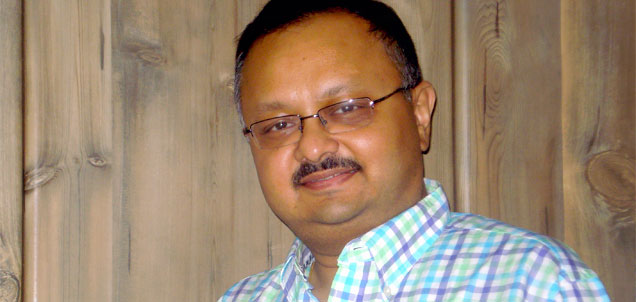

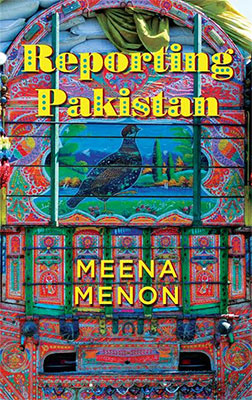 It’s been a little over three years since your stint as Pakistan correspondent of the Hindu in Islamabad was terminated. While there may have been hurt and anger then, your sentiments as you look back at what happened to you?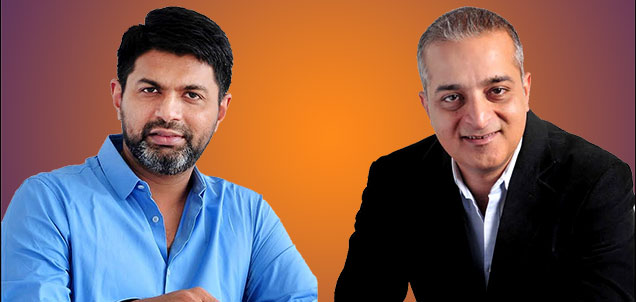

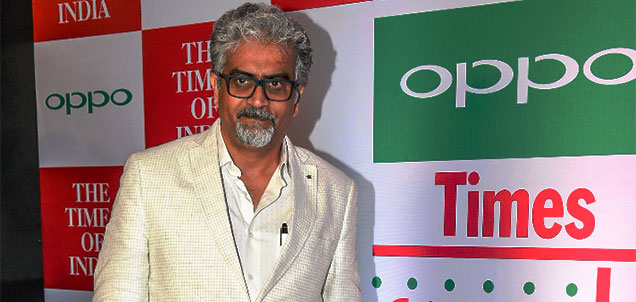
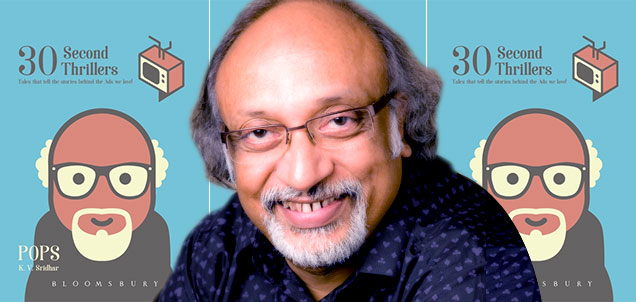
 So we are on the sixth edition of Praxis. As we get set for Praxis 2017 to take off in Jaipur, your sentiments having scripted the journey?