Category: INTERVIEWS

  • Readers pay with their time…


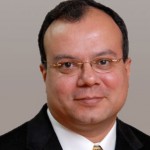
    Paul Rossi, President, The Economist Group was in India late last month, meeting advertisers, mediapersons and speaking at a digital summit that he rued hardly had any audience. And those who were there didn’t really matter. In his 30-year tenure at The Economist, he has served the company in numerous capacities, including holding the position of Managing Director and EVP, Americas, Advertising Director, Commercial Director and publisher of The Economist in North America. The company’s media businesses is made up of The Economist, The World in and Intelligent Life magazines, Economist events, Thought Leadership and Content Solutions, EuroFinance, TVC Group and Ideas People Media; all of which are under his purview in his current role as President.

    In India, Rossi and The Economist Group partner Zirca Digital Solutions with a clear brief to grow the business and footprint in the country. Excerpts from an interview with Pradyuman Maheshwari…


    It’s often said that people don’t buy publications just for its reputation. We all know that The Economist has a reputation, which may not always be a good thing for a publication. In India, we keep talking about media ethics, and the issue has now been muddied by the malaise of paid content. Your comments?

    I think reputation is a really interesting way of thinking about a brand. We’re in an age where brands and brand values matter more and more every day. If you think about what’s going on with fake news around the world – there are so many media outlets out there and everyone seems to be a publisher at some level – with this huge amount of content and so much choice for consumers, I think they’re simply coming back to few trusted sources. And to me, the biggest and simplest way to define or measure reputation, is through referral. So if I share a piece of content with somebody, I’m also sort of attaching my reputation to that content [through my recommendation]. In a context of strong brands, the social medium of referring of content is a huge measure of reputation. What we’re really talking about, is brand values and the reality is that while there is a lot of content out there, people mainly choose to move towards trusted brands.


    We know that reputation matters, but is that a surefire way to sell a product?

    I think if you’re trying to get people to buy your product, your magazine or your content, you have to be really clear about the value proposition. You have to be really clear about the job you’re going to do for that person. We don’t think of The Economist as a magazine or website; we think of it as content value that we create, in people’s heads. They give us money, and time, so we have to provide a value proposition for them. Time is the biggest currency in all of this.


    You’ve obviously been able to maintain the quality, integrity and credibility in your magazine. But as you expand to other products, like phones and digital offerings, will you be able to ensure the same value systems pervade the new products too?

    Yes. The interesting thing about The Economist is its structure. We were established in 1843 by James Wilson who is buried in Kolkata, because he started the Chartered Bank of India as well. So we have a quite an interesting connection with India. But Wilson started the magazine or the newspaper then, and was worried about ownership and influence, even in 1843. So he set up an editorial trust (which still operates today) and is the only body that can hire or fire the Editor-in-Chief, who has a separate mandate from the business.

    All of the content that we work on, even the social media content – and we have Snapchat, films and audio — editorial is in total control of this, and nothing leaves the building if it isn’t good enough by The Economist’s standards. We have our social media teams and nothing is outsourced or given to anyone who is not a vetted Economist journalist.


    As someone who manages the business, is that a painpoint? In India, it is said that editorial independence is not always a good thing, and can sometimes be a pain for those who are trying to ensure the publication is also a successful business…

    You could look at this thing from both sides. If you’re trying to manage a brand and a reputation, and you’re not trying to ensure that you optimise the value you get from readers, then having strong control of the brand and having independence is the only way to go. If the other side of that coin is fake news and false journalism, and it’s not clear which content is written by an independent journalist and what is paid for by a marketer, then that’s a real challenge. That becomes a bigger challenge in a political context…


    You think this is a problem only in India and not around the globe?

    No, I think you can see examples of it here, probably more obviously, but it happens everywhere else in the world too. It’s called native advertising, which makes it sound less ominous. So native advertising is only okay if it’s clear that it’s advertising. But when the advertising element becomes less obvious, then it’s a problem.


    How does a publication like The Economist manage the pulls and pressures in the current scenario, where you have a huge amount of pressure on revenues, which are not easy to come by, and the publication is also expensive to print?

    We start with the idea that we will give customers what they want, and price it accordingly. We are sort of agnostic about the medium people can see The Economist in. So when we do subscription marketing to get a new subscriber, we always ask how they want it. We have three subscription offers, in the same offer as it were. You can be a print-only subscriber, a digital-only subscriber or opt for the bundled offer of both print and digital at one price. This model is designed to send out the message that it doesn’t really matter. From the magazines standpoint it’s easier for us to scale down than it is, say, for a newspaper. So the commercial model around print is actually more flexible. The other thing I would say is that I don’t see print ever going away. So there’ll always be print copies of The Economist.


    Are you happier when people buy your print copy, or your digital one?

    We don’t mind. The economics are broadly the same. Obviously with print, you get the benefit of probably better advertising revenues, high CPMs and you’ve got the cost of printing the magazine. With digital, you’ve got lower advertising. But at the end of the day, I want customers to be happy with whatever model they want. Fifty per cent of our acquisition is the bundle — of people buying both.


    You digital version isn’t free, and is in fact priced that’s lower than print but not sold for a song. And while you’re not the only publication to do so, do you find that this is a stumbling block to the popularity of your digital product when there are other digital publications out there that are free?

    With a paid-for product, you need to be very clear about two things: First, are you offering a utility that has enough value for customers so that they’re prepared to pay for it? And second, is the product distinct enough to be chargeable? I think The Economist is certainly distinct enough, so that’s fine. For digital, we have an app, and prefer apps as a payment model. And our app replicates all the things the print reader values: the ability to bookmark, the ability to share, the ability to search by cover and such. So the functionality of the app is to replicate the value the readers want in print. So for us, we’re clear that the proposition, functionality and utility is strong enough to find people who pay for that. But I think if you’re in the general news space, you’ve got to make sure you’ve got some distinctly different offering.


    In terms of the various markets, how does India compare with the rest of the world?

    India is a fascinating market for us, Top 5growth market and it’s a growth market in both areas, because you got a one side an interesting domestic market for readers and readers in print and readers on digital…


    By growth market do you mean it’s not a great market right now but it has potential?

    We see it as having potential to grow, and that some of the digital products allow us to access more people. Also from the advertising side, it’s an interesting, very competitive domestic market. We are constantly working with Indian companies and Indian government departments to look outside of the country. One of the big things we do, is help Indian companies market themselves overseas and we do that through advertising content, events and such. So from the standpoint of the Indian market, it is both domestic and international.


    You know The Economist has put at least one corporate honcho out of a job, [former Tata Sons chief] Cyrus Mistry…

    I would love to think that our influence extended that far, but I’m sure it doesn’t. We’ve actually seen quite an interesting report on it, but I’m not sure we were the people that got him out of his job. We have a good relationship with [corporates] as well as the Indian government. We have a big summit in August every year, and it’s supported at various levels by the government, which is an indication that we’re in good standing…


    How do you manage the pressure of not having to compromise your content when you are wooing the government or anybody else for business?

    Content is an editorial decision, and commercial decisions are commercial decisions. There are conflicts and there are areas where, you know, we might say one thing and that won’t necessarily be in harmony with the commercial


    So you could well damn the government or damn an advertiser in the same issue?

    Yes


    In terms of new products that are there in the international market, what specific things are you looking at, for India?

    When it comes to products, we tend to think of products that can scale everywhere. So we don’t think of India specifically in terms of products.


    But you have a special publication for Europe, for instance…

    Well 1843, which is the relaunch of our Intelligent Life, is available in India and goes to Indian readers. Among the new launches, Economist Films Global, which is designed to bring The Economist alive on video, is not specifically aimed at India but is available here. In September, we launched in many English-language markets when we went on Snapchat (which is not available here), and now we have six-and-a-half million people on Snapchat every month so it’s quite a big number. But again, this was not specifically designed for a market. We don’t tailor products for particular markets, because we feel that if you put five Economist readers from five different countries in a room together, you’ll find that they’re very similar. It’s a psychography to read The Economist, it’s not a demography. So for us, we create once and print once, and distribute it everywhere, and it’s still a good model when it comes to the content.


    You don’t think creating India-specific content is necessarily the way to grow your footprint in India?

    I don’t. The differentiator of The Economist is that we serve people who are curious and global-minded. A reader in America reads to understand what’s going on outside the US, and a reader in Hong Kong reads to know what’s going on outside Hong Kong. It’s like we go to the moon every week, look back at the world, and pick 60 things that matter to this curious, global audience.

    So you know the last section we introduced was China, largely because the role of China in the world has shifted in the last five or 10 years — across politics and business — and it will be an economy that is ahead of India, in that sense. Maybe there is a time in the future where an India section will get developed because India has become as big.


    Any timeframe on when that can happen?

    I never give timeframes. We love predictions at The Economist. You should always get a number, and give a date, but never together.


    But given the fact that commercial considerations would be very good, could you…

    Doesn’t matter. We’ve got to start with the reader. Does the reader in America want to read more about India? We’re not writing for an Indian reader who wants to read more about India. When we write about China, it’s because we think that someone in Norway increasingly wants to understand China, what’s going on in China, and the role of China [in geopolitics]. If India becomes part of a global dialogue and people outside India need to understand what’s going on, then we will do [an India section]. But it won’t be for commercial considerations; only to understand what would make subscribers happier.


    And how do you determine that?

    It would be an editorial decision.


    Would they conduct research or go with a gut feel?

    I would say it’s driven largely by a gut feel, but backed by research. But it starts with the question: Does this feel like the right thing to do?


    Apart from the annual conference that you have, are there other things that you’re looking at specifically for India?

    Other than working with clients here to help them think about and do things internationally, we don’t have any particular product initiatives. It’s interesting to think about whether we could do more with some of our audio products here or if there are different distribution channels that are more unique to this market. If so, we’ll certainly look at those. We’ve just done an event in Europe around finance, called Finance Disrupted, and we’re looking at bringing that here because I think India’s got an interesting movement around technology, finance, micro-payments, digital payments and stuff like that. So we might bring more events here if we find the subjects that are relevant for the audience.


    Do you have any specific targets for India in terms of business that you want to achieve?

    More.


    I would expect The Economist to be more specific…

    A little bit more. We are a private company, so we don’t share our numbers. But I think we would like to see 10 per cent growth from this market. I think the challenge is the fact that I want sustainable, profitable growth, not just top-line growth. So I think it’s really about making sure that if we’re 10 per cent up this year, n next year as well, that it isn’t just a blip. That we’re building a solid foundation.


  • Winning across 3 days gave us a lot of pleasure: Pratap Bose


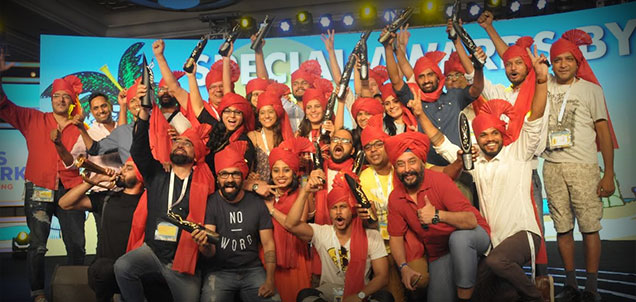
    We’re going to do well at Goafest this year, Pratap Bose, Chairman and Co-Founder of The Social Street had told us before we left for Goa last week. The shortlists were good indicators that Social Street would do well, but being #2 in the metals tally? Well, he proved the naysayers wrong and also confirmed the point that you don’t have to be 10-20-40-70-year-old agency to be winning big at the Abby. In conversation with Pradyuman Maheshwari, Pratap Bose talks about the wins, scam work, the focus on print and the way forward for his agency. Read on…


    Just your second year in business and already right up there!

    We’re actually only 20 months old. It’s an amazing feeling. We’ve worked very hard to get where we are, at Goafest particularly. It’s been like a David versus Goliath story. The underdogs if you can call it that. All kudos to the team who’ve made it possible.


    You’re not actually an underdog. You’ve been there, done that. You know the…

    People wouldn’t have expected us to do that well at Goafest. But you’re right, we’re not an underdog. We are industry veterans. But yes, for a small agency to do so well at Goafest is a great sense of pride and achievement.


    You’ve done it in the past at Mudra when you were helming it. You obviously know how it works. So when did you decide to play the Goafest game?

    Honestly, it’s not just about playing the game well. It’s also about doing great work. If you look at our wins, we’ve won in pretty much all of the major 14-17 categories. So, it’s always good work at that pace. To win you have to start very early in the year. You can’t just leave it to December and then scramble at the end. Producing good stuff all throughout the year. That gives you the humongous tally of metals at the end of the day. That’s something I keep advocating to the people who want to do well at the awards. You have to be at it. You have to have a dogged goal to do great work. I don’t think we do great work to win awards. You have to do consistent work month-on-month and produce two-three great pieces of work every month and if you measure yourself with that benchmark, you’ll certainly do well.


    In terms of the work you’ve done… you’ve said in the past you’re not just an outdoor agency, you’ve done a fair bit of work for print and print-craft.

    Yes, we’ve done a lot for print and print-craft outdoor, even won a lot of metals for digital, branded content, PR, our strong units are out of home, promo and activation is where we score very high… so, yes, the results in terms of where we’ve won the metals is indicative of how wide our network is in terms of our integrated offerings across all verticals. That has paid dividends for sure.


    But is print one of your core strengths?

    It’s not, but we had a lot of fun doing print advertisements for clients and we won on big clients. We’ve won big for brands like Aegon Religare, IDBI.


    I must tell you that there’s a charge that a lot of work you’ve done is scam work.

    Scam is a dirty work. Sometime proactive. If any agency tells you they haven’t done proactive work, they’re lying through their teeth. There’s always a bit of it. If your main body of work… and this is not just the awards, because every day when you go to office for clients you don’t always do award work. But, yes, sometimes the work is proactive and you’ve made a lot of efforts with the client to say, let’s enter this field in this direction. It ticks all the boxes in terms of the parameters in which you have to enter. It has to be published, approved, released. I don’t like this scam word though I said it. Sometimes you do work that motivates the team and sometimes you have clients that allow you to do that.


    You’ve won some 40 metals in creative. And you’ve some metals at the Media Abby as well. How many of these are for genuine work?

    Most of them are. What gives me a lot of pleasure is winning across three days. While a lot of hoo-haa is done about a lot of creative agencies and media separately. We don’t have a very large media offering. We have a small media offering but it’s a great offering. But, to be honest, no agency has won across Goafest for three days. Maybe, one or two. So, that gives us a lot of pride. So, to answer your question, most of it is on large brands.


    Your strategy until now has been to fashion yourself more than just an outdoor and activation agency. But if you have to look at your play in the last three months, how have you fared by your own assessment?

    So we are just under two years now and if you read the book by Tom Peters, ‘Thriving on Chaos’, I think that’s what we went through. Because we’ve grown very rapidly. We have 180 people now. That’s a lot of people in these two years. But ultimately the true value that Social Street will derive in terms of where it’s going to be positioned and seen in the area of a highly creative company, backed by data, analytics, content, we’re looking at production services and we’re also looking at partnering and opening a few JVs outside of the country. I think that’s really how I see it.


    And how are the financials looking?

    I think we’re doing very well. As I said, we’re just under two years and this is a very important year, financially. By all indications it looks good. So, hoping for a great year ahead.


    When you were at Mudra, the great wins helped it get acquired by Omnicom. While you’re ou’re already funded. Are you going to use it to any advantage in terms of more investments

    Not really. Metals at Goafest don’t get you any VC funding. I can tell you that. It rewards you for the work you’ve done. It’s a recognition that we are now a force to reckon with in the awards scenario. Not just the creative awards, we’re also doing well at the Effies, Emvies and internationally at Cannes as well. But there’s no extra funding for winning metals at award functions.


    You mentioned about the David v/s Goliath analogy. How have the Goliaths been with you so far?

    We’ve received a lot of love and affection, to be honest. When you get on your own, people wish the independent agencies well, by and large. When you’re a part of a large network, you have a lot of competition and crab crawling. But we don’t have that at all. The industry is also happy for us and wishes us well.


  • Small is big and impactful: Santosh ‘Paddy’


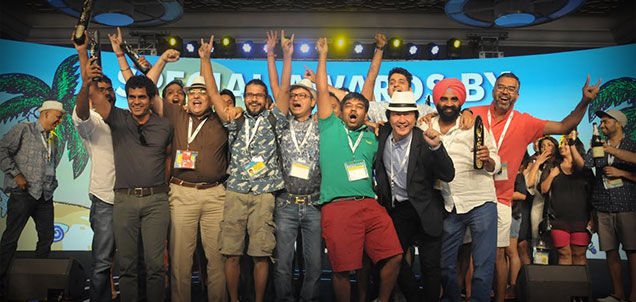
    Santosh Paddy isn’t his real name. It’s Santosh Padhi. But the dual identities are just in the name… he’s always very forthright and clear in his views, not shy to show his emotions and passion for his work, and as this chat with Pradyuman Maheshwari shows, happy to put his win in perspective…


    #2 last year with a much smaller team than some of the biggies. And this year #1. As they ask sometimes on news television: kaisa lag raha hai aapko… how does it feel?

    I think we’ve been mostly in Top 2 over the last seven years and we ended up becoming #2 agency at Goafest when Ogilvy was there in 2012. Over the last few years we’ve been #2 and on a couple of occasions we were #3. But mostly we’ve been in the Top 3 and I think consistency is what we believe in strongly… We’ve always aimed for the top slot and we were pretty sure these 2-3 solid campaigns may take us to that top slot. I’m glad we’ve finally achieved this. But I’m not happy just being the #1 this year. I think if we can retain this for a couple of more years, we’ll be really happy. It’s easy to reach somewhere but difficult to retain the position. I’ll definitely make sure we’ll retain this title for a couple of years.


    For an agency that’s less than 10 years old, what does this win mean to you?

    I think it’s pretty big if you think it seriously. I’ve been telling my team that there have been agencies with 1000 people and competing for years and haven’t achieved this and we have. It’s everyone’s individual contribution. Thanks to our Delhi team. Because this year they’ve also contributed in a big way.


    Well, that’s a Dentsu agency that has metamorphosed into yours right?

    Though technically it was announced some time back but we have been working with them for close to 8-9 months. There are some very intelligent and sharp youngsters who’ve taken the Taproot philosophy ahead, so thanks to them as well to contribute to the tally because with one office of 30-35 people we can only stretch to a certain extent. But the minute we added one more office, we can see the result…


    We’ve also seen Social Street has done very well. Your agency is 8 years old. You have Social Street which is #2 or #3, depending on the way you rank agencies. Obviously it’s not important to be a 50-100-year-old agency to be maxing at Goafest.

    Absolutely. This is an era of small agencies and small is big and impactful these days. Look at the number of golds that smaller agencies have won this year. There are 15-odd agencies that have won gold here and 12 of them are all young agencies. They’re very specialised agencies, focusing on a few businesses but doing justice to a lot of them.


    You have an agency like Open Strategy and Design which have done 11 and 4 are Gold.

    Absolutely, they, Autumn Winter, Umbrella… many!


    Does that worry you?

    Absolutely not. I always think competition is healthy. Competition makes you better, sharper, more creative. It keeps you on your toes and I love that challenge. We want that competition. Then only the industry can get better.


    In the light of what you said, there’s always a sentiment that you’ve come on top without the top agencies participating. Your comments?

    I don’t think a great piece of work will get impacted whether there are two or 20 agencies. That work will get celebrated. Adidas Odds has won in a big way at Adfest. It’s won here as well. If there were five more agencies, I’m sure Odds wouldn’t have got impacted because great people will appreciate great work. I’m not worried about that. Having said that, if you look at our past international wins, in four out of eight years, Taproot has topped at Cannes where all the big players were there. It’s unfortunate some of the key big agencies are not there at Goafest. It’s very unfortunate because I believe that if you have the Australias and South Africas of the world playing cricket with you, you always lot better. You are on your toes, you want to push, you want to contribute. So, the challenges are good. And unfortunately these guys have not been coming and staying away from Goafest which is also not a good, healthy sign for the industry. I’d request these guys to come together and have all our differences killed and do whatever is needed especially for the youngsters of the agency. Winning a gold and a couple of metals for smaller agencies is a boost. They will do lot better work next year. When we were young, someone gave us this platform. It’s our duty to ensure one big, healthy award festival happens in whatever form it takes.


    Why speak about other agencies. Even Aggie (Agnello Dias) doesn’t come for the Goafest and the Abby?

    You know Aggie well, he’s a shy guy. He always shies away from such events where there are more than 40-50 people. I’m scared that if there are more than 80 in Taproot, he might not come to office also(laughs). So, he’s a shy guy and in spite of pushing him, pulling him…


    You more than make up for that.

    We try to, but as you know Aggie is Aggie.


    You are aware of the body of work that was produced last year in in India. If you had to put include the agencies who haven’t participated, how do you think you would’ve fared?

    I think the boundaries are getting blurred in terms of the mediums. I’m so glad that lots and lots of new age ideas are coming forward or being done for brands. We’re no more a traditional country which does TV, Print and Outdoor. I’ve seen a lot of design work, activation ideas, a lot of direct ideas, lot of digital, mobile ideas being done. So, I think, we’re living in a world where you can’t say this is an agency doing well or is expected to do well. I think today there are specialist guys coming and contributing. I’d love to give the Jonty Rhodes example. Without even coming to bat, by just fielding, he scored 25 runs for his team by fielding so well. That’s the kind of specialty agencies in India are getting into. There are all great performers. So, it’s not that if the Top Performers are here, these guys will stop performing or winning. I think the country is in a fantastic state with a lot of new contributors adding to it and we should applaud these things.


    Do you think you’d still be No. 1 had the others been there?

    I think we would have won the same no. of metals but I think we wouldn’t be #1 or #2 because the moment a big agency with six offices comes in, it will obviously override the work our two offices have done. But having said that I don’t think we’ve seen work from agencies as powerful as Adidas Odds, but I think we’re really proud of that piece of work. And another piece of work we’re equally proud of is the Open Network campaign, Unfortunately, that didn’t pick up many metals. But I’d be a little happy had it picked up more metals.


    I know this is a celebratory mood. But since we don’t do these interviews too often, lemme ask: One of the things said about your work is that while you are a creative hotshop, in terms of effectiveness you don’t win too many awards. How would you react to a charge like this?

    To be frank, we didn’t enter effectiveness awards the way we should have entered. It’s a format. Somebody has to take that format seriously. We’re creative guys, so we have been entering creative work. Early on, we didn’t even enter creative awards. So, to be frank, we have been only entering Effies, and not the APAC awards. Some of the pieces of work we have produced have huge chances of winning at APAC level also. For example, Open Network or Adidas Odd*, I’m sure these will win big time but I don’t think we’re that gung-ho about entering effectiveness awards. There are some agencies who believe in effectiveness. We believe that if you create a great piece of creative campaign, it’s going to effect in a positive way. Maybe it’s an effective campaign, that’s why clients are buying it, it’s been celebrated. It’s a matter of cutting that case study in a way that it impresses the Effie judges, and we’ve not done that. We haven’t put our energy behind pleasing those juries. So, it’s a matter of getting those numbers and charts and XYZ, which I think being a small agency we haven’t done…to be frank.


    One last question, since we are on awards. Typically Taproot doesn’t participate at Kyoorius, is that going to change?

    There is a reason. We always believe there has to be a single award. We enter Cannes which is the biggest international award. We skip Cleo, D&AD and many other awards because one has a limited budget to invest. You can’t enter all 20-25 award shows happening across the world. So, you have to choose your battle carefully and we always believe after years of battle, the industry decided here is an award we all should be proud of, we should be entering. And we’ve been entering since the last eight years….


    You are on the Kyoorius jury this year and Aggie was there last year. So, you have nothing against it?

    Yes. Correct. It’s a matter of deciding you have 10 units. Whether you want to divide and put 5 in both places or gun for one and put all 10 units in one place. Because it’s an expensive affair. You can’t put two, two places. It becomes really expensive. So, nothing against it. I think Kyoorius is getting better year-on-year. There are more Indian juries this year compared to the last two years. Because, if it’s a local award, Indian jury will do far more justice compared to an international jury and somehow Rajesh has been taking care of those small things that make the festival better and they are getting better.


  • No industry event is as large as Goafest: Raj Nayak


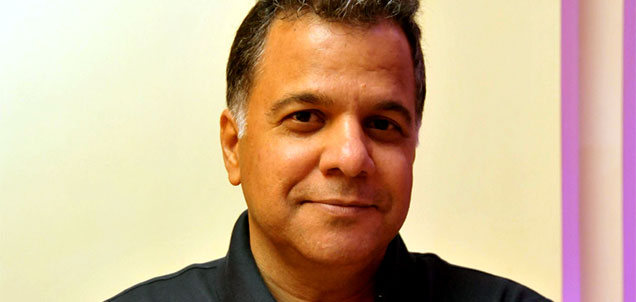
    While he’s had the good fortune of trusted industry persons as part of his Advertising Club team, a glitch-free Goafest and more importantly the Abby Awards are feathers in his cap. Raj Nayak shared his thoughts with MxMIndia on Goafest 2017 and says his own role in raising the bar


    Your final thoughts on how Goafest andAbby 2017 have been? It’s your secondas President of the Ad Club…

    Last year, we got very good feedback. I wasn’t there due to backache, so as President of Ad Club, this is my first Abby where I’m physically present and seen what’s happening. If you look at numbers, we’ve grown over the previous year, more entries and things like that. That’s a good sign because it shows resilience of the industry and that it’s growing. That’s one good part. If you look at the sessions, the feedback from people also says the sessions this year were fabulous. Exceptions to the rule are one or two sessions that were not too great. The feedback that journalists also gave was that it was very well-curated.


    So what has changed?

    Many years ago at Goafestwe used to shy away from paying people to come and speak. We’ve broken that. Now we’re willing to pay for a good speaker, to fly her or him, we are willing to do things. I think that’s been a shift. Knowledge seminars have been excellent and Day 1 was packed, Day 2 was packed as was Day 3 was packed. Ah, the Day 3 morning saw lesser crowds as people were partying till 5 in the morning! I went to my room at 4am because it looked like a night festival! It was buzzing with activity! I think it’s a good thing. We’ve also drifted to a certain extent. That’s to be fixed. For senior management, giving four days is a challenge. I don’t have readymade answers on how to address this, but it’s one area we need to find a way a solution.


    Over the years, we’ve seen Goafest growing from a festival of advertising professionals to one for media and entertainment too…

    Yes! It’s a festival. I would like to change the name from Goafest to Goa Festival. It brings so many people together. There is so much of a camaraderie. It’s also a recruiting ground for seeking jobs. I know of my dear friends who conducted business deals in the two-three days. It all depends on how you look at it. Can we put a structure to it to say it can be a place to conduct job interviews and business? The problem is not in visualising or doing things. The problem is in the infrastructure.


    One of the things which a lot of people have said is that you have raised the bar after you took charge of Ad Club? But don’t you think you’ve raised it so high that it will be a tough act to follow?

    I don’t think I have. It would be unfair to all my predecessors in the past. It has been built brick-by-brick by them over the years. I’ve come at a later stage when three-fourth of the building is already built and I’ve put the roof and people say, oh, now the house looks complete.


    But you’ve put a lot of glitter and finesse on it.

    I think I bring a bit of passion to the table. I think that’s true for every person who’s been there before me and sometimes someone may have had a good or a bad year. And that’s the challenge. That’s what I want the whole industry to know. Next year, someone else will be the president. It’s a not for-profit kind of business. Everybody is giving their time pro bono. It’s an industry event, for god’s sake. If you’re from the industry, be a part of it. Don’t be an armchair critic. Drop in and say: “I will be a part of the committee. This is what is wrong with the Goafest, I want to fix it.” Have the balls to do it and you can quote me on it. Don’t criticise and say: “Oh no, we don’t want to do this.” Because there is no other industry event in the world which is as large as Goafest which is run by industry bodies. You heard Mr Amitabh Kant speaking. He said, “One of the things about the whole presentation. I was so inspired. All these were made by Indians.!” He mentioned Piyush’s and Sunil’s name.

    Your heart was swelling with pride because it was Make in India. Made in India. We have the talent, we have the people. This is an industry event where everything is about Make in India, made by Indians, for Indians… come be a part of it. I’m going to fade away into the sunset, but for the future generation it is important that leaders like us show the path and create something that the future generations should respect. It’s not about your or my ego. We’ll all go into the sunset. But, for the future generation, you have the opportunity to build something that history will remember you for.


  • Lack of good work a prominent reason for agencies not participating: Nakul Chopra


    It is AAAI President Nakul Chopra’s fourth year as a part of the core organising committee of Goafest, and it must be acknowledged that the three-day festival has taken a quantum leap in his tenure. Although this interview was conducted much before the fest concluded, we asked Chopra on his expectations, his achievements on his view on the absence of some of the big agencies.


    Your fourth Goafest where you’ve been a key part of the organising committee. How would you say was this year’s edition vis-à-vis those of the past years?

    The year 2013 was my first year as the Goafest Chairman. I think A. the mandate was in a sense that it’s all going very well, continue with what’s being done. B. I think I had a lot of trepidation. I think I was given a responsibility I think I wasn’t 100% on top of it. So, 2013 was more a Goafest in which I felt my way around. What became very clear in my head that year was that we needed a fundamental change in the way we approached the festival. It’s a festival, as Raj said, that it’s a pro-bono effort by the associations. However, if you come here as a delegate, how do you care, whether it’s pro bono or for profit or not. You come here  and you see the value you receive from the festival for here. And so, when I came back in 2015 to do it, I remember I sat with the then President of Ad ClubPratap Bose and AAAI President AmbiParameswaran. I said I want your blessings on one thing. We are going to put up the best show we’ve ever put up. Even if it causes a negative financials on our part. But, we have to set a standard with this thing and not the other way around.


    While you are an industryperson and an agency leader, you are also known to be fairly aggressive in your approach. The fact is it needed a slightly bolder approach to doing things. Did that really help?

    No, I may have an aggressive personality but I haven’t been aggressive in the way I’ve done business. That’s another matter. Right here, the question was: are you willing to take the bait? Are you willing to say that we will spend the money and we’ll do a great show and the results will follow. And I think somewhere for me, this year in particular is a vindication of that. Because the journey really started in 2015 which progressed a lot in 2016. I’m very proud of the fact that the outlay of the fact has more than trebled in these 3 years! It’s not about me feeling good about it. But hopefully, that is the increased value we are bringing to people who are coming here.


    Since when you took charge and till now, are you happy or do you think there is unfinished agenda?

    I could almost say it would almost be a dream for me to do nothing else in the next 2 years. I’m not saying that’s what I want to do. But, in the limited context of GoaFest, there is so much more we can do. But it has to be somebody’s day job for 12 months of the year. It’s very difficult to do that if it is many people’s second job for six months of the year.


    Have you ever felt that like it’s with Cannes Lions, you should have a full-time organising team just for Goafest?

    I think there is glamour to Goafest that is endearing. The collective effort of the industry, not just the advertisers alone. The advertisers contribute to it by coming here, speaking. The media contributes in a very big way. You guys contribute to it. I think there’s some magic in that glamour. I don’t want to lose that. That’s part of Goafest! I think, within that context, there’s a lot more we can do.


    Anything that you think you wanted to achieve but have not over the last four years? What is that one thing you’d have wanted to achieve?

    I don’t think so. I have targets in my head every year. To say, this year these are the three-four new things you can do. I think we can still improve… not just improve… I think we can perhaps revisewhat we did three years ago…


    Does the absence of some big agencies matter to you?

    Of course, it matters. Not just as people who organise the festival. But I think it matters equally to associations who are doing everything they can to be as inclusive as possible. So of course it matters to us. As I have said many times before, I think different agencies have different reasons. Not necessarily all the same. So if there’s a list of things that I could change, that would be on top of my list. I think the real world is competitive and we have to respect that people have competitive reasons for doing what they are doing.


    Would you say that people who are not participating are not participating because they haven’t done good work?

    I can’t say that as a blanket thing for all those who haven’t participated. But, I would certainly say to you that seems to be one of the prominent reasons why some agencies don’t.


    You don’t mind me using that as a headline?

    I don’t mind it.


  • No golds in digital and print was shocking: Ajay Chandwani


    [updated]

    Okay, you’ve read the interviews and reports after Goafest concluded. We spoke to Ajay Chandwani, veteran adperson and also Co-Chair of Abby Awards Governing Council for an analysis of the Abby Awards

    What’s the #1 takeaway for you from the Abby Awards 2017?

    Overall, I got a sense that entries have dramatically improved is execution. Finesse and execution, presentation of the ideas, execution in illustration, photography, typography, the craft has really moved up a notch in terms of the quality of entries. Whereas the ideas are almost static.

    But why no Grand Prix?

    For precisely this reason. Grand Prix or Best of Category comes in if the ideas have dramatically changed.

    So do you mean there’s no dramatic entry this year?

    Frankly if you ask me, there were. But juries feel when they start giving a Grand Prix they are in D&AD, you have to almost remind them that this is a desi Award. You’re not sitting in the Riveira…

    Juries appear to be functioning too independently. Shouldn’t they be given a directive to look at…

    The only guideline, not even a directive we give them is this. In the past we had a few years in which a lot of metals were given. We formed this rule of not more than four metals per sub-category unless the jury votes. So, for example, four metals means you can have 1 bronze, 2 silvers, 1 Gold or 1 bronze, 3 silvers, and if it requires more than 4, then the jury must decide, 5 or 6 or 7 or even 8. It’s being followed. But in most last two years my observation has been very few sub-categories actually have more than four medals.

    Why no Grand Prix? Is it that people are too strict?

    Grand Prix means it must change the way the category has been looked at. That it is a very strong differentiator.

    An example is an Adidas…

    Yes, could have deserved one. A Grand Prix has to be completely breakthrough… I feel that people feel a Grand Prix is too much of a spotlight. If most judges haven’t won it themselves for a long time, they don’t feel…

    So, dirty tricks?

    I don’t think so. I’ll give you an example. The last Grand Prix was won by Lintas for DaburVatika. That work was a unanimous Grand Prix. Even today, people remember that changed the category. It took a bald woman, one suffering from cancer to sell a shampoo which talks about a lush growth of hair. That is dramatically changing the way you look at the category. It answered that.


    You have a new #1…

    In terms of the number of Golds, yes., I don’t how you look at #1. Total metals, Golds. We don’t rank.


    Open Strategy and Design has 4 Golds

    Famous has got 13 metals with 3 Golds. Then there is Star India with 13 metals including 3 Golds. Star is of course not an agency.


    And you wouldn’t recommend comparing media houses..

    You see this is a new trend. Lots of media companies are entering into creative and they are winning also…Maxus, MindShare and companies. And did you see how many bronzes Marico got


    So takeways….

    I wonder how it has slipped your attention. Digital got the highest number of entries and has zero gold.


    That’s huge. Tell me, this whole thing of some juries being more liberal than other. I remember this an observation made last year too.

    Yes it was..


    Consequently, you have some agencies who are winning more golds. For example, the Design category has a lot of wins…

    Yes


    So you could see them far ahead of the regular creative agencies

    In fact if Open had entered those ideas in the advertising categories, they would’ve had a different score. Like Autumn Winter is in design and advertising.


    We’ve seen a fantastic rise of The Social Street. Taproot has done well, but it was #2 last year too.

    Yes, just in the second year of its existence.


    Do you think a Social Street has benefitted due to some liberal juries?

    No, no. A single agency can’t benefit. I will tell you why a single agency can’t benefit… because every jury is so diverse that the only way you can win a metal is if your competition votes you. There is no other way. Many people ask meif it is possible that a group of six people are friends with an agency. No it just cannot happen. That has been my biggest endeavor… not to create gangs. It’s a very difficult thing to do.


    Tell me now that the jury process has been streamlined…what will it take an Ogilvy and the others to participate?

    First and foremost, there are three things they must do to even consider this serious. Today, some of them are staying away for a combination of either budgets or…McCain clearly mentioned this… Contract clearly mentioned this…infact we thought Contract & Mudra are the agencies that have promoted the Abbys…forget about, whereas Ogilvy and others of the last 5 years have not entered…so I don’t expect Ogilvy & McCain to go out of the way. But, let’s say…there are 2 or 3 agencies …Ogilvy, Leo Burnett I don’t have their view, BDDO they have mentioned that if we did a fewer judges judging everything, they might look at it. However it’s not practical, it’s a D&AD model…works on fewer entries. This is what Kyoorious does… it’s like the Critics Award… Abby is like Cannes…like Cannes has so many jurors…same model…specialist jury…for example, a digital entry can’t be judged by a bunch of advertising people…they’ll be throttled…they will stop entering…one year I had an agency person in the jury, they revolted…they said if you are going to do this next year, we are not going to take part…because if it for Filmcraft by Filmcraft then don’t impose agency people. Likewise design this year look at the design jury. Take design for example, almost every jury member is from design not from advertising even Alok Nanda. Now more than 60% work is from design… in fact his growth is in design.


    And?

    I think this digital observation. If the ideas had been stronger, we would have had a Grand Prix. Golds and Silvers have gone up that’s because of execution. Earlier what would happen is ideas would falter in execution. That’s why silvers and golds were less. Now at least they have cracked that..


    Hypothetically, if Ogilvy and Lowe had participated, would the results have been different?

    Very hard to say. I cannot believe that some of the entries which won Goldswouldn’t have been Golds if others were there. None of the golds were by default. May be in one of two verticals.Take, for example, PR has had so many Golds. But these companies that you mentioned hardly have participate in PR and design. They are not big participants in digital also. For instance, they may have changed print. Because print hasn’t got a single gold. That was shocking.


    In print..

    In print craft there is, but not in print.


    So basically, two categories that have not got gold are print and digital.

    Yes, shocking


    But Print Craft has…

    This, by the way, is the trend abroad too, in Cannes for instance.Indian entries winning in craft, and technical aspects rather than ideation..


    That’s not a good commentary for our advertising.

    Yes, not a good comment.


  • Low comprehension, uptake cause of slow embrace of digital media: Sandeep Goyal


    At 52, Sandeep Goyal has achieved what most people in the A&M business would strive to be at. Former CEO at Rediffusion Y&R, former Group CEO at Zee Entertainment, Former Chairman, Dentsu India, a jv partner of Dentsu in India and the Middle East, an investor in a dozen-odd enterprises and now Chairman of Mogae, which again has some prized partnerships. He is currently also purusing a PhD on ‘Human Brands’. Pinning down Goyal to an interview isn’t easy. Over many attempts to fix a meeting (some because of his schedule and some ours), a meeting which happened over some ‘gharkakhana’ but didn’t result in the desired Q&A, MxMIndia did manage to Sandeep Goyal to speak on Mogae, mobile and more. Excerpts:


    As a veteran of the industry, how do you view the slow embrace of digital platforms even as the number of devices sold and being used has leapfrogged?

    To me this is not surprising at all. I suppose when you refer to me as an industry veteran, you mean advertising?! Actually I have been now away from mainline advertising for well over six years. And in the interim, advertising has really not changed, or changed much.

    The slow embrace of digital is simply a function of client and agency businesses being run by a generation that is too old. Thankfully, many of them have either retired or just faded out in the last few years. But the decision-making layer on both sides of the table is a pre-digital generation. In India, the dividing line is 1995 when mobiles were launched. If you were born before that, you are not born digital. You still think print and you still think TV. You don’t read your morning newspaper on the mobile. Neither do you catch all cricketing action on an app. You therefore also do not create for the mobile or think mobile first.

    These are not sweeping generalisations. I have seen them first-hand. While a lot of the older guys in Indian advertising try to feign knowledge and understanding of digital and mobile, those from my generation, some even younger, struggle to make sense out of digital offerings. I have now been in digital, especially mobile, since 2005 when we setup Mogae Digital and started making Indian comics for mobile. Ever since then, my experience with fellow advertising peers has been one of low comprehension and low uptake. Reason is not just age. It is a mindset. Advertising was always about client briefs and campaigns therefrom. Concepts such as UGC (User Generated Content) or targeting using ARPU rather than SEC needed a fresh start. It never happened.


    Captains of some large corporations like Coca-Cola and P&G have questioned the efficacy of digital… your comments?

    Who am I to quarrel with such worthies? This is precisely the point I was making earlier. Captains of large corporations (and I won’t say Coca-Cola or P&G alone) are still calculating brand and communication effectiveness on parameters and metrics that are a generation too old. It is not that digital is not effective for their brands. It is that they have not tried hard enough (or long enough) to make concepts meant for a digital consumer.

    Your answer lies in looking at sluggish sales for cola as a category. I am not singling them out, but perhaps some introspection on whether the brand owners are really connecting with a consumer who has either moved on in taste or in habits. Entire categories like banking, travel, commerce, even education and learning have adapted themselves to a new digital world where consumers became co-partners in the brand journey. FMCG never tried hard enough. Its digitalization remained dwarfed.

    In some markets, the colas have done remarkable work. But as long as you continue to refer to such work as ‘innovations’, it will never become mainline or the new normal.


    You have acquired Ao1 which is a personalised video platform as well Ngage, adtech platform of Nimbuzz. What are the specific growth plans for each of these?

    We were already working on personalised video since 2015 when we tied up with Idomoo of Israel. But because we were dealing with CRM data, most clients wanted the servers to be located in India for regulatory compliance. With Idomoo, we were unable to that despite their product being a world leader. We had no choice but to look for indigenously developed solutions. Ao1 fitted the ask. We now have a versatile and cost economical platform that works like magic on large customer data bases allowing customisation of content and creating this entirely new category of targeted personalisation.

    Today, we work across banking, insurance, travel, holidays, hotels, retail, e-commerce, in fact every category that has personalisation possibilities. Global research shows that personalisation of a message kicks up response rates by almost 86 per cent. Every one of our clients is now a repeat client. Initial hesitation has been more than overcome. Also, new experiments are being tried out every day. I think Ao1 will do well.

    We never did eventually consummate the Ngage/Nimbuzz deal despite press reports to the contrary. The due diligence and the financial model did not meet satisfactory levels. We preferred not to take the deal to conclusion. We are instead fully focused on our Mozeo programmatic platform which I can discuss later in this interview.


    Given the rapidity with which technology is changing, there is a need for continuous upgradation and bettering of service, especially in the areas of adtech and video. What are your commitment levels to both business.

    On adtech, our Mozeo platform is world class. Our partners Zeotap of Germany now have a 25-strong backroom team in Bengaluru looking at customising the platform to Indian requirements. We have been running campaigns since January 2017. We are in an advanced stage of integration with most of the large digital agencies and large clients. We have created dedicated trading desks and both quantitatively and qualitatively, we are poised for large numbers in 2017.


    Our biggest plus is that we are in the process of building up 150 million profiles on the telco data. These anonymised customer profiles make for the best targeting possibilities, far superior to FB or Google.


    On video, I have already talked of Ao1. It is not video alone (and the recent YouTube controversy on inappropriate targeting is a good example) but personalisation of video content that will separate the winners from the losers going forward. With Ao1, we have a technology that can address an audience-of-one. This kind of precise targeting allows custom made content to be beamed to individual customers.


    While everyone in the media agency business is talking of programmatic, the value of business done via it is minimal. Your comments?

    The problem with programmatic is that not enough amount of consumer profiles are available. This naturally restricts and constricts the scope of business. As more and more of consumer profiles come into circulation, the conversion rates on programmatic will improve.

    Also, programmatic worldwide is used for brand communication. In India digital buyers insist on running performance campaigns to these audiences. There is therefore a big mismatch there. The owners of the data are very hesitant to allow intrusion into the lives of customers. Performances campaigns necessitate that. So, there is a lot of learning required there between privacy and performance. We are pioneering this business. The road is tough but it leads to the right destination.


    Talk to us more about StarStar… your launch happened with much fanfare and you have some big-name clients who have signed up?

    StarStar has done well. The recent high-decibel Kotak Bank campaign for their 811 initiative was run on all CTAs with **811.


    Our list of clients includes Star TV who ran a very successful campaign for HD a few months ago. Yes Bank uses StarStar extensively. So do SAB Miller, Discovery TV, Nerolac Paints, Axis Bank, Urban Clap, Kellogg’s, Merril Lynch and more. One of India’s largest car companies will be using StarStar soon.


    StarStar is a disruptive idea. Yet it is a boon for creating an actionable real time customer data base. The opportunities are just beginning to open up. You will see a lot of StarStar in the days ahead.


    We understand you are looking at investing in more digital startups. Are these all in the mobile space? Any specific direction that you are looking at?

    We have a big appetite in this space. But I am not indiscriminate in making investments. Any business model predicated on advertising as the main source of revenue is largely pipe-dreaming. The reason is that discoverability of content and destinations in the digital world is a big issue. If you do not achieve critical mass, your business model remains theoretical.

    Most businesses that approach us are copied ideas from the West with insufficient inputs or understanding on how this will work successfully in India. One Flipkart competing with an Amazon or one Ola competing with an Uber cannot become the flag bearers of every untested idea.

    We are actually now focused on looking at distressed assets who have burnt sufficient investor funds so far to build some market visibility but now are running low on fuel. We think we can reinvent some of these businesses and take them to a new level of being able to succeed.


    Most successful digital entrepreneurs and investors have a tech background, and can get their hands dirty on code or hardware. But you are essentially a businessperson with successes in the creative and marketing services business. Is the fact that you aren’t a techie a stumbling block to be on top of the various technology business you own and evangelise?

    Yes, I am an English Literature graduate. And have 30+ years in advertising. But neither of this has prevented me from creating new and profitable digital ventures.

    As I said before, we setup Mogae Digital way back 12 years ago. We pioneered comics for the mobile. We were the first guys in India to use JavaLite. I had to struggle to find developers and coders.

    I setup India’s first Fantasy League when IPL launched 10 years ago. We were in the Alexa Top 100 within the first week. The Times of India group were our partners. We ran leagues for cricket, tennis, for the BSE and ran many jigs on politics, elections, the Olympics and much more. We had a team of over 200 tech guys working for us. We ran into legal complications and had to scale the business down. But while we ran the business, it was intensely profitable.

    I launched www.lastminuteinventory.com in 2008. We did Rs 100 crore of business over the next 2 years, every year. We were again pioneers in the space. The contours changed when we sold out to Dentsu.

    When I launched Mogae Media even the telcos did not know enough about mobile monetisation through third-party advertising. We used a lot of ingenuity and technology to mine the data and to meaningfully interpret it.

    I think technology is just all in the mind. In fact those that come from a technology background struggle to find customers for their businesses. So, I wouldn’t worry too much about my Literature background. Life is about being receptive to opportunities. Technology is only a means to the end.


  • Up, close with Arnab Goswami

     [updated, some typos removed and edited for clarity- Ed]

    It’s not easy to do a soft interview with Arnab Goswami. And the problem is that if you do a hard interview, ask him some probing questions including a few on others in the media, it’s possible you’lol be served a legal notice. Which is also fine… if you’re in the kitchen, you must be ready to face the heat. So after some back-and-forth, this interview was fixed for Monday, April 24. It was 10am, we reached a few minutes late, and were called to the editorial conference room. There was much action in the newsroom, some screaming and shouting and laughing and, no, no howling, but it was nice to see a busy newsroom on a Monday morning. Arnab came in within a few minutes, we apologised for the delay and he did the same, and said he’ll come back as his laptop was missing.

    There were some five people in his office who checked his bag, and we thought we had a nice story on our hands: Arnab’s laptop lost. Now could it be that someone from a competitor may have done that. After all its not unusual for confidential data and info leaking out. The first para of a news report was already in our heads. So were the words for a 120-character tweet. The laptop had all his plans, the Excel sheets, the numbers, the projections… everything. After five minutes, Arnab walked in. Smiling. The laptop was found. It was in a bag inside a big. A few minutes later, the laptop came. Steel grey Macbook Air.

    Arnab in person is dramatically different from what you see him on television. Very gentle, very softspoken. And, most importantly, he listens to you. All ears. He doesn’t interject. He doesn’t shake his head while you are taking. Body language isn’t combative. He is like the Raymond’s man. Complete. Well, so are some big-name anchors, but it’s always a delight to meet Arnab, even if you disagree with his brand of journalism. Though there is no questioning his love for the country. And his commitment to credible journalism. He is one of the few journalists in the country who doesn’t mind asking the tough questions, on camera.

    This is one of the reasons why it will be interesting to see if he can do it all over again with Republic TV. What’s also going to be worth tracking is how his channel fares vis-à-vis competition. And whether competition allows him to prosper. But more about that in another story, on another day.

    Excerpts from a freewheeling 35-minute conversation MxMIndia editor-in-chief Pradyuman Maheshwari had with Republic TV founder and chief promoter Arnab Goswami. Enjoy.


    Arnab Goswami: First of all, thanks for doing this.

    Pradyuman Maheshwari: I’m very worried about this interview because one shouldn’t be taken to court. For, even though your answers in some interviews have been politically correct, the questions did name organisations and individuals…

    If it carries on like this then all journalists of India will be marching to court all day instead of newsrooms(laughs).

    So the question which, let me ask with a non-trademarked statement: India wants to know when is the launch?

    Very soon, it’s a matter of days now. You’ve seen my newsroom, it’s buzzing with energy, I’m trying to get the product as close to being perfect as possible. There’s nothing like an absolutely perfect launch though. But having said that, we’re trying to sort of stitch things together… bring all parts of the piece together, get the team to integrate, believe in themselves, believe in the product, believe in the news they putout… get very, very familiar with the technology they are using because some of the technology you’re using here is…

    Different?

    Completely, completely new age. And so I want that familiarisation process to carry on so I’m not setting a hard date for launch yet, though if you ask me can I launch? I can launch right now.

    So no Akshay Trittiya launch, April 28th?

    No, no-no.

    May 1, Maharashtra Day, Gujarat Day…

    No, I don’t believe in these any commemorative events or dates. I believe every day is good for news… we should just have a good run, go with the flow.

    But surely you need to inform the distribution folks?

    The distribution guys are more or less informed. I think most of the people are aware of our channel being launched. In fact, we’re getting a push from the distribution guys to launch early. Some places have already started putting up promos on air in anticipation of our launch; our media campaign should be starting soon. So we are almost there.

    The question is that, the last mile, 4-5 days here or there should be a discretion of the producers of the channel. So whenever the producer of the channel says we’re okay to go, I’ll go.

    So, plus or minus the 4-5 days, May 10, May 1?

    Yes. I would say, yes, pretty much around that.

    May 1 and 10 are too far apart?

    Yes that’s what, I don’t know, I frankly don’t know because that’s not a decision I have. I have a very delegated organisation. So when the editor and the editors and the producers come together and say we’re good to go I’ll go. That’s what we’ve told them. That you keep practising till you’re good to go but I’ve also told that  there’s nothing like getting things perfect.

    Right.

    No, you don’t get things perfect even after running a channel for 10 years and I would come back to my previous channel and find things completely messed up every morning… it was like starting every day as if you’re launching a new channel. So it’s not as if 10 years of familiarisation of running a workfloor makes it perfect, because eventually people are people. But we’ll try and get it as good as possible. I’m very confident of our product and I’m supremely confident about our look-and-feel, our stories, our journalism…

    You mentioned that you’re a well-delegated organisation but surely it’s an Arnab Goswami operation.

    Well, I mean, it, it is not, because  we have delegated responsibility to the youngest and most empowered bunch of editors in any channel. We have empowered our production team to a point where the president of the content of the channel is our Chief Executive Producer. They take decisions completely independently, graphics producers, non-linear editing producers, even news editors don’t ask me. My interaction is with the journalists on the stories. That’s my limited interaction. I can’t stop doing that because that’s my bread-and-butter but beyond that I feel that we have created a system where everybody fits in very well into each other like a jigsaw puzzle which comes together every morning and that’s actually what I enjoy doing. The reason I launched Republic is to make sure that people who are 10 to 15 years younger than me are able to do the news faster than I would have. And it’s a joy to see them working together. What I have done is put together my digital output, input, production, graphics and elite teams, all together in one gigantic newsroom which you are seeing here. You wouldn’t see a newsroom like this where everybody is working together and talking and familiarising and there’s no email conversation, generally people are sort of shouting instructions at each other, so its very well-delegated in that sense…

    And what about you?

    They don’t need me to come in.

    You are now more than just a journalist, you are an entrepreneur. You need to look at how the channel will make the monies. How will you ensure that the great work you are doing on Day 1 also happens on Day 365?

    Yes, yes

    How much of that do you think is going to influence your journalism?

    I think you set the basics right and then you say that these are the five things that we’ve got to do. I bring things down to basics, so I say let’s get the basics right. Let’s do these five things right today and then let’s find a way that these five things will be right regardless of who is sitting on the hot seat, so it’s fine. As far as making money is concerned, see, if you’re popular and you’re watched, and you have impact, people advertise on news channels. And then,  I don’t run an extra-lavish operation, neither is it a barebones operation. But if you are watched and have impact, and you have popularity and you have credibility most of all, then people advertise on English news channels. And I’m 100% confident that with the kind of response I’ve already got from the market, before launch, people believe in our product. I mean the best of the advertisers have lined up and are advertising with us from Day 1.

    And the reason they are doing this is because they believe in the product that people put out, eventually it’s about the content. Eventually it is not about anything that you may do, eventually you may have all the money in the world tomorrow, to hire the most expensive lawyers and threaten to sue every competitor, but you will still lose if your content is not up to the mark… that’s it!

    Distribution is also critical, right? You may have the best of content, but if you don’t spend the money on carriage fees and ensure that various DTH operators carry it, you lose viewership. And that’s a lot of money, it’s a guzzler.

    Ah, well, I’m not negative about it.The fact is that we are already quite disruptive in that model. We are India’s first non-encrypted free-to-air English news channel. There’s no other channel in that space. People love us. Wherever I have gone and travelled across the country from Chennai to Kolkata, people have opened their arms.

    You’ll hence not earn revenues from subscription.

    Doesn’t matter. This is a labour of love. I want to make sure that this channel is watched everywhere in India.

    And let me share something very personal with you. I’ve been to people, I’ve met distributors who come and say that one nervous competitor comes and tells them here is six months of money, extra upfront, can you block ‘Republic’ for two weeks? And yet those people say no. Because they know that when ‘Republic’ launches, everybody will want to watch it. People will want to watch my debate. Those attempts have now become what I call antediluvian.

    Hmmm.

    Right, it’s as antediluvian as a crocodile’s skin. You cannot go ahead anymore and say that I will pay you extra money, almost like ransom money, to try and ensure that another competitor doesn’t enter the market.

    But dirty tricks is a common thing in many businesses. A ’90s cola ad screamed “ye cola hai ya gulab jamun’ when a competing brand launched. It happens with various domains… they ensure shopshelves don’t stock the new product.

    Media is different. In media who is the original, who is the copy, is well-known to people, Also,  you’re actually bringing down whatever is left of the quality of your brand by resorting to  desperate dirty tricks measures… because the moment you do it, behind your back people are laughing at you. Behind the backs of people who are trying to pay six months extra upfront money and say don’t meet Arnab, don’t put out ‘Republic’ for two weeks. They’re even desperately saying if you can block ‘Republic’ for 10 days at the launch, we’ll be happy. Behind the backs of these people everybody laughs at them, so they become the laughing stock of the industry. What am I doing? I’m saying to people, I’m a free non-encrypted channel, I will promise you good journalism, I have good reporters, I have good producers, I’ll present a good product. And the entire distribution fraternity has welcomed me with love and open arms.

    You’ve got someone like Sameer Manchanda of Den on your board, you’ve got Asianet which is a huge plus because we do know that English channels are very widely watched in the South. So you have all the big brains backing you…

    Sameer is actually not on the Board, that’s mistaken, Sameer has invested in my holding company along with 13-14 other people. I never mortgage my personal friendships for business convenience.  I have a very professional equation with Den, and will continue to have a professional equation with Den, having Sameer as one of my investors does not influence at all my relationships with them.

    Two charges have raised against you by an industry which is fairly positive towards you. One is about Rajeev Chandrasekhar being one of your primary investors…

    Yes

    That he has strong links to the NDA… That that given Rajeev Chandrasekhar’s association, will ‘Republic’ really be independent as Arnab claims it will be?

    I’m very proud of the investment from Asianet Online Private Limited and why shouldn’t I be? It is the oldest media entity in India. As Asianet was started way back before any news channel including NDTV started. So there’s a history to the organisation, it has another couple of channels with it and I’m very happy to be associated with Asianet. And I hope that I will also be able to contribute to Asianet in my personal and professional capacity in the future, to its growth. And as far as Rajeev is concerned, he has been a media investor for over a decade now, and he’s invested in several other organisations as well and I am very glad that he through Asianet Online Private Limited has an investment here. I’m very proud of the association. Eventually, everyone who is an investor in this company is also a believer in my journalism.

    Hypothetically, and given the way you do your journalism, if you get belligerent on something that could impact Rajeev’s investments.

    It’s a completely hypothetical and ridiculous question. I’ll tell you why. You should check out: Asianet is the most critical of the BJP in Kerala as well. So when all of us who are in the media business, we work on the news that we carry, I don’t need lectures in balance from the Lutyens’ media, who have sold their souls for the longest time; these are the people who left me to dry when I did CWG, when I did Lalit Gate, these same Lutyens’ media was quiet about it, nervously sitting in one corner, not sure how to respond to it when I was taking on the BJP. I was boycotted by the BJP for a month-and-a-half. People who therefore are invested in me know my journalism. I’ll take on everyone and anyone. I’m only going to be on the side of the people.

    Ah!

    So, these are little straws in the wind. These arguments didn’t even fly.

    The other charge…

    And, and, and, and the point is, who is making these charges. Some person, some individual, who after remaining in India, working in India as a journalist for the longest time, still clings on to his American passport and then questions why people like me are nationalistic? I’m very clear about one thing: each one of the investors in ‘Republic’ believes in nationalism.

    And it is time for people in India to come together and put their straight thoughts on how this country can be made great once again. That’s our common belief. That’s not a right wing belief, it’s a nationalistic belief.

    The reason for my question was what we’ve seen in the case of Raghav Bahl and Network18. The channels were doing well but he had to sell out as went through a bad patch. In politics too we’ve had cases parties puling out of backing a minority government because of a fall-out. Is that a possible worry… just in case something goes wrong?

    I don’t worry about anything because I’m so sure of my product. I don’t worry about anything, I’m a content creator. The only thing I worry about is my TV channel. How is the TV channel going to look? What kind of stories am I going to do? What pictures will run? What the graphics will be? I have never looked ahead at all or looked behind. I look at the next thing to do. The next thing to do at this stage of my professional career is to launch an English news channel called ‘Republic’. Then the next thing to do is to expand my digital presence, through Republic World. I will have a next thing to do after that within three or four months. You know me, I’ll keep shifting my goalpost in terms of my next target, every three to six months, but I’ll move wherever the news can go. See I have respect for Raghav, for Prannoy [Roy], for Karan Thapar, for Rajdeep Sardesai, all these people who are much older to me, they have a right to do things their way, they’ve done things their way, why should I comment on them? But this is 2017. I’m doing things my way.

    It’s interesting that you say you have respect for Rajdeep, I thought you’ll were at loggerheads…

    No, I, why should I be at loggerheads? See, Rajdeep comes from a generation of seniors who have done their bit at that particular point of time and it’s good for him. I wish him luck in whatever he does.

    Tell me, how is Republic going to be different from what you did before, is there going to be…

    I don’t even feel the need for it to be different. I was away from TV for a while and I’m back, and what I do now will be watched for what people like it for. I don’t want to try and do anything in life with this forced pressure on me to be different. I don’t want to be different. I just want to be myself and I think that’s good enough if I can break the news that I like in the way that I want to, good shows that I like and integrate good technology. But one thing is there: that if in the process of doing so, I can marry technology with the intellectual prowess of people who are in their 20s and early 30sand  really understand how to funnel TV and digital together, that’ll be some, small contribution I can make…

    This is also the most fickle generation. As in the loyalty doesn’t exist to any specific show… is that a worry?

    No I’m not worried because while it’s a fickle generation I think today you can create new brands very quickly.

    True.

    With good content. I am actually very happy about the fact that today the media is fragmentable and fragmented. It keeps us on our toes. We are not here to build organisations that say that nobody will compete with us and we will try and build moats around ourselves to ensure that our dominance is forever. I can’t do it. Tomorrow somebody can launch another organisation and challenge me. I would be very willing and open to that challenge. It’s fine. No problem.

    In the past, we seen ratings drop whenever you would go on leave.

    Yes

    And, there there was no second line. A few people who could have been second in line moved out. Now that you are doing a business and you are responsible for people’s jobs and people’s livelihood. Will there be a second line?

    Yes, there is a second line

    On Day 1?

    There is going to be a second line on Day 1. Both in terms of anchors and editorial talent, so what I’ve done is that along with our executive editors and editors, there are about seven people in the second line editorially. And there are at least about six people in the second line in terms of anchoring talent. Besides which I have a very very strong and independent production team, which is now being made completely independent, which runs the entire organisation. I have bequeathed the responsibility of running the organisation on editorial on a day-to-day basis to this group, and they are able to manage it.

    You have done that?

    Yes, I have already done that…

    Seriously?

    While I’m managing it of course, I’ve got to be looking at everything in terms of quality control. But if you ask me in terms of day-to-day, minute-to-minute operations, I intend to create a system where the wheels of the organisation run even without me for a few days.

    And this is very important for me to do because then I can strategically look at other ways in which I can improve the quality of the news, improve the quality of the shows which I do. It will give me more time to think and plan. Having said that, even in my previous organisation, I’d already done it. Now what has happened that after I’ve gone, I’m not responsible for, but while I was there, I had run that kind of a system.

    But…

    Since I’m anchoring a critical slot which is doing well, it gives a perception that everything centres around this individual. The viewer associates the organisation with me. But as an organisation, I’ll take you around our studios and our PCR  and you’ll feel it’s not really [a one-person show].

    But you deserve a holiday, you may get busy with other things. So on those days, ratings shouldn’t fall, right?

    No ratings will not fall, don’t worry. We’re going to be up there on the ratings charts.

    Yes, but there should be a clear second line.

    There is a very strong second line. We have Sheetal Rajput who is India’s original war correspondent, she’s is with us as a senior news editor and anchor. Parikshit Luthra, who would do 9pm on CNN-IBN, has joined us. He’s the news editor in Delhi. We have Hariharan who is a very famous anchor from Tamil Nadu, from Thanthi TV. He has also joined us, he’s a fantastic anchor. Niranjan Narayanswamy, who used to be anchoring on Times Now, is also editor and is anchoring on the channel… I have a very, very strong base of anchors on the channel.

    So just in case you’re not on air on a day, who’ll be the anchor?

    We’ll be firing all cylinders, don’t worry. It’s unlikely that I won’t be there because I have this habit of anchoring from all remote locations at any point of time, I carry a camera with me and nowadays, technology is so brilliant, I can anchor with a phone. I have got a software which if I put it on my Samsung phone or any phone, I mic myself up, and I can broadcast from any place in the world. So I’ve got that technology and I’m working a lot on mobile devices for uplinking, and have been experimenting with stuff that is not been done before for uplinking.

    Two other charges… one of which has been also used by other channels that your brand of journalism is more noise and less of news.

    Yes.

    Are you going to be the same and are happy with that charge?

    I mean I’m thankful to all those people who have carried these campaigns.They can keep carrying the campaigns and I am grateful to them. In fact I would request all of them to carry a few more negative campaigns. They help me. In the year before last, India Today did an entire campaign around this ‘more news, more noise’ kind of thing. Even now NDTV did this whole campaign on more news… why don’t they care about what’s going on in their own organisations rather than talk about me? Let them all fend for themselves, I’ll fend for myself. I have a clear philosophy: in this country, you have to shout to be heard. When we say shout, we mean it in a metaphorical way. You have to assert yourself. You have to raise the right issue. And also sometimes raise it to the right amplitude for it to get attention. You cannot be coy about things and expect the world to change.

    What about the charge that in the latter half of your stint in your previous channel, the orientation was more towards the right. Nationalism got translated often to you being pro-BJP, pro the philosophy of BJP and the philosophy of RSS.You were soft towards Narendra Modi…

    It’s a ridiculous charge. We did LalitGate, was it pro-BJP? For a month-and-a-half we did LalitGate…  We got boycotted by the BJP, was it because we were pro-BJP? We got boycotted by the Aam Aadmi Party, was it because we were pro-AAP? We got boycotted by the Congress, was it because we were pro-Congress? Name one organisation which was boycotted by all three major political parties for stories it did. It was us, and I’m so proud about it! See, some people are touchy for long, some people are touchy for shorter period of time. It doesn’t really matter. As far as my views on the country are concerned, they’ve been consistent even during the Congress government. Tou would remember that after 26/11, I hammered the foreign policy of the Congress government. I questioned it. Anand Sharma and Pranab Mukherjee were incharge at that point of time in South Block, I took on both of them. I questioned them, so my stance on issues of corruption and nationalism has been consistent through the Congress period and the BJP.

    Just because the BJP is in power right now and my position on issues of the nation and nationalism seems to be closer to their perspective, doesn’t make me pro-BJP at all. I disagreed with the Aman ki Asha… why should I agree with the Aman ki Asha approach? This candyfloss daffodil diplomacy that is being encouraged by some media groups is their business. They should introspect. If you see me, while I was in The Times of India, I didn’t ever follow the Aman ki Asha approach. I refused to because I don’t agree with it. Editorially, conceptually, as an Indian, I don’t agree with it and I will not do.

    So suppose…

    So, so the Congress was in power at that time, was I tuning what I did on air to suit a Salman Khurshid’s line on foreign policy? I didn’t. My line is my line and it comes from the heart and my team believes in it and even if they don’t.

    Supposing someone from your team does an Arnab Goswami to you… that he or she may have his own line of thinking which may not agree with yours. What happens then?

    It’s good, it’s okay. We won’t send them a legal notice.

    But you or your associates sent a legal notice to the Wire?

    Who?

    The Wire was sent a legal notice.

    I don’t want to comment on insignificant groups like the Wire. They should really introspect on what journalism they do. If they need me to sell their digital site, I’m sorry for them. It seems to me that they are obsessed with me because there’s no other way they are going to get a few hits. I hope they got a few hits as a result of whatever they put. I spoke to that reporter only because I know him for a long time in NDTV. And I told him when I was speaking to him that I know you are going to do a hit job on me but I’m still speaking to you out of our old association. And he he was laughing away and he knew that I had seen through his game. Sometimes I respect old friendships, so I spoke to him. As far as the Wire is concerned I really hope that they get a few hits because from what I’m seeing from the statistics, nobody seems to be following them.

    You would have Siddharth Varadarajan on your panel, in fact after the Rahul Gandhi interview, you had review the interview.

    Siddharth should introspect on what he’s doing. He is another older generation person. I don’t quarrel with people who are older to me, he should generally introspect now. Think about whether it is time for him to do some journalism rather than commentary.

    Let’s move on…

    No, no, no, let me tell you that.

    Yes?

    It’s very important for people who are doing these digital sites to stop pontificating about others in the media all the time and start doing some stories of their own. It would be really nice. Let them actually roll up their sleeves, go out there, do a few interviews, meet a few people, get out of their Lutyens’ zones, transport themselves outside the ephemeral reality of their air-conditioned chambers in Lutyens’ Delhi, see the real country, watch what’s happening out there, and stop becoming preachy. People in this country are tired of preachers in journalism.

    Hmmm.

    So, therefore, not just to Siddharth, but to a lot of people I would say: start doing some news rather than commenting on the people who are doing news. But I really hope that the Wire gets a few hits because I think they need a few. (Laughs)

    You’ve spoken about Lutyens’ Delhi etc in the past and you’ve been in Mumbai for a while. Didn’t you think of having your headquarters elsewhere…  say, in Bengaluru?

    No, headquarters can be anywhere. It can be in Bengaluru, it can be in Kerala, it can be in Guwahati, it can be in Kolkata, it can be in Srinagar also, but it should not be in Delhi.

    You’re not worried about the film stars who lobby stuff in Mumbai?

    Doesn’t matter so much.

    Or the business guys.

    Film stars and business guys never influence me, I’ve taken on a lot of them whenever I did 2G, CWG, Aircel, Maxus, I’ve seen them through and through at that point of time. As far as film stars are concerned I’m not running award shows where I need film stars to jump around.  So I don’t need to oblige them.

    You will never ever do award shows as part of Republic?

    I’m running a news channel, I don’t have time to organise award shows.

    Person of the Year etc?

    I don’t know, right now I’m only focused on the news.

    So tell me once again

    No, you asked me about film stars, award shows, my answer to you was I don’t need film stars to jump around in award shows that I’m doing. So I’m not necessarily in a position where any film director or film stars need to be on good terms with me and even if they don’t choose to be, it’s fine with me. Some people may need that. Some people might need film stars to oblige them to be photographed with them.

    I’m going to get a legal notice now (laughs).

    No, no, I’m making a general observation that there may be some people who constantly need to be photographed with film stars, directors, to dance around, be photographed with, to feel good about. I don’t need that kind of gratification because I’m a journalist.

    Tell me something: we are 10 days away from launch. In fact, we at MxM wrote that some people feel that you are overdoing your promotion. Your ‘love letters’ and the way you reacted to the legal notice which was a standard statutory notice… Do you think you’re overdoing it?

    I didn’t respond to the legal notice, in fact I’ll tell you one thing, I’ve under-responded to the legal notice. Let them take me on. Let them take me on. I would request the group that has sent me a legal notice to publish in the front page of their newspaper whether they have a right to claim that they crafted the words ‘nation wants to know’ and the sole right to use it. I want the results of that poll to be published, across eight column on the front page of the same newspaper…

    So why did you want to trademark it?

    I’m doing a show. If I’m doing a show called ‘Nation wants to know’ I’ll put out a trademark application but have I said that I will arrest everybody who uses the name? I don’t. I walked down Palladium and I see T-shirts being sold with ‘Nation wants to know’. Now, am I going to arrest the person who sells the T-shirts with ‘Nation wants to know’.  And I think every Indian has a right to use that name, every Indian should use that name. And it is more an assertion, of the questioning spirit of the average Indian citizen. Nobody can appropriate it for themselves and, by the way, I also said in my letter that way. I said quite clearly. And this I’m making a general observation: if any media group makes it its central mission to harass journalists who quit, then it should reassess its own style of operations. If any media group says that if you quit, I will deny you our provident fund, your gratuity… I will hound you, I will send letters to you saying you’ll face untoward action, which are like open threats, right? It is certainly not the kind of practice which should be allowed in the media fraternity. I genuinely believe today if somebody quits my organisation, I’m not going to hound them. I’m not going to make life terrible for them. But I have also seen some young people in my organisation who have been hounded, who have been followed, who have been harassed, who have been denied their dues, denied their monthly payments, right? All of us have stood together for each other. This group of people you see working here (pointing to the newsroom) are people who’ve stood for each other and said we will not be cowed down.

    Are you….

    And therefore, as a general observation, I’m repeating once again my advice is to all media groups to stop using these tactics of legal intimidation versus each other because it doesn’t fetch any returns in the long term.

    But you were part of large organisations too…

    I’m making a general observation. My general, unsolicited gratuitous advice to people who are doing that is they shouldn’t…

    Moving on, tell me, will you do paid content to earn revenues?

    I never sell news.

    AFPs etc.?

    I never sell news. Advertorials are different, but I never sell news and I would not allow it on Republic. It’s my clear and straightforward statement to you.

    Last question: To the person who’s not too much into the news business and not bothered about the battles in the media, what is Republic going to offer?

    Republic is independent, straightforward, hits at everybody equally. It covers the news life from all places, is far more funneled between digital and television, far more technologically savvy. And truly an organisation in which all reporters have the free spirit to go out and report on what they want. In that sense, it’s a revolution. It’s also classically a generational shift in the Indian media. It’s an assertion by content professionals that they can run large mainstream news organisations on their own. It is also a breakaway from unfortunate systems of dynasty which have pervaded in Indian media, where people have only inherited organisations and not built them. This organisation is built brick by brick. It is an assertion to all legacy media groups as a warning to those individuals that do not believe today, that you can, in today’s day of digital and television which continue to have monopolies. Monopolies are about to fall. All these actions that you are seeing, the nervous capers, the dirty tricks of all these people who are trying to  thwart the launch of Republic, are actually an acknowledgement that when Republic launches, their countdown will start from that moment. It is therefore a conflict between new media and legacy media. Republic is new media. I know I’m up against legacy media, I know I’m up against Lutyens’ media, I want legacy media and Lutyens’ media to come together and try and outthink me. Because I said it very clearly, this is a David versus Goliath fight. You’re a journalist, at the end of the day you do know, you will watch a channel, if you believe in the story.

    They have the marketing muscle… they will take away all the hoardings and all the space in the newspapers

    Let them take… let anybody take away all the hoardings, all the space in the newspapers, everything. Let them strip all their physical assets away and say we will deny Arnab all of it, it doesn’t matter.

    So, May 10?

    Somewhere around. It seems you also can’t wait (Laughs). Pradyuman, I have a question for you.

    Yes, ask.

    At the end of the day, will you watch Republic on air?

    Of course I will.

    That’s my straight question.

    Of course I will watch.

    I’m very happy for you.
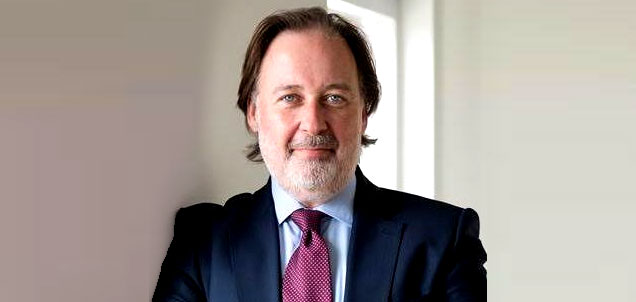
     

  • Two years of BARC India


    On April 29, Broadcast Audience Research Council India (BARC India, in short) completed two years of officially publishing data to the industry. For Partho Dasgupta, CEO, BARC India and his team, it’s been a busy two years having made rapid strides – going rural, buying out rival TAM and merging its metres thereby leapfrogging its metre base and eliminating competition and working towards an integrated television-cum-digital measurement, a significant change in the Universe, and more.

    Excerpts from an interview with Partho Dasgupta:


    Two years is a big milestone. If you were to sum up the second year (of data going live, that is), what would it be?

    It has been a fantastic year with a lot of learnings. In October 2016, we completed one year of our All India data release, which has allowed us to extract some very interesting viewership trends.

    We knew that TV viewing in India responds to various stimuli, internal and external. We now see linkage with seasonality, and this insight helps us answer quite a few queries with regard to actual viewership behaviour in the country.

    We are now two years’ old and the learning curve has helped us better understand pain points of the industry. We are delighted about our journey so far and have our plans set for the next two years as well 🙂

    In a country which rejoices and celebrates with every milestone, why the quiet second anniversary?

    We are a close-knit company that believes in celebrating each milestone we achieve with our employees. It’s important to be low-key in our already hyper active media world.

    This is a question that’s possibly best asked to your subscribers, but would you say data has stabilised?

    I have always said this and I am sure now most of our subscribers will agree with my thought. Our data is representative of ground reality. We were always robust and stable, and we still are. Also since the landscape is dynamic and we have to recalibrate ourselves to make the data more accurate, there may be some disruptions in the short term. Take, for instance, our new Universe Estimate. Yes, a lot has changed from the time we introduced the new UE, but how long will we trade on data based on a survey done in 2013? The industry understands this and has welcomed the move.

    We still find some long tail, niche channels complaining that the data isn’t stable. Comments.

    In almost all countries across the world, niche channels are not reported and analysed the way we do in India. We have time and again proposed that niche channels should look at data which is based over longer period and large TG base. This is solely because, niche channels due to their small viewership base will have relative error much higher than any mass channel.

    Post our Universe Update, genres including niche, have seen huge growth in viewership. This is also in sync with the ground reality of more homes moving up the socio-economic ladder, digitisation leading to greater sampling of the larger number of channels available to the viewer, growth coming from Tier 2 and 3 towns etc. Look at the number of kids going to English medium schools. Close to 60% of households in the top Socio-Economic group prefer English as a medium of education for their children. Not just this, over the last five years, the number of schools in India imparting education in English has doubled. India is changing and this is reflected in our data as well.

    As we expand our panel homes size, and move towards incorporating Return Path Data (RPD) from digital distribution platforms, the data will get progressively more robust.

    Now that you’ve seen data trends closely over two years, would you say that there are some quirks in the data that people aren’t reading well enough? For instance seasonality, weather conditions etc?

    The industry had been used to reading data in a certain way and with us this has changed. Larger sample size, more number of towns, better representation of TV homes, use of audio watermarking technology etc ensures that we capture the slightest of change in viewership habit. This leads to a bit of flux, but that is the reality. Consider this: January-February are the months when school kids are busy preparing for exams, kids genre viewership drops in this period. Come March-April, and viewership peaks. This is because, it is this time that vacation season kicks in.

    Another important trend that we have noticed is that viewership is inversely proportional to weather changes. To understand this point, we looked at the UP market, where as weather peaked, viewership in primetime (7-11pm) dipped. What this meant was as mercury rose in the day, people in the state moved their chores to cooler evenings, thus staying out of home leading to drop in viewership. It can also be attributed to increased powercuts in summer. Our data picks up these Seasonal Swings in TV viewership.

    Other instances are Election and Budget seasons. News genre grows in this period, and that also impacts viewership of other genres. There are many such examples that I could give to show how both content and external factors like heat waves, vacation, powercuts etc. play an important role in viewership coupled with the telecom connectivity issues we have in India.

    Are you happy with the way data is being used by subscribers? We’ve seen frequent complaints to ASCI by a few news channels…

    When we started operations, we realised that the data was being sliced and diced to claim leadership. We come up with guidelines that puts reasonable limits on the way the data can be publicly reported. While many follow the guidelines, those who don’t can be reported to ASCI.

    You have undertaken a significant redefining of the data. How has the transition been?

    Contrary to what many had expected, the transition has been very smooth. This can be attributed to the fact that the industry was sensitised about the changing landscape and the impact it has on viewership much before we implemented the Universe change. The Industry has been very supportive.

    A word on rural which has now been around for over a year. Other than broadcasters, would you say it has fuelled the rural economy and made brand managers change the way they look at rural India?

    Including rural viewership has been a great eyeopener. Rural so far was being ignored as many thought it wasn’t yielding any viewership. But look at what it has done to the TV landscape. The increase in number of Free To Air (FTA) channels, growth of Freedish, increase in number of advertisements on FTA channels among other things.

    Talking of statistics, we have seen a 13% rise in the number of advertisers on rural focused channels. The biggest spike was seen in Hindi Speaking Markets (HSM) channels. From a 31% share of total advertising, the share of FTA rose to 39%.

    With around 38% of rural population forming the affluent base (NCCS A & B) and 47% of total rural population in the age group of 15-40 years, it is they who form the belly of rural viewership. This shows that going forward, any premium or high end product targeting need not necessarily be limited to urban anymore.

    The announcement on Ekam has been well-received. But the big integrated deck is a long way off. Given the way the digital world is changing, how easy will it be for you to adapt to a new environment/tech platform, if any?

    We are excited about launching digital measurement in the country. We will be using not one but different methodologies to measure digital consumption on different platforms with the help of Industry constituents. Like in TV, even in digital, the technology we use will be futureproof.

    Is the integration of TAM in the BARC complete?

    We have successfully formed the meter company, a joint venture of BARC India and TAM. The company is fully functional now and is working on integrating the TAM meters in BARC India sample homes.

    One last question: if you were given an option to relive Year 2, what would you change given the developments that happened?

    We have set up the BARC Disciplinary Committee, are working towards increasing the sample homes by tying up with DTH and digital cable players using Return Path Data and revising our contracts with broadcasters which clearly defines the clauses of code of conduct. All this will be a major step in our fight towards curbing malpractices like panel infiltration. These are reactive steps to what happened last year. We should have started work on all of this in the second year of operations.


  • BBC’s big plans for India…


    Here’s a disclosure: It doesn’t happen too often, but when it does, it can be quite a pain. So we had done this interview in March 2017, soon after BBC Earth was unveiled, but the hard disk on our computer crashed and we lost the edited version of the transcript. Redoing a 4000-word interview is always difficult, and then we got busy with other things. But the interview makes for very interesting reading, so here it is.

    Although here in India, BBC is known more for news on television and radio. In fact until non-government players came on the scene, BBC continued to be the most trusted source for news in India. But what few know outside of media and entertainment and those familiar with television content internationally, BBC is also very widely known for its non-news content. Whether it’s fictional or factual entertainment, BBC has had a huge presence internationally and an increasing one in India. The London-based broadcast major has been engaged in production of some top-rated content on entertainment television including the likes of Jhalak Dikhla Jaa, Nach Baliye and the just-started India Banega Manch.

    In a freewheeling interview, David Weiland, EVP, Asia at BBC Worldwide and Myleeta Aga, SVP and GM South East Asia and South Asia at BBC Worldwide, speak with MxMIndia


    The non-news part of BBC took a long time coming to India. It should have been here much earlier, given that there’s an appetite for content of this type.

    David Weiland: Yes. But when you negotiate a joint venture, it takes time. Particularly with two companies like Sony and BBC, who have big corporate structures. The other element is that in India, one has to go through the process of license applications and all that, and that takes time too. But this is a good time, since we’re now a part of the Sony family and then there’s the IPL in April.


    The IPL has been there for 10 years…

    David: Yes. But we missed last year’s IPL because we were only just finalising the whole thing. When it comes to a launch, you have to pick a good time, like when the audience is available and not necessarily on vacation. The IPL gives us a great opportunity for a ‘crosspiration’, a term that’s been coined to refer to ‘cross-over inspiration’.

    This is not the first time that BBC has come in, outside of news. But you had a mixed experience earlier, when the channel was very popular but it didn’t work well. Have things changed since then?

    David: Yes. In terms of BBC, we’re mainly a premium-content company. So we’re fairly agnostic about our reach-to-market in a country. Sometimes it can be with our own wholly-owned, branded services and sometimes it can be in partnership or a joint venture with other people for branded services. At other times, it can be straight licensing to other channels or digital services. In India, there’s been an evolution in terms of how the Pay TV market has developed, and it was clear to us that in a market like India, it would be better for us to be in a partnership with a company that shared our brand and content values. Earlier, we were doing it on our own, but it was difficult at a time when digitisation was delayed, delayed and delayed!


    So you prefer that somebody else put in the money?

    David: It’s not necessarily about that. It’s more about picking the best — and possibly fastest — route to success. When you’re in a joint venture, you’re sharing both the risk and the investment. And we’ve had quite a lot of experience with this. In the UK, we have a channel joint venture partnership, and similarly in the US and in Canada. In some countries in Asia and South East Asia, we wholly own our channel. So it’s really about the best and easiest way to reach the biggest audience. And when you have the kind of distribution might that Sony brings to the table, trying to replicate that, for a full commercial channel like BBC Earth, is a difficult thing to do. It’s not impossible, but this is much more straightforward.


    So why did you look at Sony, and not any other network? Besides the fact that you think similarly and all the things you mentioned earlier, there’s obviously something more to this than just partnership numbers, isn’t there?

    David: You might need to ask Sony this, but I think it’s fair to say — and it’s public knowledge — that Sony didn’t have a channel in the premium factual space. I think when you have a partnership, both sides have to feel that they can get something out of it because they also have their own needs. I think it just coincided. Moreover, we did talk to other people, but [Sony was] the best fit. They needed a factual channel in the premium space, and we needed a strong distributor.


    Now that you’ve started this, are you looking to bring any of your other channels back to India?

    David: We’re always looking, but I don’t know whether it’ll be in partnership, or even if it’ll be with Sony. We don’t have any concrete plans, but we’re agile and the market is moving in so many ways. We’ve now established a relationship [with Sony], so it makes sense for us to jointly explore other opportunities. BBC, as you know, has a wide range of content that would lend itself to new, potential channels.


    Is there any specific direction you might look in, given Indian market conditions?

    David: When you look at the global brands we now have – there’s BBC Earth which is premium-factual; BBC First is premium-drama; we’ve got CBeebies for preschool kids, and we’ve got BBC Brit, which is more male-skewed, factual entertainment — we’d certainly be interested in looking in those areas. We’re not suddenly going to go outside and create a cricket channel or something for older kids or women’s’ lifestyle. We are quite clear about the spaces where we think our content can make a difference, and those are the areas that we’d like to be in.


    But you could be speaking to other networks, and have an arrangement with Star or Zee or Viacom, for instance?

    David: Theoretically, yes.


    There’s no commitment with Sony as such?

    David: When you work with a partner, there’s an understanding of how that partnership will work so…


    Any thoughts on CBeebies? CBeebies was very popular when it was here, though the circumstances were different then.

    David: There are no concrete plans, but we have a very successful CBeebies channel here in South East Asia and North Asia, and we have an increasing number of CBeebies branded blogs, so that’s another way to get our content out. Whenever you want to launch a new service, you want to look at the market and whether there is any appetite for that content. With CBeebies in India, there probably is. But does the business model add up? I think that’s what one needs to look at. I wouldn’t say watch this space, but it’s certainly something we’re considering.


    You have some marquee shows which are there on channels here, and now you have a tie up with Amazon. So is that a direction you’re looking at? While as a content company, you may be platform-agnostic, but is there a greater thrust towards any specific platform?

    David: No. But let’s talk a bit more about what India means for us. It’s a fairly unique market, and we have pretty much all of our businesses represented here. We have a very successful and strong local production unit here which produces marquee shows; we have a successful TV-accessing business to both TV channels and digital platforms; and we now have something in the channel space as well. We like to have a number of different businesses. In some markets, we are more than just a TV-licensing business. So the idea really is to grow those three strands of the business and potentially add more to it. India, for us, is a very important market globally.


    Where would India place in your international business pie?

    David: I’d say in the Top 10. We obviously have big business in the UK, the US and, very importantly, in Australia. As well as in some Western European countries. I’ve been in this role for three years, almost all of it in Asia, and I’d say China and India are now in that Top 10. Not necessarily by size of current business, but for the potential growth and opportunity. If you are a global media company, you can’t ignore the two most populous countries that have strong economic growth, and still have room for growth in pay television, free-to-air television, digital television and such. We’d be crazy to turn our backs on India, which has the added advantage of the BBC brand being well-known here. BBC Earth is important because I think after news, the genre that people associate with BBC the most, is documentaries.


    Except that the familiarity and popularity of the BBC brand is with an older segment. The young and growing population might not be as loyal to it.

    David: Yes, to a certain degree I think we’re starting to do things in other spaces that is [expanding] our connection. In India, you’ve got a young, growing segment that’s travelling more, is more into global brands. Sometimes, the challenge for us may be to associate the programme brand with the BBC brand, but in the case of Doctor Who and Sherlock that connection is clear…[they’re very popular with Indian youngsters]


    By the time Sherlock was aired in India many had already seen it…

    David: Piracy, particularly in Asia, is still a growing issue. And it’s interesting that this year — with the latest season of Sherlock, which debuted in January — our partners in India were Sony, again, and AXN, who were pretty much on day and date. So I think it’s incumbent on all of us content owners to try and get our content out at the same time as it releases, say, in the UK.


    Is competition from access on the internet as much for a format like BBC Earth as other shows, given that consumers would want to see things in better resolution?

    David: Yes. But factual content probably is less pirated than dramas, and I think there’s less emphasis on having those global moments. Although I’d say for our biggest shows like Planet Earth 2, we did have global releases in large parts of the world, and each of our markets benefitted from that.


    Myleeta, what has been your experience with Indian languages? I know that BBC Earth is in four languages, including English. But going forward, are you looking at a lot of Indian language content and/or customising it for Indian languages?

    Myleeta: Definitely. I think factual content lends itself very well to languages because you don’t have so many character voices. So it’s very clear that these four languages are required, to give us full, national coverage for the channel. Also, if you look at our CBeebies content and some of our dramas, we’re increasingly trying to look for partners who would be interested in putting them into [other] languages. It’s not easy. So kids’ content is customarily dubbed, but dramas and movies are a little bit harder.

    There’s also a limited audience for English movies dubbed into regional languages, but in our production business, we’ve done quite a bit of work in Kannada, Bengali and Marathi. Those are the three languages we’ve done productions in. We would like to be doing more. We’ve worked with the Viacom language group [to explore] every language cluster there. It’s about finding the right format, and being able to produce it to the level at which we would want to pitch it and steer — because regional budgets are different — and still deliver the kind of BBC quality, with language customisation. You need to also be sensitive to what the market wants.


    Like your partnership with Sony, for language productions will you, for instance, talk to a network like Sun?

    Myleeta: Yes


    In South India, what is the appetite for a full-blown channel from your stable, as in your arrangement with Sony?

    David: I think BBC Earth will be available


    I do remember Discovery Tamil, which did a fair amount of customising, with some moderate success.

    Myleeta: Yes, and when you actually look at the customising they did, it was quite marginal. So when creating an entirely new language feed in this genre, it has to be clear that it’s very different if you’re looking at drama or something from the general entertainment channel. But in this genre, the amount of customisation you need to do, is very little.


    In a new scenario, where rural audiences preferences are also being measured, where do you see scope for your content, given that it’s largely urban-focussed?

    Myleeta: We have a lot of natural history and science on BBC Earth, but we think that the content – perhaps a slightly different mix of it — would work really well with rural audiences too. There’s a visual element to the storytelling which is fact-based, but it is also engaging to watch.


    So do you have some kind of growth plans and targets for India?

    David: We do.


    Obviously you do, but can you share some plans?

    David: We don’t really do that. Around Asia, we’ve seen good growth in India, China, North East Asia, Korea and Japan, and I think that’s set to continue.


    And that’s happening because of your content production?

    David: It’s a range of things. We’re now set up across the region, where we can explore the opportunities quickly. Our content is resonating more [with viewers]. We’ve had two of three big global films; we’ve had Sherlock Season 4; Planet Earth 2, and we’ve got new seasons of Doctor Who and Top Gear (which opens this weekend). So there are lots of these big, noisy shows and that’s benefitted us. There’s a general, natural growth in those economies anyway in digital, in terms of a growth in digital platforms across the region. There are new entrants in the market who are hungry for good, premium content.


    What about things on the anvil for India? Can you share some of that?

    Myleeta: We can’t share the specifics because broadcasting will want to make the announcement, but we’re doing a massive amount of production at the moment…


    Ah, but you’ve been doing a massive amount of production always, right?

    Myleeta: Yes but now it’s really…


    Massive?

    Myleeta: Yes. We have five shows on the floors, and we have two, massive general entertainment formats that we’re producing. One is ‘Nach’ for Star, and there’s another one we’re doing for Colors. We’re also now working more and more in the area of scripted formats, so BBC has some really compelling scripted shows that we’re looking at adapting for digital and TV.


    Like?

    Myleeta: There’s a bunch that I love, but we can’t tell you which ones…


    But still?

    Myleeta: (Laughs) Like Sherlock. There are many, so I think we’d really like to get a scripted format away in this market, in the new year. That’s not something that’s actually been commissioned yet, but there are quite a few conversations on, and there’s a lot of excitement around trying new storytelling. [because a] lot of the scripted formats haven’t really delivered.


    Is there any specific growth area that you might look at?

    Myleeta: Producing for digital is something that we’re working on, and then there is our branded content production. We did ‘Har Ghar Kuch Kehta hai’ with Asian Paints, which was extremely successful and we’re hoping to do a few more like that in the next few months. The skillset that you need for branded content, for digital content and GEC mainstreams, singing-dancing and fiction shows, are all very different, and we’ve homegrown each of them. We’ve got genre expertise in pretty much all of these, and that’s something we’re particularly proud of. This is the first year where we’re properly bonafide, doing massive amounts in each of them. We started out with non-fiction and doing a little bit of fiction. Now we’re doing quite a bit, and I don’t know if there are any other companies that have been able to work on [all of] these four big buckets of content, in production.


    As a content producer and content maker, how much do you get influenced by ratings that come out every week? I’m sure you do, because all channels do…

    Myleeta: Yep, we don’t have a choice. But I have a very simple view on ratings. Just like when kids go to school and are judged by their grades, when you make a TV show, you have to accept that you’ll be judged by your ratings. So we take our ratings very seriously.

    What we try to do, at the same time, is also keep the bigger picture in mind. If we see a trend in the ratings and see a certain journey that we’re on in our content arc, then we might [change tack] and fortunately broadcasters, most of the time, are open to that.


    But there are also comparisons of, for instance, ‘Nach’ with ‘Jhalak Dikhla Ja’ or ‘Rising Star’ with some singing shows.

    Myleeta: Of course. There are four singing shows on at the same time, it’s crazy! But ratings are a pretty unsophisticated system, and I’m not just talking about India. Globally, too, I think there’s been a shift. It’s still the currency, certainly, for commercial channels and how they operate in advertising, but I think increasingly people are looking at social media. You can get a real bias. We had Planet Earth 2 launching in America and we created some special, short-film content for Snapchat. Interestingly enough, that caught a bigger audience than the linear TV channel. So the engagement [on social media] is huge now. In the UK, we certainly look at that, and catch up on digital, which isn’t really measured. So I think you’ve got to have a more holistic view. In India, it’s still very much driven by the system, but more sophisticated channels and programmers are now looking at social media buzz as well.


  • On Lokmat’s Rising, with Rishi Darda


    Rishi Darda, Editorial and Joint Managing Director of the Lokmat Group, comes from a family that has been in public life for over four decades. But he’s determined never to let his family’s political leanings impact the media business of the Lokmat Group. Darda also has a lot of aces up his sleeve – a digital venture that’s set to grow and acquisitions, if there’s an opportunity. But most of all, to cement the newspaper’s leadership position in Pune. Excerpts from a freewheeling chat with Pradyuman Maheshwari…


    You and others in your generation don’t speak to the trade media much. Your uncle Vijay Darda has of course been a well-known public figure.

    That’s how it’s always been. Vijay Uncle, the Chairman, has been a political figure, as has my father. And both of them have been extremely ‘out there’ in public life. But we, the newer generation, have preferred to take a backseat and let our teams and products speak.

    It’s normally the other way around, isn’t it? The younger guys are more aggressive…

    Yes, but don’t make the mistake of thinking we’re not active. We’re very, very active — but a little in the backseat, actually. All of us are very involved with Lokmat, the media company, but just not ‘out there’.

    So how is the paper doing?

    I think overall, in the newspaper industry, regional still has a major scope to grow. Regional newspapers have continuously seen growth. First, because of the literacy rate. Then, the penetration of the newspaper is not as high in Maharashtra as, say, in Rajasthan. So I think there’s still a lot of scope for us to grow. And advertising has been good, except for the months of demonetisation.

    Given the fact that Maharashtra is more industrialised than other states, and the affinity towards English is more, do you still see as much of an appetite for growth as elsewhere?

    Growth for a newspaper would not depend so much on the language, but on the content. Mumbai, the metro, is more English-speaking. With Maharashtrians who understand Marathi – and may feel that they’re missing out on something the English-language papers provide by way of content – may cause a language shift. But I think if I’m able to give them content that they want, in their language, I don’t think there’ll be a shift.

    That’s what Lokmat‘s been able to do, quite successfully for some time. Outside Mumbai – in places like Nagpur, Aurangabad or Pune, the largest market is Marathi, and by a big margin.


    But in pockets of Vidarbha, for instance, Hindi has very large play too.

    Like I mentioned, if a person doesn’t understand Marathi, s/he’s going to look for other options. And Vidarbha borders Madhya Pradesh and Chhattisgarh, and there’s a lot of movement of population between these areas. But even if you look at Vidarbha, the largest newspaper over there is Lokmat Samachar and not Lokmat. So even in Hindi, we are still No. 1 in Vidarbha.

    As a strategy, in centres besides Mumbai, whatever language whatever mode people would want us to reach in, we would do that, whether its digital or print, Hindi or Marathi. In places like Aurangabad and Nashik, we saw a rise in English, so we’ve come up with our own. Lokmat Times is there and it’s been a ‘bold’ newspaper in both these places.

    In Mumbai though you’re there but you’ll are not No 1. What is the mix of the market like, and what is the future for that?

    Maharashtra is one of the most fragmented markets. So places like Khandesh, Vidarbha and Marathwada belong to Lokmat; Pune is with Sakal; Kolhapur, with Pudhari, and Bombay has Loksatta. Five years ago, we realised that if we looked at only Pune and Kolhapur as a market, it was equivalent to a Madhya Pradesh. If you look at Mumbai and Pune together, then it’s equal to three or four states of a Hindi newspaper. We realised the potential of Maharashtra itself was huge, and was not tapped by Lokmat. So in the last three or three-and-a-half years, we’ve made inroads into Pune and now are the largest newspaper there. As per the Hansa report, we are also No 1 in Kolhapur. Mumbai is the focus area, so for about a year-and-a-half, we’ve been focusing a lot of time and energy in Mumbai, and we’ve become No 1 in Thane. You’ve only got a certain amount of resources, so you need to start prioritising. So we’ve taken the Thane and New Bombay markets and been focusing on our Marathi newspaper [there].

    Are you’re looking at getting into Mumbai in a big way?

    We’ve already been there

    So getting into Mumbai through Thane and the outskirts?

    Yes, the dominant Marathi-speaking population is on the outskirts rather than in Mumbai, so over a period of time…

    Are you focussing on a certain socio-economic strata of society to grow the readership, or are you going to cater to the Sec A class?

    So the focus has always been on getting the highest readership among the Sec A and Sec B in Maharashtra, in every centre. The Hansa report in Pune shows us as No. 1 in Sec A and Sec B in PCMC. And even in the newer markets that we’ve focused on. Similarly in Mumbai, the focus will be a lot on Sec A and Sec B, and over a period of time, we’ll also get Sec C. I think there are advertisers for each of the categories.

    But there is a perception that Lokmat is essentially Sec B and Sec C…

    Yes, but that’s not true. I don’t know how this perception emerged, and in what quarters, but if you look at the numbers, every major advertiser — whether e-commerce companies or luxury cars – who’s looking at spending in a particular market, [has advertised with] Lokmat. Even the high-end real estate segment advertises with Lokmat in all the markets we are in. If the market is there, Lokmat has always been a part of it. If you look at IRS 2012, Sec A and the younger population have always been with Lokmat. And not just as a percentage, but in terms of actual numbers

    To get back to Pune, in a big ‘hoarding war’ last year, you claimed to be No. 1, which was disputed by Sakal. And then Maharashtra Times came up with a campaign saying they are the No. 1. So what’s the ground reality?

    On our part, we will not respond to any statements our competitors make. We’ve got a strategy that we’ll go ahead with, and let others respond to it. About three years ago, despite Lokmat being dominant in Pune, we were not N. 1. When we began to our focus on Pune, we found there was a huge vacuum and the need for an unbiased newspaper; a newspaper that was very aggressive in reporting. Pune, for almost 50 years, was used to goody-goody [papers]. But it was an international city which was going through a lot of issues, and editorially Lokmat was one of the first to bring all that out. We also ran the ‘Aata Bas’ campaign which was very successful.

    When you say unbiased, you obviously mean [in relation to] Sakal

    The reference is to Sakal, I think for all the right reasons. There was nobody else to compete with them, so there was complacency in their product, and that’s where Lokmat saw an opportunity. Our distribution strategy, where we explained what Lokmat is all about, worked extremely well. Till a few years ago, you looked at a certain market and went there with invitation pricing to increase the numbers. In Pune, we mapped each and every area of but only picked some where we would focus our energies and increase our market share.

    Dainik Bhaskar did that with some success with Gujarati and even Marathi

    Yes, so this was where we went out. Divya Marathi has done it, HT has done it, a couple of them have been successful and few haven’t been successful…

    But there are charges that Hansa report is not accurate?

    If you do not get [a corroborating] response in Pune, I’m ready to give a year’s advertisement for free. If someone goes out and meets the hawkers, and they don’t say Lokmat is the No. 1 newspaper in Pune, I’m ready to give out a year’s free advertisement and free subscription to that person. That’s the conviction we have in our brand in Pune today.

    The reason for quoting Hansa is that we’ve all been having some teething problems with the IRS that we’re expecting in December would give out clear numbers where Lokmat is No. 1 in Pune but you know, while it’s not there for all these years for the newer IRS to come so, and it’s also where you want it not only for the advertiser but also for yourself to find out whether you are really doing all the right things; Every market leader [in Sec C] including Sakal, has used Hansa.

    People I spoke to say Lokmat has become very aggressive, has increased considerably in sales and reach, but it may still not be the No. 1 that Hansa says it is…

    You’re fighting a brand which is actually 80 years old in that market. So perception-wise, it will take us a little time [to emerge as No 1]. But it’s definitely response-wise; advertisers who were spending hundred rupees with us, are now spending two hundred.

    How critical is the Pune market for you?

    Pune is the largest market of Maharashtra outside of Mumbai, so it’s extremely critical. If you look at all the markets, Pune is nearly the size of Rajasthan, so it is a very, very important market for us. The [biggest] Marathi advertising market is Pune.

    So what do you think went right for you, and wrong for Sakal, in Pune?

    I don’t know what went wrong with Sakal — I think somebody outside Lokmat, an independent person, might be able to tell you what went wrong with them. I think Lokmat has done a fantastic job, whenever we’ve created teams anywhere. Creating entrepreneurs within Lokmat has been a key strength for the company, and everybody who works in Lokmat feels like s/he belongs here and feels that it is his company. The passion with which each and every team member works in the market, is the response. The number of activation events Sakal does in a year, we do in a quarter. Our direct reach to readers is huge; our teams are not sitting in an ivory tower, speaking to readers. They’re on the ground, meeting with them, and trying to understand the pressing issues in Pune.

    They [Sakal] have had a CEO who is ex-Lokmat

    They’ve had a lot of people who have been ex-Lokmat and there’ve been lot of people who’ve been from Lokmat who want to come back to Lokmat as well.

    Having become a dominant player in Pune, would you say you’ve reached the point you wanted to reach in the print sector?

    I’m greedy. It would be tough to say that I’ve reached…

    So what’s the final frontier?

    The media is an industry that is continuously flowing and evolving. You want to be part of something big every time, and you want to keep creating benchmarks, which should get tougher. But Pune was very important for us, from the revenue, perception and readership points of view. It was critical for us to get it right, and I’m glad we did it. Something that really worked for us was also the Sakhi Manch. Having so many brand ambassadors talk about Lokmat, gave us more strength and perception.


    You’ve been a late entrant to the digital world but now you’ve got into it in a big way. So how key is digital for the group?

    I’d be kidding myself if I say that digital is just a passing phase. I think digital is going to be extremely dominant, along with print and other mediums. So the way we look at it is this: There’s a certain percentage that’s coming out of print, which is nearly 90-95 per cent of our revenue today. So how do you make sure that print becomes 50 per cent of your business, and 50 per cent of the revenue comes from all the other mediums — events, activations, digital? That’s a very important piece.


    Are you looking to orchestrate digital with print in a particular way?

    If you look at the top-end news sites in the US and remove the tech companies, the Googles and Yahoos of the world, nine out of the top 10 are brick-and-mortar companies that are in print and television, like CNN and the Times. Huffington Post is the only digital company, otherwise all of them are brick-and-mortar. We would be spending a lot of resources [on this] that’s why we wanted someone like Hemant Jain, an entrepreneur, to come in and set this up. It’s a different beast altogether.


    And how is that going? Sakal is or was leading in digital…

    While growing up, if you were reading Times of India, the first news site that you would go to is TimesofIndia.com, whether or not it’s a good site. In Maharashtra, today, 80 per cent of your digital traffic comes only from Mumbai and Pune, and those were two markets where Lokmat was not leading. So the advantage would have obviously gone to all the people who were No 1 in these two markets at that point. But, finally, it is your product that you can depend on, and I think the product that we are able to provide today, our Lokmat 2.0, should be out soon. And I can assure you that it is a far superior product than others in the competition. If the content and product are right, readers and advertisers will come.


    But advertising in digital is not as high as print…

    It takes time. If you look at India, print is [worth] about Rs 20,000 crore and digital is [worth] Rs 5,000 crore. So there’s still a major gap.


    You also have interests in television, with IBN Lokmat, right? So will you try to sync digital with that, or will it be totally separate?

    IBN Lokmat has its own website, but I think you need an independent, digital-thinking organisation. If you try to take a few things from print, a few things from television, it would not work. You need somebody who thinks digital first, and then comes back and says, ‘okay, these are the pieces that I need from your older organisations to fit it in’.


    Talking about community, how much of the success of Lokmat, the print product, has been because of community initiatives? I’m told it’s fairly big in pockets where you are strong, especially in Vidarbha and Aurangabad. So how much of a contributor is it, and what importance do you give to such initiatives?

    It’s very, very important. I’ll divide it into three or four sections. One is the forums like Sakhi Manch, Yuva Next and Bal Vikas Manch; then there are the IPs that we create; and third, are the client-led activations that we do. It’s been about 15 years since we started Sakhi Manch — and at a time when nobody had forums like these. These are paid members and not people who join free of cost. Sakhi Manch is a platform for women to come and talk, enjoy themselves and be entertained, informed and educated. This gives us direct access to our readers, and in Pune, I think there was a disconnect between the readers and the product we were coming out with. With Sakhi Manch, Yuva Next or even Bal Vikas Manch, our people are out there in the field, talking to children, talking to teachers and such to understand what they like about Lokmat, what’s not working etc. It’s a direct access to your readers. Today, we have a base of about almost three-lakh paid members across the state, which is a big number. And we’ve been able to take that database and go to our clients for events, like we’ve done with Reliance, Colors and Star…


    So they are paying you to be subjected to advertising?

    They are paying us to reach out to them. Otherwise also you know I think television channels are one of the largest advertising industry for the print, you know for any language, they are the top five


    What will be your next steps? You mentioned Pune, and Mumbai is big…

    Print expansion, of course, and the focus on Mumbai and Pune will continue. But personally, Taplight and ClickStart — these are the two areas that we’ve been focusing a lot of our energies on, as well as events and activation, which is moving very fast for us


    You’ve done quite a few events…

    Yes, we’ve done ‘Maharashtra of the Year’, ‘Maharashtra’s Most Stylish’ and a lot of client-led events. It’s given clients that confidence that when they come to us for events in Pune, we are able to fill a hall of about 2,000 to 3,000 people – whether it’s a Colors, Star Plus, Reliance, Dabur or ITC event. It’s about Lokmat’s reach. Taplight is ideal for this, and ClickStart is also big for us. We’ve kept a corpus of about Rs 100 crore to invest in different companies. So while Lokmat can create in-house products, the idea is to go out and bag a lot of these digital companies and either bring them in, or provide them with support functions and let the entrepreneurs flourish in their own way with whatever they are doing.


    With the IRS coming out soon, guess your next step will be to cement your position in Pune?

    Locally, in terms of the number of advertisers, I think we’ve already exceeded Sakal, because local does not really wait for an ABC or IRS. The local person who is advertising, looks only for responses, and when he sees that coming out of Lokmat, the shift happens.


    It’s often said that if a leader loses out on the dominant slot, it starts telling on the rest of the business as well. So do you anticipate any issues with your competitor?

    From their point of view, they are only present in Pune and not really in any other, markets.


    Apart from ClickStart, are you looking at anything else, like buying over any print publications and…

    We are continuously speaking to companies, and Hemant’s very actively involved in speaking to them about one, whether we buy them out, and second, how we can guide the entrepreneur. So places where we come in and run the management, we’ll be able to take up faster. But places where we’ve found that we are not able to add a lot of value other than support — that’s where we go and invest and support the entrepreneur

    Would you look at print acquisitions also?

    I think nothing is available, as such. We’ve been open to an acquisition for a very long time. We’ve been speaking to few of them, but I don’t think there’s anything there. But if there’s something that fits our strategy, and makes sense for us…  I would not do anything just for the glamour or sexiness of it. It has to make sense to my bottomlines.


    A question which you may not answer, if you don’t wish to. There are things that you may have inherited and can’t do much about it… like the earlier generation of leadership being involved with politics. Doesn’t a politically-connected ownership impact the credibility of a print product?

    My family has been a part of politics for about 45 years. My grandfather, who was a politician and founded Lokmat, was very clear, even at that time, that his politics should be separate from the paper. If we had mixed both, and become a mouthpiece of the party to which the family is attached, it’s would’ve been impossible to stay No. 1 for such a long time. We’ve been No. 1 for three decades now, so I think there’s something right that we’ve done right. We’ve been able to keep that balance right and been able to draw a line between politics and the newspaper. So while my grandfather was a minister, he was not involved in Lokmat. When my father became a part of the government, he was not involved in Lokmat at all, so I think we’ve been able to strike that balance. Also governments have changed; there have been Congress, BJP and Shiv Sena governments, and Lokmat’s still remained No. 1. If people saw us as favoring any one party, I think the shift would have happened.


  • Diversity will help GroupM grow as an organisation: Rohit Suri

    On Wednesday (May 24), GroupM took newspaper readers by surprise with a front-page advertisement in business daily ‘Mint’. While it’s not uncommon to find ads on Page 1, this one was special because it was inserted by media agency conglomerate, it was an appointment ad and it was an ad inviting talent as diverse as anthropologists, musicians and coders (see image).
     

    While broadbasing its scope and activity to beyond tradition media buying and planning has been part of what GroupM South Asia CEO CVL Srinivas has been telling us over the years, the ad actually puts into action what Srinivas has speaking about. We spoke to a few people from diverse backgrounds on whether they would like to join GroupM given the clarion call. The reaction was mixed, but the sentiment was that one needed more details on what the job would entail if the attempt is to get high performers from amongst the talented to apply. “For one, we don’t know too much about GroupM. But now that you’ve told us, it looks very interesting. As a young musician with what I think will be a very bright future ahead of me, the draw to this kind of a creative job has to be significant to pull me into making music a secondary vocation.” A student with a psychology major from a liberal arts college said the proposition was attractive and he would consult his parents and apply.

    We asked GroupM a few questions given the ad and this is what Chief Talent Officer Rohit Suri responded via email.


    What was the rationale behind the ad – in terms of attracting a very diverse set of background… musicians included?

    Over the last few years we have diversified our talent pool to keep up with what our business will need in the future and are just intensifying the pace of this change.


    Given the ad as an indicator of the profile of people you are looking to hire, what would you say will GroupM as an organisation be?

    GroupM India is a digitally charged, data-centric marketing services conglomerate. With our seven agencies and specialty services, GroupM India gives clients the advantage of global operation and learnings, along with local expertise and market insight. With our investment in data, technology and diverse talent, GroupM India aims to shape the future and transform challenges into opportunities for our clients.


    The general perception of a media agency network is that it’s involved with media buying, planning… crunching numbers, offering media innovations. So what’s the GroupM 2020 going to be like?

    The industry is changing rapidly and the landscape evolving at a pace faster than ever seen before due to evolution of technology and we are nimble to imbibe this change and have worked tirelessly to transform our business to adapt to these changes.


    While traditional media agency employees may have had a certain affinity to their profession and hence the organisation, but isn’t there a risk of “outsiders” not having the same kind of loyalty to the business and the organisation?

    We do not believe this is true. Diversity will only help us grow as an organistaion, it will fuel collective insight and lateral thinking within GroupM India. In today’s media environment collaboration and open source is paramount and loyalty towards the profession will come when people get to do great cutting edge work which they are passionate about and are rewarded fairly.