Category: SHRUTI PUSHKARNA

  • Shruti Pushkarna: Is our understanding of ‘accessibility’ limited by an ableist approach?

    Shruti PushkarnaBy Shruti Pushkarna


    Four years ago, when I started working with visually impaired people with the objective of including them into the mainstream, I was introduced to a whole set of new terminologies. It took me a few weeks, maybe months to become abreast with the domain lingo and issues. I guess this happens in every profession where you are working within a niche. Back in the days of journalism as well, there was a fair bit of ‘education’ involved every time one was expected to write on a new subject.


    Among the many new terms thrown at me in the workplace, in meetings and at events, the most frequently used were ‘accessibility’ and ‘inclusion’. With time, my understanding evolved and I figured these were key to the rights being advocated for persons with disabilities. And this wasn’t an easy battle against a society largely governed by ‘ableism’.


    As I grasped more specifics of ‘access’ and what it meant for close to 15% of the global population, I realised that the general understanding remains sketchy (to say the least). So I thought of spelling out some basics today, on Global Accessibility Awareness Day.


    On October 1, 2007, India ratified the United Nations Convention on Rights of Persons with Disabilities (UNCRPD). In its Article 9 on Accessibility, UNCRPD states the need “to enable persons with disabilities to live independently and participate fully in all aspects of life”. This principle is one among those which form the basis of empowerment in the Rights to Persons with Disabilities Act (RPWD) 2016. The law mandates the government to ensure equal access to the physical environment, transportation, information and communications, technology and services in both urban and rural areas. In promoting access, the government must ensure elimination of obstacles in public spaces and lay down measures for development of universally designed products and services.


    Things like ramps, elevators, tactile markings, braille signage, etc. make the physical environment accessible to people with different needs. This would include indoor and outdoor spaces like offices, schools, colleges, cinema halls, shopping malls, stadiums, airports, railway stations and so on. Physical access is easily understood (and yet overlooked) by most stakeholders. Buses, trains, educational institutions, workplaces, government buildings, even hospitals continue to be inaccessible. Contrary to UNCRPD and RPWD, anyone with a disability cannot independently or directly access a lot of these spaces.


    Even less comprehensible is the concept of digital access which impacts the use of certain basic facilities like internet or mobile banking, booking a cab, reading a book, catching news online, accessing social media, participating in a digital meet or watching a movie on an OTT platform.

    Services that you and I use effortlessly are often designed not keeping access for ‘everyone’ in mind. There are clear Web Content Accessibility Guidelines (WCAG) to help make the web accessible to people with auditory, cognitive, neurological, physical, speech and visual disabilities. But a majority of developers (read technology heads) are either unaware or indifferent to basics of universal design. Businesses continue to flourish by targeting 75% population so why halt and bother about the lesser numbers.


    Let me describe a problem scenario in the context of daily living.

    In the pre-coronavirus days, I would travel to work using a taxi service. Assuming I’m visually impaired there are several physical and virtual barriers to be encountered in the independent attempt of reaching office. Starting with the smartphone app used for booking a cab. It’s accessible using VoiceOver (or TalkBack) but doesn’t read out all the options so I have to take sighted help to read what’s on my screen. When the cab arrives, I take my usual way out of home but the road is dug up and there are no markings for the temporary work. I either land in a ditch or a good samaritan saves me. I stop on the way to buy coffee and produce my debit card for payment. I’m unable to enter my PIN because the POS machine is touch only, no keypad to feel and enter the digits. Unwilling to share my personal PIN with the cashier, I forego my morning dose of caffeine. On the long commute, I decide to catch up on news but navigating through mobile sites becomes frustrating as my screen reader doesn’t recognize advertisement pop-ups. I’m relieved to reach work, a known territory but soon I find myself struggling and seeking assistance yet again. This time for reading a document which is a scanned image as opposed to e-text

    .

    In the current scenario, where coronavirus has limited our physical interactions and we are expected to operate, study and work remotely, digital accessibility for disabled people becomes even more critical. Hearing impaired people can’t access important information on TV because all content isn’t available with closed captioning or in sign language. Blind people can’t track the statistical graphics displayed on websites or news channels unless accompanied with voice or text. Virtual meetings are becoming the new professional norm but some of the common platforms aren’t entirely accessible, when it comes to installing the app, joining or scheduling a meeting.


    People with different types of disabilities face several challenges on a daily basis. This deters them from stepping out, engaging with others, pursuing education or being gainfully employed. Millions remain ‘excluded’ from the mainstream scheme of things despite being equal citizens.


    Is it really so difficult or expensive or time-consuming to grant equal access to all spaces and services? Why do the authorities or private players refuse to comply? The only real barrier seems to be the mindset which is attuned to design for and cater to the able-bodied.


    Shruti Pushkarna is a former journalist (part of the founding team of MxMIndia) who has moved full-time to the social sector. She heads operations of the New Delhi-based Score Foundation where she works as Director-Programmes & Communications. She writes for MxMIndia every other Thursday. Her views here are personal. She can be reached via Twitter at @shrutipushkarna



  • Is the Battle for Inclusion being fought with an Exclusive Mindset?


    By Shruti Pushkarna


    Shruti PushkarnaIn the past, I have written a few pieces on accessibility and the rights of persons with disabilities to be part of all that is mainstream. As I began to pen down my thoughts, I realized that ‘disability’ is always looked at as a ‘separate’ domain. By governments, by businesses, by non-profits, by educationists, and even by advocates of ‘disability’. When all stakeholders are guilty of looking at the subject as separate from the rest of the society, then how can we single out anyone and pin the onus of change?


    I also realised that amid the current crisis, a new normal is emerging and unfortunately persons with disabilities are not part of this discourse either. Old habits are shaping new, existing policies are being extended to incorporate new rules but the approach remains the same. One of looking at disability separate from the rest, as the other which needs ‘accommodation’ or needs to somehow ‘fit in’.


    Retrofitting is at the root of all things that continue to remain inaccessible. An idea that is designed for a majority and leaves out the vulnerable minority will never be able to cater to everyone’s needs. The makeshift solution is either inadequate or temporary. Patches begin to surface as more people start accessing it. And then the scuffle for revising and revamping ensues.


    Build a mall without an elevator or a ramp. Then renovate it to make it ‘accessible’ for someone on a wheelchair. Build a home with a narrow staircase and no handrail. Then renovate it for older family members to move about independently. The list goes on.


    The amount of time, effort and money wasted in refurbishing, can easily be saved with planning for ‘all’ at the very go. But like I said, this is an outcome of how we think as a society. Our minds are tuned to box people and issues before they can be found a befitting solution.


    Even non-profit organisations that are working towards the ‘overall upliftment’ of our society, define disability as a unique cause. Charities focused on areas pertaining to education, child trafficking, women empowerment, unemployment, elderly care etc. don’t include it as a component in their primary programmes even though disability is a cross-cutting issue.


    Similarly, while formulating policy, the objective is to create a new set of rules rather than making all existing policies disabled-friendly. While the former is exclusive, the latter can obliterate the need for separate departments, divisions and units to address the needs of a section which is a mere subset of the 1.3 billion populace.


    The disabled community has always stayed on the peripheries because of the lack of access to mainstream environment (both physical and virtual). There are crystal clear demarcations between able and disabled, normal and abnormal, them and us. And the current crisis has made the bitter reality even starker.


    Let’s take the case of ‘education’, which is a fundamental right of all citizens as per the Constitution of India. For any student with disability, getting into mainstream mode of learning has never been easy despite the Right to Education Act and the Rights of Persons with Disabilities Act in place. Schools and colleges have been disrupted due to the recent coronavirus pandemic. Examinations have been called off and all forms of imparting and evaluating education are taking place online. This brings the average disabled student face-to-face with the ‘access roadblock’, where most don’t have personal devices or a stable internet connection. Thousands of students in their final year are at the mercy of their university to complete their graduation. Are they expected to drop out because the system simply doesn’t acknowledge their existence?


    The government’s latest offering, the Aarogya Setu app, is inaccessible. This when the intent is to have the app installed on every phone. Digital payment apps and online banking websites continue to discount a user with screen-reading software. Online meeting platforms like Zoom, Skype, Webex, Google hangouts have certain inaccessible features. Be it regular television via set-top box or OTT platforms, entertainment content isn’t entirely accessible.


    Our reality is changing every day. We are facing unforeseen crisis in the form of a virus, cyclone, flood, earthquake and so on. If the disabled are not included in the disaster management scheme of things, or are left out of the newer ways of existence, that’s a huge number (26.8 million to be precise) wiped off the country’s face in an instant.


    Are we okay to live with that? Or can we use this as an opportunity to pause, rethink and design all physical and virtual spaces/services keeping the needs of each citizen in mind?


    Shruti Pushkarna is a former journalist (part of the founding team of MxMIndia) who has moved full-time to the social sector. She heads operations of the New Delhi-based Score Foundation where she works as Director-Programmes & Communications. She writes for MxMIndia every other Thursday. Her views here are personal. She can be reached via Twitter at @shrutipushkarna


  • Shruti Pushkarna: Hamstrung by Lockdown Restrictions? Imagine the Reality of the Disabled!

    Shruti PushkarnaBy Shruti Pushkarna


    Past few days the media coverage is abuzz with actor Sushant Singh Rajput’s suicide and the usual fallout discussions on mental well-being. According to a recent news report, around 300 Indians have killed themselves during the coronavirus lockdown. Uncertainty around the medical and economic scenario is shooting up anxiety levels.


    A couple of weeks into the lockdown, I started witnessing social media posts on keeping the mind healthy, practising yoga (or any other form of exotic sounding exercise), eating healthy, taking breaks, frequent video calls to friends and family et cetera. As a natural response to being ‘locked up’, a host of solutions popped up (some free, some for a price) to adjust to these ‘abnormal’ times.


    For the first time, a majority of the population has been ‘confined’ in their homes. Their freedom curtailed. Options and routines upended. The inability to carelessly step out for a meal, go shopping, catch a movie, workout in the gym or do anything outdoorsy has left them hamstrung.


    Choices matter. A lot. The pandemic has made us realise this. But is everyone fortunate enough to choose?


    The other day a friend asked me how my parents were coping with the situation. That got me thinking. My mother has stayed indoors for most of her life because of a chronic illness. Her limited mobility left her with very little choice to step outside on her own. But she is happy. She is well-adapted to her idea of normal. If anything there is an upside to the current situation because she now has family around 24×7. Faces and voices fill up an otherwise empty home.


    What do the current restrictions mean for those stuck inside their homes for years because of a disability, an ailment, old age or any other dependency? As per Census 2011, persons with disabilities combined with the elderly constitute around 13 crore of the total population. The actual latest numbers would be significantly higher.


    For most persons with disabilities, access to offices, schools, colleges, shopping malls, restaurants, cinema halls, places of worship (and all other public spaces mentioned in the recent government guidelines), has never been easy. Senior citizens find themselves struggling with stairs and other barriers. An unfriendly environment and apathy keeps them constrained to their familiar territories.


    Obvious choices of education, employment and entertainment are not available to them. Spaces and activities we (able-bodied) take for granted are off-limits for them.


    Do they develop any mental issues from this denial of movement or access? Have they accepted and adjusted to their reality? Do they experience depression and suicidal thoughts contained within the four walls?


    As per news reports and medical studies, the lockdown period has led to a 20% increase in cases of mental illness. 82% of Indians are suffering from stress and hence the need for mental healthcare. We are struggling to sustain in just three months of confinement. The media is voicing people’s concerns of feeling trapped, restless and isolated. Why has the society remained indifferent to the mental struggles of the disabled, the elderly or the chronically ill?


    If it’s ignorance then surely coronavirus has given us an opportunity to understand their perspective.  Imagine their reality and be more inclusive in our approach. There’s also a lesson in ‘acceptance’ to learn from those who have lived with limitations longer.


    If a pandemic cannot enthuse any empathy in us, I wonder what will.


    Shruti Pushkarna is a former journalist (part of the founding team of MxMIndia) who has moved full-time to the social sector. She heads operations of the New Delhi-based Score Foundation where she works as Director-Programmes & Communications. She writes for MxMIndia every other Thursday. Her views here are personal. She can be reached via Twitter at @shrutipushkarna
     

  • Shruti Pushkarna: Is the media guilty of making assumptions about the disabled?

    Shruti PushkarnaBy Shruti Pushkarna


    Last Thursday I attended an online session (thanks to Covid, we are all high on Zoom) where a renowned journalist and television news anchor was in conversation with a group of around eighty visually impaired people. It was a heterogeneous mix with regards to the participants’ geography and demography.


    And no the talk was not about blindness. Or Disability. Or any of the safely assumed stereotypes that are fluttering in your mind as you imagine a person with dark glasses and a white cane.


    Us humans, we love to ‘assume’. If our neighbours are not chatty, we assume they are antisocial or just weird. The guy drinking a little too much in an office party is an assumed alcoholic (maybe even a wife-beater, if he has a grouchy face). Similarly, a blind person is often assumed to be uneducated, unemployed and uninterested in the happenings around.


    These assumptions are derived from personal biases, misconceptions, limited imagination and a compulsive urge to judge another.


    The society tends to see a disabled person not as an individual with unique characteristics and varied interests but as part of a ‘collective’ grappling with challenges of daily existence.  Their curiosities in politics, news, films, music, art, sport, et cetera are often overlooked.


    I must confess, even after having worked with visually impaired people for four years now, I logged into that Zoom session with my own set of ‘assumptions’. I wasn’t sure of how this audience would respond to a discussion on the ‘Changing Face of Journalism in India’.


    But except for a comment or two on the meagre news coverage of issues facing the disabled population, there was no mention of blindness or any impairment throughout.


    Listening intently to the speaker unfold three decades of journalism, inquisitive minds jumped up with a flurry of questions about present day media ownership, state of governance, future of news, journalistic values (or the lack of it) in the age of fake news, sensational vs. empathetic reporting, overly-opinionated prime time debates and so on.


    A few aspiring journalists in the audience asked about the possibility of independent reporting in a world where business owners seemingly rule the roost.


    The discussions were gripping and surprisingly similar to any living room chatter on the state of affairs vis-à-vis media and politics. It was a refreshing exchange of views between several informed citizens. Amid talk of right-wingers, left-liberals, cricket and politics, disability was pushed to the background. Blindness became irrelevant to the discourse.


    24×7 news television has created an army of experts who debate endlessly on almost anything under the sun. Social media has empowered people with opinions, turning them into influencers.


    But why aren’t persons with disabilities invited for discussions and debates on issues of national interest or problems that affect an average Indian?


    Do we think the disabled are unconcerned with anything outside of their personal environment? Do we presume that it doesn’t impact their lives? Do we deem them incapable of comprehending such issues?


    There seems to be a line separating what concerns ‘us’ versus ‘them’. While the able-bodied are fortunate to be born with the ‘mainstream’ tag, the dis-abled not only battle with their confines but also for an equal opportunity to engage on matters beyond ‘special needs’.


    The strong influence of media shapes the minds of people irrespective of their disability. And yet the industry adheres to stereotypes, clueless of the realities and transformations on ground.


    One wonders if the media is genuinely ignorant or brutally indifferent towards this section of the population?


    Shruti Pushkarna is a former journalist (part of the founding team of MxMIndia) who has moved full-time to the social sector. She heads operations of the New Delhi-based Score Foundation where she works as Director-Programmes & Communications. She writes for MxMIndia every other Thursday. Her views here are personal. She can be reached via Twitter at @shrutipushkarna



  • Shruti Pushkarna: Is the academic triumph of disabled students not sexy enough for the media?

    Shruti PushkarnaBy Shruti Pushkarna


    CBSE Class XII results were declared earlier this week. As always news reports flowed in, citing the best performing schools and students across the country. For students and teachers who have worked hard through the year, this is their moment of glory. Top scorers hog the media limelight, sharing their tall tales of rigorous preparations.


    Among the list of achievers were also Dhruv from Jalandhar who topped his district with 98.2% as well as triplets from Mangaluru, Jeevan, Jayesh and Jitesh who each scored over 90%. What sets the four of them apart from their peers is their lack of eye sight. Well only physically. Not one of them has allowed their blindness to become their defining trait. Actually what distinguishes these visually impaired students from the school-going herd, is their grit to succeed and sheer love for education.


    Incidentally this is not the first time when students with disabilities have aced the result charts. Last year, Lavannya Balakrishnan and Anushka Panda topped in the special needs category. Lavannya who is hearing impaired and Anushka who was born with Spinal Muscular Atrophy, both scored over 97% in their CBSE XII and X boards respectively.


    But where is the media coverage for these disabled achievers? The few reports that have surfaced are from (usual suspects) journalists or media groups known for periodic soft coverage of causes like ‘disability’.


    Why haven’t these stories been widely reported by dailies and (sonorous) news channels? Possibly because their accounts are not ‘sexy’ enough by prevalent journalistic standards.


    Students with disabilities aren’t served anything on a silver platter. To keep up with the able-bodied, they have to work harder, putting in extra hours, often taking assistance from their families and teachers. This of course if they garner support from their community and academia in the first place. Because many of them are written off even before their lives begin.


    These stories call for celebration and recognition. They may not meet the sensational criteria set by 24×7 news television, but these are powerful stories to be told. Stories that will have a definite impact on millions of disabled Indians. On children who have been confined in their homes by parents who only see them as liabilities. On children who have never seen the interiors of a classroom. On adults who still have a chance at independent living.


    Dhruv wants to become a software developer. And the Mangaluru triplets are preparing to become Chartered Accountants. Despite being visually impaired by birth, they are all well-verse with technology and use it to their advantage in keeping up with studies.


    Not only the 15 per cent disabled population, but the entire civil society stands to benefit from these transformational narratives. There is an invisible disability that cripples us all, it’s an ‘attitudinal bias’.


    The quality of education offered to persons with disabilities is at best mediocre. This stems from the same belief system that the disabled won’t put it to practical use, that they would continue being dependent on another.


    But when we hear or see a student battling against all odds with a goal in sight, our curiosities are titillated.


    Stories of Jayesh, Dhruv or Anushka have the potential to alter mindsets of educationists, policy makers, technology developers and the average Indian. Our society suffers at the hands of ignorance. New age media has the wherewithal to spread awareness and widen the scope of our imagination.


    Isn’t it only fair that people learn about the persistence and potential of persons with disabilities?


    Is it so hard to replace the endless inane coverage of the Bachchans or the horse-trading politicians, with factual insights that can promote a conducive environment for everyone?


    Shruti Pushkarna is a former journalist who has moved full-time to the social sector. She heads operations of the New Delhi-based Score Foundation where she works as Director-Programmes & Communications. She writes for MxMIndia every other Thursday. Her views here are personal. She can be reached via Twitter at @shrutipushkarna


  • Shruti Pushkarna: Do we see an opportunity for the disabled in the new normal?

    Shruti PushkarnaBy Shruti Pushkarna


    In times ridden with conflicting opinions about almost everything under the sun, I think we can safely agree that Covid-19 has changed how we interact with the environment. And I’m not just referring to the natural surroundings but also the environment where daily professional and social engagements take place.


    The world is rapidly changing. And yet one thing remains the same. The intrinsic need to validate our existence. In the absence of physical interactions, we still want to be ‘seen’ and ‘heard’.


    ‘Visibility’ is what defines us. And visibility is what we don’t offer to the disabled population of the country. The famous proverb ‘out of sight, out of mind’ is an apt description. Their near-absence in places of employment, education and entertainment have made them non-existent to the ableist majority.


    The biggest roadblock to inclusion is the lack of access to spaces and services. Inability to access schools, offices, banks, parks, hotels, cinema, shopping malls, et cetera prevents the disabled population from participating in mainstream activities. When coronavirus and the lockdown blocked every citizen’s access to these facilities, alternate forms of functioning emerged.


    However incongruous it sounds, the pandemic has given hope of ending the marginalisation of persons with disabilities. What seemed illusory three months ago, has become the new normal. Limitations have given way to opportunities. At least that’s how I see it through my ‘glass half-full’ lens.


    For a working professional, the physical office and the 9-to-5 rote has transformed into a flexi-virtual space. For school and college students, learning and assessments now happen via online classrooms. Training modules are being retailored to suit digital modes of delivery. World Wide Web is the latest hangout for families and friends.


    With the physical barriers gone, access to technology can make the links in the chain of dependency disappear. Operating remotely, using internet and computer (or a smartphone), opens up job options for people with vision impairment, hearing or speech impairment, orthopaedic or any other form of disability. There are several disabled people employed in content development, finance and legal operations, public relations, IT, academics and so on.


    Similarly, online classrooms and digital study material can make education accessible for a disabled student equipped with assistive technology. Equal opportunities in education and employment can replace the archaic notions of charity and reservation with a more merit-driven approach to inclusion.


    Training and skill development programmes offered by NGOs in limited locations, are now available online to disabled people across the country. Travel or accommodation cost is no longer a deterrent.


    Today, technology offers a wide range of tools that can lessen the burden of educating, training and employing persons with disabilities. And Covid-19 has paved way for technological innovations to drive all aspects of daily living.


    The Rights of Persons with Disabilities Act 2016 says that the problem is not with the disability per se, but with the environment which is inaccessible. And hence the emphasis on ensuring ‘reasonable accommodation’. This is in line with the historic American Disabilities Act which also states that a lot of the problems with disability are more societal and environmental.


    Organisations working with the disabled, government bodies, educational institutions as well as the corporate sector need to work together on facilitating access to technology for the disabled population segregated in rural and urban parts of the country.


    There is also a need to create mass awareness campaigns about the existing forms of assistive technology that enable independent living. The media has the chance to shape a novel tech-savvy image of a person with disability, obliterating the debilitating stereotype.


    Shruti Pushkarna is a former journalist (part of the founding team of MxMIndia) who has moved full-time to the social sector. She heads operations of the New Delhi-based Score Foundation where she works as Director-Programmes & Communications. She writes for MxMIndia every other Thursday. Her views here are personal. She can be reached via Twitter at @shrutipushkarna


  • Need to factor in Access for Disabled at the Ayodhya Ram Mandir

    Courtesy tweet by Shri Ram Janmbhoomi Teerth Kshetra


    By Shruti Pushkarna


    Shruti PushkarnaI have worked in television newsrooms for most part of my journalistic career. Despite several misgivings, I enjoyed the energy in that space, especially while handling major coverage like the elections, Union Budget or any special programming. The increased tabloidisation of news may have compelled me to quit, but as they say, old habits die hard. The mind is still drawn to TV channels on ‘big news days’.


    August 5, 2020 was one such historic event for the country when Prime Minister Narendra Modi (and the whole jingbang) reached Ayodhya to lay the foundation stone of the Ram temple. Most TV stations started their countdown to the ‘bhavya bhoomi pujan’ a day before. Special graphics dipped in hues of yellow and orange flashed on the screens. Anchors dressed in ethnic attire welcomed the audience to this ‘sanskari saffron shindig’.


    Now before you judge me for tracking every minute detail of this cringeworthy display, it was sheer morbid fascination. Watching the ornamental sets emerge in news studios, I observed various aspects of the still-to-be built temple. Some news anchors even gave a virtual tour from the front to the inner sanctum, moving from one floor to another. Looking at the 3D model, the first question that crossed my mind was whether accessibility needs had been taken into account at the designing stage.


    Reporters caught up with the architects responsible for the construction, gushing over the massive structure, highlighting it from various angles. A series of steps without ramp or railing were visible in the montage of images. But no one enquired how a disabled, elderly, pregnant woman, chronically ill patient or an injured person with a temporary handicap would access this place of worship.


    Political/ religious/ spiritual leaders delivered speeches citing Lord Ram’s principles of fairness, his equal love for all and his special attention towards the vulnerable. The Modi errr Ram-bhakt journalists played up the rhetoric in a loop without considering if everyone had truly been included in this grand scheme of things.


    Shouldn’t we expect the media to analyse, review and bring forth the areas that have been left unaddressed or ignored?


    As per Census 2011, the disabled population stands at around 27 million and the elderly constitute 104 million. The actual latest numbers would be much higher. How can establishments shirk responsibility of providing everyone the right to free movement with dignity?


    I have written about accessibility in the past but let me reiterate some points in this context. It’s important to note that there are proper laws and grievance mechanisms in place to ensure inclusion. Section 45 (1) of the Rights of Persons with Disabilities Act 2016 mandates “all existing public buildings shall be made accessible in accordance with the rules formulated by the Central Government…”


    As defined in the Act, public building means “a government or private building, used or accessed by the public at large, including a building used for educational or vocational purposes, workplace, commercial activities, public utilities, religious, cultural, leisure or recreational activities, medical or health services, law enforcement agencies, reformatories or judicial foras, railway stations or platforms, roadways bus stands or terminus, airports or waterways.”


    Section 44 also mandates that “No establishment shall be granted permission to build any structure if the building plan does not adhere to the rules…”


    In fact, a judgment was passed by the State Disability Commissioner for Persons with Disabilities in October 2019, directing several religious places across Delhi to provide proper accessible facilities at the sanctum sanctorum, the points of distribution of prasad, material for worship like flowers, toilets, parking etc.


    Following the Accessible India campaign flagged off by the PM in his first term, the Ministry of Urban Development issued Harmonised Guidelines and Space Standards for Barrier Free Built Environment for PWDs and the elderly in February 2016. A Delhi-based NGO has also crafted detailed procedures for making religious places accessible, keeping in mind the needs of persons with different types of disabilities.


    While all is hunky-dory on paper, who will ensure the implementation on ground? Considering Ram didn’t discriminate, shouldn’t his followers guarantee an equal right to worship to all?


    Since the construction hasn’t begun yet, one can only hope that accessibility standards are followed and persons with disabilities as well as the elderly can visit the site with ease.


    Shruti Pushkarna is a former journalist (part of the founding team of MxMIndia) who has moved full-time to the social sector. She heads operations of the New Delhi-based Score Foundation where she works as Director-Programmes & Communications. She writes for MxMIndia every other Thursday. Her views here are personal. She can be reached via Twitter at @shrutipushkarna


  • Shruti Pushkarna: Yes! Technology can be a gamechanger for students with disabilities


    By Shruti Pushkarna


    Shruti PushkarnaBefore you label this column (or the columnist) as being unnecessarily critical of everything (and everyone), let me dish out a few positive thoughts. I know I haven’t been an ardent supporter of the present-day leadership, and I’ve repeatedly highlighted the ignorance (and convenient oversight) of several stakeholders including our dear friends in the media, vis-à-vis issues faced by the disabled population. But I’m not a pessimist. If anything, I anticipate a better tomorrow.


    One such promise was reflected in my recent reading of the National Education Policy (NEP) 2020. It left me exhilarated. Education in fact has been in the news for quite some time now. Starting with the Class X and XII results, college applications, Delhi University Open Book Examinations, and now the debate around NEET and JEE. But this new policy can be a serious gamechanger and anyone working in this space should be excited.


    Online classrooms, digital techniques of teaching and training, and tech interventions have been the subject of various webinars and Zoom sessions post the lockdown. Several progressive discussions have ensued since the pandemic has pushed us into adapting to newer methods and modes of delivery.


    In one such engagement online, a conclusive utterance by a resource person from an NGO in Jalandhar caught my attention. A visually impaired teacher, who has been empowering blind students to set higher goals, said: “If you have a laptop, a smartphone and the right attitude, nothing can stop you.”


    Most people are unable to comprehend how a blind person can use these devices to study. But thanks to Covid, education is no longer limited to a traditional physical classroom. Although technology has played a transformative role in the lives of persons with disabilities for quite a few years, it wasn’t widely recognised. And us humans, we only believe what we see.


    Our society and academia have been governed by an ableist approach for years together. Disabled children presumably belong to special schools and institutions where they can interact with their ilk. As they grow up, a parallel universe accommodates them, outside of the space occupied by the able-bodied.


    A student in Udaipur, Rajasthan, was forced out of a mainstream school when he suddenly lost his eyesight. In addition to the vision loss, the boy had to battle with discriminatory behaviour. Five years later, repeated attempts and a live demonstration of the use of technology got him another chance at regular schooling. Currently, pursuing Class XI through the online mode, his equal and active participation among sighted peers has widened the teachers’ imagination. They don’t have to deliver the lesson to him in a ‘different’ shape or form.


    But not every student is lucky enough. Several simply drop out as they can’t put up a sustained fight against the system. Many of them are unaware, helpless, misinformed even.


    NEP 2020 comes with an assurance of giving an equal opportunity to all. It accords for better integration with the use of technology and cross-disability training for special educators. Section 6 on ‘Equitable and Inclusive Education: Learning for All’ states: “Ensuring the inclusion and equal participation of children with disabilities in ECCE and the schooling system will also be accorded the highest priority. Children with disabilities will be enabled to fully participate in the regular schooling process from the Foundational Stage to higher education. The Rights of Persons with Disabilities (RPWD) Act 2016 defines inclusive education as a ‘system of education wherein students with and without disabilities learn together and the system of teaching and learning is suitably adapted to meet the learning needs of different types of students with disabilities’. This Policy is in complete consonance with the provisions of the RPWD Act 2016 and endorses all its recommendations with regard to school education. While preparing the National Curriculum Framework, NCERT will ensure that consultations are held with expert bodies such as National Institutes of DEPwD.”


    A reformist policy, modern-day technology and a willingness to change might reduce the intensity of the battle against acceptance in a mainstream academic environment. Among the many pluses of Covid, technology has crept into every aspect of our daily living. Education, employment and entertainment have been redefined by a ‘digital’ outlook.


    Here’s hoping that students with disabilities stand to gain the most from it. Amen.


    Shruti Pushkarna is a former journalist (part of the founding team of MxMIndia) who has moved full-time to the social sector. She heads operations of the New Delhi-based Score Foundation where she works as Director-Programmes & Communications. Shruti writes for MxMIndia every other Thursday. Her views here are personal. She can be reached via Twitter at @shrutipushkarna


  • Shruti Pushkarna: Sighted Confessions of a Visual-aholic

    Shruti PushkarnaBy Shruti Pushkarna


    I’ve been writing this column for a little over nine months now. I have attempted to state facts, voice certain pertinent issues, identify gaps, highlight the absence of empathy and compassion towards anyone who is labeled as the ‘other’. I’ve even criticised the media for ignoring matters pertaining to persons with disabilities. So I thought it’s a good time to pause and ruminate on my own self. Point the finger inwards for a change.


    Let’s rewind to 2016.


    I’m a sighted person. Okay, I wear glasses but they enable me to interact fairly well with the visual environment. So technically I’m not blind. Back then, I knew almost nothing about living life with blindness. It’s safe to say I was ‘blind’ to visually impaired people’s needs, challenges, abilities, their coping mechanisms, their whole persona so to say. I simply viewed them as people with no ‘vision’.


    In my previous media jobs, I was obsessed with the ‘visual’. As a multimedia journalist, I often conceived stories and ideas in pictures before I could get down to scripting. I took great pride in my ‘design’ sense, in illustrating stories in a graphical form. Basically, I loved playing with pictures, video and fonts.


    And then I decided to switch sectors and apply my communication abilities to empower persons with blindness. This involved working with visually impaired people, helping them relook at options, also working with the sighted environment, making it more inclusive. Little did I realise that to alter anyone’s life or mindset, foremost I needed to change mine.


    Before I could start working on outreach and external communication, I had to learn ways of effectively interacting with the internal team which was by and large visually impaired. Stories, ideas, campaigns were all driven by the common belief in the cause but each one of us interpreted (or visualised) it differently. And my personal challenge was not so much in understanding theirs but in articulating mine, sans visuals.


    I recall one incident from my early days in this job. Our team was involved in the launch of India’s first online accessible library (Sugamya Pustakalaya). It was a huge event in collaboration with the Ministry of Social Justice and Empowerment and other NGOs working in the domain. I was overseeing the event invites, adverts and an introductory animation film to start the programme.


    The written script was easy to explain to my seniors (also visually impaired) but I struggled to explain non-textual elements that dominated the screen/ canvas. That was the beginning of my learning process and my first lesson in empathy perhaps. I had to place myself in another’s shoes and talk their language. Of course during the event, I met with an accomplished set of individuals who went about business as usual.


    Suddenly, after all these years of exposure, I felt limited in my scope of thinking and imagination. I knew there was a lot to learn and more importantly, unlearn. Fully involved with my colleagues and other members of the blind community, I can say, the past four years have taught me quite a bit.


    Continuing with the optical terminology, my vision has become less ‘foggy’ as I’ve gathered knowledge about the possibilities of a life despite blindness (or any other disability for that matter).


    I crossed a few stages to reach where I am today. First was disbelief, second was a mix of curiosity and awe, and, finally, it was a state of ‘normalisation’. That’s what we need to arrive at, as a society, as a country known for its diverse population. There is a need to grow out of the habit of ‘othering’, based on what an individual can or cannot do, based on what they look like, based on how they operate in their daily lives, based on how different they are from what fits our definition of ‘normal’.


    Day before yesterday, I participated in a webinar where one of the speakers spelt out the problem in such succinct terms: “Sighted people are blind too. They cannot see the potential of visually impaired people and so we have to make them see it”.


    I still have a long way to go. But all I can say is the journey has been absolutely enriching so far. Today, I can somewhat comprehend not only what separates these two worlds but also what can bring them together.


    Shruti Pushkarna is a former journalist (part of the founding team of MxMIndia) who has moved full-time to the social sector. She heads operations at the New Delhi-based Score Foundation where she works as Director-Programmes & Communications. Shruti writes for MxMIndia every other Thursday. Her views here are personal. She can be reached via Twitter at @shrutipushkarna


  • Shruti Pushkarna: Invisible Disabilities: Missing from any Discourse on Disability

    Shruti PushkarnaBy Shruti Pushkarna


    Lately, I have found myself unwinding to reruns of old favourite TV shows (now easily available on OTT platforms). The extensive amount of work unleashed by the pandemic, both on the professional as well as home front, leaves me utterly exhausted. So I treat myself to a nightcap in the form of yesteryear soap operas.


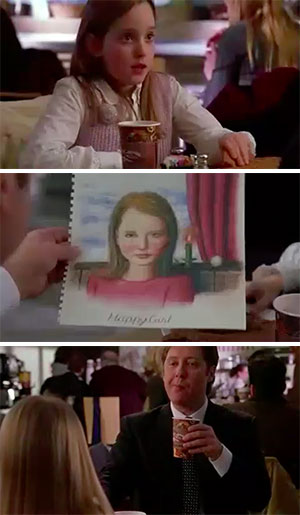
    An episode of Boston Legal, (an American legal drama series which first aired in 2004) resonated with my current stance on challenging stereotypes and perceptions, specific to disability.


    Screengrabs from Boston Legal, Season 2, Episode 15 where the protagonist makes a case for a little girl who cannot smile after a car accident damaged her nerve

    In this particular episode from Season 2, the protagonist Alan Shore (James Spader) makes a case for a little girl who cannot smile after a nerve damage from a car accident. As she is mercilessly teased at the public school, Marrisa’s mother pulls her out, and decides to give her daughter a fresh start at a private institute.  Except the girl’s brilliance in academics and co-curricular activities is not enough to secure admission at a top-tier school. She is denied admission because she didn’t ‘smile’ at the Admissions Director.


    Like Marrisa, several people with invisible disabilities face rejection by family, friends, peers and society at large. Only because they seem incongruous with our limited definition of ‘normal’. In fact, they are worse off than the disabled people in wheelchairs, people with white canes or hearing aids, because their condition isn’t ‘obviously’ seen or recognised.


    Invisible disabilities are not immediately apparent but they are debilitating in their own ways. These include chronic illnesses like sleep disorders, diabetes, renal failure, autoimmune disorders, food allergies or gastro-intestinal disorders, epilepsy, haemophilia, developmental and learning impairments, fibromyalgia, psychiatric illnesses and so on.


    Although appearances may not indicate anything, people with invisible conditions live with symptoms such as continuous pain, fatigue, dizziness, loss of bladder control, brain fog, sudden vision disturbance, speech issues et cetera.


    The World Health Organisation estimates that globally almost a billion people live with some form of disability. And a United States report suggests that 74 per cent of persons with disabilities don’t use a wheelchair or any aid that makes their impairment visible. Both the United Nation Convention on the Rights of Persons with Disability (UNCRPD) and the Rights to Persons with Disabilities Act (RPWD) 2016 of India clarify that disability includes people with mental illness, epilepsy, intellectual impairment and other disabilities which may not be evident to a casual observer. And yet, they face discrimination.


    In a country like India, where disability is anyway stigmatised, persons with invisible conditions (are bound to) face various challenges while traveling, shopping, making hospital visits, in places of entertainment and interacting with people in general.


    To cite real life cases, two people suffering from Multiple Sclerosis and Sjogren’s syndrome respectively, had to compromise their career choices because the effects of their conditions hampered their professional output. Sjogren’s syndrome is an autoimmune disease in which your immune system attacks your own body parts. Symptoms like dry mouth and dry eyes make it hard to continue in a regular job. Rheumatoid Arthritis (RA) is another example of a chronic inflammatory disorder which leads to bone erosion and joint deformity. RA also attacks internal organs and its fatigue symptoms are more than just feeling tired.


    Now many persons with invisible disabilities learn to cope using medication, pain management or physical therapy, depending on their ailment. But the fact that their disabilities are judged or reduced or even entirely overlooked, causes them further mental and physical problems.


    It’s imperative that the media creates awareness about such conditions so our society becomes sensitive and empathetic towards this section of the population. Schools and offices should be expected to train teachers and staff as well as introduce policies to make reasonable accommodation for persons with invisible disabilities.


    Inclusion can happen when (physical and attitudinal) barriers are overcome. Anyone who wears eye glasses or contact lenses is not considered ‘disabled’ today. Of course that wasn’t true before spectacles were invented in the 13th century. Simple solutions can change the way we perceive people’s limitations.


    It’s about time we think solutions rather than imposing our expectations on people who struggle for most part of their lives trying to ‘fit in’. Acceptance cannot be conditional to a constricted imagination.


    The little girl in Boston Legal was inspired by René François Ghislain Magritte, a Belgian artist who was well-known for his work with surrealism and thought-provoking images. He often depicted ordinary objects like clouds, pipes, bowler hats in an unusual context and mislabelled them, to challenge observers’ preconditioned perceptions of reality. Marrisa defies the common idea of happiness denoted by a smile by drawing a self-portrait and writing ‘Happy Girl’ under it.


    Shruti Pushkarna is a former journalist (part of the founding team of MxMIndia) who has moved full-time to the social sector. She heads operations at the New Delhi-based Score Foundation where she works as Director-Programmes & Communications. Shruti writes for MxMIndia every other Thursday. Her views here are personal. She can be reached via Twitter at @shrutipushkarna


  • Shruti Pushkarna: Eye Health cannot just be about Avoidable Blindness

    Shruti PushkarnaBy Shruti Pushkarna


    Gratitude. Given all that’s been happening around us in the recent times, this is one word I like to begin and end each day with. Because I truly believe, I lead a good life (well, in most parts). In fact, a lot of us do. But somehow we forget and take things for granted. Until something surprises or shocks us into believing otherwise.


    When I look at news from around the country and the world, it feels depressing. Rapes, drugs, derisive politics, looting, lynching, suicides, untimely deaths, incurable illnesses. We consume all such content on a daily basis, which makes us question our belief in humanity or the intrinsic goodness in people.


    But this also gives us a chance to pause and wonder, ‘is it really all bad?’ Now before you dismiss this piece as fluff and self-righteous, let me quickly steer your attention towards another word. Awareness.


    Being aware is different from being informed. I’m well informed that two-thirds of people in India live in poverty, but am I aware of it when I shell out money on unnecessary acquisitions? Probably not.


    So why am I mouthing these big words? Well for one I can, because it’s my column. But on a humbler note, I want to cite some instances that got me thinking of these expressions in the first place.


    Today is World Sight Day, an annual observance to draw attention to blindness and vision impairment. Most messaging built around this day is about preventive eye conditions or avoidable blindness. This year’s theme #HopeInSight also advocates for similar ideas. There is a global photography contest for the occasion to highlight the importance of vision and create more awareness about eye health.
     

    But does hope in sight somehow imply there is no hope in blindness? I’m intrigued by what eye health really means. Why are we obsessed with the remedial? Clearly there is enough evidence in form of Covid-19 to tell us humans that we cannot predict and prevent everything.


    I can’t read a book, see the screen or identify someone not too far away, without my high-powered glasses. My sight has consistently deteriorated since I was in Class 3, I think. And after thirty, it kind of plateaued. But is there a guarantee that it will remain stable? No. Would I like to do something about my eye health? Yes. Can I do something about it? I’m afraid not. So I’m outside the whole ‘avoidable blindness’ purview. And so are approximately 63 million people in India.


    About time, we wake up to this, create awareness about their challenges and show some empathy. The theme should actually be #HopeInVision because sight loss maybe irreversible but vision helps you see through life.


    I promised a few paras earlier to share some personal experiences. So, I’m going to cut straight to that. Last year in June, my organisation hosted a conference to raise some important issues related to mid-life blindness prevalent in the country and advocate for better support as well as resources for those affected. The one thing that stood out for me was: what is it like to lose a little bit of vision every day? I simply couldn’t fathom the pain or the frustration. One of the speakers, highly qualified, a professor in Delhi University shared with the audience how despite having accepted his disability years ago, it was still hard to adjust to the idea of his eye sight getting a wee bit worse every morning.


    And that’s when it struck me. Gratitude. People lead tougher lives than we can imagine.


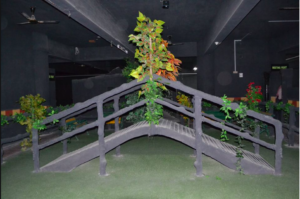
    A couple of years ago I was in Ahmedabad at the Blind People’s Association, for work. The campus has a unique exhibit, first of a kind in India called ‘Vision in the Dark’. Spread over 2000 square yards, the project was created to sensitise sighted people. What it means to walk, smell, eat, converse and live in pitch darkness.


    An experience of a bridge in darkness at the ‘Vision in the Dark’ exhibit arranged by the Blind People’s Association, Ahmedabad

    I was thrilled to experience such a zone and just as my guide started reading out instructions, taking away my phone, asking for my health condition, I felt a slight shudder. Of course it didn’t help to know that one of my colleagues quit the tour midway because she panicked. But my curiosity overruled.


    A few steps into it, my mind began to adjust to the idea of holding a rope/ handrail, feeling things around and most importantly using audio cues to move forward. I passed through a temple, a garden and then I stopped at a bridge. I felt scared, because I didn’t know how steep this bridge was, unless I kept going. And the tour guide played his practiced trick right at that point. He sent out a flurry of confused signals, saying, right, left, up, down, not there, this way, that way…phew!


    And then it struck me. When was the last time I was really aware what it means for someone to walk through darkness, relying on another’s guidance? I had helped a few strangers and colleagues navigate before, but I always spoke from an ableist visual standpoint, confusing my right with theirs, forgetting to verbally indicate how many steps up or down.


    In that moment, with total absence of light, I felt aware. To what absence of sight means. To what it feels to stretch your hand out in the dark, groping your way around, hoping your next step won’t land you in a ditch or something worse.


    Here’s my appeal to everyone and especially my friends in the media on World Sight Day 2020. Blindfold yourself for half an hour and try to accomplish your daily business. I’m sure you’ll sense some of what I did back there.


    Gratitude and Awareness can be our own lethal combination to destroy ignorance, apathy and narcissism crippling our society.


    Shruti Pushkarna is a former journalist (part of the founding team of MxMIndia) who has moved full-time to the social sector. She heads operations of the New Delhi-based Score Foundation where she works as Director-Programmes & Communications. Shruti writes for MxMIndia every other Thursday. Her views here are personal. She can be reached via Twitter at @shrutipushkarna


  • Shruti Pushkarna: Why Dissociate Dignity from Disability?

    Shruti PushkarnaBy Shruti Pushkarna


    There comes a point in life when everyone needs a bit of help. As I write this piece, I am writhing in pain. On any given day, I score myself quite high on the strength quotient when it comes to overcoming challenges, even physical discomfort. But not today. I sought professional help, acknowledging my inability to deal with the situation.


    People seek support from friends, family and even total strangers at times. We all need assistance, it could be physical, emotional or financial. But despite the universal need, seeking help is often likened to a weakness. It puts the person giving help on a pedestal, patronising the one receiving it.


    In the case of persons with disabilities, help denotes lifelong dependence, typecasting them as vulnerable lesser humans. The ableist majority draws exclusive bubbles around those who use assistive devices like the white cane, wheelchair, hearing aid, crutches, et cetera. Maybe that’s why most people don’t like to reveal their need for assistance. They’d rather stay at home, hidden away from the mainstream.


    Just last week, I was listening to two accomplished visually impaired men, narrate adventurous accounts from their respective travelogues. As I heard them recall experiences of paragliding, trekking, museum hopping, both individuals seemed fairly independent in terms of navigating and exploring sites. And yet they both sought help when required. Unapologetically so.


    It makes me wonder, is it our portrayal through various forms of media that aid and assistance are synonymous with inability and suffering? In aligning dependency with misery, do we reinforce societal stereotypes, further stigmatising disability?


    Quite possible. Because not only are we victims of limited imagination, we also love to box and label people who appear different in any way.  Their needs seem different from ours, so our egos offer us an automatic upgrade over ‘the other’.


    This also makes me wonder if we subconsciously dissociate dignity from disability. One may often witness a peculiar insensitivity in the way people offer help. I’ve seen blind individuals being pulled by their clothes, dragged by their arms or forced to sit in a wheelchair in public places. Another common sight is orthopedically impaired being picked up or pushed in a crude manner, their clothes disheveled in the process, with a total disregard for the individual.


    Coming back to the talk I heard last week. It reminded me of my own travels and so many points where I stopped to ask for assistance. Never did I feel a sense of guilt or shame in doing so. Then why should disabled people be made to feel different on the basis of ‘special needs’?


    The general public in a cinema hall, a shopping plaza, a restaurant, or an amusement park scoffs at a senior citizen or a disabled person. I’m sure you’ve all seen it at some point. The inherent principle at play being, ‘only the able-bodied are entitled to services, facilities they can access independently.’ Let that sink in.


    If the disabled or elderly ask for assistance in such places, it’s seen as a burden on the management because the janata is wondering: ‘why are they out of their homes in the first place?’


    And, no, I’m not making that last part up. Couple of years ago I was out in a fancy mall in the capital city and I tweeted a few pictures pointing out certain inaccessible elements for persons with blindness. I was appalled at one of the common responses to my post, people wanted to know what was a blind person doing outside. Some went a bit further to mock my defence, asking if my own home was designed to accommodate a disabled person. As a matter of fact, it is.


    But what’s the real issue here? If taking assistance or help of any form can enable larger sections of the population to experience normal life, why shouldn’t they do so? Why are they forced to think of it as currying a favour? Picture a toddler being helped up and down by the parent. How’s that image different in the context of dependence? There is no stigma attached to that depiction because it has been ‘normalised’ in our minds.


    According to the World Health Organisation, ‘the number of people with disabilities is increasing due to population growth, ageing, emergence of chronic diseases and medical advances that preserve and prolong life, creating overwhelming demands for health and rehabilitation services.’


    That simply puts more people in the bracket of ‘those seeking help’ in the years to come. People are already experiencing temporary disability due to Covid-19, as some have reported to lose their sense of smell after contracting the virus.


    Speaking of vulnerability, television news today seems the most helpless. It desperately needs an intervention in form of better content, possibly a new business model, and improved perspectives even. In short, journalism too is crying for help. So why vilify only a select few?


    Shruti Pushkarna heads operations of the New Delhi-based Score Foundation where she works as Director-Programmes & Communications. She is a former journalist (part of the founding team of MxMIndia) who has moved full-time to the social sector. Shruti writes for MxMIndia every other Thursday. Her views here are personal. She can be reached via Twitter at @shrutipushkarna