Category: COLUMNS

  • Ranjona Banerji: The media’s tizzy between the farce of exit polls, glorification of a gangster and a new wave of protests for a more tolerant India

    By Ranjona Banerji


    The media this week was in a tizzy over protests by creative people against intolerance, led by film star Shah Rukh Khan, the Bihar elections and the return to India of the “patriotic don” Chhota Rajan.


    Let’s take the least significant of the three first. Our “patriotic because he is Hindu and not Muslim” gangster Chhota Rajan. Make no mistake, he was an integral part of Dawood Ibrahim’s gang and also a big Mumbai gangland boss. He is not a returning hero, he is not a fine example of patriotism and he is not a fictional character from a Bollywood movie. He is a gangster. However, we have breathless reporters giving us his every move and Chhota Rajan milking every TV op in the craftiest manner possible.


    Once more I return to my old and now tired even to me theme: if only we had some journalists out there who were around when the Bombay Underworld ruled. Instead we have a bunch of ignorant editors and reporters romanticising a life of murder, extortion, smuggling, prostitution and worse. As a sign of the times, India’s newspaper with the best institutional memory, The Times of India, gave us a history of Bombay’s underworld by referencing the film industry and particularly Kamal Hasan’s Nayakan (1987) where he played Vardarajan Mudaliar, one of the city’s biggest ganglords. I would have also added Vidhu Vinod Chopra’s Parinda (1989) for its remarkable understatement and realism. The flip side is that our lack of contemporary history or our contempt for history in general (look at the reaction to the protests) means we have few other reference points especially for the internet generation.


    Then we have the Bihar elections, the run-up to which has been vicious and vitriolic. Last night on TV we had the regular and routine farce of exit polls. Whoever gets within 100 seats of being correct will claim victory. We will all agree that exit polls don’t work because people lie and then we return to them the next time round. Meanwhile, we have worked out every theory of win and loss to hedge our bets.


    Finally, there is the rising tide of creative people and academics speaking out against what they perceive as a corrosive atmosphere in the country today. Journalists have responded in interesting ways. Some have aligned with the protestors. Some have aligned with the government and played the idiotic and favourite “whataboutery” game of all politicians who are accused of something.


    And the most dangerous of all have sat on the fence, waiting it seems to see which side prevails. Almost no one, and I include myself here, has managed to be a dispassionate observer. Perhaps that will be a loss later: this is one of those clichéd wait and watch situations.


    **


    In a sweet display of intra-media love, both The Times of India and Economic Times picked up a story from Mint to carry in their editions. The credit in the websites is hard to find. The dateline just says “By Livemint” and below that the byline “By Shuchi Bansal”.


    Of course what is important is that the story itself talks about the importance of print and why even e-commerce companies have to depend on print advertising. Thus, win-win for Mint and TOI and Hindustan Times and so on.


    Mint interestingly is part of the Hindustan Times stable. And while Times of India and Hindustan Times are bitter rivals when it comes to readership surveys and circulation figures, they also share a “no-poaching pact”. This means that you cannot switch jobs from one to another without a six-month wait. But evidently, you can share stories.


    **


    I welcome the All India Bakchod (AIB) to Indian television with its political and social satire. Perhaps in some ways, this is a sign of an India growing up where some of us at least are willing and able to laugh at ourselves.


    The other good news is that Jon Stewart, recently retired from The Daily Show, will be back on air with HBO.


  • Ranjona Banerji: Results Day was #EpicFail for News Channels

    By Ranjona Banerji


    The morning of November 8, 2015 was one of the most extraordinary in the annals of television news. The event was results day for Bihar state elections. We had whipped ourselves into a frenzy during the whole month of voting. Exit polls, predictions, astrologers, the underground betting market, the Intelligence Bureau were all discussed threadbare on TV, print and social media. Pundits and journeymen all gave us their considered viewpoints or shrieked louder than the rest.


    The chatter began on November 8 just before 8 am. Most exit polls had predicted a win for the BJP, a few had gone with a close contest. By 8.30 am, all the English news channels and some language ones as well were predicting a massive win for BJP and friends. NDTV has long been the main channel for many to watch for election results, mainly because of Prannoy Roy, the man who introduced the word “psephelogy” or election forecasting to India and NDTV was clear with a BJP win.


    At 8.30 am, I went on the Election Commission website. It showed no results or trends or leads because it said that counting in Round 1 was not complete. Where were these channels getting their figures from? By now, Shekhar Gupta, one of India’s most experienced journalists, was pontificating on how the anti-incumbency factor had done Nitish Kumar, Bihar chief minister, in. Across channels, various BJP spokespersons were looking smug and happy.


    On Twitter, a completely different story was emerging. Figures from local reporters, from newspaper Twitter accounts (the Times of India was at complete odds with TimesNow here) and local news channels showed the Grand Alliance of Nitish Kumar, Lalu Yadav and the Congress well ahead and the BJP struggling to catch up. On India Today TV, political economist Surjit Bhalla, who had forecast a clear win for Nitish Kumar in his Indian Express column the week before (in spite of being a clear Narendra Modi supporter so far), told Rajdeep Sardesai to check his figures of a BJP win because social media and the Election Commission was saying something else altogether. Sardesai looked flummoxed.


    This story was repeated between 8 and 9 am on all channels. I went to the Election Commission website just after 9 am. It showed the BJP leading in 5 constituencies and the Grand Alliance or Mahagathbandhan in 12. Soon after CNN-IBN made the first course correction and changed its figures around. However, it was the same CNN-IBN which decided not to carry the exit poll it had commissioned after the last round of voting. This was because Axis had given a huge majority to the Grand Alliance and CNN-IBN felt that this result went against the journalistic work it had done on the field.


    NDTV sadly was the last English news channel to see the light and this has cost it considerable goodwill amongst its ardent followers who trusted it to be the most professional. NDTV has said that the information it got from Nielson was wrong and hence the errors.


    There are some basic journalism problems here though. The first votes that are counted are the postal ballots. These are usually not representative of voting trends on the ground. Why then did all these news channels extrapolate such massive victory margins from postal ballots? Some had given the BJP a lead of about 30 seats and had reached the 100 mark for the party when counting in Round 1 had not even been declared. When you consider that the BJP by itself ultimately got only 53 seats overall, it shows journalistic sense at its worst.


    It is also hard to understand why no one in those TV newsrooms had even opened the Election Commission website. Where were the reporters on the ground picking up information from the EC itself? It is the only counting authority. Why ask outside agencies for information that anyone with a smart phone could have accessed?


    This was about the worst display of journalism that I have seen in recent times, mainly because the basics were ignored and no checks were carried out. It is tragic how TV news makes these mistakes over and over again in its desperate race for be first at everything. People come to the media for information and opinion not Bollywood extravaganzas. Social media is now a better weathervane and predictor. Like TV threatened and wounded the print media, TV news is getting a bashing from social media. A seasoned journalist told me that he only followed the results on Twitter and got an excellent sense of what was going on.


    As they say in social media terms, TV was an “#EpicFail”.


    **


    And then we have exit polls. More often than not, they get it wrong. If one of six gets it right, that’s about the worst statistics of believability. That’s not an inexact science, that’s just wishing on the air. And then when one does get it right, the commissioning newsroom does not carry it. Go figure.


  • Ranjona Banerji: Can we be more circumspect please?

    By Ranjona Banerji


    No sooner had the terrible attack on Paris happened than the faultlines inherent in 24 hour news television exposed themselves. People barely had time to register what had happened, when the panel discussions started on the “why” and the “who”. Obviously the “who” and “why” are vital but the first focus has to be on “what”. Journalists and experts can surely hold their horses for a few hours as facts emerge before they start yelling at each other?


    There are other stories yet to be done, vital news to be covered. Like the facts on the ground, details of each site of attack, the extent of suffering and damage, the official and personal response to the attacks, the human stories are all waiting to be told. For the viewer to be faced with analysis on a dynamic situation is both confusing and unnecessary.


    Unfortunately, almost all 24 hour news channels, national and international, succumbed to the urge to try and solve the crime before the facts of the crime were fully known. Indian news channels had even less business starting with analysis than others given their thin presence in Paris but CNN and BBC World were no better.


    Sadly, it is 24 hour news television that has the edge of all forms of journalism in events like these because it is not static. Twitter can be faster with the news at it happens, but it is still static. You have to engage two steps further to get to a picture or a video and so also with newspaper or journal websites. TV is still our best way of getting news during an event like this. But if TV decides to limit itself to a studio pontificating with one or two experts and no one has a clue as to what’s actually going on, then everyone is short-changed.


    Given the debacle of the Bihar exit poll and election results just a few days ago, one expected TV news to be a bit more circumspect. But no such luck.


    **


    Of the discussions held in the evening of November 14 here in India, NDTV carried a sober, insightful and informative discussion with a range of experts on the Levant and ISIS and geopolitics, moderated by Sreenivasan Jain. Because there were no politicians present, the discussion stayed on course and the viewer came away with the feeling that he or she was better informed at the end of it. Such discussions are however extremely rare on Indian news television. The next day, we were back to the BJP and Congress yelling blue murder at each other, although neither party knew anything at all about the Paris attacks. Newspapers as even became the better bet for analysis, information, observation and expertise.


    **


    Just before these terrible attacks of course we in India were treated to quite another kind of journalism which has become all too common in India: the reporter as a cheerleader.


    There was a time when international trips by Indian prime ministers meant that he or she was accompanied by seasoned and experienced journalists. They reported on the talks held and deals struck and the strategic, national and international impact. With the Prime Minister of India, Narendra Modi, however we see young, callow and star-struck journalists who would be better suited to covering glamour and film events.


    The basis of Modi’s visit appeared to be, if you watched television, what Indian immigrants to the UK thought of him and why which singer was singing whatever song and the decorations at Wembley stadium, an extravaganza organised by Indian immigrants. Whatever other relevant and significant details there may have been about Modi’s visit to the UK were lost, ignored, deemed insignificant compared to what he ate with the queen of England.


    This included the massive protests against Modi in the United Kingdom. If it wasn’t for social media, you would have barely known that there were any.


    And when the Paris attacks happened, the rest of Modi’s trip was easily forgotten. Except for this remarkable story from PTI about where Modi’s official aeroplane was parked in Turkey. I have no further comment on this story except to say that we now need to start a new journal in India called “Parking News”.


    http://timesofindia.indiatimes.com/india/G20-Air-India-One-gets-parking-slot-near-Air-Force-One/articleshow/49791173.cms


  • Save Print. Now!


    By Sanjeev Kotnala


    The annual two-day INMA South Asia Conference commences in Delhi today. Like every year, delegates will join in, expecting to learn something new. However, by the evening, the corridor talks will as usual move towards mistrust and collective inertia in Print. The adventurous ones will start eulogising digital and once again sound the bell. The ring of the bell may be distant, but it’s there.


    This INMA session is immediately after the festive season of three months. Delegates will be high and intoxicated with the large format, big season ads. The mood will hopefully be upbeat. Unfortunately, a false sense of calmness will be appreciated in this unpredictable world.


    After yielding some ground in metro markets, it is time for print owners to take concrete steps in non-metro towns to stem the tide.  Otherwise eroding reader interest and advertiser’s heightened apathy to Tier-II and III towns will hurt.


    Due to Accessibility, Affordability and Availability issues, the digital invasion has been a lot more timid than disruptive. But things are changing. There are more regional satellite beams, next generation media leaps, activation, experiential, potential and possibilities sketched by radio along with the excitement of OOH. On the other side, the sheer orgasmic pleasure of having a brand TVC continues to tempt businesses. Like an aphrodisiac for the uninitiated.


    Apathy to print is transparently naked in creative for Metro markets. To paraphrase a line from Storyboard, it is as though “Print work in an Agency is done by people we don’t even know exist”.


    Unlike in the metros, clients and agencies in Tier-II and III towns continue to strongly believe in the efficacies of Print. Even without the art, craft and science of print creativity to leverage the medium, clients and the agencies know the impact it has and the loss they can suffer for not considering it.


    It is holding as of now, but when the tsunami of alternate media impact vehicles build up, clients may willingly start focusing on alliances outside of print. We already know of government thrust toward Digital coupled with control guidelines on Print spends.


    Print publishers can’t be blind. What are they waiting for? No one is going to stop ringing that bell. They need to act. They need to find plausible solutions. Or they can continue waiting for a miracle to happen. Should I suggest that we may soon need a ‘SAVE PRINT’ campaign much like the ones we conduct for our endangered species? This may sound exaggerated, but the situation is no longer rosy.


    Instead of an ostrich approach, there is still time for print to work in NON-METRO business environments. The charm of print may be stretched. May be we can still revive (sounds as if it is in ICU) the lost glamour, impact, understanding and the surprising art of print creativity. Oh, such are the fantasies of print lovers made of.!


    Print is happy with a short-range vision. In tea breaks, delegates may share success stories of how some of their clients have spent mini TV campaign budgets oncatalogue advertising with them. No one will question any of this. In fact, no one will have an answer to the question Anant Rangaswami raised: Why is it that clients who are so deeply involved in the development of a simple 10-seconder on TV,are completely immune to such waste in print


    The excuse has been that agencies simply deliver what the client demands. If the client wants a Becchu ad, he gets one. It does not stimulate creative thoughts.


    Print has done itself disservice by repeatedly projecting it as the best medium for announcement and tactical medium. Brand Building has been allowed to drift away to audio-video and the medium of clicks!


    Print was famous for well-crafted and impactful advertising creatives. There was an engagement of a different order. The game of seductionwas on. It’s all been forgotten. Even print publisher’s stay away from using print for thematic brand communication. They do announcement and town howler ads in B2B further strengthening the myth. Only Digital, TV and experiential gives the client and creative a kick.  Print is not sexy anymore.


    The whole industry has been victim to this closed ecosystem. Everyone has a converging point of view. ‘Print is this and print is that’. There are no ideas of what it can do, but there exists a collective acceptance of what print cannot do. Print is projected as a tactical and medium of immediate impact. And thus is created the self-fulfilling prophecy?


    There are continuous inputs and experimentation in other mediums. They have evolved in terms of art, science and craft. They are sexier and interesting. But print has royally remained static. The sales tactics and approach remain stagnant. The high cost of innovation prevents brands thinking to experiment. The news environment and ambience print provides is questionable. The position and placement of ads and content is ill managed.


    There is no one advising the client. Sales teams find it below their dignity to close the loop. Afraid of possible reactions, they do not connect back post the campaign. The post coitus hug is definitely missing.  Print publishers squarely fail to shoulder the responsibility of acting to enhance the understanding of the medium and its impact. Maybe collectively a BBDO ‘acts and not ads’ may work.


    It will be foolish to even suggest that the medium no longer works. It is like saying that the car does not move because I do not have the key. I am sure that ads like ‘Nude Model wanted’ or ‘Animals came from cities’ or ‘Merawala blue’ or ‘Nothing official about it’ will work even today.


    May be it is time for Print to take collective action. Maybe they could start with town wise minimum cover price. I know a question on this will be asked and will be underplayed by the panel facing it. Change in cover price even at the cost of some percentage of readers falling off is required to cover drops in ad revenue. Just a mere25 paisa increase in cover price across the nine brandsnot accepting IRS, can pay for better research many times over. Such a print cess when collated  can make it possible for a medium to rejuvenate itself with acts that an individualPrint brand canonly fantasise about.


    May be print can discount the non-discount ads. It will help promote brand building and thematic use of medium. It will be interesting to have special rates for ads that do not featurewords like “discount”, “announcement value”, “inauguration”, “limited period”,“Sale”, etc. Essentially encourage non-topical, thematic advertising.


    Print drastically needs fresh thinking and recharging. Will people secure withthe thought of their retirement plans survivein print to lead the way?


    Print must work with selected print-inclined clients and co-create disruptive cases demonstratingprint powerbeyond tactical communication.


    May be print can promote a real-life-real-brand print only campaign contest?I have always wondered why did print allowed ‘Think Print Contest’ to die. One can revive it.


    Other than news, print should embrace social media. They must share good print. Suggest and engage the B2B community.


    It is the responsibility of large print publishers tobring alive the print craft and educate the new creative generation in Tier-II and III towns. This can help reverse or at least slow down the debate on print effectiveness and investments.


    Awards like the Ink Awards should be collectively owned by the print category. Work out ways to make it a coveted award to win. Print needs to find idols for the new generation. There is no Ivan Arthur in sight.


    The Cannes TV showreel is an event. The Cannes print ad exhibition a dream.


    Print cannot stop scam ads, but can large print houses refuse to collaborate and stop providing free space in the name of B2B relationship.


    There is still time to control the game in tier-II and III towns. There are many possibilities and actions that print can take.  But in the end, it is for print to decide to act or remain silent witness to its own slow death.


    Sanjeev Kotnala is Founder at Intradia World. A Brand, Marketing & Management UnConsult Advisor. He conducts specialised workshops in the area of IDEATION (Harvest and Liberate) and INNOVATION (InNoWait). He focuses energy in enhancing client’s team’s potential and capabilities and decreasing their dependence  on external resources. Email sanjeev@intradia.in  or tweet at s_kotnala visit www.intradia.inwww.sanjeevkotnala.com. The views here are his own. Kotmartial appears every Wednesday on MxMIndia.com

    ………………………………………………………

     

  • The New Hindi GEC Fad: Supernaturally Yours


    What started as an experiment about a year ago has now gained in size and momentum. Hindi GEC fiction, often criticized for being behind times, is going through a phase that’s taken the viewers by surprise. It’s a phase when some of the top serials are relying on the supernatural – ghosts, spirits, black magic – to drive eyeballs.


    Now, this should not make much sense. Till not too long ago, the genre was understood as one that connects the ordinary Indian women to the world outside, giving her the confidence to learn what she otherwise can’t. What was routinely called “regressive” in the media was termed positive and confidence-building by the target audience. Shows that helped women navigate their relationships better were runaway hits. Where does supernatural even feature in all this? Channels may choose to put it on-air, but why is it actually working?


    Simply put, I believe the consumer is “compensating”. She’s compensating herself for having watched one type of content for almost 4-5 years now, which is based on broad constructs of navigating relationships. After a while, you are bound to get a feeling you have seen it all, and every new show is a version of an existing one or a fairly recent hit. Most new launches have not worked and shows launched in 2009-12 continue to rule the roost (an earlier column on this topic is here).


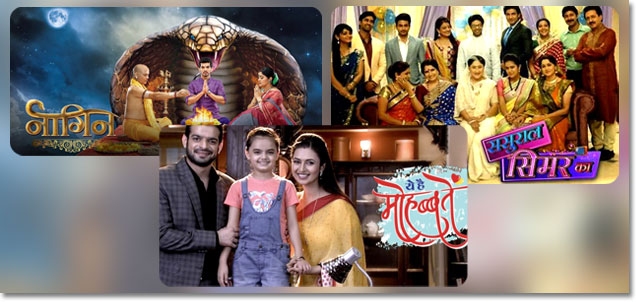
    The consumer is looking for variety;for something that she hasn’t seen before. That’s an eternal human need. When Sasural Simar Ka (SSK) first put supernatural content on-air, the viewer saw it with a mix of skepticism and intrigue, sometimes even as unintentional humor. Other shows have tried it subsequently, and recently, none less than Yeh Hai Mohabbatein (YHM), the epitome of contemporary Indian fiction for many audiences, took the supernatural route.


    Then we have Naagin, which launched recently as a weekend show and has gone on to become a blockbuster hit in its first three episodes. The snake theme has always interested Indian audiences, be it through cinema, television or cinema on television. Naagin is one of the best-produced Indian content pieces on this subject. With a full-throttle promotional campaign backing it, Naagin’s success is a rare case when all the right boxes get ticked together.


    But Naagin is a weekend show and weekend content promise escapism and relaxation. But on weekdays, the infestation of supernatural content is bizarrely interesting. Consumers don’t even know what to call this sub-genre of sorts. They are beginning to assign the word “horror” to it, which captures the ridiculousness of it all.


    But if it’s working, it’s working, right? That’s where the note of caution comes in. Both the big shows where it has been used (SSK and YHM) were on-air as regular fiction shows without a supernatural element for almost two years before they experimented with this sub-genre. Some new shows have tried going the supernatural route early in their life stage and it has not worked.


    What does this tell us? That if you have characters who are already popular, and the program has built a sizeable audience base around their popularity, a supernatural track can help manage viewer fatigue by providing the unknown element. But it will not help build a viewer base from scratch, unless it’s a show like Naagin, which delivers what it promises – unabashed snake-y entertainment.


    Am I suggesting that all hit shows with popular characters will benefit from a supernatural twist? Not really. It’s a fad, and another show or two go this route, we would begin to see viewer rejection instantly. She’s already not impressed, but watching it as something off the beaten path. If it becomes the beaten path itself, then this mini-trend could die a rather abrupt death.


  • Amith Prabhu: Notes from Nairobi from the World Conference on PR in Emerging Economies

    By Amith Prabhu


    I was in Africa this past week on my maiden visit to the continent to attend the first World Conference on Public Relations in Emerging Economies organised by the Public Relations Society of Kenya in partnership with the Global Alliance of Public Relations and Communication Management. While the event title had World Conference mentioned it was largely an African affair with a spattering of representatives from other continents. I was the only Indian and one of two Asian speakers. There was only one other Asian delegate. There were about 20 individuals in all from outside the Middle East and Africa region.


    The highlights of the conference were the inaugural keynotes by Lord Chadlington and Paul Holmes. Interestingly, both were keynote speakers at Praxis in the second and third edition. They both shared interesting insights. Apart from these two gentlemen, most other speakers were about average. The conference was about how communications is evolving in the emerging economies in the light of realities that include terrorism and sustainable development.


    All in all, it was an eyeopener to a continent with immense potential and endless possibilities. I presented a series of Indian case studies on fund raising and cause communications in a breakaway session which went down well with the audience. It was a great opportunity to discover the sights and sounds of Nairobi, the capital city of Kenya.


    These gatherings are good but would do well with a healthy mix of speakers and delegates from every continent and every emerging economy. Brazil, China and Russia were not represented and that was not a good sign. It may be a good idea for Indians and the Chinese to come together to create a Regional Conference to share notes between the two economies.


    The world is moving at a rapid pace. As this frantic movement takes place India and China are going ahead at breakneck speed. It will be interesting to learn from each other at the next World Conference on Emerging Economies, if there is one.


  • Ranjona Banerji: How dare you tell the media what to do: we solved the Sheena Bora case!

    By Ranjona Banerji


    We’re back then to the Sheena Bora murder case. All right, I’ll accept that. The CBI charge-sheet is ready, naming Indrani Mukerjea, Sanjeev Khanna and Shyam Rai for the murder of Bora. And the CBI threw in a whammy by arresting Peter Mukerjea, husband of Indrani and questioning him on his role.


    Well, whammy because Indian news television broke into such a massive melodrama over this. Did the Mumbai cops favour Peter Mukerjea, how dare you speak when I’m talking, the media has no business in claiming to solve this case, how dare you tell the media what to do… And here we are in TV LaLa Land again.


    CNNIBN was the most circumspect on the day the news broke, with Mumbai bureau chief Smitha Nair Rasquinha doing a proper reporter’s job with fact triumphing over editorialising. Quite admirable when you consider how often TV confuses fact with opinion. That day, NDTV decided to concentrate on the terrorist attack on Radisson Hotel in Mali and is thus out of this reckoning. The most high-decibel were NewsX (perhaps to scrub all memories of earlier connections with the Mukerjeas in the public mind?) and of course Times Now.


    The target of both news channels appeared to be former Mumbai police commissioner Rakesh Maria. Arnab Goswami was particularly enraged with Maria, although as Rasquinha had pointed out earlier in the day that the CBI charge-sheet was substantially the same as the Mumbai Police’s case.


    One guest was seen going from news channel to news channel saying that it was the media and the particular channel she was on which had helped solve the murder. Thus one keeps one’s chances of being re-invited alive again! The usual suspects were out in full force after that, each giving us their worthwhile 2-pice bit. I use that old-fashioned phrase deliberately. You can work out for yourself in today’s inflationary terms what 2 paise is worth right now.


    The funniest was India Today TV which took us back to the life and times of Indrani Mukerjea’s career, full of the reporter’s own ideas of how a life should be lived and plenty of moral judgments. Of course, to be fair it is very easy to make moral judgments about Mukerjea’s past and present.


    **


    The other major causes for excitement on TV this week were Robert Vadra, son-in-law of Sonia Gandhi, Mulayam Singh Yadav’s birthday party and how dare Arvind Kejriwal hug LaluYadav.


    **


    The rest of the world meanwhile was concentrating on the challenges of terrorism, the Islamic State, the situation in Syria, the search for terrorists in Belgium, the connections between past policies and present problems and so on. Nowhere close to as important as whom Arvind Kejriwal hugs.


    **


    While on international news channels, my beef (yes, I used that word) with BBC World’s weather forecast continues. November Rain in Mumbai is an oddity, precipitation not the song which plays for more often! It happens, but it’s an oddity. The monsoon ends by October, although it sometimes rains a bit longer. It needs to be remarked upon. We do not need to be told that Mumbai city has had “drought conditions” this year. You can say that the monsoon was weak this year. As a meteorologist, you need to at least have some idea of the climate of the area you are providing information for. And perhaps, you might also like to comment on climate change…


  • Sanjeev Kotnala: Social Media Week: Brilliant sessions, but time to go completely online?

    By Sanjeev Kotnala


    SOCIAL MEDIA WEEK is still the most happening event in its space. There is a definite growth in live stream watchers and a drop in the delegates physically attending sessions. Full houses were there but not that frequent. On the other side, SMW hit 2000+ people on the live feed. I was also one of them. I attended Day 2 at the venue and rest of the days I was enjoying a perfectly smooth webcast coming in live through April Broadcasting on my Hathway Internet plan. The tweet buzz was keeping me updated on other elements and few what’sapp calls told me of the situation.


    The only shortcoming of the live feed was static camera positions and a pillar that physically divided audience in two sections. Thus on live feed you missed the audience feel.  Even during the Q&A, you could hear the voice but could not see the person making the point.


    This is what makes me ask for SMW being a complete online event. May be with two live streams. May be with setup that can give it a more holistic feel including audience view. It can still have 40-50 ticketed or invitees as audience. I am told that stakeholders discussed such possibilities.


    Workshops were a huge success. May be there is an element of selfishness. Every delegate in workshop cherry picks workshops according to their interest.  They are more focussed and with less gyanbazzi. Example ‘Come, Plan, Go – travel workshop’ and‘Think and Do Dum De Da’


    May be there is a need to enhance the workshop part and even live-stream it to the paid audience.


    I would believe that some of the organisation would want to live stream the workshops of their interested and if that can be organised in a non-pixelated projection, it could add another stream of delegates. It also saves the travel time what is of concern to all the delegates.


    It was a pleasant experience to see that most of the SMW sessions were well-managed and they stuck to their timelines. Other than one or two sessions where few speakers joined late- all most all the speakers made to their sessions on time.  It was a bit of shock to see that very few speakers stayed back for other sessions.


    Keeping somewhat thinned delegate presence, the crowd engagements across sessions were very encouraging. I do believe that SMW could have asked questions to be tweeted and leave the moderator to pick the one to be answered. This pushed for focussed questioning and saves time from interactive and not-well-articulated questions.  It also catches the online viewers.


    One had to search out and seek event Wi-Fi password. In an event like the SMW, it should have been boldly flashed for people to use. Or may be there is some past experience that made them manages it differently.


    Surprised to see some of the panel discussion engaging delegates far more than the single speaker sessions. It was surely a different experience. My feeling is that the panellists were honest, transparent; spoke more like a friend and a mentor which made it exciting. Most of them were so energetic that one had to re-calibrate the speaker volumein live stream.


    In my scorecard, 5 out of 10 sessions were good. And 2 out of 10 were fantastic. It is a decent scorecard. Congratulations is due to the Rohit and whole of SMW team.  The event ran smoothly without very few technical snags.  Expectedly SMW was trending most of the time. Someone commented ‘SMW trending is as exciting as finding beer in a pub’. I am not sure how to interpret this.


    There were many take-outs depending upon what was your area of interest. I am listing below some of the points that were pushed again and again.


    Soon everything will be digital and you will not be able to any more avoid social media. There are three things that make Social Media (SM) work: it’s content, content and content.  To succeed, your content must be searchable and shareable. There is a hot time to tweet- is a myth. In SM, you must not fake things and personalities. Audience is able to smell that. In SM, the best policy is to be you. There is space for multiple platforms. Tier-II and III are digitally ready. To connect with audience, brands must remain relevant. It is the time for traditional with the power of social not social versus traditional. Your medium defines the craft and not the craft defining the media. Brand ambassador must remain relevant to you audience for a long time. Creating acts is about creating platforms, not slogans. It’s about seizing cultural moment. Consumers are no longer just willing to receive the logical rational messages


    And then there were some interesting revelations and pointers like Baroda has the highest number of women buying sex merchandise. Arnab Goswani confessed that he woke up to social media in December 2013, in the same breath that believe journalism should drive the conversation and not be driven by it. Consumers are happy when you are transparent and honest.  Men tweet more than females. And the split gets skewed towards males as the evening mounts ( SMW data)


    There were sessions that stood out with high attendence and level of engagement . I am listing a few here. The list is not in any order. Diffusing the taboo on sex, digitally. How #socialmedia is shaping Journalism!. How do you define and evaluate the ROI of trending or going viral?. Express, Impress and Progress – Social Media, Creative Up- starts and Intellectual Property. Digital Formats and Content. Cards Against Influencers – A hilarious game that will bring out the dirty secrets and grey shades of Influencer marketing.Let’s Get Real About Real Time Marketing. Digital video: Redefining long form content & brand stories


    Interesting safe driving campaign used the SMW platform under #mysafetymylife. Delegates shot pictures with one or the other pledge placard and populated the message on SM. Tata Motors, the main sponsor, had its Shoot with Messi virtual reality both. It was interesting but not something that made you say wow. Disclaimer, I was one of the winner of #madeforgreat contest.


    Sanjeev Kotnala is Founder at Intradia World. A Brand, Marketing & Management UnConsult Advisor. He conducts specialised workshops in the area of IDEATION (Harvest and Liberate) and INNOVATION (InNoWait). He focuses energy in enhancing client’s team’s potential and capabilities and decreasing their dependence  on external resources. Email sanjeev@intradia.in  or tweet at s_kotnala visit www.intradia.inwww.sanjeevkotnala.com.


  • Ranjona Banerji: More from the Knee-jerk School of Journalism on display all over media this week

    By Ranjona Banerji


    The extreme head in the sand stupidity of the media, especially the TV variety, was on full display over actor Aamir Khan’s remarks about his wife’s fears about intolerance in India. Immediately, it was as if nothing else that happened either in India or the world was of any consequence or importance. All the usual suspects were out in full force on TV, getting their five minutes of fame or notoriety out of Khan.


    Khan’s statements became more important than a Russian fighter jet shot down by Turkey, even though both Russia and Turkey are supposed to be fighting the deadly global threat of ISIS. Khan’s remarks were more important than the persistent, incessant rainfall and damage and death in Tamil Nadu. Khan’s comments were more important than the latest in the Sheena Bora murder case, which was our other obsession. In fact, Khan beat prime minister Narendra Modi in Singapore as well – this is terribly surprising because so far all Modi’s foreign sojourns have got wall-to-wall blanket coverage.


    People discuss, and rightly, the viciousness of trolls on social media. But when you watch party representatives on news television, they are often no better. A gentleman from the BJP (an afternoon spokesperson, not as high up the ladder as a prime time spokesperson) ripped into a Congress spokeswoman over Aamir Khan’s remarks and made several needless personal remarks. If that is how someone speaks on TV, then how is it surprising that anonymous trolls get courage from them. The anchor was unable to control him and so his rants ran on. And every time she asked him a direct question, he claimed the mike wasn’t working.


    There is an irony here which obviously escapes all pro-BJP journalists in high places in television: by attacking Aamir Khan (as some like Gaurav Sawant of India Today TV did in his tweets) and then having “debates” on his remarks, you actually only prove Khan’s point about intolerance.


    **


    I don’t know if this was part of the new knee-jerk school of journalism or a genuine error, but there was a fair bit of confusion over Congress vice-president Rahul Gandhi’s interaction with students of Mount Carmel College, Bangalore. The Times of India reported that Gandhi was “stumped” by students who were all in favour of the prime minister’s schemes. The BJP bristled with pride and mocked Gandhi. Then the Bangalore Mirror website carried a piece by a student present at the meeting who contradicted the TOI report. She said that the media was not part of the event and that Gandhi in fact charmed the students. There was in fact a mixed reaction to the success of schemes like Swacch Bharat and Make in India.


    All this makes me wonder if editors have forgotten what their job is, in the race to be there, somewhere, anywhere, regardless of the facts.


    **


    Twitter was all a-flutter over a picture of Prime Minister Narendra Modi sleeping in the Lok Sabha or so it appeared. The TV screenshot went viral as did the “hashtags” #ModiSleeps and #PMJetlag.


    BJP spokespersons and supporters scrambled to correct everyone – even worse, this was during the Union Home Minister Rajnath Singh’s speech – but only demonstrated how very cruel social media can be…


  • Shailesh Kapoor: Want A Controversy? Dial A Celebrity

    By Shailesh Kapoor


    Till fairly recently, entertainment content was the domain of non-news channels and magazines. News media would rely on political, global, social, crime and sports to fill their airtime or pages. Celebrity news was limited to a weekend entertainment show, or to channels and print supplements delivering entertainment gossip.


    In what can only be described as a further dumbing down of the news media, celebrity news is now taking primetime headlines. This has been achieved using the rather interesting route of combining celebrity news with the relevant socio-political themes running in the news at any point of time. So you juxtapose a Shah Rukh Khan or an Aamir Khan with intolerance, and you have content that has the ability to spark off a million Whatsapp jokes. Which probably means it’s newsworthy enough!


    Anyone who has seen the full videos of what the two Khans said, and in what context, should be wondering what the fuss is all about. Celebrities have been accused for years for not taking stands on relevant social themes, and of being dumb and unaware of their country (something Alia Bhatt smartly made a virtue of). So when a celebrity indeed takes a view, one should see it as a welcome change from how celebrities behave in general. Whether you agree with the view itself is irrelevant in this context.


    Yet, what happened in the Aamir Khan case, in particular, underlines the problem at hand. Almost everyone got the news as “Aamir Khan said he wants to leave India because of intolerance”. Some got it as “Aamir Khan’s wife suggested that they should leave India because of intolerance.” These headlines ran on primetime news for almost a day, with a short byte. Some channels showed a slightly longer version of the byte. But the context was set: “Aamir wants to leave India. Is he justified? Discuss.”


    So anyone who got the news (Whatsapp and Facebook are key sources in urban India today), got it with an inbuilt conclusion about the man’s patriotism. If you agreed with his view, you may as well be called unpatriotic yourself. Not too many would actually see the full video, but even if they did, they would see it with a conclusion already in their head.


    Calling celebrities to events like literature festivals, leadership summits and business summits is itself a questionable idea. Seasoned event curators know that a celebrity face drives media attention and sponsorships. It’s a glamorous shortcut to making an event more saleable. Most such events have heavyweights (political or media) backing them, and getting a big star or two can be just a phone call away.


    Earlier, you would get them to speak about their life, or inspire the audience with their success story. Over time, such content has been served in plenty and lost its relevance. The political questions make for better copy. Articulate stars will be articulate enough to give good copy anyway.


    The reactions to the Aamir Khan byte, fuelled by limited information and a herd mentality, have been dangerous and silly at the same time. Snapdeal has been caught in the crossfire. The suggestion that he said this on purpose to promote Dangal shows limited understanding of the media business in general and Aamir Khan in particular.


    At this rate, the distinction between the Bollywood news channels (where I recently saw a full account of why Ranbir Kapoor’s driver quit his job) and mainstream news channels can blur very soon.


    Or has it already?


  • Ranjona Banerji: This “selfie” craze only takes this perversion of journalism integrity to a newer level of nuttiness

    By Ranjona Banerji


    The spectacle of journalists crowding Prime Minister Narendra Modi during his “Diwali Milan” or meeting with journalists in the national capital on November 28 was one of the most unedifying of recent times. Journalists looked like fanboys and fangirls as they mobbed the prime minister in order to get a “selfie” with him. It happened last year too but we knew that after these so-called journalists posted their selfies with the PM and other ministers. This year round, we saw the melee for ourselves. And so did everyone else.


    I write “so-called” journalists and I can see bristles rising. I had an interesting discussion with a young TV journalist on Twitter. He felt there was nothing wrong with taking selfies with famous people as long as it didn’t interfere with your work. And further, that you should be judged on your work and not on your fan tendencies.


    Is he right? Am I being too much of a stickler here? It is common sense that a journalist has distance himself or herself from the people and events that are being covered. We have all seen too many colleagues who have strayed from that path with most unfortunate consequences. We are not friends with the people we interview, write about, observe. We may be friendly, they may be friendly. But unless we are aloof, we fail our readers and viewers. This rule is the same regardless of whether you’re a political or a glamour journalist. You become too close, too awe-struck, too star-struck and you lose the ability to criticise or be sceptical. You become the event rather than the observer.


    This “selfie” craze only takes this perversion of journalism integrity to a newer level of nuttiness. It is not that it has not existed before. We have all known colleagues who were too close to politicians and political parties or business houses or gangsters or film stars. We have all known journalists who had more cars than they should have or took free flats from quotas in return for favourable stories or had shares in companies they shouldn’t have. Some paid the price and lost their jobs. Others were kept on by managements who felt that they could leverage this closeness for their business interests. It was wrong then, it is wrong now.


    Some years ago, the well-known journalist and author Katherine Boo had told me that this closeness, this loss of journalistic distance is why she avoided “source” journalism and found that it was better to get as much information as possible through “Freedom of information” acts like the RTI. This demonstrates a level of journalistic ethics which we rarely see and even less rarely applaud. Yet it is much-needed – this finely tuned awareness that you have to practise your craft without being compromised.


    Just how much bad journalism was on display during this “selfie” craze is made clear by this piece by Mayank Mishra who was present at the prime minister’s event. He writes in the Business Standard: “The PM stayed at the venue for nearly 45 minutes. It does not happen often that we get a chance to interact with the PM. But not a single question was asked. We did not get to know the PM’s perspective on important issues of the day. Isn’t it a huge loss of opportunity? Will the selfie brigade please explain?”

    http://www.business-standard.com/article/opinion/why-selfie-journalism-is-very-bad-news-115113000093_1.html#.VlvMPGsAexY.twitter
    My answer to the young man on Twitter is simple. There is nothing wrong, as a journalist, if you forget your dignity to get a good story or a god quote. But there is everything wrong if we forget that this job is not about our personal collection of experiences. It is about the reader and the viewer. And what did the reader or viewer gain from this “selfie” exhibition except a perfectly justified sense of disgust for our profession?


  • Sanjeev Kotnala: Feel the Real – when will we see OOH in India taking such an action?

    By Sanjeev Kotnala


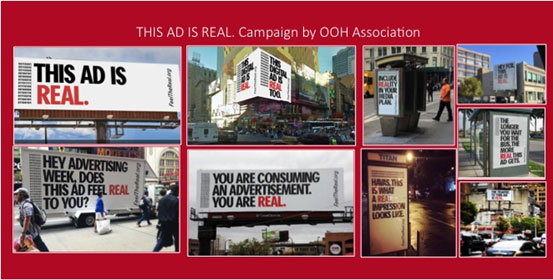
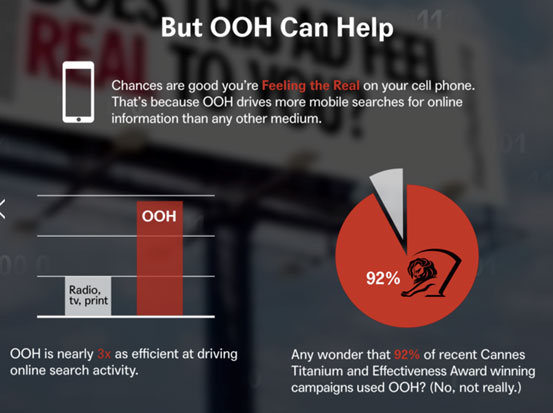
    OOH as a medium has always been sandwiched between traditional and emerging media. The traditional media brigade and the digital prosumers raise critical questions on OOH efficiency and effectiveness. Taking the bull by the horn and to demonstrate Real Power of OOH in driving digital engagement, OAAA (Outdoor Advertising Association of America, representing 90% of the industry revenues) and PNYC  (agency on record) launched “Feel the Real”, a huge campaign with more than 1600 OOH placements.


    I know that nearer home the situation is a lot different. But just like US, we regularly question OOH efficiency and effectiveness. Much of it comes from our inability to assign numeric values to OOH exposure like we do for other media.


    The campaign “Feel The Real” brings alive OOH as a REAL MEDIUM THAT REACHES REAL PEOPLE and helps drive significant digital engagement. Meanwhile, it takes a potshot at questioning the efficacy of digital; the new darling of media planners. It simply asks: How real is digital?


    The campaign is simple. Rail posters say, “You are consuming an advertisement. You are real,” Telephone kiosks ask, “Media planners, do you have a reality problem?”. Some signs close to media agencies call out the agency’s name or its executives.


    Stephen Freitas, Chief Marketing Officer of the OAAA in his interaction points out that   “The ‘Feel the real’ campaign highlights conventional reasoning that nearly half of the money spent on digital has been lost due to fraud and misrepresentation. Digital is suffering a reality problem, and we want to show how OOH – a real, tangible and quantifiable medium – can drive consumers to digitally engage with brands,”


    The campaign aims at building awareness of OOH’s ability to track and increase digital effectiveness and encourage media planners to incorporate more OOH advertising into their plans. It aims to drive conversation about the significance of real versus digital and ensure OOH gets the credit it deserves and to encourage media planners to view OOH ads as a medium that can accelerate a campaign’s digital, social and mobile elements.


    Now this may be in many ways be far ahead of the OOH-technology curve for India but we are fast getting there. There is a constant questioning of efficacy, effectiveness, clutter and avoidance of ads in other traditional and emerging media. It is the right time for OOH in India to take on the new technology by the horn and strike. To do so, it first needs to invest into technology and not be satisfied with stunts on sites.


    The US campaign was timed with the New York City’s Advertising Week. The real B2B campaign targeted media agencies and planners while making a larger call to the public to engage with the real world. It used static and digital OOH placements near media agencies and on heavily travelled commuter routes.


    The placements directed the viewers to www.feelthereal.org. The site playfully brings alive the fact how OOH can both complement and accelerate digital, social and mobile advertising.


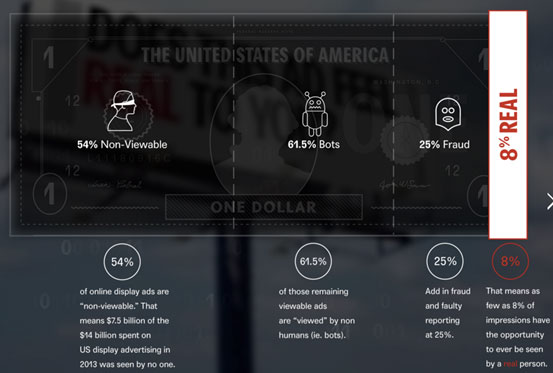
    It is world that is in flux out there. In digital, data is available for host of parameters, but in recent times it has been losing credibility.   The industry is divided and is unsure whether real people view the digital ads. Additionally, the ads can be tucked away in non-viewing corners and may be traffic figures are the result of computerised ‘Bots’ without any real human being ever seeing them.


    OOH in the campaign  “Feel the Real,” suggests that in a world where digital and its ability to deliver what it promises is under significant scrutiny, out-of-home has a unique and compelling point of view that having one foot grounded in the real world matters. Placements like billboards and transit shelters don’t suffer such issues.


    The site www.feelthereal.org was interesting. When one lands at the site, a question is posed- if you had seen one of OOH ads. To make life easy, four playful options are provided from. “Yes, I saw it in the real world”, “Yes, I saw it online”, “No, I heard about it” and finally the cheeky one “No, I’m a robot.”


    OAAA and PNYC are collecting the data on traffic and engagement with the campaign’s site to demonstrate OOH ability to drive digital effectiveness. One of the questions pointedly asks if the visitor is from advertising and media. If they can show the tribe being engaged they will make the results stick.


    Once you are engaged, the site takes you through a visual build-up that points out wastage in digital spends making a point that only 8% spends are really seen and thus effective.


    It then goes on to make an offer and tells you OOH can help


    I enjoyed the cheeky ‘How Real Are You’ game at the site. It asked me which all of the listed 20 activities was I involved in the last 30 days. The activities listed included things like Held a baby, accidentally clicked on a banner ad, sang or played an instrument with others, had a good cry, read a book to created a hastag.Once I played the game it declared me to be 40% real and suggested a host of activities to enhance my REAL quotient. These included, make a fort in your room using blankets and cushions, Eat breakfast outside, pick your own fruit from the tree, Go look for more OOH advertising, walk barefoot, swim underwater etc.… GO CHECK  HOW REAL YOU ARE at www.feelthereal.org 


    If you were not from media and advertising- it proposed that people are forgetting what it is to be a real person living in the real world. Then it shares some stark statistics. I am sure that maybe behind in OOH digital technology but these statistics maybe very much nearer to us. Things like-

    • 56% of Social Media Users Suffer From FOMO (Fear Of Missing Out)
    • 47 % of teens agree that they get uneasy or nervous when they learn through social media that some of their friends or peers are doing something that they are not.
    • 50% prefer digital communication; half of all Americans say they prefer to communicate digitally than talk in person, according to a Time Inc. study.
    • 24% have missed out on experiences: 24% of people say they’ve missed out on enjoying special moments in person because they were too busy trying to document their experiences for online sharing


    The outdoor medium’s growth in US has been fuelled by new digital billboards that can be updated dynamically and its ability to reach mass audiences in transit. For a marketer, out-of-home ads are appealing because they can’t be skipped or fast-forwarded like TV ads recorded on a DVR. Unlike digital ads, ad fraud isn’t much of a concern when it comes to buying billboards.


    In India, the OOH industry is still remains highly fragmented and unregulated. It can be argued that soon the OOH in India will also become a lot more digitally dominated where quick changes and time-share on the properties will be a reality. The integration with the digital platform is an eventuality. The process will hasten if the clients put money behind experimentation and technology.


    So, will the OOH association in India wait for the problem to be identified or will it take some proactive actions in making media planners re-evaluate the medium and the constituent members to self-regulate.


    Article based in initial write-up by Nathalie Tadena in Wall Street, The press release by OAAA and the experience at www.feelthereal.org


    Sanjeev Kotnala is Founder at Intradia World. A Brand, Marketing & Management Advisor. He conducts specialised workshops in the area of IDEATION (Harvest and Liberate) and INNOVATION (InNoWait). He focuses energy in enhancing client’s team’s potential and capabilities and decreasing their dependence  on external resources. Email sanjeev@intradia.in  or tweet @s_kotnala visit www.intradia.inwww.sanjeevkotnala.com. The views here are his own.