Category: COLUMNS

  • Ranjona Banerji: Flooding, crime or Christmas?

    By Ranjona Banerji


    Being out of India for a short while brings home how perceptions of the media and how the media actually operates are not that different anywhere. The same arguments over trivialisation, the same expectations of the news as you want to see it not what the news agency, channel, newspaper wants to show you can be heard. But as much, the trivialisation is real and the choices are not always understandable.


    The localisation of news for instance is still an ongoing argument. As someone who has used it successfully in various publications, I can vouch for its importance. However, there has to be a constant exercise of judgment. Here in the UK where I am, the Christmas season is always a slow one news-wise since most people are on holiday and the general mood leans towards cheer rather than misery.


    So if you cannot escape the relentless presence of ISIS and what that means for the future of the world, you can perhaps not focus on events in Iraq, Syria, Libya, Turkey, Lebanon and Nigeria as much. But can you get away with that? If there is another event, could you justify playing it down because it’s Christmas closer to home?


    But the dilemma does not have to be as dire as that. For instance, there has been severe flooding in parts of Scotland and the North of England for the past two weeks. This is local news in one sense but in another, it is part of the whole climate change, extreme weather story that affects the whole planet. The problems and explanations for the wide-scale flooding seem remarkably like what we in India heard during and after the recent floods in Tamil Nadu. That is, development on lake beds and river over-flow areas leaving surging waters nowhere else to go.


    As it happens, the official and emergency responses were faster here than in India but not all residents thought so as one might expect. Human sympathy and help were as high as in Chennai and I have not yet heard stories about the cheats who tried to make a buck out of someone else’s misery but perhaps one only has to wait. Parts of the southern United States have also seen extreme rain and flooding and some of the pictures out of Texas have been worse than Chennai.


    So should a news channel focus mainly on flooding, on Christmas fun and spending or on Iraq rebel forces being moved out of ISIS areas through Turkey so that they can go back and fight ISIS? Or as a very local channel here in East Yorkshire did, ignore the flooding and home in on some very local municipal issue and ignore the rest of the county?


    If it was me, I would have stuck to the flooding and crime: One resident of a senior care home has killed another, I see in snippets. Guns in old age facilities: now that’s a story that shocks, horrifies and amazed everyone.


    Now how’s that for a perfect Christmas cheer story?


    On which note, I let you get back to Arvind Kejriwal and Arun Jaitley, which doesn’t appear to have changed since I left India 10 days ago!


  • Ranjona Banerji: When handout journalists refused to see the reality at Pathankot

    By Ranjona Banerji


    Following the Pathankot attack on social media, with no access to Indian television news, was a bizarre experience. For one thing, Twitter now seems to be the Government of India’s official means of communication. Information arrives there first as ministers and government officers tweet away. However, it is unclear whether something as serious as an attack on Air Force Base should have government agencies tweeting about it.


    Secondly, it is now obvious, as far as this government is concerned, who in the media has access to whom in the government and whom the government uses to disseminate the information it wants out there. As senior journalist Saikat Datta pointed out on Twitter this week, “handout journalists” had been releasing information that Indian security operations in Pathankot were a success even while the assault was still on.


    You may argue that these sycophant journalists cannot be wholly blamed since the Union Home Minister Rajnath Singh himself tweeted that the attack had been foiled two days before it was over. In fact, even as I write this, combing operations are on.


    What was also evident on Twitter is that journalists who favoured the government were at a loss about what to tweet about. The apparent confusion over what was happening in Pathankot was bad enough. Mixed messages were coming out of government agencies and sources. And to make matters worse for the BJP loyalists is that Prime Minister Narendra Modi was not to be seen. Far from taking charge of an escalating situation, he was giving a speech about the importance of yoga. He tweeted extensively over the three days of the attack. However, aside from a couple of tweets about the “enemies of humanity” and the pride we feel in our Armed Forces, most of his attention was on science, yoga, cities and various saints and seers.


    What is a loyalist journalist to do under such circumstances? The prime minister and the government were being roasted on Twitter. So our friends of the BJP fell back on two of our usual suspects. One lot started with attacking Bihar chief minister Nitish Kumar on increasing crime rates in his state. The other targeted Delhi chief minister Arvind Kejriwal and his government’s plan to restrict cars on the roads in an attempt to deal with the national capital’s severe pollution problems.


    The Nitish Kumar ploy was a non-starter. No one was remotely interested. The Kejriwal attack worked better if only because so many vocal and loyalist journalists live in Delhi. However, the odd-even number-plate restriction had been discussed down to the bare bones when it was first announced and besides, there were some reports that it was working.


    The elephant in the room however remains: Pathankot. It was the biggest news for three days and will undoubtedly continue to be so. There is context – the proximity of the attack to a friendly supposedly unscheduled ‘happy birthday’ meeting beween Modi and Nawaz Sharif. There is the larger issue of resuming talks. There are the outrageous claims made by BJP president Amit Shah that no Pakistani terrorist would dare to enter India if Modi was prime minister. There are the usual problems of intelligence miscommunication, of a fumbling government and the Punjab administration saying it cannot cope with cross-border assaults. And there is the fact of the attack itself, the deaths, the apparent lack of equipment and so on.


    It is almost impossible to imagine what sort of a journalist would even think that tweeting about Bihar’s crime statistics was remotely relevant at a time like this. It needs to be pointed out that these are not junior reporters and sub-editors. These are people in senior positions in mainline establishments. Even funnier were the subsequent attempts at the mildest possible criticism of the PMO’s tweets about yoga during an ongoing attack on an Indian Air Force base. If you have ever seen a cat tentatively trying to dip its paws in the water and then retreating, you would know how amusing it can be.


    Unfortunately, this is the sort of journalist who is now most powerful in India. Go figure.


  • Sanjeev Kotnala: What I would like to see happen at Goafest 2016

    By Sanjeev Kotnala


    April 7 to 9, 2016 will see the 11th edition of  Goafest. The event has survived a controversies and absenteeism. The team at the helm must be appreciated for doing such a fabulous job.


    This year afresh the Goafest team meeting important stakeholders – the advertisers, agencies, journalists and past jury members. That is a brilliant start.  I have shared my inputs on entry process. Additionally, I was happy to be probed for my input in a very informal way. I appreciate the intent and wish all the best to Goafest. We all seem to be on right track.


    I have attended all past editions and one can say I have a love-hate relationship with the event. I have seen it from many sides. I have been sponsor, a rebel, winner, jury member, and delegate and in one year even had a parallel party on the Conclave night.   You bet I will be there for the 11th edition too.  I may be seen as constantly cribbing and finding faults, but, trust me, that is ever the intention.


    There is nothing that needs to be held back. Here I am sharing some thoughts, in public. I am fully aware that it may not be possible to integrate few or all of them.  Still, here I go.


    DISPLAY ALL ENTRIES.

    Not just the winners. This will be a mark of respect to the creators. Someone found them worthy of the entry. I find this practice at Pattaya Adfest a brilliant initiative.  The delegate would gain a hell lot more from viewing entries than any knowledge sessions.


    DISPLAY ALL ENTRIES ONLINE.

    Post the event; all entries should be available ASAP for viewing online.  This will also become an industry archive and a narrative available for reference. The access codes of these should only be made available to delegates.


    JURY DISCUSSION.

    Jury is one of the most critical elements of any event with awards. The jury is also a statement of credibility.  Can the jury presidents across the different segment be available on stage to discuss the criteria of evaluation? Share in an open forum why a particular entry won, what made one entry jump or nudge the other entry?  Very transparent and open discussion. Not that it is a practice in all industry events. But that should not stop us from considering it.

    It will add a lot, give the entrants insights into what the judges were looking at. Also it adds to the event when the judges collectively before delegates state why what was chosen as the demonstration of excellence in the area.


    PARALLEL STREAMS.

    There are possible 16 to 18 knowledge sessions in the two-and-a-half day event. We are in an industry with multiple stream of specialisation. This straight one focussed knowledge sharing stream fail to excite all the delegates. Maybe pre-registered workshops are possible. Maybe a live contest like- Developing Print campaign is possible.


    BETTER MEDIA CENTRE AND COORDINATION:

    Media amplifies the industry event.  To facilitate it media centres need be better managed and coordinated.  Excellent connectivity is a basic requirement.

    In case the organisers make arrangements for the journalist stay, it must be close by and easily approachable. Providing space in the venue hotel (charging the journalist difference in cost) could also be considered.

    Press should be provided with a table-chair set-up in the session halls. .  While we are discussing halls, a smooth Wi-Fi is a must for delegates to ride.

    The media interactions with the speakers and interactions need to be pre-planned and streamlined with prior booking of slots.

    Trust media and share the winner list with complete detail and images of entries well in advance. Give this only to the senior representative so that better control is possible.


    GET MORE CLIENTS:

    This one is tough one. It is more of a wish.  I do not have any suggestions for this.


    FEWER AWARDS.

    We have an award for every possible thing. There are just too many awards. There is a feeling that this brings down the value and the cause behind repeated announcements ‘No gold in this category’, which is definitely demotivating.

    More awards means not enough time to showcase the complete work while being awarded. Moreover, Bronze winners do not get a chance to get on stage.  But when given an opportunity by the organising committee, I looked into the categories and subcategories and found that each one is properly defined and no clubbing is advisable.

    The only area (debateable) seemed that Outdoor, Ambient and experiential could be clubbed to form a real OOH category.

    Yet, two or three possible thoughts cross my mind.  In case any category does not get entries, which are more than a pre-decided number of entries, it should be dropped from next year. If in any category we get less than a publicly notified number of entries, let that not be considered for awards. Tough calls as there are possible arguments on both sides.


    STRICT ENTRY GUIDELINES.

    If the supporting AV is allowed for a max 2 minutes then jury should stop seeing it beyond that duration or just not consider it as part of supporting.

    Entries should not be accepted beyond the last date. This should be possible for date-marked-digital entries.

    Maybe organisers must ask entrant to provide an image or 30 second AV or whatever they define, which will be displayed as a standard display in case the entry win.  It will bring in uniformity. The function will be better controlled. It will help to treat every award winner at parity.


    PROMOTE REGIONAL ENTRIES AND DELEGATES

    Rope in national news and business TV channels as well as regional large newspaper groups to deliver the messages. To start with, they could look at towns like Ahmedabad, Indore, Jaipur, Cochin, Madhurai, Lucknow etc.

    Additionally is there a possibility NON-METRO DELEGATE FEE, as an initial push for non-metro market delegates should be considered.


    PROMOTE LESS ENTERED AWARDS.

    If the organising committee seriously believes that in a particular category there were fewer entries than expected. That there was work which somehow could not be entered. That it is something that should be pushed, then a roadshow or an effective programme to address the agencies / marketers/ brand in that category should be initiated.


    FIND WAYS TO INCENTIVISE ALL-DAY PARTICIPATION OF DELEGATES:

    It is not a problem of organising committee if people come for a day or part of the fest and leave. We understand that they have other commitments and work. Lst year, Goafest stopped the delegate pass for one and two days.  It would be wonderful if there were ways to incentivise all-day participation. Is it possible to create a delegate ticket–plus-hotel-plus flight ticket? Not done anywhere but that’s okay.


    DECREASE PANEL DISCUSSIONS:

    Panel discussions are fillers of an event. They do no justice to time and efforts invested by the delegates. Or may be in past, but they have been rarely well-managed.


    STRICT TIME KEEPING:

    An event of this stature should over-ride all considerations and constraints that may derail it on timelines. Let it become an example of time management with proper buffers. Restricted questions, may be tweeted for the speaker to answer.


    PRESENTATION QUALITY AND CONTENT:

    We always had fairly good speakers. There is less of agency-promoted speaker slots and paid speakers have been considered. It will be a bonus if they could just make that extra effort ensuring that the trend and discussion is relevant to Indian scenario, not dated and is customised to the fest. More so it will be appreciated if even the delegate seated in the last row could also read the slides. Sharing an advisory on font size, seminar area and use of excel is required.


    MORE SPACE FOR LATE NIGHT PARTIES.

    The last 2-3 years the evening parties have become cramped for space. There are legal and venue compliance that pushed the parties indoor. As a result, the fest sacrificed space for late closure. Maybe there is some way in increasing space made available for the parties. I have not been to Cannes for some years but when I did, I found the especially conducted- promoted parties by different brands /companies on the same day vying for the right audience.


    THINK SOMETHING NEW – SCRAP RAIN DANCE.

    Yes, it has been there since the start. Yes, it has been losing its pull. Yes, the crowd has been thinning at the rain dance.  I personally think it has lost its charm. It will be better if some other alternative engagement is found for the young crowd.  If there is no new thing- let rain happen.


    STOP FREE BEER

    I know I will be hated for even suggesting it. Free-flowing beer is so an integral part of the fest. The argument is not about getting drunk, there have been very few such cases through the years. It is not even about not all drink beer as there is option of soft drinks etc. The argument is to use the beer footprint for a better cause. Change a nominal fee for beer coupons-  say three-day 15 coupons for Rs 150. Give this coupon money to some local NGO for a worthy cause.


    HERE TO THE GOAFEST 11th EDITION.……………………………………………………………….

    Sanjeev Kotnala with 28 years of corporate experience is the Founder of Intradia World. A Brand, Marketing & Management Advisor, he focuses on IDEATION (Harvest and Liberate) and INNOVATION (InNoWait) process and workshops. He is also a certified Life & ‘Mid life transition’ coach.Email sanjeev@intradia.in tweet @s_kotnala web: www.intradia.in  www.sanjeevkotnala.com.

     

  • Ranjona Banerji: Hyper-nationalism UnLtd

    By Ranjona Banerji


    The fallout of the Pathankot attack appears to remain at the top of the news cycle in India which is hardly surprising. Although I have written last week about our sycophantic media, unable by instruction or inclination to show the BJP and the Central government in bad light, one has to salute courageous publications like The Telegraph, Calcutta for instance. Not only has it called the entire operation “Pathanblot”,(http://www.telegraphindia.com/1160106/jsp/frontpage/story_62434.jsp#.Vo5IXfl97IU) , the newspaper has also written a very strong editorial arguing against the “martyr” status given to every fallen soldier. This is a common practice by India’s most well-known TV anchors who have absolutely no concept of the meaning of the word “martyr”, inasmuch as they understand concepts at all.


    In the hyper-nationalistic atmosphere that prevails in India now, where words like sedition and treason are thrown around very lightly, you have to admire a newspaper which can question the actions of a slain officer during a terrorist attack. Yet, the concerns raised here are pertinent and need to addressed urgently. http://www.telegraphindia.com/1160107/jsp/opinion/story_62467.jsp#.Vo5JVvl97IU


    The website thequint.com also carried a letter by Lt General HS Panag (retired) to Major General Pradyot Mallick (retired) on the Pathankot attack. It is a scathing analysis of what happened at the Air Force Base in Punjab.

    http://www.thequint.com/opinion/2016/01/06/the-pathankot-attack-was-a-disgrace-for-us


    There is some hope for the media if at least some media houses, old and new, are willing to look for facts rather than toe some party line. The last two years have shown the most abysmal standards in Indian journalism for all that everyone who is not pro-BJP is sought to be presented as a Congress stooge. The evidence at the moments points in quite another direction.


    What India needs very urgently is TV programmes which analyse the way news is presented. I write this sitting here in the UK where there are any number of shows, serious and funny, which examine newspapers and television news. Personally, the shows which mock the news are top of the list. Of course, Jon Stewart’s Daily Show in the US, now fronted by South African comedian Trevor Noah, set the standard. And John Oliver is also superb – if you have not watched his take on Indian television news, Narendra Modi in America and how the American media ignored the Indian general elections, you should do so at once.


    The All India Bakchod has taken on the news on Youtube and now on television. And there’s always The Week That Wasn’t. But neither of them is as strong, as confrontational and as in-your-face as they need to be. India has a tendency to get stuck in morass of over-baked notions of self-respect and we need to be taken down frequently. Journalists are no exception and some are far too full of themselves.


    **


    Having said that, the illness of concentrating on the trivial and fluttering past the substantial is a worldwide media disease. The often mindless and meaningless potterings of the latest pop star are far more important than any world even unless you count US presidential hopeful Donald Trump, who may qualify as both.


  • Shailesh Kapoor: Top 5 Channels that made the Maximum Impact in 2015


    By Shailesh Kapoor


    In a new annual feature, here is my choice of five channels that made the maximum impact in 2015, standing out in a crowd of 500+ channels as true success stories.
     

    This list is not based on ratings alone, though it is one of the inputs. Channels that ended 2015 with significantly higher position of strength vis-à-vis where they stood at the start of the year have been considered as prime candidates for this list. To that extent, we could call them the broadcasting success stories of 2015.


    5. Times Now: It has its share of detractors, but Times Now continued to dominate the English news genre in 2015, first in TAM and then in BARC India ratings. But it makes it to this list not just for that reason. Today, Times Now has set the rules for television news in India. Its competitors are routinely seen as promoting “less noise” and “more news” as their unique offerings. With many spoofs, funny videos and jokes centered around it, the channel, and its principal (and only) face Arnab Goswami, has gone beyond being a news brand to one that defines the discourse around the Indian media, good or bad.


    4. Nick: Kids television in India has been a low-key category, with not much media attention. In a commoditised category where each channel is driven by one or two animated properties that are wallpapered on the FPC, Nick managed to stay ahead of its competition all of 2015, and by a wide margin too. The channel has seen huge success with homegrown animation, first with Motu Patlu and recently with Shiva. With a 50% lead over competition, Nick is set to have a great 2016 too.


    3. Zee Anmol: No one cared about this channel much, till rural ratings were released by BARC India from Week 41. The free-to-air channel rules the rural markets, widening its lead in recent times to almost 100 GRPs. It has also been ahead of Star Plus and Colors in many weeks at a national (Urban+Rural) level. Even as the media industry is getting used to BARC India ratings and its implications on trading, the introduction of rural ratings has been the big step forward in 2015. And Zee Anmol has been the big beneficiary.


    2. Colors: The channel was the challenger to Star Plus for much of early 2015. But as the year progressed, it came into its own, backed by high-power weekend launches. Comedy Nights Bachao did well, but it was the blockbuster success of Naagin that took the channel ahead of Star Plus on a consistent basis as 2015 drew to a close. More importantly, Colors had a year of consistency in its fiction content for the first time since 2009-10. So much so that Bigg Boss did not get its usual 9pm slot on weekdays, where high-performing fiction was retained. Bigg Boss may have suffered as a result, but Colors continues to flourish.


    1. Hotstar: The no. 1 “channel” of 2015 in this list is not a conventional TV channel, but a platform that came as a new, almost niche, idea but managed to become a lot more mainstream by the end of 2015. Sports content is one of the drivers of Hotstar, and this was the year of the Cricket World Cup, helping the brand grow. But Hotstar continued to do well beyond sports too, with properties like Badtameez Dil and On Air With AIB that did not do too well on TV finding acceptance among the OTT audience. 2016 is set to be a year of OTT overkill in India, and Hotstar is everyone’s target to beat, including the just-launched Netflix India.


  • Ranjona Banerji: Net emerging clear winner in UK news media

    By Ranjona Banerji


    Two things strike you immediately about the way journalism is perceived in the UK: everyone complains about the media all the time and yet no one appears to read mainstream newspapers.


    That sounds like a contentious and dichotomous statement. But there is little doubt now that the old-style newspaper is now an old world product. Instead, you have that other creature: the free newspaper which is now a regular if not a mainstay. The free newspaper sometimes could be the Evening Standard, which is read by commuters on the Underground who are not addicted to Candy Crush or staring vacantly into space.


    And there is the neighbourhood paper which has local ads and local news which could be as diverse as a baby born on Christmas Day at a nearby hospital, a theatre personality with a gambling addiction and odd goings on at a local prison. These papers require a lot of hard work and ought not to be sneered at. How many reporters with a mainstream newspaper would climb up to the roof of a building to interview a prisoner who had escaped to the roof of the prison?


    However, the influence of the media remains. Obviously the internet and television are the main sources of news but sooner rather than later the internet is going to be the clear winner. Every media house which is investing in mobile app technology is looking at the cash register going ka-ching and I cannot see TV keeping pace unless it runs down the same road.


    It is also true that the UK at least benefits from not having nonstop hysterical and any number of 24-hour news channels. Plus, although people here do not stop making fun of the media for exaggerating issues and asking silly questions, can you imagine how anyone else in the world would react if they were subjected to our prime-time “debates”? Perhaps we should have a time-sharing scheme with international news channels and export some of our savers of the nation so that they can go save the world? How peaceful life would be even if it put me out of a job…


    **


    Meanwhile back in India as far as I can see, we are still seesawing between Pathankot, Malda and Arvind Kejriwal. Even the fact that Malini Parthasarathy resigned as editor of The Hindu in one more Kasturi family carousel ride could not keep the media engaged. Off everyone went on to the other roller-coaster ride: “you covered this but did not cover that, this news item is more important than that and you are an anti-national.”


    **


    The internet and international media is in a tizzy over actress Jennifer Lawrence’s treatment of a reporter at a post-Golden Globes press conference. The video doing the rounds shows the actress, who had just won an award, mocking a reporter for looking at his phone while asking her a question. It does seem clear that English was not the reporter’s first language and that is why he was possibly looking at his phone.  Although there was some support for Lawrence on the internet, most people seem to find her needless nasty. The video does show some of the nonsense which reporters who deal with famous people have to put up with.


    Interesting, the Golden Globes are given by the Hollywood Foreign Press Association. Go figure.


    Mashable has rounded up the story:

    http://mashable.com/2016/01/11/jennifer-lawrence-globes-reporter/?utm_cid=mash-com-Tw-main-link#BnrJUe4W_gqr


  • Top 10 Hindi GEC Characters For 2015


    By Shailesh Kapoor


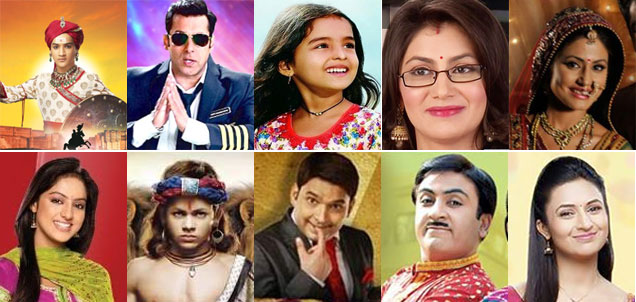
    Character popularity is now well known to be singularly important driving force towards programme loyalty. In the last of the yearenders in this column, here’s the list of the top 10 Hindi GEC characters (including non-fiction) for 2015. This list is based entirely on the results of Ormax Characters India Loves, an ongoing survey that polls more than 35,000 Hindi GEC viewers over the year across more than 20 markets.


    10. Maharana Pratap (Sony): Warrior portrayals hold intrinsic appeal, yet they remain largely an under-served genre on Indian television and even cinema. With Bajirao Mastani succeeding at the box-office, we can expect more warrior ‘biopics’ on the celluloid. On television, Maharana Pratap kept the genre’s flag flying through the year, though with a lot less intensity by the time the year ended.


    9.Salman Khan (Bigg Boss – Colors): He had a great year at the movies, with probably his best film in the last decade (BajrangiBhaijaan). But for many television audiences, Salman Khan’s primary identity is that of the Bigg Boss host. Khan has been often accused of taking sides on the show, but even his hardest critics cannot fault his commitment that comes shining through every weekend.


    8. Chakor (Udaan – Colors): Chakor’s character lost considerable steam during the year, starting the year in the Top 5 but ending it outside the top 20.With innocence being a scarce commodity in adult characters on television these days, child protagonists tend to stand out even more. But only till they don’t start behaving like adults!


    7. Pragya (Kumkum Bhagya – Zee TV): KumkumBhagya is emerging as a long warhorse for Zee TV, and much credit should go to its lead pair played by SritiJha (Pragya) and Shabbir Ahluwalia (Abhi). As the year closed, Pragya grew to an even stronger position,  signaling a good 2016 for this popular character.


    6. Akshara (Yeh Rishta Kya Kehlata Hai– Star Plus):It’s been seven years since she first went on-air. Her character journey over years has mirrored various life-stages and challenges Indian women would tend to face in their life. In the largely-unrealworld of television soaps, Akshara has managed to infuse her share of relatability and warmth for many viewers.


    5. Sandhya (Diya Aur Baati Hum–Star Plus):Between them, Sandhya and Akshara represent two facets of the Hindi GEC heroine. Sandhya is a woman of aspirations, but one who strives to balance her work and her family in her journey, while Akshara is a nurturer at heart, willing to let go for others. Between them, Star Plus has a strong 9-10pm slot that’s currently their prime-time pivot.


    4. Ashok (Chakravartin Ashok Samrat – Colors): Another warrior prince story that was waiting to be told on the small screen. Aided by good casting and production, Ashok emerged as a strong character challenging the dominance of female protagonists in the GEC space. Can we now have a PeshwaBajirao show on TV, please?


    3. Kapil Sharma (Comedy Nights With Kapil–Colors):The comedian dominated the non-fiction list in 2015, no different from what he managed in 2014 and much of 2013. He’s Colors’ fourth entry in this list, and the combination of Salman Khan, Chakor, Ashok and Kapil Sharma accurately captures the formula behind the channel’s success. In 2016, Sharma will move to Sony, his original home from Comedy Circus. He’s come in for criticism on various things, ranging from misogyny (on the show) to unprofessionalism (off the show). 2016 could be a defining year for Sharma, at the end of which he would either emerge stronger or begin to fade out.


    2. Jethalal (Taarak Mehta Ka Ooltah Chashmah – SAB): SAB TV remains a one-show channel and yet a strong force to reckon. Jethalal (played by Dilip Joshi) is the centerpiece around which this show continues to thrive, now for seven and a half years. The ratio of Jethalal’s popularity among male audiences to female audiences is a staggering 8.2, highlighting the dichotomy of our mass television content, which is family viewing in practice, but often not in spirit.


    1. Ishita (Yeh Hai Mohabbatein–Star Plus):Yeh Hai Mohabbatein combines various genres and sub-genres into a unique show. It has romance, inter-cultural conflicts, social issues, family and a lot more. It has even ventured into the supernatural space recently, as if to tick that pending box. But at the core of this huge success remain its leads Ishita (Divyanka Tripathi) and Raman (Karan Patel). Her motherly love is the central quality that makes her no. 1, especially because it’s love for a ‘daughter’ she’s not given birth to.


  • Ranjona Banerji: Tennis Travails

    By Ranjona Banerji


    The world around tennis appears to be in turmoil over match-fixing allegations. Or is it? The BBC and Buzzfeed broke a story on January 18 on “secret files” about match-fixing at the top levels of international tennis. Offenders include Grand Slam winners and players in the top 50 of the rankings of the game.


    The story is especially explosive since the first Grand Slam tournament of the year, the Australian Open, has just begun in Melbourne on Monday, January 18. The story is serious but the revelations are not new. These “secret files” refer to the scandal that came to public light a decade ago. The most notable allegation then was against Nikolai Davydenko, then number 4 in the ATP rankings, who was suspected of “tanking” or throwing a match in 2007. The match was highlighted because online betting company Betfair found “irregular activity” on the match as suspended all bets, reporting the matter to the ATP. Davydenko, since retired, was suspended pending investigation but as cricket investigators have found, proving match-fixing is notoriously difficult. According to the BCC and Buzzfeed story, at least eight players flagged by the Tennis Integrity Unit, set up after the match-fixing scandal, are due to play in Australia this fortnight.


    Interestingly, a respected tennis writer on CNN wondered if the timing of the story was its main significance – to get maximum readership mileage out of the Australian Open, when viewership increases substantially over that of diehard, year-round tennis fans. Since the reports names no new names and most of the investigations are against low-ranked players – most not even in the top 100 of the ATP rankings, the story remains more speculative than constructive.


    This is where the media runs into legal and ethical brick walls. Without names and without big names, there is no story. But if you do not mention the story at all, you are doing the public and the game a disservice. In fact, what the media needs to show is greater vigilance so that tennis can hold itself to a high standard. But there is an intrinsic problem here. Most sports reporting tends to be personality driven and increasingly, with hero worship thrown in. Under the circumstances, objectivity becomes a rare commodity. Some tennis writers prefer to limit themselves to analyses of the games themselves and playing styles. This leaves larger issues in tennis untouched. This problem can be seen in just about every sport. Does it bear repeating that almost no regular cricket correspondent appeared to have any clues about the extent of the 2000 match-fixing scandal that almost broke the game, in spite of (or because of?) close proximity?


    There are in fact several problems that affect tennis but few of them get enough coverage. Journalists – and the tennis authorities – shy away from reporting extensively on drug use or violations of tennis rules by players. The fact that top players – especially in the ATP tour – are often fined for breaking time rules or coaching violations are papered over. Journalists appear to have almost forgotten how a much-respected umpire is not permitted to chair a certain player’s games because of personal differences. That players like Richard Gasquet, Marin Cilic and Victor Troiki were suspended for drug use is almost forgotten but a player lower down the pecking order like Wayne Odesnik is much reviled. By contrast, one rather rare loss of control by Serena Williams with a linesperson during the US Open is still referred to.


    Clearly tennis authorities are too much in awe of their players to take stringent public action against them. Some burden therefore falls on the media. But, in this story, the allegations perhaps do fall short. We need more details and more investigation, not less, if tennis is to keep its reputation intact.


  • Sanjeev Kotnala: How and why Belgium’s top ad exec donated sperm for a national cause

    By Sanjeev Kotnala


    I can imagine, the uproar such a campaign would have caused in India. If, that is IF, our Ad Club thought of running such a campaign. I don’t think that will ever happen. We move very small steps. We have taken some positives of pushing for a membership drive with life membership and linking event passes to membership. I personally appreciate both steps. Yet, its predominately metro (read Mumbai ) focus has been missing some opportunities.


    Lets get back to campaign I was referring to. The one that made me smile and appreciate the efforts being put in by Creative Belgium. All for a ‘National Cause’. To support and discover the next generation of creative talent. They have initiated a call for sperm or egg donation from Top Ad executives.


    But, if one wants to contribute to the cause and finds the above option process cumbersome, they can always make a start by becoming  member of Creative Belgium.


    ‘People will do anything to protect a legacy. And Belgium is taking that to the next level.’


    Meanwhile, Creative belgium promises that the donations by Naïm Baddich (Publicis- 6 LIONS), Kwint De Meyer (mortierbrigade- 6 LIONS), Dieter Van Hoof (Friendship- 6 LIONS), Dieter De Ridder (AIR- 10 LIONS), Geoffrey Hantson (Happiness- 33 LIONS) and Iwein Vandevyver (Famous- 6 LIONS) will soon available in designated  hospitals for fertilising eggs- and create the next wave of Belgium Lion winning brogade.


    Creative Belgium tells you why you should become a member. As per mail reply from Creative Belgium, they have 360 members and are looking to take that to 500. Cost of Individual membership EURO 170, Student get it at EURO 135. In addition to helping the national cause, there are specified benefits. They are not too different or unique but placing them at one place makes them sound good.


    The members get to connect during new year’s drink. Can stand for election to the board members. Be elected as jury members for  prestigious “Chapeau”. Enjoy special rates for CCB awards entries and party. Get the CCB awards annual book and access to all awardwinning work since 2009. Access to lectures and workshops. Free subscription on De Persgroep / Rossel Advertising or the weekly magazine HUMO . Special rates for national and international workshops, trainings and seminars in  collabs with D&AD, Contagious, Cannes Lions, Eurobest and Flanders DC. Invitation to the Lions Night in Kinepolis. 10% discount on a year subscription with Stack Magazines and 15% reduction on books at the complete webshop of LANNOO. I am not sure if members of AdClub or other Industry bodies are aware of their advantages.


    BACKGROUND: Now why go to this extent. Well, there is an answer to this strategy. Belgium has a huge creative reputation. In four years, it has won 78 Cannes Lions with a a population of just 11.2 million. I know ratios should not be used for such events and extrapolating it to Indian population is not right.


    CONCERN: In Western Europe, Belgium is not considered a serious market. Big companies usually split their Belgian budgets with France and Netherlands. As a result, Belgium often has little to no budget. Then again it has multiple langauges, but none large enough for big brands to target them. So, the secret to Belgium’s unique ad culture is strictly Hard Work to stand out.


    PROBLEM DEFINITION: Young people are losing interest in advertising careers, which means for the industry there’s a crisis at the horrizon.  As per an Adweek article, Greet Wachters, manager of Creative Belgium puts it as  “The number of students in creative fields has actually declined…. those who opt for creative studies don’t always end up looking for work in agencies.” Creative Belgium believes there is need for proactive behaviour.


    INSIGHT: If one was to believe Professor and Dr Maryse Bonduelle of the Centre for Medical Genetics recent study on creative behavior among children, creativity is indeed partially hereditary . So if Daddy was creative, may be Junior will feel an affinity to the field.


    SOLUTION: Partnering with the Centre for Reproductive Medicine of Brussels and ad agency Air to device a smart, creepy, and only vaguely eugenicist (expert in selective breeding for human improvement):


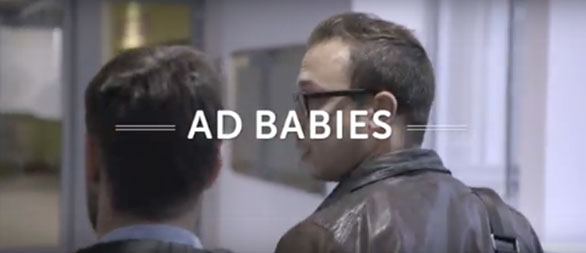
    RESULT: “Ad Babies”- an appeal to today’s creatives in Belgium to donate sperm and eggs!, to ensure Belgium’s creative future. They know ‘though one  can’t guarantee a future generation of Lions winners, one can boost the odds’. Well Isabel, MD Creative Belgium says that the process of harvesting egg is cumbersome and they could not find any woman to agree for it- hence the campaign focussed on Sperm Donation.


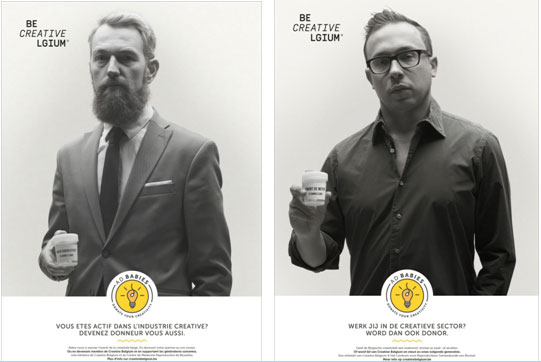
    PRINT AD “Are you in the creative industry? Become a donor.”  I visualised these with some of the faces of Indian advertising and could not control my smile.


    VIDEO AD– Watch them carefully play around the situation.  While passing the vial with sperms Hantson puts it niciely “One small drop for me, one giant drop for Belgian creativity.” Link https://youtu.be/TPJmVryajnU.


    ACTION LINE: Both women and men are invited to become donors, or just members, of Creative Belgium.


    ……………………………

    The article draws upon the article by Angela Natividad in Adweek, inputs from Isabel – MD Creative Belgium and website.


  • Sanjeev Kotnala: Whose logo is it anyway?

    By Sanjeev Kotnala


    The theme for Adfest Pattaya 2016 to be held  from February 16-20  is ‘Creative Intelligence’. Its logo has been designed by  Washington DC-based  award-winning studio Design Army.


    The new logo shape personifies the human brain, and represents the infrastructure base for our creativity. In illustrated concepts, the logo is surrounded by impossible shapes and eternal stairwells, which represent the information that swarms around us day after day; before embedding into our minds, changing, transforming and leaving as the start of an idea.


    Is it too much of an explanation for a simple event with a simple focused theme?

    The design is the outcome of theme interpretation by Design Army. As per Pum Lefebure, Co-Founder & Chief Creative Officer of Design Army, “‘Creative Intelligence’ is the ability to connect the dots in the information overload we receive on a daily basis. It is the way you sort through masses of text and visuals to pick and choose what is important and authentic, and translate that into an idea.”


    Additionally, a tiny red ball appears in each design execution, tying the concept together and embodying the idea of ‘Creative Intelligence’ – the ball represents ideas moving throughout our brains.


    Now Lefebure must know her business. She is an award-winning creative director and business leader. She was recently named by Graphic Design USA as one of the Top 50 People to Watch and singled out as a Rising Star by the Washington Business Journal’s Women Who Mean Business. Her work has won countless awards at shows including D&AD, One Show and AIGA. I am no one to question her design or her interpretation.


    I am a consumer of such events. A delegate.  I speak from a consumer/ audience point of view.


    Design for such a simple 3-4-day event with a focused  simplified theme has led to such an complicated logo that someone needs to take pains to explain the over-graphic elements.


    The process-led approach and interpretation has led to the complex design. Creative Intelligence on the other side could be considered as a positive productive output orientation that simplifies things, connect the dots and is able to produce relevant-easy to transmit message codes. In that case simplicity would remain the dominant guiding force.


    It is a point of view, which may not be shared by many. To me, the last year logo was an experience in simplified communication.


    The elements from were easy to adapt in every communication and they left their mark figuratively and literally.  It spoke in a very young colloquial way the language  ‘Be Bad’.


    Look at 2014 ‘co-creating the future’ and 2013 – ‘connecting the dots’ and I would rest my case.


    Just to take the argument further. Look at Adasia


    Look at Goafest


    All of these are almost self-explanatory. There are elements that are unobtrusive and easy to handle in multiple situations. There is no need to explain to the august industry representative what and why of the logo design.


    I personally believe that in the name of graphic elements, Design Army has over-complicated the logo. That’s a point of view I have. Maybe I am old fashioned in my approach.


    Then I checked the Cannes logo through the year. The biggest brand in Industry led global festival. It is so simple. It is well established and understood for what it will deliver. The respect exist and the only thing that changes is the number and the year.


    It does not even needs to specify its theme loudly, as it is understood that it will be at the current frontier of thinking.


    At the end I am not biased toward thematic and non-thematic direction for Industry event. I think themes do add a functional focus and defines expectations. What I promote is simplicity and real functionality in visualization.


    Sanjeev Kotnala with 28 years of corporate experience is the Founder of Intradia World. A Brand, Marketing & Management Advisor, he focuses on IDEATION (Harvest and Liberate) and INNOVATION (InNoWait) process and workshops. He is also a certified Life & ‘Mid life transition’ coach.Email sanjeev@intradia.in tweet @s_kotnala web: www.intradia.in  www.sanjeevkotnala.com.


  • Shailesh Kapoor: ChaubeyJi: The New Face Of Patriarchal Patrakaars

    By Shailesh Kapoor


    Unless you are living under a stone, you would be aware of a certain Bhupendra Chaubey having interviewed Sunny Leone on his CNN-IBN show ‘The Hot Seat’, and the consequent social media wrath he had to face. While the television and print media have chosen to ignore the said interview, it’s been fodder for digital media over the last week.


    I have not seen much of Chaubey’s work. He’s not been an “in-the-news” journalist who begs to get noticed, for right or wrong reasons. In fact, the said interview was the first time I actually watched any long-form content featuring him.


    From the name, I assume that ‘The Hot Seat’ is a grill-the-guest format, much like Karan Thapar’s show ‘The Devil’s Advocate’ that used to air on the same channel not too long ago. But how do you grill an entertainment industry personality who has no topical controversy around her? You do what Chaubey did: Take a vicious line of questioning about one aspect of her life. That she has been a porn star. Give it an Indian culture spin and you have a ‘story’.


    One could say, what’s wrong with that after all? A few things.


    To begin with, I think it’s highly unlikely that Leone knew the format of the show (I’m assuming it has one). The Hot Seat is no KBC or The Newshour, so when you come on it to promote a film, it’s just another promotional interview.


    Chaubey came across as unprepared. I don’t think she has seen any of Leone’s film work, even songs or promotional videos, or tracked the box-office of her films, to know what her Bollywood impact has been. Leone has got a lot of press at the time of Jism 2 and Ragini MMS 2 releases, so research on her recent career would have been just a few clicks away. (Some other interviewers these days do the other extreme, where every other question starts with: “In a recent interview, you said…”)


    He was also unprepared on his material in general. Those PornHub stats he rattled out seemed to be a text message from a confused intern sent during the interview’s filming.


    But more than anything else, Chaubey came across as blatantly misogynistic. He applied a culture and values framework to steer the interview. A framework that probably exists in his head, and but was presented as if it was India’s official culture and values framework. Our politicians do this all the time. But Chaubey is a journalist, and should have known better.


    In a subsequent blog, he defended himself, including a disclaimer that he hasn’t ever watched Leone’s porn work, and can’t even if he wanted to, because he has kids at his home (Never attended Logic 101?). Another page of that value framework on display!


    Leone has gained significant support from various quarters, but this story is not about her. It’s about the existence of patriarchal mindset in our journalism, even if it’s in minority. (There are others in the Hindi media who have been guilty of similar misogyny in the past).


    I’m not sure if the News Broadcasters Association has guidelines on moral conduct of journalists, especially in context of gender sensitisation. It may be time to consider the idea. Because it was embarrassing to see a male journalist tell a woman guest he has invited on his show, at a filming location of her choice: “I am wondering whether I’m getting morally corrupt because I’m interviewing you.”


  • Ranjona Banerji: Much anti-Dalit prejudice in newsrooms

    By Ranjona Banerji


    Once more into the breach: That is how the Indian media deals with news breaks. From flip-flopping over the Pathankot attack and a number of senior editors and journalists trying to protect the government from accusations of inefficiency and worse, we now have journalists trying to be fair on Dalit issues. Forgive me if I sound cynical. It is only because I have seen too much anti-Dalit and anti lower caste prejudice from upper caste journalists in newsrooms, especially in recent times. This is nothing but a massive tragedy because if journalists do not stand up for the underprivileged, then who will?


    So now we have a situation where a research scholar at Hyderabad University, Rohith Vemula, commits suicide under some very unfortunate if not almost criminal circumstances. India discovers that he was part of a group called the Ambedkar Students’ Association, which is considered “radical” by members of the BJP’s student wing the Akhil Bharatiya Vidyarthi Parishad. Vemula and four other students were suspended by the university over a fight with the ABVP. Vemula’s stipend was withheld for months, leaving him and his family desperate.


    What made the case worse was that a BJP minister wrote to the HRD ministry to inform them of the ASA’s apparent assault on the ABVP and that these students were “anti-national”. Further, the HRD ministry consequently sent a number of letters to the university until these five Dalit students were suspended. The BJP, as is its wont these days, took too long to respond and several journalists decided to concentrate on the fact that the Congress vice-president rushed to Hyderabad rather than discrimination against Dalit students in higher educational institutions in India or government interference in support of a political party’s student body, which perhaps were the bigger stories.


    This is not the first time that we have seen upper caste anger against Dalits at institutes of higher education in India. IIT Bombay, IIT Madras, IIT Roorkee, Hyderabad University – these are only some examples of discrimination and prejudice against Dalits. It is a story that ought to be looked at thoroughly and not through the prism of upper caste angst as is evident in websites like Swarajya, for instance where takes the position that these Dalit students, by demanding their rights and holding “uncomfortable” positions, are somehow the problem. By Indian law, caste discrimination is illegal: should journalists be aware of this?


    On the evening of Thursday January 21, NDTV and India Today TV focussed on this issue. Times Now and NewsX were engrossed on a probable scam in Bihar and CNN-IBN looked at students’ suicides at Kota coaching centres. However to be fair, the media as a whole has made Rohith Vemula a household name and only a few of the usual suspects have been left scrambling to protect the BJP government at the Centre.


    **


    Bhupendra Chaubey of CNN-IBN, who has lately stewarded the channel back to a more professional mode since its ownership turmoil, found himself the butt of jokes on social media and had to face the rage of Bollywood. While interviewing Bollywood actress Sunny Leone, he focused for too long on her past as a porn star, to the extent that he was offensive and misogynistic. His questions included asking her if her presence in front of him would morally corrupt him. He also suggested that actors like Aamir Khan would never act with her. Leone was dignified throughout, which only added to her charm.


    As it happened, Aamir Khan tweeted he would be happy to act with Leone. Firstpost.com put up this defence of Chaubey, which was a superb move considering that they are sister concerns.

    http://www.firstpost.com/bollywood/in-defence-of-bhupendra-chaubey-outrage-about-the-sunny-leone-interview-is-misplaced-2592884.html


    **


    The death of Dr Aroon Tikekar this week marks a sad day for Indian journalism. He belonged to that old school of erudite, informed and free-thinking journalists who cared more for their convictions than for corporate success. He will be sorely missed in all his capacities but especially as a thinker and a mentor. I feel privileged that he considered me a friend.