Category: COLUMNS

  • So which brands have caught Election Fever?

    So which brands have caught Election Fever?

    Photograph of first-time voters in Jaipur from the ECI.gov.in website

    Kunal SinhaWe are in the middle of a frenetic, high voltage election campaign in India. Of particular interest to political parties and brands alike is the sentiment of first-time voters.

    With only 18 million out of eligible 49 million first-time voters having registered to vote, the Election Commission has roped in brands to reach out to their fans and followers. In Bihar, which has the country’s largest number of young people, only 17% have registered to vote. In Delhi, the centre of political action, the figure is 21%, while in Uttar Pradesh, it is 23%.

    So how are brands getting to be a part of the feverish campaigning?
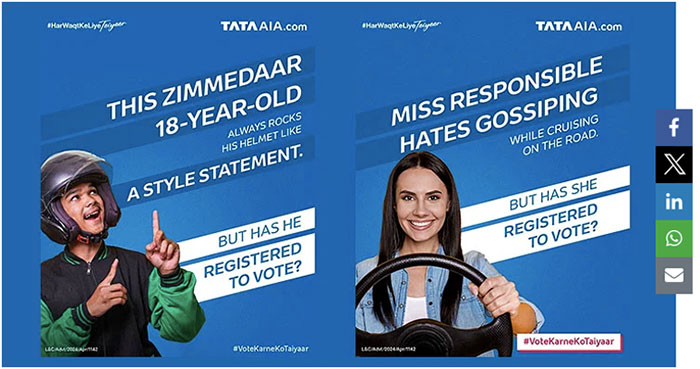
    Insurance brand Tata AIA launched a social media campaign titled #VoteKarneKoTaiyaar, encouraging young Indians, particularly first-time voters, to immediately register themselves to vote and then go ahead and vote on election day. The election campaign integrates the brand’s core idea of ‘taiyaari’ (readiness), with its tagline being ‘Har Waqt Ke Liye Taiyaar’.

    Booking platform BookMyShow’s campaign underlines the importance of voting as a fundamental duty of every responsible citizen, especially the youth. With the tagline ‘Aaj Picture Nahi, Bigger Picture Dekho’, its campaign urges citizens to focus on the larger picture of nation-building by exercising their right to vote on their respective election days.

    The film deploys a uniquely-weaved narrative and clever word play, keeping viewers that unaware of the purpose of the campaign until it is revealed in the end. The story aims to connect with viewers across the country, inspire civic engagement and demographic participation.
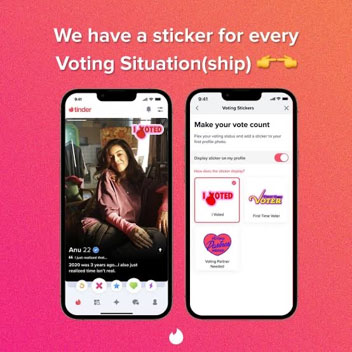
    Can political participation be a desirable feature on your profile? Dating app Tinder seems to think so. It has added special stickers to its app that users can add to their profiles. These stickers are about voting, like voting partner needed, first-time voter, and I voted. Collaborated with Yuvaa, an Indian youth media organisation, and Mark Your Presence, an organisation that helps young people learn about voting, Tinder’s campaign started running from April 18 and will be on till May 15, 2024, with its users in India being able to see special cards in the app with information and tips about voting.

    Bangur Cement’s election-themed campaign featured Bollywood actor and MP Sunny Deol.

    The campaign, with the tagline Vote Solid, Desh Solid, carries the message about how important each person’s vote is for making the country stronger. There’s a brand connect as well: just like using strong cement helps build a sturdy home, voting solidly helps build a strong nation. With low voter turnout observed in the first two phases of the election, the campaign has pivoted to ask voters to take the pledge ‘Vote Ka Vachan’, saying ‘Chutti baad mein manao, pehle vote kar aao’.

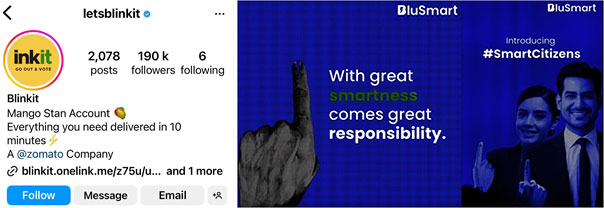
    Delivery service BlinkIt dropped the first two letters from its logo, as it encourages voters to go out and vote.

    BluSmart, an Indian electric vehicle (EV) ride-hailing service and EV charging infrastructure network, launched a campaign called #SmartCitizen. Their effort, focused on their key markets in Delhi, Gurugram and Bengaluru, is to tell people how important it is to vote and how much of a difference one vote can make. BluSmart is giving a special badge to riders who vote to encourage everyone to get involved in voting.
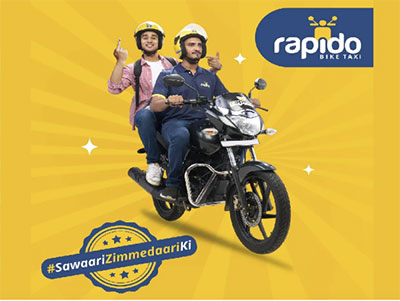
    Across different states, rideshare company Rapido has collaborated with the State Election Commissions to offer free bike-taxi rides to voters cities like Shillong, Nagpur, Asansol, Siliguri, Durgapur and Kolkata, running a campaign ‘Sawaari Zimmedari ki’.

    Apart from these direct appeals to vote, brands are also having some fun at the expense of politicians.

    Colgate Salt toothpaste‘s campaign ‘No Card, No Darr’ promotes oral hygiene alongside civic responsibility, with a dash of humour. The ad depicts a politician who is scared of sitting on the chair in front of him, much to his party workers’ surprise: it’s the one kursi which even politicians are scared of. That’s because he views it as a dentist chair because of he is suffering from toothache.

    The rising temperature, both politically and weather-wise, has presented some brands the opportunity to showcase their cooling-down creds.

    Innerwear brand Technosport tells us the secret of how a politician keeps his cool even while campaigning in the heat.

    Electrical appliances brand Novamax also uses the platform of elections to depict the intense heat experienced during election season.

    The brand’s tagline, ‘Ek Hei Naam Gunje Ga Jab Chalegi Hawa,’ aims to connect with consumers and emphasize the relief provided by Novamax Air Coolers in combating summer heat.

    With about four weeks remaining in the general election season, how many more brands will get consumers to vote – for them, and for the nation?

    Kunal Sinha is a senior strategy and foresights executive based in Jakarta, Indonesia. He is the author of several books including The Future of India’s Rural Markets and Raw – Pervasive Creativity in Asia. He writes for MxMIndia every other Monday. His views here are personal.

  • Ranjona Banerji: Silence on Israel

    Ranjona BanerjiThe spectacle of students from a university in the Delhi area seemingly unable to read either Hindi or English, unable to fully explain why they were on a protest march, unable to understand the issues which supposedly riled them. What did it take for TV journalist Ashutosh Sharma from Aaj Tak to question them with a straight face? Must have been very taxing. What it took for Aaj Tak to air this conversation was even more remarkable, since the students were all BJP supporters, or supposedly BJP supporters, and were shown up as unaware and uneducated. One poor young man even went as far as saying words to the effect of “just because you are educated does not mean you have to use your brain”. (Which perfectly encapsulates the mass stupidity which has currently engulfed India.) Let us not forget that these poor students were parroting the same lies that the Prime Minister has been feeding the electorate about the Congress manifesto. And which almost no one has been able to call him up on.

     

    Contrast this live example of how “WhatsApp University” has such severe and disastrous consequences for our youth, our discourse and our future, with the steadfast resolve of students of American universities who are being physically assaulted and punished for calling for a ceasefire in Gaza. And conversely, how so much of the media in America is unable to question brutal action by university managements and the police, because of the stranglehold of Israel and the Zionist lobby in America.


    The situation in America is monstrous, because it is not just students but also academics who call for peace who are being assaulted, arrested. Jews who want a ceasefire in Gaza, an end to genocide and justice for Palestinians are being accused of “antisemitism”. The House of Representatives has passed a bill that any criticism of Israel is tantamount to antisemitism. And the American media has still been unable – for the most part – to question the State, the universities and their allegiance to Israel over the concerns of their own citizens. Many will argue of course that Israel has a hold on the media as well. But let us not forget that many of these journals and TV channels are highly regarded within the world media, and are seen as standard bearers of good journalism. Alas, no more.


    As for Aaj Tak and others like it, do not be fooled into thinking that the tide may have turned and full adulation of the BJP and its main character, Prime Minister Narendra Modi, is now in the past. The India Today group has been largely consistent in its adoration, with a few scant TV programmes and persons here and there maintaining a thin veil of journalism.


    The very fact that the Prajwal Revanna story is not the only conversation out there is tantamount to the degradation of the Indian media. Had the JD (S) in its various political flip flops been a Congress ally, I can guarantee you every star TV anchor would have been doing the tandav nritya on the streets. But because former prime minister HD Deve Gowda’s party has tied up with the BJP and Revanna is his grandson, his career as a rapist, sexual predator and exploiter is being reported in a more circumspect manner. Even worse, Revanna shared a stage with Modi. In a contest between journalism and justice on one side and Modi on the other, the Indian media chose Modi long ago.


    As for the students of India, we can see that the various “skill” schemes that Modi is so proud of will have a lot of work to do.

    Though I am sure many of these young people could also join the media…


    Ranjona Banerji is a senior journalist and commentator. She writes on MxMIndia on Tuesdays and Fridays. Her views here are personal.

  • The Cred-isation of Advertising. But not everyone gets it

    The Cred-isation of Advertising. But not everyone gets it

    Sanjeev KotnalaCred has evolved from its previous style of communication, which was often misunderstood but has been effective. Though forced, there has always been an attempt at being humorous and there is a storyline that delivers the message. Here is the recent ad, sharing the longer version of the Rajamouli ad. The other ads featured Illa Arun and Leander Paes.  The Cred way of advertising indeed has a history of consistency.


    Learning from Cred

    TheCcred way of advertising has a history of consistency. Remember Govinda  and other star auditions, the Goof for Great, Cred bounty and even something I just discovered and had not watched earlier- typical Cred- the claw  (is that really Cred?!).


    Meanwhile, many brands have learned from the Cred Institute of Advertising and are attempting to make advertising simple.

    Have a message.

    Maybe have a celebrity.

    Create communication that repeats what you want to say.

    Say it simply enough.

    In the name of creativity and humour – try a condescending tone.

    And most likely, there will be enough consumers who will try you out.

    If you have the budget, you can attempt multiple edits or celebrities. However, that is not an essential requirement.


    Make My Trip

    Have you seen the Real Hero campaign of Make My Trip, where celebrities are hinted at but don’t show their face? It is where Cred was ages back. I am surprised at the campaign- which keeps spraying bullet point statements from a PowerPoint presentation – and even has to point out that Make My Trip is the real hero. So they have their Moves Don’t Lie, Breathless, Steamy and  Bhidu Shakespeare- Jackie Shroff. Why, when you have such a great pair of Alia and Ranveer Singh doing a great job? Not that I liked their latest ad for first international travel. But every brand is allowed some goof-ups.


    HDFC PayZap

    HDFC is one of these advertisers that uses the Cred strategy of plain, iterative, repetitive, simplified, and no-storyline advertising. I must agree that Cred always had a storyline holding its creativity, and hence, the HDFC PayZap act with Virat for its payment platform is an innovation. However, one can cite the various restrictions one faces while using IPL association for advertising, and really making a good ad is sometimes difficult.


    MRF ZLX

    Talking of Virat, MRF, another brand endorsed by the celebrity, has recently made some friendly additions to the message, but it is still MRF ZLX or whatever that is supposed to meet.


    Many brands have believed that the punch line- an end dialogue that can be repeated sticks and makes the brand memorable. Well, the SBI ads are trying to do the same – ‘I will upgrade to Cred’ with ‘Janata hai uska Bank kaun hai’ almost like ‘Mera baap kaun hai’.


    Net-net 

    Now, before you get me wrong, the ads may be working, or the metrices must be showing them to be working. Maybe Cred-isation is the need of the hour in the shortened attention span and fragmented media reach. I am not sure, but I would love to know your point of view. However, I must say that the excitement, the humour, the smile and the aha moments are missing from these communications- maybe that is not what advertising is expected to do anymore.

  • Ranjona Banerji: Both-sides-ism masquerading as journalism

    Ranjona BanerjiIn these most fractured and fractious election, how is the media to be fair in its coverage? You may laugh, because if it is one thing you can be sure of, it is that the media has not been fair. The how is very glaringly obvious to anyone who understands a modicum of journalism, that all we have to do is concentrate on the “how not”.

    You do not for instance give even more traction to a man who has brazened out the most terrible accusations of sexual assault and harassment from a number of women, some of them award-winning athletes. That is not journalism so much as cowardly both-sides-ism masquerading as journalism. Certainly cover Brij Bhushan Singh if you want to, but if you release a photo of both of you posing and smiling in a pretend arm-wrestle, that is legitimization of a man accused of crimes against women.


    You do not for instance scrutinise in minute detail every apparent and imaginary transgression by opposition parties while giving a free pass to shameless demonisation, dehumanisation and divisiveness from the ruling party.


    You do not for instance allow misinformation and disinformation to be allowed into the public sphere by campaigning politicians, without exposing them for their lies and for their attempts to manipulate the electorate.


    And most of all, for instance, you do not accept the total capitulation to the ruling party by all democratic and state agencies. These agencies report to the people of India not individual politicians or political parties and the media must hold them to the highest standards possible.


    Yeah, by now even I’m laughing.


    But more seriously, the refusal of the Election Commission to release exact number of the two completed rounds of this general election is unacceptable. And also unacceptable is the media’s general inability or reluctance to directly ask the Election Commission why. Instead the 10-year-old trend of shooting from the shoulders of opposition parties and civil society continues.


    Massive scandals remain, from the parole granted to convicted criminals connected to the BJP so that they can campaign in these elections, but elected chief minister who are battle unproven accusations cannot get bail. Once again, the media falls short here.


    This is a media which went out of its way to demonise and target a young actress for having an affair with an actor who died tragically, without any evidence or any concern for her own privacy. But the same media is tongue-tied and tied up in knots when the electoral process is India is compromised by those is power, those in charge and those who are irresponsible with the powers vested in them.


    We are now close to the middle of this questionably long election season. We see no signs that the ruling party is willing to follow any rules at all and we definitely see the bureaucracy falling over backwards to play along with the ruling party and the cult status of its star campaigner.


    The media remains as culpable as these other compromised arms of the system as long as it cannot break free. Whether it is an outright adorer or a both-sides pretender.


    Ranjona Banerji is a senior journalist and commentator. She writes on MxMIndia on Tuesdays and Fridays. Her views here are personal.

  • Net-Zero and The Diffusion of Technology

    Net-Zero and The Diffusion of Technology

    Ashoke AgarrwalClimate change, the most pressing issue of our time, is manifesting unprecedentedly. The erratic weather patterns, marked by prolonged droughts, devastating floods, and uncontrolled forest fires, underscore the need to achieve net zero emissions swiftly and subsequently reduce greenhouse gases in the atmosphere.
    There are four broad routes to reaching net zero (and then continue on the path of reduction):

    • Reducing the average carbon footprint of each human through lifestyle changes – mainly through consuming less electricity and fuel and changing to more eco-friendly diets
    • Technology that a) enables humans to consume less electricity and fuel beyond lifestyle changes and b) lowers the carbon footprint of economic and industrial activities like agriculture, manufacturing and computing.
    • Increase the natural green cover that absorbs greenhouse gases from the atmosphere and
    • Create, build and run technology systems that absorb and sequester greenhouse gases from the atmosphere.

    Decades of grappling with the problem of climate change have made it clear that getting humans to change lifestyles to reduce their average footprint is challenging, if not impossible. The reason is that fundamental human nature prevents humans from sacrificing individual comfort to attain community goals.

    Preserving and increasing the green cover runs into a geopolitical logjam engendered by the uneven development of countries worldwide.

    The above reasons make the development and diffusion of new technology critical to meeting the world’s net zero and beyond goals.

    These technologies range from low—to zero-carbon footprint power (wind, solar, nuclear fission, and someday perhaps nuclear fusion) to greener mobility (biofuels, hybrids, hydrogen and electric) and industrial processes (grey or green Hydrogen).

    Each of these new technologies faces multiple challenges in meeting its full potential.

    Take electric cars, for instance. The market opened at the high end, and pricey Teslas became symbols of a woke lifestyle. In the process, Tesla solved tricky technical problems, including batteries with enough juice to support viable range and life and reliable and fast charging systems.

    The Theory of Product Form Strategy (PFS) postulates every innovator of new technology faces a product-form decision at an early stage of building a business out of his innovation. The innovator company has three choices: Market the Know-How, Market a Component, or Market A System.

    In a pre-print manuscript submitted to the Journal of Marketing titled “A Theory of Product-Form Strategy: When to Market Know-How, Component or Systems.”, Frias, Ghosh, Janakiraman and Duhan, have an interesting illustration of the PFS Theory. For example, consider an innovator who has developed a technology that tracks the mechanics and dynamics of a baseball bat as it meets the ball, allowing coaches to refine a batter’s ability. As a result, the innovator can decide to sell the technology to a party that determines how to market it. Alternatively, the innovator can develop the technology into a component that fits on a bat and market it to bat manufacturers.

    The third alternative is for the company to get into bat manufacturing and build a bat brand based on its advanced technology.

    Tesla, the pioneer in the EV market, decided to go the “Market A System” route.

    This decision has impacted the very structure of the EV market globally. Today, the EV market is a positioning and pricing battle between traditional auto brands and newcomers.

    In an alternative scenario, if technology pioneers had developed and marketed know-how and components in the battery technology, charging, power electronics and drive train areas (including hybrid), the structure of the green mobility market would be very different. It would be akin to how the PC industry developed with Windows and the smartphone category with Android.

    Over the past year or so, the EV category has experienced a slowdown, with many people wondering whether hybrids will be the future of green mobility. As a result, the green mobility market might evolve with standard batteries, charging systems, power electronics and drive train components, releasing economies of scale in capital costs and end pricing. In such a scenario, a brand like Tesla could be the premium walled-garden brand, much like Apple is in smartphones.

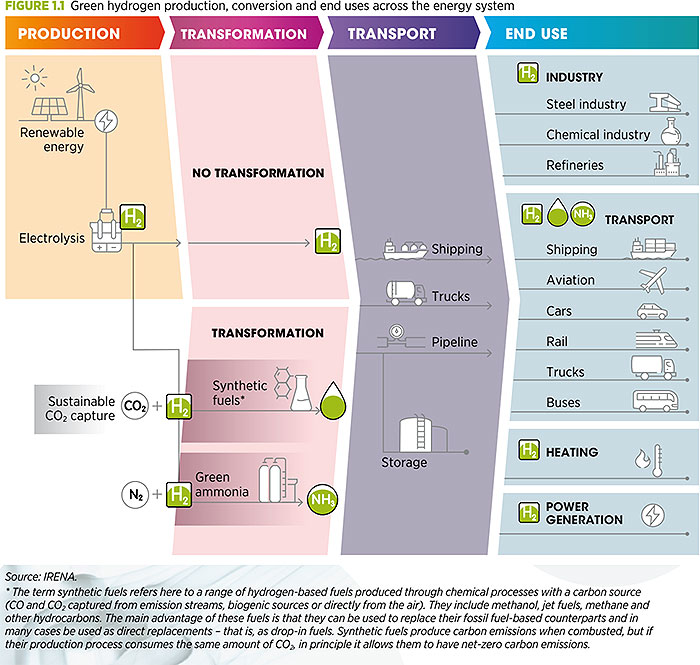
    Green Hydrogen has a more extensive remit than EVs or Hybrids, as it can impact broadly and deeply, as illustrated below.

    The Product Form Strategy that pioneers the Green Hydrogen revolution will have a seminal impact on the global economic and industrial framework over the next few decades.

    Green Hydrogen is at an early stage of evolution; given its distributional nature, it is likely to mature into a Big Oil-type category–“Big Hydrogen,” so to speak.

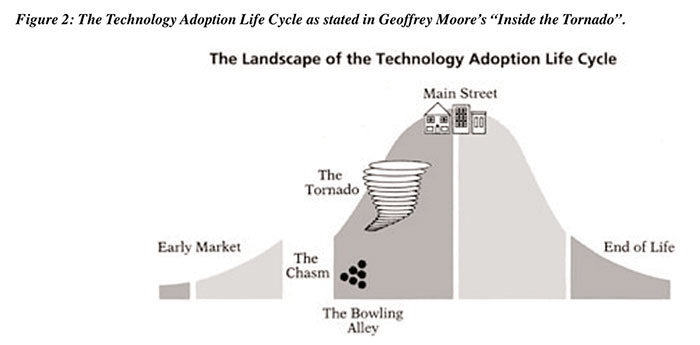
    The penetration of Green Hydrogen will follow the Technology Adoption Life Cycle as stated in Geoffrey Moore’s “Inside the Tornado”.

    “Big Hydrogen” must adopt “The Bowling Alley” strategy to release The Tornado to build tomorrow’s hydrogen economy.

    I explained “The Bowling Alley” strategy in some detail in my MxMIndia column of February 16th, 2023, titled “The Diffusion of AI: What do the marketing models predict?”.

    AI, Green Mobility, Green Hydrogen, and their offshoots will be important marketing and communication categories for tomorrow, and marketing and advertising people should invest in closely following their development and diffusion.


  • IPL’s Run Feast & the Future of Cricket

    Shailesh KapoorWe are in the second half of another engrossing edition of the Indian Premier League (IPL0. While the beats of IPL are now all too familiar, this season has managed to catch our attention because of the consistent stream of high scores we have witnessed. Two days ago, Sunrisers Hyderabad chased down 166 in less than 10 overs, without losing a wicket.

    The Hyderabad team has been at the forefront of the run feast that’s been unleased in IPL 2024. They account for three of the Top 4 team scores this season, including the top entry: a staggering 287 vs. Bangalore. In the 2024 edition, the 250-mark has been breached eight times already. And we are still 14 games away from the tournament’s end. In contrast, the 2023 edition saw 250 being breached only once, over the entire event!

    This is not an increment change. It’s a sign that the game may be evolving faster than one imagines. 300 is not far away, one imagines. And who knows what the upper limit in a 20-overs innings could be.

    Purists would argue that this makes the sport all too one-sided in the batter’s favour. But the audience, who are essentially there from entertainment, are certainly not complaining. And there is Test cricket for the purists anyway. It’s difficult to compare IPL viewership over the years because the digital component does not have transparency on viewership reporting, and the split between linear and digital continues to change with each passing year. But it’s safe to say that we may be in the middle of the most-watched IPL season of all time.

    The IPL will make way for the T20 World Cup, and the IPL run feast will invariably extend to T20 international games too. This may have been a boost cricket needed, for some sort of global expansion, which the governing body of the sport has been trying for years now, often half-heartedly, mostly unsuccessfully. If only they muster the courage to pull the plug on the ODI format, the future of cricket may not be that bad after all.

    In our latest sports report released in March this year, the awareness and viewership numbers for some of the foreign T20 leagues, especially the Big Bash (Australia), Caribbean Premier League and Pakistan Super League were very healthy. It shows that the Indian audience has developed an appetite for T20-formatted entertainment over time, and this will only rise if we have more high-scoring games. Perhaps it’s time to bring the Champions League, an idea that was too early for its times back in 2008.

    Meanwhile, with 14 games to go, I’m rooting for 300. Sunrisers have two home games to go, and we may not have to wait too long.

  • Speed thrills. But it kills. Kills creative rigour…

    Speed thrills. But it kills. Kills creative rigour…

    With apologies to none


    Vikas MehtaI live in the foothills of Himalayas and whenever I drive up the mountains, I see this sign on the roads. Speed thrills. But it kills. And this also reminds me of the state of Indian advertising. How? Let me outline it.


    Every year, I watch the Indian Premier League (IPL), eager to watch the cricket and also the new ad campaigns. IPL would mean that many brands would be ready with new ads. Much thinking and effort would go into the same. Brands like Vodafone would release campaigns just for IPL. Zou Zou ads were released by Vodafone only during the IPL. New brands like Cred made a splash and an impact with some outlandish campaigns during IPL. Swiggy’s ‘no order is too small’ with its ubiquitous uncle was another such memorable campaign. Even fantasy betting brands like Dream 11 made their beginings during IPL. Amazon’s Chonkpur cheetah was another memorable campaign which resonated during IPL. And who will forget the Indian Panga League ads done by Virgin mobile which were produced enmasse and was the first example of brand going viral in India.

    But, sadly, in the past two-three years even though advertising spends during IPL have increased and the opportunity to advertise has also increased manifolds with OTT channels now hogging a lion’s share of the advertising budget, the level of creativity and the memorability of the campaigns has moved in the opposite direction. Even brands like Cadbury’s Dairy Milk which have almost always been synonymous with memorable creative ads, have become pedestrian.

    I have seen marketing and advertising pundits commenting about the same. Everyone has some solid reasons. Lack of talent bemoan a few. Advertisers are not remunerating ad agencies enough so good talent is staying away from advertising. True to a certain extent but this is not a recent phenomenon. No long-term relationships between clients as every advertising execution is seen as a project and every project is pitched for. So, agencies do not understand the DNA of the brand. Again, partly true as I will explain later. Digital and ROI/ measurability is destroying the concept of creativity. That is an overrated statement as almost all clients for decades have been trying to understand impact and effectiveness of advertising. It’s like saying that science and its rigor kills creativity. Many a pre and post tests have existed and many brands have lived by them and still produced some memorable advertising.

    All the above reasons may have combined to contribute to the decline in the advertising standards, but in my thinking the single most reason that has caused a decline in creative standards is the lack of rigour in advertising.

    Starting from the brand or client. Is there a good brief? Is the marketing objective clearly spelt out? It’s not just about increasing sales. It could be differentiating a benefit. It could be reinforcing a new benefit. It could be creating a brand perception. It could be strengthening an emotional connect. But is it spelt out and defined? Does the agency convert a marketing brief into an advertising brief?

    Is the Target Group well-defined? I am not saying buyer groups but target group. The misunderstanding today unfortunately, is that since IPL is a universal event liked by all, the brand should talk to all. That’s a big mistake. Because a brand can use different tone of communication for different target groups. One tone means the lowest common standard. Please all and fall flat on your face.

    Is the brand personality clear? That can also affect the tone and the type of communication. Pepsi is cheeky, fun, rebellious, thinking out of box. But not Coke.

    And brand personality can decide the brand ambassador. Every brand need not use the Khans or the Bachchans or the Kapoors. Or even the Kohlis or the Sharmas. Nor should their price or availability decide the brand ambassador.

    How much is all above discussed and debated and decided upon? It’s all about doing things fast and immediately.

    I would like to take a simple example. RBI is doing a good job alerting people against frauds and financial awareness. From what I read and from experience of my relatives, I think RBI is trying to alert senior citizens who may not be either tech savvy or even financially savvy from potential frauds. And an ambassador like Amitabh Bachchan is for that TG a respected and looked upon icon. So, RBI ads are doing a good job. But are they making an impact with the GenZ, who are into money management in a big way from a young age? I doubt it. If RBI has to talk to them then its messaging, tone, ambassador all need to change.

    Are RBI ads memorable? Not exactly. My definition of memorable is simple. Will the TG remember it amongst a clutter. Will they think about it? Will they talk about it and maybe forward it on social media? The answer is no. They could have been much more memorable if these had a good consumer insight. Currently, the ads are just a proposition and explanation type of ads.

    And insight like all the above points needs a strong rigour. It’s something which one does not think about or even imagine but it lurks in the mind and is semi-conscious. It’s not an obvious thing but needs astute observation, deliberation and peeling of layers by asking questions. Every guy’s fantasy is that the girl makes the first move, is an insight. When it comes to cricketing loyalties or for that matter sport loyalties families can be divided, is an insight. The biggest enemy of the child getting into winning ways is the love of mother, is an insight. Consumption is not a guilt, is an insight.

    The rigour involved in defining the target group, in defining and maintaining the brand personality, in finding a relevant TG insight is what is missing in today’s advertising. And these are missing for the reasons that pundits mention.

    Short-term relationships mean not understanding the brand in terms of either brand personality or their TG. Incidentally, this holds good for the marketing teams also. Marketing people keep on jumping for better prospects. So, there is no one who really understands the brand or it’s TG or it’s personality.

    Marketing teams going through revolving doors means that marketing objectives are all short-term sales-related. Bonuses and increments are linked to the same. All ROI or effectiveness is measured in those parameters. And since Digital has various ways to measure immediate returns the concept of TG gets converted to user, or bluntly put the whole universe. So, brand-building, emotional connect, TG relationships etc are rarely considered as objectives. Either for marketing or advertising.

    This results in poor communication, improper results and poor remuneration for agencies. And finally, short term relationships.

    It is a vicious cycle that keeps on repeating.

    I am not saying that this happens with all clients or brands but my experience shows that this is symptomatic.

    So, everything happens in a rush. There is no time for proper TG understanding or clearly defining the TG. Everything is required immediately. There is no time to even craft an ad in terms of casting or art direction or editing. Rigor is sacrificed. Fundamentals are not pursued.

    As I said. Speed thrills but also kills. In this case it kills creativity, memorability and sadly the advertising industry.

  • Ranjona Banerji: Pussyfooting from the traditional Indian media

    Ranjona BanerjiMadhavi Latha, the BJP candidate for Hyderabad, “found herself in the midst of a controversy” says a Times of India article. The controversy was one which Latha appears to have caused herself by going to a polling booth and asking Muslim women in burkhas to lift their veils so that Latha could check their identity cards. Or perhaps TOI meant that the controversy part was because someone released a video clip of Latha doing this. Had the video not been made public, there would have been no controversy to be in the midst of?


    I write this on May 13, as India votes in Phase 4, and there are reports all over social media that voting is being stopped by election officials, especially in UP, because large numbers of Muslims have turned up to vote. These are unverified accounts but they point to the general pattern of “controversy” which the rank Islamophobia and undemocratic behaviour of the BJP and its supporters engenders.


    Does this also qualify as being in the midst of a controversy for the BJP’s second chief campaigner Amit Shah, also part-time Union Home Minister? That Raghav Trivedi, a TV reporter with moliticsindia, was beaten up at Shah’s Rae Bareli rally? Perhaps according to the venerable media, Trivedi caused a controversy by asking questions of people at the rally? Questions, as we know, cannot venture further too far from the “how do you eat mangoes, stay fit” mould when it comes to BJP politicians. Especially important ones.


    Interestingly, the Indian Express article on the same event has updated itself faster than TOI, to include the cases filed by the Hyderabad Collector against Latha for “undue influence at an election” and “obstructing public servant”. The article also mentions Latha’s earlier act of firing mock arrows at a mosque, while campaigning.


    I even saw a headline in the Express which said that a low voter turnout in Madhya Pradesh was bad for the BJP. However I think this may be compensation for esteemed Express columnists like Surjit Bhalla and Tavleen Singh telling us that the Indian economy is doing better than ever although there is no evidence of this or that Narendra Modi’s not mentioning his own achievements is the fault of a long election season.


    This sort of pussyfooting from the traditional Indian media explains why Youtubers like Dhruv Rathee can get over 7198528 views on a video within a few hours of release, and 11 lakh likes. The video is one more in a series where Rathee explains to his viewers how Modi’s entire past, from being a tea-seller to being poverty-stricken was a cleverly constructed lie.


    It may seem amazing to someone who gets into the story late that there was no consistent debunking of these lies about Modi when they first appeared. Because Rathee has done nothing more than use long-available material as evidence. Instead, the media just amplified the lies put out by the massive PR campaign built up around Modi. Knowing very well that they were lies.


    Rathee’s videos get their views. Other Youtubers who debunk political waffle, have been taken down on official request by the government when their focus has been on the BJP.


    I once again expect to hear spurious explanations of how scared the media is, especially from people whose vast media experience comes from having one friend/ niece/ nephew/ uncle/ aunt in a newsroom. And I once again refuse to accept them.


    The media cannot be excused for the current condition we find ourselves in. This election and after.


    Ranjona Banerji is a senior jouralist and commentator. She writes on MxMIndia on Tuesdays and Fridays. Her views here are personal.

  • Clean Indore’s Next Challenge: Taming Traffic Chaos

    Clean Indore’s Next Challenge: Taming Traffic Chaos

    Sanjeev KotnalaI don’t understand Indore. How the logical, sensible people who understand civic duties and needs like cleanliness forget their responsibility towards traffic sense and rules?


    Indore The Cleanest City

    The city, which changed how its average citizen treats and disposes garbage, has failed with other initiatives. Indore has been the cleanest city in the country for almost a decade now. It is said that Indore processes over 1,900 tons of urban waste every day, which helps the city fuel its buses and gives it crores of rupees. And hold it, Indore segregates garbage into six distinct categories at a collection point. It must be happening, but I am yet to witness it at the household or society level.

    However, the truth remains that it has been declared the cleanest city repeatedly. The credit goes to the management (Indore Municipal Corporation) and more to the citizens of Indore who have undoubtedly played a significant role in making the city neat and clean.

    A clean city is only possible when the habits of the citizen and their outlook toward cleanliness are changed. The change is evident in the surroundings.

    So, someone knew the magic spell- the trigger to press and the pulse of the city.

    It is the same city that was ranked 25th in 2016 in the list of 73 cities and then has continued to rank 1st in the following years of the Clean India Mission Surveys.


    There Are Chinks in The Clean Mirror

    One sees the work and processes that keep the city clean.  However, the status may be the cleanest city, but the ground reality does not evoke the same confidence.

    Yes, there are public toilets at a fair distance. And you don’t see people urinating or defecating in the open.

    The roads are mostly clean. At least the main roads are.

    My doctor treating me for an upper throat infection, instructs me not to go for a morning walk on the main street as it is dusty with the morning weeping of the roads.

    People take pride in their city being the cleanest. However, most of the cleanliness drive workers are without gloves or masks.

    The affluent (and mostly literate) pet owners do not pick pet poo from the roads. No amount of logic works. More so, they give you a weird look as you diligently pick the poo- place them in the bags and deposit them in the dustbin. Their looks question you. It shouts. Are you mad?  Why, someone will pick it up and will you pick the poo of the stray dogs too! I don’t know where the Indore pride of the cleanest city vanishes on such occasions.

    There are spots along the roads where families leave their trash in plastic bags, which are picked up by the workers. It is clean but not as clean as the cleanest village in the northeast.

    Something has worked for the cleanliness drive.


    You can’t be No 1 in everything.

    Being No 1 for a long has somewhere instilled the thought as a habit. James Clear would appreciate it- because, yes, cleanliness is somewhat of a habit in Indore.  However, the system and the citizens are misguided in knowing their limits to behaviour change.

    Indore must have been the cleanest election. You hardly saw posters- banners or loudspeakers in action. No one is talking of the manifestoes and the need for the promises to be made. However, towards the end, there was an intense activity by Congress for people to go and vote NOTA.

    As the city wanted to achieve the highest percentage of voting and become number 1 in voting- even Voting for NOTA in an almost No-Election was desirable.

    The thought was right, but it was an over-expectation. It was doomed to fail. Even the ‘Run for Vote’ Marathon had limited participation. There were orphaned posters and sponsored by retail chains and educational institutes promoting an attempt at maximum voting plastered over the city. A waste of time after BUMB the Congress candidate withdrew his candidature and joined the BJP. The task of getting the voters to visit the booth during the heat wave made it further challenging.


    Here is the cause to be the No 1. TRAFFIC

    Indore citizens are proud of their cleanest status and now even shun the otherwise welcomed comparison as a Mini Mumbai. They are in a Zone of itself.  I am not from Indore and, hence, I have many cribs, unlike a person from Indore who has adapted to life and thrives in the scenario.

    Whatever has worked in the cleanliness drive has failed to show results in another aspect of governance or initiative. And I fail to understand it.

    They are the same citizen. The initiatives are for their benefit. So, why do they refuse to follow them?

    Are they rebels? Or has the cleanliness drive had some negative impact, too?
    Are people feeling let down?

    Do they think that if they join in for any other initiatives, they will be trapped? It is a one-way street, and they will lose the freedom they so enjoy and want.

    Being the best puts pressure to behave continuously. Then being just Good is not enough.


    Indore needs Traffic Sense.

    Can someone help the town with a sense of driving?

    It is illogical. It is mayhem. It is depressing, irritating, and frustrating.

    People crisscross without any respect for lights, police, cameras or zebra crossing.

    In the main squares, it is like the WhatsApp videos you see of traffic going from all directions. Well, the light gets green just for sufficient time for the person to sprint to the next side. And you better sprint and find your way to the next side. Surprisingly, there are hardly any accidents.

    The service roads convert four-way traffic to 16-way traffic. And that excludes the BRTS.

    Everyone is in a hurry. No one wants to wait.

    The traffic police watch uninterested.


    A Revenue Stream in Waiting.

    Trust me, if the traffic violators were to be diligently challenged in just two main traffic crossovers a day, Indore could get huge revenues.

    Additionally, maybe the Indore rebels will be tamed.

    Maybe we need a start-up or an NGO to do it with the Indore Development Authority and Indore Municipal Corporation.

    Pedestrians have perfected the art of crossing the road through this Brownian moment traffic.

    Hardly anyone wears a seat belt or helmet.

    However, you find abundant use of the Chunni guard. The woman wraps around their head and faces to save their skin from sunlight and pollution.

    It proves that Indore people do have the logical sense to make the right choices.

    The food vendors have their own stalls on the service roads or covering the footpath. But they all have a waste basket for the trash.


    Can Indore grow from Cleanest to a Model Smart City?

    So, do we have anyone who completely understands what worked for the cleanliness drive? Will someone take the initiative to do the same for traffic control?

    So that Indore can grow from being a mere cleanest city to the most model city worth living.


    Net-net

    Yes, Indore is clean, and even the street vendors keep the place clean.

    However, if it really wants to be the best city and a smart city, the citizens of Indore must grow up and follow the rules. Maybe then the pride could swell. Maybe then the other cities could understand and follow the way. The citizens of Indore have demonstrated through the cleanliness drive that it is the place for such experiments. So, if you do want to be number one is something, I have a list- but can we start with Traffic?

    If you want to read more about the Indore Cleanliness Drive- read it here – INDORE SMART CITY.

  • Technology, Oh my GAAD!

    Technology, Oh my GAAD!

    Shruti PushkarnaToday marks the 13th edition of Global Accessibility Awareness Day, commonly known as GAAD. A movement initiated in 2012 by Joe Devon and Jennison Asuncion with the intention of taking accessibility knowhow to mainstream developers. And much has transformed thanks to this global drive.

     

    Technology, more specifically AI and Generative AI are the hot topics at every forum. Whether it’s the fear of losing our jobs to chatbots or driving business efficiencies with machine learning and artificial intelligence, tech innovations are rapidly altering the work culture.


    Accessibility is no longer an alien concept to average social media users, who stumble upon several tips to omit barriers in physical and digital spaces, using simple tech solutions. As an inclusion advocate, I believe technology enables and empowers everyone, including the most vulnerable.


    But do product developers, service providers, and industry experts understand how technology can mainstream marginalized communities like Persons with Disabilities?


    I’m not so sure.


    Last week, I was in the city of Nizams, or should I say the emerging IT capital of India, Hyderabad. I was attending an annual industry event focused on driving conversations in the space of HR Tech. A swanky summit showcasing workplace innovations empowering organisations to drive outcomes and human engagements. Sounds fancy and intriguing, right?


    Honestly, I was quite enthusiastic looking at the speaker line-up, exhibits and masterclass agenda. Every panelist propagated the new mantra, AI + HI = ROI (Artificial Intelligence plus Human Intelligence equals Return on Investment), laying special emphasis on empathy in this growing robotic era.


    Innovation. Technology. Empathy. Human Centric Approach. Almost music to my ears. Except it wasn’t. The scope of discussions was limited to present day work roles and current employee base. The futuristic innovations didn’t explore the possibilities of an accessible and conducive work environment for all.


    The two-day extravaganza could have been a perfect setting to introduce a new equation to CXOs, CHROs and CEOs,

    Innovation Quotient (IQ)+ Empathy Quotient (EQ) = Inclusion Equity Quotient (IEQ).


    Let’s rewind to the beginning of this month, where I had an altogether crippling experience with technology. Contrary to efficient and easy access, the processes at Max Hospital, a leading brand in healthcare hit rock bottom when it came to IP (In-Patient) Care. The computerised functioning and omission of paperwork had me thinking of myriad job roles that could be executed by persons with different disabilities in this setup.


    But my bubble was busted immediately as the colossal cracks in the system unravelled within hours of checking in to the ritzy facility. Health workers and care providers failed to administer timely treatment as the tech-powered processes held them hostage. It was a long chain of communication passing through layers of systemic approvals from doctors to assistants, to administration, to nursing, to pharmacy, back to nursing, and finally to the patient. And unlike AI, this was hardly intuitive or quick, it took hours to execute.


    By the way, speaking of AI, Chat GPT 4o was launched recently. Hardly a geek myself, I was browsing videos to understand what’s unique about the latest offering. That’s when I encountered a post by Open AI on X without captions or subtitles. Ironic, eh? Something that could easily be generated using that very AI!


    Say hello to GPT-4o, our new flagship model which can reason across audio, vision, and text in real time: https://t.co/MYHZB79UqN

    Text and image input rolling out today in API and ChatGPT with voice and video in the coming weeks. pic.twitter.com/uuthKZyzYx

    — OpenAI (@OpenAI) May 13, 2024


    But it’s May 16 and GAAD, so I won’t end on a depressing note. Technology is a gamechanger for 1 billion people with disabilities across the world. People who would otherwise lose out on opportunities of engaging with the mainstream society, for work, education, entertainment and more.


    Sarah Moin, a girl from Lucknow, scored 95 percent in her ICSE Class X exams. She is blind, deaf and speech-impaired. How did she managed to study and score well? The answer is technology paired with grit and determination. Sarah uses an Orbit reader which is a 3-in-1 device that works as a book-reader, note-taker and a refreshable braille display. It connects to computer or mobile using USB or Bluetooth. This tech marvel enabled her to write her exams digitally.


    Ruhin Bhattasali is a 100 percent visually impaired girl from Hyderabad. She scored 491/500 in her CBSE Class XII exams. Belying the common stereotypes that blind students can’t pursue STEM subjects, Ruhin studied Maths, Physics and Chemistry. She wanted to pursue astrophysics but due to accessibility challenges, she has opted for Computer Science and is preparing for IIT JEE.


    Here’s more good news.


    Following a complaint against a leading app-based taxi service by a visually impaired consumer, the Chief Commissioner of Persons with Disabilities (CCPD) issued a directive that will enforce disability-inclusive behaviour by cab aggregators. Corporate lawyer and Accessibility professional Amar Jain faced difficulty using the Ola app which didn’t adhere to the Web Content Accessibility Guidelines (WCAG). The order from CCPD seeks appointment of an Accessibility Auditor and a Grievance Redressal Officer to ensure all existing and new features comply with accessibility standards as per law.


    Is it time for industries to drop inherent biases, explore out-of-the-box ideas, and widen their consumer base to include underrepresented groups?


    Wondering why MxMIndia publishes a disability advocacy column? Well, we strongly feel that the media can dramatically transform the world for persons with disabilities. This series attempts to help bring forth issues that the media must champion to create a truly inclusive and accessible India. Writing  this column is Shruti Pushkarna, a former journalist and now a disability inclusion advocate based in New Delhi. Her views here are personal. To access the archives of her 90-plus columns, please visit: https://www.mxmindia.com/category/ columns/shruti-pushkarna/


    If you have a view on the issues raise or would like to align with MxMIndia on this cause, write to us at editor [at] mxmindia.com.

  • Avik Chattopadhyay: Plasticky brands must go!

    Avik ChattopadhyayWe had yet another “Earth Day” on April 22 this year. Every year it falls on April 22, so no surprises there. Every year there is a theme. This year the theme is ‘Planet vs Plastics’ with the objective to build awareness and action in reducing plastic production by 60 percent by 2040.
     

    Which is why phasing out of single use plastics by 2030 is one key policy measure proposed under the Earthday.org ‘60×40 framework’. India had gallantly joined in on this wagon a few years back and took to banning plastic straws and shopping bags under a certain micron thickness. There was a lot of fanfare around this in 2022. Now India has decided to take it easy and made it clear we will not be able to meet those targets. Quite obviously, the industry, led by large organisations from all sectors, would have given the Ministry of Environment a hard stare.


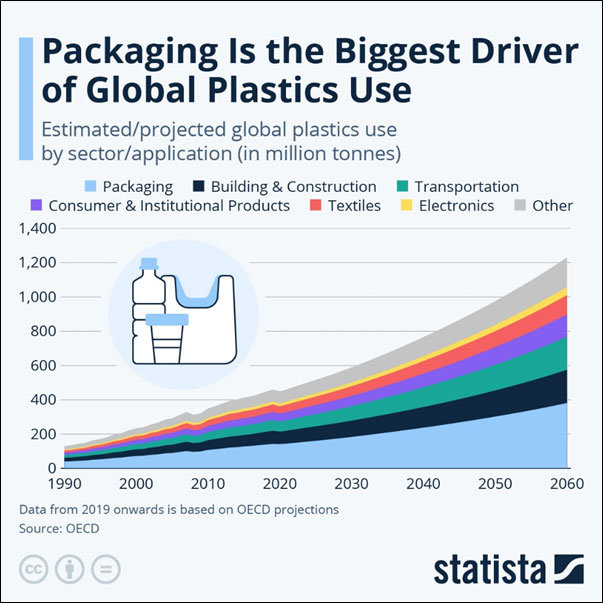
    This chart from Statista based on OECD projections is telling. Packaging will continue to be the biggest cause of plastic pollution, seeing a 67 percent increase in global plastics use by 2040 and a whopping one billion tonnes of plastics being used by 2052.


    While the increased use of plastics in building and construction, transportation and electronics will not be of single-use but for substitution of metals and light-weighting [like in electric vehicles], the increased use in packaging and textiles are criminal.


    And this is where the blatant hypocrisy of some of the world’s biggest brands in talking sustainability while continuing to use plastic in their packaging and all communication applications comes out in the open.


    Just because our rules on the use of plastic are comparatively lenient compared to developed and more socially conscious economies, many brands otherwise espousing the cause of preserving the earth and following the ESG norms, seem to forget their tall claims of greater purpose and refuse to reduce use of plastic.


    All beverage brands offer small servings in plastic bottles. They cannot kid themselves in saying those bottles can be used over and over again. The quality of plastic is such that long-term exposure to the Indian heat anyway is said to make them cancerous.


    Almost every consumer personal care product comes in plastic bottles, wrapped in plastic. While the bottles might last longer than the beverage ones, the wrappers are a sheer waste.


    All automobiles, at time of sale, have their seats wrapped in metres and metres of plastic. The excuse is that Indians do not wish to get their seats dirty hence keep the plastic covers on for a long time.


    Almost all tyres, especially the passenger car ones, come wrapped in plastic, carrying large plastic labels. The excuse given once again is that the consumer wants a clean tyre and the tyre retail environment is typically not very clean.


    We boast of being a 700 million smartphone market, now have many plastic sleeves are chucked as soon as we unbox the phone?


    Almost every consumer durable comes wrapped in sheaths of plastic, ably supported by generous helpings of thermocol or polystyrene. Very few have a policy of encouraging customers to return the plastic packaging, be it a Mother Dairy milk pouch or a Samsung television ‘protective’ cover.


    Fast fashion is another culprit growing like a hydra. An Earth Day report says that people globally buy 60 percent more clothes than 15 years ago but keep them for only half as long as before. More than 85 percent of the disposed garments end up in landfills or incinerators while only 1 percent is recycled. “Thrifting” as a fashion concept applies only to high-end labels and is a fad of the rich.


    One can find rampant use of single-use plastic in almost every consumer product sold in this country, where waste management is an almost non-existent concept and almost all the plastic goes into landfills. Delhi has created three artificial hillocks of plastic waste in Bhalswa, Ghazipur and Okhla giving competition to the country’s oldest one in Deonar in Mumbai. The regular fires that erupt in such places put lives of thousands at risk while gradually reducing that of millions through the poisonous smoke.


    Adding to products either housed in plastic or wrapped in it, is the irresponsible use of plastic flex films for advertising, signage and branding. Just see the millions of billboards sheathed in flex. Just see all the branding at any conference in flex. Just see almost all the retail signage in flex. Just see every cricket stadium holding IPL matches swathed with millions of metres of flex. This is more than being callous. This is being totally insulting of the need to reduce use of plastic and petrochemical products. No use of cotton, jute or hemp here. On the one hand we preach switching to electric vehicles to save fossil fuel while on the other we are absolutely comfortable with ordering flex banners by the thousands for our company promotion.


    Regulations will take time to be in place in our country due to vested interests. We need social activism to call out such hypocrisy. There needs to be an independent rating done of brands across different categories on their use of sustainable packaging and advertising material. Customers need to demand that brand walk the talk on reducing use of plastic as a corporate performance indicator than mere social responsibility lip-service.


    If we, as consumers do not act now, we will be damaging the eco-system of our future generations. As individuals we work for or with some brand on another and each of us should bear the responsibility of working towards lesser plastic, whatever be our function. For the brand marketers, it is time to rise above narrow corporate walls and really work for the greater good of community. You can force your operations into becoming more responsible in the way you pack, ship, display and deliver your products.


    As Pete Seeger once said, “If it can’t be reduced, reused, repaired, rebuilt, refurbished, refinished, resold, recycled or composted, then it should be restricted, redesigned, or removed from production.”


    Avik Chattopadhyay is a Gurugram-based business strategist and commentator. He is currently also working along with XLRI to set up the Indian School for Design of Automobiles. He writes on MxMIndia every other Thursday. His views here are personal.

  • If the Medium is the Message where does the Advertiser’s Responsibility End?

    If the Medium is the Message where does the Advertiser’s Responsibility End?

    Prabhakar MundkurThe Ghatkopar billboard incident that killed many and injured many more has raised many ethical questions about the advertising and media business.


    For many unknown reasons, the outdoor media business has always been known to be of a low moral standard and has once again brought up important questions of ethics in the advertising and media business.


    It is well known that the outdoor business is often part of the intricate web of questionable transactions. Which means if you are an owner of a hoarding in Mumbai, by definition you need to be turn a blind eye to the law.


    If one goes to the Ego Media website what is shocking is to see all the best brands in the country – from Godrej, Tata, Audi, Honda, Britannia, Big Bazaar, Titan and many more.


    Are we saying that some of the best brand names in the country don’t care where their advertising goes and would like to in any way be associated with a company who has shown to have a complete lack of morals and ethics in the business?  I know many advertisers and equally their advertising agencies think that a hoarding is something remote in their outdoor plan.  Beside the top-ranking client wanting his favourite airport hoarding or a hoarding in the centre of the city because s/he lives there, not much importance is perhaps being given to where the advertising finally goes.


    But shouldn’t advertisers care about where their advertising is being placed? Let me give you an example. If your cinema ad was to be tomorrow viewed in a theatre that screens porn films would you want your ad there?  Or if your ad was screened in a theatre known to conduct other illegal activities, would you still want your ad placed in that theare?  If yes, why don’t you care about where your outdoor creative is being placed?


    If so far you have thought that “Oh that is the job of the outdoor owner” you better think again. You are not really distanced from the tragedy that has struck us on the Ghatkopar hoarding.  Now that the real operation of Ego Media has been exposed in the media, I wonder how many advertisers have pulled out all their advertising from Ego Media.


    Or are they waiting thinking that they are actually at arm’s length from the outdoor business?


    There are many parties that are complicit in this act where many people lost their lives.


    The owner of the property, which is the Government Railway Police, Ego Media who actually constructed the hoarding, the BMC for having allowed it (or for giving a stability certificate ) and, yes, the advertiser and his advertising agency are equally complicit. After all, lives have been lost.


    It is time that the advertisers and their media and creative agencies feel equally guilty about the Ghatkopar billboard accident?


    As a nation that is constantly boasting about now crossing Japan’s GDP, we better stop condoning our collective conscience that this is the India we know and nothing can be done about it. Make a trip to Japan to see how strict their laws on construction of any kind are in their cities.


    We proudly say the medium is the message, but do we really care about what the medium is, and how the message is being placed on it.


    I don’t think so!


    Prabhakar Mundkur is a veteran advertising person having led advertising agencies in India and internationally. He is also a prolific writer and commentator. His views here are personal