Category: COLUMNS

  • Air India Maharajah: An Anachronism or Timeless?


    By Prabhakar Mundkur

     

    Prabhakar MundkurThe tirade against the Maharajah is almost as old as that against the airline itself. The Air India top management, the aviation ministry and their new advertising agencies have been wanting to do away with the Maharajah for almost 30 years now. The agency HTA* that created him and nurtured him, even lost the Air India business after handling it for over half a century, maybe because they were the creators of the Maharajah.


    It is really a wonder he has survived this long. He doesn’t look the same, he doesn’t speak the same language that he spoke years ago when I handled the business, he has lost his unique sense of humour and wit, he is completely out of touch with current affairs, in fact he is a mere shadow of his former self and he might as well have been executed than allowed to linger like this on a ventilator. He was born on the corner of a letterhead, and he has gone back to being there, making me wonder if he might also be buried there.
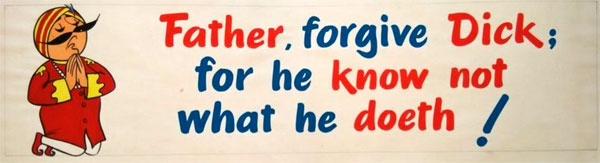
     

    On Richard Nixon during Watergate


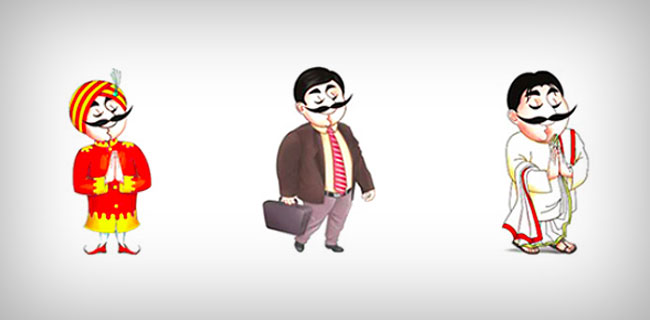
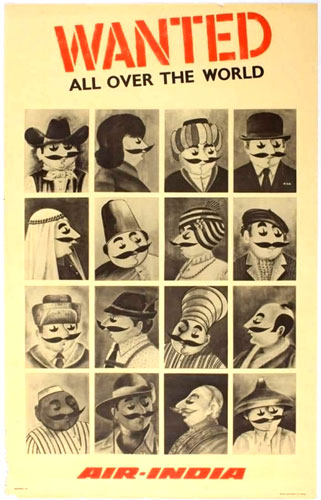
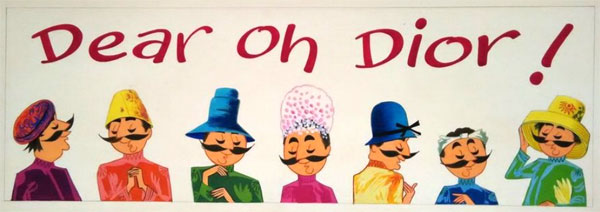
    Most people who have this point of view don’t understand that he is not just a Maharajah. He is a mascot who embodies the soul of Air India. Only his garb is that of an Indian prince. When he was conceived, he was meant to stand for everything that Air India stood for. Just like well-travelled Indian royalty that could speak authoritatively to both India and the world. Also, the Maharajah was not just the Maharajah. He took many shapes and forms disguised for the country he was meant to represent.
     

    Sawant, one of the Creative Directors at HTA who could draw the Maharajah in 15 seconds. was so inspiring that HTA once created a film, by making Sawant draw the Maharajah in real time, with a camera following his talented hands.


    K ‘Bobby’ Kooka, the Commercial Director of Air India, is once known to have said: “We call him a Maharajah for want of a better description. But his blood isn’t blue. He may look like royalty, but he isn’t royal.” Famous for having conceived the Maharajah along with Umesh Murdeshwar Rao of JWT in 1946, the Maharajah is one of the oldest mascots in the world. Kooka was later Chairman of Hindustan Thomspon Associates*) and watched the Maharajah and Air India advertising grow in stature and popularity.


    Ivan Arthur, earlier National Creative Director of JWT, and now educator and author, when asked about the Air India advertising, said: “Conceived as a letterhead design, the Maharajah broke the fetters of the line drawing and became flesh with a personality and DNA of his own: the double helix of gracious exotica. That DNA did not permit him to stand in the street corners of conventional media and tout his destinations like a cheap ticket salesman. His famous romps on those hoardings were not advertising. They were non-advertising: parlour talk, one-liner points of view, camaraderie, provocation and good humour, all of which did not ask you to buy an Air India ticket. In fact, in many of the hoardings, he refused to have the Air India logo as sign-off. He was the sign-off. He was no commercial mascot. He became a national figure. Much loved and respected.


    The Maharajah dies a 100 deaths
     

    Come the ’80s, however, frequent changes to the Chairman of Air India position resulted in the Maharajah dying a 100 deaths. Air India chiefs were keen to kill the Maharajah in lieu of something new and more contemporary. One such case was when in the late ’80s one Air India chief hired Landor, the well-known design firm, to redesign the logo of Air India in 1989. An airline identity change is one of the most expensive identity changes for any industry because it involves repainting all the aircraft, the livery, the ground vehicles and every signage in every country. But Air India went through all that bravely, eager to dump both the Centaur, which was their logo for the longest time and the Maharajah who was accused of not being in tune with the times. Rajan Jetley, then Managing Director of Air India, had said in defence of the new logo: “It is a public statement of change and a product exercise in the classic marketing sense.”

     

    Air India’s new identity created by Landor


    This was painted on the tail of the aircraft and the Boeing 747 Rajendra Chola became the first aircraft to carry the new logo and the livery. This facelift is known to have cost Air India $35 million back in 1989. But the public started questioning the change, immediately missing their familiar brand Air India. Questions were also raised in Parliament about the change of identity. But in spite of the identity change, the Maharajah seemed reluctant to leave the brand and its advertising. For every one person who didn’t want him, there was a loyal fan who wanted him back.
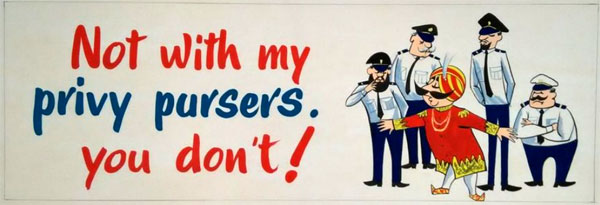
     

    Abolition of privy purses 1971


    Changing a brand’s identity is not an easy task. It is easy to say the Maharajah is an anachronism for those who don’t understand the Maharajah and the brand. Colonel Sanders who died in 1980 is still a part of the KFC logo. The Marlboro cowboy first made his appearance in 1954 while the cowboy era ended in 1885 at the end of the American Civil Revolution. They are not anachronisms. They are timeless just like the Maharajah. As Piyush Pandey, Chairman of Ogilvy is known to have said to Economic Times last week: “The Air India Maharaja stands for India. For any brand, any mascot, any logo, any identity is as meaningful as what they do with it.”


    With the Air India brand firmly with the Tatas, one wonders what the future of the Maharajah might be? Considering that the Maharajah is a crucial part of Air India’s brand equity and having worked on the brand, I can only hope that he will be re-incarnated.


    *now Wunderman Thompson
  • Coke’s ‘Real Magic’ casts a new spell!


    By Prabhakar Mundkur


    Prabhakar MundkurCoke and Pepsi have been at it for half a century, trying to outsmart each other both for marketing share and advertising that makes the brand relevant to the youth. Real Magic, the new commercial by Coke, I think has taken a giant leap and  does manage to outsmart Pepsi.


    Firstly, it is rooted in Gen Z passions by basing the idea on gaming. The gaming market is expected to reach USD 398,950 million by 2026 growing at an annual rate of 11%.  Secondly, the Coke commercial is based on a philosophy that makes more sense than ever before.


    Says Manolo Arroyo, marketing lead at Coca-Cola: “The ‘Real Magic’ philosophy is rooted in the belief that dichotomies can make the world a more interesting place-a world of extraordinary people, unexpected opportunities and wonderful moments.”  The philosophy itself is not new – the hippie revolution believed in this more than anyone else right since the 60s.  The world is growing more apart as we celebrate our differences rather than our similarities. The real idea behind the wave of globalisation was to embrace our dichotomies.


    ” ‘Real Magic’ is not simply a tagline or a one-off campaign,” says Arroyo. “It is a long-term brand philosophy and belief that will drive and guide marketing and communications across the Coca-Cola trademark.” Maybe it was about time for Coke to try something new given its sluggish sales in the recent past.  Real Magic then succeeds ‘ Taste the feeling’ which was first introduced in 2016. BETC London, along with director Daniel Wolfe made the film.


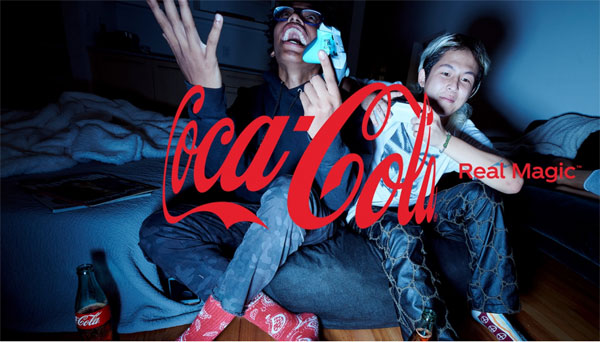
    The campaign also uses the Coca-Cola logo to wrap around the campaign images.  I thought this was a pretty unique treatment of the logo given that the curvature of the Coke bottle or can always makes the logo seen this way.


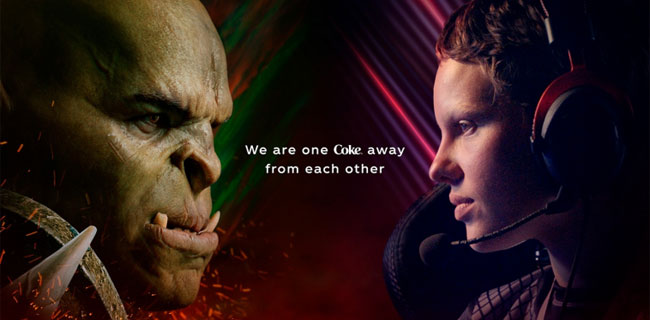
    Also the tagline ‘We are one Coke away from each other’ is reminiscent of the six degrees of separation theory first propounded in 1929 which said that we are on an average six or fewer social connections away from each other. With the expansion of the internet and social media to cover people around the world has often meant that we might very often be just one connection away from each other.  Or one coke away from each other.  Clever!


    The commercial shows a World of Warcraft type of battle in progress until one of the contestants opens a can of Coke. After the contestants first sip, Orc in the game is overcome with feeling and throws away his battle axe, picks up his opponent and there is suddenly peace in the gaming universe. A metaphor for World Peace?


    There is a lesson to be learnt here for the world. After all we if we all threw out our weapons nuclear or otherwise, one of the principles of nuclear disarmament, we might be all less threatening to each other.


    Having grown up as a teenager in the 60s, all these little nuggets of philosophy make great sense to me, although it is supposed to appeal to Gen Z.  And if Gen Z does think like this maybe we can hope for World Peace as eulogised by John Lennon in his immortal song Imagine!


  • By Invitation | Prabhakar Mundkur: Rediffusion – Never too late?

    Prabhakar MundkurBy Prabhakar Mundkur


    “Tomorrow is nothing, today is too late, the good lived yesterday”.


     Marcus Aurelius


    Rediffusion has come a long way since WPP’s Martin Sorrell made a bid to up his 26.7% stake in the agency in the early millennium, which had a tripartite shareholding of WPP, Dentsu (13.3%) and 60% owned by Dewan Arun Nanda and Ajit Balakrishnan.  The two international shareholders holding 40% were strange bedfellows making the once highly regarded agency a bit of an oddity.   The agency touted some of the industry’s best people once upon a time including the late Dr Ashok Bjiapurkar and Kamlesh Pandey who later moved on to script writing in Bollywood. Not to mention many other well-known names like V Shantakumar. Why, even Mohammed Khan was one of the original founders before he went on to start Enterprise.


    Like many agencies of its ilk, it kept attracting back some its best names in some consultative capacity or the other.  Mr Nanda is known to have had good ties with most of the people who worked for him and that could be the reason.


    According to the grapevine those days, Nanda might have paid dearly for refusing Sorrell’s offer to increase his stake in the early millennium.  Sorrell was known to be very clear in the ownership patterns of his acquisitions. He always wanted a clear majority and typically the starting point would be at least 51% share before engulfing most of the remaining stake in the shortest period of time.  People those days spoke in hushed whispers that Sorrell had threatened that if he couldn’t increase his stake in the agency, he would pull out its largest piece of business which at that time was Colgate, being a global Y&R account and terminate the Y&R partnership with Rediffusion. Moving global accounts to another agency is not a piece of cake, but Sorrell finally seems to have carried out his threat by moving Colgate to Bates 141, which created a special unit to handle the account, reporting directly to the Y&R global management. This gave credence to what thus far was attributed to agency gossip.


    Team Colgate was a typical WPP style business unit that that had become Sorrell’s favourite model, a prime example being GTB for Ford.  This ensured that Sorrell had direct control over some of the most important global accounts in the group.  There is a bit of history there, since the agency heads of individual accounts can become quite powerful with time. A great example was Peter Schweitzer at JWT, who by heading the Ford account which once upon a time contributed to almost 25% of JWT’s global revenue, grew too powerful for Sorrell’s liking. When Schweitzer retired as CEO, Sorrell quickly moved Ford from JWT into WPP’s special unit called GTB thereby retaining direct control over this large piece of business.


    When Colgate left Rediffusion, it was a telling blow.  Losing large accounts didn’t faze Rediffusion. They had lost Airtel in the first decade of the millennium. And after Colgate they it lost the Tata Sons PR business which was placed in their partnership with Edelman to Adfactors.


    In the M&A business, timing is critical. Both for the buyer and the seller. Rediffusion no doubt was well past its best valuation having waited too long for someone to come along.  But the ego and the resilience of the founders kept it plodding along.  What has Sandeep Goyal really bought into, one is not quite sure. The press release talks of its past glory rather than anything else clearly making it a ‘has been’.


    So it would be interesting to speculate on what Goyal would do with the agency he has bought.  He would necessarily have to fill the shell with some meat. If one goes by his earlier reputation, he is known to walk into agency pitches with a bag full of advertising campaigns, something that used to shock advertising professionals 20 years ago because it painted a picture of the ‘servile’ model for advertising.  Servility in the advertising business has peaked since then and also contributed to its downfall.


    The industry did little to continue the legacy of equal partnership and mutual respect with clients.  It needs to be seen however whether the same tactic will work today.  His long-term gameplan of course would be to dress up the bride.  For this, he would need to build adequate value in Rediffusion to attract a global agency for an acquisition.  Of course he can hardly be underestimated. His aggressive business stance is well-known.  As is his passion for hard work, and particularly his extreme dismay at losing.


    But it may take a while for the once famous agency of yore to re-acquire its earlier halo!  For Rediffusion, Sandeep Goyal might well be its Angel Gabriel, the Arch Angel of Resurrection, the Voice of God and the Bringer of good news.


    Prabhakar Mundkur is a veteran advertising person, a former agency CEO – in India and elsewhere in the world, a musician, a music producer, a talkshow host, a prolific commentator and a great conversationalist with an infectious laugh. His views here are personal.


  • Cadbury ad. Overdependent on Nostalgia?


    By Prabhakar Mundkur [updated]


    Prabhakar MundkurAs I write this, I am sure the latest Cadbury’s ad has already gone viral if that is a measure of its success. The latest message I got on WhatsApp went like this:


    “In 1994, Ogilvy India made an ad for Cadbury Dairy Milk.

    In 2021, Ogilvy India made the same ad for Cadbury Dairy Milk, with a difference.

    Check both out!!!”


    The praise showered on it has had no bounds over the last two days.  One of the comments went like this: “It’s a follow-up to the ad the great Piyush Pandey wrote in 1994 which catapulted him to advertising fame.”  No doubt Piyush is a shining star in the advertising firmament, but I am not sure this criterion can be used to judge an ad, both by commoners or 50-year-old advertising executives. I never thought of an ad as great only because David Droga or Bruno Bertelli wrote it. In any case, I am getting used to the hysteria and adulation India accords its heroes. Just yesterday, we saw a union minister likening our Prime Minister to God.  And later, the Prime Minister’s Report Card handle on Facebook posted the Cadbury ad, giving it record likes and shares. God himself then has endorsed this ad.  So, who am I, a mere mortal to even start evaluating it?


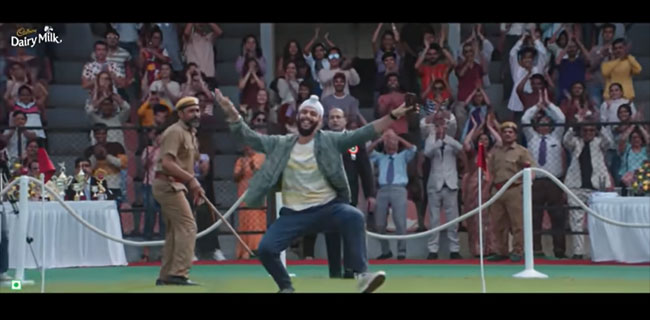
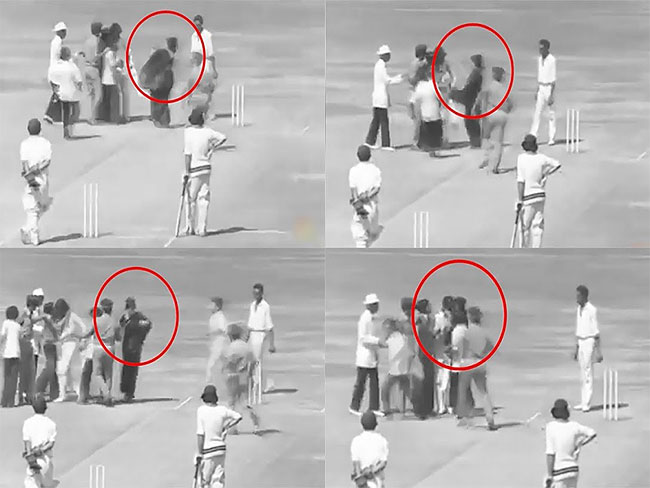
    I must admit I am an aberration of the Indian consumer because I spent the better part of the 90s working overseas and could not use the 1994 ad as a reference. It seemed like just another cricket ad to me, or simply put just a typical scene from Indian cricket which we have seen repeatedly, for much longer than the Cadbury ad. After all, didn’t a woman do the same thing to Brijesh Patel when he scored a century in 1975?  She went past the security (India’s disrespect for the law is legendary), right until the pitch and then planted a kiss on Brijesh’s cheek. I know cricket is a hot button in this country, but the 99 runs on the scoreboard with a sixer coming up is both a bit trite and hackneyed.


    Which brings me back to one basic question: if this ad was trying to capitalise on nostalgia marketing, was it aimed at people who were over 50 years old? We don’t know Cadbury’s strategy, but it could well be that they no longer wanted their brand to be seen as a young person’s brand. If the target audience were expected to have seen the ad in 1994, it does mean that this ad is talking to people who are in the age group of 40-50 years at least or even more.


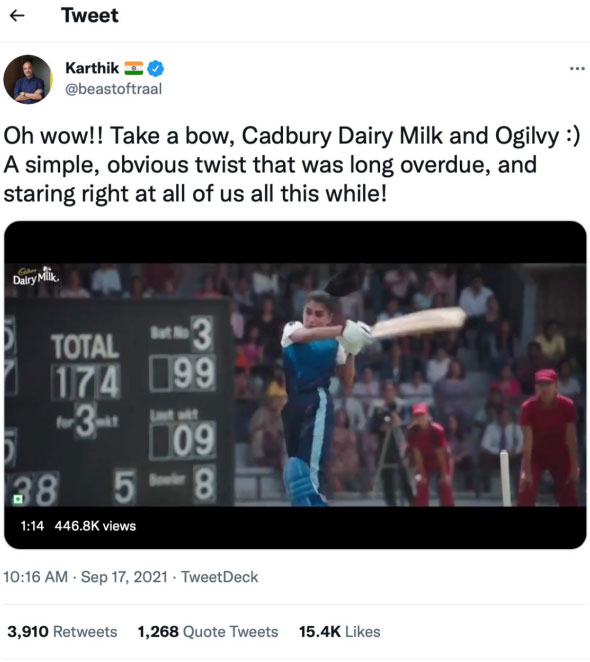
    Of course, while arguing my way through the merits and demerits of the ad, many people stoutly defended the ad saying that it was brilliant, even as a standalone, and even if people had not watched the 1994 version. Maybe, but I would imagine that the people who had seen the 1994 ad would rate it 5x times better than the people who hadn’t seen the 1994 ad. People who first posted the ad on social media were mostly older, but the overall hype was so overcoming that I believe the youth had taken to sharing the ad later, on Instagram. Take this tweet for example which got a rousing response. I don’t know Karthik personally, but I am willing to wager that he is at least 40 years old to have seen and remembered the 1994 ad.


    But somehow the Cadbury ad seems to have touched a chord and has got accolades for showing a woman in the lead role. Many people have commented that this was a long time coming. Of course, any ad like Cadbury’s is a welcome addition to the tirade against gender discrimination. India for centuries has discriminated against women, and there is still scope to do much more. India ranked 131 in the 189-country survey on the Gender Development Index. So, any commercial or full-length movie that goes towards portraying the importance of women is welcome because it can help to change the status quo. I see advertising and cinema as important influencers in pushing the envelope for social change.


    Oscar Wilde in his 1889 essay ‘Decay of Lying’ posed the rhetorical question, whether Art imitates Life or Life imitates Art. I firmly believe that Art must do its bit to change society so that Life can start to imitate Art. The Cadbury ad from that point of view is a step in the right direction.


    Except that as I said earlier, the Brijesh Patel incident also raises the question if this is Art Imitating Life?  It could well be!


    Oscar Wilde was right in posing this queer and difficult paradox.


    Prabhakar Mundkur is a former advertising agency captain and has spent over four decades in marketing services across geographies. He is a prolific writer and was a few years back rated as among the top voices by LinkedIn. Other than advertising and writing, Prabs, as he is known to friends, is a very active musician and a self-taught producer of music. In the pandemic, he has performed and produced nearly 50 songs, including one with the very accomplished Usha Uthup. Mundkur’s views here are personal.


  • It’s Mera Bharat Mahaan for Micromax


    By Prabhakar Mundkur


    In light of the Tanishq controversy, the new Micromax commercial provides an interesting counterpoint.


    The larger  truth that I am missing in all the marketing discussions on Tanishq is that ‘brand purpose’ came about because Millennials and Gen X in the West were looking for authenticity, honesty and purpose in brands.  In other words, they were looking for brands to mirror their own feelings and their higher purpose.  And this higher purpose took the form of say ‘Real Beauty’ for Dove as a proof of authenticity or the higher purpose took on a higher social responsibility to support some cause: sexism, racism (for us it is casteism), climate change, sustainability, poverty, domestic abuse, climate change and a host of other causes.


    I don’t know if the big brands have done a study of what this greater social responsibility might mean for Millennials and Gen X in India. I don’t think it is any of those that I mentioned for the Western audiences above.


    But the important point here is a that it is not marketing directors who sit in their ivory tower offices and determine brand purpose or the language a brand speaks. For brand purpose to be real, it must coincide with the people’s aspirations. Just as an example if the higher purpose of our targets in the country is to prevent “love-jihad” they may want to see brands that reflect that higher purpose. And Tanishq’s higher purpose was at odds with the higher purpose of a section of the public that engaged in the destruction of their commercial.


    After all, brands are not allowed to have a purpose that excludes the people it is talking to unless it wants to be altruistic or idealistic, which I am sure is not what Tanishq wants to be.


    Moving on, I found a useful counterpoint in this Micromax commercial.


    https://m.youtube.com/watch?v=aRo69b1wTNg


    The commercial essentially announces that they are back in the game after having taken a beating at the hands of the several Chinese mobile handsets in the market.


    In its ‘come back’ commercial appropriately titled ‘Micromax is Back’, the brand touches all the hot spots of the new Indian. Look at the various subtle inflections.  The story of an Indian entrepreneur who came from the ‘gullys’  of middle class India after borrowing Rs 3 lakh from his father.  A brand that was the No 1 brand in India and in the top ten brands in the world.  Stirring the new sense of ‘nationalism’ in the Indian.


    Then look at the skillful way in which the brand provokes anger against China by saying he was put down by Chinese brands. And that too in his own country? Oh, the injustice of it all!


    Then invoking the border conflict with China, invoking the Prime Minister were all briiliant strokes in a campaign that reeks of Made in India.  And to cap it all the new series being marketed by the marketers is ‘IN’. Another stroke of brilliance to use the first two letters of the country name. What could be more Indian, more desi that?


    Now go back to the Tanishq commercial and think for yourself whether it invoked the right feelings in the target audience. Or did it provoke mob anger by touching on a raw nerve that people are most sensitive about.


    For me this is a case study that brands cannot speak a language that does not strike the right chords among the people. Brands can’t hold beliefs that are in insolation without consulting the people they are talking to. Brands need the permission of the people before they speak.


    We have a choice now.  Either conform to the feelings of the new India that has been emerging for the last six years or continue to live in the past.


    Lofty ideals for brands must be examined in the light of the current mood of the nation.


    Prabhakar Mundkur is a veteran advertising professional and commentator. And also a musician. He has worked across geographies. His views here are personal


  • Prabhakar Mundkur: While the world is rising for unity, are we digressing?

    By Prabhakar Mundkur


    2020 is a year of huge upheavals not only because of Covid, but because of the huge social uprisings for unity.


    The killing of George Floyd, a 46-year-old black man in Minneapolis, by the police sent a sweeping shock wave of social change the world over.


    Racism of any kind just went out of the window this year. And the impact on brands was tremendous. Almost every brand worth its salt pledged to be fair and non- discriminatory. Brands asked people to stand against racism. Even the stoic Hindustan Unilever joined the tirade against discrimination of any kind when it decided to change the name of one its most profitable brands in country Fair & Lovely to Glow and Lovely. Such were the sweeping forces of an unprejudiced world. I sometimes wonder if Covid might have helped because it didn’t discriminate either between rich and poor, black and white or rich and poor.


    So, when Tanishq one of India’s favourite brands put out a commercial about the unity between two religions the uprising on Twitter felt unfair and the height of discrimination. After all India has been a pot pourri of various races and religions for centuries.


    https://twitter.com/beastoftraal/status/1315848777123598337?s=20

    Tanishq has pulled the creative off YouTube. The ad can be viewed here on a tweet by @bestoftraal – Ed


    Another common practice has always been to celebrate each other’s festivals and cultural practices. After all who can but help to eat biryani at Id, order a Sadya menu for Onam, or offer tilgul for Makar Sakranti. Somehow India has grown up celebrating every festival irrespective of which state, language or community it belonged to. Following this pattern, the commercial shows the mutual respect for each other’s customs.


    So, the outrage on Twitter seemed a little misplaced. Unless it was not representative of the feelings of the population at large.


    Should brands give in?


    I think when brands have done no wrong they should stick to their guns. And not get cowed down the mass hysteria on Twitter? Why do Twitter mobs behave in such extreme ways? Mob anger can be strange, pathological and monstrous. Behaviour of a larger group is known to have a big influence on individual behaviours and have been an area of interest in social psychology for years. Psychologists have found that group behaviour tends to be more extreme and amplifies the typical behaviour of its individual members. Mobs are known for losing their self-awareness. Sociologists refer to the process as de-individuation where individual personalities become dominated by the collective mindset of the crowd. Gustave Le Bon an early explorer of this phenomenon viewed crowd behaviour as “unanimous, emotional, and intellectually weak”.  The other reason is that twitter anger dies down as quickly as it is ignited. The half-life of a tweet ( average lifespan ) is 24 minutes or thereabouts.


    So, a kneejerk reaction to take your commercial off the air might well be unfounded.


    What else can brands do?


    Companies need to figure out strategies for dealing with social media manipulation with respect to their ads. After all a pattern seems to have been established of cyber bullying to pull out movies and ads.


    It can’t be difficult to gauge the reaction to your ads. Research should warn you about cultural inflections, and if there is an ad that has even a small probability of inciting twitter mob anger it might be better to go in well prepared. If social media and twitter can be manipulated by politicians and religious groups can’t they be manipulated equally by the biggest and best marketers in the country?


    Maybe we are seeing the dawn of a new era. Where brands can use their marketing power to do what politics and the law can’t do. Right the wrong. Tell television channels to stop doling out trash to the public. Tell Twitter mobs to shut up. Hail brand power! We might well be at the edge of a new era in marketing!


    Prabhakar Mundkur is a veteran advertising professional and has led agencies in various geographies, including India. He is a prolific writer and also a prolific musician. He comments frequently on MxMIndia, as on LinkedIn and other platforms. His views here are personal

  • The Unfairness of It All


    By Prabhakar Mundkur


    When Hindustan Unilever announced its decision to rename its moneyspinner $500 million brand Fair & Lovely to Glow & Lovely, it was a classic case of doing too little too late.


    To imagine that the decision was perhaps based on the greatest upheaval of racist stereotyping of our time with the excruciating George Floyd pinned to the ground doesn’t say much for Hindustan Unilever’s decision. There is nothing to congratulate them about.  There can be no appeasement of public emotion. There can only be guilt and shame.


    Activists through the decades have objected to Unilever’s fairness cream but it needed a revolt as ugly as George Floyd’s death, for the great marketer to make this small move.  Not since Rosa Parks was denied a seat on a bus in Montgomery has the world been so affected by the colour bias of the human race.


    But how good is the new name Glow & Lovely? Decades of skin care research has shown that ‘Glow’ is a major benefit in for the skin care regimen. Just like ‘Shine’ is. a major benefit for hair. So, taking a benefit from research and planting it in a brand name is perhaps not the most creative way of configuring brand names. But then Unilever has not been particularly known for its creativity. That lesser brands like Emami had already pre-empted this thinking by naming their brands Glow & Handsome is a bit of a shame. After all, one expects leaders to show the way. Not follow in the footsteps of their smaller competitor in the FMCG business.


    But is Glow and Lovely a good name?


     There is a reason why Glow and Lovely doesn’t sound right given the vagaries of the English Language. The reason why it doesn’t roll of the tongue as easily as Fair and Lovely has to do with the English language. Both Fair and Lovely are adjectives. Glow on the other hand is either a verb or a noun depending on how you use it. Glowing & Beautiful would have sounded better in English. Because Glowing is an adjective. But it then lengthens the brand name. And Unilever might have decided they would stay close to the current syntax. Anyway to the large majority of Indians it would hardly matter. It’s just another name for Fair & Lovely. Fair and Glow are both four-letter words. But how the name changes the advertising need to be seen. Will the new ads have dark and glowing faces to make amends with the brand’s past? That is anybody’s guess.


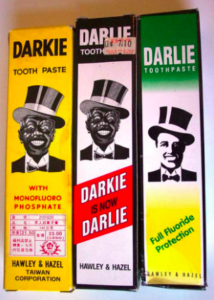
    How Darkie changed its name


    It may interest people to know that the exact opposite of Fair & Lovely existed as a toothpaste in Asia many decades ago. A toothpaste called Darkie. Produced by Hawley and Hazel, the brand was very popular in Asia. The pack showed a smiling black performer. The brand was then acquired by Colgate Palmolive which faced a lot of racist flak on the brand. In 1989, Colgate Palmolive decided to change the brand name to Darlie.

     

    “It’s just plain wrong,” Reuben Mark, chairman and chief executive of Colgate-Palmolive, said about the toothpaste’s name and logotype. “It’s just offensive. The morally right thing dictated that we must change. What we have to do is find a way to change that is least damaging to the economic interests of our partners.”


    Seems like a shame that another global company had thought about this so deeply more than 30 years ago. So Unilever in many way is 30 years too late.


     What will posterity say about Fair & Lovely?


     But what this would mean for the generations to come is anybody’s guess.  Will Generation Alpha which may use the brand a few years from now warm up to the brand given its history? (Generation Alpha is the demographic cohort succeeding Generation Z. Researchers and popular media use the early 2010s as the starting birth years and the mid-2020s as the ending birth years.)


    How will these young people see our racist past? One piece of research showed that Generation Z are as racist as their millennial parents. But will this continue on to Generation Alpha? Technology is likely to change a lot of mindsets in the future. And that may change the fortune of the brand called Glow & Lovely.


    Prabhakar Mundkur is an advertising veteran, a lateral thinker, storyteller and musician. He has spent several years in advertising – in India and elsewhere in the world – including at JWT China where he headed the Unilever business, amongst other functions. In fact he worked on Unilever brands for a good 17 years… though never on F&S ;-). A prolific writer now, he was LinkedIn’s #1 Top Voice for 2016 and YourStory’s 100 Emerging Voices 2018. He writes frequently on MxMIndia.

  • Virtual Influencers: Hit or Miss?

    Virtual Influencers: Hit or Miss?

    Kunal SinhaIf you looked at recent CMO surveys and panel discussions lately, artificial intelligence (AI) and influencer marketing are on top of the agenda. 81% of US marketers say that influencer marketers is an essential part of their social media strategy; 77% of Indian marketers are confident in their agency’s capability to effectively manage influencer campaigns[1]. At the same time, 81% marketers say that AI has had a positive impact on their work[2]; and over three quarters of Indian marketers (78%) say they are ready to embrace AI[3].

    What happens when you combine the two? We get virtual influencers. Even though human influencers still vastly outnumber virtual influencers, the latter have caught the fancy of marketers and agencies and are becoming increasingly common.

    52% of U.S. social media users already follow a virtual influencer, and that percentage is higher in India at 58%[4].

    Global brands including Prada, Cartier, Disney, Puma, Nike, and Tiffany use virtual influencers to promote their products.

    Lil Miquela is a pioneer in the virtual influencer space. Describing herself as a 19-year-old robot living in LA, she has 2.6 million followers on Instagram https://www.instagram.com/lilmiquela/?hl=en

    and 3.5 million followers on TikTok https://www.tiktok.com/@lilmiquela?lang=en

    Managed by creative agency Brud, she has featured in brand partnerships with Prada, Calvin Klein and BMW, earning a spot on TIME magazine list of 25 Most Influential People on the Internet.

    Fashion brand Myntra created the virtual influencer Maya, incorporated her into the studio section of the Myntra app, where she doles out fashion advice apart from advocating mental health, inclusivity and body positivity. ‘Based out of Bangalore, and a student’, she has a follower base of 178K already, and endorses brands like L’Oreal.

    https://www.instagram.com/maya_unlimited/?hl=en

    Kyra or Kyraonig was created by Himanshu Goel, launched in Jan 2022, and enjoys a following of 243000 on Instagram https://www.instagram.com/kyraonig/?hl=en.

    She has has been prominent in the music and entertainment industries, endorsing various brands such as Amazon Prime Video, boat, MG, Titan EyeX and John Jacobs.

    Within two years, it is expected that  marketers will dedicate 30% of their celebrity and influencer marketing spends to virtual influencers[5].

    What should they keep in mind, as they embrace this opportunity?


    Virtual influencers give you control over content

    Brands that want to get across a certain message or have a specific point to make through their influencer partnership have a higher level of control over content with virtual influencers. Being able to control what an influencer posts can be appealing to some brands with a very specific message to share.

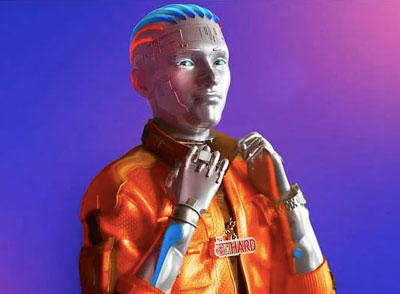
    Youth entertainment channel MTV collaborated with DDB Mudra to develop India’s first virtual rapper ‘BotHard’ to draw attention to its property, MTV Hustle 2.0. The bot was brought to life with the GPT3 platform and was specially trained to find rhyme structures of popular rappers. This collaboration inspired the creation of over 350,000 rap videos, with the show racking up 2 billion views across social platforms. This represented a nine-fold growth over the previous season. By creating a virtual influencer in-house provided the brand with greater control, agility, intellectual property ownership, and brand differentiation.


    Adaptability

    Virtual influencers don’t age, can speak multiple languages and can be made to travel to any place. This level of adaptability and flexibility allows brands to potentially use one virtual influencer for campaigns in different regions instead of identifying and engaging different influencers in various markets.

    British fashion house Ralph & Russo, successfully used a virtual influencer to launch its 2020–2021 couture collection. The company designed Hauli, a tall Black virtual model. Her name was derived from the Swahili words for strength and power.


    The campaign featured her posing at the Taj Mahal, the Great Wall of China, and other wonders of the world, location where conducting a photo shoot with a human influencer would be difficult (and expensive). The combination of an African influencer and a global context contributed massively to the campaign’s success. The promotion achieved 19.4 million views worldwide, with the brand estimating the value of the media exposure at $65.1 million.


    Brand safety and reputation

    While virtual influencers may seem to be a safer bet than real-life influencers, they’re not completely immune to controversy.

    Humans don’t fully understand how these systems work or make decisions, which poses a huge challenge for marketers and agencies. In the absence of clarity, is difficult for brands to predict how these virtual influencers might be accepted. Granted AI’s cool factor, marketers should be careful about diving in headfirst to avoid unfavourable PR.

    Earlier this year, automaker Mahindra launched an AI-generated influencer named Ava, which was designed to showcase the team’s journey in the ABB FIA Formula E World Championship, and towards a more sustainable future for the planet. Mahindra’s team used GenAI tools like Midjourney and Leonardo AI to create its new ambassador, saying ‘Having Ava, an influencer that is strongly associated with us and documents our journey, but with a broader appeal to help promote our core values as an organisation, is a project we’re hugely excited about.’

    Eva’s Instagram account @avabeyondreality described itself as a “Sustainable Tech Queen & Racing Rebel Robot”, with the goal of fueling inclusion through AI innovation. It documented the virtual influencer’s life through 11 posts, the first of which dated back to 8 December 2023.

    The launch of Eva was met with backlash from fans and media alike on social media. Many argued that the team should have hired a human ambassador rather than a virtual influencer.  Devin Altieri, a PR consultant in motorsport, wrote on X:  “Mahindra creating an AI team ambassador that is a woman instead of simply hiring one real, actual woman to fill that role is so incredibly messed up”. Alanis King, an auto journalist added: “I’m not an AI expert, but everything I see is about enormous energy use. Isn’t it weird to call this a ‘Sustainable Tech Champ’?”

    Faced with such strongly negative response, particularly from experts, Mahindra abandoned the project and deleted Eva’s Instagram account.


    Fuel fans and consumers’ desire for novelty.

    With some brand ambassadors and influencers, some brands find value in stability and longevity. We know how Tiger Woods’s association with Nike lasted 27 years.

    On social media era, on the other hand, many consumers crave something new and different, and find brands that rely on familiar celebrities as stale or uninteresting.

    As they scroll social media quickly, it requires something unusual to make them pause.

    Research shows that one reason consumers follow virtual influencers is that they are unexpected and previously unknown. Although betting on a virtual influencer may require a leap of faith, marketers should realize that human influencers may be perceived as overexposed or past their prime.

    Traditional influencer marketing can be expensive, particularly when collaborating with celebrities or industry experts. On the other hand, virtual influencers are a cost-efficient and scalable option, requiring less time and resources. While the initial investment in creating a virtual influencer can be significant, the long-term benefits far surpass the costs.


    Kunal Sinha is a senior strategy and foresights executive based in Jakarta, Indonesia. He is the author of several books including The Future of India’s Rural Markets and Raw – Pervasive Creativity in Asia. He writes for MxMIndia every other Monday. His views here are personal.

    ________

    [1] https://www.ey.com/en_in/media-entertainment/how-influencer-marketing-is-impacting-brands-in-india

    [2] https://sproutsocial.com/insights/index/

    [3] https://www.campaignasia.com/article/47-marketers-in-india-believe-ai-will-make-them-more-productive-linkedin-report/491903

    [4] Influencer Marketing Factory Report

    [5] Gartner global forecast, 2024

  • Copyright in AI-Generated Content: Originality, Creativity, and Human Origin

    Copyright in AI-Generated Content: Originality, Creativity, and Human Origin

    Sanjeev KotnalaThe excitement around AI-generated content is palpable. AI promises to fulfil a wide range of creative and functional needs quickly and efficiently. It can write books, blogs, and articles, design advertisements, create social media posts, develop visuals, and more. However, the surge in AI-generated content raises questions about originality and copyright protection for commercialising the content.


    Sourcing v/s Plagiarism

    Based on human prompts, AI generates content by accessing a vast repository of digital material and synthesising it into new works. This process often involves repurposing existing material, raising concerns about plagiarism. The AI doesn’t create original content; instead, it reconfigures what already exists, often from sources with copyright protections — something human creators are not allowed or expected to do. Genuinely speaking, it is a new form of an old problem- plagiarism.

    Before you point out, let me say that many human creators do the same! For example, I accessed many articles for this column, assimilated my thoughts, and then presented my point of view. So, what’s wrong if AI does the same? The AI does not superimpose its thoughts and thinking while recreating- recrafting what it proposes.


    Shaky on Copyright

    Copyright protection hinges on three main criteria: originality, a tangible medium, and human authorship. While AI-generated content might meet the requirement of being in a tangible medium, it falters on the other two fronts. AI content lacks originality since it is derived from existing works. Remember, the test of originality looks at substantial similarities and not differences. And it definitely fails the test of human authorship as algorithms, not humans, generate it.

    Unless the rules are changed- the AI-generated material cannot be commercially protected, which may be why most Generative AI programs promise the user the freedom to use or say they own the content!  However, if you were to try copyrighting it- you would be disappointed.


    The Debate on AI vs Copyright Continues

    The debate around AI and copyright is ongoing and complex. Some argue that traditional notions of copyright are becoming obsolete in a rapidly evolving digital landscape. Others believe in democratising content and universal ownership, valuing productivity and accessibility over strict copyright enforcement. You can ignore this debate if you feel the same way.

    It’s important to note that the debate on AI Content Copyright and the rules to harness AI capabilities within a safety net of universally accepted guidelines are ongoing and of significant relevance. This is a topic that we will be actively discussing and trying to resolve for some time.


    Case for a Disclaimer

    To maintain transparency, content creators should disclose the use of AI in their work. This would help differentiate between predominantly AI-generated content and content primarily created by humans with some AI assistance.

    Some digital content creators do mention if AI was used in content development. It may not be a case like the News and Advertorial, but the audience has the right to know. What do you think?


    Humanising AI Content

    Many creators use AI for initial content generation but rely on human creativity to edit and refine the final product. This practice, while common, does not solve the issue of originality since the AI’s role in content creation remains significant. Do not consider it a possible escape route to claim the originality of content. It would not pass the test.


    Individual Point of View

    Opinions on AI-generated content vary widely. The lack of consensus on copyright and commercial protection for such content leaves many questions unanswered. The debate will continue until the lawmakers and stakeholders work towards a shared understanding and framework- which is not expected soon.

    Possible solutions include stricter regulations on using copyrighted material in AI training, more explicit guidelines on the attribution of authorship in AI-generated content, and the development of AI-specific copyright laws.

    Many question the futility of such a debate. They question if it matters when the content is relevant, impactful, and to the brief. Is there a problem if no one objects and claims copyright?


    Net-net: AI Is trained on Pre-Existing Content

    AI training involves using pre-existing, often copyrighted content without explicit permissions or commercial transactions. This practice can lead to a homogenisation of creative works, potentially stifling originality and creativity in the long run.

    Many global and national content creators refuse AI permission to access their content for training. Is that a step in the right direction?

    Or would you want to access AI and check the politically correct stance and response?


    DISCLAIMER. This article first had 1063  words, then AI condensed it to 383. What you read is the Humanised version (741 words) of that condensed article- as the condensed version lacked and blanked out many human thoughts- still with the use of AI- I do not claim to be the sole creator of this particular piece of work.

  • Ashoke Agarrwal: Thank you, CNBC-TV18!

    Ashoke AgarrwalI’m an avid consumer of political and economic news.

    My consumption habits are, however, skewed.

    I focus on the US media simply because the US is the best and most entertaining but enlightening reality show on Earth. Many years ago, I had an advertising executive from New York in stitches when, during an argument, I quipped, “Hollywood is not an American institution. America is a Hollywood institution.” Plus, the world’s most prosperous country delivers bonzo production values in everything it does. However, I do assiduously ignore the US media’s take on India and generally the rest of the world because of its “Ugly American” bias.

    I rely on magazines like The Economist and a series of well-chosen podcasts (YouTube videocasts) for serious geo-political, technology and economic takes.

    I tend to mostly ignore the Indian news media, not because I’m not interested in Indian news but because its professional standards and production values are so horrendously low. I still dip into India Today magazine because its coverage continues to be grounded and unbiased. Though page after page of “sponsored” content is an irritating distraction, everyone, including a storied magazine, must make ends meet in these dog days for mass media.

    Over the last couple of months, caught up in the implications of the impending election, I made an exception. I started watching the Indian news channels and reading the Indian newspapers. The reasoning was that the reach of news media, especially the vernacular TV news channels and newspapers, continued to be good. Watching and reading them was one way to get in touch with what was happening on the ground.

    The upshot of this experiment was that in a matter of weeks, I was depressed!

    As a form of self-analysis, I asked myself, what gives?

    A recent article in The Economist,”Are American Progressives Making Themselves Sad?”, offered an interesting perspective. Gallup’s annual global poll on happiness found that progressives are, of late, much less happy than conservatives. The cause for this was a flip in the attitude to change. In an earlier era, progressives anticipated change and were very happy about it. Now, after decades of progressive change, the conservatives are looking for radical change. And since change is inevitable, the happiness pendulum has swung.

    But does the progressive-conservative dichotomy, fascinating though it is, explain my depression? Not really. I’m a centrist, and I have no dog in the political fight that is currently raging in India. While one party is a better manager of India’s fiscal and economic policy, India’s financial strength and growth will endure whoever is at the political helm.

    Shouting matches about secularism, appeasement, dynasty, authoritarianism, national image, security, threats to the constitution and democracy etc., etc., are just shadow-fighting. Such shouting matches about ephemeral issues are de rigueur in heated political campaigns.

    So, the ingredient in my daily diet of Indian mass media coverage of the Indian elections that upset my mental equilibrium was not the content but the tone delivered by Indian politicians from both sides and the tone of the onward transmission by media coverage.

    The bile, from both sides, is poisonous. The rhetoric is devoid of all reason. Instead of providing a patina of deliberation and studied comments, the media seeks to amplify the bile and the unreason.

    As I drowned in this murky media sea, I perceived a country and a society riven by strife where misery ruled, and the only alternative was another form of misery.

    And then I remembered that the most potent pillar of modern society globally, including in India, is business, not politics. The Edelman Trust Barometer 2023 confirms this. The finding is that people’s trust in business is consistently higher than that of government, the media, and NGOs. Given this, perhaps the state of Indian business better reflected the mood and state of India and its people than its politics. I, therefore, added India’s business news channels and newspapers to my daily diet of Indian mass media. Soon, I found relief. The tone is measured. The analysis is grounded in numbers. And the mood is cautiously optimistic. India is in good hands, I realised. Its economy and businesses are in good hands. Hands that will find equilibrium and growth whatever the political dispensation. Isn’t it evident when State Governments play a crucial economic role, and businesses continue to boom under State Governments of varied hues?

    My analysis is probably too facile, but it helped me beat the downward loop. For this reason, I must thank CNBCTV18. You guys are steadfastly devoted to the numbers, financial reports, and the stock market with a smile, steadily ignoring the political storm outside your studios. Thank you once again. Bill me for therapy if you must, though I pay the requisite subscription charge.

    PS: My fellow MxMIndia columnist, Ranjona Banerji, regularly reviews the news media scene in India. To do so, she must digest a daily diet of Indian news media over the years. After my experiment, my admiration for her has increased manifold. What perseverance! What an iron stomach! Hats off!

  • Ranjona Banerji: A Tale of Three Interviews

    Ranjona BanerjiTwo interviews in the Indian media are up for consideration today. One by a well-known and well-respected television journalist, who has very particular interviewing skills which can upset otherwise seasoned politicians. And the other by the editor and owner of a news agency which is very particular about supporting Narendra Modi and the BJP. Both gain in importance because we are reaching the last phases of our general elections.


    However, to be honest, Karan Thapar didn’t really have to use much journalistic ability to push Prashant Kishor, poll strategist and creator of the myth of Narendra Modi the saviour of India, into total meltdown. He just asked one question about poll predictions that Kishor had made and boom! A massive ego exploded before the viewer’s eyes. He screamed and raved that he never said this, he asked for video proof, he carried on trying to bully Thapar into subservience and silence.


    How Thapar handled both Kishor’s tantrum as well as his rude and aggressive stance on being told that he had been wrong in the past, without losing his cool, is testament to Thapar’s professionalism.


    Now for two instances of no professionalism at all. The most important one is the interview of lawyer and politician Kapil Sibal by Smita Prakash of ANI. This is a lesson in how to make any journalist worth their salt cringe in shame and horror. Prakash is picked up on every false statement she makes by Sibal, she then tries to change tack. Her every question and response make it clear whose side she’s on. As if there was any doubt about that, but the manner in which she is unable to show an ounce of professional pride over her loyalty is dismaying.


    None of this would be surprising to regular viewers of Smita Prakash’s podcasts on her news agency ANI. Most of them are pro-BJP and more importantly pro-Modi and most harp on issues like Muslims and caste reservations – all triggers when it comes to the BJP and its fan base.


    https://x.com/search?q=smita%20prakash&src=typed_query


    The reason the link is via X is because I could not find an official link on the ANI podcast handle. A trifle odd, wouldn’t you say?


    Prakash blocked me on X as soon as Modi came to power, so I could not find any link via her X handle either. It is however easier to find on Youtube.


    It is hardly surprising that the links are hidden or missing, because Prakash’s defensiveness and her lies are embarrassing to watch. She twists, turns, backtracks, all to protect Modi and the BJP.


    Further, if anyone continues to believe that ANI and Prakash have any connection with journalism, Prakash herself kills that thought. She makes it clear to Sibal since no one is voting for her or for Sibal, what people think is of no consequence. This is a weird confession from someone who runs a news agency. That readers and viewers do not matter is not a commonly expressed thought from editors and owners.


    Such dismissive contempt for your primary audience. Unless of course readers and viewers are not ANI’s main target?


    And then there’s the third example. Rubika Liyaquat of News18 asks Modi the secret of this strength (TV people are obsessed with this idea that Modi is “strong”) and receives by far the most amazing answer ever: that since his mother’s death, Modi believes that he is not a biological entity but is instead an instrument of God. Liyaquat cannot, it seems from the video she herself has posted, find it in herself to question this avatar of God on how he knows this and what it means. I am uncertain of Liyaquat’s journalistic credentials, being unfamiliar with her and her ilk, but I would imagine if even one of Prakash’s unimportant (according to her) readers and viewers were given such an answer by a prime minister, they may question him further.


    Ranjona Banerji is a senior journalist and commentator. She writes on MxMIndia on Tuesdays and Fridays. Her views here are personal.

  • All Eyes on June 4

    All Eyes on June 4

    Shailesh KapoorTill a couple of months ago, the fate of the now-ongoing elections was signed and sealed. From them till now, there has been more excitement, even though the outcome is unlikely to be different from the one originally predicted, going by various accounts. June 4, the designated day for counting and results, is set to be a huge day from a media perspective, even though being a working day would curtail daytime viewership.

    Our news channels have not surprised us one bit during their coverage of these elections, predictably toeing the lines they have for almost a decade now. Yet, it is difficult to not appreciate the relentless hard work that a political journalist, however biased, must put in during elections as long-drawn as these have been.

    What has been different about the media playout of these elections is the increasing role social media, especially viral WhatsApp and Reels, have played in information dissemination. While the impact of such platforms was evident even in the previous two elections, it continues to get more mainstream, given the growing audience base with each passing year.

    We have also seen some young politicians provide entertain in good measure, infusing fresh energy amidst election fatigue, and providing fodder for viral videos too. Akhilesh Yadav is an old hand, but he has been in good form this year in his rallies. Priyanka Gandhi has impressed with her deft oration in Hindi. Kanhaiya Kumar has been expectedly feisty in his speeches. But the one who has really stood out is Tejashwi Yadav. I’m sure we will hear more of him soon.

    June 4 punctuates two big cricket matches: the IPL final about a week before it, and an India-Pakistan World T20 clash a week after. Between these three days, we can expect huge sums of advertising moneys to be spent on media, both traditional and digital.

    The day I’m looking forward to even more is June 1. It’s the last day of polling, and in the evening, the Election Commission embargo on sharing exit poll findings will be lifted. More than what the exit polls have to say, I’m looking for some humor in the mad rush one can expect our news channels to indulge in, that evening. Over the last two months, several pollsters have been on news channels, giving cryptic, qualitative hints, when they should be faithfully abstaining from media presence, in true spirit of the very logical embargo. But it’s hard to resist media coverage, I guess.

    By all accounts, second week of June should see return to media normalcy, unless we witness the unlikely scenario of a hung Parliament. But that’s still two exciting weeks away.