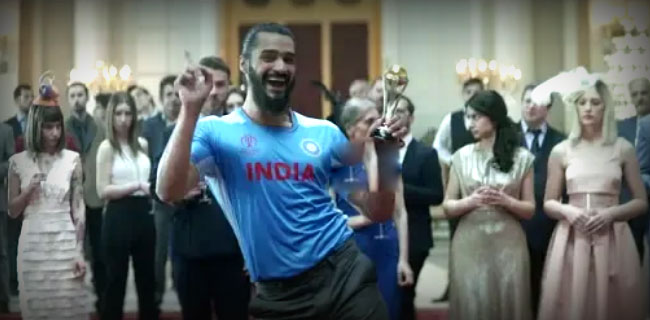

Category: SANJEEV KOTNALA

  • Sanjeev Kotnala: IRS 2019/Q1 gives print Publishers reasons to Smile

    Sanjeev Kotnala

    By Sanjeev Kotnala


    The Indian Readership Survey (IRS) Quarter 1, 2019 findings are out. It brings good news to print publishers. Their reach and readership continue to expand. The total monthly reader touches new peak at 42 crores, a growth of 4.4%.  In this period, the number of households has also grown by 4%. Any daily reach remains unchanged at 39% all India level, 53%. Urban and moves from 32 to 33% in Rural. Reason enough for print publishers to smile.

    The results are based on a sample size of 3.24 lakh households, making it perhaps the biggest survey after the census in the country.  The country must be doing something right as NCCS D/E has also shrunk from 40 to 38%. The percentage of the population having a gas stove has moved from 66 to 72%. BJP should be happy to note, the scheme has made an impact.

    This growth in durable ownership is seen across the parameters that define NCCS, like Electricity, Ceiling fan, Mobile phone, Colour TV and as they cross the 66% mark, the need for a new more sharply defined segmentation system becomes that much acute.

    The findings show a gradual increase in percentage reach in 12-plus individuals across media. It also makes the print publishers happy, that the population that has accessed the Internet in last one month has only increased from 33 to 39% in urban area and 12 to 16% in rural areas.  The market impression has been different. With the enhanced accessibility, affordability and availability of digital data, one expected even sharper growth.  More reasons to smile for Print Publishers. However, the ONLY 2019 Q1 Unrolled data shows the segment of Active Internet users is at 51% in Urban and 28% in Rural.

    If one looks deeper, there is a small increase in the Up to 7 days (U7D) readership for English, which is a reflection of an almost dramatic rise in population of ‘Can Read and Understand English’. I believe that it will give the English print a surge in future.

    The online newspaper readership on a 1-month basis at 26% seems to be inching towards the magical tipping point of 32% for NCCS A1 segment. It is still miles away, as this is a monthly readership and not a daily or weekly figure.  Reason enough to smile.

    The findings are based on a further strengthened and digitised robust survey process.  IRS promises to be on track and to release quarterly data in the future. Not that much of tectonic changes are expected every quarter, but buzz with every survey does help in keeping the medium in focus. Meanwhile, a group of print publishers have come together for the ‘Print is proof’ campaign.  I have reasons to believe that there is positivity in the Print publishers ecosystem.

    Every measurement system is always Work-in-Progress, and it evolves with time and users input.  There will always be detractors and followers of such measurement systems. In the media ecosystem, the second largest media cannot do without measurement and IRS 2019, has adopted a robust methodology in its attempt to iron out the earlier issues and shortcomings.

    Compliments to MRUC which itself is a body with representatives from advertisers, agencies and publishers to have done the excellent work. Now it is time for the industry to support and use it to the best of advantage.


  • Future Shock or Fixed?


    By Sanjeev Kotnala


    Sanjeev Kotnala

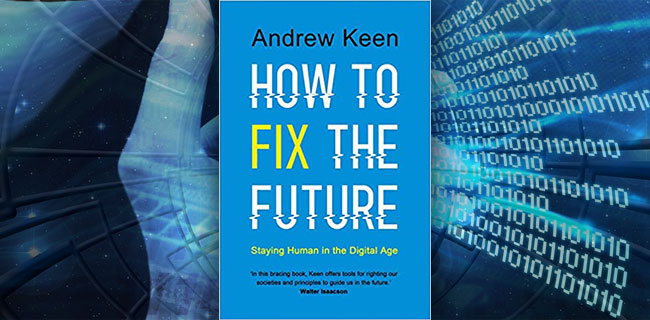
    I knew all along, there was something drastically wrong with the way the future is unveiling itself. I was on the lookout for a debate on ‘How to fix the future’. Andrew Keen’s session at the IAA World Congress held at Kochi, India in February this year probably opened new spaces for the discussion.

    We are under constant surveillance. Our behaviour is slowly being nudged towards what the dominant biggies Google, Amazon, Facebook of the business want. It is the new era of ‘Winner-takes-it-all’ business that is creating polarisation of wealth rather than distributing it.

    We are ignorantly working towards bettering their algorithms. We believe we are getting all this free. Not realising there is nothing free.

    The internet is a boon, but may be the price we are paying for its services outweigh the benefits.  Internet is the new morphine. Like many of us, I feel trapped in the system. I am addicted to it. I am unable to withdraw or detox.

    After having read ‘Internet is not the only thing’ by Andrew Keen, and having an equally polarised view of the internet, it was logical for me to pick his next book ‘How to Fix The Future: Staying Human in the Digital Age’.

    And if this is the trailer, what profound changes Artificial and Alternate Intelligence can unleash on mankind, unless we pre-plan to control the damage. History is witness to the fact that we are blinded by our vision of advantages and rarely humans have thought of the future repercussion while it adopted a new regime of services and products.

    Talking of the influence of internet-based services and addiction, I find it amusing and true. A potential threat humans failed to appreciate at the initial stage. “In the 1960s, we swam through the waters with only a few hooks: cigarettes, alcohol and drugs that were expensive and generally inaccessible… “In the 2010s, those same water are littered with hooks. There’s the Facebook hook, Instagram hook. The porn hook. The email hook. The online shopping hook. And so on. The list is long –far longer than it’s ever been in human history, and we’re only just learning the power of these hooks.”

    On the other side, humankind has always been smart enough to get out of the damage path by intense social pressure, tweaking of the technology and bringing new guidelines and reforms to control the damage.  Half of us would believe that we would once again succeed in doing so with the Internet and AI.

    In his book, Keen makes a very pertinent point: ‘The computer is the “Brain Outside ourselves” our “Second Brain”. From an evolutionary point of view, there we have taken an exponential leap. The new brain has outpaced our heart, our morality and beliefs. We are so preoccupied looking down at the second brains, that we forget how to look smartly at ourselves. As these devices get faster and faster, we appear to be standing still, as they produce more and more data about us, we are getting any more intelligent: as the devices become more powerful, we might lose control of our own lives. Instead of the singularity, we actually be on the brink of antithesis- let’s call it the “duality” –  an ever-deepening chasm between humans and smart machines and also between tech companies and the rest of humanity.

    He adds what I call a real possibility:  ‘In the future, we may no longer be in charge of our own creation… Our technology might be developing a mind of its own, thereby excluding and disempowering, and enslaving us. The existential threat of self-conscious algorithms is very real. They might be our final invention.’

    May be the answer lies in genuinely finding ‘What the Humans are good at’ and will always be a wee bit better than the machines. The current answer is ‘Nothing’. And we in our quest of making machines equally smart and emotive with a better power to process and take decisions are clearly on the path to wipe out any difference. I have my doubts. I am part of the small subset that believes; we are on the way to hastening the end of mankind. And one of the reasons I like reading Andrew Keen.

    Most of us are intellectually challenged to understand the enormity of the technology revolution, the amplified inequalities, the creation of parallel power centres feeding on our data and the race to harnessing Alternate intelligence.

    No doubt, Keen is open and transparent in stating: ‘This is a maybe book, based on the belief that the digital revolution can, like the industrial revolution, be mostly successfully tamed, managed and reformed. It hopes that the best feature of this transformation – increased innovation, transparency, creativity, even a dose of healthy disruption – might make the world a better place.”

    The book title ‘How to fix the future’ is misleading. There are no solutions. There can’t be.

    Keen presents a strong argument in favour of his belief that “No, not even the smartest technology can solve technological problems. Only people can”. I agree with him as he shares a few example and stories of how people are solving the thorniest problem in the digital age.

    Though there are directional paths from education to governance, to fixing it well in time. The example quoted in the book of Governance in Estonia and the always-on technology for betterment in Singapore shows some promise. The concept of ‘Universal Basic Income’, paid to everyone for ‘Not Doing Anything’ is also explored but be warned that can never be the solution. The only good part is that Andrew Keen is raising the issue. He at least presents a possible solution around competitive innovation, government regulation, consumer choice, social responsibility by business leaders, and education. It is up for healthy discussion.

    What I disliked was the constant reference to the 1516 work of Thomas More’s Utopia. It comes across as a framework of an idealistic world-inspiring Keen. But that is hardly the way life is expected to turn. Though it was interesting to note that if seen from a perspective More’s Utopia Map resembles a skull. May be there is a cryptic message in the map design that we are missing.

    Go read this interesting book that may sound fiction to many followers and admirers of internet-led ease in life.


  • 1980s imagery dominates 2019 Mothers’ Day


    By Sanjeev Kotnala


    Every year on Mothers’ Day, I get a sinking feeling that we are in a time warp. Or at least the Indian mother is has decided to drop anchor in 1980.

    I love sharply defined relationships and even the vague unmanned relationships too. In India, we have many such relationships. The relationship between daughter-in-law and mother-in-law. The bhabhi-devar relationship. The jeeja–saali relationship. The guru-shishya relationship. However, nothing beats the well defined sacred bond between a mother and the child.

    Mothers And Mothers’ Day in Indian Advertising.

    Mothers in Indian Advertising have failed to evolve out of the desperate emotionally volatile arena captured by Indian cinema. The sacrificial relationship with its predefined expectations and socially constraining coordinates still reflect the absolutely iconic expression ‘Mere Pass Maa Hai’.

    The imagery of self-less-love, a mother going out of her way, fighting all the odds, eyes with tear dams, will do anything for my child that defined the mother of 1980s still describes the mother in 2019.

    The acts that made Farida Jalal, Lalita Pawar, Rakhee and Nirupa Roy imagery as the ultimate mother still dictates the overt expressions in the mother-child relationship.

    Not that there has been a tectonic shift in the imagery and expectations of mothers. They still sacrifice their lives and ambitions for the future of their children. They still work like a superwoman. They are still seeking more empowered roles outside the home.

    So, when brands think of celebrating Mothers’ Day with some specific communication, they tend to remain chained to the overexposed mushy-mushy imagery. It is an easy way out.

    Why don’t these communications are more celebratory?

    Why mother’s day only has memories and situations aimed to bring tears to your eyes and make you feel emotionally drained?

    Mothers’ Day 2019 – Another Missed Opportunity.

    The brands are missing opportunities and at the same time insulting motherhood. By continuing to live with the pre-historic imagery, we are saying to the mothers, you have failed to evolve. Your work scope, responsibilities and a multidimensional personality is yet to get registered in the blinkered mindspace of Indian families and society. And dear Moms, we the advertisers, can only digress that much. We can only mirror what we believe our audience will like and not necessarily what you as our audience may appreciate. It’s business as usual.

    CATCH THE 1970s MOTHER

    So, catch the EPSON Mother, going out late in a rainy night to her neighbours. She is getting colour prints to help her daughter participate in a contest. Meanwhile, the WhatsApp-charged millennial daughter is only cribbing. You know the situation would have been easily managed if she had a printer at home.

    Don’t you forget the taste of food, that only mother can make. GITS has you covered with orphanage setting. Parleji is busy milking the old sentimental space of ‘Mother knows without being told’.  And, yes, she is duty-bound to everything for her children. MOTHER’S RECIPE (Gift of Time) shares a hamper of its products to help create some time for her. There is nothing wrong. At least it is direct and relevant.

    Some brands are still trying to ask, what does being a mother means? Motherhood is a phenomenon.  BIBA the apparel brand is trying to stand apart and tell you that we can be a mother in more ways than one. Shaadi.com is rightfully trying to push its own agenda and give a new flip to the relationship.

    SUNFEAST tries something different. The brand explores an extended student’s relationship with AMMA at the tea (or is it coffee) joint outside the college. It is at least interesting.

    Then There Is Mothers’ Day.

    So, when I see HOPSCOTCH Mother RAP. The swag of a Mother proudly proclaiming to be the stylist for her children. I see it differently. It is fresh and full of brand relevance. It refuses to be clamped down by expected imagery.  There is a blatant, right in your face product promotion.  At the same time, it remains relevant to the occasion and sentiments. I love it. It statically lacks craft-style, and that is a plus. I will be impressed if it can get the Mother Rap to happen on TikTok too.

    The Preganews gender-agnostic good news communication though ‘hat ke’, makes a relevant point.

    Brands must Converse Throughout The Year.

    If mothers are an integral part of your brand ecosystem, then the brand must remain in conversation with them throughout the year.

    The audience knows when the brand is being cheeky in using the particular date and day to make a statement. The audience is no longer fooled by it.

    Teri Maa Ki. Xhamster Joins The Call.

    Meanwhile abroad, a PornSite xHamster is planning to ask the valued customers searching for MILF on its sight, to hold back for a second and call their mother. TERI MAA KI. MILF can wait for your mother can’t.


  • Slice of Death Advertising


    By Sanjeev Kotnala

    The only sure thing in life is death. Rest is just a probability.

    We appreciated ‘Slice of life’ (SOL) advertising, however, we rarely see brands leveraging ‘Slice of Death’ (SOD) imagery and references.

    Death is all around us.

    Death is all around us. It is there in the newspapers, in the TV news and serials, in social media, and is an integral dominant theme in video games. However, the use of death in advertising remain taboo.

    Grief-exploitation is not my interest or focus of this piece. I am not referring to a few brands trying to get into a conversation during tragedy, calamities or death of a celebrity.

    Death Beyond Insurance And Social Messaging.

    Insurance brands flirt with death. Some social cause advertising like ‘drunk driving’, ‘Anti-smoking’ have  also explored the unchartered arena of death. But what about brand and services not directly liked with death. Do they leverage this certainty of life in their communication.

    Can death trigger the right context for brand/product/ service usage?

    Death is a simple phenomenon but a complex emotion. A certainty that we don’t want to acknowledge. Its relevance as a shock and clutter breaker cannot be disputed. Unfortunately, it evokes  strong negative emotions, and hence, brands fear to associate with it.

    Death is hardly aspirational. No one want’s to die. Even on our birthdays, we celebrate the end of another fruitful year on planet earth. But, we hate if someone reminds us we have walked another year closer to the end.

    Death Exploitation Can Be Misinterpreted By Audience.

    The ads by McDonald’s ( Child Grief- the kid being told of dead father’s liking for Filet-O-Fish ) and Nation-Wide ( Super Bowl-drowning kid- prevention of childhood accidents) in the US have faced adverse consumer reaction. If you carefully analyse, there was nothing wrong in them.


    We know the consumers’ purchase decision is more based on emotions than on information and features. We know death is a powerful stage and triggers extreme emotions. Yet, it remains an area of a no-go.

    Humour In Death.

    We have seen some of the brands cautiously using death to their advantage. Most of the time, it has been used as a scare but to make a point humorously. Remember the M-SEAL ad, where a drop of dripping water changes the will.

    Here I must share the fantastic ANTI-SMOKING communication featuring Sunny Leone and titled Eleven Minutes. A beautiful way of delivering the message to its TG.

    Even radio brand MIRCHI used the Ruddali concept and their engagement with death so powerfully.

    On the other hand, the Lifebuoy soap hinted at young under-five mortality rate and how death can be avoided in its communication. Here death is central to the theme but has a brief reference that does not raise high adverse reaction.

    Insurance Can’t Avoid Death

    On the insurance side, death is unavoidable. However, the way death can be used, dramatised and contextualised is the key to effective communication. Here are two examples.

    Max Life Insurance used the fear of death in its communication. My mother hated this communication as the protagonist name is my name. I am not sure if the brand used the most prevalent regional nicknames in their language dubs. But this one worked.


    Policy bazar has been flirting with death and eventuality of it, to push people to pick term insurance early. They have a dead man coming back to life for that short time and talk of term insurance or Yamraj getting angry at the person for not taking the term plan when he/she had the time.


    BEAUTIFUL DEATH

    There is no definitive answer to some of the basic questions. And as there is subjectivity and personal bias, there are no clear directions. Should a brand use death and its effect? Does shockvertising works? What is the right way to leverage death? Can death be the clutter-breaker?

    Here is an example of flirting with death. This short digital film was not produced by the brand and its agency but is highly associated with its theme ‘KEEP WALKING’. A simple story of two brothers visiting the places of common interest and togetherness for one last time.

    And maybe this is incomplete without sharing yet another communication developed by the same team that did the ‘Keep Walking’ film. ‘ABC of Death’ is about being alive. And the reference is death. Life and death- after all are two sides of the same coin.

    Metro Melbourne for their rail safety did what is now known as the most delightful horrible creation- a song telling people there are more similar almost as dumb ways to die as losing one’s life by being unsafe near train tracks. Any time I discuss this particular creative, I am reminded of daily deaths in Mumbai Local. I am not sure why such a beautiful message has not been localised or inspired some such release in India.

    DEATH IS NOT SO BAD.

    Few research reports do suggest that elderly people react more adversely to the use of death in communication than youth. However, none of them tells us as to what is an appropriate way to reflect and contextualise?

    And in this era of APP for everything, there is WeCroak. It is a simple app that reminds you of death five times a day. You download it from any of the play stores and make a payment to subscribe. Then it will message to remind you of death. And expect that such messages will help you to better contemplate life.

    In our Brand-I workshop, we take on exercises where we consciously focus on the possibility and certainty of death as an integral part of life. We talk of death as a motivator for the delegates to realise how much time you have to achieve the long list of wishes you may have.

    Death As Curative.

    Death is such a strong negative that even the terminally ill patients and their families don’t encourage discussion on the subject. As if ignoring it can push the inevitable. Last Laugh or Last Word for ‘Indian Association Of Palliative Care’ has taken death head-on and in the process raised awareness of Palliative care.

    And here is a wonderful example where the elderly person fakes his own death to get the family together. Here is a perfect example of using such a potentially negative emotion during the festive period but leverage it contextually for a beautiful, powerful emotional takeaway.

    So when you can and do celebrate life- why give death a step-brotherly treatment. It may give rise to strong emotions but rightly contextualised it can still be used by brands.


    PS: I would like to know of some brand communication (other than Insurance and social messages) where the brand has flirted with death and its vignettes. Most cases I have seen, its primarily the male who dies, has some Indian brand used the death of the female in its communication? Do share at Facebook sanjeevkotnala and twitter S_kotnala


  • Reliving ‘Mauka Mauka’ as the stage sets for the Cup!


    By Sanjeev Kotnala


    Mauka Mauka’ was an iconic communication engaging and entertaining cricket lovers 2015  to 2018. So, it is natural for the reference to come up in May 2019.

    On May 23, as I was  the 2019 election results on TV, the seat swing with BJP winning was unprecedented. Someone teased the Congress supporters in the family with ‘Mauka Mauka’. It said it all.


    I know it is a bit early.  India only plays Pakistan https://www.icc-cricket.com/teams/men/20/pakistan/overview on Sunday, June 16. A date most of us have marked in our calendar. As it is early


    In the discussion, Star Sports’  current ICC #WorldCup2019 communication was compared with ‘Mauka Mauka’. And one can say  the cricket enthusiast in me wants another ‘MAUKA MAUKA’. However, the professional me knows in spite of intense rivalry, a serialised communication like ‘Mauka Mauka’ is simply not possible.


    One remembers the launch TVC. The full song #Won’tgiveitback.


    https://youtu.be/K-nNFWdBtB8


    In the last video, the Pakistan supporter with his arsenal of crackers lands at the Star Sports studio. It continued in many forms in Champion’s trophy, T20 World Cup 2017 with a lot of consumer generated spoofs and somewhere died finally with the Asia Cup. The CGS is already on like this SAPHIRA and films by Seven Pictures.


    And when you are at it:  watch this too. Spoofs are far more entertaining and touch a chord.


    The current World Cup has 10 teams. It’s an open tournament with a team playing all the other teams. The Top 4 qualify for the semi-final spot. And the chase is on.

    The current communication ‘Cricket Ka Crown Hum Le Jayenge’ by Star Sports is entertaining and exciting.


    The extension ‘Tum Suro Karo Hum Aate Hai’ promises that the broadcaster is not going to leave any Mauka of engaging the audience. And there is my hunch that ‘mauka-mauka’ will make an appearance sometime at least in the social media.  Meanwhile, the rivalry intensifies at every level


    I am really waiting for this ICC World Cup 2019 communication from Star World to take some twist and keep entertaining.

    …………………………


    It is cricket time. I must mention that I am enjoying the simple yet very celebratory communication from ”DREAM 11′. Dhobhighat, Bush and  Keys, all of them one relates too.


    And when it is cricket- the AMAZON campaign Chonkpur Cheetahs will always be remembered.  I missed them. I always feel that there was a lot ,more potential to this series than what we have seen.


    https://youtu.be/mM16sepxvZo


    Sanjeev Kotnala is a senior marketer, strategy consultant and educator. He writes weekly for MxMIndia. The views here are personal


  • Sanjeev Kotnala: Book Review of ‘The Go Giver’

    By Sanjeev Kotnala

    ‘The Go-Giver’ by Bob Burg and John David Mann is the story of an ambitious young man named Joe.  It seems that the more he runs after success, the more difficult it becomes to achieve his goals. Then he seeks advice from the highly successful leader Pindar, who shares his secret, the FIVE LAWS OF SUCCESS.  Pindar has just one condition that Joe will test each of the laws. In the process, Joe learns that if only he shifts his focus from GETTING TO GIVING, Putting others’ interest first and continuously adding value to their lives- it will lead to unexpected results and ultimately success.

    Quoting from the book its essence: “Too often people hear “be a giver” and think of charities and writing check, of “giving back” once we have already done well for ourselves. But that’s only one very specific facet of giving. By “be a giver” Bob and John mean be a giving person, period: One who gives thought, gives attention, gives care, gives focus, gives time and energy- gives value to others.”


    ‘THE GO-GIVER’: FIVE LAWS OF SUCCESS.

    I share the FIVE LAWS as Pindar says in the book, it is best if all of us have access to them. And he calls it secret so that people would want to know them.

    1. THE LAW OF VALUE.
    Your true worth is determined by how much more you give in value than you take in payment.

    2. THE LAW OF COMPENSATION.
    Your income is determined by how many people you serve and how well you serve them.

    3. THE LAW OF INFLUENCE.
    Your influence s determined by how abundantly you place other people’s interest first.

    4. THE LAW OF AUTHENTICITY.
    The most valuable gift you have to offer is yourself.

    5. THE LAW OF RECEPTIVITY.
    The key to effective giving is to stay open to receiving.

    I know these laws may not make sense, that is why the book is essential to understand and soak nuances of these wonderful laws. They may not sound too original to many, but trust me the way they are presented in the book is excellent.

    Oh, by the way, Pindar does not share the laws himself. He meets Joe for five days over lunch and introduces him to a new person every day (A touch f Tuesdays with Morris). The person, let’s say the guest of the afternoon, shares his story and thus brings alive the law. I would hate to share the details here and recommend that you pick the book and read it. This book is special and will not be Un-Caged by me soon.


    MORE SECRETS EMBEDDED IN ‘THE GO-GIVER’.

    Aside from the five laws of success, there are some gems in the story. I was shocked by the very positive tome of Pindar when in a conversation with Joe he says “Joe, no offence, but you don’t have that power… I mean the power to waste my time. Only I can do that. And truthfully, it’s a vice I gave up a long time ago. The reason for my conditions( that you will test every law that I share by actually trying it out. Not by thinking about it, not by talking about it, but by applying it in your life) is that I don’t want to see you wasting your time” (Page 17).

    ‘You get what you expect and not what you want’ and that “Ultimately, the world treats you more or less the way you expect to be treated”. It is so real and so simple.

    As you read the book, you may end up picking your own laws and gems. After all, we all have a different perspective and perception of the reality and hence our alignment with such thinking.

    MORE ON ‘THE GO-GIVER’.

    It is a simple book of 127 pages. Comfortable read on a 90-minute flight. I did it on a Mumbai-Nagpur flight that took 75 minutes.

    It is written in a straightforward language. There is hardly any jargon used.

    It’s a fictional story that is presented in a very sequential linear way that keeps the reader’s interest alive. And in the end, there is a significant revelation.

    Maybe, a better way to read will be somewhat in the way Joe gets introduced to the laws. Read one law and then try it out in your life, before you get ready for the next law.

    …………………….

    Thanks Priya Lobo, COO, Ormax Consultants for gifting me this book ‘The Go-Giver’ by Bob Burg and John David Mann. A book everyone should read.


    HOW I GET BOOKS GIFTED TO ME.

    Sharing my simple secret.

    I have an understanding with a few select people.  If we cancel or postpone a meeting within 48 hours of the scheduled time, the person who does so, gifts a book to the other party in the next meeting.

    Is that not an excellent way to get books? I find it that the other person sincerely searches the book to gift knowing the potential reader’s interest.


    THE LIST OF 10 SELECTED BOOKS I GIFT.

    When I have to gift a book for rescheduling a meeting, the easiest thing to do is to give my debut novel “Chimera Of lansdowne’.  I don’t do that. It will be too selfish. Moreover, it will not serve the purpose and objective of this small initiative.

    I have a list of 10 selected books in alphabetical order of their title.

    1. 11 Minutes by Paulo Coelho.

    2. Catalyst by Chandramouli Venkatesan.

    3. Eat That Frog by Brian Tracy.

    4. Happiness A State Of Mind by Gyalwang Drukpa.

    5. Many Lives Many Masters by Dr Brian Weiss.

    6. Sponge by Ambi Parameswaran.

    7. Think And Grow Rich’ by Napoleon Hill.

    8. Tuesday With Morris by Mitch Albom.

    9. Veronika Decides To Die by Paulo Coehlo.

    10. Who Moved My Cheese by Spenser Johnson.

    All of them are an excellent read.

    And ‘The Go-Giver’ gets added to the list and completes the team of 11 books.

    I can blindly and confidently recommend the above list to anyone and everyone to read.

  • When it’s Tough being a Man


    By Sanjeev Kotnala

    Nowadays, it is becoming tough to be a man. And even Gillette is getting into the act.

    I am into this simple brand-feature-benefit-transactional relationship with the multi-edged Gillette razor, when suddenly from every article on marketing communication and potential award list now has started questioning me.

    Gillette Started The Battle Of Toxic Masculinity.

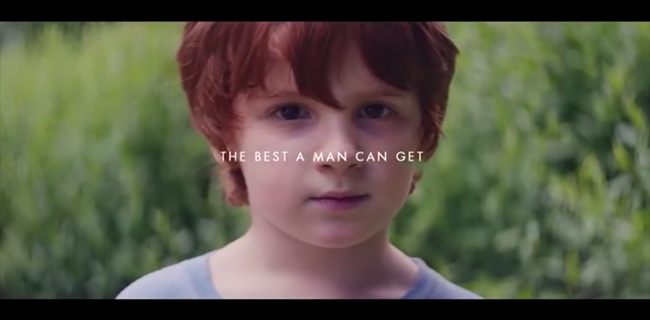
    When on January 13, Gillette tried its toxic masculinity concept and was brave enough to accept that maybe it was wrong to project the kind of masculinity that they have a party to. And perhaps they have been inappropriate in their reflection and projection of not only men act against woman but the woman herself.  (The toxic masculinity advertisement has some 700,000-plus dislikes on YouTube). How right!

    The brand told  you “We believe in the best in men: To say the right thing, to act the right way. Some already are in ways big and small. But some is not enough. Because the boys watching today will be the men of tomorrow” and I ask, who gave Gillette the right to contextualise and define what is wrong and what is right.

    Surely, I have multiple sources to listen, read and follow then a razor brand sharing this purposeful new doctrine. Well, the brand, in a way, went on to almost stereotype all the men in one bucket.

    All that from the fundamental insight ‘I am not the bad guy, but I don’t know how to be a great guy,’. Wow, is that advertising trying to be defining a cultural context. And which man does not know the difference between right and wrong, it’s as much as can’t and won’t.

    You are free to hold another point of view. That’s Okay.


    Is Gillette Advertising Really Purpose-Led.

    I want a razor and not a lecture on morality.

    Sincerely, I don’t like drifting aimless advertising.

    I thought that was international. And then suddenly we have this Spain Gillette asking you Are you man Enough?

    The definition of masculinity and what really is a man has been shifting. You can ask the razor brand that is finding it difficult to add more edges to its multi-edge blades.

    https://youtu.be/sfL2vpJJ1uE

    We have indeed been domesticated at home. We have been along with the daughters of the world lived through a generation of can’t, don’t and won’t. It was always more about how to behave, and that meant more of what not to do.

    We have grown with the idolised definition of what a man is or should be. Across the country, there are various definitions of masculinity.   Masculinity, revenge, honour, bravery, money, wishes and dreams were rolled into an undefined heterogeneous mix of directives.  Add virility, beard and performance into that list, and that’s what we know.

    Tear, fear and accepting defeat was never part of that definition. It’s still not,  other than the time when on social media, one wants to be politically right. And now this silly hair-cutting tool manufacturing company believing research wants men in Spain to re-evaluate the stereotypes as it makes the real man feel uneasy.

    The Complete Man Was Another Level Of Masculinity.

    Raymond’s ‘The Complete Man’ has been trying to tell us what is the construct of a perfect, complete man. It is non-intrusive and has been working. It never shouted or disturbed you with the question, Are you man Enough? And I am still talking of the earlier ‘The Complete Man’ series that was subtle and moderate by any standards.

    Men Will Be Men Is Another Polarised Masculinity.

    It is okay.  It is absolutely fine when we men laugh at ourselves. Look at the Imperial Blue ‘Men will be Men’ series. Don’t they teach you and remind you of obnoxious silly behaviour. They tell you in many ways what’s wrong or what’s right. And we men knowing what’s in it for us can take it easily. We don’t need this sharp blade razor manufacturing brand to overtly threatening tone to ask ‘Are you man enough?” or I will…

    Gillette Disturbs Asking – Are You Man Enough?

    Funny then for someone to ask “Are you man enough to admit you’re afraid?” And in the Spanish version, it begs the viewers if they are man enough to be a queen? I don’t think Gillette is thinking of asking such questions in India.

    Every research points out that the new age consumers are looking for brands with a purpose. But this? Seems like someone searched for the purpose and then tried fitting in the brand.

    I am not sure how easy or tough it was for the team at Proximity, Madrid, Spain to internalise this changing definition and shifting stereotypes before they made the client see their way.

    Oh, it is different when the question gets mellowed down to a simple and more acceptable format. “Are you man enough to be you?” Now, you see, the communication is far too convoluted and complexly un-related with the brand.

    It may be artistically exceptional and commercially well-produced. It may be superbly directed and well-executed. The truth remains that it is trying to be courageous in contextually correcting its earlier smooth shave gets you everything approach. It’s good that the brand is trying to GLOCALISE the concept, as there will be a razor-sharp difference from well-executed to downright polarised failure.

    The brand wants you to relate it to another simple fact that “It takes a real man” to do things, to be himself and do things that may not be right but a must. And this it thinks will add and facilitate an inclusive freer world. Help identify the new modern idealistic stereotype of contemporary man. Follow that changing expectation Gillette have moved from its own admissible toxic masculinity of “The Best that a man can get” to “The best men can be”. Well, that for a change is definitely within the challenging new definition. Gillette seems to be man enough to express regret and change.

    …………………..

    Gillette May Not Affect Toxic Masculinity Or Help You Find the Answer- But It Will Win Awards

    Why do I have a feeling that this long-term commitment to a right directional swipe by the brand is going to get a lot of awards: ‘The Best that a brand can get’.

    Do not forget, in Spain under this programme is a small scale prototyped 20,000 students connect programme by sociologist and psychologists. Additionally, there is that judges polarise Gillette Interactive teen chats focussing on real masculine values. There the teens will debate, reflect and surely realise (for the brand’s benefit) that masculinity means a lot different. They will get rejuvenated and charged for breaking barriers that that stop them from being themselves.

    Admit, Gillette Has Been Courageous In Their Act. Now They Need To Just Hold On To Their Belief. They may be saying it right and the way they want to say and shake up male thinking and stereotyping – but then I personally see a lot of gap between product-brand and the purpose. Hopefully I am not alone in it.

    …………………………………………………….

    DUREX STABS MEN.

    Meanwhile, another Man’s friend in need- DUREX CONDOMS tried starting a conversation under # OrgasmInequality. It is talking about a woman faking orgasm to satisfy the male performance ego.


    You’ve heard the numbers, you’ve heard the women and you’ve heard the men. Now it’s time we hear you! It’s time to talk #OrgasmInequality and Fake Orgasms. Ask a question, tell us your story or just be part of the conversation with #IFakedItToo. pic.twitter.com/cxeZRHkA0N

    — Durex India (@DurexIndia) May 31, 2019


    Something that every man knows but is afraid to speak about.

    The best friend Durex did not trade sides but reminded Man that lovemaking is all about mutual intimate pleasure.

    Horrible brand, it is asking women to share their fake orgasm story under #FakedItToo. Even if they open about these stories to the man they are intimate with, it can hurt many dudes psychologically to the level of dysfunction.

    It is different that in our country, not many women will share such stories even if it is  Swara Bhaskar and Pooja Bedi prompting them, but everyone would play their stories in mind. It did have an expected adverse playback from men. There was a lot of twitter debate about it. Yet, think the brand is still the winner.

    Another brand making it tough to be a Man knowing that the females can really influence the choice. The brand knows that it is absolutely true in the case of condoms. A man will get what everything that gets him the action and boosts his ego. And anyway it is all about Durex Mutual Climax Condom- another pressure point..

    This is confusing, as it is the case of “The best men can be” to “The Best that a man can get”. I just hope people get what is being said above. I hope the stance and comments are not taken at face value.


  • So what’s wrong with Gender Stereotypes in Advertising?


    By Sanjeev Kotnala


    Gender Stereotyping is everywhere. Questioning its usage in advertising is an excellent thing to do. I may be hated for saying so, but it is my definitive personal view that when some regulator starts defining how it should be, it is imposing too many constraints. It is trying to solve some other problem by finding a scapegoat that is easy and glamorous to hang. This is my shout-out for freedom in the business of branding and communication. Some of you may agree with me bit continue to be diplomatic in this chaotic ecosystem that curbs dissent.

    The argument for controlling Gender Stereotype representation in an advertisement is selective in nature. It is said that advertisement push people to look at stereotypes differently. They help reinforce gender-biased stereotypes.

    Honestly, are we not overestimating the power of these communications? Are we not isolating one channel and trying to solve a more significant problem? Oh, I forgot to add, are we not taking the easiest way out?

    What about literature, cinema and other such mediums?

    UK Adventure In Banning Stereotypes!

    So, suddenly, when the UK decides to consign Gender Stereotypes to history, I can only term it as a Don Quixote moment. I am equally surprised with many from the Indian advertising fraternity wanting ASCI to help replicate it.

    Why Stereotypes Are So Important?

    Stereotyping, Generalising and Distorting are the biggest problem in any communication. They act as a filter through which we accept communication. They help us see a pattern and ease memory. They help our most lethargic organ, the brain to connect the pattern and slot information. They help us decrease dissonance. Still, we wish to further generalise and distort the representation of the current ecosystem by pushing a non-existent stereotype.

    What Is The Correct Stereotype?

    Simple answer, I don’t know what the new correct gender stereotypes are. But, I applaud this act of UK. The earlier questionable gender stereotypes (mostly of women) will not be shown in advertising in the UK.

    Like you may no longer see married housewife overtly concerned about how her sofa smells or a dad who knows nothing about how washing machine works or women not knowing how to evaluate a house loan.

    Stereotype Vs. Reality?

    What is being called a stereotype in advertising is a reality. I am not too sure how the ban will help stereotypes disappearing from real life. It is wishful thinking and in reality  a showroom dressing.

    What we are in fact saying is that, if I don’t see it, it does not exist. Too simplistic an approach.

    Brands Must Have Creative Freedom To Use Stereotypes.

    Brands have a business proposition. Advertising is a business. Brands spend money on research and understanding their market/audience segments. The brands’ deep dives to find insights that best help them press levers to generate disproportionate sales. They can’t work with some lazy stereotypes from Dark Age. And if they do, they have reasons for doing so.

    These stereotypes pressing the desired overt or covert levers, emotional or functional, help them garner sales. I hypothesise that the TG understands and appreciates these stereotypes. To them, it is a true reflection. Why take this liberty from brands.

    The old stereotype is as much of lies or reality as is the new one. A husband sharing household workload. The girl touching pickle during her period.  The man getting life insurance when his wife dies.

    These ads, communication and activation are excellent. They get awarded. They have made a beginning and that is their choice.

    As a progressive society, we must highlight newer possible stereotypes. I agree we must contribute to this positive movement. Not forced into it.

    Brands Must Have Freedom Of Expression & Representation.

    I am all for freedom of expression and how the brands operate. No one other than the brand has the right to define or dictate how the brand communication should lead the audience or what stereotypes are allowed to be used in this politically correct ecosystem.

    No one must dictate how the story should be narrated. There must not be any restriction. The brands remain and should have a right to use whichever and whatever stereotypes they wish to exploit until it violates the rule of law.

    Whenever rules are flouted, or when the brands take excessive liberty, corrective forces come into play. Social media asks them to react and defend. The sales drop and brand love is lost. And that is the right way. Until then, the brands and their agencies must retain the freedom to express their brand promise, service or experience in the way they want.

    Creative Expression Vs Stereotypes.

    Remember Dec 2017. The Government banned condom brands from adverting on TV between 6 a.m. to 11 p.m. at night.  It was not a category issue but a creative issue. There was no ban, control or restriction on condom advertising in print or OOH. Maybe children not read newspapers or see hoardings?

    Let me share a hilarious incident that recently happened at Mumbai Airport terminal 1 departure area.

    It was early morning. The departure area was as crowded as Churchgate station at 6 p.m.  Sunny Leone was watching every moment of passengers from Manforce flavoured condom signage plastered all over the area.

    You could be forgiven for mistaking the condom pack for a fruit juice pack. There was this dominant salivating splash of strawberry juices all over the pack. A very un-motherly seductive Sunny Leone was prompting you to taste the flavour of love.

    It was visually misguiding.

    No surprise that I caught a young brat demanding it. The kid was throwing a tantrum. He continued to embarrass his young mother, repeatedly asking for the flavoured drink.

    Where Will You Stop With Gender Stereotype?

    You start with Gender Stereotype control. Tomorrow I am sure we will have to stop a seductresses like Sunny Leone appearing on condom ads. Why stop there? Why not break every stereotype that affects, impacts and reflects something we must avoid?

    So say no to a Sardar truck driver, a Marwari businessman, an eye-patched villain, a pot-bellied victim of humour, a girl not getting married because she is educated, a bride wanting to be fair, or a spoiled brat as a villain.

    You find that odd.

    What about a toy manufacturer?  What’s wrong if they believe that showing girls in pink playing with dolls are going to get them more sales? Do you really believe their dolls will be sold when they show boys playing with dolls?

    Let Advertising Stereotypes Be Decided By Market Forces.

    No one needs research to tell that reflecting the right audience references in communication helps lift brand score. So, when brands realise they are losing out by sticking to the so-called Dark Age stereotypes and not converting to the ill-defined newer stereotypes, they will be the first one to change.

    Trust me, that is how a change in communication should happen.

    Trust me, if all the people who crib about fish-market ‘news hour debate at 9’ stop viewing it, then many loud-mouthed self-appointed judges will stop circus entertainment at 9 p.m. TRP down Programme out.  Changes happen like that.

    Brands Must Take The Decision That Works For Them?

    Brands need to be in sync with their core target group. They want to be aspirational and purpose led. Some of them, like Whisper, Dove, and Ariel, have taken bold steps in that direction. They have been delivering a fresh perspective and questioning existing stereotypes.  We all applaud the act.

    On the other side, many like Gillette and Durex in their drive to a purpose-led may end up creating problems of different nature. They must also move in the right direction.  Only time has the answer.

    None of the above brand initiatives are forced. The brands are doing what they believe they must do. Freedom to chose the expression remains with the brands. And that’s the way it should be.

    Let the Brands decide which stereotypes are right to use.

    Brands can take a leap of faith and reflect newer possibilities. That’s where they move with the societal changes. Or they can ignore the shifting realities.

    When brands chose to show the new politically right Gender Stereotype in their communication, it is absolutely Okay. In fact, it is welcome.

    However, when there are guidelines and rules crafted to channelise creative thinking and expression, it is not okay.

    Some of you may agree with me and protest against constraining creative rights of a brand, whenever this so-called ill-advised ban hit our shore.

    Time we acted to save advertising and its right for expression.


    Sanjeev Kotnala is a senior marketing strategist and educator. He writes weekly on MxMIndia.com. His views here are personal


  • Connecting the Dots?


    By Sanjeev Kotnala


    Brands Connect Dots To Remain Future-Proof

    Agencies are trying to go beyond the brief and pleasantly surprise clients. It is an excellent thing to do. The new purpose-led advertising is keeping the client happy and the agency busy. There is some talk of this purpose-led advertising strategy, engaging the consumer and resulting in some revenue realisation.

    This is the era of niche. Everyone is an expert busy connecting the dots. Some are busy creating the new dots that the new purpose-led campaign will rationalise at a later date. All are interested in riding the new wave, trapped in a cycle of deliberate differentiation and disruptive design. And now you have dots of different creed and importance. The emotional dot that makes the consumer feels. The functional dot explains the product or unique service features. The yellow and red coloured e-commerce dot shouts how much the consumer can save.

    There are too many dots searching for the invisible thread that will bind them together. Maybe it is best to get that invisible thread and then create or pick the dots that you want to be the part of your brand necklace of promises and experience.


    Connecting Dots Is An Illusion.

    No one captures the illusion of connecting the dots better than Steve Jobs. “You can’t connect the dots looking forward; you can only connect them looking backwards. So you have to trust that the dots will somehow connect in your future. You have to trust in something – your gut, destiny, life, and karma, whatever.  This approach has never let me down, and it has made all the difference in my life.”

    Jobs knew what he was talking about. He focussed on creating fantastic product design and interface experience for the consumer. He was ruthless in his philosophy of no compromise.


    Consumer Connects The Dots.

    It was the consumer who was connecting the dots. The brand ‘I’ or and Apple were forming the experiential dots; an incomparable brand and company.

    Samsung, IBM, Nike are examples of perfect understanding of the current dots in the ecosystem. They are all aiming to further enhance an already nice experience. No doubt, the consumer sees them differently.

    For the dots to connect themselves, the brands must remain focussed on their karma. Their identified reason for existence. It must continue to have the hunger to create a new pattern by re-arranging the dots.

    With a focussed approach, with time, many unconnected dots get created. More the dots easier it is to see or create a pattern. And for that, the brand must survive the threat of time and constant rejuvenation in sync with changing consumer needs and profile.

    The world desires Instant gratification. Brands must survive to fight another day. The solution lies in speeding up the process of delivering customer-centric relevant dots in highly information-democratised market.


    Connecting Dots Does Not Give You Purpose. Purpose Gives You The Way To Create Fresh Dots.

    Every brand wants to be purpose-driven and disruptive. It is complicating things. They are driven by the desire to find the purpose they can claim from the dots in the business ecosystem. Many patterns are being forced. They are sometimes not relevant and many times not natural and fluid. They don’t exist, so they don’t survive. Then a Nokia, Polaroid or a Kodak happens.

    Like an acquired taste, strategic planners on brands now only think outside the box. The box is defined differently in everyone’s mind. The brands are jumping in without mastering what has been inside the box. What they really good at. The need they are really catering to. Every project is an exercise in design thinking. Divergence and convergence are spoken as if it was the most refreshing and most straightforward task at hand.


    Dots Are Never Permanent.

    Every marketing head is busy making a dot that will pass the test of time. The marketing managers and custodians know these are like lines on sand. They are trying to create and understand the patterns before the next tide of shifting consumer priorities strikes. They force their perceptions and unique model of the market understanding reflecting the biases and experience.

    The stakes are significant. The failures are costly and the fears real. The success is transitory.  Success and failure are also the new dots that help re-define unspoken boundaries, barriers and facilitators. There is a whole world of dreams full of unwarranted inefficiencies and doubts. Everything and everyone is a suspect. No research complete. Everything is always uncertain and probabilistic.

    Wanting to see the larger picture and lead the brand on a dream run, brand custodians rightly taking time. They remain consumer-centric. And sometimes they try for a tectonic shift in the consumer profile and gender. That’s when the toxic masculinity and orgasminequality happens.


    Dots And Purpose Are Different.

    The teams have forgotten the art of keeping the message, medium, promise and delivery simple.  They are trying to force a purpose led message in a clutter. They are demanding higher involvement from the audience challenged for attention. Not sure where this is leading.

    To create a pattern that can be justified as consumer-centric and consumer dictated trend, new ecosystem push and justifications are used to show dots where there were none. The UK gender stereotype ban, the Indian Government ban on condom advertising between 6 am and 11 pm are not consumer-centric or reflective of the need.

    Let the brand take the challenge. Experience, interact and engage with the known dots at every possible touchpoints. It must not be forgotten that when the brands use the singularly positive converging experience from all relevant dots in the consumer’s mind, it leaves a stronger impression.

    It will always be far stronger than a pattern that is forced to justify the action.

    I believe that the consumer can judge and decide. They do. They can infer and see if the pattern is logically defined or just an act of strategic desperation.


    Don’t allow dots to confuse.

    Brands should just concentrate on every one of the multiple dots. Giving a real that goes much beyond expectation. Reflecting the true brand-consumer ecosystem and need not be politically correct. When it happens, magic happens. Brands like Apple, OnePlus, Fogg, Kelvinator, Rasna, Nirma, Amul, Maggie, Cadbury, Dream-II, Swiggy, Coke, Pepsi, Parle, Uber, Indigo are some of the examples.

    Don’t waste time, searching for the invisible thread that will hold the dots, connect the dots. Just pick that invisible thread and keep adding new and relevant consumer experiential, emotional dots to create the brand necklace.


  • Past- and Future-Gazing with Neil George


    By Sanjeev Kotnala


    IAA’s Retrospect and Prospects last week dealt with the CMO curiosity and desire to know. The need to know what next? To know of the next trend going to hit the market and communication. It is very human.

    So instead of going to soothsayers, crystal ballgazers, experts, pundits and predictors to help read and connect the current and past dots, the India chapter of the International Advertising Association (IAA) went to Neil George, MD, Nivea (India and South Asia). On June 27, 2019, to a packed hall at Mumbai’s ITC Grand Central, Neil presented the ‘revenge of the client’.  Retrospect and Prospects from a CMO point of view. Not surprising, to help clear the fog, Neil banked on the last 18-month trends and the interpretation of his expert group from five continents.


    Neil George’s Five Important Observations.

    1. Loss of Trust.

    2. Pessimistic optimism. The pessimists are as many as optimist are there in the ecosystem.

    3. The emergence of female superstars.

    4. Growth of voice search (mainly pushed by Amazon Echo)

    5. The new emerging platforms like  Instagram and Netflix are dominating the content space.


    Retrospect And Prospects In A Different Way.

    All of us would agree that today, the technology crossover is fast. However, this was a session in India with an audience that was not necessarily in sync with global needs. Still, the truth remains that few brands in India have the budget empowered CMOs and active management to operate and support the level of technology infusion and creativity used as reference points in Neil’s presentation.

    I personally would have appreciated if the presentation remained India-centric.

    It is not about this session. It is true for every presentation in such forums. The speakers have a love for expressing the numbers in dollars, billion and millions. Keep them, but why not also state them in the Indian way of counting.  Why speakers can’t take that extra pain in converting numbers and statistics.

    Neil to make a point had to stress 2.4 billion with a “B not an M”. Well it takes Indian mind a few seconds, but the connection is lost. What is wrong in saying 240 crores. Or that someone charges  5.25 crore instead of saying USD 750,000.

    Anyway, everything is not lost. The presentation synthesised the trends and Neil’s point-of-view beautifully. We may not agree with all of them and find fault with few. But this was his POV, and we should appreciate the speaker taking time in putting it all together.

    Personally, just using few picked up examples of film clips and TVCs to support a point is a weak format. I would have loved to have Neil explaining and getting into details with arguments and counterarguments to make the point.

    It is tough to get into each of the trends in detail in this article. This is for the lack of space, decreasing attention span and the author’s inability to presents someone else’s synthesised understanding. Trust me, such sessions are best absorbed first hand.


    The Eight Trends by Neil George. Retrospect

    Hope – Restored?  The question mark reflects the doubt Neil has. There is an attempt by various brands and audience that shows there is HOPE- everything is not lost. Watch the ‘GULLY BOY’ example used by Neil to make his point.

    Trust – Regained?  Due to information democratisation, ease of message sharing and the fake vs real issue, the industry has lost trust. Not enough has been done in the area of regaining trust. Neil used the New York Times ‘The Truth is worth it’ and FCK ( KFC ) examples. But I share the brilliant Indian example he used to make the point; Samsonite- Kerala- we are open.

    Real Stories. Romanticised. There is a trend for real stories being romanticised in movies and art.  I would ask you to see Gully Boys and URI. Neil used a reference of  Bruce Springsteen Broadway show.

    Celebrities – They Have Become Brands And Stronger. Oh, they are the same people topping the chart on Instagram and Tweeter! Oh, “Cristiano Ronaldo has 2.5 billion likes from 700 posts in 2018, and he charges US$ 7,50,000 (i.e. INR 5.25 crore per Instagram post). Oh ‘Girls Like You’ featuring many female celebrities topped YouTube charts and has 2.2 billion views. It is the 25th most viewed and liked video ever on youtube. The argument may be valid, but the explanation and support were weak. Take the top of the pyramid representatives in any category, and you will get similar biased results.

    Male Superheroes – RIP?  Only two movies in 2018 which featured real male superheroes topped the charts in 2018. Does that make ‘real male superheroes’ dead? Certainly not. And the question mark cleverly used by Neil comes to his rescue. He has said it and not said it. It’s the famous Journalistic trick used by newspapers.

    Creativity Twist- Revitalised.  The examples used of Taco Bell fries launch, every ad is a tide ad, and the Hidden flag are not sufficient to say,  creativity is now more powerfully used.

    Production Values – Revival?  I liked his representation and comment on smaller production houses. I agree smaller production houses can produce great content. But is that a trend! I request the Industry to test the success-hungry craft passionate smaller production houses for content creation. Give in to Giving is an example and so is the famed Viva la Vulva, but again isolated famed cases cannot be used to generalised and taken as a trend. And really, there was no need for Neil in his presentation to introduce the Viva La Vulva communication- with some prelude- including ‘Fastion your seat belt’. It spoke of some bias.

    Machines – Are They Coming?. Oh, we all know they are coming.  Voice search (Amazon), IOT and Big data all are pointing towards machine facilitation if not dominance. I thought the question mark was not required in this case. Maybe it is there to question the positive use as demonstrated in the Pizza delivery in a jam and Revoice or the possible harmful use.


    The Future. The Prospect.

    Oh, here are somewhat apparent suspects and no surprise

    Brands That Have Purpose-Driven Communication Will Succeed. I don’t think so. I would just tweak it a bit to make it real. Brands That had Relevant True Purpose Driven Communication integrated with real consumer experience will succeed. That also means that many brands who are trying to connect the dots and trying to find a purpose that they can ride to purpose wave will fail. And If I were to bet, there would be more of failures on purpose led than successes.

    A Rapid Increase In Data And Technology. All thanks to the rise in voice search. My take. Absolutely expected. True. And more lethargy will be built in. More conflict it will create.

    Personalisation At Scale. My Take. I agree it will happen until there comes a time when the audience will rise to fiercely fight against deep customisation. When it will become snooping and a distraction. The mass appeal and addressing may not rise again, but communication, tribe creation and grouping – in other terms – Niche Segmentation – will once again make its mark.

    Great storytelling will emerge to be stronger than before. I perfectly agree. Expected. With all the ease of execution with technology and platform, this will further become stringer. Emotions stirring will again be the forefront of triggering the audience reaction.


    More On Future.

    I like his quick but profound summation ‘The future is about sinless consumption’. Neil shared the example of successful Meatless’ Impossible Whopper’, zero per cent beer does point to it. And maybe we are working toward a frame of reference where obesity, carbon positive and water wastage will be a real sin.

    At the same time, I believe he missed touching on the fact that brands in their own wisdom will purposefully exploit the big data with hyper-personalisation. It will be the SINFUL BRAND CONNECTION AND COMMUNICATION, misusing of personal data and fragile permission marketing. This may give rise to an upsurge for privacy and data sharing. Newer protection models to be debated. And create a new battleground for the marketers to defend.


    The Battles Of Future.

    Neil mentioned two crucial battles that are important from the Advertising, Marketing and communication prospects. These are big battles where lines have already been drawn. Where the industry has started taking sides and has their favourite potential winners.

    :: Entertainment battle. Netflix Vs Disney

    :: Technology Battle. Amazon Vs Google


    Overall I enjoyed the presentation. It was engrossing and engaging.


    Sanjeev Kotnala is a senior strategy consultant and educator. He writes every Wednesday for MxMIndia, and sometimes – like this comment – when there’s something topical. His views here are personal.


  • Co-creation is the need of the hour!


    By Sanjeev Kotnala


    Is it time to co-create? You have to decide. Are you going to leverage the potential of co-creation NOW or willing to regret later?

    The IPL is over, rains are settling in, and the World Cup is reaching towards its climax. And the festival period is still some time away. The Cannes Advertising Festival is over. The party and congratulatory messages will dry out soon. The fire for missing out will die quickly. There is no better time than now to start afresh.

    The month of June has ended and the brands are busy firming up their strategies. The proactive ones are briefing their agencies. The real smart one is getting into research to evaluate creative.

    Soon the laptops and servers in media agencies will start heating up. The media owners will start racing up to client and agencies for their share of advertisement investment.

    The silos working within the industry silos will come alive with a heightened buzz. They will create an illusion of working as well-oiled machinery.

    Everyone across brand ecosystem is interested in getting his or her point of view in the final brand strategy and execution. The ego will start popping up uninvited. The bitching will start. Idea ownership and emotional attachment to the ideas will further deepen the gap between silos and define the new turf.

    Soon the year will be over. The independent units in the ecosystem of interdependence would have once again failed to co-create. You have to decide. Are you going to leverage the potential of co-creation NOW or willing to regret later?

    Management will haul HR. Some of them will get a consultant to speak and introduce Co-creation and celebrate it as a contribution of learning and development programme.

    Co-Creation is a must for the brands?

    Come to think of it. Co-creation is the basis of life on the planet. There is hardly anything ever created, destroyed, administered, implemented or achieved without co-creation. It is almost like nature has been serving you the secret of sustained success and growth. But that is the discussion for some other day.

    Failure to co-create is a disservice to the brand. In absence and resistance to co-creation, the brand continues to remains chained to creativity as experienced, expressed, exploited and explored in our area of expertise or profession by the brand custodian and team. Newton’s law of communication.

    Co-creation helps to get leveraged cross-pollination of ideas. It allows for positive evolutionary mutation. Darwin theory of evolution.

    Co-creation uses every creative superpower of Making, Hacking, Teaching and Thieving. It builds on the medium and brand promise with Saam (Logic, rational, inference), Daam (Price or opportunity), Dand (Penalty, constraints, frugalism) and Bhed (differentiation, uniqueness, relevance doubt) philosophy.

    Co-creation raises questions and seeks collective wisdom to make things possible. Collective wisdom is a level of knowledge, understanding and wisdom that is impossible to be accessed by any individual. Just having people in the room does not evoke collective wisdom. Collective wisdom is only in operation in groups responsible for a joint action addressing singular probortunity wit complete freedom and empowerment.  It stretches the capabilities and breaks the barriers for the best results.

    Co-creation is omnipresent in the advertising-marketing arena.

    The creative agency and the client co-create the campaign, and research, insight and concept testing represent the consumer. The media, event and activation agencies play an essential role in co-creating the whole experience and engaging the desired audience.

    In all of this process, one critical silo remains traditionally unengaged. The media. And in the process, the brand is ultimately losing out on the chance of co-creating some unique media solution.

    Involve Media In Co-Creation!

    It’s rare when the clients and agencies include media in the co-creation process. Maybe they find media entirely transactional. The media is always fighting the war for a share of wallet. They have rarely shown interest in understanding the brands probortunity.

    No doubt, the client and creative agencies have not considered them worthy of a brand communication discussion. Most in media have no experience of the fun, charm and fruits of inclusive co-creation through multi-functionary teams?

    However, people in media know how the brand strategic direction can be best leveraged in media through innovative usage and representation.

    Can Media Take The First Step?

    Maybe the media can take the first step. Perhaps it is time for media owners to work with their most innovation savvy, creatively inclined, quick decision making clients and brands. Time to experiment with co-creation.

    This is best done with a classical cross-functional team in a two-day offsite workshop. Workshops like InNoWait and ideal harvest, and the one based on designing thinking, constraints breaking, collective wisdom and/or brain-swarming in a liberate framework works the best.

    I personally swear by the controlled positive rivalry infused in these cross-functional teams. Each of them pushed to explore the possibilities. The results are nothing short of being magical.

    Ideas left at directional developmental stage usually die archived in presentations that are never reassessed. Hence, I suggest co-creation events and workshop take that extra leap of faith and complete the loop by developing the whole idea, including implementation routes.

    It does cost time and money, but the results you get are disproportionate. Efficient communication, lowered media weights, revenue and enhanced brand imagery, are some of the by-products.

    Co-Creation Team.

    The most effective co-creation team has a comprehensive representation. It is an inclusive team with consumer, influencers, research, client, creative, media agency and media owner team as members. Getting media production department representation further strengthens the team.

    More To Co-Creation?

    Co-creation expects that all the members be on the same page on probortunity (Problem or opportunity) definition. This includes brand positioning, strategic intent, experience and possibilities.

    The members are chosen not for their designation and seniority, but for the mind-set, attitude and passion.

    Co-creation is like the roulette table. You need to play big to win big. Most importantly, you are empowered to make the call.  The decision makers are at the site as an unbiased observer.

    Get An External Pied Piper For Co-Creation.

    That’s the final requirement. The Facilitator.

    You need a Pied Piper to excite the child inside the participants. One who will ensure that the game is played with complete transparency, honesty and curiosity?

    The facilitator job is to channelize ideas and keep the heat on. The facilitator ensures participants are not trapped within the coordinates of constraints and excuses. The ideas are not killed in mind. The participant continues to indulge in a childlike curiosity allowing them to question all barriers with a simple ‘Why Not?’ Hence, the facilitator must not represent any of the participating silos.

    Co-Creation Is Collective.

    Co-creation is format, category and media agnostic. It can be used for a tactical or thematic purpose. It can lead the communication or act as a support.

    The real fun of co-creation is that everyone is creative and curator. The best idea emerges with collective ownership and increased passion pushing its chances to succeed.

    PRINT Can Best Benefit From Co-Creation.

    Though co-creation can happen across every silo in the brand ecosystem of a brand. In the advertising arena, Print media, both newspaper and magazine are the most promising area for co-creation and its benefit.

    Co-Creation – Don’t Kill The Golden Goose.

    Co-creation works when all the participants have a singular objective. In the business of communication, that is the universal uniting force, the best for the brand. In such a situation, the frame of mind needs to be of expanding the range of possibilities.

    The associated Media should be set reasonable charges for execution; they should freely help execute the idea in another media. It’s tough, but in an idealistic situation, if it seems so, they should willingly acknowledge that the brand would benefit more when the idea is executed in a different media. The ‘Go-Giver’ attitude is something that will be appreciated by anyone and sooner or later benefits the brand and the media.

    Caution

    Co-creation is for equal accountability and responsibility. If you get credit for the excellent work, the team collectively must be willing to take it on the chin when the idea fails to give the expected results. Also, do remember that neither advertising nor co-creation is the answer to every probortunity.

    How To Fail In Co-Creation?

    It is easy to fail in co-creation. Carry your ego inside the co-creation room. Create a situation of negative rivalry among teams. Make it a place to demonstrate capabilities. Seat, talk, discuss hierarchically. Make a singular department responsible for co-creation. And then the absence of engaged senior with decision-making capabilities are some of the ways to make it ineffective. Otherwise, just follow the nature secret- Co-Create.
     

  • Surprised With KLM Asking You To Fly Responsibly


    By Sanjeev Kotnala


    Seriously, someone has to be quirky and disruptive sounding with a ‘Fly Responsibly – Take a Train’ to catch attention.

    We live in an era where brands are being forced to demonstrate their commitment to a purpose. Look at #ToxicMasculinity, #ShareTheLoad,  Jago Grahak, #OrgasmInEquality. All of these are bold and in some way disruptive. Some of them are justified but many of them questionable in their focus and commitment.

    The information has been democratised. Marketing a bit deglamourised can no longer hide behind vanilla promises and functionality.

    Many categories uniquely fulfilling some need of consumers are now finding out that they are harmful to the whole ecosystem. They are doing more wrong than right. And the consumer expects them to f*$%king take responsibility for it.  As none of these are illegal, the companies want to continue doing business.


    Airline Industry Has To Fly Responsibly.

    The airline industry is one such case. High-flying climate ambassador has questioned its carbon emission impact from 32,000 feet and above. Carbon emission will continue to rise until sustainable fuel usage takes off. Currently, airlines account for some 2.5% of global emission.


    The Airlines Can Fly Responsibly.

    The possibilities exist, and many airlines are making some progress in the area. Airlines can shift to more green or sustainable fuel and even commission Hybrid planes. The airline can work on rationalising route, fleet and size. The seat configuration between first, business and economy class can be reworked. Maybe they can start charging people by weight.


    KLM Point Of View.

    KLM has been working on the service part of the ecosystem. KLM realises that working only on the airline side of the ecosystem is never going to be sufficient to address or make a sizeable contribution to the cause. Hence, to make it more effective, the airline wants to involve the demand side of the ecosystem, the customers the flyers.

    Till the option of flying cheaper faster to a destination for business or pleasure remains available, people are going to opt for it.

    KLM wants to nudge the passengers (the demand side of the ecosystem) to help make a positive contribution. This thinking is the foundation of the campaign FLY RESPONSIBLY. Here is the quote from the KLM website. “Fly Responsibly is KLM’s commitment to taking a leading role in creating a more sustainable future for aviation. With the introduction of Fly Responsibly, we’re making the world aware of our shared responsibility. We can only succeed if we work together, so join us today for a more sustainable tomorrow.” And it is already one of the world’s more fuel-efficient airliners.


    How To Fly Responsibly the KLM way.  

    The airline wants the flyer to consider other travel options, like a train. It gives an example that flying from Amsterdam to Brussels takes longer than going by train. Maybe it wants to get out of uneconomical shorter routes!


    KLM ask the flyer to evaluate if the travel is really needed.  Or one could use the various technology tools like Skype and web-links etc. to conduct the business. It is nothing new; many of companies have already adopted this system of doing business.

    KLM wants a flyer to pack light to help burn less fuel.

    It wants the flyer to voluntarily pay to offset their travel carbon footprint. The cost of carbon print offset is around 1 to 1.5% of the total cost of travel. However, when flyer opts for CO2ZERO service of KLM, he or she contributes to the ‘CO2OL Tropical Mix’ reforestation initiative in Panama where so far at least 3,5 million trees have been planted.

    These are small steps. The airline hopes these suggestions will nudge the customers to mould their behaviour.


    No One Wants To Take The Harder Route.

    KLM could have been the first one to charge passengers by the weight. So if a passenger is above a certain weight (just like baggage allowance), they have to pay extra.  In the process, forcing some frequent flyers to reduce weight and be health conscious.  Or it could have promoted healthy ways by giving a discount to lighter people.

    It could have increased the extra baggage rates exponentially, thus nudging passengers to pack light.

    It could have stopped services between the towns where other modes of travel are faster and equally comfortable & convenient.

    It could start charging rather than asking flyers to voluntarily opt for CO2 footprint offsetting.

    Thus, the airline could have forced the consumer to think again.

    We all know it is impossible for a single airline to do so. It will be priced out of the market. However, the Government can bring in laws and policies equally impacting all airlines.


    Is KLM Serious About Your Not Taking The Flight?

    Yes, I believe it is. This communication is not like the fake COKE or the ‘Stop eating Tide Pods’ communication. It is not even like the ‘HT NO TV DAY’, where a newspaper was asking people to have a no-TV day.

    It’s the airline wanting you to just fly responsibly.

    Before you raise your eyebrow, they have no intention to stop flying.

    The airline tells you “It is our business and we want to stay in business… We are stepping up to speed up progress towards a sustainable future, but we are a company that needs to make a profit to survive and to continue to invest in sustainable solutions. We want to still be around when we have succeeded in our efforts to make aviation sustainable.” And it tells you in, FLYING RESPONSIBLY is a two-way street, we the airline and the flyer both are equally responsible.


    A Good Gimmick Or A Responsible Act.

    Frankly, in spite of all the explanation in the website and umpteen videos available on YouTube, for some reason, KLM ‘Fly Responsibly’ looks gimmicky. Maybe it is the distrust in such campaign that makes me think so. I think we will have to wait and watch how the campaign develops and what further steps the airlines take to engage, involve and nudge the passengers.

    The airline has definitely taken the lead.  It seems to be ahead of possible politically and global regulations that may hit the industry sooner than later. Being the more fuel-efficient airline with experience with sustainable fuel is Fly Responsible a great PR lobby idea to push the Government to impose a Carbon Footprint Offset tax or cess, it will benefit KLM.

    FLY RESPONSIBLY has helped KLM garner a thought share. Whatever may be the reason, I do hope it succeeds in its attempt to nudge the consumer. Every step counts.

    ASIDE.

    Meanwhile, I don’t think it is going to make anyone of us shift from Delhi-Mumbai flights to Rajdhani or Mumbai-Nagpur to Duranto. We are an equality-operated economy. The airports and air-travel are as uncomfortable and inconvenient as the train. Hence if AIR-INDIA or INDIGO or VISTARA will talk Fly Responsibly, it could only hint for the flyers to behave appropriately, stand in the queue, don’t should and fight, follow instructions.

    I will leave you with this DON’T EAT TIDE PODS message, just for fun. Very impressive, very purposeful.