Controversies and Indian television, particularly about the reality shows are not new. Roadies, Splitsvilla, Emotional Atyachar, Bindass, SuperStud, Rakhi Ka Swayamver, Saach Ka Samana, had their fair share of objections.
There are some minor controversies like shows are scripted, there are fake injuries, fake health issues or even a phoney marriage. Then there have been some significant controversies like Shweta Tiwari bathing in ‘Iss Jungle Se Mujhe Bachao’ and objection to the concept of Balika Vadhu.
Can’t Blame It On Formats.
There is pressure on cast, producer and channels to grab eyeballs for business interest. It does force them to experiment and go to the edge. It is a business requirement to engage and involve the audience in a very cut-throat environment.
It is natural for some of the content not finding acceptance with a section of audience and influencer bodies. Formats is a creative decision, and so is the edits. The channel has complete control of what is finally aired and made available to the viewers.
Bigg Boss 13 and the Recent Controversy.
Bigg Boss, through its history, has suffered many controversies. Seasons 13 is no different. In an attempt to further enhance the viewer experience, the channel has rightly experimented with the inner play between the contestants.
Bigg Boss was trying to implement too many changes at the same time. Polarised audience reaction was a natural outcome.
Finally, a section of the audience found it too much to accept and decided to seek a ban on the show. The diligently played the classic “Indian culture, traditions and vulgarity” card which gets major purchase in media.
The protesters may be right and do have a right to their opinion. After all, vulgarity, and influencing little minds is after all subjective.
Things are no longer straightforward. There is a petition to the President. The protest outside the host Salman Khan house has led to the strengthening of security for him. The Minister of Information & Broadcasting Minister has sought a report on the subject.
Surprised no one from the fraternity coming to help the channel. I don’t know when and where we will find solidiarity to deflect such attacks.
So, Why Protesters Want Bigg Boss 13 To Be Banned?
Now one of the contentions of a leading protester is sharing of bed. It has been provocatively termed ‘Bed Friend Forever’. Additionally, ‘Couples of different communities were made bed partners, which was unacceptable’. The latter part is debatable. Every contestant is an adult and knows their choices before entering the show. They are sharing a bed, not doing anything else. There are 93 cameras in the BiggBoss house. Why are we hell-bent on bringing communities, religion and regions in such issues? Are we all not Indian?
They claim Bigg Boss 13 is unfit for family viewing as it had some intimate scenes. Children and minors are watching television and have easy access to shows like Bigg Boss, where some content almost adult content. Moreover, such shows are available on the Internet too further easing the access. In the case of Bigg Boss13 the content ( including unseen footage) over Voot and Hello.
We must note that Bigg Boss 13 follows the guideline of a late telecast. In the ‘Weekend Ka Vaar’ telecast on Saturday and Sunday at 9 PM, the host along with the channel, intervene and do course correction. If we want to take any action, we may have to blanket a lot of such content.
Yet again, there are voices seeking censoring mechanism for content aired on television.
When there is no issue of availability, availability and affordability issue with any content, do we want to go back to the dark era of censorship? We must allow the audience to decide which of the shows cross the line.
Earlier Petition Against Bigg Boss 13.
Earlier too there have been petitions on Change.or claiming Bigg Boss is sending out the wrong message. It is abusive, mannerless, arrogant, vulgar and cheap in its aim to earn TRP.
That is the format. And when you place a set of people in such surrounding with different assignments and task to be accomplished to win the show, fights and argument are a natural outcome.
So, Are The Protesters All Wrong?
There is some validity in the protesters’ argument. Yes, there is a possibility that Bigg Boss may end-up impacting impressionable minds. The young viewers may start believing that it is okay to abuse, pass racist comments, make a vulgar gesture, and attack people personally. Moreover, they may think that it takes just a lame sorry to get back on the track.
If, we were so concerned about arrogance, being mannerless and abusive, well it is our task to show and teach why it is wrong. Alternatively, let us ban everything that is arrogant, mannerless, provocative on air.
Anyone finding the show not worth watching has the option of switching to the channels where relevant, scientific, culturally sound shows of their interest can be found.
Caution Advised.
In the current situation, it is in the best interest of the Industry and the channel, if makers of Bigg Boss 13 took some extra care in the edits that are aired or shared. I am not of the view of censoring, but some amount of self-regulation will do a lot of good to the formats.
Meanwhile, all I can pray, the Information & Broadcasting Ministry gives Bigg Boss, my favourite show a clean chit. In past when there were objections to ‘Balika Vadhu’ based on the concept of child marriages, a clean chit was given to the show.
At The End It Is All About The Way Your Glasses Are Coloured.
No show can have all the audience on its side. We all have our own biases and coloured glasses through which we see everything around us. The protesters may have a point when a show goes to the edge in its experimentation. On the other side, I continue to maintain that there is enough learning in the show if one is watching it from a different perspective.
Brand David (from the Ogilvy stable) took Dentsu to court for a claimed plagiarised creative (‘Light Up the Night’) for Vivo. It is a welcome act for the Indian advertising industry. Dentsu, as expected, has categorically denied the accusation. In an official statement, Dentsu said: “What we created is completely our original work, and we have always maintained this before the Hon’ble Court, as this is the fact”.
No one other than Vivo, Ogilvy and Dentsu knows the facts. I am not raising an accusing finger on the Dentsu. However, this one seems a case of copying an idea completely. I am personally unable to explain it as ‘Creative Coincidence’. I find it impossible to give it the benefit of the doubt though I have no doubt on the integrity of people heading Dentsu.
It was Ogilvy claiming it presented the idea to the client. There is a possibility that the idea came up in a discussion, and the client team pushed the agency to work on it. The agency may not be aware of Ogilvy presenting the script to Vivo. However, when Dentsu says it is an original work, there is no reference to the client being part of it as co-creator. With this, in a way, Dentsu exonerates Vivo of any misdoing.
I expect that in the end such acts will be internally be tracked down to a few individuals with good intent and questionable motives. If it is a case of plagiarism, it can happen with and without the knowledge of management and individuals. Sometimes, people who know the history and remain silent, doing more damage to the industry.
Creative Coincidence And Plagiarism
Creativity is subjective. In the Indian advertising arena, it is loosely protected. Rules do exist, but rarely anyone has taken someone to task. It has helped the disease to spread.
We have protected the acts of creative plagiarism under various excuses. Creative Coincidence, category insights, inspired by and obvious thinking has been some of the excuses we as an industry used to defend it.
Plagiarism And Idea Shopping
The concept of Idea Shopping and calling for pitches is not new. Unsolicited pitches with no obligations have further amplified the problem.
May be it is time for the agencies to get the client to acknowledge the ideas presented. Or to create a service, where ideas presented can be date-marked and kept for future reference. Just like what is done for a novel or a film.
No Excuse For Plagiarism
No excuse is good for plagiarism. Client-agency relationship, timelines, conflict of business, cost consideration or any other reason is purely a post-rationalisation. It can never be acceptable for a client to get the idea executed by an agency, which is not the original creator of the idea unless it is done in mutual agreement.
Creative Coincidence Does Exist
Ones we agree that agencies can come out with the same consumer and category insights. We must agree that the summarisation of expression may use the same words. If we take it further, the execution can be the same.
This defeats the argument that the executions need to be different. However, in this case of Ogilvy, Vivo and Dentsu, it goes to a frame-by-frame comparison. It makes ‘Creative Coincidence’ hard to believe
Pitch Fee Is A No-No Solution
Pitch fee is a non-starter. The industry has seen hungry agencies flocking to a pitch for a client based on a Facebook post.
Some larger and smaller agencies do ask for the pitch fee. The result: they get invited to fewer pitches. No one wants to be in that situation. In this chaotic industry scenario, no one wants to not be considered for pitch.
The pitch fee must be properly understood. It does not give the idea ownership to the client. It is for the effort made by the agency. In no way, is it a compensation for ideas.
There is no point in asking agencies to state the idea fee openly. It will be wrong to expect agencies to pass the idea ownership to the client on payment of an idea fee. Creative ownership, passion and legacy come into play. If we give the client the freedom to execute it with a different agency, we will be weakening the very fundamental part of the business.
Can Agencies Give Their Work A Certificate Of Original Work?
May be the clients and the celebrity or producers to protect their image can ask agencies to provide a certificate of ‘Original Work’ before the campaign is released or approved. That way, the onus will ultimately be on the agency.
Ogilvy Case A Wake-Up Call For The Industry
The Ogilvy case is a wake-up call for the industry. The advertising association and industry bodies need to come together on plagiarism. There is definitely a need to define the process, set rules and guidelines for pitching.
Documented Cases Of Plagiarism
Plagiarism was the reason for Malaysia 4As disqualifying two of Dentsu Utama Kancils winners many years back. Dentsu held its ground and in fact (not ascertained) resigned from the 4As.
Manish Bhatt, Founder Director, Scarecrow Communications accused ‘Jai Jawan Tea ‘ to blatantly plagiarising the much appreciated ‘Bagh Bakri’ tea creative. He once again questioned the uncanny similarity of positioning ‘Go with the Flaw’ with Spykar ‘Flaunt your flaws’.
‘Bang In The Middle’ saw its Jabong positioning ‘Be You’ very similar to a UK-based fashion brand, Sainsbury’s Tu.
Sunny Lite, complained to ASCI against the Aashirvaad Atta brand.
In 2013, many entries in the biggest advertising award (Goafest )were accused of plagiarism.
Plagiarism Raises More Questions.
How do you safeguard your ideas in a pitch?
Who defines what unintentional plagiarism is?
At what level of similarity does plagiarism start?
When along with constrained research methodologies, the agencies have similar consumer insight leading to obvious executions, who will decide if it was plagiarised or a mere creative coincidence?
Is there any other way than the victim agency can seek legal options?
Can industry bodies create an ecosystem where plagiarism is challenged at every stage?
What punishment and sanctions can an industry body impose on erring member – non–member client or agency?
In the past, Philippines’ Department of Tourism ended its partnership with McCann when there were complaints that the ad was similar to a South Africa tourism ad. And it was a rare action by the client.
A Different Question?
Who owns the creative? Most employee contracts give the agency the ownership for all work created and developed by the employee during his or her tenure with the agency belongs to the agency.
What happens when the person moves from one agency to another? Is he or she not expected to use the accumulated expertise? Are they barred from benefiting from the ideas they generated during earlier engagements?
How can you compartmentalis creative ideation?
Industry Must Come Together Against Plagiarism
To set an example, bigger agencies and like-minded organisations must come forward. It is a space where AAAI, IAA, ISA and ASCI could collaborate. The Indian advertising association and industry stalwarts must take a position now. It is not something that can be addressed on an individual agency or client level.
Here Is An Idea Industry Can Support
It is an attempt to create a data bank of presented creative that can be referred by the client, agencies, and if required help, decide the case legally.
1. Advertisers and agencies enrol for the service.
2. Every advertiser and agencies are given a unique code with double authentication.
3. Every advertiser calling for a pitch informs this Idea cell of the pitch. This creates a link that the agencies later use to upload creative presented in the pitch.
4. Advertisers sign an NDA with the pitching agencies. And call not more than five agencies for the pitch.
5. Advertisers pledge not to go with the incumbent agency irrespective of the pitch result. This will ensure that pitch is only called when the client is sure they want to change the agency.
6. Just like any other creative (songs, stories and films), the pitch creative is uploaded by the pitching agency.
7. The client accesses and in a given timeframe certifies that it was the pitch presentation.
8. The pitch presentations are then date-stamped. This date-stamp becomes the reference point for any dispute at a later day.
9. The client pays a fixed fee for the service. The agency pays to keep creative protection alive.
10. Agencies do not participate in a pitch until the client agrees to be part of this body.
11. Only the agency has any future access to the creative.
12. The date-mark creative are protected using Blockchain Technology. The creative with all details is made available in case of plagiarism issue.
13. The agency removes the creative from the watch list whenever they want to do so.
I would love to discuss possibilities with like-minded people and interested industry bodies.
On Monday, October 28, my newspaper was drastically underweight. It was not the usual cubby overweight I was getting accustomed to. It was slim, light with sporadic advertising. It felt like what my newspaper used to be, before the festival. Somehow I missed the thick festival sale and discount catalogue sheets masquerading as newspapers.
Like every festival, this time also on a few days, I navigated through more than 48 pages. There were days when one literally had to search for news between the advertisements. Sale and discount written all over it, it was a catalogue of images seeking your attention. The best of the newspapers too turned a blind eye to reader discomfort and skewed edit-advertisement ratio.
Festival Advertisement in Newspapers.
Only advertisements on prime position or the one that is huge get traction. Majority of the messages are lost in the Kumbh Mela of advertisements inside the super-fattened editions. Taking an ad in such a cluttered environment makes no sense. It is beyond logic.
How agencies and clients justify such newspaper advertising? What is the agency or the client expecting? What is their model of newspaper-reader interaction? All this when the time spent on newspaper is going down.
Media-owners rightly aim to maximise the revenue during festival time. The Top 5 festivals account for 60% of advertising revenue. Festival defines annual newspaper realisation.
I am more surprised that media-owners show no sign of attempts to enhance newspaper advertisement efficiency. They ruthlessly create blocks in the reader’s interaction with the medium with skewered edit-advertisement ratio. It seems that media-owners are no longer interested in reader involvement and engagement.
What Could Be The Reason?
There is no logic or rationale for this wasteful advertising in the highly cluttered newspaper editions during festivals. It would be safe to presume that clients are doing it as a shagun (auspicious act). May be it is just a habit they are finding tough to break. Or it is a must at a local level for the relationship with the newspaper. Or they fear some kind of retaliation unless they advertise. And hence, no one is interested in knowing if the ad is seen or is missed.
It could be the smart spaceseller who has sold a fairy tale to the client and media agencies. Just like the Hakim (doctor) from the Pushtani Davakhana (hereditary clinic) selling miracle drugs to the die-hard optimist.
No one wants to miss the chance. No one knows which is the effective medium. The fear to miss out at times on the local level is one of the biggest triggers for advertising in the cluttered newspapers. Salespersons uses this to their advantage.
May be the client and agencies know a secret. Perhaps it is not illogical to believe that ‘During festival time if the readers pick the newspaper, it is for the sale and discounts advertisements and not the news. The innovative catalogue type advertisements are disruptive enough to engage the audience who is in the market searching for the next discount, cashback or exchange scheme’.
Media planning and buying were never logical or rational. They can not be. Yet, this excessive wastage is beyond explanation. Or are there some other unstated understanding that must not be questioned?
Are We Missing Something?
Something is definitely wrong. It will be interesting to know the thinnest of theories, the bizarre rationale, the disruptive logic, or anything explaining the phenomenon of clients taking ads in the cluttered newspapers during festivals at peak rates.
Are the agency and client not interested? Are they not asking the simple questions? How many pages will the newspaper be publishing? Where will my advertisement be placed? What will be the edit-advertisement ratio of the newspaper and pages near my ad?
Come to think of it: the media owners, media agencies and the client are doing a disservice to the newspaper industry by overloading newspapers? Such things are not going to give them the ROI they expect?
Newspapers Always Had An Unfair Advantage.
Unlike most other media like television and radio, newspapers are not constrained for advertising space. The newspapers can always add another page if they find enough interested clients to fill the space.
This seems unjustified. It is not a level playing field. Moreover, when the business reach or the newspaper subscription is supported by the predatory prices. It has done no good for the newspaper Industry. They have used it to build imagery inflated numbers.
What About the Environment?
There is an environmental angle to the whole subject. Proper recycling of newsprint can help conserve natural resources, saves energy and reduces greenhouse gas emissions. Some reports suggest that the entire paper and printing sector contributes less than 1% of the global greenhouse gas inventory.
So, when you look at the carbon footprint of the newspaper, it is not alarming at an individual level. However, we are one of the few countries where newspaper circulation is still on the rise. Now when you know that just the Top 10 newspapers have a collective circulation of more than 2.40 crore copies a day, the picture changes.
Cap The Number Of Pages In A Newspaper.
What about some disruptions? Making life tough for the editorial. Forcing newspapers to really understand what the readers are interested in? They have to select news of interest to create traction for the clients, enhance reader interest and interaction.
Cap the number of pages in a newspaper. Any additional pages must be taxed disproportionally to discourage adding pages. May be it will make the life of the editorial team a lot tougher. Perhaps it will force the newspapers to once again invest in understanding their readers and their interests. May be it will lead to judicious use of space for more relevant and better-curated news and help advertisements to stand out.
It will put pressure on the advertisement rates. Some brands may go out of the client net the newspapers have. However, it may end up enhancing the efficiency and impact of the newspaper advertisement, something that is always questioned in every media meeting. Maybe it is the oxygen that the print industry needs.
Enforce Minimum Cover Price For Newspapers.
This is a dream subject. Don’t think it will ever happen. But what the hell, think the newspaper industry can do with a minimum cover price based on the number of pages and circulation. Call me mad. It/s silly to even think of this.
It is okay if this is even an unofficially understanding among top newspaper groups. It will benefit the industry in the long run. Newspapers anyway will be forced to do a subscription and cover price correction soon, why not use the opportunity for something positive.
Yes, newspapers may lose readers. However, every simulation will show the industry and the newspaper titles will benefit.
We know how fragmented the newspaper industry is. It does not believe in collective action. So, we all know, there will never be capping on pages or the cover price is corelated to the pages and circulation.
Sanjeev Kotnala is a senior marketing strategist and trainer. He spent 17 years in advertising after graduating from IIM Ahmedabad (1987). He then spent nearly a decade at the Dainik Bhaskar group before going independent. Other than some consulting stints, he is an Adjunct Faculty and Senior Advisor at MICA coaches senior to junior executives and. He writes weekly on MxMIndia. His views here are personal
Plagiarism and creative coincidence have survived far too long in the Industry. Sometimes pitches have been blamed and many times inability to act has been the favourite excuse. Many times they have been termed as inspired and adapted versions.
The recent high profile case created a few conversations. Trade portals, social media and business newspapers recorded and reflected many points of views. And then, the calm settled in. The conversation moved to a new subject.
I am here trying to keep the conversation going. May be it will someway help to generate some momentum and discussion on the subject.
We once again are dodging the bullet.
We believe it won’t happen to me, or at least I am not the one doing it. In the worst-case scenario, I can’t do anything about it. We won’t act. However, we will expect colleagues and the Industry to support us when it happens.
None of us has the answer. Even the solution I shared a few weeks back is a non-starter. I searched for inspiration, and I found it in work ‘Don’t Dodge The Bullet’ by a young Canadian agency called ZULU ALPHA KILO.
Only collective action can rein Plagiarism.
It will keep raising its ugly head again and again unless we the industry collectively decides to bite the bullet. There is no escape till the time pitches are speculative, till they are not based on processes and demonstrated capabilities. Or till the time agencies keep making speculative ideas pitches in the name of new business development. And consulting firms keep winning the pitches. Sound familiar watch this data – data approach.
Maybe it’s time to ditch spec creative! Don’t think it is going to happen. I have myself been part of this circus, and it is tough for individual agencies to break the cycle. However, I am happy that some of the agencies are in reality, refusing to do speculative pitches and pitch without a fee.
The problem of Plagiarism can only be addressed collectively through industry-approved process and guidelines. And when the leading agencies and clients set an example for others to follow.
SAY NO TO SPEC!
Yes, I am borrowing from Zulu Alpha Kilo. I love this Agency and its way of raising industry issue while self-promoting itself.
So, I blatantly pick this gem from their site, “Architects don’t give away their blueprints. Diners don’t fork out free meals. Personal Trainers don’t sign over their intellectual property on spec’. It is part of the brilliant video poking fun at the speculative pitches and the process.
May be it is time for us to look at Zulu Alpha Kilo to share the insights at Goafest. The Agency has rallied against creating spec work for potential clients. Watch the video and this time think a bit more than smiling and laughing.
Pitches are essential, but the process needs tweaking.
Suggest the clients and agencies visit http://www.SmarterPitch.com. It is a website by who else but Zulu Alpha Kilo. Here, you will find ways for the client and the Agency to improve the pitch process.
We are, in fact, tired of listening to the same Sh*t. Just like politicians, everyone mouths the same emotions; we are looking for a relationship. In truth, they land-up evaluating the transaction. The result, the client is dazzled by the pitch creative and has orgasm discussing how it will win awards and they also work for the brand. The partnership is all but buried at this stage.
In some cases, the deal (yes, I said deal) does not go through. The client, because of no possible backlash, presents the creative as a brief to the Agency. They give enough directional ideas and successfully nudge the Agency to create a version similar to the one that gave them orgasm during the pitch process. Being a co-created process, the lines are blurred, and everyone ( except the two parties who know the truth) believes it is original work. Anyway, no one questions the similarity. And if someone does talk, the conversation dies in no time.
The Agencies Must Collectively Decide.
In HTA, young joiners’ were asked, if they wanted to be a doctor or a tailor. You don’t question a doctor, like Mohammed Khan, Piyush Pandey, or Ivan Arthur. Or be a tailor, where you tell him, how long the trousers should be, what kind of pockets it must have to the extent od how many belt loops should be there. We know where the Industry has moved.
Now, the question is different. And I love the way it is expressed simply in the website. https://www.smarterpitch.com.
“But agencies aren’t cattle. When a client invites everyone and their kitchen sink to a pitch, it’s a clear signal to us that they have no idea what they want from a potential partner”. Or maybe they are.
It is clear thatwhen a client calls more than 3-4 agencies for a pitch, it is a clear reflection that the client has not done the homework. They don’t know what type of Agency they want and need.
Maybe There Is A Way Out.
Maybe the clients should engage a consultant to understand their needs and culture and narrow down the field for them to evaluate. They could share the process and criteria of evaluation. Restrict the pitch to a maximum of 3 agencies.
The pitch should be for the process and demonstrated capabilities, not speculative ideas. If ideas are presented, the agencies must get a date-stamped and presentation signed by both the Agency and the client. These should be upped on a cloud-based archive managed by an Industry body.
Till this is done, the physical presentation docket could be signed and archived.
We will at least be able to fix one of the co-ordinates. It will be clear, who presented the idea to whom and on which date. The question of similarity, creative coincidence, idea shopping and possible penalties should then be discussed.
ZULU ALPHA KILO
Zulu Alpha Kilo is the young Agency that won Ad Age’s 2017 International Small Agency of the Year and 2016 Small Agency of the Year (the first time the overall honours has gone to a non-U.S. shop). The Agency keep doing work as self-promotion that makes a statement about real life in the Industry. Here watch Zulu Alpha Kilo created most terrifying (and humorous) recruiting video, called Scared Straight: Out of Advertising. It was made for Strategy magazine’s Agency of the Year event. Geared towards wide-eyed ad students entering the workforce. It was before the famed “Say No to Spec” spot.
And here are the four rules Zulu Alpha Kilo thinks may work.
https://youtu.be/sMcXuEkgijw
ZULU ALPHA KILO pitching for Trump and Clinton business in a humorous note but in an insightful way.
Recently The Economic Times, under its popular Wednesday supplement Brand Equity started a unique monthly feature #AdsWeLove. It will recognise the best print advertising.The Times of India Group is undoubtedly the thought leader in print marketing. It has a presence in power and influencing centres of brand and marketing. #Adswelove is a small but significant step by Times of India Group. But it is hardly innovative or enough.
#Adswelove Process
You have to appreciate it. Every effort to rejuvenate the print category and make the brands rethink its role and possibility is welcome in current times.
So, the Times of India Group will good print advertisements published in the month in its group publications. An influential jury with Malvika Mehra, Josy Paul, Raj Kumble, Paraxit Bhattacharya, Prateek Bhardwaj, Sandipan Bhattacharya, Senthil Kumar and Kainaz Karmakar as members will evaluate them. The jury will judge the ads on excellence in art, copy, and how insightful and clutter-breaking ability. The winners will be featured in Brand Equity feature #adswelove.
The feature was launched with the selected jury members going down the memory lane and picking the print creative that has impressed them.
Do We Seriously Believe In Power Of Print?
Few of the jury members are known pro-print. They have always helped print in such initiatives and programmes. However, were they really convinced and serious when they speak of things like ‘in today’s world, a print ad is the starting gun at the beginning of a race. It’s where brand action begins’ or ‘Print is not just a medium, it’s a culture’ (well said). Maybe the media teams and clients don’t know this secret, or they don’t believe in it. Otherwise, what could explain the situation print industry is in.
However, what one of the jury members shared is a tip for the brands and an excellent way to approach the print medium. Respect the intelligence of the reader. Know the constraints of the medium so well that you can tailor-make the solution. Make sure there is an event on the page.
The print owners must re-read the last tip and try concentrating for contextual position and placement of the ad. At least start with the contextual positioning of bigger ads and definitely for campaigns that are still using print for brand building and not just topical-tactical-sale-discount communication.
Let us wait for next month’s feature to see what we get. The print industry can’t keep going the nostalgia way and keep referring to Think Small, nude models wanted and such ads. Referring to the time, when print was considered strong enough for brand building.
As a reader of ET, I expect more than #Adswelove.
Readers of Brand Equity may find # Adswelove a very biased initiative. For them, Brand Equity refers to MARTech.; Marketing, advertising, research and technology. It cannot be biased to any particular media and serve the readers needs across. And hence readers of Brand Equity would want to see a similar feature on TV, Radio, OOH and Digital.
TOI should consider Inclusiveness?
If TOI is serious in rekindling the print fire, it must cast the net wide. It should include ads published in other publications. A leader like TOI can afford to do so. Or maybe TOI still believes that good print ads only get published in TOI Group publication?
Print Power initiatives are not new.
Different print groups have tried many initiatives in the past. Few have been consistent in their approach other than just harping on their readership and circulation.
The Times of India can not be faulted on its interest and initaitives on print. It promotes print through ‘Power Of Print’ contests for Cannes and Kyoorius awards. The latest edition was recently launched with the real brief ‘taking care of e-waste’ in association with Croma. It leads in print innovation and have time and again pushed to break new frontiers.
Dainik Bhaskar brought out Mosaic, a collection of selected contemporary print ads for some three-four years. It remained just a coffee table books.
Free Press Journal with IAA last year launched The Gutenberg Galaxy’, a coffee table book celebrating the power of press with 24 case studies and 14 articles. And coffee table books are not the solution.
Meanwhile, once the flagship event of industry ‘The Print review’ is dead. D-Code is the new favourite.
The Print Campaign contest conducted with the Abby awards and later on with Goafest is dead.
No industry event features talks on print.
Even the print owners participation in Print Publishers Abby ( Adclub / AAAI) is limitted.
Print Power needs a Category initiative.
I know, it will never happen. But you can’t stop me from thinking, wishing and dreaming. But, why can’t the big ones in Print; Dainik Jagran, DB Corp, Eenadu, Amar Ujjala, Patrika Group, Hindustan Group, Times of India group, Malayala Manorama and Hindu come together and make this as a category initiative?
Pool in resources, make it grand, take it everywhere, showcase them to every possible stakeholder through their combined strengths in print and other media. Meet all stakeholders and demonstrate possibilities. If necessary, share their inherent print knowledge to provide solutions and use every possible relevant media to reach out. The print giants must understand that they can’t depend on the power of print to rejuvenate the power of print.
Why can’t newspapers give special rates to the print campaigns they believe really demonstrate the power of print? Maybe that will push the brand owners to experiment with their media and creative agencies.
Why not have Brand Owners and media decision-makers to chose effective ads and not only creative people #adswelove? Let their semi- testimonial speak to every stakeholder and impress how the print worked for them.
The print teams must find a solution to push the brand owners apathy towards enthusiasm and engagement. In most ideal situations, the brand owners should be pushing for specific creative talents to work on their print campaign, like they do for the films and digital.
In this, ‘interested only in digital’ world, why the print category ( which is one of the significant industry sponsors events ) insist and if need buys ( yes Buys) speaking and demonstration shots.
There is wisdom in traditional knowledge.
It is said, when the market is not the priority, you sell the market potential. When the market is a priority, you sell the media. When Media is a priority, you sell medium. But when MediaMedia itself is a question- what do you sell?
Sanjeev Kotnala is a senior brand and marketing strategist consultant. He invested 17 years in advertising after graduating from IIM Ahmedabad (1987). He then spent a decade at the Dainik Bhaskar group as head of marketing before going independent. Other than consulting stints, he is an Adjunct Faculty and Senior Advisor at MICA, a proponent of Brand-I and PaRAM ( the self-enhancement process). He writes weekly on MxMIndia. His views here are personal.
I am writing the book review with a cup of hot steaming Sunrise Coffee. I can blame the book, ‘An Extreme Love Of Coffee’ for my change of brew.
I am a typical North Indian whose love of tea is known across family and friends. Yet, after landing at Nagpur and having finished the novel on the flight, involuntarily, I made myself a cup of coffee. Not the type Harish Bhat romances in his debut novel and the third book ‘An Extreme Love Of Coffee’. Think, it will do for this review.
I never relished coffee. I never acquired the love of its taste and aroma. May be I never had an authentic filter coffee. But, then, Harish being a batchmate from IIM Ahmedabad, I had to pick the book and read. I don’t regret it.
I wish I could have the aromatic magic beans of coffee perfectly roasted that gave Rahul (the protagonist in the book) and his girlfriend Neha, the experience. Harish Bhat must be knowing the secret to have penned a unique novel like ‘An Extreme Love Of Coffee’, unless he was having something more basic but not yet legal in India.
It is not a typical novel. There is an adventure, romance, threats, a ghost thrown in for good measure and series of puzzle that must be solved to get to the treasure; treasure hunt.
It did not promise to be the kind of book I would love. Yet, I finished it in two sittings.
Oh, the book is full of effusive praise of coffee, enough for you to start planning a coffee tour to Coimbatore, Bangalore, Mangalore and Coorg. I am still under the spell of coffee beans.
The varieties Harish introduces are enough for a tea drinker like me to get overwhelmed. Here is a suggestion: the Coffee Board of India could make ‘An Extreme Love Of Coffee’ standard accessory in rooms at the coffee plantations.
In a nutshell, Rahul and Neha’s love of coffee sends them into a chase. They are tracking the treasure of the coffee-loving-monk. They have clues which naturally had everything to do with coffee.
The sword-flashing Japanese Yamamoto brothers believe the treasure belongs to their family and they will do anything to get it. Do Rahul and Neha, while sharing their descriptive coffee experience, find the treasure? Do they get the promised treasure? Do they accept the treasure? Read this fast-paced, enough intriguing debut novel of Harish Bhat.
In sum, it is an exciting book. However, it leaves a few things unanswered. At a few places, the reader must try not to question what is happening. Trust the author to take the story forward. Reimpose the same trust in chapters where the pace is sluggish, and you are left wondering if you are in a course for coffee lovers.
At the very start, Rahul the young, ambitious copywriter at Minimum Maximum Mumbai (3M) advertising agency writes one of the best scripts sitting at a Starbucks. He is rewarded with an all-expenses-paid holiday for a month. At the coffee plantation, he tastes the magic coffee beans and has an experience that could best be described as a hallucination. In his words, a dream. He is at a coffee plantation in India, and the experience is in Tokyo. Based on his dream, he writes a brilliant script for soon to be launched spring mattress.
You never know, if Rahul was dreaming and hallucinating. Or was it a reality? It is one of the few exciting and engaging section of the book. Surprise, his girlfriend also has the same dream! And she too consumed magic bean coffee. Were dreams inserted in their mind? Suddenly the adventure kicks in.
There are too many coincidences and loose ends for my liking, but that’s the way I believe Harish Bhat wanted it to be. A blind rollercoaster ride for the reader.
Rahul and Neha keep getting lucky a the start, middle and at the end of every episode. They solve a somewhat tricky puzzle set many years back with surprising ease. Harish Bhat manages to keep you engaged at a voyeuristic distance for you to be part of puzzle-solving and travel with the characters.
I enjoyed reading his earlier books: Tata Log- stories from the modern history of Tata. And Curious Marketer, which spoke on why curiosity is vital for marketers and everyone else. In his debut novel “An Extreme Love for Coffee’Coffee’ published by Penguin Random House, curiosity plays a definitive role. In a way, the story re-emphasises curiosity, passion and enthusiasm as a necessary ingredient for devotion to a subject. I am not sure if that is the way he sees this trilogy.
Frankly, there is too much coffee in the book. I think it would have been a brilliant move if the book had the aroma of coffee or the magic coffee beans delivered with it or at least a section telling you where and how to get them. Something like the Elephant Poo coffee beans idea. (Read the book to know what it is).
I have no magic coffee beans in the hotel at Nagpur, so I moved to the Chaayos masala tea sachet that I carry with me. Tea is also a magic brew, with its variations, taste and aroma that once can be discovered all over the country. Unfortunately ( or maybe fortunately), it does not have a coffee lover like Harish Bhat.
Harish Bhat, keep drinking coffee, and maybe you will find time to share some of your experience for the 1987 IIM Ahmedabad Batch Gettogether at Hyderabad coming Jan.
Like many others, I was super-excited when Ogilvy took Vivo to court for plagiarism. It seemed someone was gutsy enough to take on the issue the industry has been facing for a while.
It led to a high decibel short buzz. There were debates and the industry was discussing the next course of action. What could be done? How can the menace of plagiarism be tackled? Why must one differentiate between straight plagiarism and pitches? How could the fraternity protect their creative IPR?
Alas, just like the buzz around some other issues within the country, the campaign against plagiarism died an abrupt death.
The Recent Development Is A Dampener.
Now, in what was colloquially known as the Ogilvy- Dentsu – Vivo case and was primarily a direct dispute between Ogilvy and Vivo, the two parties have come to an amicable agreement settling the dispute out of court. It is something everyone expected.
It cannot be a case of ‘I am Sorry’ or writing 100 times ‘No, we won’t ever do it again’. And hopefully, not a matter of a quid pro quo where future assignments come Ogilvy way.
No, none of us can do anything. Not that we have done anything.
Many people have welcomed the development.
Is it about ‘Keeping it within the family’ and ‘not washing dirty linen in public’?
The Ogilvy – Vivo case was one of the rare high voltage cases of Indian advertising that shies away from raising such an issue.
Definitely two parties have a right to an out of court settlement. That is a defined process.
It May Act As A Deterrent Or Set An Precedent.
Yes, I agree, the point is well-made. Plagiarism was in the spotlight for some time. But, then it is half the battle.
Yes, it may help the creative process and such act as a deterrent for possibilities. Maybe, people, agencies and clients will think twice before plagiarising creative concepts. However, it is setting an example. It may become a precedent, giving rise to claims and out of court settlements. And in that case, it will be detrimental to the industry.
Industry Needs To Know.
Sorry, Arnab Goswami, for taking your line, but may be the industry does need a hard and differential debate on the subject. I do think that the industry wants to know. In many ways, Ogilvy and Dentsu are leading agencies and Vivo is a large client, and hence, the industry has the right to know. And I am equally sure that nothing will be shared. That is what happens to out of court settlements which has non-disclosure as a necessary binding clause.
However, if someone were to share, the industry would want to know:
What really happened?
What made Ogilvy withdraw the complaint?
What is the agreement?
Did Ogilvy accept it to be a case of creative-coincidence?
How did the creative-coincidence happened or was agreed?
If, yes, how did it happen?
Expectations
The problem of plagiarism is alive ad growing by the day.
No solution has been found, presented or discussed in public domain.
The issue must be kept alive. The industry bodies owe it to the industry to act, to create norms, ways of self-regulation, the process of internal reporting and decision-making. Any such thing will not be legally binding, but it will be a start.
* an earlier version of this article and the visual that accompanied it had mentioned the legal tangle between Ogilvy and Dentsu, when it was in fact between Ogilvy and Vivo
Disruption has been best used to describe dramatic events and thoughts. Something unusual and mostly bad. Something that is contrary to the pattern your mind is accustomed to. Jean-Marie Dru used disruption to define an unexpected but strategically sound strategy and gave it a positive spin. Since then, the operative meaning of the word has been repeatedly bastardised just like consumer insight. People use it for even a minor tangentially thought. But, how do you disrupt a disruptive world? How do you keep enhancing and leveraging disruption, when disruption is a hygiene factor? Maybe the duration of the disruption could be the differential to create impact and desired results.
Living Life in an Auto-pilot SOP mode.
Saw the Gentleman clip from ‘The Man Company’. Here Ayushmann Khurrana, the actor with a Midas touch, talks about who is a Gentleman and what makes a man a gentleman? Sounds somewhat near to what Gillette statement of toxic masculinity, but it is okay. They call it disruptive now days. Questioning anything is disruptive!
Sometime back, Divya Butta delivered a sensitive poetry on gender inequality. Everyone appreciated it. Some opened the cupboards of #MeToo. There was a high voltage buzz supporting it. People took to streets, lit torches and candles during Nirbhaya case. An OTT platform even made a heart-wrenching film on it. And then the movement was left to fend for itself.
More recently, watched a clip where they used a man instead of a woman to demonstrate how to detect breasts cancer. Then there was the clip on mensuration, the visual had a woman with bleeding from mouth. It tried raising a simple question ‘if it was the blood coming from the mouth, you would do something about it’ and refocused on our reaction to period hygiene.
Disruptive Communication, Not Disrupting Enough.
Were they disruptive enough? Did they really made you think? Well some of them did. Disruptions make you temporarily step out of your self-induced auto-pilot mode in Life. The lethargic organ – your mind tends to find new pattern by connecting dots ina differential way. Leading to a new algorithm of understanding an reaction being re-written in your mind-space.
Unfortunately, all the above examples and many more remained at the level of being appreciated. Yes, we enjoyed. Forwarded it in groups and maybe commented on them. I hope that was not the real objective.
‘Touch the Pickle’ and ‘Share the load’ or ‘Toxic masculinity’ or ‘Jaago re’ were a lot better, because they were properly amplified, discussed and debated. They even in operation for a longer period.
However, even with these superb creative, we the audience went back to awake-sleeping mode. A state in which we are awake but are as good as sleeping. We are touched by the communication, we pledge and say the politically nice words that everyone wants to hear. And then, the messages slip out of our consciousness. We get back to our inactive inert mode. Just like the way we do with the many workshops and seminars; appreciate them and in the absence of any repeated reminder, forget to implement the learning
At the end of it, the newly acquired understanding is pushed under the tons of real-life issues, templates and the SOPs we are required to follow. That is the reality. That is the reason we don’t see changes in people approach to Life.
Why Disruption Failed to Succeed?
Our mind is the most lethargic organ. Its love for patterns is well documented. It has its own algorithm of seeing and experiencing thing. And then creating its own rules by generalising, distorting and deleting part of the information and associated emotions.
In fact, our mind appreciates status quo. It loves templates, and it hates surprises. Any information or experience not falling in the expected pattern creates dissonance. It irritates and frustrates our mind, forcing it to address the disruption differently. Which means it gets busy realigning the existing algorithm. A temporary code is written for future re-evaluation.
In case the disruption continues to present itself across thought points and local surroundings, it hardens the algorithm. Otherwise, the autopilot ( earlier practised algorithm) takes charge of the code.
Disruption In Marketing and advertising is no different.
In marketing and advertising, a one-off unsustained disruption rarely succeed in changing the attitude and approach or the viewpoint of the target group. In spite of the buzz value and dominance across earned/shared media space, disruption needs sustained push to make an impact. Otherwise, the ‘Ooh, Aha and Wah’ remain suspended in social media and timeline.
Disruption Needs Engaged Follower
Disruption works best with observant people. People who are willing to accept and admit other viewpoints may exist. We call such tribes by different names from prosumers to influential to early starters and many more. Sometimes, all you need is to plant the disruptive thought with them. They will then own it and get you the movement to over-ride the existing behavioural / reaction auto-pilot algorithm.
How Do You Identify such a Follower?
However, you have no way of identifying the followers you need for your disruption. Digital with their differential KYC (know your consumer) based on their behaviour, choices and reactions can help identify this crowd. Unfortunately, you can’t really be sure while buying aggregated data. But, at least you have something to start with. You can further use demonstrated behaviour to filter-out the mass and reach the real core set of real followers.
Now, if you can create some re-marketing programme addressing the core curious followers, you are maybe able to create a self-fuelled communication programme. It is then, a sustained effort may help building the desired brand momentum and ultimately a positive brand involvement.
The Disruption Followers.
This initial set of consumer who is curious, observant, engaged, self-charged and willing to experiment are your assets. You need to just focus on engaging and interesting them. Don’t worry about another set still working on an auto pilot. They are risk-averse, they are not looking forward to new experiences and information. They want someone else to experience and validate before they would react, experiment and adapt something in Life. To get them to act, you need them to question their Life. You need a disruption like an earthquake of greater than 7 on richter scales.
Disruption Must Overcome Selective Observation.
There is too much information that the brain is interacting with. With every day, the quantum of information the brain has to address is increasing. You are keeping it more engaged than ever before. It is trying desperately to rework and model its work cycle and algorithms. the situation a worsening by the day. The information is being served to you as per your desire and algorithm created by deep understanding of you. The aperture of curiosity, intelligent debating, inferring and decision making is being dulled by every day.
Your brain finds that too many things are outside its circle of control and influence. It is no longer interested in observing and understanding. The mind is least interested in reacting to things it can’t do anything about. It hates when it is on the mercy of happenings it has no say in.
The brain then orders the closure of senses, logic, rationale and emotional gates to un-necessary information, curiosity and experiences. We just watch, push and forward our comments where we are expected to react. Still, we don’t observe, don’t evaluate, don’t re-act beyond what our internal SOP demands. We have a shield around us all the time.
One needs a sustained series of acts, expressing maybe the same thing in many different point-of-views to make us act. As the consumer’s tribes and societies, we have different locks and different levers to open. None of the research can exactly pinpoint what will work. And hence we need to work harder, more creatively.
Consumer sects are like religion. Different paths lead to the same destination. Hence, you need different expressions to define and search the levers. In fact, many acts are required to build the desired brand momentum.
Meanwhile, with the advent of social media and information, inferences overload, the consumers have declined to take an active interest. They are outsourcing their decision making to influencers. They are selective. They come back to the people they trust when they face a dilemma. They have a separate subset of people to trust for a differential problem, issues and opportunities. They are willing to make a less informed decision if the push comes from a more authentic source.
Disruption Is A Way Of Life A Skill?
Disruption requires a clear understanding of current ground realities. And that is the easy part of the job. It involves knowing the product, usages, insights, misuse, expectations, pain-points, love bubbles, talk –points etc. One can invest and pick the right details to want.
The tough part comes in knowing which of these levers when disrupted will create a high tide and which will lead to the tsunami of impact and impressions.
It needs critical accessing of every possible learning and observation. One of them is to arrive on to a collective well-informed conclusion, which will help to take the initiative forward. Hopefully, these initiatives are potent enough to break through the shield of selective hearing, watching and learning.
Hygiene factors in the path of disruption.
Know Your Subject. No matter what you’re trying to disrupt, you’re going to do it most effectively when you know your subject. What you know is the foundation. It is essential to know how the TG interacts with the product/brand/service/solution.
Slow Down – Look Outwards. Don’t rush. Don’t be stressed to deliver. Train yourself to devote time, efforts and energies into breaking every probortunity into smaller, manageable details.
Believe a disruptive solution exists. Try Something New. Be observant. Raise the bar of expectation. Use yourself as the Guiana pig for the experiment. Think how will you cut out the distractions that may lead to dilution of impact. Minimise distraction and amplify focus.
Test Your Disruption. Prototype disruption. Do a small test run. Review, tweak and redesign necessary changes. Be willing to revise the disruption and expectations.
Keep a record. Be brutally honest at the test stage. Be collectively naked among the team members. Do not let emotions and biases creep in. It is advised to observe and write every detail. Do not trust your memory. Go beyond mere watching and feelings. Probe on a deeper level.
Think Again and again. Post observation, you need to be able to think through the observations, maybe revisit your understanding of the subject and new observations. Question, reason and analyse your observations. They have the power of making or breaking the solutions.
Follow the OODA Loop. Observe as much as you can, Orient yourself to analyse the collective learning and use it to update your current reality. Which is any way your perception adulterated with reality. Decide the course of action and then ACT; follow your decision.
Once you have done the first cycle of disruption, adapt PaRAM. Pause for a bit, while you collect everything that will help you understand impact, facilitation and barriers. Reflect on the process, expectations and result, Absorb your learning and then Move-on to refine the results.
Build the flexibility to be able to swiftly course correct. In this way, it will be easy to disturb and out-manoeuvre the competition.
In the real market situation, you are always in the OODA loop, even within the PaRAM process. Because thinking is not linear. There are crosswinds of expectation, results and changes operating all the time.
You Are Not The Lone Disruptor
If you are trying disruption, acknowledge that you are not the only one in-universe thinking of disruption. Be willing to face disruptions even in the process. Be prepared to give consistency and sufficient time before evaluating results. Disruption demands a quick orientation to a new, evolved understanding of the subject. It needs a willingness to tweaks solutions for continuous improvement.
Disruption is about being proactive, but taking a conscious open-eyed decision and willingness to learn on the go. Be willing to fail. Be willing to redefine.
Unfortunately, being human means, there are blinkers ate every stage. There is complacency generated from success and lethargy from failure. At every step blinkers close in, auto-pilot and naysayers voices get louder. To succeed, you will need to overpower auto-pilot and just keep driving towards the objective.
Sometime back, I watched a film from Policy Bazar on Term Insurance. This time there was a small catch. The film was about a mother joining her job just six months after her first childbirth.
Created by Enormous Brands, it is a decent film meeting the objective of asking working women to re-evaluate their need for term insurance and contributing in securing the family’s future.
There is hardly anything wrong with the film. In fact, the TG appreciates it more than films by other brands addressing them. And the film wisely un-intrusively is able to address, doubts, guilt, solution, address influencer subset and smoothen the fear of death.
However, if I have to believe my friend Mr Verma, the moment you watch a few more times, the parody of the situation starts appearing. Here we go – mini=episodic if not frame by frame. And this is what Mr verma has to add.
The Term Insurance Working Mom
The mother, while getting ready to step out on work, is conversing with the baby. She voices all the doubts that the brands want to answer. A longer format allows a singular focus on her internal question answer, profiling her life and then like every other communication present the right decision and action she has made.
So, it is evening or early morning is left to your imagination. She starts with her conversation with her boss, assuring that she has taken the ticket printout (Oh!), she is ready to leave in five minutes and that she will see her boss at the airport.
Them starts the mushiness and an attempt to press all the possible triggers for consideration. It is like you enter a new room. You know there is a switchboard on your right as you come in. However, you are not sure which of these will really light up the room and which is for the fan you don’t want.
So here we go. First, thank you Diya (that’s the six-month child ) for making me Maa from mai. How poetic. Talk about people’s perception and their questioning her need to join a job so soon. That ugly question raising its head- if you were not ready to take care (read give time and energy to Diya), why did you give birth to her? Slowly slim in the stereotyped Buaji (father’s sister) as the propagator of this horrid question. Slowly put that thought of ‘First-time-mother’ and a relationship of long-term-interdependence. The mother-daughter bond defined with happiness and reduced waking hours.
Policy Bazar Hits The Iron When It Is Hot
Now that one has sufficiently primed the audience to drop the anchor. The part that the client eagerly wants to say. The morbid insurance thought. ‘Why two days, if I was to leave forever, I have taken term insurance to ensure that you will live comfortably to realise your dreams’. This is where, for me, the un-naturalness of the conversation kicks in. These are actual spoke words to the six-month old and not the voice-in-the head.
The whole experience of a beautiful experiential communication suddenly goes fault. The fizz is out of the bottle.
Mr Verma or I have no suggestion on how and when the dreaded Insurance with ‘leave you forever’ though could have entered the communication. But Mr Verma is sure, this is not the right way.
Smoothening The Guilt.
The agency then gives the placebo offer to tackle the guilt of a potential working woman. The magical term plan as a part of six-month-old Diya’s upbringing. So that when she grows up, gets married and then have her children, as and when quizzed, she can tell her children the story about their grandmother. How she learnt to have her career and take care of everything, not giving up on the dreams by this Term Insurance.
Don’t Forget The Influencer Dad.
The supportive husband makes its customary entry towards the end. Agency and client removing any doubts in the mid of audience weather the working mother was a single mother. Slightly nudging the male audience towards their contribution in the process. Be a good husband, and a good father get term insurance because you understand them better.
Who Is To Blame Or to Celebrate.
Not sure, if it is the greedy client wanting to have an immediate reaction? Was it the agency willingly loading the film? Did the agency believe the format would keep the audience engaged while the protagonist walked through multiple rooms while getting ready?
Story Abhi Baki Hai Mere Dost.
Don’t miss, the silliest of the twist at the end. A fake attempt to make the viewer smile. ‘Priya.. aapne papa ka khayal rakna’
The Learning.
Any communication including DVC is a complete experience. It must be evaluated for overall impression and the aftertaste it leaves in the mind of the target group.
There is no reason to purposefully break down the film in the way Mr Verma does while evaluating the script of the final product. However, I do believe that if Enormous would have met Mr Verma earlier, they could further enhance the impact and iron out such doubts.
If Mr Verma can think so, any viewer including Mrs Verma who is a working women can think in the same way.
………………………………..
Mr Verma for no known reason likes this ad by MAX LIFE INSURANCE where death is an integral part.
Or maybe, Mr Verma has reason to like it and my mother reason to hate is the same. My nickname is Sanju
Oh! We have raised these questions through centuries in muted, hushed conversations and suppressed closed minds. No, I do not expect much to change in my lifetime, but for the sake of future generation, a start needs to be made.
The good thing about this era is that these are being raised – I can’t say- if they are being heard. The ALARM is yet to ring, and the ZID is anyway missing.
So, if you want to know till when (KAB TAK) will this keep happening? And even as one raises the questions, they know the answer are not important. The answers are known to all. Yet it is important to raise these questions with an expectation of change. That is all that remains.
This will keep happening if we remain cocooned in our thinking and lethargic in our action. Tab Tak- Jab Tak.
Till the time, it is not a problem for the problem solvers. Till the time wives-sisters-daughters of people of influence and who take action remains protected under their circle of influence.
Till the time, it remains someone else’s problem, and we believe it will not happen to us. Till the time we believe we are not causing it as we are not doing anything.
Till the time we have more significant issues of religion, caste, language to divide us and tag the victim with these unnecessary labels.
Till the time, it’s the victim who remains guilty and accused of the crime.
Till the time, we continue blaming her for having provoked and not taken due precautions.
Tab Tak- Jab Tak. We continue to turn a blind eye to someone else’s mother-sister-wife being molested and teased on the streets. And we do so to avoid putting our wife-mother-sister in trouble.
Till the time, these remain unreported because of the question of IZZAT of the family. Till it tells the culprits, they can get away with it.
Till the time, the journey between innocence and guilty remains long, tiring and unpredictable. Till the time, justice is not speeded up. Till the time the system keeps failing to protect the victim. Till the time the conviction rate remains as low. Till the time, the percentage of crime being reported remains low.
Till we keep letting women down.
Till the time the penalty to victim remains far higher than that for the culprit. Till the time culprits do keep roaming free. Till the time they are not debarred from life from a position of power, influence, accountability and responsibility.
Till the time the victim is repeatedly raped in the courtrooms with a new set of questions to break them.
Till the time the daughters-wives-sisters keep protecting the culprits. Till it is the family name and secret that must be kept confined within the walls – so what if the woman continues to suffer and the culprit gets further confident and encouraged.
Till the time we keep the differences alive and the expectations different from each of the gender.
Till the time people fail to understand the cause of other remaining mute is not their indifference but a lack of trust and faith in the system.
Till the time we keep differentiating in the types and level of rape and crime against women. Till the time, we do not see all age groups as equally impacted and affected by the crime.
Tab Tak- Jab Tak, we keep trivialising the crime and keep giving irresponsible excuses. Till the time, we believe it is a result of influence of western culture, irresponsible dressing by women, a disease spread and encouraged by social media, prompted by exposure to porn, result of objectifying women to sell every product and service, glorifying stalking & eve-teasing in films or the lack of sex-education.
Till the time we do not consciously start instilling right value system in our children.
Till the time, brothers, fathers, uncles and every male in the family demonstrate the love, care and respect for the women in the family and set an example of right behaviour for the new generation to imbibe. Tab Tak.
Till the time, we keep treating such crimes as an opportunity for a brand initiative. Till the time media focus continues to stops at a few debates, articles and films. Till the time, we all, including the media, do not understand that enough is enough and that we need to keep up the pressure relentlessly till the objective is achieved.
The ads came too late. Much after the nation burned in a fire of hatred, rumours, distrust and fury of confusion. People joined rallies and protest. Lacking any chance of proper information, the protestors lost patience. Hooligans intermingled with protesters. Turned agitators. The stones started coming from streets and universities. The tear gas, water cannons were not far behind. Innocent and not-so-innocent citizens joined morchas with questionable leadership. The minority and majority of people with no one to turn to for answers believed whatever was thrown at them via the social media.
Speakers from every area of the society – intellectuals, politicians, religious leaders, students and teachers – joined in. There was no way for anyone to evaluate and logically decide which side should they stand.
THE INACTION AND THE NON-TRANSPARENCY DEFIED LOGIC.
The issues were sensitive. They were expected to flare up sentiments.
Surprisingly, the government and the people associated with such delicate matter thought that the religiously charged geopolitical situation prevailing in the country was more than enough reason for a widespread campaign on the subject of CAA and NRC.
There has to be a study and scenario build-up that the advisors were expected to create and recommend. I would hate to believe that the government woke up one morning and used the august space of Parliament to launch a service called CAA and NRC for the nation. The NRC timelines of 2024 were stated without a framework. The inclusiveness of minority across neighbouring countries left many unanswered questions.
THE FIRE WAS WAITING TO BE LIT.
The leaders and protesters played to the gallery and primate fear of safety and survival. The uncertainty associated was a big dark cloud threatening people. The issue of religion and its linkage is something an ordinary peace-loving citizen would hate to think in a secular India.
And then there is of course a large section of people fed on communal hatred and fear wanting and pushing for the Hindutva Rashtra. Interpretations and perceptions were ruling the day when absolute clarity was needed. It, for too long, remained a game of perceptions. Perceptions are ultimately adulterated with reality.
Even the best of the people were clueless about what was it all about. Then how can we expect the masses who follow their leaders blindly to understand? It was a god-sent opportunity for many.
What is the objective? Why was it not inclusive enough or what forced exclusivity in the CAA and NRC understanding? How could the government fail to be sensitive to the situation? How did they underestimate the reaction? Who is really responsible for the damage it has done to the religious and cultural fabric of the country.
For every protestor, there must be thousands living in the cocoon of misunderstanding and unvoiced fears. For every peaceful protestor, there were tens of tens with pre-determined agenda and well-planned strategy to incite further violence and hatred.
IMPLEMENTING AGENDA IS NO EXCUSE.
It does not matter which earlier government started the process and why did they, for so many years, did not go through even a symbolic effort to implement. You can call them cowards or they did not find the environment conducive enough. The current government, with its majority and thinktank(s), had every right to re-evaluate, withdraw, take no action, tweak or create the right environment before leasing the demon of rumours and heated sentiments.
THE LOSS IS TOO HUGE TO REPAIR IN SHORT TERM.
It is not only the communal fabric that is getting ripped ruthlessly. The hatred fueled by the lack of information. The respect for police the civilian protectors has taken a beating. The citizens have been held ransom to uncertainty while media took a position. The sovereign Constitution of Indian collectivism has been questioned. The centre and the state balance has been challenged. None of them good things to happen.
Police must not have to work with hands tied. Fear repercussion when they are trying to control what is an attack on them and are not by mile ‘peaceful protestors’. Rioters must be identified and if they are thousands or lakhs, so be it. However, no decent, peaceful protestor must be harmed. The right to protest and the right to expression is an integral part of the country and its citizenship.
THE ADS CAME TOO LATE.
Too late. The ads came too late.
What would it have taken for the government to create transparency and provide the best explanation to intent and the process?
It demanded full-fledged print, TV, radio, outdoor and digital campaign to be developed.
It required that the government engaged the best of the creative brains to develop the campaign and best of the media agencies to orchestrated the release and exposure.
The cost of such an exercise would not ever be a deterrent. Clearly, this was not a subject that could be answered over some agenda much or few interviews.
The silence for the last few days has been loud and damaging.
THE PERCEPTION ADULTERATED WITH REALITY.
There is no doubt that almost every responsible country across the globe has some or the other form or NRC. It is a reality that every country must have an NPC. So what if NRC and NPC they are unrelated (as stated by the government). It is a surprise that NRC is just an idea at present with no framework. It is somewhat questionable why was it even brought in?
The CAA is a different debate. It may require a different approach and rework to be inclusive. The question remains as to Which country, Which religion, Who all, Which country should it cover? And which dates should be taken as the cut-off? Or should there be a cut off at all? Or have we passed the time of the cut-offs? Or do we draw a line today and make everything stabilise.
Sanjeev Kotnala is a senior industry professional, consultant and educator. He writes for MxMIndia every week. His views here are personal
Welcome, 2020. Two decades of the century are over. The next one starts. Will it be different? The industry shifts and changes are like climate change. We know they are happening. However, seeing the real impact takes time.
LOT HAS CHANGED. YET, NOTHING HAS CHANGED.
The brands continue to work hard experimenting with new approaches in the era of information. Brands are busy finding an original purpose to create positive perceptions in the consumer’s mind.
Till date the record is dismal. Most brands with purpose have failed to align the whole organisation with the purpose. The result: they have been unable to deliver the same language across every touchpoint or experience. Many brand purposes are non-strategic and have a short life. The consumer quickly sees through the brand’s opportunistic behaviour. It leads to dissonance. The consumer continues to expect the brands to speak to them in a simple language. Be aligned and in-sync through the experience while delivering the best solution for the covert or overt need.
Today, information access and placement is easy. And the audience is unable to separate the true from the false. The information available on the internet is questionable. Consumers continue to react with limited or misinterpreted information. In real terms, perception is adulterated with reality.
The herd mentality is a reality. The audiences tend to hook on to a leader, subject or even information and blindly follow it. There is a churn within the influencers. They are being questioned for their impact and intent. The consumer is no longer sure if they can trust the peer and consumer reviews, which are simply polarised. The review industry is course-correcting by making them more genuine sounding.
The product margin continues to drop, and service expectations continue to rise. The efficiency of templated SOP continues to be tweaked. The products and services keep getting threatened with new technology and business models.
CMO AND AGENCIES.
The fight between Traditional and Digital continues. Agencies, CMOs and Media owners continue to have a non-polarised point-of-view.
The life of a CMO is getting more marginalised. The CMO’s tenure is further shortened by complexities of the environment and misplaced expectations. The CMO’s vision has been narrowed down from annual to QSQT and in many places restricted to the next project or the next month. Some CMOs gamble with bold, innovative experimentative consumer connect, some remain risk-averse. No one knows what the best practice is.
Innovation and insight continue to be mismanaged and ill-defined. Communication and Marketing seem to be teamwork run by the idea and budget dictators. People fail to understand that marketing is not always about what you are doing but equally important is what you sacrifice, what you decide not to do.
INDUSTRY AND INDUSTRY ASSOCIATIONS.
The role of the agencies and advertising business continues to evolve and redesigned under newer threats. The blame game continues. Neither is the idea plagiarism dead, nor is the idea shopping.
ASCI seem to be gaining strength. Ad Club and AAAI continue on a template path. Regional Ad Clubs keep to their turf. IAA keeps surprising with multiple high impact programmes. The media covering the advertising and marketing industry keeps finding enough content to fill spaces.
The awards, across media, business and creativity, keep multiplying. The issue of scam advertising remains unresolved. There is no unanimous celebration of excellence. The new breed only complains, and most remains uninterested in taking a position of responsibility within Industry associations. The camps within the industry keep their amniotic behaviour.
SOCIAL MEDIA
People who sold their privacy to the devil we know as social media now want protection. They still continue to take on apps and services, carelessly signing un-read contracts and saying ‘I Agree’. The charm of free-of-cost service or membership to a loyalty circus continues to come at a hidden cost. The trap is already shut.
The social platforms are unable to secure user data. Everything is threatened and watched. The CCTV cameras that give you a false sense of security and confidence comes at the cost of privacy at private and public places.
The trolls continue to troll and cribbers continue to crib. The audience remains confused.
POLARISATION CONTINUES TO CAST ITS SHADOW.
The grey between the black and white is slowly but surely getting erased. The need to take a polarised stance is forcing people to make comments and statements they may later regret. There is a cost associated with all this, but that can wait.
EVOLVING MEDIA.
The traditional media keeps on fighting for its share of the pie. New OTT platforms continue to surprise and entertain. The discount model at e-commerce continues in its aim to get the loyalty of buyers. The digital media continues to be under a cloud of non-transparency and issues that no one has any solutions. The measurement matrices keep getting finer but remain under scrutiny. New buzzwords are coming and exiting faster than winter fashion.
Arnab Goswami continues to make up his mind and be the judge in his debates. Every channel on the set-top-box breaks breaking news. Newspapers try holding to their credibility and trust. Digital still gets quotes as emerging and new media. Entertainment TV keeps dishing the similar content of Saas-Bahu, Naagin, reality shows and contests.
BARC keeps evolving and promising new edge data and insights. IRS continues to walk on the edge, trying to find balance by keeping everyone happy. It continually improves the research methodology and implementation. Yet, they failed to promise a date calendar for the release. The industry willing accepts it.
Radio and OOH is lost in the way keep chugging without any real measurement matrices. Big players try surrogate measurement, but a syndicated study remains elusive.
EVOLVING AUDIENCE.
The new digital native population is questioning education. There is a muted response to national pride, its rich history and culture. Consumers are talking heath, patriotism and social issues. They find fault with everything they experience. The voice is of crib and disappointment is overpowering the limited view of appreciation and joys. The politicians are busy serving the vote bank policy. The parliamentarians keep abstaining from essential debates. The will of the voters is crushed under political alliance and greed.
STRAINED SOCIAL FABRIC.
Women empowerment continues to remains on the agenda. There is no social revolution, but only strategic trending hashtags. Safety of women continues to come under strict ‘Terms and conditions apply’.
Regionalism, languages and religionist keep fragmenting the nation. Law and order remain an issue. The economy remains questionable, and frauds keep happening. The protectors of law and order are threatened to the extent they need protection.
TECHNOLOGY
Big Data remains under a cloud of mystery. Agencies are doing a lot of work in this area. Digital remains the centre of attraction and the new toy and tool for the industry. Bitcoins keep finding new buyers. Blockchain promises a few solutions. AR and VR wait for full exploitation continues. Research and research methodologies are argued while the sample sizes keep shrinking with the rising cost. Intrinsic research continues to wait for scaling up.
It is becoming easier to create a TVC or DVC. The creative dependent on edit and effect machines for changes, corrections and enhancement. Everything seems possible. The distances are being curbed, but the value of face-to-face interaction remains unchallenged.
WILL THERE NEVER BE A CHANGE?
No, it will be wrong to say the change has not happened. Like everyone else, the industry cannot afford to not-be-impacted with the changes happening in its surrounding business and social environment. Yet, the difference is unrecognisable.
There is a hope and a firm belief that in the new era, we might see more changes that we will immediately identify. They will be more innovative and disruptive. Their impact will be sharper and more pronounced.
People may take a stance only after knowing the fact. They may be equally gracious in appreciations as aggressive they are in their complaints. People may finally use their judgement and share or forward things only after deliberation. People definitely will be more inclusive in their opinion and lives. However, whatever you may do, the WhatsApp group will time to time surprise you with your popularity and the size of your well-wishers. They will be full of wishes, motivational quotes and season greetings.
CHANGE STARTS WITH SELF.
There is no point in continuing the discussion. Each one of us in the position of responsibility and accountability must take a stance and correct our behaviour. Things will change, and I believe they will. And by the next year, this may be seen as total gibberish.
Sanjeev Kotnala is a senior marketing and strategy advisor and educator. He writes for MxMIndia every Wednesday. His views here are personal
 By Sanjeev Kotnala


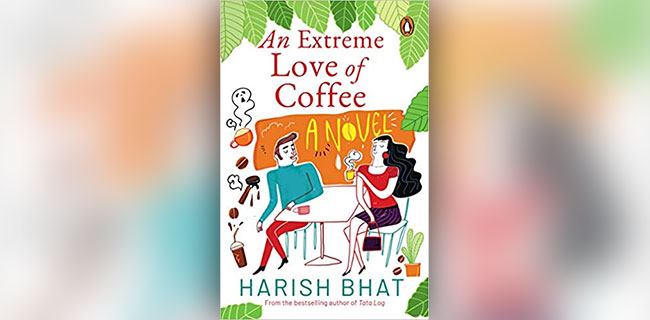


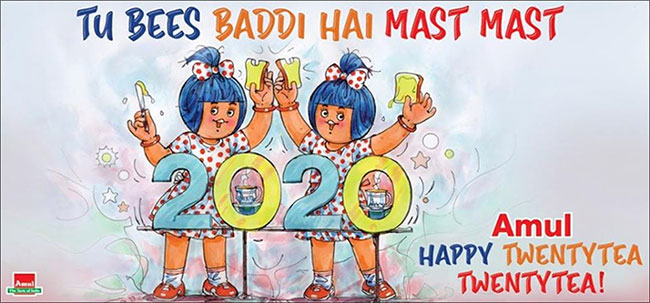 c`
c`