
Category: SANJEEV KOTNALA

  • Sanjeev Kotnala: Cinemas need self-regulation of ads

    By Sanjeev Kotnala


    Self-regulations across media channels have helped streamline consumer experiences. Its absence leads to government reframing expectations.

    Self-regulation is a proactive behaviour and a responsibility of the industry associations. They must ensure appropriate self-regulation guidelines exist based on changing consumer expectations and media engagement patterns.

    To a large extent, television, radio and print are self-regulated. Digital too is trying with new matrices, technology, transparency, and consumer freedom. The ‘Gold Standard’ is one such effort. ASCI has done a decent job of ensuring truthfulness in messaging.

    NO SELF-REGULATION IN CINEMA ADVERTISING.

    I am an avid movie watcher. I have seen and experienced positive change in the total movie experience. Unfortunately, it has more to do lounge, ambience, seating, sound and projection system.  On the other side, the filmmakers are experimenting with cast and subject. Movies like Badhai Ho, Vicky Donor, Mary Kom, Padman, Piku are finding audience and success.

    My traumatic consumer experience with the 11 pm Show of ‘Thugs of Hindostan’ at a PVR screen makes me raise this question. Not only the film was terrible for which PVR cannot be held responsible, but they contributed to prolonging the agony.

    THE AUDIENCE CAN’T COMPLAIN ABOUT EVERYTHING.

    Multiplexes don’t control the complete movie experience. They have evolved with the changing demands. The consumers anyway have the option not to avail of the new offerings. The late night and early morning shows reflect the changing lifestyle. You get the option of multiple titles and a show that matches your timing. The weekday and weekend represent Uber surge pricing. The eatables come only in large sizes.  Theoretically, viewers are allowed to carry food.

    CINEMA ADVERTISING NEEDS SELF-REGULATION.

    The movie I last saw, started at 11 pm. It had some 10 minutes of advertisement followed by National Anthem. It again has a few more advertisements, movie trailer followed by another round of commercials and trailers. The audience was restless waiting for the movie to start. It is before the bad reviews hit media.

    01:00 a.m. it was interval time. The audience were comforted with five minutes of blank screen. Time for buying the exorbitant priced eatables and bio-break.

    No one was ready for the near barbaric traumatising onslaught of advertisements that were let loose on the captive audience. Advertisements kept rolling in, immune to the audience receptivity. The messages stopped making sense.  15-20 minutes of advertising at 01:10 a.m.! That too after the audience has suffered uninspiring first half of ‘Thugs of Hindostan’.

    The audience starts hooting. The voices rose in protest. The audience overtly demonstrated their frustration. Good sense prevailed, and the movie was back on screen.

    EVERYONE IS A LOSER WITHOUT SELF-REGULATION.

    The proposition of Aamir Khan and Amitabh Bachchan sharing the screen time was intoxicating. It was hyped release of the year coming on the extended Diwali weekend. No brand with cinema in their media plan could afford to miss the opportunity.

    Net result. The audience was served an infinite set of ad-films in a movie that was long with least engagement.

    • Are the brands getting their return from such advertising?
    • Do the brands know how many advertisements are being screened in every show?
    • Who is making these advertising buying decisions?
    • Do the brand custodians and media planners watch movies?

    And why is no one worried about it?

    IT’S TIME FOR CINEMA ADVERTISING SELF-REGULATION.

    It’s time for a proactive self-regulatory framework. Maybe like television 10+2, we need a 7+5 approach. 7 minutes of advertising before tailors and start of the movie. 5 minutes of advertising during the interval or any guideline that the association decides.

    • How many advertisements are allowed?
    • Should the maximum number and duration of advertisements be a function of the length of the movie and the show timing?
    • What is the max duration of advertisements before the start of the movie and during the interval?
    • How to treat stitched trailers?
    • Should the ad not allowed on TV before 11 AM be permitted with a ‘U’ certificate movie during the daytime?

    NOW THAT WE ARE AT IT LET ME MAKE UNREASONABLE DEMANDS.  

    • What should be the MRP of water and other eatables in multiplexes?
    • What must be the serving size options in Food and beverages?
    • What percentage of space in a lobby should be made available for the activation?
    • How many activation representatives should be in a lobby per 100 seats?
    • How many activations be allowed to run simultaneously at a multiplex?

    TIME FOR CINEMA SELF-REGULATION OR DON’T COMPLAIN LATER.

    It’s great that the audience has returned to theatres. They are enjoying the experience. Their option for entertainment is expanding exponentially. Theatre life of a movie is decreasing. The window between theatre release and TV premiere is shortening. Soon we will see simultaneous digital and theatre release. The movie experience at multiplex must be a superlative experience for it to keep pulling the audience. A great experience will help the industry grow. Otherwise, we all can debate the possibilities.


  • Sanjeev Kotnala: Be Professional in Client-Agency Relationships

    By Sanjeev Kotnala


    What is true for personal life is true for professional life too. Relationships take time to build. They need an investment of time, efforts and a lot of trust and faith. Moreover, yet, in many relationships, there comes a stage when breaking it is more productive than continuing with it.

    I believe, no one wants to end relationships nurtured over time. They are full of collective dreams, shared emotions, successes, failures and a sense of accountability.  However, sometimes the relationships truly stagnate. There is nothing much left in it. Then breaking off is the most logical thing to do.

    A client-agency relationship is such an example. Many of us have been on one of the two sides and impacted with these sudden and sometimes uncalled for actions.

    Whenever relationships end or are terminated, stakeholders on both sides feel the impact. Each side believes they never got justified time to react and get their act right. Many think it is too late too little. Some feel guilty for the right or wrong reasons.

    Everyone knows a part of the truth. Everyone has a point-of-view that he or she swears by. Old incidents are re-evaluated with hindsight to make a point. The signals are usually there even for the blind to see, yet many fail to read the smoke signals.

    There is no SOP for breaking a relationship. Everyone learns it on the job. No one teaches how it needs to be done.  There are no set patterns and advisors to help you do it.


    EVERYONE HAS THEIR WAYS OF BREAKING A PROFESSIONAL RELATIONSHIP.

    Nowadays, most of the client-agency relationships tend to be transactional. People are justified in protecting their turf. When the blame game starts, professionally it is crucial to remain untainted in the post-mortem.

    The truth is that every day, the agency gives a client a reason to terminate the relationship. Also, every day the client provides the agency with a reason to hate. The critical question they must ask is; is it a good enough reason to break the alliance.

    Getting over the breakup is more natural than the act of breaking up.

    Getting into the new alignment, pitching in for more business, taking time off from work are all helpful tips to ease the pain and hurt.  Blaming and bad mouthing each, however, is not recommended. Unfortunately, there is more of it.

    What is missing is a bit of soul searching and analysing where things went wrong. Life is all about learning and moving on. There is no point living in the past.

    In breaking a relationship both the parties lose. There is a considerable loss of collective knowledge and understanding of the business environment.

    EASE THE PROCESS BY SETTING SPECIFIC GROUND RULES.

    Client-agency relationship is critical for businesses. The client and agency are collectively responsible for the strategic intent and execution of co-owned co-created campaigns and strategic marketing initiatives. If the relationship of mutual respect and trust has deteriorated to a vendor-client status, there is no future in it. Unfortunately quite a few relationships are thinly balanced at this edge.

    It happens when they fail to define the expectations and the reasons for coming together.  They do not know as to why they are collectively devoting time and energies. There are no measurement matrices to evaluate the efficacy of the relationship. There are no open discussion and reviews from time to time.

    In such a situation, where stress is allowed to build up. The conversation breaks up. The relationship appreciation or issues are faked. The tectonic pressure build’s up. The relationships sour the relations.

    THE ONLY WAY TO PREVENT THE CLIENT-AGENCY RELATIONSHIP FROM DETERIORATING.

    Most of the issues can be ironed out with a discussion. Most of the explanations are acceptable only if someone is willing to share and hear. It is essential that every issue is ironed out at the very beginning.

    Learning from such episodes and evolving a system to prevents a repeat of it should be the aim. However, when everything fails, you need to take the hard decision.

    Follow these to help to create a long-lasting client-agency relationship.

    •    Define the client-agency expectations.
    •    Have a quarterly review mechanism in place.
    •    Ensure strategic co-creation so that both sides own the process and results.
    •    Be professionally open in voicing POV on any subject critical to the job at hand and relationship.
    •    Immediately address any issues that emerge. Do not allow tectonic pressure to build up.
    •    Be logical, rational and practical with expectation.
    •    In a multi-agency set-up ensure that everyone is on-board at the same time.

    ACT LIKE A TRUE PROFESSIONAL.  

    Don’t hide behind the protective layers of the organisational structure. Whenever the situation demands call the other party, deliver the news face to face.  Teams that worked together deserves a genuine conversation. Do not do that over WhatsApp, a mail or a letter. Don’t protect yourself by isolating the other party. Don’t let them know it from the press or any other third party source. Moreover, please do not start a pitch before you tell the current agency its fate. It is what every client-agency relationship deserves though it may fail to dilute the impact.

    Maybe, there is a need to create a process for such a situation. Unfortunately, no SOP or guideline exists for such circumstances. Everyone has their ways to handle such a situation. On the other side, look at it positively.  Maybe it is better to develop an SOP of nurturing relationships and talent that comes along with it. Hopefully, you will not need to terminate the relationship.

    …………………………………………………………

    In my agency avatar, I have lost few clients in spite of best service and excellent work on the brand. I have retained clients for far longer than what global alignments allowed and have even sacked a client. In my client avatar, I may be the rare client who gave a farewell party to the agency while parting ways.


  • Did Indigo misread customer frustration elasticity?

    Representative picture


    By Sanjeev Kotnala


    Last week, Indigo, the best on-time performing airline of India, made an announcement. It said it would start charging for any seat selected on web check-in.  Oh, well, it graciously offered the option of free seat check-in at the airport. As expected, it led to loud protests and negative sentiments on the social media.

    Finally, Indigo watered it down. Now, few seats will be available free on web check-in. For rest (read most) of the seats, the passenger will have to pay on web check-in. Nothing changed.

    Other airlines like Vistara cashed in on the situation. They reminded people that web check-in on Vistara is available without paying any charge.

    Even Jet has seats with no charges for their Platinum flyers. So what if the lounge is not available to platinum frequent flyers travelling economy. Trust me, customers being customer have a tendency to adapt.


    THE DECISION MADE NO BUSINESS SENSE.

    The revenue expected was too small compared to the dent it makes on customer experience. May be it was the case of ‘every drop counts’ with profits nosediving for the airline. Or someone was flying high, well above 35,000 feet when the decision was made. Why would any one try sabotaging the customer experience?


    INDIGO HAS A LOT GOING FOR IT.

    Indigo has the largest share of passenger traffic. Its on-time performance has created a preference among frequent flyers.  It has been promoting web check-in and pushing kiosk check-in. The in-flight crew is one of the friendliest. So what if they always run out of items on the menu card.


    THERE ARE ISSUES WITH THE INDIGO EXPERIENCE.

    It has a non-relenting excess baggage policy. It does not compromise on 25-minute door close policy. The seats are cramped for space. And a pre-booked meal does not guarantee serving.


    TESTING FRUSTRATION ELASTICITY.

    Airlines have always been testing FRUSTRATION ELASTICITY of customers. Examining how far the customer is willing to be pushed before a backlash starts. This time maybe Indigo has gone a little too far.

    The joke on social hinted at possible next steps. Why not starts a ‘Standing Passenger’ service? Why not charge for the use of loo?  With four trollies of ‘FOOD MART’ in the pathway, it is anyway tough to reach the loo.


    CUSTOMERS WILL BE CUSTOMERS. THEY WILL ADAPT.

    I think Indigo understands customers. They will adapt to such unbundling of services.

    The customer is seeking convenience. Most are willing to pay for these special privileges. With a large part of the traffic being business-led, even the seat charges will soon become a hidden cost for many passengers.

    Their internal data must have indicated customer’s willingness for reserving preferred seats. Earlier, one was used to the crew announcing the availability of seats with excess legroom in row 1,12 and 13 at a price. With the flights going full on most sectors, there are no such announcements.

    Indigo is fully aware that the decision will overload their limited check-in counters. It will lead to inconvenience. Passengers will have to arrive a wee bit early to check-in and wait in the queue. Maybe they expect such an experience will push passengers to grudgingly pay for the seat on web check-in.

    The question remains. Was it the right decision? Unfortunately, only time has the answer.

    I do feel if they had stuck to their decision, customers would have soon adapted to the new reality. Just like buying food on a flight or silent airports.

    I will not be surprised if airlines try testing customer frustration elasticity further by unbundling their price structure in more ways than one.

    Customer will be the customer they will adapt. It is as much of truth as Customer wants the best services at the lowest price. Maybe the airline blinked too soon.


  • Sanjeev Kotnala: Chhakkka Punja 3 and how it breaks Bollywood suffocating hold on Nepal

    By Sanjeev Kotnala


    The Nepali film ‘Chhakkka Punja 3shows how a movie makes a dominant statement.  I am in Kathmandu, attending  ‘A Forum for Reflections and Action – Education for Public Good in South Asia’  organised by the Centre for Educational Policies and Practices’ Nepal and supported by Aid-et-Action.


    To be truthful, I was apprehensive when the schedule read, viewing of ‘Nepali feature film ‘Chhakkka Punja 3’. I was not sure of the experience. I wondered how good it would be.


    It deals with political power and its control over education. It shows the situation of the public school and how private schools are fast becoming an alternative. If the narrative at the conclave I attend is to be believed, it is a stark accurate reflection of ground realities.

    Set in a rural area, it in a satirical way lays bare the situation. No doubt resonates with the audience.


    In India with a population of 1.2 billion-plus, we celebrate 100 crore and a film lasting more than two weeks.


    Tonight, the team of ‘Chhakkka Punja 3’ is celebrating their 51 days of successful screening and an earning of 18 crores. That is from a three-crore population with 74 recognised dialects. ‘Chhakka Punja 3’ is breaking the Nepal box-office record set of ‘Chhakkka Punja’, the first in the series.


    May be Indian producers and scriptwriters should watch all the three versions of Chhakka Punja to see what makes a sequel work.


    After watching the movie, my respect for Nepali cinema has grown. I was fortunate to interact with the cast and key member of the team – Jetu Punjabi. Deepa Shree Niraula and Deepak Raj Giri have produced the film. Here is the clip of the hit song ‘Pahela Number Ma’ from ‘Chhakka Punja 3’.


    The whole experience of ‘Chhakkka Punja 3’ was PAISA VASUL.

    The hero could be called Nepali Govinda as his mannerisms, costume and facial expressions remind one of Govinda. The supporting cast worked magic with their comic timing. And the heroine, though not impressive, has a significant role. She is better than some of the female-lead sleepwalking and dancing in Bollywood movies.


    I sincerely hope Indian producers make such movies. A commercial films based on ground reality and with a message. As the hero of the film puts, ‘Some good deed is done, and the money is also in’.  I am sure  ‘Chhakka Punja 3’ dubbed in Hindi would find a large audience.


    Hollywood films have a negligible presence, as the language is alien to most Nepalis. However, the Nepali film industry suffers from the larger than life Bollywood next door. Most of the big Hindi films are also released in Nepal. The audience can easily follow the language and enjoy the experience.  The low-budgeted Nepali films have to fight them. And we know what the result of this mismatch is. In such a situation, credit must go to the ‘Chhakka Punja’ team to be able to take the relevant subject, and almost the same star cast create box-office success.


    If you do get a chance, watch the film. At least you can catch the flavour by watching ‘Chhakka Punja ’ on youtube.

    https://youtube.com/watch?v=xaLmFbKaE-k


  • Has Modi’s Brand-I taken a beating?


    By Sanjeev Kotnala


    The results of the five state elections are out. Many are surprised and many are iterating, they have predicted this resurgence of Congress. Meanwhile, there is a big debate if the aura of Narendra Modi’s Brand-I has taken a beating.
    It is a subject of debate and argument, if these state elections will have bearing on the national election in 2019. State elections are more nearer to the ground and reflect the widening expectation gap in the voter’s mind-space. BJP had senior leaders including the PM doing a spate of rallies across states. Hence, Incumbency or otherwise, central leaders too will have to introspect the verdict.
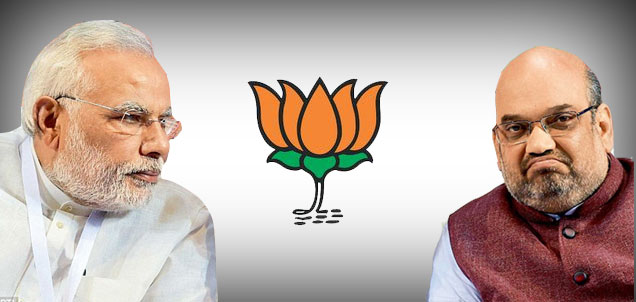
    One of the Giant Monolith images that must have been taken a beating is that of Modi, the PM and Amit Shah the shrewd political manipulator also nicknamed Chanakya of this era.
    On the other side ‘Papu Pass Ho gaya’. The image of Congress President, Rahul Gandhi has definitely seen an upswing. Expectations from Rahul Gandhi leading the 2019 election to win are now high with MP, Rajasthan and Chhattisgarh in the bag. But first he has a test of deciding on Rajasthan leadership with two strong contenders.
    The fundamental plank of ‘Jawan and Kissan’ and their issues in states seem to have won. Meanwhile the ‘Gabbar Singh Tax’ and ‘de-notification’ will be discussed and dissected in the days to come.
    Leave aside how the Brand Modi has been working on international stage. International coordination has no impact on the voters who define the results. The intricacies and the impact of the chain of international alliances are lost on common people. In fact this too much of ‘On Tour PM’ is seen as alienating and scheming by the voters.
    Every TG has a point to pick with Modi Brand. Only the die-hard loyalist has some points of understated appreciation.
    The delay in Ram Mandir, the handling of farmer agitation, the 56th inch proud chest, the language used, again ‘de-monetisation’ and ‘Gabbar SinghTax’. The opening of an on-going half completed projects all add to a sense of disenchantment.
    Modi image suffers from two common problems Brand-I is face with.
    It is really the perceived gap of over promise and expectations.
    The first is ‘What you claim and how you behave’.
    The second ‘How you think you are performing vs. what the TG thinks how you are performing’.
    Brand images are contextual and comparative in nature. And in a binary situation the brand images tend to be inversely associated with the opponent. So whenever Modi Brand (say Modi-Amit Shah co-existing brand) takes a beating the benefit goes to the next option. Modi brand is more are seen as benefiting selective business, as tainted as any other party and a perfect case have over promise-under delivery. It is never the best thing. Someone has to talk about brand promise- customer delight and consistency to this brand.
    Rahul Gandhi has been benefiting in this context and this election has suddenly put him in front of the race from the other side of the Modi fence. It is not going to be easy. Brand image repair takes time. Let us hope for Modi and the country that the voters are able to differentiate between the need and difference between a state and national election.
    One thing that has worked for the Brand Modi and what it can use to get the shine is closing the issue of tempering with EVMs. Maybe politically there could be more to read in the minor sacrifices of states and political aspirants.
    As BJP remains a strong opposition in MP and Rajasthan, its role in the next few months could be sued to add another coat to the MODI’s IMAGE OF BEING FAIR AND DEMOCRATICALLY INCLINED.


    Sanjeev Kotnala is a senior media strategist and educator. The views here are personal


  • Sanjeev Kotnala: Towards Green Brand Building!

    By Sanjeev Kotnala


    ‘Green Brand Building’ is a thought in inception stage. It is inspired by ‘My Green School’ an idea supporting education for ‘Gross National Happiness’ (GNH).  It is an initiative by Thakur S Powdyel, former Education Minister of Bhutan.


    Bhutan believes in GNH as a measurement of Growth and prosperity.  It believes- ‘The ultimate desire of every human being, regardless of time and space, from coast to coast, hemisphere to hemisphere, is to be happy, it is, therefore, the responsibility of the elected government to create the necessary conditions to support the experience of Happiness’.


    Green is not just CSR.

    Green is a metaphor for anything and everything that supports and sustains life in all its varied form- humans, animals, plants and other living beings.  It is a necessary re-orientation of our mind.


    Can this argument be extended to brand building?

    Brands ultimate aim is to enhance the happiness quotient of their target audiences. They may use emotional triggers like jealousy, sarcasm, and pride and create polarised communities. Yet, hopefully, the aim is engagement, involvement and overall betterment of the consumer.

    Like a pupil in a school, organisations and brands from their need-desire-want and a problem-solution state are pushed into a performance category. They are measured  by their contribution to the balance sheet and stakeholder’s wealth. There is nothing wrong in that business objectify and wealth/profit creation.


    Green School and Green Brand Building

    In the Gross National Happiness, there is a critical link, the Green School engaging and empowering all the elements of the learner. It includes the natural, intellectual, academic, social, cultural, spiritual, aesthetic and moral elements. It works to produce a GNH graduate who displays the qualities of usefulness and gracefulness.


    Similarly, ‘Green Brand Building’ requires a new belief, a new North Star guiding it. The change understandably like the Green School needs a tectonic shift at the grass-root level. It will take time. Maybe the industry leaders can contribute by nudging it.


    Green Brand Building is a simple thought.

    The GREEN SCHOOL is explained in the Sherig Mandala. It speaks of the Natural Greenery, Social greenery, Cultural Greenery, Intellectual Greenery, Academic Greenery, Aesthetic Greenery, Spiritual Greenery and Moral Greenery. Seems a lot more complication for a simple thought of Love of Life.

    If I try creating the initial draft ‘Kotnala Mandala’ – ‘Green Brand Building’, I see a huge degree of overlap and hence openly borrow from the concept.


    Just like we need the earth and the sea and the sky and the animals and plants more than they need us. Brands need the audience more than they need the brands. Kotnala Mandala is pushing for brands being a lot more respectful, responsible in their engagement with the complex ecosystem that its audiences live and need.


    ‘Kotnala Mandala’ – Green Brand Building

    It in its preliminary stage the ‘Green Brand Building’ mandala or Kotnala Mandala has following rings of truth or guiding principle.


    1. Natural Greenery.Environment consciousness. It leverages and not exploits to deplete nature and its resources. It does not create by-products that lead to increasing pollution. Being Carbon/ Energy/ Water Positive is part of it as is discouraging use of plastic.

    2. Aesthetic Greenery.Ensuring that the whole design, function approach is not jarring and seamlessly integrates itself in the consumer life. It is purposefully tasteful, adds colour to life, relives monotony and brings in novelty and excitement. This also includes the way the offices are constructed and maintained, the marketplace display and interaction.

    3. Socio-Cultural Greenery. It promotes the feeling of togetherness. It works within the cultural framework. It seriously evaluates its impression and impact before taking the side in a dynamically changing social fabric. It is not promoting generalisation and creation of stereotypes. It is building a community not just based on brand usage but shared ideas and philosophy. Its communication promotes habits, behaviour and practices that are beneficial to the community. It supports the beliefs, values and notion of success, the idea of progress, view of humanity and society.

    4. Ethical Greenery. The brand and communication promote equality. It does not discriminate. It does not directly or subliminally give signals that are against gender/caste/religion/region/language equality.

    5. Business Greenery.The organisation has the best practices that lead to transparent interaction. The idea is of growth and prosperity without indulging in unethical practices or discrimination. They are not only equal opportunity organisation. But, they also empower them.

    6. Moral Greenery. Using our ability to think and judge. Raising questions ate every stage if what is being done is right and wrong.  There has to be greenery and nobility of thought, speech and action. And this should be reflected through the organisation, brand and its interaction with the consumers and extended ecosystem. There is honesty, transparency and a fair play.

    7. Intellectual Greenery. The brand building promotes a culture constant learning in the R&D labs, offices, meetings and markets. There is openness to ideas and patience for explaining to uninitiated. There is positivity in thoughts and healthy competition.  There is a constant evolution in the process.
    There is no infringement of copyrights and patents. They never poach ideas. They always pay for the idea. The promises it makes are genuine and true. They are not exaggerated or coined just for the impact. There is truthfulness in the brand construct and it’s advertising.

    8. Trinity Greenery. The client, the agencies (be it creative, media, strategic) and the media operate in an environment of earned trust and confidence. They respect each other. They have the passion for learning and a willingness to collectively shoulder the burden of occasional failures. They have conviction in the power of communication and brand building processes they adapt. They love their audience and are aimed at creating happiness within them.

    9. Spiritual Greenery.  The frequent brand introspection across all other Greenery we have discussed. Finding the brands vision and direction. Finding the guiding north star- a purpose.  A Brand Building that infuses life in the brand and its consumer that is more than pure transactional or profit oriented.


    ‘Green Brand Building’ may sound too idealistic a thought. However, in its purity is a North Star for brand creators. It is a need of the hour. I look forward to like-minded people contributing in evolving the design.


    SUB NOTE: Mr Powdyel and I were part of a small select group discussing ‘The State of Education at Public Good In South Asia’. This forum for reflection and action was supported by ‘Centre for Policies and practices’ and ‘Aid-et-Action’. Here I got exposed to the GREEN SCHOOL project and concept early this month at Kathmandu.


    Sanjeev Kotnala is a brand and marketing advisor, ideation and creativity facilitator and a coach.  


  • Time for Reality Reload?


    By Sanjeev Kotnala


    My favourite show ‘Bigg Boss Season 12’ climaxed on December 30, 2018. In the end, there were three types of audiences. One who will never watch Bigg Boss. Two, people who watched Bigg Boss and loved it. Three, the set of people who watched Bigg Boss Season 12 and said it was all over for them. And this is all about the third type of audience.

    Another big ticket popular reality show on the channel ‘Kathron Ke Khiladi’ (KKK) which starts on January 5. And trust me, when it ends there will be these segments of the audience.

    It is true for any reality and reality-talent shows. ‘India Got Talent’ (IGT) won hearts with wonderful magician ‘Javed Khan’ winning the show. Deepika winning, Sreesanth reaching finals or Deepak losing made many viewers promise not to watch season thirteen.

    Talent and reality show dominate Indian TV screens. Nowadays they also provide huge content for viewers on OTT.


    WE HAVE A REALITY SHOW FOR EVERYTHING.

    ‘Super Dancer’, ‘Dance Deewane’, ‘Jhalak Dikhla Jaa’, ‘Boogie Woogie’ and ‘Nach Baliye’ for dancing talent. ‘Indian Idol’,  ‘Rising Star’, ‘India Raw Star’, ‘Jammin’, ‘India Raw Star’and ‘Sa Re Ga Ma Pa’ for music and singing.  ‘Splitsvilla’ and ‘Roadies’ for the new generation with attitude.

    ‘Bigg Boss’, ‘Survivor India’, ‘Pati Patni or Woh’ ,“Wife Bina Life’, ‘Hear Me Love Me’, ‘Zindagi Ka Crossroads’, ‘Emotional Atyachar’ ‘Saach ka Samana’, ‘Iss Jungle Se Mujhe Bachao’, ‘Raaz Pechale Janam Ka’ and ‘Bindass Beg Borrow and Steal’ for the drama. ‘Ace of Space’, the new reality show by Vikas Gupta on MTV, has found new takers. It is a compressed claustrophobic BiggBoss in many ways.

    Kaun Banega Crorepati for the brainy ones. ‘Dus Ka Dum’ for the lucky ones. ‘Master Chef’ for people who take cooking seriously.  ‘India Next Super Star’ and ‘India’s Best Dramebaaz’ for the star power. ‘Comedy Circus’ for the laughter. Not to count the long tail to the list of existing and faded reality shows.

    Reality Shows must be good business. Most of them are the leading tent-pole property for the channel. Many times, the bottomline is a function of success or failure of these shows. So, the TRP, controversies and drama do matter.

    The viewer has options nowadays. There are many more ways the content is cut. There is cut-uncut, edited, unedited, behind the scene, repeat telecast, a library of episodes across the years and extra dose all available on click of a button.

    That should be good news for both sides. The content is expected to always win. But, is the engagement and involvement of video first viewer guaranteed?

    He or she is consuming a lot more content. The accessibility, availability and affordability of data have improved many times. The viewer now has a choice and chance to flirt and fall in love with the other screens.

    BREAKING THE REALITY SHOW

    The reality show can be broken down into a few essential elements.

    The concept. The pre-show build-up and auditions. The judges or the host. The time slot and day of the telecast. The show duration. The contestant quality and background.  The process of their elimination. The final winner.  The extra content and buzz the season generates during its lifetime. Equally important is the ability of the show to polarise the already segmented audience on the region, language, social class or religion. Most of these have remained unexplained and unmonitored.

    REALITY SHOWS VIEWER FEEDBACK.

    Viewers appreciate new formats with important differentiation and enhanced audience interaction. However, the format gets jaded with time unless the creative team is able to tweak the format.

    Sadly, this is happening to my favourite show Bigg Boss. The commanding personality of Bigg Boss has softened with the season. It no longer shows that strong control of the house. There is a rampant visible bias of the show controllers towards some contestant.

    The host is still able to hold attention on the weekend. But the teams must think of alternate. Akshay Kumar and Ranveer Singh could be the top replacement choice.

    The tasks are so repetitive that the audience gets disengaged. The partiality of propping up only the celebrities in promo has alienated many viewers.

    In cases like Khatron Ke Khiladi, it’s simple for the viewers to see the winner emerge. It’s as per the performance in the task. In others like India’s Got Talent audition round, it’s transparent as only judges are pushing the lever. It’s different that the audience still has not understood how does Kiron Kher define talent!


    ‘REALITY TV’ IS A SPORT AND SPORT IS A REALITY TV.

    The problem comes with audience voting.

    The channels may not be ready, but the audience definitely wants to see data on votes pooled in. There is a huge potential to suddenly changing the shape of the genre.

    Think about getting data on the screen like any other sports. It could do wonders for viewer’s engagement.

    What if like the count of Sixes and Fours in cricket, there was a live count of number of times Sreesanth says ‘I want to leave’ in Bigg Boss. What if people are asked to predict the final tally?

    What if there was an exciting ‘Extraa Innings’. If and only if we could see what was the lead or margin of defeat for the nominated contestants. And know how Deepika was performing.

    What if the ‘Weekend Ka Vaar’ was the real battle and not dominantly skewed film promotion?

    The reality shows need to be recharged after some seasons.

    How far the channels will go to rejuvenate them depends upon how the audience is interacting and engaging. But it’s time that every format needs a makeover.

    ………………………………………….

    The above is the result of discussion with viewers across the nation and is no reflection of BARC weekly results. And though the examples refer to Bigg Boss, please see them as representing the genre on screens.


    Sanjeev Kotnala is a senior strategy consultant and trainer. He writes every Wednesday on MxMIndia. The views here are personal


  • The Quest to be a Creative Superpower


    By Sanjeev Kotnala

    Creativity is an expected skillset in any profession today. Yet, there are very few recognised programmes on creativity that are taught as part of professional education at graduate or postgraduate level. Creativity is something one is expected to have or to learn on the job.

    Most of us have accessed creative training programmes and books to gain insight into this magic formula. The result, we all have our preferred processes and beliefs. Be it open-ended thinking, constraints breaking, brainstorming, magical hats,  or use design thinking. It is a professional requirement, and most of us have remained chained to creativity as experienced, expressed, exploited and explored in our area of expertise or profession.


    ‘CREATIVE SUPERPOWER’ SPECTRUM OF DOTS

    ‘Creative Superpower’ has been published as a crowd-funded programme called ‘UnBound’. It is a compilation of articles by global creative hotshots with a wide spectrum of professional expertise. There are architects, creative directors, educators, fashion designers, marketers, musicians, and storytellers, to name a few.

    Each article focusses on expression, processes and examples of creative approaches in a particular field. Some defend the inspirational style of creativity, and some still look for originality.

    The book is a light read, but it makes you think. It helps you discover a few things afresh. If you are in the field of creativity and innovation (which most of us are), the book will resonate with current thinking and learning.

    The book is divided into four parts. Each of these clusters of articles deals with innovation and creativity under one of the four conceptual ‘CREATIVE SUPERPOWERS’.


    CREATIVE SUPERPOWER: Making.

    The new way to approach. Learn how getting your hands dirty and making things open up new parts of your brain as well as creating happy accidents. Then you can see how the pieces fit together. Learn how to shape your ideas in your way. Your way is unique and human. Be brave, it’s the future.

    ‘Making’ asks you to be ‘Lateral Tinkers’ and not merely lateral thinkers, to make the best use of your creativity.

    Quoting “There is no right way to make other than to just get started. To start anywhere and eventually, to finish. To learn from the successes and failures and to start again. Because everything needs to be made real and making processes defines every articulation of every creative vision”.

    You do find some real hope in the book. ‘Machines can indeed do the work, but progression and innovation depend on the imperfection of the human creative process’.

    Again quoting from ‘What makes for great making?’ by Morihiro Harano, Creative Director and founder of Mori Inc. And this one is a serious thought. It is called ‘Don’t Make Shit For Shit’. Here it goes: ‘I have been to many clients briefing for products that were, to be honest, total shit ( sorry!) But the agency or the design studio staff would usually say, ‘Wow, what cool shit!’. And the client would be pleased and we all go off to make another shitty ad. And then we go to the south of France to give awards to each other for making the best shit.’

    The chapter ‘Shared Noises’ by Lucas Abela, a musician is the highlight. It was special for me as I am musically challenged. It is full of discoveries and simple innovation in motion experienced by the author and now served to the readers.


    CREATIVE SUPERPOWER: Hacking.

    How becoming a hacker will help you find solutions differently. For the first time I saw the creativity in hacking and it as a process tool for innovation.

    John Wilshere, the founder of Smithery, defines it brilliantly ‘A hacker is someone who always assumes that one part is broken’. By assuming  that one part is broken, you have to find what is broken and then you can focus on fixing it, thus making it better.’

    My favourite is the chapter ‘Using hacking to build better business’ by Annicken R Day, founder of Corporate Springs. It resonates with me when it says ‘Strategies are nothing but a guessing game for a future reality that is impossible to predict.’. We are after all expected to creatively or otherwise do the best within the constraints and degree of available information.

    My discover section was the way magicians were labelled the original hackers. ‘They look for flaws in the operating systems of the human brain and exploit them through sleight of hand, misdirection and great storytelling…. We find ourselves questioning the reality of what we have just experienced. I use the word ‘experienced’ rather than ‘seen’ because the gap between the data that goes in through the eyes and how the brain turns that data into a visual story is where the magic ‘experience’ truly happens’.


    CREATIVE SUPERPOWER: Teaching.

    Learn how teaching yourself and others consolidates experience in a fast-paced world. And why you need of continuously self teach through exploration, experimentation and DIY.

    There is no debating the quote from Alvin Toffler at the start of the section. ‘The illiterate of the twenty-first century won’t be those who can’t read or write. But those who can’t learn, unlearn and learn’.

    Teaching as an innovation creativity superpower is all about this learning cycle and approach. Something that Chandramouli in his book ‘Catalyst’ or Ambi Parameswaran in his book ‘Sponge’ pushes for.

    ‘Street wisdom. Answers are everywhere’ by David Pearl, founder of Street Wisdom, is my favourite in this section exploring teaching as a ‘creative superpower’. It presents the case so vividly that you can’t miss the importance.

    In ‘learning in reverse’, Nadya Powell, co-founder of Utopia makes a strong case for the need to reevaluate the irrelevance of knowledge in the world of younger-wiser. He further stretches on the need to manage the young talent by adding ‘We must let the young teach’. I love his suggestion that the hierarchical structure or remuneration levels need rethinking. It can no longer just be based upon the years of experience and service but must be contribution based.


    CREATIVE SUPERPOWER: Thieving.

    Learn how looking at what already exists helps you solve your problem. How to be inspired and learn from what already exists in the framework and reference set.

    In the introduction of this section, Mark Earls, founder of Herd Consulting sets the ball rolling. I quote ‘Our ability to use the ideas and the brains of others- to steal, copy or borrow- is the most important superpower, we have inherited from our human predecessors. It means, we don’t have to store information or know-how within our individual skulls but use the brains of others to do so- we outsource cognitive thinking. Like all superpowers, it can be used for good or ill, but not to use it at all- or not to acknowledge it- is to be dishonest to ourselves, our inheritance and our world. When used well, this is the way to create new ideas and things, faster, better and with more fun.’

    ‘Same Same but different: How abstraction is the key to creativity’ by Faris Yakob with Rosie Yakob, founders of Genius Steal makes the point absolutely clear. They dismantle the notion of originality ( the greatest myth still doing rounds) and develops a schema for understanding ‘Stealing’ and recombination in the formation of Ideas.

    I somewhat agree with their thought ‘Nothing is original. Steal from anywhere that resonates with inspiration or fuels your imagination’ and then add what Jim Jarmusch says ‘It’s not where you take things from that is important but its where you take them to’.

    Before I close on this, here is a tip from T S Eliot ‘A good poet will usually borrow from authors remote or alien in language, or diverse in interest’. And that links to need for far more extensive knowledge, experience, exposure to be a better thief. I definitely want to be a better thief.


    THE INDIAN CREATIVE SUPERPOWERS.

    One can pick which ‘Creative Superpower’ works best for them. This book is a compilation of articles on Creativity clustered under new buzz sections of Making, Hacking, Teaching or Thieving.

    In Indian style, we have ‘creative superpowers’ like  Saam (Logic, rational, inference),  Daam( Price or opportunity),  Dand (Penalty, constraints, frugalism) and Bhed (differentiation, uniqueness, relevance doubt). Each one of them is capable of rolling out an avalanche of innovation. We say copyright is right to copy and we are expert in it. We follow a simplistic approach of beg-borrow-steal from existing frameworks and reference. Adapting and being inspired is always an honourable escape route for many creative.


    INDIAN VOICE IN ‘CREATIVE SUPERPOWER’.

    Ravi Deshpande, founder and chairman at Whyness, is the Indian voice in the book. He discusses Jugaad in the chapter ‘How hacking helped build one of the world’s largest economies’.

    Jugaad, the frugal innovation remains one of the most misunderstood terms. Ravi correctly puts it in the right perspective ‘Jugaad is based on one simple rule, there is no rue’. It’s about doing whatever it takes to make things work your way. If the conventions do not permit this, change the convention. If your audience does not approve of it, change your audience. If the cost is astronomical, do it on a shoestring.’

    But I will not endorse Ravi Deshpande’s current perception of India. He writes: ‘The most important thing about Jugaad is that it thrives on chaos and uncertainty. India is probably the most chaotic country in the world; elephants blocking traffic….” Really? Ravi, you forgot, the beggars, the mosquitoes, snake charmers and the famous Indian rope trick. I am surprised that even he presents and projects an utterly perverted, biased impression of the motherland. Being unique and creative is so tough.


    INNOVATION CREATIVITY IS PROCESS AGNOSTIC

    Creativity and Innovation is an approach and an attitude towards working. It is a way of working. It is not a button that you switch on or off as per requirement.

    There are multiple processes and paths, but the end-objective remains the same. You use creative superpowers and innovate to make something better not necessarily new or unique.

    The processes are ‘Same Same but Different’ if you know what I am hinting at. You can pick them and innovatively mix them to create what works for you. Most of the Innovation experts and consultants will vouch for their concoction.

    However, the need to stimulate an empty relaxed mind to think does not change. At times unlearning is required. An overstretched mind full of many facts can be a severe impediment to the creative process. Each additional frame of information is another barrier or a box to be ticked. The dots need to be connected or reconnected relevantly. The childlike curiosity and willingness to learn remains a crucial ingredient of the whole process.

    Remember: “You are the most talented, most interesting and the most extraordinary person in the Universe. And you are capable of amazing things. Because you are special”. Go create and redefine your own Creative Superpower.

    WHY WAIT TO INNOVATE.

    I run a co-creation innovation programme ‘InNoWait’. It is built around the promise of directional innovation to a product, service or probortunity within a short period. InNoWait simply means; You don’t have to wait to Innovate.

    InNoWait banks on the idea of immediacy, creating, learning and recreating. It follows the collective co-generation and creation of solutions. It employs the divergence and convergence of design thinking. It works with a relaxed mind. The work ambience induces childlike curiosity and a   non-evaluative environment with no race for credits.

    Most of the techniques in ‘Creative Superpower’ were known to me. Few I have personally experimented with and can endorse their efficacy. Hence, to me, the book ‘Creative Superpower’ is just a  revision of thoughts. I must add, it did add a differential experience in terms of examples and lucid explanation.


    WHO SHOULD PICK  ‘CREATIVE SUPERPOWER’.

    So, if you are new to the field of innovation and creativity, slightly academically inclined, ‘Creative Superpower’ is a book you should read. However, the book may not excite people who work in the creativity Innovation field.

    I will say you will be better-served reading, ‘The Art Of Innovation’, ‘Storm The Norm’ and ‘Unlock the real power of ideation’ to start with.


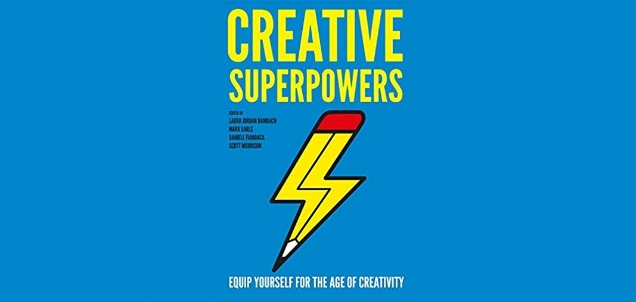
    ‘CREATIVE SUPERPOWERS’: Equip yourself for the age of creativity by Laura Jordan Bambach, Mark Earls, Daniele Fiandaca and Scott Morrisson. Published by Unbound. Pages 237. Cover Price Rs 999 (Available on Amazon for Rs 628, Kindle edition: Rs 129)

  • How the Hardik & Rahul Ban Serves the Industry

    Screen grab from Indiatimes.com


    By Sanjeev Kotnala


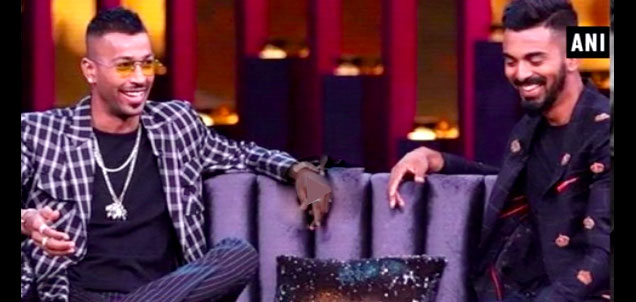
    Pushed by the media pressure, I managed to watch the Hardik Pandya-K L Rahul episode of Koffee with Karan just before Star took it off from its OTT platform. It was just another episode but with a minor difference. The guests were young cricketers. Unlike Bollywood stars, not accustomed to avoid or fend profound, probing questions thrown at them by the gossip hunter rumour-loving anchors and journalists. They just went with the format and in an attempt to play the Casanova Cool Dude forgetting silence is golden at times. They forgot they had right to not answer or not say anything that could backfire.

    Poor Hardik and Rahul fell for Karan Johar’s questions. They said things that self-appointed media jurists did not like. Things that were not right to say in a public platform. Not expected from people of reputation. It is different that our politicians can make worse remarks and no one says anything. I know the operative word is ‘profession of repute’.

    Maybe they needed to fake till they make, just like the other celebrities.

    People fuelling the media pressure would have loved a fake persona projected as per their expectation. Hardik and Rahul answering the questions on expected lines defined by the moral police would have been just right.

    Maybe honesty is no more a virtue.


    MILLENIALS THINK WE ARE MAKING A MOUNTAIN OUT OF A MOLEHILL

    The young millennial of today thinks otherwise. Millenials do not pay attention to the armchair twitter moralists jury that is always wanting to insist on actions and reactions and at times unending unnecessary debate.

    The young millennial believe it is an era of learning. It is an integral part of professional and personal life.  If needed, give them a dressing down. Surely make them realise the enormity of the situation. Expect them to take the learning. Kill the episode and move forward.

    Millennials agree everyone does not need to make a mistake to learn. One can learn from others’ mistakes. Just like a lot of them will learn from Hardik and Rahul’s mistake.

    They are not a community of intolerants. They don’t wait to pick, every cause-effect relationship. They don’t like too many coordinates being fixed. They hate freedom being curbed, expectations being defined in strict tones and guidelines that make life seem like an army camp.

    They do not want to be undifferentiated fake clones. They want to live life on their terms. They hate life where actions and reactions are pre-coded. What you say between friends or family on WhatsApp or Koffee With Karan. Where they are expected to operate within six-sigma tolerance. Where honesty, transparency, divergence and maybe creativity is being suppressed.

    They appreciate the duality of life, the greyness of morality and life. The hate this recalibrated meters of sensitivity. Mistakes do happen.

    Are we encouraging the life of deceit and dishonesty? Jab tak Pakda nahi gaya Chor nahi. Not a thief till caught.  So it’s okay to be whatever within the closed doors but you dare not say it publically. You dare not expose yourself. You dare not be caught.

    The media court has announced its verdict and found Hardik and Rahul guilty. The truth remains that each of the argument can be sliced, defended, re-examined and attacked. Even within the boundaries of accepting what they said was entirely wrong. In net, it all comes down to your personal belief.


    SOME LEARNING AND GOOD FROM THE EPISODE.

    CAN’T BLAME KARAN JOHAR

    Karan Johar did what as the host of a show like Koffee With Karan was expected to do. He is media savvy and knew how his audience will react. He could have warned the young cricketers. He still went ahead. No issues. Most of the audience liked the show till the media raised its head questioning the answers. I don’t think he will be more cautious next time unless the Network reframes its guidelines.


    STAR TV CAUGHT NAPPING.

    Hopefully, it’s a case of SOP violation than lack of guidelines. It may just be a rare lethargic moment due to a false zone of comfort.  Believing Koffee with Karan will never do anything wrong. The Star network is technically and morally responsible. However, they will escape the backlash. Don’t think anyone including I&B ministry is asking them questions.


    BCCI IN SELF-CREATED CHAKRAVYUH.

    Definitely they have failed to groom the new lads in the art and science of PR. They have not really read them the rulebook. Delayed confused reactions point out to lack of anticipation and policies on the subject. New contracts will be better drafted. Many still feel they are exceeding their brief.

    Knowing that their statement, remark and association will in many ways define their Brand-I, cricketers have reacted as per expectation. They have distanced themselves from the two victims of blood rush. No one has even commented on the action.

    The cricket-loving audience is polarised in their opinion. But, most are not really looking for a harsh penalty or suspension. The audience wants Hardik and Rahul back in the filed.

    A good outcome is that HR heads across corporates are busy rewriting and updating their contract to reflect these new expectations.


    HARDIK PANDYA AND RAHUL.

    The young dude Hardik wanting to be honest transparent without an understanding with fame comes responsibility and accountability. Forgetting it is better to fake it – till the time you make it.

    Think of what wonderful thing he has done. He has stripped morally before all. Now he walks with a neon sign over his head. Every woman knows what kind of person he is.

    He has apologised. He said: “I would like to apologise to everyone concerned who I may have hurt in any way. Honestly, I got a bit carried away with the nature of the show. In no way did I mean to disrespect or hurt anyone’s sentiments. Respect”. Baccha hai- chance toh banta hai. He has learnt his lesson. An unconditional apology has been given.

    K L Rahul seems to be an unfortunate victim. Really. Not objecting to the conversation shows him as supporting the discussion. He had the option to stop the show and react. Not majorly at fault.


    VIEWERS OF KOFFEE WITH KARAN

    I believe they lapped it up, enjoyed the episode not seeing the social tsunami unleashing. Channel delivers what the audience want. Truth is that the TRP will improve and loyal audience is not going to boycott the show. Conflicting learning.


    THE BRANDS.

    Brands cannot play favourites. Many celebrities like Tiger Woods, Sharon Stone, Whoopi Goldberg, Ray Rice, Manny Pacquiao, Lance Armstrong; Oscar Pistorius know the cost of such misconduct.

    Brands have to protect their consumers and hence act according to their understanding of the consumer’s expectations. Gillette has been the first one to drop Hardik. Other brands are yet to respond. However, I personally don’t see more brands taking a harsh action.


    THINK BEFORE YOU RECOMMEND.

    It is wrong what the two cricketers did. But, we must ask a simple question. Is this not a simple lapse in judgment? Is it drug abuse or ball tampering or hurting someone?

    Maybe it’s the best thing that could’ve happened. The lesson has been learnt. An example has been made. Hardik, Rahul and Karan should now be counselled and let off with a warning?.


    CLOSING REMARK.

    As one of my friends puts it, Redemption, Repentance, apologetic remains, as the past should not define your future. Let’s get on with the game. I know Hardik Pandya and K L Rahul will survive this fiasco. Just wish their tomorrow is better than today.


    Woh Pahela Pathar Maare, Jisney Paap Na Kiya Ho, Joh Paapi Na Ho. Every saint is a sinner and every sinner a possible saint.


  • Sanjeev Kotnala: Uri team throws a challenge to online pirates

    By Sanjeev Kotnala


    The recently released film ‘Uri-The Surgical Strike’ has won many hearts and has been a reasonable success. Made with just Rs 28 rore, it has more than recovered the cost in its first week of theatrical release.  I loved the film and recommend it in my review.

    Meanwhile, many movie watchers were waiting for the pirated version on Torrent. To their delight, it was soon available as a 3.8GB download.


    THE URI SURGICAL STRIKE ON TORRENT

    The fun started when the viewer opened the downloaded file.

    True to its title ‘Uri- The Surgical strike’ working with Dentsu Webchutney, did a surgical strike on ‘online piracy’ in India. All the downloaders got on Torrent was a spoof planted by the Uri team. They knew that the only way to cover up anything wrong unwanted on digital is to bury it under the deluge of good and desired items.

    They made the viewers believe they were watching the movie. It started with the right censor certificate and the hall conversation thrown in to make it like it was recorded in a movie hall.  They trapped the viewers and then prompt them to go and watch it in the theatre. It was a brilliant creative strategy,  well-executed..  They rightly understood that the only way to cover up anything wrong unwanted on digital is to bury it under the deluge of good and desired items.


    THE FAKE RELEASE OF URI THE SURGICAL STRIKE

    I like the treatment. The lead team seem to have separately shot for the fake release. I loved it when Yami Gautam says “Surgical strikes 0400-hours pe hongi. Unhe pata bhi nahi chalega ki kya hua” if followed by Vicky Kaushal looking at the viewers and saying, “Theek usi tarah, jaise iss waqt hum aapke screen mein ghus gaye hai. Aur aapko pata bhi nahi chala.”  (Surgical-strikes will start from 0400-hours. They won’t even know what happened. Just like how we’ve entered your screen and you didn’t even realise)

    The logic is strong. Most likely the viewers trapped with a 3.8 GB download will not try to get the movie from other sources. Moreover, one would appreciate the treatment of this leaked version, it enhances the desire to watch the film on theatre.

    WILL YOUNG BRIGADE TAKE THE URI CHALLENGE.

    I will not be surprised that the young brigade sees this fake release as a challenge. The task is simple. Can they get a pirated full movie?

    The truth remains that whenever the young brigade tries to find the link to download the film, the page will be cluttered and crowded with this fake digital release. (I did the test)

    A DETAILED VERSION OF URI-THE SURGICAL STRIKE

    The above version gives the game away too soon. Here is another release by MARVEL PAKISTAN with the EROS NOW logo. It shows the video duration of 2 hours 10 minutes, is a compilation of stunning footage and screenshots from the actual movie and songs. You can watch it long before saying there is something wrong. And up pops up Yami Gautam on screen giving out the secret.

    I personally like the approach and the execution. Would want to see this ‘act’ by URI team and Denstu Webchutney won awards. It is a classic example of understanding the media and the enemy, and turning the weakness of the system to its advantage. Well done.

  • Sanjeev Kotnala: If you are not audio branding, you are missing opportunities

    By Sanjeev Kotnala


    The new generation is video generation.  The use of sound (audio input) is becoming more critical than ever. The environment is becoming more sonic by abbreviating communication in the real world.

    The audio enabled (IOT) gadgets and their unique distinct notifications nudge your brain into action. Every one of these audio interventions is opportunities for audio branding.

    It does not come as a surprise when Bruce Bendinger suggests: ‘Marketing does not have a “blind spot”, it’s deaf! Too many operate with the audio dimension totally underleveraged.  Brands are not taking advantage of unique audio opportunities’.

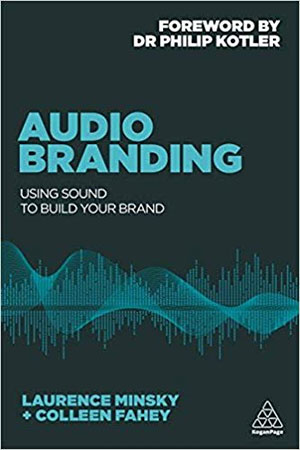
    Colleen Fahey, Managing Director of Sixième Son USA and Laurence Minsky the award-winning copywriter, marketer and professor at Columbia College have written ‘AUDIO BRANDING’. It is a practical do-it-and-learn guide and workbook explaining the art of audio branding. Added input by the guest commentators sharing their Perspective and point-of-view is a bonus. It adds to the book impact and experience. They add a new dimension to the subject.

    The book ‘Audio Branding’ Is Full Of Real Life Examples.

    The book is full of case studies brands having successfully deployed Audi Branding to their advantage. Brands like SNCF, Michelin, Huggies, MGM Loin Roar, Atlanta Convention & Visitors Bureau, Hawaiian Tourism, Renault and French Open feature with their unique audio branding.

    Unfortunately, there are no Indian examples, but the people in Advertising-Marketing will relate to the examples.  However, most of us are familiar with the Doordarshan news, IPL song, Chennai Super Kings song, Colgate ring of confidence and Nirma as an example of audio branding examples.

    In case you miss that, then look within the vibrant cultural and religious spectrum in the country. The drumbeats of Ganapati Visharjan, the Holi songs, the Bhangra beat, the Durga Puja shankh, the hymns sound, the aazaan are all perfect example of strong audio branding.

    What Is Audio Branding All About?

    Audio Branding is a concise, practical guide on the influential world of audio branding – what it is, why it is important, and how it can be used to enhance a brand. Consider the familiar tune of a branded ringtone, the bubbly sounds of Skype, and even the chosen sound bite for a branded car unlocking as the driver presses the key. How do these choices tie into a wider brand identity? Which emotions do they spark, and most importantly, how do these choices enhance brand association with the consumer?

    Advantage Of Audio Branding.

    A well developed audio branding will not only reflect the brand values and brand story but will help the brand to stand apart from the competition. The audio Logo; the small piece of a 2.5-4 second of audio that is present across all communication stems from the overall audio language and music for the brand. It is not constraining, all it will allow for flexible adaptations within the structure without repeating itself.

    Audio Branding Argument.

    The right music and audio language help build brand authenticity. The argument by Mickey Brazeal from Roosevelt University as Guest perspective in the chapter ‘The search of your sound’ makes a logical point.

    ‘Words will always be at the centre of marketing. But words create a cognitive response that always includes the counter-argument. If you say ‘this is how it is’, the human mind will always imagine that it might also be some other way. But a non-verbal argument does not provoke the counter-argument. We do not summon up the alternative visual or alternate music.’

    The second key is congruity. If the music experience is clearly relevant, appropriate and congruent with the brand idea, then it creates an argument that is never rebutted. It says that the values of the brand truly are what they are. And it is believed. Music that captures the essence of a brand consistently and measurably enhances the authenticity of the brand as perceived by the customers.’ (Page 96)

    There is no debate that music can work as a magnet (drawing people in), mood magnifier (intensifying the visuals), mnemonic (stimulating memory), Mask (brand identity) and even as a messenger (delivering information). Just think of your whatsApp message notification.

    Treat Audio Branding Like Visual Branding.

    The audio logo needs a treatment that visual logo is given. As a best practice, every communication must be endorsed with the audio logo. The audio signature must not be distorted. There is an audio gap between music and the audio logo just like the visual logo has the area of freedom around it.

    Leveraging Audio Branding

    The book rightly puts audio branding into perspective.  It treats audio branding like any other element of brand development. It urges you to develop a guideline (DNA / MAP) of audio language for the brand and an audio logo that then becomes an integral part of brand communication and connect across touch points.

    Initiating Audio Branding.

    So before you start, do answer these simple, tough questions. What are the codes, clichés, and expectations of the category? What does the competition communicate, even visually? What- if any- music of brand sounds they use? Is anyone using sound exceptionally well inside the category? Is there a company outside the category that is close in positioning? If so, how are they using the music?

    The brand custodians should work with the stakeholders (other departments) and sound branding experts (not necessarily musicians or their creative agency) in developing the Audio Branding.  A concept of creating the Audio Brand Committee that is diverse in their outlook and expertise so that the natural owner music bias does not derail the efforts.

    The branding elements are only as good as their consistent deployment, so they are as strong as the people who manage them. (Page -131).

    Do’s & Don’ts Of Audio Branding.

    The book ‘Audio Branding’ recommends that you do not leave the audio strategy for the last minute. Don’t confuse audio branding with entertainment. Don’t forget that impact without meaning can be distracting and counterproductive. Don’t choose a piece of music just because you like it. Most of are guilty of this act. Don’t just repeat the same music repeatedly.  Don’t confuse music production houses with audio-branding experts even if they claim to be able to create audio logos.

    However, articulate what your brand ideally represents before addressing what the audio branding must do.  Stop thinking of your audio brand as a system of distinctive sounds and music, a jingle or even a stand-alone audio logo at the end of the TVC. Investigate audio approaches within the category. List down audio touch points so that they can be distinctively addressed. Plan to adjust your audio logo whenever the visual logo animates on the screen, at the same time for a multisensory advantage. (Page 91)

    Final Say.

    I did find the content very iterative. Many pages are devoted to making a case for Audio Branding. Something that is well accepted, so what, if it has been underleveraged. Maybe it is required as the subject is not well exploited and is finding a new buy-in. ‘Audio Branding’ is a book that marketers are best advised to read it once.

    Read ‘Audio Branding’ by Laurance Minsky and Colleen Fahey to refresh your understanding of Audio Branding and evaluate if your brand is leveraging it rightly.


  • Sanjeev Kotnala: MMT needs more than Magical Advertising

    By Sanjeev Kotnala


    Three years back ‘Make My Trip’ (MMT) signed Ranveer Singh and Alia Bhatt as Brand Ambassador in a strategic move to connect with younger customers. The audience was intrigued, as the two have not done a movie together. Gully Boy will be the first movie for the pair. The audience has seen some brilliant, interesting, engaging and straightforward advertising.


    Ranveer – Alia: a Perfect MMT Choice.

    The duo of Ranveer and Alia with their versatility and on-screen chemistry did justice to every possible freaky character the advertising agency served to them. The talented duo enacted a spectrum of roles with equal expertise. Each of the TVCs has an experimentative, adventurous, confident yet concerned and doubtful traveller as its mainstay.


    MAGICAL Engaging Creative

    All the films represent a ‘Get to the point and present the advantage loud & clear in a memorable episode’ strategy by setting up a believable contextual situation. Be it about the awesome room, helpline, discount, pay at the hotel, zero cancelling, international food  or reminding the audience that MMT also makes hotel bookings.


    Each of the TVC scripts is fantastic. The script leverages the brand ambassador pair chemistry and does justice to the crazy Ranveer and the big smiling, playful innocence of Alia Bhatt.

    There has been no slag or hint of complacency in creative output even after so many episodic TVC. The client-agency team must be complimented for it.  Here is the client-agency combination that knows how tough it is to deliver a higher degree of engagement once the benchmark is set. More importantly, a focussed client team has ensured a seamless migration of account from one agency to another, retaining the magic and playfulness.


    https://youtu.be/In2dukXrtxw


    The films have a template approach. There is a problem or a doubt followed by a smart solution ending with one-upmanship delivering the MMT advantage and an unforgettable lesson to the viewer.

    How cool it would have been if the reel life could deliver on the real-life promise.


    Ranveer Alia Can’t Solve Service Delivery Issues.

    Brand MMT must watch social media chatter.  In the last few months, there has been a marked increase in MMT consumer complains on social media and reviews. Most of them deal with broken promises, missed reservations and non-transparent pricing. The overactive bots and resultant thread of communication have shaken the confidence and image of a caring company with consumers.

    It’s a reality that very few travellers compliment excellent service delivery whereas the errors are over-amplified. A reality every service provider including MMT must face.

    It does not matter if the ratio of service delivered and complaints are the same across service providers. The complaints consumers see and react to, are important. Being one of the largest in the field, the expectations are much higher. MMT needs to be the benchmark. It seems something is definitely slipping.

    I personally had no problem with bookings and travel on MMT. But the recent hike in social chatter has shaken the confidence in even loyalist like me.

    Meeting customer expectation is a hygiene requirement in a service brand. Frustrated customers have no option but to shift loyalties.  Saying sorry serves no purpose.  The urge to check other travel-hotel portals is too powerful, and Trivago has been fuelling it big-time. Something the client cannot leave on Ranveer-Alia team to playfully address.


    On a lighter note, may be the social media can do with a compliment for excellent service delivery and not just crib. And that is not about MMT only.