
Category: BLOGS

  • Debrief: McDonald’s: Jaasti spice mangta!

    By Anil Thakraney


    Good to see that McDonald’s has relied on consumer insight for their McSpicy burger advertising. Usually McDonald’s ads, at least in India, are pretty straight forward; they are either into price claims or general masti. It’s a simple insight: How people spread rumours in an office, so that by the time the fifth person has heard the gossip, it becomes utterly sensational.


    The TVC features an executive tendering his resignation. And this gets his colleagues buzzing. As the info spreads from one dude to another, each one layers it with his own spicy version, so that by the time the last guy gets to hear of the news, he’s told that the resigning exec had assaulted the boss! Haha. Must say it’s a powerful insight, this sort of spicy nonsense goes on in every single organisation.


    But most importantly, it’s a relevant insight; spicing up of news ties in naturally with the McSpicy burger. Therefore even if McDonald’s had chosen not to show the burger, the communication still works. That’s a clear sign of a good idea. Also, good to see office executives in a McDonald’s ad, usually they feature kids and college lads. After all, adults too dine at their outlets, and they are more likely to consume a McSpicy.


    Only one improvement needed: While the ad does make you smile, they can, and must, make the gossip stories really wild, the idea has a lot of potential. Layer on oodles of spice, guys… we are lovin’ it!


    [youtube width=”400″ height=”220″]http://www.youtube.com/watch?v=OzLaFeujvOQ[/youtube]

     Rating: (On a scale of 1-5): 3. Super insight. Needs more spice.


  • Anil Thakraney: Marketers must conjure up more V Days

    By Anil Thakraney


    I write this piece on the lovely Valentine’s Day. Romance is in the air, and the social media is bursting with it. Even the mass media is doing its two bits to promote love. More so in Mumbai, now that the Shiv Sena has stopped beating up the heart shaped balloonwallahs.


    Guess it’s a huge day for florists, card sellers and other marketers. And I quietly snigger at the plight of all those dolts who forgot it’s the great V Day, and bought nothing for their partners. They’ve had it, I say! And in order to ‘make good’ for their crime, they will now have to rush to buy expensive goodies. When viewed as a gullible consumer, this sort of purchase pressure is kinda exploitative. However, this is an industry portal, so I am on the side of the canny marketers, and shall suggest that the Valentine’s Day Sales Carnival can easily be extended to an all year long bonanza. Leading to windfalls for the industry.


    The idea is to create two such Big Days each month. Especially in those months when there is no important festival. And then, in tandem with the media, market that day to the hilt. Imagine these: Daughter’s Day. Son’s Day. Granny’s Day. Chachi’s Day. Bhabhi’s Day. Cousin’s Day. Mother-in-law’s Day. And so on. I believe Father’s Day and Mother’s Day already exist, but for some strange reason, marketers haven’t been aggressive on them. They should be. India is a country of relations, we are emotional fools, people feel a strong sense of bonding with family, even the extended one. Wonder why CEOs have been sleeping on this goldmine. When heavy sales can happen even if there’s absolutely no need/want for the goods in the consumers’ lives.


    So go for it, guys. Declare a Special Day. Create a buzz around it. Get celebs talking about it. This will get the mass media interested. The social media chatter will follow. And voila! You have another day in the calendar to embellish the toplines.


    On that thought, happy belated Valentine’s Day. Hope, for your own well being, you didn’t forget to buy her/him an expensive gift. 🙂


    ***


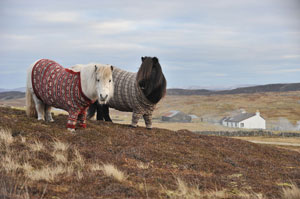
    PS: Cute idea from Scotland to promote tourism. They dressed up a couple of ponies in cardigan sweaters made out of local wool, used them in ads, and these creatures have turned into celebrities! And they help generate a great deal of curiosity about Scotland. We should do something similar with stray dogs and cows that line our streets. Dress them up in khadi kurtas. And Gandhi topis. 🙂


  • Ranjona Banerji: So who really broke the Agusta Westland story?

    By Ranjona Banerji


    If you are tired of the “I’ll be the judge, I’ll be the jury, pronounce you guilty and chop off your head” trials held in TV studios every night, try reading The Indian Express to get a deeper and wider understanding of the Agusta Westland helicopter deal and the Italian investigations into Finmeccanica. Although Times Now has been taking credit for this story, it does appear as if Indian Express has done (and had been doing) the bulk of the work.


    TV news channels seem now incapable of acting like journalists and have become trapped in their own images as it were. The details of this deal and its wrongdoings are still being revealed – the Italians have not named any Indians apart from former air chief marshal SP Tyagi and his cousins. Therefore, Indian journalists might consider some further investigations. The TV approach of calling sundry politicians who know nothing about the details of the deal and then cross-examining them maybe a good ego massage but it serves very little journalistic purpose. At least, we need not have the incredible sight of political gadfly Subramaniam Swamy directing CNNIBN editor-in-chief Rajdeep Sardesai on how to conduct this investigation.


    **


    An intriguing piece of news was hidden somewhere on the inside pages of the Times of India’s Mumbai edition. The Information and Broadcasting ministry is considering cancelling the licences of newspapers/journals who are involved in “paid news”. This comes after the Election Commission has taken action against politicians involved in bribing newspapers, journals and news channels (is there a more polite way of saying this?) to get favourable pre-election coverage. However, even at that time, questions were raised about why the media houses were allowed to get away with it.


    What will media houses make of this? Can the loss of the right to conduct business deter owners and managements from further perverting their “products”? Is the fear of government action the only way to force the press to follow its own ethical code? Or will we now see a spate of stories targeting the I&B ministry and the very amusing spectacle of various CEOs of media houses attempting to justify their dubious practices in long-winded and badly written edit page articles?


    **


    Is it just me or was this Valentine’s Day one of the least silly we’ve had in recent times? There was the usual quota of love-no love stories, but nothing seemed extraordinarily over-the-top. A little more humour and fun might have been interesting. Judging from the number of jokes made by Indians on twitter, the traditional newspaper idea that no one reads humour columns in India is ready to be challenged. Rohan Joshi for one does a very good job at making us laugh in Mid-Day on Saturdays and The Week That Wasn’t has tickled ye old funny bone for eight years on CNNIBN now. Bring it on, I say!


    **


    This is a slight departure from the serious and grey-haired subject of the woes of journalism. But can we have better sub-titles and less censoring of English programmes on TV? The number of words which are bleeped out have crossed all bounds of sense and are worthy of a separate programme on Comedy Central – which by the way is the worst culprit. For the morally clean-minded: vulgarity alert. You cannot hear the words “penis” or “vagina”. That is one thing. But you cannot even hear the word “booby-trap” which has nothing to do about “boobs” or breasts. I shudder to think what goes through their minds when they come across a character named “Dick” or someone feels a “prick” from a rose bush… More seriously, what happens when characters discuss breast or testicular cancer?


    With that happy thought, I leave you for the week.


  • One Big Idea by Siddhartha Mukherjee: Be One, think Big, get Idea!

    By Siddhartha Mukherjee, Sr. VP – Eikona PR Measurement

     

    ‘One’ Measurement Currency: One central currency is a sign of health for any economy or industry sector. Today, our Public Relations industry needs ‘One Single’ (measurement) currency to create oneness and initiate healthy dialogues between corporates and their consultancies. First create health by converging and creating ONE central PR Measurement system…wealth will automatically follow! Let us no longer boast of high annual growth rates on small denominators.


    PR’s ‘Big’ Leap: Don’t do PR just because that is simply the norm or if you are not clear about the business objective. Here is where PR should take the next Big Leap to ‘Reputation’ building. Mere sprinkle of your brand’s name in editorials does not create reputation…instead reputation is all about what brands emote for each stakeholder. Very few corporates though, but good to see them getting internally aligned with the single objective of creating reputation!


    The ‘Idea’ of doing PR for PR and with numbers: The internal customers of the PR desk want proof that PR works, can be measured and hence involve top management. Here is where the PR machinery should do PR for PR with Data/Measurement. Even after more than two decades, we are yet to weed out the elementary yet, cancerous EAV evaluation from the system. The industry needs organic growth which is possible only if: a) We do our PR b) For this, use self devised scientific metrics…not those that have been copy-pasted from advertising! Get an idea…think long term!


  • Anil Thakraney: Need more Choppergate stories

    By Anil Thakraney


    I think someone’s gotta do a viewership measurement study for the Choppergate coverage. No, not to suss which channel got the most eyeballs (I can already see Arnab babu claiming the championship), but to check exactly how many Indians actually watched the television coverage. This is because I am beginning to suspect India is tiring of scam stories, the janata may have reached a point of disinterest in corruption. And this is because there’s a financial scam happening every other day, and it’s now become an Indian way of life, much like spitting and pissing on the streets. Naturally, our politicians and babus would be mighty elated if indeed that is the case.


    Having (ruefully) said the above, the media still has to do its job, it still has to report the bloody scams. And what gladdened me is that almost all the TV channels went into the investigative mode on Choppergate. Reporters got flown to Milan (lucky guys!), anchors went deep into facts and figures, and there was a healthy competition to unearth more dirt than the rival channel. I particularly liked NDTV’s Vishnu Som’s work, who presented his bar charts as if he was talking to school students. While it was a bit funny, I liked the analytical passion he displayed. Now this is television I appreciate. Because this is asli journalism, as against the gasbag debates that happen each evening. When the same group of farts arrives, and farts about every possible thing under the sun. And it gets particularly noxious during TV dinners. It is these mindless debates that have driven many viewers away from desi TV news. That’s not journalism, that’s nautanki.


    Choppergate reminded us that the news channel folks do have the will and the skill to carry out investigative journalism when they deign to. And am hoping we get to watch more of it in the future. In any case, there cannot be a greater joy for a journalist than an expose well executed. It also makes the audiences take news channels more seriously. Am hoping this will be a turning point for news television in India, though I suspect I am wrong. For some reason, editors seem to enjoy all the prime time gassing. Sigh!


    ***


    PS: Very good slice-of-life commercial. Brits in particular would identify with this. And surprisingly, it comes from McDonald’s, who aren’t renowned for great advertising work (though their ad for McSpicy, which I reviewed last week, isn’t bad). Wonderful story that culminates naturally with the brand.


  • One Big Idea by Ankur Warikoo: Local e-commerce is the way ahead for small businesses

    By Ankur Warikoo, CEO, Groupon India


    The next big idea for the Indian industry is local e-commerce – defined as buying and selling of products that are distance- or location-dependent. Think of restaurants, beauty and wellness services, and health services.


    Over 70 per cent of the Indian retail segment constitutes local trade, with food dominating it. This segment is not only a high-purchase-frequency segment (compared to traditional product e-commerce), it is suffering from lack of marketing innovation from the business side.


    For the customer, the introduction of local e-commerce is inevitable. India is perhaps the only country where internet penetration has almost magically timed itself with the average population age. We have half the population aged below 27 years, making us one of the youngest countries in the world – and an internet penetration that is only scratching the surface. This population has grown up on the Internet and is willing to transact. Compare that with developed economies, where it is the older generation, hard-wired to traditional media, that is driving the Internet and its use. The convenience of buying services only, as against products, is new for the customer but one that is inescapable.


    For businesses, the digital platform will prove to be a blessing. For years, traditional forms of advertising such as newspaper, local cable, direct marketing have been non-measurable and expensive ways of marketing. Digital introduces them to a new way of marketing – one that is measurable, controllable, customizable and relevant.
    India is unique in several ways. I believe we are at the cusp of one more such unique feature. That’s becoming the world’s biggest country in local e-commerce.


  • One Big Idea by Ameer Ismail: Need to harness the power of communication

    By Ameer Ismail, Executive Director, Lowe Lintas and Partners

     

    India is a land of opportunity and contradictions, one moment we are basking in glory with India Shining, the next we are being perceived as the corruption capital of the world where there is policy paralysis and constant downgrading of our ratings and status… the imagery has moved from shining tall towers to masses of humanity struggling to get something as basic as clean water and electricity. In this crazy dichotomy, what are we? What is our edge? Are we future ready…or just confused?


    We are rich in human capital…not only in numbers but in our ability to create and innovate. Our problem is we don’t have the collective wisdom to harness this power and use it to make a positive change for society. Media is also changing and evolving rapidly. This is where we as communications professionals need to do more. We have the capability and connect to make things happen. We have the potential to be creative, we have access to the masses through various platforms and media and we have a strong connect with Corporate India.


    So far, we, as a collective group, have not harnessed this – the power of communication. Glimpses of this potential have been seen with successful campaigns that have started looking at societal issues. Impactful change can be only made if we get together and define a collective roadmap for the future. We have enough ability to turn perception around for the country and we must!


  • One Big Idea by Anita Nayyar : Ecosystem needs multiple and complementary elements

    By Anita Nayyar, CEO, Havas Media, India and South Asia


    We’ve seen an overall degrowth in readership for magazines and newspapers what with the fight for eyeballs across print and digital media formats; and both of them growing in the number of publications and offerings.


    However, the differentiator needs to be not quantity but quality underscoring engagement and understanding of the reader. This is key to attract the advertiser to whom an engaged reader is the ultimate.


    While newspapers by the pure habit of news consumption are leafed through, magazines really offer a relevant editorial environment: an environment which can be enjoyed at leisure; an environment which lends itself beautifully to the product category.


    The positive exploitation of this environment is what will alter their scope. It has been seen that advertising in the relevant editorial environment enhances the chances of the advertising being noticed and retained.


    To thrive, an ecosystem needs not a single element but multiple and complementary ones.


    Magazines will need clutter-breaking innovations eg inventive use of the double page, say a housing project, instead of a flat print, could display as a 3-D cut-out; product experience in terms of shape, smell and touch; etc. Yet, done in silos or overdone, they will soon be stale.


    Integrated offerings can and are opening up a lot of vistas for ad revenue where publications can use the muscle of their own group or forge alliances with non-competing yet complementary sister media. While larger media houses like BCCL, Jagran, HT, Bhaskar, etc. are soon adapting the art of integration, the seamless offer and execution across media is what will create the difference.


    Specialized information will win hands down. General Knowledge Today is placed second as the content is relevant and meaningful to the reader. Magazines have tremendous scope to create for their customer /reader once they have defined him.


    Online or in a magazine the user, here the reader is a customer with similar needs. Actively engaging him will make him a major shareholder in the magazine. Allowing a page or edit by specific target groups such as Student/CEO/Housewife and actively marketing and promoting user-generated content will put the magazine in the spotlight.
    In tandem all of these will create considerable mindspace.


  • One Big Idea by Vishal Gondal: Free is the new Premium

    By Vishal Gondal, Managing Director, Digital, DisneyUTV

     

    Did you know that 19 out of 24 apps are free on the iOS App Store and these apps still manage to draw millions of dollars’ worth revenues? ‘Free’ is the next big thing for sure! For content developers, the freemium model is fast emerging as the most profitable way to go. The term ‘freemium’ is devised using two powerful words ‘Free’ and ‘Premium’.


    Freemium is offering an app, product or service free of charge while charging a premium for advanced features, functionality or related products and services. That blend of free and premium is only slowly taking off in the traditional apps market in the West, but it has grabbed the mobile market and it is not letting go. And why would they, these freemium apps induce user engagement, help build communities and spread a good word around too.


    The Freemium model is viable and lets the user make a decision on whether he would like to pay for it or not. India, which is a price sensitive market is apt for this business model where the developers allow the users to make a purchasing decision after they have tried the product. This ability of the business model works wonderfully well and has users worldwide who are paying for content. Once adopted the freemium content will also catch the eye advertisers who are still grappling with the idea to reach out to the digital audience. Best thing about this model – can be adopted by games, video apps, music apps and more! A handful of digital content developers have started to adopt this strategy in India and I hope to see this number grow in the next 18-24 months.


  • One Big Idea by Harshad Jain: The industry is moving towards music plus

    By Harshad Jain, Business Head – Radio and Entertainment, HT Media Ltd

     

    Till some years back, radio listening meant music consumption! Listeners switched between radio channels during jock talk. Over a period of time the scenario has gradually changed and radio programming has moved towards music plus category. When I say Music Plus, I am referring to entertainment and content that drives appointment listening and audiences specially tune into a channel to hear a particular show/program. This trend has been largely prevalent in case of television but radio has also started reflecting drift with the help of differential programming. Be it radio dramas or reality based programming content, the Indian radio industry is evolving with the consumer.


    Did anyone think that Ramayana could be repackaged for radio? Or that a radio campaign could help jail inmates start a new life? Yes, that’s the power of radio and content like this is the next big thing in the radio industry. Radio is a free medium; a listener today has sufficient options to move between radio stations for his choice of content. Therefore brands need to offer content that is unique and helps them be differentiated.


    At Fever 104 FM, we were the first to spot this trend and have tasted this success at various occasions. Be it Radio Dramas like Gandhi, Bose, Bal Gopal or reality pieces like Sachin Ki Sadak, Fever Ka Asar, Sharad Ki Madad, Reliance iDream etc we have been able to offer our listeners engaging content that is beyond music.


  • One Big Idea by Dhunji S Wadia: The idea generator: We can’t build a fire in the rain

    By Dhunji S Wadia, President, Everest Brand Solutions

     

    Consider this..

    1. The CEO of a large MNC agency confidently proclaims, “Digital is the Future.” We are in 2012, pal – wake up!

    2. Yet another takes pride in the fact that he doesn’t know how to switch on his computer.

    3. One of them gets his PA to print all his e-mails and then dictates his responses and forwards to her.

    4. One reads out ‘tweets’ to his PA, from whichever part of the world he is, in for onward transmission.

    5. And almost all have a TV commercial/ print campaign in mind even before receiving the brief from the client.
    If there’s one Big Idea that can be a gamechanger, then it would be for industry heads to wake up to the new reality; by modifying their on-going lip service towards the digital world and consumer engagement.


    Close to 3.5 billion brand conversations happen in public every day – therefore it is time for agencies to master the art of listening to what’s happening out there.


    The role of the agency should be to facilitate conversations as opposed to the current formula of orchestrating advertising campaigns. The consumer is now a creator/sharer/distributor; we need to learn to harness and inspire that. Today, consumers trust consumers more than they trust brands; we need to mobilize fans and followers to evangelize on our behalf.


    Even marketers will move to the concept of a new communication entity – one that shifts from creating messages to creating consumer connections.


    Over time, traditional agencies will have very little option other than to make this shift; they will start by connecting with consumer communities and will eventually become an integral part of them.


    Too many agencies still are not making themselves an integral part of the new reality. The old system of agencies employing a few creative teams to come up with agenda-setting ideas simply doesn’t make sense in a digital era where ideas can and should come from anywhere.


    You can’t start a fire without a spark. Clear the clouds in your mind. Come out of the woodwork. Burn the deadwood. Clear the cobwebs. Wake up. Interact with what’s happening out there. Engage your consumer. And become part of the new reality.


  • One Big Idea by Anurag Bhatnagar: Need for brands to optimize digital touch points

    By Anurag Bhatnagar, Head, Media Contacts, India, Havas Digital


    2013 will be an interesting mix of how brands and businesses continue to leverage social media coupled with digital activations. Will there be one defining idea? Not really. What we expect to happen is that brands will learn from their experience of 2012 (which is really the year of social media) of how to optimise their digital touchpoints.


    Financial services, travel, e-commerce retailers will continue to leverage search as the primary channel for lead generation. For more brand led campaigns, we see a rising trend using video and social media activations as a preferred means of connecting with their consumers.


    Today most publishers are geared to deliver video ads and we will see a greater use of this. Among the choices available, mobile will also play a significant role as a choice of connect with consumers through custom applications and more targeted campaigns.


    Also, hyper targeting will allow brands to send more specific creative messaging to a greater segmented audience. The structural problems do remain however – lack of publisher data, consumer insights data coupled with clients’ unwillingness to invest deeply in analytics keeps the whole ROI conversation on digital stoked.