Category: BLOGS

  • One Big Idea by Sanjay Tripathy: M-commerce is an enabler for information transaction and sharing

    By Sanjay Tripathy, Executive Vice President, Head, Marketing, Products & Direct Channels, HDFC Life


    According to Google, one of the three big changes which will impact how people view and use technology and internet is the need for greater mobility and leveraging its advantages in our everyday life. And within mobile, the one big idea that I feel will change the game of business in the long run is Mobile Commerce. Let’s look at the statistics. Growth searches from mobile devices are actually doubling every 12 months. We have more people in the country and world accessing the internet through mobile devices than the fixed web – the mobile has become the first device to connect a majority of the populace to the web.


    Currently, 25% of all the web searches are through mobile devices. One of the reasons behind this is the high penetration of mobile technology and rapid adoption of smart phones with 3G enabled services. Gartner says around 500 million phones were sold in Q2, of which 154 million were smartphones. This suggests that the total market for smartphones is around 600-800 million pa. All the important regulators and key players in mobile technology are working towards more efficient mobile commerce in India. Mobile commerce also provides immense opportunities to retailers in areas such as location-based services, near-field communication etc.


    I feel m-commerce is more than just a tool for financial transactions; it is an enabler for information transaction and sharing while on the move. Convenient, and how! Smartphone users are already doing first level mobile transactions through the buying of different paid applications. As smart mobile devices proliferate the world over, it makes a good business case for businesses to create a strategic approach to m-commerce that provides a world-class customer experience.


    For that I would like to quote my favourite case study on this accord; More than 42 million mobile payments have been processed at Starbucks locations in the US, Canada, and the UK, over the past 15 months. That’s an average of almost 3 million payments every month. However, the total figure in December alone was 26 million. This alone showcases the true potential of m-commerce. With Google driving its Google Wallet aggressively and Apple unveiling its response through ‘Passbook’, it’s bound to scale up and reach critical mass sooner than later.


  • Ranjona Banerji: Dissecting the discussions on telly…

    By Ranjona Banerji


    “Well Mr Arnab Goswami, now I know why they say you’re a dangerous man,” said actor-superstar Kamal Haasan to Mr India-Wants-to-Know on Times Now on Thursday night. India’s most celebrated TV anchor (NDTV’s Barkha Dutt was ousted from that position a while ago, regardless of what Hillary Clinton may believe) demurred shyly at the charge, honoured though he may have been. However, in spite of all Goswami’s promptings, Haasan maintained that he would leave the country if pushed in the future and the secular nature of society was threatened.


    Haasan in fact mentioned two things which are at the forefront of discussion in India – in roundabout ways – neither of which Goswami picked up on. The first was that all this happened to Haasan on Mahatma Gandhi’s death anniversary. And the second was that the demolition of the Babri Masjid did more damage to us than we have fully understood.


    **


    The arrest of former Madhu Koda aide Anil Bastawade (for some reason Times Now reporters also insist on using his middle name which is Adinath) has excited Times Now more than anyone else. The mining scam under the former Jharkhand chief minister is estimated to cover about RS 4000 crore (also according to Times Now) but one cannot determine how far Bastawade’s involvement goes – somewhere near Rs 250 crore which seems a little meagre for so much excitement.


    **


    Karan Thapar’s Last Word on CNN-IBN discussed freedom of speech and the capitulation by governments to threats from fringe groups in view of recent events. The problem was that Thapar and three guests all had the same viewpoint – that the Tamil Nadu government had infringed on freedom of expression with its ban of Kamal Haasan’s Vishwaroopam. The only man who disagreed with Kumar Ketkar, editor of Divya Marathi, Aryaman Sundaram, lawyer and Najeeb Jung, vice-chancellor of Jamia Milia, was AN Krishnan, advocate general, Tamil Nadu. Krishnan kept referring to TN CM as “Amma” which sounded even more incongruous than his arguments about a possible law and order situation if the film was released.


    This makes for a non-argument since Krishnan was the only opponent. And while Thapar’s show is one of the few on Indian television where guests behave themselves, a discussion requires various points of view.


    **


    The Lokpal bill was threatening to overtake television again – or so I gathered from Twitter and a reasonable discussion on Rajya Sabha TV. Friday morning’s newspapers as usual took a wider view of life. But they were depressing in their own was as they were full of molestation of teenage girls, upper caste murders of Dalits in Maharashtra and rapes…


    CNN-IBN by the way has to be commended on its coverage of the murder of three Dalit youths in Maharashtra over a love affair with a Maratha girl. We clearly need to be reminded over and over again of our low and base nature and how outdated traditions continue to cause more harm than good.


    **


    This is just an observation but Firstpost, the news and views website of TV18, which was well-received when it started and has become very popular, has now started to pick up a fair amount of flak on social media. I am not sure whether this is because of its somewhat waffling political opinions or the ill-considered comments on Shah Rukh Khan by my former colleague Venky Vembu or the natural attrition which follows popularity… A reality check is perhaps in order?


  • Reviewing the Reviews: 2-2.5 stars for David

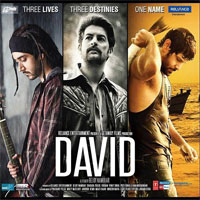
    David

    Key Cast: Vikram, Neil Nitin Mukesh, Vinay Virmani,Tabu, Lara Dutta, Isha Sharvani & others

    Directed: by Bejoy Nambiar

    Produced: by Bejoy Nambiar & Sharada Trilok


    Bejoy Nambiar’s David is the kind of film that exasperates critics. It has a lot to commend it for, but like the runner who trips before the finishing line, it just doesn’t make the grade. Visually masterful, with an inventive idea and structure, the film goes wrong with it script and pacing. Which is why most critics settled for a 2 or 2.5 rating, instead of 3. But they all read like it hurt to pan this one.


    Rajeev Masand of ibnlive.com commented, “Oozing style and technical finesse reminiscent of his earlier film Shaitan, Nambiar’s latest has some genuinely tense moments, but suffers gravely on account of flabby writing. Each track feels unnecessarily stretched, and there are bizarre moments in each story that’ll have you scratching your head in bafflement.”


    Sukanya Verma of rediff.com wrote, “Bejoy Nambiar’s gorgeously packaged, well-acted but underwhelming David is like a split personality, racing on three different tracks exhibiting the skills and shortcomings of both these fellas. On one hand, it is incredibly grand in its ideas and challenges the traditional structure of storytelling. On the other, it’s uneven, often dragging pace and frantically shifting moods, unable to hold fort.”


    Shubhra Gupta of the Indian Express was disappointed too. “My problem with David is not that it didn’t suck me in, on and off. There were a few passages which are well executed, and there’s no lack of drama in those: Nambiar knows how to lift scenes and inject tension. What the film doesn’t do is to pull together. Within each strand itself there are loose parts, which even smart editors like Sreekar Prasad can’t do much about. The film is also hobbled by inconsistent acting : some of it is credible, some is strictly passable.”


    Karan Anshuman of Mumbai Mirror was relatively mild. “Director Bejoy Nambiar shuns convention like a Shaitan shuns his morals. With David, he brings us three short stories of diverse genres and delights with his now characteristic visual flair but perhaps is a tad ambitious in attempting to thrust together multiple yarns in 150 minutes that could’ve been entire films in their own right.Still, David is infused with energy and where it lacks in substance, it makes up in style and original thought. It is essential to treat the three segments as individual plots by disregarding the muted manner in which they connect at the end. You may get the feeling that you’re watching one film considering the tales intercut with each other, but your ticket cost will essentially be three shorts for the price of one feature.”


    Sanjukta Sharma of The Mint had a style-over-substance complaint, like most others. “With his first film Shaitan (2011), Bejoy Nambiar burst onto the narrow Indian indie scene as a director for whom a story on screen is as good as its post-production, machine-fed visual acrobatics. Call it the Guy Ritchie school. His new film David, a narrative involving three separate lives that share the same name, firmly establishes him in that school. We need some of those directors—optimizing a visual in every sense, and the medium’s technological possibilities. Style does not exclude substance.”


    Madhureeta Mukherjee of The Times of India raps it lightly on the knuckles. “The film swiftly transitions between eras, dramatically changing in colour, content, emotion and drama. Even the music – rock, remix, retro – blends beautifully across time zones. It suffers at story-level – the first half builds intrigue and enthusiasm, but turns blase soon after. The plot with D1 grips, D2 goes so deep to find purpose it loses us, and D3, even with interesting mix of characters leaves us in stupor…Yes, the Devil’s in the detail. But maybe David needed more ‘D’ of ‘Depth’ in the story to make this more ‘Delightful’.”


    Saibal Chatterjee of NDTV.com wrote with some admiration, “It is apparent from the outset that the unusual narrative triptych that constitutes David has inherent potential. It is another matter that it is, at best, only partially realised. Yet, in the end, writer-director Bejoy Nambiar delivers a film that he can be proud of, even more so than of Shaitan. Soaring, stylized, scruffy, scrappy and sharp by turns, David is never low on energy.  It plays around with a wide range of emotions, from the extremely intense to the oddly comical, from the flightily romantic to the strictly familial. It is about retribution, love and forgiveness – that is what each of its father-son stories respectively deals with. As the film repeatedly moves from the sublime to the absurd, it courts the risk of careening out of control. Mercifully, it doesn’t.”


  • Anil Thakraney: Do Inkaar to Inkaar

    Anil Thakraney


    I watched Inkaar with a great deal of interest. Because it’s been touted as the nation’s first feature film that’s wholly set in the advertising world. And must say I walked away terribly disappointed. What a waste of a setting that’s pregnant with exciting possibilities!


    The problem with the flick is lack of singe mindedness (which, ironically, is the first mantra you learn in the ad biz). Director Sudhir Mishra is all over the place. Is this film about the ad guys? Or is it about sexual harassment? Or is it a good old love story? We are left utterly confused. And I think it’s turned out thus because the director found himself in a self-created trap: Mishra tries to please too many people at one go. And as any ad person will tell you, that’s a recipe for disaster.


    So, the director starts off by making a movie on the ad world. But he quickly rationalizes that if he dives too deep into the inner workings of the business, the mass audiences will feel alienated. To give it a broader appeal, he’s brought in sexual harassment to the story. The two tracks, instead of working seamlessly, compete for your attention, and therefore Mishra’s been able to do justice to neither. As a result, Inkaar gives us a totally superficial view of the ad world. What makes matters worse is that Chitrangada Singh hasn’t done her homework; clearly, the actress did not bother to understand how the ad world functions. She does not look like a creative director from any angle, Singh could well be working in the General Post Office. And the climax is a total cop out. Not wanting to upset anyone, Mishra has forced in the typical happy ending, and that leaves you even more puzzled. What the heck was this drama all about?


    Well, all I can say is that Inkaar is an opportunity blown. India’s first ad world based film is a washout. In fact, Sudhir Mishra has made all the mistakes that go into the making of a poor ad commercial. Instead of putting himself in the shoes of an ad agency CEO, he’s conceived this rubbish much like an insecure/worried client.


    If you are fortunate enough not to have wasted time on this one, I would suggest you do a big Inkaar to any temptation to watch.


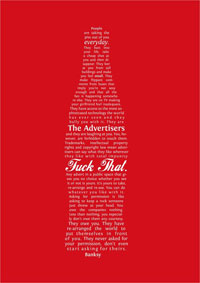
    PS: Hehe. Famed outdoor artist Banksy doesn’t like advertisers very much. He has strong views on their ‘pernicious’ influence on the society. Here’s an open letter from him, designed in his own unique way. Nope, this won’t amuse my advertising and marketing pals very much. 🙂


  • One Big Idea by Ashish Bhasin: There is no such thing as a niche channel

    By Ashish Bhasin, Chairman India & CEO South East Asia, Aegis Media

     

    In my view, the best service niche channels can do to themselves is to think of themselves as neither ‘Niche’ nor ‘Channels’. Just this One Big Idea can transform them as a genre.


    What we refer to as ‘Niche’ is in contrast to channels getting more viewership. But that is with reference to a different universe. In its own space, when the universe is redefined as the audience relevant to that channel, it is not niche, it is mass for that universe of the target audience. So an English movies channel, catering to only those people who are interested in English movies, is niche when compared to the total TV viewers, and hence will have a miniscule rating of less than one percent, but it may capture 40 or 50 per cent of audiences that are interested in English movies. How is it ‘Niche’ for them?


    Likewise, thinking of themselves as a ‘Channel’ is a mistake. They are an efficient way of connecting with special-interest consumers. In today’s highly digitized and personalized world, their efforts need to be all-encompassing, around the audience. Web, mobile, social media, activation, ground events, OOH and other means of interactivity have to be woven into their very existence, not as a promotional tool. They should see themselves as content creators for a special-interest audience and hence create content that transcends one-way broadcast.


    Actually they are in a sweet spot if they get it right. We all know that the consumer is king and content is the route to the king. The so-called niche channels have both. They just need to think differently and tap into their strengths, and not get worried about their share of the total viewing universe.


    As always, some will do it better than others and thrive, others won’t and will barely survive. The latter group will be those that continue to think of themselves as ‘Niche Channels’.


  • Debrief: Britannia NutriChoice: Welcome to medieval times!

    By Anil Thakraney


    I saw a staggeringly regressive commercial the other day, and I could not believe I was sitting in the year 2013 AD. Had to pinch myself to ensure this was reality.


    There is a boss who orders his female secretary/assistant not to disturb him as he’s started an important meeting. Much to the boss’s disgust, the disobedient lady does exactly that. And arrives with a box of Britannia NutriChoice Biscuits. Because, as she explains, the boss suffers from diabetes, and he needs to regularly consume these biscuits. Made of oats and ragi, apparently they help in controlling the blood sugar level (hello… dear ASCI… think you guys need to suss this out!).


    No issues on the communication, the message is delivered clearly and pointedly. Cool! My problem is with the treatment. The secretary/assistant has been made to act and behave as a subservient woman, her body language alarms me. She’s either looking for an instant double promotion, or the boss is a bloody tyrant. His rude mannerisms suggest the chap is a slave driver. Are office assistants hired to take care of your personal health issues?


    I think feminists should take offence at this one, it takes us back to the dark ages, when man was believed to be superior to woman. Just think about it: Would it not make for a charming commercial if you reversed the situation?  What if the boss shows concern for his secy’s health? Would not the brand win some free brownie points? I think it would.


    Despite effective communication, I shall be harsh on this ad and give it a big zero. If we can’t move things forward, at least let’s not go backward.


    [youtube width=”400″ height=”220″]http://www.youtube.com/watch?v=HEMZfTfhmbA[/youtube]

    Rating: (On a scale of 1-5): 0. Made me cringe.


  • One Big Idea by Kanika Mathur: Coming soon – the reign of the consumer

    By Kanika Mathur, President (India), Digitas


    In the future, consumers will rule completely. They will demand an experience on their terms; especially if they are willing to share who they are, where they are and what they are doing. At this juncture, agencies will need to enable a value exchange between marketers and consumers. To enable value exchanges between customers and marketers, agencies will need to offer more than one service; more than just creative or just technology or just content. The key will be the way in which agencies can combine strategic and creative services with UX, digital commerce and technology. The interplay between these skills will lead to blockbuster conversations and relationships in the online world. This complex interplay between diverse skills is the future big idea for agency success and we call it “creating digital chemistry”.


    The ingredients for digital chemistry will of course be great creative thinking but with the ability to create not just visual beauty those users will want to look at, but interactive experiences that encourage engagement – supported by techniques such as fun ware and gamification. Copywriters teamed with illustrators will be replaced by storytellers teamed with UX engineers, game developers and big data analysts who provide insight into what users will want (before they know they want it). Strategists will need to understand how to use social networks to reach an increasingly mobile customer.


    Digital commerce, with application development skills for creating customer-facing experiences will be requested from players with deep system integration skills capabilities of building digital commerce sites that transact thousands of secure transactions.


    Lastly, acquiring different types of talent, particularly social, mobile and video capabilities that beg for screenwriters, journalists and game designers to join in will be paramount! All these ingredients will mash up to create a lasting bond between the consumer and the agency – this will be digital chemistry at work.


  • One Big Idea by Sanjay Shah: OOH needs to demonstrate accountability, measurability, and ROI

    By Sanjay Shah, CEO, Blue Sky Brandcomm Asia Pvt Ltd

     

    The greatest challenge for the OOH sector is in demonstrating accountability, measurability, and ROI. It is extremely important for gut feel to be replaced by science and mathematics.


    Being able to demonstrate these to clients will be one of the greatest opportunities for the OOH sector. It will help agencies to bring in efficiencies where marketing budgets will work harder to achieve more or the same, with less rupees. It will enable OOH to demonstrate its ability to deliver on campaign goals and ultimately, to contribute to the clients’ bottom-line. It is admittedly an opportunity and simultaneously, a challenge.


    It is my firm belief, the day this medium becomes authentically measurable and the ROI can be calculated, this medium will rule.


    Spends in the medium will grow by leaps and bounds and more and more categories and brands will start using the OOH medium. The conventional outdoor medium will grow in stature and will be more often used as the lead medium for launches and repositioning… And the medium, which had a non supportive attitude all this while, will now shift to be an infrastructure support industry. This will definitely help the medium get an industry status, which is strongly lacking today. Once this happens, the whole outlook towards the medium will change. Media owners will not at all hesitate in ploughing back their revenues into the medium to make outdoor properties look aesthetically good and pleasing to the eye and which would easily enhance and blend into the environment


    This would ensure that the OOH industry has a robust infrastructure, disciplined and organized to meet top-notch global standards and continue to support the booming Indian advertising landscape.


  • Ranjona Banerji: Everyone on Times Now wants to be an Arnab Goswami

    By Ranjona Banerji


    Editorialising is a strange word. It, in effect, is a bad thing. Yet a newspaper must have editorials and an editorial page, where the newspaper’s stand on issues and considered opinions find a space. It is the core, the heart of a newspaper if you will. But when a reporter shifts away from the facts to deliver a judgment you have the taboo of editorialising. In most newspapers, there is a host of checks of balances, starting from the junior-most sub-editor who can stop a reporter from straying (and still mistakes can get through). But what happens in a TV channel?


    The short answer is: I don’t know. TV news in India is a beast which operates by a different set of rules. One reads in Caravan that Times Now does not bother to fact check or grammar check or anything check its running news updates which scrawl across the screen in case it misses out on “breaking” news. Can this be true? Empirical evidence suggests that in most news channels in India the common mantra seems to be: run first, check later.


    The reason for this diatribe is a curious set of running scrolls which I read on Times Now very late on Sunday night. India had lost the Davis Cup tie against Korea 1-4. To anyone who follows tennis, India’s top players and the All India Tennis Association have been locked in a fight for a year now and 11 players refused to play Davis Cup unless their demands were met. In this stand- off, India fielded who they could. Only a miracle could have saved India from loss and that miracle was not forthcoming. No surprises here to anyone who follows tennis or even sport.


    But Times Now ran a series of what I can call judgments or opinions: Players party after humiliating loss; What is there to celebrate?; Players celebrate Davis Cup loss and so on.


    Since then, I have unsuccessfully looked for the story to corroborate these news bites. I can myself think of a number of reasons why the players had a party, if indeed they did (as should anyone who has ever needed to drown a few sorrows!). I can understand that everyone on Times Now wants to be Arnab Goswami and thunder on about what the nation wants to know. But if Times Now wants to retain its 9 pm weeknight ascendancy, it needs to curb the enthusiasm of its other staff and allow Goswami’s the exclusive right to be India’s prime conscience-keeper.


    And editorialising needs to remain what it is: a bad word in the wrong hands.


    **


    There is a distressing age-ism in newsrooms where anyone over the age of 45 finds it increasingly difficult to get employment. I understand the current obsession with youth but it is also evident that all newsrooms suffer from lack of experience at various levels. The loss of institutional memory, informed opinion and superior judgment will be felt sooner than later and by that time, the current generation will have grown up on half-baked knowledge and the younger workforce will have lost out on the basics. This will be sad but unfortunately seems inevitable.


    **


    Many serious media commentators are disturbed by the lack of social diversity in newsrooms and are blaming this for the outright casteist and illiberal attitudes of media outlets in general. Any views on this?


  • Anil Thakraney: Someone please adopt the Kashmiri band!

    By Anil Thakraney


    We all know what’s happened with most of the desi television music channels. They now do everything but play the frickin music. Completely juvenile reality shows are now integral to their programming mix. The FM radio stations at least play the songs (thank heavens for small mercies!), but all the musical fun gets demolished due to the constant chatter from the jocks, and from the (usually) boring guests they invite to their studios.


    Here’s a wonderful opportunity for one of these buggers to change things, to get the focus back on music, and to build their own brand. Whichever is the smartest one of the lot shall waste no time in adopting the all-girl rock band from Kashmir, the band that’s planning to shut shop following the rape and death threats from some lunatic locals. It’s gotten so bad for these girls that even J&K’s chief minister hesitates to openly denounce the threat senders. Guess he’s worried about ‘hurting’ religious sentiments, because Kashmir’s Grand Mufti has declared the girls’ band as ‘Un-Islamic’.


    Before these unfortunate young ladies abort their promising gig, an MTV or a Radio One should show some enterprise. The channel/station could relocate the girls to Mumbai or Delhi, provide them with free accommodation, take care of their education, and most importantly, finance and support their musical journey. Result: The brand will get to own this band, and its success will benefit the TV or the radio station enormously. And not to forget all the goodwill that will get generated because of the social work involved in helping these poor damsels in distress.


    If one of the CEOs doesn’t move swiftly to make this happen, it would be a wonderful opportunity lost in brand building. And it will lead to the death of budding talent. Go ahead and adopt the band, people. If for nothing else, do it for the love of music, and for the love of Young India.


    ***


    PS: SodaStream is a manufacturer of bubbly soda. For the Super Bowl, they decided to run a commercial that makes rival brands, Coke and Pepsi, look like bumbling fools. Sadly, the TV network, CBS, did not allow this one to be aired, because they found it too ‘explicit’ in its attack. Wow! Methinks this is harmless stuff compared to the ad attacks Coke and Pepsi regularly launch on each other. I suspect CBS chickened out, not wishing to annoy big advertisers. What a pity!


    Link: http://www.youtube.com/user/SodaStreamGuru?v=68al-o2XSpE


  • One Big Idea by Avinash Kaul: Young consumers – making television social

    By Avinash Kaul, Chief Executive Officer, ET Now, Times Now and zoOm

     

    The youth segment always adapts much faster and continuously demands more. Nothing can satiate their appetite for long and we as content creators need to continuously re-invent ourselves to keep their interest alive.


    “You can buy attention (advertising). You can beg for attention from the media (PR). You can bug people one at a time to get attention (sales). Or you can earn attention by creating something interesting and valuable and then publishing it online for free.”


    Let’s get the most obvious question out of the way: Has television viewing undergone a paradigm shift? Yes, and it is more true for the youth segment than any other age group. TV trends change with every generation and more often than not, the youth segment is the initiator of this change, lapped up by everyone else in due course.


    The youth segment always adapts much faster and continuously demands more. Nothing can satiate their appetite for long and we as content creators need to continuously re-invent ourselves to keep their interest alive. This has been true for the entire history of television. Game shows, reality television, fiction, all have had their time in the sun with the Indian youth and while we strive to find the next content genre our audience will be hooked to, there is an altogether different change, revolution if you may, driven largely by the youth which is taking the industry by storm. Every channel worth its salt is trying to decode this new creature called ‘Youth on Social Media’.


    You must have already read about it on the net, heard colleagues furiously debate over it, speakers at seminars glorifying it and have a patchy picture in your mind on this new phenomenon of “Television + Social Media”.


    The basic fact still remains that your content needs to be interesting enough for your audience to keep coming back to you. So what exactly has changed?


    The way youngsters consume content and the platforms they use for it have changed. We put up a teaser on our Facebook page about an exclusive news piece on our show Planet Bollywood News. One of our fans tunes into the show on-air, likes what he sees and immediately tweets about it. His friend reads the tweet, gets intrigued and checks zoOm’s YouTube channel for the show video. He shares the video on Facebook for his friends to see and before you know it, the video has been viewed thousands of times. In the process, you have reminded your existing viewers about the show and also acquired new viewers who will tune-in into the next episode.


    This is just one of the examples of how you can use social media to drive viewers to your channel.


    Another good example of on-air and online synergy is our new song request application on Facebook. Fans can dedicate a song for their loved ones with a Facebook message to be played on the show Your Likes every day at 11 am. The dedicatee gets a message about the dedication and the tune-in time of the show.


    Social media also has brought about another major change: it is providing direct access to your favorite stars, anchors, celebs with a tool as simple as your smartphone. For example, fans can have a one-on-one chat with Omar Qureshi (anchor of The zoOm Review Show and a renowned journalist) on Twitter (@zoOmOQ) and discuss the movie he has reviewed immediately after the episode has been aired. All our anchors are on social media and we actively encourage a two-way dialogue between them and fans. We don’t just use platforms like Facebook, Twitter and YouTube for brand communication, but have established a strong feedback mechanism through these. We don’t just talk to our consumers, but we listen to them too. We make it a point to reply to all our fan messages within 24 hours. It’s essential that fans know that we care about their opinions.


    Today, any channel which can successfully keep its fans engaged across all its platforms, and not just on TV, will be successful. zoOm has always kept its approach flexible and has been identifying trends early and adapting successfully. zoOm’s success on-air and on social media is testimony to this.


    While we are the largest player in the youth music genre, both in terms of reach and GRPs, we are also the no. 1 brand on social media in Asia with over 660 million video views on YouTube, 2 million+ fans on Facebook, 4 lakh+ on Google+ and taking giant strides on Twitter, Pinterest, SocialCam, Tumblr, Hulu, Dailymotion and the likes.
    I would like to leave you guys with just one piece of advice: Focus on how to be social, not how to do social.


  • One Big Idea by Ajit Varghese: Riding high on the back of content differentiation

    By Ajit Varghese, MD, Maxus & Motivator – South Asia


    The radio industry doesn’t need an idea as game changers. It needs content differentiation that has to do with govt licensing and red tape. Radio as a medium is very apt for fun and excitement about things happening very locally, a medium that could be used as a local solutions provider for consumers and offer differentiated and innovative means to connect with local consumers.


    Unfortunately, the medium is stifled with song-based content, which therefore is losing relevance in the mind of both the advertiser and the consumer.