Category: BLOGS

  • Debrief: Kit Kat: Bachchas rock it

    By Anil Thakraney


    Nestle Kit Kat has extended its ‘Take a break’ idea. While earlier they made birds and squirrels dance, this time little babies perform a rock concert. Naturally, it makes the commercial look cute… dancing, jiving babies always do that.


    In the ad, our chap, who looks like a trainee lab technician, takes a break from training, and finds himself outside what looks like a crèche. As he starts consuming his Kit Kat, the babies get performing for him, with all the accompanying moves and shakes of a rock concert. The man is zapped, but as soon as the choc is finished, the babies return to their usual selves.


    You cannot not like this commercial simply because you cannot not like crooning babies. So it’s a very safe idea, and it should work for Kit Kat in terms of the brand recall. Also, dancing babies are a rage on the internet videos, so am pretty sure the brand manager would be hoping to exploit that medium as well. All in all, here’s a commercial that can’t go wrong.


    However, there’s a technical problem: Obviously, working only with live action footage wouldn’t have been possible in this case… getting babies to perform as a rock band must have been a nightmare. Therefore, some amount of animation becomes inevitable. Sadly, that’s where the commercial falters. The effects are a bit tacky, the babies’ actions don’t look real at all. This takes away from the overall impact. The Kit Kat creative team should not have allowed this to happen, they ought to have asked for more monies, if that was the problem.


    Aside from that, it’s an enjoyable ad. And hopefully these rockers aren’t Kashmiri babies, else Kit Kat can expect a fatwa announcement. 🙂


    [youtube width=”400″ height=”220″]http://www.youtube.com/watch?v=yvEr0fqYWs0[/youtube]

    Rating: (On a scale of 1-5): 3. Cute idea. Needed some finesse.


  • One Big Idea by Khalid Jamal: PR: The ‘real-time’ idea in motion

    By Khalid Jamal, Principal Consultant & CEO, Orion PR & Digital Pvt. Ltd.


    The luvvies at Cannes Festival 2012 lapped up the celebrations: JWT, an ad agency winning the lions at the Cannes for PR. Many, however, lamented the lack of big ideas in PR campaigns by PR agencies.


    The truth is otherwise. For, very often the distinction in functional expectations from advertising and PR still remains largely blurred in marketing fraternity. Cannes is just an example of the undercurrent.


    The big idea in PR cannot be an admirable piece of brilliant artwork. It’s got to be ‘idea in motion’ that communicates in real-time consistently and convinces all stakeholders of the conviction, viability, fairness, vision, social conscience and fair-play of a brand, an enterprise, a management and its practices, a social movement or a government or for that matter any institution. This is where the dichotomy of ‘big idea’ in PR lies.


    Given the flux in operating environment with heightened consumer activism, newer legislations, vociferous pressure groups and active social media enthusiasts the big idea in PR will have to be in excelling the brief beyond the ‘column centimeter coverage’ syndrome and engaging the stakeholders with credible communication that could contribute to building credibility.


    Recall how Narayan Murthy of Infosys and herbal queen Shahnaz Husain leveraged PR: Murthy on front pages of all dailies seen playing golf with the visiting Japanese premiere or Shahnaz’s enterprise featuring on CNN International and her ‘Shahnaz Live Make Over’ Shows in Southern cities that enhanced market share. In contrast, millions were poured into building a now-defunct hospital by Dabhol Power Company which elicited the media headline: “Hiding behind the hospital”. No wonder, the company has since shut shop.


    Today, the ‘PR idea in motion’ must reflect tactical moves that intervene and foster a conducive operating environment and resolve conflicts and contradictions, democratically.


  • One Big Idea by Vandana Das:Getting into the consumer’s skin via social networks

    By Vandana Das, President, DDB Mudra Group


    The biggest ideas will strike us in social media. Proximity-based social networks, understanding chatter, mobile learning and new benchmarks in ad measurement will storm the whole place and help marketers get into the consumer’s skin.


    Communication will evolve by leaps and bounds. We’ll start talking to strangers in a big way. Proximity-based social networks will allow you to identify like-minded individuals. As you ride a bus or attend a seminar, your smartphone will identify individuals nearby whom you should probably know. Our smart devices will become a way to meet new people in realtime, taking networking, hiring, marketing, dating and other interactions to the next level.


    We’ll focus on understanding chatter (those billions of data points being created by people every day as they interact online, with each other and with a multitude of websites and social networks) and understanding how chatter can be used to improve customer relationships and drive sales.


    With millions of smartphones in and the tablet market taking off, companies will invest in mobile learning in order to reach customers.


    Measuring the success of advertising and marketing campaigns has historically been a challenge for marketers, most notably with print campaigns and television. With social media emerging as an appealing channel for many brands today, marketers are likewise faced with similar challenges with regard to tracking campaign success. In time to come we’ll see more marketers tracking the ROI of campaigns like these through call tracking. TV and print will grow distant, social media will come closest. Life will be digitized.


    From the consumer’s skin in the real world to the consumer’s skin in the virtual world… that’s where we are headed.


  • Ranjona Banerji: Modi mania on news telly

    By Ranjona Banerji


    Narendra Modi gave a speech at a Delhi college and half of India’s TV channels wondered if it was time to anoint him as India’s new prime minister. The Gujarat chief minister has not yet been declared as a PM candidate by either the Bharatiya Janata Party or the National Democratic Alliance. With the general elections due around mid-2014, does this mean we are we going to be subjected to a year and a half of the same discussion on TV? Should Modi be the PM candidate? What will happen if Modi becomes the PM candidate? Will the Janata Dal (United) stay within the NDA? What does Nitish Kumar think and so an ad nauseum.


    Not that this isn’t an important subject. The problem is that so far not only is Modi’s ascension just speculation, there is a very real fear that we may be discussing nothing else for the next few months. BJP spokesperson Ravi Shankar Prasad had a tough time on Times Now standing up for his party reserving the right to decide on its own prime ministerial candidate within its own time frame. If the onslaught of the nation’s right to know from Arnab Goswami wasn’t enough, Prasad then decided to take on veteran journalist Kumar Ketkar as well, for being a BJP detractor.
    It will be interesting to see whether new channels will telecast all speeches made by chief ministers in the national capital from now on, in case any of them feel they deserve to be prime minister…


    **


    Press Council of India chairman Markandey Katju has endeared himself to owners and managements of all media houses by bringing up the problem of governments using advertisements as a form of blackmail/coercion. Katju in his inimitable style wants some legal action against governments who behave like this. Owners, managers and editors all concur that governments regularly behave like this, particularly state governments which are more vindictive than the Centre. Some also complained that private companies can be as nasty as the government. Many pointed out that the press – print and television – are pillars of democracy and has to be supported. The additional problem of newspapers and magazines being sold for much less than production cost was also mentioned.


    It is indeed commendable that so many owners are so concerned about the importance of the press and the role it plays as a vital part of a democracy. These protestations would have been slightly more believable if owners and managements had not resorted to dubious and destructive practices like “paid news” and Medianet and its variations. Much of the degradations of the media today have come from within the media itself and unfortunately, senior journalists have not been strong enough to withstand owner/management pressure.


    As far as private companies and their advertising choices are concerned it is frankly hilarious that managements are complaining about advertisements being withheld because of negative stories which are well within journalistic rights. I know of no management which has supported a journalist doing a story which might hurt advertising. In fact, enormous pressure is put on senior editors whenever management gets to hear about such an impending story. This breast-beating to Mr Katju is nothing short of hypocrisy.


    The Press Council chairman may do well to take a closer look at how media houses function and speak to more journalists if he really wants to clean up the system. He can start with “paid news”. I put the term in inverted commas in the desperate hope that it has not yet become a legitimate part of the lexicon.


  • One Big Idea by Abhishek Karnani: Changing roles of Big and Small

    By Abhishek Karnani, Director, Free Press Group


    There was a time when media was a fortress that new entrants could scarcely breach. You could pour money, might and all kinds of material but the entry barriers were so high that media empires of yore remained secure.


    Suddenly, all of that is history. If media was an empire, it now finds itself in a sunset setting. You need nothing more than an internet connection and an ordinary phone to breach the biggest and the best. And the best itself is a value proposition that few can define in a market that is as fragmented and diverse now as it was monolithic and narrow earlier.


    In the US, one of the biggest stories of the Presidential election was Mitt Romney’s secret remarks at a GOP fund-raiser where he said 47% of Americans did not take responsibility for their lives. That story was broken by a magazine called ‘Mother Jones’, which is a not-for-profit and offers “smart, fearless journalism”.


    Now ‘Mother Jones’ is not a media name many would have heard, certainly not here. Yet, it shook the race for the most powerful office in the world like no other story in recent times. More such examples will follow, and we will increasingly see them play out.
    This is because the big new reality of the media today is that there is no big media and small media. Small can work like big. Big can and does become small. We see it happen every day.
    This is change for the good. It offers people a whole new world of ideas, thoughts and stories in a culture of diversity, openness and equal opportunity. It opens exciting new doors of opportunity for media groups like The Free Press Journal, where we are uniquely placed to meet the new market realities. We are agile, light and specially focused on the common man, and we are seeing a boost in our readership like never before.

  • Anil Thakraney: CEO Modi

    By Anil Thakraney


    In an earlier post, I have matched Brand Rahul with Brand Modi. The television media has only got into the act now, so this should tell you the internet is the medium of the future. But Modi’s speech at the Delhi college gave us an insight into why the corporate honchos adore this man. By the way, I was watching the speech live, and out of curiosity, surfed all the news channels. And found that every single one was fixated on Modi, except for DD News, which was dutifully recycling an ancient Manmohan Singh speech. Sigh! Guess some things never change.


    Anyway, on to Motabhai’s talk show. This wasn’t a political neta speaking. Modi’s speech was a full-on sales pitch by a businessman. It had all the elements in place: Furious marketing of the state of Gujarat, which Modi treats as his personal portfolio. A clear vision for future growth. A tangible business mantra: Speed, Scale, Skill. A positive outlook to the future. And an extremely competitive pitch… he missed no opportunity to tell you why Gujarat (his brand) prospers, while the Rest of India (the brand he wishes to own) has lagged behind. It’s well known that Modi goes out of his way to welcome the Tatas and the Ambanis to his state, and therefore the industrialists never fail to pay him compliments. But after listening to him, I realized that Modi is more a dhandhewala than a neta, which explains his corporate fan following more accurately.


    And that’s a good thing for this nation. We desperately need a leader who can think big, and who has the ability to get work done. A man who operates likes a CEO. Look at the mess that’s happening in Mumbai in terms of infrastructure, and you will understand why Modi is blue chip stock. The Scale is missing, Mumbai is still planning flyovers, when the metro rail should have covered the entire city decades ago. The Speed is missing, projects go on for years and years. And sadly, even the Skill is missing, people keep dying every other day under falling debris. And potholes magically appear on freshly minted roads.


    In short, Officer Modi’s time has come. Now only if he adds one more ‘S’ to his 3S mantra, he’d definitely be PM in 2014. And that ‘S’ is a big ‘Sorry’. To the Indian Muslims.


    ***


    PS: Brilliant! There was a power cut at the Super Bowl for a few minutes. As most fans (and brand managers) were left groping in the dark, the Oreo guys swung into action. And quickly came up with this winner. Smart work. This sort of on-the-feet thinking you have to admire.


  • One Big Idea by Prasad Shejale: Big Data will improve customer insights and preferences

    By Prasad Shejale, CEO and Co-Founder, LogicServe


    “Customer is King” may be an old adage, but stands accurate. The next big idea in online commerce is identifying and catering to the unique needs of the king, without having him spell it out but by simply observing and gathering his online patterns with Big Data. Big Data is user’s online behaviour gathered from everywhere – sensors accumulating climate information, social media sites, pictures, videos, purchase records, GPS signals, browsing history to name a few.


    Big Data is big, fast and real-time and making sense of this data via thorough analysis gives invaluable insights to customise customers’ shopping experience with you. Analysing the Big Data, attributing the findings to various layers and bucketing this information enables marketers to smartly link up their product offerings. This must NOT be confused with re-marketing, it is beyond all that. With Big Data one can tap the user’s nerve from moment to moment. It can drill down to this: A person comments on a photo from Kerala stating ‘he wishes to visit this place’ on Facebook and is currently located near a travel vendor listed on your website; he can be shown a relevant ad about this destination and packages offered by your vendor. Big Data makes online marketing more intuitive and aids in predicting user’s next purchase. To a marketer it gives freedom from predetermined report based on sampling of limited TG that fails to give a holistic picture to base a strategy on. In the age of automation Big Data caters to the idea of ‘customer ecstasy ‘, where his needs are catered to without him really asking for it.


    With LogicServe’s legacy of building successful consumer brands in dynamic space of comparison and voucher, capturing and analysing Big Data has been a necessity. Hence, we have categorically built and tweaked technology to fetch meaningful data that can be effectively utilised with our partners to cater to consumer’s ever changing needs.


  • Anil Thakraney | Guru execution: Media frenzy may do damage

    By Anil Thakraney


    To be honest, I am not quite sure on how the media should have dealt with the Afzal Guru hanging. Yes, it’s a big, big story (after all, how often does this softie nation hang criminals?), and the man was behind an outrageous attack on Parliament, no less. So his execution had to be covered, no option, really.


    And yet, I saw no point of all the TV discussions and the detailed newspaper reports. What was the use of re-visiting the terror attack in graphic detail, of re-living the doubts expressed by some on the fairness of Guru’s trial, of debating the timing of the execution, of playing out angry comments from Kashmiri separatists, etc? Now that the man is dead and gone, what purpose does this really serve? All these issues/controversies should have been debated while the convict was still alive, that would have made sense, perhaps it would have impacted Guru’s destiny. To my mind, a story on the execution itself, on how they went about it, would have been more than sufficient.


    In fact, all these heated discussions, post-mortem of the man’s trial, and worse of all, controversies over the disposal of the body and chest-thumping by some TV anchors will only help in fanning anger in the valley. Make no mistake about this: Despite the calm we have witnessed in Kashmir in recent times, there’s simmering rage amongst many locals who don’t like the idea of being a part of India. My worry therefore is this: Did the media, with its over-the-top coverage, unintentionally provide a handle to the disgruntled elements? I strongly suspect this might be the case, and I really hope we don’t suffer as a nation in the coming years. Hope that we don’t have to deal with more Afzal Gurus.


    Yes, the terrorist had to die, it was always only about when. Yes, it’s a big story, and yes, the media had to do its job. But I continue to get haunted by one thought: Perhaps editors and content heads could have handled this one differently. Because, in the end, national interest must come above all else.


    And yet, this is a gray zone, there is no ready black-and-white answer, I concede that. Let’s just hope we didn’t screw this one up.


    ***


    PS: An excellent example of how to talk price for cars without damaging the brand image. Because in this category, status is everything. A must watch for all brand managers on how to offer discounts without discounting the brand appeal.


  • Reviewing the Reviews: Special 26

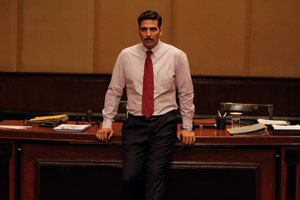
    Special 26

    Key Cast: Akshay Kumar, Kajal Aggarwal, Manoj Bajapyee, Anupam Kher, Jimmy Shergill

    Directed By: Neeraj Pandey

    Produced By: Viacom18 Motion Pictures


    This second film by Neeraj Pandey of A Wednesday fame got surprisingly rave reviews – mostly raves, some rants too, but a general 3 to 3.5 star rating.


    It didn’t seem to bother any critic that the film glamourises criminals, but perhaps the climate of the country is such, that audiences want to see the powers that be humbled.


    So, in spite of plot holes, what-the-hell moments and an insipid romantic track, Special 26 has pleased quite a number of reviewers and public alike.


    Anupama Chopra of Hindustan Times gushed, “Special 26 is the best Hindi film I’ve seen this year. Inspired by a real-life heist in 1987, writer-director Neeraj Pandey constructs an elaborate cat-and-mouse chase between cops and robbers. Except, here, you’re rooting for the bad guys.”


    Rajeev Masand of ibnlive was positive too but also picked flaws, “If the film falters occasionally, blame it on the pacing; the first half feels particularly stretched out because of the needless songs that act as speed-bumps in the way of a smooth narrative.”


    Sukanya Verma of rediff.com wrote, “Pandey’s filmmaking has always prioritised matter over cosmetics. Like A Wednesday, Special Chabbis isn’t exceptional in technique — no fancy camera work or hip background score — but practical enough to assemble a robust, taut film that gets over sooner than you think. His focus is on movement to imply a breathless pace. All his characters are constantly on the move with long-shots of their energetic march towards the camera. But that doesn’t undermine his ambition or how effectively it achieves the same. Filming on New Delhi’s bustling Rajiv Chowk and transforming it into 1987’s Connaught Place is no easy task. Barring a fleeting shot of a Peter England showroom, Pandey recreates an earlier time with old Only Vimal advertisement logs and outdated car models like Ambassadors, Premiere Padminis and early Maruti 800s forming the sparse traffic.”


    Shubhra Gupta of Indian Express liked it, but with reservations. “There’s something greatly impudent about smart thieves impersonating a crack CBI team and making off with valuables from the homes of the rich and the corrupt. They do their research and execute the heists with precision, and keep getting away with it, till one day they come up against a smarter officer who smells a rat. A cat-and-mouse game begins, and the film keeps up the momentum, and keeps a nice surprise up its sleeve for the wrap.”


    Sanjukta Sharma of Live Mint was not terribly impressed. “The story and screenplay have the promise of a simple and linear heist. But Pandey digresses. He opens up a love story for Ajay. There are songs. There is a bhangra number set in Chandigarh. There are way too many scenes of either the four con men or the CBI team just walking towards the camera in slow motion. Past events are shown repeatedly in flashback. The background score, which imitates a bad disco track from the 1980s, hammers the film throughout. Every small action is set to music. Above all, a banal justification of why Ajay decided to pose as a CBI officer, giving him a fake moral aura, spoils just about everything about the character.”


    Madhureeta Mukherjee of The Times of India raved,”Inspired by a real incident, Neeraj Pandey cuts to the chor-police chase and weaves an intelligent, mind-racing thriller, keeping you tightly strapped to your seats. It captures the 80’s era beautifully; and the cinematography (Bobby Singh) is a cut above (special mention: scenes in Connaught Place, Delhi, and Kolkata streets). The powerful background score enthuses the pace. The only place he loses momentum is the romantic track and dance number, kinda unwarranted, we must say. Interestingly, this con-job story is not superbly-stylish or stealthily serious. It doesn’t stun you with a social message like Pandey’s A Wednesday, but it grips, excites and ahh…climaxes too! And no … you can’t fake this one! Catch it for pure cinematic orgasm.” (Huh?)


    Saibal Chatterjee of NDTV.com raved even more. “One absolutely failsafe way of figuring out the efficacy of a movie is to measure how heavy its runtime weighs on the audience. Special 26 is actually quite a long film – it is a shade under two and a half hours. But it feels much shorter than it really is. It glides by with such effortlessness that it leaves behind no unsightly footmarks. Special 26 is an intelligently scripted, superbly acted, enthralling and believable heist film that is more than just that. Writer-director Neeraj Pandey’s maiden film, A Wednesday, was a taut thriller that delivered a sharp comment on the nation’s frequent and bloody brushes with the spectre of terrorism. This one turns the spotlight, if only tangentially, on India’s collective and seemingly never-ending struggle to rid itself of the scourge of rampant corruption.”


    Janhavi Samant of Mid-day commented, “There is no doubt that Neeraj Pandey’s second film is a winner. Pandey and his production crew also stay strictly loyal to the era of the story, India of the 1980s. Only Maruti 800s and Fiats on the roads, no skylines visible anywhere, briefcases, watches, the look is authentic and enhances the sober mood of the film. The story is fast-paced and thoroughly gripping, so much so that the protagonist’s minor romantic track actually seems like a drag. Much of the film’s success can be credited to an absorbing and audacious plot and its gentle sarcasm and quiet humour.”


    Pratim D Gupta of The Telegraph wrote, “About 26 minutes less and Special 26 could have been a great film. That’s roughly the length of the two songs and the irritatingly redundant romantic track, which serves the star in the lead but does extreme disservice to what is otherwise a fun, sharp and thoroughly entertaining movie experience. Like he had done in his much-loved directorial debut A Wednesday!, Neeraj Pandey again scores with a one-line concept. Latching on to the 1987 fake CBI raid – and robbery – of the Opera House branch of Tribhovandas Bhimji Zaveri in Mumbai, the writer-director spins an engaging – maybe a tad loopy – con heist, a genre curiously ignored in Bollywood. Asli power idea mein hai!”


    Sudhish Kamath of The Hindu got it right. “You got to love this Neeraj Pandey. For, he has his heart in the right place. Special 26 is in many ways similar to his fantastic debut thriller A Wednesday. It packs in the collective angst of society towards a certain group and provides catharsis through the actions of the protagonist. But there are departures as well, if the first was about vigilante justice, this isn’t half as righteous. It’s no Robin Hood.”
     

  • Ranjona Banerji: Yes, Karan Thapar, TV debates can sink further – and they have!

    By Ranjona Banerji


    TV host and columnist Karan Thapar very kindly articulated in his Sunday column in the Hindustan Times what many of us have been saying for a while now: TV debates in India have reached rock bottom. Well, welcome to Irony Central. Because while Thapar was writing about what passed for debate after sociologist Ashis Nandy’s comments about lower caste corruption at the Jaipur Literary Festival last month, TV debate delved deeper than rock bottom when it came to the execution of Afzal Guru. (http://www.hindustantimes.com/News-Feed/ColumnsKaranThapar/TV-a-Mea-Culpa/Article1-1009279.aspx)


    Given that we have to take any subject and then imagine all the possible, probable and delusionary scenarios around it, Guru’s hanging gave us in the media a field day. First, we had to try and create a Bharatiya Janata Party versus the rest slugfest. Not satisfied with that, we then had to make it a this-terrorist-versus-that-terrorist yelling match. When that did not create enough fireworks, we had to jump into why did the chief minister of Jammu and Kashmir do what he did, say what he did and more.


    The word “should” now dominates our TV screens. It is flashed at us thousands of times a day: Should the government do this, shouldn’t the government do that, should he had said this, shouldn’t she have said that: the points where the news itself is actually shared or discussed has almost vanished. Instead, we are confronted with a barrage of judgmental possibilities.


    Unfortunately, none of these postures leads to any meaningful conversation or insights. Everyone on TV it seems wants to score cheap points off the other and all discourse is either limited to one-upmanship or attack. If any of these people who invade our homes every night and assault our senses were part of a school debate, they would be summarily dismissed the minute they opened their mouths.


    There are undoubtedly questions to be asked about Guru’s hanging, about the death penalty, about those who wait on death row, about legal aid, about others accused of terrorist acts, about political support for some of the accused, about the complicated politics of India, about the bloodthirsty nature of our populace – these are only some of them. But you would not have found an iota of sense from TV.


    Why Indian news TV does not occasionally abandon its love for traditional Indian theatre forms like tamasha and jatra and try one-on-one interviews with experts to illuminate an issue is puzzling. (To be fair, Karan Thapar does.) Is the only reason for these debates to create a spectacle or is there some journalistic purpose still discernible to anyone? It is certainly not apparent to me.


    Meanwhile, for those inclined here is a debate carried in The Hindu over Guru’s hanging. First do read the piece by author Arundhuti Roy and then a response by journalist Praveen Swami.


    http://www.thehindu.com/news/national/a-perfect-day-for-democracy/article4397705.ece


    http://www.thehindu.com/opinion/op-ed/the-vanity-of-1312-truthtelling/article4400821.ece


    **


    I will not repeat that to make sense of any issue you have to read a newspaper… all right, I have just repeated it and it remains true.


    **


    To further illustrate the point, on Monday night, CNNIBN had an excellent exclusive story about the CBI accusing its own prosecutor in the 2G spectrum case of colluding with an accused. In an interview with the CBI director Ranjit Sinha, editor Rajdeep Sardesai kept on with the same line of questioning: will you do this and will you do that. Why not ask the director about corporate corruption, about the quality of prosecutors, about the difficulty of the 2G case. By focusing on a possible result at all times and to the exclusion of everything else, we lose out on the nuances.


    I for one refuse to believe that all Indians are too dumb to understand anything but the most obvious and cannot comprehend anything that it is not presented in a high-pitched hysterical manner.


    **


    And while we’re on this 2G case, perhaps it is time for the media to revisit the Radia tapes and assess whether enough has been done to safeguard our credibility. Sorry, excuse me while I die laughing.


  • Debrief: Gillette: The Protector

    By Anil Thakraney


    Till just the other day, Gillette was busy telling us men that women prefer guys who shave. They say the stubble comes in the way of ‘closeness’, and therefore most ladies abhor the stingy hair. That I have been shaving all my adult life, and am still a zero with women, is another story, of course. But I found the idea interesting.


    However, the Gillette folks have now decided to inject social service into their communication, and are asking us men to stand up for women, to respect them. I think this is smart thinking. Ever since the Delhi gang rape, the spotlight has moved to the issue of women’s safety in India. And riding on the topicality will serve the brand well. I also like the fact that Gillette stays away from the usual shaving equipment advertising cliches, the same old smooth shave, freshness, etc, stuff. This is purely about brand building on an emotional platform, and in this category, where one brand is really no different from the other, it’s a good strategy.


    ‘Soldier for women’ is the theme of the commercial. It basically features all sorts of males and females, first standing individually, and later men surround the gals like bodyguards. Of course, all the mards are clean-shaven (Gillette does not like hairy men, remember?). 


    I like this approach. Just two things: One, the creative doesn’t pack in an emotional punch, it leaves you kinda indifferent. The ad needs to be redone so that it arouses goose bumps amongst us men. This should not be very difficult; women’s safety is a charged subject. Also, Gillette must not stay at the level of a TVC, they should go all out and create a sustained 360-degree movement. So that within the next year, in the consumers’ perception, Gillette = Caring for Women. It would be a tremendous brand positioning if they can pull it off. 


    Rating: (On a scale of 1-5): 3. Good start. Lot of work needs to be done.


  • Anil Thakraney: BAFTA Awards: The perfect show

    By Anil Thakraney


    Some readers of this blog might recall my review of the Golden Globes 2013. I was not very excited by the endless rambling by some of the award-winners. I had also suggested that a few cinematic insights ought to be provided to viewers, stuff that we usually never get to know.


    Well, the Brits seem to have given me a good hearing, hehe. I was not just impressed with the BAFTA awards presentation, I think the way they conducted the show should be the benchmark for all movie award shows, both, abroad and in India. Here’s a checklist of all the things they did right.


    The show (Sony Pix) was completed in two and a half hours (including various ad breaks). Perfect timing. This is the length of an average flick. This ensures viewers don’t tire out or fall asleep by the time the big awards are declared. A lesson to be learnt by Bollywood awards organisers.


    There was just one host, Stephen Fry. The man is naturally witty, and the script provided to him shone. Plus, he did not get into verbose jokes, he was quick and sharp. And because he was performing solo, the possibility of juvenile exchange with a co-host got ruled out. (I am so not looking forward to the mindless banter between SRK and Saif at the Filmfare awards show, scheduled for telecast this weekend.)


    Fry set the ground rules very early. He made it abundantly clear that winners should be crisp and rapid in their award acceptance speech. And everyone obliged, there was no need for music to be blared to stop the offenders. I am hoping to watch a repeat of this at the Oscars.


    Interesting insights were provided on all the major movies, with comments from crew members. Special capsules were created for this. So much better than the idiotic spiel belted out by the so-called ‘humorous’ anchors/guests. Awards are about cinema, and the focus must remain on that.


    Even the red carpet parade was short and sweet. Movie stars weren’t asked asinine questions by TV channel reporters. All we wanted was to see their designer dresses, and that’s what we got.


    And yes, there was no item number. You don’t need those, we get to watch them in the movies. Don’t know when Bollywood will understand this.


    Really hope other award organisers take a leaf from the BAFTA guys. Movie award shows should be fun to watch. They mustn’t be an ordeal.


    ***


    PS: Sometimes the ad guys need to objectify men too, so that the ladies can have fun. Director Guy Ritchie has done just that for David Beckham Bodywear (H&M). As the sexy footballer runs through Beverly Hills in nothing but his skin-hugging chaddies. Enjoy!

    [youtube width=”400″ height=”220″]http://www.youtube.com/watch?v=iQCd1xVAkow[/youtube]