Category: BLOGS

  • The Anchor. 5 reasons why marketers must use Bhai Dooj/Bhau Beej to sell their wares

    By A N Chorrea


    I’ve often been surprised at how and why certain festivals haven’t been tapped enough by our marketers to hawk their wares and services.


    Bhai Dooj or Bhau Beej or Bhai Phota or Ningol Chakuba or Bhathru Dwithiya or Bhai Tika or Bhatri Ditya or  however else it’s called in various parts of the country is an excellent opportunity for marketers to hawk their wares and services. Here’s reason why:


    1. Bhai Dooj or Bhau Beej or however it’s called in various parts of the country exists as a festival. In fact in Maharashtra it’s huge… newspapers for instance take a day off not on Diwali but a day prior to Bhau Beej so that vendors can celebrate it

    2. The number of ‘days’ and ‘festivals’ is limited. Also, creating new days is a no-no with not everyone happy about the fact that there’s some commercializing them

    3. There’s festivity in the air and it’s the last day of the five-day Diwali festival. Celebrations can in fact climax with Bhai Dooj

    4. There’s no other major festival between Diwali and Guru Nanak Jayanti and Christmas. So it’s not inappropriate to celebrate it in bigger way. In modern times, where people are more in touch via smses and emails, any event that requires physical contact helps all

    5. Any spending fuels consumption and helps the economy. Jai Ho!

    6 .The day marks bonding between the brother and sister. Yes, there’s a Raksha Bandhan in August-September, but the relationship is big enough to warrant another ‘day’. Right?


    A N Chorrea is the pseudonym of a well-known industryperson


  • Anil Thakraney: Your demotivated, ill-trained staff

    By Anil Thakraney


    So, this lady ‘forgot’ to tip the pizza delivery boy. And the dude, not very happy about the gesture, relieved himself right at her doorstep. (Hope you have been obediently tipping all the Diwali baksheesh demanders!) Here’s the link to the story that’s funny when you are not at the receiving end of stinky yellow. http://www.huffingtonpost.com/2012/11/05/pizza-hut-delivery-man-urinates_n_2078748.html?ncid=edlinkusaolp00000003


    This incident set me thinking. Can we blame only the pizza delivery boy? To an extent, yes, and this also shows there are enough frustrated taporis all over the world. I actually see a larger problem at play out here, one of the lack of organizational training and motivation. If the pizza delivery boy had been a committed, motivated employee, do you think he would indulge in this or any sort of behaviour that would bring disrepute to his organization? I suspect not.


    We may not be getting peed on as customers, but each one of has had horrid experiences of being treated shabbily by staffers of companies we do business with. Mobile phone companies top this chart. The social media is buzzing with tales of incompetent, rude, indifferent representatives. My own list is pretty huge. I have had my share of problems with auto companies, insurance giants, banks, hotels, airlines, you name it. There was a time I would blame the company representatives, but I’ve now realized that particular dude/dudette is only a foot soldier of a badly run organization. No point in losing one’s cool on them. Quite obviously, the boss has not done his/her job, which is to build, run and manage a happy, professional, efficient, driven team.


    It is shocking how very little attention is paid to this critical function by many managers, when you consider it is the lower rung employees who are usually the first contact with the customer, and are therefore the face of the organisation. They behave poorly, you assume the entire unit sucks.


    To all those heavily paid corporate leaders reading this: There’s no point in splurging all those millions on slick advertising campaigns, there’s no point in making tall claims in the ads, if you have failed to adequately train and motivate your task force. What is the use of all that big investment if your front man ends up peeing at my doorstep? Chew on it, buddy.


    ***


    PS: Haha. Whites seem to have gone into mourning in America, following Romney’s defeat. Polarization of the US is complete. Not a good sign at all, I say! Check out the angry posts and the gloomy pictures.

    Link: http://whitepeoplemourningromney.tumblr.com/


  • Ranjona Banerji: When Times Now got it wrong

    By Ranjona Banerji


    Mumbai lived through an extraordinary day on Thursday both in actual terms and on news television. The news of Shiv Sena founder Bal Thackeray’s ill-health on television on Wednesday night led to the city being shut down on Thursday morning. There were no newspapers and there was no bandh call. It seemed that fear of reprisal by angry Shiv Sainiks kept auto-rickshaws and taxis off the roads and many shops shut.


    This was, ideally, time for news channels to shine. It was their moment. They could not only tell India about Thackeray’s condition but also report on the situation in the city. Times Now decided that Thackeray was going to be the only story of the day. So its reporters and camera crew perched outside Matoshree all day. However, the channel had no clue about what was going on inside Thackeray’s residence and little clue about what was happening in the rest of the city. So after a while, you felt that you were watching a red carpet report of all the celebrities arriving at the “event”. Initially, funereal tones were adopted by the channel but as the day progressed, these were abandoned. There was no investigative or even standard reporting of any kind – no direct interaction with doctors, either Thackeray’s doctors or anyone else’s, no reports based on conversations with other Sena leaders, no leads as to what was going on inside. And even when it was clear that all the Sena would say is that Bal Thackeray was “critical but stable” the celebrity parade was all that the channel would focus on.


    Outside the Bandra East area however was the big story – how India’s financial capital shut itself down in the morning for fear of attacks by Shiv Sainiks in case of an eventuality. This the Mumbaikar learnt about from hearsay to social media to talking to people, with rumours merrily mixed up with facts. Times Now, incidentally, is a Mumbai-based channel unlike the others which are headquartered in Delhi.


    Headlines Today also concentrated on Thackeray but instead of standing outside his house, had panel discussions on Thackeray’s life and politics. Anchored by Rahul Kanwal, the channel looked at Thackeray’s career and the various controversies surrounding him and the contradictions in the man himself. Sociologist Dipankar Gupta and journalists Vir Sanghvi and Paranjoy Guha Thakurta shared their own experiences and their insights. One could not agree with all of them but it was a mature discussion about a politician who carved out a unique space for himself in India’s polity.


    CNN-IBN treated Thackeray’s ill-health like just another news story, also looking at the visit of Burmese politician Aung Sang Suu Kyi, the tragic death of Savita Halappanavar in Ireland because she was refused a medical termination of pregnancy after a miscarriage and the fact that the government had not mopped up Rs 1 lakh 76000 crore from 2G spectrum auctions.


    At night, however, Times Now having perhaps decided that it had wasted a whole day on what turned out to be a non-story, had its primetime discussions on Savita’s case. Being the foremost upholder of national pride, the focus of course was on the fact that an Indian had died and not on the medical and religious aspects of the case.


    Deciding on the news is a judgment call in any media organisation and everyone makes mistakes. But Times Now not only called the day wrong it also showed incompetence in the way it handled its news of the day. It could have changed its strategy at any time but appeared to be sleeping on the job. An unfortunate example of how not to run with a news story.


    It took the morning’s newspapers, as ever, to put Thursday in perspective and tell us what else had happened.


    Ranjona Banerji is a senior journalist and commentator. She is also Contributing Editor, MxMIndia. The views expressed here are her own (though we often agree with them)


  • Peter Mukerjea: Never let a crisis go to waste…

    By Peter Mukerjea


    The UK media the last week has been dominated by the events at the BBC. Yes – the BBC. First, with allegations, made by over 450 people, who have now come forward after three or four decades, on a TV celeb – the late Jimmy Saville, a one-time Radio Jockey and TV show presenter at the BBC. They have accused him of sexually abusing them as children when they had come across him during their visits to the BBC.


    Several other TV celebrities have been arrested and bailed in this connection and a public enquiry has been commissioned by the Government. The enquiry is headed by a respected news man called Nick Pollard – former Head of Sky News who was also later appointed by me as a consultant / advisor to NewsX in its early days, for over a year. Nick’s report and findings are now awaited.


    Meanwhile, last week, the very recently (barely two months ago) appointed Director-General of the BBC resigned as a result of a poorly and inaccurately produced daily News programme, Newsnight, where there were accusations saying that a Lord McAlpine had, many years ago, sexually abused children who were under the care of the state at the time. The news programme producers had not bothered to check their facts and simply went ahead and named him, and of course he denied it. As a consequence of this level of inaccuracy and irresponsibility, the Director General resigned and a few others have been suspended pending further internal enquiries.


    Now, we’re talking of the BBC. One of the most respected, most watched news organizations in the world and they got it wrong and did not have enough measures in place to ensure that the story they ran with was checked for accuracy. And the man at the top took immediate responsibility and stepped down. That certainly wasn’t the case for the head of another news organisation where phone-hacking was conducted on an industrial scale.


    Barack Obama’s former chief of staff Rahm Emanuel once said, “Never allow a crisis to go to waste.” These words have been heeded by all those people who are detractors of the BBC and find its existence to be completely against their free-market, anti-regulation ideals. They are certainly not allowing this situation at the BBC to go to waste. So they exaggerate the sins at the BBC and simultaneously minimize the crimes of their friends at another news organization currently under investigation, even though the police have now identified more than 4,000 people as possible victims of phone hacking, including the families of dead soldiers, relatives of people killed in terror attacks and a murdered schoolgirl.


    The media seem to be getting polarized – those for the BBC and those against.


    The Newsnight programme screwup has provided the perfect veil for an attack on the BBC and what we are witnessing is a coordinated assault on its reputation and output. The BBC is by far the biggest and best broadcaster in the world and to try and delegitimize or dismantle the BBC based on two screwups by the same news programme is grossly unfair given that over the years there have been a series of award-winning programmes watched by millions around the world – and consistently, year after year. Figures released by the BBC confirm that over 96 percent of the people in the UK consume BBC programmes each week.


    An Ofcom (the office of the communications regulator in the UK) survey in Nov 2011 stated that 59 percent of the people said the Beeb was the news source they most trusted. The next was ITV News at 7 percent! “No newspaper reached 2 percent,” the reporters added.


    I believe that the BBC, despite its many faults, should be protected from its right-wing enemies so as to preserve high-quality, non-partisan public service broadcasting. Earlier in the week gone by the Director-General was publicly taken to task by no other than one of his own employees in a one-on-one radio interview. Which other news media company would entertain that? Not many, I would think. The BBC have accepted their mistake, lost their DG and paid an out-of-court settlement of 185,000 Pounds (almost Rs 1.5 crore) to the falsely accused Lord. All of this goes some way to preserve its reputation and dedication to honest, fair, unbiased, incisive reporting. Maybe this crisis will enable the BBC to emerge, as a better, bolder and more robust news organization that what there is presently.


    I also wonder how many news organizations in India would take this approach – pay a fine, take the rap and follow up diligently with an internal enquiry if they report on a story where the reported facts are wrong and have been aired unchecked. Not many, I don’t think – at least not in a hurry. But let’s live in hope that maybe, just maybe, one day in India we will get DD to a similar state of play and be seen by the world as having a world-class broadcaster which reaches out to the free people of the largest democracy in the world.


    Either way, it’s a good reality check and a lesson in not letting a crisis go to waste.


    Peter Mukerjea, celebrated media professional and former CEO of Star India, mulls frequently for MxMIndia.com

     

  • Ranjona Banerji: How the channels & papers fared

    By Ranjona Banerji


    Mumbai’s last and final appointment with the late Shiv Sena supremo Bal Thackeray was a long and emotional day for half the city and perhaps an intriguing experience for the rest of the country, given the non-stop coverage of his funeral on most new channels.


    After the announcement of his passing was made on Saturday afternoon, TV channels were up and running with their assessment and forecasting programmes. As expected, most got Mumbai-based newspaper journalists to share their expertise with viewers. As perhaps not so expected, some journalists were caught between their respect for someone who had just died and their objectivity. Senior journalist and columnist Sidharth Bhatia and author Shobhaa De on CNN-IBN stood out for their frank appraisals of Thackeray’s politics. Kumar Ketkar, editor of Divya Marathi, was a disappointment as he tried to hedge in his comments about the Shiv Sena chief. Praful Bidwai was characteristically outspoken in his criticism of Thackeray as was Paranjoy Guha Thakurta on Headlines Today, but perhaps not quite so brutal. On Sunday morning, it was veteran journalist Mahesh Bijapurkar (for many years with The Hindu in Mumbai), on CNN-IBN who was objective and knowledgeable in his assessments of Thackeray. Ketkar on Times Now (and occasionally on CNN-IBN) continued with his wishy-washy analysis which sometimes bordered on hagiography.


    The fact is that Thackeray was a controversial character. His hold over Mumbai was perhaps unparalleled and he did give hope and courage to many who felt marginalised by geography and circumstance. But he did break many rules of democracy, of the Constitution and of unwritten rules of social discourse. There were aspects of his politics which were divisive and dangerous. He was also witty, warm and charming in person. All these factors have to be discussed.


    The non-stop TV coverage of Thackeray’s funeral procession however meant that news channels had to come up with constant chatter. This meant calling on “experts” to share their views since we know that TV editors cannot trust their own opinions. But by now, they were running short of experts. As one wag on Twitter put it, just about every journalist who had spent 10 minutes in Mumbai was now an expert on Thackeray and the Shiv Sena. Their lack of insider knowledge or the fact that their opinions were gleaned from newspaper reports was evident to any Mumbaikar (or do we now go back to saying “Bombaywallah”?) The Hindi and Marathi channels both concentrated more than the English ones on the fact that nephew Raj Thackeray was not on the truck with the body but walking ahead. Times Now gushed a bit about Raj Thackeray’s “humility” but Hindi and Marathi channels had other ideas, corroborated by the morning papers on Monday which made it clear that he left the procession mid-day in a huff.


    Of all that channels, CNN-IBN was the best in its objective analysis of Thackeray’s life and politics. In the evening, Smruti Koppikar, lately of Outlook and now of Hindustan Times, shared her first-hand knowledge of the city and the Sena. It was also interesting to hear former police commissioner Julio Rebeiro’s reminisces of Thackeray, which were also frank. A complete contrast to another former commissioner M N Singh who claimed in Monday’s Hindustan Times that Thackeray never created law and order problems in Mumbai or some such arrant nonsense.


    Times Now and Arnab Goswami came up short with its inability to distinguish between journalistic objectivity and personal pain. The channel and its star editor-in-chief treated Bal Thackeray’s death like it had happened to one of their own and behaved a bit like British TV presenters at Princess Diana’s funeral – lacking in both distance or perspective.


    Where all TV channels failed is perhaps in their assessment of the crowds on Sunday. The common consensus seemed to be at 20 lakh – which is 2 million people and they immediately decided this was the biggest ever. On Monday, newspapers hedged between 5 and 10 million which is quite a different number. The state government’s home department put the figure at 5 lakh. The Times of India carried a photograph of Shivaji Park with vast empty spaces!


    Speaking of the Times of India, it did demonstrate its superior knowledge of the city and its relationship with the Sena but almost all of it through Ambarish Mishra who wrote almost the whole newspaper!


    Mid-Day lived up to its standing as a city newspaper by carrying a page full of details of what would work in Mumbai on Monday and what wouldn’t – much-needed for a citizenry which has been living without food and transport and in fear.


    The next few days are going to see more analysis about what next for the Sena. But without a doubt, a massive chapter in the city’s life – and in the media’s life – has closed with the passing of Bal Thackeray.


    Ranjona Banerji is a senior journalist and commentator based in Mumbai. She is also Contributing Editor, MxMIndia. The views expressed here are her own.


  • Anil Thakraney: Insensitive for channels to call know Thackeray-baiters

    By Anil Thakraney


    For the last two days there has been carpet coverage of Mr T’s death, across the media. The poor Chadha brothers. They chose to shoot each other dead on the same day, and no one was interested in their totally sensational action, their story went almost unnoticed. Some random observations on the media coverage of the Sena chief’s death:


    I was not very happy with the TV panel discussions on the evening of the demise. On the one hand the same boring politicians were invited, who then belted out the usual clichés. On the other hand, to spice things up, the anchors invited the known Thackeray-baiters. This, I found to be a little insensitive. Criticism of the man and his legacy must begin after the last rites are done, and not as soon as he’s announced dead. Not only is this morally wrong, all the dissing could have led to lumpen elements of the Sena losing their unusual cool. And a number of people in the city, who were still scrambling to their homes, could have come to grief. I think the news channels, in their search for eyeballs, must demonstrate a degree of sensitivity to the already harried aam aadmi.


    Glad that the news channel CEOs did not decide to pull the ads as a mark of respect. Though I am certain this must have been discussed in the boardrooms. Doing such a thing over the death of a person who, although very popular, was an extra-constitutional authority, would have been way over the top. Apart from being bad for business, of course.


    Some news channel editors seized the moment to replay old Thackeray interviews they had done, and kept reminding us that ‘Balasaheb told me this, he told me that, he opened up to me, etc’. Someone should point out to these worthies that this sort of gloating, especially at the time of death, is in real bad taste. Also, television is a total ‘team work’ medium, it must always be ‘We’. Never ‘I’.


    In addition, the archival interviews, already watched umpteenth number of times by all and sundry, were quite boring. When most of us viewers, at least in Mumbai, were keen to know if there was a threat of violence in our backyard. And Dilliwallahs must have been desperate to find out what happened inside the Chadha household. Sometimes I think Indian channel editors are dictators. Don’t think their juniors have the guts to point out their obvious flaws.


    As for the press coverage, the only thing I enjoyed was the reprint in Mumbai Mirror of Busybee’s super columns on Thackeray. There has not been, and perhaps never will be, a finer chronicler of Mumbai city than Busybee. He will be remembered long after Balasaheb is forgotten. Yup, I choose writers over cartoonists. 🙂


    Must say Twitter was the most delightful of all media. The contrast was telling. All the movie stars (most of who did not know Thackeray personally), were busy singing sweet praises in his memory. And the ‘mango’ people were tweeting about traffic problems and other hazards that would come in the way of Mumbaikars. No prizes for guessing whose side I was on.


    Last word reserved for the man himself: I don’t know whether to feel happy or sad that an average cartoonist hailing from a middle-class family, who builds his political brand solely on the junta’s perceived insecurities, can become such a powerful leader in this nation. Not sure if this is the sort of democracy our founding fathers had in mind.


    RIP Balasaheb Thackeray.


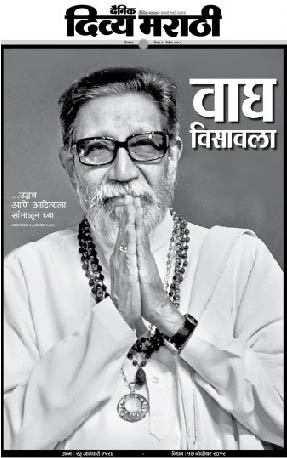
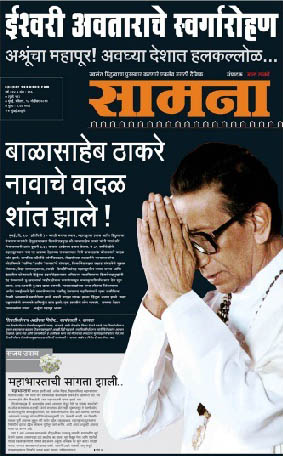
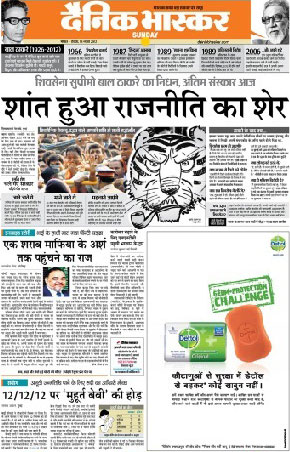
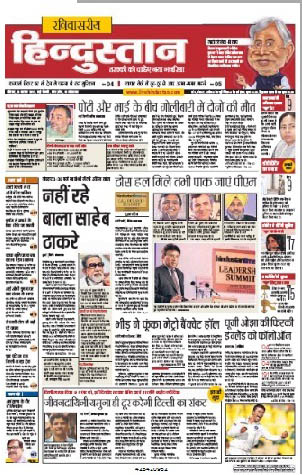
  • The Anchor: How the Sunday papers announced the Bal Thackeray news the morning after

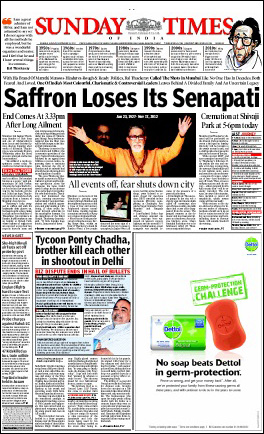
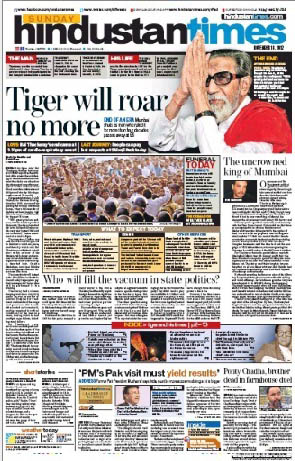
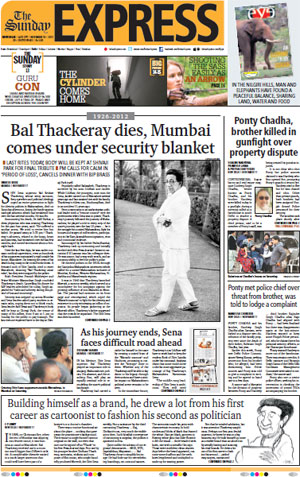
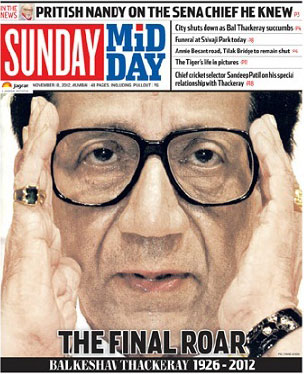
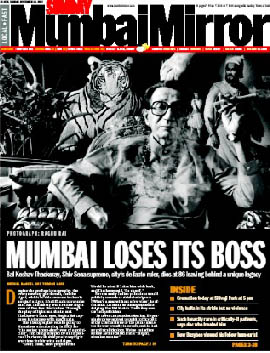
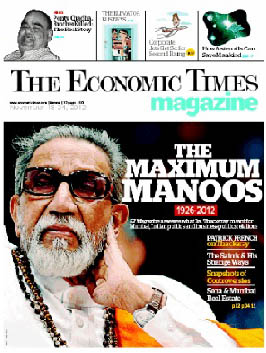
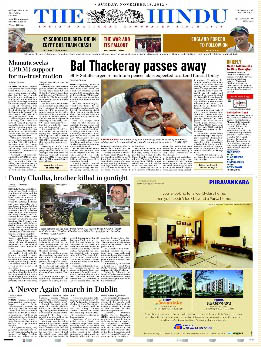
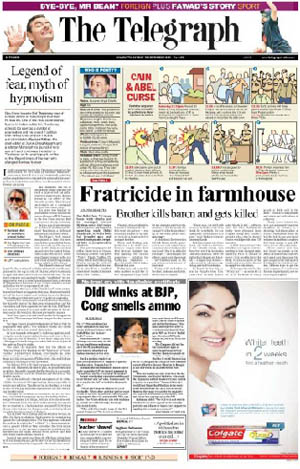
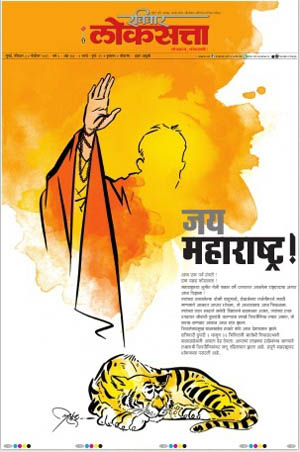
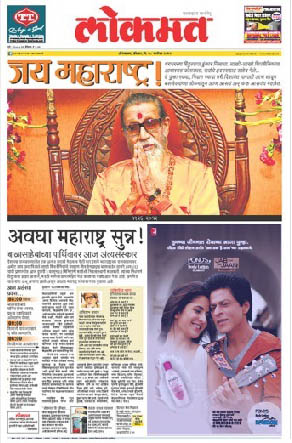
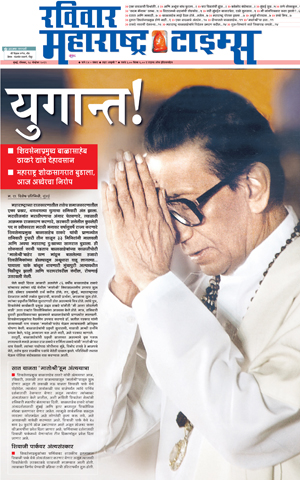
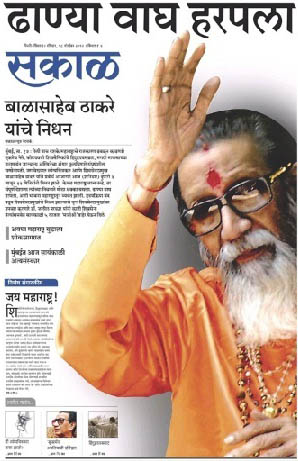
    In a departure from the normal format of the Anchor, here’s looking at how the front pages of various Mumbai and some national/state dailies covered the news of Shiv Sena chief Bal Thackeray’s passing away on Sunday.


    As is evident, the three tabloid/compact-sized publications (Mid-Day, Mumbai Mirror and Economic Times) and the Marathi dailies have put in much effort on the design of the front pages.


    The Times of India
    Hindustan Times
    DNA
    The Indian Express
    Mid-Day
    Mumbai Mirorr
    Economic Times

    The Hindu
    The Telegraph
    Loksatta
    Lokmat
    Maharashtra Times
    Sakal
    Divya Marathi
    Saamna
    Dainik Jagran
    Dainik Bhaskar
    Hindustan
    Ananda Bazar Patrika
     

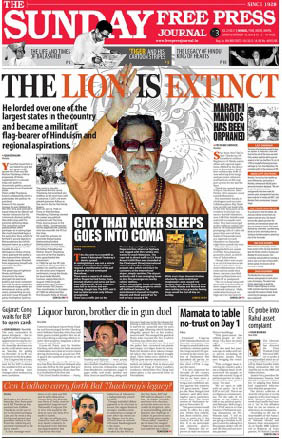
    Free Press
  • The Anchor: How to make industry conferences work (better) for you

    By Rahul Kishore


    Having just attended a large conference organized by a leading media organization, I have a few pointers that you might benefit from:


    #1 Do not go there looking for knowledge. Most speakers are dull, and love to hear their own voices. The really good ones are expensive and most event organizers cannot afford them. So they make do with whatever is available.


    #2 Do not expect to engage with the speaker. Most have tie-ups with TV channels and the channelwallahs inflict their anchors on you. These anchors are ill-prepared mostly and forget their own questions. They also encourage their friends in the audience to ask questions.


    #3 If it is a one-on-one then the guest is extremely circumspect and cannot hold you for an hour or so. The moderator also uses this to become friends with the guest, whom he would not have otherwise met! If he has met the guest before then they try to make it like we are best friends etc and that works for no one!


    #4 Make sure you reach early and grab a good seat post registration. There are sponsor reserved tables but they never work as the ushers are clueless. I have seen CEOs after pumping in over a crore, looking for a decent seat.


    #5 A word about the popular speakers. These are ONLY Bollywood…anyone from a Katrina to a Sonakshi works for our celeb-starved public. So you have to be in your seats at least one if not two sessions before the Bollywood session. DO NOT GO ANYWHERE! It is best, trust me!


    #6 Lunch is normally better than average as hotels who do a barter like to showcase their kitchen. So, like me, hit the lunch hall at least 15 minutes prior to the scheduled lunch time. Large screens are beaming the event live anyway and as soon as lunch is requested, you are there. The queues are awful and all decorum and decency is forgotten when the food-starved public comes gushing. It is easier now to look for seconds since you have had your first shot berfore everyone else. People will let you break the line if you have a soiled plate in your hand.


    #7 A few years ago it used to be a great place to network. Not any more. Audiences are random and arbit. A few page-3 types, assorted goras, and some retired bureaucrats are all a part. The marketer is mostly missing. Women are more active as they want to go back and tell their friends they attended an extremely high-brow event! Be prepared for loads of Aunties in their Guccis, LVs, Jimmy Choos. Also loads of jewellery… good on the untrained eye! Happy Conferencing!


    Rahul Kishore is senior vice-president, priority projects, Mogae Media. The views expressed here are his own.


  • Debrief: Idea: Dil khush ho gaya, Sirji!

    By Anil Thakraney


    Nice, heart-warming Diwali ad from Idea. And the idea is so pleasing, this commercial can run long after the festival is over. That’s because it promotes communal harmony, which is very refreshing to see in desi advertising; this task is usually left to Bollywood films.


    In the TVC, a Muslim man likes a ladies watch he spots inside a shop window. But his excitement turns to sadness when he discovers the hefty price. The dealer points out that it’s Diwali and therefore there’s a 50 percent discount on offer. The chap is elated. He purchases the watch and quickly sends a pic to his beloved through the cell phone.


    Good idea, Sirji! This is a lovely public service ad, and therefore the brand benefits in more ways than one. Tremendous goodwill generated for Idea. Superb example of how to lift an otherwise ordinary Diwali discount ad. In fact, I think Idea should make this concept their own, and run similar ads during various fests. Aside from the brand gaining in the process, any attempt to bridge religious divide in this nation must be whole-heartedly supported.


    As a Diwali bonus, I did not spot Small B in this commercial, hope they’ve dumped him. Tells you when you have a powerful idea, you don’t need these pseudo celebs.


    [youtube width=”400″ height=”220″]http://www.youtube.com/watch?v=IgZm9z3PgEg[/youtube]

    Rating: (On a scale of 1-5): 4.5 Warm, endearing treatment. And a powerful idea.


  • Young Track by Samyak Chakrabarty | Causes that Young India is fighting for

    What’s a 23-year-old writing a column on a site where the average age of columnists is… ? Ok, ok, we won’t reveal that number, but like it or not the youth constitute a majority of India’s population. Since the last few years, young Samyak Chakrabarty has been in and around media events and offices with his vision of how the youth can be targeted.

     

    In this period, he has organized a few conferences, participated in several of them in India and abroad, and works as Chief Youth Marketer with the DDB Mudra group. He’s organized a TedX youth conference in Mumbai, was invited to meet Hillary Clinton when she visited India and has co-authored a book ‘Generation Einstein 3.0 – India version’.


    Samyak’s column appears on Wednesdays and as the title suggests, it tracks the young – specifically keeping in mind the advertising, media and marketing fraternity – Ed


    Today’s urban youngsters are very socially conscious and aware. They do not want to live under the fear of natural disasters or any form of threat to their existence and ambition. Hence we see a large number of participants in protests, Facebook activism etc. Here are four causes that metro youth are most concerned about and taking the initiative to address:


    Freedom to enjoy: One won’t see many organizations taking this one up (as yet!), but as our system and its agents (police, municipal corporation, political parties) get more primitive in behaviour, a mass urban youth uprising won’t be far away. Things like arresting people for Facebook posts or using archaic laws to raid bars anger the new generation equally, as much as those below. Parallel to other advancements in the world, the definition of ‘a good life’ has evolved for those born post-1988, and these kids will do anything to ensure they have it!


    Education: Initatives like Akanksha, Raindancer (part of the Swades Foundation) and Teach for India demonstrate how young people’s energy and skills can be utilized for providing education to the underprivileged. Students from ‘good schools and colleges’ have begun to realize that one of the key solutions to resolving a number of India’s problem is to ensure that people from all sections of society must receive basic learning and training. Hence one will observe a number of youngsters even informally teaching kids of their home staff or those in the neighbourhood.


    Environment: Compared to a Japan or USA, India has been well shielded from major natural disasters. Through new media and easily available knowledge resources, youngsters in India are well aware of the consequences of not conserving nature. Therefore one will see a number of students starting projects like Batti Bandh, Indian Youth Climate network, etc, to create awareness and make a concerted effort to protect our environment.


    Corruption: I was not surprised to see Anna’s Lokpal movement attracting so many youngsters, including many from relatively affluent backgrounds. It begins when a kid with deeper pockets and/or powerful connections takes away the precious seat during admissions from a more deserving candidate … and makes your rage stronger when greedy enablers (of what work you need done – government offices, recruitment, hospitals etc) haunt you at every step. Youngsters find it necessary to take stringent action about this cause – in fact, when it comes to everyday life, more than anything!


  • Anil Thakraney: The IT Act needs to be rewritten. ASAP

    By Anil Thakraney


    ‘If you have nothing good to say about the departed soul, best to keep quiet. Safety of Mumbai comes first.’ This was my tweet immediately after the announcement of Bal Thackeray’s death. This was not because I panicked, it’s because, one, I wanted all those Mumbaikars who were out on work or on personal errands to make it home safely. And if possible, stock up on rations in case the Sainiks decided to go on a rampage. Two, people from my generation are well aware of the Shiv Sena’s methodologies, and a violent reaction was always to be expected. That nothing happened is largely because of Thackeray Jr’s call for peace.


    Which then brings me to the two young girls from Palghar who were made to face the music over an anti-bandh FB update. (Wish they had been following me on Twitter!) First, the girl who posted the message made a technical error. The Shiv Sena had not called for a bandh (though there were stray incidents of a few goons intimidating shopkeepers). The city had decided to shut down on its own. Partly because of fear, partly because of respect. Secondly, and this is where I blame the parents, many young Indians may not be aware of the Sena’s violent ways because that outfit hasn’t launched a big campaign in the last ten years. But those of us who lived through 1992 and 1993 are perfectly aware of what these men are capable of when provoked. I think parents need to make their kids aware of political realities, now that the social media has given everyone an unfettered platform to speak. In that sense, I don’t really blame the two girls.


    So does that mean there’s no place for dissent in this so-called democracy? Obviously not. But belting out criticism even before a mass, hugely popular leader has been cremated is inviting trouble. Had the young girl posted her update later this week, I suspect there might have been no reaction at all. Also, it must be said she got unlucky, many others had posted far more damning messages. I do believe timing is the key out here. Unfortunately, the social media has turned many young fingers very itchy, and I have often noticed folks hit the buttons before they think.


    So then what now? Well, the goons who attacked the hospital need to be punished, for sure. Charges against the girls need to be dropped and the case withdrawn. But more importantly, the IT Act needs to be totally re-written and made abundantly clear so that there’s zero scope of misuse by the cops in the future. That is a no-brainer.


    However, that still doesn’t change the fact that the Facebook-addicted girl has caused two big harms. One, many, many young Indians will now think ten times before commenting on hard issues. I am told many have already deleted harmless updates and tweets on Thackeray. Two, she may have unwittingly given the Sena the bite it needed after their patriarch’s demise. The Sena shakha pramukh from her area is already being hailed as a hero amongst the party cadre.


    Net net: The law needs to be amended. And parents need to inform and educate their children on ground realties. Because when virtual world collides with real world, the result can often be traumatic. As we just discovered.


    ***


    [youtube width=”400″ height=”220″]http://www.youtube.com/watch?v=0N8axp9nHNU[/youtube]

    PS: An utterly charming, endearing Christmas ad from the UK. The power of love. And the power of advertising. Brilliant! This is what festival ads should be like.


    Anil Thakraney is a senior journalist and editor based in Mumbai. He is also Editor-at-Large, MxMIndia. The views expressed here are his own.


  • The Anchor: 5 reasons direct marketing scores over other forms

    By Manisha Amol


    There are many benefits of direct marketing – to both buyers and sellers.


    #1 Direct marketing empowers women. Direct selling offers self-employment opportunities to a large number of people, especially women. The direct selling industry is not only offering an alternative employment opportunity but has also contributed in terms of increased incomes for those who have entered the industry as direct sellers. Financial independence, development of personal and business skills, flexible timings and an improved ability to take care of families are other benefits of direct selling. It has enabled women to be financially independent and increased their ability to save. Direct selling also provided a safety net during the global slowdown as a large number of direct sellers joined this sector during that time.


    #2 Direct marketing offers products with differentiated USPs, customized according to the direct feedback received from consultants and their customers. These products are manufactured through best contract manufacturers across the world and are offered with a 100 percent satisfaction guarantee, as in direct marketing your buyers are loyalists hence the quality can never be in question. Example: The Wellness category today has rapidly grown, majorly through direct selling, and there are various products customized and targeted at different age groups.


    #3 Customers enjoy the convenience of direct marketing as they do not have to battle traffic, find a parking space, or shop through stores. Often they can simply order from a catalogue using the telephone or while shopping online, and never even have to leave their home as goods are shipped directly to their doors.


    #4 Buying through direct marketing channels is also private and easy and does not have to involve a face-to-face interaction with a salesperson.


    #5 Direct marketing reduces cost (minimizes overhead of retail space, utilities, etc) while increasing the speed and efficiency of the operation.


    In short, direct marketing allows sellers to customize offerings and create ongoing relationships directly with customers.


    Manisha Amol is VP – Marketing, Modicare Ltd