Category: BLOGS

  • The Anchor: 6 reasons why the government must subsidise weddings

    By A N Chorrea


    It’s the season for ‘shaadis’ with more than 30,000 reported to be held in Mumbai alone today (Friday, November 30). There are no clear statistics for these – since most people do not seek marriage certificates from the registrar, but about a crore Indians get married in the winter season alone. And this number would multiply at least four times for the entire year.


    01. Given an estimated 2 crore weddings in a year in India, and a majority of these requiring the couple and their respective parents to indulge themselves for The Special Day. Much of the spending is out of societal compulsions than a mere desire to show off, so the government would do well to subsidise marriage expenses

    02. The spends benefit the lowest common denominators and service providers of all hues. If taxes on marriage halls are reduced, the money can be used for more spends for people who will benefit even more

    03. Marriages are a boon for farmers as the consumption of vegetables increases much. Reduce on service taxes levied by contractors will ensure that the Indian economy may benefit more as some of the money will be used for greater spends on food

    04. Typically, a lot of casual labour is employed around the time of marriages. Painters, carpenters etc to renovate homes. Similarly musicians, mehendi (henna) artists and lighting contractors are engaged to add to the festivities. Spending on these will increase if many of the organized services are added to the negative list of service tax.

    05. It’s not just marriage halls and food that will benefit. Marriages are ‘events’ which employs are a variety of service providers. The Indian economy needs out-of-the-box ideas to help it grow… Aid to the The Great Indian Wedding Industry will be a master-move. If it happens now, the Manmohan Singh-led UPA government could well gladden the hearts of a few crore Indians.


    A N Chorrea is a senior industryperson writing under a pseudonym


  • Ranjona Banerji: Media ethics questioned in India and the UK

    By Ranjona Banerji


    Just as the Indian media is grappling with the arrest of two editors of the Zee News network, the Leveson Inquiry looking into media ethics in the UK is published. Sudhir Chaudhury and Samir Ahluwalia, business head and editor of Zee News and editor of Zee Business, were arrested by the Delhi Police after investigations into whether they had attempted to extort money from industrialist and Congress MP Naveen Jindal offering to bury stories about his group’s involvement in what is known as the “Coalgate” scam.


    Jindal had filed a complaint against Zee after they carried a sting operation about Coalgate, claiming that Jindal got undue favours in allocations and also offered to bribe the journalists involved in the story. Jindal countered this with his own tapes where Chaudhury and Ahluwalia are heard offered an ad deal which would effectively kill the story.
    The rest of the media carried the story, with television going to the extent of carrying live a long and rambling press conference with Zee News CEO Alok Agarwal. But comment on the issue has been subdued. This is not because Zee is a rival media house so much as questions have been raised – and have not been answered – about questionable journalistic and business practices by Zee. There cannot, therefore, be complete support for the Zee editors on the basis of freedom of speech alone.


    It has to be remembered that the allegations against the Zee’s editors must be seen separately from any possible wrongdoing on Jindal’s part. Zee being in the dock does not exonerate Jindal. But it should force the media to look again at the trend of using journalists to strike business deals and using journalistic investigations to blackmail people, as media insiders know does happen across the board. Both of these have regrettably become common practice. The Delhi police have decided to investigate Zee all the way up to owner Subhash Chandra. Zee may claim that it is being targeted by the Delhi police because of the UPA being accused in the Coalgate scam but the journalism practised by its editors remains questionable.


    In a fine example of irony, the tapes – disclosed earlier – had the Zee editors accusing the Times of India for its policies like Medianet, which led to the Bennett Coleman group sending Zee a legal notice threatening a Rs 100 crore defamation suit.


    Media ethics in India at the moment is at a very low point and managements have journalists well under control. It is a situation from which rescue is imperative but under current circumstances it is unlikely that the Zee case will offer that. A more sensational and dramatic fall is perhaps necessary before the climb upwards begins.


    **


    The Lord Justice Leveson Inquiry, ordered after the revelations that News of the World and the Murdoch group was using phone-hacking and other questionable practices as a way of getting stories. The Inquiry revealed its report yesterday in which it made strong recommendations for a new independent body to regulate the press. The prime minister has already said such a body is unlikely and newspapers are bound to fight any attempt to muzzle them.


    But it is also true that the existing self-regulatory Press Complaints Council was unable to deal with complaints against News of the World for its phone-hacking and other methods of invading privacy, influencing policy and what can also be interpreted as blackmail.


    David Cameron’s very close relationship with former News of the World editor and head of News Corp Rebekkah Brookes had led to questions about the BSkyB deal with Murdoch being influenced. There were also fears of government policy being manipulated by Murdoch as he and his editors promised electoral support to political parties – changing allegiance from Labour to Conservative as well.


    The Leveson Inquiry found no “widespread” police corruption but did set down some guideless for press-police relations.


    The big problem was a lack of redressal systems for people who felt harassed or targeted by the press. Many celebrities were also victims of phone-hacking and film stars like Hugh Grant deposed before the Inquiry. There is some attempt by the final report to address those issues.


    The full report can be found here: http://www.levesoninquiry.org.uk/


    **


    The issues addressed here are not in fact restricted to the UK. The manipulation of journalists and journalistic practices and the influence wielded by managements both mean that the freedom of the press is under threat all over and to a great extent in India as well.


    Media houses have to be profitable. But they do not produce tubes of toothpaste, even if managements prefer to call newspapers “products”. Can managements work out business models which do not pollute the freedom of the press? Can there be some system where readers and viewers are honestly informed which part of the “news” is actually an advertisement? Can people targeted in “sting” operations and blackmail complain to any regulatory agency that can provide effective redressal?

    These are questions which have to be answered, preferably sooner and not later.


    The Telegraph has an interesting article on different UK newspapers have been indicted/praised by Leveson: http://www.telegraph.co.uk/news/uknews/leveson-inquiry/9713061/Leveson-Report-the-verdict-on-individual-newspapers.html


    Ranjona Banerji is a senior journalist and commentator based in Mumbai. She is also Contributing Editor, MxMIndia. The views expressed here are her own.


  • Anil Thakraney: Decoding 66A. (And losing my head!)

    By Anil Thakraney


    I was watching Kapil Sibal battle with NDTV’s Barkha Dutt over Section 66A of the IT Act. Unfortunately, Barkha wasn’t able to nail the minister down, and that’s not her fault. Sibal is a seasoned lawyer and is in top form when it comes to debates on legalities. To me, it’s a no-brainer that this section needs to be completely re-written, and that making only a senior policeman in charge of slapping this law isn’t good enough. Simply because it’s too damn vague. And this vagueness and the recent arrests have already sent a chill down social media timelines, most tweets and updates seem to have lost their sting. And the diehards are busy opening up fake accounts to escape accountability.


    The problem is the three key words in 66A. They are so broad-based, William Shakespeare would have found it impossible to decode them in terms of intended criminality. These words are Offensive, Annoyance and Inconvenience. So here’s what I did, assuming that the confused policeman would most likely do ditto to find some answers in terms of interpretation in law. I consulted the good ol’ Collins Thesaurus. Here’s what it says:


    Annoyance: aggravation, anger, bedevilment, bother, displeasure, disturbance, exasperation, harassment, irritation, nuisance, provocation, trouble, vexation.


    Offensive: abominable, abusive, annoying, detestable, disagreeable, discourteous, displeasing, disrespectful, embarrassing, impertinent, insolent, insulting, irritating, nasty, objectionable, odious, repellent, rude, uncivil, unmannerly, unpalatable, vile.


    Inconvenience: annoyance, awkwardness, bother, difficulty, disadvantage, disruption, disturbance, drawback, fuss, hindrance, nuisance, trouble, uneasiness, upset, vexation.


    If the policeman (who I don’t envy at all in this case) has to take a call on this, he’ll either go crazy, or we’ll all have to forget about taking any further part on the internet. Because anything even slightly naughty can easily fall under any of these definitions. This is so bloody annoying! Oops, oops!!


    Ergo, our lawmakers need to put their thinking caps on. And re-write Section 66A in such a way that even a havaldar is able to interpret it without any difficulty. I am quite certain if Dr Babasaheb Ambedkar was alive today, he would have dealt with this in minutes. Sadly, we are stuck with the likes of Kapil Sibal. Great television debaters but not much else. (Hope the distinguished neta doesn’t charge me under 66A for this, er, inconvenience.)


    ***


    PS: Fabulous public service idea from students of a Miami school. You can donate your iPhone apps to charity through a digital donation box that’s been enabled in partnership with Apple. So much better than ‘gifting’ torn clothes, which we famously do back home. Also, please do share this idea with your bachchas, who might still be burning those idiotic crackers long after Diwali is done and dusted.


    [vimeo width=”400″ height=”200″]http://vimeo.com/52902206[/vimeo]


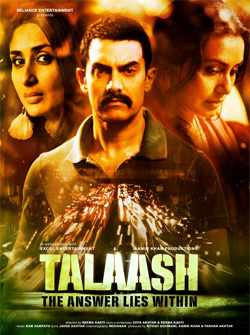
  • Reviewing the Reviews: Talaash

    Talaash

    Key Cast: Aamir Khan, Rani Mukherji, Kareena Kapoor

    Written By: Zoya Akhtar and Reema Kagti

    Directed By: Reema Kagti

    Produced By: Ritesh Sidhwani, Aamir Khan and Farhan Akhtar


    Some clever myth building and some delivery of promise has ensured that Aamir Khan is now a larger than life star who can never go wrong. That he agreed to star in and co-produce a film by Reema Kagti, relative newcomer was enough to build expectations sky high.


    Getting an average of three-star ratings, and as many raves as rants, the unanimous opinion was that the film built atmosphere well, but crashed in the second half. Almost everybody found the ending a cop-out. More disturbing, however, was the filmmaker’s, and by association Aamir Khan’s endorsement of what rationalists would call mumbo-jumbo.


    Shubhra Gupta of The Indian Express wrote, “In its better bits, Talaash lets us ignore its studiedness–the squalor of the red light area, the determined low-life lingo, the hard-worked cop-station back chat, the high-class homes of the rich and famous– and gives us a Hindi movie genuinely trying for a whodunit-cum-whydunnit. Talaash starts out as a smart, well-written noir-ish thriller, and then slips between the tracks. Pity about the second half.”


    Anupama Chopra of Hindustan Times felt cheated too. “To watch Talaash is to embark on a passionate love affair that ends in frustration because the object of your desire reveals itself to be shallow and depressingly ordinary. In short, a profound anti-climax.”


    Rajeev Masand of IBN Live wrote, “Director Reema Kagti employs a solid technical team to deliver a film that is rich in atmospherics and mood. KU Mohanan’s striking photography and Ram Sampat’s haunting score lend a distinct texture to this film, as do the real Mumbai locations the film is shot on. But Talaash doesn’t feel nearly as tense or urgent as it ought to, and its plot simply isn’t as deliciously complex as it could’ve been. As a result, it’s a very watchable film, but not an unforgettable one.”


    Karan Anshuman of Mumbai Mirror liked it but with some reservations. “The ‘suspense’ bits do have their shortcomings. The lack of multiple red herrings, little reward for long stretches and relatively slow pacing (the last two points are especially valid in the first half) might have you squirming. Over-explaining the big twist in the climax seems unnecessary too, especially when this is hardly what the film is about… So it doesn’t matter if you can guess what the end is going to be at interval point (like I did); if you’re going to watch Talaash solely to understand “what’s the suspense about” you’re going to be disappointed. Try and empathize, instead with the characters. Reward then, will look for and find you.”


    Saibal Chatterjee of NDTV was mostly appreciative. “By no means is Talaash the end of your search for the perfect whodunit. But there is so much going for this compelling, slow-burning, well-acted tale set in the dark, grimy underbelly of Mumbai that you can barely take your eye off the screen. As a suspense thriller with a paranormal edge, it certainly isn’t action-packed. Yet Talaash, which relies far more on the intricacies of psychological drama than on the disquieting impact of visceral shocks, is riveting all the way through to its surprising, if a tad dissonant, end.”


    Meena Iyer of The Times of India commented, “Talaash belongs to the genre of cinema noir of which there are few examples in recent times. This film is a good attempt at revisiting suspense flicks that were a huge craze in the 50-60s. To bring Gen-Now up to speed, back then movies like CID, Mera Saya, Woh Kaun Thi weaved magic on celluloid for patrons back then. But, make no mistake here. Though,Talaash has the mystique of the cinema Raj Khosla; it is modern in its approach and the setting is contemporary.”


    Raja Sen of rediff.com wrote that it was a Vikram Bhatt film better dressed. “It’s a somber, well-assembled film in contrast to the quick and flashy schlock that would have been doled out by the aforementioned merchants of middlebrow masala, and while the film’s craft — and the acting chops shared by its considerable cast — can’t at all be denied, it must also be said that perhaps the trashier approach may have worked better for this material. Or, at the very least, made for more fun.”


    Aniruddha Guha of DNA was cautious in his praise. “There are times when you feel Talaash might fall apart, but it thankfully comes together neatly in the last 30 minutes or so. As much as the story hinges on the final revelation – one that’s supposed to jolt you – the journey itself isn’t too bad either. It demands an investment of time and patience, surely, but the pay-off is rewarding. How much you like or dislike the film will largely depend on whether the final twist works for you. It did for me.”


    Baradwaj Rangan of the Hindu seemed a bit underwhelmed too, but not dismissive. “The talaash of the title, at first, suggests the search for answers. Why did the car end up in the water? Was it suicide? If not, who was behind the accident? In short, we seem to be in for a nail-biting police procedural based on a “high-profile case.” But gradually, that search takes a backseat to others – a father’s search for peace, a wife’s search for a husband who’s vanished into a void of self-flagellation, and a forgotten victim’s search for closure. Kagti brings this all together with a sure touch that her first film, the fitfully entertaining Honeymoon Travels Pvt. Ltd., never hinted at. Even if the resolution leaves you underwhelmed – and despite the artfully placed pointers to seediness, with ragpickers, porn DVDs displayed proudly in stores, derelicts and druggies, some may feel Talaash is just classily dressed up crap – the film is so beautifully made and so atmospheric that several scenes stick in mind.”

     

  • Debrief: Tanishq solitaires: Correct tone and manner

    By Anil Thakraney


    Interesting approach from Tanishq for their solitaires collection. It’s a dinner conversation between middle aged partners inside a fancy restaurant, and this sort of an intimate conversation based ad is hard to come across in India, we usually prefer noisy advertising. This route immediately makes the commercial attractive to watch.


    The couple is celebrating their tenth anniversary. From their body language, it’s easy to notice some degree of the expected boredom of togetherness has set in. (Conversations can dry up to an extent after a decade with the same person, it’s normal.) The usual middle aged banter goes on, discussion on work, life, etc, till the man surprises his missus with a Tanishq solitaire ring. And naturally a few smiles follow.


    Good one, mainly because the treatment is refreshing. Also the direction is very good. The body language, the maturity of emotion, the setting, the casting, it’s all done well. Upper class folks would connect with this one, and they would be the target audience of a thing that costs over a lakh of rupees. So over all, a good show.


    However, I do feel the ad would have really sparkled if the conversation had been a little wittier. Not over the top, just a dash of subtle humour would have added a little more entertainment value to the TVC. After all, one has to enjoy repeat exposures. But I guess people seem to like this one a lot, the YouTube version has already scored over one lakh hits, and that’s not very common with Indian ads. Nopes, can’t argue with numbers, therefore high marks for this one.


    [youtube width=”400″ height=”220″]http://www.youtube.com/watch?v=rTNLNbG4ELs[/youtube]

    Rating: (On a scale of 1-5): 3.5 Engaging communication. Good direction.  


  • The Anchor: 5 things to consider when catering to the India market

    By Sajjan Kumar


    As India races towards its manifest destiny of becoming a developed nation, its growth paradigm continues to rise. India is witnessing great social, political and cultural changes and has become one of the fastest growing economies. The sheer size of the India market is the primal cause of the complexity a marketer has to consider before they decide to bring their business here. India market consists of more than a billion people who differ from each other in terms of language spoken, religion followed, and personal beliefs. This diversity is also reflected in the buying decision.


    Indian consumers prefer quality for every purchase. They consider the best product available, quality and price offerings collectively before making any purchase decision. Recent study by Nielsen states that Indian consumers are now more informed about the product they want to buy. They invest significant amounts of time and energy in doing primary research for their purchase decision.


    1. Consumers are now aware of the offerings in the international market and are willing to spend for the same.

    2. Consumers are selective in their choices. They conduct a careful assessment of all their options and go for best option available. They don’t compromise on a better product or service but actively hunt and look for the best deals, or will restrict consumption to buy the better offer.

    3. Across categories, consumption is not limited to the metro cities. With increasing incomes and awareness levels, the needs and consumption patterns in Tier 2 and 3 cities are rapidly converging with those of the larger, more affluent towns.

    4. Consumers don’t just jump at the more expensive offer; they hunt for greater value, look for distinct differences and make careful choices.

    5. The disposable income of consumers differs largely with different geographical areas. The vast expanse of regions and great differences in culture and social systems will always formulate different consumer psychologies.

    These reasons will always create various clusters of consumers divided geographically and with their social systems, thus keeping India a complex marketplace even in the near future. But, we can say that this complex market provides great opportunities for brands to grow. Due to different requirements brands should focus on providing quality products available at different price points and specifications, catering to every customer need. It is achievable for brands to become a box of ability catering to each and every consumer need and thus growing.


    Sajjan Kumar is VP, Imaging, Nikon India


  • Ranjona Banerji: The journalist as the newsmaker

    By Ranjona Banerji


    To start with, we have the Caravan profile on Arnab Goswami, editor-in-chief of Times Now. This very long and detailed investigation by Rahul Bhatia into what inspires Goswami to save the nation every night on primetime television might answers many questions for Goswami’s legion of fans and his detractors as well.


    Some of the answers are known in journalistic circles: his ambition, his desire to get escape from under the shadows of Rajdeep Sardesai and Barkha Dutt and his strategy to create a different character for Times Now. But there are the little details here from the way the Times Now newsroom functions to Goswami’s childhood and background that delineate the saviour’s character.


    However, it might be said that you can be smothered by too much writing and too much detail. It’s interesting to learn that Times Now doesn’t bother with having too many journalists checking the news updates that come in before sending them out on screen. Actually, it’s evident given the factual and grammatical errors in the on-screen scrolls. Caravan does not put this down to journalistic error but to some complicated bureaucratic television procedures which perhaps amount to the same thing in old-fashioned terms.


    The Caravan article suffers from being far too long. People may watch Goswami with shock and awe or they may watch in appalled wonder. But whether he deserves a one million-word profile (yes, I’m exaggerating) is another matter. It may be years from now that Goswami will go down in history as the Walter Cronkite of Indian journalism. It could be that he will (not that one would wish that fate on anyone) become like the Peter Finch character on Network, whipping people into a patriotic frenzy to take their nation back from government. It is as yet too early to tell.


    But we are seeing an interesting trend here where journalists themselves become newsmakers. Watching people night after night on television has made them part of our lives and so we want to know more about them and how and why they tick. Television makes them feel closer but in pure print journalism terms, it is another country.


    For those who want to know all about Goswami:

    http://www.caravanmagazine.in/reportage/fast-and-furious?page=0,10


    **


    Also in the news in the Times of India is celebrated journalist Katherine Boo. She will be attending the Times Literary Carnival to be held in Mumbai over the weekend. Boo is author of Beyond the Beautiful Forevers, an investigation into poverty in India through a Mumbai slum.


    Boo is a rare journalist who decided to give up source journalism for the right to information process. At a meeting a few years ago, she explained to me why source journalism made a journalist dependent and challenged independence. She decided to use the US’s freedom of information act to get the details she needed into her investigations into poverty. The process is long and cumbersome, as one would expect. Her editors at the time did not appreciate her arguments and she had to do these poverty stories through right to information on her own time.


    This is an intriguing method of gathering facts, even if it is far truer as far as information goes. In an everyday newsroom situation, patience is usually in short supply. But there can be little doubt that using RTI provides very solid evidence which is useful and inarguable.


    Boo’s interview in the TOI makes some meaningful points about the importance of poverty journalism.


    **


    The two Zee editors are still being denied bail and are still getting more or less bog standard coverage from the media. Pointing fingers is perhaps too dangerous?


    Meanwhile, celebrities in the UK who have been the victims of phone-hacking and privacy infiltration are furious with the David Cameron government for rejecting the Leveson report’s recommendations for more stringent press regulation.


    Ranjona Banerji is a senior journalist and commentator. She is also Contributing Editor, MxMIndia. The views expressed here are her own


  • Anil Thakraney: Television’s pseudo patriotism

    By Anil Thakraney


    Hate to see the Indian media go ballistic when NRIs land up in trouble in the nations they have chosen to migrate to. Whether it’s about the desi blokes who got attacked in Australia or the lady who lost her life in a maternity ward in Ireland or those cases where couples in Norway have been found guilty of bad parenting. In each such case our media has been demanding blood of the firangis, and have been pressuring the Indian government to act.


    This is not only illogical, it’s completely unfair. All those Indian citizens who’ve opted to live in foreign lands HAVE to follow the laws of the land out there. As well as adopt the local culture. Remember that oft-repeated proverb, which our media conveniently forgets: When in Rome, do as the Romans do. One peculiar trait amongst us Indians is that we tend to bond only with each other in foreign countries, and we put little effort into mixing with the locals. And this leads to isolation and often discrimination. Can we then really absolve ourselves of racism? Also, we must understand that Australians would be more worried about attacks on Asians on their soil; it hugely harms their image in the world.


    As for the Norway-based families, Norway did not put a gun to their heads to stay in that nation. But now that they have decided to stay there, Indian parents must follow the Norwegian way of bringing up kids. And if they find that unacceptable, well, they should buy themselves a one-way ticket on Air India and return home. None of this is being recognized by our chest–thumping ‘patriotic’ TV anchors.


    And what’s truly galling is the hypocrisy. If foreigners who live in India don’t follow our culture, if they refuse to obey the Indian law, if they insist on special treatment, the same anchors would go all out to crucify them. Imagine the scenario if a Brit were to complain about the noise created by Diwali crackers. Even such a minor issue would be treated with outrage in the media.


    Chill down, my dear colleagues in the news channels. Do not forget the Roman proverb. And also remember that an Italian lady dutifully follows all the laws, customs and practices of India. If Ms Sonia Maino can do it, our people better ditto in other lands. And when they won’t, let’s leave them to their fate.


    ***


    PS: Haha. Hot, hot male underwear ad from France. Notice that they have followed the typical us-versus-the rival routine, but it’s sizzled in this case.


    [youtube width=”400″ height=”220″]http://www.youtube.com/watch?v=KG8M02ECKyU[/youtube]


  • Debrief: IDEA: Honey, it isn’t funny

    By Anil Thakraney


    After the recent good campaign on Indian festivals, here comes a complete shocker from IDEA. The new TVC wants to communicate that the whole nation uses IDEA. The promise itself is highly yawny, wonder if there’s any brand left in this nation that doesn’t use the ‘Desh ka favourite’ platform. To make matters worse, the execution is so poor, you actually miss Small B, and that’s saying a LOT!


    The idea IDEA has used is a highly irritating, totally juvenile ringtone that belts out ‘Honey Bunny’ trash when the phone goes off. And as you can predict, this nonsense happens all over the country. As usual, the Kashmiris, the Bengalis, the Southies, the Sardars, etc, all make a comeback. As they go ‘Honey Bunny’ in their respective accents.


    Completely boring and a tired piece of work. A trainee copywriter would do better than this at a hurried copy test. What is even more appalling is that it comes from a team that usually does good work. Well, let’s just say they had an off day, it can happen to the best of us. Folks, immediately kill this ad, have some beers, and go straight back to the drawing board.


    [youtube width=”400″ height=”200″]http://www.youtube.com/watch?v=5aaPMBXKQLI[/youtube]

    Rating: (On a scale of 1-5): 0. Zero entertainment. Full-on irritation. Section 66A applicable.


  • The Anchor: How 24×7 TV would cover Babri Masjid demolition today

    By A N Chorrea


    The attempt is not to make light of what happened at the Babri Masjid structure on December 6, 1992 and what happened before and after the incident. But given the way 24×7 news is on television these days, the mind wonders what the coverage would’ve been like if the event had occurred 20 years hence and often wanders :


    So in the style of a a stand-up act, here we go with eight of the several news channels we have beaming to the country:

    Times Now: Arnab Goswami has a 24-hour coverage of the event and a floating 24-member panel. People from across the world are connected and he says for the first time “our” channel is bringing such live footage… cecause India wants to know. Before the discussion starts, Arnab talks for some seven minutes on the incident and tell us how “our” channel is the only channel with six cameras at the place of action. Among the panelists: Lord Meghnad Desai, Shobhaa De, Vinod Mehta, Ravi Shankar Prasad, Abhishek Manu Singhvi, Suhel Seth, Mohandas Pai

     

    NDTV 24×7: The channel’s most bankable faces are on the job. Barkha Dutt embeds herself in special helicopter with P Chidambaram (yes, we know he’s no longer Home Minister, but still has a say in most matters) and Home Minister Sushil Kumar Shinde. Get ready for the inside dope as a makeshift studio is made with the structure as the backdrop. Among the panelists: Vinod Mehta, Ravi Shankar Prasad, Abhishek Manu Singhvi, Brinda Karat, Ramchandra Guha, Mani Shankar Aiyer, Swapan Dasgupta

     

    CNN-IBN: A dismayed Rajdeep Sardesai and Bhupendra Chaubey evaluate the impact on the society and polity. In between the discussion, he keeps asking for calm in the country… being the unofficial conscience-keeper of news television. A discussion follows on how the media treated the coverage. Among the panelists: Yogendra Yadav, Vinod Mehta, Ravi Shankar Prasad, Abhishek Manu Singhvi, Swapan Dasgupta, Ramchandra Guha, Mani Shankar Aiyer

     

    Headlines Today: Rahul Kanwal leads the discussion, enraged. The panel goes on about whether the event could’ve been avoided. The discussion takes a break with Kanwal’s exclusive interview with the Vishwa Hindu Parishad chief.

     

    Aaj Tak: The channel airs an interview with one of the actors of a movie it is associated with. Later, a discussion follows on the issue with a large panel: Uma Bharati, Abhishek Manu Singhvi, Lalu Prasad Yadav, Mahesh Bhatt and the UP Chief Minister.

     

    ABP News: Deepak Chauraisa leads the discussion, and as always give you a feeling that he’s on top of the news… he knew it all. Tough questions asked with panelists: Ravi Shankar Prasad, Abhishek Manu Singhvi, Mani Shankar Aiyer and the UP Chief Secretary and the Collector of the Area.

     

    IndiaTV: High decibel relay of story. There are interviews with people who have bought bricks from far and wide. Plus an exclusive telephonic interview with the person who was the first to go up the structure



    DD News: The President is travelling to the North East for the first time and there is a four-minute report on the event, followed by the release of a postage stamp of well-known actor Rajesh Khanna. Before the news is summed, the anchor tells us about what happened at Ayodhya. Not surprisingly, in the two minutes we get more information of what the status is on the ground than most of the private news channels.


    AN Chorrea is a senior industryperson writing under a pseudonym


  • The Anchor: 5 reasons localization is important

    By Rahul Kumar


    1. Localization is becoming paramount and extremely important in the Indian market.


    2. India is a country of many sects; each sect represents different communities. For the food Industry it is very important for an international brand like us to have extensive market research to determine what assortment is the best fit for Indian culture.


    3. Localization is essential as it demonstrates a brand’s commitment to its consumers and builds a strong connection with them.


    4. A diverse product range can also increase customer satisfaction.


    5. It is also important to localize in the Indian context as there are seasonal changes, various festivals, and to attract consumers we need to adhere and revolve as per these changes. It’s essential for a brand like us to keep reinventing and customize or localize flavours as per our customers’ demands.


    Rahul Kumar is CEO & Principal Owner, Red Mango India


  • Ranjona Banerji: When News TV brought an issue to life

    By Ranjona Banerji


    The 20th anniversary of the demolition of the Babri Masjid, the deaths of a young man in Mumbai and a policeman in Amritsar for fighting on behalf of women being sexually harassed and the defeating of the vote against FDI in multi-brand retail in the Lok Sabha were the big stories of the day. The Times of India’s nation pages seemed to be against the idea of FDI in multi-brand retail and quite disappointed that the BJP and other opponents had lost. On the edit and business pages, it was quite another story. One gets the feeling that the stories on the nation pages slipped past a newspaper which long been in favour of economic reforms. Someone sleeping on the job in the Times of India newsroom?


    **


    Karan Thapar’s Last Word on CNN-IBN had an interesting discussion on the demolition and how India had changed in 20 years. However, there was no one representing the demolishers so the discussion was distinctly one-sided. Erudite, informed, intelligent and thoughtful perhaps but one-sided. We have got used, have we not, to super battles between anyone and everyone? Instead, we had Dileep Padgaonkar, Ashis Nandy, Mushir-ul-Hasan and Paul Beckett.


    **


    The big question for both Times Now and CNN-IBN on Thursday night was sexual harassment, the law, men and death. In Mumbai a year ago, two young men were killed by a mob for trying to protect the women with them from being harassed. This week, a man in the Dombivili suburb of Mumbai was killed by four men, three of them minors, for intervening while they were harassing a young woman. In Amritsar, a police officer was shot dead while trying to protect his own daughter from a group of men harassing her.


    Television has many failings but it wins every time it debates these issues. The more we talk about the way women are treated in India the more chance women have of improved surroundings. The cold distance of print cannot create the emotional immediacy of television and this is a plus in TV’s favour. It is annoyingly intrusive and terribly unprofessional at times but it can bring issue to life. On Arnab Goswami’s show, the politicians of Punjab were shown up as uncaring as they either tried to score points of each other or mouthed meaningless platitudes. Goswami in fact called one out for saying he was “sad”. “I don’t believe in expressions of sadness,” said an imperious Goswami.


    Rajdeep Sardesai had a more reasoned approach but he also had to stop Punjab’s politicians from their politicking and trying to milk the Amritsar situation to their advantage.


    **


    On Headlines Today in a debate between Arvind Kejriwal, Mani Shankar Aiyar and Ravi Shankar Prasad, moderated by Rahul Kanwal, Kejriwal looked extremely grumpy while Aiyar and Prasad behaved like consummate politicians.


    **


    And that’s the saddest news story of the week: Arvind Kejriwal has been forgotten and abandoned by the media which made him. He is just one more news story in a packed news cycle. He gets shifted from Page 1 to Page 15 and even more painful, he moves from being a 24-hour story to a scrolling line at the bottom of the TV screen.


    Sniff!