Category: BLOGS

  • The Anchor: 5 things to watch out for while launching an app on Windows 8

    By Manish Chopra, CEO of Zovi


    #1 Supporting multiple modes of interaction – Desktop machines using mouse/keyboard interactions + tablets using touch/swipe interactions.


    #2 Supporting multiple screen resolutions and orientations – (Orientations to be supported: Snapped mode, Landscape mode, Portrait mode).


    #3 Providing a customized and special experience for the app user – Not trying to mimic your website, but try and provide an experience that is better suited for the tablet audience.


    #4 Cutting down on features and streamlining the workflow – Try to cut down the features to a bare minimum. Keep in mind that the app is supposed to be used by people on the go and so we should not overwhelm them with a multitude of features. Prioritize and decide on what few thing your app should let the user accomplish and execute on them well. Try to re-imagine the workflow in the app so that the user need not go through multiple screens and/or commands to accomplish simple tasks.


    #5 Follow the Windows 8 app best practices and guidelines – Apps that don’t follow the guidelines are not usually accepted in the app store. Following the guidelines also helps in providing a predictable experience for the user.


    Manish Chopra is CEO of Zovi


  • Ranjona Banerji: Point-and-preen bandwagon…

    By Ranjona Banerji


    As Smita Prakash pointed out so succinctly in her column in Mid-Day on Monday, we’ve entered an almost ridiculous season of allegations and counter allegations (http://www.mid-day.com/columnists/2012/nov/051112-opinion-Smita-Prakash-The-Supreme-Court-of-press-conferences.htm).


    There is mud-slinging from all quarters and at the middle of the arena stands the media, especially television news. It seems that every publicity hound has crawled out of the woodwork to have his or her moment in the glare of TV lights. The champions of the hit-and-run game are members of India Against Corruption – Anna Hazare has been far less hysterical after he disassociated himself from the group. But politicians, whistle-blowers, activists have all jumped on to this point-and-preen bandwagon. And the media has allowed them to do it.


    The diligence required to check whether any of these accusations have substance in them has been abandoned in the merry-go-round of hourly revelations. It could be Nitin Gadkari or Robert Vadra or Naveen Patnaik, it’s like the night of the long knives: slash and burn.


    It is not good news for journalists when they allow activists to do all their work for them. It not only makes them lazy, it also surrenders vital ground. Many people who dig up dirt on others for a living have a vested interest. If journalists cannot dig up the dirt themselves, they must at least find out why x and not y is being targeted. Objectivity doesn’t just mean not taking sides; it also means being suspiciously mindful of every bit of information that comes to you. Nothing should be taken at face value and all facts given have to be re-checked and corroborated. It’s a sort of constructive cynicism if you like.


    Instead, we have journalists full of glee at allegations made by others and then a massive jump to the final result (innocent or guilty, action or no action) without an investigation being conducted. It is not just trial by media: it is an insane spectacle. TV is especially guilty of this bizarre innocence. A child falls into a well. What, a star anchor thunders, is the chief minister going to do about this? What indeed. What does the star anchor-editor do when gross errors of fact and language are made on his or her channel? How many heads roll? Who takes the blame? India, the nation wants to know.


    **


    The diatribe against writer VS Naipaul by theatre doyen Girish Karnad at the Literature Live festival in Mumbai got far more play in the media, especially TV, than such events normally do. As many pointed out on Twitter, it suddenly took the attention away from politics. Karnad used his theatre session to object instead to Naipaul being given an award by the festival pointing out that Naipaul’s views on India and Islam were objectionable.


    Naipaul, apart from being a brilliant writer of prose, is also known for his sometimes unsustainable opinions and his great disdain for everyone apart from himself. He is also rude and crotchety. His non-fiction cannot in that sense match his fiction because his ideas and knowledge can be ill-formed.


    Interestingly, Naipaul’s various staunch defenders seem to have been somewhat dumbstruck by Karnad’s assault and instead, the playwright, actor, director has been applauded by many more.


    **


    The headline of the day must go to the Hindustan Times for this one: ‘Gadkari talks up a storm, leaves party speechless’.


    The BJP president for reasons known only to him decided that Swami Vivekananda and gangster Dawood Ibrahim had similar IQs. He kindly went on to redeem the philosopher-monk of the Ramkrishna Mission by saying that he used his IQ for good.


  • Anil Thakraney: Complete Bollywoodization of TV

    By Anil Thakraney


    The other evening I was wildly switching channels to find something interesting to watch (a usual pastime, haha!). And on every single channel I was attacked by the Bollywood frat. At one place, Bachchan was having a good time with SRK and Katrina Kaif. Elsewhere Salman Khan was busy with his famed pelvic thrusts. On another channel Ajay Devgn (his spelling, not mine) was seen promoting his new flick. Then there was some hot gossip about Deepika Padukone on a Hindi news channel. Not to speak of the ‘ThinkFest’ which had a whole lot of ‘intellectual’ filmi types walk into our living rooms. And I am not even going to discuss all those hundreds of ads that feature our movie stars.


    Yup, it’s been happening for a while but now it looks like a complete take-over has happened. Bollywood rules on the idiot box, no matter if it’s an entertainment or a news channel. These guys either use to it make a lot of easy money, or to ‘grace’ the studios to plug their upcoming films. Quite frankly, I am quite fed up of the same faces. Let me also add here that this is a peculiarly Indian phenomenon, nowhere else does it happen in the world.


    So then what the hell happened? Where are the television stars? Don’t we have enough homegrown TV talent to keep the audiences enthralled? I think there is. But the poor folks are not being given opportunities to shine, so they have stayed under the shadow of the movie stars. Television chiefs will tell you it’s because the audiences are in awe of the big screen actors. I totally disagree with that. I think the culprits are the TV honchos themselves, they lack the guts to experiment, and they run to cinema biggies to cover their backsides.


    Who’s to say Ram Kapoor won’t be fabulous on KBC? How do we know Sakshi Tanwar won’t glam up a reality show? Or maybe even Barkha Dutt as the Bigg Boss host? Don’t laugh, it is quite possible! Thing is, no one even imagines these possibilities. And to think these TV stars will come at a fraction of the cost of movie stars.


    I am really hoping to see this change. Don’t want to see the same faces on TV every single night. Don’t.


    ***


    PS: This is bad news for Obama. Clint Eastwood has dissed him in a political ad. Eastwood is a hugely respected star in the US (there isn’t one single Bollywood hero who equates that power in India) and his views may hurt Obama. Also, bear in mind that Romney didn’t, at least directly, hire Eastwood’s services, this is what the man seems to really believe. And that’s more bad news for the incumbent Prez.


    [youtube]http://www.youtube.com/watch?v=PH3mK8gHW-8[/youtube]


  • The Anchor: 7 Amul ads that tell the Obama story

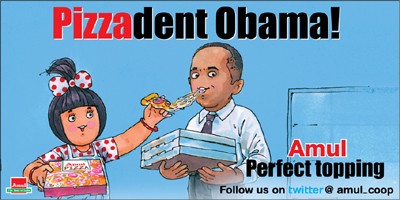
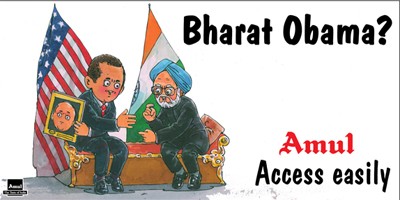
    We are back with telling a topical story via Amul advertisements. Here are links to seven ads that give us the high points of the Obama regime from 2008 to now that made news here in India.


    The latest one: US Presidential Elections 2012 (November 2012)


    Head-to-head debates between President Obama and Republican rival Mitt Romney (October 2012)


    President Obama delivers pizzas to volunteers in his campaign office in Nevada (October 2012)


    Hollywood star Clint Eastwood speaks to invisible US President Barack Obama at a Republican Convention (September 2012)


    President Obama assures Prime Minister Manmohan Singh of access to the much-wanted David Headley (April 2010)


    President Barack Obama awarded the Nobel Peace Prize for 2009 (October 2009)


    Barack Obama elected first African-American president of the United States (November 2008)


  • The Anchor: 5 ways e-shopping portals can differentiate from hordes of others

    By Richa Kar


    #1 Marketing

    How does a portal market itself and build the brand over a longer period of time? Why should a customer keep coming back and shop with you instead of going to a competitor website? Marketing will drive the association of brand with consumers.


    #2 Technology

    This plays a big role in enhancing user experience on site. As a portal increases the categories that it retails, it becomes that much more difficult and time-consuming for a customer to find what they need. An e-tailer needs to leverage technology to make product discovery much easier and faster by way of tagging, search, filter etc.


    #3 Re-looking at content strategy

    In an industry where you have multiple players selling the same categories, brands, styles etc., the only way an e-tailer can differentiate themselves is content. Content can be on site, product lead, off site, social media. This also involves looking at merchandising very differently.


    #4 Execution

    Execution plays a very important role. Customers buy from online portals without having a real-time experience of the products and repost faith in the portal to deliver high-quality products, on time and in great condition. We at zivame ensure that we execute the order well and live up to the customers’ expectations.


    #5 Value Proposition

    Our value proposition is making the customer feel comfortable buying lingerie. Buying lingerie offline can sometimes be awkward. We also ensure that our packaging is done in really neat-looking boxes with no provocative pictures on them. Sticking to the core value proposition is of utmost importance.


    Richa Kar is CEO of Zivame.com


  • Ranjona Banerji: Slick, peaceful Obama win coverage

    By Ranjona Banerji


    I’m going out on a limb here. The spectacle of watching the results of the US presidential elections unfold on television is akin to watching a slickly made Hollywood movie. Whereas coverage of Indian election on Indian news channels feels more like being in the midst of a chaotic and cacophonous Bollywood film.

    Stereotyping of the most superficial sort? Maybe.


    Still, Wednesday was a fascinating day for a news-tracker. You could switch from CNN to BBC to Al Jazeera (also on Headlines Today) to CBS on Times Now to ABC on NDTV. Fox unfortunately was not available on the English news channels in India although according to Wednesday’s newspapers, they had a little drama of their own when the channel called the election for incumbent president Barack Obama and their star panellist former George W Bush aide Karl Rove objected. (http://www.chicagotribune.com/news/politics/sns-rt-us-usa-campaign-rovebre8a7011-20121107,0,2643102.story.)


    For the rest, instead of the screaming matches filled with mudslinging and accusations that are characteristic of Indian TV panel discussions, we had interesting analysis and very polite dissensions. The best word I can use is professional, something Indian TV journalists are still a little short of. The first time I saw such coverage was as a political science student in Calcutta in 1980 when Ronald Reagan beat Jimmy Carter and the American Centre invited people to watch (as it still does presumably). As far as the media is concerned, election night is a well-oiled machine to which increments are added over the years but the core competency remains. This time around, thankfully, there were no holograms from CNN which are still better in the movies than they are in real life.


    **


    Of course, at some point, our star anchors had to jump into the fray and try and interpret the results for their loving, dedicated and presumably ultra dumb Indian fans. I watched only Rajdeep Sardesai on CNNIBN with the usual gaggle of Indian guests who can be called upon to comment on just about everything from nuclear disaster in Japan to attacks on women in Karnataka to well, the next US president and then of course Arnab Goswami on Times Now. Goswami surrounded himself with lots of American reporters who then repeated what we had heard all morning about the election. His piece de resistance was when he asked one reporter whether this result meant that Americans had become more patient. At this point my patience failed and I went away.


    **


    Indians can take solace from one thing though: the pundits and pollsters were as wrong about this election as they often are about Indian elections. Everyone apparently agreed that this would be a very close election with the winner – whoever it was – just squeaking ahead. As it turned out, Barack Obama took the crucial “swing” states quite early and once it was clear that he had taken Ohio, victory was certain. Apparently ABC called it first (since cable digitisation I don’t get NDTV any more!).
    And after that, his victory was pretty emphatic.


    **


    It is also clear that if Indians want to be experts on the US election system they need to study it a little more…


  • Anil Thakraney: The Obama Drama

    By Anil Thakraney


    Some observations on the media coverage of the US Prez elections, and a couple of notes on the politics of it.


    Obamaji’s biggest strength is his public speaking skill, his charisma on stage. This not only keeps the Americans enthralled, it must have prompted many to press the button on his name inside the polling booth. Wish Maun Maun Singh had a millionth of the guy’s charisma, we might have tolerated the assorted political scams with a slightly cooler head.


    I watched only NDTV and Times Now for the election coverage. No, I didn’t skip the other channels because I don’t approve of them, it’s just that there’s only that much I can handle on an election that doesn’t affect my life even remotely. In fact, all the excitement in India over Romney versus Obama reminded of that lovely proverb: Begaani Shaadi Mein Abdullah Deewana.


    Abdullah reminds me of J&K CM Omar Abdullah analyzing the elections for us on NDTV. Bichare se Kashmir sambhalta nahin, and he’s got the gall to discuss American politics.


    Watching Dr Prannoy Roy on air is always a delight. Not just for the sense of proportion he brings to the table, but because of his innate calmness and neutrality. Really wish his protégées (including those who’ve left him), learn something in television journalism from the man. As for NDTV’s coverage itself, it got a trifle boring as they went too deep into the US micro politics. Dr Roy can’t help it, I guess, since he’s a passionate psephologist. But I’m quite certain his audiences felt a tad restless.


    Arnab Goswami, on the other hand, had the right idea. He chose to focus only on the relevance of the election to the sub-continent (and he kept reminding us of this super cool angle). But then he went ahead and invited the same thakela faces on his show, the same gents who indulge in the usual Indo-Pak tug of war. Therefore this show became dull as well.


    I did try out CNN International for a bit, but the reporters appeared too excited and too busy exchanging friendly banter with one other. Never a good idea this, because this mutual bonhomie can, and often does, alienate the viewer.


    As for the big picture, sadly, the American politicians are making the same deadly mistake their counterparts make in India. They have totally polarized the nation, and have divided it into different vote bank communities. This lethal strategy will come back to haunt them one day. We Indians know the sort of suffering political fracturing brings to the nation.


    ***


    PS: PETA has decided it’s time for real ‘shock and awe’ to make you go vegan. They have used veggies in their latest ad as a phallic symbol, with absolutely absurd results. If this doesn’t prompt all the size-obsessed hunks to opt for sabzi tarkari, nothing will.


    Link: http://www.huffingtonpost.com/2012/11/05/stay-firm-and-fresh-peta-_n_2076499.html


  • The Anchor: 5 reasons why brands need to reinvent

    By Vinay Khandpur


    1. Consumer has more exposure to information and is now in control. They demand more value for his spends


    2. Constantly changing marketing environment. Companies need to maintain and improve their Brand Equity


    3. Remain contemporary, refresh brand core and enhance brand experience


    4. Increased competition and the necessity to maintain and increase customer base


    5. Anticipate future trends to grow business


    BUT:

    Must have a reason to reinvent – not just for the sake of it


    Vinay Khandpur is Business Director, Vertebrand


  • Ranjona Banerji: The Big, Bad World of the BBC

    By Ranjona Banerji


    The day when you know that there are going to be the no newspapers the next day, you start hoarding them. You don’t read all of them – if you take more than one – or you don’t read all of it. You save up some for the next day, which will start without one vital component. And that is how you discover how old you are really. Not one of those who wakes up in the morning and checks whatever treats all the apps on their smartphone has ready for them. I just realised for instance that my version of Microsoft Word is so old that it does not recognise smartphone as one word.


    Tomorrow, Thursday November 15, is a no edition day in Mumbai.


    **


    While Indian television news has been a mix of Diwali cheer, entertainment guff and the customary studio fireworks over some “question of the day”, the big story for the media has been the scandal over at the BBC. The venerable broadcaster is accused of covering a sex scandal by a star TV personality in the 1970s and ’80s, Jimmy Savile. Alllegations of child sexual accused against Savile who died last year include creating shows only so he could have access to children. Some in the BBC’s management apparently knew and became part of a cover up operation.


    After that came the BBC’s much respected Newsnight programme which decided to investigate the matter. Here, allegations were made against a former adviser to Margaret Thatcher Lord McAlpine of having raped boys in a care home in Wales in the 1970s. These accusations were then found to be false. The BBC’s director-general (also its editor in chief) George Entwhistle has resigned. He claimed he did not know about the contents of Newsnight. Now the director of news and her deputy have been asked to “step aside” pending further enquiries.


    The big problem within the BBC – apart from the Saville cover-up – is the gaps in editorial accountability and responsibility. None of the top editorial brass apparently knew what was going on with the Newsnight programme, the one which falsely implicated McAlpine and another of Savile which was controversially not aired. Apart from that, basic journalistic checks were not followed. The man who alleged that McAlpine had raped him took back the allegation after he saw his photograph. By then, the programme had been aired and McAlpine had been named.


    This is a tricky situation for large organisations. There is a line however between giving editorial freedom to your subordinates and being totally hands off. When a story is large enough, senior editorial staff are expected to be involved or at least in the loop. That’s what we have those sometimes interminable editorial meetings.


    People are blaming a dual reporting structure for the confusion which led to all these errors and quite frankly, disasters. There is a simple way in which newsrooms used to operate – in newspapers at least – to contain problems like this. The chain of command was clear – the editor downwards, minus democracy and a collaborative form of decision-making. Mistakes were made but you knew how and why they were made. In recent times all kinds of management theories have been applied to newsrooms which have changed structures, sometimes beyond recognition. Episodes like this are likely to be more frequent in all newsrooms if journalists are treated like managers and not what they actually are.


    The BBC’s long experience and reputation has not come to its rescue here. There’s a lesson there for everyone.


    **


    Meanwhile, Salahuddin Chaudhry, editor of the Bangladeshi newspaper Weekly Blitz, which first reported on the supposed affair between Pakistan foreign minister Hina Rabbani Khar and Pakistan president Asif Zardari’s son Bilawal Bhutto Zardari, has been arrested on the eve of Khar’s visit to Bangladesh. Love takes no prisoners, eh?


  • Young Track by Samyak Chakrabarty | What youth think of Samsung vs Apple

    What’s a 23-year-old writing a column on a site where the average age of columnists is… ? Ok, ok, we won’t reveal that number, but like it or not the youth constitute a majority of India’s population. Since the last few years, young Samyak Chakrabarty has been in and around media events and offices with his vision of how the youth can be targeted.


    In this period, he has organized a few conferences, participated in several of them in India and abroad, and works as Chief Youth Marketer with the DDB Mudra group. He’s organized a TedX youth conference in Mumbai, was invited to meet Hillary Clinton when she visited India and has co-authored a book ‘Generation Einstein 3.0 – India version’.


    Samyak’s column appears on Wednesdays and as the title suggests, it tracks the young – specifically keeping in mind the advertising, media and marketing fraternity – Ed


    Why Samsung can never enjoy the same aspirational value as Apple amongst Young Indians

    Post the courtroom battle, we conducted a brand tracker to ascertain what young india thinks about the two mobile giants and has any of the legal proceedings affected their opinions. The result was clear – Apple not only maintained its high aspirational value, it crushed ‘ image to a level where many students were even ashamed to bring out their Galaxy smartphones out of their pockets for a long while. Those who could afford it, even discarded them. We looked at what Apple does so right, that it is (not only in India) the most highly regarded youth brand.


    1. Innovation: They always ensure there is enough fodder amongst techies and enthusiasts to talk about ensuring that the word of mouth is sustained. Secondly, as a technology brand they have kept up their promise of delivering to customers newer products at regular intervals. But then so does Samsung, but the difference is – at Apple it is not about ‘new’, its more about being ‘ahead of time’ – something every consumer wants to be!


    2. Design and packaging: Suave and simple is the new flashy. From looks to functionality to packaging, they have ensured that the word ‘sleek’ is heard everywhere. The problem with Samsung is that even though loaded with equal amount of features, if not more, it has not been able to create the aura around its products as Apple.


    3. Pricing: Everybody knows that an Apple does not come cheap, hence if you have one, you have arrived in life. In this case, the higher tag is working to its advantage even for volume sales. Youngsters in colleges are known to save up and cut down on other expenses just to have that device even though going by the SEC they belong to, it would be unaffordable. The likes of Samsung and Micromaxes are perceived as a poor man’s smartphone and more crudely (after the battle) – a copycat brand!


    4. Steve Jobs: Believe it or not, many youngsters aspire to posses an Apple product because of their sheer respect for this genius. He is the best brand ambassador they could ever have and it continues to be so even after his death. Samsung unfortunately has no story behind its creation, hence the legacy factor is missing.


    My reading from this is that today’s young indian consumer is all about the 360-degree. It does not matter if one factor alone is perfect – everything has to be so! Apple has sustained its brand promise and the proof of loyalty is that even through various criticisms related to the product, its perception equity has never been affected. Samsung may end up being the choice of actual purchase due to economic reasons, but Apple will always be a dream possession.

     

  • Anil Thakraney: Death of the film critic

    By Anil Thakraney


    Apart from all the gassing and the plugging that goes on in the social media, there’s one common tendency I have noticed, regardless of what the tweeter/Facebooker does for a living: To immediately post his/her two bits on a movie that’s just been released. (Even as I write this, my timeline is awash with tweets on Jab Tak Hai Jaan.) Speed is of essence; you have to post on the weekend of the release, Monday is too late. In fact, I often wonder if some people rush to the multiplexes ONLY to be the first out there with a micro film review, such are the times we live in.


    And here’s the thing: many social networkers (including film directors and movie stars) take these little reviews quite seriously. And this isn’t entirely surprising, these posts can and do affect the fortunes of a film to a significant extent (well, at least in the urban areas). In the olden days, we would pass the word around though direct interactions or phone conversations. I still recall all the excited exchange when Sholay was released, even though I was a bachcha. We would gather around during the school recess to discuss the movie. All this word-of-mouth took time to take effect and that’s why Sholay, which started out rather poorly, took its time to pick up. Social media updates now play the same word-of-mouth role, except that they are lightning fast. Which is why I guess these posts aren’t taken lightly, even if the ‘reviews’ are by cinema amateurs.


    And this means no one really reads the newspaper film reviews anymore, or at least many people take very less interest in them. Folks have already discovered what the movie is all about, and there’s nothing more to find out. Which is why I believe the time is up for professional cinema critics. They will sooner or later have to pack up and leave. The only thing that can possibly save this dying species is if they quickly re-invent their craft and find innovative ways to keep the readers engaged. I don’t know what these new tricks can be, but they have to be found. The traditional format of reviewing a film is pretty much finished.


    Yet another reason why I so adore the new media. It’s constantly challenging the old world. Innovate. Or perish.


    ***


    PS: Interesting interview with Golden Globes presenter Ricky Gervais. And all the questions pertain to the man’s views on today’s journalists and the entertainment media. All journos must read this. Chances are very high that Indian celebs think pretty much the same of desi reporters.


    Link: http://www.cjr.org/cover_story/questionable_taste.php?page=all


  • Debrief: Dulux: Needs a dose of passion

    By Anil Thakraney


    So, it appears that the ad world having finally discovered young Farhan Akhtar, it’s time for this ‘new cool’ actor/director to strike it rich. He’s all over the place these days. However, I must say the Dulux guys, for their Velvet Touch brand, have used Akhtar a little more effectively in their new ad.


    The commercial equates an individual’s ideology and attitude with the colour he/she chooses for the wall. Akhtar plays the anchor and delivers the voiceover as poetry, and this he does well. So there’s a rock-star wannabe who opts for the red shade. An environment-friendly architect settles for green. And so on.


    I like this approach. Because it strikes at the core of what a consumer really wants from his/her paint, after the tangible factors are in place (reliability, durability, wash-proof paint, etc). Which is that the colour on the wall must in some way reflect the resident’s personality. (I, for one, am very serious about painting my walls deep black, the only thing that stops me is I am may not be able to spot a visiting cockroach!) In this context, Dulux is on the right track.


    Where I feel a little let-down is in the execution. The creative hasn’t done justice to the idea of a shade matching the person’s desires and ambitions. They haven’t been able to take the concept to a higher emotional plane, this looks like half-baked creative. The thought is there, the passion is missing. I can visualise stunning, engaging ads using the play of human beings and colour, with or without the services of Farhan Akhtar.


    [youtube width=”400″ height=”220″]http://www.youtube.com/watch?v=gMrvbl6oEbo[/youtube]

    Rating: (On a scale of 1-5): 2.5 Good idea, needs to be fleshed out.