Category: BLOGS

  • Reviewing The Reviews: Chakravyuh

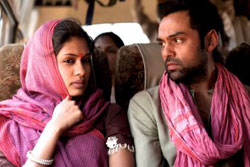
    Chakravyuh

    Key Cast: Abhay Deol, Arjun Rampal, Manoj Bajpayee, Esha Gupta, Anjali Patil, Om Puri

    Written By: Prakash Jha, Anjum Rajabali, Sagar Pandya

    Directed By: Prakash Jha

    Produced By: Prakash Jha


    Prakash Jha films cannot be dismissed outright. For the better part of his career, Jha has tried, not always with success, to capture the bleak reality of small-town India. Because he is not a typical Bollywood all-business-no-brain type, his films are viewed, at least by critics, with some respect. Still, for the informed viewer, it is hard not to be sceptical of Jha’s Maoists-for-Dummies film Chakravyuh, especially since the plot comes from Jean Anouilh’s Becket which is also the base for Hrishikesh Mukherjee’s Namak Haram. Jha’s film may have a point of view, but lacks both finesse and a strong emotional core. The ratings from the wise ranged from 2.5 to 3. And poor Arjun Rampal comes in for major flak!


    Shubhra Gupta of the Indian Express rightly analyses, “Jha makes it easy for us to hate these black villains, and stay safely ambivalent about the others: the Naxals have a valid point of view, but killing cops, or anyone else, is not good; the cops need to prevent the innocent villagers from becoming victims, but it’s a war, and there will be casualties. You can see the director’s job is cut out because he is on a tightrope: too much overt justification or sympathy for either side would receive flak from the other. But this makes Chakravyuh, with entirely predictable character-arcs and outcome, a lesser film than it could have been.”


    Suprateek Chatterjee in the Hindustan Times writes, “Some performances, such as those by (Manoj) Bajpayee and (Anjali) Patil, are restrained and manage to add some authenticity and dignity to the proceedings. Alas, all of this is undone by the film’s frenetic pacing, raucous background score (nary a silent moment, with many cues sounding suspiciously similar to Hans Zimmer’s The Dark Knight score) and puerile writing. There’s no intelligent layering here; characters arrive on screen, announce who they are and what they do – and then proceed to do exactly that. Also, this might seem like a minor quibble, but in 2012, can we expect at least half-decent visual effects? Shots of explosions in this movie look like they were created by first-year animation students.”


    Priyanka Roy of The Telegraph writes, “This is a film that doesn’t really know what it wants to be. Director Prakash Jha ventures bravely into the dark and under-exposed world of Naxalism, but Chakravyuh is a victim of Bollywood excess, reeking of jingoism, larger-than-life characters and the inevitable song-and-dance, all of which tend to drown out the message that the film strives to put across.”


    Meena Iyer of The Times of India is kind: “Chakravyuh is a hard film to make and marks must be given to Jha for sticking his neck out. Staying true to the subject, he gives us an insight into uncomfortable truths unfolding in our backyard. He is one of the few filmmakers with such audacious work to his credit. Jha must also be complimented for the scale and performances he has extracted from his lead cast. The men – Manoj, Arjun and Abhay – are compelling; of the girls, Esha starts on a shrill note but improves later. Newbie Anjali Patil shines. You may not like this movie if socio-political entertainers are not your cup of tea.”


    Shabana Ansari of DNA fence-sits: “A socio-political thriller set in the country’s red corridor where Maoist insurgents oppose industrialisation because it leads to the displacement of the tribal population, Chakravyuh has its heart in the right place. Jha has once again woven fictional elements and characters with real incidents and people to present a film that touches the right chords. But somewhere along the way, he succumbs to what can only be described as the Bollywood’isation’ of a socially relevant subject – there’s male bonding, dialogue-baazi, non-stop action, blazing guns, and also an irreverent item number thrown in! No, really!”


    Sukanya Verma of rediff.com is unimpressed: “Jha steers clear of innovation and opts for the soft-corner-for-the-girl cliche and not some radical shift of ideals to convey Kabir’s sudden craving to switch sides. Chakravyuh, despite a decent premise, is a victim of clumsy plot and inordinate length. Apart from ambiguous purpose and the topsy-turvy dynamics of Adil and Kabir’s friendship, dialogues fail to dazzle and songs appear out of place. It’s almost hilarious when Om Puri’s waxing eloquent about ‘Aam aadmi ke liye kuch bhi nahi hai’ (There’s nothing for the common man) is immediately followed by Sameera Reddy’s furiously shaking belly in a needless item song targeted at frontbenchers. The irony is unmistakable. In the end, Chakravyuh is nothing more than an average action flick in the garb of relevant cinema where socio-political turmoil is nothing more than a prop and gun-toting militants in uniforms and bandanas hollering ‘Lal Salaam’ fill up the frames.”


    Karan Anshuman of The Mumbai Mirror was one of the positives: “The film is massive. Hundreds of coordinated extras fill up scenes. Yet, one feels Jha’s method is getting somewhat repetitive. The technical formula that served him well so far is beginning to look dated with an overall neatness missing. Do such films need item numbers any more? Must the effectiveness of the message come at the cost of style? But then again if a Bhansali can produce a Rowdy Rathore, give me a Chakravyuh over it any day. Watch this film for its lucid, dramatic presentation of a nation’s problems. The commercial aspects notwithstanding, at the heart of it, Chakravyuh is the first effective film on the Naxal-Maoist question.”

     

  • Debrief: Tanishq: Charming!

    By Anil Thakraney


    Excellent Diwali ad by Tanishq. Indeed, this is the way to align your brand with a festival. A lesson for all advertisers who might be busy creating their own Diwali specials.


    The commercial features a young couple, getting dressed to celebrate Diwali. The man says his pal has bought a Tanishq jewellery set for his own wife, and he asks his missus to pen a sweet message on the gift pack on the friend’s behalf. The lady seems to like the jewellery, but regrets that they can’t afford such expensive stuff. A very engaging interaction happens between the two, and it’s finally revealed that the man has actually bought the gift for his partner. Because, as he says, Diwali comes just once a year.


    Superlative work. A very, very slice-of-life situation, this sort of a discussion might be happening inside many Indian middle class households. The need to cut costs to save up for the rent, the EMIs and other spiralling expenses. Therefore empathy to this ad becomes strong. Also, the dialogue is simple but very life-like, very natural… full marks to the writer. And the TVC ends on an emotional high, the way it should happen in a festival ad. The surprised lady’s joyful expression is to die for.


    [youtube width=”400″ height=”220″]http://www.youtube.com/watch?v=-aJ20jkZqS0[/youtube]

    Now compare this one to the rubbish TVC Tanishq put out last year with Mr and Mrs Bachchan Sr. Will remind you once again to throw the celebs out. And use real people in your ads.


    Rating: (On a scale of 1-5): 4. Grounded in realism, high on empathy.


  • Mediaah Report Card on Ambika Soni: 7/10

    By Pradyuman Maheshwari


    Although I would hold her responsible for the mess that we have in digitization, Ambika Soni was among the better I&B Ministers we have had in the last decade.


    In my report card, I would give her a 7 on 10.


    In fact had it not been for digitization and the lack of gamechanging vision, she’s could’ve scored higher.


    Remember she took over from Anand Sharma and earlier Priyaranjan Dasmunshi who had made life tough for industry practitioners.  Ms Soni’s tenure came as a breath of fresh air. Reportedly, the advisory she received from her predecessors was that she shouldn’t go easy on media biggies, but she would’ve none of that.


    Everyone has a view on the content dished out on television and in the print media. Parliamentarians, legislators and politicians of all hues, consumer and advocacy groups, corporate, citizens, et al would engage with her to act on their demands. For instance, Balika Vadhu in Colors was found by some to be glorifying child marriage or Sach Ka Saamna and Bigg Boss were found to be unfit for family viewing. Ms Soni heard the complaints and kept the complainants at bay. The general entertainment channels must thank the former minister to ward off a variety of pressures.


    I think just letting various players do their job with a nudge here and there was an achievement. Ms Soni also ensured that entertainment and news broadcasters work out an effective self-regulatory mechanism. This had had its share of hiccups in the past, but in her tenure it happened.


    Ambika soni

    But though her progressive outlook ensured that the industry benefitted, various factors pull her down in this appraisal. In fact, according to one magazine study a few years back, she was judged to be a non-performer.


    Let’s look at the areas where Ms Soni failed:


    1. Doordarshan. The pubcaster had turned 50 in 2009 and there was an opportunity to make it a more professional BBC-like body. Didn’t happen.

    2. Radio. News on FM radio is not allowed due to some silly Home Ministry objections even as there are several cable channels in every nook and corner of the country.

    3. Paid news. If paid news is being discussed much it’s thanks to the Election Commission and a section of the fraternity. The minister had an opportunity to cleanse the system, but she didn’t want to upset the holy cows in the business

    4. Tougher on measures: Had she adopted a sterner stand and asked the industry to act faster, we wouldn’t have seen an NDTV taking TAM to court as BARC would’ve been set up and offered the necessary guidelines.

    5. Digitization. Agreed it’s a bold measure and it’s in her tenure that it gained momentum and was being executed. But the fact that it didn’t was all thanks to the way her ministry went about the task. Even as there are just two days to go, 100 per cent digitization will take another two or three months to happen in the four metros.


    Could this embarrassment have been avoided? Yes, of course.


    I am also shocked at how and why she quit less than a week before what was decidedly the biggest thing in Media and Entertainment in the last decade. Bigger than DTH and other policy initiatives. Yes, it’s a good idea that a senior political leader goes back to help the party in the run-up to the elections, but why do it when the Sunset Date is just a week after?


    Why did the Prime Minister allow her to do so? Why did the UPA chairperson allow it?


    This, I guess, is the reality check for all of us in the media. The powers that be don’t really care.


    As for Madame Soni’s score in my report card. 7/10. And a red line for being irresponsible and leaving the ministry a week before her biggest project was being executed.


    Pradyuman Maheshwari is Editor-in-Chief, MxMIndia. The views expressed here are his own. Inbox him at pradyumanm@mxmindia.com or use the messageboard below


  • Ranjona Banerji: Not too late for TOI to correct practices

    By Ranjona Banerji


    Watching the fury of nature is an awe-inspiring and fascinating experience, thanks to non-stop coverage of Hurricane Sandy by CNN. The storm that has hit the eastern seaboard of the United States is not the first but the sheer scale of water and wind, the potential threat to life and property and the peculiar timing with the US presidential election makes it even more compelling.


    CNN is very good with weather and takes it very seriously. Plenty of information is provided to the viewer about the meteorological aspects of the weather systems with enough scientific mumbo-jumbo to make you feel like you’re on the sets of The Day After Tomorrow. While the coverage is going on however, CNN does not venture into the whys and the wherefores. It’s more about the what.


    This is because not all media are infected by the Indian disease of making everything into a discussion. The global warming argument – and it cannot be far away – can be dealt with later. Nor were there any touchy-feely interviews with those suffering the storm, where bemused people are hard-pressed to find the right answers. Undoubtedly all those will come later.
    A shout out to all the intrepid reporters, star anchors and citizen journalists on CNN. This is a cruel comparison but one cannot help but compare this coverage to an abiding Indian image in similar situations: NDTV’s star anchor and now very very senior editor Sreenivasan Jain standing under an umbrella at Mumbai’s Milan subway, talking about flooding in breathless tones. As any long-suffering Mumbaikar knows, Milan Subway is so much lower than road level that it will flood if you pour a bucket of water into it.


    **


    Battles within the media and with the media seem to be getting tougher and are heading to the courts. Salman Khurshid against Aroon Purie and the TV Today group, Naveen Jindal against Zee News and Zee Business, the Bennett Coleman group against Zee News and Zee Business, Zee hitting back as well… Bennett Coleman has objected to Zee editors being heard on tape telling Jindal that news pages in the Times of India and Economic Times were up for sale.N


    BCCL CEO Ravi Dhariwal’s defence of Medianet goes thus: “We will make no excuses for Medianet. It is an initiative with a different purpose. It is for our advertorial and promotional supplements. But as far as our newspapers go, there is nothing that is bought or sold. No respectable newspaper will do that.”


    This is a weak argument since Medianet is at the heart of the current debasement of the media and had been picked up by every other news organisation as a legitimisation of “paid” news. To now argue that some parts of the newspaper are sold to advertisers but masquerade as news for readers is mere semantics. It took Bennett Coleman a very long time to add the line “entertainment promotional feature” to its glamour supplements like Bombay Times and it is still not clear that all readers understand that this means that the news in these papers has been supplied by the so-called newsmakers for a fee and not collected by journalists.


    As a “responsible newspaper”, perhaps it is not too late for The Times of India to correct its earlier practices. In many ways, Times of India is India’s most complete newspaper and unfortunately, this includes being complete with the good as well as the bad.


    Ranjona Banerji is a senior journalist and commentator. She is also Contributing Editor, MxMIndia. The views expressed here are her own


  • The Anchor: 5 no-nos in the office. No matter what

    By Vidya Heble


    #1 Stealing people’s food. This is the big one. You do not have to be the person who shares their food. It’s the era of portion control and diet selection. It’s fine not to share. But do not be the person who steals from the fridge, however tempting that salad in the unidentified lunchbox may look. Leaving aside the question of world famine for now, it is crushing to realize that someone has been boorish enough to eat one’s carefully packed food.


    #2 Vocalising your aargh. It’s a stressful world, none more so than media and advertising. And there is this cutesy trend to actually say “Aaarghh!” out loud, growling the aargh. Don’t. It’s not cutesy, it startles people around you, and it shows you up as a loose cannon who may have a screaming fit any moment. Channel your frustration in one of many other non-disruptive ways.


    #3 Brushing out your hair. It’s lustrous, long and lovely… and when you brush it out at your desk, it travels across to other people’s. No one likes hair straggling across their work, and god help you if it reaches a high-strung creative type.


    #4 Being the sound-effect person. Clackety heels or – sometimes worse – flats announce your approach. Your bag is set down with a thump, both actual and vocalized by you. You sigh dramatically as you take your seat. You wonder aloud why the computer is slow and implore it not to die (a phone call to tech support would help). Everyone else is hoping you shut up soon.


    #5 Spreading your mess. Whether it’s your meeting notes on scrap paper or the printouts from your slick presentation – no one will lurve them if you leave them lying around on desks other than your own. If it needs to be junked, put it in the waste basket or the shredder. And if you have the habit of carting your lunch or snack box to a colleague’s desk and carelessly leaving it there when you’re finished…  what kind of slob are you?


    Vidya Heble is Deputy Editor of MxMIndia and – ahem – often works from home.


  • Anil Thakraney: How to make Diwali count

    By Anil Thakraney


    Diwali is upon us and a whole lot of advertisers must be gearing up to make the most of India’s biggest festival. And for the next fortnight the media will be flooded with Diwali special ads and offers. All very fine, but there’s a small problem: Most advertisers and their agencies create the usual, predictable ads, very few try to either explore the cultural facets of the fest or dig into the various joys it brings to people’s lives.


    Yesterday I reviewed the Tanishq Diwali ad in the Debrief section, where I felt that the advertiser had wonderfully synergized the festive mood with their own product. And this set me thinking. What must advertisers do to ensure they don’t end up with those stupid, generic ‘Happy Diwali’ ads? And headlines that scream the usual discounts and freebies? Is there some sort of a road map for making the most of this festival? Quite obviously there can’t be because this is a creative activity, so one gets limited only by one’s own imagination.


    However, here are some things to look out for, and these are only a few pointers, there’s a lot more that can be done.


    No advertiser ever attempts to use the key message of Diwali: The victory of good over evil. Are they worried about treading too close to religion? They don’t need to be, this can be handled in a religion-neutral way, because it’s the universal truth. I can visualize interesting work with this particular route.


    Diwali is that time of the year when desi family members travel miles to be together. (This is the reason why airlines jack up their rates big-time.) And this leads to a lot of bonding/secrets sharing/new discoveries within the family. While Bollywood does exploit this, it’s rare to find it in advertising.


    Some people gamble on Diwali night, it’s a cultural thingy. Again, this never finds place in our ads. Wonder why, when such engaging situations can be created using this as a backdrop.


    Most people wear brand new clothes on the big night. Funnily, I have rarely witnessed anyone using this theme, not even fashion and accessory brands!


    I can go on but I guess you get the drift. There’s no point releasing ads that look like clones of each other, no brand really benefits in the process. Diwali is a festival of many cultural hues, and it’s a great opportunity to associate one’s brand with them for effective advertising.


    ***


    PS: Like many other James Bond fans, I too am eagerly awaiting the release of Skyfall, the latest in the Bond series. But we must look out for it for another reason: The movie has pushed the envelope on product placement, many big brands find their place in the film. Would be interesting to watch how they tackle this, because Bollywood invariably screws up product placement. Here’s more in The Guardian:


    Link: http://m.guardian.co.uk/film/filmblog/2012/oct/23/skyfall-marketing-james-bond?cat=film&type=article


  • The Anchor & Young Track by Samyak Chakrabarty: 5 brands that appeal most to urban youngsters

    What’s a 23-year-old writing a column on a site where the average age of columnists is… ? Ok, ok, we won’t reveal that number, but like it or not the youth constitute a majority of India’s population. Since the last few years, young Samyak Chakrabarty has been in and around media events and offices with his vision of how the youth can be targeted.


    In this period, he has organized a few conferences, participated in several of them in India and abroad, and works as Chief Youth Marketer with the DDB Mudra group. He’s organized a TedX youth conference in Mumbai, was invited to meet Hillary Clinton when she visited India and has co-authored a book ‘Generation Einstein 3.0 – India version’.


    Samyak’s column appears on Wednesdays and as the title suggests, it tracks the young – specifically keeping in mind the advertising, media and marketing fraternity – Ed


    My team and I recently conducted a brand tracker to check as to which brands enjoy maximum top-of-mind recall these days. This of course has nothing to do with actual purchase decisions due to other factors such as price, availability etc. This survey is themed on the effectiveness of campaigns, presence at which touch points, core message and the overall aura. (This is not in any numerical order.)


    Airtel


    Specific campaign: Har Ek Friend Zaroori Hota Hai


    Why it worked:


    1. Use of normal everyday students (as models) in all the visuals made it more relatable as well as appealing.


    2. The sound track was easy to understand, fun to repeat.


    3. It conveyed that as a brand, Airtel understands what the average youngsters needs from a mobile provider and will strive to deliver it.


    Redbull


    Specific Campaign: College sampling (continuous)


    Why it worked:  1. Use of good looking promoters and well designed creative collaterals.


    2. Presence outside colleges at strategic times such as after exams, during college events or late evenings when students are tired and about to leave.


    3. The TG gets to experience the product right where they are without having to go anywhere.


    Bindass


    Specific campaign: Be Restless – Do More


    Why it worked:


    1. Shows like Emotional Atyachaar and Super Dude and their promotional activations keep the TG engaged – everybody watches it even if it is to make fun of it.


    2. Their association with marquee music festivals like NH7 or David Guetta give an impression that the brand is an enabler of all cool things youngsters like.


    3. The very tag line captures what youngsters are all about today and hence develops an easy appeal.


    Pepsi


    Specific campaign: Change the Game


    Why it worked:


    1. Football is slowly becoming a ‘cool’ sport to be associated with and hence the brand becoming an early adopter earned them a lot of brownie points especially when it been forever known to be only associated with cricket.


    2. Like it or not, Ranbir Kapoor does have a considerable influence on guys as well as girls when it comes to brand endorsements.


    3. Perfect timing in sync with the football cup which was being sponsored by coke. Yet – pepsi enjoyed more association to that sport amongst average youngsters (who may not be football fans but still think of it to be cool).


    Anna Hazare (Shocked to see this name come up myself – but proves to be an interesting case study on Youth Marketing)


    Specific Campaign: Anti Corruption Movement


    Why it worked:


    1. Anna is no longer one person, it personifies a mass demand for transparency and good governance. Youngsters no longer want to live in a world of economic uncertainty and populist democracy – hence this movement gave voice to what they wanted.


    2. Inclusion of youngsters in the strategy and implementation of the entire movement. In marketing terms, youth became custodians of “brand anna”.


    3. Effective and optimum use of social media. Rather than encouraging Facebook activism alone, they use the network as a mere tool to excite and ignite.


  • Anil Thakraney: Sandy goes social

    By Anil Thakraney


    Sandy did sound like a scorned woman, and she did bring the US East Coast to a halt. Thankfully, her fury was short lived, and cities and towns in the region are already back to near normalcy. However, thanks to her popularity on the social media, for that one day, we were all New Yorkers and New Jerseywallahs, as the world came together on Twitter and FB to bond with those affected by Sandy. The social media also helped local residents stay in touch with their near and dear ones across the world. I personally know of a few Indians who stayed connected with their NRI family members on Twitter. And that’s such a wonderful thing.


    Compare this with what usually happens. I often tear my hair out over the posts many people put out. Utter rubbish goes on in the social media, and I have come precariously close to disconnecting my account. This is what I call social media abuse. People continuously posting drivel about what they are thinking, where they are lounging, the song on their lips, the dinner menu and the usual quotes from those dead and long gone. I often feel this abuse will one day be the death of this hot new medium. And I hope folks understand this before it’s too late. Because, as Sandy showed, the social media can play a very important role in a crisis.


    Just imagine the likely scenario if Twitter and FB were around during the 9/11 attacks. Or if they were as popular as they are now, when 26/11 happened in Mumbai. The furious networking would probably have helped locate the victims faster, and this could have helped save some lives. Not to speak of the emotional succour the social media offers when a person is facing trouble. You will experience its awesome power when (god forbid!) the next ‘shock & awe’ campaign breaks out.


    I sincerely hope people realize the importance of the social media and quit screwing this space. No one wants to know what you plan to eat for dinner. Repeat, no one. And if your ‘friends’ are showing some interest, it’s either because they have a hidden agenda or they simply want to indulge you. The sooner you get this, the better.


    ***


    PS: Hee hee hee. I love this idea. LG, for their ‘lifelike’ monitors, conducted an experiment inside an elevator with hilarious results. What an outstanding product demonstration, it makes an otherwise cold product come alive. However, I would slip in a word of caution: If someone suffered a heart attack in the process, no one would be laughing at this stunt. And it could bring the brand a great deal of misery.


    [youtube width=”400″ height=”220″]http://www.youtube.com/watch?v=NeXMxuNNlE8[/youtube]


  • Debrief: eBay: Yawn Bay

    By Anil Thakraney


    Maha thakela campaign from eBay. Both the communication strategy and the creative suck. There is a series of TVCs on air, essentially selling best deals and safe shopping. Isn’t that an obvious strategy for an online marketing portal? Flipkart and others have already been making the same promise. So there’s nothing new here.


    Given that the strategy is weak, it’s now left to the execution to save the show. And this one’s a disaster. Basically the ads consist of boring discussions between the believers and the cynics. Someone wants the latest phone but wants the price to drop. Another one isn’t sure if it’s a good idea to purchase shoes online. And you can easily predict the rest.


    [youtube width=”400″ height=”220″]http://www.youtube.com/watch?v=0iwtMFwfhBk[/youtube]

    This is really boring stuff. The conversations are dull and unengaging, the treatment is the same old problem/solution approach, and it’s spelt out literally. With no creative spark, these ads, I’m afraid, have zero chance of being noticed. Especially given the pre-Diwali clutter on television. Flipkart has the ditto same approach, but that one single creative leap, of kids behaving like adults, helps them smash the clutter through cute advertising. eBay hasn’t taken any leap, so their ads will wither away.


    To be fair to the ad agency, I strongly suspect the ultra safe-playing client is at fault here. Neither have they come up with a refreshing brief, nor have they allowed their agency to experiment. Net result? Well, check the rating.


    Rating: (On a scale of 1-5): 0. Poor strategy. Poor creative.


  • Ranjona Banerji: Can’t rely on the cable or on media’s coverage of Reliance

    By Ranjona Banerji


    The cable blackout from the night of Halloween has affected me in a peculiar manner. Although I have had a set top box from the cablewallah for four years now, the shift to digitisation has led to the loss of some news and sports channels. Everything else is as it was.


    I am told that normal service will soon be resumed. Interestingly though the biggest play on the impending cable shutdown was in the newspapers and not on television. Evidently, English news channels in India are not really bothered about losing viewers who have not yet subscribed to direct to home services. Or, they are so caught up in the antics of Kejriwal and Subramaniam Swamy and any new entrant in the publicity circus that they forget their main constituents – viewers.
    Since the blackout, I have no idea what Times Now, CNNIBN and NDTV are up to. I do still have Headlines Today – which is how I know about Swamy – and I also have BBC World, CNN and Al Jazeera. The aftermath of Superstorm (according to CNN) Sandy and Hurricane (according to everyone else) Sandy is that non-stop coverage of the weather has receded and other matters like Syria, the Greek economy and the US presidential election are back on the top of the news list.


    **


    After Arvind Kejriwal’s somewhat lacklustre press conference (enlivened only by a shoe that missed its target) about crony capitalism, there was much speculation that the story would not be carried by the media since Kejriwal and cronies had made allegations against the Holy Grail of Indian Industry – Reliance. However, as it turned out, everyone discussed the story, even those who are partly owned by Reliance.


    In fact, nothing that Kejriwal said was that new and the fact that Reliance – along with other Indian companies – manipulates government policy is hardly a revelation.


    However, it is interesting to see how far the media will take this story. It is also true that criticism of the Reliance group – especially the part owned by Mukesh Ambani – is very low key, which his brother Anil has often commented on. After the Radia tapes were made public over two years ago, Ratan Tata got a lot of flak for using the services of a PR consultant to lobby for a suitable Cabinet minister but Mukesh Ambani managed to escape attention in spite of the long and much-publicised conversation between Niira Radia and columnist Vir Sanghvi about how Sanghvi should steer his column towards Mukesh on the KG basin gas issue.


    **


    In the days before Reliance became India’s most feared industrial group it was fair game for media scrutiny and The Indian Express carried out a series of investigations into the then Dhirubhai Ambani led company, at the behest apparently of Bombay Dyeing’s Nusli Wadia. There was even an assassination attempt on Wadia which made the news, amidst all kinds of speculation about who had prompted the unlikely candidate of wedding orchestra conductor Prince Babaria to take this step.
    Since then, the media became more circumspect about Reliance and now we mainly read about Nita Ambani’s cricket team and life coaches.


    **


    The other fallout of cable digitisation is that BBC Entertainment will stop broadcasting in India from the end of November. Delays in digitisation and unreasonable carriage fees are the reasons given by the company on its Facebook page.


    Ranjona Banerji is a senior journalist and commentator. She is also Contributing Editor, MxMIndia. The views expressed here are personal


  • The Anchor: 10 Kasab-dengue tweets that kept Twitterverse busy on a lazy Sunday

    So you thought the influentials keep their smartphones or iPads away on a lazy Sunday? The Twitterverse was active on the Congress and Nitish Kumar rallies, Girish Karnad and VS Naipaul and of course the news that the convicted Ajmal Kasab has high fever and suspected to have contracted dengue. We reproduce here 10 tweets that give you an idea of what India thinks given the news…


    Madan Sanglikar ‏@maddyisms

    At least our mosquitoes are fair, secular & democratic an believe in immediate justice #IncredibleIndia


    Sidharth Rao ‏@sidharthrao

    Jo Sarkar nahi kar saki, woh ek macchar ne kar diya?“@M2Od: It will be epic if #Kasab dies of Dengue, Incredible India.


    Kunal Purandare ‏@kunaljp

    Since the government is so keen on keeping Kasab alive, the mosquito tried its best to kill him


    Mohit Hira ‏@mohitoz

    Evidently mosquitoes are more efficient than our judiciary.


    Ramesh Srivats ‏@rameshsrivats

    I propose that we make mosquitoes our National Insect. Then the government will try to protect them and they’ll become extinct.


    Lk Gupta ‏@Lk_Gupta

    Dang you, mosquito! – Kasab


    Shunali Shroff ‏@shunalishroff

    The Indian mosquito will get to terrorists sooner than the Indian law. Machhar key haath bahut lambey hotein hain jaani. #kasabgetsdengue


    Seema Goswami ‏@seemagoswami

    So the Indian mosquito may achieve what the Indian justice system could not #kasabgetsdengue


    Piyul ‏@Piyul

    What an existential dilemma… So do we pull out all stops in taking care of him and then hang him? #kasab has dengue


    TheComicProject ‏@thecomicproject

    Mosquitoes replaced hangmen in 3 years – a record #tweetslikePMOIndia


    The UnReal Times ‏@TheUnRealTimes

    Pakistan complains to the UN; alleges India is testing biological weapons on its captured citizens


  • Anil Thakraney: 1984’s real tragedy

    By Anil Thakraney


    I was too young in 1984 to fully comprehend the injustice that happened in this country after PM Indira Gandhi was gunned down. I have just two distinct memories. One, that Mrs Gandhi died on the eve of my birthday, thus sending my party plans for a toss (unforgivable, I say!). I sat at home and sulked all day. Two, that good ol’ DD took its sweet time to announce Mrs G’s death. The puppet channel was obviously waiting for a nod from the Congress netas.


    The massive anti-Sikh riots that followed will always be the biggest blot on this nation’s history. Makes our heads hang in shame. The bigger tragedy, of course, is that the criminals were not prosecuted, in fact, they weren’t even caught. Just like the Gujarat riots of 2002, it’s hard to believe that the State had no direct role to play in the carnage. And DD did in 1984 what it does best: Be the mouthpiece of the government.


    It’s appalling to watch so many Sikhs demanding justice even 28 years later! Long after many of the family members of the victims, and the culprits, are dead and gone. What can be more embarrassing for a nation? Which then brings me to the point: The saddest thing about 1984 is that there was no private news channel at the time. Because of which, unlike in the case of the Gujarat riots, most of the rioting wasn’t caught on film. And this helped the goons escape very easily.


    Many of us have issues with the way our news channels go about their business, and I regularly pick holes in their modus operandi. Sure, a lot of improvement needs to be made in their functioning. But 1984 is a poignant reminder of the very important role they play in this fractured nation. I am quite certain that had there been private television at the time, a number of the Sikh killers would be behind bars today, even if the government of the day had come to their aid.


    Just for the memories and the wrongs of 1984, just this one time, I am happy to overlook all their foibles. Am glad that our often hysterical, rabble-rousing and judgmental news channels are busy in this nation. The aam janata badly needs them. Perhaps they are their only hope for justice.


    ***


    PS: Air New Zealand has taken in-flight entertainment to a new level. They’ve totally sexed up the boring air safety announcement video. And it’s a smart promotional move by the makers of the upcoming flick, The Hobbit, which is all about elves, gnomes and dwarfs. Good one! Over to our very thakela Air India.


    [youtube width=”400″ height=”220″]http://www.youtube.com/watch?v=6qUKwF076Q0[/youtube]