Category: BLOGS

  • The Anchor: Rohit Bansal on 5 must-dos for the sun to rise on Digitization on Nov 1

    By Rohit Bansal


    1. Govt and Ambika Soni must stay

    To state the obvious, for The Cable Television Networks (Regulation) Amendment Act, 2011 to kick in the mandatory switchover of the existing analogue cable TV networks to Digital Addressable System (DAS) in the four metros of Delhi, Mumbai, Kolkata and Chennai, the government must survive.


    Even if that’s a given, the minister Mrs Ambika Soni mustn’t be allowed to meander into party work. If she does, a new minister will take his or her own to time settle down, and pernicious lobbies for a status quo will have an upper hand.


    2. Ambika Soni and her babus get three states into action

    Though Shastri Bhavan bears the mantle of implementing the Act, the ministry of information and broadcasting (MIB) has no boots on the ground. So, unless Maharashtra, Tamil Nadu andBengalsee the DAS in their own interest, Mrs Soni, Uday Varma and Rajeev Takru, her two key satraps, won’t make progress beyond impotent bluster.


    3. There’s deeper monitoring and a few scalps on the lamp post

    Albeit coming late, TRAI regulations on Tariff & Interconnection would have had enough time since April 30 to sink in. The Quality of Service Regulations and the Consumer Complaint Redressal Regulations would have existed since May 14, requiring every Broadcaster and MSO to publish its Reference Interconnect Offer within 30 days of issue of the regulation, and the stipulated 30 days for negotiations between Broadcasters and MSOs, and thereafter, the MSOs and LCOs to arrive at agreements for us ordinary Joes would have been exhausted many times over. No one could then cite lack of time for fuzziness over the terms and conditions for installing Set Top Boxes and the prices of channels on an a-la-carte as well as on a bouquet basis. Also, every MSO or its linked Cable Operator would have no excuse for failing to put a Consumer Complaint Redressal System consisting of a complaint centre with toll free consumer care number, web based complaint monitoring system, as well as appoint or designate one or more nodal officers and publish consumer’s charter for DAS.


    Thus Verma and Takru have their tasks cut out. Implementation is their dharma, the concerned states their believers.


    4. ISRO delivers the promised launch

    For any stick that Takru and Varma may hold, the cable operator is wily enough to dodge them. What she can’t is if Indian Space Research Organisation’s much-delayed GSAT-7 multi-band satellite, carrying payloads in UHF [ultra-high frequency], S-band, C-band and Ku-band, leaves the ground and starts doing some work. It would then be left to Doordarshan’s Tripurari Sharan to show his mettle and put together a free-to-air DTH platform of 200+ channels on GSAT-7. If Sharan can swing that, the cablewalla will embrace DAS with a measure of fear if not conviction.


    5. The DTH Gorilla Begins to Maraud

    These folks have sat on their backsides sleeping over the opportunity that “DAS Confusion” presents to them. If only they can get cable operators to become LMOs and leverage some Rs6,000crore residing in their war chests, the pure-play cablewalla will see more in digitization than what the long-arm of the regulation can ever achieve by scaring him.


    Rohit Bansal is CEO & Co-Founder, Hammurabi & Solomon Consulting


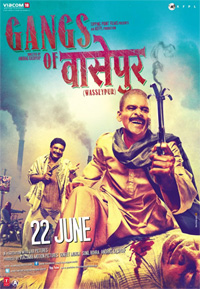
  • Mostly 3.5 *s for Anurag Kashyap’s Gangs of Wasseypur

    Gangs of Wasseypur


    Directed by: Anurag Kashyap

    Produced by: Anurag Kashyap, Sunil Bohra

    Written by: Zeishan Quadri, Akhilesh, Sachin Ladia, Anurag Kashyap

    Starring: Jaideep Ahlawat, Manoj Bajpai, Richa Chadda, Nawazuddin Siddiqui, Jameel Khan, Syed Zeeshan Quadri, Aditya Kumar, Reemma Sen


    Anurag Kashyap has annexed the role of rebel against Bollywood and by making dark, violent films, has got himself a following in the indie and festival circuit. But after the excessive Gangs of Wasseypur (Part 2 is coming up), one can only hope he has exorcised the ghost of The Godfather, and can now truly become a chronicler of the times; he has the style, he has the cinematic sensibility, he has to grow beyond a laddish fascination for violence and men who indulge in crude power games.


    Critics feel duty bound to praise his films, because he dares to go against the rules of Bollywood and thrives; he has edged out Ram Gopal Varma from his prince of darkness pedestal. He also drums up a serious amount of hype. But is there more to him than machismo?


    The film got mostly 3.5 star ratings, as if critics were shying to give it that extra half star and bring it to the excellent category- so despite the praise, it’s technically just a little above good in the ratings.


    Raja Sen of rediff.com found it boring, gave it 2.5 and wrote: “It must here be remembered that mob bosses, at least the ones Hindi cinema have accustomed us to over the years, have hardly been an efficient lot. They growl orders, surround themselves by those applauding their every maniacal move, and, intoxicated by their own bluster, proceed to boast about their convoluted plot to the protagonist, resulting in their climactic downfall. It is this look-what-I-did windbaggery that constantly weighs down Wasseypur, a highly competent and occasionally enjoyable product, and keeps it from soaring like it should have.”


    Anupama Chopra gave it 3 and commented: “Kashyap’s material is strong, but there’s just too much of it. There is so much plot squeezed into the two-hour-forty-five-minute running time that your head swims. We hardly ever stay with a character long enough to get emotionally invested, and a voice-over clumsily interrupts the story to connect the dots. At one point, I was so confused that I longed for a master key booklet to the film that outlined the various factions, relationships and rivalries. The narrative also moves constantly between the personal and professional (murder, revenge and thuggery being the main professions). So the film moves from the enmity track to Sardar’s mistress and at one point even segues into Sardar’s son’s Bollywood-inspired romance-over-Ray-Bans fantasy. It’s indulgent and much too long.”


    The 3.5 club included Rajeev Masand of IBN: “Filmed crisply, without any gimmicks by Rajeev Ravi, Gangs is both steeped in cinematic tradition, yet modern in its treatment. You’re especially seduced by the way Kashyap blends the songs into his narrative, often using them against the film’s most visceral, violent scenes. A big thumbs-up for composer Sneha Khanwalkar who goes all guns blazing to deliver a marvellous mixed-bag of a soundtrack that contains such irresistible gems as I am a hunter and Keh ke loonga. Bolstered by its riveting performances and its thrilling plot dynamics, this is a gripping film that seizes your full attention.”


    Karan Anshuman of Mumbai Mirror (3.5) wrote: “Gangs of Wasseypur is the kind of film you will have to watch in a theatre. You absolutely need to be sitting in the dark with no volume control to enjoy what Kashyap throws at you without a care of turning down the noise of gunshots and explosions, without exposing your expressions of guilty pleasures to others as a crude seduction scene plays out. The digressions – though merited – are one too many and this greatly affects length. Its lack of coherence may not work for everybody. Its runtime didn’t even work for me. That’s the only flaw here: it’s just too long.”


    Vinayak Chakravorty, Today (3.5), raved: “Anurag’s new film, first of a two-part saga, repositions The Godfather lore with a hardy Bihari twist. You spot tribute nods to Tarantino, Scorsese and Sergio Leone all along, as the film leaves you dizzy with its wanton celebration of the gory and the immoral. But Anurag isn’t aping the western masters. He wholly turns every inspiration into an original cinematic statement as the reels roll. In that sense, GOW comes across as a crossover film in the truest spirit of the term – juxtaposing global influences onto a desi gangland canvas, and setting off masala basics within a believable premise.”


    Madhureeta Mukherjee of the Times of India (3.5) gushed: “This one’s a gang bang. Sorry, make that a gang bang-bang; because that’s how this story explodes – with bullets, blasts and bust-ups. Throw in gallons of blood, body-counts and ‘boom-boom’, true Bihari ishtyle. It doesn’t need coal to fuel this revenge drama. It fires on Anurag Kashyap’s penchant for the dark, dubious, deadly and daring.”


    Blessy Chettiar of DNA (3.5) commented: “There are times the self-indulgent ghost of That Girl in Yellow Boots wanders around Wasseypur, with seemingly pointless gore and montages eating into precious screen time. Many a time the camera wanders aimlessly, on severed heads and pretty faces. The changing history of Dhanbad at its centre, over a dozen important characters, a web of plots and subplots moving deftly to a to-be-continued finale, can leave you exhausted and confused.”


    Saibal Chatterjee of NDTV (3.5) wrote: “The saga tosses and turns convulsively from one shootout to another as a bunch of amoral human bloodhounds sniff around for their next kill in a volatile, lawless landscape. The unbridled violence and fetid language – the expletives fly as thick and fast as the bullets – are, however, only one facet of this cinematically layered shot at a time-honoured and popular genre. The spirit of no-holds-barred derring-do embedded in the narrative sinews of Gangs of Wasseypur is so pronounced that there is little in the film that goes along expected lines. Gangs of Wasseypur is part Sergio Leone, part Sam Peckinpah on the one hand. On the other, it embraces elements from Quentin Tarantino and Johnnie To. But the manner in which Kashyap stamps his own home-grown style and sensibility on the manic melange makes it an exhilaratingly edgy movie experience.”


    Shubhra Gupta of Indian Express gave it a surprising 4 stars: “‘Gangs Of Wasseypur’ is a sprawling, exuberant, ferociously ambitious piece of film making, which hits most of its marks. It reunites Anurag Kashyap with exactly the kind of style he is most comfortable with: hyper masculine, hyper real, going for the jugular. It’s not so much about gangs, as about men who are pushed into ‘gangstergiri’ as a thing to live by; as you go along, you see that Wasseypur is not just a place, but a state of mind, which roars and strikes after each deceptively quiet patch. I liked most of ‘Gangs’, Part One, enormously.”


  • Ranjona Banerji: Crazy, like a fool; what about Daddy Cool?

    Ranjona Banerji

    By Ranjona Banerji


    If you are an aging tennis star in India, one element vital for your success is a Daddy. Without a Daddy, you can win on the tennis courts. But as we all know, that is not where wars are won, that is where minor skirmishes are fought. The big fight is in the media. You need a Daddy to defend you, speak for you, put forward your point of view – do all the things you are incapable of or couldn’t be bothered to do yourself.


    Which is why in the fight between Leander Paes and Mahesh Bhupathi, it is the Daddies who have taken centre court. Why is Bhupathi behaving like such an ass? Out pops Daddy Bhupathi to explain. What is Leander actually going to do? Only Daddy Paes can attempt to answer that.


    There are plenty of theories put forward about how men and their fathers operate and many experts use the Oedipus tragedy (son kills father to marry mother) to explain the tension between sons and daddies. But not for the old men of Indian tennis, all this psychobabble poppycock. Compete with their Daddies? Whatever for, when their Daddies are their biggest allies, wiping their botties, filling up their juice bottles, putting on their bibs and interpreting their baby babble for the public.


    In women’s tennis, daddies are usually more famous for teaching their daughters some hubble-bubble tennis based on their own crackpot theories and then stealing all their money. Heaven forbid that the Daddies of India’s most famous male tennis players could ever be accused of such reprehensible behaviour. Instead, here they are, speaking up for their adult sons who threaten, bully and sulk their way to the Olympic Games – or not.


    What a fine example of India’s famous familial feeling we have here – and dare we say it, India’s long traditions of patriarchy. Birds you know are quite cruel to their babies and push them out of their nests so they can learn to fly. But these tennis Daddies are not wicked birdies – they love their sons and will do whatever the sons want.


    I know many daddies who would give such sons two put-puts on their large almost 40-year-old botties and make them fight their own battles. Er, maybe if we had such grown-up, speak-for-themselves tennis stars and less protective Daddies, we might not find ourselves in this Olympic mess?


  • Anil Thakraney: Yes, We Cannes!

    By Anil Thakraney


    I have been to Cannes just once, and this was in the year 2000. To represent the ad mag I was editing at the time. I have many interesting memories of that trip, but the one that stands out is this: While I did run into quite a few eager desi ad men and women, India did not win a single award. In fact, the scenario was so bad, global ad gurus and the fest organizers would treat Indian journos with the same degree of respect as those from Eastern Europe. Okay, perhaps slightly better. And this made even a simple thing like obtaining interviews with the ad biggies a Herculean task.


    I am happy to discover that in the interim period a lot has changed. While India may still not be setting Cannes on fire, our creative directors do return with a decent number of trophies. This was inconceivable in the year 2000. I am particularly pleased that the Mumbai Mirror TV commercial scored a Gold. Not only because I have worked for that newspaper in the past, but also because I recall giving the ad very high marks in the review I did for mxmindia. This is a clear indication that the ad frat must take my ad reviews very seriously… the Cannes jury gets influenced by them, hehe.


    So then how did India turn the corner in the last decade? I would say there are three reasons: In the last few years, thanks to the economic boom and the efforts of some filmmakers (most specifically, Sir Danny Boyle), the India story has become interesting for the goras. They want to know more about us, we excite them now. This also means that the jury members now pay more attention to the Indian approach to advertising, they try hard to get our culture. Plus having more desi judges out there helps. All this then results in a better strike rate.


    Second, the quality of our ‘creamy layer’ work has gone up in the last ten years. And I use the phrase creamy layer because 90 per cent of the mass advertising continues to be bollocks, and this is the case with the rest of the world too. But we have significantly improved on our good work. I also think some of our creative directors and ad filmmakers are paying a lot more attention to execution, a very important reason behind our increasing medals tally.


    But most importantly, the clients have evolved in the last decade. Many of them want to push the envelope, they want to innovate; they don’t mind taking risks. This has naturally helped matters a lot. This was not the case in the past. Back in the bad old days, one was paid to do safe work, and risk takers used to be punished.


    Maybe I will visit Cannes next year, it’s the right time. Think I will be given as much bhav as the American and the Brit journos. 🙂


    * * *


    PS: Interesting blogpost on the biggest advertising lies. Lies that get bandied around so often, they become truths. Here’s exploding some popular myths.

    Link: http://adcontrarian.blogspot.co.uk/2012/06/advertisings-5-biggest-lies.html


  • The Anchor: Lloyd Mathias on the 6 things every marketer learns on the job

    By Lloyd Mathias


    1. No matter how good your campaign is, it won’t work till you have your team fully aligned with it. So, as much as you spend time on zeroing on the consumer insight, researching the proposition, fine tuning the communication – it is important to “sell” the campaign to your internal constituents.  Hence the need for internal communication – point-of-sale material for trade, detailers for the sales force.  It is also critical to align campaign breaks with availability of field materials and widespread distribution.  The best campaigns don’t succeed without product in the shelves.


    2. The past is no guarantee to the future. Most marketers believe if it’s worked well in the past, it will work again. The fact is consumer tastes change over time. Even more importantly, the market dynamics change. Also, most consumers need fresh stimulation.


    3. Treat your agency as an integral part of your marketing team.  It is amazing how many marketers have near adversarial relationships with their agencies (creative, media, digital PR).  Your agency is the co-custodian of your brand – the more they know about your business and the issues facing it – the richer will be their input. Treat them as co-owners. Give them the freedom to do the occasional over the tip creative.  Long term they won’t let you down.


    4. Marketers tire of their campaigns much faster than consumer do. Remember most consumers see a whole lot less of your brand than you do.  Refresh if you need to, don’t revamp.


    5. Meet real consumers as often as you can. An hour with consumers is worth many hours of pouring over research data. Consumers today – more than ever – have a strong point of view and want to be heard. Some of the finest ideas come from immersing with your consumers. And remember – don’t confuse your sales force or trade partners with REAL consumers. No, not even analyzing the brands’ Facebook page responses or looking up the Twitter handle can beat real consumer face time!


    6. Always keep the larger business objective in mind. Remember the primary role of marketing is to drive sales & bring in revenues. Everything else comes next. So try not to be overly protective about the marketing budget – especially if the business needs cuts.  In the long run if business wins – marketing wins.


    Lloyd Mathias is Director, GreenBean Ventures. He was President & CMO, Tata Teleservices until late last year and was Sales & Marketing Director of Motorola India prior to that.


  • Debrief: Britannia Bourbon Cappuccino: Power of insight

    By Anil Thakraney


    Britannia has launched Bourbon Cappuccino biscuits. And the key ingredient, also the USP, is the coffee flavour. Nothing really exciting about this, but the advertiser has used a cool consumer insight and this helps inspire good creative work.


    What they have done is to give ‘coffee’ a sexual touch. As in, after a date, when the guy is dropping his partner home, and if he’s really lucky, the girl invites him in for a cup of coffee. Naturally, this is less about coffee and more about some rocking fun on the couch.


    The TVC plays on this angle, adds in a little twist, and the ad works out pretty nicely. What is just another biscuit brand now gets wings, and along the way the coffee USP gets suitably highlighted. Mission accomplished.


    [youtube width=”400″ height=”225″]http://www.youtube.com/watch?v=Hjbkkut1dKY[/youtube]

    Yes, good work. The young gen, at who Britannia Bourbon Cappuccino is targeted at, will connect with this stuff. It’s simple, entertaining and effective. And most importantly, the product attribute is smoothly communicated, without ramming it down our throats. A good example of how critical consumer insight is to the advertising business.


    Rating: (On a scale of 1-5): 3.5. Good insight. Entertaining ad.


  • Ranjona Banerji: TV does right by Baby Mahi!

    Ranjona Banerji

    By Ranjona Banerji


    Let’s cut TV news a little flak. What! Did I really just say that? The story of “baby Mahi” who fell into an abandoned borewell on her birthday last week but could not be rescued for almost five days is a made-for-TV story. Most newspapers would have reduced the story to a brief, if they carried it at all. Human life or in this unfortunate case death means very little in Indian newspapers unless it concerns high net worth individuals or happens in large numbers. Here also the concern is relative: for a Mumbai newspaper a bus that falls into a ravine and kills 50 of a marriage party in Bihar means less than an accident on the Mumbai-Pune expressway which kills 15. Geography and proximity carry more weight than the idea of death itself.


    TV news, however, challenges these assumptions made by the print media. While some may find TV’s attention to baby Mahi excessive or indeed point out that people fall into wells all the time, they are missing the point. Newspapers belong to the old, fatalistic India, where you took everything in your stride because life taught you that horrible things happen to everyone and especially to poor people. TV belongs to New India and as we learn every night, India always wants to know.


    And some questions, we must admit, need to be answered. There is no reason why people should regularly die because they accidentally fall into wells. There is no reason why we should not insist that safety protocols be put in place to prevent such accidents. There is no reason why local officials are not pulled up for being callous.


    Even if the hyperbole and hysteria generated by TV reporters and anchors can be vastly annoying, it does not mean that the reason they are having fits is not genuine. It took every bit of fortitude I could muster at midnight to listen to Arnab Goswami’s impassioned outburst against apathy and indifference (Wimbledon means I cannot get to TV news before midnight, yes I have no life and thank god I don’t watch football!) but behind all the bluster – there was a point.


    The trick for TV now is not to let this baby Mahi case turn into a real-life version of Peepli Live. They have to continue with the campaign they have begun so that they do not become as cynical as print journalists. It may be a tall order, but they started it.


    * * *


    I greatly admire Pakistanis who appear on Indian TV news discussions about terrorism. It takes great courage to withstand all that solid evidence against them and continue selling their government’s line. And they seem to be quite happy to do it. I do not get to watch Pak TV any more so I do not know if Indians appear on panel discussions to get pilloried. Does anyone know?


    * * *


    Football has taken over our newspapers. It is now emerging as cricket’s biggest competitor. We all know that Indian football does not generate any interest at all (somewhat like Indian hockey) but every FIFA tournament brings the lives of others to a standstill.


    The test I suppose is when cricket (with India playing) and football tournaments happen at the same time. Who do you think will win? Or will we then know whether sports pages are just lazy or have some top class brains involved in the planning?


    * * *


    The Times of India in its little debate section on the edit page has gone for and against on the use of the term “Bollywood”. It’s an old argument and an amusing one. We all know that the term is derogatory and was coined in the 1970s with that in mind. We also know that as long as the Hindi film industry continues to make song and dance potboilers, the term will continue to stick. No one calls Shyam Benegal or his oeuvre “Bollywood” so we all know the difference. TOI could have suggested options like “Goregaon”, since that’s where so many films are made and that’s how Hollywood got its name. Any takers?


  • Mediaah! Pathetic performance at Cannes + Twitter stats + Medianama turns 4

    By Pradyuman Maheshwari


    The Cannes Lions is no Olympics, so if India returned home with no Grand Prix and just three Golds, there is no reason to despair.  Yes, there’s a jury out there, and there are many people comprising each of them, so it’s not easy to please all or most of them. Hence those who have come home with the honours deserve a huge pat on their back since they’ve managed to impress some of the best brains in the business from across the world.


    Sad, because India is big news internationally. This is because of our bigness. People know that the real consumers exist in China and India. The one billion-plus population ensures that. The world recognises that being a democracy means that a lot of commerce-friendly measures are tough to implement. So there is much action in China and hence sexier work in advertising. That last bit also translates to more awards in the tally and more attention to that country.


    This year’s Cannes Lions has seen a Abby-like controversy. I’m sure the folks at the Advertising Club Bombay will say “See, it happens there too”. While the Cannes Lions organisers aren’t at fault for what could’ve happened, but I guess there’s got to be some action else the festival will not see the 11000+ delegates who turned up for one or more days.


    #CannesLions Stats

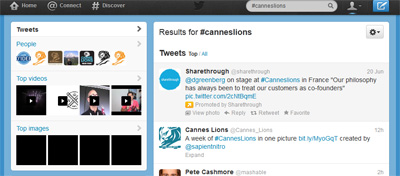
    I was unable to get to Cannes as there was more pressing work here, but the best way to keep track was decidedly #CannesLions. In fact, as someone said, even if you were physically present at Cannes, it was a great way to get the buzz.


    Here are some stats courtesy the Twitter Advertising blog (http://advertising.twitter.com/2012/06/twitter-celebrates-users-and-brands.html):

    • There were 103,389 mentions of #CannesLions on Twitter during the six days of the festival – a substantial increase from the 20,000 in 2011. Over 5,000 pictures were tweeted.
    • That’s 17,232 Tweets a day and 718 Tweets an hour with a peak of 3,000 Tweets an hour during key seminars – up from 40 per hour on average in 2011.
    • The total #CannesLions earned media on Twitter has been calculated at over 61 million impressions.


    Often, the 3k tweets an hour looked a hundred thousand. They just didn’t stop coming! And even after the last day, there were several tweets on celebrations, discussions and there’s one exceedingly painful on a book written on the future of advertising. Tweets are fun, informative but can also be a pain!


    Nikhil Pahwa’s Medianama is 4

    My hearty congratulations to Medianama and Nikhil Pahwa on the popular tech-telecom-media site’s fourth anniversary.


    I know there are some who think Nikhil is brash, but that’s only because a lot of people in important offices are used to puffs and plugs from journos and trade sites. Although it may be styled as a blog, I am aware that he follows the same rigour as any journalist ought to.


    Medianama went live on June 27, 2008. It’s got a small team and has advertisers on board. So revenues are happening. When I asked Nikhil about revenues, he replied (rather tweeted back): “Healthy. We’re slowly learning to grow. Is tricky, but learning.” Guess I know what he means.


    Buzz me if you have a story to tell. Confidentiality assured. There are various ways you can reach me: pradyumanm[at]mxmindia.com, Gtalk pradyumanm@gmail.com, Twitter @pmahesh and of course the mobile: 98338 76278.  The views expressed here are my own


  • Anil Thakraney: Zero in digital work

    By Anil Thakraney


    So, once again we did miserably in the Cannes cyber awards category. Here’s mxmindia’s story on this subject, and I must say it is pretty depressing.


    http://www.mxmindia.com/2012/06/are-we-duhs-in-digital/


    I suspect the main reason we continue to languish in this field is the apathetic creative directors. Most large agency creative directors don’t get this new medium, and it appears to me they don’t even WANT to get it. Because we are a third world nation, for lakhs of people the television set is still an aspirational purchase. And, therefore, it is widely believed that it will take many years before the digital medium becomes truly relevant in India. This might be true, but that still doesn’t change the fact that the digital world is already at our door step… rather, it has walked right in… and many brands can benefit from it. And the winners will be those who move early.


    Another thing: If the traditional ad agencies continue to ignore this space and treat it as a ‘supplementary’ medium, they run the risk of losing this business to specialized tech solutions shops. Such boutique digital agencies are already sprouting, and before the sluggish large agencies get their act together, this part of the business will be lost to them. Perhaps forever. All the more reason the ad agencies need to act before it’s too late.


    It is also true that most of the senior ad agency leaders are old worlders and they are finding it difficult to connect with this medium. Their lives begin and end with the 30 second TVC. That’s all right, and they can continue to focus on TV commercials. But as long as they make sure their creative departments are packed with young ‘techno-creatives’, and these blokes are on the job from the very first client briefing. This would naturally lead to upping the staff budget, but this is an investment that will pay off in the long run. Just as when television started booming in India, ad agencies were compelled to start out a specialized films department, exactly that’s what needs to be done now.


    Net net: It’s the traditional mind set that needs to change. A tall ask in an industry where some senior leaders pride themselves in not even trying to figure out how a basic internet tool like the social media works. Check for yourself how many of them are on Twitter and Facebook and you’ll know what I mean.


    * * *


    PS: Must watch: Repellent Radio. Brilliant stuff. This is a good example of Brazil’s super advertising talent. And also why that nation always does marvelously at Cannes.


    Link: http://www.canneslions.com/work/2012/radio/


  • The Anchor: Prathap Suthan on 7 reasons why mango is the Emperor of Fruitland

    By Prathap Suthan


    Honestly, I am yet to stumble on to someone who doesn’t rage after this fruit. In fact, if I do meet him or her, it just might be a fickle pretense.


    Take lush mango away from the menu of pleasures, and you’d dread the emptiness that stares at you from the fruit bowl.


    I mean everything that’s left inside, including moldy grapes, obese melons, and squishy jackfruit, is one mediocre disappointment after another.


    You’d be truly blessed if you ever had an orgasmic experience with a guava. One errant seed raking up screaming havoc in an old dental cavity notwithstanding.


    In all my years as a devoted single fruit pilgrim, no one really asked me if any other fruit deserved the altar. But now that I have to defend my icon, allow me 2 non-noodle minutes.


    Thankfully, I didn’t have to invent any of the reasons why Mango will reign undisputed. They have always existed. I just had to put them in no particular order.


    1. Mango, the great Equalizer

    No matter who you are, where you live, or what you like, you are a subject of this awesome fruit of plenty. If you aren’t an eternal slave of its yumminess to the nth degree, dude you have no clue what you are missing. Regardless of our faiths, beliefs, geographies, physical differences, skin colours, hairstyles, fashion skews, cultural peccadilloes, bank balances, and even sexual orientation, the mango is not mere king.


    It’s a great leveler. We are all equal victims. Unless some of us are lashed by daily nightmares of man-eating mangoes, snorting rhinos can’t wrench most of us away from slobbering over its spell. It’s worthy of leading a new age religion. Or at least a dozen political parties aligned along gourmet tastebuds.


    2. Mango, the winning Politician

    I am often pushed into vague corners by sour men and women who poke holes at India Shining. But then, little do they consider the mango side of it. If it wasn’t for that campaign, aam aadmi as an expression wouldn’t have been brought to the fore. The ordinary men and women of our country wouldn’t have found such a powerful public idiom. Come to think of it, there nothing else unites us so tastefully across all socio-economic definitions. Considering that we grew up in a country where every neighbourhood has at least one mango tree, and every one us would have either plucked or thrown down a mango. Centuries from now, mango people will be linked to the history of the 2004 elections. As the little big people who torpedoed a government’s feel good carrier.


    3. Mango, the giver of Words

    I am yet to lick an apple, salivate over a plump orange, drool at a spiky pineapple, or go anywhere oral near a banana. Yuck. On the other sticky hand, I can’t wait to get cozy with a juicy mango, unpeel its skin, and allow my tongue to plunder its curves. Every word that’s been designed to bring out osculatory pleasure makes ample sense and effective relevance. Go on, close your eyes. You can bite a mango, you can slurp a mango, you can nibble a mango, you can kiss a mango, you can moan a mango, and oh yes, you can suck a mango. I doubt if there’s a wildest word you cannot do to a mango.


    4. Mango, the Cultural Fountain

    Undoubtedly, inspiration isn’t just limited to pushing and expanding the frontiers of vocal expression. The mango has undoubtedly aided the growth and profusion of our aesthetics. If it hasn’t stimulated us enough, I think we have been fools to overlook the cornucopia it unleashes. From paisley that makes huge contributions to the clothes of men and women – neckties to sarees, I am sure mango has pandered itself to aspiring writers of novels and poetry. There’s much hidden in the gush of its juices, the allure of its nectar, the softness of its body, and the blush of its colours. I certainly cannot see glorious muskmelon or splendid kiwi goading me to spill my ink. I might suffer from permanent drought. If I am not entirely mistaken, the fertile mango has already spawned fashion, books, taxis, beverages, radio stations etc. There’s so much more possible.


    5. Mango, the natural Aphrodisiac

    Here’s a quickie. Whenever you two decide to bathe each other’s teeth, grab a nice handful of Alphonso. Or any common mango from the fridge. With so much of passion held inside its ripe and near gossamer thin skin, it does give human chemistry a bit of a goosebumpy spur. Add a little dose of imagination, and the humble mango could be quite an experimental grenade while rolling in the hay. While there could be unexplored magic potion and endless ginseng within pears, peaches, and pomegranates, I’d still bet that they offer precious zilch to help you better Vatsya’s magnum opus. The mango is the undoubted king and queen in bed – as much as it’s on the dining table, in the living room, under a moonlight night, in the bathroom, under the staircase, and just about everywhere both of you want to come and go.


    6. Mango, the sensitive humanist

    Mango may have a large nut. But maybe there’s a thumping heart inside. Perhaps that’s the way one should read that.Look at it this way. Why do you think mangoes come in all sorts of shapes? And sizes. And colours. And even price ranges? They mirror us. They do their best to become like us. They understand us better than most other fruit. Unlike plebian chikoo, jamun, plums, and even rambutan which have negligible variety. Almost one size fits all. On the other hand, consider the benevolence of the Gods. The great mango has just as many rich variations as us – tall, short, squat, stocky, beautiful, small, lean, thin, overweight and so on. Long mangoes. Short mangoes. Big mangoes. Small mangoes. Pointy mangoes. Round mangoes. Fat mangoes. Thin mangoes. Green mangoes. Red mangoes. Blue mangoes. White mangoes. Sweet mangoes. Sour mangoes.

    For every distinct physical and even mental trait, there are mangoes that have evolved to characterize people. Just how more awesome can this true monarch be?


    7. Mango, the incredible Indian

    With so many different varieties that you might know, here are a few you wouldn’t have heard of. All harvested across the corners of our country. Kishenbhog, Jamadar, Fazli, Gulabkhas, Badami, Raspuri, Zardalu, Pairi, Malkurad, Beneshan, Bangalora, Jehangir, Suvarnarekha, Mulgoa, Himayuddin and Samar Behest Chausa. Ignore them if you like to lead a poor life. While all of them represent the mosaic India is, with the hottest summers giving you the sweetest mangoes, the mango is no longer a seasonal protege. With the koel as its raucous herald. Today, science and ingenuity has helped mango mutate into anything you think of. And most of them brim with the essence of its inherent mischief. You can have them as shakes, aam ras, aam panna, sherbet, squashes, nectar, juices, drinks, candy, jams, jellies, preserves, chutneys, curries and achaar. Until civilization declares similar lust for any other fruit from the planet’s orchards, the mango will remain raja. And me and you its besotted praja.

     

  • Debrief | Monster.com: Misplaced communication strategy

    By Anil Thakraney


    Monster.com believes that more than talent, Indian candidates rely on luck to make it through in a job interview. This is true. Many of us do have our superstitions. The lucky tie, the lucky socks, the lucky underwear, and so on. It may or may not work, but the illogical superstitions go on. In that sense, Monster.com is on to a good consumer insight.


    So these two blokes are waiting to be called in for the interview. And they spend the time competing with each other on who is more superstitious, and therefore luckier of the two. Eventually both get egg on the face as the job goes to the third chap who doesn’t believe in luck, but uses Monster.com.


    Now while the insight is cool and the execution funny, there is a basic flaw in the communication. Monster.com is only a job finder, they can’t help you do well in an interview. Ergo, if luck is what Monster.com is riding on, then this ad doesn’t make sense. Because even the superstitious candidates DID land the job interview. So on pure logic, the commercial derails.


    [youtube width=”400″ height=”225″]http://www.youtube.com/watch?v=Fbrzc8-w6SY[/youtube]

    This would have been a sound strategy for, say, a grooming shop, one of those that help you create a favourable impact in an interview. For Monster.com, this doesn’t work at all. Funny that the managers of the job portal overlooked such an important factor. I suspect on the day the brand manager came up with this strategy, he/she wasn’t wearing his/her lucky charm. 🙂


    Rating: (On a scale of 1 to 5): 2. Entertaining ad. Based on a wrong promise!


  • The Anchor: Rajesh Mehta on 5 highs for a marketer winning a Gold at Cannes

    By Rajesh Mehta


    1.  Winner at a global level:

    It was a campaign that was conceptualized and visualized by the team and received laurels globally. The appreciation that we received was absolutely exciting. The admiration that we got withWestern Unionwining at such a global platform was thrilling for our entire team.


    2. Not expected from financial services:

    Western Unionmoney transfer, being a financial services company, is associated as the category from which cutting edge creative work is not expected. But to break the standard belief that the category can also be innovative was an achievement in itself. The entireWestern Unionmarketing team, along with McCann (creative agency), worked together to develop the campaign, that enabled us to cut through the clutter.


    3. It’s a Gold:

    There couldn’t be a better feeling than winning a Gold at the Cannes. And apart from that, it was the first Gold win forIndiaat the Cannes 2012. Western Union accomplished two victories with one Award – won the Gold at Cannes and the first gold forIndiafor 2012. There couldn’t be a greater feeling for us than winning these accolades in one night.


    4. Befitting to theWestern Unionbrand:

    As a marketer, it is a thrill to know that the ad campaign has captured the essence of the brand and has reached out to the right audience. The win at Cannes not only proves the creativity behind the campaign but the spot on messaging captured through it. The out-of-the-box thought process of our creative agency, along with theWestern Union’s internal marketing team’s insights, made this campaign an award winning one.


    5. Stood out among all the entries:

    For all of us, standing out in a crowd matters more than anything else and that’s exactly what we achieved with this win. There were 4,843 entries from 87 countries sent this year in the OOH Category which was higher than last year. This clearly indicates thatWestern Union’s win of the Cannes Lion Gold stood out and it certainly speaks volumes about the brand.


    Rajesh Mehta is Director-Marketing, Western Union India