
Category: BLOGS

  • What made the IAA World Congress a Grand Success


    By Sanjeev Kotnala


    The IAA World Congress held at Lulu Bolgatty International Convention Centre (LBICC), Kochi from February 20 to 22 was a grand success.  Most of the delegates I met were satisfied with the sessions, set-up and infrastructure.

    Time to congratulate Srinivasan Swamy, Ramesh Narayan, Pradeep Guha, and the extended team of IAA India, sponsors, delegates and speakers.

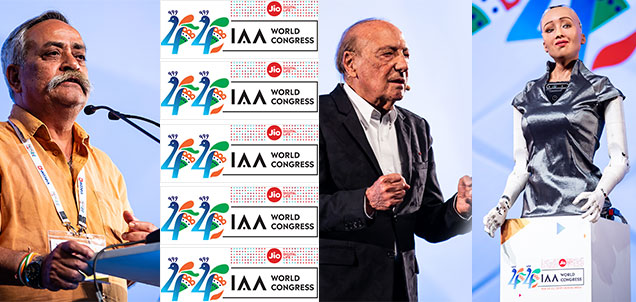
    The event will most probably be remembered for Sophia, Andre Agassi, may be Amitabh Bachchan and the grand parties in the evening. But, the session ‘Tech Without Affect is the Death of Advertising’ by Havas’s Jacques Seguela will be remembered the most. Seguela, also author of “Don’t tell my mother I’m in Advertising, She thinks I’m pianist in a Brothel”, spoke on Day Two and received a genuine standing ovation. It was a class in presentation, idea delivery, stage coverage, voice modulation and connecting with the audience. Though it was tough following the Frenchman’s English, there was no communication gap. In brief, remember your advertising should not be Brain-to-Heart or Heart-to-Brain, or Brain/heart –to-wallet but Heart-to-Heart. Have the idea and then leverage it with technology and not necessarily the other way around.


    FINDING FAULTS IS ALWAYS EASY.

    A Congress of this size with around 2000-plus delegates from a diverse sphere of the industry is like an Indian wedding. No matter what you do, there is always Dal Mein Namak Kum. Delays and minor issues over dramatised. Now, look at the positive side. You may forget the bride and bridegroom. However, such incidents become memory hubs.

    It is natural for IAA World Congress not to meet everyone’s expectations. Remember our ads and strategies also cater to the majority.  IAA World Congress ticked almost all boxes. Knowledge sessions followed the bell curve, so you got a spectrum covering the good, the bad and the ugly. Speaker sessions did not majorly overrun the allotted time.  The evening parties gave ample networking opportunities. The IAA World Congress app was helpful.  The area for question-answer and to jotting down your notes was appreciated. The three evening parties were engaging enough. There were hardly any technology glitches. The buses more or less maintained departure schedule from designated hotels.  The PR agency took good care of media in their movement, schedule, interviews and inputs. However, there was a visible absence of Marketers and brand owners.


    FEEDBACK HELPS.

    In case you attended the Congress, do share the experience. Constructive feedback will always help to narrow the gap between reality, and the myth perfection is.

    Before you say I am biased, let me be clear, there were moments when you wondered what was happening. But, then, they are bound to happen in a three-day event and Indian Barat.


    OVERALL IMPRESSION

    Day One was slow, and even Amitabh Bachchan’s speech did not help. The Congress warmed up on Day Two and finished on a high note with the Andre Agassi – Vijay Amritraj double volley and the Bollywood night. I am purposely avoiding any mention of the Deepika Padukone session which was the last session on Day Three, as it was going nowhere. I walked off the session, and so it is not first-hand experience. However, whoever, I met has the same expression.

    There were two sessions where the speakers got a standing ovation. It was proof that the delegates were willing to appreciate when they were served something really fantastic. I do not include Piyush Pandey’s session in it, as the ovation was more of respect for the perfect brand ambassador of Indian creativity and the creatives shown as part of his presentation…

    The Andre Agassi- Vijay Amritraj session was a class on how to engage the audience, pace the conversation and to face the camera. Agassi was very transparent, open and emotional in his answers and it helped the cause. He was not hesitant to add tadka-wala statements that resonated with the audience.


    SOME SUGGESTIONS.

    I think that panel discussions could very well be done away with. Or we must be willing to give more time for the sessions. That reminds me: this Ted Talk-inspired 30-minuts sessions do not do justice to the speaker or the audience. Time to experiment with 45 minutes or even a 60-minute session.

    I was surprised with few speakers (even in such global event) crib about the shortage of time as an excuse of them not being able to complete the session. It speaks more about the speaker than the organisers. And if something could be done to avoid blatant plugs by a few speakers, the audience will definitely appreciate.

    Loved the media seating. They were provided table seating to help them in filing stories. However, non-media delegates occupied a few of the media seats. It required better monitoring and control.

    As always, we could have done with more bar counters. That reminds me to add: with such a large gathering the number of live counters during evening parties were too few, adding to the wait.

    I loved the small act of lucky draw for the audience who returned from breaks on time. May be a higher valued price would have done the trick.


    IMPORTANT SHIFT.

    IAA World Congress also shifted the focus from digital that was becoming a cacophony in every event to Artificial Intelligence, which is where the future lies. Maybe, it is easy to predict that we are going to hear a lot more about AI and IOT this year.

    …………………………………………………….

    PASSING THOUGHTS:

    1. Since the IAA World Congress happened just 50 days before Goafest, will registrations there get impacted?

    2. Surprised that most people I spoke with advised wait-and-watch the situation, before taking a call on attending or boycotting AdAsia 2019, that is scheduled to be held from December 2 to 5  in Lahore.  WHAT DO YOU THINK? DO SHARE YOUR VIEWS ON THIS at editor@mxmindia.comwith the subject AdAsia2019.

  • Is Your Name on the Voters’ List?


    By Your Editor


    So the general elections have been announced.


    We all have our cribs about our politicians. Narendra Modi, Amit Shah. Rahul Gandhi, Sonia Gandhi. Mamata. Mayawati. Kejriwal. Shiv Sena. About the inefficiencies in the country: potholes, corruption, traffic, trains, buses, educational system, no jobs. We are fed up of our systems, and many of us believe that things will never improve in our lifetime.


    Perhaps this belief is correct. But we can try and make a difference. For starters, elect a candidate and political formation to represent us. And pray the elected reps do something. Make them accountable.


    The question is: how many of us will beat the summer heat, the lethargy and the attraction of sleeping those few minutes extra because it’s a holiday? For those in Mumbai, the voting day is April 29, a Monday. Perhap enough reason to get out of the city for a long weekend.


    It’s however important for each of us to vote. If there’s no candidate who you think is worthwhile, press the NOTA button. It’s critical to express ourselves and get the right person elected as Member of Parliament.


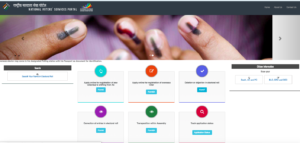
    Please check if you are on the voter’s list.


    Visit: https://www.nvsp.in


    If you get an error, just click on reload. It will come on.


    Then enter your name and search. If  you don’t remember your Assembly constituency, don’t bother. The search facility is pretty powerful.


    Also, please check with all those eligible to do the same, if they haven’t already done that. If they haven’t registered, they must. And if they have registered, they should keep checking at the website.


    The submissions (for proof) are simple: photograph (passport- or ID card-sized), birth certificate, passport, driving licence. If you don’t want to link your Aadhar Card with this, you can manage without it. The only painful thing is that if the first-time voter is over 21 years of age, then there’s a self-declaration to be filled in, signed and uploaded (click here). Please ensure that the scans of all of the above are jpegs/jpgs, not pdfs.


    We’ve done it ourselves for a recently turned potential voter and are hence convinced that it’s simple. You’ll get an sms near-instantly giving you a reference number.


    Please do visit the website. Check if your name is on it. As also your family. And then get your friends, colleagues etc to do something.


    Also, if you are an employer or a biggie at an organisation, dream up something to incentivise voters. An extra day’s salary may be a bit much, but how about a meal at a good restaurant? Or tie up with a Big Bazaar or Book My Show and get some discounts. Even tie up with the Nykaas of the world asking them to cosmetics at a 50% rate.


    We need some of upscale stores to step in too. Foodhall, Nature’s Basket, the five/seven star hotels, an extra discount to Zomato Gold members who have voted.


    How about some brands sponsoring hot and healthy/unhealthy breakfast outside the voting booths? Meal boxes.


    Can our TV channels position their popular stars at selfie points for people who have voted. Take a selfie with Shankar Mahadevan?


    If brands can do major activations at the Kumbh Mela, this is a Maha-Maha-Maha-opportunity for a public connect.


    Dream on, folks. Let’s make the 2019 Lok Sabha elections an unforgettable one. And elect a government we want out there.


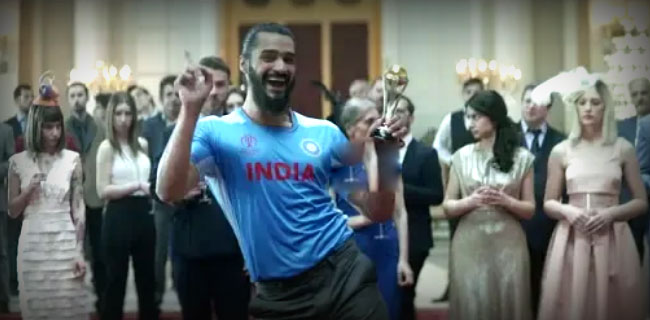
  • Reliving ‘Mauka Mauka’ as the stage sets for the Cup!


    By Sanjeev Kotnala


    Mauka Mauka’ was an iconic communication engaging and entertaining cricket lovers 2015  to 2018. So, it is natural for the reference to come up in May 2019.

    On May 23, as I was  the 2019 election results on TV, the seat swing with BJP winning was unprecedented. Someone teased the Congress supporters in the family with ‘Mauka Mauka’. It said it all.


    I know it is a bit early.  India only plays Pakistan https://www.icc-cricket.com/teams/men/20/pakistan/overview on Sunday, June 16. A date most of us have marked in our calendar. As it is early


    In the discussion, Star Sports’  current ICC #WorldCup2019 communication was compared with ‘Mauka Mauka’. And one can say  the cricket enthusiast in me wants another ‘MAUKA MAUKA’. However, the professional me knows in spite of intense rivalry, a serialised communication like ‘Mauka Mauka’ is simply not possible.


    One remembers the launch TVC. The full song #Won’tgiveitback.


    https://youtu.be/K-nNFWdBtB8


    In the last video, the Pakistan supporter with his arsenal of crackers lands at the Star Sports studio. It continued in many forms in Champion’s trophy, T20 World Cup 2017 with a lot of consumer generated spoofs and somewhere died finally with the Asia Cup. The CGS is already on like this SAPHIRA and films by Seven Pictures.


    And when you are at it:  watch this too. Spoofs are far more entertaining and touch a chord.


    The current World Cup has 10 teams. It’s an open tournament with a team playing all the other teams. The Top 4 qualify for the semi-final spot. And the chase is on.

    The current communication ‘Cricket Ka Crown Hum Le Jayenge’ by Star Sports is entertaining and exciting.


    The extension ‘Tum Suro Karo Hum Aate Hai’ promises that the broadcaster is not going to leave any Mauka of engaging the audience. And there is my hunch that ‘mauka-mauka’ will make an appearance sometime at least in the social media.  Meanwhile, the rivalry intensifies at every level


    I am really waiting for this ICC World Cup 2019 communication from Star World to take some twist and keep entertaining.

    …………………………


    It is cricket time. I must mention that I am enjoying the simple yet very celebratory communication from ”DREAM 11′. Dhobhighat, Bush and  Keys, all of them one relates too.


    And when it is cricket- the AMAZON campaign Chonkpur Cheetahs will always be remembered.  I missed them. I always feel that there was a lot ,more potential to this series than what we have seen.


    https://youtu.be/mM16sepxvZo


    Sanjeev Kotnala is a senior marketer, strategy consultant and educator. He writes weekly for MxMIndia. The views here are personal


  • Sanjeev Kotnala: Book Review of ‘The Go Giver’

    By Sanjeev Kotnala

    ‘The Go-Giver’ by Bob Burg and John David Mann is the story of an ambitious young man named Joe.  It seems that the more he runs after success, the more difficult it becomes to achieve his goals. Then he seeks advice from the highly successful leader Pindar, who shares his secret, the FIVE LAWS OF SUCCESS.  Pindar has just one condition that Joe will test each of the laws. In the process, Joe learns that if only he shifts his focus from GETTING TO GIVING, Putting others’ interest first and continuously adding value to their lives- it will lead to unexpected results and ultimately success.

    Quoting from the book its essence: “Too often people hear “be a giver” and think of charities and writing check, of “giving back” once we have already done well for ourselves. But that’s only one very specific facet of giving. By “be a giver” Bob and John mean be a giving person, period: One who gives thought, gives attention, gives care, gives focus, gives time and energy- gives value to others.”


    ‘THE GO-GIVER’: FIVE LAWS OF SUCCESS.

    I share the FIVE LAWS as Pindar says in the book, it is best if all of us have access to them. And he calls it secret so that people would want to know them.

    1. THE LAW OF VALUE.
    Your true worth is determined by how much more you give in value than you take in payment.

    2. THE LAW OF COMPENSATION.
    Your income is determined by how many people you serve and how well you serve them.

    3. THE LAW OF INFLUENCE.
    Your influence s determined by how abundantly you place other people’s interest first.

    4. THE LAW OF AUTHENTICITY.
    The most valuable gift you have to offer is yourself.

    5. THE LAW OF RECEPTIVITY.
    The key to effective giving is to stay open to receiving.

    I know these laws may not make sense, that is why the book is essential to understand and soak nuances of these wonderful laws. They may not sound too original to many, but trust me the way they are presented in the book is excellent.

    Oh, by the way, Pindar does not share the laws himself. He meets Joe for five days over lunch and introduces him to a new person every day (A touch f Tuesdays with Morris). The person, let’s say the guest of the afternoon, shares his story and thus brings alive the law. I would hate to share the details here and recommend that you pick the book and read it. This book is special and will not be Un-Caged by me soon.


    MORE SECRETS EMBEDDED IN ‘THE GO-GIVER’.

    Aside from the five laws of success, there are some gems in the story. I was shocked by the very positive tome of Pindar when in a conversation with Joe he says “Joe, no offence, but you don’t have that power… I mean the power to waste my time. Only I can do that. And truthfully, it’s a vice I gave up a long time ago. The reason for my conditions( that you will test every law that I share by actually trying it out. Not by thinking about it, not by talking about it, but by applying it in your life) is that I don’t want to see you wasting your time” (Page 17).

    ‘You get what you expect and not what you want’ and that “Ultimately, the world treats you more or less the way you expect to be treated”. It is so real and so simple.

    As you read the book, you may end up picking your own laws and gems. After all, we all have a different perspective and perception of the reality and hence our alignment with such thinking.

    MORE ON ‘THE GO-GIVER’.

    It is a simple book of 127 pages. Comfortable read on a 90-minute flight. I did it on a Mumbai-Nagpur flight that took 75 minutes.

    It is written in a straightforward language. There is hardly any jargon used.

    It’s a fictional story that is presented in a very sequential linear way that keeps the reader’s interest alive. And in the end, there is a significant revelation.

    Maybe, a better way to read will be somewhat in the way Joe gets introduced to the laws. Read one law and then try it out in your life, before you get ready for the next law.

    …………………….

    Thanks Priya Lobo, COO, Ormax Consultants for gifting me this book ‘The Go-Giver’ by Bob Burg and John David Mann. A book everyone should read.


    HOW I GET BOOKS GIFTED TO ME.

    Sharing my simple secret.

    I have an understanding with a few select people.  If we cancel or postpone a meeting within 48 hours of the scheduled time, the person who does so, gifts a book to the other party in the next meeting.

    Is that not an excellent way to get books? I find it that the other person sincerely searches the book to gift knowing the potential reader’s interest.


    THE LIST OF 10 SELECTED BOOKS I GIFT.

    When I have to gift a book for rescheduling a meeting, the easiest thing to do is to give my debut novel “Chimera Of lansdowne’.  I don’t do that. It will be too selfish. Moreover, it will not serve the purpose and objective of this small initiative.

    I have a list of 10 selected books in alphabetical order of their title.

    1. 11 Minutes by Paulo Coelho.

    2. Catalyst by Chandramouli Venkatesan.

    3. Eat That Frog by Brian Tracy.

    4. Happiness A State Of Mind by Gyalwang Drukpa.

    5. Many Lives Many Masters by Dr Brian Weiss.

    6. Sponge by Ambi Parameswaran.

    7. Think And Grow Rich’ by Napoleon Hill.

    8. Tuesday With Morris by Mitch Albom.

    9. Veronika Decides To Die by Paulo Coehlo.

    10. Who Moved My Cheese by Spenser Johnson.

    All of them are an excellent read.

    And ‘The Go-Giver’ gets added to the list and completes the team of 11 books.

    I can blindly and confidently recommend the above list to anyone and everyone to read.

  • Anil Thakraney: Shredding Sanjay Manjrekar to bits and pieces

    Anil Thakraney

    By Anil Thakraney


    Sanjay Manjrekar did not enjoy a very impressive career as a batsman, especially if you compare it with that of his colleague Sachin Tendulkar, who played alongside him. He promised a lot, in fact, in the early nineties. Manjrekar used to be called a ‘technically correct batsman’ by commentators at the time, but delivered a lot less. Before walking into the sunset, Manjrekar managed to play just 37 Test matches and 74 one-day games, registering a mediocre average score and strike rate. Basically he disappeared from international cricket without much noise.

    However, in his new avatar as a cricket commentator, Manjrekar’s journey has been quite noisy. He has been getting a lot of attention, most of it negative. The trolling on social media has been rabid, he has often been called a ‘panvati’ commentator, his coarse voice and poor command over English has been dissed, some of the abuse he regularly receives on Twitter is not even printable. Things got worse during the ongoing World Cup when he called all-rounder Ravindra Jadeja a ‘bits and pieces’ player, the cricketer hit back and termed it as Manjrekar’s ‘verbal diarrohea’, and of course all hell broke loose for Manjrekar.

    The question to be asked is this: Would the same abuse have come Tendulkar or Ganguly’s way if they had called someone a bits and pieces player? I suspect not, having been a low achiever in his own career, Manjrekar does not command much respect from cricket fans or current players. However, does this mean he cannot speak his mind while commentating, should he be expected to always say goody-goody things about current cricketers? Is he paid to be honest about his perceptions or to be politically correct at all times?

    Now, I am not a fan of Manjrekar’s commentary either, I also believe he is a bit of a hypocrite. Case in point, when ex English cricketer and current commentator Michael Vaughan made fun of Manjrekar’s ‘bits and pieces’ remark, Manjrekar promptly blocked him on Twitter. This proves while the man is ready to dish out criticism to others, he isn’t cool about some of it coming his own way.

    And yet I am a firm believer that he must be allowed to freely speak his mind on air and on social media, that’s his job. If a current cricketer doesn’t like what Manjrekar has to say about him, that cricketer should learn to take it on the chin or hit back hard, as indeed Jadeja did. If sports television networks and tournament organisers gag cricket commentators, it will take us back to the days of the boring, life-less radio commentary, when commentators only reported what was happening on the cricket field and not much else, that would be a really regressive step.

    Incidentally, during the current cricket World Cup, Michael Holding, the ex-West Indies bowler and now commentator, was furious with the International Cricket Council for asking him to cut down on the criticism of umpires. He reportedly said in his reply that, ‘Commentators are being more and more compromised by controlling organisations to the point of censorship’. This is indeed a sad development, it will not just render cricket commentary impotent, it demolishes the idea of freedom of expression.

    There is a general feeling this may have been Manjrekar’s final stint as a cricket commentator. If so, that would be terribly unfair. Sack him by all means if you believe he is a poor commentator, but don’t sack him for speaking his mind, that will set a disastrous precedent and strike terror into the hearts of other commentators, it will trigger the death of honest cricket commentary.


    Anil Thakraney is a senior journalist and commentator. Our readers would remember that he was a regular columnist in the early days of MxMIndia. Thakraney will now write a little more frequently for MxM. Khabardaar!


  • Ranjona Banerji: TV journalism touches a new low

    By Ranjona Banerj


    Several opinion pieces in newspapers over the past few days have pointed fingers at the media for vitiating the atmosphere in Kashmir and for alienating young people in the state. This is what IAS officer Shah Faesel had to say in The Indian Express, “What made the current round of commercial savagery by a few news channels even more tragic was that they continued to promote falsehoods, dividing people, creating hatred, completely disregarding the values of democracy and secularism, even when people were dying and the government was trying hard to calm down people’s passions. It did not stop even after appeals were made to de-escalate. This brazenness to market TRPs as national interest and do business over the dead bodies of young men was the worst aspect of these loud newsrooms…


    “In Kashmir, people often confuse the outrageous editorial policy of the national media with the oppressive state policy. When Kashmiri representatives are bullied in TV debates, their aspirations ridiculed, their grievances shouted down, the symbols of Kashmiri pride insulted, or when non-issues are given precedence over the killing of the innocents, when military bravado is encouraged over civilian agony, when positive initiatives of the state government are overlooked, and truth is not shown at all, and most importantly, when cows are made to feel more important than the Kashmiri people, the frustration and anger will, expectedly, be directed against India. Every hour of prime time TV news aggression pushes Kashmir a mile westward from India.”


    And there’s this: “I have no hesitation in saying that Zee News, Times Now, NewsX and Aaj Tak are at the vanguard of a movement that will take India from a dialogical civilisation to a dumb, illogical civilisation.”


    The same message but with a different take comes from Hilal Mir, a senior journalist in Kashmir. He writes, also in The Indian Express: “By and large, the local media do not balance truth with falsehood or flaunt “nuanced reportage” by equating the savagery of pellet ammunition on thousands of people with the stone-inflicted injuries of 15 troopers. Unlike Indian media channels, they question whether an Indian soldier has the right to be in Kashmir in the first place. They are more answerable to the local people than an air-dropped “war correspondent” from New Delhi who wears a cricket helmet and embeds himself with troopers in a bullet-proof vehicle, roams around in the curfewed city and acts like he is covering the war in Syria. Last time, he reported from here was during the Kargil war.”


    The reference seems to be to Gaurav Sawant of India Today TV, certainly one of our more “patriotic” TV journalists in a category absolutely bristling with fervent nationalistic one-upmanship.


    And here is Abhishek Saha, a journalist with the Hindustan Times, in an opinion piece titled ‘Why Kashmiris hate the “Indian media”’: “The Kashmir coverage – often looking at things only from the perspective of the Indian State and avoiding the widespread secessionist sentiments or allegations of human rights excesses by security forces – by some television channels does not go down well with the local populace…”


    It is difficult for a journalist to agree with everything Shah Faesel says, although one can understand his anger. To suggest that the media be controlled, no matter how good your intentions, is to walk into very treacherous territory. However, there is no getting around the fact that TV journalism – and especially the news channels he names – have stretched and challenged all definitions of journalism. Certainly what goes on every night on news television under the term “debate” is not journalism by any stretch of the imagination. I will not bandy the term “TRP” as easily as it is done by the general public because television rating points are just one of the mechanisms to judge how well you are doing. The bigger problem appears to be that some TV journalists believe that they are right and they have right on their side by kowtowing to the official position. But they have also abdicated good sense and responsibility and have lost all sense of consequence.


    There are some clear positions that some TV anchors take which makes them suspect as journalists: 1, to become spokespersons for the army and security agencies, 2, to only speak for the middle classes, 3, to ignore the worst transgressions of the ruling party and concentrate only on the opposition parties, 4, to behave like party spokespersons. This list can be endless leading one to conclude that these are not journalists.


    Gagging or stopping the media is unacceptable. But TV journalism in India has reached a very low level and one that is becoming dangerous, as we can see. Journalists are not going to go out and fight wars. But some seem hell-bent on starting them.


    The trivialisation argument though cannot be reiterated often enough. With Kashmir still in turmoil and Dalits rising in anger in Gujarat, Uttar Pradesh and across the nation, is the fact that Congress vice-president Rahul Gandhi had a shut-eye in Parliament of any consequence except for jokes on Twitter?


    Ranjona Banerji is a senior journalist and commentator. She is also Consulting Editor, MxMIndia. Her views here are personal.


  • Implications of Economic Deceleration for Advertisers


    By Brian Wieser


    Key takeaways:
    :: Economic growth is decelerating in most countries
    :: Advertising growth is also looking neutral to negative vs. last year’s levels, with recent trends likely to continue
    :: Marketers can prepare for opportunities which can emerge in a downturn

    Fragile global economy shows mild fractures. Concerns have risen around the health of the global economy since we published the mid-year update to our global advertising forecasts at the beginning of June. At the time, we referenced the OECD’s then-recent assessment of the global economy as “fragile,” acknowledging economic growth alongside increasing risks that we might begin to see meaningful deceleration. Since then, most of the world’s major economies have published estimates of economic growth for the second quarter. Along with GDP (the broadest measure of economic growth in a country), we have also wanted to look at current trends in personal consumption expenditures (PCE, usually the majority of a country’s GDP, and often more tightly correlated with advertising than GDP), retail sales and industrial production (each of which can correlate more highly with advertising than either GDP or PCE). All metrics have been tracked here in current/nominal terms, meaning not discounted for inflation, and on a non-seasonally adjusted basis when available.


    Year-over-year growth trends for some key economic variables so far in 2019 are generally negative. For the countries we looked at in recent weeks, if we compare second quarter conditions with those for all of 2018, we see GDP and PCE trends that are generally the same or negative. That is to indicate that we still see growth, but growth which is generally slower than previously observed. However, retail sales and industrial production appear more unambiguously negative versus last year’s levels. Again, these variables tend to be more tightly correlated with advertising because marketers spend on advertising in alignment with the pace at which they make things or sell things.

    Source: GroupM analysis of data from individual country economic bureaus, Refinitiv

    Source: GroupM analysis of data from individual country economic bureaus, Refinitiv


    Advertising growth is looking neutral to negative versus last year, with recent trends likely to continue.  This data is consistent with expectations of neutral to negative trends for advertising around the world.   While the U.S. saw accelerated advertising growth in the second quarter, this followed a relatively weaker first quarter. In many other countries, deceleration appears to be more pronounced, as indicated in the table above.  Further deterioration is likely given the pressures of trade wars – which are likely to persist – alongside Brexit uncertainties impacting both the UK and Europe.  All of this says that marketers need to be prepared for a downturn.


    Marketers can still look for opportunities in a downturn. In a full economic downturn, advertising growth will generally decline, but not necessarily in every country nor in every medium. This can present opportunities. As we have written previously, global markers with flexibility to shift marketing budgets across countries may find opportunities to redeploy resources from countries with weak economies and strong media markets to those with relatively stronger economies and weaker media markets, as marketing dollars may go further in those instances. More generally, as we can anticipate that most marketers will cut their spending, marketers with the flexibility to do so could benefit from maintaining or increasing spending given the relatively inexpensive opportunities to raise “share-of-voice” that would exist under these circumstances. An economic downturn environment may, in fact, provide marketers and opportunity to grab greater share.


    Consumer behaviours could change in response to economic weakness and, as always, require ongoing monitoring. In some instances, we will see shifts in consumer behaviours, but the direction may be hard to anticipate. For example, SVOD services might appear to be discretionary choices that consumers could eliminate in belt tightening.  But on the other hand, the relative value of these services versus more expensive entertainment options like theatrical movies, concerts, and more could actually reinforce consumer interest in SVOD which, could be viewed favourably versus the cost of traditional pay TV services.   There is no history to point to in terms of predicting how new platforms will fare in a downturn, and so close monitoring of consumer adoption will be increasingly important.


    Marketing messages need to maintain relevance. There are, of course, brand-related considerations to consider as well. Marketing messages may need to be adapted in many instances – for example, emphasising a product’s value or how it helps a consumer avoid incurring other costs. In other instances, marketers may find totally new business opportunities as consumers reassess their spending patterns and product preferences.


    “Never let a crisis go to waste.” Choices made under severe economic pressure have the potential to lead to better marketing choices. With the budget cuts that can follow if a company’s revenues fall, some marketers may find themselves forced to be creative in how they deploy resources. If they aren’t doing so already, they should be prepared to assess their mix of spending across marketing services, software and media. For example, some will find investments in marketing technology or other brand experiences prove more effective uses of budgets versus media, especially if they help deepen consumer engagement, enhance “share of wallet,” or reduce customer churn.

    Everyone would rather see sustainable growth for their businesses and the economies in which they operate. However, to assume this may occur uninterrupted over the next couple of years requires excessive optimism. Hoping for the best but preparing for the worst will help you survive and thrive over quarters and years to come.


    Brian Wieser is Global President, Business Intelligence GroupM. This post first appeared on the GroupM website at https://www.groupm.com/news/implications-economic-deceleration-advertisers

  • Introducing: Das ka Dum… where Dr Bhaskar Das responds to our questions like only he can

    He is one of the Indian media and entertainment sector’s most respected professionals. We’re talking of Dr Bhaskar Das, the former big boss of the Times of India group and Zee Media and Dainik Bhaskar . For those who’ve known him or have heard him, Dr Das belongs to the rare species of advertising sales professionals who is a true gyaani. His unique turn of phrase can make you chuckle, but is sure to  make you ponder. At MxMIndia, we enjoy our conversations with him. And for every googly we bowl at him, he hits back like no one has ever before.

    Starting today, BD, as he’s known in the fraternity, will take our questions: one a day. And respond to them, like only he can.

    We’re calling it Das ka Dum. And we’re certain you’ll enjoy it.

    ~~

    Our question for today: It’s Ganapati immersion today. If you had an opportunity to ‘immerse’ one thing from the Indian media ecosystem, what would it be?

    And his response: Pushing old technique to solve challenges of tomorrow which has arrived. After all ostrich position is beyond see-level.


    Look out for another question tomorrow

  • Das ka Dum… today’s question to Dr Bhaskar Das: Are you really spiritual or is it a façade?

    We launched this feature yesterday, and judging by the number of views it  generated, we can say it’s a super-duper hit.
    For those who’ve come in late: here’s a link to yesterday’s Das Ka Dum: https://www.mxmindia.com/2019/09/introducing-das-ka-dum-where-dr-bhaskar-das-responds-to-our-questions-like-only-he-can/


    The questions will be answered by Dr Bhaskar Das, the former big boss of the Times of India group and Zee Media and Dainik Bhaskar and now Republic TV. For those who’ve known him or have heard him, Dr Das belongs to the rare species of advertising sales professionals who is a true gyaani… and may we add, likes to share his gyaan. His unique turn of phrase can make you chuckle, but is sure to set you pondering. At MxMIndia, we enjoy our conversations with him. And for every googly we bowl at him, he hits back like no one has ever before.

    Das ka Dum will feature Monday through Friday, except on our ‘no edition days’. Enjoy Day 2.


     Sir, are you really spiritual or is it a façade? After all, a hard-core ‘sale-oo’ like you can’t always be so philosophical in outlook… right?


    It’s a very legit query in a world where facade can be attributed to anything. That we are all all spiritual beings is a default reality. In our perception of duality, spiritualism is perceived as a facade. It has no connection with marketing/sales. Absence of customary evidence of one’s spiritualism is no evidence of its absence. But I empathise with the mendacity of such doubts.


    Editor: we appreciate that some of the words and phrases our dear and delightful BD uses can go over your head. So, purely in reader interest, we will link such words to the dictionary meaning. Like we’ve done in the case of ‘mendacity’ today. If you still can’t figure what he really means, sorry, we can’t help you. Curse yourself for not having had the opportunity of interacting with him (BD, who else?!)

  • Das ka Dum with Dr Bhaskar Das: With so many people losing jobs in the media, would you say it’s a safe place for people to take up as a career?

    There is only one word to describe the response to Das ka Dum by Dr Bhaskar Das: Huuuuge. There are of course many who say that the column was a no-brainer. Those who’ve had a chat with BD are familiar with his repartees and spiritual responses to down-to-earth issues and problems.


    To those who’ve come in late, the link to the last column is: https://www.mxmindia.com/2019/09/das-ka-dum-todays-question-to-dr-bhaskar-das-are-you-really-spiritual-or-is-it-a-facade/. And the link to the one before that is in the last column.


    The questions will be answered by Dr Bhaskar Das, the former big boss of the Times of India group and Zee Media and Dainik Bhaskar and now Republic TV. For those who’ve known him or have heard him, Dr Das belongs to the rare species of advertising sales professionals who has this unique combination of being a deeply spiritual being and a very persuasive salesperson. His unique turn of phrase can make you chuckle, but almost always sets you pondering. At MxMIndia, we enjoy our conversations with him. And for every googly we bowl at him, he hits back like no one has ever before.


    Das ka Dum will feature Monday through Friday, except on our ‘no edition days’. Enjoy Day 3.


    With so many people losing jobs in the media, would you say it’s a safe place for people to take up as a career?


    VUCA  is the new normal. Media is no exception. Stability is the new death trap. And since worry is not a mode of preparation, one needs to upskill oneself continuously to remain ever-ready  for pivoting, both horizontally and vertically. Those who love instability, media is the space for them. It’s not for the faint-hearted.


    Editor: As we mentioned on Friday, some of the words and phrases our dear and delightful BD uses could go over your head. So, purely in reader interest, we will link such words to the dictionary meaning. Like we’ve done in the case of ‘VUCA’ today. VUCA isn’t of course a tough word… it’s just an acronym for Volatility, Uncertainty, Complexity and Ambiguity.

  • Das ka Dum with Dr Bhaskar Das: Which is a tougher question to answer – in any context: Why or How? And why?

    Bhaskar Das
    Bhaskar Das

    We hope you are enjoying the Q&As in Das ka Dum by Dr Bhaskar Das… just. The response to this new series of Q&As has been amazing. It of course all boils down to BD’s immense wisdom and popularity. Presenting Day 5 of of Das ka Dum with Dr Bhaskar Das. And do come back tomorrow for another question, and another answer

    The link to yesterday’s column is: https://www.mxmindia.com/2019/09/das-ka-dum-with-dr-bhaskar-das-if-you-could-relive-your-career-is-there-anything-that-you-would-like-to-redo-now-please-dont-give-a-politically-correct-answer/ And the links to the ones before that are in the last Q&A.

    To those who don’t know who Dr Bhaskar Das is: well, he’s the former big boss of the Times of India group and Zee Media and Dainik Bhaskar and now Republic TV. For those who’ve known him or have heard him, Dr Das belongs to the rare species of advertising sales professionals who has this unique combination of being a deeply spiritual being and also a very persuasive salesperson. His unique turn of phrase can make you chuckle, but almost always sets you pondering. At MxMIndia, we enjoy our conversations with him. And for every googly we bowl at him, he hits back like no one has ever before.

    Das ka Dum features on MxM – Monday through Friday, except on our ‘no edition days’. Presenting Day 5:


    Q. Which is a tougher question to answer – in any context: Why or How? And why?


    A. The quest for categorisation for a deterministic answer is quintessential. The world can’t anymore be ‘either-or’. We have to move from orness to andness. So sequentiality of why, how, what can be done depending on the context but they are fundamentally inter-connected queries for exploring answers to all unexplored areas.

  • Das ka Dum with Dr Bhaskar Das: Why is it that none of the big Indian news media conglomerates have produced a product like InShorts or Dailyhunt?

    Bhaskar Das

    It’s going viral. Each Q&A we hear is firing up the Whatsapp and Gmail circuits. People have been laughing, screaming out incorrigible as they read a response… hut there’s no denying that each question-and-answer is profound and funny. Please go to the Das Ka Dum tab on the website’s top navigation bar, to visit the archives of Q&As.

    To those who don’t know who Dr Bhaskar Das is: well, he’s the former big boss of the Times of India group and Zee Media and Dainik Bhaskar and now Republic TV. For those who’ve known him or have heard him, Dr Das belongs to the rare species of advertising sales professionals who has this unique combination of being a deeply spiritual being and also a very persuasive salesperson. His unique turn of phrase can make you chuckle, but almost always sets you pondering. Read on and see how every googly bowled at him is hit back in style. And often far out of the park.

    Das ka Dum features on MxM – Monday through Friday, except on our ‘no edition days’. Presenting Week Two, Day 4:


    Q. Why is it that none of the big Indian news media conglomerates have been able to produce a product like InShorts or Dailyhunt?


    A. Going by the behavioural trend of India Inc, with the onset of VUCA as the new normal, a meta-realisation has dawned on me viz non-attachment to a successful business model and inability to inculcate a class of losers within a successful business… these are not easy traits to practise live. This axiom is industry- and organisation-neutral. I am sure there are exceptions but they are few and far between. That’s why disruptors are born and even when disruptors mature in their business, they get disrupted. In business and life there are very few holy cows.