Category: BLOGS

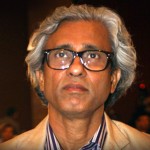
  • Das ka Dum with Dr Bhaskar Das: Are Indian newspapers not run professionally?

    The Q&A today is treading on delicate matters. But questions like these must be asked, and hence ought to be answered. Which we’ve done. Das ka Dum with Dr Bhaskar Das is as no-holds-barred as it can get. There are no holy cows, whatsoever. Read on…

    If you wish to access the archives, please go to the Das Ka Dum tab on the website’s top navigation bar.


    Q. There is a sentiment that many Indian newspapers are very unprofessionally run or rather not very professionally run. You’ve spent a lifetime in the business. What’s your view??


    A. You want me to be objective is a subjective matter. The moot point is what is a professional approach or unprofessional approach. HBS or all business schools can write tomes on the subject. Besides, what is professional to one person need not be professional to another person. Do you dump unorthodox players in cricket because they are grammatically not impeccable?


    In the ultimate analysis, what works, what delivers. Market is the best arbiter and not text books. Even in the most sanitised professional environment, some whistleblower can crop up. Corporate world are replete with examples of so-called unprofessionalism. Leading  newspaper organisations have been surviving for years not just by happenstance. So far as my personal experience is concerned, I have always worked in a professional environment. I also believe that “I am the cause of everything i experience”. Consequently, when I remain professional, the world resembles the same.

  • Das ka Dum with Dr Bhaskar Das: What’s your advice to media professionals turning entrepreneurs?

    On the last day of the week, we ask Dr Bhaskar Das for advice that many professionals must be seeking as they turn professionals. Read on…


    If you wish to access the archives, please go to the Das Ka Dum tab on the website’s top navigation bar..


    Q. Am sure there are several people who come to you saying they want to turn entrepreneurs. What’s your advice to media professionals turning entrepreneurs?


    A. In today’s context, it’s a very logical question where individuals want to make a difference and express their freedom outside the boundary of a monolithic structure and protocol. I usually don’t believe in giving advice as I might be needing it more.

    But I can share what would I have told to myself if the entrepreneurial urge came to me. Here it is: be conscious of the fact that three things viz consumer value, Business model and Ecosystem would keep you on your toes and they have to be based on robust data platform. A collaborative mindset and navigating a platform-based approach for business will be critical. Finally, it’s always good to start early (not necessarily true of course) and don’t forget to inculcate the agility to pivot in case there are signs of too much headwind for the relevant business.  And it’s not a bad idea if emotion and ego are left behind at home before doing business.


  • Das ka Dum with Dr Bhaskar Das: If you could re-start your career, which media would you join? And BCCL again or an InShorts or Dailyhunt?

    Welcome to an all-new week of Q&As as part of Das ka Dum with Dr Bhaskar Das. (And do come back tomorrow, for the most provocative question asked thus far!)

     If you wish to access the archives, please go to the Das Ka Dum tab on the website’s top navigation bar..


    If you were given the option to start your career all over again – and in 2019 – which media would you join – print, television, radio, digital, outdoor or whatever else? And would you still like to join BCCL or would it be some other conglomerate? Or a company like InShorts or Dailyhunt?


    If wishes were horses… but I am not a dissatisfied soul to opt for an imaginary throwback. But then I can’t upset you… So: I would love to join Elon Musk and would love to be part of a voyage to a visionary future. Now don’t liberate me by saying: “Ja Bhaskar, Ji le teri Zindagi”

  • Das ka Dum with Dr Bhaskar Das: Did being a Bengali help you in your career given the number of Bongs in advertising, media and marketing?

    Decidedly the most provocative (and some may say unfair) question we have asked Dr Bhaskar Das in the Das ka Dum series.

     If you wish to access the archives, please go to the Das Ka Dum tab on the website’s top navigation bar…


    Q. Did being a Bengali help you (in your career) given the number of Bongs across levels in the advertising, media and marketing fields?


    A. All generalisations are wrong, including this one. Ethnic classification as a contributing factor for success can at best be a symptom of intellectual impoverishment. Coincidences can’t be a base for a statistically significant conclusion. They can at best be treated as apriori. It’s ultimately an individual’s commitment and smart work that paves the way to success, material or otherwise. If accepted, it tantamounts to trivialising commitment to work.

  • Das ka Dum with Dr Bhaskar Das: You have been into hardcore sales for most of your professional career. And then you went on to do a Ph D. And not one, but two. Isn’t a bit of a contradiction – the ‘saleoo’ & the ‘gyaani’?

    Yet another provocative question we have asked Dr Bhaskar Das in the Das ka Dum series. Read on…

     If you wish to access the archives, please go to the Das Ka Dum tab on the website’s top navigation bar.


    Q. You have been into hardcore sales for most of your professional career. And then you went on to do a Ph D. And not one, but two. Isn’t a bit of a contradiction – the ‘saleoo’ and the ‘gyaani’?


    A. This question suffers from the usual attribution myopia and stymies the human potential. Can you tell me who is not a salesman in this world? So I am not ashamed of being labelled a ‘Saleoo’. Academic interest liberates you from the darkness of bounded ignorance to the world of unbounded curiosity. In the process, one gets conscious of one’s imperfections and surges forward to an enlightened space.

  • Das ka Dum with Dr Bhaskar Das: Can you talk to us of a low in your career and as you look back, how would you have handled the issue differently?

    An all-new question answered by Dr Bhaskar Das in the Das ka Dum series. Read on…

     If you wish to access the archives, please go to the Das Ka Dum tab on the website’s top navigation bar.


    We all know of a variety of super-achievements in your professional life. But would you like to talk to us of a low and as you look back, how would  you have handled the issue differently?


    I have no high or low in life. I developed a stoic approach to everything. I knew that moving fro on peak to another has to pass through a valley, unless one is a superman or spiderman. When one makes peace with the flow of life, any feeling of regret is an anathema to the core belief.

  • Das ka Dum with Dr Bhaskar Das: If you and Shashi Tharoor are in the same room, who would use tougher words with each other?

    Bhaskar Das

    We hope you had a good Diwali weekend. We are back with a new (short) week of questions for Dr Bhaskar Das as part of the Das ka Dum series. Our response to his response today: “Holy Cow, whattan answer!”

     If you wish to access the archives, please go to the Das Ka Dum tab on the website’s top navigation bar.


    Q. Wonder if you and Shashi Tharoor in the same room, who would use tougher words with each other? My view is that on words, he may beat you, but on the turn of phrase, you can win hands down. Comment


    A. You are extra generous. I am no match for his flowery style of articulation. Needless to say. I am simultaneously  flummoxed and embarrassed by your epithet. Sometime no comment is the best comment. At least I can’t be sued.

  • Das ka Dum with Dr Bhaskar Das: When will the achhe din happen in Indian M&E?

    On the second working day of this rather short post-Diwali week, here’s a question uppermost in our minds. If you wish to access the archives, please go to the Das Ka Dum tab on the website’s top navigation bar.


    Q. According to you (given your market intelligence and inferences), for the M&E sector, kya achhe din aane waale hain?


    A. What is achhe din for the M&E segment? I presume your answer would be when monetisation would be facile? No inter-category/ format migration of attention and cash would happen? No rightsizing will happen? Double-digit growth would accrue to all leading  media companies, if not all, et al? Imagine ships are constructed to be anchored in the shore. As a result, no ship would get drowned.


    But is predictable and favourable wind the only indicator of acche din? I differ. I find that the M&E industry is going through the best of times. Technology and consumer culture are together tectonically shifting the topography of competitiveness. In this journey, headwinds might queer some pitches but when one remains perpetually paranoid and permanently in a beta state, one develops  agility, excitement and resilience during  navigation. Now if that’s not acche din, what can it be? Instability is the new stability.

  • Das ka Dum with Dr Bhaskar Das So what you do on a holiday… in your free time? What does your typical non-working Saturday-Sunday look like?

    As we end yet another week of Q&As with Dr Bhaskar Das, we ask him a soft question – but perhaps something a lot of people may be wanting to know. Have a great weekend

     If you wish to access the archives, please go to the Das Ka Dum tab on the website’s top navigation bar.


    Q. So what you do on a holiday… in your free time? What does your typical non-working Saturday-Sunday look like?


    A. I am free from the bondage of duality of Saturday-Sunday or working and non-working day.  Hoilday is required when work is a chore. When work is taken out of work, one is on a seven-day weekend when fun and quest for upgradation get seamlessly integrated.

  • Das ka Dum with Dr Bhaskar Das: On Saturday, every news entity was caught napping on the political twist in Maharashtra. Does this mean that newswallahs do not have their ears to the ground?

    Bhaskar Das

    For those even with the remotest interest in news, the weekend was hilarious. Well, more because everyone was caught napping… politicians, pundits and journalists tracking the business. So we thought, we will pose a question on the issue to our every own Wizard with Words. Presenting Dr Bhaskar Das in Das ka Dum. Read on…  If you wish to access the archives, please go to the Das Ka Dum tab on the website’s top navigation bar.


    Q. On Saturday, every news entity in the country was caught napping on the political twist with the BJP forming the government with the NCP leader.   As a senior industry professional who has spent a lifetime with news, what does this say (to you) about the newswallahs… the news community? Do they not have their ears to the ground?

    A. One news channel has broken the story though. Let’s not go into the debate of which channel broke the story. It also doesn’t mean that that only one channel has ears to the ground — a typical syndrome called heuristics bias. History is replete with examples of many channels breaking many other stories. The nihilism about a sector on the basis of one stray incident can’t be used to generalise either about a sector, or of the fraternity per se. In fact you are underestimating the dexterity with which the political class have guarded a secret from the ever-prying eyes of the media. That’s pretty smart. Now if the pink ball outsmarts Bangladesh players, can you blame the pink ball? Or that the future of cricket or its players needs to be contemplated. I wonder.

  • Shruti Pushkarna: Are there hints of hypocrisy underneath the dissenting voices?

    Shruti PushkarnaBy Shruti Pushkarna


    Yesterday I had a unique experience. Almost 37 years old, I have grown up listening to stories of the India-Pakistan Partition from my paternal grandfather, stories of my maternal grandfather about protesting against the authorities to protect the rights of labourers, and more recently, stories from my father and aunt from their time in prison when they upped their voices against the Emergency imposed by the then Indian Prime Minister, Indira Gandhi.


    However graphic the pictures were in my head as these stories were narrated to me, but never had I experienced anything first-hand. Now before I build up your hopes as a reader for some thrilling piece here, I must confess I was not part of any action. I was just a first-hand witness. Not a listener, a spectator, watching the action live on the ground.


    The entire country is up in arms against the Citizen Amendment Act, recently cleared by the two houses of the Indian Parliament. Protests and slogan shouting everywhere. We have witnessed reports of services being disrupted, internet being withdrawn etc on several occasions from other parts of the country, but yesterday it was the capital of India. Parts of the Delhi city had internet, voice and SMS services withdrawn by network providers, on a directive issued by the government. This was a first for us. Access to media thwarted. How can the political capital of the country, the news hub of India, witness such a media blackout at the behest of politicians’ will? Are we assuming that if I’m unable to share my views using social media or develop an opinion based on others’ experiences being posted on media platforms, my voice can be drowned? We all assumed we were living in a fortress, untouched by common man’s woes. But yesterday these assumptions came crumbling down in the face of dissenting voices dissing the arrogant ruling class.


    When I left home yesterday morning, it was a regular working day for me. Taking a one-hour cab ride to my office in South Delhi, getting through meetings, meeting deadlines and so on. And then the news alerts started to pour in. One after the other. Roads blocked, police barricades, long winding traffic jams, metro stations being closed down, Section 144 imposed in pockets of Central Delhi. News bits went from bad to worse. I stepped out for a cup of coffee in my lunch break and saw CISF troops being rushed into the metro station nearby (same one I access to travel home daily). And it all came alive. Offices started to close down, parking lots started to clear up, people started to rush back homewards.


    As I took the Delhi metro back home (taking the roads was a bad option because of the violence on the streets), I looked around at my fellow commuters. Some were responding to phone calls from worried loved ones. Some were watching the news on their mobiles struggling with the sketchy mobile data. Some were watching right wing videos loudly on their phones, telling others around them that India is a Hindu sovereign. This last set of people actually broke out into shrieks of “Bharat Mata ki Jai” on the train. Some scared travellers looked away. Confused ones simple stared. A third category of people like me, not confused or scared, simple outraged, looked at them in disgust.


    A train journey is not the place to voice your opinion in an unruly manner. A train journey at that, where most stations were shut and people couldn’t wilfully deboard at their desired destinations. Also I doubt how much of the so-called ‘Bharatvarsha’ sentiment do these people embrace when it comes to other issues crippling the country.


    I for one work towards getting persons with disabilities an equal status as citizens of India. Will the same people stand by me, and fight for rights of this minority section tomorrow? I don’t think so.


    Will the same people offer food to the cook, driver or maid working tirelessly for their families? I don’t think so.


    When I go to a restaurant in Delhi, I see the same ‘protesting’ lot of people enjoying their dinner and drinks as their children’s nannies look from a distance. The nannies who are feeding their babies are not allowed on the same table, not offered the same food.


    I respect equality for everyone. I standby each religious group and their rights. But I also respect other vulnerable groups in their fight for rights. And I practise that respect in my day-to-day actions as much as I would do if I were at Jantar Mantar tomorrow.


    Let’s not be hypocrites ourselves when we accuse our leaders of the same. Would the same people hurl stones at the authorities if tomorrow a person with disability seeks equal employment or education rights? Will their children be told not to isolate disabled students in their classroom?


    If we talk of an equal India, then I must confess we are so far away from it. So who are we kidding.


    Shruti Pushkarna is a former journalist (part of the founding team of MxMIndia). who has now moved full-time to the social sector. She heads operations of New Delhi-based Score Foundation where she works as Director. Her views here are personal. She can be reached via Twitter at @shrutipushkarna


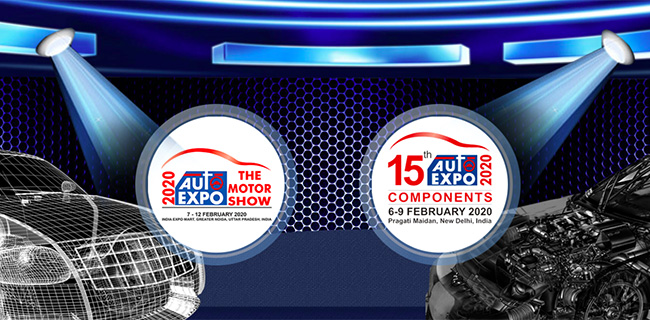
  • Is the Auto Expo dying?


    By Avik Chattopadhyay

     

    Having spent a couple of decades in the automobile industry, the Auto Expo has been one event I have always looked forward to. Since 1993, I have visited every single expo, as a proud member of the automobile fraternity and as an Indian. It is truly one of the few world-class expositions in our country, bringing in the best, brightest and most reputed from across the world. I cannot forget Porsche participating way back in 1993. Or the Hyundai Santro launch. Or that of the Bajaj Pulsar. Can one forget the world waiting with bated breath for the unveiling of the Tata Nano in 2008?


    The narrative today about the Auto Expo actually pains me. It is largely negative, focusing on the automakers who choose not to participate in an edition. People only fussing over the symptoms without a bother on the suggested treatment.


    The ‘motorshow’ as a concept is at the crossroads. The traditional one is a dinosaur, now surviving only as a closed platform for the big bosses of the automakers to satisfy their personal egos, pamper some journos and use it for personal networking. Any consumer event has to fundamentally be clear of what the consumer wants and behaves like.


    Twenty years back, the consumer looked forward to a day out with the latest in automotive design and technology, the show providing that opportunity. Automakers used to plan their big announcements and unveilings accordingly. “Latest” and “first” were buzzwords. The consumer today any way has access to all information and reviews online and does not look forward to spending a day with ‘old’ news. And the automakers have their own product portfolio calendars to follow, choosing to have ‘stand-alone’ moments of limelight. The show has lost the buzzwords. There seems no novelty and flaunt value.


    The organisers of the show in Detroit are close to shutting it down. Paris and Tokyo are holding on to “national pride” and putting up a brave face. Geneva, already small, is scaling down. And Frankfurt this year saw a lively debate on its future. Some small ones have shut shop and nobody misses them. Quite a few automakers have chosen other platforms like CES to ‘connect’ better.


    So, where goes the Auto Expo? Does it deserve to continue or will die a painful death?


    In the midst of all the debate and prophecies on the future of the motor show, the Auto Expo has a once-in-a-lifetime opportunity to take the bull by the horns and create a new paradigm on what the motor show of tomorrow should be. Yes, the Indian automobile industry and its policy body SIAM can actually take up this challenge and become a pioneer.


    So, what will it take to rebuild the relevance of the expo? Five key things:


    First, it’s about mobility and not just about motors.

    Tomorrow’s world will be not about just metal, glass and rubber. It will be not about just the products anymore. The traditional way of positioning the show as having “x” number of launches and unveils will have to give way to “z” number of tech showcases. It will be all about mobility and not simply the motors that form only the core but not the entire ecosystem. This contains multi-modal travel, entertainment, sharing, platooning, lifestyle and all types of ‘phygitial’ customer touchpoints. It will be more about safety, cleanliness, responsibility and sustainability than just speed and torque and number of cylinders. It will be all about greater immersive experiences rather than just the act of clicking selfies with motors and some celebrities.


    More so, the organisers are right now at the mercy of the automakers participating to ensure the show’s ‘success’. Right now, they are wasting time answering journalists about who all has pulled out of the show than invest it in ensuring better qualitative participation. Automakers take the excuse of “not having anything new to display” for not participating. Another favourite excuse of theirs is that the “cost is too high” forgetting that only around 15-20% of their total spend is actually on space rental and services. Getting huge teams of designers and fabricators from the headquarter locations to construct their pavilions does not help their cause one bit.


    Second, needs to expand the scope of participants.

    Logical, is it not, if it is to be about mobility. The participants have to be beyond just the automakers. There have to be technology brands like Microsoft, IBM, Google and Apple. There need to be solution providers like Ola, Uber and Zoomcar. There need to be public transport providers like Delhi Metro, DTC and BEST. There need to be navigation services like Map My India and Garmin. There need to be infotainment providers like Airtel, Jio and Amazon Prime. There need to be social media influencers like Twitter, Facebook and Instagram. The list can just go on and on…as long as I have driven home this point.


    Third, needs to bring in more ‘organisers’.

    Of course, as only SIAM, CII and ACMA do not have the wherewithal to bring in all the big brands mentioned above. Organisations like NASSCOM have to be brought in. Even international bodies like JAMA and ACEA have to be active organisers to ensure the required levels of participation. Ministries of consumer affairs, electronics and technology have to be involved with all support.


    Fourth, it needs to cater to the ‘mobile’ Indian.

    This is a key disruption needed to evolve the show from its current largely-physical manifestation. While the organisers take pride in having close to 600,000 visitors over just six days of the show, it has to cater to ten times that number, right across the country and the world. And this can be done only digitally…when you re-create the Auto Expo as a virtual show on mobile or tablet or laptop screens for those to enjoy who cannot physically visit. No motorshow in the world has done this as yet [though the Tokyo show does have its share of VR]. Being the land of the software-geek, the Auto Expo should certainly take this up and set a new benchmark.


    Fifth, it needs consistent support and funding.

    The show’s scope and scale should not be limited to only what budgets the automakers who participate have. This is India’s showcase to the world. It is larger than life. It needs financial support from the ministries and all allied industries. Only then will the show be able to create relevance that is credible, demonstrable and sustainable.


    In fact, it should not be called “Auto Expo – the motor show” anymore. That is the past. It is the “India Mobility Expo”.