Category: BLOGS

  • Time for Vineet Jain & Arnab Goswami to smoke the peace pipe?


    By Pradyuman Maheshwari

    There are liars, damned liars and statisticians. And that couldn’t be truer when it comes to TV viewership claims.

    Data can be misrepresented and quoted by slicing and dicing to an unsuspecting public, marking a dwarf look tall. That’s exactly what’s happening in the English News Genre lately.

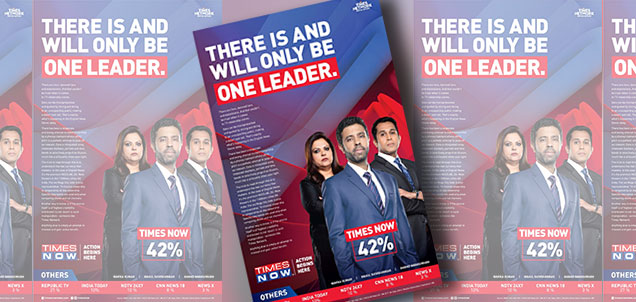
    There has been a desperate and losing attempt to claim leadership by a phoney claimant whose shrill pitch is pathetic attempt to pass off as relevant. Data is misquoted using irrelevant markets, periods and time bands to selectively project an illusion, much like a silhouette show uses light.

    The trick to read through this is to understand the real currency that matters. In the case of English News it’s the premium NCCS AB, 22+ Male Viewers in the 1 Million+ cities All India. The six Mega City data is also representative. TV channel viewership is compared by all day viewership. Specific time bands are used only when comparing shows and not channels.

    Another way to know, is if the source itself is of highest credibility and known to not resort to such manipulation – someone like Times Network.

    Anything else is simply an attempt to mislead and gain undue benefit.

    No marks for guessing who the ad is targeting. Republic TV, of course. And since the recently launched news channel is all about its founder, editor-in-chief and chief promoter Arnab Goswami, it’s hitting out at Goswami. The phoney claimant whose “shrill pitch” being “a pathetic attempt to pass off as relevant” is hence none other than Goswami, the former Times Now bossman.

    But one must say that the ad has happened after much ‘tu tu main main’ between the bosses of Times Now and Republic TV.

    Sources within the Times Network establishment as well as in the news broadcast industry say that  more than the war of the Times Network (the broadcast arm of the Times of India group), it’s a war of sorts between the group’s managing director Vineet Jain and Goswami.

    Prior to the launch of the Republic, Goswami has compared the battle for supremacy between the two channels like that of a David versus Goliath. There was a controversy around certain trademarks filed for and there was a very clear and loud offensive from both ends.

    At MxM, we have observed each and every move of both channels and both owners, and we can say that both have tried their best to outwit each other. Goswami and his crew have also not stopped short of taking potshots at the Times group, though they may not be be as vitriolic as the text of the advertisement.

    The News Broadcasters Association (NBA) which has the Times Network CEO in its top leadership also got into the act asking for measurement body BARC to not publish Republic TV data because it employed an incorrect trade practice or multiple LCNs. After Republic pledged to the Courts that is not resorting to dual LCNs to shore up its numbers, both channels got into the act of landing pages.

    Landing pages is until now not an illegal practice, but requires a spend of big monies to the distribution trade. According to unverified information that we have received, the collective spends from the two channels per annum would be in the region of Rs 20-30 crore. The bulk of the spends is from Times Now.

    What landing pages helps achieve for both channels is that the viewership numbers leapfrog, but that doesn’t necessarily mean an increase in time spent on the channel. In fact the average could go down as people view a certain channel only for a minute-odd and then switch to the channel of their choice.

    Industry seniors MxMIndia spoke with aver that the amount spent on pushing distribution in an inorganic manner is a waste. I would rather have the monies being spent on newsgathering and improving the quality of the content or even other outreach activities, said one trade captain.

    But the stakes are high for both channels. Republic TV, given the reputation that Goswami had built for himself at Times Now, needed to be on top of the charts to create an impact. And for Times Now, being part of India’s biggest news media company, it needed to show that it’s not dependant on any single individual to stay on as the leader.

    Sadly, the network doesn’t seem to have learnt from its mistake, and in the case of Mirror Now, it is only propping up the channels primetime anchor and editor-in-chief Faye D’Souza.

    Times Now has tried its damnedest to ensure that it doesn’t get affected, but even some insiders concede that the channel has taken a beating post the exit of Goswami. Also, the primetime alternatives that the channel has put up don’t really match up to Goswami.

    However, it is creditable that the channel has not lost out very much, and that has been done thanks to its extensive reach and also editorially, it has ensured that it keeps raising the bar, even though content-wise – and in the pro-Narendra Modi, pro-rightwing genre – Republic is clearly a better channel.

    Sadly, the channels with more neutral content – like India Today and CNN-News18 haven’t been able to measure up on the ratings roster. A more anti-Narendra Modi NDTV 24×7 which has been facing some heat given its financial past has also not been able to put up good numbers on the weekly BARC charts. In fact there was a time when the channel even exited from the Top 5 English news channels.

    According to audience measurement numbers that we have seen, there is a clear inorganic rise of both Times Now and Republic TV. That of the former is very evident given the average numbers it generated before the launch of Republic.

    Our view: For the larger good of the news business, it’s important that both Times Now and Republic TV and specifically Vineet Jain and Arnab Goswami smoke the peace pipe and stop wasting money on pushing distribution. And indulge in this ‘tu tu main main’.

    It’s vital that broadcast trade associations like the IBF and NBA make the two see reason and back off. Let the content do the talking, and not fight via advertising and inorganically generated viewership numbers.

  • Arnab Goswami – A Legend in His Own Mind?


    B​y Ranjona Banerji

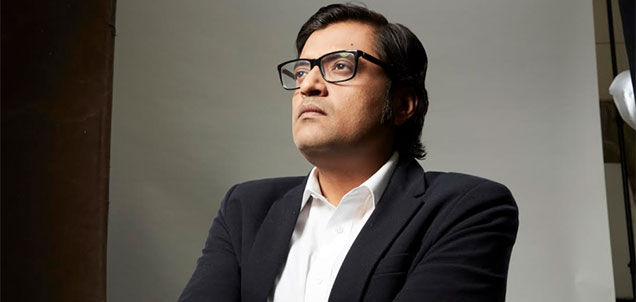
    What an incredible kerfuffle! In a speech he made a couple of years ago, TV anchor Arnab Goswami told a moving story about how he was attacked by riotous mobs carrying trishuls, close to the chief minister’s residence, while covering the Gujarat riots in 2002. Great story​,​ ​but one slight issue with it. The incident did happen. But it did not happen to Goswami. It happened to Rajdeep Sardesai and other colleagues at NDTV.


    Sardesai put the video of Goswami’s speech up on Twitter, expressing surprise at Goswami’s story. The video was taken down and then put up again. Inevitably, minor spats broke out all over Twitter. An employee of Republic TV standing up for her boss, Goswami, posted a photograph where Goswami was part of the group covering the riots. This claim was quickly demolished by Goswami’s former colleagues – he was sent to Gujarat yes but to Kheda and a week after Sardesai’s car was attacked by a mob. The photo was taken later. Several colleagues from NDTV corroborated Sardesai’s assertion that Goswami was lying. Goswami was also defended, or rather Sardesai was attacked, by actor Anupam Kher who occasionally functions as a spokesperson for the government and now also apparently for Goswami.

    What makes someone lie like this? In an article for DailyO, journalist Swati Chaturvedi called Goswami a “fantasist”. On an India Today TV show on the issue, lawyer Sanjay Hegde pointed out, tongue firmly in cheek, that everyone is entitled to be a “legend in their own minds”.

    But what it comes to down to plain and simple is plagiarism. Writers steal words. Those who do not write, steal experiences. Goswami’s story had many personal touches which add verisimilitude – the fear of the driver who had no ID, Goswami’s preference to sit in the front of a car, the sound of the mob. This was a story he must have internalised until it became his own. Perhaps he really believes it happened to him. Maybe he wished it happened to him. Goswami is a studio creation. He was forgettable in his earlier jobs, whatever he did there. He came into his own thundering behind a desk at Times Now.

    Perhaps however he still carries a torch for his non-existent days as an intrepid reporter, covering perilous ground and breaking earth-shattering stories. Since he does not have enough fireside chat experiences of his own, he has no option but to steal the experiences of others. Or maybe he was just borrowing this one: he was going to return it but he forgot: “I covered the riots but not this part that I wanted to cover. So I thought I’d just try your part for a bit to see what it felt like.”

    Of all the roles that journalism offers you, reporting is only one of them. It is not too late for Goswami to become a reporter. He may find it suits him. But he must be more courageous than he has been in the past. Even recently, during one of Mumbai’s super-rainy days, he did not venture very far from his office and stood under a flyover on Tulsi Pipe Road with an umbrella. That is not proper reporting. Nor is going to Milan ​Subway in Santa Cruz.

    He can instead prowl the countryside of Raigad to find any more clues in Sheena Bora’s murder. It may be more dramatic to go at night. And not wear a suit while he does it, although that can be his signature move. He might also lurk around the Leela Palace hotel in Delhi and solve the Sunanda Pushkar case all by himself.

    But let us get down to brasstacks. What Goswami did is not excusable. He stole an experience to make himself look bigger and braver. All it has done is make him look smaller and sillier.

    It has been a while since Goswami stopped practising any type or form of journalism. If he wants to make a comeback, I am not sure that stealing someone else’s experience is the right way to go about it.

    But who knows. This is the “new India”. Anything is possible.

    **

    Meanwhile, it is terrible that one more journalist was brutally killed, this time in the line of duty. Santanu Bhowmick was covering a protest in Tripura when he was abducted and hacked to death by political elements at the rally. This has sadly become all too common – to kill journalists in an attempt to silence the media. Appalling, unacceptable.


    ​Ranjona Banerji is a senior journalist and commentator. She is also Consulting Editor, MxMIndia. The views here are personal​


  • Ranjona Banerji: So how did our media cover the ‘Wire’ expose?​

    By Ranjona Banerji


    On Sunday, October 8, 2017, The Wire posted an investigation on its website by Rohini Singh. The story, using data from the Registrar of Companies (which is under the Ministry of Corporate Affairs), revealed that BJP president Amit Shah’s son Jay Shah, owned a hitherto loss-making company which grew 16,000 times in the financial years 2014-15 and 2015-16, from Rs 50000 to Rs 80.5 crore, got unsecure loans including from a Reliance connection and then shut down.

    By any counts, this is a pretty explosive story. So how did the brave, upstanding, objective Indian media respond? While The Wire’s website crashed several times on Sunday because of increased traffic and social media was buzzing with it, most “news” channels decided to ignore the story. The Congress’s Kapil Sibal held a press conference on the matter, which was only shown by AB

    ​P​ News and NDTV. But in the evening, when Union Railway Minister Piyush Goyal appeared in his other capacity as​’ spokesperson’​ for Jay Shah, and announced that Shah Jr would be filing a criminal defamation suit for Rs 100 crore, every “news” channel covered his announcement live.

    Once again we see how fear of this government affects media decisions. When a similar investigation was done by Singh and Sruthijith KK for the Economic Times into the financial connections of Priyanka Gandhi’s husband Robert Vadra, with DLF in 2011, every news channel, newspaper, news agency, website took the story further. The UPA was in power then and like the BJP now, pulled out its big guns to defend Vadra. The opposition, especially the BJP, went to town – understandably – and those reactions were not censored or blanked out. Vadra was followed and questioned by journalists. No defamation suit was filed against Singh, Sruthijith or the Economic Times.

    On Monday October 9, the newspapers which followed up on The Wire story, concentrated either on Shah Jr’s defamation suit or on the Opposition’s demand for a probe. The actual change in Jay Shah’s fortunes was not taken further – unlike in Vadra’s case. This focus continued to those news channels which covered the story that evening as well. Our most patriotic “news” channels focused on the more important subject of the week – a fight between Bollywood stars Kangana Ranaut and Hrithik Roshan.

    News websites were the only media outlets which did credit to journalism. For most of the rest either ideological considerations or fear of legal action or fear of some other form of retribution made them play safe or run away and hide.

    Personal attacks on Rohini Singh became the order of the day on social media which is now a fallout of every anti-government statement made by anybody. Her career was dissected and she was vilified by members of the BJP’s IT Cell. One of the worst attacks came from Opindia.com, a subsidiary of Swarajya.com, which showed the essence of petty viciousness which marks the rightwing reaction to criticism. On a personal note, I find it appalling that the editors of Swarajya, who should know better, would promote this sort of bile.

    Singh, who is not on Twitter, issued a statement on Facebook, where she stated: “My primary job is to speak truth to power. To question the government of the day. In 2011, when I wrote the story on Robert Vadra’s dealings with DLF I do not remember the sort of backlash that I see now.”

    Ultimately, journalism is encapsulated in Singh’s words: “… to speak truth to power. To question the government of the day.” That is practically lost today. From May 2014, we have seen a gradual but relentless degradation of the essence of journalism. Television media bears the brunt of the blame for their spineless capitulation to the “government of the day”. But newspapers have also succumbed, whether by pulling stories or sacking editors and staff. The climate is vitiated and the fear is real.

    In this miserable state, two sorts of “journalists” have made matters worse. Those who have given in completely and those who consider themselves “neutral”, which means that they try and co-relate every transgression by the government in power with some similar action made earlier, thus ensuring that the current offence is diluted.

    Forget taking sides. We’ve gone beyond that. Right now, it’s become who is willing to stand up. And I see the media space littered with cowering, craven, lily-livered, gutless worms.

    Ooo, are you upset by that? I’m glad. Because you deserve it.


    Ranjona Banerji​ is a senior journalist and commentator. She is also Consulting Editor, MxMIndia​. The views expressed here are her own.


  • Mathman Sorrell quits WPP equation


    By Prabhakar Mundkur


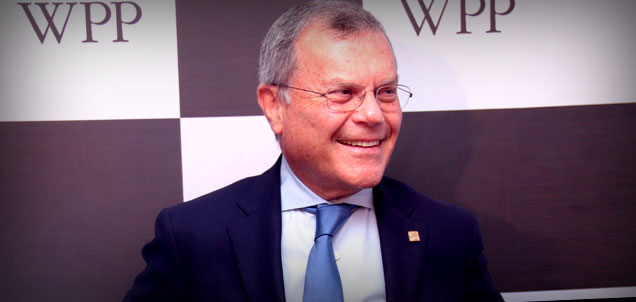
    When Martin Sorrell made a hostile bid for J Walter Thompson (JWT) in 1987, nobody could believe that an ad agency could be the victim of a takeover.  Largely because agencies were held together by loyal clients who could object to new owners if they thought them inappropriate.  JWT at the time was doing badly in financial terms with gross margins of less than 5%, which were perhaps the most embarrassing agency margins in New York.


    Sorrel at the time was confronting a company several times WPP’s size.  Besides while he had been finance chief of Saatchi and Saatchi, a job he quit in 1984, Sorrell had no previous experience of running a firm as large as JWT.  To his credit, the financial turnaround at JWT was quick and methodical.  But we saw some of our favourite people leave the agency, particularly the planners and other intellectuals.  But Sorrell felt that the thinning of the management ranks would do JWT good, and perhaps it did.  In many ways though, it also destroyed the soul of the company as the ‘thinking’ agency.   Who would have thought that this was the beginning of the takeover spree by Sorrell.  Ogilvy was next, although it was rumoured that he may have paid too much for Ogilvy and that it would be his downfall.


    Compared to the $566 million that Sorrell paid for JWT in 1987, Ogilvy was acquired at $864 million in 1989.  Although perhaps a little smaller than JWT, Ogilvy was the agency with a better creative reputation thanks to David Ogilvy, its founder.  With two of the best ad agencies under his belt there was no stopping Sorrell.


    While he was responsible for making the advertising industry more profitable, he might have destroyed the spirit of the industry forever.  The entry of bean counters into the advertising business was not well received those days.  David Ogilvy called him an “odious little shit” who had “never written an advertisement in his life.”  But to Sorrell’s credit, he learnt about the advertising business quite quickly.  When I heard him speak in the ’90s, it was difficult to imagine that Sorrell was a finance man.  He seemed to have grasped the essentials of the advertising business, and was making good sense to clients.


    But internally people at his agencies found him autocratic and dominating.  He took all the decisions leaving none for others.  Not always pleasant, I remember once before presenting to him he told me “your neck is next on the chopping block”.  If this was British humour, I may have missed it.  It certainly wasn’t a pleasant way to start your presentation.


    In his 31 years since he first pitched for JWT, Sorrell has of course transformed the advertising business.  More WPP revenue comes from media, research and data than from the traditional ad agency business something that he was proud of and referred to as the transformation of Madison Avenue from “madmen to mathmen”.  Something that might be real but which has also taken the romance out of the advertising profession.  But to his credit who would have thought that the British could have led an assault on Madison Avenue.  He was not a likeable guy but one has to salute his achievements.


    With Sorrell leaving, speculation must be rife on who will take over.  In my mind the biggest question is whether the successor be a mathman or a madman.  That might make all the difference to how this industry goes into the future.


    Sorrell leaving might be a good lesson for Indian CEOs.  The mighty should step down before they have to.

  • Truecaller moves to Happy mcgarrybowen for creative…

    By A Correspondent


    Truecaller has partnered with Happy Mcgarrybowen to roll out its new campaign for this year. Happy mcgarrybowen was roped in to help chart a new course for Truecaller’s new avatar and host of services.


    Kartik Iyer

    Kartik Iyer, Co-founder and CEO, Happy mcgarrybowen said, “We have been in talks with Truecaller for nearly a year now, exploring opportunities to work together. There has been a synergy of minds and thoughts from the first day the teams met together. A new campaign is already underway and shall be out soon. We see huge potential in the brand growing its offering, considering it is one of the few apps that commands acceptance amongst users of all phone segments. We look forward to a long-term relationship in building Truecaller’s already strong equity in India.”


    Manan Shah

    Speaking on the association, Manan Shah, Director Marketing India – Truecaller said, “We were looking for a partner rather than an ‘agency’ who can think beyond the obvious and move faster than us. This is where Happy mcgarrybowen clicked for us. Extremely delighted to work with them on our upcoming campaign and look forward to many more.”


  • Has print conditioned readers for false covers?


    By Sanjeev Kotnala


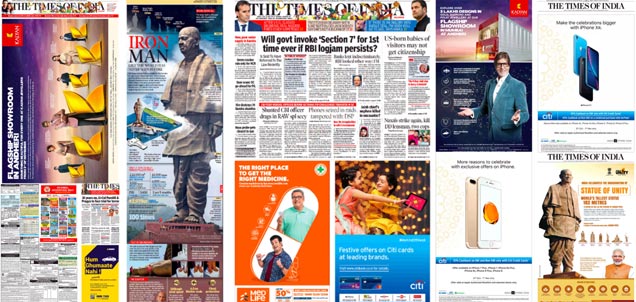
    There has to some logic behind the magic of multiple false covers in dominant newspapers across the country. Come festival time, and suddenly you have to wade through a barrage of the false front page to reach the real front page with news.

    AM I THE ONLY ONE MISSING THE LOGIC OF MULTIPLE FALSE COVER?

    There must be some science behind it. Is there a magic formula only known to smart agencies and clients who are willingly splurging on the nth front jacket /false front-page?

    I ask this with sinking confidence. It is questionable wisdom.

    My question is not a result of social media questioning the non-conventional wisdom. I have observed readers interacting with these fattened newspapers. They do notice the first and the last false cover. In between false covers are just flicked. They seem to ignore many such pages jumping to the real news. No media audience is interested in the advertisements. The reader is only interested in the content.  Am I missing something? Has the conventional wisdom changed? Are the advertisements the new content?

    The brands are using these false front=page as a reminder catalogue for the message already amplified in TV and digital media.

    I presume a lot goes into selecting the products featured in these vibrant cover catalogues. Self-evolving algorithms and many tetrabyte of AI lead big-data mining tell brands what to highlight in them. Major advertising agencies buyers are consciously punting on it. Reputed brands are approving these plans. Publications now have a new magic wand of false cover/jackets to convince otherwise rational buyers and planners. Maybe brands and agencies are trying to mirror consumer expectations.

    MULTIPLE FALSE FRONT-PAGES ARE NOT TOO OLD A PHENOMENON.

    I remember, in the late nineties, the clients hated the second front page. They would not even consider a front-page advertisement whenever there was a false cover. Something changed.

    False covers are a rich cultural tradition among brands. Clients believe in its simplicity of planning and execution. The print owners are not complaining.

    E-commerce, malls, electronics, durable, mobile and real estate dominate false covers. They have access to the best brains in the business.

    IS A SIMPLE ANSWER TO EXPLOSION OF FALSE COVERS?

    There is a simple answer. Mr Anoop Verma, my mentor voice and an avid print reader explains:

    “Kotnala, it is simple. Just like Hallmark cards created many days, we now ritualistically celebrate. Like print created Akshay Tritiya and the colour code for Navratri. Multiple false covers are just another such creation. Print has managed to condition the readers and the advertisers through the years”.

    He added: “Today, readers expect big sale ads on the front cover. They see the dominance and popularity of the newspaper in the number of false covers it manages to publish during festivals. No Brand managers want to be criticised for missing on such opportunities”.

    While I was contemplating on his line of thinking, he simplified it for my understanding. “You must give credit to the print sellers. They have managed to redefine the resistance of not featuring on the second cover to false cover at any cost. It does not matter if is the nth false cover”.

    I am not convinced. However, it makes ample sense.

    I would like to know if there is another explanation, how brands are measuring the effectiveness and how they agree to feature in the nth false cover?. My traditional media thinking is constrained by my learning’s.

    The question has bugged me for long, and I do not have a plausible answer.


  • 1 Minute View: Congratulations, Avinash Pandey!

    1 Minute ViewWe revive our 1 Minute View feature on popular demand. Popular, we must clarify, doesn’t mean lakhs and crores of readers, but just a few dozen loyal well-wishers of the website. They believe that the ‘1 Minute View’ helps give readers a daily perspective on issues concerning the trade.

    We agree, except that commentary is not very revenue-generation-friendly. So the sensitive folks in the trade may take umbrage to adverse comments on them or positive comments on competition. But, heck, that’s now what got us to start MxMIndia. Our allegiance is towards our readers.

    Meanwhile, the year has started in right earnest and with some happy news from the offices of ABP News. Long-standing ABP News honcho Avinash Pandey is now the Big Boss of the company. We wish him the very best. The news comes on the back of the revelation that ABP News has clocked the highest programming content across Hindi and English news television. In a year that’s going to see the mother-of-all elections, Pandey has his role cut out for him, and we are sure the high numbers on December 11 will help boost revenues.

    It’s an interesting road ahead for Pandey and ABP News. Developments of the last year on the editorial front have now been forgotten, and it’s heartening to see that ABP News has maintained its neutral stance. And that could well be a good thing given that finally the media has started asking the Narendra Modi government some tough questions.

  • 1 Minute View: Future Shock for Ad Agencies?

    1 Minute ViewMxMIndia columnist and veteran adperson Prabhakar Mundkur has very effectively pictured the state of affairs as they exist in the advertising business. His article appears on MxM today at: http://www.mxmindia.com/2019/01/future-still-fuzzy-for-communication-agencies/

    The advertising business in India has had one of its worst years last year. We don’t know if the state of the economy is the cause (demonetisation, GST etc) or it’s a global phenomenon where digital and consulting firms are taking over the business, but the future, as Mundkur writes, is indeed fuzzy for creative agencies. The going is set to be tough for media agencies as their role gets diminished by the Accentures of the world as well as standalone and more agile digital shops.

    So is it a cul-de-sac for advertising? Perhaps, if one looks at things from the traditional prism. However, one must remember that people hire the services of advertising agencies for creativity. Creativity in creative work produced, creativity in the form of innovative ideas and creativity in the form of strategy and effectiveness.

    If creativity continues to be be the primary driver of an advertiser-agency relationship, the path ahead for creative agencies needn’t be fuzzy. In fact it could well be fun.

  • 1 Minute View: Damn all equally, Editors Guild

    1 Minute ViewThe Editor’s Guild statement on Rahul Gandhi’s remark on the Smita Prakash interview is welcome. However, as senior journalist and MxMIndia Consulting Editor Ranjona Banerji writes (http://www.mxmindia.com/2019/01/ranjona-banerji-spare-me-your-outrage-over-pliable/), it’s critical for the Guild to also make a noise when significant and not-so-significant others damn the media with words and actions that don’t speak well for the politicians and their political parties.


    In this case at the receiving end was Rahul Gandhi and the Congress. But the ruling dispensation at the centre, specifically the BJP and its biggies must also be damned, by name if and when there is need for it.


    Then, as Banerji writes, there has been no statement till date by the Guild on the arrest and detention of Kishorechandra Wangkhem of Manipur. Why not? Is this because the Chief Minister is from the BJP?


    The Editors Guild officebearers are some of the better known names in Indian journalism. One expects them to ensure bias in dealing with such cases.

  • 1 Minute View: We can’t let anyone derail digital measurement

    1 Minute ViewKudos to Niraj Sharma of Best Media Info for bringing to the fore the issues of the delay in the functioning of the third party digital measurement (link: https://bestmediainfo.com/2019/01/commentary-ekam-stuck-is-isa-hand-in-glove-with-google-and-nielsen/).

    In his comment, Sharma has made serious allegations about the role of Google and the Indian Society of Advertisers (ISA). “ISA is not able to understand Google’s game, which is not playing the ball in a true manner. Why does ISA not understand that it should be independent third-party measurement and that Google’s measurement is not independent? Is this because ISA is hand in glove with Nielsen globally as it has some old deals with Nielsen?”

    MxMIndia has reached out to the ISA Chairman Sunil Kataria through his office and is awaiting his response.

    Meanwhile, there is a urgent need for powers that be across the media ecosystem to get cracking on achieving a robust third-party measurement system for digital. Soonest.


  • Sanjeev Kotnala: MMT needs more than Magical Advertising

    By Sanjeev Kotnala


    Three years back ‘Make My Trip’ (MMT) signed Ranveer Singh and Alia Bhatt as Brand Ambassador in a strategic move to connect with younger customers. The audience was intrigued, as the two have not done a movie together. Gully Boy will be the first movie for the pair. The audience has seen some brilliant, interesting, engaging and straightforward advertising.


    Ranveer – Alia: a Perfect MMT Choice.

    The duo of Ranveer and Alia with their versatility and on-screen chemistry did justice to every possible freaky character the advertising agency served to them. The talented duo enacted a spectrum of roles with equal expertise. Each of the TVCs has an experimentative, adventurous, confident yet concerned and doubtful traveller as its mainstay.


    MAGICAL Engaging Creative

    All the films represent a ‘Get to the point and present the advantage loud & clear in a memorable episode’ strategy by setting up a believable contextual situation. Be it about the awesome room, helpline, discount, pay at the hotel, zero cancelling, international food  or reminding the audience that MMT also makes hotel bookings.


    Each of the TVC scripts is fantastic. The script leverages the brand ambassador pair chemistry and does justice to the crazy Ranveer and the big smiling, playful innocence of Alia Bhatt.

    There has been no slag or hint of complacency in creative output even after so many episodic TVC. The client-agency team must be complimented for it.  Here is the client-agency combination that knows how tough it is to deliver a higher degree of engagement once the benchmark is set. More importantly, a focussed client team has ensured a seamless migration of account from one agency to another, retaining the magic and playfulness.


    https://youtu.be/In2dukXrtxw


    The films have a template approach. There is a problem or a doubt followed by a smart solution ending with one-upmanship delivering the MMT advantage and an unforgettable lesson to the viewer.

    How cool it would have been if the reel life could deliver on the real-life promise.


    Ranveer Alia Can’t Solve Service Delivery Issues.

    Brand MMT must watch social media chatter.  In the last few months, there has been a marked increase in MMT consumer complains on social media and reviews. Most of them deal with broken promises, missed reservations and non-transparent pricing. The overactive bots and resultant thread of communication have shaken the confidence and image of a caring company with consumers.

    It’s a reality that very few travellers compliment excellent service delivery whereas the errors are over-amplified. A reality every service provider including MMT must face.

    It does not matter if the ratio of service delivered and complaints are the same across service providers. The complaints consumers see and react to, are important. Being one of the largest in the field, the expectations are much higher. MMT needs to be the benchmark. It seems something is definitely slipping.

    I personally had no problem with bookings and travel on MMT. But the recent hike in social chatter has shaken the confidence in even loyalist like me.

    Meeting customer expectation is a hygiene requirement in a service brand. Frustrated customers have no option but to shift loyalties.  Saying sorry serves no purpose.  The urge to check other travel-hotel portals is too powerful, and Trivago has been fuelling it big-time. Something the client cannot leave on Ranveer-Alia team to playfully address.


    On a lighter note, may be the social media can do with a compliment for excellent service delivery and not just crib. And that is not about MMT only.


  • Indian Ad Industry: Are Happy Times Really Here Again?


    By Indrani Sen


    Indrani Sen

    Last week, the advertising and media industry probably had an overdose of data and information to chew, both GroupM and Madison released their annual reports on industry AdEx “This Year Next Year” (TYNY) 2019 and “Pitch Madison Advertising Report” (PMAR) 2019; Dentsu Aegis Network’s arm Posterscopre released a forecast for only OOH industry followed by the TAM AdEx Report and the results of the DD Free Dish e-auction held from February 11 to 14, 2019. It will not make any sense to discuss the implications of all the reports together. Let me today take a look at TYNY 2019 and PMAR 2019 released by GroupM and Madison.

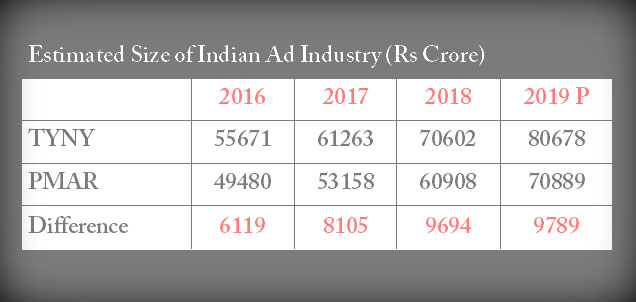
    By now, industry professionals are reconciled to the reality that there is a big gap in the estimation of the size of the Indian Ad Industry by the two agencies. However, as an academic I find it difficult to explain the reasons of the same to my students. I was alarmed to find earlier that since 2016, the gap in real terms increased year on year till 2018 as shown in the chart below. It is reliving to find from the recent reports that the same is not increasing further in the estimates made for 2019 by GroupM and Madison. We can probably hope that in another few years the difference between the two estimates will be reduced to 4% to 8%, the acceptable statistical margin of error at the 95% confidence level.

    Estimated Size of Indian Ad Industry (Rs Crore)
    2016 2017 2018 2019 P
    TYNY 55671 61263 70602 80678
    PMAR 49480 53158 60908 70889
    Difference 6119 8105 9694 9789


    A comparative analysis of the 2018 adspends by media made in the two reports show that the main bone of contention between the two is in the estimated size and share of TV media. Apart from TV, the differences in the estimated size in rupee value of Print, Digital and Radio fall within the acceptable margin of error ranging from 4% to 8%.The estimated size in rupee value are very close for OOH and same for Cinema. The detailed analysis is given below:

    Indian Ad Industry 2018: Estimated Size (Rs Crore) & Share (%)

     Rs. Crore 2018 f   2018  
    Media TYNY %share PMAR %share
    TV 33577 48 23432 38
    Print 17970 25 19467 32
    Digital 12337 17 11706 19
    OOH 3202 5 3365 6
    Radio 2709 4 2144 4
    Cinema 806 1 805 1
    Total 70602 100 60908 100
    Growth over last year 11%   12%  


    In terms of forecasts for 2019, the growth rates predicted by TYNY for different media are lower than the growth rates predicted by PMAR, apart from Radio where TYNY has predicted a higher growth rate than PMAR. Both the reports agree that the highest growth rate will be in Digital media fuelled by mobile, online video and social media, followed by Cinema though on a very small base. In terms of overall growth, TYNY has pegged it at 14%, 2.4% lower than the prediction of PMAR at 16.4%.

    Indian Ad Industry Forecast
    2019p 2019p
    Rs Crore TYNY %  Share Growth % PMAR % Share Growth %
    TV 38612 48 15 27649 39 18
    Print 18368 23 2 20442 29 5
    Digital 16038 20 30 15612 22 33
    OOH 3536 4 10 3750 5 11
    Radio 3116 4 15 2401 3 12
    Cinema 1008 1 25 1047 1 30
    Total 80678 100 14 70889 100 16.4


    Both the agencies have cited upcoming Parliamentary elections and ICC Cricket World Cup 2019 as major contributor to the growth in ad spends in 2019. While Madison have cited increase in government spending to showcase its achievements, the growth of OTT, increased spending in rural sector and India moving to a consumption society as the other reasons for predicting a high growth for the ad industry, GroupM has highlighted major trends like emerging technology, availability of data, content creation and distribution, etc. as factors contributing to the growth in advertising expenditure. There is no doubt that after two bad years in 2016 and 2017, Indian advertising industry has turned around in 2018 and is poised for further growth in 2019.

    Let me turn around and play the role of Devil’s advocate musing over what can disrupt the rosy dreams of advertising industry during next year. Over the last four days all of us are reeling under the effect of the terrorist attack in Pulwama killing 40 CRPF jawans. The entire nation wants revenge and our expectations have increased since the last surgical attack. Such attacks and counter attacks may lead to unforeseen developments affecting our economy and business.

    After the results of the last round of state elections, many political analysts think that BJP may have to depend on coalition with other political parties to run the Government in Centre after the next General Election which may affect smooth functioning of the Government. The gross overspending (Rs. 99610 crores over approved expenditure) by the Union Government as reported recently by CAG may have a diverse effect on various government approved projects in future as well as rural development.

    If RBI falls in line with the directives of the Finance Ministry, then India’s financial ratings may suffer globally and rupee may face further devaluation in its foreign exchange rate. There could be changes in the domestic as well as foreign policies of US which will have far reaching effect on the entire world and India will not be an exception. To sum up, we are living in very uncertain times when any significant change in internal or external political situations or foreign/ economic policies can adversely affect the growth of our advertising industry. Let us keep our fingers crossed and hope that the predictions for the growth in advertising in 2019 made by TYNY and PMAR will be realised without any major disruption.


    List of my articles related to this topic over last three years:


    Feb 20, 2018 Mind the TV AdEx Gap

    Feb 20, 2017 What is the real size of the Indian Ad Industry

    Nov 21, 2016 Post Demonetisation, it’s boom to doom for ad spends

    Feb 15, 2016 Boomtime for Media: A Review of Pitch Madison Advertising Report 2016