
Category: BLOGS

  • Ranjona Banerji: Any “good news” in the impact on demonitisation?

    By Ranjona Banerji


    There are a couple of inevitabilities as far as the media is concerned when any major news event takes place. The first is that people will start complaining that the media focuses too much on “bad news”. The second is that people will start muttering about a “media conspiracy”.


    Let’s start at the top first, in the context of the government’s decision to demonetise 86 per cent of Indian currency in circulation. The decision has been badly implemented and has caused chaos especially in the lower sections of society. Let us for a moment ignore the asinine stupidity of “experts” on news channels who tell us that they don’t want to hear “sob stories” or that the Prime Minister has done the most amazing thing since the invention of white sliced bread.


    However you feel about demonetisation or the government or the innate brilliance of the Prime Minister, as far as any journalist is concerned, the news is about what is happening on the street. And the voices from the street do not quite match the voices in TV studio debates. As you enter into India’s villages, India’s unorganised sector, India’s daily wage labourers, Indians in search of medical treatment, Indians in small and medium businesses, the mood is desperate, angry, confused and miserable.


    Where in this does a journalist find “good news”? There is chaos within the banking system and mayhem elsewhere. People have died, either waiting in long lines or having been refused medical treatment. The rules have been changed almost 200 times in three weeks, leading to more misinformation and more confusion.


    This desire for “good news” has been around for some time and is largely bogus. It represents a simplistic human desire to shut off what is uncomfortable or disturbing. But it is not possible for journalists to be escapists. Practically every experiment with “good news” journalism has failed.


    However, it is also a lie that newspapers and television have only been full of “bad news”. What newspapers and news websites especially – unlike television news – have been full of is bad news about the demonetisation policy. There is enough “good news” about sporting events, about people, about the arts, about cinema to mention just a few.


    And this brings us to the second inevitability: the “media conspiracy” over coverage of demonetisation. This conspiracy changes depending on who you hear it from. Those people who are pro-BJP and pro-Prime Minister Modi, feel that the media is unfair, and anti-Modi for the sake of it, and is playing up “minor inconveniences”. And therefore, the media is not full of articles about people overcome with joy and celebrating with Rs 2000 notes at a time, post-demonetisation.


    From the other side, people who are not happy with Mr Modi’s plan, the accusation is that the media has hidden or under-reported on the true story of misery, that the media has gone out of its way to find the one person in the ATM queue who is deliriously happy with this decision while ignoring the many more who are not.


    As far as “the media” is concerned therefore, inasmuch as it is one entity, this is good news. If all sides of the political and ideological spectrum make the same accusation, you are obviously doing something right!


    On a personal note, I find once again that newspapers and news websites have covered the widespread effects better than news channels. However, the news coverage of the effects of demonetisation on news channels has been infinitely better than the “discussions” held by news anchors at primetime.


    **


    The loss of Dileep Padgaonkar is enormous to Indian journalism. He represented a more erudite form of journalism than is in practice today and upheld the best of liberal values. I had only one encounter with him, when I was deputy resident editor of The Times of India, Ahmedabad, with the indomitable and fearless Kingshuk Nag as resident editor. We were under great pressure from the state, civil society and even within the local management for what was seen as our “negative” coverage (as in not-pro government) of the 2002 riots in Gujarat. Mr Padgaonkar came down and spoke to as a representative of the owners of the newspapers and the senior editorial staff to carry on with the excellent job we were doing and reassured us that we have the full support of the organisation.


    It was a fine gesture, for which, thank you Sir. And goodbye.
     

    There are a couple of inevitabilities as far as the media is concerned when any major news event takes place. The first is that people will start complaining that the media focuses too much on “bad news”. The second is that people will start muttering about a “media conspiracy”.


    Let’s start at the top first, in the context of the government’s decision to demonetise 86 per cent of Indian currency in circulation. The decision has been badly implemented and has caused chaos especially in the lower sections of society. Let us for a moment ignore the asinine stupidity of “experts” on news channels who tell us that they don’t want to hear “sob stories” or that the prime minister has done the most amazing thing since the invention of white sliced bread.


    However you feel about demonetisation or the government or the innate brilliance of the prime minister, as far as any journalist is concerned, the news is about what is happening on the street. And the voices from the street do not quite match the voices in TV studio debates. As you enter into India’s villages, India’s unorganised sector, India’s daily wage labourers, Indians in search of medical treatment, Indians in small and medium businesses, the mood is desperate, angry, confused and miserable.


    Where in this does a journalist find “good news”? There is chaos within the banking system and mayhem elsewhere. People have died, either waiting in long lines or having been refused medical treatment. The rules have been changed almost 200 times in three weeks, leading to more misinformation and more confusion.


    This desire for “good news” has been around for some time and is largely bogus. It represents a simplistic human desire to shut off what is uncomfortable or disturbing. But it is not possible for journalists to be escapists. Practically every experiment with “good news” journalism has failed.


    However, it is also a lie that newspapers and television have only been full of “bad news”. What newspapers and news websites especially – unlike television news – have been full of is bad news about the demonetisation policy. There is enough “good news” about sporting events, about people, about the arts, about cinema to mention just a few.


    And this brings us to the second inevitability: the “media conspiracy” over coverage of demonetisation. This conspiracy changes depending on who you hear it from. Those people who are pro-BJP and pro-Prime Minister Modi, feel that the media is unfair, and anti-Modi for the sake of it, and is playing up “minor inconveniences”. And therefore, the media is not full of articles about people overcome with joy and celebrating with Rs 2000 notes at a time, post-demonetisation.


    From the other side, people who are not happy with Mr Modi’s plan, the accusation is that the media has hidden or under-reported on the true story of misery, that the media has gone out of its way to find the one person in the ATM queue who is deliriously happy with this decision while ignoring the many more who are not.


    As far as “the media” is concerned therefore, inasmuch as it is one entity, this is good news. If all sides of the political and ideological spectrum make the same accusation, you are obviously doing something right!


    On a personal note, I find once again that newspapers and news websites have covered the widespread effects better than news channels. However, the news coverage of the effects of demonetisation on news channels has been infinitely better than the “discussions” held by news anchors at prime time.


    **


    The loss of Dileep Padgaonkar is enormous to Indian journalism. He represented a more erudite form of journalism than is in practice today and upheld the best of liberal values. I had only one encounter with him, when I was deputy resident editor of The Times of India, Ahmedabad, with the indomitable and fearless Kingshuk Nag as resident editor. We were under great pressure from the state, civil society and even within the local management for what was seen as our “negative” coverage (as in not-pro government) of the 2002 riots in Gujarat. Mr Padgaonkar came down and spoke to as a representative of the owners of the newspapers and the senior editorial staff to carry on with the excellent job we were doing and reassured us that we have the full support of the organisation.


    It was a fine gesture, for which, thank you Sir. And goodbye.

     

  • Ranjona Banerji: Fact, fiction & fantasy in the demonetisation coverage

    By Ranjona Banerji


    I watched the first episode The Newsroom, the formidable Aaron Sorkin’s foray into journalism, last night. There was a lot of talk about getting back to real news, to appealing to the small percentage of people who are interested in more than just optics and drama. It’s an argument heard over and over again in newsrooms and most journalists would err on the side of news. However, there is always that small percentage of journalists looking for fame or craving management approval who will build their careers around following trends, being subservient to ratings, and thereby ensuring themselves careers which may or may not have anything to do with a commitment to journalism.

    The Newsroom is of course fiction and part of the fantasy that Hollywood and American television have about “ideal” journalism. However, one line from Charlie Skinner, the president of the fictitious news channel, stood out: “I am too old to be governed by the fear of dumb people.”

    It is a bold and arrogant statement but while the dialogue of The Newsroom can never match the unmitigated brilliance of Paddy Chayefsky’s Network, this statement in a way encapsulates the problem. How far should journalists go to cater only to the lowest common denominator, especially if it takes you away from the essence of the job?

    This column however is not about a 2011 American TV show. It is about the media and its responses to the world around it. Since November 8, the main focus of the Indian media has remained the fallout of the Modi government’s demonetisation policy. There have been two parts to this coverage. The first has been the reactions of the general public, their confusion, elation (on camera at least) and their suffering. The second has been the “discussions” on English news television. There is a clear disconnect between the two and it is one thing for pro-government self-appointed spokespersons to be disingenuous about the suffering of the masses and quite another for seasoned journalists to commit the same crime.

    And yet, as we move to December and with the chaos on the ground still continuing, on which side of the history of journalism would these news anchors like to err? I have no answer but I remain amazed, from a journalistic perspective.

    Some news anchors however have used their star status to look beyond the optics, the melodrama of the Prime Minister, the antics of the opposition and the callousness of corporate friends of BJP, to take the government on. Ravish Kumar on NDTV India has been remarkable, night after night, as he often is. He is also one of the few TV journalists who puts together a show with extensive research rather than calling the same six guests to say the same thing night after night after night.

    The Union Finance minister Arun Jaitley was Ravish Kumar’s target on Thursday night. Jaitley made a speech where he claimed that had news television been around on August 15, 1947, it would have concentrated only on the Partition riots and not on the joy of Independence. This statement was made as a joke I think and with the characteristic smirk.

    Ravish Kumar tore through Jaitley’s comment point by point with research to back him up. Newspapers reported both these aspects of Independence Day, the joy and the sorrow. Anyone with a modicum of knowledge of Indian history would know that Mahatma Gandhi was not part of the Independence Day celebrations (though I can understand that anyone who is part of the RSS family would have no idea about that). Gandhiji was in Calcutta to try and stem the violence for which he undertook one of his most important fasts. The Father of the Nation decided to concentrate on human misery.

    This famous quote from the Mahatma himself underlines the divergent views of journalists, politicians and both civil and uncivil society on the government’s demonetisation idea:

    “I will give you a talisman. Whenever you are in doubt, or when the self becomes too much with you, apply the following test. Recall the face of the poorest and the weakest man (woman) whom you may have seen, and ask yourself, if the step you contemplate is going to be of any use to him (her). Will he (she) gain anything by it? Will it restore him (her) to a control over his (her) own life and destiny? In other words, will it lead to swaraj (freedom) for the hungry and spiritually starving millions?”

    Jaitley as part of the government wanted only kudos. Happily there are some in the media who look on life otherwise.

    **

    Meanwhile, I have to give one more thumbs up to the excellent local coverage on demonetisation in the Dehradun edition of The Times of India. Atul Sethi and his team have examined the effects of this policy on practically every aspect of life here in Uttarakhand and continue to do so with solid reporting and panoramic vision. Congratulations!


  • J Jayalalithaa (1948-2016)


    By Ranjona Banerji


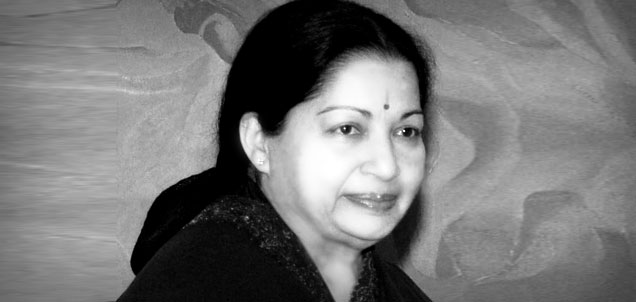
    India has lost one of its most important and powerful political figures in the death of J Jayalalithaa. She was not just Tamil Nadu chief minister and leader of a large political party, the AIADMK. She was also an incredible story of a woman who repeatedly reinvented herself as the situation demanded and managed to harness the most incredible public support and adoration.


    For the national media – as opposed to the Tamil media – there are perhaps two Jayalalithaas. The first was as chief minister from 1991 to 1996. However, the euphoria at Tamil Nadu’s second female chief minister gave way to allegations of corruption and undue favours to the family of her close friend Sasikala. Jayalalithaa’s positioning of herself as a great leader beyond question, the massive posters everywhere with her bulletproof cape on, and her perceived arrogance did not sit well with some within her state and many outside. The perception battle was lost here and the role played by Sasikala came under greater scrutiny especially after the very extravagant wedding of her son, Sudhakaran.


    In those times, with perhaps less understanding of the nuances of evolving feminism and what would today be called “shaming”, Jayalalithaa’s film career, her relationship with her film and political MG Ramachandran were commonly seen and discussed as if they had a huge bearing on her as a politician. In a sense, there was an attempt to bring her down a peg or two, in both the media and the political sphere.


    The 1990s was a different era. After her loss in the elections and her short time in jail on allegations of corruption, she appeared on Simi Garewal’s iconic talk show. Here she told us how she was exploited by her mother and by MGR, about how she crafted a place for herself in politics and how and why she has been denigrated and denounced. It was a consummate performance and even giving her acting skills some kudos, there was a human story here as well.


    A term out of power, court cases, jail stints, shifts of national allegiance by both her party and the rival DMK and the Jayalalithaa we know today emerged. There was a toning down of her earlier posturing, there were more schemes for the poor, Sasikala was more hidden and the national discourse had changed substantially between 1991 and 2011. The media mocking of Jayalalithaa had switched to a greater respect for her popular appeal if one could put it that way.


    I went on a short trip to Tamil Nadu in 2013 and happened to visit villages in the outer Coimbatore area. There were “Amma” posters everywhere – the name once given to Indira Gandhi in South India now firmly belonged to Jayalalithaa – but perhaps somewhat smaller than in the 1990s. But Amma’s pervasive presence was more seen in the various schemes for the underprivileged. Smiling out of table fans, blenders, idli grinders, laptops and bicycles, Amma and her largesse were everywhere.


    The May 2016 state elections once again however took us to the complete subjugation of AIADMK workers and leaders in the presence of The Great Leader. She sat on stages alone at election rallies, while candidates sat a few rungs below, as it were. She won anyway and emphatically.


    How the AIADMK will recover from the loss of Amma and what will happen as a result in Tamil Nadu, will be watched with keen interest now and one hopes by the national media as well.


    **


    The media received some flak on December 5 for announcing her death and then taking it back when the hospital put out a statement that the Tamil Nadu chief minister was still alive. However even accepting that the media makes several mistakes, it is worth asking why the party headquarters flew their flag at half-mast at the same time. The violence that broke out after the first news appeared may have been a reason why the announcement of death was made at 11.30 pm. This is not the first time this has happened with the passing of popular people and with some good reason.


  • Ranjona Banerji: When senior journos get on to the field…

    By Ranjona Banerji


    It’s been a month and the national discourse of the shortage of cash in India and the effect it is having on people continues. Except of course for the two days where the media focused on the death of Tamil Nadu chief minister J Jayalalithaa. So let’s start with that. In newspapers and magazines, it is usually editors who stay in the newsroom and reporters who cover events on the ground. Although many editors have worked as reporters, they would prefer that younger people who have eyes and years on the ground, be given the chance to practice and hone their skills and shine. Sometimes, print editors will venture out into the field but not to replace their reporters so much as to complement them, find another angle, concentrate on the human story, use the contacts they have who many not speak to anyone else.


    There are some other reasons for this. When seniors who have moved away from active reporting jump in to take the limelight, it creates resentment all over the newsroom. It does not all talent to flourish. And it shows the publication up. Because when you do not cover the beat every day, you lose touch. You have to depend on reporters to get information from sources which you no longer have. Therefore, your reports are incomplete and self-indulgent.


    In TV news, that practice is shunned. Instead, any big event and all the big guns are on the street, regardless of whether they understand the language or the internal workings of the situation or anything else. It intrigues me if only because I wonder whether it really brings quality to newsgathering or if it is merely an ego exercise.


    **


    Newsgathering is of course another story altogether, especially for television news in India. Not surprisingly, it is tedious to keep showing long queues at banks and cash points. However, travelling all over this massive country is expensive and also requires logistical expertise, inside knowledge and of course, interest.


    And yet, surely there is some effort that can be made to find out what is happening across sectors and present that to your viewers? Once again I salute the local newspapers here in Dehradun for covering this demonetisation disaster from a variety of angles – the underprivileged, the urban, the rural, businesses, trade, banks, crime, black money, counterfeit notes, terrorism and so on.


    It provides a wide perspective for the reader to judge and decide and agree or disagree.


    **


    Yet, “debates” are so much easier to organise The triple talaq issue is back on the agenda after the Allahabad High Court said the practice was constitutional.  This was up for discussion on India Today TV on Thursday night. And that resulted in the anchor and two men screaming at each for the duration of the show. I have a suggestion. Why not go back again and again and speak to the women who suffer as a result of this archaic and unfair practice? Let the human story make its point rather than a “debate” no one can hear, much less understand? And why not leave the men out of it? Ya, I know, that’s hard work so…


  • Ranjona Banerji: Damn and get your Twitter id hacked?

    By Ranjona Banerji


    What has the hack into the Twitter accounts of TV journalists Barkha Dutt and Ravish Kumar, both of NDTV, proved? That hackers are clever? We knew that. That hackers can break through codes? We knew that. That these particular hackers had achieved some Great Reveal to prove that Dutt and Kumar were evil media conspirators against the Might Modi Government and thus deserved to be hacked? Ha ha ha ha ha!


    These attempts by “Legion”, including the hack into the Twitter accounts of Congress leaders and followers and into that of absconding industrialist Vijay Mallya, have proved nothing more than the fact that accounts are hackable.


    They have also proved that within the “legion” of BJP supporters (I am being kind to the BJP itself for now), there is apparent fear of people who raise a voice against the Modi government. These methods though are not earth-shattering and if anything, display the same sort of hit and run cowardly mentality displayed by trolls.


    Both Dutt and Kumar have responded appropriately. To the supposed reveal of some of her emails, Dutt has pointed out that all the hack proves is that India’s cyber-security laws are abysmal and linked that to the Modi government’s disastrous (my word, not hers) demonetisation scheme. Ravish Kumar, being a very eloquent speaker, sounds a bit like Sansa Stark talking to Ramsay Bolton in his final moments (Game of Thrones reference, please forgive me): “My words will keep haunting you”.


    There are some several ironies here. Not least that Kumar, as he has said in his blog, has not used his Twitter account for over a year. So attacking his account is pointless and possibly therefore a direct fallout of his evocative and innovative coverage of the news of our times. Kumar has been especially scathing about attempts to scotch criticism and most recently about the terrible effects of the ill-conceived demonetisation scheme (“ill-conceived” is my phrase, and one of my kinder ones).


    Dutt of course is a long-time red flag for BJP supporters. Some of it springs from the Radia Tapes, some from her general demeanour, some because she is female, some because she covered the Kargil war, some because she is perceived to be close to some Congress leaders, some because she has advocated talking to Pakistan, some because she has interviewed Union Finance Minister Arun Jaitley who is not a favourite with the RSS-faction of BJP supporters.


    Many of these BJP supporters forget that she likened their Beloved Leader to a “rock star” during his Madison Square Garden appearance soon after becoming PM and that since the BJP was sworn in to the Centre in May 2014, she has not been very critical of the government.


    Of course, the fact and consequences of hacking itself are important and not to be taken lightly. Cyber-security is a custom more honoured in the breach in this country and we have seen enough instances of this as India as tried to go “digital” with its money. What action this government is going to take when it cannot even ensure enough currency notes in the market almost 6 weeks after removing 86 per cent of India’s money from the market is an arguable point. Besides, these hackers, legion or otherwise, have not gone after the BJP and its affiliates yet, so…


    Further, given the way Russian hackers went after US presidential candidate Hillary Clinton in the recent election proves that hacking can be influential as well as criminal. However, when it comes to the hacks done in India so far, there is something “me too” about all this, not to mention childish.


    Now I better go and change my passwords. Ha ha ha ha ha!

    Joking!

    **

    Very worth reading for journalists who are bothered about journalism is this excellent piece by senior journalist and thewire.in’s Public Editor Pamela Philipose, on this government’s attitude towards the media. May explain the ever-loving loyalty of these “Legion” hackers so far:
    http://indianexpress.com/article/opinion/columns/journalists-press-freedom-kiren-rijiju-bhopal-jailbreak-fourth-estate-questions-4422348/


  • Ranjona Banerji: Unbalanced coverage of demonetisation continues on TV… and here’s Arnab!

    By Ranjona Banerji


    What is balanced coverage? In spite of all the problems around the Central government’s demonetisation exercise, for some TV editors or executive producers or whatever they call themselves, “balance” means ignoring the 50 people complaining about their currency problems and looking for the one person in a queue outside a bank who sings the prime minister’s praises.


    This way, with one for and one against, they apparently think – I am extrapolating here because I have no way how they think if they think at all – that they have achieved “balance”. In fact, what they have achieved is skewed coverage and they have also completely misrepresented to their viewers what objective coverage means. If 50 people in a queue are unhappy and one is happy, then that is what you need to present to your viewership.


    We remain, since November 8 2016, stuck in this same impossible, awful situation placed upon the nation by demonetisation. I use these words which sound not balanced and definitely biased because when 100 people at least have died as a result of a government action, when thousands have been rendered jobless, when industries have shut down, when there is anxiety and apprehension everywhere, when corruption and scams continue, then it is the media’s job to represent all that.


    And yet, we see for ourselves day after day the continuation of the insistent disconnect between the print/digital and the electronic media. There is for instance, what TV news reports through the day, which is more or less what newspapers report – people unhappy, industries collapsing and new and innovative ways to circumvent the system and what happens at night.


    By the time we reach the evening, reality is turned on its head. Suddenly reporting becomes about projection and that same rigmarole of one ruling party one opposition. The guests switch around a bit and those who were popular for one month on every single channel, often at the same time, are now replaced by another lot. They almost all say the same things. And instead of examining the very serious issue of demonetisation and the role of the government and of government agencies in concept and implementation, there is an attempt to shift the onus on to the opposition.


    It is a neat trick and it may even fool all of the people most of the time, but it is not journalism. If you are not questioning the government in power then you are a submissive not a subversive. And any journalist worth his or her salt needs to have a bit of a subversive in them.


    You might think this is a bit rich coming from a columnist but in any newspaper or website, opinion is carefully separated from reporting and investigations. In news television, this separation apparently goes against the grain. But nor do we have anchors coming clean about their own opinions when on air. They remain stuck in a sort of “I must pretend to be objective and that means supporting the government” mode. Whether they do this for the current government or the last or any other, vital aspects of being a journalist are lost.


    **


    Meanwhile, those of the nation who want to know where star anchor without a channel Arnab Goswami will land next, the answer is The Republic. This is a channel of his own making and promises to be part of the “independent media” (his words, not mine). Rumours say this news channel will be partly funded by Mohandas Pai and Rajeev Chandrashekhar. Those with illusions about what “independent media” means need only look up both Pai and Chandraskehar on the internet.


  • Lookback 2016: Donald Trump or Demonetisation…


    By Ranjona Banerji


    Donald Trump or Demonetisation: Those are your choices for the news events of the year. As far as Donald Trump for US President is concerned, almost no one took his bid seriously, perhaps least of all Donald Trump himself. Even though he vanquished fellow Republicans one by one to win the nomination, not the Republicans, not the media, not Hillary Clinton, the Democrats, not the pollsters, not anyone it seems except the Alt Right and Breitbart News believed in him.


    And, as conspiracy theorists and the CIA now states, Russian President Vladmir Putin as well. It is nothing short of horrifying for the media when they get something so large and important so very wrong. It means that instead of  keeping their ears to the ground or at least identifying which part of the ground was significant, most media outlets let their personal feelings affect their judgment. This is where we reach a tricky area of “right and wrong” and letting that as a lever to steer the news.


    However, how does one avoid that lever? Is it possible for anyone to be that objective? Trump in many ways appeared to be so “wrong”, in everything he said, in the hatred that his followers spread around, in the bigotry and ignorance that he unleashed across society and made them both seem like virtues.


    An iconic TIME Magazine cover from the year, before the results, was, on a black background, a caricature of Trump’s face in characteristic shades of orange and yellow collapsing like a slab of butter on a hot summer’s day. “Meltdown” said the headline. The articles within were about Trump’s outrageous statements, his lack of preparation, his supposed lack of understanding of the gravitas of the job – everything in fact that made the world horrified when he won the election. TIME later made him “Person of the Year”.


    But that is one side of this fascinating story. The other side was the underlying assaults on Hillary Clinton, by social and digital media. Just when her poll numbers were high and running ahead, her campaign reeled under various leaks from her email accounts when she was secretary of state in the first Obama administration. Some leaks were from Wikileaks, others were by Russian hackers.


    If Trump faced the sceptical disdain of mainstream media, Clinton faced the growing powers of the other media – digital, social, Alt-Right. In Trump’s case, the mainstream media can be accused of many things.


    But breaking accepted social bounds was not one of them. Despite repeated assurances of Clinton’s lack of culpability by the FBI, despite the CIA finding evidence of Russia’s role in Clinton’s loss, Clinton did lose. And Clinton’s case underlines once again why the internet is dismissed only at your own peril, especially by the media.


    And that perhaps is why America got the president it deserved, even if almost no one wanted him!


    **


    In India, I can offer you two changes in the media, one of which can be described as seismic.


    The Narendra Modi government’s demonetisation gambit slightly shifted the narrative for television news. From November 8 to December 27, we have seen quite a few sections of the media wake up and smell the stench of bogus excuses and justifications by the government and its minions after this catastrophic imposition on the Indian public.


    This column has written extensively on this so I feel I don’t need to go much further as far as the disconnect between print/web and television journalism on demonetisation and even more within television itself with primetime debate shows completely contradicting daytime coverage on their own channels.


    It shows a remarkable lack of cohesion and indeed an almost wilful reluctance on the part of senior TV journalists to accept what their own ground reporting tells them. CNN News 18 ran a series of the effects of demonetisation in industries across Punjab, for instance. Note however how most TV debates will be on Rahul Gandhi/Arvind Kejriwal’s statements and not on putting the government on the spot for the chaos it has caused. How many head honchos of India’s many banks, public and private, have you seen on prime time debates discussing the effects of monetisation?


    Social media has also done a turn, post-demonetisation. For the first time, since his coronation in 2014, Prime Minister Narendra Modi has become the butt of jokes, from India’s comics to anonymous meme and GIF creators, to Whatsapp forwarders and innumerable tweets and Facebook posts. In some sense, reality and balance are trying to make their presence felt in the digital space.


    **


    Yet, without being facetious, the most cataclysmic media event of the year has undoubtedly been the departure of Arnab Goswami from Times Now. For many years now, he set the tone for his fellow TV anchors and for some susceptible print and web journalists. I cannot remember any journalist who has been so talked about. The Silence Fell in mid-November. Although various panel regulars still call every other anchor “Orno”, Goswami’s stentorian tones and his masterly hectoring have gone for now.


    His brand of Not Journalism As we Understand It will return it is said on his new channel “The Republic”. The Republic however continues much as his former channel seems forlorn and headless.


    Are you holding your breath into the New Year?


  • A Media Wishlist for 2017!


    By Ranjona Banerji


    ​Calendars change but time keeps flowing. Pop psychology is full of such self-evident and annoying maxims. And here we are, in the first week of 2017 and does it really feel all that different from the last week of 2016 except that some of you are still nursing mega hangovers?


    But sometimes, time and calendars demand that you deal in clichés, so here we are with our wish list for the New Year, all of which are absurd and none of which will ever be followed. Wis​h​lists, like Resolutions, are for the making, not the keeping (talk about dealing in clichés!).


    1. No more jackets, boleros, waistcoats, trousers, petticoats and other such apparel to mask the front pages of newspapers.
    2. No more “Sun rose in the East as usual” to be presented as “Breaking News” by TV.
    3. No more newspapers imagining that vast numbers of online readers are dying to cough up through their website “pay walls” to read the soulful meanderings of their columnists. In addition, no more newspapers (usually the same as the “pay wall” newspapers) asking journalists to write gratis for their websites, pretending that they cannot afford to pay them.
    4. No more star TV anchors picking up the most absurd and least significant news event of the day to manufacture a pointless “debate”.
    5. No more party spokespersons speaking “exclusively” to 59 news channels simultaneously in different outfits. TV channel producers could at least demand that each party sends out 59 of its most shouty spokies to do the studio rounds every evening so that viewers get a change of decibel and pitch levels to make their electoral choices.
    6. No more star TV anchors wearing army gear to present the news. No one is fooled or even interested in the unfulfilled juvenile fantasies of journalists and wannabe journalists.
    7. No more fans of political parties running websites that pretend to be news sites but are nothing but websites which bash those parts of the media which are not wholehearted supporters of their political party.
    8. No more pretend high-brow websites and magazines which are nothing but loudspeakers for their favourite political parties claiming that they are not loyal soldiers and mouthpieces. Why not just honestly and proudly fly the party flag?
    9. No more articles starting “10 things that the ​Prime ​Minister should could do,” “Seven of my brilliant ideas that the Prime Minister will start doing tomorrow”, “11 things the Prime ​Minister would do if he was not the ​Prime ​Minister”, “14 things the Prime ​Minister might have been able to achieve if there were no bureaucrats in the world”, “27 things that make the Prime ​Minister the greatest Prime ​Minister providing he listens to my advice because I love him so much,” “210 things that the Prime ​Minister is doing but no one can see he is doing them except me”, and so on. No more using so many numbers in headlines, please.

    10. No more eggheads and pictures of deities for trolls on Twitter. A special Troll DP must be created for them so that their delightful presence can be received with the proper joy and laughter.
    11. No more “citizen journalist” TV programmes, blogs and newspaper space for the general public to stop every member of the general public becoming an irritating expert on the media.
    12. No more lists like this at least until next year.


    Happy 2017!

  • Ranjona Banerji: Owners and managements to blame if & when newspapers die

    By Ranjona Banerji


    The past few weeks have been consumed by a family tragedy and no time to spend on news, news flow and traditional forms of the news media. Whatever news I have received is through the most traditional form of information-sharing — word of mouth. And most of that has come via other people’s mobile phones.


    I have not been able to delve into the nitty-gritty of news, I haven’t seen Barack Obama’s tearful farewell from the US presidency and I have not paid attention to Donald Trump’s ascension. And the effects of the Government of India’s various demonic demonetisation schemes I have felt deeply on a personal level as my mother battled an illness which ultimately killed her.


    Reading MXM editor-in-chief Pradyuman Maheshwari’s comments on the Indian newspaper industry’s bleating excuses laid bare in a Times of India editorial, one cannot but agree. The possible demise of the Indian newspaper industry may be imminent but the fault will lie with the newspaper owners and managements themselves. Demonetisation has after all set the Indian economy itself back, not just the newspaper industry. The lesson here is for newspaper managements to be careful about sucking up to governments in the future. The rank and abysmal prostration that we saw after the Modi government came to power has come back to bite everyone where it hurts.


    Meanwhile, the younger generation has moved on to other sources of news, all digital. This news may be immediate and current, but it is also carefully curated and aggregated, based on the lowest common denominator. Algorithms check your internet activity and then decide which news items best suit your interests.


    Wonderful as this sounds, it also makes you ignorant of other matters and instead of broadening your world as a newspaper in the traditional format might, it narrows you down to your immediate interests as reflected by your internet activity. Google is a wonderful browser and system but ultimately you are ruled by sets of numbers which read your emails and log your searches.


    “Because you have shown interest in the BJP,” many Google news items on my phone tell me. Google also gets it wrong. It sometimes says, “Because you have shown interest in Novak Djokovic,” which almost never happens because my interest is in tennis and Roger Federer. Ah well, I always knew that the worship of numbers alone would limit the human experience.


    I myself have no doubt however that the future of a newspaper printed on paper is limited and on its way out. I also agree that there is no such thing as a “print” journalist any more. There are journalists who write, journalists who speak and a small section who do both. The phrase used in the Times of India is “platform agnostic” which is ugly in the extreme but one can understand what they are trying to say.


    Meanwhile, one notices that newspaper owners are still upset that drivers and peons hired by them get fair wages. The Times of India especially has this problem since its senior management has long complained about it on its edit pages. Someone needs to tell them how much Uber drivers earn compared to drivers who work for companies or private citizens. The wage board as Pradyuman Maheshwari has pointed out is the creation of unfair newspaper managements and having let the government in themselves, who can ever get it out?


    The bigger challenge for journalists however is to deal with narrowly curated news, internet companies deciding on the importance of news events, the spread of fake news and the various schisms of the “post-truth” world. These problems are already upon us. Journalism itself can either be a broad spectrum of news from local council issues to space travel or it can be a narrow combination of celebrity events with some melodramatic political behaviour thrown in. The challenge also applies in a different way to television journalism which has also become predictable and set in its ways.


    If the internet is the answer, it is also the problem. Whining and sacking employees is the accountant’s view of life. In the long run, we need inspired thought.  Instead we are stuck in fear and moaning.


  • Ranjona Banerji: In the US, the press is calling Trump’s bluff. In India?

    By Ranjona Banerji


    It took one day of Donald Trump’s presidency for him and the American press to get involved in a stand-off. The writing was on the wall throughout Trump’s campaign. But to declare a “running war” with the media is extreme, even if not unexpected.


    Echoing his boss, Trump’s press secretary Sean Spicer summoned the Washington press corps to the White House and launched into a diatribe against the media. The media has not taken it kindly and has slammed Spicer for his attitude as well as for his lies.


    The lies themselves are also about what is the great gamechanger in a post-truth world – fantasy over reality and the trivial over the important. Trump is upset because he didn’t get the biggest crowds ever at his inauguration or, in his world, the fact that the press reported that he got less crowds than Barack Obama’s first inauguration. Spicer claimed that Trump got the biggest crowd ever, a claim that is easily disproved and that journalists have called a lie, a falsehood and other synonyms.


    Trump’s own advisers have a better name for their version of the world: alternative facts. That is a truly admirable phrase in its idiotic gumption and is certainly a forerunner of what is to come in abundance with from this White House.


    The American press is not having any of it. They will not boycott the White House press briefings. But they will pay greater attention to what the White House and Trump’s aides say. They will set up investigative teams to examine all claims made by the government. They will explain to their readers, viewers and listeners the difference between facts and lies masquerading as “alternative facts”. They will do their jobs as journalists, even if it upsets the powers that be.


    But have you missed any of the irony? Have you noticed how the American press are responding to a newly elected president? Have you paid attention to the fact that they are calling Trump and his team out for lies that they have told? Do I need to point out that Donald Trump won an election and became President of the United States?


    And now try and think back for a moment on how the Indian media responded to Narendra Modi becoming Prime Minister of India. Inspite of limited or no access, inspite of government departments being barred from open communication with the press, inspite of no press conferences from the Prime Minister, the Indian media, especially television news, remains supplicant and blind to the government’s faults. In many cases, some news anchors have confused themselves with government PR persons and spokespersons.


    Despite the lies told by this government, the overblown claims made on anything from money made from surrender of LPG subsidies to terrorist attacks on military bases, to GDP growth to old government schemes masquerading as new, much of the media has remained in cheerleader mode since 2014. Some from even earlier.


    The terrible impact of demonetisation has still not been fully and properly covered and analysed by some of the media. Notice how many news channels switched to the Jallikatu protests in Tamil Nadu as soon as the prime minister claimed that demonetisation had gone very well and everyone was happy on December 30, 2016.


    The tragedy is that this capitulation of Indian journalism to a political force is not seen for the dereliction of principles that it is by much of the news media. Many of today’s journalists believe that their personal ambitions far outweigh any professional ethics. Hence, they are happy to take selfies with the prime minister instead of asking him questions about his claims and policies.


    It has taken one speech and one lie about the size of a crowd to alter and anger the American press. What a harsh picture that paints of those of us who make a living justifying a government’s actions and behaviour.


  • Ranjona Banerji: Will Arnab Goswami’s ‘Republic’ really be “independent”?

    By Ranjona Banerji


    So BarkhaDutt finally says goodbye to NDTV and where is ArnabGoswami’s Republic of I am the Nation?

    The NDTV website has posted a very generous goodbye to a journalist who has been with them from the beginning and in several ways defined and set the standard for television journalism in India. It is not necessary to always agree with Dutt’s style or choices to appreciate and acknowledge her impact on Indian journalism, especially television.

    Dutt apparently has many plans and we shall see how that develops.

    http://www.ndtv.com/communication/ndtv-statement-on-barkha-dutt-1649025

    And so we reach the champion of “independent media”, free of all corporate control, creating a “global” media platform, breaking the terrible hegemony of the BBC and CNN.

    Grand as all this sounds, the truth is that Goswami’s new venture is partly funded by Rajeev Chandrashekhar, who has been a BJP-supported Rajya Sabha Member of Parliament and by TV Mohandas Pai, ex-Infosys and current NarendraModi cheerleader on national TV. Therefore, the term “independent media” is to be taken with a several barrels of salt. Goswami’s diatribes when he was with Times Now often focused on evil liberals who were pro-Pakistan – often his main target was BarkhaDutt – and he also disliked Delhi-based journalists and various other categories who were not him.

    One cannot point fingers here since I also have my prejudices – but these are mainly against TV anchors who sing to His Master’s Voice regardless of the evidence and all journalistic ethics, and that includes Goswami and sometimes Dutt.

    However, to pretend to be “independent” when you are in fact fooling nobody may well be foolish in the long run. I emphasise long run because as we can see happening everywhere, the short-term at the moment is rife with incompetents masquerading as messiahs, whether in the media or in public life.

    This insistence on a new “independent” media also suggests that all was not well at all in Goswami’s last days at Times Now. This is in spite of the Times of India’s remarkable “we are a federal structure” defence (last February), of Goswami’s constant rants and tirades which directly contradicted the stand taken by the group’s newspapers.

    Goswami’s venture is to be called “Republic” and here he has found an unlikely opponent – the BJP’s SubramaniamSwamy, one of India’s most litigious politicians. Swamy has written to the Information and Broadcasting Ministry pointing out that the Emblems and Names (Prevention of Improper Use) Act 1950 disallows the use of the word “Republic” for anything professional and commercial. He has threatened legal action if nothing is done about it.

    As of now, according to a Business Standard article, the details of when and how this “independent” media platform will be operational are vague.

    http://www.business-standard.com/article/current-affairs/arnab-s-republic-hints-at-mainstreaming-right-wing-opinion-as-a-business-117012600235_1.html

    For Goswami’s many fans, one can only hope that this will not take too long, since both momentum and public memory are tricky things.


    **


    Meanwhile, it is heartening to see NDTV and NidhiRazdan taking up the cause of social activists and journalists who are being hounded in Chhatisgarh by the police and the government. It was not heartening to see India Today TV anchors almost wishing for a terrorist attack on Republic Day. It was heartening to hear the usual anodyne, cliché-filled commentary on Republic Day. It was not heartening to hear political parties using the media to try and elliptically defend the sexist comments made by Sharad Yadav and Vinay Katiyar.


    **


    And most of all, it is not heartening to see that television news has practically forgotten that demonetisation is still creating havoc in people’s lives. It is heartening to see that the print and web media are still working on this.

  • Ranjona Banerji: Shame on our journalism!

    By RanjonaBanerji


    Watching the stand taken by the US media against the rants and behaviour of US President Donald Trump and his aides, what can one do as a journalist but cringe at the way the Indian media behaved with an equally self-obsessed leader who has not only made extravagant promises (largely unfulfilled) but has drastically diminished the nation with his demonetisation scheme?


    Sadly, once again, the burden of bad journalism – or non-existent journalism – falls on our various news channels to bear. From the time that Mr Modi announced his prime ministerial ambitions in 2013, TV and this includes some of our best-known English news anchors, fell over itself in helping Mr Modi promote himself. Unlike print and web journalism, which at least kept the vestiges of journalistic self-respect intact.


    Fairy tales about the “Gujarat model” were spread far and wide so that they became fact. We were assured by our news anchors and their guests and friends that India would flourish under Modi. The Congress and other political parties were treated the way journalists should treat political parties. Every comment made by Rahul Gandhi which did not tick every box for perfection was held to scrutiny. Replace Rahul Gandhi with any other non-BJP leader.


    The AamAadmi Party has also been held up to a special standard where it has to perform beyond all reasonable levels. This is partly because the India Against Corruption movement and Arvind Kejriwal let TV journalists down, in spite of initial exaggerated media support. And partly because Kejriwal and his party waste no opportunity to attack Modi.


    The biggest failure of TV journalism – why do I even use this word? – today remains its stance on demonetisation. Even while reporters covered the ground situation of people dying, people suffering, businesses collapsing, anchors in the evening tried to pretend that things were not so bad, gave ample air time to guests who supported the scheme and in some cases, anchors themselves attempted to present the “good sides” of the scheme.


    How many English news channels have gone into detail about the claims made by this government, all of which have come a-cropper? How many star news anchors have said to some shameless supporters of demonetisation, “You have a point”, even when the supporter has declaimed, “Don’t go on and on about poor people suffering”?


    How many star anchors have spoken to their viewers about the lack of access granted to them by the Central government, about the fact that only three people in the Government know what’s going on?


    How many star anchors have taken the BJP’s communal agenda head on, without bringing Pakistan into the picture?


    How many star anchors have ever spoken about the threat to journalism itself? Not even, you may remind yourself, when the whole “intolerance” debates were going on. And who does the lack of freedom of expression affect the most if not journalists?


    Watching the responses of the American media to Donald Trump’s “war with the media” and to his various ordinances – particularly the ban on people from certain Muslim countries entering the US – you wonder if India’s much-awarded (mainly by themselves to be honest) TV anchors feel even a twinge of the need for self-analysis.


    I would suspect not: Because what most of television news now practices in India is not journalism, even if it ever was at some point. Look at it this way: through the day some people are sent out to the ground with microphones and cameras to get voices and videos on news events. What these poor people find out has seemingly absolutely no impact on decisions taken in the newsroom by senior staff – drastically unlike the way a traditional newspaper reacts to news. Instead, we have a series of talk show hosts whose main job is to either create a fight or give space and time to one point of view.


    All too often as we have seen recently, it is the government’s point of view that our news anchors like and everyone else is a traitor. Yes, not everyone is tainted by this brush but the few that stand against on TV are so few as to hardly count.


    In contrast, look at the reactions to Trump and to the recent visa ban. The idea of standing up for individual civil liberties is alien to the Indian idea of democracy and that is reflected in our mealy-mouthed responses compared to reactions in the US from the media, the general public, the judiciary and more. That is why we saw artists and writers returning awards as an affront to the Indian state rather than what it was – a protest against an attack on the idea of India and democracy.


    Shame. Shame on us. On our journalism. And our pretensions to democracy.