By Ranjona Banerji
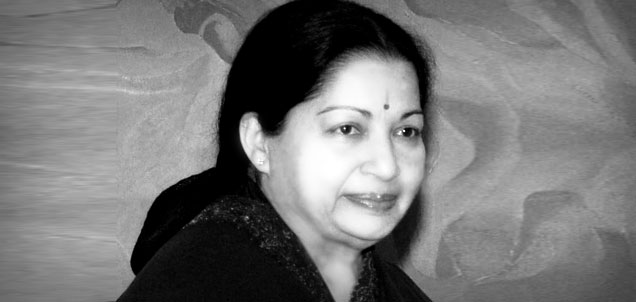
India has lost one of its most important and powerful political figures in the death of J Jayalalithaa. She was not just Tamil Nadu chief minister and leader of a large political party, the AIADMK. She was also an incredible story of a woman who repeatedly reinvented herself as the situation demanded and managed to harness the most incredible public support and adoration.
For the national media – as opposed to the Tamil media – there are perhaps two Jayalalithaas. The first was as chief minister from 1991 to 1996. However, the euphoria at Tamil Nadu’s second female chief minister gave way to allegations of corruption and undue favours to the family of her close friend Sasikala. Jayalalithaa’s positioning of herself as a great leader beyond question, the massive posters everywhere with her bulletproof cape on, and her perceived arrogance did not sit well with some within her state and many outside. The perception battle was lost here and the role played by Sasikala came under greater scrutiny especially after the very extravagant wedding of her son, Sudhakaran.
In those times, with perhaps less understanding of the nuances of evolving feminism and what would today be called “shamingâ€, Jayalalithaa’s film career, her relationship with her film and political MG Ramachandran were commonly seen and discussed as if they had a huge bearing on her as a politician. In a sense, there was an attempt to bring her down a peg or two, in both the media and the political sphere.
The 1990s was a different era. After her loss in the elections and her short time in jail on allegations of corruption, she appeared on Simi Garewal’s iconic talk show. Here she told us how she was exploited by her mother and by MGR, about how she crafted a place for herself in politics and how and why she has been denigrated and denounced. It was a consummate performance and even giving her acting skills some kudos, there was a human story here as well.
A term out of power, court cases, jail stints, shifts of national allegiance by both her party and the rival DMK and the Jayalalithaa we know today emerged. There was a toning down of her earlier posturing, there were more schemes for the poor, Sasikala was more hidden and the national discourse had changed substantially between 1991 and 2011. The media mocking of Jayalalithaa had switched to a greater respect for her popular appeal if one could put it that way.
I went on a short trip to Tamil Nadu in 2013 and happened to visit villages in the outer Coimbatore area. There were “Amma†posters everywhere – the name once given to Indira Gandhi in South India now firmly belonged to Jayalalithaa – but perhaps somewhat smaller than in the 1990s. But Amma’s pervasive presence was more seen in the various schemes for the underprivileged. Smiling out of table fans, blenders, idli grinders, laptops and bicycles, Amma and her largesse were everywhere.
The May 2016 state elections once again however took us to the complete subjugation of AIADMK workers and leaders in the presence of The Great Leader. She sat on stages alone at election rallies, while candidates sat a few rungs below, as it were. She won anyway and emphatically.
How the AIADMK will recover from the loss of Amma and what will happen as a result in Tamil Nadu, will be watched with keen interest now and one hopes by the national media as well.
**
The media received some flak on December 5 for announcing her death and then taking it back when the hospital put out a statement that the Tamil Nadu chief minister was still alive. However even accepting that the media makes several mistakes, it is worth asking why the party headquarters flew their flag at half-mast at the same time. The violence that broke out after the first news appeared may have been a reason why the announcement of death was made at 11.30 pm. This is not the first time this has happened with the passing of popular people and with some good reason.