Category: ADVERTISING

  • KwikFix Auto appoints Kodo Studio as creative agency

    By Our Staff


    Automotive aggregator KwikFix Auto has joined forces with Kodo Studio creative agency, in a partnership that is set to reshape the automotive marketing landscape. The collaboration brings Sreejith Kodoth, Founder & Creative Director, Kodo Studio on board as the Senior Creative Director, KwikFix Auto.


    In an era where brands strive to leave a lasting impression, this strategic alliance between KwikFix Auto and Kodo Studio aims to deliver marketing solutions that will captivate audiences and transform the automotive repair market.


    Said Manshi Modi Chandarana, Co-Founder, KwikFix Auto: “Sreejith Kodoth is a creative genius, and we are thrilled to have him on board as our Senior Creative Director,” “With Kodo Studio’s expertise in crafting visionary campaigns, we are poised to revolutionize the way the industry approaches marketing and branding.”


    The partnership between KwikFix Auto and Kodo Studio marks a pivotal moment in the company’s journey to transform and organize the automotive repair market in India. By leveraging the combined expertise and creative vision of both entities, they will shape the future of automotive marketing, pushing boundaries, and redefining industry standards.


  • Utterly Butterly IPL-ilicious


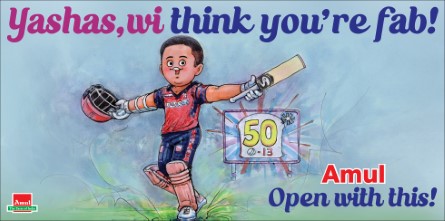
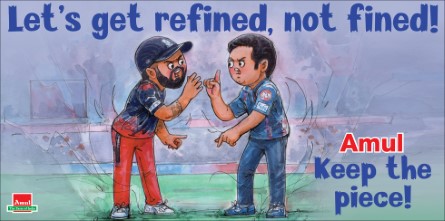
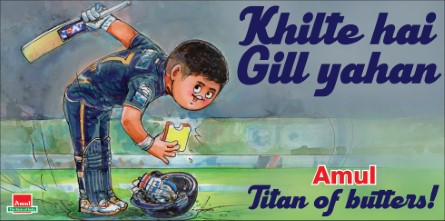
    Not too many of them, but the Amul Butter topicals captured the highlights of the recently concluded Indian Premier League as only they can. From the CSK win to the stupendous performance of Subhman Gill and Yashasvi Jaiswal to the Virat Kohli-Gautam Gambhir unground spat.


    Created by the team at da Cunha Communications, the Amul topicals have been chronicling the times since 1966.


  • Prosumer Report 2023: Go frugal to save planet

    By Our Staff


    The Havas Group unveiled the Havas 2023 Prosumer Report that polled over 12,929 people across 30 markets including India, Brazil, China, France, the United Kingdom and the United States. Prosumers are today’s leading influencers and market drivers. They have been a focus of Havas studies for two decades.


    Speaking about the findings, Anirban Mozumdar, Chief Strategy Officer, Havas Creative India said: “As the world embraces Joyful frugality, the Prosumer Report notes that Indians are ahead of the forefront of the curve. From cultural belief to an urgent need to preserve the planet in crisis, Indian prosumers want to witness the influence of their contributions and make frugal choices not for the sake of value, but for the greater good. What’s even more interesting is their willingness to accept government directives, even they are hard ones. Prosumers also view brands and companies as the most responsible and capable of making the greatest impact.”


    Our findings show that less is more, notes a communique. Key findings include:

    :: In India, 84% prosumers believe that bigger institutions like brands & businesses, local communities, and government bodies are responsible for causing climate change.

    :: The motivation to adopt a frugal lifestyle is driven by a desire for a healthier way of living (89%) and ecological concerns (70%) more than economic reasons (47%).

    :: 93% Indians prosumers agree that they will act towards the environment when they can measure the impact of their actions.

    :: 70% Indian Prosumers feel that we must impose rules, even hard ones, and not wait for everyone’s good will.

    :: To live in a more frugal world, we must ban advertising for Fossil Fuel companies (51%), Big promotional events (45%), Fast Fashion (36%), Meat (35%), Plane & Plane companies (28%) and Cars (22%).

    :: Prosumers are willing to adopt a frugal lifestyle by saving energy (82%) and reducing their consumption (61%) but are not willing to compromise on lifestyle experiences such as consuming meat or traveling on long-haul flights.

    :: In India, consumers perceive that solution to climate issues will emerge through new technology (69%) rather than changing their behaviour (31%).


  • Kyoorius Creative Awards held

    By Our Staff


    Kyoorius announced the winners of the 2023 Kyoorius Creative Awards held last Friday in Mumbai.


    Post a two-week virtual jury session, and a two-day in-person judging offsite in Alibag, off Mumbai, that brought the entire 45+ member jury together, 290 entries were shortlisted as winners of a Baby Elephant.


    Of these Baby Elephant winners, 81 entries were awarded Blue Elephants, while one entry was awarded a Brass Elephant for the Creativity for Good category. There were no Black Elephant winners at the 2023 Kyoorius Creative Awards.


    Five entries were awarded Purple Elephants for the ZEE Equality Award presented by Indian Creative Women.


    Over 3200 entries were submitted this year to the Kyoorius Creative Awards. The entries come from 381 entrants from 286 companies, including brands, network agencies, independent agencies, creative hotshops, media agencies, production houses, PR firms, event and activation agencies, and even freelancers.


    Said Rajesh Kejriwal, founder and CEO, Kyoorius: “My heartfelt congratulations to all the winners this year. The jury debated, deliberated and discussed each entry before them through our comprehensive four-round judging process. While it’s disappointing that there was no Black Elephant winner this year, I do hope this acts as a catalyst for truly disruptive creative work in the future.”


    The tenth edition of the Kyoorius Creative Awards also commemorated Padma Bhushan music composer, record producer, singer, songwriter, musician, multi-instrumentalist and philanthropist, AR Rahman, with the Master of Creativity award. Instituted in 2018, the Master of Creativity award recognises a stalwart who has continuously contributed to make the marketing and communication industry more creative in whatever they do.


    Presented by Zee, the 2023 Kyoorius Creative Awards Night brought together an audience spanning the advertising, broadcast, communications, digital, marketing, media and pub*lishing industries from across India to celebrate the best of Indian creativity.


  • Grey appoints Ankit Mathur as Group CD

    By Our Staff


    Grey Group India has announced the appointment of Ankit Mathur as Group Creative Director for its Mumbai office. He will be based in Mumbai and will report to Sandipan Bhattacharyya, Managing Director and Chief Creative Officer – South Asia. Mathur’s last stint was with Dentsu Webchutney as a Creative Director.


    Said Sandipan Bhattacharyya- Managing Director and Chief Creative Officer – South Asia: “We’ve been walking the talk on hybrid creative solutions for a while now and demonstrating how the future agency is one where diverse skillsets come together and create ideas for a digital-first world. Ankit has a great blend of strategic prowess, creative purpose and craft to add to the amazing mash-up of talent we have at GREY. He’s totally ready to make some deep dents in the creative universe and he’s found just the right place!”


  • MullenLowe rejigs brand identity

    By Our Staff


    MullenLowe unveils its new global identity and a refreshed positioning, created to unite the network across 57 markets globally and differentiate it from competitors. MullenLowe sees the octopus evolve from an operational mascot to a kindred spirit that visually represents how brands need to grow today.


    The agency’s positioning is underpinned by research revealing innovative brands grow at twice the pace of their competitors, and brands that continue to innovate grow seven times faster*.


    Said Kristen Cavallo, CEO of MullenLowe Global: “Our icon offers the perfect metaphor. The octopus has survived over 300 million years precisely because of its fluidity and ability to adapt. It is the only organism that routinely self-edits its own DNA—a model for how brands should behave today,”


    The new brand identity was created by MullenLowe U.S. and led by head of design, João Paz.


    “We want to challenge the way brands show up in the world. Our octopus is not afraid of change; it’s in its nature, its DNA. We embraced that with a fully generative identity, crafted to show personalization at scale,” says Paz.


    The new logo doesn’t live by the rules of logic. It breaks free from any type of symmetry and rigidity. With no corners or end points, it changes and moves and behaves in different ways. “Our octopus is alive. It has a will, a personality, and, above all, it wants to move. With its endless twists and turns, it has the freedom to reinvent itself infinitely,” adds Paz.


    MullenLowe invites its more than 4,000 employees globally to design their own octopus using a generative app. “We want the design system to reflect who we are and allow each person who’s part of MullenLowe to make their own mark,” says Paz. It allows users to customize the octopus for email signatures, social and profile icons, and even the background of an Apple Watch.


    A whimsical contrast between the logo and wordmark.

    The fluid octopus is paired with a bespoke wordmark that is stark, reliable, and firm in its logical Serif treatment. It grounds the funkiness of the octopus, combining emotion with reason. While the octopus welcomes the new, the wordmark pays tribute to the past and the agency’s long-standing heritage.


    A system that shows how we come together as a family.

    In addition to all the individual iterations, a pattern was created to represent inclusivity and the coming together of all the unique expressions and people who make up MullenLowe.


    Tentacles that morph into letters.

    To complete the visual identity, the system includes its own trademarked typographical treatment. The octopus’s tentacles morph into letters and numbers that create a full typeface from A to Z, and from 0 to 9.


    A new MullenLowe.

    The identity has rolled out across the agency’s communications touchpoints, including the website and social media. It will be splashed across office walls and with highly anticipated swag. The new look goes beyond design to create renewed energy, pride, and confidence in the network’s next chapter.


    A belief and a promise.

    “This is more than just a logo redesign. We have a point of view on how brands grow, and we built our identity and voice to reflect that belief. In a rapidly changing world, more of the same is not the path to long-term success. Brands need to earn and continually defend their unfair share of attention,” says Cavallo. “Products might be boring, but brands can never afford to be.”


  • Sumant Bhattacharya joins Publicis Worldwide as EVP of Strategy

    By Our Staff


    Sumant Bhattacharya
    Sumant Bhattacharya

    Publicis Worldwide India (PWW) has appointed Sumant Bhattacharya as its Executive Vice President, Strategy.  In his new role at Publicis Worldwide, Bhattacharya will be responsible for developing brand solutions, and he will report to Snehasis Bose, Chief Strategy Officer at Publicis Worldwide India, L&K Saatchi & Saatchi, and Saatchi & Saatchi Propagate. In addition to his responsibilities at Publicis Worldwide India, Bhattacharya will also oversee the planning for Propagate businesses.


    Prior to joining Publicis Worldwide India, Bhattacharya served as the National Head for Communications Planning at Motivator. He has also held positions at agencies such as Lowe Lintas, Grey, JWT, Leo Burnett, and Mudra, among others.


    Said Bose: “Sumant’s diverse experience across the spectrum of communications makes him a unique professional to work with. Looking at the intersection of culture, technology, sales, marketing, and media, his lens and therefore solutions are new and fresh. I am looking forward to partnering with him in offering our clients outstanding business growth solutions and delivering on Publicis Worldwide’s mission of ‘Creativity To Drive Brand Value.”


    Added Bhattacharya: “In today’s business landscape, brands must leverage all available means to amplify their voice. Publicis Worldwide’s philosophy of strategic creative ideas, backed by data and technology resonated with me the most. The agency’s leadership and the entire team embody this philosophy energetically and passionately. I am eager to contribute to the creation of brand-out, demand-generating strategies combined with conversion-oriented, demand-harvesting approaches. In short, I am committed to delivering work that upholds strategic rigour and delivers exceptional results.”


  • Craft as a philosophy in an ad agency!


    By Sanjeev Kotnala

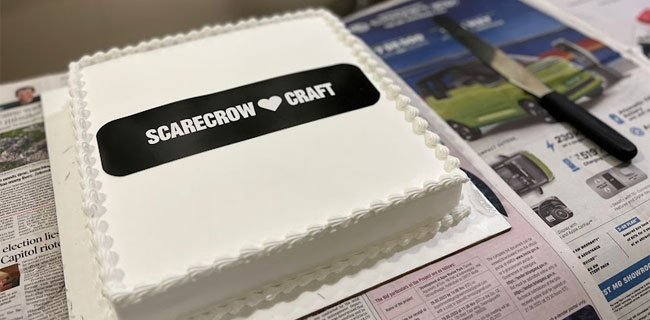
    Sanjeev KotnalaOk, So Manish Bhat, Head of Aesthetics & Crafts, Scarecrow M&C Saatchi, said ‘Scarecrow ❤️ CRAFT’ – I laughed and almost said: ‘Tell me something new’. Everyone loves Craft till it does not start taking more time and investment. Craft is, after all, the foundation of everything- every knowledge- every art and every science. Craft is a job or an activity for which you need skill. And when Scarecrow says it spends a disproportionate amount of time in crafting- using this skill and talent- the campaigns, it could mean nothing.


    Is Scarecrow really serious about it?

    There must be something. Scarecrow M&C Saatchi’s tally was third best in Video Craft / Film Craft in the recently concluded The One Show Abby Creative Awards – South Asia 2023 @ Goafest. The winning work includes To Fund Island For U Gro CapitalMahalaya and Rannkaar For Reliance Jewels.

    How is it that in the era of Insta reels, memes fast turnaround, Scarecrow advocates and finds brands willing to spend an average of 3 to 6 months crafting campaigns, including cultural recces and research?

    Is Scarecrow’s disproportionate focus and investment of time and energy to CRAFT cultural motifs and full-fledged typefaces derived from various cultures worth it. Why, when things could be done on the computer, and there is AI imagery available, Scarecrow wastes its resources in getting some of the finest craftsmen of cinematography playing with every frame enthusiastically and adding aesthetic in a medium of 25 frames per second.


    Is crafting in the Scarecrow DNA?

    Something tells me that Manish Bhat and the team at Scarecrow have this in their DNA.

    When they shifted to their office at Ballard Estate, they invested time and resources in CRAFTING the interior at the heritage area. They did justice to Victorian architecture and restoration the one-of-its-kind 150 years old building, which is 15 years older than the Victoria Terminus. The efforts and results were covered by Indian and French design magazines. That is still inward-looking where you take the call.

    Scarecrow has been thrice crowned the Agency of the Year at radio award shows. It is again a result of focus and experimentation with Craft in Audio & Music as mediums.


    Craft & Crafting is Everywhere

    Metals at award shows are just a reflection and hopefully not the objective. Scarecrow M&C Saatchi has shown that this love for Craft is not limited to any medium. Be it cinematography, filmmaking, poetry, lyrics, editing, sound design, music composition, graphic design, typography, or interior design, Scarecrow explores all forms of CRAFTS.


    The Philosophy of Scarecrow’s Love for Craft

    Ideas not well crafted may not be effective: Ideas are like sparks; they can come to anyone who is observant enough and willing to connect the dots. Maybe accidentally, coincidentally and possibly as a result of a journey that happens in the mind. The process may be tough to learn, but the mind can be trained to ideate. However, cultivating, developing and applying the ideas into a powerful, relevant thought- statement or expression is a Craft that needs time. Craft is a skill, and one needs to have vast experience of having done the same thing repeatedly to be a craftsman. Craft is often proportionate to the hard work one puts in. Makes sense.

    The truth – one may not always be able to bank upon Ideas, but one can surely bank upon Craft. Because ideas not well crafted may not be effective.

    Design is often contextual and can be achieved without human intervention. Craft is always human and hence warmer. Is instinctive and works at a subconscious level.


    Threat Of Longevity. Endangered Craft: Today, everything is instant, and the attention is short. Going deeper into anything is under threat. Scarecrow believes that Time and Depth are under threat. Scarecrow believes ample time and deep dive into what they do are the primary prerequisites to great Craft. And hence Craft is endangered.

    Many of us may not agree with this thought of Craft being endangered. But that should and would not impact the philosophy of Scarecrow as Philosophies are individualistic at a community and tribe level. Scarecrow is a tribe that thinks that Craft is endangered.

    Scarecrow believes, and rightly so, that creativity just hinging upon ideas without Craft will be bland and may create fatigue.

    Scarecrow compares this craftlessness to Sukhi Bhaaji without Rasa for long-lasting taste. And this is demeaning to the craftsman who is making Sukhi Bhaaji.


    Craft Is The Art Of Doing: And in Scarecrow’s way, just do it nicely, do it happily and do it interestingly. Scarecrow believes this craft fullness will help it achieve an edge over the others in terms of Craft, which will add to the longevity and efficiency of an idea.


    Realisation – The Craft Advantage

    Manish Bhat says that CRAFT was always in practice at Scarecrow but was never articulated.  Post introspection, Scarecrow has realised that they have a crush on craft.

    Scarecrow wants to express it like a young lover by not just whispering into the ears of our new muse but by proclaiming it single-mindedly and loudly.  Maybe like how some crazy Romeo sky writes I LOVE YOU to propose to his Juliet.  Maybe he thinks, they would plaster the walls of Scarecrow office with the proposition:- SCARECROW ❤️ CRAFT

    Time and wait is critical part of the philosophy and Scarecrow  is willing to patiently wait for the coming years to see the team’s reactions and expressions using the best possible craft. They are sure that their love for craft will win the hearts of not just the consumers but even the hard-to-impress jurors in many more glorious shows.


    Craft experimentation across media

    If one is to believe Manish Bhat craft was always there in the air of Scarecrow. The agency deliberately focussed on different craft forms during the journey. Because patronising a particular craft form and  to take it to experimental and innovation level, one  has to give disproportionate time to that medium of expression.

    Manish explains; For example many of us visual art trained people at scarecrow like me & others fond fascinating and challenging to express using only audio without visual support. So, it was interesting to explore and we have attempted that, till the time audio medium itself swayed by video as a medium and started looking for crutches of visuals. For example the FM channels started focusing on their visual platform extensions.

    However, now that Scarecrow has unanimously echoed – SCARECROW ❤️ CRAFT, it  would like to attack CRAFT Holistically and wholeheartedly. I do hope the attack is just wrongly placed here in this statement from Scarecrow.


    Crafty Craft


    The Head of Aesthetics & Crafts, Scarecrow M&C Saatchi  believes that the best way to build a culture is never to enforce, it but simply facilitate it. Have spoken of their office as an expression of philosophy. Scarecrow even turned their office walls into Art Gallery walls and adorned them with the timeless advertising work from the D&AD MASTERCRAFT series of books like Copybook or Art Direction Book.  They hosted iPOPs – an exhibition & workshop of iPad paintings by POPS.

    Recognising the need for understanding and focussed craft, Scarecrow started training, educational and experience-sharing initiatives like MOM – Method of Madness to bridge the knowledge gap between craft-seeking creative students and the best craft persons in our industry. The industry recognition of craft focus is reflecting in the awards Scarecrow been winning. A result of consistent endeavours over a 13-year-long period. After all, Rome wasn’t built overnight.


    Net-net

    I hope that Scarecrow’s love for Craft is real and sustainable in this era of momentary attention and interest. Craft does make a difference. We all agree that IDEAS NOT CRAFTED WELL ENOUGH ARE NOT EFFECTIVE. However, a I do smell distinctive award focus  in Scarecrow philosophy. It makes me vary of the  expression and objective.

    I have always been held that the clients and agencies must invest more time, effort and financial resources in crafting developing best creative products. As it works best for the brad. As it creates impacts in lesser exposures. And a badly crafted mediocre creative  not only needs more exposure but also may not help the brand.

    I disagree that Craft by nature needs disproportionate time in the hands of a skilled craftsman who has gained experience by doing things repeatedly over time.


    PS. A lot of this article is based upon the note and presentation by Scarecrow and a few questions answered by Manish Bhat, Head of Aesthetics & Crafts, Scarecrow M&C Saatchi.


  • The Physics & Metaphysics of Brands


    By Ashoke Agarrwal


    Ashoke AgarrwalRecently the debate among advertising circles has been about which medium builds brands better. Some say mass media builds brands, while digital is just about click-bait and conversion. Others vehemently disagree. The debate amuses me and reminds me of John Wanamaker’s famous quote:” ‘Half the money I spend on advertising is wasted; the trouble is I don’t know which half. ‘


    Brands are complex entities that go well beyond the machinations of advertising and even marketing.


    The German physicist Werner Heisenberg once declared that “the universe is not only stranger than we think, it is stranger than we can think.” In the convoluted matrix of the universe, brands, in their simplest form, are akin to quantum particles, governed by an esoteric blend of physics and metaphysics.


    A brand’s observable ‘physics’ operates in the tangible realm, shaping and being shaped by market dynamics, consumer psychology, and competitive landscapes. In the famous words of Peter Drucker: “Business has only two functions – marketing and innovation.” Brands are the fulcrum that delicately balances both.


    On the other hand, the ‘metaphysics’ of brands is an abstract, ephemeral construct existing in the realm of perception, values, and emotions. Much like Schrödinger’s cat, these metaphysical entities exist in a superposition of states driven by the observer’s perception. Renowned anthropologist Margaret Mead once stated: “What people say, what people do, and what people say they do are entirely different things.” Brand perceptions exist similarly in the minds of consumers, often disparate from the brand’s physical manifestation.


    In their dualistic nature, brands reflect the curious dance between objectivity and subjectivity, tangibility and intangibility. Steve Jobs, the maestro of branding, once said: “Design is not just what it looks like and feels like. Design is how it works.” This eloquently encapsulates the physics and metaphysics of branding, the holistic amalgamation of form, function, and perception.


    Brands do not exist in isolation; they’re contextual, evolving within the sociopolitical milieu. Politicians, for instance, have masterfully utilised the principles of brand-building. The politics of identity, symbolism, and perception are woven into the brand fabric of political personas. As Niccolò Machiavelli aptly put it in ‘The Prince’, “Men generally judge more by the eye than by the hand, for everyone can see and few can feel.”


    Cultural brands, meanwhile, straddle across physical geography and metaphysical mindscapes, drawing upon shared stories, histories, and values. Brands like the Olympic Games or the Super Bowl have transcended beyond sporting events, symbolizing universal values of human resilience, unity, and aspiration. Echoing cultural anthropologist Clifford Geertz’s observation, “Culture is the fabric of meaning in terms of which human beings interpret their experience and guide their action.”The rapidly growing strength of IPL is about more than just cricket and spectacle. Its deeper resonance arises from the fact that it represents India’s growing clout on the world stage and the aspirations of young people from India’s hinterlands.


    Brands, too, have permeated into the realm of science and technology. Brands like SpaceX and Tesla are more than companies; they represent the daring spirit of human innovation, echoing Einstein’s audacious sentiment, “Imagination is more important than knowledge.”


    Religion, the epitome of metaphysical constructs, uses branding principles to foster faith and unity among its followers. The symbols, rituals, and narratives are brand elements that differentiate one faith from another. As Voltaire wisely noted, “If God did not exist, it would be necessary to invent him.”


    Artistic brands, from Van Gogh’s Starry Night to Banksy’s graffiti, are profound expressions of human emotion and perception. These are creative works and powerful brands that elicit intense emotions and debate. As Pablo Picasso said, “Art washes away from the soul the dust of everyday life.”


    To summarise, brands exist in a dynamic interplay between physics and metaphysics, objective reality and subjective perception. This understanding is a powerful tool for brand builders, enabling them to navigate the complex branding universe.


    Paraphrasing the words of British novelist Terry Pratchett: “People think that stories are shaped by people. In fact, it’s the other way around.” Brands, too, shape and are shaped by the people who create, sustain, and consume them. They are living entities, existing at the intersection of reality and imagination, constantly evolving with the shifting sands of time and culture.


    Moreover, brands serve as a mirror of societal evolution. They respond to and drive changes in social norms, ethical standards, and consumer attitudes. Brands like Patagonia and Ben & Jerry’s stand as a testament to this phenomenon, embodying ethical business practices and social activism, thereby shaping consumer behaviour and societal expectations.


    This echoes the sentiments of the American sociologist Charles Horton Cooley, who wrote, “An individual is a product of society, and society is a product of individuals.”


    At times, the marketing of brands creates more powerful entities than the mother brand. A case in point is Vimal – the textile brand. Brand archaeology discovered that the brand’s “Only Vimal” slogan echoes more strongly today than the brand itself. Consequently, the brand has morphed from “Vimal” to “Only Vimal”. It is likely in the context of middle-class aspirations, the slogan “Hamara Bajaj” is a stronger brand than the “Bajaj” brand itself.


    The technological revolution has further blurred the line between the physics and metaphysics of brands. Augmented reality, virtual reality, and the metaverse have brought about a new era of experiential branding, transforming how brands interact with consumers. The renowned cyberpunk author William Gibson captured this sentiment perfectly when he said: “The future is already here – it’s just not evenly distributed.”


    The essence of a brand, thus, goes beyond its physical products or services. It delves into beliefs, experiences, and emotions, creating a unique metaphysical space for its audience. This is best captured by poet Maya Angelou’s famous quote, “I’ve learned that people will forget what you said, people will forget what you did, but people will never forget how you made them feel.”


    The influence of brands in shaping human behaviour and societal norms further highlights their metaphysical aspect. Brands can sway public opinion, trigger emotional responses, and incite action, much like the fables and mythologies of yore. This is reminiscent of Joseph Campbell’s musings, “Myths are public dreams, dreams are private myths.”


    In conclusion, the interplay between the physics and metaphysics of brands is a compelling spectacle, a dance of substance and perception, reality and imagination. Brands have evolved beyond mere business assets, transforming into cultural artefacts, societal influencers, and symbols of human aspiration. Reflecting on Albert Einstein’s philosophical musing, “Reality is merely an illusion, albeit a very persistent one,” we might say, “Brands are illusions, albeit very persistent and persuasive ones.” In the grand scheme of things, the physics and metaphysics of brands serve as powerful engines in the narrative of human civilisation.


    The best marketing and advertising people understand that the art and science of brand-building incorporate a complex interaction of social, cultural, psychological and economic factors that go beyond the functional attributes of a product or service.



  • Uber launches advertising solutions

    By Our Staff


    Uber’s advertising division and Uber India have launched Journey Ads, and partnering with Httpool by Aleph to help connect India’s brands with ad solutions.


    Journey Ads, an initiative from Uber’s advertising division, offers an engaging way for brands to connect with consumers throughout the entire ride process – from the moment they book their trip through to the end of their ride. Journey Ads deliver brands unparalleled share-of-voice and consumer attention from millions of riders across the region.


    Uber’s partnership with Httpool by Aleph will help connect India’s brands with these effective and high impact advertising surfaces. With an innovative set of proprietary technology, performance solutions, and extensive market knowledge, Httpool by Aleph enables advertisers to connect with their audiences in the most effective ways, consistently maximizing their ROI.


    Dr Mark Grether, VP, General Manager of Uber advertising said: “Since Journey Ads launched last year, we’ve seen advertisers embrace the surface with click through rates above 3% and an average global view time of over 100 seconds – both well above industry standards, Given that impact, it’s exciting to see this impactful advertising surface scale in India.”


    Prabhjeet Singh, President, Uber India and South Asia added: “The Uber advertising team’s surfaces, such as Journey Ads and in-car tablets, offer brands a unique opportunity to grow relationships with consumers by connecting them at a moment when a customer is uniquely attentive. I’m excited to see this offering expand to give more Indian brands a space to create meaningful audience engagement.”


    Rabin Yaghoubi, Chief Corporate Development Officer at Aleph, added: “We are proud to partner with Uber to bring its unique advertising solutions to India. This is a milestone moment for on-the-move digital advertising globally. Connecting brands with consumers is in Aleph’s DNA and partnering with Uber in the region allows us to leave our mark together from the start of the journey.”


    Amit Gupta, Managing Director with Httpool by Aleph in India, reiterated the significance of the partnership. “We are proud to partner with Uber to help bring its unique advertising solutions to India. The collaboration between Uber and Httpool by Aleph has unlocked an extraordinary opportunity to tap into the vast potential of reaching consumers during their journeys by leveraging the power of Journey Ads and in-car Tablets. This enables Indian brands to establish meaningful connections with potential buyers throughout their entire travel experience.”


  • Brands Navigating the Social Class Divide: Lessons in Sensitivity from Past Campaigns

    Photo source: Tweet by Neeraj Ghaywan (@ghaywan) at https://twitter.com/ghaywan/status/1666667224273403908?s=20


    By Hamsini Shivakumar & Prabhjot Singh Gambhir


    Hamsini Shivakumar
    Prabhjot Singh Gambhir

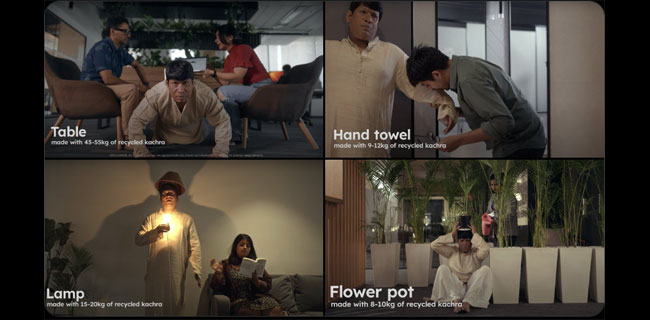
    Zomato’s recent campaign aimed to raise awareness about recycling waste on World Environment Day. However, the use of the character ‘Kachra’ from the movie Lagaan inadvertently reinforced stereotypes and perpetuates the devaluation of people from a specific class. Although the brand intended to employ wordplay in the video, the end-result appears culturally out of sync. The humour in the video appears to be mocking the already marginalised rather than challenging those in positions of power. The video received a lot of backlash on social media, which eventually led to Zomato deleting the video itself from all platforms.


    When faced with these social class divides, brands and their creative agencies are confronted with a unique challenge. Traditionally, marketing has approached class divisions as issues of affordability and accessibility for consumers. The solution typically involves offering products and services at various price points to cater to different segments of the market.


    Think of shampoo sachets, and phone recharges priced at Rs 10. Market segmentation based on affordability addresses the problem of access, ensuring that every consumer can afford and desire products within their price range, whether at the lower end or luxury segment of the market.


    However, addressing the social class divide as a brand in brand communication presents a distinct challenge, as it raises questions about portrayal and representation. It forces brands to examine their vantage point and ideological stance. If a brand aims to project itself as embracing progressive values, how should it navigate the complex issue of social class and class divides?


    This is particularly relevant when it comes to the portrayal of domestic help and their treatment in advertising, especially for brands selling household cleaning products and related items. How should they depict domestic help? Should they merely reflect reality as it is, or should they encourage consumers to adopt more progressive behaviours?


    To effectively navigate the intersection of brand communication and the social class divide, brands can draw valuable lessons from previous campaigns that approached similar subjects with sensitivity. Let’s take a look at some examples of how some brands have approached this issue in the past:


    Ghadi Detergent:


    In Indian popular culture, domestic help is often portrayed as solely responsible for the cleanliness and maintenance of households, perpetuating the notion that it is their sole duty while family members contribute little. Such stereotypes create a power imbalance between domestic help and the families they serve, with the latter holding all decision-making authority.


    Ghadi Detergent’s campaign, #SaareMaelDhoDaalo, deviates from this stereotype. Instead, it encourages individuals to recognise the importance of every task, no matter how small, and to treat domestic help with respect. The campaign depicts a young boy with a callous attitude towards the work performed by the house help. To rectify his behaviour, his mother decides to teach him a lesson by having him clean the house under the false pretence that the house help is on leave. In the end, he learns to appreciate the domestic help’s contribution and even pays him extra to celebrate the festivities.


    Women’s Day 2019 #YourSecondHome : An initiative by PregaNews


    Similarly, PregaNews launched its Women’s Day 2019 campaign, #YourSecondHome, which highlights the importance of domestic helpers and their contributions to households.

    The content begins with a woman scolding her domestic help and asking her not to perform her usual tasks. It appears that the domestic help’s job is at risk. However, as the narrative unfolds, we discover that the woman is actually reducing the workload of the domestic help due to her pregnancy and invites another domestic worker to assist. The campaign challenges initial perceptions by portraying the employer as caring and considerate, much like a family member would be.


    The messaging of the campaign promotes progressive ideals, advocating for empathy towards domestic workers and providing them with benefits such as maternity leave or reduced workload during pregnancy, similar to practices in the organised sector. The brand, PregaNews, seamlessly integrates into the narrative of the ad.


    Cadbury Dairy Milk – Driver


    The work features a boss driving his driver to his child’s school so that he could attend the parent-teacher meeting. While the content is only 45 seconds long, it is quite impactful. We immediately get to understand the dynamics between the employee and the employer and how this is a routine activity. We understand how his boss is being kind and patient towards him and goes out of his way to help him.


    The video shows how a small gesture of kindness towards one’s driver/staff can make a significant difference in their life. The brand integration of Cadbury Dairy Milk is also quite seamless, as it plays on the factor of the boss ‘being sweet’ and sweetness is associated with the chocolate in question.


    Oswal Refined Soyabean oil


    Oswal Refined Soyabean oil’s campaign portrays a positive image of domestic helpers by showcasing the relationship between the wife and her employee. While the husband is upset that the domestic help always leaves early to attend to her children, the wife, on the other hand, is accommodating as she knows that she works well and efficiently. One day, when the wife is out of the city, the maid bakes a cake for the husband and stays late at night just to celebrate his birthday so that he does not feel isolated on his special day.


    The video emphasises that domestic help is not just the staff of the house, but a part of the family, and employers should be accommodating to their requirements.


    However, while the ad’s story has a nice recall value, the brand takes a backseat here. The brand integration of Oswal is not quite as seamless because the story is not built around refined soybean oil. Even a slight mention of it in the narrative would’ve helped the brand integration.


    Facebook | More Together – Pooja Didi


    Facebook’s campaign, More Together – Pooja Didi, is a heart-warming portrayal of support staff. The content initiative can almost be categorised as a mini-short film, as it is about seven minutes long. It highlights the problem of unemployment during the pandemic and how the protagonist – Pooja, starts hiring people in large numbers to provide them with gainful employment solely out of her altruistic intentions.


    However, when she cannot pay the salaries and bills to the people she does business with, she is in a state of crisis. That is when the hired staff of her sweet shop utilises the power of social media to narrate the story of Pooja’s altruistic actions, which end up attracting customers to the shop, thus enabling her to pay all her bills.


    Conclusion

    All the brands seem to take the high power distance between employers and domestic help for granted as a given in Indian society and thus mirror existing realities. They don’t show the possibility of a different future for domestic help (except the Cadbury ad to some extent) in which they can be empowered and assertive of their rights vis-a-vis their employers.


    The convergence of brand communication and the social class divide poses both challenges and opportunities for brands. By being mindful of the implications of their messaging, brands can strive to create advertisements that promote empathy, understanding, and equality. Actively working to dismantle stereotypes and biases, brands can contribute to positive social change.


    Hamsini Shivakumar is a long-time culture-watcher, semiotician, brand consultant and co-founder of Leapfrog Strategy as well as Semiofest, the global unconference for applied semiotics. Prabhjot Singh Gambhir has done his Masters in Film Studies and is passionate about stand-up comedy. He has now turned his observant eye to cultural discourse and its intersection with brands. The views expressed here are their own.


  • MxMLive with Manisha Kapoor, CEO & Secretary General, ASCI


    Readers of MxMIndia and folks in the advertising, marketing and media ecosystem know all about the Advertising Standards Council of India (ASCI, in short). Over the last few years, the self-regulatory body has reinvented itself with a slew of guidelines issued (including one on celebrity endorsement), tightened its guidelines on surrogate advertising, and embraced the ever-growing world of influencer-led advertising.


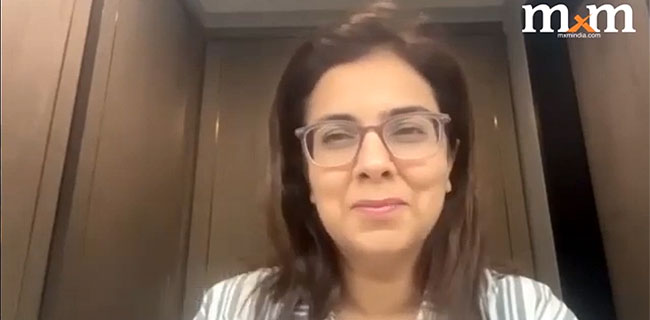
    Pradyuman Maheshwari, Editor-in-chief and Founder, MxMIndia caught up with Manisha Kapoor, Chief Executive Officer and Secretary General of ASCI, via an interview conducted over Zoom a few days after the conclusion of the 2023 edition of the Indian Premier League, which typically sees a large number of surrogate advertisements surfacing.


    Watch. Like. Enjoy.