
Category: ADVERTISING

  • The Maharaja moves to McCann


    By Our Staff

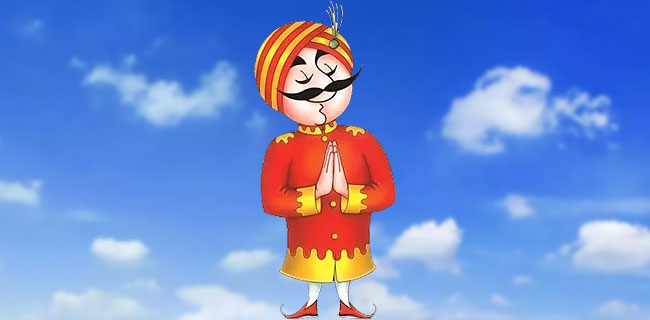
    McCann Worldgroup India has won the coveted advertising and marketing communications mandate for Air India, the Tata group promoted global airline, following an extensive multi-agency pitch, which we learn including longstanding agency Wunderman Thompson, FCB and DDB Mudra.. The agency will develop a new brand platform and develop a comprehensive range of multi-channel marketing communication. And we presume the Maharaja, the mascot that has greeted passengers since 1946, will be retained.

    The selection process for this partnership entailed a rigorous evaluation as part of an exhaustive multi-agency pitch.

    Nipun Aggarwal
    Nipun Aggarwal

    Said Nipun Aggarwal, Chief Commercial and Transformation Officer, Air India: “We are building Air India as a ‘Global Airline with an Indian Heart’. This is a brand that is close to the heart of flyers around the world, and the new Air India will be a manifestation of the aspirations of the global Indian. With McCann Worldgroup as a partner, we expect to transform the brand into one of the most admired and trusted brands in India and overseas.”

    Prasoon Joshi, CEO and CCO at McCann Worldgroup India and Chairman, Asia Pacific, led the pitch alongside a dedicated team of local and global partners.

    Prasoon Joshi

    Delighted about the win, Joshi said: “Air India is a brand that inspires us, and we are excited to partner with them as they chart a new course. Our McCann Global CEO, Daryl Lee, has genuinely supported and guided us. Also, support and input came in from Harjot Singh ( Global CSO) and John Wright who were an integral part of the pitch along with the stellar senior management colleagues Jitender Dabas, Alok Lall, Ashish Chakravarty, and their teams,” adding: “We look forward to collaborating with Air India and offering the best-in-class strategic and creative services that build on and take the brand to newer heights.”

  • Do we need Public Service Ads or Public Service Brands?


    With apologies to none at all

    By Vikas Mehta


    Vikas MehtaWhen I joined the world of advertising more than three decades ago, I was lucky to be part of Lintas, now Mullen Lowe Lintas. While there were advertising agencies which were producing very creative, hard-hitting ads or agencies which produced ads that were strategically sound and would not elicit a second glance, Lintas had positioned itself as an agency which built brands. Be it Surf or Lifebuoy or Kitply or MRF Tyres or Chrery Blossom… the list was long.

    What I also discovered was that Lintas was heavily invested into public service advertisements. Many memorable ads were made. Causes like anti-dowry, you are no better than a buffalo at an auction if you ask for dowry. Or anti-drugs, drugs means death; or even the one which used sugarcane juice vendors to highlight the importance of hygiene in avoiding diseases during monsoons. The last one, I remember, was effective enough to elicit protests from sugarcane juice vendors who protested outside Lintas offices at Express Towers in Nariman Point, Mumbai.

    But I always wondered how much of an impact the ads made amongst the target group. Sure it got awards, peer appreciation etc, but did they make a change in society?

    And this thought resurfaced when a friend with family had a close shave in a car crash because the husband in the front was wearing seat belt though she and children in the back were not and they did get bruised and cut. And I wondered why people still do not wear seat belts inspite of many public service ads and messages.

    The feeling got reinforced when I saw an emotive and impactful ad on not drinking and driving. Watch it here. And again, the same feeling resurfaced. Why do such well-made ads not really work?

    One can point to many a reason. Wrong targeting, not insightful, sporadic or inconsistent messaging and so on. But the answer is actually quite simple.

    And here I go back to the Lintas analogy. While some ads are creatively outstanding, some bang on strategy, are they really building a brand? Strangely, while Lintas built many great commercial brands, I do not think it build a public service brand.

    Any public service messaging remains just a message if one does not treat the issue as a brand. We don’t communicate a product. We communicate to build a brand. We communicate to ultimately sell Lux or Dove. Not a soap. We define a focused target group. We look deep to find an insight. We try and identify what should the rational and emotional benefit be. We create a desired response and then we also build a brand personality. Finally, a brand idea is crafted.

    Do we do all this in public service ads?

    The brutal answer is no. Most of the times we identify a cause, we try and find a creative insight and work to create and ad. And that’s why the ad does not work. It’s a one-off. It’s about maybe shock-and-awe. Or it’s about tearing emotions. It could also be a straightforward presentation of some interesting facts. It’s aimed at mostly everyone, or just your peers. It has no defined brand personality and most importantly, it has no ownership.

    The starting point needs to be ownership. Someone… it could be a corporate, it could be an NGO or even the government if it seriously wants to tackle an issue needs to take ownership of the issue. And then brand it. ‘Do not drink and drive’ is a message. Not a brand. Ditto for ‘smoking kills’ or ‘wear seat belts’. The brand-owner needs to find a phrase or a name which will be used in all pieces of communication. We live in a world of hashtags and acronyms. That could be the answer.

    And then create a brand document followed by a creative brief. Define the target group. They could be multiple. For example, in case of drinking and driving, it could be the millennial partygoers or a public transport driver. Write separate briefs. Create different pieces of communication. Decide the appropriate media.

    Currently, the thinking is more to create a shock-and-awe effect. In case of both drunk driving and seatbelts, most communication deals with what can happen if one does not wear seat belt or drinks and drives. But if we look at the issue from a brand perspective, the bigger issue could be (my perspective solely) that most millennials think that this will not happen to me. Or I know I can handle my drink. If we do a proper research amongst our decided target group, we will be able to actually pinpoint the actual issue. Reach an insight. Decide on our desired response.

    To do all that lets treat public service ads as brands.

    Let’s nurture the brand.

    Grow it.

    Make it effective.

    Spend on it strategically and with proper planning.

    If, the Got Milk (note the brand name) campaign with the brand idea of moustache could work to increase per capita milk consumption in the United States, no reason why a public service issue cannot be handled like a brand.

    What do you think?


  • Havas acquires digital marketing agency Pivotroots

    By Our Staff


    Havas has announced the acquisition of PivotRoots, a digital marketing and communications agency. The acquisition will allow Havas Media India to tap into PivotRoots’ deep understanding of the Indian market and enhance its capabilities in the rapidly growing digital advertising space.


    Said Yannick Bolloré, Chairman of Vivendi, and Chairman & CEO of Havas: “We are thrilled to welcome PivotRoots to the Havas family,” “The acquisition is part of our broader strategy to expand our presence in lighthouse markets around the world. With a global network that spans over 100 countries, Havas is well-positioned to help clients reach audiences wherever they are.”


    Added Shibu Shivanandan, Founder and Managing Director, PivotRoots: “We are excited to be part of Havas Media India. We share a common vision for the future of advertising, and by combining our expertise and talent we can deliver better solutions, services and results to our clients. We are proud of what we have achieved at PivotRoots so far, and we look forward to the next chapter in our journey.”


    Said Rana Barua, CEO, Havas India: “I’m delighted to welcome Shibu and the PivotRoots team to the Havas Family. This acquisition comes at an extremely interesting time for Havas India, which has undergone a complete transformation in recent years and has seen unprecedented growth and success. The addition of PivotRoots and their capabilities, advanced analytics and technology, and a new perspective on creativity and innovation distinguishes Havas Media India in the industry in meeting the evolving needs of its clients and succeeding in an increasingly competitive and extremely dynamic market.”


  • Carat appoints Sanchayeeta Verma as CEO India

    By Our Staff


    Sanchayeeta Verma
    Sanchayeeta Verma

    Carat India, the media agency from the house of Dentsu, has announced the appointment of Sanchayeeta Verma as Chief Executive Officer (CEO). She will report to Anita Kotwani, CEO Media, South Asia, Dentsu. She will lead new business opportunities, and nurture existing client relationships through operational excellence, becoming a trusted partner for clients. Verma will work in alignment with the network’s global brand proposition, further enhancing the revenue streams in India.


    Anita Kotwani
    Anita Kotwani

    Commenting on Verma’s appointment, Anita Kotwani, CEO Media, South Asia, Dentsu said: “The network’s focus on strengthening our media businesses aligns with our global ambition. Getting the best people on board is, therefore, very critical. Sanchayeeta’s ethos and the value systems that drive Carat are inextricably linked. Her varied expertise in consumer research, business planning, and client leadership has kept her abreast of the shifting media landscape. She is also dedicated to lifelong learning and staying ahead of the curve, making her an ideal candidate for this position. Carat has increased its scope over the recent year with notable wins such as Tata Neu, Tata Croma, Hero Vida, Times Pro, and others. Sanchayeeta will accelerate expansion and propel the Carat brand to the forefront of the Indian market.”


  • Tata 1mg Labs unveils campaign with Dentsu X

    By Our Staff


    Tata 1mg Labs diagnostics chain of pathology labs, in association with Dentsu X India, has launched a ‘Trust What You See’ campaign.


    Said Dr Prashant Nag, MBBS, MD (Pathology) & Clinical Head, Tata 1mg Labs: “Bringing Care to Health – is at the heart of everything we do at Tata 1mg Labs. With our ‘Trust What You See’ Campaign, we aim to provide our customers transparency and peace of mind when it comes to their diagnostic needs. By showcasing our meticulous lab processes and expert team, we want to assure our customers that their samples are taken care of using best-in-class quality standards & norms and that their health is in safe hands.”


    Added Saurabh Shrivastava, Senior Partner and National Business Growth, Dentsu X: “We take great pride in being a part of this initiative. This collaboration aligns perfectly with our network’s core values of forward-thinking and innovation.”


  • Mamaearth onboards Havas as AoR

    By Our Staff 


    Mamaearth, the beauty and personal care brand, has named Havas Worldwide India, the creative arm of Havas India, as its agency on record (AOR), following a multi-agency pitch. The scope of the mandate will include creating cornerstone campaigns for the brand, including ATL, BTL and digital.


    Anuja Mishra
    Anuja Mishra

    Speaking of the association, Anuja Mishra, Chief Marketing Officer at Honasa Consumer Ltd, said, “Mamaearth is a brand built on millennial beliefs and choices. In a short period of 6 years, the brand has emerged as an innovative and disruptive new-age beauty and personal care brand. We believe that in our next wave of growth, it would be imperative to further drive scale by exploring and disrupting different categories across cohorts, geographies, and channels. In this endeavor of driving growth anchored on brand love, we are stoked to welcome Havas Worldwide India (the creative arm of Havas India) as our creative agency partner. The team at Havas has the advantaged mix of strong planning and creative credentials and experience in servicing legacy and new-age brands. Havas Worldwide India’s appointment comes at the back of an exciting and rigorous creative pitch process. The agency has demonstrated a strong understanding of fundamental consumer insights and an appreciation of the pivotal shifts in consumer beliefs coupled with a compelling storytelling ability.”


    Jaibeer Ahmad
    Jaibeer Ahmad

    Added Jaibeer Ahmad, Managing Partner, North, Havas Worldwide India: “In a world where the beauty industry is under constant scrutiny and the pressure to constantly evolve at a rapid pace, Mamaearth is a clutter-breaking brand. Their dedication to developing innovative solutions and pushing boundaries aligns well with our creative vision. We are excited to work with a forward-thinking brand like Mamaearth, where we will effectively leverage our knowledge and passion to enhance their message and engage their audience in a meaningful way. We look forward to partnering with them on their growth journey and collaborating to shape a compelling brand presence in the hearts of consumers.”


  • The OG Social Network


    By Sanjeev Kotnala


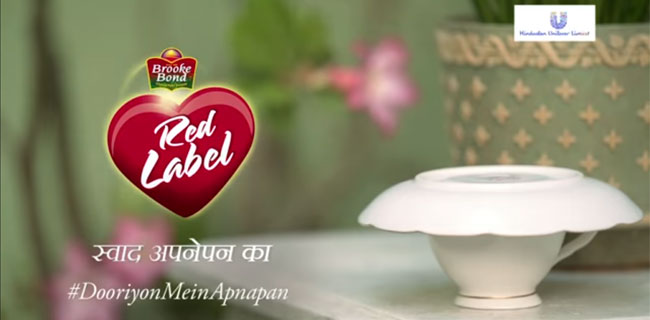
    Sanjeev KotnalaOn World Social media Day, Brooke Bond Red Label  tea film toasted tea as the Original Social Network of the country. The advertisement went viral over current social media platforms. The timing was just right.

    Naturally, films like this had varied reactions. The public quickly recognised the insight and smiled at the contextual placing of the social media terms with relevant visuals of people consuming tea. The people associated with advertising, marketing and communication had polarised reactions. Some liked and appreciated it, and many questioned the strategy behind it, the purpose it aimed to solve and what it can achieve for the brand.


    The Red Label Original Social Network Of India.

    The film is a kaleidoscopic collage of slice-of-life situations where tea is the conversation facilitator. The Brooke Bond Red label film is well-made, and the voice-over is excellent. It is only a smart contextual justification of the social media terms with making and sharing of tea.

    Now, the brand presenting ‘Tea as India’s Favourite Social Network’ seems an obvious statement and not an insight. But any brand could have explored it. The truth is, no one did it before Red Label. Some regions in the country may debate and suggest coffee or hard drinks as the favourite social network or platform, but that is a story yet to be explored.

    Red Label film does bring a smile. Everyone loves the film! That’s where the problem starts.


    Red Label Film Lacks Strong Branding.

    The branding is not a strong point of the film. In most cases, the audience misses the brand. Few associated it with Tata Tea which keeps doing fresh creatives on relevant subjects like Climate change. However, the brand tonality is different. A lot many associated it with Wagh-Bakri for the film tonality; watch Rishto Ki Garmahat.

    It is unacceptable for any brand unless this is a one-off attempt with low media weights and cost of creative. Maybe it is the ‘Brooke Bond Red Label’ push in category development. However, the film does nothing. It was more like the better-made AV that agencies used to present in Annual Review Board in the 1990s.


    Different Take Over ‘Red Label’- The Original Social Network Of India

    A few of the advertising veterans did believe that the Red Label, the Original Social Network Platform of the country, is a brilliant piece of communication. The brand Red label has been all about Desh ka pyala in their communication, like Hospital, Dooriyo Mai aapnapan,  Hindu-Muslim bridge, and Swad Apnepan ka are full of warmth and bringing people together. The social network film is a contemporary representation of the same. It still works under the larger umbrella of ‘Swad Aapnepanka’.

    The brand uses contemporary situations and relevance in life while holding on to the old charm. The earlier advertisement Surprise Visit is one such example after all “kuch gharon ki chai mein apnepan ka swad hota hai.”


    Generation Gap In Reactions.

    The newer generation sees nothing much in the film. Exploring and exploiting the emotions linked with drinking tea and layering it with social network terminology. That’s it and they find nothing great in it. Yes, it brings a smile; that is all the brand gets from this interaction.

    The older generation gets a superiority complex of not missing much and enjoying their non-tech social networking over cups of tea.

    Communication can hardly make tea contemporary and increase consumption! However, the new generation objects to advertising, emotionalising every bit of brand interaction. Someone said it best; why should it always be about ‘bleed the heart, bring out the tears’? Why can’t it be more playful and happy?


    Net-Net

    It is an excellent AV, something one could be proud of presenting at the annual review boards, press meets and maybe at the tea drinker club. It merely stops at raising a toast to tea on World Social Media Day- attempting to contemporise and present tea as the original social network platform. Nothing more, nothing less. The audience expects more from Red Label and the agency.

    Thank god the brand is not preachy and has moved from its past folly of Kumbh – where elders can get lost- intentionally or unintentionally.


  • Havas India flags off Havas Spark 3.0

    By Our Staff


    Havas India has flagged off the third edition of its flagship internship programme, Havas Spark. Launched in 2021, the programme set the bar high in terms of interest from applicants and outcomes as evidenced by the number of interns hired, which was 16 and 22 in 2021 and 2022 respectively. This year, the initiative aims to onboard 20 interns, putting greater emphasis on the specifics and rigour that each role brings, while simultaneously providing more opportunities for interns to work in tandem with the senior leadership team across the network’s various agencies & divisions.


    Rana Barua, Group CEO, Havas India, said: “Havas Spark has become a standout program in our network and the industry. It embodies our commitment to making meaningful contributions to the community and advertising world. It has now become the definitive standard for nurturing and introducing new talent nationwide. This ensures that our legacy and future are in capable hands, as we not only build a successful business but also empower these young minds to become tomorrow’s leaders.”


    Vandana Tilwani, Group CHRO, Havas India, added: “I am extremely excited to launch Havas Spark 3.0. This year’s edition has been meticulously crafted to provide our interns with the best possible exposure to the industry and familiarity with its working methods. By the time they graduate, we will already have a team capable of showcasing their finest abilities. Our structured and practical approach ensures that the interns will be the best-in-class in the industry. Interns from our previous batches are now firmly rooted in the Havas India ecosystem, and we are looking forward to the new pool of candidates to once again embark on this rewarding journey together.”


  • Snehi Jha is Head of Mindshare Fulcrum – South Asia, joins from Meta

    By Our Staff


    Mindshare has announced the appointment of Snehi Jha as Head of Mindshare Fulcrum, South Asia.


    Jha’s career began at Mindshare Fulcrum in 2002, where she spearheaded strategic media planning for the skin care and oral care sectors. Most recently, she was a part of the Meta India Leadership team.


    Commenting on the appointment, Amin Lakhani, CEO – South Asia Mindshare, said, “I am delighted to welcome Snehi as Head of Mindshare Fulcrum. Snehi’s vast experience and exposure to Platforms, Brand and Media make her the ideal leader. I am confident in her deep industry knowledge and her passion for innovation and DEI which will undoubtedly accelerate good growth and deliver exceptional value to our esteemed client Unilever.” Jha will report directly to Lakhani.


    Added Jha: “I am thrilled to re-join Mindshare, a company that has always been close to my heart. I look forward to working with the talented team at Mindshare Fulcrum and leveraging our collective expertise to deliver outstanding results for Unilever. Together, we will unlock new opportunities, drive innovation, and create meaningful connections in an ever-evolving media landscape.”


  • Air India Maharaja debate: barking up the wrong tree?


    With apologies to none at all

    By Vikas Mehta


    Vikas MehtaI call my column ‘With apologies to none at all’ for a reason. And my article today actually justifies the title.

    For the last almost a month, since it was announced that McCann Worldgroup India shall be handling the Air India account, marketing and advertising professionals have been tying themselves in knots arguing for and against the use of the iconic Maharaja identity for the brand. Arguments ranging from nostalgia, royalty, Indianness, contemporary image and what not have been flung in the rung. Suggestions like contemporise the Maharaja or that royalty is defunct in today’s day and age are being touted. Compromises are being suggested and a few are sticking their neck out, asking to bin the Maharaja.

    And this is where most marketers exasperate. It’s also the reason why digital experts are gleefully claiming that advertising is dead. For, we forget that while marketing is an art, it’s foremost a science. And when we think from the gut or the heart and not follow simple marketing dictums then advertising opens itself to debate about its existence. We tend to go all mushy-mushy, not following some simple logic that defines marketing.

    The one big mistake which I see all advertisers make is not defining their target group and more importantly, not understanding the difference between target group and the user. Please do indulge me for a moment.

    Everyone uses a soap but a Lifebuoy soap talks to a mother. A Lux soap talks to a youngster who aspires film star beauty. A Dove soap user talks to a slightly middle-aged lady who feels that she is losing the softness of her skin. That does not mean that Dove will not be used by young females or even men. Similarly, Lifebuoy is used by working men too. But the brand always talks to a predefined TG. Just because everyone uses a soap all soaps do not talk to everyone.

    So, everyone may be wanting to fly but Air India has to decide who will it talk to. Just as Indigo clearly decided that it will talk to the no-frills guy who wants to reach from Point A to Point B with some basic amneties at an affordable price. This person is not looking for meals or a newspaper or a luxurious seat. He or she just wants an inexpensive ticket with a professional experience and on time flights.

    The question that needs to be debated therefore is who will Air India be talking to. And once that decision is taken the debate about the Maharaja is resolved by itself. So, please indulge me again.

    Air India is very clear that it is not a no-frills airline. In industry parlance, it’s a full-service airline. Young fleet of aircraft (on its way). Tick. Comfortable reclining seats. Tick. Choice of meals as part of the ticket. Tick. Entertainment on board. Tick. Higher ratio of cabin crew to passengers. Tick. Frequent Flyer programme. Tick. Lounge facility. Tick. Choice of premium classes. Tick. So, the whole experience is premium, specially when compared to no frill airlines like Indigo.

    Therefore, when we are debating Air India’s Target Group, very clearly we are talking to the premium-seeker. Someone who prefers fine dining over quick service restaurants. Someone who would much rather be looking for a vehicle at Nexa and not Arena. Maybe, someone who is not into Maruti Suzuki at all but into Honda or Hyundai or Kia.

    Very clearly, we are talking to someone who has that much bit more to spend. Or someone who wants to be seen in a slightly elevated company. Someone who has tasted some success in life and wants to enjoy it. Now, for argument sake, let’s say that this person is mostly the Millennial. Gen Y.

    My question therefore is simple. What is Air India to this person? Maharaja? Premium? Royalty? Or is it bureaucratic? Not dependable? Poor service? Surly cabin crew? I am not giving any answers but I do think that millennials had the worst of Air India in terms of their brand experience and for them Air India is anything but Maharaja. So, does it make sense to pitch the Maharaja to them?

    On the other hand, the Tata story could appeal to the millennial. Caring. Customer-first. Quality. Trustworthy. All these are the association with the Millennials. And of course how the Tata group treated its employees and customers post the 9/11 carnage is something that the millennial empathises with.

    Therefore, if Air India has the millennial as its target group, then more than the Maharaja, it’s the Tata association which will work. And that’s just one option. There could be many more.

    I am in no way suggesting that Air India ditch Maharaja or use the Tata connection. I don’t have enough data or research to back me up but as a hypothesis, it could work. And that’s my point. Rather than aimlessly get into a debate about the goodness of Maharaja or its non-relevance today, the marketing and advertising gurus must first try and define the Target Group for Air India. Rest will follow automatically.

    There is a very interesting corollary to this. Is there any Target Group for which the Maharaja is relevant? Does this Target Group have sufficient numbers to be attractive enough as a target group?

    Am not sure if there is any? Tales, nostalgia, reminiscences and stories are not good enough. Experience is. Air India was a Maharaja when? In the sixties or maybe till early seventies. Is the nostalgia or reminiscences of a few vanishing breed good enough?

    Not to forget the fact that Air India aspires to be a major international player. Is an airlines from India, in today’s day and age all about royalty and land of exotic animals and snake charmers. Or is India shining for them?

    And what about the future? The current Gen Z. These people in a few years will be looking at premium flying experience. Does the Maharaja mean anything to them? Will a 50-60-year-old icon excite them?

    The answers are there. But only if we ask the right questions. Unfortunately, that’s not what is happening now.


  • Can the Spirit of Advertising Help Self-regulation?


    By Sanjeev Kotnala


    Sanjeev KotnalaMaybe it will be easy for the advertising and marketing industry to understand. With so much following for cricket and huge interest in it, with half the population being experts in the field, it should make sense. After all, the industry spends huge sums of money on sports and IPL. The cricketers are the main set of celebrity models that the industry uses and people associate with.

    So, in the third Ashes Test 2023, Bairstow (England) was stumped by Alex Carey (Australia) as he wandered out of his crease at the end of a Cameron Green over. The third umpire upheld Australia’s appeal as the ball was yet ‘not dead’. Stuart Broad hit out at Australia for not withdrawing their appeal – the basis of request- Spirit of the game.

    Now as per the rules of the game, Jonny Bairstow was out. However, Australia could have withdrawn the appeal and called him back in the spirit of the game. They did not. And that’s as simple as that.

    The game is played by the rule and should be played by the rule, not the norms and spirit of the game. And for that, the rules should be simple, straight, not suspectable to differences or misinterpretation and applied equally to all.

    What is true for the game is true for other professions, including advertising and marketing, where there are clear rules in the case of tobacco. Clear expectations and guidelines in case of Insurance, mutual funds, and investments. Simple rules for celebrity endorsement. Rules for liquor advertising and betting and much more. However, some brands ensure that they do everything legally required by them. Morality and ethics are not weighed in. The spirit of advertising and marketing is not evoked as the Advertising Standards Council of India (ASCI) gives guidelines and expectations under self-rule. Something that does not have the bite of legally ensuring compliance.


    Do We Need a Law For Everything?

    The question is: should there be a law for everything. Can’t the professional incharge and executing such work take a call? Specific categories need to make moral and ethical calls even after meeting the legality of communication. Unfortunately, it’s a tricky business out there. They clearly are in no mood not to use the escape routes, including the classic surrogate advertising, misinformation, small point disclaimers, and such acts.

    Maybe being professional, the industry demands the practitioner remain brand and market objectives focussed and work within the legal framework. Being alive to the spirit of the work and the brand is not necessarily the industry’s expectations. They will, as expected, take a calculated judgement and withdraw (if they do) an advertisement only after someone complains, ASCI acts or the audience troll them for it.

    Like the Spirit of the Game in Cricket, values, expectations and a code of ethics are defined by the self-regulating advertising industry advertising that can be the difference and an example. But then, no one wants to be setting benchmarks. Everyone is busy and happy creating impact communication within the legal framework.

    And there is nothing wrong with it. Because following the rules is really the spirit of the industry.


    Net-net

    If I was to take the preamble of the spirit of Cricket and replace that with advertising, it would/ could read like this. It would make sense but hardly be practical as it will continue to mean different things to different people.

    Advertising, marketing and communication owe much of its appeal, enjoyment and impact to the fact that they should be created, crafted and exposed not only according to the Laws but also within the Spirit of communication. The major responsibility for ensuring fair play rests with the marketing head, brand custodians and their advertising agencies but extends to all players in the ecosystem, creative creators, media, trainers, institutes and the audience that watches them.  

    Self-regulation is central to the Spirit of communication.

    Play hard, play fair with the competition, and respect the audience’s sensitivities.

    Accept the ASCI decision and don’t repeat the mistake.

    Create a positive atmosphere through your conduct, and encourage others to do likewise.

    Show self-discipline, self-regulate, raise voices and object to anything harmful or not in sync even when things go against you.

    Congratulate the opposition on their successes, and enjoy those of your team.

    Communication, Advertising and marketing is an exciting field that encourages leadership, friendship, networking, insight mining and teamwork, which brings together people and help them make decisions when a creative is curated, crafted and created within the Spirit of self-regulation, societal moral, and industry ethics.

     

  • Wavemaker rejigs leadership to boost growth

    By Our Staff


    Wavemaker media agency, part of GroupM, announced a series of key strategic changes to its leadership team to boost growth.


    Premjeet Sodhi
    Premjeet Sodhi

    Chief Strategy Officer Premjeet Sodhi will soon be taking on the role of Global Head of Measurement & Analytics. In his new role, Sodhi will be part of Wavemaker’s Global Consultancy team which supports clients in adopting future-proofed marketing practices to advance transformative growth, protecting outcomes in the near-term, and creating disproportionate advantage in the long-term. He will report into Anna Hickey, Global Consultancy Lead and will be based out of New York. A media veteran with over 25 years of rich experience, Sodhi joined Wavemaker in 2020 as Chief Growth Officer before taking on the role of Chief Strategy Officer.


    Mansi Datta
    Mansi Datta

    Taking on the baton from Sodhi, Mansi Datta will transition into Chief Strategy Officer. Datta, a proficient leader has been heading North and East region operations at Wavemaker since 2020. She joined Wavemaker as General Manager in 2015. During her stint, Datta has built great client partnerships, bolstered agency operations, and built an incredible team.


    Shekhar
    Shekhar Banerjee

    Meanwhile, Shekhar Banerjee, Chief Client Officer & Office Head – West, will be taking on the additional responsibility of managing North and East for Wavemaker India. Banerjee joined Wavemaker in 2018 to lead operations for the West region and has built an incredibly strong business.


    Speaking on these leadership changes, Ajay Gupte, CEO – South Asia, Wavemaker said: “It makes me extremely happy and satisfied to see our leaders stepping into larger & diverse roles within the ecosystem. I firmly believe, Wavemaker provides a vast stimulating platform for our people to grow. With these changes, I am confident we will make a massive difference to our clients and people. I wish Premjeet, Mansi and Shekhar all the best in their new roles and I am confident we will continue to create more positive disruptions in the industry”.


    In their new roles, Datta and Banerjee will report into Ajay.