
Category: ADVERTISING

  • Happy 30th, little monk!


    By Avik Chattopadhyay

     

    Avik ChattopadhyayApart from being the International Labour Day, May 1 also happens to be the birthday of personalities like Balraj Sahni, Gordon Greenidge and Joseph Heller. And the Maruti Suzuki Zen.


    It was launched on that date 30 years ago, at the Maurya Sheraton hotel in New Delhi. Unveiled by then Finance Minister Pranab Mukherjee, the Zen went on to become one of India’s most loved brands. Codenamed ‘YE-2’, the little car was a big gamble that both Maruti and Suzuki played in the early 1990s as a new vehicle made for a new ‘liberalised’ India. For those of us who remember, 1991 is when we entered the third phase of our nationhood, the first being Independence in 1947 and the second being the emergency of 1975. This was a new India, wanting to open up to the world and dismantling the red-tapes and licence-controls that defined us in the first four decades of our development.
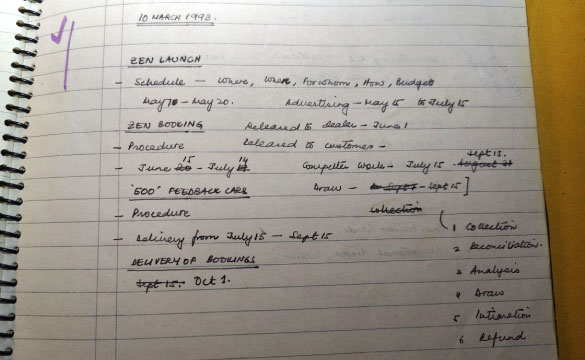


    Page from my notebook with notes on the Zen launch plan, dated 10 March 1993.


    The Zen defied convention. It was almost the same size as the popular Maruti 800 yet was a very different personality, beyond mere mechanical specifications. While it did have an aluminium engine as a novelty and major talking point, it did not rationally justify the price difference it commended over its older sibling. Till then, a product had to be physically larger than the other to command a higher price. The more the metal, the more the price. That was the only way to demonstrate greater value. Not with the Zen. It demonstrated that aspects like design, touch-and-feel, refinement, dynamic performance and comfort were, in combination, a higher value proposition than competition, even from your own family.


    Till 2006, the brand was built as a combination of some clever communication and lots of positive word-of-mouth. In fact, when launched in 1991, it took time to gain public liking. The Indian customer was used to the metal-price equation and the Zen was challenging that. The early adopters did the task of building the initial buzz around its performance and refinement that crucially helped in its gradual adoption and popularity. The initial seven / eight months were an actual struggle. While the network was given lots of “selling tools”, the value proposition was built only when the initial customers swore by it and the automobile journalists praised it sky high. I call this the “Sholay Effect” of hugely successful brands taking time to gain momentum from being almost written off, just like Sholay did.


    Magazine covers on the Zen in May-June 1993 – courtesy Team BHP


    There were four elements in the way the vehicle was launched which together helped build its formidable equity. First was the Suzuki badge on the vehicle. It was the first Maruti product to carry it, subtly stating that this was an ‘international’ product in the Maruti portfolio. There was a move to have the Maruti badge on the vehicle, but that was dropped in favour of the international narrative.


    Second was a term coined to describe its styling – ‘jellybean’. That was the best way to explain its harmonious lines, soft curves and aerodynamic shape, from the front bumper to the rear lights. That term caught the fancy of the media and it was all about jellybean styling after that.


    Third was the ultra-smooth all-aluminium engine which was so refined for its time that many, including Wikipedia, think the name Zen stands for ‘Zero Engine Noise’.


    Which brings us to the fourth element…the name Zen. It was given by me, in a competition within the company. The then director of marketing and sales Kozo Senga liked the name Zen. I explained that the vehicle was exactly as a Zen monk – you have the power within your outer calm that should be used responsibly and only when required. The vehicle looked sedate when parked but was a rocket when revved. Zen it was!


    Rare pic of a YE-2 with the Maruti badge in the plant – taken in Jan 1993


    The initial advertising for the Zen did not work. Though all the still photography was done by the amazing Hardev Singh, the advertising agency and the marketing team went overboard with the positioning statement of “Engineered for Exhilaration”. Nobody could either pronounce it properly or remember the statement. Thankfully, the word-of-mouth had started working its magic so the advertising really did not matter. The brochure however was a very popular item and almost all walk-ins into Maruti showrooms wanted one. It was a distinct square shape and the product in all its glory was the hero. Hardev Singh’s photography did the trick. People basically wanted a test drive and a brochure. Heady times indeed!


    Zen launch brochure of 1993 and one of 1996


    In 1994, the Zen started being exported to various countries, especially those in Europe. Badged as the Suzuki Alto, it was on the streets of London, Paris, Berlin and Rome. This made it the ‘world car’ for Maruti and India and that is what the next communication campaign was all about. This really worked in further building the brand’s appeal as the Indian was now driving exactly what a Londoner or Parisian was.


    By now, the sales numbers and growing popularity allowed the engineers in Gurugram to plan modifications and variants. A diesel Zen was launched in 1998 housing a Peugeot engine. Though it did not do very well, it demonstrated the company’s and brand’s engineering prowess as a trend setter. In 1999 a variant called the Zen Classic was launched but did not go well with the Indian design sensibilities. The reversals did not hold the company back from trying yet new things to cater to the Zen-clan.


    In 2000, Maruti launched the Alto and the WagonR, both hatchbacks catering to the same demographic target segment. In light of newer siblings, the Zen started losing some if its sheen and some crucial intervention was needed from both the product planning and engineering teams. To commemorate the tenth anniversary of the little monk, Maruti Suzuki did possibly its most audacious move of launching a limited edition 2-door Zen, exactly as it was sold in Europe. Out came 300 Zen Carbons in gleaming black and 300 Zen Steels in svelte silver, each vehicle individually numbered and badged. Even though just 600 units, they took the market by storm, being lapped up by both youth into their first jobs as well as retired couples. The brand was back in the reckoning with a very disruptive step. It was a statement that while the Alto and WagonR were selling in Japan, the Zen was being sold in Europe.


    The Zen Carbon and Zen Steel welcome letter – 2003


    Closely following the Zen ‘singles’ as they were called was a major restyling of the vehicle to give it a steroid boost. It did create some flutter primarily due to a high-decibel marketing campaign but the vehicle was on its old tired wheels. It had its best chance when Suzuki was planning its next big global launch in India codenamed the YN-4 in 2005. This vehicle would again disrupt the market in the way it looked and performed, just like the YE-2 had done 12 years ago. This should be the new Zen. That is the only way the legend could be revived in its new avatar. An attempt was made in the top circles to carry the Zen badge forward through this new vehicle. Consensus was otherwise. The new vehicle became the Swift, yet another uber successful brand till today.


    And the Zen? Well, a half-hearted attempt was made by slapping the name on a car that was a completely different personality from the Zen. It was called the Zen Estilo and launched in 2006. Thankfully the customers saw through the feeble game quicker than Maruti Suzuki had anticipated and the product sank without a trace in 2009. Thereby laying to rest one of India’s most loved and aspired for automotive brands, ever.


    Best wishes of the day, little monk.

    Rest easy!

     

  • Prateek Bhardwaj is CCO & Head of Creative (India) at Lowe Lintas

    By Our Staff


    Lowe Lintas, the creative agency of MullenLowe Lintas Group, has announced the restructure of its creative leadership, with the appointment of Prateek Bhardwaj as CCO and Head of Creative (India).


    Under the new structure, PB will now supervise all of Lowe Lintas’ offices, which include Mumbai, Bangalore, Gurugram, and Kolkata, and will partner Subramanyeswar S, the group’s now-not-so-recently appointed CEO. Amongst other changes, Sagar Kapoor takes charge as Chief Creative Officer, Global Brands, and will also oversee the Mumbai creative operations.


    In response to the announcement, Subramanyeswar S, Group CEO – India & Chief Strategy Officer – APAC, MullenLowe Group said: “Prateek is a powerhouse of big ideas. He is one of the most celebrated and decorated creative leaders in the country presently and his work sparkles with the personality of a man who knows he is interesting enough on his own. His elevation comes at a time when clients are walking the tightrope between big data and big emotion and I’m sure he will make his idea revelations at this intersection the only (business) metric that will matter. A great quality of his is that he also cares about other people’s creative success as much as his own, maybe more. He’s an artist, explorer, storyteller all rolled into one and his taking charge as the Creative Head of Lowe Lintas India gives me the hope that the best years of big ideas from us are ahead.”


    Bhardwaj 24-odd years of industry experience, having won numerous accolades for his work, including the Grand Prix at Cannes Lions and Jay Chiat Awards, and the Black Pencil at D&AD. His notable campaigns include Sprite (Bujhaye only pyaas, baaki all bakwaas), Kinley (Boond boond mein vishwaas), Nescafe (stammering comedian), the launch of tech platform Kaam Wapasi during the pandemic, Vim Black (Vim’s satirical ad campaign), and the recent #TestedBySamsonite series. Prateek has also been a creative entrepreneur who founded and ran Eleven Brandworks out of Mumbai and Gurgaon.


  • IPL16 ads: They don’t make ’em like it anymore


    By Sanjeev Kotnala


    Sanjeev KotnalaI am a loyal IPL follower, and I watch the match telecast every evening. The quality of telecast and the options for the viewer have increased exponentially. However, that cannot be said for the ads telecast on IPL. Watching them makes me overtly nostalgic. In earlier IPL seasons, the brand and agency people invested much more effort into crafting and developing the advertisements. It is much more about media muscle and frequency than the craft today. Somewhere high frequency seems to be a substitute for creative content.

    IPL 2008, the first edition, had everyone excited. It was expected to become the Super Bowl equivalent for advertising in India. Today, IPL is one of the richest sports leagues, with two months-plus of excitement and engagement, delivering eyeballs and loyal enthusiasts on digital and TV. IPL advertising almost defines the advertising spending trend for the nation. It should be common sense that the brands wanting to exploit the IPL matches across the season need multiple creatives to avoid overexposure and audience apathy. Unfortunately, the advertisements hardly reflect the thinking. The advertisement content and creative lack high engagement. It makes me think- They don’t make them like it anymore.


    IPL- everything is not lost.

    A few brands stand out in the scores of brands trying to effectively use the IPL platform across TV, OTT and Digital.


    RuPAY

    RuPay, with its UPI plus credit card communication, is an excellent example of focused communication. All three advertisements are interesting and engaging. The ‘Silver Helping Hand’, ‘Catch Expert- Chaos in Museum’, and the ‘Slippery Spy- mole’ are fun to watch and communicate the message.

    Unlike the Tata Tiago example of reasons to go for an E-SUV, which may not be the best and most effective way for the brand. Do people still need reasons to buy an electric vehicle!


    DREAM11

    DREAM11 has been consistent through the IPL seasons and has always worked on ‘All will play’. This season is no different. The brand continues the good work. The Bollywood and cricketers’ interactions as opponents in the game are engaging and funny. ‘Lal Singh’, ‘You don’t go for awards’, ‘Dialogue Delivery’, ‘Viral’, ‘All is well’, ‘Duplicate‘, ‘Lagaan’, ‘Riaaz’ and ‘Retake‘ are a few of the ads. Hope to see more situations in the rest of the matches.


    MYCIRCLE11

    MyCircle11 has also done well with its ‘Second prize 1 crore- toh pehla prize kya hoga‘ communication, continuing the Giant theme and format. However, the situations and the excitement are missing as the idea becomes a prisoner of the format. And for some reason, the 2023 videos are unavailable, and even the site showed Jeeto 1 crore everyday campaign in 2021.


    AMAZON

    The ‘Aaj Amazon se kya Khareeda’ series is another set of communication that makes the point while engaging the audience. It slowly builds on categories- the order size and common everyday items.


    IPL ADS- ALL-TIME FAVOURITES

    All of us will have different advertisements telecast with IPL seasons as favourites. Here are the ads that stand out. If I have missed some really good ones- do let me know.


    VODAFONE ZOOZOO

    The Vodafone ZOOZOO would rank as an all-time favourite of all IPL ads. The way the ads were conceived, executed, released, and the build-up was well planned and executed. In fact, they were produced and timed with the IPL season.


    AMAZON CHONKPUR KE CHEETAHS

    My other favourite of mine has been Chonkpur ke Cheetah by Amazon. Even today, in the Amazon ads, telecast on IPL16, the brand is extending the same- similar concepts like A-to-Z, Aapni Dukan, and a platform for everything, including your everyday items. Chonkpur was another instance and example of IPL-specific communication. The slow unveiling of the journey of Chonkpur ke Cheetah was well planned and executed, keeping the excitement high.


    CRED – NOT EVERYONE GETS IT.

    When the ‘Cred – Not everyone gets it’ series started, it had a mixed reaction. But, the way the series progressed and the brand kept unleashing fresh creative starring another popular celebrity, it grew on you as an audience. A well-thought-through and executed campaign.


    SWIGGY, NO ORDER IS SMALL.

    Swiggy and Zomato both exploited the audience’s interest in watching the telecast. They have offered various schemes to make people order during the matches. However, what stands out are Swiggy ads of ‘No order is small’ and ‘What is the score’. It also introduced the actor who became known as Swiggy Uncle and was featured in many more TV films.


    ADD-ON

    Not IPL Ad- but the Kid-adult format by FLIPKART was an engaging experiment killed by overexposure and format constraints.  Another series that was engaging and interesting was Voltas Murthy.

    Similarly, Make My Trip’s consistent use of celebrity Alia, and Ranveer Singh continues to be superbly executed with its own fun quotient while delivering the message. However, that cannot be said for Ranbir Kapoor – Asian Paint ads which lack engagement- proving that consistent use of celebrity is not the solution and the content remains the king.


    NET-NET

    Want to associate with IPL and exploit the platform? Then the brand must understand that the ads are the real breaks and the interruption in the audience’s interest. And the season is long, and the media cost is too high to associate. The brand message should be simplified and relayed to the audience through multiple creatives to keep the engagement levels up and excitement with the brand. Do invest in creative development and execution even at the cost of losing out on frequency of exposure. An excellent /Good creative exposed less number of times is a far better proposition than a mediocre/average creative exposed many, many times.

    Just for the suggestion watch this ever favourite ad of mine. Ericsson One Black coffee ad.


  • Will miss you, Pratap!

    By Soumitra Sen


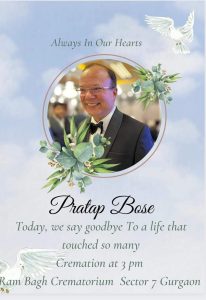
    Pratap Bose

    Hi Pratap, the world just lost you today. You were so well-known and I’m sure many will be feeling your loss from now on. I have been feeling a bit depressed for the past few weeks from the time I came to know about your diagnosis. Now since you have bid goodbye to us all, I will try and write a few words about how I knew you and the effect you had on a fellow professional from the industry. Here is my ode to you Pratap. I hope you will agree with the words that I write as you smoke your ubiquitous cigarette and look out of your office window telling me some adventurous things that you did. So here it goes….


    Pratap’s entry into DDB-Mudra Group was an epochal event. After he joined Mudra, the grapevine in the industry for sometime began to refer to O&M as Ogilvy & Mudra! And, why not? He had fallen out with the top management at Ogilvy on some financial practices that he wasn’t supportive of and walked in with some 40 professionals from Ogilvy into Mudra. Those were the days!


    It was quite exciting and breathtaking for us minions in Mudra for the next few months. So many new faces all around us who had come in to give a major push to make Mudra look and feel more western/contemporary (for want of a better word) in its outlook. In those days, Mudra had created a niche, known as an Indian agency for Indian brands. From the faraway perch that I sat within the Mudra ecosystem, I think he was instrumental in convincing Madhukar to make the merger of Mudra with DDB and Omnicom lock, stock and barrel. Those days, both WPP and Omnicom, were serenading Anil Ambani to join them and he was caught in two minds. This dilly-dallying had continued for quite some years with Sir Martin Sorrell from WPP making it a point of having breakfast with Anil Bhai whenever he stepped into the shores of this country. But I think Pratap had experienced everything that had to be seen and known about WPP and in his mind, he wanted Mudra to join the Omnicom bandwagon. Surprisingly, this happened soon enough just a few months after Pratap came into Mudra! Of course Madhukar was the one who had to convince Anil Ambani but the man who persuaded Madhukar to pick up the gauntlet would have been Pratap.


    Pratap was seeped in the Ogilvy culture and he wanted to imprint his style into a more conservative Mudra ecosystem. Pratap would have come in with his brigade (Yes, it an army brigade wanting to change things within Mudra in double quick time) without knowing fully well the cultural disparity that one could expect when one moves from a place like Ogilvy to Mudra those days. For example, when he came to know that the top echelons of Mudra who grew up in the Ambani ecosystem were used to calling Mrs Tina Ambani as bhabhi j, he and his team would have been shell-shocked. I reckon that when they would have heard that this was the norm a war room would have happened to strategise on what needed to be done on this issue. He was expected to follow this norm but he never did.


    Another thing that amazed us was that he was the only guy who was allowed to smoke inside Mudra offices. His room used to be filled with cigarette smoke whenever we went in for a meeting. I used to almost choke when I entered his office and therefore dreaded such occasions, but conversations with him while he stood outside with his gang where everyone smoked away as if there were no tomorrow was fun-filled and memorable.
     

    He kind of thought that I was the resident doctor as I was heading the healthcare advertising division then, and whenever he had a niggle or any health issue, he used to conspiratorially discuss with me. In fact I used to take him to Kokilaben Hospital quite regularly along with his wife for his yearly check-ups as that hospital was my client for most of my time in DDB Mudra.


    In fact, I remember clearly that his first meeting with the executives in Kokilaben Hospital wasn’t really good. I could sense his discomfort while sitting in a meeting with them. In fact the room had a senior person from the hospital who was a Malayali and spoke in Gujarati only in a manner a Malayali can for one whole hour. All the time a TV was on behind us which was displaying the stockmarket prices on that day. My sixth sense was alive, and I began to scheme our escape from that room as quickly as possible before Pratap let off steam!


    Will miss you, Pratap. Feel sorry that we lost touch when you got diagnosed with this disease known as the emperor of all maladies! Be happy wherever you are!


    Soumitra Sen worked for DDB Mudra Group and many other agencies like Contract, Havas, Madison etc. These days he runs Storytellers, a behaviour change consultancy in the area of development communication.


  • IPL – A chimera


    With apologies to none

    By Vikas Mehta


    Vikas MehtaI was on vacation for the last 10 days and took the opportunity to do some family bonding while trekking and just doing nothing at some remote places in Himachal. We started our holidays by watching an IPL match live at Mohali, and I will come to that a bit later. But what was unescapable is the tremendous reach, following and craze about IPL. Wherever we stayed, the TV channels were blasting the IPL matches throughout the day. Small shops in far off places had a small 14-inch TV tucked away in a corner, on mute, showing the match highlights. And our fellow tourists were all glued onto their mobile phones using to catch a glimpse of the match. In fact, while talking to a resort manager he mentioned something interesting. The resort offers free wifi, but for the last few years, hardly anyone asks for the password or its details. Everyone is happy with their 4G networks to catch whatever is their poison, news or mail or social media. But during IPL times, there is a sudden surge from tourists asking for free wifi. It’s an issue of both, connectivity and consumption of data. So, during IPL they ensure that the band width is increased and the routers are working.

     

    It’s therefore disheartening to see that brands are hardly using the event for any brand-building. Let’s not forget that it was the same IPL which made Vodafone Zoozoo a familiar name. Or more recently, let an angry Rahul Dravid into our households and made Cred a brand which not many use but which most are acquainted with. The list of brands that used IPL to bring themselves glory is worth revisiting to understand what IPL can do. Unfortunately, that list is dwindling. This year, the only memorable campaign that I can remember is the Dream 11 cricketers vs film stars. And Dream 11 has used IPL very adroitly over the last few seasons, mostly the pandemic times, to establish itself as a leader in the fantasy games category. I am not aware of facts and figures but I am sure that if one looks at critical brand parameters in the category, Dream11 will be at the top.


    So, what ails the IPL ads?  The answer is simple. IPL is an expensive proposition for the brands to splurge on. And digital has spoilt marketers to demand measurability for every rupee spent. Nothing wrong in that. But parameters like brand recall or brand likeability or brand trust or even purchase/ use intention, need brand building. But today most marketers are looking at conversion rates or just sales. A direct co relation between ad spend and sales seems to be the only metric in mind.


    And that’s why brands have no distinction in the category. They are becoming soulless. Think about it. Would you rather use Gpay or Phone Pe? Swiggy or Zomato? Ola or Uber? Is there any differentiation between these brands? They are all technology children and they have all sold their generic technology. So the category has been established. But what about the brand? That’s why when I look at Cred or Dream11, I feel there is hope. Let me explain it a bit more. Cred has been of late doing cashbacks on credit card payments and some interesting offers during the matches, These are flashed on the venue screens as well as on TV. Do you think these promotions and offers would have worked if Cred has first not established a brand story? If today, Cred has a competitor who does not have a brand story but starts doling out some promotions, will it have the same response that Cred has now? Cred is now reaping the windfall of establishing a brand narrative. Same with Dream11. It has established some sort of awareness and trust with its stories using cricketers. Therefore, the promotions it runs now, during the matches get traction.


    This lack of patience and faith in storytelling is resulting in the drab ads that one can see on IPL. The brand narrative is missing. It’s all about the sales pitch.


    Last time, I had mentioned about surrogate tobacco ads. As if using people like Sehwag and Gavaskar was not enough, yesterday, I saw the same brand also using Kapil Dev and Chris Gayle. I have a feeling that all these brands are anticipating a total ban on the advertising of their products. So, now they are going all out and spending big monies not just advertising but using ex-celebrities. I guess this particular brand is trying to do a Cred by using ex-celebrities. But jokes apart, this has to stop. One of my colleagues wrote a blog on this very portal where he argued about ASCI being the favourite whipping boy of everyone but trying to defend it by saying that it does not have authority or the power to step in as it is a self-regulatory body of advertisers. Fair point.


    But, it looks like that this body has become a small indulgent club of advertisers who under the pretext of being self-regulated and no teeth will not act against one of its own. By law, surrogate advertising means that the product being advertised must have at least 10% of total brand sales and also some similar matrix on distribution and availability. Has ASCI even looked into that? I don’t have the figures, but most of the tobacco brands, and at the last count there were four, all being supported by the biggest Bollywood and some sports celebrities seem to be contributing towards at least 30-40% of commercial time on IPL. Isn’t that alarming enough for a self-regulated body to step in and take some action?


    The narrative on this cannot be wished away. Last time, I advocated a boycott of these celebrities. Now I am taking it a step further. Can other brands and advertisers stop using these celebrities? If you hit at their income source only then it will hurt. After all, associating brands with celebrities who support tobacco brands is not good for other brands. Will ASCI ask its members to boycott using these celebrities? Even as an advisory?


    Before I sign off, a word on the IPL match experience at Mohali. The atmosphere was awesome. The stadium was jam packed on a Wednesday night. The match itself was a high scoring thriller. But unfortunately, the spectators were taken for granted. Ticket booking and delivery system was wonderful. We went to the stadium almost two hours in advance. At the security check things like sunglass covers were being confiscated. No explanation was given. Except that one could collect the same after the match. Fat chance.


    Then, the police tried to stop us from using our designated seats. It was the first row and I suspect they wanted to use it for themselves. But when we insisted, they relented. We still could not use our seats as someone else plonked themselves on the same. Soon it turned into mayhem. It was like first come first serve basis. Those who came late, could not get any seats. Many people, at least hundred or more were watching the match standing. Or by sitting on the steps. And these were people who had paid upwards of Rs 1500 for a ticket.


    The toilets, as usual were far and few. And in bad shape hardly an hour into the match. After that, given the overcrowded stadium it was impossible to even reach the loos. The police on duty were more interested in watching the match or as in one case, asking Preity Zinta, who was doling out free Tshirts of her team, for one. At the end of the match there was near stampede. There was just one small exit with thousands of spectators from one block having to use it. As others were shut. Pushing, shoving, continued for a few minutes. And when I asked a police guy about the same, his answer was that a private security was manning this. And of course, at the end whatever was confiscated was never found. It seems that the private security, in charge of frisking was pocketing whatever caught their fancy. Indeed, some stuff was found lying strewn around the frisking area at the end of the match.


    For all the big claims that cricket authorities make in India, some things never change. And the poor spectator who pays for the same, is invariably at the wrong end of the stick. But then, who cares? In many ways, when we see the IPL from a distance, on TV or live streaming, away from the commercial and moral aspects of surrogate advertising, IPL seems to be an Oasis of fun, enjoyment,celebration and sports.


    In reality it’s just a Chimera


    Vikas Mehta is a senior marketing strategy consultant and educator based in Dehradun. He writes on MxMIndia every other week, and sometimes more often. His views here are personal.


  • Lowe Lintas enters Abby Awards

    By Our Staff


    The news is as big as, say, an Aamir Khan returning to accept film awards. And it’s set to sizzle adland in the run-up to Goafest 2023, scheduled to be held from May 24 to 26. Yes, the Mullen Lowe Lintas Group is participating in the Creative Abby.


    Lowe Lintas, or the Mullen Lowe Lintas Group, is entering the Abby Awards or the Abby One Show, as they are called.


    The news is confirmed, and we couldn’t hold on from breaking it even as we’ve been watching the endless analyses of the Karnataka Assembly Elections.


    Lintas, as the agency has been known for eons, has stayed away from the Advertising Club awards for over two decades. Several attempts have been made through the years with the various captains the agency has had, but the response has been a ‘no’. It may be noted that the agency does participate in the Effie Awards, and has also been the top agency there (not always, but has been over years), and has gone to town about that accolade.


    So it’s not that the folks at Lowe hate awards or the Ad Club, it’s just that there has been an allergy towards creative awards. And even an overdoes of Allegra hasn’t worked.


    But things have changed at Lowe Lintas. There is a new A-team there, and the folks at the Advertising Club could get them to see reason.


    The number of entries may not be too many, but the news is already being welcomed by a cross-section of the advertising fraternity MxMIndia disturbed on a Saturday mid-morning.


    According to unconfirmed information we have, Ogilvy has continued to stay away from Abby but some others like Wunderman Thompson and McCann are back.


  • Dentsu appoints Prerna Mehrotra as Chief Client Officer

    By Our Staff


    Dentsu announces the appointment of Prerna Mehrotra as Chief Client Officer, Dentsu APAC, expanding her current remit as CEO, Media, APAC. In this newly created role for the region, Prerna will focus on designing and delivering an elevated client experience across Dentsu’s services in creative, media, and customer experience management (CXM).


    Rob Gilby, CEO APAC, Dentsu, said: “Prerna joined dentsu in 2016 as our Head of Investment and has continued to show her star quality, working across divisions and clients. This appointment is a huge testament to Prerna’s tenacity and growth mindset. She consistently demonstrates outstanding leadership and understanding of the changing client and consumer landscape, innovating products and services to capitalize on new opportunities for growth. I look forward to working closely with her in her new capacity and a critical new role for the APAC region.”


    Added Yusuke Kasahara, CEO, Solutions APAC: “Prerna continues to elevate the culture of client-centricity across the network, ensuring we put forward the best of our talent and capabilities to deliver outstanding business solutions for our clients. She brings a strong point of view and critical thought leadership across business and marketing strategy to deliver growth for our clients and I’m delighted she has taken on her next challenge within Dentsu.”


  • Surrogate Advertising: You can’t do a damn about it!


    By Sanjeev Kotnala


    Sanjeev KotnalaIt will not be wrong to say that Surrogate advertising is as old as advertising. Surrogate advertising is the practice of indirectly promoting a particular product, brand, or service by advertising another product or brand of similar behaviour or name. Often used for restricted and banned categories like alcohol, tobacco or prescription drugs. It is a common strategy used by companies to promote these restricted products.

    Past attempts have not been able to affect surrogate advertising. Why expect a magic wand act from ASCI? I know my friends and me in advertising and marketing have strong views about it, and few have even voiced their opinion publicly. It has been a classic case of a gap between expectations raised through guidelines with a strong stance against it and the actual experience. It has been a let-down by the celebrities and their advisors, who were expected to have enough understanding of the subject.


    The Surrogate Advertising Ecosystem

    The ecosystem of surrogate advertising has five prime suspects. The manufacturer and marketer of the product – the beneficiary. The advertising/ marketing/ creative agency that crafts and develops communication. The research agencies help find the insight and trigger point the surrogate product could use. Government bodies are expected to monitor surrogate advertising. The industry (advertising) self-regulation body like ASCI and, ultimately, the user, consumer and customer complete the stakeholders.


    Manufacturer/ Marketers  and Surrogate Advertising

    It is futile to expect the manufacturer and marketer to act honestly and transparently and not indulge in surrogate advertising, as that is the business that earns revenue.

    After all, brand managers and the marketing department are tasked to create and maintain the brand image of the surrogate product that aligns and reminds of the desired brand attributes and the associations with the main product. They ensure the surrogate advertising campaign positively contributes to the overall brand equity and does not dilute or damage the brand’s reputation. They actively monitor consumer feedback and sentiments and take necessary actions to address any issues or concerns. Brand managers are responsible for protecting and enhancing the brand equity of the surrogate and the main product.


    Advertising Agencies and Surrogate Advertising

    On the other hand, it will be tough to accept that the advertising/ creative/ media/ research agencies are unaware that they are working on a surrogate brand. They are in the thick and thin of it. They work from understanding the product and surrogate business objective, developing a creative strategy that effectively promotes the surrogate product while indirectly strongly associating and reminding the audience of the restricted product. Making it engaging and compelling. They craft messages and images that convey the desired brand image associated with the prime product while staying within legal and ethical boundaries, avoiding violations. They identify the most suitable media channels for the surrogate media plan, which addresses the primary product audience. And they analyse the outcome to fine-tune the next round of creative and media work.

    They could not be doing this blindly.

    The agencies can always claim that the product they work on is a legitimate revenue-earning brand well accepted and available in the market. And the discussion is over.

    In the current market situation expecting a decision based on Morality and the Ethicality of their decision is invalid.


    Research Agencies and Surrogate Advertising

    The surrogate product’s decision to communicate around it is primarily a result of market research and consumer insights. Research helps track market trends, competitor activities, and consumer behaviour to stay ahead. Additionally, surrogate advertising monitors the impact and association of surrogates on the leading brand.


    Self-Regulation

    Self-regulation is expected to be critical in stopping or at least minimising surrogate advertising. It asks for voluntary compliance and adherence to ethical guidelines and industry standards by advertising agencies, brands, and other stakeholders without external regulatory intervention. In India, ASCI is the agency that fulfils this role.

    Self-regulatory bodies and industry associations establish a code of conduct addressing surrogate advertising. In India, though we have rules for advertising banned/restricted product categories- the surrogate is governed by guidelines. The self-regulatory body has a simple, user-friendly complaint registration and resolution setup. They investigate complaints, verify violations, and guide the brands to take corrective action.

    The self-monitoring and whistleblowing/ reporting the violation is a regular practice but to no impact. It will have no impact till a self-regulatory body can impose fines, stop repeat offender advertising, blacklist and stop associated celebrities from associating with any new product and be able to influence/ guide / direct the media to not run the offending surrogate advertising. Alas, they can do nothing.

    Surrogate advertising exists as the guidelines are toothless. And the advertising agencies and brands are not committed to following these responsible advertising practices. The training programmes and awareness campaigns or sharing best practices to educate industry professionals about the ethical and legal implications of surrogate advertising does nothing.

    Self-regulation is no solution till external regulatory bodies step in with stricter regulations and enforcement mechanisms.


    The Public Knows Everything

    This is the X-factor. The banned, restricted product categories draw two kinds of reactions. One is the user who loves it; the other hates it and wants surrogate advertising to stop. A vigilant consumer base that actively notices and highlights surrogate advertising is no solution.

    Maybe public awareness development is possible where the main and the surrogate product is boycotted. When you read the statement, you know how foolish it is to think of it. However, it seems to be one of the possibilities.

    Let us be honest. None of us will stop pouring a Johnny Walker or Chivas because there is surrogate advertising. Or stop watching IPL because Gavaskar and others participate in surrogate advertising. We have not stopped watching movies and shows of SRK, Ajay Devgan and Akshay Kumar because they acted as brand ambassadors for a surrogate product.


    Net-Net

    To effectively stop surrogate advertising, a combination of measures involving regulatory actions, industry initiatives, and consumer awareness are necessary. A self-regulating body can’t do much.

    Collaboration among all the stakeholders, like the government, regulators, industry associations, advertising agencies, and consumer advocacy groups, is vital to foster a collective effort to combat surrogate advertising. Theoretically, stakeholders can work together to develop and implement effective strategies, share best practices, and coordinate enforcement actions. (LOL)

    One needs stronger government rules to explicitly address surrogate advertising practices, defining surrogate advertising in context to current practices and establishing strong monetary and other comprehensive and enforceable. Penalties for non-compliance. The Regulatory bodies must have resources and authority to monitor and investigate and take swift action enforcing fines, warnings, suspension of licenses, or other punitive measures.


    Add-on

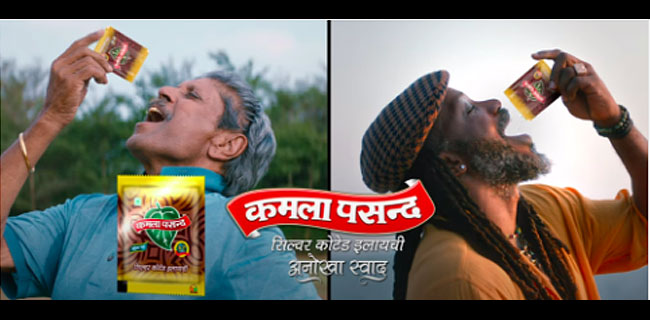
    Here’s a suggestion that may be tough to implement but is a simple one. It can go a long way in curbing surrogate advertising. Ban using the same name and design elements by any product/ brand/ service that is used by a banned/ restricted category. So. there would have been no Kingfisher Airlines, Kamla Pasand Zeliachi, Kesar Elaichi masala, soda, bottled water, glassware, CDs, cups. Or the Keep Walking campaign which anyone can say is selling, not walking, but Johnny talking.


    Sanjeev Kotnala is a senior business strategist and educator. He writes on MxMIndia on Wednesdays. His views here are personal.


  • Creative Abby shortlist announced

    By Our Staff


    ABBY One Show Awards 2023 attracted a total of 2282 entries this year as compared to 2007 entries last year.  Out of these a total of 736 entries have made it to the Final Round of metal and merit voting. The number of entries making it to the final round is around 32 percent indicating tough One Show global norms for earning metals.


    This year 181 companies entered the Creative ABBY 2023 out of which a total of 110 companies were shortlisted after the first 2 rounds.


    Among the Advertising agencies whose work has been shortlisted in alphabetical order are BBH, Cheil Worldwide, Cog Culture, Crayons, Creativeland Asia, Enormous, FCB India, Grey Group, Havas Worldwide, Law and Kenneth Saatchi, Leo Burnett, Manja Brand Works, McCann Worldgroup, MullenLowe Lintas, Publicis Health, Scarecrow M&C Saatchi, Sideways, TBWA, Tribes, VMLY&R Wunderman Thompson.


    The full list of companies shortlisted is in the table attached.


    Among the Digital companies whose work has been shortlisted in alphabetical order are Atom Network, BC Web Wise, Blink Digital, Centrick, Digitas India, Flibbr Consulting, FCB Kinnect, Gozoop, Grapes Digital, ibs Fulcro, Interactive Avenues, L S Digital, PivotRoots Digital, 22feet Tribal, Schbang, SoCheers, Sociowash Media, Social Panga, Wirality Media.


    Other digital companies shortlisted can be seen in the table attached.


    Media companies whose entries in Creative have been shortlisted are Havas Media, Laqshya Media, Madison World, Mindshare, White Rivers Media.


    Broadcast companies whose entries in Creative Abby have been shortlisted are Culver Max, Disney Broadcasting, NGC Network, Star India, TV18 Broadcast & Pictures, Viacom18 Media, Zee Entertainment.


    Publishing companies whose entries in Creative Abby have been shortlisted are ABP, Bennett Coleman & Co., Dainik Jagran, Dainik Bhaskar, HT Media, Hindustan Times, Hindustan Media Venture, Jagran Prakashan, The Hindu Group, Sangbad Pratidin.


    The Design companies shortlisted in alphabetical order are Alok Nanda Communications, Brandmovers, Cog Culture, The Honest illustrations, Hyphen Communications, Open Strategy and Design, Tree Design, Sharpener.


    The video craft companies whose work is shortlisted are Bang Bang Films, Belief Films, Breathless Films, Chrome Pictures, Cutaway Films, Footloose Films, Future East, Good Morning Films, Hungry Films, K Silent, Kitchen Video, Little Lamb Films, Perfect Ten Films, Pick Films, Prodigious, Script Room, Superfly Films, Thinkpot.

    Creative Abbys shortlist report

  • ASCI tables Annual Complaints Report 2022-23

    By Our Staff


    The Advertising Standards Council of India (ASCI) released its annual complaints report for 2022-23 which contains several startling observations, especially those pertaining to advertising in the digital space. During the period, ASCI reviewed 7,928 advertisements across different media, including print, digital and television. ASCI has stepped up its scrutiny of ads nearly 2 folds over the last 2 years. TV and print advertisers continued to be highly compliant at 94%, however the overall compliance is lower at 81% due to digital. Hence, digital ads emerged not just as a leading violator, with 75% of ads processed being from the digital space, but also as the least compliant. This raises serious concerns about the safety of consumers in the online space.


    As per the report, the real-money gaming industry surpassed the education sector to emerge as the most violative sector, moving from fifth to first place. An astounding number (92%) of gaming advertisements reviewed by ASCI for FY 2022–23 did not adhere to the guidelines for real money gaming and failed to inform consumers about the risks of financial loss and addiction. The sector also gained the dubious distinction of being the least complaint, with only 50% of ads being modified voluntarily after they have been called out. It may be remembered that ASCI had released its guidelines for the Real-Money gaming sector in December 2020, and the Ministry of Information and Broadcasting had thereafter released an advisory asking all parties to comply with the guidelines.


    The report also revealed a sharp increase in the number of misleading ads featuring celebrities. ASCI processed 503 such ads, as opposed to 55 the previous year, a growth of 803%. In 97% of these ads, the celebrities failed to provide evidence of due diligence as mandated by the Consumer Protection Act. This again is a serious issue as ads featuring celebrities have a high impact on consumers.


    In addition, influencer violations stood at 26%, with 2,039 complaints being processed against them. Categories, including personal care, food and beverage and fashion and lifestyle, topped the list of influencer-related violations.


    ASCI’s adoption of artificial-intelligence-based tracking has bolstered its ability to scrutinise digital media effectively, despite challenges such as the pace of advertising and the sheer number of ads to be processed. This goes to show that the self-regulatory organisation remains steadfast in its commitment to promote responsible advertising practices and protect consumer rights.


    The ASCI Annual Complaints Report serves as a wake-up call to advertisers, platforms, and regulators, urging them to join forces and create a secure environment and foster trust among consumers.


    NS Rajan, Chairman, ASCI, observed: “The digital advertising landscape is truly challenging us all and ASCI is no exception. Stepping up our surveillance through AI based tools and a robust complaint management system has ensured that ASCI is keeping pace with this dynamic environment. Updating our codes to reflect newer consumer concerns makes sure the ASCI codes remain contemporary. We will continue to act as the conscience keeper of the Indian ad industry with transparency and future-facing expertise.”


    Manisha Kapoor, CEO and Secretary General, ASCI, added: “The complaints analysis for 2022–23 clearly shows that the digital medium is leading in terms of violative ads. This raises significant concerns around online consumer safety and trust. Advertisers, content creators and platforms must come together to address this issue on an urgent basis to protect consumer interests. In addition, the sharp increase in the number of violative gaming ads needs serious attention from the industry.”


  • Havas Media Group India bolsters senior leadership

    By Our Staff


    Havas Media Group India has announced a significant elevation of its senior leadership team across functions to further strengthen its structure. The strategic restructuring is part of the agency’s aggressive expansion of its business and service portfolios through collaborations and increased efficiency, in line with its unprecedented growth.


    The leadership team comprising of Roopali Sharma, Harbir Singh, Saurabh Jain, Manish Sharma, Sanchita Roy, and Rohan Chincholi has been elevated to new roles effective immediately. The newly elevated senior leadership team will bring their extensive industry experience and expertise to drive the agency’s growth, foster innovation, and enhance its service offerings. Havas Media Group India is confident that the restructuring will strengthen its position in the media industry, enabling the agency to provide its clients with innovative and effective media solutions to achieve their business objectives.


    The team will report to Uday Mohan, Managing Director, Havas Media India.


    Commenting on the announcement, Havas Media Group India CEO, Mohit Joshi said: “We are delighted to elevate our core leadership team to new roles. Their exceptional dedication and business acumen have been critical to our success.  In 2023, we have set very high growth targets for ourselves, and I am confident that the team will tap into attaining exceptional results aiding us create a meaningful difference in the country’s media eco-system. Congratulations to all.”


  • Mindshare drives home with media mandate of Maruti Suzuki

    By Our Staff


    Mindshare bags mandate for Maruti Suzuki. The agency emerged victorious after a competitive multi-agency pitch. As a flagship agency from GroupM, Mindshare’s expertise, creativity, and strategic vision will help steer the Maruti Suzuki brand towards a faster lane of growth and success, operating from its Gurgaon office.


    Shashank Srivastava, Senior Executive Officer, Marketing & Sales, Maruti Suzuki India Limited, said: “We are looking forward to this partnership with Mindshare (Group M) as our integrated media agency. We expect to leverage Mindshare’s strengths in the media industry to synergize and optimize our media spends and co-create ground-breaking initiatives that will give us an edge in today’s competitive automotive industry. We look forward to the exciting possibilities that lie ahead.”


    Added Helen McRae, CEO – Mindshare Asia Pacific: “This win by Mindshare in securing the media mandate for Maruti Suzuki is a significant milestone for the advertising industry in India. It highlights the agency’s exceptional capabilities in providing innovative and technology-driven solutions to their clients. We are excited to see the strategic vision and expertise of Mindshare to steer Maruti Suzuki towards sustainable and responsible growth. This partnership is a testament to the agency’s commitment to delivering exceptional results for clients and driving growth for businesses in the region.”


    Prasanth Kumar, CEO – GroupM South Asia, expressed his excitement, said:  “We are thrilled to have a brand like Maruti Suzuki on board with Mindshare India. This win is not only a testament to the agency’s outstanding capabilities and offerings but also demonstrates GroupM’s commitment to delivering exceptional results for clients. It also demonstrates the agency’s ability to drive brands forward and build trust with clients. We look forward to seeing the innovative solutions that Mindshare will develop to drive Maruti Suzuki’s growth story forward.”