Category: ADVERTISING

  • India not Shining! So why does FutureBrands ‘Country Brand Index’ not have India in the Top 25?

    By Malini Goyal


    FutureBrands, a global brand consultancy, puts out an annual ‘Country Brand Index’ in which it measures the strength of a country brand on various parameters, from awareness to familiarity. The firm also looks at what differentiates a country brand on five key dimensions: value system, quality of life, good for business, heritage and culture, and tourism.


    The 2012 index – Future Brand’s eighth – had Switzerland, Canada, Japan, Sweden and New Zealand as the top 5. India didn’t figure in the list of 25. That may not surprise as most of the countries on that list are developed markets (countries like the UAE and Costa Rica that come in at the tail end are the few exceptions).


    The five key FutureBrands benchmarks may explain why India doesn’t figure in the top 25. For instance, quality of life in most metros still has plenty of room for improvement; and doing business isn’t exactly easy.


    The main reason, though, why India as a brand doesn’t score well is that it means too many diverse things to too many people – from Bollywood to Gandhi, from the Taj Mahal to cricket. Or to put it another way: Indians just can’t seem to pin down one defining attribute – or a set of common attributes – for Brand India.


    That’s what a recently-released domestic study amongst young corporate executives throws up. “India is a country of contradictions – a land of opportunities and also a land of hardships,” says Tara Singh Vachani, 26, daughter of entrepreneur Analjit Singh and CEO of Antara Senior Living. In a similar vein, internet entrepreneur Alok Kejriwal, 44, dubs India as “divine chaos.


    It’s a car that’s being driven in water. Or, to put it spiritually, India is the soul whose body has gone missing.” And Mittu Chandilya, 33, head, AirAsia India reckons India is a socially diverse country that is trying to construct its future by carefully balancing its past and present.


    Clearly, for most of these high-flying young Indians, brand India is a complex entity with surprises and contradictions built in. The breadth of answers from those surveyed – the sample comprised those in the 26-35 year age band – was, well, breathtaking.


    For instance, to the question ‘What defines Brand India’, the most popular answer (64.3% of those surveyed) was Bollywood; the second most common answer hit the other end of the spectrum – Mahatma Gandhi (57%). The next two most popular answers too were as diverse as they come – the Taj Mahal and cricket.


    And what is it that makes Indians proud in the global context: while 84% reckoned the opening up of the economy made their hearts swell with pride, almost half of the sample felt that Bollywood’s high-jinks on the international stage made them feel good about themselves.


    In the similar vein of contradictions, some Indians prefer to see the glass half full – around 60% feel ‘incredible’ is the apt adjective to describe India – although more than half thought ‘corrupt’ was a far better prefix.


    And all of 83% feel India’s economic growth story has taken a beating. The culprits aren’t unpredictable: corruption, political leadership, policy paralysis and red-tapism.


    A Reflected Idea of India

    What do these results reveal about young Indians’ view of the country? “It is a very shallow view of India. My sense is if you did this survey among foreigners anywhere in the world, the response would not have been very different,” says Santosh Desai, CEO of FutureBrands.


    It is one thing for the world to see Bollywood as defining India. It is another that even Indians living in India, who experience all its highs and lows every day, too see it that way.


    “Their idea of brand India is an imagined one. It is not based on their experienced realities of India,” adds Mr Desai. Mr Kejriwal agrees.


    He feels if true this is a deceptive view that Indians have. Half of the respondents are from the North. And yet they aren’t talking about real issues like respect for women and how to drive changes.


    “Around 60% of them are saying an emphasis on inclusive growth will help drive change. What do people in that age group know and what do they care about inclusive growth,” asks Mr Kejriwal.


    In contrast, the real issues that Indians face on a daily basis are conspicuous by their absence in the survey. What about education and everything around it? Shouldn’t a young country like India with such a messy education system be worried about it and aspire to fix it, asks Mr Kejriwal.


    “There is an inflated sense of self that you get all through the results. I think these respondents are just ticking the right boxes – things that make them feel nice.”


    Partha Sinha

    Partha Sinha, director, South Asia, Publicis, an advertising agency, is also critical: “Theirs is a view divorced from Indian realities. They are simply playing back popular imageries – from Incredible India to corruption.”


    There are reasons why young corporate executives see India that way. One, many of them tend to live in their own urban bubbles. And the only way they experience the other India is through Bollywood and cricket.


    Two, many Indians are still struggling with the idea of India. While the civilizational and historical view of India for them is rich and deep, they are still grappling with what benchmarks to use to construct the idea of 21st century contemporary India.


    “Indians are still settling down with relatively new ideas of democracy, liberalization, market-dictated policies. Power structures have changed. Old rules are no longer relevant. We still do not know how to judge things in the new context,” says Mr Desai. As a result, Indians form an escapist view that is at once glossy, seductive and often are imageries that the world is putting out – be it corruption or Bollywood or cricket or Gandhi.


    Source:The Economic Times

    Copyright © 2013, Bennett, Coleman & Co. Ltd. All Rights Reserved

    Licensed to republish


  • Tanishq’s new ad: Brave or Pseudo?

    Diwali is when Indian advertising celebrates its traditions. Deep fried jalebis, firecrackers and diyas, happy joint families with shimmering clothes and set relationships. Tanishq, however, has something else in store beyond an elaborate polki neckpiece – a dusky bride who already has a daughter.


    The Lowe Lintas advertisement, directed by Gauri Shinde, breaks two stereotypes in one go – and it’s triggered off a debate, generating critiques as well as tribute. Charmy Harikrishnan rounded up reactions from inside the industry and outside. Gauri Shinde, director says, “For me this is normal, this is what happens. But when you see remarriage in an advertisement, for the people it is a reassurance of what happens in real life.”


    Anuja Chauhan, writer and former executive creative director of JWT says, “It’s showing a very real, happening-all-around-us situation. It’s missing some of Tanishq sparkle though – feels a little stilted, almost Raymond-ish. Their ads are usually livelier. But the thought is nice, and definitely overdue in the category.”


    Nandita Das, actor and poster girl of ‘Dark is Beautiful campaign’ says, “I am pleasantly surprised. I am glad that Tanishq has made this brave ad and going by the response our campaign has got, I am sure they will see an amazingly encouraging response. And that might motivate others to follow suit.”


    Prathap Suthan

    Prathap Suthan, managing partner, Bang in the Middle says, “I like the casting, and the dusky bride, and the overall stepping out of tradition. I am also glad that Lowe for all the battering it gets for Fair & Lovely, sort of blunts that attack with this one commercial. Instead of the tried and tired route of focusing on a regular marriage scenario, this steps into taboo-land, the never-explored and deliberately ignored area of second marriages.”


    Urvashi Butalia, publisher and writer says, “The ad is certainly unusual and perhaps there’s hope yet. It also goes to show that it takes so little to do something different, and I wonder why advertisers are so scared of going beyond the given easy options.”


    Manish Bhatt

    Manish Bhatt, Founder Director at Scarecrow Communications says, “I saw it trending big time on all the social network sites but the kind of people commenting have nothing to do either with the brand or with the cause. The purpose of every piece of advertising is to close the loop with the product or the brand message. I see that missing in this spot – it appears to be a pseudo support for such a sensitive subject.”


    Piyush Pandey

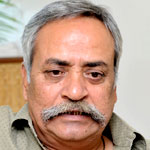
    Piyush Pandey, Executive Chairman & National Creative Director Ogilvy & Mather India says, “I think it’s a brave ad and a great concept. Any leader must take such little chances of taking the society forward. I don’t think we should be at all critical about this ad. Then we will stay in the past.


    Source:The Economic Times

    Copyright © 2013, Bennett, Coleman & Co. Ltd. All Rights Reserved

    Licensed to republish


  • Kyoorius Launches “Great Ideas Sold-Here. There Everywhere”

    By A Correspondent


    After the success of the 9th annual edition of Kyoorius Designyatra, Kyoorius, a not-for-profit initiative by Transasia Fine Papers, has launched ‘Great Ideas Sold – Here, there & everywhere’, a hardback showcase of the winning and nominated works of the Kyoorius Awards 2013.


    The volume is divided into sections, namely Design for: Identity, Packaging, Communications, Digital, Space, Books, Editorial, Photography and Craft (photography, calligraphy, illustration and typography)


    At the awards show held in August this year, the Black Elephant (best of show) winners featured two projects – Dekho by Co.Design and the Temple Pavilion Installation by Abhin Design Studio.


    The Blue Elephant winning agencies featured in the book include works by:


    O&M, New Delhi, Leo Burnett Mumbai, BBH India, Alok Nanda & Company, NH1 Design Pvt. Ltd, Umbrella Design and DDB Mudra Group amongst others.


    Rajesh Kejriwal

    Commenting on the initiative, Rajesh Kejriwal, Founder CEO, Kyoorius said, “Good Ideas Sold- Here. There. Everywhere.” is the culmination of the Kyoorius awards initiative to bring to the corporate spotlight the best design work that comes out of the country. Through this platform we hope to reward the finest talent in Indian design landscape and also inspire professionals by setting up a high benchmark of creativity.”


  • The Face of Leo Burnett India bows out

    Arvind Sharma

    By A Correspondent


    The late 50s is a horrible age to be at. Retirement rules make 58 the cut-off, though not every one follows it. For Arvind Sharma, the long-standing Face of Leo Burnett in India, that milestone is coming up next year.


    Saurabh Varma

    Everyone knew that this was to have happened sooner or later, so in a sense the winds of change were surely blowing at the India headquarters of the network. Although discussions are said to have been on for a while with the global bosses, Mr Sharma, designated Chairman and CEO of the India subcontinent, is moving on. Saurabh Varma, Regional Chief Strategy Officer of the network’s APAC office will helm India ops.


    The transition is swift as Varma takes charge with effect from Friday, November 1, and will report to Jarek Ziebinski, President, Leo Burnett Asia Pacific. While Mr Sharma is said to be leaving to pursue business interests outside of the industry, he will be available as a strategic advisor until July 2014. Nitish Mukherjee, Director on the Board of the company, will play a key role in this transition as a strategic consultant.


    Tom Bernardin, Chairman and CEO, Leo Burnett Worldwide made the announcements in Mumbai on Monday. Said Bernardin on the leadership changes, “Arvind Sharma has worked tirelessly over the past 30 years to build Leo Burnett into one of India’s leading creative agencies. During his tenure, Arvind built a stellar client base that includes blue chip multinational and local clients and nurtured some of the brightest stars within the Indian advertising industry today.” Added Ziebinski, “I’d like to thank Arvind for his contribution to our success and close collaboration over the past four years since I arrived in the region. I wish Arvind nothing but the best for his new future.”


    While Mr Sharma hasn’t revealed details of the venture he is getting into, he said:,”I had a very long and fruitful run as the leader of Leo Burnett in the Indian subcontinent. As I approached the company-defined age of 58, I would like to start something totally new. I look back at my 30 years at the agency and 21 years of leading it with a great deal of satisfaction.”


    Continued Mr Bernardin, “We are fortunate to have a strong management team on ground in India and equally fortunate in having the bench strength in the region in naming Saurabh to this role. Saurabh’s combined experience and knowledge of having worked across creative, media and digital agencies is invaluable as we look to elevate the agency to its next stage of development in India.”


    Mr Ziebinski said, “In our search for the next generation leader of Leo Burnett India, a strategically important market for us and our clients, Saurabh came up as the best candidate.”


    Commenting on his new role, Mr Varma said, “India is home to me, this new role is coming full circle to where it all began. Being a part of the regional team for Asia Pacific has given me a unique perspective and experience of diverse markets across the region and I look forward to bringing this understanding to my new role.”


  • Leadership In A VUCA World


    Over 300 members of the media, advertising and marketing fraternity are to be in attendance at the global CEO conference being organized by The Indian Society of Advertisers (ISA), the apex body of advertisers in the country, tomorrow (that’s October 30, 2013) at the Leela in Mumbai. The theme is ‘Navigating a VUCA World’ and a galaxy of speakers including Unilever’s global CEO Paul Polman are scheduled to speak.


    Other speakers at the event will include R Gopalakrishnan, Director, Tata Sons; Manu Anand, President – India & South Asia, Cadbury India; Marten Pieters, CEO, Vodafone India; and Ravi Kant, Vice Chairman and Former Managing Director, Tata Motors, Pawan Munjal, MD & CEO, Hero Motocorp, Shantanu Khosla, MD, Procter & Gamble India and Prabha Parameswaran, MD, Colgate-Palmolive, Ashok Venkatramani, CEO, MCCS amongst many others. One of the goals of the conference is to find out how organizational processes and practices need to be recast to deliver to this new VUCA (Volatile, Uncertain, Complex and Ambiguous) world.


    Hemant Bakshi, Executive Director, Home & Personal Care, Hindustan Unilever who is Chairman, Indian Society of Advertisers and Paulomi Dhawan who is Chairperson, Events Committee and Treasurer, ISA are putting finishing touches to the event as you read this.


    Interestingly, Leadership in a VUCA World was the subject of the speech delivered by Haresh Manwani, Chairman, Hindustan Unilever Limited, at the company’s Annual General Meeting held on July 26, 2013. 


    We reproduce here the entire speech by Mr Manwani as it offers an excellent backgrounder to the ISA event on October 30.


    Section One: Introduction

    We are living in a world where volatility and uncertainty have become the New Normal. The Arab Spring saw a change of government in countries like Tunisia, Egypt, Libya and Yemen. Once powerful countries in Europe are now fighting bankruptcy. We have taken growth in the developing part of the world for granted, but economic growth in China and India – growth engines for the world economy – has begun to slow.


    Companies  that  were  synonymous  with  their  product categories just a few years ago are now no longer in existence. Kodak, the inventor of the digital camera had to wind up its operations. HMV, the British entertainment retailing company and Borders, once the second largest US bookstore, have shut down due to their inability to evolve their business models with the changing times.


    Section Two: A VUCA World

    What does this all mean for business and for a company like Unilever?


    The dynamic and fast-changing nature of our world today is best described by VUCA, a term coined by the US Army War College. VUCA stands for Volatility, Uncertainty, Complexity and Ambiguity.


    A few years ago the Lebanese American scholar Nicholas Taleb introduced the concept of black swans – events that are difficult to predict because they are low probability outliers so the past provides no reliable precedent. And yet these black swan events have a huge and profound impact. Think of the September 11 terrorist attacks or the rise of the Internet.


    We live now in a VUCA world surrounded by black swans. This is the New Normal. But even within this unpredictably changing world, there are a few important underlying megatrends that will shape our future.


    Section Three: Megatrends

    Digitisation

    The first of these megatrends is digitisation.


    It is worthwhile to step back and look at the recent history of human invention. The first telegraph machine was invented in 1838. Forty years later Alexander Graham Bell invented the telephone. It took over another forty years for us to invent the television and yet another forty to invent the silicon integrated circuit chip in the 1960s.


    But it has taken less than forty years since the silicon chip to put all of those things – a telegraph, a telephone, a television, a computer chip, and much, much more – into one device that fits into the palm of our hand, the smart phone.


    As a high school student in 1969, I remember listening on the radio (Yes, radio!) as Neil Armstrong took the first step on the moon. One small step for a man, a giant leap for mankind. I remember thinking to myself then, how amazing it was to be able to put a man on the moon! The height of human technological accomplishment.


    But today, NASA’s own website says, “Your cell phone has more computing power than the computers used during the Apollo era.”


    Today, there are almost as many mobile phones in the world as there are people. More than one-third of the world is online – a fivefold increase over the last decade. Facebook now has more than 1 billion active users; YouTube gets more than 100 hours of video content added every minute; and over 175 million tweets are added to Twitter timelines every single day. Interestingly enough, Facebook, YouTube and Twitter did not exist a decade ago!


    We are increasingly living in an interconnected world and this has changed how we interact with each other, and with governments and companies. Supported by social media, our Dove Sketches campaign in 2013 became the most viewed video advertising of all time with more than 200 million views on YouTube in just one month. At a societal level, this connectivity has also brought dramatic changes. Wael Ghonim, the Egyptian Internet activist & Google ex-employee described the Egyptian Revolution in 2011, saying: “We used Facebook to schedule the protests, Twitter to coordinate them and YouTube to show the world”.


    Digitisation is now advancing even more rapidly and fundamentally changing the way business and society works. It presents both opportunities and challenges and the companies that adapt to this reality will succeed in the future.


    Rise of the developing world

    At the same time, there is another megatrend happening. The world order is changing as economic power shifts from West to East. According to a 2012 McKinsey study, it took Britain more than 100 years to double its economic output per person during its industrial revolution and the US later took more than 50 years to do the same. More than a century later, China and India have doubled their GDP per capita in 12 and 16 years respectively. Significantly, China and India accomplished this while having about 100 times the population base as the US and Britain did during their industrial revolutions. The report goes on to state that “the two leading emerging economies are experiencing roughly ten times the economic acceleration of the Industrial Revolution, on 100 times the scale – resulting in an economic force that is over 1,000 times as big.” And we are just at the beginning of this massive transformation.


    For the last century, the developing world produced for the developed world to consume. But by 2020, emerging Asia will become the world’s largest consuming block, overtaking North America. This changing balance of power is redefining the world of business. China is poised to be the world’s largest market for luxury cars and luxury goods. At the same time, Asian multinational companies, including several from India, are expanding outside of their traditional markets and bringing innovations for bottom-of-the-pyramid consumers from the developing world to consumers in the developed world.


    Narayana Hrudayalaya Hospital right here in India is a great example of these trends. It is the largest heart surgery hospital in the world, doing 6,000 operations a year. Its efficiency and innovations allow it to perform world-class heart surgeries for $2,000 – a fraction of what it would cost in the US, yet at the same levels of safety. Now it is looking to export its expertise and business model to serve American patients by opening a hospital in the Cayman Islands – a one hour flight from Miami.


    This megatrend also presents both opportunities and risks to business. Companies reorganizing their resources and leadership development towards the new economic centre of gravity will benefit. Others will fall behind.


    Sustainability

    The third megatrend is the changing relationship between humanity and the planet we inhabit. Scientific evidence has proven beyond any doubt that today we are living beyond our means. Living beyond our means not just in a financial sense (which has already led to the 2008 financial crisis), but also in an environmental sense. You can see the impact already in the loss of bio-diversity, unpredictable weather patterns and natural disasters.


    Today, according to the World Wildlife Fund, we are consuming the resources of 1.5 planets. The human population took more than 250,000 years to reach the 1 billion mark in the 1800s. It took a century more to reach 2 billion in 1927. It then took us only 32 years to reach 3 billion around 1960 and only 50 years since then to add another 4 billion to reach 7 billion in 2011. By 2050, there will be another 2.3 billion more people on earth sharing the same space we have today. Almost all of them will be in the developing world.


    If the developing world consumed in the future at the rate the developed world consumes today, we would need somewhere between 3-5 planets. Obviously, that is not sustainable.


    Section Four: Role of Business in Society

    Fundamentally, the confluence of these megatrends raises the bigger question of the rightful role of business in society. Even as over two billion more people become more connected and economically active consuming the scarce resources of our planet, we still have one billion people going to bed hungry every night, 2.8 billion people short of water and 2.3 billion people living without access to basic sanitation.


    These are huge challenges that can only be addressed by rewriting the social contract between business and society so that we align business growth with socio-economic progress in a sustainable way. The path forward is a new paradigm for growth called responsible growth.


    Businesses have traditionally focused on shareholder value and delivering the 3Gs of growth: consistent, competitive and profitable growth. By adding this fourth G of responsible growth, the new business model looks beyond shareholder value towards creating shared value.


    Michael Porter talks about creating shared value as different from sharing created value. Creating shared value is “creating economic value in a way that also creates value for society by addressing its needs and challenges”.


    For Unilever and Hindustan Unilever Limited (HUL), this is the key differentiating factor.


    To be clear, business still needs to deliver the 3Gs of growth – consistent, competitive and profitable growth. The 3Gs are important because without these, a business cannot create any value. But in this New Normal, these alone are not sufficient. The fourth G recognizes that it is the role of business to not just create economic value but also social value, and to do this in a sustainable way.


    Section Five: Winning in a VUCA World

    Putting the four dimensions of growth together is the key to unlocking not just how business can win in a VUCA world, but also to rediscovering its true role in society. To do this, businesses need to first put in place the right hardware.


    Foresight and agility

    Winning in a VUCA world requires the ability to simultaneously manage both the short-term and the long-term goals of a business. In turbulent and fast-changing times, businesses need to be anchored in a long-term destination while also dynamically managing the short-term.


    The role of leadership is to have a clear point of view about the future and build an organisation that can navigate towards that destination through good times, and importantly, also in bad times.


    Consumer centricity

    As the world changes, consumers are also changing. There is an emerging poor in the developed world and an emerging affluent in the developing world. The way people shop and consume is also changing. More than ever, businesses must have an insight into the changing needs and aspirations of their consumers to be successful.


    Unilever has long embedded a culture of putting consumers at the heart of our business. Employees across the business are encouraged to constantly engage with consumers and customers to understand their needs and preferences. This consumer centricity has allowed us to build new markets and categories. The success of HUL in serving low-income consumers and leading market development has come from a simple consumer insight of making our brands accessible through low unit-priced formats and a business model of reverse engineering our costs to support the price that consumers are willing to pay. This helped us pioneer the shift from laundry bars to powders in the Detergents category and from soaps to shampoos in the Hair-care category through single dose low-priced sachets.


    A similar approach of consumer centricity is allowing us to lead the development of categories of tomorrow like hair conditioners, deodorants and packaged foods.


    Think local and act global

    To consistently succeed in the VUCA world, one also needs to be globally leveraged and locally relevant. A very common phrase used by multinationals is ‘Think Global, Act Local’. At Unilever, we believe the reality is the reverse because there is no such thing as a global consumer. Our mantra is to think local but act global. At Unilever, we begin by understanding what local consumers and customers need or want. Then we leverage our global understanding, technology and knowledge to provide the best solutions to meet these local needs. Our strength is our ability to combine global scale with locally tailored solutions. The success of our global brands like Dove, TRESemmé and Knorr are just a few examples of this approach. Organisations of tomorrow need to be neither hopelessly local nor mindlessly global.


    Attracting great talent

    The ability to attract, develop and retain the best talent is what makes businesses successful in the long-term. Increasingly, young men and women want to work for a company that reflects their own values. If they believe in a common vision and the larger corporate purpose, they are motivated to deliver great performance. It is no longer enough to be working for a business that is doing well if it is not also doing good.


    Many talented young people join us for this reason. In Unilever, we have always believed that we do not just sell soap and soup. Instead, we are committed to helping our consumers enhance their standard of living through our brands and improving the livelihoods of millions of people engaged across our value chain.


    An example is Lifebuoy. Lifebuoy is more than a bar of soap. It has a profound impact on raising the hygiene standards of millions of people and helps save lives. Similarly, our food brands provide nutrition and fortification to millions across the world. That is how we make a difference in the lives of more than 2 billion people every day across more than 190 countries. Equally, our value chain provides a huge opportunity for uplifting lives by bringing indirect benefits, including to hundreds of thousands of smallholder farmers, suppliers and small retailers. For example, an independent NGO study in Indonesia showed that beyond the 5,000 people directly employed in the business, our value chain indirectly provides the equivalent of full-time employment to 300,000 others.


    This is the reason why we attract some of the finest talent from around the world. Unilever is among the Top 3 Employer Brands in 37 countries. We are now the No.1 Employer in 21 countries, and this figure continues to increase. For us, building an Employer Brand is as important a driver of business as any of the financial measures. Successful global leaders of tomorrow must build commitment from their employees rather than just demand blind loyalty. This is only possible if businesses take a long-term and holistic view of our role in society.


    Section Six: Leadership in a VUCA World

    However, winning in a VUCA world is not just about the hardware. It is also about having new software – a new kind of leadership that is values-led and purpose-driven and leaders who can redefine the role of business in society.


    To be values-led is more than simply putting your values down on a piece of paper. It is about living and breathing those values every day.


    As a business leader, it is about having a true north – an internal compass with non-negotiables. It is also about being clear what those non-negotiables are, and most importantly, it is about sticking to them in good times and in adversity.


    More than 100 years ago, William Hesketh Lever captured the essence of what it means to be values-led and it continues to define how we at Unilever do business today. He said: “I believe that nothing can be greater than a business, however small it may be, that is governed by conscience; and that nothing can be meaner or more petty than a business, however large, governed without honesty and without brotherhood.”


    Today at Unilever, we are anchored in this VUCA world by much the same values that he espoused – values of integrity, responsibility, respect and a pioneering spirit. These are non-negotiables in Unilever.


    Being values-led is about the foundation that underpins the Company. Being purpose-driven is about the common objective we work towards that is larger than the Company itself.


    At Unilever, we are unified by a shared belief in the purpose of our business. Our purpose is very simple – “To make sustainable living commonplace. We work to create a better future every day, with brands and services that help people to feel good, look good and get more out of life.”


    This common purpose has remained largely the same since the 1890s and it unites all our employees across the Company so that no matter which part of the world we work in, we are working towards a common goal. From the worker on the assembly line making Lifebuoy soap or Pureit water purifiers, to our marketers and brand managers, from our newest recruits to our most experienced business leaders, this is the invisible glue that holds the Company together.


    We continue to invest in leadership development and building a pipeline of values-led and purpose-driven leaders to help us navigate through the VUCA world. In June 2013, we opened Four Acres in Singapore, our first-ever global leadership development centre outside the UK. This investment represents Unilever’s commitment to leadership development and building the next generation of leaders from the developing and emerging markets. It will double our capacity to train our pipeline of talent and bring our global curriculum to this part of the world. We are similarly investing here in India where we built a new state-of-the-art Learning Centre at the HUL campus in Andheri last year.


    Section Seven: Unilever Sustainable Living Plan

    The two ideas I’ve touched on – to be values-led and to be purpose-driven, are vital ingredients for leadership in this new world. They are the anchor that grounds us and the compass that helps us navigate the VUCA world.


    In late 2010, we launched the Unilever Sustainable Living Plan which embodies our values and purpose and underscores our commitment to grow our business responsibly. We have committed to doubling the size of our business while reducing our environmental footprint and increasing our positive social impact. Specifically, by 2020, we have committed to halving the environmental impact of our products across the value chain, to sourcing 100% of our agricultural raw materials sustainably and to helping more than 1 billion people take action to improve their health and well-being. We are proud that two years in, we have made significant progress towards achieving our targets.


    Let me give just a few concrete examples.


    Our progress in sustainable sourcing has been strong. We are concentrating first on our top ten agricultural raw material groups, which account for two-thirds of our volumes, and we are on track on these. By the end of 2012, 36% of agricultural raw materials across Unilever were sustainably sourced while HUL sourced more than 69% of agricultural raw materials sustainably. In palm oil for instance, 100% of our palm oil across Unilever is now from sustainable sources, which is three years ahead of schedule.


    We have also tied up with partners across our value chain, including smallholder farmers, entrepreneurs and governments to ensure sustainable production and responsible growth. By the end of 2012, through our supply partnerships, we have helped train 450,000 tea farmers in sustainable practices globally. In India, we have also expanded our network of Shakti ammas to 48,000 entrepreneurs covering 3.3 million households in over 135,000 Indian villages. This is the embodiment of our philosophy of doing well by doing good.


    Ultimately, our brands have to be agents at the forefront of social change. Diarrhoea alone claims the lives of 3,000 children below the age of five every day. Clinical trials show this is preventable. If we can persuade people to wash their hands with soap at key moments, we can make a big difference to reducing diarrhoeal disease and thus save lives. That is exactly what Lifebuoy soap aims to do. The Lifebuoy hand-washing education programme has already reached more than 119 million people in India and other developing countries. In addition, we have provided safe drinking water for 45 million people in India and globally through Pureit. India accounted for the largest part of the additional 10 million people that we provided safe drinking water to in 2012. Together, we aim to help more than a billion people to improve their hygiene habits and bring safe drinking water to 500 million people by 2020.


    Section Eight: Conclusion

    We are clearly living in a new reality characterised by Volatility, Uncertainty, Complexity and Ambiguity, and this new world is here to stay. For businesses to succeed in the future, leaders need to redefine the rightful role of business in society by pursuing responsible growth.


    At Unilever and at Hindustan Unilever Limited, we have a clear point of view about where we need to go and how to get there. We are building leaders who combine strategic foresight with agility; leaders who put consumers at the heart of the business; leaders with the ability to think local and act global; leaders who invest in building commitment in the organisation and developing others. Most important of all, we are building leaders who are guided by a shared set of values and sense of purpose. With these leaders in place, I am confident that we can overcome the challenges and seize the opportunities to win in this VUCA world. Together, we can fulfill our responsibility in society and in the words of Mahatma Gandhi, “be the change you wish to see in the world”.

     

    Unilever Sustainable Living Plan

    The two ideas I’ve touched on – to be values-led and to be purpose-driven, are vital ingredients for leadership in this new world. They are the anchor that grounds us and the compass that helps us navigate the VUCA world.


    In late 2010, we launched the Unilever Sustainable Living Plan which embodies our values and purpose and underscores our commitment to grow our business responsibly. We have committed to doubling the size of our business while reducing our environmental footprint and increasing our positive social impact. Specifically, by 2020, we have committed to halving the environmental impact of our products across the value chain, to sourcing 100% of our agricultural raw materials sustainably and to helping more than 1 billion people take action to improve their health and well-being. We are proud that two years in, we have made significant progress towards achieving our targets.


    Let me give just a few concrete examples.


    Our progress in sustainable sourcing has been strong. We are concentrating first on our top ten agricultural raw material groups, which account for two-thirds of our volumes, and we are on track on these. By the end of 2012, 36% of agricultural raw materials across Unilever were sustainably sourced while HUL sourced more than 69% of agricultural raw materials sustainably. In palm oil for instance, 100% of our palm oil across Unilever is now from sustainable sources, which is three years ahead of schedule.


    We have also tied up with partners across our value chain, including smallholder farmers, entrepreneurs and governments to ensure sustainable production and responsible growth. By the end of 2012, through our supply partnerships, we have helped train 450,000 tea farmers in sustainable practices globally. In India, we have also expanded our network of Shakti ammas to 48,000 entrepreneurs covering 3.3 million households in over 135,000 Indian villages. This is the embodiment of our philosophy of doing well by doing good.


    Ultimately, our brands have to be agents at the forefront of social change. Diarrhoea alone claims the lives of 3,000 children below the age of five every day. Clinical trials show this is preventable. If we can persuade people to wash their hands with soap at key moments, we can make a big difference to reducing diarrhoeal disease and thus save lives. That is exactly what Lifebuoy soap aims to do. The Lifebuoy hand-washing education programme has already reached more than 119 million people in India and other developing countries. In addition, we have provided safe drinking water for 45 million people in India and globally through Pureit. India accounted for the largest part of the additional 10 million people that we provided safe drinking water to in 2012. Together, we aim to help more than a billion people to improve their hygiene habits and bring safe drinking water to 500 million people by 2020.


    Section Eight: Conclusion

    We are clearly living in a new reality characterised by Volatility, Uncertainty, Complexity and Ambiguity, and this new world is here to stay. For businesses to succeed in the future, leaders need to redefine the rightful role of business in society by pursuing responsible growth.


    At Unilever and at Hindustan Unilever Limited, we have a clear point of view about where we need to go and how to get there. We are building leaders who combine strategic foresight with agility; leaders who put consumers at the heart of the business; leaders with the ability to think local and act global; leaders who invest in building commitment in the organisation and developing others. Most important of all, we are building leaders who are guided by a shared set of values and sense of purpose. With these leaders in place, I am confident that we can overcome the challenges and seize the opportunities to win in this VUCA world. Together, we can fulfill our responsibility in society and in the words of Mahatma Gandhi, “be the change you wish to see in the world”.
     

  • GroupM hires Manu Prasad as Social Media Head for South

    By A Correspondent


    GroupM has strengthened its digital practice as Manu Prasad joins it as South Head for the social media practice in Bengaluru. Mr Prasad was heading the social media practice at Myntra.com.


    In his new role, Mr Prasad will report to Karthik Nagarajan, National Head for Social Media.


    Speaking on his appointment, he said, “Group M has an exciting roster of clients, and I am thrilled at this opportunity to work with a diverse set of brands – across product categories, and at different stages of their lifecycle and social evolution. The goal would be to make each of them the gold standard in social, in their respective domains.”


    Commenting on the appointment, Mr Nagarajan said, “Manu brings in a wealth of marketing leadership experience, across media platforms. His experience of having built a social media program ground up, in a category as dynamic as e-commerce, will be a huge asset. Our clients, especially the ones in the southern markets will benefit substantially from his contribution.”


    Group M India manages the social media journeys of over 70 different brands with its key clients including Nestle, Arvind Mills, P&G, Frito Lay’s, PepsiCo India, Titan Industries and Star TV.


  • Kapil Mishra elevated to Creative Head, Mumbai @ Contract

    Contract has elevated Kapil Mishra to the position of Creative Head at its Mumbai office. Mr Mishra, who is currently the Executive Creative Director – Projects, will now have the additional responsibility of overseeing all the creative work churned out of Mumbai as its Creative Head. In his new role, he will work closely with Ashish Chakravarty to ensure creative excellence for all of Contract’s Mumbai clients.


    Commenting on his elevation, Mr Chakravarty, National Creative Director, Contract Advertising said: “Kapil has really impressed us with his clarity of thought, his ability to work on multiple projects, his keen eye for good ideas, and his sheer tenacity to see things through. But what marked him out for a bigger role was the way he led people across departments, and levels of seniority, through some very tough but ultimately successful projects. Plus he is a fabulously fun guy to work with”.


    Mr Mishra joined Contract from Law & Kenneth in April this year. During his short stint with Contract so far, he has been involved in Cadbury Halls, Celebrations, Eclairs, Star Plus Junior Master Chef, Asian Paints Aspira and many new business pitches.


  • Light at the end of the VUCA tunnel


    By Fatema Rajkotwala


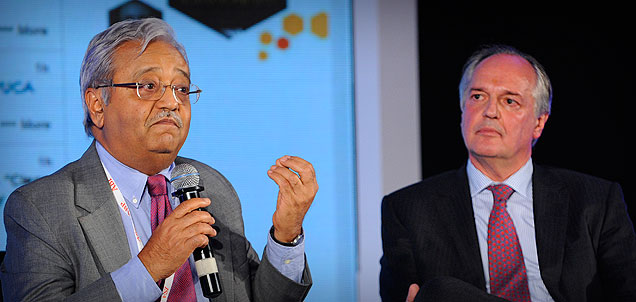
    It’s a VUCA, VUCA world. Indeed. Even as former Procter & Gamble chairman and managing director Bharat Patel may have made light of the acronym with the lyrics of a famed Shakira song, almost all of the 350-odd delegates at the inaugural Indian Society of Advertisers (ISA) Global CEO conference held on Wednesday were in agreement that the prevailing times were indeed VUCA – Volatile, Uncertain, Complex and Ambiguous.


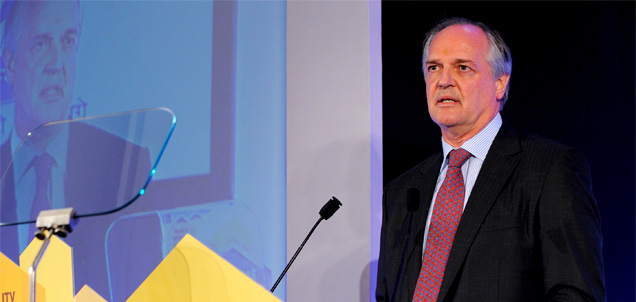
    Unilever’s Global CEO Paul Polman was chief guest at the day-long event which had “Navigating through a VUCA World” as its theme. Mr Polman urged business leaders and marketers present to shift their focus to undeniable international struggles through corporate responsibility. Acknowledging the power of the internet, he stated how the concentration of wealth from few was now passing on as power to many as consumer connectivity has increased and being discovered by the youth.


    R Gopalakrishnan, Executive Director, Tata Sons led the conversation with his illustrative presentation titled “India’s VUCA Moment”. Manu Anand, President, India and South Asia, Mondelez International Managing Director, Cadbury India and Ravi Kant, Vice Chairman, Tata Motors spoke in the pre-lunch session. Later, Marten Pieters, Managing Director and CEO, Vodafone India addressed the gathering, followed by a panel discussion moderated by Sunil Kataria, COO, Sales, Marketing and SAARC, Godrej Consumer Products Limited with stakeholders Sanjay Behl, CEO, Raymond representing advertisers, Kirthiga Reddy, Director, Online Operations and Head, Facebook India from the new media and Ashok Venkatramani, CEO, MCCS from the traditional media side. Before the Polman session, Pawan Munjal, MD & CEO, Hero Motocorp shared his approach and attitude to business in his talk, “Taking Risks in a Volatile World”.


    Meanwhile, Hemant Bakshi, ISA Chairman and Executive Director, Home & Personal Care, HUL, expressed satisfaction with the Global CEO Conference. “We hope to make it an annual affair, and see greater participation in the years to come,” he said. Paulomi Dhawan, Chairperson, Events Committee and Treasurer of the ISA attributed the success to the emphasis on content and the speakers.


    For the record, the ISA was established in 1939 which aims at safeguarding and promoting the interests of organizations involved in Indian advertising, marketing and media industry. Today, the association consists of 160 members of small and large advertisers in the country.


    First half sessions:

    With the population growing steadily, which translates into new consumers and newer markets, while resources are limited, and even though India’s growth rate is slow, it is comparatively better than that of Europe or USA. In an increasingly globalised and boundary-free market, digitization is unleashing forces that are significantly changing the game. In such a setting, a changing market is the new normal and presents huge opportunities for businesses.


    So, is the Indian market and are Indian companies new to a VUCA environment? How real is the Indian downturn or recession with simultaneous stories of companies growing? What adaptive measures need to be taken by businesses in their leadership and business models in the current times? Instead of deploying defensive strategies, how can companies gain a competitive advantage in such a scenario? Hemant Bakshi Executive Director, Home & Personal Care, HUL and Annurag Batra, media entrepreneur and Editor-in-Chief, Exchange4media group threw light on the chosen theme and set the context for the sessions for the day.


    R Gopalakrishnan, Executive Director, Tata Sons argued that VUCA has always been a reality for India and that technological response has kept pace with a constant delta, while it is human adaptiveness that takes time to change. He urged audiences to focus on the implications hereof by developing three insights and observations with the help of examples. “We’ve always been a VUCA country and now our moment has come. That is why Indians are successful entrepreneurs.” In terms of practical implications, he listed out, “We’ve forgotten to look back at nature. We have been programmed to achieve efficiency whereas nature works at effectiveness. We also need to rediscover intuition to make important decisions as a faculty that would be foolish to ignore its role in a VUCA world, as rationality can bring you this far. We need to invest in market and consumer research and face competition with élan.”


    Manu Anand, President, India and South Asia, Mondelez International Managing Director, Cadbury India took the floor next for his talk on “Reigniting Growth in an Economic Slowdown”.  Mr Anand led his speech with the backdrop of how in an economic downturn demand for products decreases, inflation and commodity costs are high which leaves companies two routes – Either buckle down and cut costs or look at this market as an opportunity and ride the wave. Acknowledging that there is no right way and a combination of both can be done, he discussed Mondelez’s growth story during the 2008-2010 slowdown to highlight what techniques worked effectively for the company.


    Finding a balance between where to selectively reduce costs and where to invest for the future; increase brand investments with a focus on master branding and the lead brand propositioning; create innovation pillars by launching new categories through different brand portfolios and focusing on your people, customers and stakeholders – these are some insights listed out by Mr Anand. “There needs to be a greater reliance on intuitive based decision making in a price expectation sensitive market such as India, VUCA times present high opportunities. It would be a mistake to make no change in management models or on the other extreme, to make aggressive investments.” To sum up, during a downturn, management leaders were asked to switch off their auto-pilot business model, keep a check on cash flow, focus on strengthening core business portfolio, increase revenue speeds, and most importantly, exploit and not waste a downturn to emerge stronger and leaner.


    “Leading Business in the New Reality” by Ravi Kant, Vice Chairman, Tata Motors addressed the topic by peering into the past and see how companies have navigated through it. Citing Tata Motors’ example, he stated that the company has moved its business model from hierarchial to cross-functional; from vertically integrated o outsourced; from centralized to poly-centric, from a purely Indian market to one that gets up to three-fourths  of its business from outside the country. “Any change happening in the transitional or contextual environment will have an impact on your business. The new reality is that of high uncertainty with natural disasters no longer being rare events; complexity due to globalization presenting diverse demographics or climate changes; and rapid changes in industries within a span of the last 10 years.”


    As solutions, Mr Kant offered the following advice, “Companies that are quick to self-check, able to experiment and collaborative are the ones that grow profitably in such times. Predictive analysis helps in giving short-term insights and with the help of technology and available data, the power of analytics and anticipation gives time to face situations better. Innovation is key to keep you going, to gain market share or within internal processes. Finally, collaborate because in today’s times, no company can do anything without networking, integrating or information-sharing.”


    Second-half sessions

    Shedding light on the cut-throat industry of telecomm operators, Marten Pieters, Managing Director and CEO, Vodafone India took on a positive approach in his presentation titled, “Not every Consumer has Sealed her Wallet: Finding New Pockets of Growth”. Sharing simple rules that helped Vodafone prosper in the economic slowdown, he pointed out, “As business professionals, we have no other choice but to embrace the change. As a marketer or advertiser, make VUCA a friend, instead of a foe.”


    In the Vodafone context, he shared marketing mantras that worked. His key pointers were – 1. Understanding your customer better – our future customer is already with us. 2. Behaviour change happens more slowly than expected. 3. Business grows by leveraging opportunity not only by solving problems. 4. Acquisition is a must and not optional for brands. 5. Light or infrequent buyers matter. 6. Intensify investments during lean period. “Satisfy consumer needs – customers bend if there is something worth to be picked up. Marketeers tend to get impatient while consumers take time to accept and embrace change. Businesses need to be light on their feet to mine opportunities. During a downturn, brand building can be done while media costs are low. While suggestions for VUCA times may be different for different industries, consumer behavior broadly does not change across categories regardless.”


    A panel discussion on the sensitive issue of “Cut Costs, Not Corners: Smart Marketing for Turbulent Times” moderated By Sunil Kataria, COO, Sales, Marketing and SAARC, Godrej Consumer Products Limited. On the panel were reprentatives of three sides – Sanjay Behl, CEO, Raymond, as the advertiser; Kirthiga Reddy, Director, Online Operations and Head, Facebook India as the new media and Ashok Venkatramni, CEO, MCCS from the traditional media side. The panel gave their views on what is withholding open-hearted collaborations between the media and marketing fraternities and why has this scenario developed. Some interesting suggestions for a VUCA world that emerged from the conversation was of the need for more responsible marketing due to marketing spends being one of the few operational costs that is based on speculation and a plethora of choices. ‘Personalization of messages ‘was pegged as one of the biggest themes leveraged by marketers. CSR moving to BSR, that is, Brand Corporate responsibility was yet another interesting insight by the panelists.


    Sharing the brand’s success story, Pawan Munjal, MD & CEO, Hero Motocorp shared his approach and attitude to business in his talk, “Taking Risks in a Volatile World”. As a pioneer brand in the category that has reached international markets, Mr Munjal shared Hero’s VUCA times. “VUCA is equal to Opportunity. We at Hero, believe in disruption. A clear and steadfast vision will be the anchor that will bring order to chaos and help you make the right decisions in the interest of your stakeholders and consumers with resolve and confidence. It is important to have a mindset of anticipation and embracing change within the organization. Ensuring flexibility is key to diversifying risks. Lastly, courage and unflinching belief will help you through any uncertain times.”


    The Polman Session

    Paul Polman, Global CEO, Unilever shared his eye-opening and inspiring viewpoints on “How Responsible Business Models Can Help in VUCA Times”. Looking beyond short-term ROIs or pricing strategies, Mr Polman took on a human stance at viewing the current global scenario. Citing global realities of lack of food or sanitation for a large part of the planet’s population, or the European slowdown or the political upheaval in Syria – Mr Polman urged business leaders and marketers to shift their focus to undeniable international struggles through corporate responsibility not just as an obligation but as a business idea.


    Acknowledging the power of the internet, he stated how the concentration of wealth from few was now passing on as power to many as consumer connectivity has increased and being discovered by the youth. “If you can get an ingrained political regime out of government in 17 days, you can out a company within nanoseconds. If a political system doesn’t work, trust in businesses also goes down. This is an end of the era of abundance. Transparency can be built only on trust, which will lead to prosperity. This is a unique moment for mankind. As businesses, we have to become solution providers and not just by-standers in the system that helps us grow. It’s time marketers run ahead instead of behind and look at mainstream corporate responsibility. The biggest tool you have as a marketer, is to build your brand to build trust. Give brands a social mission and purpose as a changed business model or become isolated.”


  • Why Unilever CEO Paul Polman doesn’t like to worry…


    By A  Correspondent


    Paul Polman’s Unilever has announced a profit warning and is battling slowing growth in emerging markets, but the CEO of the world’s biggest consumer goods company says he doesn’t worry about anything. “You can write that Mr Polman doesn’t like to worry about anything and you will be pretty close to the truth,” he told a meeting of select journalists in the Hindustan Unilever house in Mumbai. “If I sleep then at least I come to work with little bit more energy and think about what to do versus the others who worry too much and don’t sleep enough.”


    Mr Polman may not have much to worry about Hindustan Unilever whose second quarter profit and sales growth beat estimates, but a slowdown in emerging markets, combined with uncertainties in Europe and the US, is likely to occupy his attention for quite some time. HUL, the Indian unit of the Anglo-Dutch giant, has trebled its rural network, accelerated sales growth, developed new products and has consistently grown ahead of the consumer market.


    Mr Polman, who took over as CEO in 2009, has combined an unconventional approach with some plain-speaking in an attempt to refurbish the image of multinational giants tarnished by charges of corruption and heavy-handedness in the run-up to the global financial meltdown of 2008.


    He has abolished quarterly results, urged his company to invest for the long term and championed a business model built on sustainability and healthy living. In Mumbai he said that capitalism needs to evolve and that companies can no longer allow forests to be burned down and children to die of hunger. On Thursday, he said “there will always be bumps on the road to development,” adopting a measured stance on the governance crisis which has pitted businessmen and politicians against each other. Mr Polman said that politicians and businessmen are not against each other and that countries such as India and Brazil have similar problems.


    “In two weeks time, we are in Brazil to discuss the same issues with Dilma (Roussef, Brazilian president). My point with them is it is not politicians against business… (there are) so many major issues that this world faces… (it’s about) what we can do together,” Mr Polman said.


    Emerging market countries like Brazil and India have been rattled by a severe crisis of investor confidence after a dramatic slide in the value of their currencies felled stocks during the July-September period after the government fumbled on key reforms. India, along with other emerging market economies, contributes nearly 60% to Unilever revenues.


    India is facing a slump in corporate investment and Polman tried to assuage concerns by saying that the road to development is not always smooth. “We don’t run business on the basis of short-term concerns or financial markets. We run it on the basis of opportunities. Nothing has changed there. As I said to the PM, any road to development has some bumps. It is same in every business. Every quarter is never a straight line,” he added. Unilever, he added, has shown confidence in India by investing ¤2.5 billion to increase its stake to 67.35 from 52.5%. Over the past three years, HUL added about Rs 8,000 crore – bigger than the size of some mid-sized rivals – to its top line.


    However, what may seem like an achievement is also perhaps Mr Polman’s biggest worry. “The only worry is that if we become so big, we could become internally focused versus externally focused and might lose passion about the consumer.” “You have to think about how to make the company more agile, how to think of new opportunities to grow, how to reach more people in the bottom of the pyramid when governments don’t,” he added.


    Polman’s ambition of doubling Unilever’s 2009 size by 2020 by following a business model built on sustainable development has some lessons for India as well.


    “Yes, you create billionaires here, but there is one out of 20 children not making it to the age of five,” said Polman, who once wanted to be a doctor or a priest.


    Harish Manwani, HUL chairman, said that the company should focus relentlessly on costs and in increasing market share. “Business as usual in the long term and business unusual on cost.”


    Messrs Polman and Manwani together have around 70 years of experience in selling consumer products across markets.


    “The growth may have slowed down but people are still buying more premium products. We have multiple portfolios and brands and we must stay at top of the game in both urban and rural and across price-points,” said Mr Manwani.


    While a section of analysts and investors consider stocks of consumer goods companies, including HUL, fairly overvalued given the current slowdown, MR Polman isn’t perturbed. “HUL is a very attractive stock in India and when people have the opportunity to invest in Indian equity, HUL is among the top five choices,” said Polman referring to HUL’s stock price that has almost doubled since 2009 when he became the first-ever chief executive officer from outside Unilever.


    Source:The Economic Times

    Copyright © 2013, Bennett, Coleman & Co. Ltd. All Rights Reserved

    Licensed to republish


  • DDB Mudra ropes in Sambit Mohanty as Creative Head, North

    By A Correspondent


    DDB Mudra has appointed Sambit Mohanty as Creative Head, North. Sam, as Mr Mohanty is better known, will be based out of Delhi and will report in to Sonal Dabral, Chairman and Chief Creative Officer, DDB Mudra Group.


    Sam joins DDB Mudra from McCann Erickson where he was Executive Creative Director, New Delhi, instrumental in creating memorable work for Coca-Cola (Haan, Haan, Mein Crazy Hoon) and Aircel (Thoda Extra Milta Hai Toh Achcha Lagta Hai).


    With over 14 years in advertising and design, Mr Mohanty has worked with Leo Burnett, Publicis, Lowe and Elephant Design and worked on clients such as Coca-Cola, GM, Nestle, HP, Pernod-Ricard, Virgin Mobile, Hitachi, Max Bupa, Godfrey Philips, The Indian Express, BBC World, Tanishq, Britannia, Reckitt-Benckiser and more.


    On joining DDB Mudra, Delhi, he said, “It’s a privilege to be part of DDB’s creative culture that’s guided by play books not rule books. With Sonal’s help, I’m keen on creating a place where one looks forward to coming to work – even on a Monday morning. And also producing some glorious work along the way!


    Said Sonal Dabral, Chairman and Chief Creative Officer, DDB Mudra Group said, “New Delhi is an extremely important market for us so I’m really happy that a talent like Sambit will lead our creative offering there. Sambit is among the rare breed of creative professionals in India who are equally comfortable with Hindi or English, with paper and pen or mouse and computer screen. I’m certain Sambit will play a big role in helping shape an exciting creative future for DDB Mudra Group.”


    Said Vandana Das, President, DDB Mudra Delhi, “We have got to dot our “I”s in the creative business. I am looking at ushering, welcoming, embracing creative leadership in DDB Mudra Delhi through Sambit. He is a phenomenal talent and he has got the three Is – Inspiration, Imagination and Involvement. Many “I”s put together becomes “We” and I look forward to generating some more incredible work from our office.


  • Ravi Deshpande on the hows and whys of Whyness


    By Pradyuman Maheshwari


    He had made his exit as chairman and and chief creative officer of Contract India in April this year. While his design school in Central Mumbai was doing well, he was working on a project that he said he would tell us in good time.


    Which he has with Whyness Worldwide. Three offices – Mumbai, Paris and Boston plus alliances with Boston-based big data tech firm Findability Sciences and a branding and design company called Seenk from France.


    Said Deshpande, who is designated founder, chairman and CCO of Whyness, in a communiqué: “We are an integrated communications agency for the new world.  We address brand challenges with solutions that combine human insights, creativity, design and technology. In a sense it is an agency that bridges the gap between traditional agencies and digital agencies. We wanted to mix up things and produce surprising results that actually work for brands and companies. Design and Strategy combined with technology, Creativity mixed with Algorithms.” This isn’t Deshpande’s first attempt at being an entrepreneur. In 2001, he quit Contract to start Lemon.


    In a free-wheeling chat, Deshpande goes behind the setting up of Whyness, the name, the integration of tech and design in an ad agency and whether he would look at hooking up with a bigger player.


    Other than Ravi Deshpande, how will Whyness be different from the others?

    Whyness is born with a different genetic structure, and that flows through the way we approach businesses, marketing challenges and storytelling with the help of technology. We have built our team around that ideology. In a sense, Whyness will bridge the gap between traditional agencies and typical digital setups.


    There is an emphasis on Big Data in Whyness. While we have had India perform well in the international Echo awards, is Big Data really big for advertising agencies. And wouldn’t advertisers prefer specialists for that?

    It should be. With so much emphasis on social media, both by advertisers and marketers, it’s perennial to know your audience and have smart data to validate every step. It is a practice in Whyness, we don’t do anything without asking the right questions, and to ask the right questions, you need to have market intelligence. Big Data is just that, and it’s the lack of such practices is why Whyness is born with a specialist Big Data alliance called Findability Sciences.


    Ditto with design… there are a fair number of exclusive design boutiques in the country?

    Technology without design is soulless, and art without the use of new techniques of expression is stale. Both are disciplines that help you solve a marketing problem, and at Whyness we stitch them together in order to create more immersive experiences.


    A lot of agencies now display the ‘integrated’ tag. There are many agencies which are now sporting that tag? Is integrated the same as full-service or is it different?

    Integrated is not necessarily full-service agency. It is really about a seamless structure that combines storytelling, tech, strategy and design.


    Will you be having the strategic planning and media buying/planning functions too as part of ‘Whyness’?

    Strategy and Planning would be an integral part for Whyness. We are exploring digital media planners being part of the ecosystem.


    Any clients on board? Any one moving from Contract?

    We are in conversation with businesses from India and the US.


    Tell us about the funding?

    It is a self-funded venture.


    This isn’t your first experience with entrepreneurship? Any lessons from Lemon that you will not repeat now?

    Well, the biggest learning is that you have to control your own destiny.


    While we all knew that you were looking at setting up anew, the immediate response was: offo, ek aur nayi agency? Is there room for another creative shop?

    Indeed there is a need for an agency such as Whyness. Marketers in India and around the globe, feel the need to integrate disciplines when it comes to communication. But there aren’t many agencies that successfully manage this integration. Most importantly, I don’t know of any such agency in the country that is built around a technology core.


    What’s about the name of ad agencies these days… from agencies named after people (JWT, Ogilvy, R K Swamy) to business-like names (Enterprise, Contract, Rediffusion) to some interesting ones now like Taproot, Scarecrow, Enormous and now Whyness?

    Well, defining a problem sharply, is halfway to finding the right answer. Great work usually happens when we take a problem by its horns, and ask the question ‘Why’.  From the reply, emerge more questions. Which when answered, give rise to more questions. Until finally, we have narrowed down the problem, cornered it, pinned it to the wall and left no room for it to escape. No more room for questions.


    On such a clean slate, the problem lies, clear, waiting to be solved.  This, we believe is the perfect condition to deliver great work. Hence the name ‘Whyness’.


    You’ve just set up so possibly inappropriate to ask this now, but still: at what stage would you look at aligning with a Big ‘Un?

    We are beginning a journey, we have the steam and strength to move ahead comfortably for a long while to come. But if we do meet some partners who value us for our way of thinking, then a friendship may be forged. But till then, we are happily unmarried.


  • Ad Club announces Effie Awards dates, tweaks

    By A Correspondent


    The Ad Club conducted a town hall meeting with Industry professionals with a view to gain their inputs and buy-in to the categories and rules of the Effie Awards.


    The awards for the year – normally held in the last quarter of the calendar year – will be held on Wednesday, January 15, 2014 at the Royal Western Turf Club in Mumbai.


    Here are important dates:

    Last date to receive entries: November 25

    Judging date in Mumbai: December 13 and 14

    Mumbai final round: January 7, 2014

    Judging date in Delhi: December 20 and 21


    Based on the inputs, the Ad Club has brought about the following changes:

    Under Consumer Products category,  the Sub-Categories are coined as:

    A) Beverages / Drink

    B) Confectionary and Food

    C) Cosmetics & Toiletries – same as last year

    D) Others – same as last year


    Under the Services Category:

    A) Media and Entertainment is newly added

    B) Telecom and Related Products – same as last year

    C) Financial Services – same as last year

    D) Others – same as last year


    Introduction of New Categories:

    1. Experiential Marketing

    2. EFFIE for Good


    Removal of Sub Category:

    :: From Corporate Advertising, the sub0category Social Cause is removed and the  current nomenclature will be Corporate Advertising/ Corporate Reputation.


    Video: Video should be limited to a maximum of 3 minutes only.


    Eligibility Period: Campaigns that ran in India from July 1, 2012 to June 30, 2013