Category: ADVERTISING

  • Outdoor adspends grow 8% in H1 FY 2013: Laqshya research

    By A Correspondent


    Outdoor Advertising ad revenues have grown 11% in the first quarter and by 4 percent in the second quarter of 2013 over the corresponding period of 2012 making it a total of 8% growth for the H1 fiscal 2013 over 2012. These numbers were revealed by the Laqshya Media Group research wing which conducted the research.


    According to a communiqué from Laqshya Media, the good news is that despite the lingering economic uncertainty OOH continues to grow which is an excellent sign for advertisers who want to reach out to people with billboards, bus shelters, huge gantries, foot-over bridges, and any other outdoor vehicles. The industry going by this analysis has every reason to be optimistic.


    The sector-wise analysis is as follows:

    – Real Estate upped OOH investments most rapidly as compared to any other sector making it the most dynamic category for the first half of 2013. Spends grew by 51% as compared to H1 of 2012. The realty players from Mumbai and Delhi have been spending heavily in traditional OOH, whereas South India-based players are also actively visible in premium ambient media like airports.

    – Education Sector with large focus on Q1 dominates the other category spends though its spends have reduced compared to H1 of 2012.

    – In the Media & Entertainment category, TV channels particularly the GECs hold a substantial pie in the OOH share of spends.

    – Jewellery Brands like Tanishq has been spending heavily along with south based brands like Malabar and Kalyan on their store launch across various towns using OOH to create awareness. There has been a 28% rise in their spends observed this year as compared to H1 2012.

    – Many other sectors slightly exceeded their spends in the first half this year as compared to last year making the overall OOH share of spends bigger and thus creating an 8% growth as compared to last year. Categories like banking, mobile handsets, airline operators, housing finance, life insurance, retail (particularly the Innerwear Segment) and healthcare saw greater growth as compared to last year’s first half.

    – Two-wheelers emerged as one of the most active spenders in the first half of 2013 as compared to the same time last year 2012, registering a growth of at least 50%. Brands like Hero Motocorp, Bajaj and Honda have captured the roads with larger than life displays for their two-wheelers.

    – The first half of this fiscal year 2013 also saw a decrease in spends by the top OOH spenders like automobiles (four wheelers) and mobile services.


    Commenting on the statistics and trend, Atul Shrivastava, COO, Laqshya Media Group said, “The overall OOH pie has grown 8% this year as compared to same period last year. There has been a moderate growth in various other sectors but OOH that has traditionally thrived on automobiles and mobile services took a hit. Big players in the Four Wheeler category like Hyundai and Tata Motors-owned Jaguar Land Rover have been successfully banking on OOH long term sites to create brand salience. The only spike observed in the category was during the brand launch of Honda Amaze and Chevrolet Sail.”


    The evident growth in both quarters Q1 and Q2 of 2013 as compared to the same period of 2012 reflects the progress the industry has made, adds the communiqué.


  • After Ad Asia in Vietnam, AFAA gears up for DigiAsia & AdAsia 2015 in Taiwan

    By A Correspondent


    After hosting over a thousand delegates from across Asia at the bi-annual AdAsia 2013, the Asian Federation of Advertising Associations (AFAA) is now getting set for the 2015 edition to be held in Taiwan.


    In Ad Asia 2013 Vietnam, an elite list of speakers formed base for knowledge sharing and further deliberations on the Congress theme – Re-engineering Advertising. Thought leaders such as David Allen Aaker, Vice Chairman, Prophet, Don Peppers of Peppers & Rogers Group and Hermawan Kartajaya, World Marketing Association – President and Co-author of five books with Philip Kotler set down some future trends for brands. The changing role of advertising in a digital world was also visited by industry gurus such as Dick Van Motman, Chairman & CEO, Dentsu Network/Asia; Lee Smith, CEO-Platforms, Omnicom Media Group APAC; Jean Lin, Chief Strategy Officer Isobar Global and CEO Isobar APAC – each of whom indicated that while technology was impacting everything in its wake, brand consistency and advertising in itself were the golden rules of the business.


    A more digital perspective was presented by John Merrifield, Chief Creative Officer, Google APAC; Rose Tsou, Senior Vice President – APAC, Yahoo! Inc.; Jamie Reigle, Managing Director, Manchester United Asia Pacific and Michael Barden, Vice President of Publisher Sales, DG Mediamind. The speakers reiterated that digital opened new routes for dialogues with consumers but the business was increasingly becoming about unending opportunities for marketing where Asian countries are leading with examples.


    Speakers such as Nigel Hollis, Executive Vice President & Chief Global Media, Millward Brown and Edward Pank, Managing Director, Warc Asia brought the intelligence quotient at the Congress and delved on the magic created when science married the art of advertising.


    The Taipei Association of Advertising Agencies (TAAA) offered delegates a preview into the forum in AdAsia 2015 as the next host country. As a prelude to AdAsia 2015, AFAA took the initiative a step forward with TAAA and announced DigiAsia. DigiAsia, also planned as a bi-annual event, will complement AdAsia, beginning 2014.


    Pradeep Guha

    Remarked AFAA chairperson Pradeep Guha, “I can say on behalf of AdAsia delegates that what we experienced was one of the finest displays of Vietnamese culture and a laudable effort at presenting its Capital, Hanoi. The Government of Vietnam has done a wonderful job in rebuilding this beautiful nation. As delegates, we gained immensely from the rich quality of content at the forum and a wonderful overall experience.”


    According to a communiqué, AdAsia 2015, with its theme ‘Cloudea’, formed from ‘cloud’ and ‘idea’, is the first time when AdAsia is dedicating the forum to digital, and for AFAA, the decision marks an important chapter.


  • Amul ads on the terror attack & after

    The creatives we see on Amul Butter’s billboards are excellent indicators of popular mood and perception. Here we bring you some of these released after November 26, 2008 and until the Kasab hanging


    War of terrorism unleashed in Mumbai – Dec ’08


    Return of the English Cricket Team to play the test matches at Chennai & Mohali – December ’08


    The Taj reopened its Tower Wing, three weeks after the terror attack – Dec ’08


    FBI investigating David Headley’s footprints in India regarding 26/11 terror attack in Mumbai – Dec.’09


    The burning rage and flickering hope amongst the people, on the first anniversary of terrorist attack in Mumbai – Nov.’09


    Judge pronounces terrorist Ajmal Kasab guilty – May’10


    Error in the list of India’s most wanted terrorists – May – 2011


    Ajmal Kasab finally hangs… – Nov’12


  • Japanese firms advertise on cartoon shows to convey that its brands stand for high quality

    By Shambhavi Anand & Writankar Mukherjee


    Why would an imaging brand like Canon advertise its products on cartoon show Doraemon? Canon’s executive vice-president Alok Bharadwaj said the current generation of children aren’t as aware of Japanese electronic brands as previous ones and, hence, the use of the popular cartoon characters for a rub-off effect.


    Doraemon, Hello Kitty and Ninja Warriors are popular among Indian children (and their long-suffering parents) and better known than Japanese staples such as Sony and Panasonic or even Toyota and Honda. “In a certain sense, these equities have become large when compared to age-old brands,” said Satyajit Sen, CEO of media buying company ZenithOptimedia. “However, both (sets of brands) operate in different spaces and that should also be taken into account.”


    The development reflects the importance of ‘soft’ power, as exemplified by the spread of pop culture icons, such as the Doraemon anime series. “Japanese cartoons have broken the monopoly of western world characters such as Mickey Mouse and Donald Duck,” said Mr Bharadwaj. “That same message that Japan stands for high quality will only grow in the kids and boost other businesses.”


    Recognising this, the Japanese government has announced the launch of a new project to aid global promotion of the country’s culture, including its anime, video games and cuisine. The Cool Japan funds will start with Â¥50 billion (about $500 million) in backing from the Ministry of Economy Trade and Industry combined with 10 billion Yen from a range of companies. For PlayStation maker Sony Computer Entertainment, the popularity of cartoon characters such as Doraemon and Hello Kitty has led to a jump in sales of both gaming consoles and software, said Atindriya Bose, country manager. “The rate of adoption increases when a cartoon character becomes popular,” he said.


    The popularity of Japanese anime in India has persuaded an increasing number of companies such as Maruti Suzuki, Honda, GlaxoSmithKline, Hindustan Unilever, and Samsung to use the blue robotic cat Doraemon to promote their products.


    That’s where those long-suffering mums and dads come in. Parents tend to watch cartoons since the children are glued to them, said Chitranjan Dar, chief executive, foods, ITC. Which is why Hindustan Unilever promotes Surf Excel detergent and Tresemme hair care on cartoon programmes.


    A 2012 study by Cartoon Network showed a majority of parents watch television with their kids. After serials, cartoons are the most preferred genre for parents, ranking higher than news channels. About 75% of parents spend time watching TV at least five-six times a week with their children. This number is even higher, close to 80%, for parents of younger children. Channels say that in spite of substantial growth, the genre is under-monetised, with 7% viewership and just 3% of revenue share.


    According to the industry that buys advertising time and space on television and in print, more than 8% of national viewing time – more than that of news channels on most days – brings a horde of advertisers to children’s channels. According to TAM data, Ninja Warrior, Shin-chan and Doraemon have the highest ratings among shows meant for children across channels that cater to them.


    Some children’s channels earn close to 50% of their revenue from advertisers targeting adults.


    Source:The Economic Times

    Copyright © 2013, Bennett, Coleman & Co. Ltd. All Rights Reserved

    Licensed to republish


  • Bharat Ratna = Brand Ratna?


    By Binoy Prabhakar


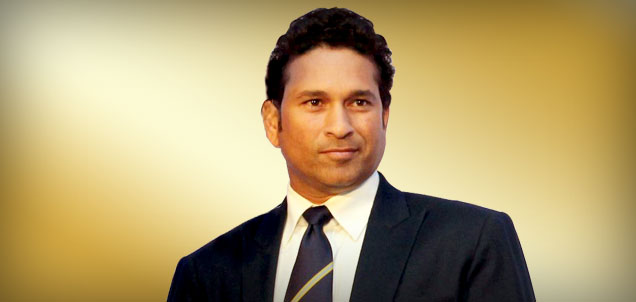
    Sachin Tendulkar’s sparkling career ended with the mother of all farewells, the outpouring of adulation and emotion, the throng of photographers and hyperventilating fans who trailed his last days in India colours unprecedented in any sport, leave alone cricket. Milkha Singh, Prakash Padukone, hell, even Michael Jordan must be ruing their decision to pursue a non-cricketing sport. And then he was chosen for the Bharat Ratna.


    Now is that a good thing or bad thing? No doubt, Tendulkar the sportsman couldn’t have hoped for a more fitting bookend to his career than receiving the highest civilian award in India. But what about Tendulkar the brand ambassador? From a marketing standpoint, the award seems like a cross to bear. Here is why. The interest of brands in Tendulkar thanks to his farewell circus is as high as it was during his playing days.


    Surely, his marketing kitty of 14 brands (the number has dropped by four since May 2012 when he scored his 100th international century) can only swell hereon due to the attention.


    Yet, the award raises the uncomfortable question whether Tendulkar should be endorsing products in the first place. The frowns began on Twitter, the largest gathering ground for shouting heads, where users hoped the cricketer would stop associating with at least Luminous, an inverter maker, which jockeys with realtor Amit Enterprises as the most lackluster brand he promotes.


    Murmurs, Protests

    It didn’t take long for the murmurs of disapproval to grow louder and take a more serious overtone. A key argument relayed by this crowd was that Tendulkar had amassed tons of money from the game. Janata Dal (United) MP Shivanand Tiwari was of the view that Tendulkar was not playing for free. “Sachin has made crores of rupees by helping corporates market cricket in the country,” he said.


    A case has been filed in a Bhopal court against Tendulkar and the prime minister who recommended his name. At the heart of the wave of discontent was the money Tendulkar made from brands. The catcalls will grow shriller if brands decide to thrust the Bharat Ratna at the centre of commercials featuring Tendulkar. Indeed, the Bharat Ratna has inadvertently cast a harsh light on Tendulkar’s promotional pursuits. But Harish Krishnamachar, country head of World Sport Group (India), the company that manages the star’s commercial interests, says Tendulkar will honour all contracts, which run until 2014. Fortuitously for Tendulkar’s managers, a Bharat Ratna recipient is not barred from marketing.


    The rulebook states that “the honour does not confer any pre- or postnominal titles or letters; recipients are constitutionally prohibited from using the award name as a title or post-nominal”. That means the launch of a slogan like ‘Luminous Ratna’ or ‘Coca-Cola salutes Bharat Ratna’ can invite trouble.


    Mr Krishnamachar says the award increases the stature of the Tendulkar brand and will also carry with it an added responsibility of selectivity and an increased sense of trust and responsibility.


    In Tendulkar’s defence, he has been picky about his brand associations. He has said no to tobacco and alcohol promotions; he rejected a multi-crore deal with UB Group three years ago. WSG has no precedent to turn to as previous recipients such as Lata Mangeshkar and Bismillah Khan received the award in their twilight years. Not so with Tendulkar.


    At 40, he happens to be the youngest recipient of the Bharat Ratna. The “Sachin! Sachin!” fever is now showing few signs of letting up. So if there is a time to milk the affection of brands, it is now. Remember public memory is short. Sociologist Shiv Visvanathan says Tendulkar is too predictable a character. “I can see him growing less interesting day by day.” In that context, the award could have waited.


    A New Game Plan?

    Mr Krishnamachar says Brand Tendulkar has gained an increased visibility, adding that “Sachin has always done selective associations and hence we will assess things once he is back from his break”. It won’t be easy. Mr Visvanathan says Tendulkar has to choose from a range of brands. “He is the man who could not fail. So he has to vouch for products which are ‘fail-safe’.


    A safe bet for brands would be to focus on Tendulkar the legend rather than Tendulkar the Bharat Ratna. Even that presents a dilemma. Visvanathan says there is going to be the touch of the comic now. “Imagine Tendulkar says Boost is the reason for my Bharat Ratna. The problem then is the Bharat Ratna becomes a brand endorsing a smaller brand.”


    Source:The Economic Times

    Copyright © 2013, Bennett, Coleman & Co. Ltd. All Rights Reserved

    Licensed to republish

     

  • Advertising etc is fine, but word-of-mouth most vital for consumer electronics sales in Asia: Text100 study

    By A Correspondent


    Two in every three Asia-Pacific shoppers has already done extensive research and decided which brand of consumer electronics product they will buy before they approach a point-of-sale – regardless of whether it’s online or offline, according toText100’s Digital Index: APAC Consumer Electronics Study.


    Based on more than 2,000 respondents in seven countries, the study specifically looked at three subsectors in the consumer electronics segment: smart devices and new technology; games, software and apps; and traditional electronics and home appliances.The study found that 68 per cent of Asia-Pacific consumers are likely to do all of their research on which product they want to purchase before heading to buy it.


    Word-of-mouth remains the most influential source of information for consumers throughout the region – being referenced by one in two potential buyers of smart devices and wearable technologies – along with digital “equivalents” like online reviews and forums. However, retail outlets and the media retain significant sway over decisions at all stages of the buying process: both visits to bricks-and-mortar stores and traditional media sources were consulted by more than 40% of shoppers as they set out to buy traditional electronics and home appliances.


    Purchase price, product specifications, and peer reviews ranked as the most sought-after information types across all product subsectors and stages of the buying journey, with almost 3 in every 4 consumers seeking out pricing information when they were intending to buy.


    “Asia-Pacific consumers have now truly taken control over the decision-making process, dictating what information they expect from brands as well as where, and when they want it,” said Anne Costello, Text100’s Regional Director – Asia-Pacific.  “At the core, we’re still after the same things: price, facts, and validation from our peers that we’re making the right decision.


    “But the age-old ways of getting this information, like word-of-mouth, have been dramatically remediated into a whole range of new channels, from social media sharing to blogs and self-declared experts both online and on the retail High Street. Building awareness of product is critical for today’s brands and they can only do so by mapping out an integrated, omni-channel communications strategy that’s consistent, credible, and relevant in the content that it offers.”


    The study also revealed several telling differences across different Asia-Pacific locations, including:


    > Despite relatively low Internet penetration, 1 in every 2 consumers in Indiarely on online word-of-mouth (including social media sharing and peer reviews) when researching smart devices and wearable technology;
    > Singaporean and Hong Kong consumers are the most price-sensitive;
    >9 in 10 Chinese shoppers expect to buy smart devices in the next 12 months;
    > In 40 per cent of Australian households, the husband or male partner assumes a major stake in deciding what to buy;
    > Malaysian consumersfeel compelled to give more reasons for purchases than those anywhere else in Asia-Pacific; and
    > Taiwanese consumers are as likely to buy second-hand goods as brand new ones, across all types of consumer electronics.

    To download a copy of the study’s findings, please click here.


  • Blackberry’s Fall/Winter collection goes aggressive on OOH

    By A Correspondent


    Blackberry’s Fall-Winter collection has unveiled a campaign across premium sites in malls, airports and other upmarket locations of Mumbai, Delhi, Hyderabad, Ahmedabad and Bengaluru.


    The campaign highlights the quality of clothing that Blackberry’s is known for and a mix of media including billboards, unipoles, mall facades and airport media has been used in the campaign.


    Talking about the campaign, Ajay Pradhan, National Marketing Manager for Blackberry’s, shared his feedback on the OOH campaign. “We wanted this to be a high impact campaign, one with not just maximum visibility but also one that would be long-term. A high-end clothing and fashion brand needs to capture the consumer’s attention constantly adding to its aspirational value. What better way to do this than splash hoardings in vibrant shopping locations in the metros?”


    One of the unique features of the campaign which will last until end-December 2013 is the use of the portrait unipoles at the Hyderabad International Airport.


  • Pharma giant GSK’s sign-on bonus demand leaves adland divided

    By Pritha Mitra Dasgupta


    UK pharma major GlaxoSmith-Kline’s demand for sign-on bonus from advertising firms to do business with it seems to have divided the Indian advertising and marketing fraternity into two camps on the social media.


    While GSK’s move is being condemned by international advertising agencies that have termed it ‘scandalous’, ‘lazy’ and ‘bullying’, some industry veterans in India support the rebate, saying it will put a leash on media agencies that, they allege, discreetly charge over 10% commission and show 2-3% on record.


    Following an Economic Times story on the matter on Monday, advertising veteran Preet Bedi, who has worked with Rediffusion Y&R and Lintas, wrote on his Facebook wall, “The concept of a sign-on bonus payable by agencies to clients is a masterstroke. As an agency man, I would obviously have opposed it but from the outside, I know it’s a great idea.”


    His reasons – “one, it forces agencies to pitch only for brands they really wish to be associated with and vice versa. Secondly, it forces agencies to make upfront investment in the new business; currently agencies spend peanuts on new client acquisition. Thirdly, it will force transparency in agency remuneration.”


    He also says that the move will lay bare a fraud, media agencies often perpetrate. “U (sic) will find media agencies agreeing to pay more than one or two year’s declared revenue as sign-on bonus. How? Because the actual margins are often double or even triple the declared margins. Quite brilliant; Martin has met his match,” Mr Bedi posted on Facebook.


    This sparked a virtual debate on Mr Bedi’s Facebook wall. Harit Nagpal, managing director and CEO, Tata Sky, supported GSK’s move saying, “Why are agencies complaining? If none of them is willing to pay, it won’t happen. And if even one of them is willing, and the client goes for it, disregarding the agency’s merit, he deserves it.”


    Kedar Anil Gadgil, principal consultant at Druid System, however, called the concept “an oligopoly of rich, established agencies creating a moat around their castle to protect it from the outsiders” and added that agencies should knock the door of competition lawyers to safeguard their interest.


    Mr Bedi, however, opined that nothing can stop sign-on bonus from getting implemented. “…don’t waste your money trying to fight it. If clients want it. (sic) It will happen,” he commented.


    He also wrote that while a client contributes an average of Rs 10 crore to an agency’s revenues, “the input on winning a brand is miniscule.”


    Vikas Mehta, head of Euro RSCG, Oman, countered it, “The average client does not give an average revenue of (Rs ) 10 crores. Even in the top 5 Delhi agencies, average client revenue will be less than (Rs ) 5 crores and average brand revenue still less. Not workable.”


    The fear of many advertising agencies is that if GSK is successful in implementing this, then other marketers may follow suit. In the UK, before GSK made its demand for sign-on bonus, Premier Foods that owns brands like Bisto and Hovis had parted ways with its media agency Starcom MediaVest over “investment payment”, head of an advertising agency said. “So it seems more and more marketers are warming up to it,” the person added, requesting not to be named.


    Industry bodies have come out against the sign-on bonus concept. While the Advertising Agencies Association of India has already said it should be “discouraged strongly”, International Advertising Association’s India chapter president Srinivasan K Swamy, said it is an “impractical concept.”


    “No marketer or a right thinking person would ask an agency to pay a sign-on bonus. A buyer has to pay for the goods and services he buys and it could not be the other way round,” said Mr Swamy who is also the chairman of RK Swamy BBDO. “If I have signed a contract with my client that says that if sales drop then I will have to pay a penalty then that could be worked out. Otherwise, why should an agency pay a penalty?” A mail sent to Indian Society of Advertisers chairman Hemant Bakshi, who is also the executive director, home & personal care at Hindustan Unilever, remained unanswered till late on Tuesday.


    R Ramesh Chandran, co-founder at Xtravision Media Associates, wrote on Mr Bedi’s Facebook wall that Reckitt Benckiser had tried something similar three years ago, with some tough demands such as fee to pitch for the business and penalty for not meeting CPRP targets.


    “…nobody pitched…it fell into ZOD’s lap due to international alignment… the situation at ZOD is quite a common knowledge now…Reckitt account is up for grabs again,” Mr Chandran wrote.


    Source:The Economic Times

    Copyright © 2013, Bennett, Coleman & Co. Ltd. All Rights Reserved

    Licensed to republish


  • South African Tourism appoints MudraMax to get people flying

    By A Correspondent


    South African Tourism has appointed DDB MudraMax as its outdoor advertising partner in the tourism board’s destination brand building efforts in India. The agency will be responsible for the 2013 -14 campaign which goes live in January 2014.


    As many as 12 leading creative and media buying agencies were part of the pitch which saw them presenting a pitch post a comprehensive campaign brief being presented to them in July.


    Commenting on the announcement, Hanneli Slabber, Country Manager, South African Tourism said,” Given the importance of the Indian market in our global tourism growth strategy, we were scouting for an agency that showcases the best understanding of South Africa as a holiday destination. DDB MudraMax was declared the winner as they provided the most innovative and compelling ideas in addition to showcasing their team strength and expertise that can support South African Tourism’s brand building and marketing requirements across our key markets and audiences.”


    Mandeep Malhotra

    Said Mandeep Malhotra, President, DDB MudraMax – OOH, Experiential and Retail: “I’m extremely happy to be partnering with South Africa Tourism to help promote their tourism plans and expand their strategy to the outdoor market, in India.”


  • Cyrus Mistry: Slow and Steady in Year #1


    By Suman Layak


    Signals from Cyrus

    Ok guys, it’s time for business: Mistry needs a few of those glamorous multi-billion acquisitions to deliver. Takes the call to abort Indian Hotels’ much-attempted bid for Orient Express.

    Wings for aviation: It was Ratan Tata’s dream, but it was Mistry who was at the forefront of the joint ventures with AirAsia and Singapore Airlines (with Tata’s support).

    Find some friends: Mistry has some 25 years ahead of him as chairman and needs people to grow old with him in the office. Much of the first year was spent in building his A team.

    Manage retirements: Tata Steel managing director HM Nerurkar retired in October. Choosing a successor in TV Narendran was one of Mistry’s key decisions this year.

    Get more women on board: Tata Sons is still a gentlemen’s club. But Mistry is signalling a change in attitude by inducting women on the Tata boards.

    Playing Mr Fix-it: Has identified the problem companies – Tata Motors, Tata Steel Europe, Tata Power – and their problem areas.

    Not yet ready for banking: Took the strategic call to withdraw Tata Sons’ application for a banking licence – for now.


    The Aviator’s Busy Flight Path

    For Ratan Tata, retirement may not necessarily have translated into less work and for sure has resulted in more than usual travel. A person familiar with his schedule indicates that Tata has been travelling a lot more since he retired. For starters, Tata serves on the Prime Minister’s Council on Trade and Industry, which means he continues to advise the top political leadership of the country.


    That apart he is also the president of the Court of the Indian Institute of Science and chairman of the Council of Management of the Tata Institute of Fundamental Research. He also serves on the board of trustees of Cornell University and the University of Southern California. Tata had graduated as a trained architect from Cornell. However, retiring from Tata Group companies - he is now chairman emeritus — is not the end of the corporate innings. For example, even now he continues to serve on the board of American aluminium major Alcoa. He is also on the international advisory boards of Mitsubishi Corporation, JP Morgan Chase, Rolls-Royce, Temasek Holdings and the Monetary Authority of Singapore.


    In September Tata also joined the board of trustees of Carnegie Endowment for International Peace. This trust is considered a premier American think tank. However, at the same time Tata has kept himself available to the Tata Group and in the beginning he had committed himself to fortnightly lunch meetings with Cyrus Mistry. Apart from that he is closely involved with the aviation joint ventures of the Tata Group, one with AirAsia and the other with Singapore Airlines. Tata himself had piloted a flight with the AirAsia team on board to Delhi.


    It is likely that some of the Tata companies may still consult him for his expertise, in specific areas like automobiles and aviation. He also heads the Tata Trusts which control a two-thirds majority of shareholding at Tata Sons and this must be taking up a lot of his time. He had also registered his own company RNT Associates with RK Krishna Kumar. But not much else is known about its activities. Not yet.


    Back in the ’70s, the families of construction magnate Pallonji Mistry and well-known legal luminary Iqbal Chagla were neighbours in Cuffe Parade. A happy consequence was that in 1992 Pallonji’s younger son Cyrus married Chagla’s daughter Rohiqa. On the wedding day, the father of the bride, Chagla raised a toast, starting with these words: “I was determined to dislike anyone who decided to marry my daughter.”


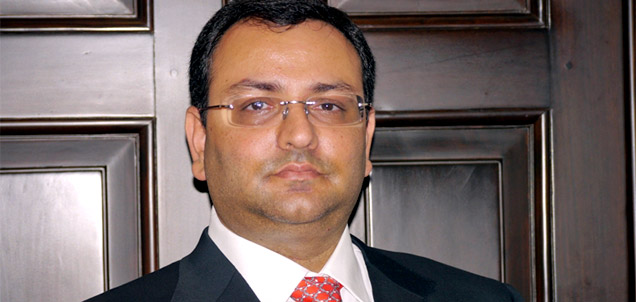
    Then he added a truism: “However, once you meet Cyrus, it is impossible to dislike him.” It still holds two decades later; everybody seems to like the 45-year-old Cyrus Mistry. Mr Mistry took over as chairman of Tata Sons on December 28, 2012. Since then, he has made all the right moves. “He has not taken any giant leaps, neither has he shaken the foundations of the group,” says Harsh Goenka, industrialist and chairman of RPG Enterprises.


    As Mr Mistry begins his 12th month as chairman of India’s largest conglomerate, in which his family led by father Pallonji Mistry owns an 18.5% stake, it’s time for him and his core team to prepare a rough and ready blueprint for the second year. That plan may call for a few larger leaps, and may indeed shake some parts of the foundation.


    Making the multibillion acquisition of Corus (now Tata Steel Europe) viable, for instance is one of them. Downsizing the business by mothballing some of its capacities, reckon analysts, may be the way to go. Back home Tata Motors – excluding the money-spinning Jaguar Land Rover ( JLR) – needs a refreshed portfolio to find its way back amongst India’s top 5 automakers. And the power, telecom and hospitality businesses too are in need of an overhaul.


    It’s a daunting task; more so for a man who’s still coming to grips with a 92-company group across 28 diverse sectors, even as it strategizes to enter newer businesses, like aviation. Ashok Basu, former bureaucrat and an independent director on the board of Tata Power, says: “I think he has the most formidable job in the country. But this mantle sits very lightly on his shoulders.”


    “Luckily, his health has held up. He has taken on a punishing schedule, whirlwind travel across the world, day trips to the Gulf countries and stuff like that,” says a person who knows Mr Mistry well. And Mr Goenka adds: “He doesn’t look stressed. But I asked him about his work-life balance and he admitted that’s gone for a six.”


    First, a Team

    One of Mr Mistry’s immediate priorities after taking over at the helm was to build a team of people who will, like him, be around for some time. Although Mr Mistry was appointed as executive deputychairman of the group in 2011 for five years, and was elevated in 2012, it is likely that Mr Mistry will have this job for more than a quarter of a century.


    Before retiring, predecessor Ratan Tata – who had the job for 21 years – had left a clean slate for Mr Mistry, even lowering the retiring age for non-executive directors, to ensure that the old guard goes away in two to three years. Tata’s first few years at the helm were spent consolidating his own position as the undisputed leader of the group and pushing out the veterans. He did not want such distractions for Mr Mistry (after all, Mr Tata had plenty of them when he took over and had to spend at least six of his initial years taking on – successfully – the group’s satraps).


    In Madhusudan Kannan, 39, Mr Mistry found his head of business development. Mr Kannan was the first member of team Mistry and joined the group in May 2012, seven months before Mr Mistry finally took over the reins. Mr Kannan is considered closest to Mr Mistry today. Mukund Rajan, 45 – younger brother of Reserve Bank governor Raghuram Rajan – was moved in from Tata Capital as custodian of brands and chief spokesperson as well as chief ethics officer. Mistry also brought in academic Nirmalya Kumar from the London School of Business to help with strategizing and NS Rajan from Ernst & Young as head of human resources. “In many ways it is like Rahul Gandhi’s team” says one uncharitable onlooker from corporate India.


    “It has more theoreticians than business managers,” he says. That may be unfair to both Mr Mistry and Mr Gandhi, but one cannot deny that Tata’s own lieutenants were either seasoned veterans from within the group (Syamal Gupta, NA Soonawala, Ishaat Hussain, to name three) or from other large companies (like R Gopalakrishnan from Unilever’s Indian subsidiary). Mistry has chosen his own horses, for surely he has to run on a different course.


    The Tata group did not participate in this feature. Also setting himself apart from the Ratan Tata-era is how Mr Mistry has sought to induct more women on the boards of Tata Sons. Vishakha Mulye, managing director of ICICI Venture, was the first woman inducted by Mr Mistry in February. She joined the board of Tata Power.


    He followed this up by bringing in Falguni Nayar on Tata Motors’ board and Ireena Vittal, a former McKinsey partner, on the boards of Indian Hotels and Tata Global Beverages (see Diversity Drive). With Vittal, Tata Global now has three women on its board (the other two being Mallika Srinivasan and Ranjana Kumar).</p>


    Ms Nayar, who now runs her own e-commerce venture Nykaa.com and a former managing director at Kotak Investment Banking is married to private equity fund KKR’s India chief Sanjay. Mr Mistry  asked Falguni to drop by for an interview and spent considerable time discussing her current venture before requesting her to join the Tata Motors board and bring her I-banking experience to the table.


    In May 2012, before he became Tata Sons chairman, Mr Mistry had joined the board of Tata Steel along with another lady, Mallika Srinivasan, chairman and CEO of tractormaker TAFE.


    However, these moves are only a beginning in creating gender-diversity at the house of Tatas, whose boards have traditionally been male bastions; for instance, the jewel in the Tata’s crown, TCS, has an all-male board; and even the Mr Mistry-created four-member general executive council is all male.


    There was one more quick response by Mr Mistry that pleasantly surprised many people. When a former executive of Tata Steel committed suicide and there were allegations of harassment by former colleagues, a committee was immediately set up with executive and non-executive directors of group companies to probe the allegations


    Plumbing the Numbers

    The Tata group today is virtually basking in the glory of a single outperformer – TCS, which accounts for roughly 60% of market value of all listed Tata entities and 80% of profits. To that extent, TCS managing director N Chandrasekaran, 50, stands tall – some observers say nearly as tall as Mr Mistry -in the top tier of leadership in Bombay House, the headquarters of the Tata group.


    Tata Sons owns almost 74% of TCS; and since Mr Mistry took over in end-2012, TCS’s market capitalisation has gone up by 58% adding Rs 1.4 lakh crore to the group’s market combined capitalization. The other clear outperformer is JLR, the $2.3-billion acquisition that more than makes up for Tata Motors’ dismal show domestically.


    JLR’s revenues in 2012-13 were 2.5 times that of the local operations, profits stood at Rs 10,406 crore as against Tata Motors’ domestic profit of Rs 302 crore, and, for good measure, the UK operation headed by Ralf Speth paid Tata Motors Rs 1,420 crore in dividend in June. Together Tata Motors and TCS account for roughly 80% of the group’s combined market value. The rest of the 26 listed group companies taken together have actually shrunk in combined market capitalization.


    The Indian operations of Tata Motors and European operations of Tata Steel may be the larger problems, but Mistry has more fires to douse. Mr Basu, for example, feels the biggest problem is at Tata Power. The company has posted a loss of Rs 39 crore for the first half of 2013-14 after a loss of Rs 85 crore for 2012-13.


    “Tata Power is probably his greatest headache – a problem created for no fault of the company. Take Mundra ultra mega power plant, for instance, which is suffering because the price of Indonesian coal has suddenly shot up and the state government cannot buy power at this price.”


    Then there is Indian Hotels, which was in the red to the tune of Rs 452 crore for the first half of 2013-14 on revenues of Rs 1,804 crore. The loss in this half year has exceeded the loss of Rs 430.24 crore of the entire previous year. The Tata Group is not a six-course meal but more like a tasting menu and there’s a lot more on Mr Mistry’s plate. The telecom business needs some decisions – especially as Tata Sons may need to buy back the 26% stake of Japanese partner DoCoMo in March 2014.


    Vatican Redux

    Clearly, taking charge of an illustrious company incorporated back in 1917 is not easy. In many ways Tata Sons reminds one of the Vatican. If you go through its archives and treasures, you come up with surprises. Like for instance, at Tata Sons, the equity capital with voting rights adds up to only Rs 40.41 crore.


    However, there are preference shares without voting rights that account for 100 times the amount at Rs 4,148 crore. These attract dividends at a fixed rate of 7.5% and the subscribers to the preference shares are mostly directors of the company and former directors and sometimes even unrelated professionals. In May 2013, Cyrus Mistry subscribed to preference shares worth Rs 1 crore (10,000 shares). R Gopalakrishnan, non-executive director invested Rs 6 crore in preference shares of Tata Sons in June 2013.


    In July Ratan Tata acquired Rs 8 crore worth of preference shares while NA Soonawala (also a former director) picked up Rs 1.5 crore worth of preference shares in July. Let us take the analogy of the Vatican of this day a little forward. The Catholic Christian church has a new Pope today, but the old Pope is not dead – and in fact is living in the vicinity. Mr Mistry heads Tata Sons, but Mr Tata is not very far away. He is available – as he was in the run-up to the aviation joint ventures with AirAsia and Singapore Airlines.


    Also, don’t forget that Mr Tata, now chairman emeritus, heads the Tata trusts that control around 65% of the equity shares of Tata Sons and by virtue of that holding controls the group while remaining in the background. Mr Mistry may well be the proverbial chip off the old block. Mr Basu says that while he brings in “youthful energy” to meetings he is very much similar to Tata in his manner, listening carefully and giving his opinion in the end. He has, for instance, suggested strong belt-tightening measures for the group and has also suggested that Tata Power seek a global footprint for itself.


    Nayar adds: “It seems right now he is listening and absorbing. I find Mistry to be very open and inclusive. He is also a very good listener and carefully evaluates everything before taking decisions. He also has a vision which he explains.” That is what Tata was known to do. And Mulye points to other similarities with Tata: “He has a unique capability in combining breadth of vision at one end and granularity of detail at the other. The other big quality he has is his sense of humility.” It would then appear that Mr Mistry has moulded himself in the cast of Tata, what with both of them evidently also sharing an aviation dream.


    A former senior executive at one of the Tata companies who did not want to be quoted says that the Tata influence on the group is still very strong – along with the influence of RK Krishna Kumar who retired in July 2013. Many of the CEOs of today are former executive assistants of the two senior pros, both of whom are trustees on the Tata Trusts (Mukund Rajan in the GEC and N Srinath, MD, Tata Teleservices aided Ratan Tata, while Avani Saglani Davda, CEO, Tata Starbucks and Govind Sankarnarayanan, CFO, Tata Capital were EAs to RK Krishna Kumar).


    But herein may lie the rub, point out analysts. The tough decisions that await Mr Mistry may be construed as going against Mr Tata’s legacy. For instance, what’s the future for the ultra low-cost car, the Nano, which was Mr Tata’s dream (although a few days ago he did clarify that his ambition was not to build a ‘cheap’ car but one that would be a logical step up for the country’s millions of twowheeler riders)? Similarly, the options for Tata Steel Europe – an acquisition that a section of analysts believe was overpriced but which Tata believes had to be made – are grim, with some analysts advocating sales of substantial parts of the business, if not all of it.


    Mr Mistry and Mr Tata have been on the same page – even before the former took charge as chairman. For instance, Mr Mistry bought a Nano as soon as it was launched, and apparently said: “It is a damn good car.” The question, of course, is for how long can Mr Mistry be on that same page. At some point he will have to differentiate himself in style and substance from Tata in key strategic decision-making. Mr Mistry has shown he is capable of those tough decisions.


    The $1.6-billion write-down of  Corus’ goodwill on Tata Steel books earlier this year – that contributed in a big way to the losses – the recent withdrawal from the race for a banking licence and the recent call to abort Indian Hotels’ bid for Orient Express are three instances. Expect a few more in the second year which, for Cyrus Mistry, will be more important than his first.


    Source:The Economic Times

    Copyright © 2013, Bennett, Coleman & Co. Ltd. All Rights Reserved

    Licensed to republish


  • How India can see more gender sensitive ads


    Last week, Population First hosted a day-long workshop titled ‘Men are from Venus, Women are from Mars’. The event, supported by the United Nations Population Fund (UNFPA) and with Social Access as knowledge partner, saw key issues of gender sensitization being discussed.


    Although it was planned some months back, in the light of the Tarun Tejpal episode, there was much attention on the issues discussed.


    A key component of the workshop was a report analyzing decisions taken by the Adevertising Standards Council of India (ASCI) on indecent representation of women. The report was undertaken by Feroza Sanjana under the guidance of the UNFPA and Population First.


    We present here the recommendations made in the report and the conclusion.


    Towards greater participation: Three major means to motivate greater participation to strengthen ASCI’s complaints mechanism include a need for increased awareness of ASCI, increased gender sensitivity and strengthening compliance.


    (a) Greater awareness of the ASCI: With regard to awareness initiatives, despite starting a TVC campaign there still remains a low awareness of ASCI, according to Mr. Collaco and Mr. Narayan. There is a strong need to inform people of the existence of the complaints mechanism and the easy accessibility on the ASCI website. This could be done through strengthening the ASCI National ad campaign in print and TV to motivate consumers to complain to ASCI in case they find an ad misleading, offending or harmful. In order to further promote this, ASCI conducted a contest at Goa Fest to promote responsible creativity under the theme Creativity with a conscience, open to advertising, marketing and media professionals, which revolved around creating short films using a mobile phone, in which more than 120 teams participated.


    (b) Motivating the public and ASCI members to participate: Create widespread public demand for gender-sensitive advertising through the propagation of gender equality. Improve the participation from CSOs, NGOs and women’s groups in this initiative to advocate the correct depiction of women in advertising. Sensitise ASCI members to gender equality to increase suo moto complaints by conducting training workshops. The NAMS initiative of the ASCI when complete will also empower ASCI members with a database of gender-sensitive advertising.


    (c) Strengthening the compliance code: A major factor influencing the desire to complain is the rate of compliance of offending clients and advertisers with complaints upheld by the CCC. The compliance rate of total complaints upheld has increased from 75.4 per cent in 2007-08 to 86.4 per cent in 2011-12. For gender issues, the compliance levels to complaints upheld by the CCC are 100 per cent. However, the number of complaints upheld is very low to begin with. The compliance code needs to be more specific in case of gender-sensitive advertising. NAMS is a welcome initiative by the ASCI. Also decisions by the CCC need to be taken fast so action against offensive ads are taken as soon as they are aired and not after they are off air.


    The power of ASCI has considerably increased due to compliance with the ASCI Code being mandated in the Cable TV Network Act Amendment, 2006. However, outdoor and print ads are excluded from its purview. UNFPA and Population First with ASCI can take up the issue with the GOI to make ASCI a more comprehensive regulatory body.


    2. Create safe spaces for discussion: A major number of offensive ads come from product categories such as deodorants and cosmetics, including fairness creams. In the case of the former, there is a need for campaigns which reposition their product in a gender-sensitive manner. In case of the latter, a discussion and open debate should be started on whether advertising for fairness creams is problematic, or whether the product itself is a problem. If so, then a similar regulation as in the case of ads for alcohol and cigarettes should be applicable. UNFPA and Population First need to advocate discussions in various fora about these issues with a longterm view in mind.


    3. Highlight positives: There are examples of ads being made today which can serve as good examples of gender sensitivity and which deal with sex in a gender-neutral tone.


    (a) Build more evidence: There are still gaps in knowledge regarding the impact of the depiction of greater gender sensitivity in advertisements on sales. There is a strong need for further research in this field, as the findings of such a study will provide evidence-based advocacy with clients as well as advertisers.


    (b) Make it interactive: There is no formal mechanism to measure the impact of self-regulation in changing attitudes towards gender issues within the advertising industry. There needs to be a feedback mechanism to gauge the level of gender sensitivity in the industry as a whole. Reliable information can lead to a formulation of a good strategy towards gender sensitisation efforts.


    4. Specify and strengthen the ASCI Code: The rationales provided by the CCC are broad-based and at times underspecified. A detailed guideline on representation of women and gender sensitivity in advertising is needed to provide a uniform rationale which reduces subjectivity in decision making. In addition, a more specific code and quick implementation of NAMS will serve as an incentive to the general public to complain.


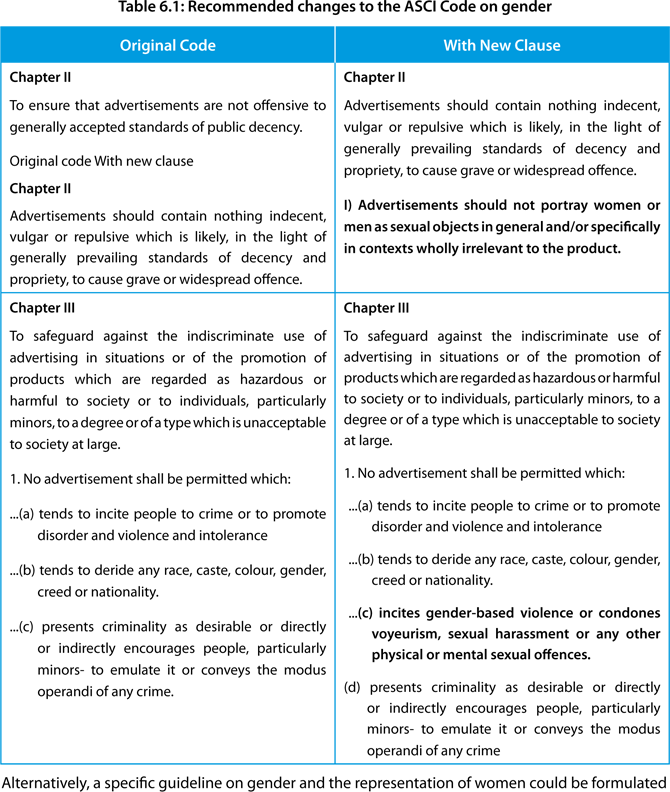
    Following this, it is suggested that the following clauses be included in the ASCI Code (See Table).


    Conclusion

    Between 2007 and 2012, ASCI has significantly strengthened its ability to self-regulate and has on average achieved a high level of compliance, which is now also mandated in law. To further build on this, we hope that the above findings provide concrete direction for future engagements between Population First, UNFPA and ASCI. Finally, we hope that better organisation, improved record keeping and a less restrictive anti-disclosure policy in the management of ASCI would help researchers in the future.


  • MEC India wins at 2013 Effective Mobile Marketing Awards

    By A Correspondent


    MEC India has bagged an award for the ‘Most Effective Location-based Service/Campaign’ at the recently concluded 2013 Effective Mobile Marketing Awards ceremony held in London. MEC India received the award for one of its campaign designed for Colgate at Kumbh Mela. The firm has now become the only Indian agency to win this prestigious award.


    Centered around the Maha Kumbh Mela held in Allahabad, Uttar Pradesh, the campaign was aimed at connecting with audiences at thef estival, that is one of the world’s largest religious gatheringswitnessing over 80 million people in attendance this year. MEC India partnered Red Fuse Communications, WPP’s full-service integrated global agency working on Colgate-Palmolive brands globally.


    Shubha George

    Speaking on the occasion, Shubha George, CEO, Red Fuse Communications said, “We feel honoured to be recognised on a renowned global platform like the 2013 Effective Mobile Marketing Awards. Executing and implementing the campaign was a challenging task for the team, especially for a mammoth project of the scale of the Maha Kumbh Mela. The prime objective at the Maha Mela was to attract and engage consumers in a highly competitive environment, which inspired us to think beyond traditional methods.The award encourages us to push further boundaries in the future.”


    The mobile phone was selected as the medium to connect with the large audiences at the Maha Kumbh Mela. “This was the very first time in India that a brand had used location-based voice communication to convey the desired message and generate direct response from the audience,” said Ms George.