Category: ADVERTISING

  • Big news for Datawallahs as India wins 8 Echo awards

    By A Correspondent


    Eight Indian entries came back with honours at the 2013 International Echo Awards organised by the Direct Marketing Association in Chicago on Wednesday (Oct 16). There were 90 entries from India competing for the awards.


    The DMA International Echo Awards Competition honours the world’s best response marketing campaigns – campaigns that have raised the bar in terms of strategy, creativity and results. No other awards competition looks at the response marketing discipline in such totality.


    Speaking on the occasion from the awards gala night, Vatsal Asher, CEO, DMAi, the Indian affiliate of the DMA, said, “We at DMAi are proud to have provided an international recognition platform and extremely excited to host our winning teams from India. Industry experts from across the world are sharing their thoughts and acknowledging the skills and the expertise being brought forward by the Indian Teams. Today’s wins should motivate more Indian agencies to step forward.”


    On this recognition, Ajay Chandwani, Director Percept Ltd and Chair of the DMAi India Echo Awards said, “Echo is a fitting recognition to the cause of  result-oriented creativity in direct marketing. With the world increasingly measuring ROI and effectiveness in every campaign, Echo rewards those direct marketing campaigns that delivered maximum impact in one to one communication in creativity and results. DMAi Awards with Echo are proud to have laid the platform for result driven marketing campaigns to be celebrated at the domestic level. We are grateful to all those who participated and congratulations to the winning agencies. Creativity in direct marketing has truly come of age in India”, said Mr Chandwani.


    Speaking on the occasion, Rakhshin Patel, Partner M&C Saatchi whose agency brought two International Echos home said, “Over the years, I have judged some stunningly creative, yet effective, work in India and I have always believed that India has the talent to not just match up to the world’s best direct marketing standards, but in certain cases actually set the benchmark. This year, with India winning eight metals at the DMA Echos, it validates my belief that our industry has the talent to produce world beating creative work in the data driven marketing field. This recognition is a huge step forward for Direct Marketing in India and I congratulate the winning creative teams and their marketing partners for helping to propel India forward on the global direct marketing stage.”


    Commenting on this remarkable achievement, said Vikram Menon, President and Country Head (India) of OgilvyOne Worldwide that bagged five wins, said “Eight metals at one of the toughest effectiveness shows in the world is terrific for India and the entire direct marketing community should be immensely proud. What makes this tally so much more rewarding is that it puts us right on top with the very best in the world. Considering the parameters for judging, these wins belong as much to marketing teams as they do to the communication teams and my heartiest congratulations to everyone involved. This is just the sort of impetus we need to further the cause of creatively driven data inspired marketing and DMA India.”


    Winners have been selected from 12 business categories: automotive; business and consumer services; communications and utilities; financial products and services; information technologies; insurance; nonprofits; pharmaceutical and healthcare; product manufacturing and distribution; publishing and entertainment; retail and direct sales; and travel and hospitality/transportation.


  • This Tata forges welcome to Tesco


    By Suman Layak


    Rajiv Gujral, a former honcho at the Taj group of hotels, ran into Noel Tata at Bombay House on a Saturday evening last month – he rarely gets that privilege these days. Mr Gujral recounts how Noel let on that he’s been travelling 25 days a month, and finds little time for anything else.


    The younger half-brother of Ratan Tata – and now the only member of the top brass with that surname in the group, Noel is managing director of Tata’s trading arm Tata International. But that’s not the only hat he wears; also keeping him on his toes are the vice-chairmanship of retailing arm Trent Ltd – where Noel was managing director till three years ago – and the chairmanship of Tata Investment Corporation, a non-banking financial company that makes long-term investments.


    FDI Hurdle.

    If Noel is hard-pressed to find time to race down highways in a Tata Safari – his passion five-six years ago – it’s because he’s as busy plotting Tata International’s growth (particularly in Africa) as he is ironing out the Tatas’ partnership with British retailing giant Tesco.


    Consider: In the first week of May 2013, Noel and Tesco CEO Philip Clarke met Union commerce minister Anand Sharma. The goal was to seek some leeway from the minister on the stiff norms set for foreign direct investment in multi-brand retail in India.


    In India, the Tatas and Tesco have been partners since 2008 in the limited sense of partnership that was allowed in retail at that time. Tesco’s wholesale business supplies merchandise to Star Bazaar, the hypermarkets of Trent.


    In December 2012, Mr Clarke had hurried down to Mumbai to meet Ratan Tata in the last month of his tenure as chairman of the Tata Group. Mr Clarke was also upbeat after Mr Sharma’s announcement two months before Tata’s retirement that FDI norms in multibrand retail would be relaxed.


    A little over a year has passed since Mr Sharma’s announcement, and Tesco has yet to make its move. In fact, the norms are so stiff that no foreign retailer has made a move in multi-brand retail as yet. However, after the Walmart-Bharti split, all eyes are on the Tesco-Tata partnership.


    In May, a week after Noel Tata and Mr Clarke met Mr Sharma, the Department of Industrial Policy and Promotion (DIPP) gave Tesco a major boost. It said that although multibrand retailers with FDI in India will have to source 30% of their products from medium and small-scale manufacturers, the norm would not apply to farm produce and dairy. Tesco had sought clarifications as it claimed that almost 85% of its offerings would be in the farm and dairy category. That was a win for the Tata-Tesco team.


    However there are many more hurdles to go before FDI can flow into the partnership for multi-brand retail in India and sources say that Noel has been a frequent visitor to the DIPP offices in Delhi in recent times.


    Growth of a Salesman

    At Trent, where Mr Tata gave up his executive role in 2010 to move to Tata International, he is still the moving force as vice-chairman. The company has a CEO in Philip Auld who has been deputed by Tesco and there are other people running the show on deputation from Tesco.


    “Noel Tata is a pucca retailer,” says an executive who has worked for the group when Tata used to lead Trent as managing director. “He is someone who would happily spend hours at a store, tinkering, observing and even selling. He has grown up in the retail business unlike someone moved into it at a strategic level. He immensely enjoys retailing.”


    When the Tesco-Tata partnership was forged in 2008, while Tesco people took on the task of managing the stores and the front end, the Tatas managed the areas that needed local knowledge – real estate and property as well as warehousing and human resources. Noel continues to oversee these functions.


    And then to live out his retail dream a little more, at Tata International Noel started footwear retailing in India through a chain named Tashi. Tata International also acquired a Portuguese footwear retailer Move-On that has a presence across Europe. However, the Tashi chain had to be closed and the company is now thinking about focusing on footwear branding and distribution instead.


    African Safari.

    Sources indicate that Mr Tata intends to take his retail business to Africa too, where Tata International is the distributor and after sales service provider for Tata Motors.


    It also owns hotel assets in major locations like Cape Town that are managed by the Indian Hotels Company Ltd. The Africa plans are clearly keeping Mr Tata busy, too and he has been travelling frequently to that continent.


    Noel, who was once considered a contender to succeed Ratan Tata – he is married to Aloo, sister of Tata Sons chairman Cyrus Mistry – today has a wide canvass of businesses to oversee, a chunk of it in Africa.


    Tata International’s largest subsidiary, Tata Africa Holdings, is headquartered in South Africa and has led various Tata businesses into that continent, from luxury hotels to commercial vehicles. And then there’s the retail push back home – at least till Trent-Tesco can gets its frontend act together.


    Source:The Economic Times

    Copyright © 2013, Bennett, Coleman & Co. Ltd. All Rights Reserved

    Licensed to republish


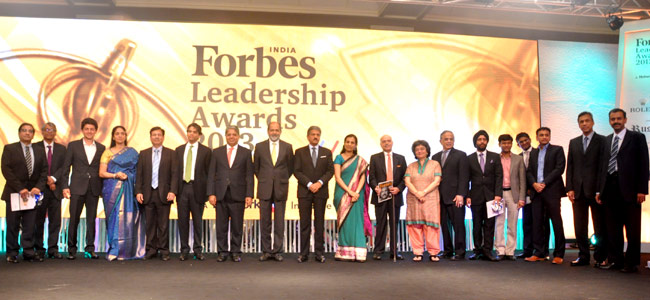
  • Anand Mahindra is Forbes India ‘Entrepreneur for the Year 2013’

    Forbes India Leadership Awards Winners


    By A Correspondent


    With the Twitter, there has been a sudden and very dramatic shift of power to the consumer and businessmen can use the microblogging platform to build brand credibility and counter negative word-of-mouth.


    Words of wisdom from Anand Mahindra, Chairman and Managing Director, Mahindra & Mahindra, who was declared ‘Entrepreneur of the Year’ at the third annual Forbes Leadership Awards.


    The evening started with opening remarks by Forbes editor-in-chief R Jagannathan. Other than the awards, there were a set of three debates moderated by Adil Zainulbhai, Chairman-India of McKinsey & Co.


    A high-powered jury headed by Mr KV Kamath, non-executive chairman of ICICI Bank, comprised Mr Zainulbhai, Akhil Gupta, Chairman of Blackstone Advisors India, Ajit Rangnekar, Dean of the Indian School of Business, Zia Modi, Senior Partner, AZB Partners, and Raghav Bahl, Founder and Group Editor of Network18. KPMG was knowledge partner of the event.


    The following is the list of winners at the Forbes India Leadership Awards 2013:

    1.Start Up for the Year

    Phanindra Sama – redBus


    2. Nextgen Entrepreneur for the Year

    Tarang Jain – Varroc Engineering


    3. Entrepreneur with Social Impact

    Ranjan Sharma – IKSL


    4. Conscious Capitalist Company for the year

    HUL


    5. Best CEO – Multinational Company

    Francisco D’souza – Cognizant Technology Solutions Corp


    6. Best CEO – Public Sector

    Rakesh Tandon – IRCTC


    7. Best CEO – Private Sector

    Chanda Kochhar – ICICI Bank


    8. Woman Leader for the Year

    Chitra Ramkrishna – NSE


    9. Lifetime Achievement Award for the Year

    Brijmohan Lall Munjal – Hero MotoCorp


    10. Entrepreneur for the Year

    Anand Mahindra – Mahindra & Mahindra


  • Murdoch, Mukesh team up for football league

    By Ratna Bhushan & Ravi Teja Sharma


    Mukesh Ambani

    Rupert Murdoch and Mukesh Ambani will join hands to spearhead a plan, one of the most ambitious yet, to make football a major television sport in cricket-crazy India.


    Mr Murdoch’s Star India has picked up a one-third stake in a company jointly owned by Mr Ambani’s Reliance Industries and IMG that’s set to launch an Indian Premier League-style football tournament starting January, a move that may just work, experts said.


    This follows similar attempts to popularize sports other than cricket – like the Premier Hockey League and Indian Badminton League – but it’s the first time a major broadcaster has taken a stake in such a venture. Star is paying Rs 2,000 crore in a deal that includes equity and broadcast rights for 10 years.


    “Having Star on board as a partner strengthens our efforts and commitment to propel Indian football to its rightful place. We see the launch of the football league as the realiation of a dream of billion plus Indians to experience the most cherished game globally in new ways,” said Nita M Ambani, Mukesh’s wife and chairperson of IMG-Reliance. The Ambanis are already prominent in sports as owners of the Mumbai Indians IPL team.


    IMG-Reliance acquired commercial and marketing rights for football in India in 2010 from the All India Football Federation for Rs 700 crore to be paid over the 15-year period of the deal. The deal included starting a new football league.


    Star India initially considered just a 10-year broadcast deal for the as-yet-unnamed, three-month-long league before deciding to buy a stake in it. The deal is on the lines of the state television broadcaster CCTV partnering IMG for a 10-year rights deal for the Chinese Super League.


    “India is hungry for its second sport. Our attempt is to bring an unparalleled football experience to our viewers,” said Uday Shankar, chief executive officer of Star India. “We want to put India on the global map.” Mr Shankar has been instrumental in Star’s India strategy of investing heavily in sports, which he sees as the next biggest generator of viewership and revenue after entertainment.


    Each of the eight teams in the football league will have 22 players, with 10 of them from overseas, eight from India and four from the local area under 23. The eight cities are Mumbai, Chennai, Kolkata, Kochi, Goa, Delhi, Pune and Bangalore. Bidding for the franchises will take place at the end of this month. Bollywood actor Shah Rukh Khan and cricketers MS Dhoni and Sourav Ganguly have shown interest in bidding for the city teams.


    Though AIFF runs many tournaments, including Nehru Cup, Federation Cup and the revamped National Football League, now called I-League, football hasn’t been able to get anywhere near the fan following that cricket has. But things could change, experts said.


    “That Star is making this aggressive foray is a good thing for sport and for television,” said Sam Balsara, chairman and managing director at top media buying firm Madison World. “If large investments come into football, it could create another culture of sport in the country instead of only cricket.”


    European football clubs also see potential in the country, especially going by the growing following for the English Premier League as well as tournaments in other countries. Viewership numbers for cricket and football aren’t that far apart, although the gulf in advertising rates is much wider, since the bulk of this is for overseas soccer. In 2011, there were 83 million TV viewers for football in India, compared with 122 million for cricket. Between 2005 and 2009, the audience for football in India rose 60%, according to TAM Media Research.


    Arsenal recently signed a deal to open official Arsenal Soccer Schools across India. Liverpool Football Club is setting up a residential football coaching academy to develop players up to age 18. Real Madrid Foundation has set up a social and sports academy in Kolkata. The world soccer federation Fifa itself has shown interest in developing the sport in India.


    Source:The Economic Times

    Copyright © 2013, Bennett, Coleman & Co. Ltd. All Rights Reserved

    Licensed to republish


  • MSLGroup hires Amit Misra & Rekha Rao for key roles

    By A Correspondent


    Leading PR and communications firm MSLGROUP has announced the appointment of two senior professionals to its fold – Amit Misra joins as Executive Vice President and Director – Public Affairs, MSLGROUP in Delhi and Rekha Rao as General Manager in Mumbai of 20:20 MSL.


    Mr Misra will head the team in Delhi as well as be the Practice Leader for the Public Affairs practice across India for the MSLGROUP. In addition, he will also strategically collaborate with 20:20 MSL in Delhi for business development, PA, key client relationships and talent development.


    In her role, Rekha Rao will report to Ian Sequeira, Senior VP at 20:20 MSL and her key responsibilities include operational performance, growth, profitability, talent management and client engagement.


    Jaideep Shergill

    Jaideep Shergill, CEO India, MSLGROUP, says: “Each of them comes with capabilities necessary to provide the more value-adding, strategic and content centric offerings that our clients increasingly are looking for in India. By appointing Amit Misra and Rekha Rao in their new roles, we are strengthening our functions, which will further add impetus to our continuing growth story.”


    Before joining MSL, Mr Misra was Managing Director of Zeno Group, an Edelman Group Company and led the launch of its operations in India.  Ms Rao specializes in FMCG, consumer and lifestyle PR and was last with Weber Shandwick in Mumbai.


  • Time for full-service as Publicis buys Beehive?


    By Pradyuman Maheshwari and Fatema Rajkotwala


    The Publicis Groupe announced the acquisition of Mumbai-based Beehive Communications, a 10-year-old full-service independent integrated marketing and communications agency. Beehive will be absorbed in the Paris-based advertising conglomerate’s Publicis Worldwide agency network and will operate as a unit under the rebranded name, Publicis Beehive.


    Since mid-2012, this marks the Publicis Groupe’s seventh acquisition of an Indian company and Publicis Worldwide’s third. The first two being brand marketing consulting firm MarketGate and digital agency, iStrat.


    Beehive Communications has kept a low profile in the industry but been operational since a decade. With in Mumbai, Delhi and Bengaluru and a team of 130-plus, Beehive has its strengths in full-fledged teams for creative and strategy, a strong media agency offering, a full-circle digital solutions basket and research and BTL teams across 20 states in India. Its client portfolio has its key strengths in verticals such as tourism, education and real estate with brands such as Tourism Malaysia, Korea Tourism Organisation, Maharashtra Tourism, Gujarat Tourism, Indiabulls, Rolta, Palladium hotel group, Chambor, MT Educare and more. Almost 40 percent of the business comes from the media planning and buying activity and it has many clients which make use of its integrated functions.


    Partha Sinha

    While making the announcement in Mumbai, Nakul Chopra, CEO, South Asia, Publicis Worldwide, said this was part of the agency’s growth journey in the last year.  Clients and business have grown and the agency now has in its fold, the threesome of Bobby Pawar, Partha Sinha and Ambika Srivastava. From the Beehive side, the current leadership team will continue to lead the agency under the direction of Founder and CEO Sanjit Shastri who will now report to Mr Chopra.


    Bobby Pawar

    Explaining the thought behind the move, Mr Chopra said, “We have a broad strategy of what we want to achieve. We are clear that we want to be among the Top 3 in the country in terms of size, reputation and recognition.” While not revealing the money invested in the acquisition, Mr Chopra added: “Publicis is a latecomer to this market compared to others who have a huge lead due to historical circumstance. Catching up that scale is an intrinsic part of our strategy. Acquisitions are not born out of need but more when you have an opportunity to fast track your strategic direction.”


    Ambika Srivastava

    When asked what would be the primary advantage for Beehive post-acquisition by Publicis, Mr Shastri said: “The excuse that we are not aligned therefore we can’t grow fast, doesn’t exist anymore.” On why his agency has been keeping a low profile thus far, Mr Shastri said: “In the beginning, when we started winning travel and retail clients, we were terrified that bigger agencies will come and swat us like flies and pick up the business and go. That’s when we decided to keep a low profile.”


    Meanwhile, the move to have a full-service unit is sure to lead to some discussions in the trade given that media planning and buying and creative now work separately. Talking about the benefits of an integrated entity, Mr Chopra said: “There is considerable benefit that can be provided to the client with creative and media capability residing within the same organisation. This is especially true in the digital space where the divide is getting blurred. Media agencies do creative work and creative agencies do media work. This is a future-facing decision according to what we can see happening in mature markets. In the advice that we give to clients as a creative agency, we welcome the fact that media and access to media data are within the same agency. There may be merit in looking at them as separate functions but the end-consumer of advertising is concerned he/she experiences the media-creative strategy and execution all at one time. It will helps immensely in the quality that we provide by bringing the two together. The client is beginning to think one-stop shop again.” Clearly, we haven’t heard the last on this one.


    It’s been happy days for Nakul Chopra, CEO, South Asia, Publicis Worldwide. His agency is finally looking up with the acquisitions and the hires. Beehive founder-CEO Sanjit Shastri was with Mr Chopra when the interview was been done…


    You are a large creative agency. Was there need to acquire another agency?

    I don’t think need is what defines this. It is not that when you need an acquisition you go shopping for one – what are the chances you’ll find one with the right talent, the meeting of minds, financial agreements – it doesn’t work that way. We have a broad strategy of what we want to achieve. Publicis is a latecomer to this market compared to others who have a huge lead due to historical circumstance. Catching up that scale is an intrinsic part of our strategy. Widening of scale may have to be done within the organization. Acquisitions in that sense are not born out of need but more when you have an opportunity to fast-track your strategic direction.


    What kind of strategic direction did you see with this acquisition? For instance, in the case of MarketGate and iStrat the service specialisation was clear. This is a full service agency and a fair number of these services you provide too. You have a digital resource that may not do social media or some other services done by Beehive and you have to supervise media within the group too. Hence what was it that made Beehive a strategic move?

    We are clear that we want to be among the top three in terms of size, reputation and recognition. Size can also be a critical factor. If I go out and buy an agency which has more or less the same client profile as I do, then an acquisition would be pointless. Here, there have a width of service that I currently don’t have. It can be argued that we already have two media giants. Of the seven acquisitions that the group has made four may have been for digital strengths. Then why acquire one more? It is intrinsic to the holding group’s strategy that individual components of the individual brands, while they cooperate with one another, they also compete. We, Leo Burnett, Saatchi compete fiercely; we would pitch against one another. Some other part of the group having an offering is good to lean on and seek cooperation. It does not mitigate the fact that if I believe that it is essential to the growth of this brand, then I must have it here.


    In terms of the media agency business of Beehive, if a client is willing, would you now look at routing business through this agency as against the other group agencies?

    I am neither here as a spokesperson of the group nor are group media strategies decided by me. As far as I am concerned, there is considerable benefit that can be provided to the client with creative and media capability residing within the same organisation. This is especially true in the digital space where the divide is getting blurred. Media agencies do creative work and creative agencies do media work. This is a future-facing decision according to what we can see happening in mature markets. When you can see something in tomorrow and you have an opportunity like this, it makes imminent sense to do it.


    Having seen a time when there were full service agencies to later a branching of more specialized agencies… what is your personal view on what works better?

    In the advice that we give to clients as a creative agency, I welcome the fact that will have media and access to media data now within the same agency. There may be merit in looking at the two as specialized functions but the end-consumer of advertising is concerned he/she experiences the media-creative strategy and execution all at one time. It will help immensely in the quality that we provide by bringing the two together. I suspect as you look in the future, as the analog world gives way to the digital, the divide that we had in the past will get blurred to a large extent.


    For an academic discussion, do you see a time where you see yourself merging with a Starcom or ZenithOptimedia and becoming a large full-service integrated advertising agency?

    I don’t see merging happening in my working lifetime. However, the client is beginning to think one-stop shop again. There is a lot of new territory to be negotiated. Unlike the world of television and print that came about in spurts but had long periods of stability where learning curves were defined and verticals were formed, in the digital space, it’s changing every other day. You can’t say what element is having what impact if you cant look at it in a more holistic way.


    After interesting buys such as MarketGate and digital agencies and now, Beehive as a full service agency, are you looking at any more acquisitions?

    We didn’t sit down one-and-a-half years ago and decide to do three or four acquisitions. That’s not the way we approach it. What we did sit down at the start of last year was to set out a roadmap of where to where we want to take the organization. We are going to be very busy until the end of 2014 in capitalizing the deep and organic changes such as bringing in Bobby and Partha in. We believe this is the period in which we will create the future-facing organization which can genuinely engage with clients. That will take some re engineering within our organization in terms of training, putting in new processes in place etc. There will be a period of digesting all the change.


    Like in the case of healthcare, do you see possibly specialized sub-agencies focused on the verticals that Beehive as their strengths in such as tourism and education?

    In the case of healthcare, we were talking about something that is remarkably different. Here I don’t think vertical expertise will result in separate agencies. I definitely think that as we look at our organization in the future, it will lean into having specialists vertical as teams within the organization. We do currently have knowledge in verticals such as the food space, strength in the beauty and personal care space in Mumbai and now we will have much more knowledge in tourism and retail. But I don’t see us branding and selling it as separate services.


    And have Bobby and Partha settled in?

    I cannot believe how quickly and smoothly it has been. With Partha, the advantage we had is that he has spent five years in the past working closely with me. For Bobby, the word that comes to my mind repeatedly is – remarkable. It has been seamless.


    Did Bobby’s Ford Figo controversy bother you given you have large clients yourself?

    I was very clear much before the actions spewed out of that controversy that I don’t think any individual in the agency or at the client’s side can individually be held responsible. It was a breakdown of process. I am clear that he was not personally involved but as the guy on top of the team he took the blow, which if anything, should be all credit to him.


    Is there a parting line for proactive work at Publicis Worldwide?

    I think I have been quite unfavourably featured in the press for taking a simple stand when I say that I don’t understand certain terms such as ‘proactive work’. I understand only one thing – festivals have rules, most of them being the same. You should have a client. The client should be kept posted. It should be released in the media. I think we are celebrating creativity here. This is not a race; you don’t get money here, you get recognition.

    (Sanjit Shastri leaves the room)


    But there should be substantial release to the media and not just to few select publications for the sake of awards…

    I have asked this question before and I ask it again. A big client wants to put a Diwali ad which will be released in a publication once. He genuinely gives the brief and releases the Diwali ad but because it didn’t perhaps meet the definition of substantial, it does not qualify. Now, take the same example and flip it around to what is called proactive work. Agency turns up and tells the client that they have a great idea for a Diwali ad. Just because the story started that way, do you think it should be disqualified from an award? It’s rather silly. So, I have been very clear on this front.


    Now that Sanjit has left the room, I can ask an impolite question: tell us what is it that attracted you to Beehive

    Other than what I have mentioned, there was nothing that I was looking at such as a client that I wanted. I saw a great fit between what they had, the scale, the chemistry that we developed during our conversations and there was little overlap and no conflicts. So I am adding and growing my exposure to clients and width of services.


    But surely Beehive’s size is…

    You’ll be surprised on what Beehive’s revenues are. It can’t be spoken about, but they are substantial.


    Now there are a fair amount of agencies in Chennai, Coimbatore or the East that are doing a fair amount of good work. Are they now part of your acquisitions radar?

    It would depend on the scale.


    For an agency that’s got a handful of transnational clients, Beehive Communications has been particularly low profile. We started this Q&A with Sanjit Shastri, Founder and CEO, of the agency with the obvious question… “kahaan thhey aaj tak?”


    Beehive has always kept a low profile. Is that by design?

    I am not very good looking and I don’t speak too well so I’d rather concentrate on what I do best which is work hard and servicing our clients. Speaking to media is something that one does when one has to. We kept a low profile for very good reasons. In the beginning, when we started winning travel and retail clients, we were terrified that bigger agencies will come and swat us like flies and pick up the business and go. That’s when we decided that let’s not do PR and press releases and keep a low profile.


    It’s interesting that you say that because you are in a business of keeping people high profile…

    Our job is to keep clients high profile; not ourselves high profile. And that’s the way I like it.


    As an entrepreneur, you have built your agency from 2003 to a fairly large independent middle-scale agency, how does it feel now to have sold your enterprise?

    Prior to being acquired, we would have been in the top one or two independent agencies in terms of revenue. I don’t really see it as a sale because the spirit of entrepreneurship that we had at beehive will continue at Publicis.


    Is it a 100 per cent sale?

    Yes, a 100 per cent sale.


    I agree that the spirit of enterprise will continue but if were among the top three, you could have grown bigger…

    First, we will grow much bigger as part of the Publicis Groupe. Second, there is a debt of gratitude that I personally, and the Board of Directors at Beehive have to the very people who have been with us since ten years. For example, our Creative Head, Group Heads have been with us for 10 and eight years and they want to stay with us for another five years. The opportunity to grow in an international environment is much more than the opportunity to grow in an independent environment. There is only that much that we can do and with this, we can really do.


    In your old structure, did the team have stock options etc?

    No. But we looked after them well which is why they have been with us. Our Head of Media and Creative have been with us since 2003, our Head of Advertising has been with us since the time he joined us in 2007.


    Pardon our ignorance, but in terms of clients, who is your biggest? What according to you is your outstanding work?

    Tourism Malaysia is our biggest client. In my estimate, Malaysia is the largest individual international travel destination for leisure. And that is great victory for us. It is the only client with whom we have been working with for ten years and the contract is for two years more. It’s a 720 degree service where they make you go round twice. We do even food festivals for them; we do promotions in schools, painting contests etc. We have done a lot of work for Total Malls in Bengaluru, MT Educare, Century mattresses.


    Now as part of Publicis, apart from the scale that a multinational brings in, which are the specific areas that you think will see a value add?

    We had a pitch for a cruise company. I think we’ll win that. I just asked Bobby and he came down to our office within minutes and ensured that the creative was what we needed. The rest of the team, including Bobby, Partha, Nakul and Ambika’s knowledge of media is all that you need.


    Where do see your unit headed in terms of growth?

    We grow at around 15-20 per cent each year, which may be difficult this year but it will be maintained. I believe that will have about 180 people with us within the next year and a half. Of these, 30 per cent would be in digital and 30 per cent in the shopper-marketing space.


    How is the shopper-marketing space looking, especially with some international biggies joining the race?

    I believe for shopper-marketing client to be successful in India, it has to have a little bit of the Indian flavor in terms of execution, implementation and experience is it has to work. That’s where margins are and customer satisfaction is. I’m not saying that others won’t work but our focus will be to do this. There is enough space in shopper-marketing for everybody. It’s like an operational strategy where you have to run a kitchen with 1500 people working in it.


    For digital, it has been announced that there will be a synergy between the two company’s departments. How will this pan out?

    We will ask iStrat to carry out a lot of our execution. We will provide digital marketing solution to their clients and together we will provide a lot of execution and marketing solutions.


    How large is your media agency arm? Who are your clients in media?

    It’s fairly large. It brings in about 40-45 per cent of our revenues. We have Bisleri, Tourism Malaysia’s SAWAF region – South Asia, West Asia and Africa, which is about 30 countries.


    Since the acquisition has been announced, if there were one marked difference between yesterday and today at Beehive, what would it be?

    The excuse that we are not aligned therefore we can’t grow fast, doesn’t exist anymore.


  • Birthplace Healthcare, Arvind, Tanishq & Kingfisher bag golds at Designomics Awards

    By A Correspondent


    Birthplace Healthcare, Arvind, Tanishq and Kingfisher scored gold at the third annual Designomics Awards held in Mumbai today.


    The awards recognise and celebrate businesses that integrate design thinking and creative processes in their planning and execution strategies to deliver business ROI. The Awards were announced after an intense judging procedure, where each of the entries was judged on the basis of their strategy behind the design, the creativity in its execution and the effectiveness of the resulting design.


    Silver and Bronze winners this year included Whirlpool, Vaseline, Mahindra & Mahindra, Puma, Shoppers Stop, J.K. Cement and Godrej, to name a few. (For the entire list of winners, please visit www.designomics.in)


    The Award ceremony also saw a few esteemed speakers take stage to share their views on effectively using strategic design to meet business objectives.


    The afternoon will see a mix of speakers. These include Pratik Gupta, Co-founder & Director-New Business & Innovations, FoxyMoron and Ninee Rao, Head-Strategy and Planning, Vyas Giannetti Creative.


    The jury for the awards, comprised: Alpana Parida, President, DY Works, Anil Mathur, COO, Godrej & Boyce, Alok Nanda, Founder and CEO, Alok Nanda & Company Communications, Ashish Deshpande, Director, Elephant Strategy + Design,  Ashwani Kumar, Senior Principal Technologist Packaging Graphics and Design, ITC Limited,  Prof Dhimant Panchal, Director & HOD Pre-Design Foundation, MIT Institute of Design,  Harshil Karia, Co – Founder & Online Strategist, FoxyMoron, Lucy Unger, Managing Director(South Asia), Fitch;  Pradyumna Vyas, Director, National Institute of Design (NID); Revathi Kant, GM – Design, Innovation & Development, Tanishq; Santosh Desai, MD & CEO, Futurebrands; Shanoo Bhatia, Founder Director, Eureka Moment Design Company; Sonia Manchanda, Co-Founder and Principal Designer Idiom, Creative Chief, DREAM:IN;  Suresh Sethi, Vice President , Global Consumer Design Asia, Whirlpool Corporation and Tarun Rai, CEO, Worldwide Media


  • Havas Media makes senior digital hires

    By A Correspondent


    Sumit Kumar
    S V Sunilkumar

    Havas Media India has appointed Sumit Kumar as General Manager, Mobext India while S V Sunilkumar, has joined as Business Head Digital-Mumbai.


    In tune with the group’s integrated structure, Havas Media India’s full-service digital portfolio includes digital media planning and buying, display advertising, digital direct response, search engine marketing, SEO, pay-per-click, social media, as well as ‘Mobext’ for mobile solutions and performance marketing using data and analytics.


    Anita Nayyar

    Speaking on the appointments, Anita Nayyar, CEO, Havas Media Group, India & South Asia, said, “Digital is a focal point for us and these appointments will further consolidate our attempt to offer the latest digital services to our clients. Both Sumit and Sunil are talented and committed digital players – we are glad to have them on board.”


    “Sunil and Sumit are mandated to entrenching and expanding the Havas Digital footprint in Mumbai and India”, added Anurag Bhatnagar, MD-Digital, Havas Media India.


    Anurag Bhatnagar

    “Mobext not only provides mobile solutions to engage the customer but can also help brands make their sales force more effective with our enterprise solutions – a unique proposition in itself. The profile is a huge challenge and opportunity to create unique experiences and expand the Mobext offering in India,” explained Mr Kumar.


    Commented Mr Sunilkumar: “As a digital enthusiast, it is always exciting to work with an agency whose mantra is ‘Digital at its core’. Havas Media has been on an aggressive growth path and again it is good to be where the action is. I look forward to creating some of this action”.


  • IAA announces knowledge conclave for ’emerging’ agencies

    By A Correspondent


    The International Advertising Association (IAA) India Chapter is organising a Knowledge Conclave with industry stalwarts sharing, interacting and networking with MDs, CEOs of emerging Advertising Agencies.


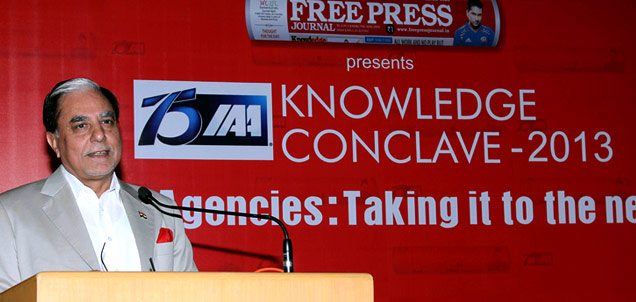
    Titled ‘Emerging Agencies: Taking it to the next level’, the conclave will be held on Oct 26 at Hotel Grand Hyatt in Mumbai. The speakers include Srinivasan K Swamy, Harindra Singh, Ali Merchant, B S Nagesh, CVL Srinivas, Pranay Chulet, Suryanarayana, Vinod Nair and Sandeep Tarkas. The highlight of the event will the Chief Guest Subhash Chandra, Chairman, Zee Group, sharing his experiences on taking one’s business global.


    The event (by invitation only) starts at 9.45am and ends at lunch. It has been powered by the Free Press Journal group.


  • @Designomics 2013: On why good design mein hi samajhdaari hai

    By Fatema Rajkotwala


    “Good Design makes for good business” was the central philosophy propagated at the Designomics Award 2013 ceremony. Designomics is an initiative that endorses the value of strategic integration of design in business. It recognises and encourages the potential of design to influence and shape the way businesses create value (* See Disclosure).


    The forum used this platform to coin a new term when design principles and the economics discipline are merged, to make Designomics.


    Is the great recession of 2007-2009 really over? What does this mean for businesses? If budgets are tightened, markets decrease, innovations are curtailed and consumers that are spending less money are given lesser reasons to spend, sales drop. This downward spiral and the subsequent importance of design in difficult times were highlighted at the forum.


    In its third year, the Designomics initiative supports the use of strategic Design in business through The Designomics Awards and The Designomics Live Academy. The forum has partnered and garnered support from leading design institutions and has been endorsed this year by the India Design Council and Whirlpool.


    The Designomics Awards is an annual affair that attracts submissions and case studies from business houses, creative agencies and students that showcase how design effectively and measurably helped their business in gaining a competitive advantage and resulted in increased profits. The work is judged on various categories such as Strategic Brand identity developed in Print, Environmental & Spatial Design, Retail, Digital, Packaging, Product Design and Integrated Design Project. This year two new categories were added – the Grand Prix award for the highest marks received and the Agency of the Year award received by Birthplace Healthcare Pvt. Ltd. – NH1 Design and Hungama Digital Services respectively.


    The event was graced by esteemed business heads each of who presented their own perspectives and shared their experiences as design evangelists. To begin with, Chief Mentor and ideator for Designomics, Preeti Vyas, Chairwoman, Vyas Giannetti Creative took the stage and took the audience through an informative journey about the increasing importance of using effective design for Indian businesses in the tough economic times, the birth of the iMark and the progressive move by the Central Government in establishing the Indian Design Council in 2009. Talking about the need for design to gain its rightful place within business strategies, she said, “We will see a maturing of the design industry as the demand increases. It is important for businesses to get likeminded people together in-house and by getting the right consultants and design partners to integrate and think about how a business success story can be made using different design verticals. We are in a tough economy where businesses need to realize that they require an innovative approach to reach the target audiences and such innovative approaches are bound to come from design thinking. That is really what we would like to propagate.”


    Ms Vyas shared her views on why design is the way forward for businesses and the need to cultivate a culture of likeminded people within the organization. “It is essential to educate the market and businesses at this juncture, about what design can do for them. Today the buzzword is Innovation but innovation is design. Whatever you innovate; you’re doing it by design. I think it is very important to develop an in-house culture as seen at Godrej or Futuregroup. We need to start at the top. Even the name of a business is designed, the product is designed, how the product is taken to the market – that process is designed, to display is at the shop is designed, what features explains what the product does is designed, how it will engage and communicate with its audiences is designed. So be it through advertising, activations, BTL – everything is truly designed.”


    As Indian companies move forward to the making their mark on global markets, brand building and differentiation is becoming a key component to business strategy. Design to be used as a change agent for perception, creating value, relevance, visibility and for social good are some of the benefits demonstrated by speakers from the industry. Anil Mathur, COO, Godrej & Boyce spoke of Godrej Interio and their brand, U & Us which used a disruptive business model through innovation. He said, “Design is a strategy of integrating with business. Design is business and business is design.”


    Alpana Perida, President, DY Works shared her thesis on the Indian landscape and the need for businesses and design to come together to convince clients of the importance for design and move away from transposed innovations to more insightful innovations tailored for the Indian market. She sighted Titan’s raga, Muthoot finanace, Dabur and Big Bazaar as inspiring Indian examples in design but believes that many are still scattered efforts. Sharing her views with Mxm India she said, “There is a huge potential for B2B businesses in India when they get branded and as a result of this branding they receive multiple benefits. It increases valuation, gives them access to more funding, they’re likely to hire better talent and have more market openings to their disposal. Organisations that don’t embrace design will have to work harder to create value.”


    Lauding the Designomics initiative, she said, “Forums such as Designomics highlight the strength and importance of design and awards are a source of motivation and a pat on the back for people who have worked on ideas during the year. It is something that the advertising industry has learnt. The design industry is beginning to walk on the path of recognition. The biggest recognition however, will be when businesses will realize that they may have a great business idea but until the time that they don’t create a brand that has a certain value attached to it, they are not optimizing the value that they are trading.


    From a digital and social media perspective, Pratik Gupta, Director, Co-founder and Director, New Business & Alliances, FoxyMoron shared an insightful presentation on digital is impacting businesses. Talking about the need to “be social by design”, he said, “The Indian market has matured to a large extent. About 4-5 years ago, we had to have 12-15 meetings with a client just to try and put digital in perspective; leave alone put digital in their perspective. Now digital has become a mandate for almost a lot of clients so automatically they have evolved into understanding digital. Yet, understanding digital and investing in digital is two very different things. All case studies seen globally are companies that are invested in digital. I don’t remember the last time I was given a brief that said you have 21 months to make a bag like how Puma made. I usually have 21 days to do it and usually great things take time to come.”


    The challenges presented by the digital medium are slowly giving way as the Indian market matures. He added, “Once you are invested in the medium and the medium starts to get perfected, which will take another couple of years; we will see great things coming out of digital. That is when expectations and reality will start making sense. Until then, either the expectations will be too high and the market will be incapable to take the change or expectations will be such where a reality for it doesn’t exist. It will take time but it will happen and that’s when real design and digital magic will come about.”


    *Disclosure: MxMIndia was Media Partner of Designomics Awards 2013


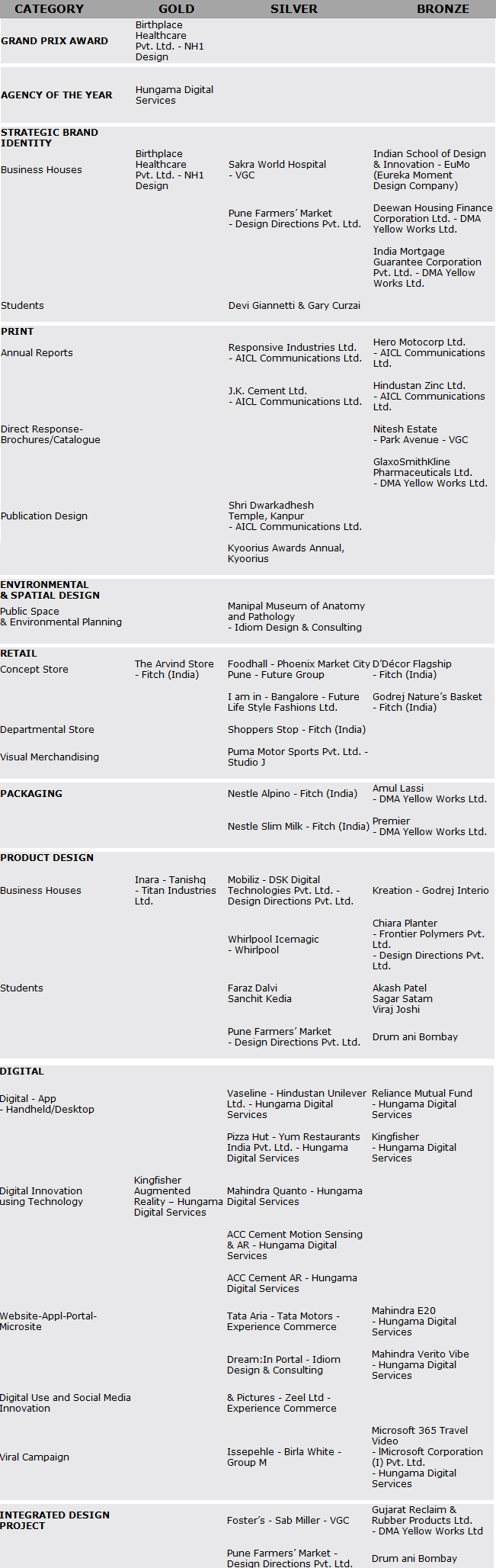
    The Designomics Awards 2013 Roll of Honour:


  • The Outsider as the Captain


    By Dibeyendu Ganguly


    Till he took charge as CEO of Air Asia India, Mittu Chandilya experience with the airline industry was somewhat tangential. As the China head of the air compressor division of Ingersoll Rand, he was responsible for ground equipment services to several airlines. Later, as the head of the services practice at headhunting firm Egon Zehnder, he handled several airline clients. And of course, he was a frequent flyer, with lots of ideas on how airlines could improve their services. But these were not the factors that led to the Air Asia board inviting him to take up the top job in its start-up venture in India. “They hired me for my entrepreneurial background,” says Mr Chandilya. “I had experience with start-ups, running a profit & loss centre, managing large teams. That counted for more than my knowledge of the aviation industry.”


    Mr Chandilya admits to having a few misgivings when he accepted the assignment, but he found some comfort in the fact that he already had experience heading businesses much larger than what Air Asia India will be in two years time. Since then he’s been learning on the job and says, “A CEO has to be a good manager, a people leader. Working across industries actually helps develop these skills.”


    Air Asia India is one of the more dramatic examples, but many company Boards today are putting their faith in CEOs recruited from wholly different sectors. Not surprisingly, many of these companies are new ventures, where startup experience counts for more than industry experience. They include global firms like Roland Berger Strategy Consultants, which recently recruited Wilfred Aulber, the managing director of Mercedes Benz India.


    Mr Aulber joined the research and development (R&D) wing of Mercedes Benz soon after obtaining a PhD in solid state physics from Ohio State University in 1996 and thereafter worked in the global CEO’s office in Stuttgart. In 2005, he was deputed to India as country head (the fact that his wife’s name is Rekha may have had something to do with it), responsible for setting up a 100 million euro greenfield project at Chakan, near Pune.


    Earlier, Aubler had also played a role in setting up the company’s R&D operation in Bengaluru. “I have always considered myself an entrepreneur. That means I worry about everything, about every expense incurred,” he says. It is this mind set, as much as Aubler’s experience in the automobile industry, that prompted the Munich-based Roland Berger to offer him the top job of managing partner in India two years ago. “They took a risk,” he says. “I had experience in sales, marketing, production, R&D. But what really counted was my experience in setting Indian operations for Mercedes Benz, where I had done a reasonably good job.”


    But running a consulting firm is very different from running a manufacturing operation and Mr Aubler has had his hands full learning the tricks of his new trade. “As someone who has moved into a new industry, I have to catch up. The peole you deal with here are very different and you have to get used to the fact that you are just an advisor. The client may or may not accept all your advice. You have to live with that and go on regardless.” Changing industries is certainly no cakewalk, especially at CEO level, and Mr Aubler grumbles he hasn’t taken a weekend off in ages, no small sacrifice for a German CEO.


    It’s the same with Ramesh Krishnan, though he’s probably more used to it. Mr Krishnan quit Samsung as head of the home appliances division three months ago to take charge of Geosansar, a company promoted by a British family of Indian origin.


    Under licence from nationalised banks, Geosansar provides banking services at the bottom of the pyramid, to the urban poor who are normally excluded from the system. It’s very satisfying work, so it’s no wonder that Mr Krishnan, a 1989 batch IIM-Bangalore graduate, should have opted for it over Samsung. But what did he bring to the table? “I think they were looking for people with a business management background, with retail experience. The Reserve Bank of India (RBI) estimates that 145 million households remain excluded from banking services, so this is a sunrise industry. Geosansar is not an NGO, but a profit-making organisation,” says Mr Krishnan.


    Banking is very different from selling refrigerators, washing machines and airconditioners and Mr Krishnan has been burning the midnight oil, pouring over voluminous documents on the RBI website to get a better grip on the rules and regulations that govern his new industry.


    True to his marketing background, he’s out in the field every day, talking to various public sector bank executives, trying to learn as much as he can through their experiences. “For a CEO, there’s no induction programme,” he says. “Now that I’ve moved to a new industry, I have to both learn and unlearn things. In banking, you don’t get to decide what to do, like in the white goods business. You have to get permissions from the regulator at every stage.”


    It is this trait – a willingness to learn and the ability to learn quickly – that corporates look for in CEOs hired from outside the industry. “A CEO hired from outside has to demonstrate a certain amount of humility,” says Vivek Gambhir, managing director of Godrej Consumer Products, who joined from the consulting firm Bain & Company. “They have to be able to put together a team that complements their strengths. Companies today hire a CEO on the basis of fit and potential, not domain expertise.”


    Generalists were in vogue in the 70s and 80s, when companies (and business schools) believed that a good manager – like a good Indian Administrative Services officer – should be able to manage any industry. That changed in the 90s, when b-schools began producing functional specialists and the public sector gradually gave up the practice of installing IAS office officers as CEOs of public sector companies.


    Mr Gambhir says today’s generalists are different – they are integrators, with a talent for bringing together disparate processes. “There a huge amount of industry convergence today,” he says. “FMCG is not about manufacturing products anymore. The boundaries have blurred. It has converged with on-line and off-line retail to become a service.


    In such a scenario, generalists would do well.” Mr Gambhir himself had wide experience consulting with the FMCG industry before he joined Godrej as Chief Strategy Office in 2009. Would Adi Godrej have hired him directly as the CEO? “Not likely,” he says. “It’s always good to have a transition period And I was fortunate I had that.” For some, the challenge of changing industries – and the learning opportunities that go with such a move – provides a rush.


    Amit Shukla, a 1989 batch IIM-Ahmedabad graduate, has changed industries whenever he’s changed jobs, which is often.


    Starting with Zydus Cadila, where he was in charge of the cosmetics division, he moved to United Breweries and then to Bharti Airtel and then to the Deccan Chronicle group, where he was CEO. Today, Mr Shukla heads the consulting firm of Strat Team Advisors in Gurgaon and says, “Cross-industry experience gives you a width of perspective that can come in very useful. What may be an ‘impossible obstacle’ in one industry is a ho-hum solved problem in another.”


    Will we be hearing of more and more corporates hiring CEOs from outside the industry in the near future? Air Asia’s Mr Chandilya doesn’t think so: “Most companies are still traditional. They wouldn’t take the risk. Still, there are some who will take a chance on people like me. I would say the ratio would be 80:20 in the future.”


    Source:The Economic Times

    Copyright © 2013, Bennett, Coleman & Co. Ltd. All Rights Reserved

    Licensed to republish


  • Future bright for Emerging Agencies


    By Fatema Rajkotwala


    Downturns and failures are opportunities to be successful in the future,” said Subhash Chandra, Chairman, Essel Group and Zee Network in his address on entrepreneurship at the Knowledge Conclave of International Association of Advertising India Chapter.  The Conclave on Saturday (October 26) in Mumbai was held with the objective of helping emerging agencies understand how to take their businesses to the next level.


    Mr Chandra, who was Chief Guest of the event, shared his mantras for entrepreneurs. “Honour your commitments.  Don’t let fear set in. Listen to your customer. When I hear debates on whether it is better to be independent or enter partnerships, I say you become a multinational. But yes, partnerships help in growth.”


    Srinivasan Swamy

    Led by President Srinivasan K Swamy (CMD, RK Swamy BBDO), the IAA India chapter in association with the Free Press Journal invited senior industrypersons to share their knowledge and experience with the fraternity of small and mid-sized agencies. Acknowledging the growth in number of small agencies and the theme chosen for the Conclave, Swamy pointed out that the growth in membership of the various trade bodies from amongst the small and medium-sized agencies indicates that the business is robust for them.


    CVL Srinivas

    CVL Srinivas, CEO, Group M South Asia spoke on “How to flourish as a mid-sized media agency”.  Putting things in perspective for emerging agencies, he pointed out that in many ways, small and mid-sized agencies have a natural competitive advantage over big corporate and network-owned agencies. “It is easier for emerging companies to go digital. It is no longer a game of the top 4-5 agencies. Fragmentation and specialization is a huge opportunity for emerging agencies. Large agencies are not equipped to deal with local entrepreneurs whereas small agencies can cast the net wider. There is a shift from contextual and demographic targeting to audience planning.”


    Mr Srinivas spoke of how agency life tends to get a little superficial at times, leaving you disconnected from consumers. He said, “There is no better time than now to be a part of the media agency business. Today, all of us (big networks, multinationals and small agencies) are in the same boat. Massive disruptive models are coming in and this indicates that our advertising model needs reinvention.”


    B S Nagesh, Vice Chairman, Shopper’s Stop engaged the audience with his talk on “Preparing to win in a hyper competitive market” where he urged all entrepreneurs in SMEs to bring in out-of-the-box modes of growing their businesses. Summing up his nuggets of advice, he said,”Creativity has to be coupled with financial training. Many processes within SMEs happen in an informal way. To lessen the gap between Desire and Deserve, organisations need to look at building capability along with building capacity. Trust, transparency and empowerment within the company is important. Create an organization that is more responsive, accountable and measures performance. Create opportunities by creating clients in emerging markets. Celebrate trials, failures and successes.”


    Later, Ali Merchant, Director Triton Communications, Harindra Singh, Vice-Chairman & MD, Percept Ltd, that holds specialists agencies in various sectors and Vinod Nair, Managing Director, Network Advertising formed a panel on the topic “Path ahead for an Emerging Agency” that was chaired by Sandip Tarkas, President Strategy, Future Group. The panel debated the pros and cons of commoditizing the advertising product with specialized agencies, the benefits and limitations of being an independent agency versus entering partnerships to grow businesses and the need to position and package in order to be paid for specialized services.


    As the Founder and CEO of classifieds portal, Quikr.com, Pranay Chulet spoke on a session titled, “Future of Interactive Media”. Sharing his insights on digital marketing and the growing digital industry, he said, “In this complex world, the client needs not just an ad but conversations that are generated. We have to think multiple channels. The digital medium has also made Call to action easier. It allows Test, Analyze and Scale Fast or Fail Fast model, which is not possible with other media.”


    Abhishek Karnani

    According to Abhishek Karnani, Chairman of the IAA Knowledge Conclave, the primary objective of the sessions was to get the top advertising and media minds to come together to reflect on ideas and strategies for emerging agency owners to take their companies to the next level. This, he said, was served in ample from the practical advices served at the Conclave.


    Â