Author: mxmadmin

  • FICCI-MIB discussion on digitization on March 27

    By A Correspondent


    Digitization in TV distribution system is going to be a reality soon. The Ministry of Information & Broadcasting, Government of India has come up with a detailed roadmap to digitize the TV distribution system by 31st December 2014. And the four metros, Delhi, Mumbai, Kolkata and Chennai are to be digitized by 30th June which is just 100 days away.


    For digitization to happen successfully by the notified date, several steps have to be taken and one of them is to make the consumer aware of the benefits of digitization. A step in this direction of creating public awareness on digitization is being undertaken by FICCI in partnership with the Ministry of Information and Broadcasting, Government of India. FICCI jointly with the Ministry of Information & Broadcasting is organizing a seminar on ‘India going Digital: An Industry Interaction with Stakeholders’ on the 27th of March, 2012 at 10:30am at FICCI Auditorium in New Delhi.


    The seminar will start with a presentation on Digitization by Supriya Sahu, Joint Secretary (Broadcast & Poilcy), Ministry of Information & Broadcasting. The presentation will be followed by a keynote address by Uday K Varma, Secretary, Ministry of Information & Broadcasting. Following the keynote by the Secretary of I&B, will be an interactive session and the seminar will finally end with a concluding address by Rajiv Takru, Additional Secretary, Ministry of Information & Broadcasting.


    The event is being supported by MxMIndia.


  • Ashutosh: Anna book is written in anger

    Video and Text by Shruti Pushkarna


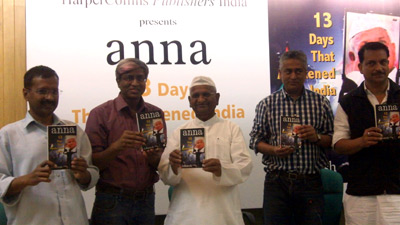
    Launching his book titled, ‘Anna: 13 Days That Awakened India’, in New Delhi, Ashutosh, well-known Hindi journalist and Managing Editor of IBN 7 noted that the book was not about Anna Hazare but about the larger people’s movement. Addressing a gathering of journalists, social activists, politics, family and friends at the book launch, he said, “People think that the book is about Anna Hazare, it is not about Anna Hazare. It traces the movement, from where it started, the principal actors of the movement, their confrontation with the government and the politics of the day. Basically it encapsulates the entire movement from beginning to end.”


    The 74-year-old activist, Anna Hazare released the book written by TV journalist Ashutosh on the agitation in Ramlila Maidan last August, at the India Habitat Centre in New Delhi.


    In the book, Ashutosh weaves together the story of the thirteen days of Anna’s hunger strike. He had a ringside view of the developments, stationed as he was at the Ramlila grounds in New Delhi, the venue of the fast, and had intimate access to the two warring parties, the Congress government and Team Anna. Lauding the book, Mr Hazare said that it would be a great source of inspiration for the youth for whom this book will serve as a historic account of those thirteen days.


    [youtube width=”400″ height=”200″]http://www.youtube.com/watch?v=1i96hzMWcMY[/youtube]

    Ashutosh told the audiences that he’d written this book in anger at the so-called ‘elitist’ section of society who, he feels, have failed to understand the anti-corruption movement led by Anna. He also said that despite being a Hindi journalist, he chose to write the book in English because he wanted this group of people to read the book. He said, “This book is written in anger. Anger because through the movement I realized there is a section of English intelligentsia which is refusing to understand the movement and they are unnecessarily trying to find faults and trying to project it as anti-democracy. These people I thought, had no understanding of reality, they had never been to the Ram Lila Maidan, so I thought if I wrote in Hindi these people won’t read it. I wanted them to read and realize that there is a section of society which is very angry with their stand. That’s why I decided to write this book. I wanted to take my battle to their turf to understand how wrong they are. I wanted to take the battle to those who claim to be the guardians of history but actually know nothing about it.”


    The book release was followed by a panel discussion moderated by Editor-in-Chief, IBN 18 Network, Rajdeep Sardesai. The panelists included social activist Arvind Kejriwal, BJP spokesperson Rajiv Pratap Rudy, and Anna Hazare. Talking about the Anna movement, Arvind Kejriwal, member of Team Anna said that three factors had led to the success of the movement. One was Hazare’s leadership, second anger of people against corruption and third was the fact that Team Anna provided an alternative to fight the menace.


    Responding to whether the movement had lost its steam, Anna Hazare said that we will come to know by 2014 whether the movement still has the steam. He said, “There are questions about the movement. Some people doubt that the movement has lost the steam. Whether the movement still has the steam, we will know in 2014 when the country goes to general elections.” He added that he will wait till mid-May to see whether Parliament passes a strong Lokpal law during the ongoing budget session and then embark on a nation-wide tour to awaken people about the issue.


    Mr Hazare also said that one law cannot end corruption and therefore what we need is a change in the system. BJP spokesperson Rajiv Pratap Rudy said, “What we need is a change in the system. Bureaucrats are supposed to construct roads and MLAs and MPs make laws. However, in India bureaucrats make laws and lawmakers construct roads.” Mr Rudy asked how one could call India a functional democracy when a former Chief Minister, who was jailed for a multi-crore scam, gets elected to the Lok Sabha. Mr Rudy extended full support to Mr Hazare’s movement and appealed to Mr Hazare to urge good people to join politics.


    Rajdeep Sardesai expressed his reservations about the movement but he accepted that somebody has to take the lead in the fight against corruption.


  • 100 Days to D-Day…but where are the Set-Top Boxes?

    By Shruti Pushkarna


    Only 100 days to go for Digitization Day and the ground reality does not look too promising at this point. There is a mammoth requirement of set top boxes, Digital Addressable System (DAS) licences have not yet been issued to operators and several other issues remain unresolved as of now.


    To get a clearer picture of the ground reality from the cable operators’ end, MxM India spoke to Roop Sharma, President, Cable Operators Federation of India. Speaking of the ground level scenario, Ms Sharma said, “No DAS licences have been issued to the operators still. Until and unless the operator has the license, he can’t get a bank loan and unless the operator has the license, he will not want to order equipment which is worth no less than 1 crore. And more importantly there is no consumer demand for digital. This is only government’s demand because they want to curry favour to the broadcaster. There isn’t any incentive from the government either. They are only forcing a technology on consumers by mandating it.”


    But more than anything, the biggest problem as pointed out by Ms Sharma is the sheer unavailability of Set Top Boxes (STBs) in the market. She told MxM India, “You need a Set Top Box to go digital and where are the STBs? First there was talk of importing them from China but that will also take atleast four to five months. Now there are some vendors in India but for that too, the chip has to be imported from outside. There is a requirement of 30 lakh STBs for Delhi alone and this is counting only one TV per household. Also, where is the manpower to deploy all these STBs?”


    Another industry source told MxM India, “As per the declared number, there is a requirement of 10 to 12 million STBs but my experience says that the actual total count will be no less than 20 to 22 million, because they have only counted 1 TV per household. The boxes are just not there.”


    Ms Sharma feels that the government is pressurizing the smallest guy in the entire value chain, which is the cable operator. Talking of other unresolved issues, she said, “Even if the cable operator gets the STBs and gets the license, the government has not assured that every operator who gets the license will get the content. How can the operator make such a huge investment when there is no assurance of content? The government is only pressurizing the smallest guy in the value chain, they can’t pressurize the broadcaster, not even the MSO.”


    MxM India also spoke to Mr Neeraj Sanan, EVP- Marketing and Distribution, MCCS to learn of the state of readiness of channels and industry as a whole. Mr Sanan said, “In principle, the entire fraternity of MSOs, LCOs and DTH friends are united in supporting the lead taken by TRAI. In my view, Delhi and Mumbai are slightly ahead of Kolkata in digitization. Being a country where examinations to appraisals to income tax, everything happens at the last minute I see two things:  a huge last minute rush (that too provided TRAI holds it grounds) which will put operational pressure in implementation. I still hope that, in the larger interest of the community, that we see the sunrise of Digitization. Already we have taken a lead in creating consumer pull through tickers which have been running on MCCS’ three channels for a month now and if all players in the value chain do the same I am sure we can see a successful June 30 sunrise.”


    But as per another industry source June 30th seems quite unachievable, “There is a lot of resistance from LCOs and cable operators’ end. Their business is fragmented, that’s how they make their revenues, and digitization will put a stop to that. And moreover, none of the MSOs are really prepared because this requires a capital investment of 30 to 35 crore and they don’t have that kind of funding. The sheer size and the volume of the business is so large that you cannot do it even by December 31st. One thing is certain, it will create unforeseen situation on ground.”


    Ms Sharma feels that the deadline might seem possible only if STBs are made available. Listing out all issues that need to be addressed before June 30th, she said, “First and foremost, tariff needs to be in place. DAS licenses have to be issued. Interconnection agreements have to be in place. Revenue share has to be specified. STBs have to be made available in the market. And there have to be fiscal incentives given to the operators. Also, we need to have many consumer awareness programmes. All these problems have to be addressed if the deadline has to be achieved by the notified date.”


    She also added that the TRAI had only done one open house recently in Delhi but since the June 30th deadline applies to all the four metros, TRAI should have done an open house in each of these cities.


    What’s your view on Digitization? Do you think the four metros can meet the deadline? Email us at shrutip@mxmindia.com and editor@mxmindia.com.


  • Comment: Is Facebook the new centre of the digi universe?

    By Hareesh Tibrewala


    Legend has it that the digital universe, as we know of it today, evolved from ARPANeT. And a lot of websites, portals, directory sites and search engines lay claim to the ownership of this digital universe in its early days, until Google came along and put a method to the madness. It became the de-facto gate-keeper of this world. If Google did not know of you, for all practical purposes, you were just some digital litter in some corner of this universe!


    For the past few years, Facebook is challenging Google’s role as the gate-keeper of this universe. Already the total number of minutes spent on Facebook by netizens equals the number of minutes spent on Google. And Facebook’s understanding of relationships, and of likes and dislikes in the cyberworld is by far deeper than what Google can ever achieve.


    And now, with the launch of “Timeline” feature for brand pages, Facebook is signalling perhaps its strongest intent to move to the centre of this digital universe. Here are some interesting features that implementation of timeline gives to brands:


    Brand pages on Facebook are now no longer pages, they actually become a brand website anchored in Facebook.


    The new timeline feature gives huge real estate on the brand Facebook page, for a brand to communicate its message. Once upon the time, the only real estate that the brand had was a very small display picture (DP) and a small left hand aligned banner. Pretty much all Facebook pages looked the same!


    But now there is a complete masthead that stands out and fills almost 1/3rd of the screen, all of it screaming ‘brand’. We will see very creative uses of this real estate, in time to come, which will enable brands to communicate their differentiation to the audience.


    Brands can pin a story of their choice to the top of the fan page, thereby ensuring that page visitors definitely view that story. Again some more opportunity for brand communication Fans always had the facility to communicate with the brand using the wall. But this was a one-to-all kind of communication. Now a fan can send a message to the page and do a one-on-one communication, almost like a “contact us” kind of communication.


    With the entire tab navigation now moving prominently to the masthead, and with a compressed drop-down list, a brand can create a complete website with these tabs (with individual tabs for about us, products, services, testimonials etc).


    So now a brand can have its complete digital presence as well as its community… both at one place. And as more and more of us depend on ‘referral’ based inputs for our decision making process, rather than ‘information’ driven inputs (that Google offers), we might see both consumers and brands finding the Facebook eco-system more conducive than the current Google dominated ecosystem.


    So is www.mybusiness.com now passe and www.facebook.com/mybusiness the new norm? And is Facebook now going to be the new centre of the digital universe? What is your opinion?


    Hareesh Tibrewala is Joint CeO, Social Wavelength.


  • E Raghavan, Editor, Vijaya Karnataka and Vijaya Next is no more

    By A Correspondent


    E Raghavan, the Editor of Vijaya Karnataka, the Kannada daily from TOI and the weekly Vijaya Next passed away on March 24 of cardiac arrest at the age of 61. He had also been the Editor of The Times of India Bangalore and The Editor of The Economic Times, Southern Editions.


    Mr Raghavan had been a TOI veteran and been with the company for long holding various positions both at TOI and The Economic Times. He had started his career with The Indian Express later to move to TOI. He had also been an Editorial Consultant to DNA Bangalore.


  • The Anchor: 5 reasons why this is the most important week in the year

    By A N Chorrea


    1. Heck, we are on March 26. Last few days to shore up revenues and this is decidedly the last week of the financial year for a good part of Indian companies. So for that one last time, go for it!


    2. It’s the last few days to make those tax-saving investments. If you don’t make them now, you could have to pay more tax for the year and, of course, save less.


    3. April will see appraised salaries, if not higher. It’s also the time of the year which sees a maximum number of people quitting, given not-very-nice pay hikes. So time to get those resumes cleaned up and get the LinkedIn profiles in order.


    4. For adland, April is Goafest month. Time to rejoice, win awards and along the way, gain some gyaan.


    5. Jan 1 is when most people do it, but this is yet another opportunity to make new year resolutions. Get teams energised for the next fiscal. Achieve higher targets.


    Enjoy.


    A N Chorrea is a seasoned mediawatcher writing under a pseudonym.


  • Ad Strat: Whisper of possibility

    KV Sridhar, NCD, Leo Burnett


    1. Name of the Campaign/Ad:

    “Whisper Hai, Possible Hai”


    2. The Brief:

    Whisper was seeking to drive a stronger emotional connect with their consumers.


    3. Research insight:

    Whisper is irreplaceable to an entire generation of girls, and has enabled them to be unstoppable in their day to day lives.


    [youtube width=”400″ height=”200″]http://www.youtube.com/watch?v=l7daDKeG-tM[/youtube]

    4. The thought process behind the creative:

    While period communication has its own language (typically problem – solution), we were trying to show how the period experience differs for Whisper users who live confident and active lives. Therefore it seemed appropriate to find charming everyday moments and juxtaposing them… sometimes with humour (comparing window-shopping to shortlisting prospective grooms)… and sometimes with the “can do” spirit of today’s youth. We also wanted to leverage a brand ambassador who had risen to success with hard work and perseverance, and so chose Saina the badminton superstar who, like a crore of Indian girls, also counts on Whisper on the days that count.


    5. Media vehicles chosen:

    Television


    6. Key issues kept in mind while executing the ad:

    Keep it real, relatable and humble. Make it reflect the inner voice of the Whisper girl.


    7. Does the treatment do justice to the brief?:

    We used the narrative format of vignettes to connect with the girl across the country… North/South/East and West. As well as stayed true to the language we hear the Indian girl speak.


    8. What is the differentiating factor about the ad:

    The brand has a long-standing heritage in this country… A heritage of understanding and connecting with the Indian girl for the last 23 years. As well as a heritage of superior protection, which in its current avatar translated as 1 second absorbency.


    9. Market and client feedback:

    The client was very happy with the campaign, which qualified strongly, resulting in compelling in-market results and one of the highest historical value share reads on the brand.


  • Mediaah! Morparia moves from Mid-Day to Mirror, Weekend tweets, The Monday Psssst!

    By Pradyuman Maheshwari


    Big Switch! Morparia takes his toon from Mid-Day to Mumbai Mirror

    In Mumbai’s media circles, this is a piece of news that’s going to generate much sound and angst. Hemant Morparia, one of India’s foremost editorial cartoonists, has moved from Mid-Day to Mumbai Mirror. There was a time when he could have been called a part-time cartoonist, but since around a decade, he appears to be doing two full-time jobs. The first as a radiologist and sonologist at the Breach Candy Hospital and the second as an editorial cartoonist. Now with Mumbai Mirror, Time Out and a few other publications.


    Sound and angst because Mumbai Mirror isn’t an afternoon paper like Mid-Day, but they are kind-of in the same space. So the switch will hurt Mid-Day much. And angst, because it’s sad to see Mid-Day lose Morparia just around the time when it was getting its act together.


    In a sense, the Mirror switch is a kind-of homecoming. He started out in the Times building in the late 1980s with The Evening News of India and then the Illustrated Weekly before doing daily toons for Bombay Times for nine years. And then in 2003, he shifted to Mid-Day. Another nine years later, he’s moved to Mumbai Mirror.


    I posed a few questions to Morparia on the move.


    1. So, why the switch from Mid-Day to Mumbai Mirror?

    > Some change of scene is always good, specially after nine years. It gives you a new audience and new space and new feedback. It helps to re-evaulate your own style and content. I was perfectly happy with Mid-Day, very pleasant people to work with and no problems with them at all. Happy memories with them. Sachin Kalbag is a friend and am saddened to leave.


    2. One of my peeves with Mid-Day was that your toon was all over the paper. How much is a fixed slot necessary for a pocket cartoon? Like Laxman had in ToI for years?

    > Ya, a fixed slot is a great attraction for a daily cartoonist, I would say a must. See, a daily cartoon is, or could become, a habit. If all over the place, it does not easily do so.


    3. Will we continue to see your toons in Time-Out and elsewhere?

    > Yes, I have only given the daily cartoon slot to the Mirror.


    4. So what’s more fun at this stage of your career: doing sonos and xrays, or tooning?

    > Well as I respond to you, I’m at the hospital, having just made a rare diagnosis on an emergency basis at 9pm on a Sunday. I did a sonography on a lady in pain, who just lost her father, two days ago. The diagnosis will be the key to whether she needs surgery or not. With this diagnosis, a surgery has been averted. That does give one satisfaction, undoubtedly. But it’s of a different type from the creative satisfaction that a making a cartoon gives. Creative satisfaction satisfies me first. And that is fun. Medicine and radiology are not fun, but are skills that can be learnt and honed. Being in two professions as different as these give one a sense of balance, proportion and some real-life perspective.


    5. Do you find the role of the cartoonist diminishing in the newspaper? There are more illustrations than cartoons offering commentary?

    > I think the reverse is true. Since we famously have a young population and young people enjoy humour, laughs, irreverence, visual stimulation and rebellion, then how can cartoons have a poor future? See how standup comedy has taken off in the country.


    6. How would you see cartooning shaping itself in the time of tablets and smartphones?

    > I don’t know. Probably an avenue for many cartoonists who don’t have the space provided by big publishers to access audiences directly and worldwide.


    Hmmm. Good to see Morparia welcoming newbies (and possible competition) to the business. Given the nine-year itch, guess the next change will be in 2021. 🙂


    Tweets of the weekend

    Until we find a permanent home for this and given that tweets from people across our business are perhaps the best way to keep tabs on what’s happening, here’s a sample of some gems that I picked over the weekend:


    Mahesh Murthy (@maheshmurthy): The most amazing discovery at @TimesNow #Foodie Awards? Arnab standing silently on the sidelines 🙂


    Satbir Singh (@thesatbir): In Goa, time passes so slowly you can almost hear it go hic hoc, hic hoc.


    Shishir Joshi (@joshishishir): What do you do whn a boss asks young reporter to pose as visiting actors fan since the office is falling short of crazy lovers of the star?


    Prabhu Chawla (@PrabhuChawla): Norway, gujrat porn gate, Coalgate makes it clear: Media just hypes a story and forgets a story behind such stories?


    Lynn de Souza (@lynndesouza): If you want something said, ask a man. If you want something done, ask a woman. From Lokmat Women Summit at Pune this morning.


    Anant Rangaswami (@AnantRangaswami): Just to make you feel better on a Saturday morning. Petrol now costs 1.40 GB Pounds/litre in London….


    The Monday Psssst!

    Is there more freedom to journalists in newspapers or on news television? Well, the likelihood of stories getting killed before they are carried is huger in the papers given the lead time.


    Recently, a commentator in a much-read daily found that his/her column was not carried because it was negative on a key political leader. It may have been for the first time in many years, but the fact that a column was dropped from the commentator who is a reasonably sound name in the media was shocking. And by a newspaper which prides on its ethical way of doing things.


    So why am I not taking names? Well, I’m sworn to secrecy. The column in question has appeared elsewhere, and all will soon be forgotten.


  • A Golden year for Femina Tamil

    By Archita Wagle


    The 1st anniversary special issue of Femina Tamil was unveiled by actress Amy Jackson, cover girl for the issue, and Tarun Rai, CEO, WWM, at a party held at Taj Coromandel, Chennai. Leading city jeweller GRT Jewellers partnered with Femina Tamil for this event, providing select pieces of jewellery from their newest collection for the anniversary issue.


    Femina Tamil was launched in April 2011, taking off from the parent brand with content customised to suit the modern, progressive Tamil reader.


    The anniversary issue is a special 200-page issue with the focus on Tamil Nadu. It includes a tete-a-tete with 10 most gorgeous women of South India, the fun side of Chennai explored in 24 hours, and scoops on the biggest scandals to hit Tamil Nadu in recent years.


    Additionally, there is a gold pendant that is the special cover mount for the issue. There is also a contest where readers can win jewellery vouchers, sarees, holidays and other gifts.


    The marketing campaign for the anniversary issue spans radio, print, Facebook and on-ground visibility through display, POS and inserts.


    Tarun Rai, CEO, Worldwide Media said, “We are very happy at the response that Femina Tamil has got, both from readers as well as advertisers. It has only been twelve months and Femina Tamil has already established itself as the magazine-of-choice of the discerning and progressive Tamil woman.”


    Commenting on the 1st Anniversary Issue, Tanya Chaitanya, Editor of Femina & Femina Tamil said, “It has been a year of remarkable grit, inspiring stories and women power. It has been a year of Femina Tamil. A huge thank-you to all our readers who have helped us gain an insight into their lives and who have given us a thumbs up. Here’s to a great first anniversary and many more to come.”


    ‘The perfect magazine for the modern, progressive woman’

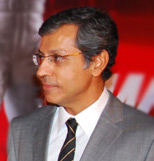
    On the occasion of the first anniversary, MxMIndia talked to Tarun Rai, CEO, Worldwide Media, about Femina Tamil, the magazine industry, and whether there will be more Feminas in South India.
     

    Q: With 2011 witnessing a decline in the readership figures of dailies, monthlies and fortnightlies, how comfortable were you launching a new magazine in such a scenario?

    We launched Femina Tamil last April. For us, this was an entry into a new market where we tapped a whole new set of readers. The Tamil market is a large one, with multiple magazines being present in the Top 10 list of most popular magazines in the country.

    We have targeted the 20-29year old SEC A Tamil-speaking woman who is modern, progressive and forward thinking. Based on previous IRS figures, there was no Tamil magazine that was popular with this segment and it provided us with a perfect opportunity to enter the market.

    The increase in sales figures month-on-month has been promising and we are very happy to have been accepted by the readers.


    Q: What was the different approach you took… positioning and branding?

    Femina Tamil was positioned in line with the popular English magazines that are available in the market. The monthly magazine is a 140+ page glossy with production values and quality same as that of the parent brand Femina (English). The content is a mix of stories written specifically for the Tamil reader and popular features from the parent magazine.

    The magazine was targeted towards the progressive, modern, Tamil-speaking woman in the age group of 20-29 years from SEC A.

    All communication and branding was customised to speak to this woman – showcasing different aspects of her life and how Femina is the perfect magazine to suit her needs as she tackles different roles in her life. The campaign embodied the tagline of the magazine “for all the women you are”.


    Q:What was the revenue model you adopted? How has it helped?

    As in the case of all print media, this magazine also relies heavily on ad sales. The advertisers are a mix of local and national clients who have used this vehicle to reach out to their TG in this market. Additionally, we have relied on magazine sales through new channels like format bookstores like Landmark and Crossword. We have also worked aggressively to get subscriptions for the magazine. Tamil magazine market is primarily a sales driven market. We have rolled out several attractive schemes to bring in subscriptions both from ground activations as well as online channels through our subscription website www.timesmags.com and promotions on Facebook.

    Femina Tamil is also available on Magzter, the popular online magazine portal where it is receiving a good response from the readers in terms of downloads and online subscriptions.


    Q:There have been a lot of specials in the magazine. Was it a deliberate move? Has it helped?

    Femina Tamil has had a special theme in all its issues – this has ranged from Akshay Tritiya special in May to Ddiwali, Pongal and Valentine’s Day specials. We have also had ‘shopping’ and ‘bridal’ special issues. The aim has been to give readers something interesting to look forward to in every issue.

    Being a new entrant in the market competing against multiple old and established magazines, we have used our fresh and novel edit content to attract readers.

    The special articles, along with other edit initiatives have helped us gain a dedicated reader base in the market in a very short space.


    Some key changes we have introduced:

    The cover girl is always a woman who is a celebrity in Tamil Nadu. In the past, we have featured Trisha, Asin, Shriya Saran, Shruti Hassan and Kajal Aggarwal and Deepika Pallikal on our covers.

    The cover story is always an original story, covering topics that are relevant to t he reader.

    We have introduced a special column called ‘I want’, where our readers meet experts and learn a new skill like make up or baking – anything that they want!


    Q: Do you have the readership figures for Femina Tamil for the past year?

    We have not participated in IRS in the launch year. However, we have seen a steady growth in our numbers both from Trade sales as well as Subscriptions from the launch issue onwards. This is a positive indicator that the magazine has been well accepted by the readers. We plan to become even more visible and active in the market in the coming months to capitalise on the buzz created by our recent marketing activities and consolidate our position in the hearts and minds of readers.


    Our print run is 85,000 copies across South – 80 percent circulation is in TN, rest in main cities (Bangalore, Hyderabad and Cochin). While we have no IRS/NRS figs, however even if we take two readers per issue, we have 1,70,000 readers.


    Q: What plans for the future? Are you planning to launch in other South Indian markets too?

    South India is a vast market and is extremely exciting in terms of the scope it provides us to reach out to new readers. Yes, we are looking to launch in other South markets too.
     

  • [Noosemaker] It doesn’t add up for poor Monty

    By Ranjona Banerji


    I suppose, if you add it up, you have to feel sorry for Montek Singh Ahluwalia, the deputy chairman of the Planning Commission of India. Of course, it is important to remember that I cannot add and neither, it seems, can Ahluwalia. He can however subtract. That is, if you have so many poor people and you want to reduce their numbers, you just reduce the numbers that make them poor. This is an effective tool but sadly no one in this country, except business journalists (the same ones who see any schemes for the poor as burdens on the exchequer), agree with Ahluwalia. Most people find subtraction a heinous and reprehensible method especially since people seem to be multiplying.


    About here is where I run out of mathematical analogies. Because everything sounds like those school maths problems now – if a train is running at 100 km an hour and Peter has six apples, how many oranges does John deserve? For all I know, Ahluwalia also subscribes to my version of mathematics.


    Anyway, where were we? Ah, yes, how many poor people in India? A few months ago, Ahluwalia and the Planning Commsion (subtraction department) told us that if you could live on Rs 32 a day in a city and Rs 28 in a village, then you were above the poverty line. Faced with universal outrage – where many tried to live on that amount and couldn’t last more than 10 minutes – Ahluwalia huffed and hawed in his very good accent and told us that his figures have nothing to do with whether these magician-like poor people were eligible for benefits or not. The Planning Commission, it seemed, just needed these figures to help them in some way or the other.


    So now we know in which way: to reduce the number of poor people in India. This time, in its final report, the Planning Commission lowered the number of poor people by lowering the numbers. Instead of Rs 32 in a city, now you are poor if you manage on Rs 28. In villages, the figure is down to Rs 22. This has led to a dramatic reduction in poor people.


    Sadly for Ahluwalia, no one bought it this time either – except business journalists. The prime minister just quietly dumped the Planning Commission’s number and decided that someone else would start counting. Hopefully, it will be someone who can add, subtract, multiply and divide. Even fractions might help – the way business journalists and the rest of the tribe appear at times.


  • Anil Thakraney: How can things improve at ad awards?

    By Anil Thakraney


    In my interview with Balki for MxMIndia, we discussed in detail his reluctance to take part in the industry award competitions. And he seems to make valid points. Broadly speaking, there are two big problems: One, the award competitions are designed to honour the ‘smart alecky’ stuff rather than the effective stuff. And two, the suspicious quality of the judges.


    I personally think both these issues can be dealt with if the organizers have the will to make things better, and more importantly, are ready to set their egos aside. These improvements will only make the awards a bit more worthy than they currently are.


    Let’s first examine the parameters for judging. Every entry must clearly spell out what the marketing problem was and how the campaign/advert helped solve it. This should be backed by credible facts and figures, and must carry comments/feedback from the concerned brand manager. Half the score must be reserved for this. As in, did the ad manage to meet the desired marketing objectives? The rest 50% of the marks must be awarded on how interestingly the message was communicated. This is where judges can be allowed to be subjective, and must reward only those ads which they believe achieved creative excellence. Though time consuming and tedious, this approach makes sense to me since advertising isn’t pure art, unlike poetry or painting. It’s commercial art. There is no use of pretty imagery if the brand went down the tube.


    Two, the judges. No current creative director must be allowed on the jury. This will eliminate the slimy agenda of some, who seize the opportunity to negate the chances of a rival’s ad winning. (By the way, this keeps happening all the time.) The jury must only consist of ace marketing directors who are reputed to have built brands or turned some around in their careers. And retired agency creative directors who are admired for the sparkling work they did during their days in advertising. The doyens who most industry professionals revere. Alyque Padamsee and Mohammed Khan come to mind immediately.


    [youtube width=”400″ height=”200″]http://www.youtube.com/watch?v=7VJJOfSVViw[/youtube]

    In short, I think things can be changed if people WANT them to be changed. Balki has made important points. Hope the industry leaders are paying some attention.


    ***


    PS: Must watch. Not just for those ad industry leaders who are past their sell-by dates, but all oldies in any sphere of work. People who continue to hang around, unsure of when to move on. (In fact, I think one Sachin Tendulkar must watch it too.) It’s based on the farewell speech made by Leo Burnett in 1967 upon his retirement.


  • No fluffy business for the wool market

    By Tuhina Anand


    The Woolmark Company and AWI operate worldwide with offices in over 18 countries, with the headquarters in Sydney, Australia. Woolmark is the iconic fibre brand symbolising the best wool in the world. Created in 1964, by Italian graphic designer Francesco Saroglia, the Woolmark logo perfectly represents the softness, elegance and modernity of wool. Today it is still amongst the ten most recognized and appreciated brands in the world. Used on over 2 billion products since its launch, Amir Sheikh, Country Manager India, The Woolmark Company gives MxMIndia an insight into the company’s plan in India.


    Q: How does Woolmark view the current industry for woollens in India both the current status and opportunity?

    India is a big market for woollens with huge growth potential in the domestic market. It is the second largest Australian Merino wool importer after China, though a distant. As per the recent survey and forecast report, the consumption of wool in India is going to grow with shift in market dynamics.


    Recently wool prices have seen increase due to growth in global demand and weakening rupee, making wool import in India expensive. And due to pressure on price points, retailers have gone for blends to sustain the market. The current economic scenario though does not look good with mix corporate results of the last quarter but retailers are optimistic on woolens.


    Fine wool products are becoming a luxury, and brands see this natural fiber as an important tool to attract consumers in premium and luxury segment. Wool being a natural fiber will always be in vogue and there is always a demand for this natural fiber. With growing awareness among consumers for eco-friendly products and being conscious of environment they prefer to have clothes made of natural fibre and wool is among one of the premium natural fiber to cater to their demands.


    We see India as a market of opportunity for premium natural fiber like Merino wool as it is one of the emerging and growing market with swift changes in retail formats and consumers’ mindset who have increased disposable income and wants to adopt international fashion trends. All these factors will help us to build a strong demand for premium quality wool products in India and it is important for us to educate the value chain and bring innovative product ideas to Indian market to meet this growing demand.


    Q: Some of the leading names have the Woolmark approval already in India, what is the task ahead?

    As Indian fashion and apparel industry transforms through modern retail catering to educated consumers it becomes important for brands and retailers to win the consumers’ confidence not only on their brands but also on the quality of product they are selling. This is where we add value with Woolmark certification and licensing program in which garments carrying Woolmark ticket and label assures that it has passed through stringent quality testing and meet consumers requirement which builds confidence. Over the years we have build this quality assurance program globally and many brands and retailers have confidence on the Woolmark brand which will grow as we expands our horizon from traditional to modern retail in India. As you see there has been an increased consumption in woollen products like knitwear, scarves, suits, etc in Indian market and good brands offering quality and natural products, we see a huge demand in Indian domestic market Woolmark certified products. This becomes important for us to reach to brand and retailers who may not be aware of this program or would like to associate with us in future.


    Q: How do you intend to educate customers on the benefits of buying a Woolmark product?

    This is important to us as we educate the value chain about Woolmark certification it is equally important for us to reach to consumers and inform them about Woolmark certified product. This awareness we are doing through various mediums and the best way is through association with retailer by in-store promotions, retail staff training, etc. We have recently done consumer awareness campaign ‘Wool Celebration’ in association with brands and retailers through various media to educate Indian consumers in targeted Indian market. Digital marketing is also one of the focused approach to educate consumers in effective manner. We will continue to educate consumers about wool and Woolmark in future.


    Q: What are few steps you are taking to popularize the concept among the trade to adopt Woolmark status?

    This includes educating the entire value chain about Woolmark through participation in various trade fairs and making them aware about Woolmark. Usually manufacturers are licensed for Woolmarkwith whom we work closely and offer innovative product ideas on wool which in turn can be created and offered to their prospective customers – brands and retailers. At the same time we are offering our services to brand and retailers to expand their knowledge on wool with wider global trends fitting to local demand. Through this knowledge sharing we intend to educate the end of the trade – brands / retailers who are keen to offer values to their consumers with Woolmark certified products. To our valued trade partners we offer sourcing solutions with our global network, new product ideas in different product categories, technical guidance and trend forecasting through our famous business development tool ‘The Wool Lab’. We are increasing our trade activities to reach to wider section of trade as the market demands.