Author: mxmadmin

  • Set-top shortage could dampen digitization drive

    By Nandini Raghavendra & Meenakshi Verma


    Five months before time runs out for homes across India’s top four metros to switch to digital transmission to continue watching cable television, operators are battling short supply of set-top boxes as well as ignorance among consumers.


    More than 60,000 set-top boxes need to be installed every day to enable an estimated 10 million homes across Delhi, Mumbai, Chennai and Kolkata to meet the deadline mandated by the government.


    But with India going digital at the same time as Brazil, Russia, China and South Korea, among other countries, set-top box makers are finding it difficult to meet delivery deadlines. This is the case even as most leading manufacturers, based in China, have ramped up production manifold.


    “Most consumers don’t even know that they won’t be able to watch TV with the same cable after the June 30 deadline and that a digital set-top box is a must,” says Mr Anthony Brian D’Souza, a Mumbai-based cable operator.


    Direct-to-home or DTH operators, who use satellite and dish antennae, are therefore well placed to grab the business from cable operators. Nearly 80% of the 70,000 odd cable operators are believed to be independent players, who are also finding it difficult to absorb the rise in the cost of imported set-top boxes due to rupee depreciation.


    “This is a great opportunity and we are well poised to make the most of cable digitalisation,” says Dish TV’s managing director Mr Jawahar Goel, “The DTH industry will be able to grab 30%-70% of the analog cable homes across various phases depending on the locations.”


    Tata Sky has also geared up to cash in on the opportunity. “Our billing and CRM systems handle millions of customers. These have been further scaled up to ensure error free service to many more millions of new subscribers who will join us in next few months,” says chief executive officer and managing director Mr Harit Nagpal. The company can install fresh connections within a day of receiving the order, he says.


    Big multi-system operators like Den Networks and Hathaway Cable & Datacom, which have too much on their plate upgrading their subscribers, might find it difficult to add too many new subscribers.


    Den Networks has hired Ernst & Young to conduct seminars and train its partners and affiliate local cable operators. “Local cable operators will help us upgrade our existing consumer base on the ground and will play an important part in the process,” says Mr Sameer Manchanda, CMD of Den Networks. He says the company will focus on upgrading its current subscribers in the four metros.


    While the industry expects a majority of independent operators to align with the bigger players, many of them may find the switch hard to survive. “The large investments expected from cable operators for setting up the infrastructure in such a short span of time and competition from DTH players could create unemployment among smaller cable operators,” says Ms Roop Sharma, president Cable Operators Federation of India, the largest association of independent cable operators in the country.


    Sharma, however, says even the bigger players might find it hard to prove equal to the challenge. “Digitalisation is a mammoth task and there are concerns whether the deadline for the four metros will be achieved,” she says.


    An independent cable operator says many affiliate partners of the bigger players are showing a huge resistance to digitisation at the moment. “If someone in the cable fraternity keeps holding out till the last moment in the hope that digitalisation will not happen, he will only be making it easier for DTH players to garner incremental market share at the cost of the cable industry,” says Mr K Jayaraman, chief executive officer of Hathway Cable & Datacom.


    Source:The Economic Times

    Copyright © 2012, Bennett, Coleman & Co. Ltd. All Rights Reserved


  • Our core belief is innovation: Shyatto Raha, NDTV Worldwide

    By Akash Raha


    Shyatto Raha, CEO, NDTV Worldwide and NDTV Emerging Markets, has been with NDTV for over 13 years and is an integral part of NDTV’s strategic team which has helped develop new growth areas.


    He spearheaded the successful launches of NDTV Arabia in the Middle East and Astro Awani channels in Indonesia and Malaysia.


    In his role as CEO of NDTV Worldwide and Emerging Markets, group subsidiaries, Mr Raha heads its business and operations and is responsible for the setting up of local news, current affairs and business channels targeting the local population, in emerging markets across the world.


    In a chat with MxMIndia, Mr Raha speaks about NDTV Worldwide, its focus and growth.


    Q: NDTV Worldwide has created a footprint in the media consultancy business and spread the banner of the NDTV group to newer areas. What are the other key focuses?

    Over the years NDTV has become one of the most trusted brands in the broadcast industry. Also, we have been a very successful brand. As far a media consultancy is concerned we have only shared the knowledge from the talent that is their within NDTV. Many of us have been at NDTV for over 15 years and it’s all about taking that knowledge base and creating media consultancy and media services which is due to bring about a change in the industry. It is definitely a change for the better. Here, we are making sure that the people who are coming into the market, the new entrants, are at least buying into technology, buying into programming ideas, buying into a way of working which will help them sustain and survive in the environment. Otherwise, what happens is that we find that a lot of broadcasters who enter the industry and then after a about a year or two they wither away because they were never set up properly. So considering that this (broadcast business) has been better and better and we have run it for over 23 years now, it gives us a very good foothold to advise broadcasters who are new to the market as to how to set up channels, on best practices, and tried and tested workflow. We don’t impart bookish knowledge but rather a very practical approach to things. We have been very small to start off with and we have been a very small consultancy in the market compared to many others in the market. But we like to take baby steps because we believe in getting it right. The aim is not just to take on 78 clients and get it all wrong. The aim is to take baby steps, manage fewer clients, get it right and then expand.


    Q: What are some of the major developments that you have seen in NDTV Worldwide since its inception?

    Over the years, the kind of services that we are offering in the market has expanded. Earlier we used to do only channel set ups. But today we do channel set ups, broadcast consultancy, training, channel management services… We have also added digital consultancy, where we have set up web mobile and apps platforms based on the success of NDTV convergence. So it’s a wide array of services that we have added since we started. In terms of client base, our prime focus in the first two years was on international clients and in the last two years it has been the Indian market. And I think we have done fairly well in the Indian markets with the clients that we have and we have got it right. I think they have all seen the result and the benefit that has come out of it


    Q: What are some of the new clients you have bagged?

    We can’t talk about recent signings due to confidentiality. Last year, the big launch was the Beximco Group, which is one of the biggest television channels in Bangladesh. That was a feather in our cap because, of all the TV stations launched in that market, I think independent television has set a new benchmark in the industry.

    And that’s the NDTV value that we bring to the table. Our core belief is innovation and it has been Prannoy-Radhika’s belief since the day I worked with NDTV. It’s been innovation at every level. When we set up NDTV – the news business – we innovated, not just in terms of technology platforms that we brought into the country but also innovation in terms of content. The kind of shows, the programming, the business practices, the kind of work flow and management style were all innovative. We don’t like following people. It’s not arrogant; it’s just trying to set a new standard and do something different.


    Q: NDTV group started off with a news channel. How did the idea of this subsidiary business emerge?

    It all started with one project, where we launched Astro Awani in Malaysia. We completely revamped it and created a differentiated channel for the audiences. This was NDTV’s first launch outside India and a very successful one too. We saw a business model in this that could be worked and built upon. We thought that NDTV had a lot to offer in terms of knowledge and ideas to new entrants in the market, and we could successfully leverage upon it.


    Q: What has the growth of NDTV Worldwide been like?

    Over the last year we grew by 70 percent. Our target for the current year is 100 percent and we are well on course to achieve it. In terms of expansion, our pre-eminent focus in the past few years has been India and the international market in South East Asia. However, in the upcoming years you can definitely see us entering newer countries and perhaps continent.

  • TRAI-ing time for TV with ad curbs


    By Rishi Vora


    The Indian television scene as we know it is set for a sea change, and not in a good way for everyone. While viewers may heave a sigh of relief, advertisers and agencies are already counting the declining shekels as the authorities’ latest move is likely to cause a major setback to the Rs 21,000 crore television industry.


    Keeping in mind consumer grievances about too many ads, too little content, the Telecom Regulatory Authority of India (TRAI) has proposed to limit ad duration on pay television channels and also a few other suggestions on sporting events and news coverage.


    The story of Indian TV’s growth is also the story of increased advertising – which is good for brands, broadcasters and media agencies. The consumer, however, tends to feel inundated with advertisements especially at prime time and during the most popular shows.


    Not that there are no existing norms, but with the recent proposal, TRAI has stepped up the pressure for a better viewer experience.


    The Proposal

    • No free-to-air channel shall carry advertisements that exceed 12 minutes. For pay channels, the limit shall be six minutes. Furthermore, the prescribed limits shall be enforced on a clock-hour basis as against being averaged for 24 hours.

    Also it is proposed that the 12-minutes of advertisement are not to be aired in more than four sessions in one hour which means continuous ad-free broadcast for at least 12 minutes.

    • No more than three ad breaks during a movie, with a minimum 30 minutes between ad breaks will be permitted.
    • During live sporting events, advertisements can only be carried during interruptions in the sporting action. TRAI has also put up a proposal to ban on part-screen & drop-down advertising, which means only full-screen ads are permitted.
    • TRAI has proposed that audio level of the advertisement should not be higher than the audio level of the programme.
    • News and current affairs channels shall not run more than two scrolls at the bottom of the screen carrying non-commercial content. These scrolls should not occupy over 10 per cent of the screen space.


    The general sense among key stakeholders of the industry is that it’s a drastic move to slice ad duration to such an extent – almost half of the current norm – for pay channels. It’s going to be tough for the pay channels as anyway they lose out on substantial monies on account of leakages in the subscription model. Added to this are other worries such as increase in ad rates, inventory issues which may crop up, impact on quality content etc.

    MxM India finds out what key stakeholders have to say.


    Mr Sunil Lulla, CEO, Times Global Broadcasting Co. Pvt Ltd said, “The industry standard today is 10 minutes plus 2. Most of us are around that on an average hour basis but given the pressure and high cost of this business, very often the industry has had to go beyond the earlier stipulation and I think this should be left to the forces of the industry to regulate, like we’ve done for content.”


    He further added, “Regulation must be industry-created and cannot be ministry or government-thrusted. We believe that self-regulation has worked for content; we believe that self-regulation will work for advertising and many other aspects, and that’s the best way to develop this industry.”


    According to Mr Ajay Kakar, Chief Marketing Officer – Financial Services, Aditya Birla Group, these guidelines, though framed keeping viewer experience in mind, are more likely to impact the industry negatively as they may lead to increase in ad rates. He explains that the lower ad revenue would put pressure on broadcasters to reduce costs, which will subsequently impact the quality of content. Mr Kakar feels that these guidelines if accepted by the industry could lead to a paradigm shift for broadcasters and advertisers.


    Mr Ashish Pherwani, Senior Manager, Media and Entertainment – Ernst & Young has a similar view. He says that 70-80 per cent of a pay TV channel’s revenue comes from advertising and if the current regime of 12 minutes per hour is to become six minutes per hour, rates are ‘unlikely’ to double to make up for the revenue dip, so cost of content will go down and therefore shows like Bigg Boss and KBC won’t be viable.


    “The TRAI note stresses that digitisation will get more subscription revenues for broadcasters but that’s not going to happen soon. It’s going to take some years! Given that most GECs and sports channels’ inventory is 100 per cent and sold out currently, ad rates will go through the roof if inventory is halved. Advertisers will reduce TV spends and go to other media or less expensive TV channels. Hence, overall a negative impact on the TV industry.”


    Mr Jehil Thakkar, Partner and head of Media and Entertainment, KPMG noted that the guidelines have been in existence, but it is the market that determines the volume. He further added that it is in the broadcasters’ interests that they keep a limit on advertising, noting that they are well aware of the perils of excessive advertising as consumers tend to move between channels to avoid long commercial breaks.


    Mr T Gangadhar, Managing Director – MEC India is all for a good viewer experience. “I’m not a big fan of regulations, but there needs to be a way to protect the consumer’s interest,” he maintains. “Pay channels are making money through subscription. But yes, that is not much, as a lot of that is lost in leakages that are so prevalent in the broadcast industry.”


    He further added, “Typically, in many countries, subscription and ad sales go hand in hand – so what they’re trying to achieve is that if you’re a pay channel, quite clearly you have a revenue model in subscription and therefore while you are entitled to advertising revenue as well, it can’t come at the expense of spoiling the viewer experience especially when the viewer is paying for that particular channel.”


    Mr Neelkamal Sharma, COO – Buying Madison Group advised, “I woul suggest that it should be done in two stages, maybe from 12 minutes to 10 and then to 8 minutes. The move to have a limit is good and is in the overall long-term interest of the TV industry, since it will reduce viewer irritation. But a decision like this should be taken in consultation with industry bodies like IBF, ISA and AAAI.”


    It will be interesting to see if these guidelines are passed as the industry clearly is not on the same page as the TRAI. Broadcasters and advertisers are expected to send their suggestions to the TRAI before March 27.


    Watch this space for updates, views and more analysis.


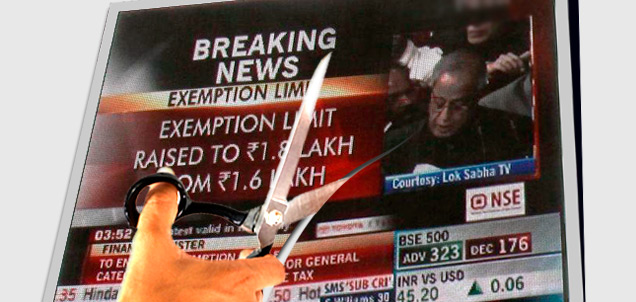
    Imaging: Rafiq, File photograph of Budget on a television set: Fotocorp

  • [MxM Radio] The viral effect is baffling: Anil Srivatsa

    By Robin Thomas


    Entrepreneuring is said to be in his blood, considering his first job straight out of college was his own business. He has been a veteran of the media field since the past 20 years. He had launched a radio show called ‘Anil Ki Awaaz’, in New Jersey, USA and ‘between the sheets’ in India. He also launched an internet radio channel for Asian Americans. Anil Srivatsa is the Co-Founder, CEO Venturenet Partners Pvt. Ltd. (promoters of Spot Radio and Radiowalla). Prior to launching Venturenet Partners, Mr Srivatsa was the CEO of Kings XI Punjab and before that he was the COO Radio Today Broadcasting.


    In conversation with MxMIndia, Mr Srivatsa spoke at length about his Bengaluru-based internet radio company, Venturenet Partners and its soon-to-launch Radiowalla, a service that offers a variety of special interest internet radio channels. He also spoke about Spot Radio, a b2b digital in-store radio entertainment, the break-even plans, and much more.


    Q. We are already in the middle of March 2012, and Radiowalla is scheduled to launch in April 2012… Is the schedule on?

    Yes, we are on schedule to launch in April. However, there are different stages of launch and the beta launch will happen where a close group of people with get to use the service. This will take place within the next few weeks.


    Q. Are you seeing an increase in the curiosity level among people? What’s the kind of reaction you are receiving?

    Well, the curiosity level seems to be increasing but the one phenomenon I am unable to figure out is the fact that three weeks ago we had only 260 ‘Likes’ on the Radiowalla Facebook page and today we have over 5000 ‘Likes’ despite us not doing anything to move the needle. It’s probably the viral effect. So, going by all the viral activity we are receiving on the Facebook page, it seems like people are waiting in anticipation.


    Q.What about Spot Radio? It’s been a while since launch… What’s the team size?

    Spot Radio is doing extremely well; we are best- in-class. We have competitors but, I don’t think there are any companies that have more clients than we do. However it is just notabout numbers but our product, our service, our pricing and our timing. Everything speaks for itself. Our team has been working well. We’ve got a small team putting out 30 radio stations today. We have 30+ clients which meanswe are actually churning out 30+ radio stations with five (Creative) people. We have a total strength of about nineteen world class professionals. I keep saying world class because our talent and product is world class, and it just goes to prove that you don’t need 30 people to run one radio station.Infact, I need 20 people to run 30+ radio stations.


    Q. You are currently headquartered in Bangalore… Are you looking at setting up studios in other parts of the country too?

    We will set up a studio in Delhi. Ithas a lot to do with the kind of content we want to generate out of there and tap into some great talent available there. We have an outfit in Chennai. Mumbai will be the last, not because it is the least important but, because it is the most expensive to set up an office. So, we are trying to do all what we can everywhere else before we come to Mumbai. Our presence in Mumbai will be felt soon but for now I travel to Mumbai and take care of business development out of there. We may forge a partnership with a strategic partner in Mumbai (Once we find the right partner).


    Q. What is your view on content innovation on radio and tell us what led you to start Radiowalla?

    I think we have been speaking about innovation in radio for the last five years since I have been involved with the business in India. I think the problem here is that the industry seems to be confusing innovation for differentiation. There is plenty of innovation happening, there is no lack of innovation in radio today. There is infact a lack of differentiation and unless an industry captain takes a personal professional risk this will not change for some time now. Nobody wants to take a risk aseveryone is worried about their next job. I have spoken to many of my peers who secretly harbor ambitions to be able to do something different but none is willing to bell this cat. Great ideas exist among the radio professionals.


    I took a risk to a point that I lost my job over it. Radio needs patience. There is no collective will to do something different. If one of them is following one format let them follow that format, there is always a space for another format. This will actually create more advertising spread. Advertisers will be forced to buy advertising on all radio formats to reach a broader section of people with diverse interest had radio organized by format. Now what is happening is that all radio is alike so the advertisers pick the top 3 and leave out the rest as they are reaching the same audience. I believe format differentiation will increase the ad pie and as a result force a more equal distribution of the ad money. This approach would have been better for the Industry in general. Rising tides will raise all ships.


    Q. And this was one of the reasons for Radiowalla…

    Yes, Radiowalla is about content differentiation and on the internet because distribution is the least of my problems. The internet allows me to create a hundred channels if I want to. This is what Radiowalla is about. It is a platform of audio content which is differentiated in each of its channels, giving a choice to the audience i.e. whoever wants to listen to whatever content, and at any time. We are a linear radio format. What the music industry calls a non-interactive format of delivery. So, it is not just the idea but, technology that supports the idea and the execution of it that makes an innovative product happen.


    Q. You had said that you would initially launch only audio channels. Why? 

    Audio has so much depth. I am not even thinking beyond audio because there is so much to do in audio! It is a non- invasive media. I can do ten things and still engage with audio, unlike any other where it is a one dimensional engagement. Audio is more effective in thought change. I equate Audio to guided Meditation. It is difficult to meditate with your eyes open. Audio has no visuals and therefore more engaging to the mind -Less distracting.


    Q.So, you will launch 30 radio channels… Will news be one of them?

    Atleast 30 radio channels as of now and yes news will be one of those channels. There is enough to do with non music content. There is only so much music you can do. You count all the genre of any music in English and Indian languages. You can’t find more than thirty. We are trying to cater to the long tail. The focus is on non-music production to add to the magic of music.


    Q. Do you think in the long run internet radio in India is a feasible one?

    Of course it is feasible. I draw the analogy from terrestrial TV, cable TV and DTH TV. What Doordarshan started was terrestrial television,now is cable television not television? Is DTH not television? Is TV on the internet not Television? Are they all not viable/feasible? What you are seeing now is radio on FM terrestrial frequencies, it doesn’t mean that what happens on internet is not radio. It is the same but, the distribution medium is different. Terrestrial television was different from cable television which is different from DTH which is different from television on the internet but all still Television. Similarly FM is one way of delivering radio, and not the only way.


    Q. Should the traditional radio stations in India start worrying about the advent of internet radio?

    Well they should worry as anyone would with a competing platform growing…Traditional terrestrial radio has their limitations. There can only be so many frequencies. Traditional radio will never die, all I am saying is that internet radio just offers an extremely different canvas, where you can paint different pictures, it’s affordable and yet has a business model around it.


    Q. What is the business model you follow? Is it advertising led or do you have alternative source of revenues?


    The business models are traditional. We have a combination of Ad support and subscriptions.To use jargon, the freemium and premium models. There are certain channels that will be available as subscription only and commercial free, while some channels would be available for free but, supported with advertising.


    Q. And what about Spot Radio? It is a b2b arm of Venturenet… How does it function?

    We create radio for specific brand identities in the retail and corporate space. So the business model is very simple, they pay us for the service to manage their network and some of them allow us to sell third party advertising… so we generate revenue which we share back with our client.


    Q. You are building infrastructure, recruiting experts, setting up studios etc. How else are you utilizing the Series A funding? What will the next round of funding focus on?

    Our progress on infrastructure building is very public. I have pictures up on our facebook page at every stage. We now have about 19 people and will grow to a few more. The funding has helped us get to this point as it was intended to. As far as the next round of funding is concerned that is a matter of strategy as it is based on a certain milestones that we reach and if we reach those milestones quicker we get to that funding quicker.


    Q. And what are those milestones…?  

    Well, they are revenue milestones and there are business expansion milestones. I believe that if we stay with our current business planit will take us about 18 months to reach a certain milestone but, if we are accelerating that and achieving it sooner, then clearly we need more funding quicker. Thus it is just a matter of which stage we are in now.


    Q. When do you plan to achieve break-even?

    Break-even should happen in 18 months but, if we had another ten clients in Spot Radio we should have operationally broken-even. I hope to get to this stage inside 18 months.


    Q. How would you measure the success of Spot Radio or Radiowalla? What is the benchmark for success?

    For Spot Radio, the benchmark for success is very simple.It is as many clients as we have who are paying us and if we start meeting our advertising revenue targets then this is a measure as well. As far as Radiowalla is concerned, the quality of content is the benchmark to success because that will automatically start giving me customer acquisitions. Eventually the number of customers we have will ultimately determine how successful Radiowalla is.So, it’s all in the numbers but, what leads to the numbers are where I am focusing and it the quality of content that will help me retain my customers. I focus on quality of content.


    Q. Any specific plans for 2012 thatyou would like to share with us? What can we expect from Venturenet this year?

    All I can say is that it is going to be an exciting growth phase for us in 2012. We are looking at further consolidating ourselves, and grow more clients.We are looking at related areas that have not been exploited yet and which are perhaps under the radar as of now. So yes lot of action plans this year.


    Q. Do you see the internet radio market further growing? Do you see more internet radio players in India?

    Internet radio is a great opportunity! In terms of a global listenership it is a bigger business than an FM station in one city. We are only the beginning of it. There are plenty of those ideas going around and I am sure there will be many who fail and many who will succeed.


    Content is still King, distribution can be King Kong but, it will still be a monkey without content. Radiowalla is a content company agnostic to technology. We are adaptive to new emerging distribution technology and we will keep one eye on it. We are focusing on good content and that’s where we are meeting the needs. When you can have your own phoolwalla, doodhwallah, chaiwallah,sweetwalla then now it’s time to get your own Radiowalla.


    Q. On a lighter note, how has life changed after becoming an entrepreneur?

    I have always been an entrepreneur. So, life has not changed because I like this life and that is why I am in it. In fact my first job out of college was my own business, at 21 I was running my own City magazine for Bangalore. So to me being an entrepreneur is in my blood and every job I have had since then have been in a startup environment, for someone else in their founding team and as a senior member in their founding team. The difference now is just that I am doing it for me and I am the only one I can blame if I don’t do well. With all the ups and downs I have seen in life as an entrepreneur, the one good thing that has happened is that my life is now recession proof. My greatest achievement so far!


  • Freaking News: Much ado about Time’s Modi cover?

    By Ranjona Banerji


    Finally got my hands on the Time magazine featuring Gujarat chief minister Narendra Modi and all that springs to mind in Shakespeare. Much ado about nothing in fact. For all that Modi is on the cover, the text is a double spread. It appears to have been started when Modi was on his “Sadhbhavana mission” and contains some interaction between the writer, Jyoti Thottam, Time’s New Delhi correspondent, and him.


    What do we learn from it? That Modi is not remorseful about the 2002 riots, that he grew up as a pracharak, that industry in Gujarat is booming and that Muslims may not be better off in this state but they are certainly not worse off. Nothing that we did not already know. The hypothesis that Modi could be the next prime minister of India is tenuous at best – the article displays a very superficial interpretation of Indian politics and how it functions. The comparisons with Rahul Gandhi are specious and Modi did not campaign for the BJP in UP, we do not know how he would have affected the vote. The larger picture in which this profile is based is that the UPA is finished. Perhaps someone convinced Thottam that the BJP could win the next general election with Modi’s help?


    Why Time decided to run this story is what is interesting but since Time has done away with that little publisher’s note in the first few pages and no one seems to have asked them, we have no idea. Instead we have to wonder why Hindustan Times decided that the Time story was front-page worthy and why channels like NDTV thought the issue needed a debate.


    In any analysis, Time is will within its rights to do what it wants on its pages. Incidentally, Danish super-chef Rene Redzepi gets a four page spread in the same issue. Also, we are talking about the Asia edition of the newsmagazine, not the international or American editions. (Though according to comedian supreme Jon Stewart, the American edition of Time is most likely to have a cover story on whether pets like to wear matching clothes with their owners.) There is no significance to the timing – except that after the article appeared, the BJP lost a significant Lok Sabha by-election to the Congress in Gujarat.

    Enough said about nothing, I think.


    **


    The hysteria on TV over the allegations that two BJP MLAs were seen watching porn in the assembly by a senior journalist was vastly annoying and much less amusing than the jokes on twitter: “One Gujarat MLA to another: came cho?” (Thanks to Peter Griffin of Forbes).


    As usual TV lost the plot – the issue is about the appropriateness of watching porn in the legislature. Instead we went into screams and shouts about banning or legitimising pornography. Rahul Kanwal on Headlines Today though was quite sharp about stopping Shaina NC and Yatin Oza of the BJP making the debate about Narendra Modi!


    **


    Congratulations to CNN-IBN for being the most watched channel (it says) for the election results and the budget. They were certainly less annoying for most of the day on both days.


    **


    This bit is personal. When I complained a few months ago that Indian newspapers (particularly the Times of India) were not giving enough due to tennis star Roger Federer’s remarkable recovery after he won the yearender in London 2011, a young person commented (sounded young to me anyway) that Federer’s achievements were unremarkable or words to that effect. Now suddenly, according to the media, Indian and international, he’s the hottest thing on the tennis firmament and he’s everywhere.


    That’s vindication on two counts!!


  • Pradeep Guha is Chairman of AFAA

    By A Correspondent


    The General Body of the Asian Federation of Advertising Associations (AFAA) has unanimously elected Pradeep Guha, representing the Advertising Council of India, as the Chairman of its newly mandated Executive Committee for a period of four years.


    Talking to MxM India on the agenda for AFAA, Mr Guha said, “We will have a steering committee meeting in Bali in May this year where we will take a decision on the way ahead. However, I do feel that there is a need for some joint action across Asia on issues concerning the changing media environment particularly with regard to self regulation and advertising.”


    He continued, “There is a real need for an umbrella body like AFAA which represents the interests of marketers, agencies and the media to play a more proactive role in the Asian subcontinent.”


    Raymond So who represents Taipei Association of Advertising Agencies was elected Deputy Chairman. The new four-person committee consists of Bharat Avalani, Anthony Kang (representing Association of Accredited Advertising Agents, Singapore), Soon Dong Lee (representing Korea Federation of Advertising Associations) and Ramesh Narayan (representing the Advertising Council of India ).


    Founded in 1978, AFAA has representations in 15 Asian nations including Japan, Korea, Taipei, Thailand, Vietnam, Malaysia, Singapore, Philippines, Indonesia, Bangladesh, India, Sri Lanka, Nepal, Pakistan and UAE. Its primary objectives are to unify all Asian associations involved in the various aspects of advertising and upgrade the standards, ethics, and practices of advertising and to bring about a meaningful contribution from advertising activities to both regional and national socio-economic development. Under its aegis, AdAsia, Adfest and the Asia Pacific Media Forum is held.


  • Samyukth Sridharan joins Cleartrip as President and Chief Operating Officer

    By A Correspondent


    Cleartrip announced the appointment of Samyukth Sridharan as President and Chief Operating Officer. In this role, he will be responsible for providing leadership across the businesses.


    Mr Sridharan has a vast amount of experience in scaling businesses in a way that brings considerable value to the customer, the company release said, adding, “Having Samyukth join the team is a further endorsement of Cleartrip’s committed goal of making travel simple. We are optimistic that despite the considerable challenges that exist in the travel space today, Samyukth along with rest of the Cleartrip team, is equipped to provide the most innovative and useful travel experiences to all of our customers and partners.”


    Prior to Cleartrip, Mr Sridharan was at the helm of Sales and Marketing for over 18 years across a diverse range of industries spanning FMCG, Insurance, Advertising and Aviation.  Most recently, he served as Chief Commercial Officer at Spicejet, where he led the business expansion, making it one of the leading low-cost airlines in the country.


    An IIT Madras graduate with a Post Graduate Diploma in Management from IIM Bangalore, Mr Sridharan is a Marketing Major.


  • Water bottle for the front page of DNA

    By A Correspondent


    DNA initiates a path breaking front page innovation on the occasion of World Water Day DNA is known for its revolutionary approach towards almost everything it does and along with the daily news analysis; this English daily is impeccably marching ahead in making a change in the traditional newspaper industry.


    On the 22nd of March, when people grabbed their copy of DNA they experienced a refreshing change with a brand new colour on the front page. On the occasion of World Water Day, DNA and Tupperware had teamed up to showcase a new product by this well known high quality smart kitchen solutions company.


    Every newspaper, until today was getting printed in a four colour system through an offset printing machine, whose colours namely are CMYK (Cyan, Magenta, Yellow and Black) and occasionally various newspapers experimented with Gold or Silver. But the first time ever, in the history of Indian newsprint industry, a broadsheet has a shade of blue as a part of their printing colour palate and a live edit to make believe the trueness of the Tupperware bottle and making people comprehend a fresh and pure colour of blue on the well deserved occasion of the World Water Day.


    “Tupperware was launching their aqua fresh water bottles and we chose World Water day, March 22nd, as it was a perfect fit for the announcement. We wanted to do something exciting for Tupperware and this is when DNA came up with the concept of innovating it in a three-dimensional way. It’s the first campaign of the year for Tupperware and stands as a clear communication for all readers to drink fresh and healthy water”. – Surbhi C. Murthy, AVP, Allied Media This was done to launch the Tupperware bottle that is so pure and perpetual that it could be used for life. There could be no better gift for the readers than this, on the occasion, isn’t it!


    “Tupperware’s Aquasafe Bottles provide a quick, sustainable solution to safe, healthy water for consumers. Towards this, we have embarked upon an advertising campaign which is based on clutter-breaking innovation to generate buzz amongst the consumer. Committed to make the world a better place to live in, Tupperware endorses the idea and cause of effective water storage solutions and lends its whole-hearted support to the World Water Day.”  Anshu Bagai, Director- Marketing, Tupperware “Water bottles are a significant part of Tupperware’s range of products. The ‘Sip of Bliss’ campaign was created to celebrate water. What we wanted was to have an innovative kick-start for the campaign. And there could not have been a better way and a better day than the World Water Day, on March 22nd,   to launch it with a special innovation using a special colour to make it memorable and effective”  Jyotsna Chauhan, COO,  IBD India Pvt. Ltd.


    “Tupperware’s summer campaign is all about the romance and the sheer bliss of water.  The DNA innovation provided a refreshing twist in taking the idea further.” Jai Singh, Senior Creative Director, IBD Brands, Gurgaon. Explains Mr. Nirmal Kanthode, the DNA Production Head “The printing process had to be altered to create the depth of the Tupperware colour. After the normal 4 stage process, a 5th printing round with a special ink had to be done to create the magical effect. While this sounds easy, doing it for a full run of 6 lakh copies with high speed machines meant meticulous calculations & calibrations to ensure no delay & perfect output. Any shade change would be disastrous & we would have no way to stop it either.”


  • Sourav Ganguly to lead Pune Warriors in IPL5

    By A Correspondent


    Pune Warriors India, the IPL franchise of Sahara India Pariwar, has announced that all-rounder and former Indian captain Sourav Ganguly will lead the side of Pune Warriors India as Captain and Mentor in the fifth season of the IPL, to be played from 4th April, 2012 till 27th May, 2012.


    Pune Warriors India team in IPL 5 will don new turquoise blue and silver jerseys. Turquoise blue color stands for zeal, confidence and victory, the very attributes and motto of a Warrior.


    The Pune Warriors India’s bowling coach is Allan Donald while Praveen Amre is the batting coach. Paddy Upton is the mental conditioning and high performance coach of the team.


  • The Anchor: The 6 Cs of the TV business in South India

    By Anup Chandrasekharan


    Consumer: The consumers in South India are probably the most complex lot to understand. Each state in South has more than 20 districts and each district is a state on its own. Hence one can imagine the varied preferences of these consumers, and one has to find a path that will cater to and appease this varied audience.


    Connectivity: CNS penetration is more than 90 percent in all the four states put together in the South including TN, Karnataka, Andhra Pradesh and Kerala. In fact, in states like Tamil Nadu it is said that they have more TV homes than toilets!


    Content: Content is the key to success for anyone in the business. In the South, audiences like to watch content which is good for family viewing. In terms of difference in content, in Tamil Nadu and Andhra Pradesh the general rule is that audiences like to watch content that is loud whereas in Kerala and Karnataka content that is subtle is preferred.


    Cost and Earnings: It is possible to invest prudently in content while keeping the cost of operations on a tight leash, thereby ensuring that ROI is high. The mantra is to invest in smart content and keep running and operations cost minimum, which is possible among the Southern channels.


    Capability: It’s a sad truth but the talent pool is scarce as there are hardly any good institutes which can impart basic training for a foundation to enter the TV industry. Hence most of the learning comes while being on the job.


    Competition: There are 17 channels put together in Kerala and Karnataka and 35 in total in AP and TN. Therefore, there is no space for being smug and content if one enjoys a leadership position. The tables can turn any time and the heat is forever on, as competition intensifies among the existing players.


    Anup Chandrasekharan is the Business Head, Suvarna Channel.


  • Rockstar wins album of the year at Radio Mirchi Awards

    By A Correspondent


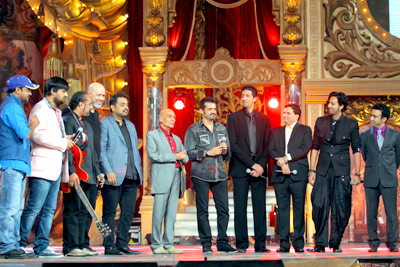
    The fourth Mirchi Music Awards honoured music talent across 24 categories as Radio Mirchi paid its tribute to music with much extravaganza and fanfare. Royal Stag was the title sponsor of Mirchi Music Awards. The awards were held on Wednesday, March 21, 2012.


    Bollywood personalities like Saif Ali Khan, Shreya Ghoshal and Bappi Lahiri, Mika, Sonu Nigam, Shankar Ehsaan Loy, Lalit Pandit, Salim-Suleiman, Ram Sampath, Sajid Wajid and Leslie Lewis were also among those personalities that performed during the awards night. Ash King, Harshdeep Kaur, Neha Bhasin, Anushka Manchanda, Tochi Raina, Shweta Pandit, Dominique and Clinton Cerejo, Kamal Khan, Suman Shridhar, Shefali Alvares, Benny Dayal and Ritu Pathak were among other celebrities at the Awards.


    There were 24 categories of awards at the fourth Mirchi Music Awards. The winners were decided by a jury that consists of notable personalities from the Indian film and music industry – Javed Akhtar, Ramesh Sippy, Ashutosh Gowariker, Sooraj Barjatya, Prasoon Joshi, Sameer, Shankar Mahadevan, Anu Malik, Aadesh Srivastava, Lalit Pandit, Kailash Kher, Louis Banks, Kavita Krishnamurthy, Alka Yagnik, Sadhna Sargam, Suresh Wadkar, Talat Aziz and Ila Arun.


    The Mirchi Music Awards – Winners List is as follows:

    1. Best Programmer & Arranger – Abhijeet Nalani & Giorgio Tuinfort for Chammak Challo from RA One

    2. Best Song Representing Sufi Tradition – Kun Faya Kun from Rockstar – A.R. Rahman, Javed Ali, Mohit Chauhan and Irshad Kamil

    3. Best Raag Inspired Song – Khoya Kya from Kashmakash – Hariharan, Sanjoy Das, Raja Narayan Deb

    4. Special Recognition to Pandit Channulal Misra

    5. Best Upcoming Singer of the year Male – Kamal Khan for Ishq Sufiyana from The Dirty Picture

    6. Best Upcoming Singer of the year Female – Tia Bajpai for Sheet Leher from Lanka

    7. Best Upcoming Music Director of the year – Harshit Saxena for Hale Dil from Murder 2

    8. Best Upcoming Lyricist of the Year – Seema Saini for Sheet Leher from Lanka

    9. Best Song Recording – Vijay Dayal and Mark ‘Exit’ Goodchild for Chammak Challo from Ra One

    10. Best Background Score – Ram Sampath for Delhi Belly

    11. Best Item Number Song – Ooh La La from The Dirty Picture – Bappi Lahiri, Shreya Ghoshal, Rajat Arora and Vishal-Shekhar

    12. Best Album of the Golden Era – Awaara (Shankar Jaikishen and Raj Kapoor)

    13. Royal Stag Make it Large Award – Dhanush and Anirudh – Special Award

    14. Jury Award for Outstanding Contribution to Hind Film Music – Babla Shah

    15. Best Indipop song – Mera Kya Hain Sab Hain Tera – Dil Ki Baatein – Javed Ali, Alaap Dudul Saikia & Ravi Basnet

    16. Best Song of the Year Mirchi Listeners Choice – Nadaan Parinde from Rockstar – A.R. Rahman, Mohit Chauhan and Irshad Kamil

    17. Best Album of the Year – Mirchi Listeners Choice – Rockstar

    18. Best Lyricist – Javed Akhtar for Khaabon Ke Parinde from Zindagi Na Milegi Dobara

    19. Best Music Director – A.R. Rahman for Nadaan Parindey from Rockstar

    20. Best Female vocalist – Sunidhi Chauhan for Ishq Sufiyana from The Dirty Picture

    21. Best Male Vocalist – Kamal Khan for Ishq Sufiyana from The Dirty Picture

    22. Best Song of the year – Senorita by Shankar Ehsaan Loy

    23. Best Album of the Year – Rockstar

    24. Lifetime Achievement Award – Khayyam


  • Is ‘Kahaani’ the gamechanger?

    By Anil Thakraney


    I watched Vidya Balan’s ‘Kahaani’ following all the brouhaha in the social media. As am sure many people did. It is also becoming increasingly clear that at least in the urban areas, Twitter and Facebook can, to a large extent, determine the fate of a film. This is the new word of mouth.


    On the subject of the movie itself, while I did yawn a couple of times and found that the climax lacked gravitas, I walked out of the multiplex with a good feeling. Because, at last, here was a Hindi film that had a real hero (and no, that’s not Balan… any actress with reasonably good acting skills could have pulled this off). And that hero is: Story.


    It is certainly refreshing to watch a desi film which doesn’t suffer from the Big Star disease that has infected Bollywood for a couple of decades now. Where movies are made and marketed solely on the basis of huge names like SRK, Salman, Aamir, Bachchan, Hrithik, etc. Where weak and often embarrassing stories are written with these demi-gods in mind. Where the audiences are expected to digest any drivel as long as the charismatic hero is in the frame. In fact, Salman Khan and Shah Rukh Khan have taken this nonsense to a ridiculous level… they not only act themselves in every film, they even gloat about it!


    This does not happen in world cinema, not in any other nation. In Hollywood, big stars like Brad Pitt, George Clooney and Jack Nicholson sink into the roles they enact, they seldom play themselves. This trap which Bollywood has dug for itself has resulted in standards of cinema plummeting to new depths of mediocrity. It has also resulted in film writers being paid poorly and treated like ‘extras’. Bollywood is the only movie industry in the world where producers FIRST sign the male hero and THEN think about the story. This is unheard of anywhere else.


    In that ridiculous scenario, ‘Kahaani’ comes as a breath of fresh air. One really hopes its success at the box office will make movie makers introspect and re-haul the current system. And go back to making the script the hero. Only when this happens will the rest of the world take Bollywood a bit more seriously. And we could dream of winning the elusive Oscar some day.


    [youtube width=”400″ height=”200″]http://www.youtube.com/watch?v=8t1_L7D7ZRg[/youtube]

    Yes, ‘Kahaani’ gives me hope.


    ***


    PS: Here’s a, well, interesting ad from The Singapore Tourism Board. I find the choice of words, ‘Get Lost’, quite offensive. Unless I am missing something out here, and the Aussies, to whom this ad is directed, like being abused. Methinks the advertiser has screwed up on this one.