Author: mxmadmin

  • Indian adspends to see +8.7% growth in 2012: MPA study

    By A Correspondent


    Media ad sales will grow by 8.7 per cent in net terms this year, against the background of a slowing economy (~7 per cent real GDP growth versus historical range of 8-9 per cent) and the high first half of 2011 base last year resulting from the Cricket World Cup (which happens once in four years) plus an extended IPL season according to Media Partners Asia.


    The growth will be primarily driven by MNCs investing inIndiaand stronger MCG sector, and there could be upward revisions made in the second half of 2012. The outlook for advertising growth across key categories is mixed.


    Some of the highlights are:

    • FMCG 

    Media buyers expect robust growth from the FMCG sector, which is the largest advertising category, contributing 30-35 per cent to total ad spend. MNCs are expected to report robust numbers, while a few large MNC accounts (with annual ad budgets in the region of Rs2-3 billion) are looking to increase spends by 50-70 per cent for the coming year. Domestic FMCG companies are expected to see only marginal growth as the profits of these companies have deteriorated due to rising input costs.


    • Auto 

    Traditional companies such as Maruti and Hyundai have reduced their spends; but global car manufacturers investing inIndiaare driving the overall growth for the sector. As suggested in the recently held Auto Expo 2012, the sector will benefit this year from new launches in the two-wheeler and utility vehicle segments in subsequent quarters.


    • Life insurance

    The forecast is for a steady growth, a prevailing trend seen in this category since 2008. A reversal of interest rates will be the underlying factor influencing consumption and ad spend across sectors. The rising interest rate cycle seems to have peaked out. After raising interest rates by 13 times since March 2010, RBI (Reserve Bank ofIndia) may shift its approach towards the country’s monetary policy. Inflation is likely to fall considering the high base last year, and in order to bring the country’s economic growth back on track, the RBI is likely to reduce interest rates gradually in 2012. This will encourage investments and spending, in turn benefiting the ad market.

    Consumption demand has held up reasonably well though rural demand may be a concern, highlighted by a recent slowdown in sales of two wheelers and durables.


    Other key factors that will have an impact on the ad marker include:

    • Competition in Hindi GEC

    Competitive intensity in the Hindi GEC space is nothing new, though new competition is accelerating amongst second-tier channels. There has been a change in the pecking order of top three Hindi GECs, with Sony climbing up to the No. 2 spot while incumbent Zee TV has now slipped to No 4. Based on discussions with some of the major media buyers, the genre currently has limited supply of inventory, which should keep ad rates healthy.


    • Digitalization to create new niches

    Before the first phase of digitalization is implemented in June 2012 (it may be delayed to December 2012), broadcasters are already rolling out new niche channels in various genres like action and comedy. This will attract advertisers who are willing to target and segment their audience, not just from demographic but also psychographic parameters.


    • FDI in single-brand retail

    Opening up of FDI in single-brand retail (precursor to opening up multi-brand retail) will benefit regional print companies.


    • State elections

    In the near to medium term, print media will benefit from the upcoming closely contested elections to be held in five states: Uttar Pradesh, Uttarakhand, Punjab,Goaand Manipur.


  • Gouri Dange: Smooth new words for same old fare

    By Gouri Dange


    I love the print and TV media advertiser’s smooth transition to silky new words.

    Nothing is ‘free’ anymore, it’s ‘complimentary’. No one wears underwear anymore, it’s inner wear – somehow under has become a crass word. But inner, like inner beauty and inner strength, has a more sophisticated ring to it.


    What we knew as a second-hand car, is now only ever referred to as a ‘pre-owned car’. Is this fancy term somehow supposed to take the sting out of not being able to afford a new car?


    Everyone’s on to the jargon. Now when you’re asked in a restaurant if you’ll go in for the ‘exec thali’ or ‘open thali’, you have to know that these are the brave new words for the old words ‘limited thali’ and ‘unlimited thali’. In ice-cream parlours no one uses the word scoop anymore. It’s all about single-serve and double-serve. Remember the time there were little ads and banners for shops that would sell ‘novelty’ or ‘fancy items’? No more. Everything is ‘exclusive’ now.


    When you go shopping for something to wear, get on with the program and use the right words. Never say you’re looking for readymades. That word has been thrown into the shredder. The gushy-mags have changed that word. Now it’s prêt that you’re looking for. Briefly it was ‘off the rack’. But French fakery always wins hands down when it comes to fashion-speak and food-speak. So what our moms used to call imitation and our older sisters used to call fake and we used to call junk jewellery, is now ‘faux’. Remember, faux. And don’t go and pronounce it ‘fox’ and look all gauche.


    The French connection is everywhere: now you got to say haute. You can’t call anything ‘high fashion’ now; it has to be haute couture. There’s nothing like ‘fancy cooking’ anymore. It has to be haute cuisine. Take the word cuisine, itself. In English we had the perfectly serviceable word ‘cooking’. But no, that was not good enough – too easy to pronounce and maybe smelt of boiled cabbage or something. So it’s all about cuisine now.  Even if it’s good old dahi-bhaat or taair-shadam, you’re serving Maharashtrian or Tamil ‘cuisine’.


    Remember when your ma used to dye her hair? Now we colour, or even more obliquely, we ‘treat’ our hair. We never dye. If you ask for your hair to be dyed in a fancy beauty salon (not beauty parlour, that word’s out and used only by aunties who will wax and pluck – oops, I mean ‘exfoliate’ – in their balcony-turned-into-a-parlour), they’ll look at you as if you’ve crawled out from under a flat stone. You must say: I want to colour my hair. And if you want to clarify that you’re not looking for red and gold tints or anything, but stuff that covers that tell-tale inch of white at your scalp,  then you can say airily: “I’m looking for ‘grey coverage”. And oh ya, salon is so yesterday, it’s spa now. Even a hole in the wall with only a glass door is a ‘spa’, no less.


    And these spas now refer to everything, mysteriously, as ‘product’. So it’s never shampoo, conditioner, moisturizer (god forbid you use really ancient and doddering words like vanishing cream or snow or lotion or hair dressing or that pre-historic word ‘pomade’); remember, it’s always ‘product’. And no one’s skin is ever called ‘old’ or ‘ageing’ or ‘sagging’ in ads and in spas. The right word is ‘mature’ skin.


    There are two phrases that seem to have no meaning whatsoever, but are such a hit with interviewers and journos. One is ‘personal favourite’. A celeb shares his ‘personal favourite’ recipes with you. A singer plays us his ‘personal favourite’ song. My question is: What other kind of favourite can there be? A favourite is a personal choice in the first place.


    The other phrase that defies logic but is a ‘personal favourite’ of so many journos and corporate types is ‘leading from the front’. The last I knew, there is only one position from which you lead – which is the front. Only cowherds and shepherds lead from the back, shouting halyaaa, thirrrr as they direct their flock forward.


    But then what do I know? I’m just a mature type who needs to use some product for grey coverage.


  • Flashed y’day: O&M launches Social@Ogilvy

    By A Correspondent


    Ogilvy & Mather announced today the launch of Social@Ogilvy, a worldwide practice connecting all of the agency’s social media experts to deliver solutions across all areas of business.


    What was once a specialty offering within Ogilvy Public Relations has now expanded across all marketing disciplines into a dynamic, global network of social media experts from the complete Ogilvy family. Social@Ogilvy connects marketing, communications, CRM, sales enablement, shopper marketing experts and more to deliver seven big social solutions. In addition to Social Media Marketing and Communications, these solutions now include Social Shopping, SocialCRM, Social Care, Social Business Solutions, Listening and Analytics, and our measurement model, Conversation Impactâ„¢.


    Social@Ogilvy enables the firm to more efficiently and effectively serve the complex needs of clients, as social solutions become true business solutions.


    “Now, no matter which door clients walk through at Ogilvy, they will connect with the Social@Ogilvy team to deliver agile and measurable solutions. That’s access to social experts deep in every marketing and communications discipline,” says John Bell, Global Managing Director of Social@Ogilvy. “We have worked hard over the last seven years to define and apply ‘best practice’ use of social media to business. The real power of social media for business in 2012 and beyond lies in fully integrated solutions, not stand-alone social programs.”


    With over 550 dedicated social media experts around the world – and another 4,000 digital experts – the Social@Ogilvy team is the largest network of social media strategists delivering global and local solutions. Headquartered in New York, the team is led by John Bell, Global Managing Director, Tom DeLuca, Chief Operating Officer and Thomas Crampton, Director of Social@Ogilvy in Asia-Pacific.


    In Asia Pacific, Social@Ogilvy extends to 23 cities in 15 territories.


    “The demand for world-class digital and social media solutions across Asia Pacific is growing rapidly. Social media has been the fastest growing discipline over the last two years,” said Paul Heath, Chief Executive Officer, Ogilvy & Mather Asia Pacific. “Social@Ogilvy brings our social media specialists from all disciplines into an integrated team that supports clients at every stage of the game.”


    (based on a press communique received from Ogilvy India)

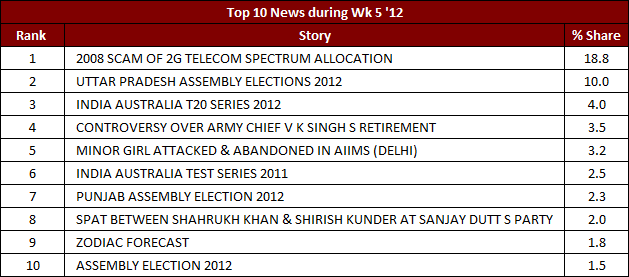
  • NCT Data Wk 5 ’12


    Source: News Content Track – A service of TAM Media Research Pvt. Ltd
    Channels: Aaj Tak, CNN IBN, Headlines Today, IBN 7, India TV, NDTV 24/7, NDTV India, Star News, Times Now, News 24 & Zee News
    Period: Wk 5 – Jan 29 to Feb 4, 2012
    Note : Analysis is based on the Telecast duration


    About TAM Media Research


    TAM is a joint venture between Nielsen Company & Kantar Media Research. Besides measuring TV Viewership, TAM also monitors Advertising Expenditure of Television, Print & Radio through its division AdEx India. Since 2004, it extended its presence in the PR Measurement & Analysis space for Corporate/Marketing Clients by setting up a separate division Eikona PR Measurement.


    In 2007, the joint venture introduced RAM (Radio Audio Measurement) service to track Radio Listenership for the Indian Radio Broadcast Industry. In year 2009, TAM launched a division, called TAM Sports that specializes in monitoring Sports Sponsorship ROI.


    TAM Media Research’s objective is to fuel media insights that will drive the growth of the Indian Media Industry.

  • Chinese Madhouse looks to wow India


    By Johnson Napier


    Countless comparisons could be drawn on how two of the biggest and most admired economies are driving brands from all across the world to be a part of a growth story that is unparelled. Or how the APAC region is all about just these two economies today, putting the other developed nations in the region in a state of oblivion. Having wowed the world with growth stories that defy market odds, China and India today command attention from business stalwarts and entrepreneurs like no other, especially entrepreneurs from emerging mediums like Digital and Mobile that are shaping the way the world goes about doing its business. But despite the huge buzz around these two economies, there is very little that transpires when it comes to the two economies trying to venture into each other’s territory to gain mileage and expand base – especially in the digital space.


    But all that could change with the advent of the largest mobile solutions and advertising network firm from China- Madhouse. Launched in 2006, the company enjoys the reputation of being tagged as the most intellectual and largest mobile ad solutions company in China. In India, Madhouse will work towards providing brands, advertising and media agencies and marketers with a host of comprehensive mobile marketing solutions. It has already tied up with a host of strategic partners including WPP, Vivaki, Omnicom, Aegis and so on from the media agency side of the business and would work towards providing them holistic mobile marketing and advertising network solutions.


    The Madhouse India team would be headed by Vinod Thadani, who until now was handling mobile responsibilities for Group M India andSouth Asia. Given that the two countries share market complexities that are similar in nature and have a population base that is very high, it seemed like a natural extension for Madhouse to step in to India, making it the first such venture into foreign territory in APAC.


    Throwing light on how the APAC market compares to the other regions and reacting on his choice of targeting India as the hub for launching the venture, Joshua Maa, Founder & CEO, Madhouse Inc. said: “Today APAC occupies ad spends growth to the tune of 32 per cent, making it the largest in the world. These are led by the economies of China , India and Indonesia that are the key drivers of this growth in APAC. To gain success in a market like India requires the ability to manage complexity, and this is an area where we excel.”


    Hoping to leverage the opportunity of using mobile as a mass media device, Maa went on to elaborate the business module by stating: “If you compare the mobile markets of India and China, they are almost identical. While China has a mobile user base of 960 million, India’s number stands at 894 million. But where mobile internet users are concerned, China has 356 million users while India’s number stands at 150 million. Therefore, we foresee a huge growth in India and decided to make this our first market to launch in APAC.”


    In India, the agency’s focus would be centred around disciplines of mobile ad serving, mobile ad network and mobile marketing solutions. Having wowed clients in China like HP, KFC, Unilever, Intel, Coke, and others, Maa hopes to emulate a similar example here by getting important brands to align with the network: “Being the only full-service provider in the market and having a skilled and experienced team in place, we hope to attract a lot of clients in the days to come.”


    Emphasising on the partnership, Vinod Thadani, COO, Madhouse said: “Madhouse will offer mobile marketing solutions created and carried out for advertisers by a team of experienced media professionals that understand this medium. On a technical level, mobile advertising can now achieve accurate intelligent targeting and provide real-time reporting – a very convincing proposition for advertisers.” According to Thadani, the need of the hour is to unlock the potential of the mobile medium and they are therefore determined to grow the Indian Digital Media market from Rs125 crores to Rs1,000 crores in the next 3 years. “The need of the hour is to understand the medium thoroughly and this would be possible by partnering with the right partners and going back with the right solutions to clients.”


    Perhaps the best reason for elation among mobile clients in India was provided by Ranjan Kapur, Country Manager, WPP, who began by discussing how India, as an advertising market, was highly undervalued. “Despite India boasting such a good growth in economy, the advertising spends in China stand at US $55 billion while for India it is at US $6 billion, this shows that we are still an under-advertised and under-branded market.” Citing the reason for China leapfrogging ahead of India, Kapur said that the single biggest factor for India’s dismal record in getting more ad spends was because it jumped on to the services bandwagon and chose to ignore the manufacturing sector. “While the Services sector contributes about 55 per cent to the GDP growth, it is still very shy on spending on marketing and promotional activities. And this is an area where Manufacturing excels. But all that is changing and the Services industry is opening up and spending more.”


    On the ad spends growth in India, Kapur said that while there is a 15-20 per cent growth, it is digital that is intriguing the advertisers the most. “Digital ad spends recorded a growth of 30 per cent.Mobile, specifically, is a Rs125 crore industry today and given that there are 300 million internet users predicted by 2015, mobile advertising is expected to account for about one-fourth of conventional traditional advertising. So it can be said that a revolution in digital in India is beginning to happen now.” This growth will be boosted further by the Government’s efforts to spread mobile and internet usage in rural areas for which it has promised 2,50,000 nodes for broadband in the next four years. “So mobile marketing in the rural areas will be a mass phenomenon, once this plan gains momentum.”


    Another interesting addition to the venture would be Rovio Entertainment that is more popular for its Angry Birds concept around the world. “Madhouse is a valuable partner for us in China , and we are excited about the opportunity to extend our collaboration to India as well,” said Bijay Gurung, Key Account Director, Rovio Entertainment Ltd. “With India being the second largest Facebook market, it opens the door for us to entertain even more fans as we are aiming for one billion downloads by the end of the year.” The current number stands at 700 million. Apart from that, Rovio would also focus on pushing itself as a publishing firm, a large-scale animations firm and further look to enhance its merchandise business.


    In an era where it is becoming difficult to lead lives without smartphones, iPads and other such mobile gizmos and with a lot left to be accomplished in the Data, Voice and Text domain and lack of established tools and systems that makes it difficult to answer the question of how this medium can be leveraged by advertisers to reach out to their consumers, probably an established Chinese mobile dragon could well show Indian mobile companies the way this medium could be harnessed to its full potential.

     

  • Marico picks up Paras personal care brands from Reckitt Benckiser

    By A Correspondent


    Marico has bought the personal care business of Paras Pharmaceuticals from UK consumer goods giant Reckitt Benckiser, edging out Emami. While announcing the deal, both Marico and Reckitt Benckiser declined to disclose the financial details.


    But two industry officials familiar with the negotiations said the maker of Parachute Hair Oil has paid Rs600-650 crore for the privately-held Paras Pharma’s personal care brands such as Zatak deodorant, Set Wet hair gel and Livon hair serum. This is much lower than Reckitt Benckiser’s original demand of Rs900 crore, they said.


    Morgan Stanley was the exclusive financial advisor to Reckitt Benckiser on the deal.


    Marico CMD Harsh Mariwala said the deal will help the company target the youth who now drives demand in the country’s consumer space. “All these brands are youth-oriented, fast growing and have low penetration,” said Mr Mariwala


    The transaction will involve demerging the personal care business of Paras Pharma into a separate company, Halite Personal Care India, in which Marico will acquire 100 per cent stake. This will involve transfer of all key assets, including intellectual property rights, supply agreements and third-party manufacturing agreements.


    Marico will fund the acquisition through a mix of internal accruals, equity and debt.


    Reckitt Benckiser acquired Paras Pharma in December 2010 for Rs3,260 crore, in one of the biggest acquisitions in the Indian consumer goods sector.


    The maker of Dettol Anti-septic and Disprin pain killer was more interested in Paras’ healthcare products such as Moov pain-relief ointment and Krack heel care lotion, and decided to sell the personal care business. Financial analysts say it is a good buy for Marico.


    “The acquisition will help Marico to move from a dominant hair-care portfolio to skin-care and personal care, which is a bigger opportunity,” said Shirish Pardeshi, executive director and research co-head at Anand Rathi Securities. Marico’s key products in India include hair oil Parachute and edible oil Saffola.


    With the new deal, it will get six brands – Set Wet, Livon, Zatak, Eclipse, Recova and Dr Lips – expected to have a turnover of more than Rs 150 crore in FY12. Paras brands are among the top three in the hair gel, male deodorant and hair serum categories.


    According to industry estimates, the deodorant category is growing at a rate of 40 per cent a year, hair styling gel at 25 per cent and hair serum at 30 per cent.


    Marico CEO (consumer products business) Saugata Gupta said the integration will be easy since the company has domain knowledge in the acquired categories through its operations in Vietnam and the Middle East.


    Source:The Economic Times

    Copyright © 2012, Bennett, Coleman & Co. Ltd. All Rights Reserved

  • Anupriya Acharya to head Unilever biz @ Mindshare

    Anupriya Acharya
    Ravi Rao

    By A Correspondent


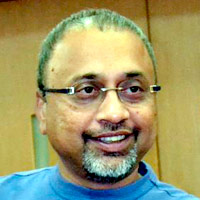
    After the elevation of Mr Ravi Rao to lead Mindshare India, the media agency has appointed Ms Anupriya Acharya Leader – Team Unilever:South Asia, a position held by Mr Rao until he took over the agency’s reins (from Mr Gowthaman Ragothaman). She takes charge today.

    Ms Acharya has relocated from Singapore where she was CEO, Aegis Media.Her responsibility at Mindshare requires her to oversee business in India, Pakistan, Bangladesh and Sri Lanka.


    Announcing the appointment, Ravi Rao, Leader, South Asia, Mindshare, said: “Anupriya moves into this role fromSingapore where she was CEO, Aegis Media Singapore and is credited with doubling the operation in just over two years. Prior to Aegis Media, she was President TME (The Media Edge) from 2005-2008. She is also no newbie at Group M. She set up mConsult under Vikram Sakhuja in 2004 and has been an integral part of Fulcrum from 2000-2003. So we welcome her back. ”


    Commenting on her new role in Mindshare, Ms Acharya said: “I am most excited about this role. I have always had very fond memories of Fulcrum. Aegis Media Singapore position helped me gain an international and regional perspective and honed my intercultural management skills, while TME taught me handling extremely diverse set of clients and their different requirements. CP, Parle AOR, Indian Oil, Viacom 18’s Colors and Citibank were some of the key clients then. Now I was looking to get back to scale and lo! this assignment was so timely and perfect.”


    “I look forward to working closely with Ravi, Roy Sudipto, who heads the team Unilever for APAC and David Pullan, Global Head of Team Unilever at Mindshare London, and to drive the aggressive Unilever agenda forward acrossSouth Asia. The scale is truly exciting and humbling at the same time. I am raring to go!,” she added.


    Ms Acharya has also worked at McCann Erickson and Ogilvy in her earlier years. A Post Graduate in Analytical Chemistry from IIT-Roorkee, she has over 16 years of experience in Communication solutions. Her interests are adventure sports, photography and travelling for leisure.


  • Debrief: Chevrolet’s emotional route connects

    By Anil Thakraney


    Chevrolet is back with another tear jerker for its corporate campaign, ‘Sang Rishte Chalen’. This one features an emotional relationship between a father and son.


    In the TVC, the ‘puttar’ is all grown up and he’s busy packing to start a new life in another town. The father hovers over him, wondering if the son has forgotten to pack important stuff. The interaction between the two indicates an uncomfortable relationship. The dad fondly stares at an old family picture, in which his son is a little kid, and that brings back memories. Finally the son departs, but carries the same picture with him in his Chevrolet Beat. And yes, there’s a lot of rona dhona in the ad.


    I think Chevrolet is doing the right thing. While the brand ads can be more functional, it makes sense to create an umbrella corporate campaign that rides on raw emotions. This would help in building a bond with desi car buyers since we Indians are suckers for emotions.


    [youtube width=”400″ height=”200″]http://www.youtube.com/watch?v=2vFklija8XQ[/youtube]

    Must also add that the commercial is shot nicely, emotions flow easily in the treatment, it isn’t forced. And the strained father/son relationship is only hinted at, and not shouted out, which makes the film work even better. That one shot of the father trying to hug his son and the latter choosing to touch the dad’s feet is a gem.


    Good work all round.


    Rating: (On a scale of 1 to 5): 3.5 Warm play of human emotions.

  • 5 reasons why Phase III is vital for FM radio growth

    By Rana Barua


    1. More reach:

    The reach of radio will further increase with an additional 839 new FM stations in more than 200 new cities. Thus the medium will become even more effective and the opportunity will also be huge for the advertisers, especially because of radio’s reach in even the tier 2 and 3 cities.


    2. News in FM radio as a revenue stream:

    News on FM radio, in whatever form, will open up newer revenue streams if packaged well. The industry, for long, has been waiting for news to be allowed on radio. It will therefore be interesting, especially from the listeners as well as the advertisers’ point of view.


    3. Multiple Frequencies to create new genres:

    Multiple licensing, especially in larger cities, will bring new genres to radio. Larger stations, for instance, may want to create another genre of station, perhaps in a different language or a completely different programming category altogether. This will be another interesting facet for the advertisers and listeners.


    4. Networking will be allowed:

    Networking will bring down cost and thus play a critical role in radio’s growth. It will streamline a lot of cost of being in radio. Allowing networking means one will be allowed to run the FM station sitting out of a main hub; as a result the cost may come down.


    5. Create job opportunities:

    Phase III will open up a lot of job opportunities. Multiple licensing, news and networking will open up jobs. Therefore FM phase III will bring a lot more excitement as well as opportunities, thereby bringing in more talents, and genres.


    Rana Barua is veteran media professional, a former COO, Red FM and an advocate of radio

  • A request from MxMIndia: Please go out and Vote!

    By Pradyuman Maheshwari


    It’s voting day for the Brihanmumbai Municipal Corporation elections.  Thursday, February 16.


    It’s not a huge public holiday as it is on polling day for the Lok Sabha or Assembly, but there are some offices who have given a chhutti or offered concessions to employees in terms of timings.


    Here’s what we have done @ MxMIndia. Being a news company, we can’t be shut, but we have allowed the team in Mumbai and around to come in late or leave early to vote. As an incentive, those who do go out and vote and can prove it by showing the indelible ink mark, will have an extra day added to their balance of earned leaves.


    Being a small team, it’s more easily done. But if you can, please do incentivise or put an element of fun. Go, effect a tie-up with the neighbourhood nightspot for a glass of draught when it’s not a dry day.


    Do whatever, but vote one must. We keep cribbing about how Bombay’s dying. That Delhi’s infrastructure is so much better. That the Metro services would’ve taken half the time to happen had it been the national capital. That no one really cares an eff about the Metro’s development. Ditto with Pune, whose infra will collapse if allowed to grow indiscriminately. And I am sure that’s the case with other urban centres too.


    Participating in the polling process is a good way to help make our respective cities and towns better places to live in. And that’s reason #1 to 100… to infinity for voting. There’s no right to recall elected candidates, but the fact that there have been people in other parts of the world (and even here in India) taking on the rulers via mass protests and social media has shown us that there is a way out of the mess.


    Enough gyaan. Please do go out and cast your vote. I am going to, for sure.


  • MSL Group on overdrive with social media


    By Rishi Vora


    MSL Group, the Publicis Groupe’s flagship speciality communications and engagement network, is upbeat about its foray into the growing world of social media. Afer it acquired communications major Hanmer & Partners and later PR and social media firms 20:20 Media and 20:20 Social respecitively, it has now clubbed the social media practices of Hanmer and 20:20 Social under the umbrella of MSL Group India Social.


    The group has adopted a unique approach towards tapping the social space for clients in India and abroad – it has created three key capabilities: Plan, Build and Engage. Of the two, Plan and Build are the revenue-drivers, wherein a lot of work goes into providing insights, strategy planning and developing web, mobile and social applications; creating content, communities and conversations.


    The company recently launched its proprietary tool – The People’s Lab, a global crowdsourcing platform and approach designed to help businesses embrace innovations. It is a platform which works across multiple application areas; provides end-to-end support, including custom design and content creation.


    In 2010, Dell India used an early version of People’s Lab platform to create the Dell Go Green challenge for design students and others to share ideas on how to redesign, reuse and recycle gadgets to make them go green. The idea to create Dell Go Green challenge came from the fact that the client owned a recycling programme, besides having conducted several other CSR programmes.


    A mini site was created using the People’s Lab and the result was quite pleasing: About 650 ideas got shared, 25,000 members on Facebook and 8,000 votes.


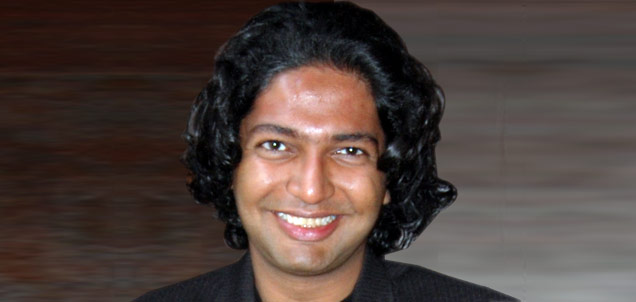
    As is known, Gaurav Mishra launched 20:20 Social and now heads the group’s social media business in India. He is Asia Director – Social Media, MSL Group. Mr Mishra told MxMIndia that the company now plans to launch many more tools that will offer clients comprehensive social media solutions. “Our core differentiation in the social media space is in offering tools; we are in the business to create platforms which bring people together and programmes which energise people. We want to create more tools, more frameworks, so that we can go to clients and offer them solutions that’ll contribute in solving much bigger problems.”


    Parveez Modak

    People’s Lab was created in India, led by Parveez Modak and is now sold to clients in Singapore and Italy. “We’re discussing with clients in US, Poland, Taiwan, and in India,” informed Mr Mishra.


    He added: “Once we have developed enough tools and capabilities in India, we will look to educate whole of our network and make efforts to spread awareness to our group companies in different parts of the world.”


    MSL Group India Social is now working towards creating a corporate citizenship offering globally. As Mr Mishra explained, it is a network of 150 senior members of the group spread across regions – board members, global board members, regional presidents and others. The idea is to bring forward a thought leadership team that can provide insights, views and opinions on various topics ranging from “How clients are looking at Change Management Differently” to Employee Engagement, Corporate Citizenship, Innovation, business opportunities and so on.


    How will the Social space evolve in India? Where is it headed? What kind of solutions are clients seeking from specialists? According to Mr Mishra, the market for social media services will pick up dramatically now, and clients will be on the lookout for companies that possess the talent to develop in-house capabilities, and solve greater and much complex marketing solutions within the social space.


    Globally, MSL Group has about 200 professionals dedicated to social media; about 60 of them in Asia and, for now, 30 in India. Mr Modak, who other than social media also leads the integration function at Hanmer and Mr Narendra Nag at 20-20 Social constitute Mr Mishra’s core team for MSL Group India Social.

    “Revenue-wise, India is still fairly small, China is becoming increasingly big in terms of size of the market, but there is ample opportunity in India,” concluded Mr Mishra.

  • Spark Punjabi emerges winner for BIG-CBS

    By A Correspondent


    Spark Punjabi, the innovative international Punjabi channel launched by BIG-CBS, the Reliance Broadcast Network and CBS  jv, has reported excellent ratings by TAM. The channel has been rated as the leader during primetime of 7pm-12am, according to TAM reports, week 3-6 2012 (TAM India: CS4+ Males, Punjab 1 Mn+)

    With its endeavour to offer hand-picked world class content, dubbed in Punjabi to the audiences, the channel offers advertisers the best possible platform that they could seek, to reach out to audiences with minimal spill-over. The region is one of the richest regions and boasts of a strong base of affluent consumers. The market offers a good business opportunity for this channel format as it has excellent TV and C&S penetration, coupled with limited local language entertainment options.


    The channel is being supported by an integrated marketing plan leveraging multi-media platforms. With RBNL’s existing radio brand 92.7 BIG FM reaching 22 cities in the region and its OOH arm BIG Street’s 3,000+ ambient media options across the markets, BIG CBS Spark Punjabi offers marketers an integrated media opportunity.


    Speaking on the rating, Vishal Rally, Business Head, BIG CBS Networks said: “The strategy of taking world class content, tailoring it to meet local sensibilities and catering to the entertainment requirements of the people of Punjab has worked! Audiences have lapped up the channel, while advertisers are seeing excellent value for their brands.”


    The channel is available across Punjab, Haryana, Chandigarh and Himachal Pradesh (PHCHP) region and distributed on digital and analog platforms, with an extensive reach of over 6mn+ C&S households in the region.