Author: mxmadmin

  • The Anchor: 5 faces that define Indian advertising

    1. Piyush Pandey

    He provides creative leadership to one of the leading advertising agency of India. He leads by example and the interesting bit is that most of his creative education came by travelling in trains. He was playing for Ranji Trophy and they could only afford train travels for their players. During these travels he got insight into the small-townIndiawhich he uses in his creatives. Trains give a glimpse into different types of people and their lives which can weave into beautiful stories.


    2. Prasoon Joshi

    He is a brilliant music writer besides being an excellent advertising professional. He has made it on his own from a small town inIndia. He is the original bilingual copywriter ofIndia.


    3. Aishwarya Rai Bachchan

    We had launched her with a three-second presence in Pepsi commercial where she said: “Hi, I am Sanju”. Her presence made every male from 8-80 get into a tizzy and they wanted more of Sanju. She has become one of the most recognizable face of the Indian advertising, besides being that of Indian film industry.


    4. Katrina Kaif

    She made it fashionable for foreign faces with an accent to make their presence felt in Indian advertising. She is every director’s dream come true and a face that is not easy to forget.


    5. Me

    Beauty is only skin deep but my motto is ugly is forever. So I am immortal face of the advertising industry.


    Prahlad Kakkar is an ad filmmaker and CEO, Genesis Films

    Photograph: Fotocorp

  • Madison World’s Platinum Media wins Dixcy media AOR

    By A Correspondent


    Platinum Media, a unit of Madison Media Group has just announced that it has won the media planning and buying account of Dixcy Textiles. The account was previously handled by MPG and is estimated to be at Rs25 crores.


    Tirupur-based hosiery giant, Dixcy Textiles markets its products under the names Dixcy and Dixcy Scott. Within a short span, the company has been able to garner a healthy market share because of high customer satisfaction of all products offered by the company. The company is into inner wear, thermal wear and casual wear and has aggressive growth plans.


    “We are delighted that Dixcy has appointed us as their Media AOR and are confident that we will be able to add a lot of value to their business and look forward to a long and mutually beneficial partnership,” said Basabdutta Chowdhury, CEO, Platinum Media.


    “Talks were on for almost two years about this shift and also new product launches and the expertise of the agency to handle the same has made us take this decision,” said Rahul Sikka, Director, Dixcy Textiles.


    Madison Media Group comprising Madison Media and Platinum Media is a part of Madison World, which also has specialist units in Advertising, Business Analytics, Out-of-Home, PR,Mobile, Rural, Retail, Sports and Entertainment employing over 1,000 communication professionals acrossIndia,Sri LankaandThailand. It is India’s foremost media agency group handling media planning and buying for blue-chip clients including Airtel, Godrej, Cadbury/Kraft, ITC, General Motors, Marico, McDonald’s TVS, Britannia, Procter & Gamble, Asian Paints, Tata Tea, Levis, SpiceJet, Axis Bank, Domino’s, Bharti Axa, MaxNewYork Life Insurance, Tata Salt, Acer, Dish TV, Imagine TV, Indian Oil and many others. The gross billing of Madison Media is Rs3,000 crores.


  • Young urban users and modern trade boost demand for premium FMCG products

    By A Correspondent


    Makers of packaged food and personal care products are increasingly focusing on premium products as rising aspirations of young urban consumers and widening reach of modern trade help boost demand for high-value, high-margin products.

    Contribution of premium items is growing in most FMCG categories, giving a breather to marketers fighting rising input costs and slowing overall demand, particularly in rural areas.

    “Consumers are moving from value-added products to products that offer value benefits,” said Shirish Pardeshi, executive director and co-head, research, at Anand Rathi Securities.

    Big retailers play a key role in increasing demand for premium products within a category, by helping companies directly engage with consumers.

    Future Group, the country’s largest retailer, has reported premiumisation in the last several quarters. “Consumers are upgrading and there is not much impact of the external economic scenario,” said Devendra Chawla, president, Future group food and FMCG businesses.

    Mr Chawla said the trend of premiumisation is high in categories like soaps – the premium variants (priced above Rs 35 per soap bar) accounts for 40 per cent of sales at Big Bazaar – biscuits and detergents.

    Premium cream biscuits and cookies are growing 20-25 per cent a year, double the pace of mass variety Glucose and Marie biscuits, according to Parle Products, the country’s largest biscuit maker.

    Contribution of Glucose and Marie to the biscuit market has slipped to around 55 per cent from 65 per cent in the past one year, according to B Krishna Rao, group product manager of Parle Products.


    SUPERMARKET DRIVE

    Modern retail has been the saving grace for FMCG companies that had warned of slower growth this fiscal, more so after they had to resort to multiple price hikes of up to 15 per cent due to increases in commodity costs and pressures on margins.

    Retailers such as Future Group and Spencer’s Retail have reported rise in average purchase size of most product segments, confirming the premium drive.

    Anand Mour and Shariq Merchant, analysts with financial services firm Ambit Capital, wrote in a report in January that growth is moderating in rural India, but aspirational consumption of young urbanites is driving premiumisation. Expansion of modern retail, which accounts for less than 10 per cent of the country’s Rs2 lakh crore retail market, will facilitate this premium drive.

    A recent Nielsen study expects Indian shoppers to increase spending on FMCG at modern retail to $5 billion, or about Rs24,700 crore, by 2015 from $1.8 billion, or Rs8,900, in 2011.


    NEW PRODUCTS

    “Absolute price is no longer the only consideration, the price benefit equation is what needs to be managed,” says Jayant Kapre, president of McVitie’s India, a subsidiary of British confectionery firm United Biscuits. The firm has rolled out a premium range of McVitie’s Hob Nobs biscuits.

    Now Nestle is expected to launch a chocolate dessert called Fudge priced at Rs200, according to industry insiders. GSK has launched Horlicks Gold at a 30 per cent premium and within six months it has generated sales equal to 3 per cent of the more than Rs1,500-crore flagship brand. Marico, Dabur and ITC are all gung-ho about such products.


    Source:The Economic Times

    Copyright © 2012, Bennett, Coleman & Co. Ltd. All Rights Reserved


  • AP viewers to get Xtra dose of Bollywood

    By Rishi Vora


    Monica Broadcasting Pvt Ltd, a Hyderabad-based broadcast company has launched Xtra, tthe first ever 24-hour Telugu news channel geared towards movie buffs in the state of Andhra Pradesh (AP).


    Launched on January 13, it caters to young audiences in the age bracket of 15-30 in all regions of the state. The content includes news centred around Bollywood, Hollywoodand Tollywood; comprising of celebrity interviews, gossip, events/page 3 news, lifestyle and so on.


    Mr. Nagesh Nagi, one of the promoters of the channel said that a unique part of the channel is its hi-fi graphics and presentation, which is a huge audience puller for the industry which produces 200-300 movies a year.


    Commenting on the how the channel has progressed in a month’s time, Mr Nagi said: “The channel has a mass appeal, though it caters primarily to the youth. So far we have got a very good response. Our interesting line up of content and the on-going marketing campaign will help us cover a fair amount of ground in a few days from now.”


    He further informed that Xtra is the first channel in the genre of filmy news in AP and that they expect competition in form of new channel launches in the near future. The channel has tied up with all cable operators in the region. And, by the end of this month, it expects to cover every TV household in the state.


    When asked on the response from advertisers, Mr Nagi said: “We expect advertisers to come in and advertise with us, as we are targeting the youth. We’ve already got a few advertisers on board – Santoor is one such advertiser. We’re expecting to close a few more deals in the near future.”


    As for the channel’s marketing efforts, the broadcast company has undertaken an extensive outdoor campaign in Hyderabad and other key locations in AP. It has also tied up with Big FM for promotion on radio. The channel’s tagline, 100% Filmy, is based on the passion that people of AP have for movies.


    Monica Broadcasting, founded in 2008, airs Telugu news channel – Mahaa news – in AP.


  • Networking the neighbourhood kirana @ AaramShop


    Aaramshop, a venture that makes shopping for essentials in FMCG and CPG (Consumer Packaged Goods) easy with just a click of the mouse, may be just about seven months old but has been making steady progress. As the name suggests, it is about shopping aaram se, the difference being that it has brought the local kiranas/ banias/ mom-n-pop store on its platform thus making possible for consumers to purchase their daily needs online and what better than it is delivered by your trusted neighbourhood shop that you have been visiting all this while. Aaramshop.com has partnered with1400 independent retailers across the country and plans to grow this number significantly by the end of the year.

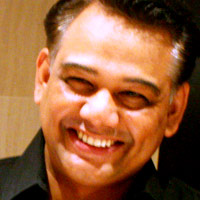
    A concept that has not been tried before especially in the e-commerce where its largely dominated by players catering to travel, gifts and apparels and even when there are few who have ventured into selling grocery, fruits and vegetables, the AaramShop model is different as it is bringing into its fold the existing local shops into its domain. Vijay Singh, CEO & Managing Director, AaramShop, talks to MxMIndia’s Tuhina Anand in an exclusive interview and explains the concept behind his venture and the dynamics behind the ever-changing face of e-commerce in India.
     

    In the last few months that you have been running AaramShop, what has been some of the key learnings?

    It is always fantastic to see raw thoughts and ideas turning into reality – and that’s what being happening at AaramShop over the last 7 months. We launched the site in mid-June last year and it was the one of its kind of venture, anywhere in the world, so we did not really have clear benchmarks to follow.


    So far, almost all our thoughts and ideas have been reinforced and we are very positive about the future of what we have created. Every member of the brand marketing & retailing eco-system has embraced the idea of AaramShop with enthusiasm.


    How do you see the venture going further?

    Today, we are the commerce partner to over 1,400 independent retailers across the country and we will grow this number multi-fold by the end of the year to ensure that every household in the top 10 cities can order their preferred FMCG brands via their trusted independent neighbourhood retailer (AaramShops as we call them) and get it at their doorstep in a matter of a few hours. We intend to scale to approx 20,000 AaramShops.


    We are starting to see brands integrating the advantages of the AaramShop platform within their digital marketing assets. This will extend the integration to all marketing initiatives by brands, including print ads, social media, campaign sites, and so on, as it will enable to them to ensure a critical last mile connect.


    In a move to make the online shopping experience exciting, AaramShop has introduced its unique product listing option that envelops the shopper in a complete brand experience. The innovation would enable marketers across FMCG / CPG categories to take advantage of the proliferation of online videos and all other digital content and consumers’ increasing engagement with that content.


    You have said that AaramShop is just a platform and your revenue model is not dependent on it. Can you elaborate on the revenue model?

    We don’t believe that the typical e-commerce models would work for the FMCG/CPG brands, predominantly on account of absence of deep discounting by brands and the fact that FMCG brands are extremely well distributed across the country and widely available across 12 million plus stores across the country.


    At AaramShop, we believe there is no need for more shops (on-ground or online) – the opportunity, however, is in making the existing shops available on the web so that the consumers can do their shopping with added ease, without needing to trudge down to the market.


    AaramShop, therefore, has been created as a hybrid retail platform for sales and marketing of FMCG/CPG brands to busy urban consumers. The platform offers the consumers the convenience of selecting from thousands of FMCG brands and then leverages the strengths of neighbourhood retailers to ensure last mile fulfillment of the orders.


    AaramShop is a free-to-use platform, not just for the consumers, but also for the retailers and, therefore, it does not disrupt the financial arrangements that the brands have already put in place.


    We have created a number of premium opt-in services for brands to use to connect in a more meaningful manner with consumers. These premium services are predominantly built around analytics-driven marketing, advertising options online and offline, AaramShop centric opportunities, and so on. Our revenue model is centred on premium services and brands have started to use some of these services.


    Buying grocery online, what are some of the logistics nightmare that you have faced in the last few months?

    Since the last mile of our model is completely managed by independent retailer partners who undertake the warehousing and the fulfillment of orders within their stores’ normal footprint – we do not face any logistics related nightmares. This is the core strength of the retailers within their geographical footprint.


    How open have the local kiranas been of joining this platform?

    The ‘kirana’ (independent retailers) are extremely keen to join the platform. They see it as an opportunity to become more relevant to the modern consumers. AaramShop, as a free to use platform, is open not only to ‘kiranawalas’ but also to neighbourhood “pharmacies” as they tend to stock and sell a lot of personal & beauty products.


    The independent retailers realize that they are unable to ensure a great “shopper experience” within their small stores and hence tend to lose out on larger orders. However, when they merge the online convenience of AaramShop with its access to thousands of brands with the local distribution and delivery capabilities that they already have, they realize that the combo could be a possible winner.


    The digital readiness of a lot of these retailers is still low, but I believe these are quite easily addressable with some technology innovations – and that is when the number of partner retailers would shoot up.


    You have been venturing into new and innovative arenas. So what is it that an entrepreneur should keep in mind when going alone especially looking at long term sustainability solutions?

    I don’t believe there is any fun in trending a path that is well-walked.


    The environment around us has changed completely in the last five years and consumer behaviour has transformed, however we tend to keep throwing the same set of solutions for the marketing challenges that the brands face. It is important to reboot.


    My religion is still marketing; it is the rituals that have changed. This change is dictated by what I see as incredible changes that are happening all around us and, to stay relevant, one needs to change.


    We have created a solution which integrates Local + Social +Mobiletrends of the days and it enables the interlinking of the Zero Moment of Truth of brands with their First Moment of Truth.


    So long as we can continue to provide an important connect for the brands, consumers and retailers and creating value across the eco-system, we believe that our premium services would be much sort after.


    How have you been promoting AaramShop?

    We have not aggressively started to promote AaramShop yet, as the focus is still on building the channel and ensuring we get the technology right. However, in the past and also going forward, our promotion strategies are based on:

    • Extensive use of social media – for example we were the first grocery store on Facebook.
    • Micro-geographic marketing, using the excellent footprint of AaramShops.
    • High quality CRM – grocery buying is a done 20 times a year by an average household, and we want to reach out in a meaningful manner and based on past purchase behaviour to ensure repeat usage.


    What are two key goals for your venture this year?

    While we have already released our mobile apps for all platforms, our focus would stay on making AaramShop more easy to use on mobile devices. We believe that mobile is the future and we will release a number of apps that will address different needs of different users in the year ahead.


    The other big focus area is going to be the BrandEngagementCenter. The BEC (www.brandengagementcenter.com) enables brand owners and their agencies to seamlessly manage and monitor their brand/products performance on the AaramShop platform. It is also our ad & analytical centre and we would like to ensure more users to start trying their hands on it.


    Having said that, I think the list of priorities is very long and we will be fighting on a number of fronts.

     

  • All’s well as BCCI gets back its Sahara

    By A Correspondent


    Happy days are here again for the Indian cricket board. The Board of Control for Cricket in Indian and Sahara India Pariwar have concluded their discussions and, as they say, kissed and made up. Here are the terms of endearment… specifically, the BCCI “took note” of the various requests put up by Sahara and has agreed to the following:


    1. To extend the trading window, which was due to close on Friday, February 17, until Wednesday February 29 to give Pune Warriors India the opportunity to have successful negotiations with other franchises as it looks to strengthen its squad.


    2. Reactivation of the Auction Purse of Pune Warriors India so that it can take a number of players, subject to the squad composition regulations.


    3. BCCI and Sahara have agreed to start the arbitration proceedings initiated by Sahara through appointment of an arbitrator to address Sahara’s claim for a reduction in franchise fee for 74 matches.


    4. BCCI does not have any issues with Sahara seeking a strategic partner in the Pune Warriors India franchise, subject to terms of the Franchise Agreement.


    5. In respect of their request to sign overseas players who were not included in the Auction Register, subject to the relevant player regulations, BCCI agrees to the request subject to the views of all other franchises.


    6. Sahara has requested for one of the play off matches scheduled to be played in Bengaluru to be played in Pune. The right to host the Play Off matches is awarded to the finalists from previous edition, in this case Royal Challengers Bangalore. BCCI, in principle, is agreeable to hold one of the Play Offs in the new Pune stadium, subject to the consent of RCB.


    7. Sahara has requested to furnish the Bank Guarantee against the Franchisee fee in two instalments; BCCI will consider it at the next available opportunity.


    8. Notwithstanding the recent working committee’s decision of rejecting five foreign players in the playing eleven, in consideration of the exceptional circumstance and the non-availability of Yuvraj Singh, Sahara has offered to obtain the consent of all the franchises for the submission to the BCCI.


    The joint statement signed by Messrs N Srinivasan, BCCI President and Subrata Roy Sahara, Managing Worker and Chairman of the Sahara India Pariwar adds that Sahara confirms that it will continue sponsorship of the Indian team adding Sahara may want to exercise its right to assign the sponsorship as per the agreement.


  • Bajaj takes a dig at Hero’s Passion & Splendor in its latest Discover 125 ad

    By Rajiv Singh & Bhanu Pande


    “We have not yet beaten Bajaj, they’ve just been overtaken by us,” said Brijmohan Lall Munjal in 2001, when the reticent Munjal family patriarch and chairman of Hero Honda understated the fact that his company sold more two-wheelers than Bajaj Auto.


    Fast forward to 2012.

    The latest TV commercial for Discover 125 takes a veiled dig at Hero’s flagship brands Passion and Splendor as the old bonhomie between two industrial giants gives way to no-holds-barred marketing strategy in a fiercely competitive market.


    Bajaj Auto MD Rajiv Bajaj said the advertisement reflects a strategic repositioning and it’s not about Hero: “Our campaign is based on a consumer research interpretation and has nothing to do with taking on Hero”.


    That’s the official line. But most people who have watched the commercial feel it’s unmistakably targeted at Hero MotoCorp, the new entity formed after the Munjal family-owned Hero bought out its 27-year long partner Honda last year.


    Industry watchers say the breakup with Honda has weakened the market leader in the world’s second-largest two-wheeler market and Bajaj Auto wants to make the most of it.

    “Now Hero is without the safety helmet of Honda, so it is the best time for Bajaj to inflict maximum damage on the leader that is weak and vulnerable,” ,” said Prathap Suthan, chief creative officer of iYogi, a global remote tech support company and the man who created the government’s ‘India Shining’ and ‘Incredible India’ campaigns.


    KYUN, HERO?

    The advertisement shows three men owning different commuter bikes (seen in the background) say they always desired Discover 125, but settled for something lesser to satisfy father or wife, or to avoid annoying boss.


    They sound apologetic and wistful about their bikes. When they name them, a bleep sinks their voice, but it leaves enough for viewers to guess they are referring to Hero’s Splendor or Passion. “Discover nahin hai, par chalta hai,” each of them says. And the commercial, created by Ogilvy & Mather, ends with voice over, “Discover 125, ye chalta nahin, daudta hai.”


    The only previous time a Bajaj commercial took on Hero Honda was back in the early 1990s when a campaign for its 4s Champion teased Hero Honda with a tagline, “Kyun Hero?”


    Bajaj Auto President, Motorcycles, K Srinivas said that the advertisement does not take a dig at any rival, but wouldn’t comment on the bleep sound.


    DOING A BMW

    Rajiv Bajaj says his company wants to do what luxury carmaker BMW did when it entered the US 30 years ago – reposition the leader: “Mercedes was already an established player. So BMW said that Mercedes is the ultimate sitting machine, while BMW is the ultimate driving machine.”


    Now Bajaj wants to do something similar. “As part of an internal discussion, we felt that if you are not a leader, position yourself and re-position the leader by projecting yourself as the opposite of a leader… that’s what we are doing,” said Mr Bajaj.


    With Discover 125, Bajaj seeks a large chunk in the biggest segment of the two-wheeler market. Discover competes in the executive commuter segment – or bikes in Rs40,000-50,000 price range – that accounts for two-thirds of the two-wheeler market that sells more than a million units a year. This segment is dominated by Splendor and Passion. But that may soon change.


    BATTLE ROYALE

    “Splendor and Passion have not changed at all over the last few years, except maybe a tweak in graphics. They are heading the way Bajaj Chetak did,” said Adil Jal Darukhanawala, Editor, Zigwheels. One of the most popular scooters in the country, Chetak was discontinued in 2009.


    Analysts say Hero is grappling on technology front after the exit of Honda and this opens up the largest segment to competitors like Bajaj Auto and Honda Motorcycle & Scooter India that have planned aggressive model refurbishment and new launches.


    “For the first time in a decade, Bajaj is sniffing an opportunity to challenge the numero uno,” said Saurabh Uboweja, director of brand consulting firm Brands of Desire.


    He said that Bajaj’s take on Hero MotoCorp is deliberate and well timed: “By projecting buyers of Hero bikes as meek and compromising, Bajaj is also highlighting the weaknesses of Hero MotoCorp-withdrawal of Honda and its tech platform.” Without Honda, Hero might struggle to launch path-breaking products like it did in the past.


    “Hero has money but no technology. This is something that Bajaj is going to take advantage of with its slew of new models blitzkrieg that it has lined up this year,” said Mr Darukhanawala. The Discover ad is in line with Bajaj Auto’s aggressive stance in the market. Last year, one of its TVCs proclaimed that ‘Pulsar sells five times more than any Japanese sports bike in India’. With inputs from Lijee Philip


    Source:The Economic Times

    Copyright © 2012, Bennett, Coleman & Co. Ltd. All Rights Reserved


  • Much needs to be done to make radio top-of-mind: Anurradha Prasad

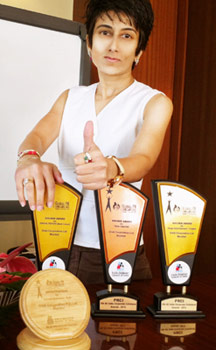
    Anurradha Prasad is the Chairperson cum Managing Director, B.A.G Network. She is also the President of Association of Radio Operators for India (AROI). In conversation with MxM India’s Robin Thomas, Ms. Prasad spoke at length on the overall FM phase III developments, self regulation for FM radio in India, the challenges and road ahead for the radio industry in India.
     

    With positive changes such as the Union Cabinet accepting Ministry of Information and Broadcasting’s (MIB) FM phase III proposal, FDI limit being raised marginally, news to be allowed on private radio stations, and government’s nod to e-auction, as the AROI President, what are your views on the overall development in the industry?

    Phase III is an important step forward in the development of radio industry in India. However, much more needs to be done to make radio a top-of-mind media for Government and Advertisers.


    How could it have been better?

    Issues such as extension of time period and the resulting extension fees for existing radio operators have not been addressed. Phase III players will get a 15-year license, as was repeatedly demanded by AROI. However, the existing operators, who convinced the Government that the 10-year period is too less for even recuperate investments, feel let down due to this. Further content freedom allowed to all other media continues to be denied to FM radio.


    When is FM phase III expected to be rolled out? What are your expectations from it?

    The MIB has already constituted inter-ministerial committees to execute the policy. Time lines can be best advised by them.


    The government seems to be reluctant in allowing complete independence to FM radio on news and current affairs. What do you think is holding them back? 

    The issue is of setting up a monitoring system so that radio content can be monitored by the government. Once this is ready, we don’t think government will have any reason to limit news on FM radio.


    Unlike the print or the television, radio is said to be a highly regulated medium. Shouldn’t the radio industry also be self regulated rather than be regulated by the government?

    Yes, radio should be self regulated and that is why we are formulating our own codes so that national interest is kept sacrosanct in radio content.


    Can you throw some more light on the self-regulation and content code? Will the code of ethics be restricted only to AROI members?

    We will share details once the code is formulated and approved by the members. As all operators are members, there is no distinction between AROI and the industry.


    RJ Mentions is seen by some as a breach of ethics, especially because the station fails to inform the listeners that it is a plug. Do you agree?

    We cannot generalize as this can be decided only on a case to case basis. But we will formulate guidelines.


    Do you think radio stations are far too much dependent of advertising revenues? Are there any other sources of revenues that can be explored? 

    It is a fact that all forms of media are dependent on advertisements. Radio, being free to air, is slightly more dependent. However, radio will open up over 200 new markets this year to marketers. I think the immediate focus has to be in these markets. Combination of ground events, backed by radio, could be another revenue source.


    Has the music royalty issue finally laid to rest by the copyright board? What is the revenue sharing ratio between FM stations and music companies?

    Only those operators who had approached Copyright Board have got the benefit. The judgment is also under appeal from music industry. However, with statutory licensing being planned by HRD Ministry, the other operators can take immediate advantage thereafter.


    What according to you are some of the challenges before the radio industry? What steps need to be taken to overcome them?

    The main challenge is to change the mind sets, especially of advertisers, for whom radio is still at the bottom of their media plans. The industry needs to highlight the advantages of radio and showcase some marketing successes built on radio campaigns.


    Is employee retention one of the challenges facing the radio industry? Is there a talent crunch?

    There is always a talent shortage in media. However, like in television, radio, too, managed to operate over 240 stations on a non-existent talent base. AROI, on its part, is setting up a Skill Development Council for talent development, in association with Government & FICCI.


    What is the road ahead like for the radio industry?

    Right now the focus will be on closing pending issues – with BECIL, Prasar Bharti – as also the upcoming bid for 800 stations. In the longer run, radio is set to emerge as a strong competitor to both print and TV, with its uniqueness as both a local and national media, as well as the only media that is consumed even while consumers are engaged in other activities such as driving, working or playing.


  • Orbit Corporation Ltd Wins 2 Golds at PRCI Awards

    By A Correspondent


    Orbit Corporation Ltd has won four awards at the PRCI – Public Relation Council of India Awards 2011-12 for their outstanding Corporate Communication in the respective categories.


    Orbit won Gold in the Single Corporate Advertisement, another Gold in the Annual Report, a Bronze in the Table Calendar and an Appreciation award in the Corporate Advertisement (single) category.


    Amee Sanghvi, Head – Branding and Communications, Orbit Corp said: “Simple, single-minded communication, effective strategy along with unique creative executions is ‘the’ differentiator. Our unmatched media and sector expertise, added with luxury & lifestyle understanding are our key strengths. At Orbit, we pride in saying ‘People are our finest properties’. These awards are a recognition of our work on the global platform.”


    Orbit Corporation Limited is a leading premium developer in the Mumbai Metropolitan Area with significant presence in niche and premium locations of South and South Central Mumbai.


  • Red Digital bags social media duties for Mirinda

    By A Correspondent


    Red Digital has been awarded the social media mandate for PepsiCo’s Mirinda. Red Digital will build and execute social media strategies that will help Mirinda, as a brand, reach out to their audience on social media platforms. The agency will play a key role in creating online buzz about the brand’s new offerings along with launching various campaigns and building engagement across social networks.


    For Mirinda, Red Digital’s immediate mandate on social media is to create an impact for its latest breathless campaign, with which it has launched two new flavours, Mirinda Orange Masala and Mirinda Orange Mango, while continuing with the base Mirinda Orange flavour.


    The launch is supported by a robust 360-degree campaign called the Taste Twister Challenge, supported via Radio, Outdoor and On-Ground activities, along with social media.


    Red Digital will help in bringing the experience to Facebook and On-ground. The program requires consumers to call or SMS at 08800033333 to choose the Taste Twister of their favourite flavour and recite it repeatedly in one breath for as long as possible; longer the recording, greater are the chances of winning exciting prizes, including 10 MP3 players and 1 tablet PC every day. Red Digital has replicated this experience on Facebook and Android tablets for on-ground activation, making the programme truly 360-degree.


    Red Digital is also geared to exploit the new disruptive full sleeve packaging that captures the taste and fun experience of drinking Mirinda through applications on Facebook. These applications use the most prominent aspect of the packaging: the emoticons, to bring alive the new flavours. The applications range from allowing fans on the Mirinda India Facebook fan page to enter into an augmented reality world and play with the emoticons to classifying friends in various taste categories. The agency will also be creating an augmented reality iPhone and Android application.


    The campaign, for the first time ever, will also see Red Digital creating TweetMobs through the duration of this campaign. These will be high-impact subjects being tweeted by Mirinda and re-tweeted by a group of people within a specific time frame. Red Digital will connect with the Twitteratis and get as many people to tweet about the topic with various Mirinda branded hash tags creating a plethora of endorsements for Mirinda.


    Commenting on the development, Harsh Jain, Founder & Managing Director, Red Digital said: “Social media provides seamless opportunities to build interest groups. Digital is no longer just about showing banners and clicking on them. It’s about generating engagement, activation and creating convergence between the online and offline worlds. We are glad to have an innovative partner like Pepsi Co onboard and look forward to creating path-breaking innovations in new media in the near future. The new activities for Mirinda brand emphasize our continued focus on digital innovation aimed at bringing value to our clients.”


    Speaking on Mirinda’s partnership with Red Digital, Ruchira Jaitly, Executive Vice President – Marketing, Beverages (Flavours), PepsiCo India said: “Social Media has become a very important tool for engaging with consumers and having a dialogue with them on a constant basis. We are pleased to have Red Digital on board as our social media partner for this initiative. Their prior experience in handling leading brands coupled with a deep understanding of consumer behaviour in the digital space will ensure there is a high level of engagement and traction for Mirinda’s campaign on three flavours.”


  • Times Internet’s ‘Tweek’ hits the market

    By A Correspondent


    Tablet users can now discover a whole new world of information and entertainment at their fingertips, with the launch of India’s first tablet magazine, Tweek. Created by Times Internet Limited (TIL), Tweek can be accessed via iPad and will soon be launched for iPhone and Android devices. The application has been developed in partnership with GENWI, inventor and leader of cloud-based mobile publishing.


    The weekly magazine will offer content with an urban perspective. Keeping in mind people’s wide range of interests, Tweek will feature stories from around the world across business, entertainment, lifestyle and sport. Its interactive format will allow readers to not just instantly share stories through social networking sites, including Facebook and Twitter, but also share their feedback with the Tweek team. Tweek has also enabled the reader to not just read a story, but also to listen to and watch it and thus, experience the content.


    In a first-of-its-kind, readers will be able to actively shape a magazine. They will be able to connect directly with the writers of Tweek, and share their feedback about the stories they enjoyed, effectively ‘Tweek’ing the magazine to something they would look forward to reading every week.


    “Tweek offers its readers an unparalleled experience in terms of interactivity, customization and usability. Its content will be kept fresh and relevant by the large database of content available within the TIL network. With its launch, we intend to pioneer the tablet magazine space in India” said Rishi Khiani, CEO, Times Internet Limited.


    Mr Khiani also said that they are interested in experimenting with different ways to monetize the content beyond traditional web advertising. Taking advantage of this new medium which incorporates the rich engagement features of the web into a mobile touch experience on a larger screen they hope can deliver new advertising concepts.


    GENWI’s Cloud Publish solution enables has enabled Tweek to deliver contextual commerce, rich-media advertorials that are geo-location aware, and switch out advertisers or ad units on the fly.


    Given the flexibility of GENWI’s mobile content management system, the partnership with GENWI will allow TIL complete creative freedom and control to deliver a beautifully branded magazine-like experience on an app.


    PJ Gurumohan, Founder and CEO of GENWI said: “With the power of the cloud, Tweek will save time and production costs by reusing design layouts from week to week – all in standard web-based protocols such as HTML5, CSS, and JavaScript. But, the most groundbreaking aspect of the application is the way it surfaces existing content and takes full advantage of the tablet experience to create higher levels of reader engagement and the flexibility to explore new monetization channels.”


    Times Internet Limited, (TIL), is the internet and mobile venture of India’s largest media house – the Times Group. Indiatimes.com, TIL’s flagship brand, commands more than one billion views per month. The other key properties in the TIL portfolio are Timesofindia.com and economictimes.com.


    GENWI ( www.genwi.com ) makes mobile publishing simple – in the cloud. As the inventor and leader of cloud-based mobile publishing, GENWI enables publishers and enterprises to easily manage content across mobile platforms, deliver an excellent brand experience, and find new monetization opportunities.


    Also read
    http://www.mxmindia.com/2011/11/inma-toi-launches-tweek/

  • Zzebra PR wins Gold from PRCI for their work on promoting IIFA Awards

    By A Correspondent


    Zzebra Public Relations has won the Gold in the Best Case Study from Public Relations Council of India (PRCI) for the outstanding work done in promoting the International Indian Film Academy(IIFA) Awards for its client Wizcraft International Entertainment Pvt. Ltd.


    The IIFA Case Study showcased Zzebra’s campaign which followed an umbrella messaging structure that revolved around creating strategic communication across key mainstream and regional publications, magazines, the online space, and television networks. The plan comprised of proactive and innovative PR activities to strengthen IIFA’s key attributes of being the global, glamorous and credible awards ceremony.


    Pooja Chaudhri, Joint Managing Director, Zzebra PR said: “Our understanding of the entertainment/lifestyle sector and media expertise is unmatched. Our domain knowledge on large scale events, both in entertainment and lifestyle, and our media networks across the country are our key strengths. We have successfully handled on-going communication for IP entities and large-scale events to the satisfaction of our discerning clients. Additionally, our understanding of media and their requirements when dealing with large international events and celebrity icons helps us to achieve better results for maximum client impact.”


    Zzebra PR is a leading communication company headquartered in Mumbai. Its portfolio of clients is spread across different industry sectors such as sports, entertainment, lifestyle, real estate, technology, automobile, retail and hospitality, among others. Zzebra is part of Concept Communication,India’s largest independent advertising agency.