Stimulus by Paragon Footwear has launched a brand campaign for the festive period. It is conceptualised by Makani Creatives.
Said Sachin Joseph, Executive VP at Paragon Footwear Stimulus: “Stimulus, as the name suggests, aims to add a boost to every step you take towards your goals. Our footwear is crafted keeping in mind comfort that will enable our customers to reach excellence.”
Added Prasad Rao, Executive Creative Director at Makanis Creatives: “There is an unabashed rawness to the thought of ‘Badhte Raho. Badalte Raho’ which we liked. It resonates well with the doers of the world today, who have a fairly strong sense of who they are. They don’t let their emotions or mental state of being become barriers in their heads. They’re prepared to take risks, change perceptions and break stereotypes. They’re ready to bring a change. Stimulus believes in this ‘sense of self’. And acts exactly as its name suggests – as a stimulant that evokes confidence and encourages its audience to defy all odds.”
Lxme, a financial platform exclusively for women, has launched a campaign titled ‘Har Ladki Banegi Lxme’.
Said Priti Rathi Gupta, Founder of Lxme: “We’re not just talking about Financial Independence, we’re talking about ensuring the right to financial security, financial wellness and financial freedom to every woman in the country. In a world where gender equality is an ongoing battle, we’re providing women with the power to script their own stories, to break free from the shackles of financial dependence and to reclaim their true rights. Our campaign is a declaration that every woman deserves the opportunity to shine, thrive and lead without compromise. It is also a call for every family, every parent to power their daughter, wife, sister and mother in this journey.
The EY organisation (EY) has announced the launch of a new and fully integrated marketing campaign entitled ‘The Face of the Future’. Through this campaign, EY wishes to promote its recently launched unifying artificial intelligence (AI) platform, EY.ai, highlighting the need to put humans at the centre of the AI transformation to help deliver on the exponential value the technology provides.
Said Nicola Morini-Bianzino, EY Global Chief Technology Officer: “Building confidence in AI requires a holistic and people-centred approach. As global leaders, organisations and entire industries contemplate the transformative capabilities of AI, we are helping EY clients face the future with confidence by emphasising this exact approach to AI-enabled business transformation. This campaign reflects the power of EY people, augmented and empowered by AI, in driving the change to build a better working world.”
Added John Rudaizky, EY Global Brand & Experiences Leader: ‘The Face of the Future’ is not only an extension of the EY long-standing commitment to AI innovation but underlines the organisation’s belief that people must be augmented by technology, not in service of it. EY aspires to build a brand that is synonymous with leading on AI and this campaign will serve to show EY clients, people and communities alike how we are doing just that – by placing people at the centre of AI to create exponential value.”
TV9 Network has announces the ‘WOW’ (We Onboard Women) policy designed to recognise the “strength and potential that women bring to our organization and the world”.
Said Barun Das, MD and CEO of TV9 Network “I think as a country, if we are not harnessing the potential of 50 percent of our workforce, which is the female workforce, we are handicapping ourselves. This is where ‘WOW – We Onboard Women’ comes into play. It is a brilliant initiative by our HR team. We have always felt the need for greater participation of women in our organization. With this initiative, it’s our first step towards a long but extremely essential journey.”
Added Devleena S Majumder, President & Head of Human Resources at TV9 Network: “The ‘WOW’ policy is the first step; we aspire to embrace diversity comprehensively, encompassing factors such as age, race, culture, abilities, and experiences. By nurturing and supporting diverse perspectives, we aim to unlock the full potential of our organization.”
In the IBDF Board of Directors meeting that followed the AGM, John Brittas (Kairali TV. and Kevin Vaz (Viacom18. were co-opted to the Board.
Addressing the members during the AGM, Madhavan said: “despite the ongoing geo-political issues like Russia’s invasion of Ukraine and the crisis in the Middle-East due to the Israel-Hamas war and accompanying economic volatility, the Indian economy in general and the media and Entertainment industry, in particular, has shown extreme resilience.”
Nucleus PR has bagged the PR mandate for Litmus, a design and technology company.
Commenting on the win, Tarunjeet Rattan, Managing Partner, Nucleus PR, said: “At Nucleus, we are driven by a strategic approach that addresses the core target audience aligning seamlessly with Litmus’s ideology. Their dedication to crafting premium, yet affordable lifestyle products that truly enrich the lives of consumers is an inspiration. This win strengthens our commitment to partnering with brands that redefine value and quality. We aim to create a strong brand reputation that is rooted in their truth and not only sets trends but raises the bar for value-driven innovation in the industry.”
Added Rohit Bachhawat, Co-founder, Litmus: “Together, we’re committed to telling our story, sharing our values, and connecting with our customers on a deeper level. The team brings in fresh ideas backed by experience. With the expertise of the Nucleus PR team by our side, we’re confident that we’ll be able to amplify our message and reach even more individuals who appreciate the true value our brand offers.”
Dabur Fem, the skincare brand, unveils its latest ad film as part of their #GlowOfLove campaign. This film is the result of collaboration between Dabur Fem and Schbang.
Said Virat Khanna, Head of Marketing, Skin Care, Dabur: “In modern relationships, ancient customs and traditions like Karva Chauth don’t find a place, as they’re seen as being regressive. We, at Fem, wanted our film to demonstrate the blend of age-old customs with the realities of modern-day relationships. It is a celebration of love, commitment, and the beauty of traditions that endure and adapt in our changing world. Join us on this journey to illuminate your beauty this festive season.”
Added Rohan Hukeri, Executive Vice President, Mumbai, Delhi – Brand Solutions, Schbang: “Our collaboration with Dabur Fem is a tribute to the evolving narratives of love and tradition in today’s dynamic world. The #GlowOfLove campaign is the fruit of meticulous conceptualization and ideation by the Schbang team. We aimed to craft a narrative that beautifully captures the essence of modern relationships while respectfully embracing the cultural significance of Karwa Chauth.”
Interactive Avenues, the digital arm of IPG Mediabrands India, has been awarded the e-commerce mandate for Twinings tea company. The account will be serviced by the agency’s Gurugram office.
Said Jonathan Ellis, Head of Marketing – India, Twinings: “Interactive Avenues has a proven track record of executing successful e-commerce campaigns and delivering significant business results for leading brands. We are confident that their deep digital expertise will help us amplify our online presence and strengthen our reach in India. We look forward to collaborating with their dynamic team.”
Added Shashank Rathore, Vice President – E-commerce, Interactive Avenues: “We are delighted to announce our collaboration with Twinings, a household name in India and across the globe. To facilitate their leadership on e-commerce platforms, we will deploy best-in-class strategy frameworks and automation-led tools, with a sharp focus on the end-to-end customer journey. We will also leverage the capabilities of our in-house production studio, Echo to build visually stunning content for the brand.”
BBH India has appointed Anupam Chauhan as the Senior Vice President – Account Management.
Based out of the agency’s Gurugram office, Chauhan’s mandate will be to lead and drive the account management function. He will report to Himanshu Saxena, Chief Operating Officer and Managing Director at BBH India.
Speaking about the appointment, Saxena said: “We are thrilled to welcome Anupam to our leadership team. Anupam’s stellar track record of delivering high-impact campaigns for globally renowned brands aligns perfectly with BBH’s Zag philosophy and mission. His wealth of experience and passion for creating exceptional client work will undoubtedly strengthen our team and further enhance our creative prowess. Anupam’s arrival signifies our commitment to delivering top-tier creative solutions for our clients and reinforces our position as a leading force in Delhi-NCR market.”
Crosshairs Communications has bagged the PR mandate for Barratt London, the residential developer in London.
Stuti Jalan, Founder & Managing Director, Crosshairs Communication said: “As we establish a strong presence in the Indian market, it’s a natural progression for us to represent an international brand. We’re enthusiastic about strategic collaborations, crafting compelling narratives that resonate with the target audience, delivering comprehensive solutions, and further enhancing their foothold in the Indian market.”
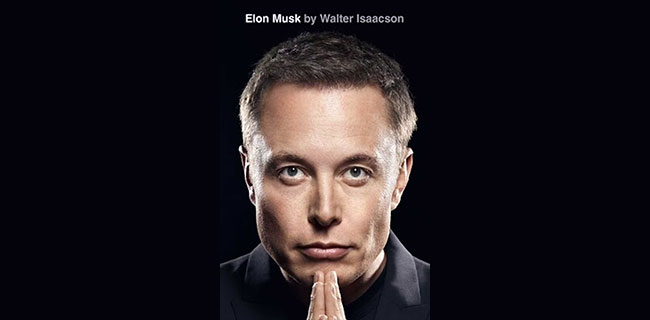
Elon Musk, the world’s richest man, has his fingers in many pies, none of them your standard Four and Twenty – space exploration, electric cars, AI and social media, among others.
He became a global leader in space exploration when NASA had virtually vacated the field, and his electric vehicle company Tesla, headquartered in the gas-guzzling United States, has by far the biggest market capitalisation of any car manufacturer in the world, yet he has few formal qualifications in either field.
Many see Musk as a 21st-century idiot savant. Others, watching him reduce an important social media platform – Twitter – to cyber-rubble, think of him simply as an idiot. Maybe both are true, or maybe other readings of his life are true. Aged 52, Musk certainly merits a good, searching biography.
Walter Isaacson seems well-credentialed for the task. He has written biographies of Henry Kissinger, Benjamin Franklin, Albert Einstein, Steve Jobs and Leonardo da Vinci that have won awards or become bestsellers, or both.
Isaacson began his working life as a journalist. He spent more than two decades at Time during the magazine’s heyday, rising to become editor in 1996. Since then, he has been chief executive of the CNN cable television network, headed the Aspen Institute (a longstanding non-profit think tank), become a professor of history at Tulane University, and done various jobs for both Republican and Democrat governments.
This year he was awarded the National Humanities Medal by US President Joe Biden.
Isaacson’s virtue as a biographer is his reporter’s ability to gather enormous amounts of material and quickly render it as a (generally) smooth and readable account of a life bursting with dramatic events. His project only began in 2021 and covers events up to Space X’s unsuccessful Starship rocket launch in April 2023.
Musk made himself available for numerous interviews. He gave Isaacson access to places and people at key moments, such as the purchase of Twitter (now known as X), and regularly emailed Isaacson at 3am with his thoughts – and thought bubbles.
Isaacson also interviewed 130 other people, and his labours have uncovered newsworthy information that has been widely reported – and, in one case, corrected – since the book’s publication.
For instance, Isaacson builds on earlier reporting by the Washington Post to reveal the extent to which Musk’s Starlink satellite network has been crucial to the Ukrainian military’s ability to fight Russia’s invasion, providing them with continued access to the internet on the battlefield after the Russians destroyed access to other internet services. He shows how Musk was persuaded by the Russians to temporarily cut off the Starlink access after he believed their entreaties that any further victories by Ukraine would provoke nuclear war.
The implications of these remarkable revelations have been examined by the ABC’s Matt Bevan in a recent episode of his If You’re Listening podcast. But even though Isaacson revealed this information, he does not pause to discuss it in any detail. That’s one of the shortcomings of this book.
Lord of the Flies on steroids
Perhaps seduced by Musk’s apparent candour or a publisher’s pressure to rush to print, Isaacson accepts his subject’s words without sufficient scepticism. For instance, Musk’s childhood experiences at a veldskool in 1970s South Africa read like Lord of the Flies on steroids. Bullying was the norm and children were encouraged to fight over meagre food rations. “Every few years, one of the kids would die,” writes Isaacson.
Really? Says who? Musk, apparently. No one from the school is listed in the source notes, to confirm or refute this account. Throughout the book, Musk comes off as a shameless self-dramatiser, but that doesn’t mean his biographer should succumb to it.
Isaacson is an adherent of the “grand man” school of history. He has written only one biography of a woman – the Nobel Prize-winning biochemist Jennifer Doudna. He is far less interested in, or comfortable with, the role structures and systems play in shaping events.
As Jill Lepore pointed out in the New Yorker, Isaacson also has “an executive’s affinity for the C-suite”, meaning he pays little attention to the people who work for Musk or the impact of his actions on their lives.
The core question driving the biography is: has Elon Musk had to be such an “asshole” (Isaacson’s term) to achieve what he has? Isaacson acknowledges it is much the same question he asked about Steve Jobs in his earlier biography of the Apple cofounder.
I lost count of the times the question, or a variation of it, was posed during the book’s 670 pages, but in classic Time-style both-sidesing, Isaacson keeps toggling between admonishing Musk for behaving like an “asshole” and admiring his ability to get results. He rarely if ever lifts his gaze beyond this binary, which means he ignores lessons learned from all those people, past and present, who have achieved things without treating people appallingly.
It also means achievements are seen solely through the prism of one person’s actions. In a perceptive article in Vox, Constance Grady reminds us that Musk’s determination to override safety concerns in Tesla factories has led to worker injury rates equivalent to those in a slaughterhouse.
Grady allows that Isaacson reports the increased injury rates, but notes his vagueness about exactly what kind of injuries occurred. Citing 2018 work by the Center for Investigative Reporting, she reveals Tesla workers were “sliced by machinery, crushed by forklifts, burned in electrical explosions, and sprayed with molten metal”.
She also notes Isaacson downplaying the company’s experience of COVID-19. Musk, a fervent libertarian allergic to any form of regulation, kept the factory running during the global pandemic. Isaacson says “the factory experienced no serious COVID outbreak”, but Grady reports there were 450 positive cases.
From Twitter to X
Musk has an immense work ethic and expects everyone working for him to share it. By relentlessly questioning all assumptions – “the laws of physics are unbreakable; everything else is a recommendation” – Musk and those working in his companies have indeed achieved a lot.
I am not really in any position to assess Musk’s contribution to space exploration, AI or car manufacturing. But I am willing to accept the evidence of Isaacson’s biography that they have been substantial – or, in the case of AI, promise to be.
I feel better able to assess Musk’s contribution to social media. Here, the evidence presented by Isaacson and many others is that Musk has damaged, perhaps irretrievably, Twitter – which he has renamed X, a letter of the alphabet to which he seems inordinately attached. Not only has he named one of his children X, he waves away the letter’s other connotations.
In 1999, Musk cofounded the online bank X.com. He soon learned there was another company aimed at revolutionising online transactions, PayPal, founded at around the same time by Peter Thiel, Max Levchin and Luke Nosek.
The companies merged in 2000, amid a classic Silicon Valley phallus-waving struggle over who had the idea first and who should take over whom. Levchin derided X.com as a “seedy site you would not talk about in polite company”. “If you want to take over the world’s financial system,” Musk rebutted, “then X is the better name.”
Musk lost the nomenclature war then, but realised his dream more than two decades later when he bought Twitter for US$44 billion and could call it whatever he liked.
Impulsive, determined, clueless
The picture of Musk that emerges in Isaacson’s book is of an impulsive, utterly determined person who is genuinely talented as a physicist and businessperson, and genuinely clueless when it comes to human relationships. He either doesn’t get people or doesn’t care about them – or, more likely, both.
He dotes on his children, especially X (I guess you need to do something to compensate for naming a child after a letter), yet he is capable of breathtaking callousness and rank sexism. He whispered in his first wife’s ear on their wedding night that he was the alpha male in the relationship.
In 2021, Musk’s third wife, Shivon Zilis, was pregnant with twins conceived with Musk by in-vitro fertilisation, and was in a hospital in Texas experiencing complications. At the same time, and in the same hospital, a woman serving as a surrogate for Musk and his ex-wife, Claire Boucher – better known as the Canadian-born musician Grimes – was also experiencing pregnancy complications.
Zilis and Boucher, not to mention the surrogate, did not know about the other’s pregnancy.
As Isaacson drolly comments elsewhere in the book:
Musk developed an aura that made him seem, at times, like an alien, as if his Mars mission were an aspiration to return home, and his desire to build humanoid robots were a quest for kinship.
Musk is on record saying humanity is in danger of not having enough smart people and it is his duty to populate the planet with as many of them as possible. To date, he has 11 children. If that notion sounds disturbingly like eugenics, it is not something Isaacson reflects on as he studiously documents Musk’s chaotic love life.
Nor does he delay his rat-a-tat-tat narration of every twist and turn in Musk’s dramatic life to question his subject’s burning desire to make humanity a “multi-planet civilisation” by colonising Mars. Musk is obsessed with this goal because he is worried about the prospect of our planet being destroyed by the accelerating consequences of climate change.
A laudable ambition, no doubt. But neither he nor his biographer stops to ask: if humanity fails so badly that it destroys this world, why would you think it could make life better on another, already inhospitable planet?
The surface of Mars. NASA/JPL, Public domain, via Wikimedia Commons
Startling achievements and childish petulance
It is easy and tempting to poke fun at Musk. Perhaps this is because his personality combines grandiose visions with arrested development, startling achievements with childish petulance. His idea of dieting is to get hold of the diabetes medication Ozempic – the dieter’s drug du jour – begin an intermittent fasting regime, then make his first meal of the day a bacon-and-cheese burger and sweet-potato fries topped with a cookie-dough ice-cream milkshake.
Or do you remember how Musk responded in 2018 to a mild rebuke of his frenetic desire to play the hero rescuing children trapped in a cave in Thailand with a purpose-built mini-craft? That’s right, by labelling one of the actual rescuers a “pedo guy”.
But it is dangerously easy. Social media plays an important role in modern society. Whatever its benefits, and they are many, the algorithms embedded in social media platforms – by their owners, let’s not forget – neatly sidestep nuance and reason in debate, turbo-charge conflict and emotion, and play a role in the spread of misinformation and disinformation.
Musk is now the owner of one such social media platform. But since buying Twitter last year, he has not been able to bend it to his will. His mistake – perhaps fatal, according to Isaacson – appears to be that he sees it as a technology company, something he understands, when it is really an “advertising medium based on human emotions and relationships”, something he does not understand.
Musk proclaims himself a free-speech advocate, but he has already displayed flagrant biases. He allowed Ye (formerly Kanye West) to tweet anti-Semitic remarks. He tweeted a florid conspiracy theory about the savage attack on Paul Pelosi, husband of the then speaker of the US House of Representatives, Nancy Pelosi. And he has asserted China’s repression of the Uyghurs was an issue that “had two sides” – perhaps because China was important to his car company, Tesla.
Musk has become obsessed by what he calls the “woke-mind virus”, which he believes is infecting social discourse. Whatever the excesses and blind spots of those on the progressive side of politics, Musk sees this virus almost everywhere.
A longtime devotee of comics and science fiction, he has increasingly given rein to his conspiratorial tendencies, as if he really thinks The Matrix trilogy was a documentary series. In one of his 3am tweets, Musk wrote: “My pronouns are Prosecute/Fauci”. As Isaacson trenchantly comments:
It made little sense, wasn’t funny, and managed, in just five words, to mock
transgender people, conjure up conspiracies about the 81-year-old public health
official Anthony Fauci, scare off more advertisers, and create a new handful of
enemies who would now never buy Tesla.
Nor does Musk’s belief in free speech extend to the social media postings of Twitter employees or their comments on internal Slack messaging. He trampled on the company’s internal culture of healthy dissent, peremptorily firing three dozen employees who had criticised the company.
His longstanding, largely successful mantra of getting things done cheaply and quickly, regardless of impediments, finally ran aground after he proposed cutting the company’s workforce by 75%.
Just before Christmas last year he decided it was imperative to move all the company’s servers from Sacramento to Oregon as a way of saving money. Remember how presidential aspirant Ron De Santis’ big live interview on X went horribly wrong earlier this year? That was because of problems with the servers, writes Isaacson.
More recently, the drastic cutting of the site’s moderators led to floods of misinformation following the attack on Israel by Hamas on October 7.
Musk has also begun to realise that advertising, which previously comprised 90% of Twitter’s revenue, is susceptible to public perceptions. It fell by more than half in the first six months of Musk’s ownership, according to Isaacson.
Geopolitical implications
As mentioned earlier, Musk has found himself playing a key role in a war with geopolitical implications.
Immediately before invading Ukraine in early 2022, Russia launched a malware attack that crippled the US satellite company providing internet service to Ukraine. Its deputy prime minister, Mykhailo Fedorov, reached out to Musk via Twitter, appealing for help.
Musk did, donating US$80 million worth of technology to Ukrainian forces, including Starlink’s solar and battery kits, which were able to defeat Russian efforts to jam them.
Musk’s intervention was widely praised, but in September 2022, when the Ukrainians planned to use Starlink to guide a drone attack on the Russian naval fleet at Sevastopol in Crimea, he refused to help. He had been listening to the Russian ambassador, who had reached out to him a few weeks before.
Russia had annexed Crimea in 2014 and the ambassador persuaded him not only of Russia’s inalienable right to Crimea, but of the prospect of nuclear war if the Ukrainians were allowed to try and retake it. He told Isaacson he had been studying foreign policy and military history: “Musk explained to me the details of Russian law and doctrine that decreed such a response.”
Has technology put an individual private citizen in such a position before?
Individual companies, such as the Krupp manufacturing company, notoriously played an important role in arming Nazi Germany. Individual media proprietors, such as Rupert Murdoch, have played a role in encouraging war, as when Murdoch’s media outlets overwhelmingly editorialised in favour of the United States invading Iraq in 2003.
The combination of new global communication technologies and decades of unwillingness by governments to find ways to regulate them adequately has now put one unelected citizen, as childishly impulsive as he is brilliant, in a rare position.
The question is not simply, is he equipped to make such decisions, but how and why has it come to this?
Matthew Ricketson, Professor of Communication, Deakin University. This article is republished from The Conversation under a Creative Commons license. Read the original article.
Agoda, the digital travel platform, has launched its television advertisement for India. The video is part of Agoda’s ‘See The World For Less’ campaign and stars actor Ayushmann Khurrana, Agoda’s newest brand ambassador in India.
Said Krishna Rathi, Country Director of India, Sri Lanka, and Maldives at Agoda: “The launch of Agoda’s first-ever TV ad in India signifies our commitment to delivering exceptional and affordable travel experiences to Indian travellers. Ayushmann delivers a stellar performance.”