Author: mxmadmin

  • Why does Elon not like Larry?


    Prabhakar MundkurBy Prabhakar Mundkur


    As you all perhaps know Twitter’s official mascot until a day ago, was a bird and the bird’s name is Larry. According to a tweet by co-founder Biz Stone, it is called Larry the Bird as a tribute to Larry Bird who played for the Boston Celtics.


    I was caught unawares when my friends on a WhatsApp group of intellectuals told me that the Twitter logo had changed into an X. What? Why?


    I hastily opened my Twitter app only to see the familiar bird on a patch of blue as the opening screen.


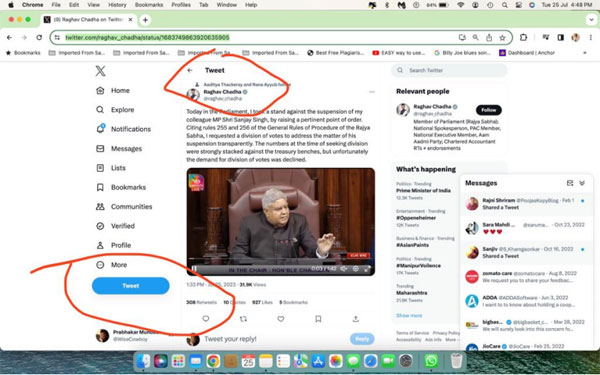
    Wait a minute. For some time, I couldn’t see the X. Then a friend said he had opened it on his computer. I quickly rushed to my laptop and open Twitter. It took me some time to see a weak little X tucked away in the corner of my screen. And the language was the same. It said tweet.


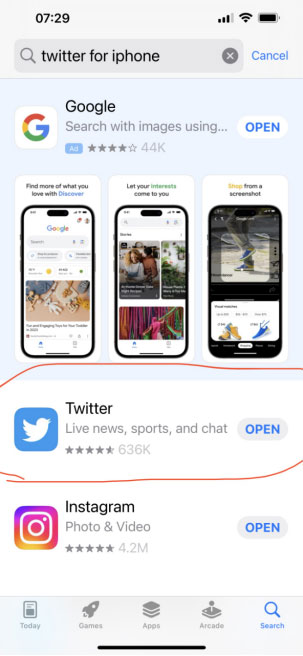
    I then rushed to the App Store to check what the logo on the download would reveal. Once again, I was welcomed by Larry, and that told me that the new X branding was far from complete.


    I had never thought about it before but the logic of the previous branding fell into place. Twitter because that is the short high-pitched sound that birds make. That is why you tweet. So what was the logic for renaming it X?


    Elon Musk elaborated: “Twitter was acquired by X Corp both to ensure freedom of speech and as an accelerant for X, the everything app. This is not simply a company renaming itself, but doing the same thing.


    The Twitter name made sense when it was just 140-character messages going back and forth – like birds tweeting – but now you can post almost anything, including several hours of video.


    In the months to come, we will add comprehensive communications and the ability to conduct your entire financial world. The Twitter name does not make sense in that context, so we must bid adieu to the bird.”


    Yes, so I got it. You have long videos instead of 140 words. But you tweeted on Twitter. The logic was solid and unquestionable. My question to Elon is what do you do on X? You still tweet as indeed the image above seems to suggest. Something wrong here. Why am I still tweeting on X?


    Now coming to the logo which was the weakest part of my computer screen when I opened Twitter. For a moment, I thought some highfalutin design company had probably charged Elon a few million dollars for a new logo and made a few quick bucks.


    But here is the ultimate disappointment. It is simply the letter X from the Special Alphabets 4 font which you can buy on the internet for $29.99. Now that is cheapest logo I have ever come across for a major corporation.


    Now I have no pretensions to being an expert typographer but after having spent more than 45 years in advertising I do think I can tell a bad logo from a good one.


    But enough said. Farewell, Larry. Hello, X, whoever you are and whatever you want to be. Please introduce yourself!


  • Taarak Mehta Ka Ooltah Chashmah celebrates 15 years on Sony SAB

    By Our Staff


    Taarak Mehta Ka Ooltah Chashmah, a sitcom on Sony SAB, completes 15 years of telecast this year. The show has successfully bagged the title of one of the longest-running show on Indian television and features amongst the top 10 shows in the Hindi general entertainment category year on year.


    Asit Kumarr Modi
    Asit Kumarr Modi

    Produced by Asit Kumarr Modi, Taarak Mehta Ka Ooltah Chashmah is based on late Gujarati columnist/writer Taarak Mehta’s Duniya Ne Undha Chashma and has set a benchmark for family-friendly entertainment in the Indian television industry. On its 15th anniversary, the entire team of Taarak Mehta Ka Ooltah Chashmah expresses their heartfelt gratitude to the viewers for their unwavering support and promises to continue spreading laughter and positivity in the years to come.


    N.P. Singh
    N.P. Singh

    Said N.P. Singh, CEO, Sony Pictures Networks India: “Television is a canvas that allows us to paint stories that touch the hearts of millions. It’s our constant endeavour to create content that not only entertains but also leaves a lasting impact on our viewers. We believe in breaking barriers, defying conventions, and presenting unique concepts that resonate with diverse audiences. Together we strive to weave laughter, emotions, and relatability into every show, creating an unforgettable viewing experience. Our journey is fuelled by the love and support of our audience, and we remain committed to delivering joyful moments that unite families and spread smiles across the nation. On the occasion of Taarak Mehta Ka Ooltah Chashmah’s 15th anniversary, I congratulate the entire team and crew on this significant milestone.”


    Neeraj Vyas
    Neeraj Vyas

    Neeraj Vyas, Business Head, Sony SAB: “At Sony SAB, we are dedicated to presenting stories that deeply touch the hearts of our viewers, evoking strong emotions. Our aim is to create relatable characters, that our viewers can resonate with and develop a genuine emotional connection with. Celebrating a momentous milestone, the 15-year journey of Taarak Mehta Ka Ooltah Chashmah has captured the hearts of many. The channel’s focus remains on producing family-friendly content that appeals to audiences of all ages, showcasing our passion for quality storytelling. We want to be known for weaving stories like Taarak Mehta, which take viewers on an enjoyable ride while leaving a lasting impact.”


    Asit Kumarr Modi, Producer of Taarak Mehta Ka Ooltah Chashmah: “When we began this endeavour 15 years ago, we never imagined the immense love and appreciation that would come our way. It feels like it was just yesterday that we started this incredible journey. To witness the love and acceptance of our viewers over the years has been nothing short of a blessing. Taarak Mehta Ka Ooltah Chashmah has not just been a show but a way of life for me. The show’s success lies in its ability to bring people together through laughter and to showcase the importance of relationships and values in today’s fast-paced world.”


  • Johnson’s Baby launches new campaign

    By Our Staff


    Johnson’s Baby skin care products launch its latest brand campaign.


    As a brand which has partnered with parents for generations, Johnson’s Baby recognises their promise to help protect their baby’ skin from day 1. The brand’s latest marketing campaign, ‘Promise, Pehle Pal Se’ captures this unwavering commitment ‘Designed with Only (Sirf aur Sirf) “Baby Safe Ingredients’ to help protect baby’s delicate skin from day 1.


    Reinforcing the brand promise, Manoj Gadgil – Business Unit Head & VP Marketing – Kenvue said: “Ahead of the campaign, Johnson’s® Baby reached out to over 15000 mums from every part of India, different cultures and backgrounds to understand their promise to their little ones. There was one resounding promise which went beyond boundaries and cultures, a promise to protect their baby. Based on this common purpose, Johnson’s® Baby strongly commits to mums to help fulfil their precious promise to their babies.”


    Godwin D’Mello – Executive Creative Director, DDB Mudra Group added: “The birth of a child brings out the optimism in every parent to create a world full of positivity for their little one, where only good things exist. This observation, delivered through the emotional hook of the mother’s promise on day 1, helped us talk about Johnson’s role in helping her keep that promise.”


  • Bumble launches new campaign

    By Our Staff


    Bumble, the women-first dating and social networking app, has launched a global integrated campaign titled Kindness is Sexy featuring with actor Aditya Roy Kapoor.


    Said Whitney Wolfe Herd, founder and CEO of Bumble: “When we approach dating with kindness, we help create an environment of respect and compassion, and for connections to grow. Kindness is a core value here at Bumble, and we know it is the driving force behind our mission of creating healthy and equitable relationships. This new content helps redefine the idea of attraction and encourages us to never lose sight of the most valuable traits in a relationship.”


  • Lowe Lintas campaigns for Flipkart Health+

    By Our Staff


    Lowe Lintas Bangalore has recently rolled out its latest campaign for Flipkart Health+.


    Sharing her thoughts on the idea behind the new campaign, Sonali Khanna, President and Branch Head, Lowe Lintas Bangalore said: “Since its inception, Flipkart Health+ has consistently prioritised the needs of its customers, placing consumer challenges at the forefront of its approach. Their trailblazing ‘superfast delivery’ feature is one such example of their commitment to customers. While medicines are a serious business, we felt that highlighting critical health scenarios would only create further anxiety. Instead, we decided to convey our message with a lighter touch in order to break clutter; by humorously demonstrating that while somethings in life can take time, delivery of medicines should not.”


  • SoCheers Films campaigns for BGMI

    By Our Staff


    SoCheers Films, an independent creative digital agency, has unveiled its latest Digital Video Campaign (DVC) for Battlegrounds Mobile India (BGMI). The film is titled ‘Ab Dhadkane Hongi Tez’. celebrates BGMI’s vibrant gaming community and the game’s ability to foster a strong sense of togetherness among its players. The film portrays a diverse range of individuals passionately engaging with BGMI, evoking feelings of excitement, and nostalgia.


    Notes a communique: “In recent years, the gaming industry in India has experienced remarkable growth and popularity. Games like BGMI have successfully carved a niche for themselves, attracting a dedicated fan base that eagerly awaits new releases and relishes the immersive gaming experiences they offer.”


  • IIMA-BCG table joint study ‘AI in India – A Strategic Necessity’

    By Our Staff


    BCG X, the AI, and Digital Transformation unit of the Boston Consulting Group (BCG) and The Brij Disa Centre for Data Science and Artificial Intelligence (CDSA) at the Indian Institute of Management Ahmedabad (IIMA), a global management Institute, have collaborated to release a comprehensive report titled “AI in India: A Strategic Necessity” on the AI readiness levels of Indian businesses.


    The report findings are based on the study of 130 companies from the Banking, Financial Services, and Insurance (BFSI), Consumer Goods (CG), and Industrial Goods (IG) sectors along with extensive interviews and surveys conducted on CXO’s of large-sized, medium, and small organisations. The study objectively and wholistically measures the ability of a company to leverage AI to drive its strategic objectives and enhance its financial and operational performance.


    The report was released today, at the IIMA campus by Professor Bharat Bhasker, Director, IIMA, Professor Ankur Sinha, Professor Anindya Chakrabarti, Co-Chairs of the Brij Disa Centre for Data Science and Artificial Intelligence,  Professor Arindam Mukherjee, Debjit Ghatak, IIMA alumnus and General Manager, Brij Disa Center for Data Science and AI, Sumit Sarawgi, Managing Director and Senior Partner, BCG, Deep Narayan Mukherjee, Vice President – Data Science, Rajat Mathur, Partner, BCG , all co-authors of the report from IIM A and BCG respectively.


    Releasing the study, Professor Bharat Bhasker, Director of IIMA, said: “India is poised to enter into a digital revolution where successful AI adoption by our industry can be a crucial determinant of India’s competitiveness globally. Successful adoption of AI could add up to 1.4 percentage points annually to real GDP growth of India. From the perspective of corporates, successful adoption of AI is expected to add over a five-year period, INR 1.5-2.5 trillion in incremental pre-tax profit for the top 500 Indian companies alone. This presents an incredible opportunity for the Indian industry and our companies can leverage the widespread internet access and cost -effective labour to move ahead and align themselves to the global AI maturity standards. I am confident that the joint study by the Brij Disa Centre IIM A and BCG, will have significant implications for policymakers as well as industry lenders to foster a conducive ecosystem for the adoption of AI by Indian organisations, and their success in translating it into business performance.”


    The report emphasizes the significance of achieving an advanced level of AI maturity for success in today’s business landscape. Sumit Sarawgi, Managing Director & Senior Partner, BCG commented, “Investments into AI could deliver extraordinary returns but success hinges on deploying AI at scale. An organisation wide commitment is required in successful AI driven transformation of the organisation. The reason being success from AI adoption, algorithms drive approximately 10% of the success, while data and technology infrastructure adds a further 20%. The remaining 70% hinges on people, processes, and business transformation.”


    The report provides key insights into India’s corporate AI landscape and roadmaps in AI adoption. The study reveals that select Indian BFSI companies (particularly banks and new-age NBFCs) have very high AI Maturity, on par with global frontrunners. It divides companies into four groups based on their maturity level— Leaders, Steady Followers, Leapfroggers and Laggards. 11% of companies in the set were adjudged Leaders, that now face a stiff challenge from the Leapfroggers (9% of the companies) who started their AI-driven transformation journey late but have improved sharply in AI Maturity in the last three years, converging with the Leaders on most aspects of AI Maturity. However, the concern emerged with Laggards, about 2/3rds of the companies, that have some exposure and investment in AI in their Technology, Data and Analytical capabilities.


    The report offers actionable guidance for companies with mid-level AI maturity to progress towards global best-in-class AI maturity levels. For leaders in AI adoption, the report focuses on exploring the next frontiers of AI excellence. Research shows that AI investments augmenting end-user value and topline growth could drive significant economic and wage expansion. The opportunity is India’s for the taking—the challenge is now to turn the enormous potential of AI into reality.


  • Dentsu X appoints Jose Leon as CEO

    By Our Staff


    Dentsu X, the media agency from dentsu India, has announced the appointment of Jose Leon as Chief Executive Officer (CEO). He will report to Anita Kotwani, CEO Media, South Asia, Dentsu.


    Based out of Dentsu’s Gurugram office, Jose will concentrate on empowering clients through media campaigns that create excellent consumer experiences, bringing about a big transformation in society, and strengthening their businesses to increase their top-line numbers.


    Commenting on the appointment, Anita Kotwani said: “Dentsu, as a network, is driven by forward-thinking tech-enabled practices. Our belief in offering disruptive, cutting-edge solutions keeps us ahead in the ecosystem. We take immense pride in bringing extraordinary talents on board for this journey. Jose is one of the leaders with the right balance of technology and media acumen. His expertise is a great fit for dentsu X’s vision of building valuable experiences for consumers, beyond simple media exposure. I look forward to partnering with him in this marathon ahead. A warm welcome to our dentsu network, Jose, and best wishes for the journey ahead.”


  • W+K  appointed AOR for Casio G-Shock watches

    By Our Staff


    Wieden & Kennedy India has been appointed the Creative Agency on Record (AOR) for G-Shock watch brand in India.


    The agency’s understanding of the Indian market, combined with its ability to craft compelling brand narratives, made it the ideal choice for fulfilling G-Shock’s creative needs.


    Said Shreekant, Head of Delhi Office at Wieden & Kennedy India: “At W+K, we try to design work that makes cultural inroads for our brands, making them an organic part of consumer conversations. A cult brand like G-Shock was built for this kind of work and we can’t wait to get started!”


    Added  xHideki Imai, Managing Director at Casio India: “We are delighted to join forces with Wieden & Kennedy India as our Creative Agency on Record. Their creative prowess and strategic insights make them the ideal partner to help us connect with our Indian consumers in meaningful ways. We are confident that this collaboration will enable us to further strengthen G-SHOCK’s position as the go-to brand for individuals seeking unmatched toughness and style.”


  • Das ka Dum with Dr Bhaskar Das | Civic infrastructure in our big cities get really stretched every monsoon. Do you think the media should be more focussed on all of this than some silly political issues?

    Bhaskar DasIt’s an issue we feel very strongly about, but, sadly, there are few takers for the cause. So we asked our Wizard with Words the question. Here’s Dr Bhaskar Das in the July 27 edition of Das ka Dum. Read on..


    If you wish to access the archives, please go to the Das Ka Dum tab on the website’s top navigation bar or click here: https://www.mxmindia.com/category/columns/das-ka-dum/


    Q. Civic infrastructure in our big cities get really stretched every monsoon. Do you think the media should be more focussed on all of this than some silly political issues?


    A. I can’t comment on the content priorities of media companies due to my sub- optimal comprehension of their audience psyche. So “no comments”.


    Having said that, I would like to add that no one is bothered about aam janata and their sufferings in respect of civic amenities. The sufferings get compounded in rainy seasons specially. There would be blame-games, denials etc, but the core problems remain unaddressed and then life goes on. The tax-payers are going on paying taxes but they wonder why they have been paying price for a collective failure in ensuring a minimum level of civilised existence. Perhaps as citizens, our slacktivism has degenerated into a fatalistic attitude about our daily life.


  • Sam Balsara to lead the Indian delegation to AdAsia ’23 Seoul

    By Our Staff


    Sam Balsara, head of the Indian-owned Madison World will be the Leader of the Indian Delegation to the AdAsia’23 at Seoul. The AdAsia, a property of the Asian Federation of Advertising Associations (AFAA) is scheduled from October 24th. to 26th. 2023.

    Sam Balsara is a veteran of many AdAsia’s.


    He has been honored by the Advertising Agencies Association of India (AAAI) with its Lifetime Achievement Award, and has been inducted into the International Advertising Association (IAA) India Chapter Hall of Fame as well as the Kolkata AdClub Hall of Fame.


    Said Balsara: “The AdAsia is the biggest event in Asia for the communications industry. There is considerable interest now since the last AdAsia that Indians could go for, was six years ago in Bali. The AdAsia’23 is an unmissable event for marketers, media and advertising professionals. I am confident that we will have a sizable delegation from India.”


    Adds Srinivasan K Swamy, Chairman of R K SWAMY HANSA Group, “I understand that the Korean Advertising industry and the AdAsia 2023 Seoul Organising Committee have taken special efforts to get speakers from several leading organisations across the world, in addition to leading companies in Korea like Samsung, Hyundai etc. Of course, we will also in for a treat to Korean culture and entertainment when we will get to see and hear more about K-Pop music, dance, and TV series.”


  • Red Alert! Monsoon Mazaa or Disability Distress?

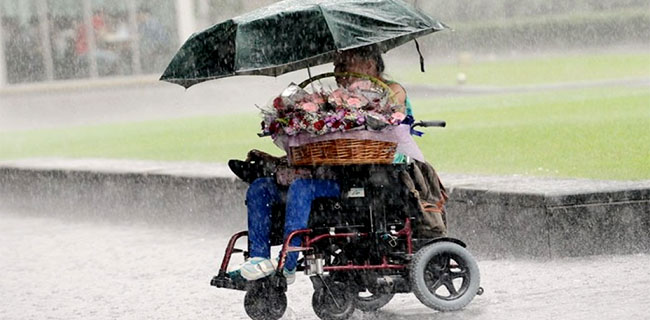
    Representative image. Photograph source: https://www.ohchr.org/


    By Shruti Pushkarna

     

    Shruti PushkarnaIn the past few weeks, monsoon fury has topped news headlines across different parts of India. If you google rain+news, the search throws updates of orange and red alerts in parts of Maharashtra, Gujarat, Karnataka and more. Then there’s the frightful, shrieky voices of television anchors warning us about the dangerously rising levels of Yamuna and Ganga. Not to miss the conspiracy theories and political buck-passing between neighbouring states on releasing excess water.


    Growing up in Delhi, I haven’t witnessed the city at such a standstill in the past, with roads completely blocked off because of water-logging. The situation is definitely bad. In fact, climate conditions across the world have been uncertain and alarming.


    Both traditional and digital (and social) media are brimming with accounts of lives lost, infrastructural damage, crops destroyed, poor urban planning, homes demolished, et cetera. Average (wo)man is posting photos and videos on social media from their places of work/ study and residence, highlighting the respective perils they are facing.


    I still recall the horror of July 26, 2005, one of the first few serious news stories I witnessed as a budding journalist. ‘Mumbai Deluge’, the headline and the corresponding pictures are vividly etched in my brain. The city received 944 mm rain, the eighth-heaviest 24-hour rainfall recorded ever, claiming thousands of lives.


    Then too, similar coverage ensued. Eighteen years on, our cities and states still seem unprepared to battle the nature’s wrath. But I’ll leave that debate for another day.


    For the average Indian citizen, what does monsoon mean? Baarish or pitter-patter raindrops throw up varied imagery and meaning for different people. A steaming cup of tea paired with hot pakodas, swaying lush green trees, potholes, overflowing sewers, watered-down roads, damp clothes, dripping huts, traffic snarls, careless children jumping in muddy puddles. I’m sure you can think of more!


    Ever think of what it means for an average disabled citizen?


    Twenty-nine-year-old Payal Bhattad lives in Virar near Mumbai and until recently, she traveled to Wilson College in Mumbai to teach history to undergraduates. The daily commute in the local train would easily take up three hours of her day. And Payal is a totally blind person who uses a white cane to navigate her way across the bustling city. When the heavy raindrops fall on the tin sheds of the train station, Payal is unable to register any other audio cues which otherwise guide her to move forward, backward, left, or right. She cannot hear the murmurs of fellow passengers, or hawkers’ cries, nothing that indicates any familiar direction or territory to her. Once, the roaring rain misled her to the edge of the platform and she fell onto the tracks. And no one noticed or stopped to help her up.


    Akash Nimbalkar is a 30-year-old social worker who also lives in Virar. He is a person with low vision, who finds it extremely challenging to wade through knee-deep water on his way to work, using a cane. He is always worried of submerging into an open gutter or losing balance and slipping on the flooded road. His family hesitantly stops him from going to the office every day, as they worry about their visually impaired son getting stranded in the rain.


    With wind blowing amidst heavy rain, it’s hard to steadily hold an umbrella, and manage to stay dry. Additionally, there’s personal belongings to juggle with the gamp. Forty-six-year-old Shirin Kheriwala works as a counsellor with a national helpline for the blind. She usually relies on sighted people to help her cross busy main roads and assist with directions. But during the monsoon, everyone is running to find shelter and save themselves. Coming back from work one day, she found herself isolated on the highway. And her umbrella broke. But as they say, necessity is the mother of invention. Shirin folded the umbrella to use as a cane and held her white cane up in the other hand as an indication to the rushing traffic, that she was walking across.


    The situation is equally precarious for persons with orthopaedic or locomotor disabilities. It is difficult, sometimes even impossible to use wheelchairs, crutches, or any other assistive aids in such extreme weather conditions.


    Saurabh Kohli is a 40-year-old person with multiple sclerosis (MS). Apart from the usual fatigue accompanying MS, he experiences balance issues and severe weakness in his legs. Although he drives a slightly modified automatic car to his office at Amity University in Noida, he uses a walker or wheelchair to get from one place to another. Walking without such assistance is next to impossible for him. He drives around 70 kms every day, but in rainy weather, he avoids stepping out alone. The humid weather conditions also adversely affect his medical condition.


    Prosenjit Chakraborty is also a person with multiple sclerosis. He lives in Guwahati, and drives a battery-operated tricycle to run his errands, visit the doctor’s clinic and the hospital for follow-ups. He fears the day when rainwater seeps into the battery of his vehicle and stops it from functioning, leaving him helpless on the road. So far, he’s been lucky!


    All these folks, like many other persons with disabilities don’t want to stay home, take leave, or not show up to work because of the additional challenges they face due to their disability, in the monsoon season. Instead, they look for solutions and brace up for perilous times.


    But is the administration aware of their difficulties? Are policies being designed and implemented to prevent or tackle such hazardous situations facing approximately 2.68 crore people?


    And what about the fourth pillar of democracy? Why doesn’t the media focus on reporting issues and accounts of persons with disabilities who have equal rights as citizens of India? Before raging another debate on urban development woes, climate change, or disaster management, the media should understand and include the stories of millions of overlooked disabled stakeholders.


    Wondering why MxMIndia publishes a disability advocacy column? Well, we strongly feel that the media can dramatically transform the world of persons with disabilities. And this series can help bring forth issues that the media must champion to create a truly inclusive and accessible India. To write this column, we invited Shruti Pushkarna, a former journalist who is now a disability inclusion advocate based in New Delhi. Her views here are personal. To access the archives of her 75-plus columns, please visit: https://www.mxmindia.com/category/ columns/shruti-pushkarna/


    If you have a view on the issues raise or would like to align with MxMIndia on this cause, write to us at editor [at] mxmindia.com.