Author: mxmadmin

  • RFPIO rebrands company to Responsive

    By Our Staff


    RFPIO, strategic response management software, has announced it is rebranding the company to Responsive given the expansion in the breadth of response use cases it supports beyond RFPs.


    Founders Ganesh Shankar, AJ Sunder and Sankar Lagudu established the company in 2015 after collaborating on RFPs at their previous company.


    Said Ganesh Shankar, CEO, Responsive: “We always knew we were building a solution that was capable of doing far more than just fixing broken RFP processes. Today, our solution has become the industry-leading strategic response management platform that enables response teams to address a wide variety of business use cases, helping them increase revenues, mitigate risks, and provide better employee experiences. Given this significant expansion of our overall value proposition as well as the company’s overall momentum, now’s the time to rebrand the company to Responsive. We are excited about the company’s journey thus far, and even more excited about the path ahead.”


  • All3Media & BBC Studios collaborate

    By Our Staff


    BBC Studios India Production and All3Media International announced that BBC Studios will produce two popular All3Media-scripted dramas for the Indian audience.


    Said Sameer Gogate, General Manager, BBC Studios India Production: “We are excited to partner with All3Media to bring the popular Shameless and Strangers to Indian audiences.  They are two brilliant dramas, very different in tone but both equally suited to the local market, who enjoy clever, captivating storylines. With viewers’ preferences evolving and their desire for compelling content growing, we are confident that these unique shows will be a hit with Indian audiences.”


    Added Sabrina Duguet, Executive Vice President for APAC, All3Media International: “We are thrilled to announce our partnership with BBC Studios which will further establish our footprint in India. BBC Studios India Production shares our production values and our love for top quality drama, and we know they will adapt these two dramas brilliantly for the Indian market. Our business has been going from strength to strength, with seven scripted formats already commissioned in India. We are very proud to see the tense, closed series thriller Strangers aka White Dragon become the third title from Two Brothers Pictures to be adapted in the region following the success of Marzi (Liar) and Mithya (Cheat). Additionally, Company Pictures’ Shameless arrives in India having attained legendary status for its long award -winning run in the UK and via it’s acclaimed adaption in the USA – we are sure that India’s own Gallagher family antics will enthrall local audiences.”


  • PRBI Barometer: 2023 brings higher expectations of ethical PR

    By Our Staff


    PRBI member Brunnen Communications’ latest annual PRBI Barometer released this month, surveys the views of PR and comms agencies in more than 40 countries on changes in PR trends and communication priorities.


    The findings showcase that PR and comms firms’ clients still value competence in media relations as well as systematic and influential strategic communication along with the fact that few clients have the necessary expertise or tools in-house. In the current volatile operating environment, organizations are in high need of support in building sustainable reputation and trust.


    Regardless of geographical location, many (46.7%) agencies believe that the demand for their services will be higher this year than in 2022. At the same time, respondents expect modest growth in their clients’ PR budgets. Media relations, strategic communication and content production are in particularly high demand in 2023.


    The impact of the dramatic events of 2022 – Russia’s attack on Ukraine and the ensuing energy crisis and global economic uncertainty – continues to reverberate worldwide. The recent layoffs in the technology and startup funding winter have shaken things to a great degree adding to the ambiguity of the future. These reverberations are also reshaping the global operating environment of PR and comms firms as well as clients’ communication needs. The global annual PRBI Barometer is a decision-making tool that allows member agencies to make knowledgeable business decisions.


    Said Brunnen Founder and Chair Taru Nikulainen: “Investing in communication during unprecedented times such as what we are experiencing now is a shrewd decision that can have far-reaching implications. The winners of this situation are those organizations that are able to take control of the crisis and see a way through to the other side. Communication cannot work in isolation but must be woven into the very fabric of business. We are delighted to see so many clients recognize the value of communication agencies in these turbulent times. It is great that they view us as a strategic partner and understand that the influence of what we bring to the mix can actually be measured.”


    PR and comms firms around the world agree that this year’s most popular services are media relations (63.2%) and communication strategies (57.9%). One notable change from the previous year’s survey is that the third most popular service is now content production (57.9%). Change communication and internal communication are not far behind either. The latest survey clearly highlights the significance of ethical PR. More than half of the respondents (56.3%) saw ethical conduct in both communication and client relations as important or very important.


    Giving this an Indian perspective and how it will be relevant for the audiences in the country, Tarunjeet Rattan, Managing Partner – Nucleus PR and PRBI member added: “Brands in India and those eyeing entry into the country have come to realise the immense power of PR. Week after week, our desks are flooded with RFPs and inquiries, predominantly centred around media relations. However, it’s essential for these brands to recognize that PR & Communication is a long-term investment that demands nurturing. Amidst the worldwide shift towards valuing PR, there is a growing emphasis on upholding ethics in PR within India. In an era filled with unfiltered information, misinformation, fake news, and automated content, the integrity of communication and communication professionals has become more critical than ever before.”


  • OMD wins media mandate for Sugar Cosmetics

    By Our Staff


    OMD, part of the Omnicom Media Group, has won the media mandate for Sugar Cosmetics following a competitive pitch. This partnership between the two brands will see OMD India handle the end-to-end media strategy for the leading cosmetic brand from the agency’s office in Mumbai.


    Speaking of this partnership, Anisha Iyer, CEO of OMD India, said, “We are thrilled to collaborate with such an ambitious brand that resonates with the pulse of new India, especially at a time when it endeavours to become a global force. Our partnership with them will see us bring the right amalgamation of innovation, creativity, empathy, and insights to create valued connections with their customers and build profitable business outcomes.”


    Added Kaushik Mukherjee, Co-founder and COO, Sugar Cosmetics: “We are very excited to partner with OMD India to deploy data-rich media strategies that will help us achieve the business goals we have set for ourselves. In today’s dynamic media ecosystem, their intelligent tech stack, agility and expertise will help us drive efficient campaigns to reach audiences across market segments. I look forward to working closely with team OMD India and building Sugar Cosmetic’s existing position as the preferred cosmetics brand for makeup enthusiasts across the nation.”


  • Filter Coffee partners with Sereko Skincare

    By Our Staff


    Filter Coffee Co, a leading digital marketing agency, has proudly announced a partnership with Sereko, a skincare brand in the field of psychodermatology.


    Said Malvika Jain, Founder & CEO of Sereko: “We are thrilled to introduce Sereko, India’s first Psychodermatology skincare brand. Our mission is to revolutionize the skincare industry by integrating the power of the mind into the healing process. With our innovative products and cutting-edge formulations, we aim to deliver transformative results, enabling individuals to unlock their true beauty potential.”


    Added Anuja Deora Sanctis, Founder of Filter Coffee Co: “We are honoured to collaborate with Sereko, an industry pioneer in Psychodermatology. Through our strategic partnership, we aim to leverage our expertise in digital marketing to amplify Sereko’s brand presence and empower individuals to embrace a holistic approach to skincare.”


  • Wavemaker rejigs leadership to boost growth

    By Our Staff


    Wavemaker media agency, part of GroupM, announced a series of key strategic changes to its leadership team to boost growth.


    Premjeet Sodhi
    Premjeet Sodhi

    Chief Strategy Officer Premjeet Sodhi will soon be taking on the role of Global Head of Measurement & Analytics. In his new role, Sodhi will be part of Wavemaker’s Global Consultancy team which supports clients in adopting future-proofed marketing practices to advance transformative growth, protecting outcomes in the near-term, and creating disproportionate advantage in the long-term. He will report into Anna Hickey, Global Consultancy Lead and will be based out of New York. A media veteran with over 25 years of rich experience, Sodhi joined Wavemaker in 2020 as Chief Growth Officer before taking on the role of Chief Strategy Officer.


    Mansi Datta
    Mansi Datta

    Taking on the baton from Sodhi, Mansi Datta will transition into Chief Strategy Officer. Datta, a proficient leader has been heading North and East region operations at Wavemaker since 2020. She joined Wavemaker as General Manager in 2015. During her stint, Datta has built great client partnerships, bolstered agency operations, and built an incredible team.


    Shekhar
    Shekhar Banerjee

    Meanwhile, Shekhar Banerjee, Chief Client Officer & Office Head – West, will be taking on the additional responsibility of managing North and East for Wavemaker India. Banerjee joined Wavemaker in 2018 to lead operations for the West region and has built an incredibly strong business.


    Speaking on these leadership changes, Ajay Gupte, CEO – South Asia, Wavemaker said: “It makes me extremely happy and satisfied to see our leaders stepping into larger & diverse roles within the ecosystem. I firmly believe, Wavemaker provides a vast stimulating platform for our people to grow. With these changes, I am confident we will make a massive difference to our clients and people. I wish Premjeet, Mansi and Shekhar all the best in their new roles and I am confident we will continue to create more positive disruptions in the industry”.


    In their new roles, Datta and Banerjee will report into Ajay.


  • Das ka Dum with Dr Bhaskar Das | What’s your view on Amitabh Bachchan on signing on just about any brand/service that wants him?

    Bhaskar DasWe thought we could provoke our Wizard with Words to give a controversial response. No such luck. Here’s Dr Bhaskar Das in the July 20 edition of Das ka Dum. Read on…


    If you wish to access the archives, please go to the Das Ka Dum tab on the website’s top navigation bar or click here: https://www.mxmindia.com/category/columns/das-ka-dum/


    Q. What’s your view on Amitabh Bachchan on signing on just about any brand/service that wants him?


    A. I think the question is unkind to Big B. We know which brand he endorses. But do we have visibility of how many offers for endorsement he rejects? Secondly, Big B is a cult brand himself and organisations feel that an endorsement from him would add gravitas and higher salience to their brand. Big B isn’t forcing any organisation to offer him endorsement as a favour or as a pro bono gesture. And if one goes by the theory of demand-supply as an important variable for pricing a product, I would like to imagine that Big B’s endorsement would not come cheap.


    Brand-owners aren’t irrational enough to invest in any promo tools that don’t justify their ROI. So it must be win-win for both the sides.


    All said, one has to admit that Big B’s aura, even after more than five decades of dominant presence in the film industry, is exemplary and he is an epitome of smart work, commitment, discipline and passion. Brands wants to get rub-off from that halo. One blame him for that! He is the Roger Federer or should it be Carlos Alcaraz of the tennis world. The only difference is that even they fade at some point of time , but Amitabh Bachchan as a phenomenon is still shining bright.


  • ASCI introduces guidelines for ads for charitable causes

    By Our Staff


    The Advertising Standards Council of India (ASCI) has introduced guidelines for advertisements for charitable causes.


    Talking about the new guidelines, Manisha Kapoor, CEO and Secretary General, ASCI, said: ASCI recognises that charities can have a challenging job explaining the nature of the important, and often sensitive work they do, and raise funds for beneficiaries in need. However, they must take care not to overstep the mark by misleading consumers or causing unjustified distress to those who may be merely surfing online. The guidelines strike a balance between allowing charities to do their important work, and at the same time, be fair to consumers who are viewers of such advertisements”.


    Adds a communique: “In recent years, charities have been active advertisers, particularly on digital media, and especially for the purpose of seeking funds and crowdfunding on behalf of their beneficiaries who may not have an active social network to reach and tap donors. Charities, including crowdfunding platforms, provide this reach through sponsored ads and organic posts, which tap potential donors. However, there have been some concerns about ads that create donor distress through the use of images that may be too graphic. While the intent of such posts is undoubtedly to nudge donors to contribute, such posts may cause undue distress to ordinary consumers who may be surfing through their news feeds. In addition, with crowdsourcing platforms, consumers may not know what amount, from their donation, goes to the beneficiary and what may be kept by the platforms for their administrative fees or charges.”

    de clear what such amounts are in the advertisement itself.


  • Prime Video and BBC Studios collaborate

    By Our Staff


    Prime Video and BBC Studios have launched BBC Player and BBC Kids on Prime Video Channels in India. The subscription-based service will provide Indian viewers a curated line-up of popular British content spanning from world-class original British dramas, comedy, documentaries, factual shows, entertainment to lifestyle programming and children’s shows – all on a single destination, for the first time in India. Prime members can now purchase an annual add-on subscription to BBC Player for Rs 599 and enjoy full access to BBC Kids as well. Alternatively, members can also subscribe to BBC Kids only for Rs 199 annually.


    On announcing the launch, Stanley Fernandes, Vice President, Distribution BBC Studios, South Asia, said: “We are excited to bring BBC Player and BBC Kids for the very first time to audiences in India. We couldn’t be more thrilled to partner with Prime Video to launch these subscription-based video on demand services. These brands will offer a curated, multi-genre content line-up, offering the best of British entertainment to the discerning Indian audience.  Subscribed members will gain access to some of BBC Studios’ latest hits as well as our classics shows, including our well acclaimed wealth of kids’ entertainment, all under one roof.  We have seen the success of these brands in other markets globally and we can’t wait to see the excitement in India with this launch on Prime Video Channels.”


    Added Vivek Srivastava, Head – Prime Video Channels, Prime Video, India: “Since its launch in India, Prime Video Channels has seen exponential growth in India with people subscribing to Channels of their choice from the length and breadth of the country. Our customers also have the convenience to access a significantly wider selection of Indian and international content through the 20 Channels. In fact, multiple global streaming services have chosen to launch and expand their reach in India with Prime Video Channels. In sync with our philosophy of super-serving our customers with even greater choice and accessibility, we are thrilled to collaborate with BBC Studios. Their wide range of programming is highly renowned and enjoyed by audiences world over. With the launch of BBC Player and BBC Kids, Prime members in India too, will be able to enjoy their favourite British content on a single destination for the first time.”


  • Lowe Lintas launches Lowe Lintas DX

    By Our Staff


    Lowe Lintas has launched Lowe Lintas DX, a digital creative unit, offering advanced strategic and creative services specifically designed for long-term brand building in the digital spheres.


    Said Arun Srinivas, Director and Head of Ads Business for Meta in India: “With digital emerging as one the biggest advertising medium in the country, there is a strong need to create new standards of brand building and advertising on digital platforms. Lowe Lintas DX has the potential to become an industry-leading hub of excellence, delivering strong business outcomes for brands that work with both Lowe Lintas and Meta. I am excited to deepen our support with MullenLowe Lintas Group and look forward to some path-breaking work with the team.”


    Added Subbu, Group CEO of MullenLowe Lintas Group & Chief Strategy Officer – APAC, MullenLowe Global: “Lowe Lintas DX, a game-changing offering from Lowe Lintas, strategically supported by Meta, is a living system for building brands in a futuristic way. In a rapidly accelerating digital-led marketplace that is characterised by data-driven technologies, our collaboration will explore constantly deepening experiences and smart growth ideas for brands that go far beyond the traditional methods giving businesses unceasing velocity and a competitive leg up. With this collaborative advantage, we are very confident it will enhance learning and possibilities, creating value for everyone in the play – the consumers, our brands, clients, Meta, and us.”


  • Dentsu Creative appoints Surjo Dutt as the CCO for W&S regions

    By Our Staff


    Dentsu Creative India has appointed Surjo Dutt as Chief Creative Officer (CCO) for the West & South regions.


    As per the mandate, Dutt will spearhead creative excellence at Dentsu Creative India, leading the charge in aligning with the agency’s global vision.


    Commenting on the appointment, Amit Wadhwa said: “I am delighted to welcome Surjo as our creative partner on this exciting journey at Dentsu Creative India. Having previously worked alongside Surjo, I am well aware of his incredible talent for building powerful brands – a quality he has consistently demonstrated across every project he has been involved in. His seamless grasp of strategic contributions and deep understanding of the contemporary media landscape make him the ideal candidate to embody our philosophy of ‘Modern Creativity’. I firmly believe that together we will produce work that will leave a lasting mark in the industry.”


  • The Economic Promise & Cultural Peril of AI


    By Ashoke Agarrwal


    Ashoke AgarrwalArtificial Intelligence (AI0 is fast becoming the general-purpose technology that will determine humankind’s future.

    People whose business is to peek into the future approach it from two very different angles.

    Some hard-headed economist types see AI mainly as a disruptor of the world of business and economies.

    Others who study broader and deeper societal trends prognosticate the possible long-term effects of AI on human civilisation.

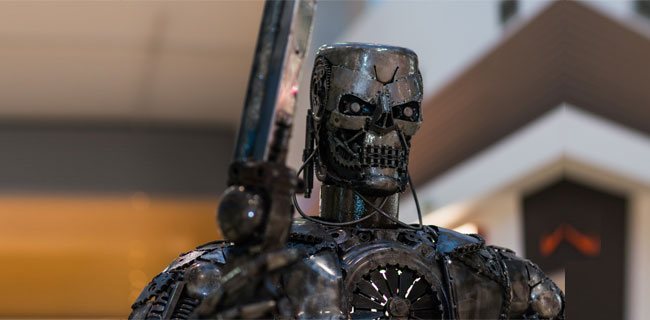
    Neither school sees AI developing into a threat on the lines of the Terminator-type robot shooting down people in the streets or a Skynet-type all-powerful entity trapping humans in a virtual matrix.

    The book “Power and Prediction: The Disruptive Economics of Artifical Intellgence.” by Ajay Agrawal, Joshua Gans and Avi Goldfarb, a 2022 follow-up to their 2018 book “The Prediction Machine: The Simple Economics of Artifical Inteliigence.” lays out the disruptive but possibly ultimately enhancing effect of AI on the world economy.

    The broader view of the impact of AI on human civilisation comes from Yuval Noah Harari, the historian-philosopher whose three books “Sapiens: A Brief History of Mankind.”, “Homo Deus. A Brief History of Tomorrow” and “21 Lessons for the 21st Century” introduced a deeply thought out yet lucid and vivid view of the factors that governed the evolution of human civilization.

    Harari has spoken at length about his views on AI at various forums. Recently he did a three-hour sit-down with Lex Friedman. Here is a YouTube link to the interview and a transcript. Harari’s views are grounded in his unique approach to the evolution of human civilization and startling in their clarity and scope. It also offers an almost sly but plausible take on the threat that AI poses to human society without going into Terminator and Skynet kind of fevered speculation.

    In their 2018 book “The Prediction Machines”, Agrawal et al. posited that AI at its core was a quantum leap in the science of prediction. Until the emergence of Deep Learning, prediction methods mainly used the science of statistics with tools like multivariate regression. With Deep Learning and its offshoots, predictions became progressively more accurate and cheaper. Agarwal et al. posited that technology finds more widespread use when it becomes more affordable. They offered the instance of electricity and computers. One of the vivid examples they offered about how better predictions could lead to changes in business models was of e-commerce players like Amazon shifting from a “shop-than-ship” model to a “ship-than-shop” model once they had the AI tools that predicted with reliable accuracy what their customers would buy next – that is they would ship the predicted product off to a consumer even before he had shopped for it on their site. In support of this insight, they cite that Amazon had filed for a patent for “anticipatory shipping”.

    In their 2022 book “Power and Prediction.” Agrawal et al. revise their view of the economic future of AI. They posit that the widespread adoption of AI will not happen with point solutions like replacing processes where traditional forecasting is currently the norm with AI-based forecasting. Instead, it will compel economies and businesses to go beyond and identify areas where AI-based prediction enables them to switch to decision-based procedures that optimize resources instead of rules-based processes that compromise efficiency in the face of uncertainty.

    Also, because AI-based predictions will have system-wide ramifications, the optimal adoption will happen when economies and businesses redesign entire systems to accommodate AI. Agarwal et al. identify two design approaches that can drive systemic changes: coordination and modularity. Their book details these approaches and illustrates them with examples from the health, transport and e-commerce sectors. The overall message from Agrawal et al. is that AI and its economy-wide adoption will be systemic and disruptive. And overall, its impact will be positive, like the widespread adoption of the last two general technologies – electricity and computers.

    Mr Harari’s views on the civilisational impact of AI are nuanced.

    Harari’ has been surprised by the pace of development of Large Language Models (LLMs) and their rapid penetration into the social and cultural life of human societies.

    At one level, he sees the threat posed by LLMs as a ratcheting up of the threat posed by social media. The design of social media algorithms captures attention and, in the process, creates echo chambers that fuel conspiracies and tribalism. AI entities based on ever-improving LLMs will capture intimacies. If unchecked, they could monopolise an individual’s personal space, weakening and destroying individual relationships and thus weakening the concept of family and friends and hence the very social framework undergirding human society.

    Harari perceives another more subtle threat. Harari hypothesizes, as explained in his books that the life of individuals, societies, cultures and civilizations is circumscribed by stories and myths that are creations of the human imagination. God, religion, nation, money etc., are all myths that have taken deep root and driven society in all its pursuits – politics, economics, art and culture.

    While Agarwal et al. perceives AI as a disruptive “Prediction Machine”, Harari rotates the prism and perceives AI as a threatening “Culture Machine”. He sees AI ( and sometimes he calls it Alient Intelligence) as “eating” and “digesting” all human culture to come to a stage where it can give back images, words, art and stories that are more compelling than any that humans can process. Because these cultural artefacts govern human evolution, this “Alien Intelligence” will take charge of it. Here in his own words, is how he perceives this threat:

    “...But taking what we do know about human history until now, all the, again, stories, images, paintings, songs, operas, theater, everything we’ve encountered and shaped our minds was created by humans. Now, increasingly, we live in a world where more and more of these cultural artifacts will be coming from an alien intelligence. Very quickly we might reach a point when most of the stories, images, songs, TV shows, whatever are created by an alien intelligence. And if we now find ourselves inside this kind of world of illusions created by an alien intelligence that we don’t understand, but it understands us, this is a kind of spiritual enslavement that we won’t be able to break out of because it understands us. It understands how to manipulate us, but we don’t understand what is behind this screen of stories and images and songs.”

    That is a more alarming picture of the AI-age world than any Terminator or Skynet kind of scenario. It is more disturbing because the process is sneaky and sly, and one can see the beginning of it even at the early stages of the LLM revolution.

    While the forces of commerce and the market will ensure that economies reap, with time and effort, the benefits of the “Prediction Machines”, what remedy do we have against the threat of the LLM-based “Culture Machine.”? Harari has a challenging remedy to offer. Harari believes that we humans do not fully understand ourselves. He suggests that for every dollar and hour we spend developing the AI-based culture machine, we also invest a dollar and hour in understanding ourselves better – perceiving the contours of conscious daily reality that exist in our feelings beyond the stories and the myths that confuse and control us. Is that a realistic goal? Will the story of progress that drives our notions of work and happiness allow us to set and accomplish such a goal? Let me put this question to ChatGPT and Bard and see what they say.