
Author: mxmadmin

  • PVR INOX promotes horror genre with campaign

    By Our Staff


    PVR-Inox Ltd has rolled out a marketing campaign to promote the movies in the horror genre. The film has been produced by The Titus Upputuru Company, and we received the release published in one of our favourite fonts: Baskerville.


    Speaking about the campaign, the director of the film, Titus Upputuru said: “It is one thing to watch a horror film on a small screen at home. It is quite another to watch it on a big screen, alone! It was great fun shooting the film. The task was not just to capture the protagonist’s feelings and emotions but to manifest what was going on in his mind. That was the big challenge. There were several elements that we used to create the atmosphere of fear. The colours, the mirrors, the lonely top shots, the red apparition, the creepy hands, the sounds, and the edit, all went into making the experience both real and surreal.”


    Added Shony Panjikaran – General Manager & Head, Sony Pictures Releasing International, India: “We embarked on a thrilling journey with PVR INOX, creating a captivating tale to unveil the final chapter of Insidious. This horror-filled promotion explores the consequences when one dares to venture into the chilling world of fear, alone at a cinema. From an Instagram contest that sparked an overwhelming response, Vicky emerged as the brave victor who stepped into the darkness, only to have his senses tested to the limit. Insidious: The Red Door delivers an unforgettable cinematic experience which needs to be witnessed on the big screen, like the grandest screens at PVR INOX.


  • Godrej Interio launches campaign

    By Our Staff


    Godrej Interio, a business of Godrej & Boyce – the flagship company of the Godrej Group, has launched a campaign ‘Welcome to the Family’.


    Speaking about the five films, Sumeet Bhojani, Head of Marketing Communications, Godrej Interio said: “Godrej Interio continues to be a part of families in India across multiple generations. Over time one of the key insights that continues to emerge in our research is that consumers form a very special bond with their furniture over a period of time. A piece of furniture almost becomes like a family member, participating in special moments and memories with the family. That’s the emotion we have aimed at capturing through the “Welcome to the Family” films. It’s a creative showcase of furniture that’s contemporary, multifunctional, and designed to support the modern lives of consumers today. This has helped us build and retain the consumer’s love and support for over a century now.”


    Added Akshat Gupt, Chief Creative Officer of Supari Studios: “We really enjoyed creating the ‘Welcome to the Family’ series for Godrej Interio. Using everyday, relatable family experiences, we blended creative storytelling with seamless product integration to build engaging stories that all families can relate to.”


  • Air India Maharaja debate: barking up the wrong tree?


    With apologies to none at all

    By Vikas Mehta


    Vikas MehtaI call my column ‘With apologies to none at all’ for a reason. And my article today actually justifies the title.

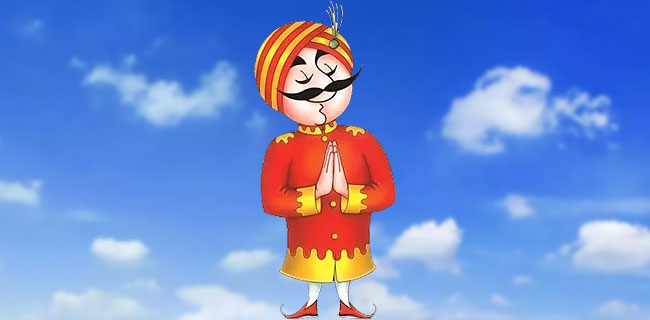
    For the last almost a month, since it was announced that McCann Worldgroup India shall be handling the Air India account, marketing and advertising professionals have been tying themselves in knots arguing for and against the use of the iconic Maharaja identity for the brand. Arguments ranging from nostalgia, royalty, Indianness, contemporary image and what not have been flung in the rung. Suggestions like contemporise the Maharaja or that royalty is defunct in today’s day and age are being touted. Compromises are being suggested and a few are sticking their neck out, asking to bin the Maharaja.

    And this is where most marketers exasperate. It’s also the reason why digital experts are gleefully claiming that advertising is dead. For, we forget that while marketing is an art, it’s foremost a science. And when we think from the gut or the heart and not follow simple marketing dictums then advertising opens itself to debate about its existence. We tend to go all mushy-mushy, not following some simple logic that defines marketing.

    The one big mistake which I see all advertisers make is not defining their target group and more importantly, not understanding the difference between target group and the user. Please do indulge me for a moment.

    Everyone uses a soap but a Lifebuoy soap talks to a mother. A Lux soap talks to a youngster who aspires film star beauty. A Dove soap user talks to a slightly middle-aged lady who feels that she is losing the softness of her skin. That does not mean that Dove will not be used by young females or even men. Similarly, Lifebuoy is used by working men too. But the brand always talks to a predefined TG. Just because everyone uses a soap all soaps do not talk to everyone.

    So, everyone may be wanting to fly but Air India has to decide who will it talk to. Just as Indigo clearly decided that it will talk to the no-frills guy who wants to reach from Point A to Point B with some basic amneties at an affordable price. This person is not looking for meals or a newspaper or a luxurious seat. He or she just wants an inexpensive ticket with a professional experience and on time flights.

    The question that needs to be debated therefore is who will Air India be talking to. And once that decision is taken the debate about the Maharaja is resolved by itself. So, please indulge me again.

    Air India is very clear that it is not a no-frills airline. In industry parlance, it’s a full-service airline. Young fleet of aircraft (on its way). Tick. Comfortable reclining seats. Tick. Choice of meals as part of the ticket. Tick. Entertainment on board. Tick. Higher ratio of cabin crew to passengers. Tick. Frequent Flyer programme. Tick. Lounge facility. Tick. Choice of premium classes. Tick. So, the whole experience is premium, specially when compared to no frill airlines like Indigo.

    Therefore, when we are debating Air India’s Target Group, very clearly we are talking to the premium-seeker. Someone who prefers fine dining over quick service restaurants. Someone who would much rather be looking for a vehicle at Nexa and not Arena. Maybe, someone who is not into Maruti Suzuki at all but into Honda or Hyundai or Kia.

    Very clearly, we are talking to someone who has that much bit more to spend. Or someone who wants to be seen in a slightly elevated company. Someone who has tasted some success in life and wants to enjoy it. Now, for argument sake, let’s say that this person is mostly the Millennial. Gen Y.

    My question therefore is simple. What is Air India to this person? Maharaja? Premium? Royalty? Or is it bureaucratic? Not dependable? Poor service? Surly cabin crew? I am not giving any answers but I do think that millennials had the worst of Air India in terms of their brand experience and for them Air India is anything but Maharaja. So, does it make sense to pitch the Maharaja to them?

    On the other hand, the Tata story could appeal to the millennial. Caring. Customer-first. Quality. Trustworthy. All these are the association with the Millennials. And of course how the Tata group treated its employees and customers post the 9/11 carnage is something that the millennial empathises with.

    Therefore, if Air India has the millennial as its target group, then more than the Maharaja, it’s the Tata association which will work. And that’s just one option. There could be many more.

    I am in no way suggesting that Air India ditch Maharaja or use the Tata connection. I don’t have enough data or research to back me up but as a hypothesis, it could work. And that’s my point. Rather than aimlessly get into a debate about the goodness of Maharaja or its non-relevance today, the marketing and advertising gurus must first try and define the Target Group for Air India. Rest will follow automatically.

    There is a very interesting corollary to this. Is there any Target Group for which the Maharaja is relevant? Does this Target Group have sufficient numbers to be attractive enough as a target group?

    Am not sure if there is any? Tales, nostalgia, reminiscences and stories are not good enough. Experience is. Air India was a Maharaja when? In the sixties or maybe till early seventies. Is the nostalgia or reminiscences of a few vanishing breed good enough?

    Not to forget the fact that Air India aspires to be a major international player. Is an airlines from India, in today’s day and age all about royalty and land of exotic animals and snake charmers. Or is India shining for them?

    And what about the future? The current Gen Z. These people in a few years will be looking at premium flying experience. Does the Maharaja mean anything to them? Will a 50-60-year-old icon excite them?

    The answers are there. But only if we ask the right questions. Unfortunately, that’s not what is happening now.


  • Politics in the time of floods & landslides


    By Ranjona Banerji


    Ranjona BanerjiThe only news that some journalists think is worthy of discussion is politics. That is, the various internal shenanigans of political parties. Which is fine in its own way. However all too often their “sources” provide innocuous titbits, and the rest is conjecture and kite-flying. Very little that emerges is salacious or interesting or scary. And specifically in these times, many are fed party propaganda which they happily regurgitate.

    So if everything is politics, and that’s all people are interested in (apart from sport and celebrities and both of them together of course), let’s look at the politics of the climate. Okay, okay, I confess I lured you in and now I’ve lost you.

    But I will persevere.

    Across the globe, we are now in the midst of extremes. Massive heat waves and devastating rain. Enter here, the tired, experienced journalist who goes: it has all happened before. If you wait long enough, this is a truism you cannot possibly contest. Everything has happened before. In fact, our daily lives run on the same tracks, day after day. We wake up, we sleep and we do all the rest in between.

    The job of a journalist however is to present the present, and if possible, provide context between the past and the future. If you start by affirming that “it’s happened before”, you’ve done yourself out of a living.

    Somethings that happen again and again need not happen in the same way, and that is what we need to see discussed. I looked at a few headlines in the newspaper today. The weather was there, front and centre. Great. But it was reports about the weather – heavy rain warnings, landslides, destruction caused by rain. More interesting, were the throwaway lines. In one story about a bridge collapse, there was one sentence about villagers who complained about illegal mining on river beds.

    This in fact is a big story. If you work on it, you get — woohoo! – politics, possibly corruption, illicit favours, and who knows what else.

    Luckily, where the mainstream media does not goa s far as it could, we still have smaller independent journalism which does not rest on propaganda or on the dictum of “it’s all happened before”.

    The Reporters’ Collective has dug deep into the role of the state in allowing illegal mining on river beds in Uttarakhand.

    https://www.reporters-collective.in/trc/as-cm-lobbied-centre-went-against-rules-courts-to-allow-river-mining-in-uttarakhand

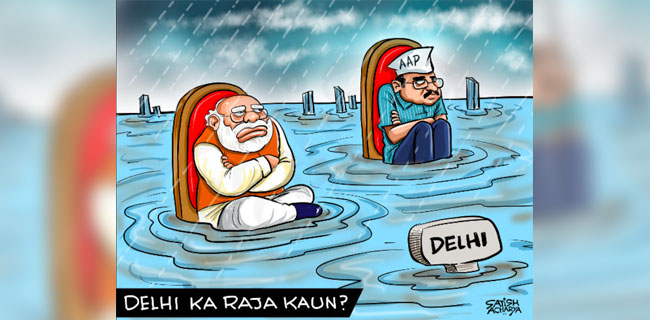
    Together with Himachal Pradesh, Uttarakhand has seen massive landslides, destruction of infrastructure and natural devastation this monsoon. But mainstream journalism has not focused on the politics of climate change, on the politics of infrastructure decisions and the politics of human suffering. It is exciting politics when a prominent member of the BJP points fingers at Delhi chief minister Arvind Kejriwal for attending a political meeting while Delhi is flooded. This is much reported by television.

    That the Prime Minister of India travels the world while Manipur still burns is not a matter of interest for the same TV channels.

    There’s politics and politics.

    Even within the flooding of the national capital region, there is a story of politics, of uncontrolled development, bad infrastructure and climate change itself. Delhi did not get a lot of rain. But heavy rainfall elsewhere caused the Yamuna to break its banks. There is politics in the destruction of natural floodplains. There is politics in water management in neighbouring states, and the lack of coordination and cooperation between the two. There is politics in refusing to understand or probe the sheer evil stupidity in ignoring environmental and geological reports.

    It’s just that this politics requires legwork. It requires diligence. It requires editors who look at more than the next dinner party. Or award. Or a chance at a selfie.

    Across India, rampant development without taking natural terrain or local requirements into consideration will have major consequences in the future. On the planetary level, India talks big about its commitment to the environment and climate change. At the local level, the opposite goes on with official sanction and blessings.

    If we’re still around when things get even worse, maybe those journalists who did nothing because of some possible reward, or sat back and consoled themselves that it’s all happened before, will have meet some sort of reckoning.

    It’s unlikely. But still. I can dream.


    Ranjona Banerji is a senior journalist and commentator. She writes on MxMIndia on Tuesdays and Fridays. Her views here are personal.


  • Das ka Dum with Dr Bhaskar Das | July 16 was observed as AI Appreciation Day. That someone celebrated a day as that indicates artificial intelligence as in vacuousness. Right?

    Bhaskar DasThe question was meant to generate a provocative answer, but we couldn’t manage that. Here’s Dr Bhaskar Das in the July 18 edition of Das ka Dum. Read on…


    If you wish to access the archives, please go to the Das Ka Dum tab on the website’s top navigation bar or click here: https://www.mxmindia.com/category/columns/das-ka-dum/


    Q. July 16 was observed as AI Appreciation Day. That someone celebrated a day as that indicates artificial intelligence as in vacuousness. Right?


    A. Artificial Intelligence (AI) has been transforming the way we live, work, and interact with technology. With a view to recognising  and appreciating the impact of AI on human  lives, celebration of Artificial Intelligence Appreciation Day happens every year on July 16. This special day provides an opportunity to reflect on the achievements of AI and its potential to shape our future. Hence it can’t be a reflection of AI’s vacuousness.


    While on the subject, I would love to add artificial Intelligence is hardly artificial (literally though) and more about intelligence. As the so-called homo sapient, human beings quite often act artificial for socially accepted projection. Also, as ChatGPT can be misused by a user with malevolent or deviant intentions, so can be AI. Then it becomes a different story. But these side-effects are unavoidable hazards as machines have no role to play in it. It serves the master. Do you think Oppenheimer even dreamt of what’s happening to his nuclear invention? But that’s another story, for another day.


  • Banijay Group buys out Endemol Shine India

    By Our Staff


    Media and entertainment organisation Banijay has announced the completion of its buy-out of Endemol Shine India, thus paving way for a reorganisation of Banijay in the region. Both Banijay Asia, and Endemol Shine India will now work under the leadership of Deepak Dhar, who’s been appointed as the Founder and Group CEO.


    Talking on the developments, Dhar said: “The reorganisation of Banijay in Asia is our biggest and boldest move yet and aligns with our ambition to drive further growth in India and Asia at-large. Leveraging the creative potential and possibilities of both brands, we will now strategically pursue complimentary yet independent creative portfolios to offer the most diverse, and compelling cross-genre content from across the globe, to our Indian and Asian platforms and screens.”


    Commenting on the restructuring, Marco Bassetti, CEO, Banijay, added: “Deepak is a leading creative and entrepreneurial force in Asia, and in our partnership thus far, he has successfully created an impressive slate, and a host of fruitful partnerships with major buyers and partners worldwide. In this new phase for the business, he will now focus on unlocking and aligning other strategic growth avenues to put Banijay in a dominating position, both in India, as well as Asia.”


  • Wunderman Thompson bags Cult.Sport mandate

    By Our Staff


    Following a multi-agency pitch, Cult.Sport – from the house of Cure.Fit, sports brands, has awarded its integrated creative mandate to Wunderman Thompson India. The agency will be providing strategic and creative services for the brand which will cut across geographies, demographics, and mind-sets, and deliver differentiated content to create a niche for the brand among sports and the fitness fraternity.


    Commenting on this new partnership, Shamik Sharma, MD, Cult.Sport said: “While India has the world’s largest youth population, only a few take up any sports or fitness activity. As a sport-first brand of this country, we want every Indian to make sports an indelible part of their everyday life using our range of Cult.Sport products. In Wunderman Thompson India, we have found an agile agency that understands this sporting culture, which is evident through its award-winning sports films and campaigns. As a team, we plan to up the game and create some clutter-breaking communication for the brand.”


    Added Vijay Jacob Parakkal, Managing Partner, East and South, Wunderman Thompson India: “Amidst the fierce competition in the high-performance sports and fitness market, it’s important to recognize that in India, sports and fitness transcend mere performance—it embodies a way of life. Cult.Sport’s distinctive business philosophy of simplifying sports and fitness resonates deeply with all of us. We are committed to forging a close partnership with our client team to help them achieve their ambitious business objectives. Leveraging our expertise in creative, data, and technology, we are uniquely positioned to provide comprehensive end-to-end solutions tailored to their specific business needs.”


  • Adfactors PR wins mandate for Eveready

    By Our Staff


    Eveready India Industries Ltd. the battery, flashlights and lighting products major, has awarded its public relations mandate to Adfactors PR.


    Said Anirban Banerjee, Senior Vice President & Business Unit Head – Battery & Flashlight: “We are thrilled to appoint Adfactors PR as the communication partner for Eveready. It is essential for us to be more visible amongst our target audience and to let our consumers know that we are more than just batteries. Given the strategic expertise of Adfactors PR we intend to further strengthen our brand position & recall as well as scale up the arc of influence among key opinion leaders, media and Gen-Z cohorts for our overall business. It is especially important to shape the stories of various new launches, including a state-of-the-art range of Rechargeable Flashlights, Ultima Alkaline Batteries, Coin Batteries, Instacharge Emergency LED bulbs and more.”


    Added Adfactors PR Chief Executive Officer Nijay N Nair: “As portable energy and smart lighting solutions gain importance, it is an appropriate moment for Eveready India to harness the tremendous power of public relations to expand its footprint. With our pan-India presence, Adfactors PR is well-placed to turbocharge Eveready’s communications campaign and ensure its products gain greater popularity across geographies. Brand Eveready will now build on its glorious century-long legacy and will reach even greater heights over the coming years. We are delighted to take on this mandate.”


  • Shantanu Deshpande appointed as MD, Michelin India

    By Our Staff


    Shantanu Deshpande
    Shantanu Deshpande

    French tyre major Michelin has appointed Shantanu Deshpande as Managing Director for its India operations. Deshpande will be based out of Pune. Across his 23-year tenure with Michelin, he has held various leadership roles in sales and marketing, both in India and in other geographies such as North America, Africa, Middle East and Asia.


    Notes a communique: “Deshpande joined Michelin India in 1999 as an Area Sales Manager. He was appointed India Marketing Director in 2007 and in this role, he was instrumental in establishing the company’s presence in the country. From 2012 to 2015,  Deshpande served as Vice President Marketing with a Michelin subsidiary in North America.  He was Director Marketing B2B business for Africa , India & Middle East Region from 2015  to 2020. Since 2020, he served as Global Marketing Director for Michelin Group’s Urban Business Line based out of Bangkok.”


  • Vivo India appoints WT as its AoR

    By Our Staff


    Smartphone major Vivo India has appointed Wunderman Thompson India as its Agency on Record (AoR). Following a multi-agency pitch process, Wunderman Thompson emerged as the agency to handle brand Vivo’s product portfolio and will handle three product series (V series, Y series and Series T).


    Wunderman Thompson will be incharge of conceptualising and carrying out integrated marketing campaigns and digital initiatives for the brand. The agency will concentrate on raising the visibility of the product portfolio, strengthening their positioning, and raising consumer awareness to maintain product leadership.


    Joy Chauhan
    Joy Chauhan

    Commenting on the win, Chief Client Officer – WT South Asia & Managing Partner – WT Delhi, Joy Chauhan, said: “It’s a proud moment to partner with Vivo in a highly competitive category. At Wunderman Thompson, we inspire growth for ambitious brands, and we are excited about partnering with Vivo to provide business solutions and drive growth for the brand. With Vivo on an exciting growth trajectory, we are thrilled to be part of their growth journey and create stellar work on their new range of products.”


    Karun Arora
    Karun Arora

    Added Karun Arora, Head of Marketing Communications, Vivo India: “Consumer is at the heart of everything we do at Vivo. During the pitch, Wunderman Thompson team presented a consumer centric integrated approach that resonated with us. We are excited to welcome them as our AoR on product series, I am confident the team will support us in developing engaging communication that supports our overall vision and appeals to consumers at large.”


  • Can the Spirit of Advertising Help Self-regulation?


    By Sanjeev Kotnala


    Sanjeev KotnalaMaybe it will be easy for the advertising and marketing industry to understand. With so much following for cricket and huge interest in it, with half the population being experts in the field, it should make sense. After all, the industry spends huge sums of money on sports and IPL. The cricketers are the main set of celebrity models that the industry uses and people associate with.

    So, in the third Ashes Test 2023, Bairstow (England) was stumped by Alex Carey (Australia) as he wandered out of his crease at the end of a Cameron Green over. The third umpire upheld Australia’s appeal as the ball was yet ‘not dead’. Stuart Broad hit out at Australia for not withdrawing their appeal – the basis of request- Spirit of the game.

    Now as per the rules of the game, Jonny Bairstow was out. However, Australia could have withdrawn the appeal and called him back in the spirit of the game. They did not. And that’s as simple as that.

    The game is played by the rule and should be played by the rule, not the norms and spirit of the game. And for that, the rules should be simple, straight, not suspectable to differences or misinterpretation and applied equally to all.

    What is true for the game is true for other professions, including advertising and marketing, where there are clear rules in the case of tobacco. Clear expectations and guidelines in case of Insurance, mutual funds, and investments. Simple rules for celebrity endorsement. Rules for liquor advertising and betting and much more. However, some brands ensure that they do everything legally required by them. Morality and ethics are not weighed in. The spirit of advertising and marketing is not evoked as the Advertising Standards Council of India (ASCI) gives guidelines and expectations under self-rule. Something that does not have the bite of legally ensuring compliance.


    Do We Need a Law For Everything?

    The question is: should there be a law for everything. Can’t the professional incharge and executing such work take a call? Specific categories need to make moral and ethical calls even after meeting the legality of communication. Unfortunately, it’s a tricky business out there. They clearly are in no mood not to use the escape routes, including the classic surrogate advertising, misinformation, small point disclaimers, and such acts.

    Maybe being professional, the industry demands the practitioner remain brand and market objectives focussed and work within the legal framework. Being alive to the spirit of the work and the brand is not necessarily the industry’s expectations. They will, as expected, take a calculated judgement and withdraw (if they do) an advertisement only after someone complains, ASCI acts or the audience troll them for it.

    Like the Spirit of the Game in Cricket, values, expectations and a code of ethics are defined by the self-regulating advertising industry advertising that can be the difference and an example. But then, no one wants to be setting benchmarks. Everyone is busy and happy creating impact communication within the legal framework.

    And there is nothing wrong with it. Because following the rules is really the spirit of the industry.


    Net-net

    If I was to take the preamble of the spirit of Cricket and replace that with advertising, it would/ could read like this. It would make sense but hardly be practical as it will continue to mean different things to different people.

    Advertising, marketing and communication owe much of its appeal, enjoyment and impact to the fact that they should be created, crafted and exposed not only according to the Laws but also within the Spirit of communication. The major responsibility for ensuring fair play rests with the marketing head, brand custodians and their advertising agencies but extends to all players in the ecosystem, creative creators, media, trainers, institutes and the audience that watches them.  

    Self-regulation is central to the Spirit of communication.

    Play hard, play fair with the competition, and respect the audience’s sensitivities.

    Accept the ASCI decision and don’t repeat the mistake.

    Create a positive atmosphere through your conduct, and encourage others to do likewise.

    Show self-discipline, self-regulate, raise voices and object to anything harmful or not in sync even when things go against you.

    Congratulate the opposition on their successes, and enjoy those of your team.

    Communication, Advertising and marketing is an exciting field that encourages leadership, friendship, networking, insight mining and teamwork, which brings together people and help them make decisions when a creative is curated, crafted and created within the Spirit of self-regulation, societal moral, and industry ethics.
     

  • Das ka Dum with Dr Bhaskar Das | Are CMOs too focussed on market share of a product/service as a measure of sucesss? Or should the primary focus be on profit?

    Bhaskar DasStraightforward question, straightforward answer. Here’s Dr Bhaskar Das in the July 19 edition of Das ka Dum. Read on…


    If you wish to access the archives, please go to the Das Ka Dum tab on the website’s top navigation bar or click here: https://www.mxmindia.com/category/columns/das-ka-dum/


    Q. Are CMOs too focussed on market share of a product/service as a measure of sucesss? Or should the primary focus be on profit?


    A. I feel market share is a key indicator of a company’s market (read segment/ category) competitiveness. When a company increases its market share, this should automatically improve its profitability. This is generally expected to happen as companies increase in size, they can also increase their scale. This, in turn, enables a company to offer optimal prices that balance profit, profitability and growth, thereby limiting the possibility of competitors’ growth.


    In essence, I mean a profitable market share growth should be the dominant objective of a CMO.